马可尼-列维纳斯学校综合,意大利 / Giovanni Maggioni + Mirko Noris + Valerio Tolve
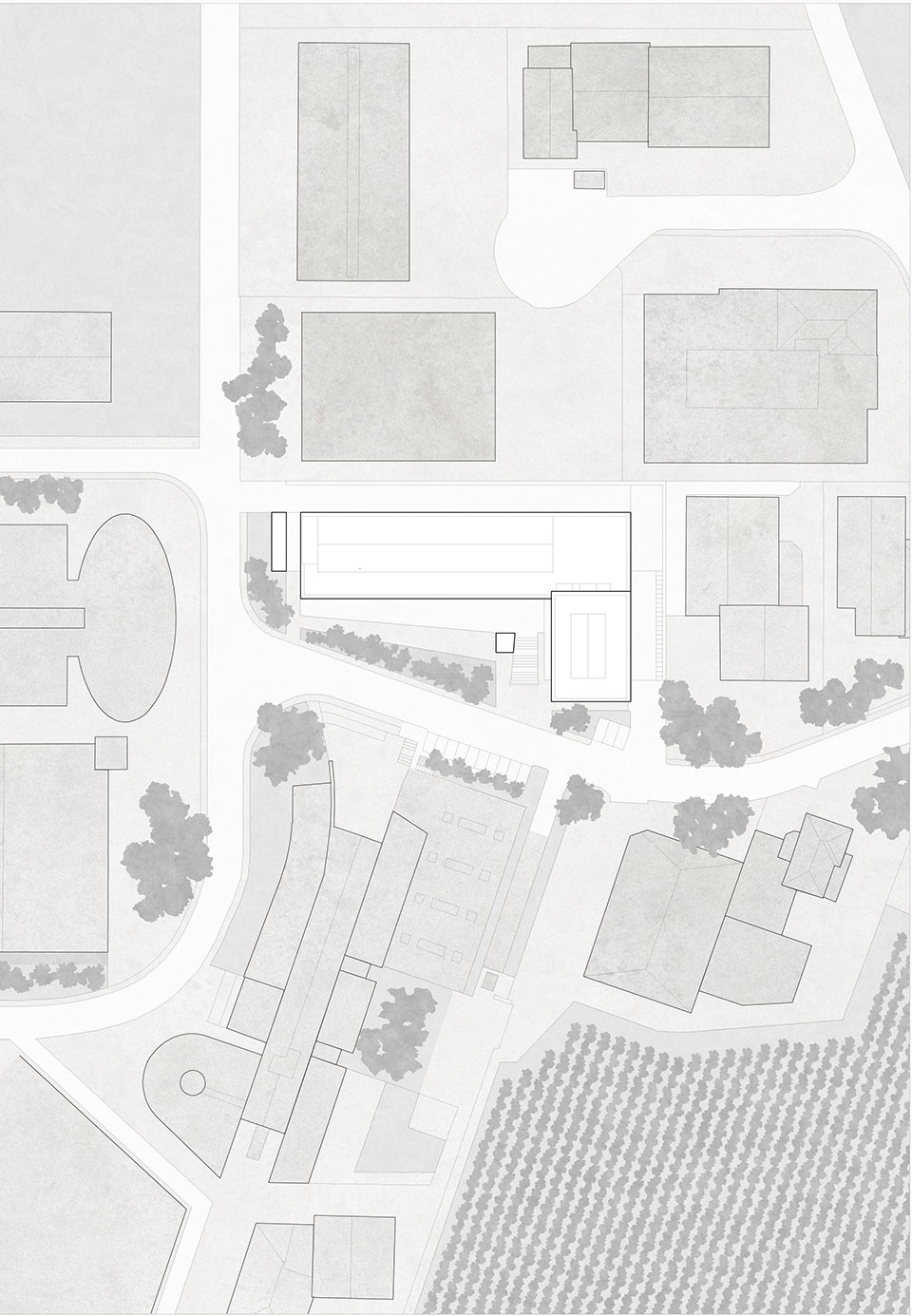
马可尼-列维纳斯学校综合体源于博尔扎诺自治省于2013年发起的一场两阶段设计竞赛。项目基地位于梅拉诺(Merano)迈亚巴萨(Maia Bassa)区南缘,沿斯库德里耶街(Via Scuderie)展开。这是一片缺乏连续性的区域,住宅与工业聚落的形态和肌理在此与军营和赛马场等大型城市结构发生碰撞:前者塑造了日常城市肌理,后者则引入了一种旋转关系,以垂直于阿迪杰河(Adige River)的方向组织空间。
The Marconi-Lévinas school complex is the result of a two-stage design competition launched by the Autonomous Province of Bolzano in 2013. The intervention area is located at the southern edge of the Maia Bassa district, along Via Scuderie in Merano. It is a zone lacking continuity, where the forms and patterns of residential and industrial settlements confront the large formal systems of the Barracks and the Racecourse: the former structures the ordinary urban fabric, while the latter introduces a rotation, aligning perpendicularly to the Adige River.
▼建筑外景,Exterior of the building
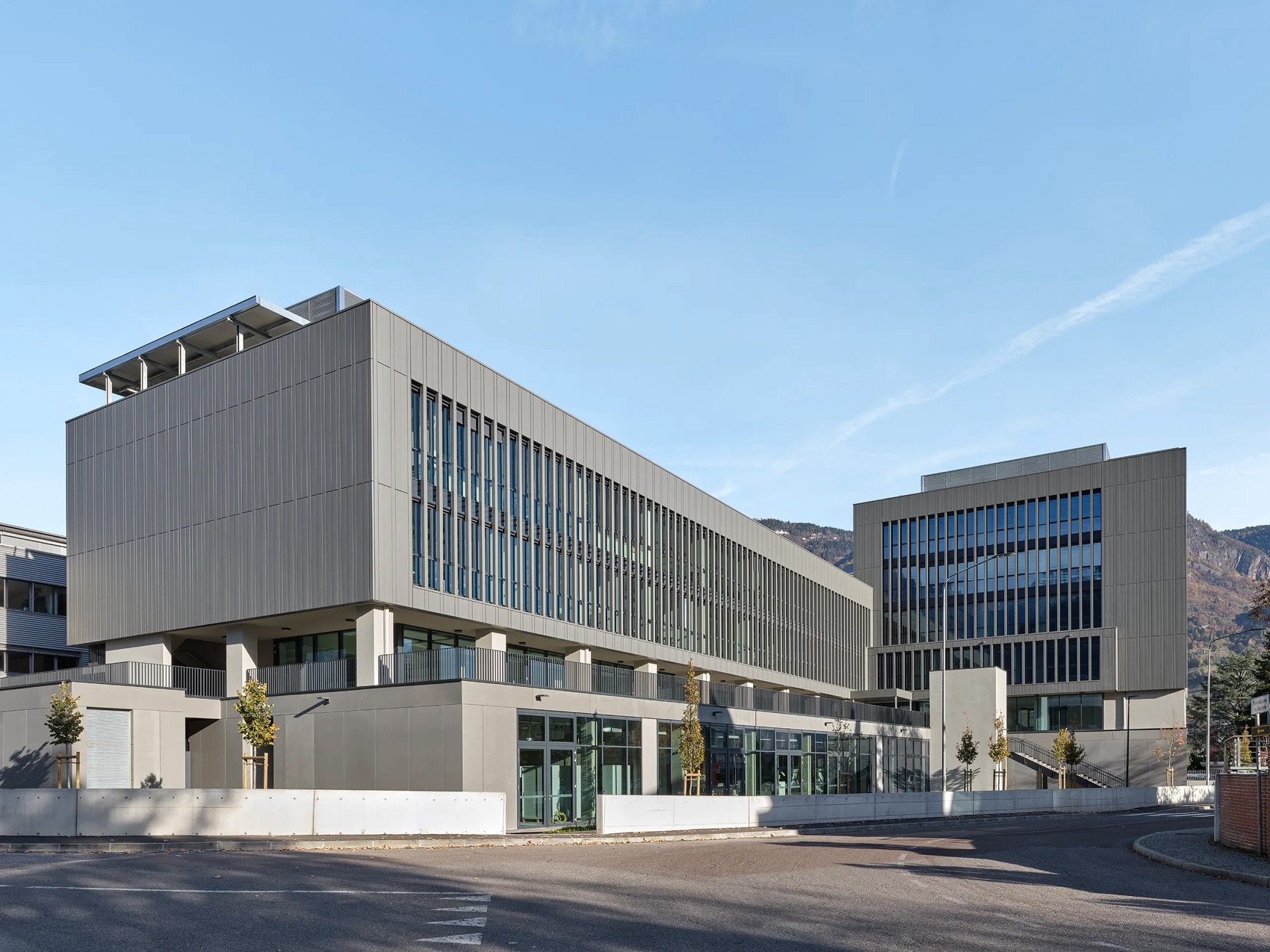
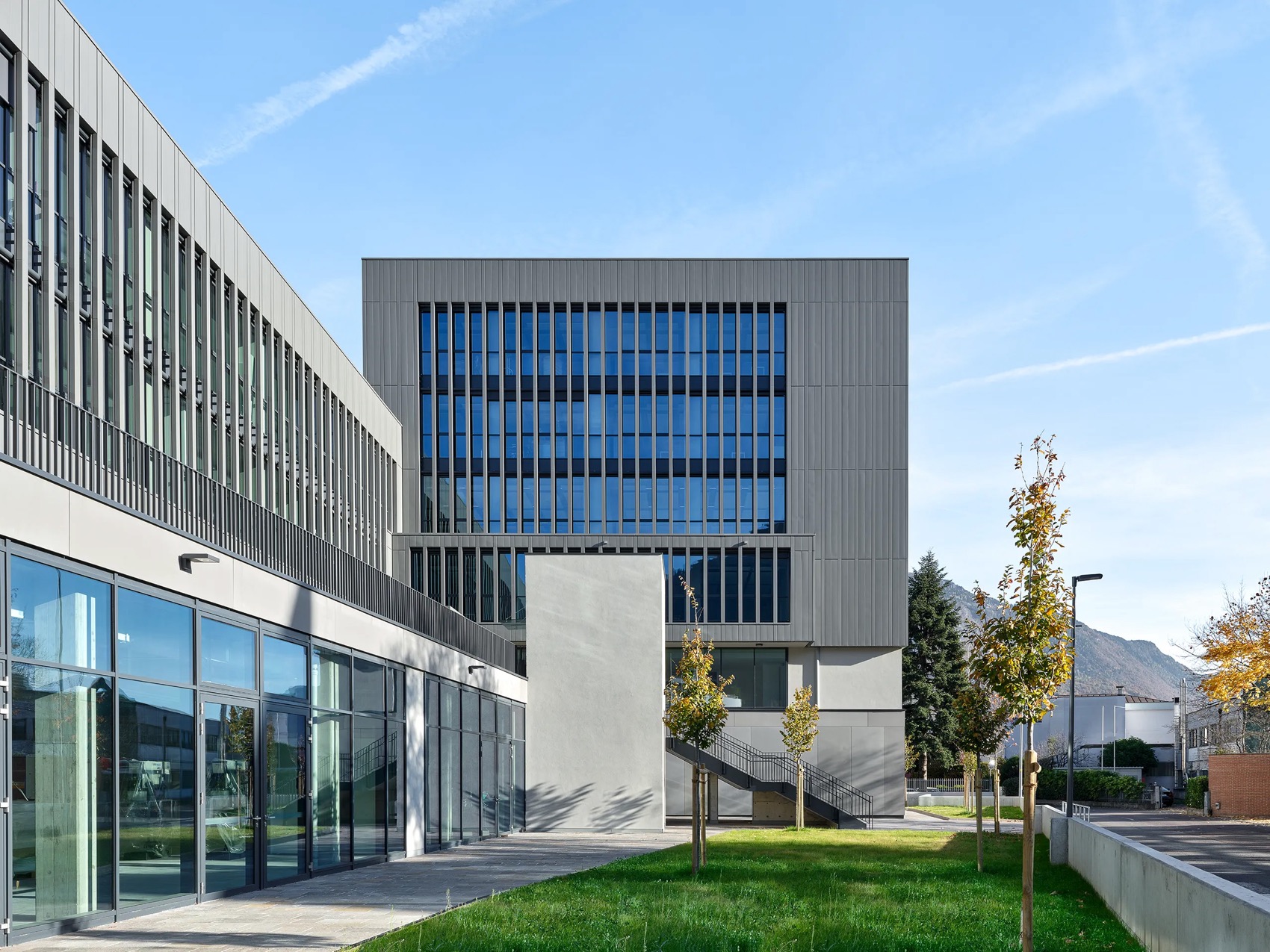
项目通过重新定义街区南侧边界的角色及其与周边建成环境的关系,回应区域整合的问题。设计借鉴军营建筑的主导朝向,形成一种城市策略:在基地后方布置线性建筑以界定街区边界,并设置一座塔楼作为与街道关系的媒介。两栋建筑之间嵌入小型花园与架空广场,共同构成室外公共空间。最终形成的建筑虽然拥有当代性的体量表达,却融入了南蒂罗尔景观的文化连续性之中,通过对其技术、环境与伦理价值的重新诠释,回应当地至今仍然强烈存在的公共基础设施文化。
The project addresses the consolidation of the district’s southern edge by redefining its role and relationship with the surrounding built environment. The design takes cues from the dominant orientation of the Barracks and establishes an urban strategy composed of a linear building at the back of the lot, defining the block’s frontage, and a tower mediating the relationship with the street. Between the two buildings, a small garden and an elevated piazza complete the outdoor spaces. The resulting architecture, while contemporary in its volumes, integrates into the cultural continuity of the South Tyrolean landscape, reinterpreting its technical, environmental, and ethical values, reflectedin the still strong local interest in public infrastructure.
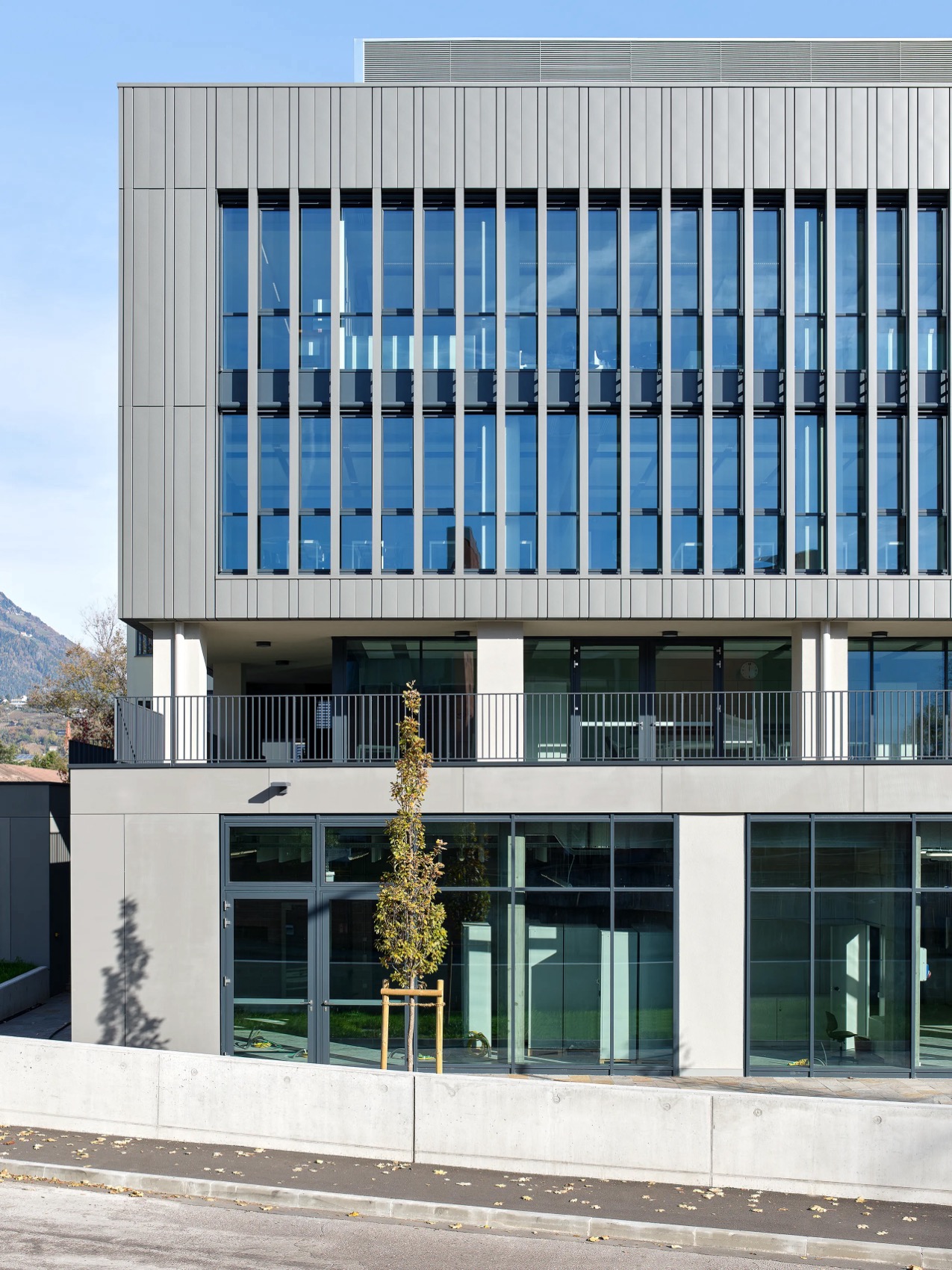
▼竖向开窗与金属立面形成连续节奏,Vertical glazing and metal cladding forming a continuous rhythm
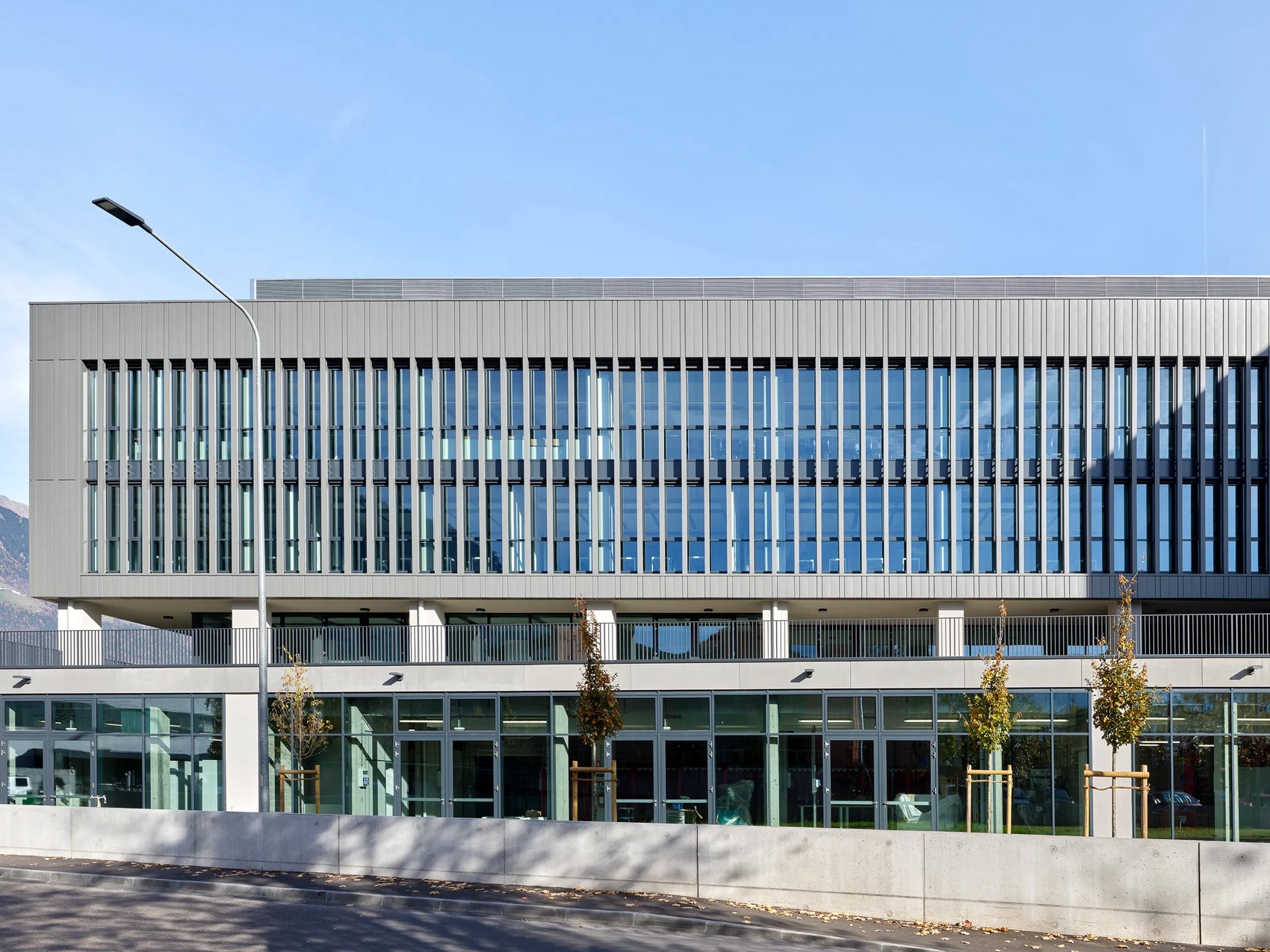
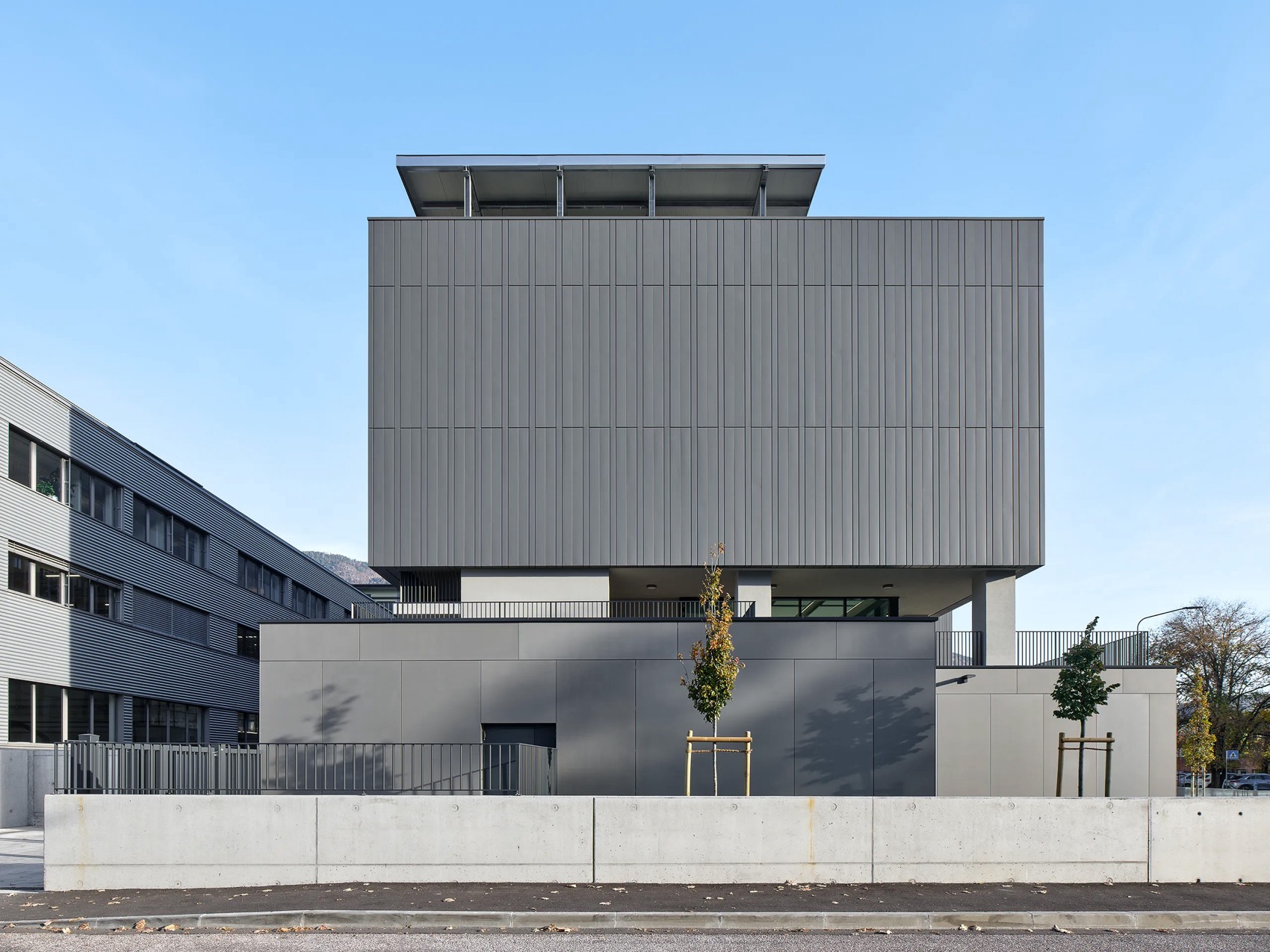
建筑语言克制、精准且统一,通过一种节制却富有意义的材料组织方式得以呈现。混凝土、玻璃与金属三种主要材料,共同定义了建筑的体量层级、空间特征以及其与城市和自然环境之间的关系。整体构成在语法上被组织为三个部分:基座、带状体与顶部体量。混凝土基座使建筑稳固地扎根于地面;玻璃带状界面则引入轻盈与透明感,标识出学校与城市互动最为紧密的层面;顶部体量采用连续模块化纹理的锌钛板覆层,对立面进行统一组织。整体而言,材料的克制使用与清晰的体量关系,共同塑造出一种冷静而富有表现力的建筑语言,在建造逻辑的严谨性与感知体验之间取得平衡。项目的力量正来源于这种平衡——它既塑造了鲜明而高质量的空间身份,也营造出一个能够体现当代社会中学习核心价值的教育环境。
The architectural language is essential, measured, and coherent, expressed through a restrained but highly significant material articulation. Three main materials-concrete, glass, and metal-define volumetric hierarchy, spatial character, and the building’s relationship with the urban and natural context. The composition is structured syntactically into three elements: base, ribbon, and crowning volume. The concrete base anchors the building to the ground; the glazed ribbon introduces lightness and transparency, marking the level of closest interaction between the school and the city; the upper volume, clad in zinc-titanium with a continuous modular pattern, organizes the façades and unifies the building. Overall, the restrained use of materials and clear volumetric definition create a sober yet expressive architectural language that balances constructive rigor and perceptual quality. The strength of the project lies in this balance: the ability to combine spatial identity and quality, providing an educational environment that reflects the centrality of learning in contemporary society.
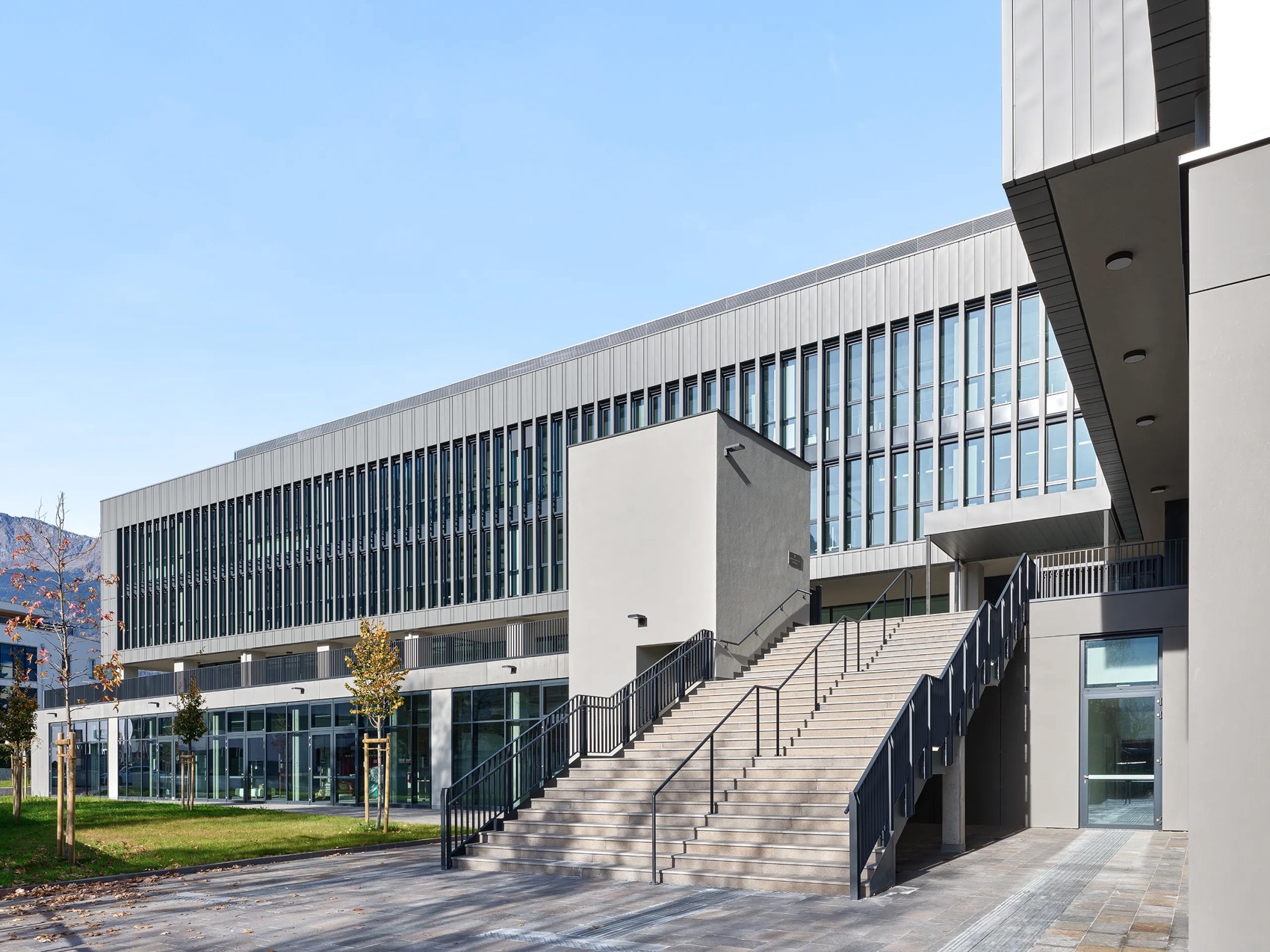
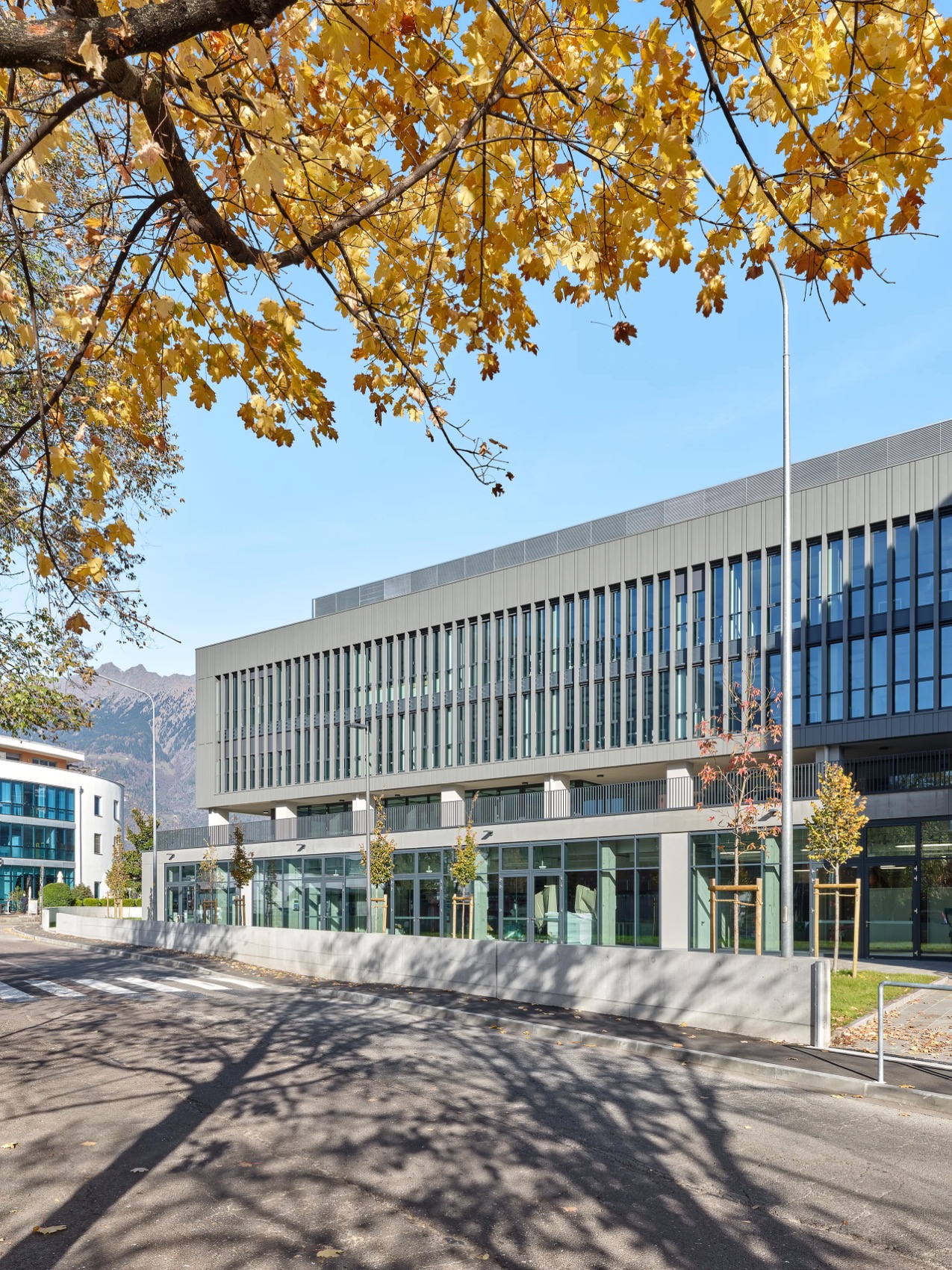
▼秋季树影映衬下的校园街道界面,School frontage framed by autumn foliage and street shadows
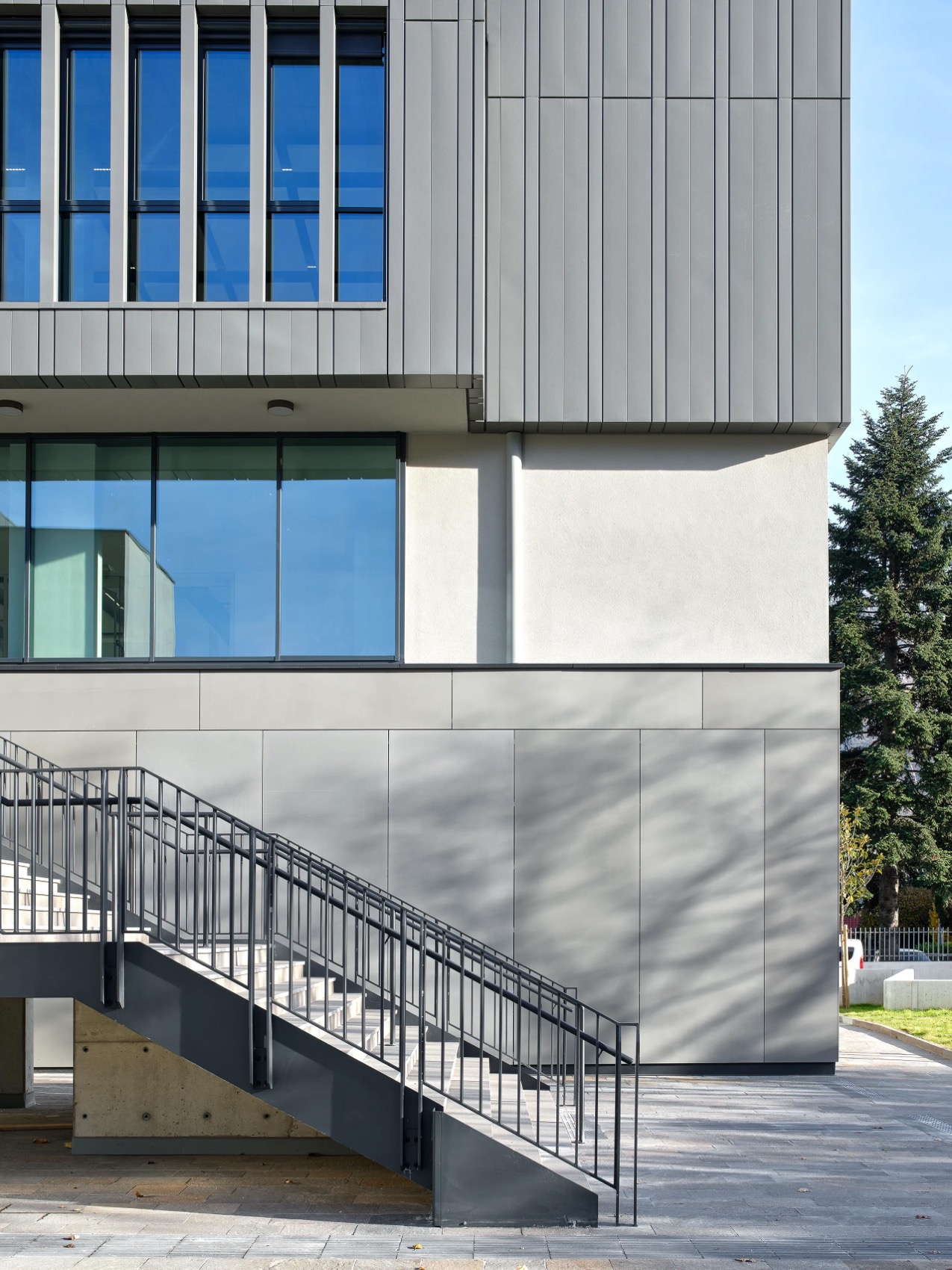
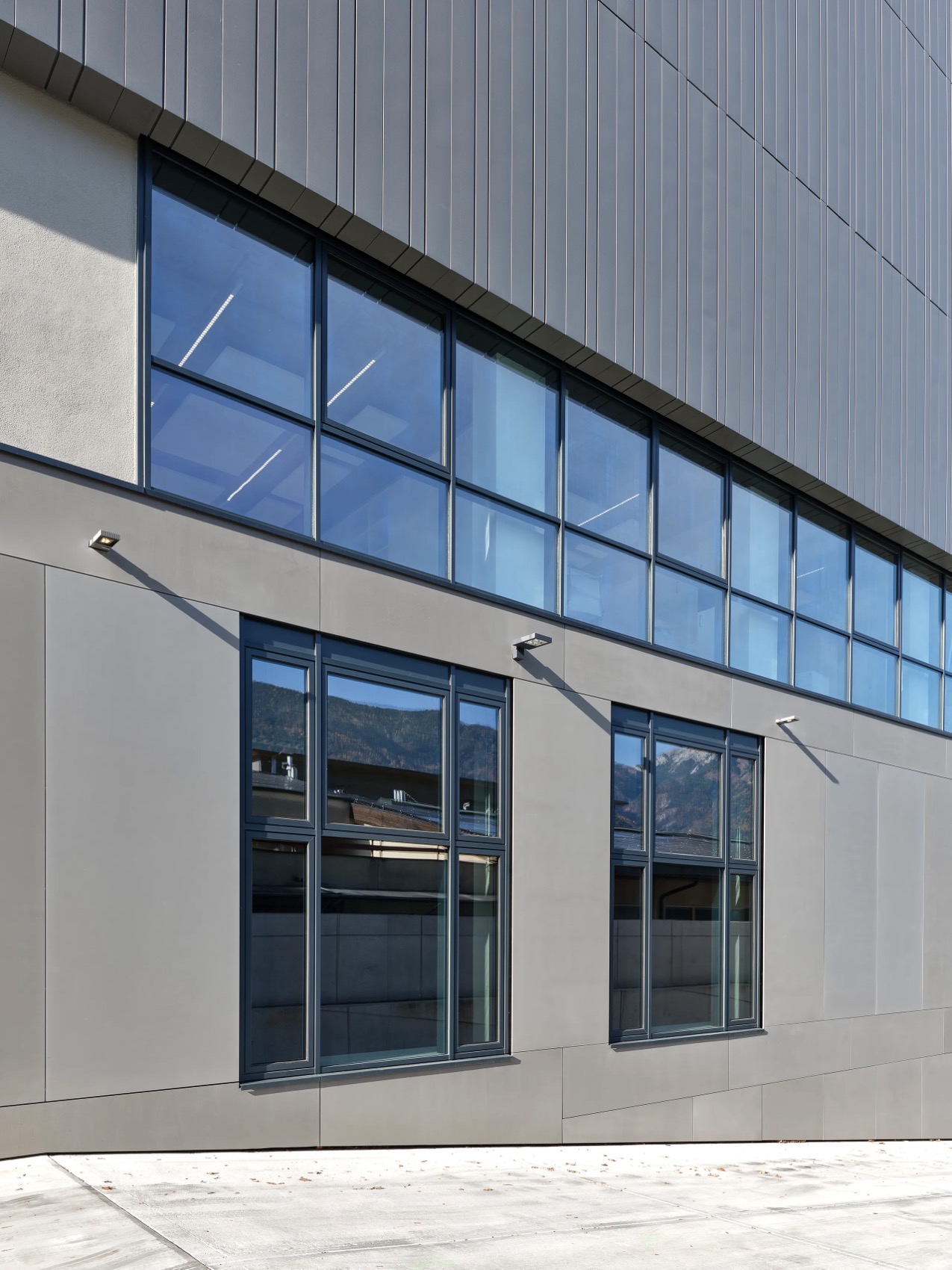
▼锌钛板立面细节,Zinc-titanium façades detail
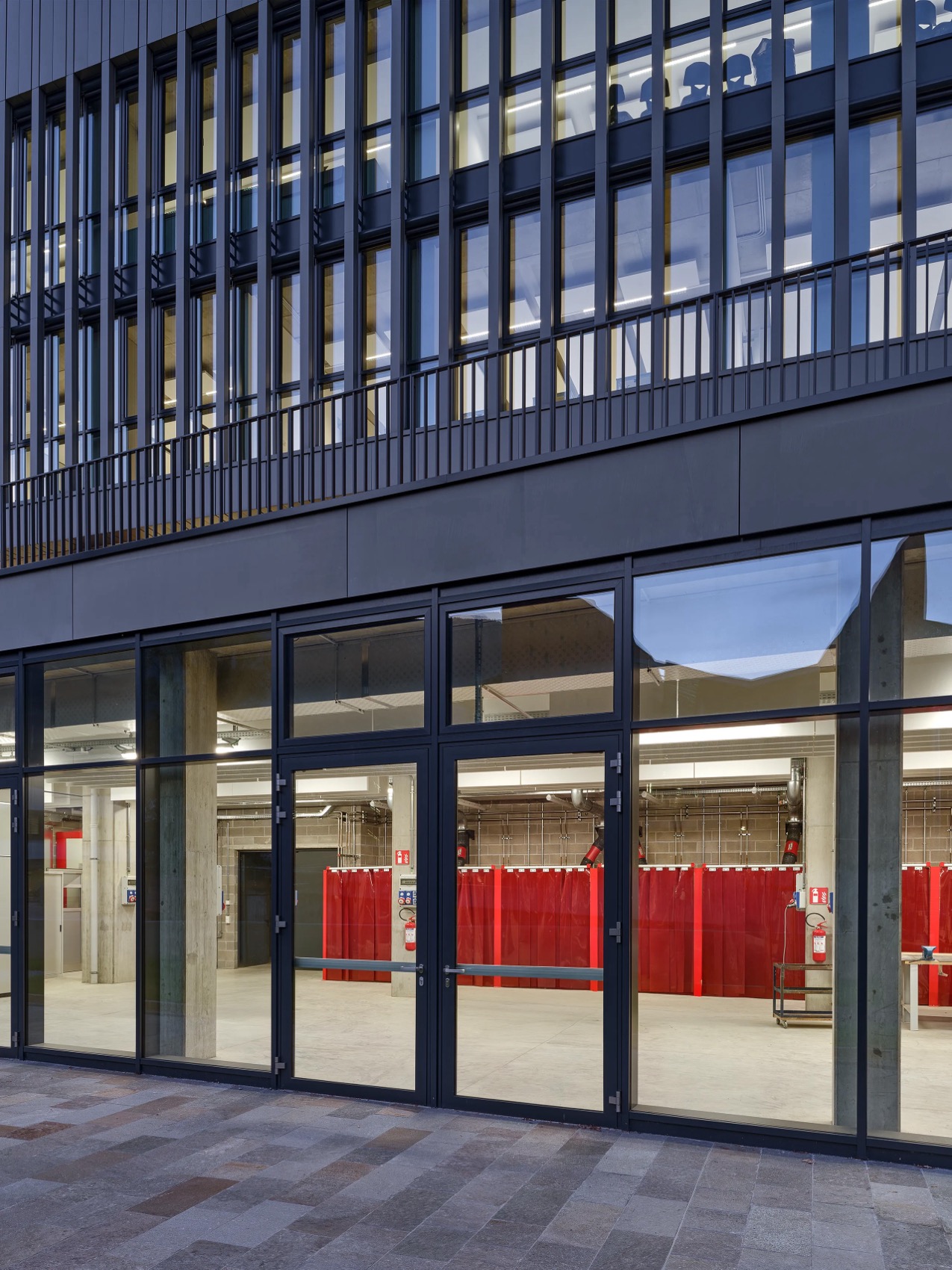
构图的清晰性与空间的可识别性,是建筑设计中的核心原则,同时伴随着与自然光及外部环境之间的强烈关联。透明性不仅仅是一种审美选择,更是一种促进方向感、安全感与自主性的教育工具。自然光不仅照亮空间,也通过塑造深度与感知变化来组织学校中的日常节奏。大面积玻璃界面所建立的公共性关系,进一步消解了室内与室外之间的边界。面向斯库德里耶街的工坊展示空间,既是一种构图决策,也是一种文化宣言:将内部发生的活动向城市展示,意味着教育被视为一种集体、开放且共享的过程,而学校则是一项属于学生与更广泛社区的公共资源。
Clarity of composition and legibility of spaces are fundamental in the architectural design, accompanied by a strong relationship with natural light and the external environment. Transparency is not merely an aesthetic choice-it is a pedagogical tool that promotes orientation, safety, and autonomy. Natural light not only illuminates spaces but modulates them, defining depth and introducing perceptual variations that structure the school day. The relationship with the public realm, ensured through extensive glazing, dissolves the boundary between inside and outside. The visibility of the workshops toward Via Scuderie is both a compositional decision and a cultural statement: showing what happens inside asserts that education is a collective, open, and shared process, and that the school is a public good belonging to both students and the broader community.
▼自然光贯穿教学走廊空间,Natural light extending through the academic corridor
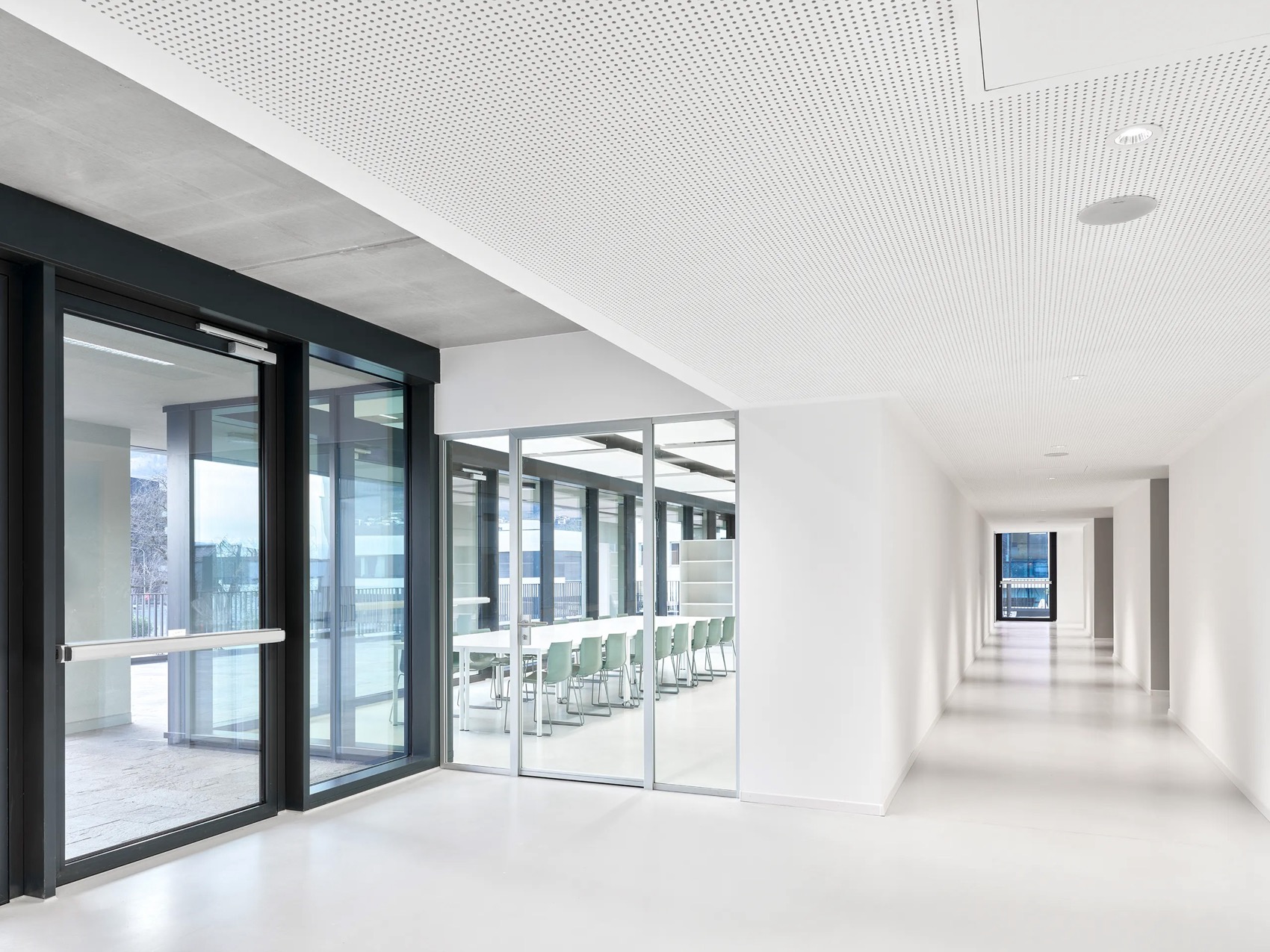
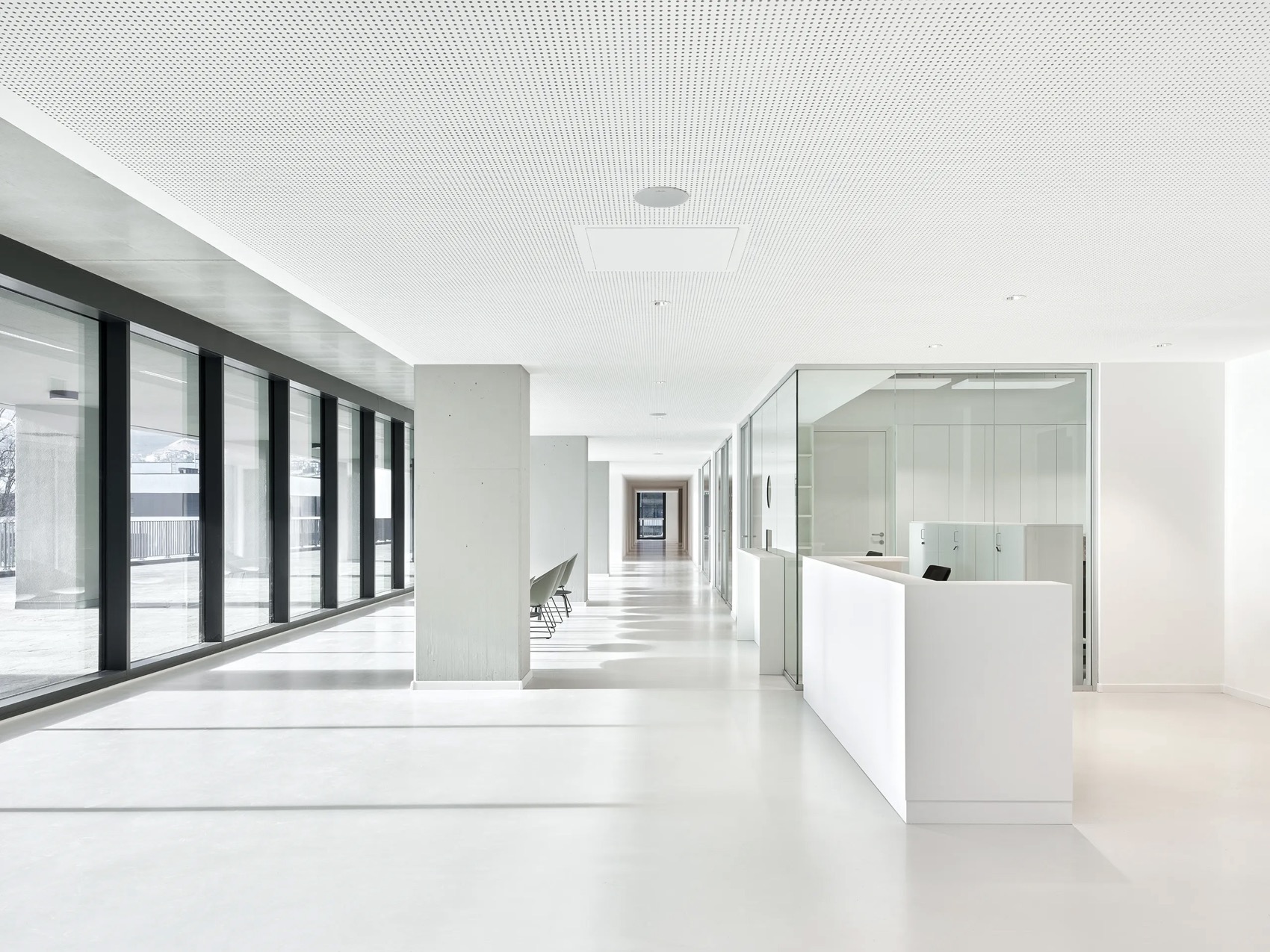
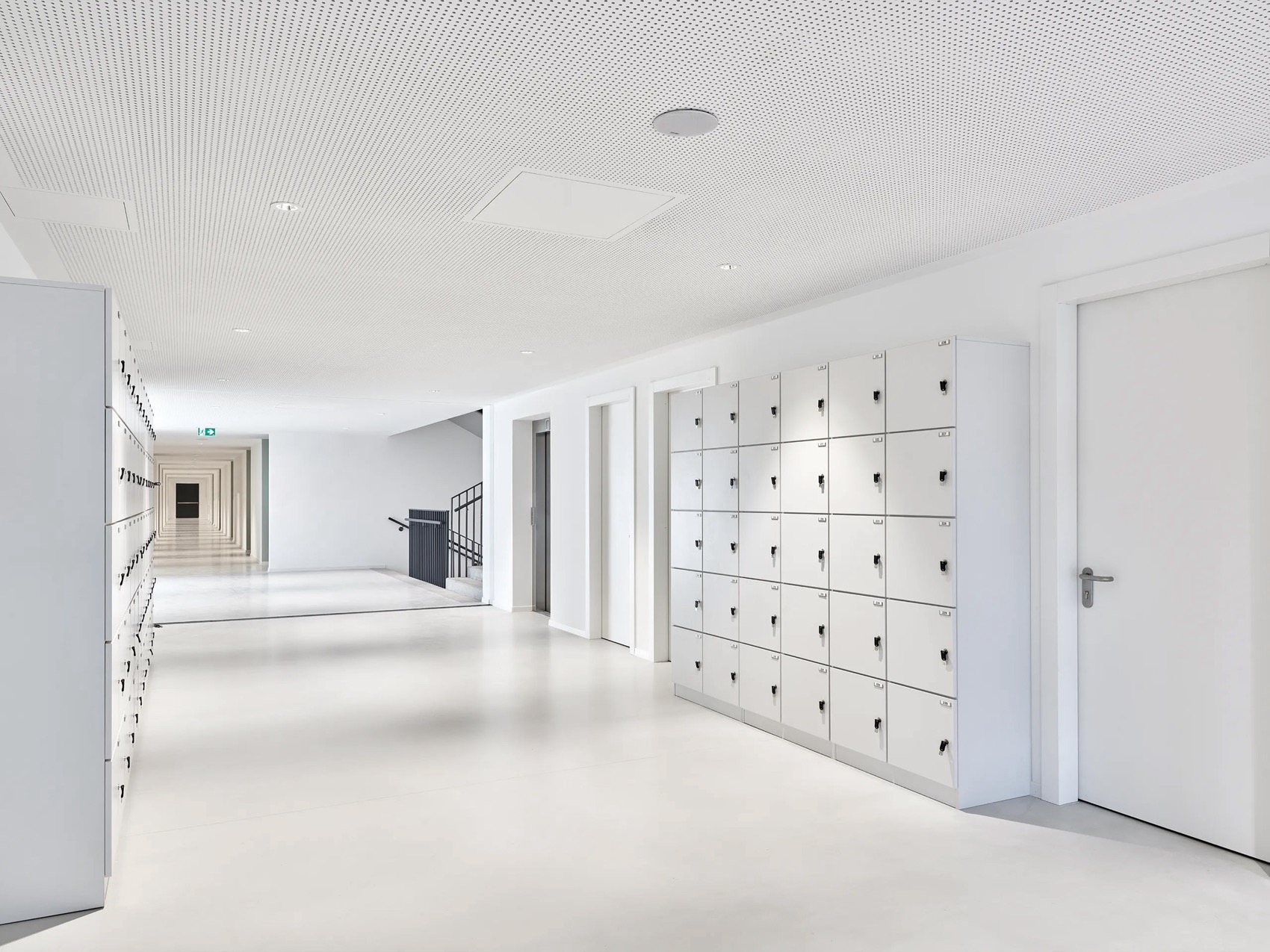
▼白色走廊强化空间的秩序感,White corridor reinforcing spatial order and continuity
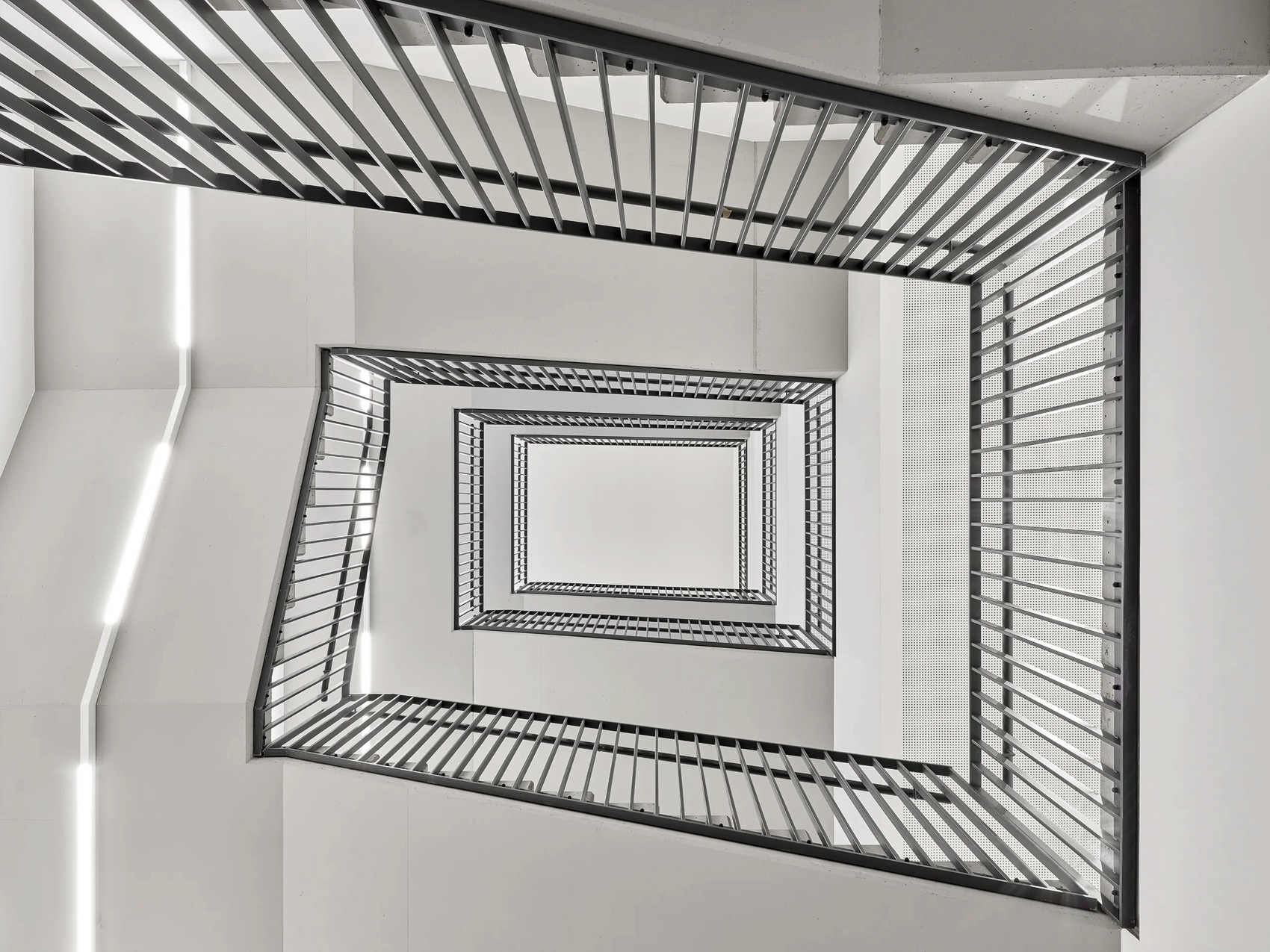
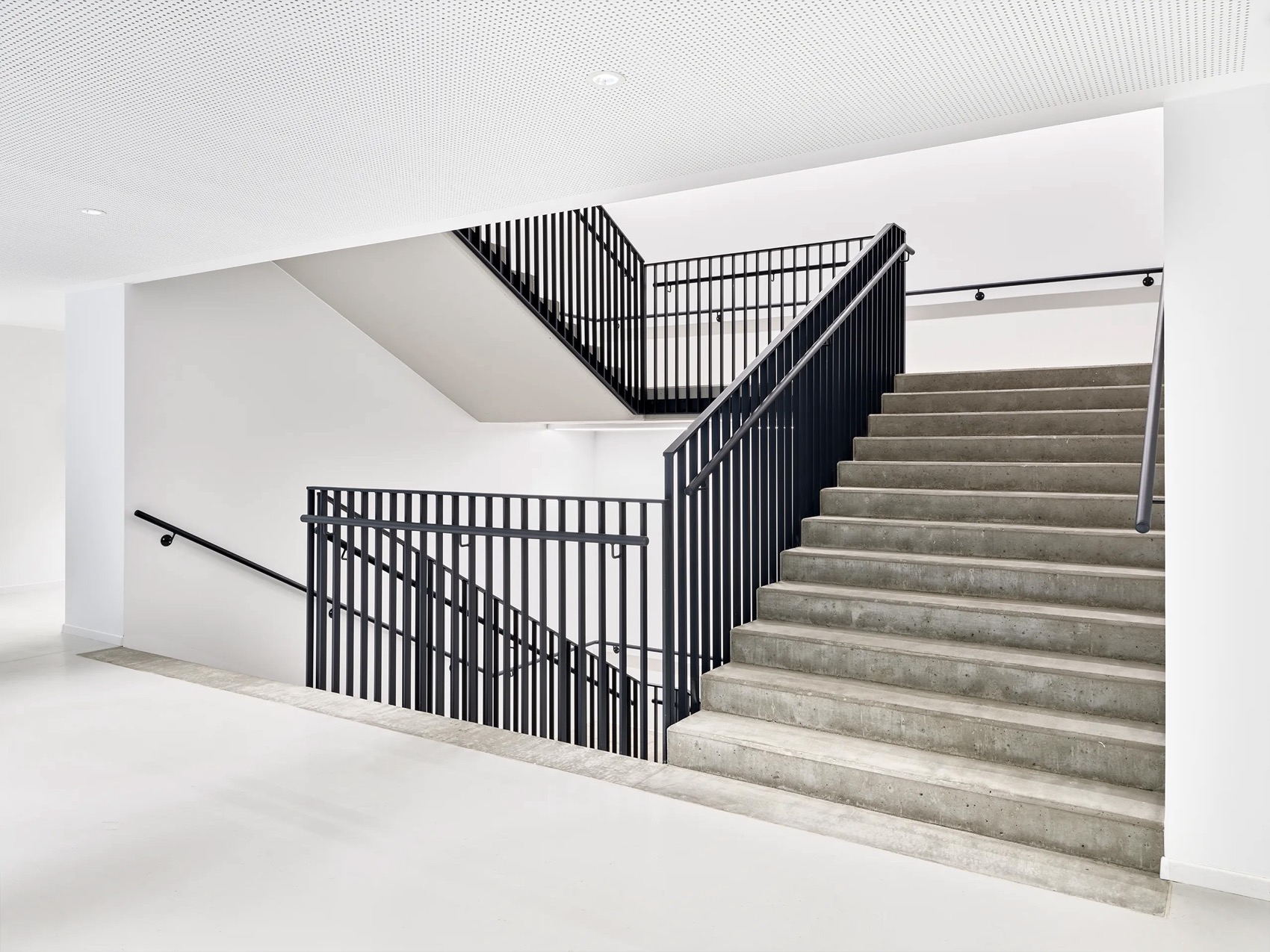
▼阶梯空间形成开放的交通节点,Stair hall forming an open circulation node
项目对于可持续性的回应,首先体现在对资源理性且有意识的使用上,通过被动式建筑与构图策略优先于机械系统的主动介入。能源效率并未被单纯寄托于个别材料,而是被视作整个建筑系统层面的综合议题。建筑围护结构既被赋予了表现性与构图价值,也兼顾热工性能。
The project addresses sustainability primarily through rational and conscious use of resources, with passive architectural and compositional strategies preceding the active contribution of mechanical systems. Energy efficiency is not delegated solely to individual materials but is considered across the building as a whole. The envelope was designed for both expressive and compositional value and thermal performance.
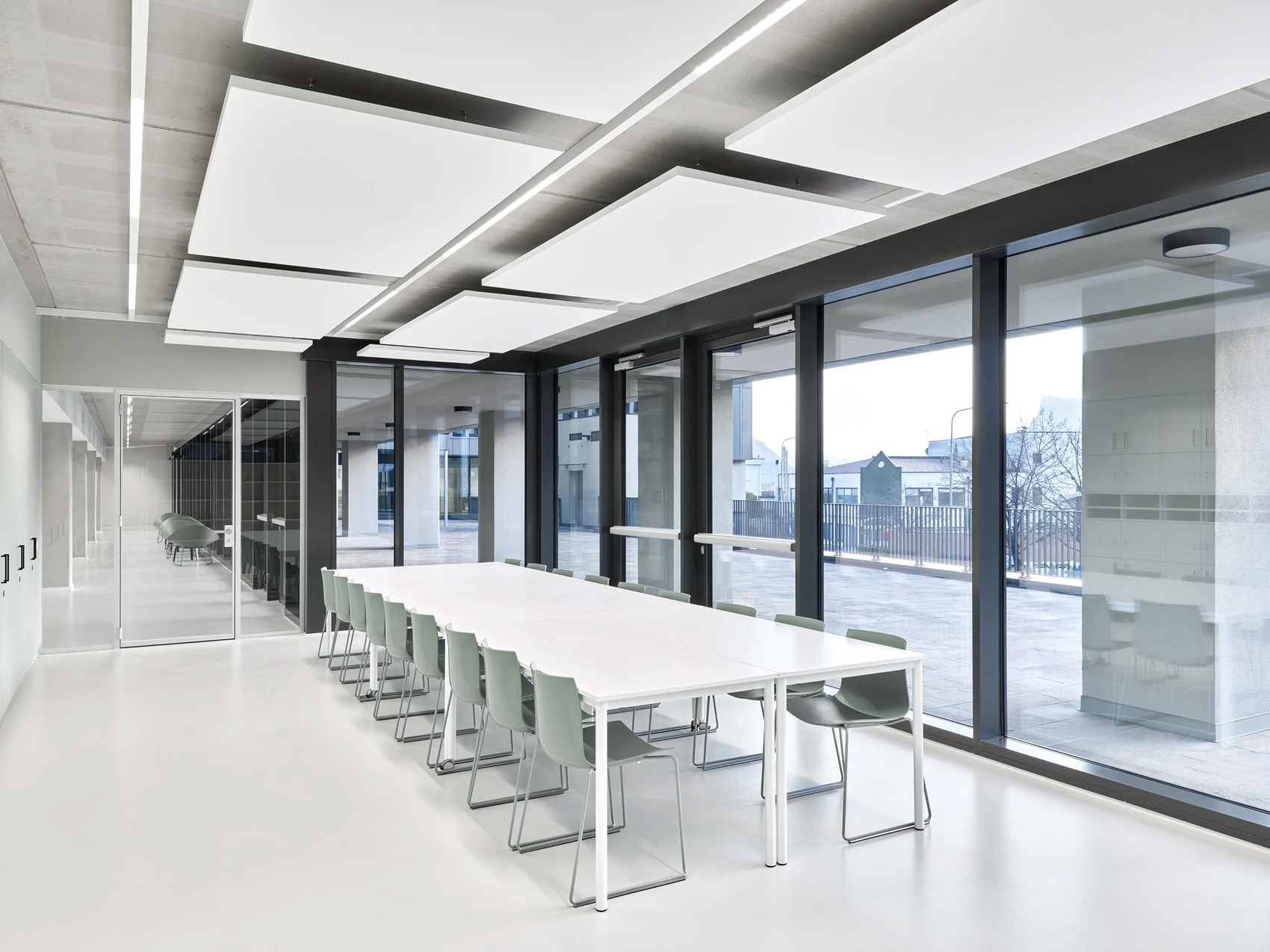
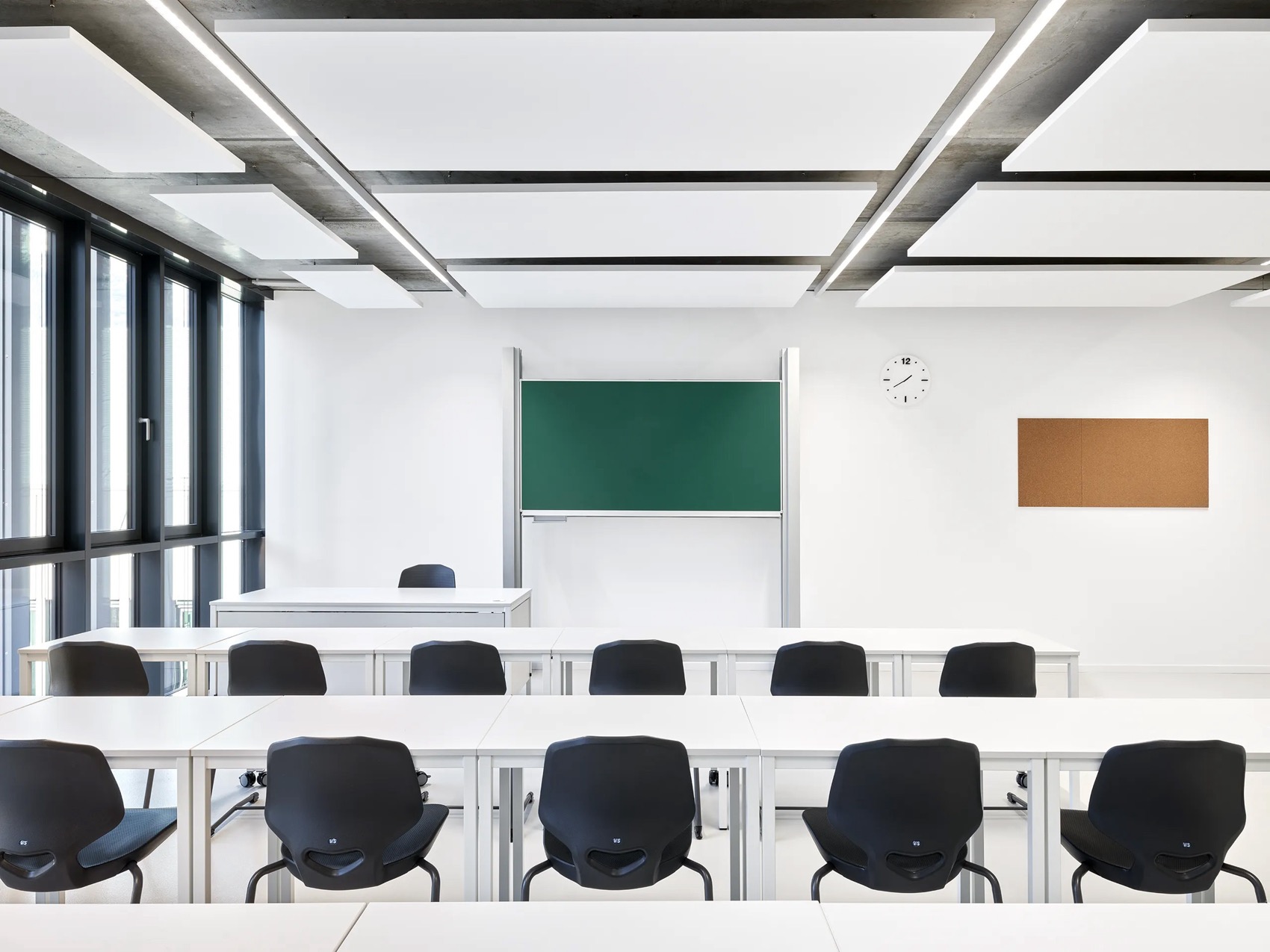
▼教室引入均匀而柔和的自然采光,Classroom illuminated by soft and even natural light
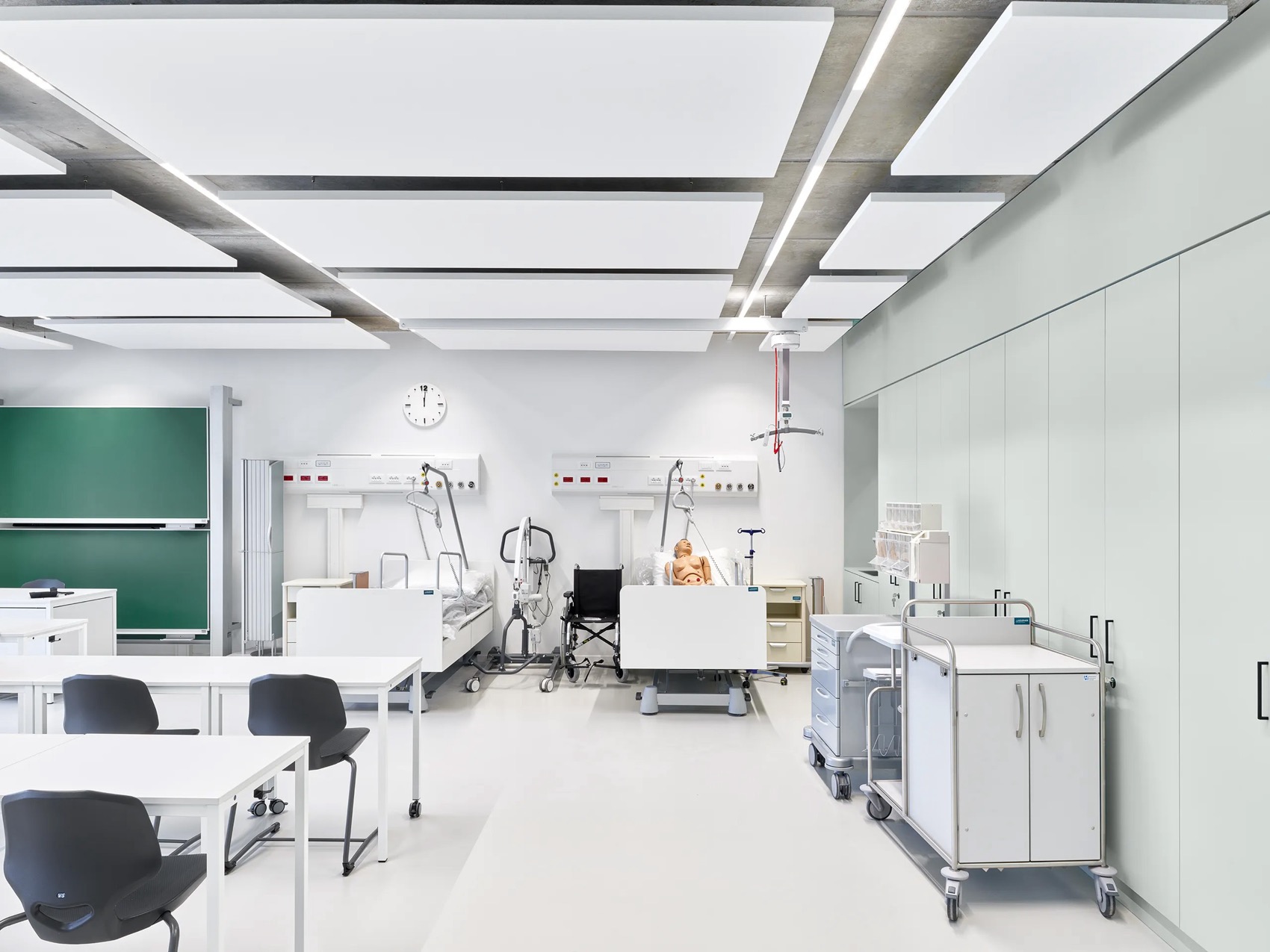
▼护理教学空间模拟真实医疗场景,Nursing training space simulating real medical scenarios
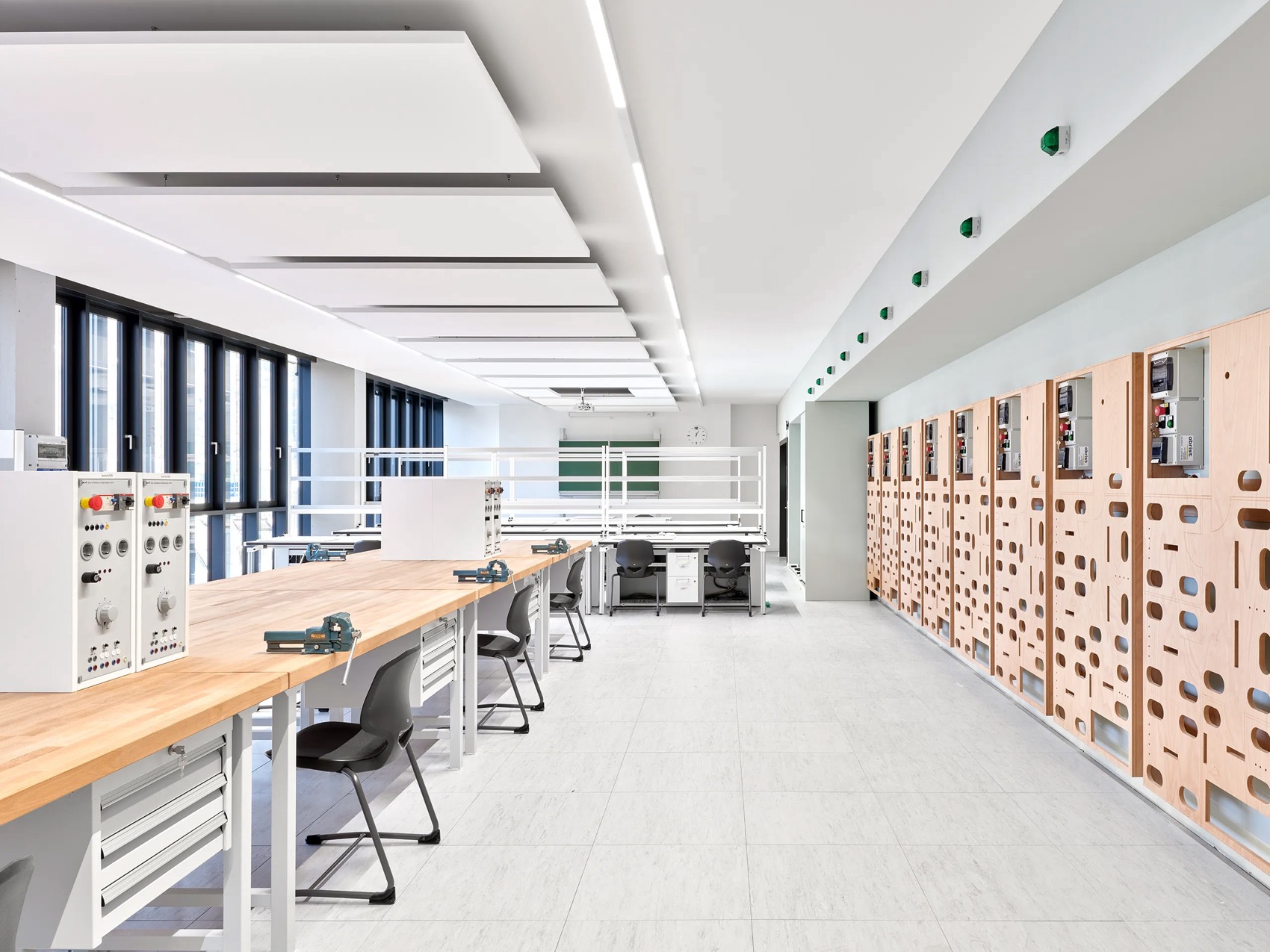
▼木质操作台构建理性的学习环境,Wooden worktables shaping a rational learning environment
锌钛板因其审美特质、耐久性、可回收性以及低维护需求而被选用,它体现了一种传统与创新之间的连续性。这种材料与建成环境及自然景观形成协调:晴朗天气下,它映射明亮天空;随着时间推移,其表面逐渐形成更深、更具矿物感的肌理色泽,让人联想到当地的土壤与岩石。建筑体量因此得以低调地融入景观之中,在改变感知体验的同时,不破坏整体形式的一致性。
Zinc-titanium was chosen for its aesthetic qualities, durability, recyclability, and low maintenance, representing a continuity between tradition and innovation. It harmonizes with the built and natural landscape: on clear days, it reflects the bright sky, while over time it develops a patina with deeper, mineral-like hues reminiscent of local earth and rock. The built volume integrates discreetly into the landscape, modifying perception without compromising formal coherence.
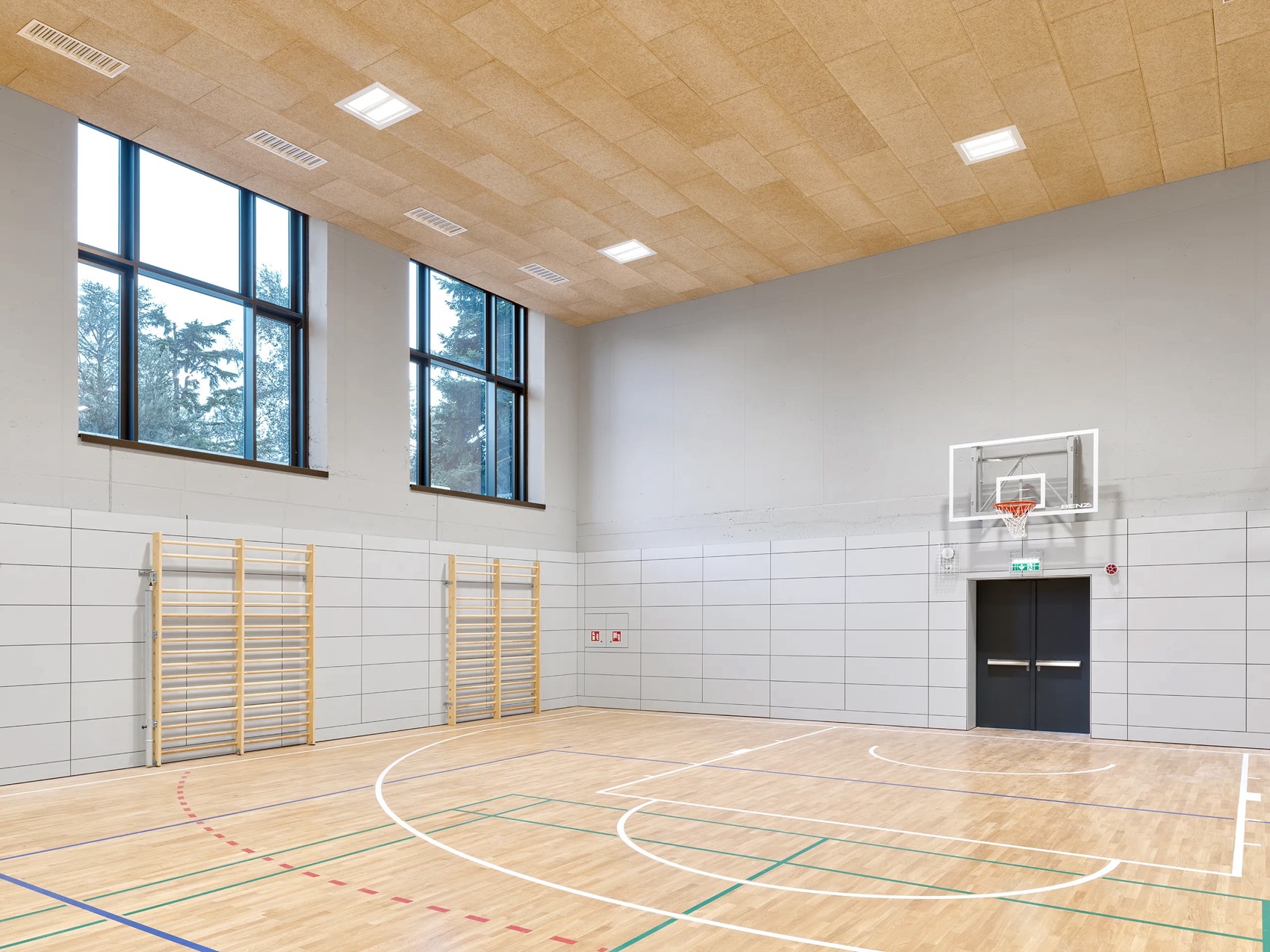
▼多功能运动场满足日常教学活动,Multi-purpose court supporting everyday school activities
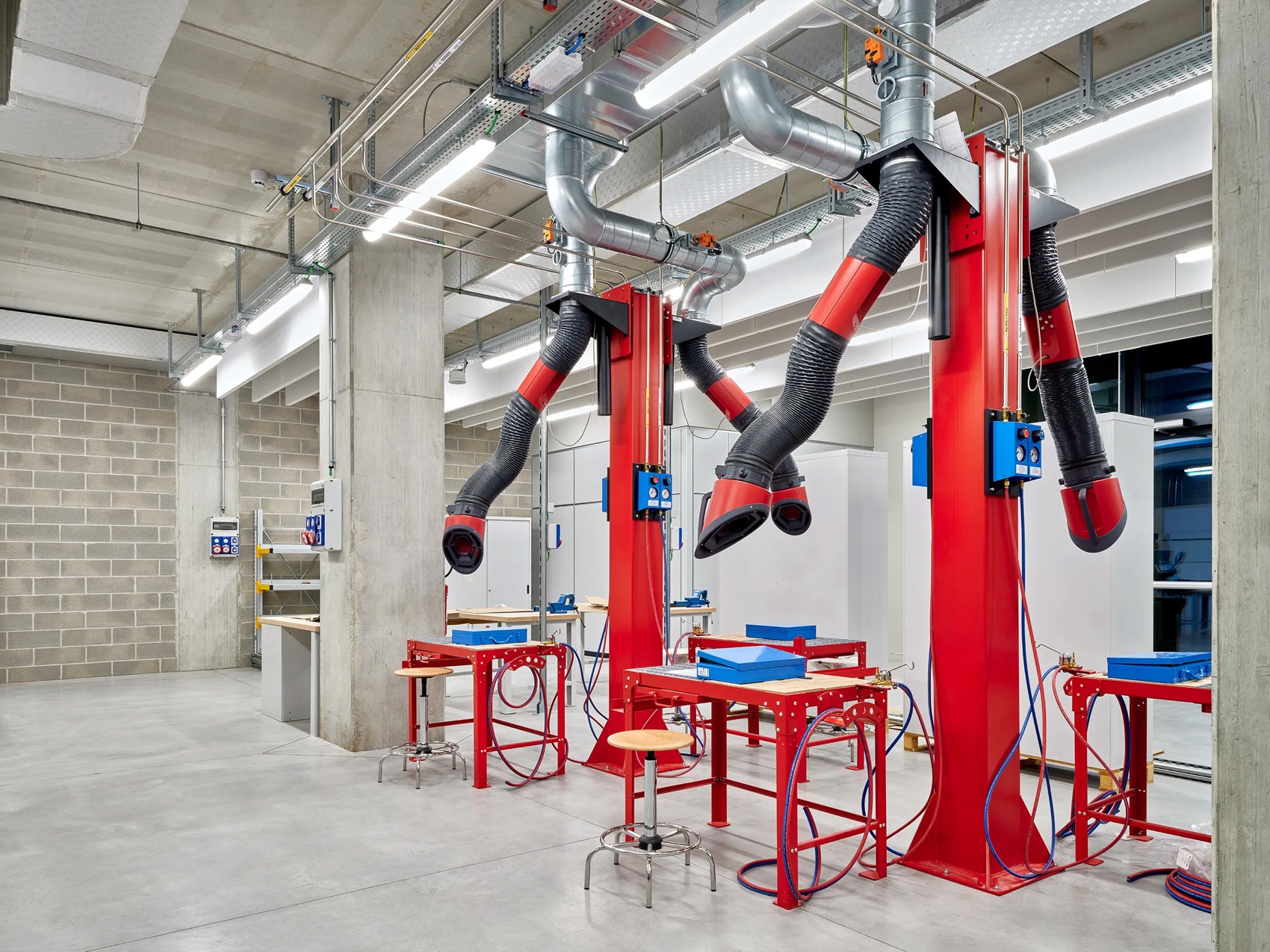
▼工业教学空间呈现直接的结构表达,Industrial training space expressing an exposed structural language
这一方法使项目获得了CasaClima/KlimaHouse Gold(金级学校标准)认证,并成为博尔扎诺自治省首个采用CAM(最低环境标准)的公共建筑。除技术性能之外,这一建造策略更体现出一种伦理原则:以诚实、节制与耐久的方式进行建造,使建筑的长期性成为一种文化价值,以及一种面向社区与未来建成环境的责任实践。
This approach enabled the project to achieve CasaClima/KlimaHouse Gold certification (school protocol) and marks the first public building in the Province of Bolzano to adopt CAM/Minimum Environmental Criteria. Beyond technical performance, the construction strategy embodies an ethical principle: building with honesty, economy, and durability, so that longevity becomes a cultural value and an act of responsibility toward the community and the future of the built environment.
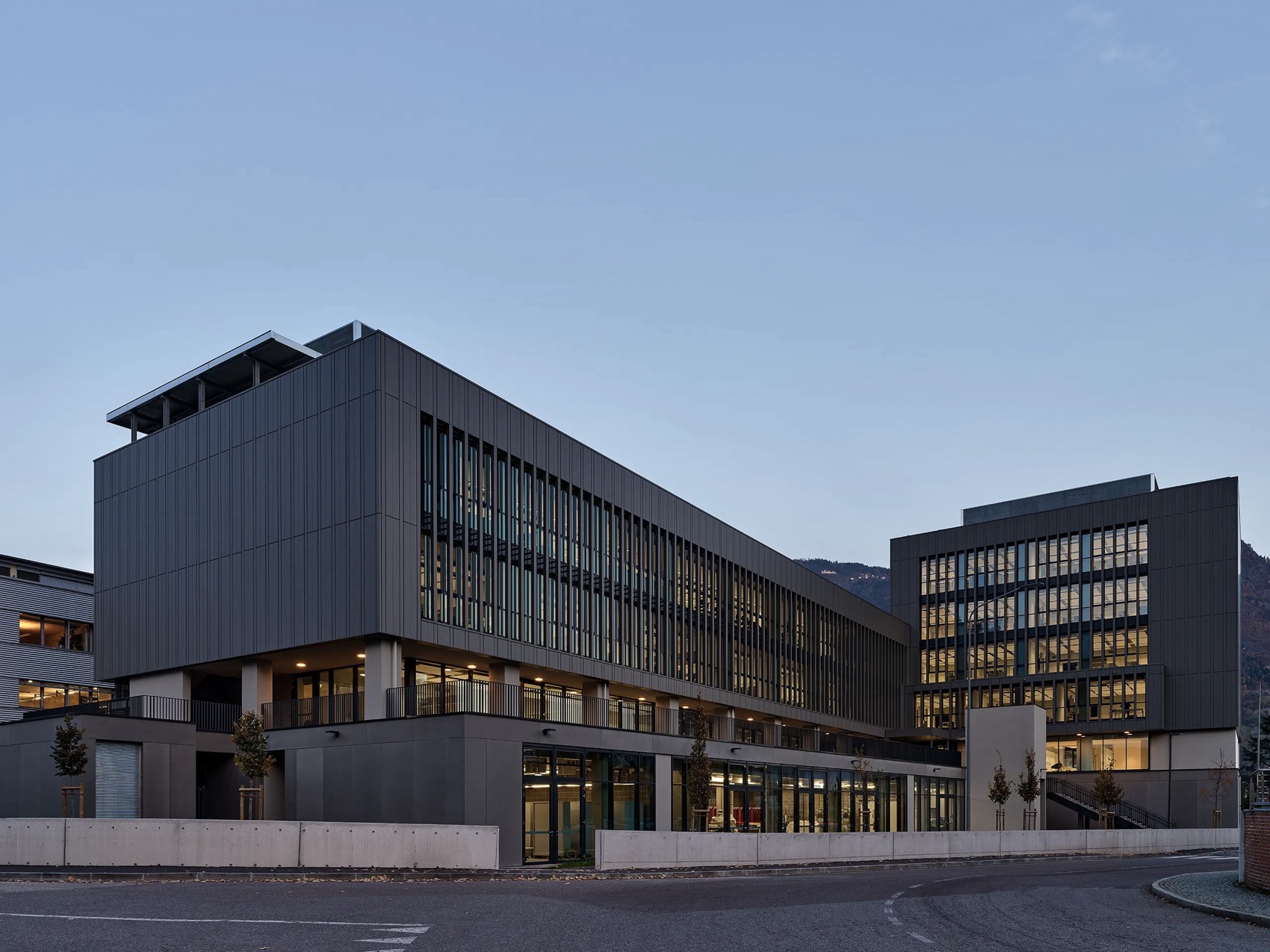
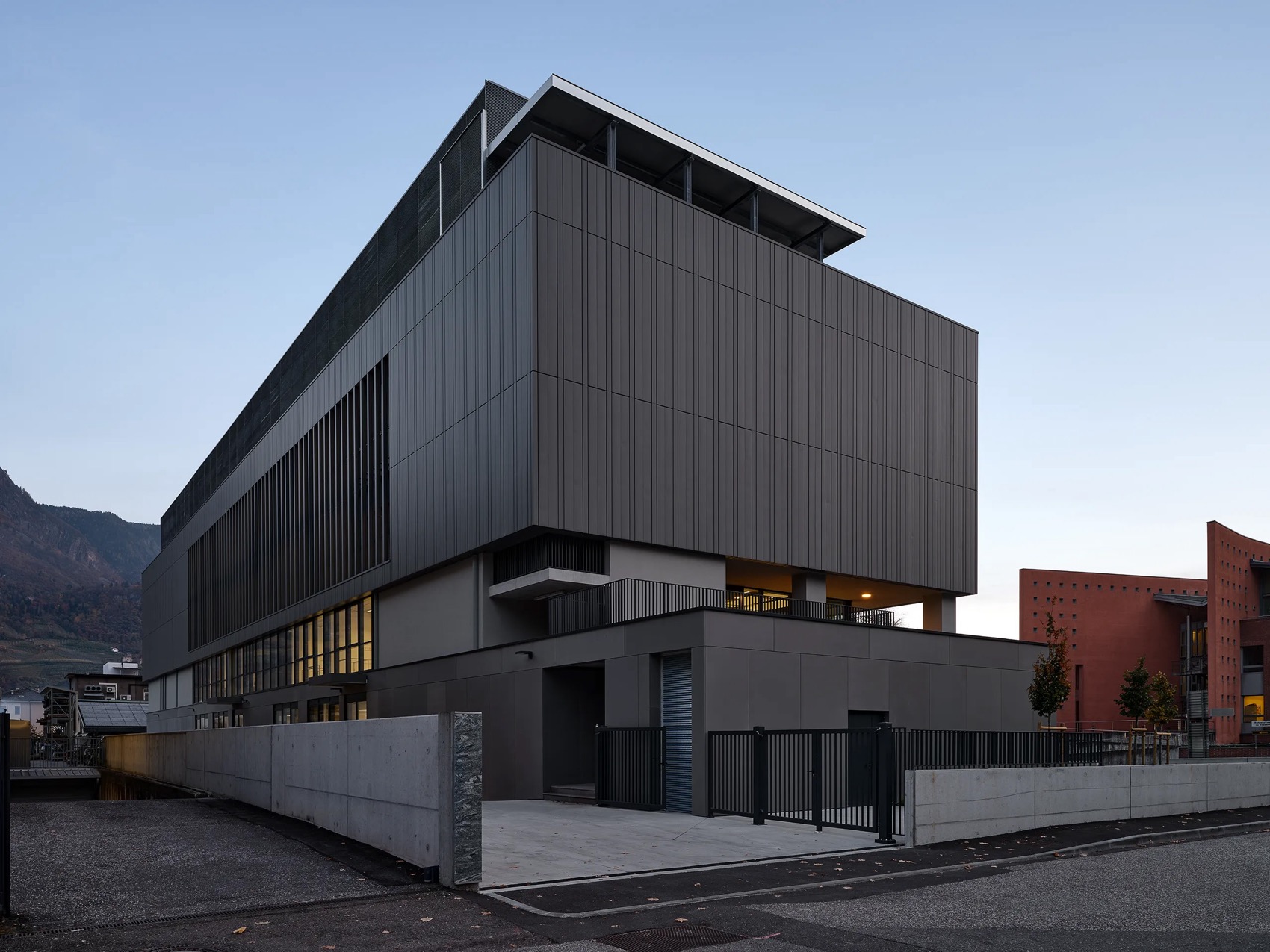
▼建筑体量在暮色中呈现清晰轮廓,Architectural volumes outlined against the evening sky
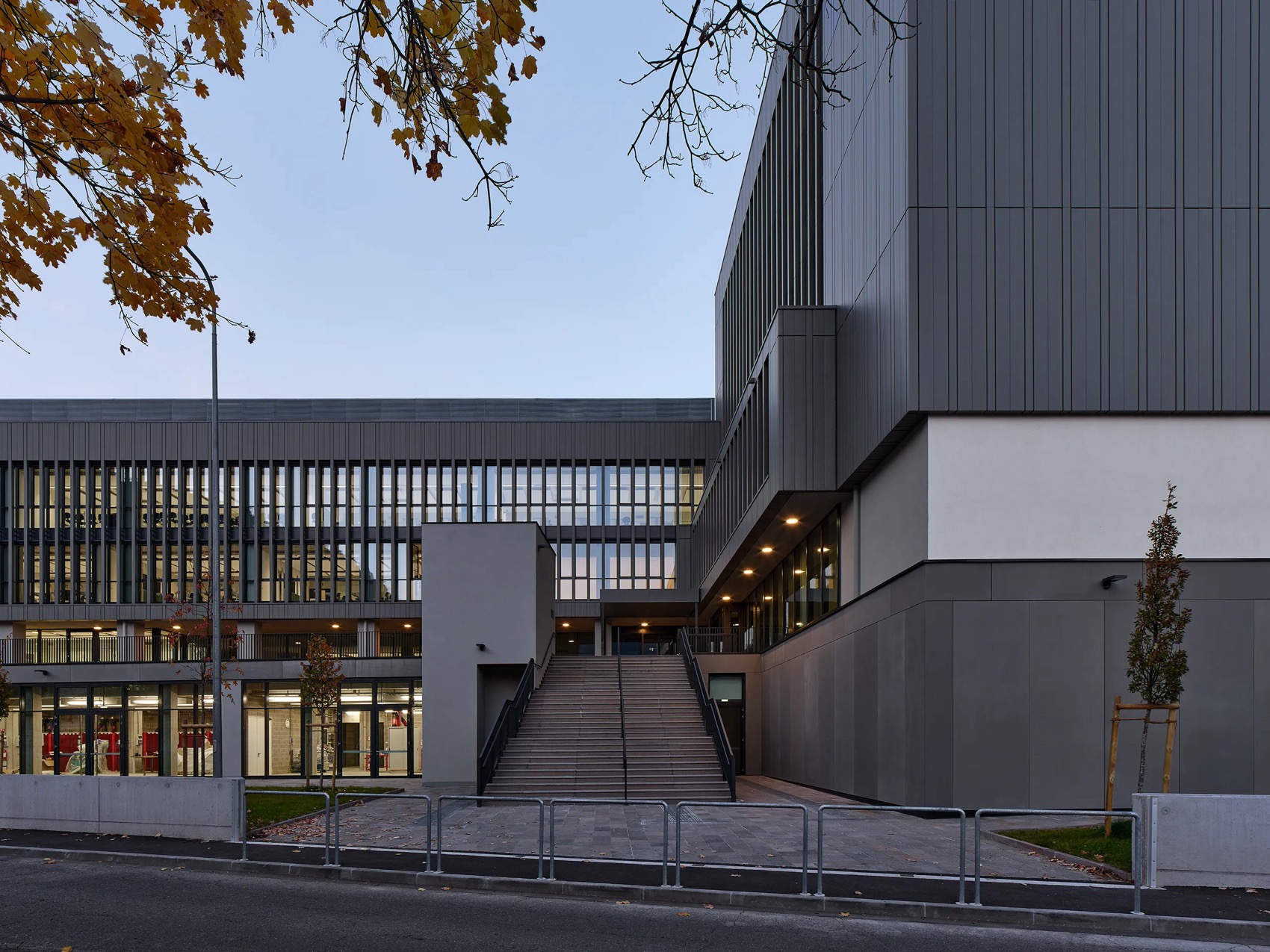
▼教学空间的灯光透过连续立面展开,Illuminated learning spaces revealed through the continuous façade
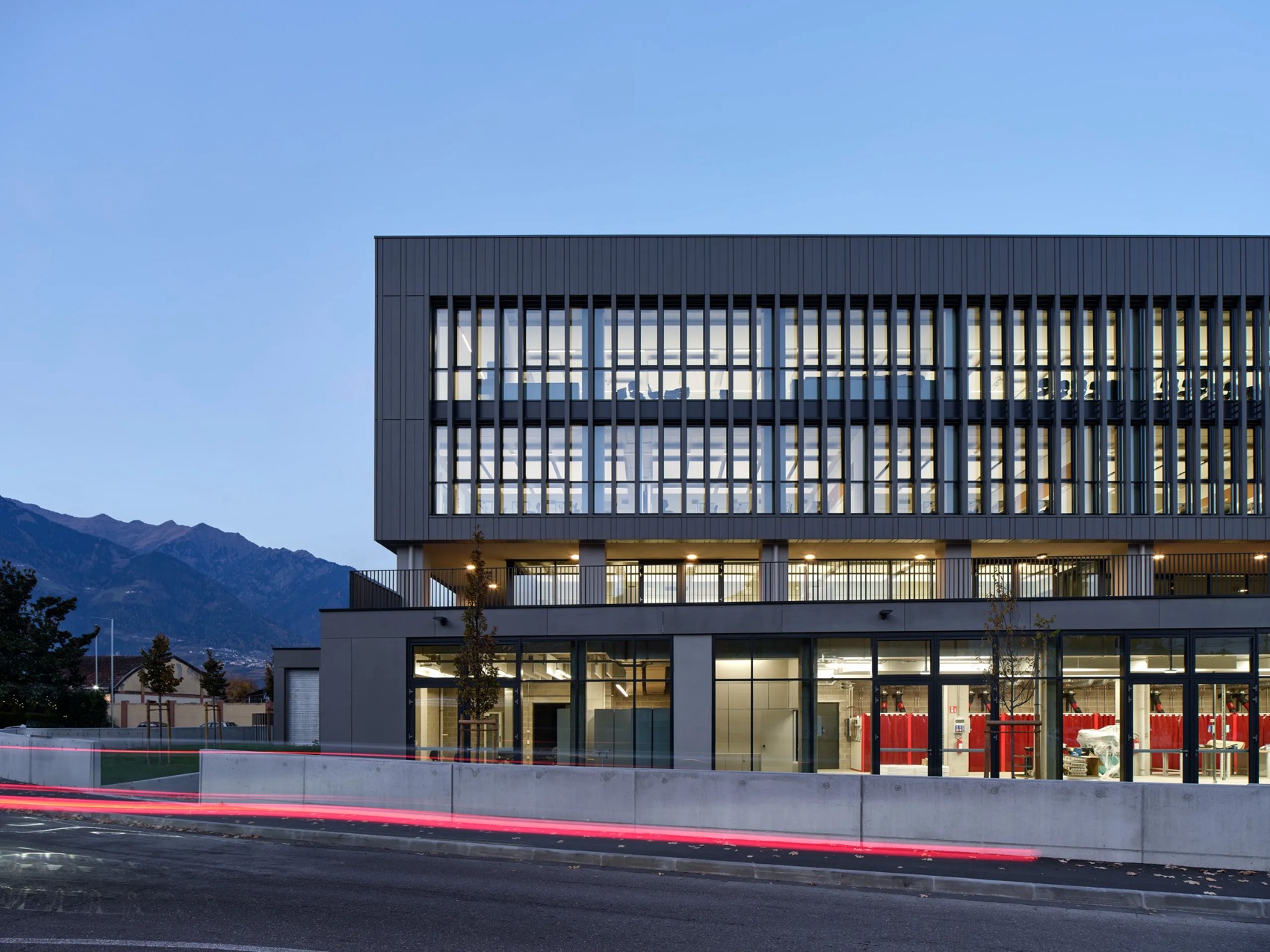
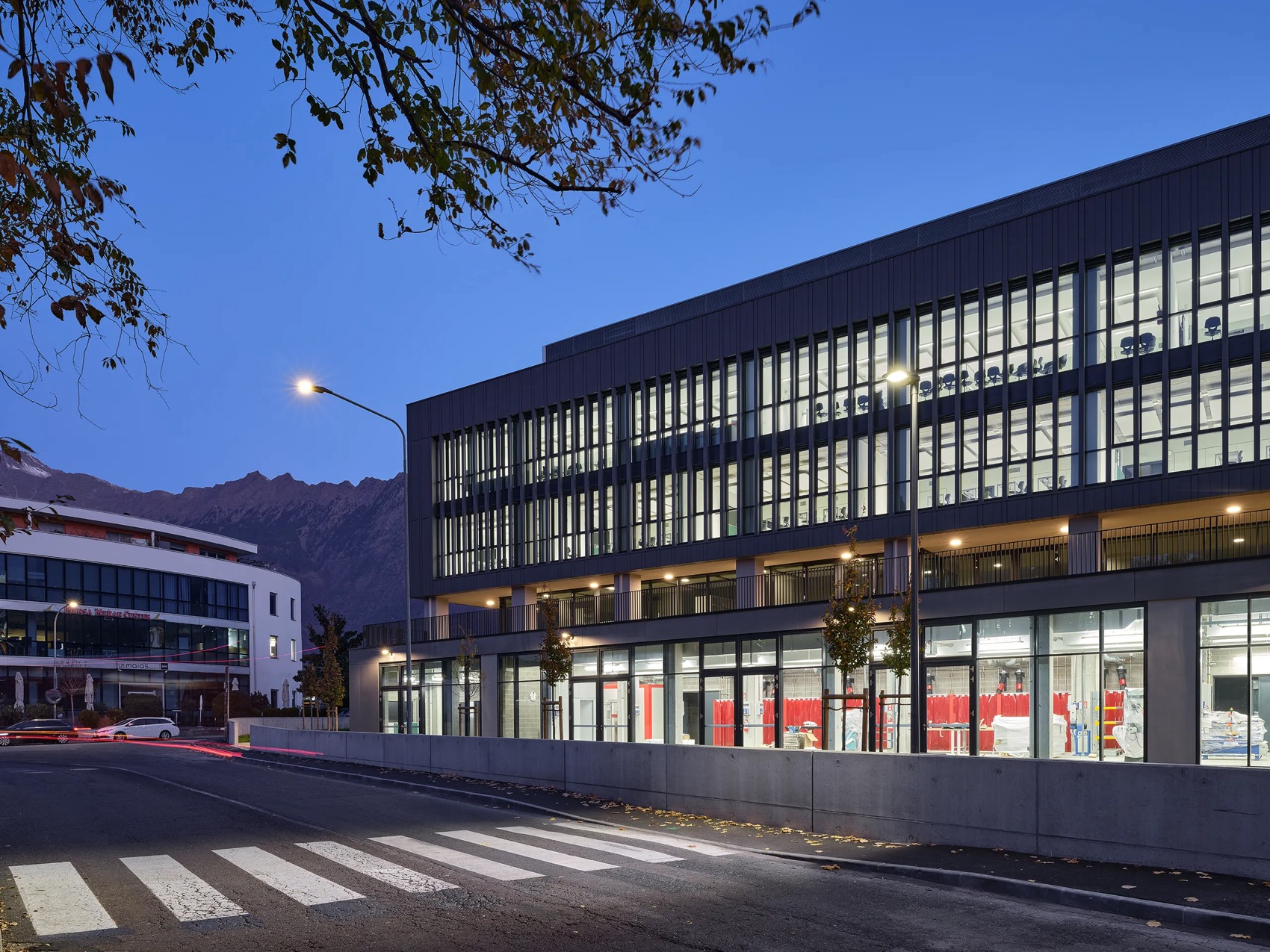
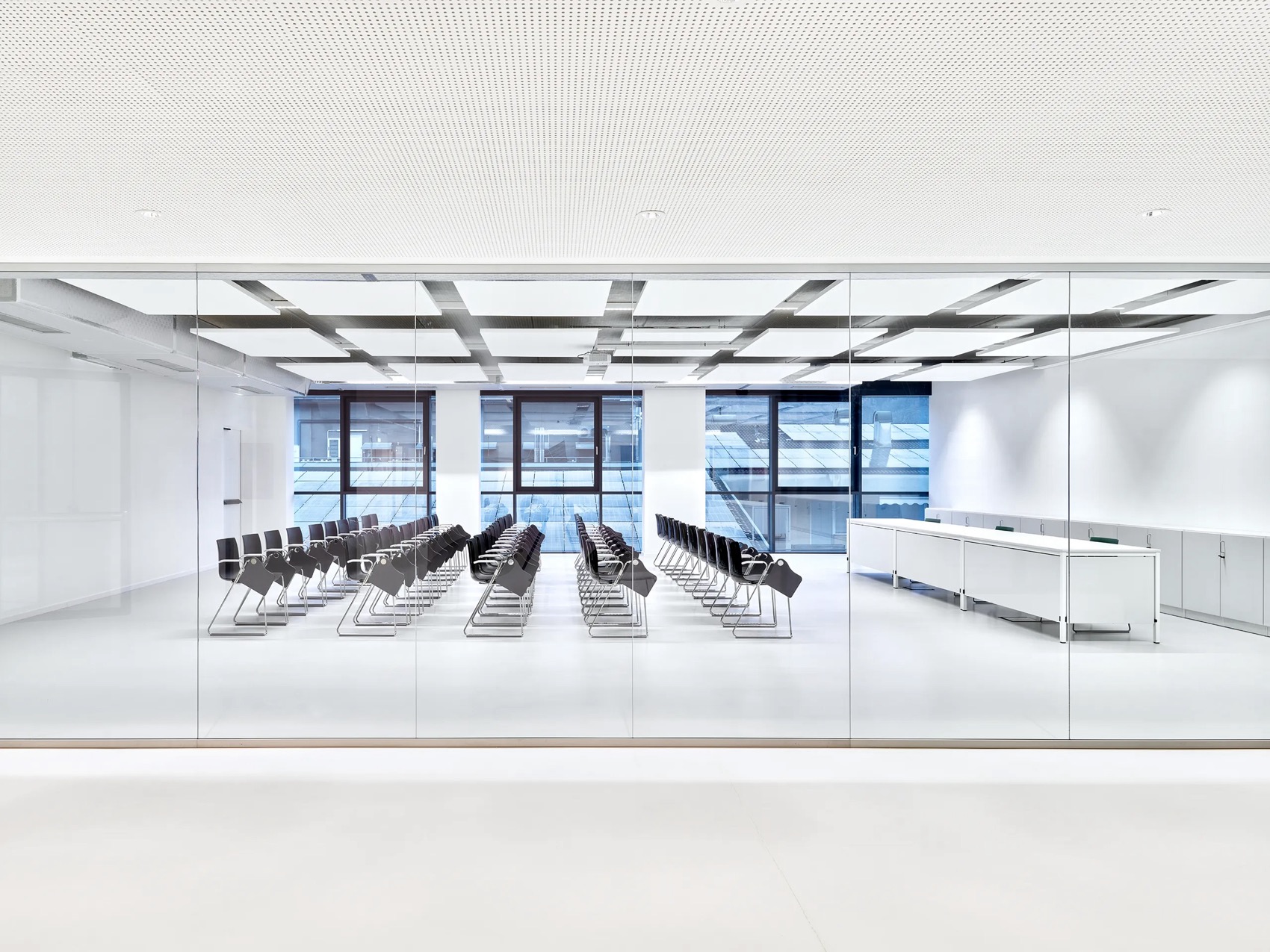
▼通透立面展示内部教学活动,Transparent façade revealing interior learning activities
▼项目区位图,Site plan
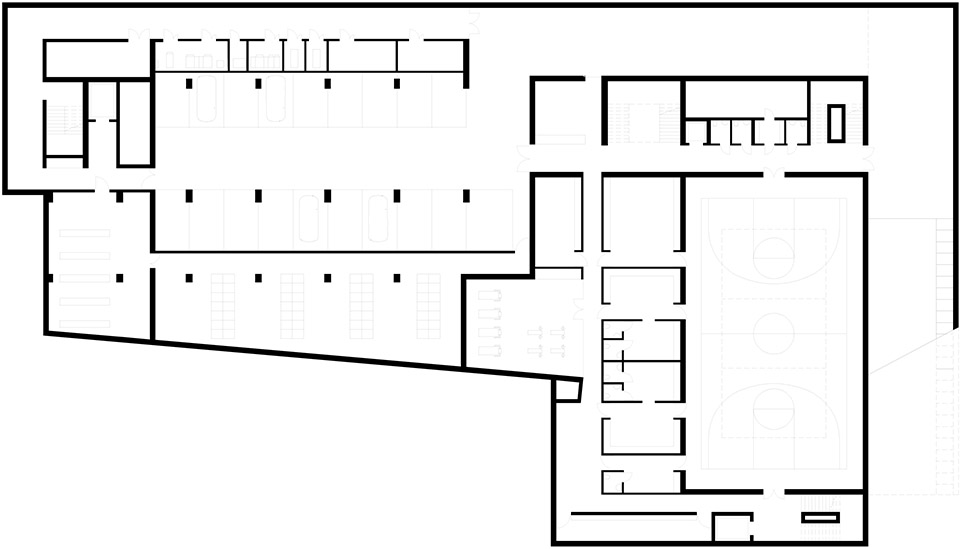
▼地下一层平面图,Basement level 1 floor plan
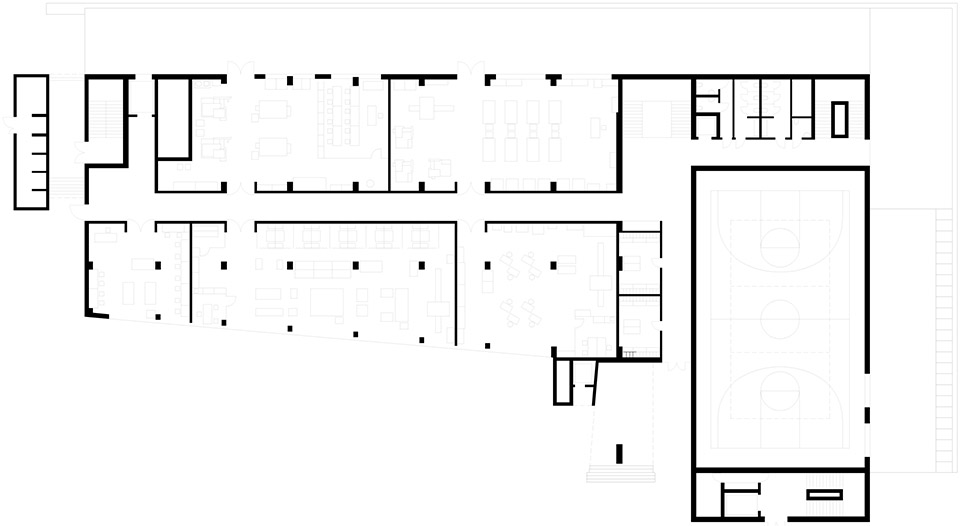
▼地面层平面图,Ground floor plan
▼一层平面图,First floor plan
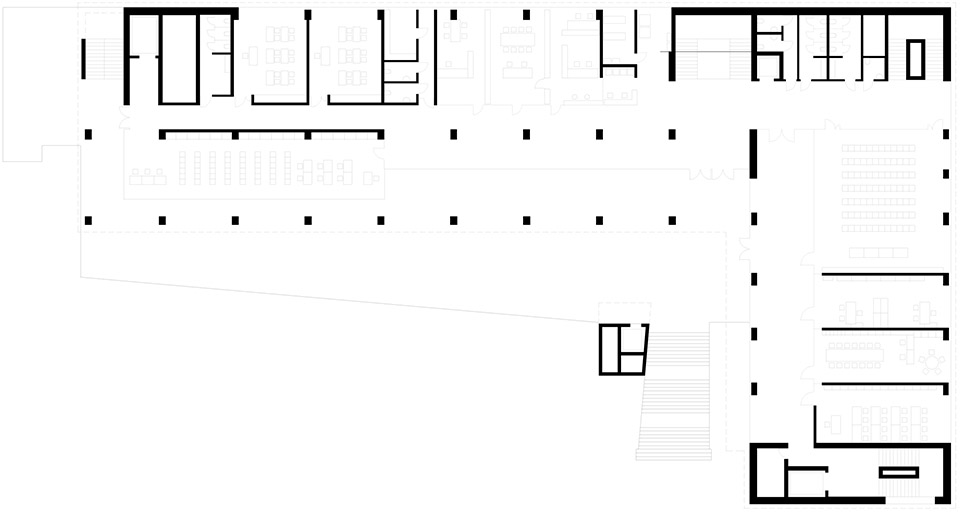
▼二层平面图,Second floor plan
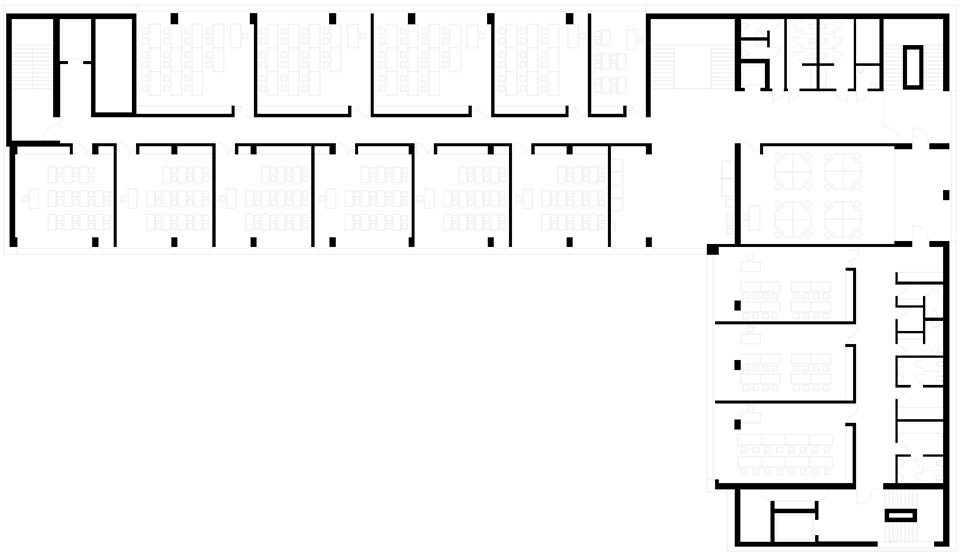
▼北立面图,North elevation
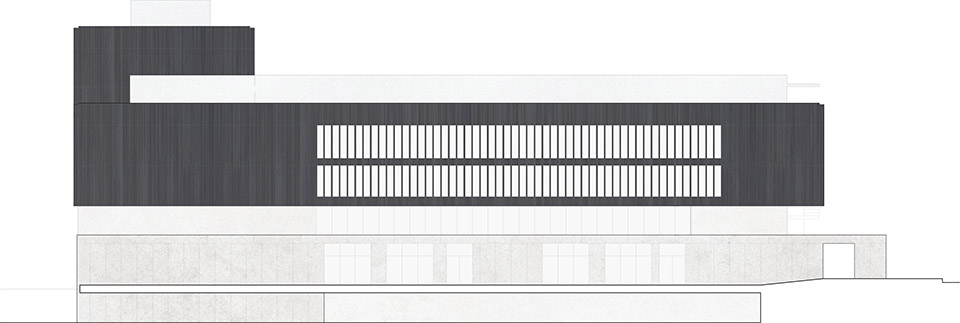
▼南立面图,South elevation
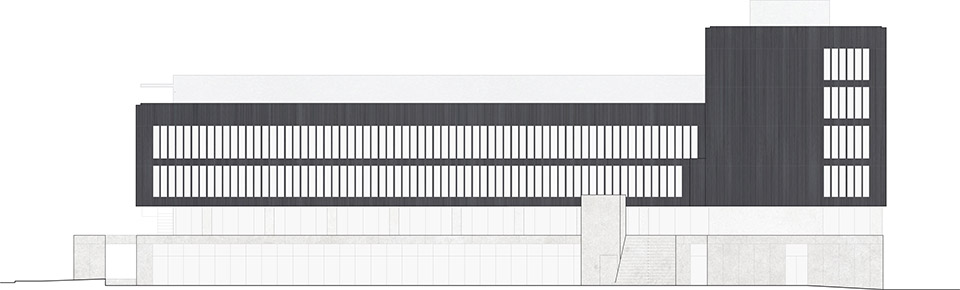
▼东立面图,East elevation
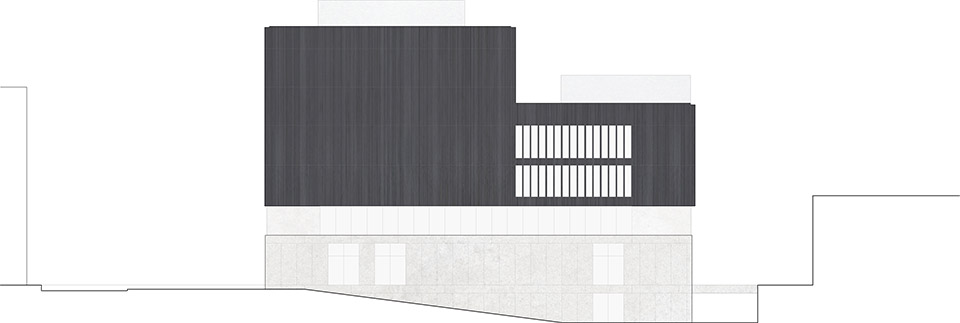
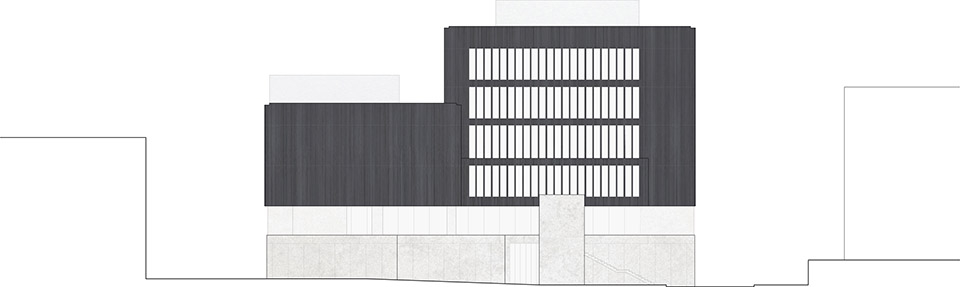
▼西立面图,West elevation
CLIENT:
Autonomous Province of Bolzano
LOCATION:
Merano – BZ – ITALY
Project Timeline:
Competition 2013
Construction 2023-2026
DIMENSIONS:
6832 m²
PERFORMANCE:
CasaClima/KlimaHouse “Gold”
COST:
€32 million
PHOTOGRAPHS:
© Federico Covre
PROJECT TEAM:
Architectural Design and Interiors: arch. Giovanni Maggioni, arch. Mirko Noris, arch. Valerio Tolve
General Coordination and Structural Design: arch. Marco Robecchi
Safety Coordination and Fire Strategy: arch. Giovanni Maggioni
MEP Engineering: Progetto Clima (Associated Thermotechnical Studio)
CONSULTANTS:
Acoustics: dr. Carola Aratari
Environmental Compliance (CAM): eng. Anja Begrich
CasaClima Certification: eng. Michele Carlini
Special Foundations: Engineering Studio Parravicini & Mancinelli
Geology: Geologia e Ambiente
Special Electrical Systems: ind. eng. Emanuele Lattaruli
Facade Fire Safety: eng. Antonino Panico
CONSTRUCTION MANAGEMENT:
Architectural Works and Interiors: Busselli Scherer
Structures and Safety Coordination: Pfeifer Partners
MEP Systems: Energytech
Geology: Alpin Geologie
CONTRACTORS:
Main Contractor: Plattner S.p.A.
Facades: Pichler Projects S.r.l.
Electrical Systems: Obrist S.r.l.
Mechanical Systems: Atzwanger S.p.A.
Zinc-Titanium Facade Cladding (zintek®): STAMPFL s.r.l.
Curtain walsl: Schüco