宁波新世界K11立面设计 / LEAD
位于中国浙江宁波核心区域的“The Park by K11”,是一项大型综合功能开发项目。其长达一公里的建筑界面,在四个相互连接的地块之间建立起清晰性、整体性与丰富的空间层次。项目由Laboratory for Explorative Architecture & Design(LEAD)设计,并与AGC Design Ltd.共同落地实施,回应了如何在整合复杂多元功能的同时,仍然能够针对朝向、公共空间以及微观场地语境作出精准回应这一挑战。
Located in the heart of Ningbo in Zhejiang, China, “The Park by K11” is a major mixed-use development whose one-kilometre envelope establishes clarity, coherence, and spatial richness across four interconnected plots. Designed by Laboratory for Explorative Architecture & Design (LEAD) and delivered with AGC Design Ltd., the project addresses the challenge of unifying a large and diverse programme while remaining responsive to orientation, public realm, and microcontext.
▼立面鸟瞰,aerial view of the facade
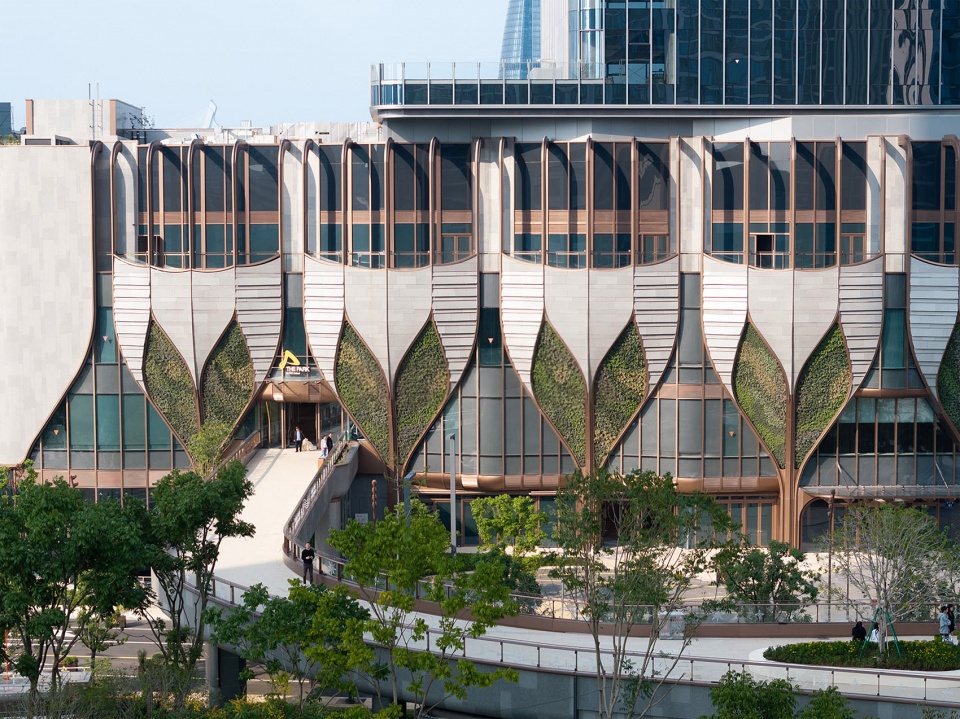
▼立面概览,overview of the facade
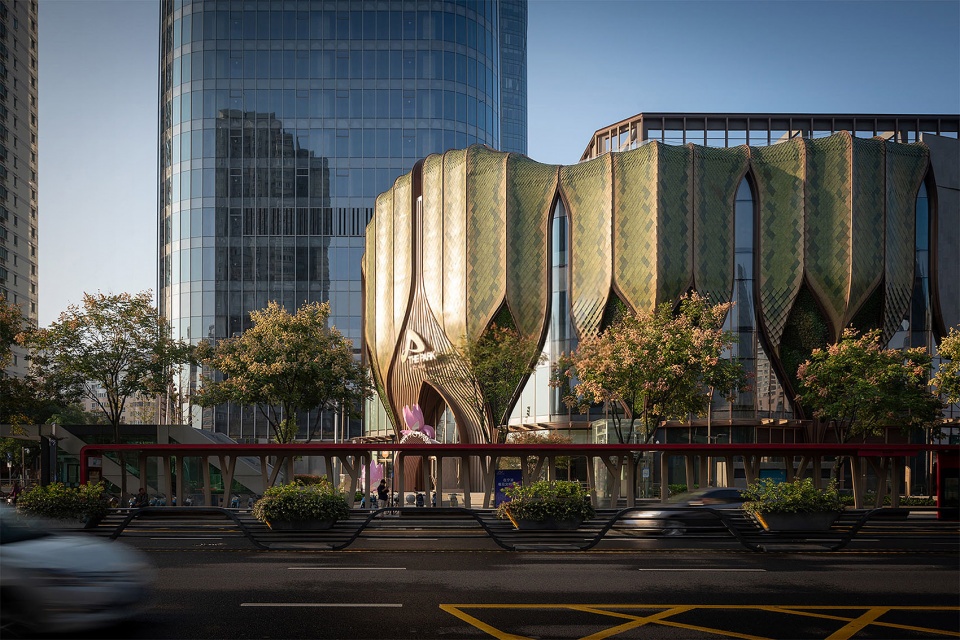
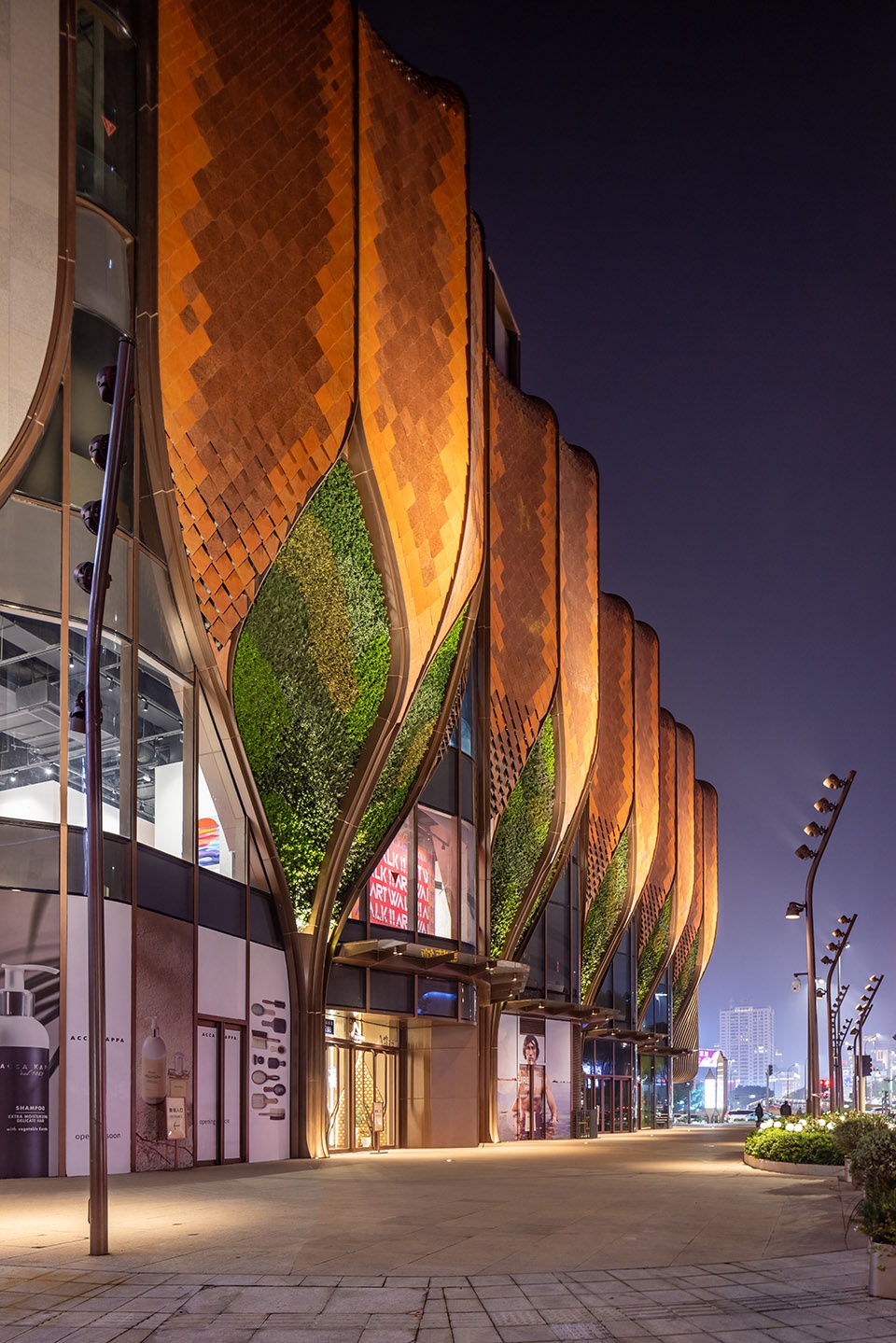
▼立面夜景,night view of the facade
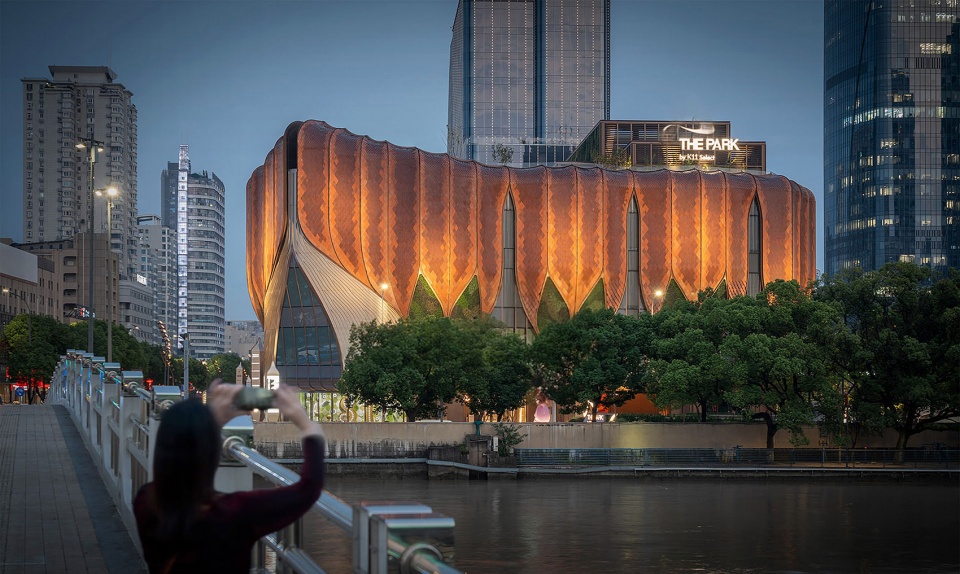
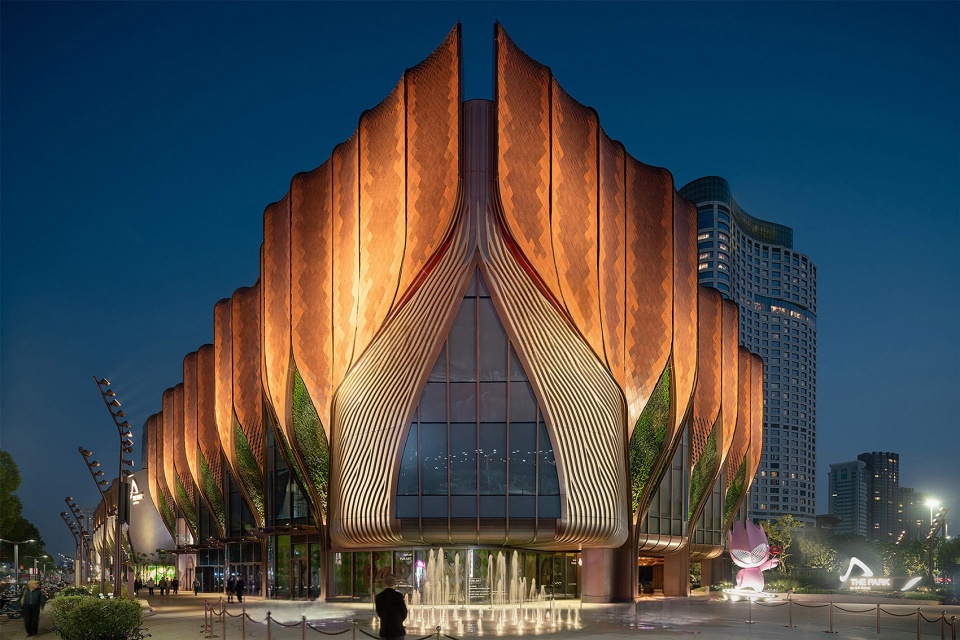
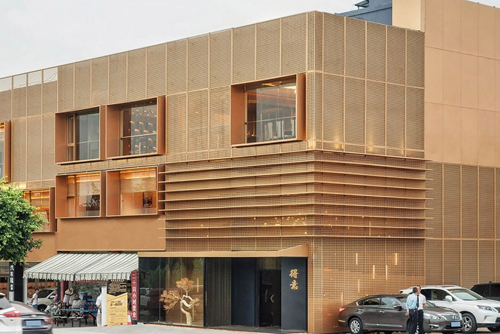
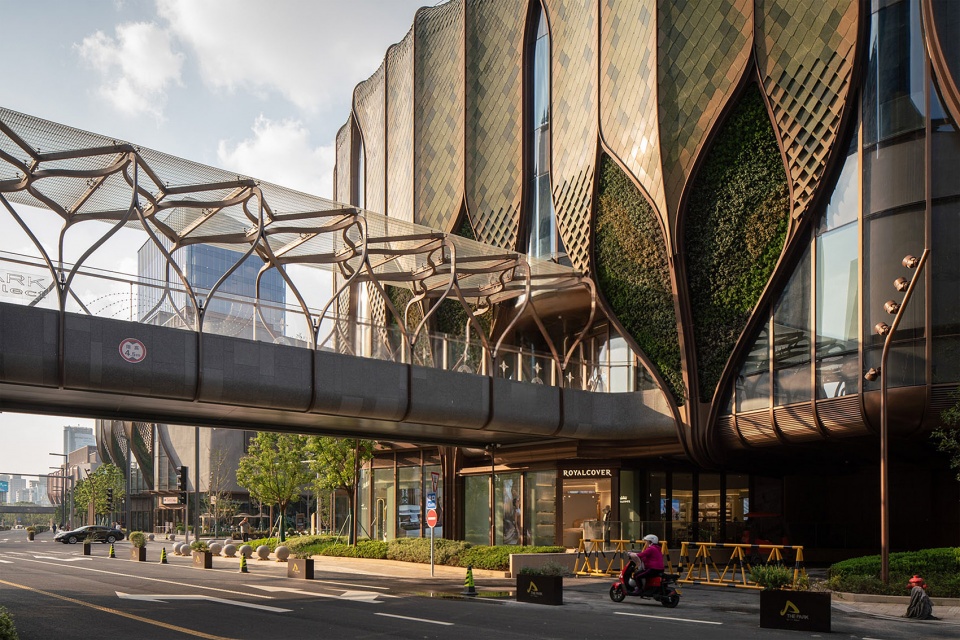
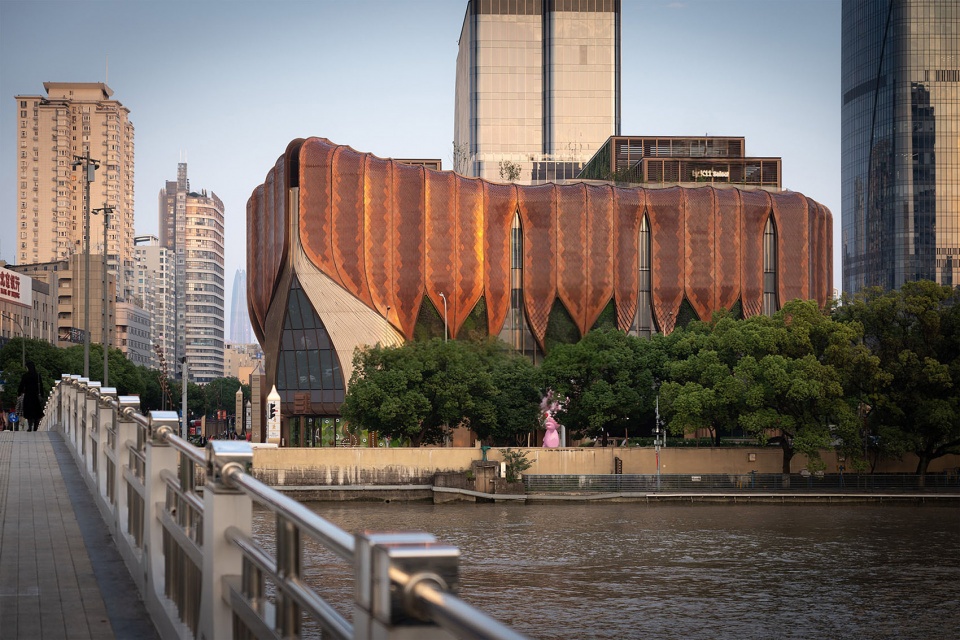
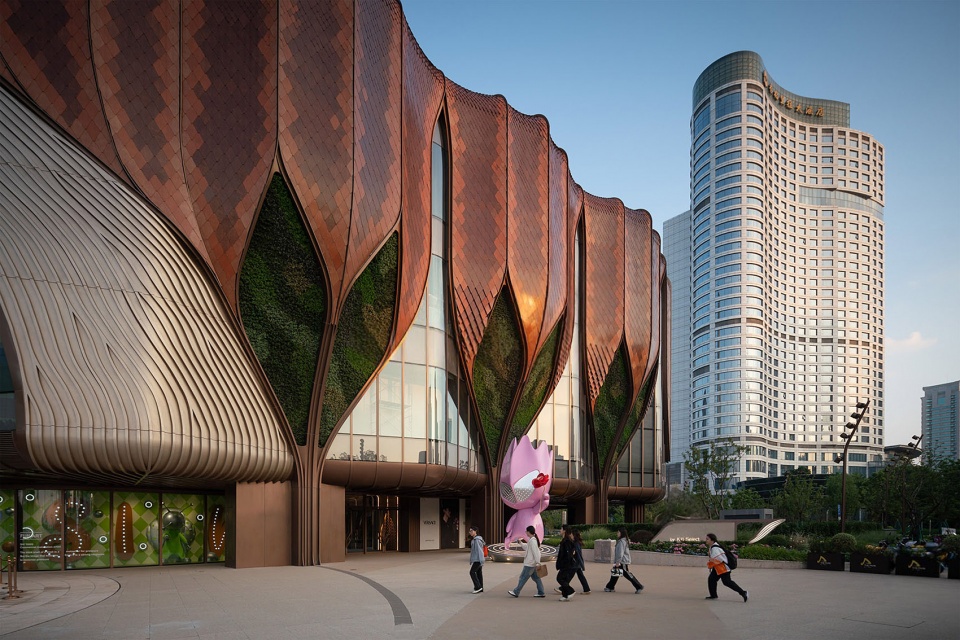
项目在高密度城市环境中融合了文化、商业与艺术功能,因此需要一种能够超越传统商业立面类型的界面策略。设计采用了一套在视觉上清晰可辨、材料表达精准的系统,由预制金属瓦片构成,以回应光线、阴影与运动变化。简单的构件生成出层叠而丰富的效果:沿街店铺界面向外弯曲,以激活街道边缘;而上部表皮则通过颜色、密度与几何关系的变化,使不同建筑体量彼此区分,同时又不破坏整体形象的一致性。
The development integrates cultural, commercial, and artistic functions within a dense urban setting, prompting the need for a facade strategy that could move beyond standard retail typologies. The design adopts a visually legible, materially precise system composed of prefabricated metal shingles that register light, shadow, and movement. Simple components generate layered effects: shopfronts curve outward to activate the street edge, while the upper cladding introduces shiftsin colour, density, and geometry that distinguish each volume without compromising the overall identity.
▼激活街道边缘,activate the street edge
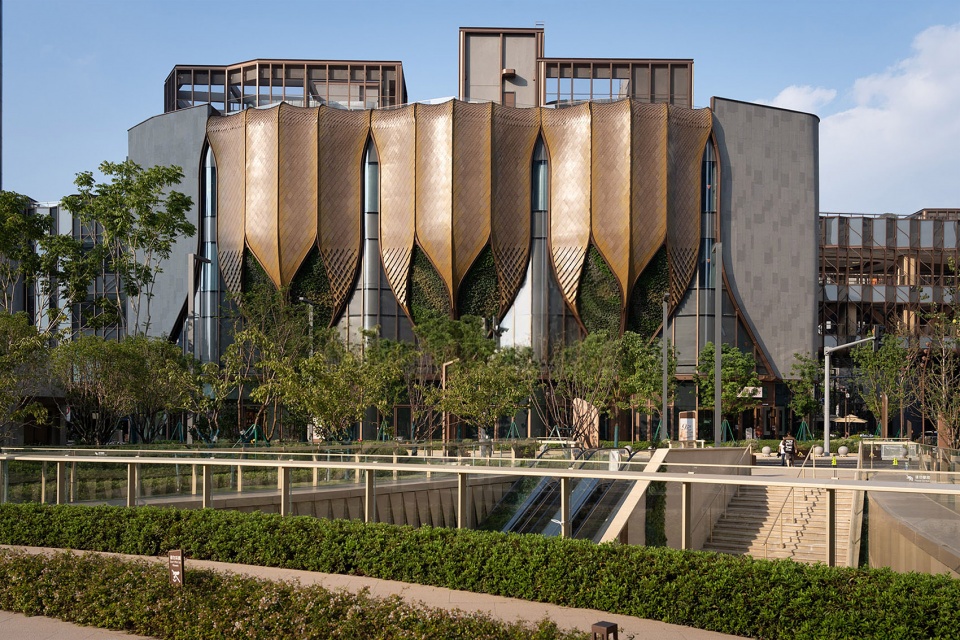
▼连廊与立面,corridor and facade
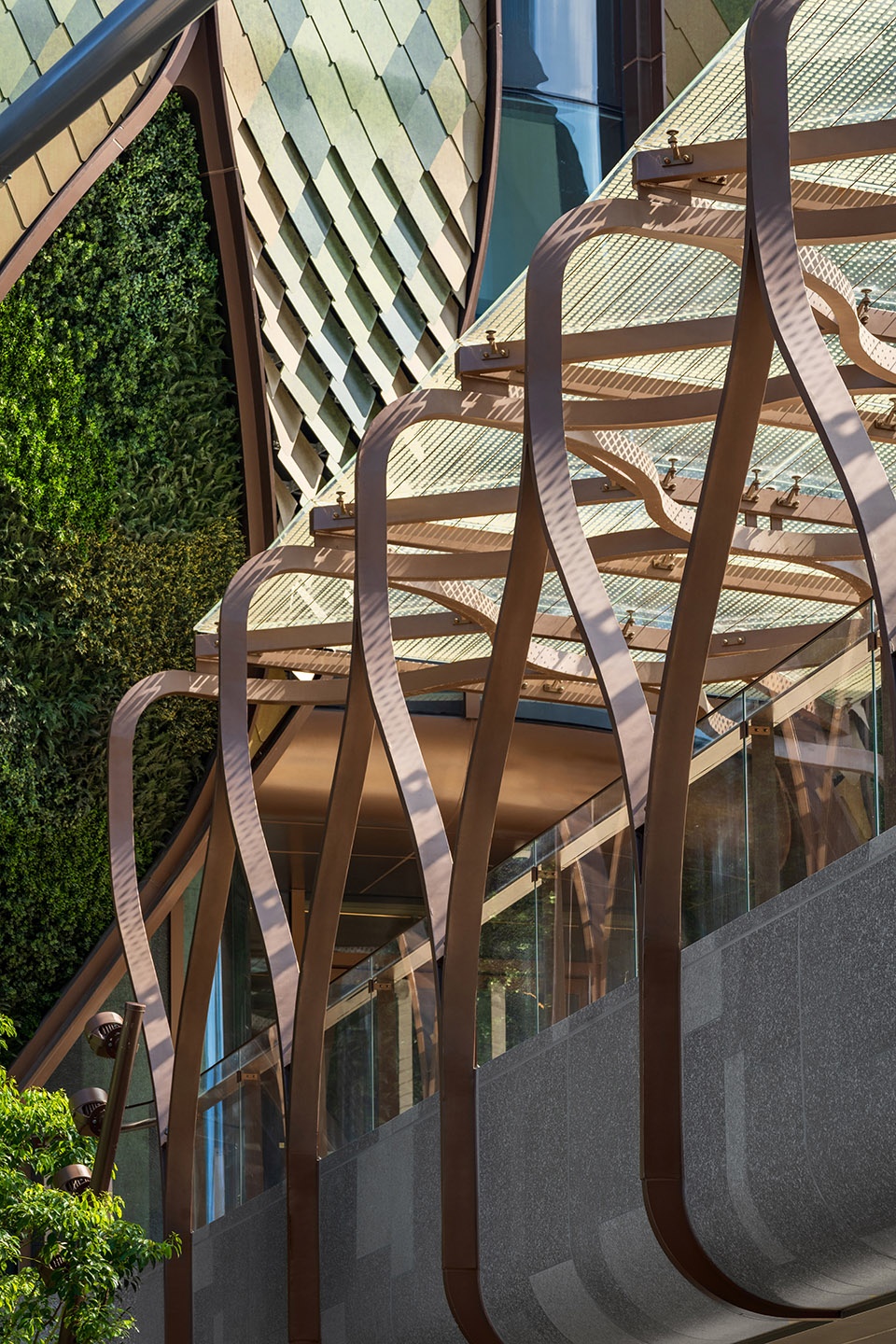
在首层,一条连续的通透玻璃界面形成了高度渗透性,使每一个商业单元都能够直接与街道发生联系。这一透明带进一步沿立面向上延伸,形成狭长的垂直玻璃切口,在保持室内活动与城市之间视觉联系的同时,也削弱了整体建筑体量的厚重感。
▼地块1 主立柱,Plot-1 main mullions
At ground level, a continuous band of transparent glazing creates permeability and direct street engagement for each unit. This strip extends vertically through the facade as a narrow-glazed incision, maintaining a visual connection between interior activity and the city above, and breaking down the perceived mass of the blocks.
▼下沉广场,sunken plaza
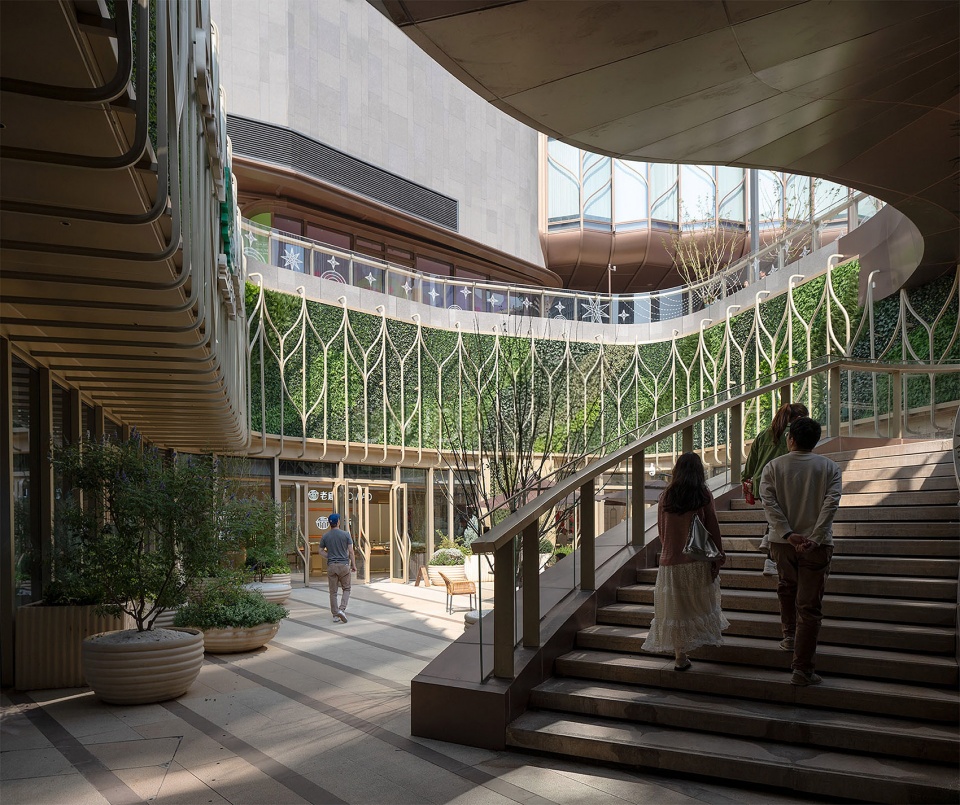
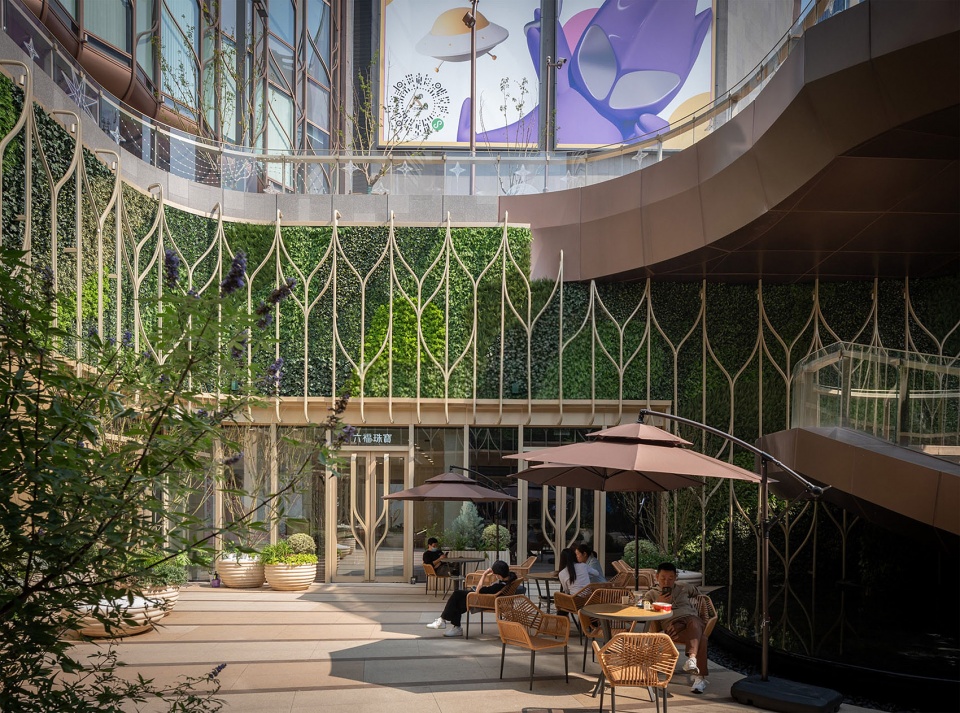
▼入口设计,entrance design
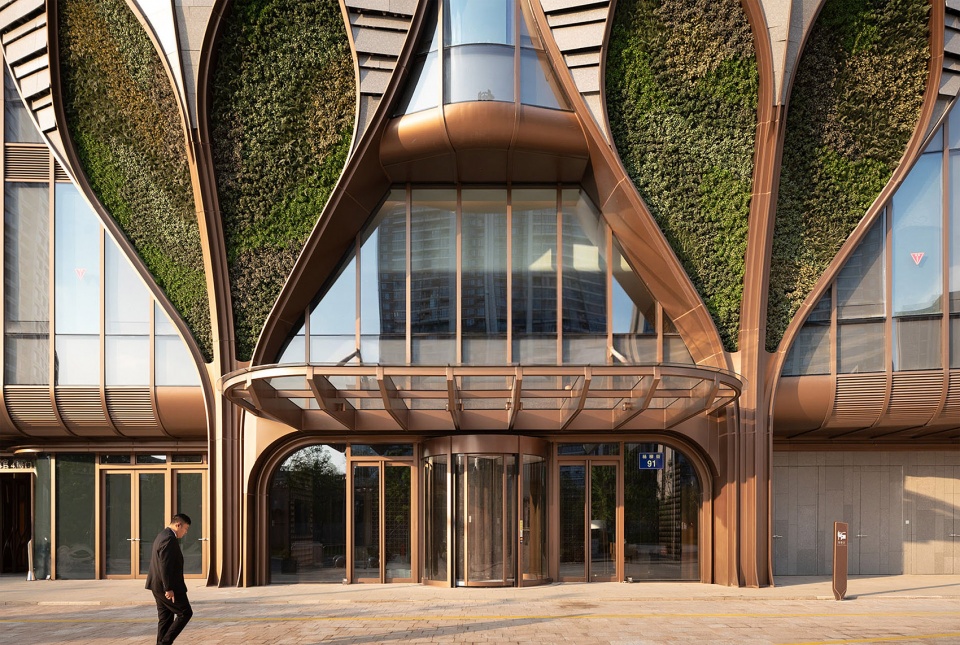
▼入口设计,entrance design
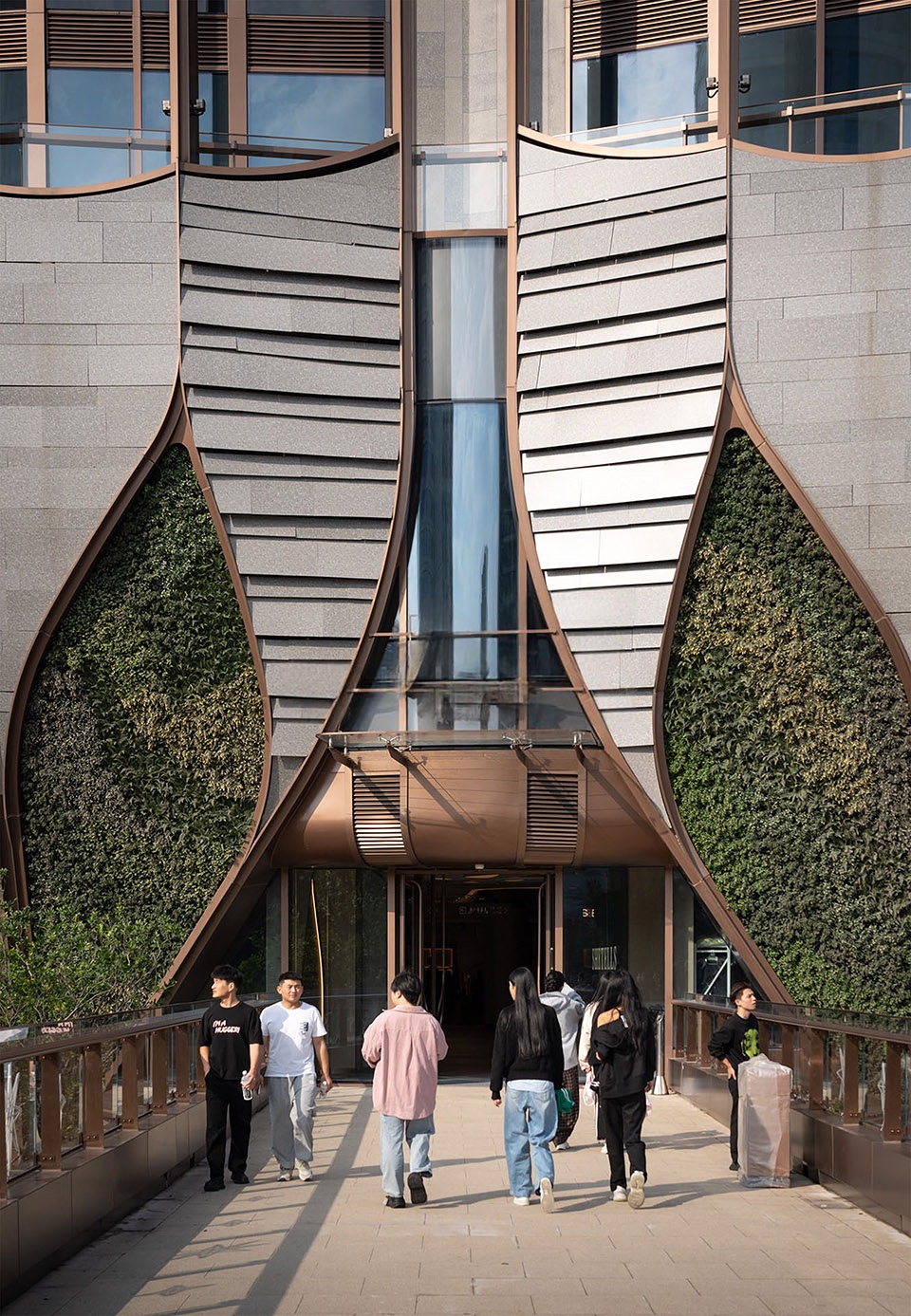
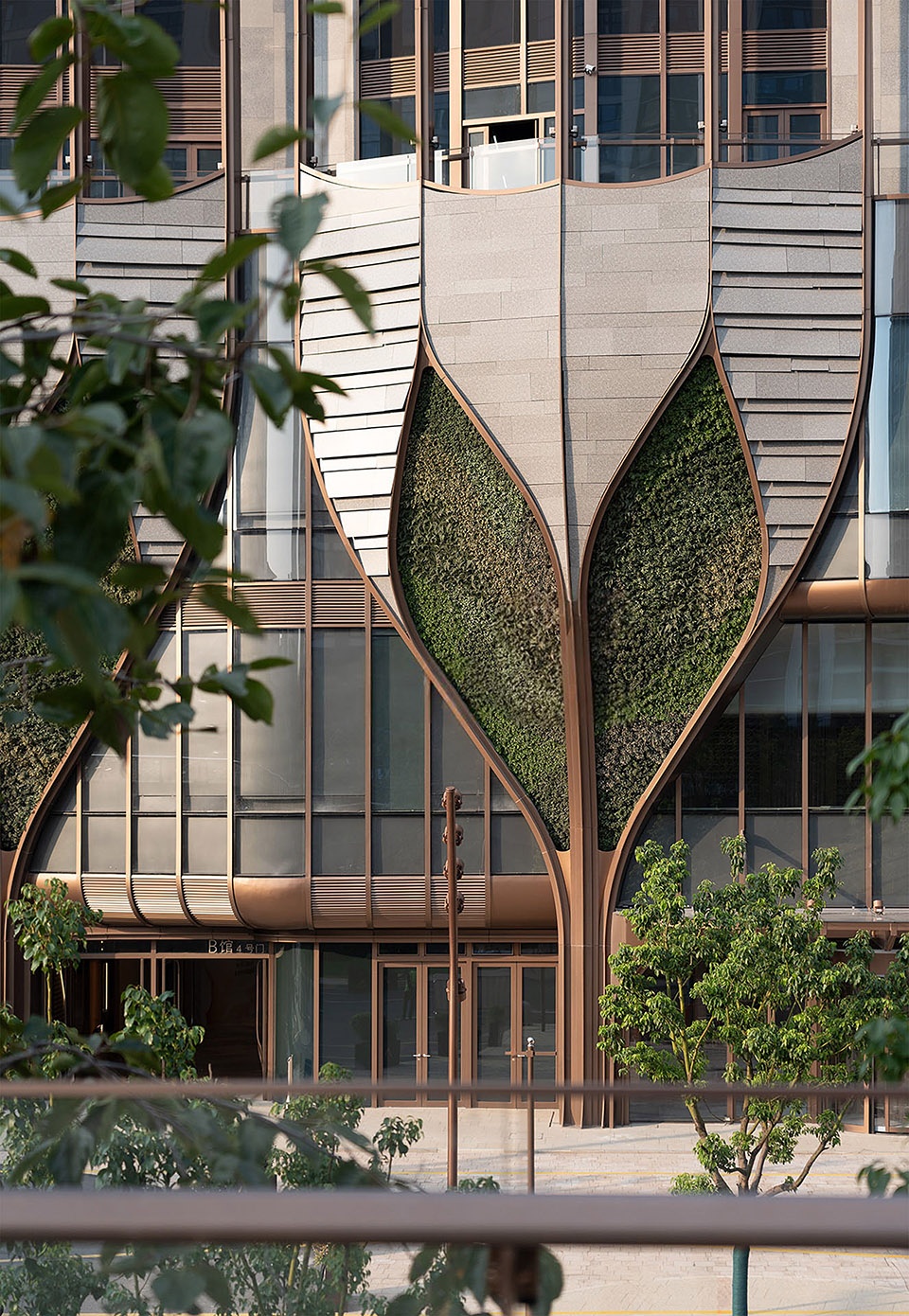
整个立面系统建立在一种“构件经济性”原则之上:仅由两种瓦片类型以及一组受控的表面处理构成。这种限制不仅实现了高效的异地预制、最低限度的材料浪费以及快速人工安装,也使设计理念能够与当地施工能力保持一致。
The facade is founded on an economy of parts: two shingle types and a controlled palette of finishes. This constraint enabled efficient off-site fabrication, minimal waste, and rapid manual installation, aligning design intent with local construction capabilities.
▼立面细部,facade detail
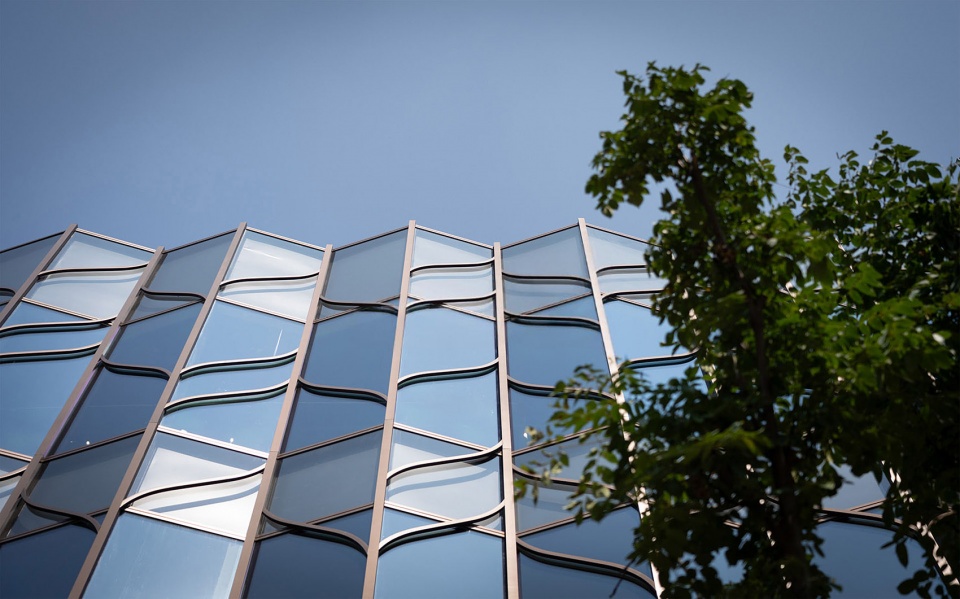
▼立面细部,facade detail
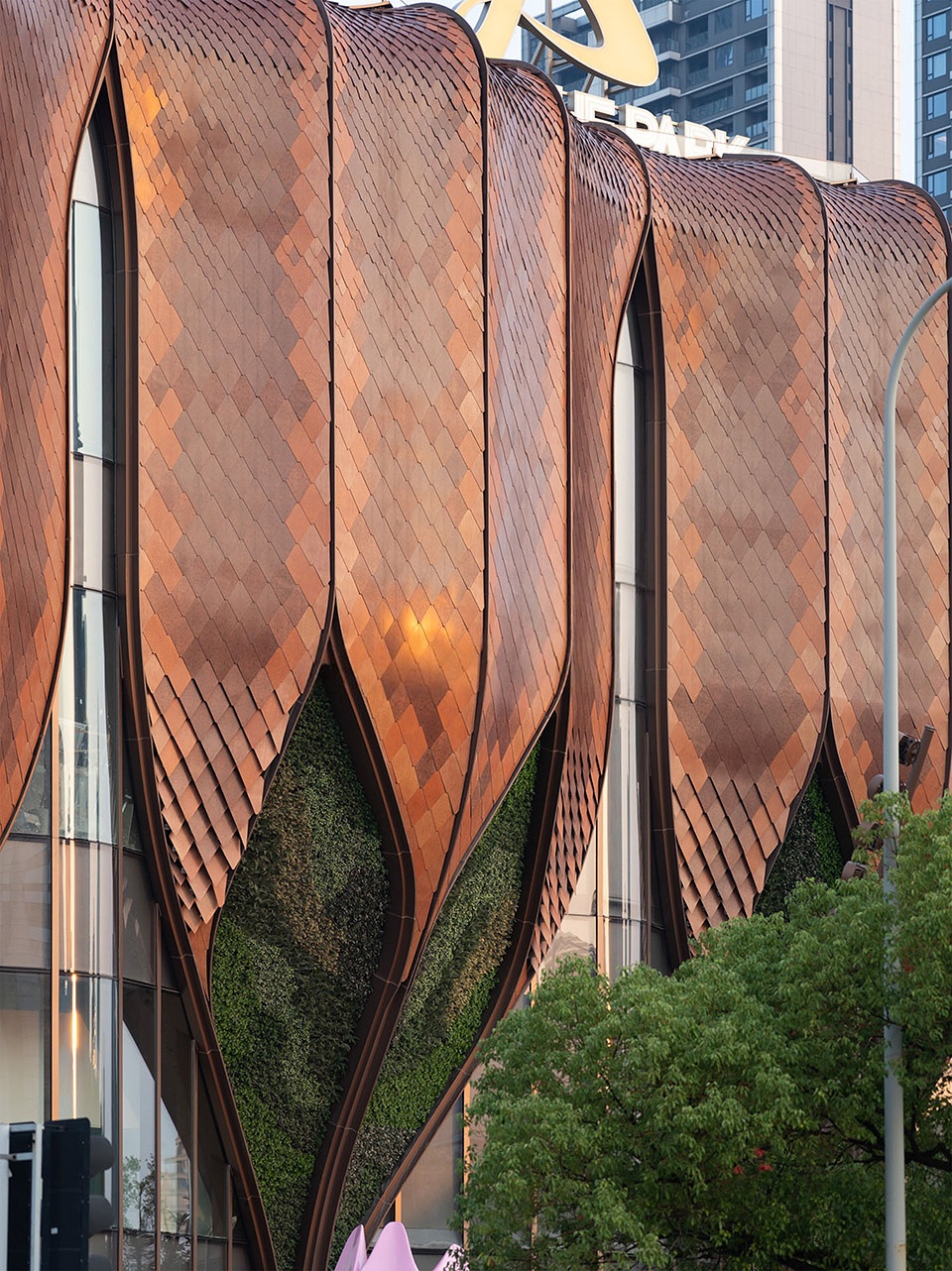
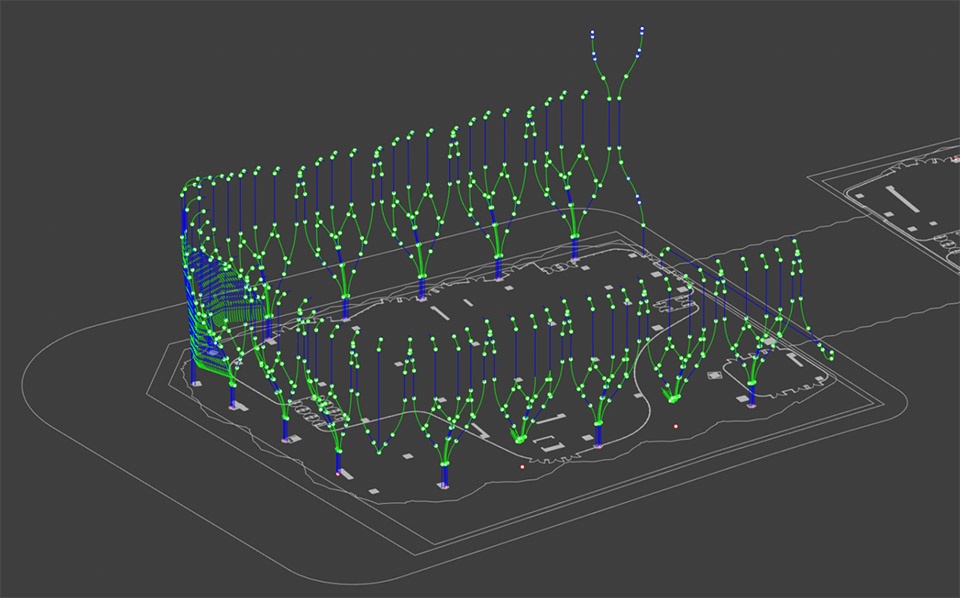
项目通过参数化数字系统驱动立面的变化,使模块能够在深度、角度与图案之间进行调整,同时仍然保持建造逻辑与加工清晰性。瓦片的倾角与间距也经过精确校准,以优化背后机械通风系统的空气流动,从而在不破坏建筑语言的前提下满足性能需求。与此同时,细部设计也进一步针对排水与耐候性能进行优化,使实用性问题被纳入整体形式逻辑之中。
▼主模块竖框,Module main mullions
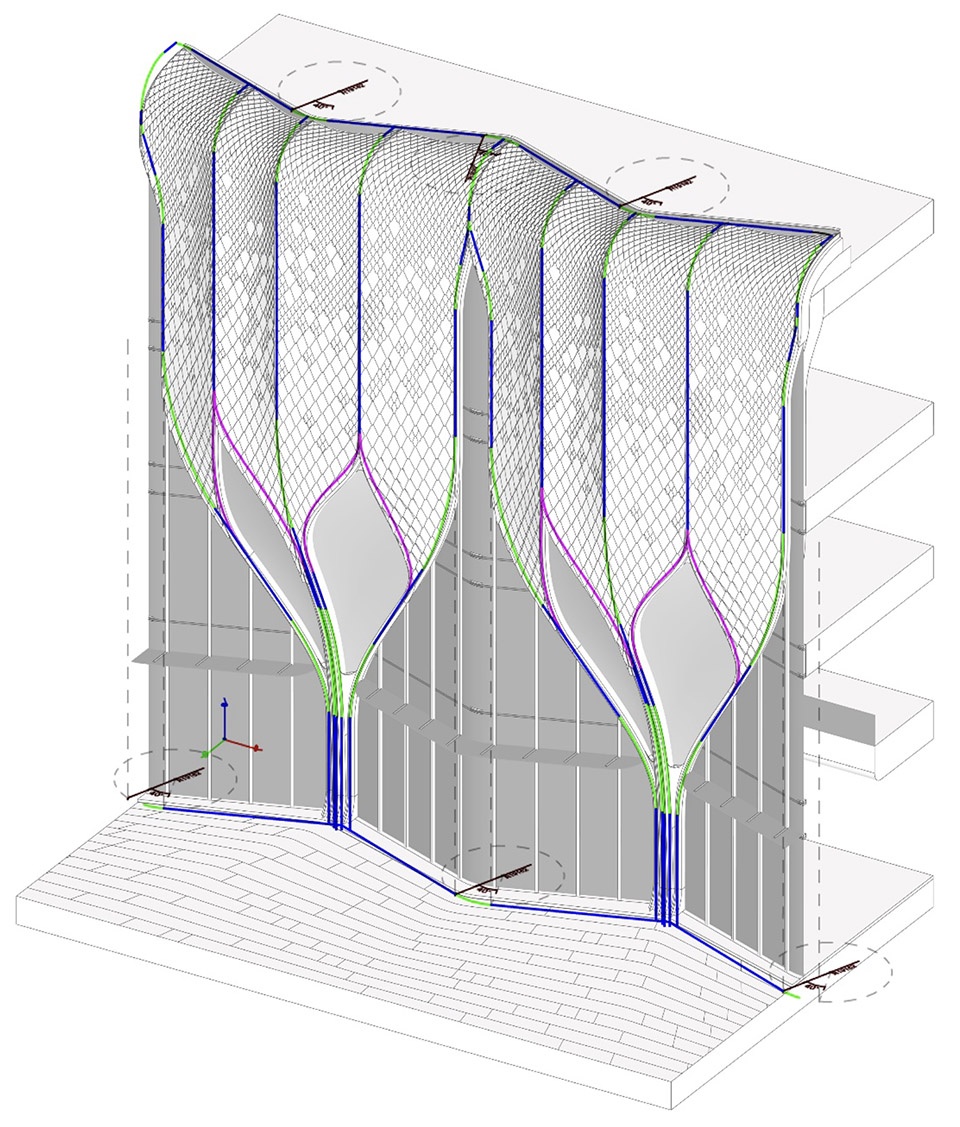
A parametric digital framework drove the system’s variation, allowing modules to adjust in depth, angle, and pattern while preserving rationality and fabrication clarity. The angle and spacing of the shingles were also calibrated to optimise airflow for the mechanical ventilation systems behind them, ensuring performance requirements were met without disrupting the architectural language. Detailing was further refined to support drainage and weathering, embedding practical considerations within the overall formal logic.
▼连续的通透玻璃界面,a continuous band of transparent glazing
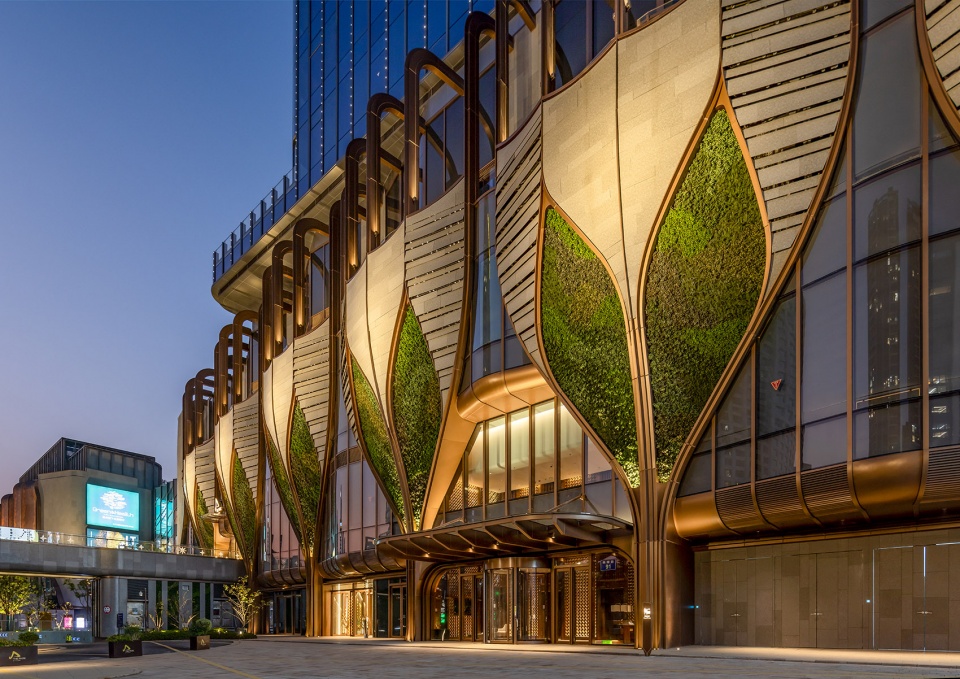
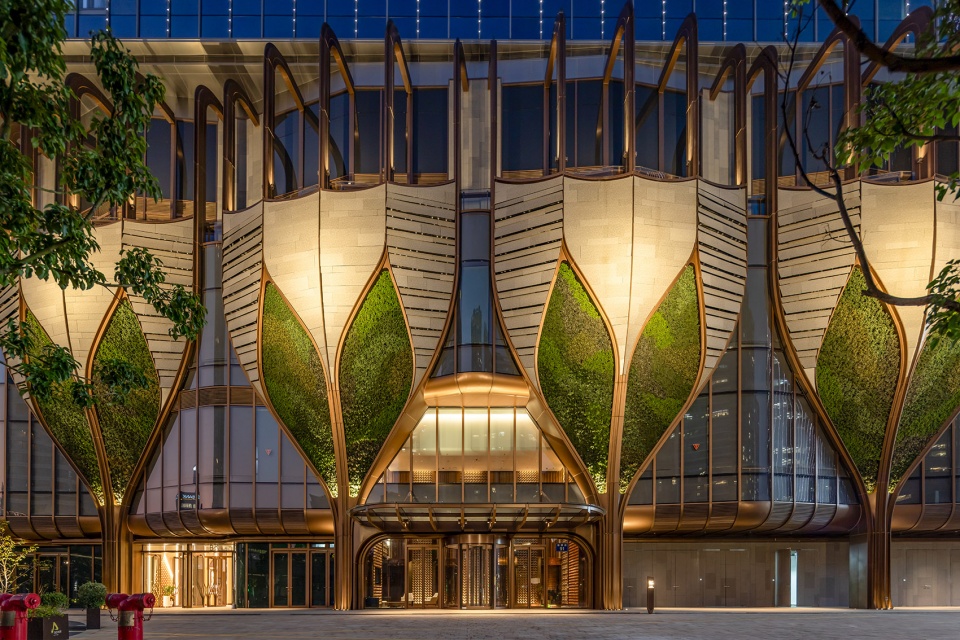
▼立面系统的变化,the facade system’s variation
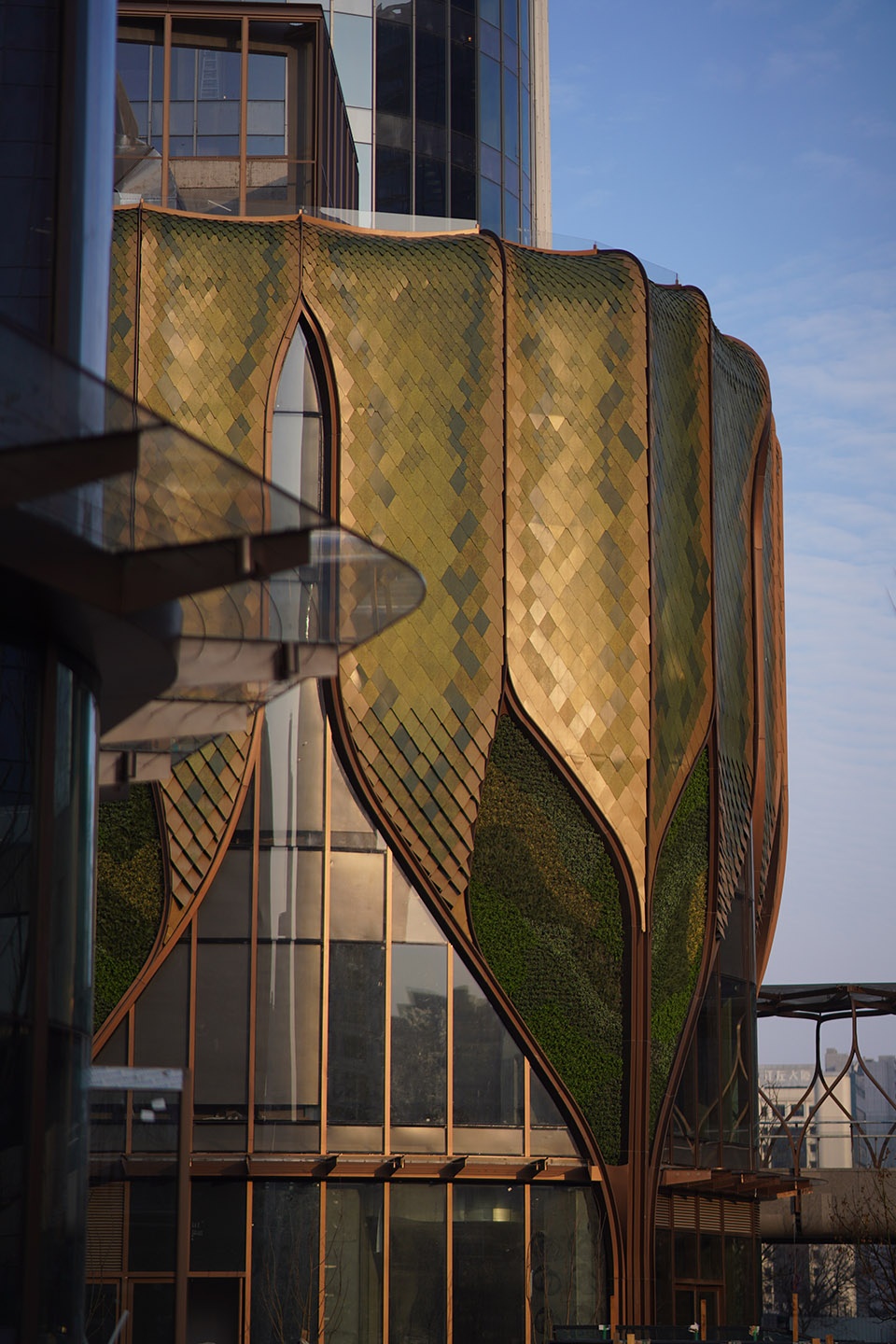
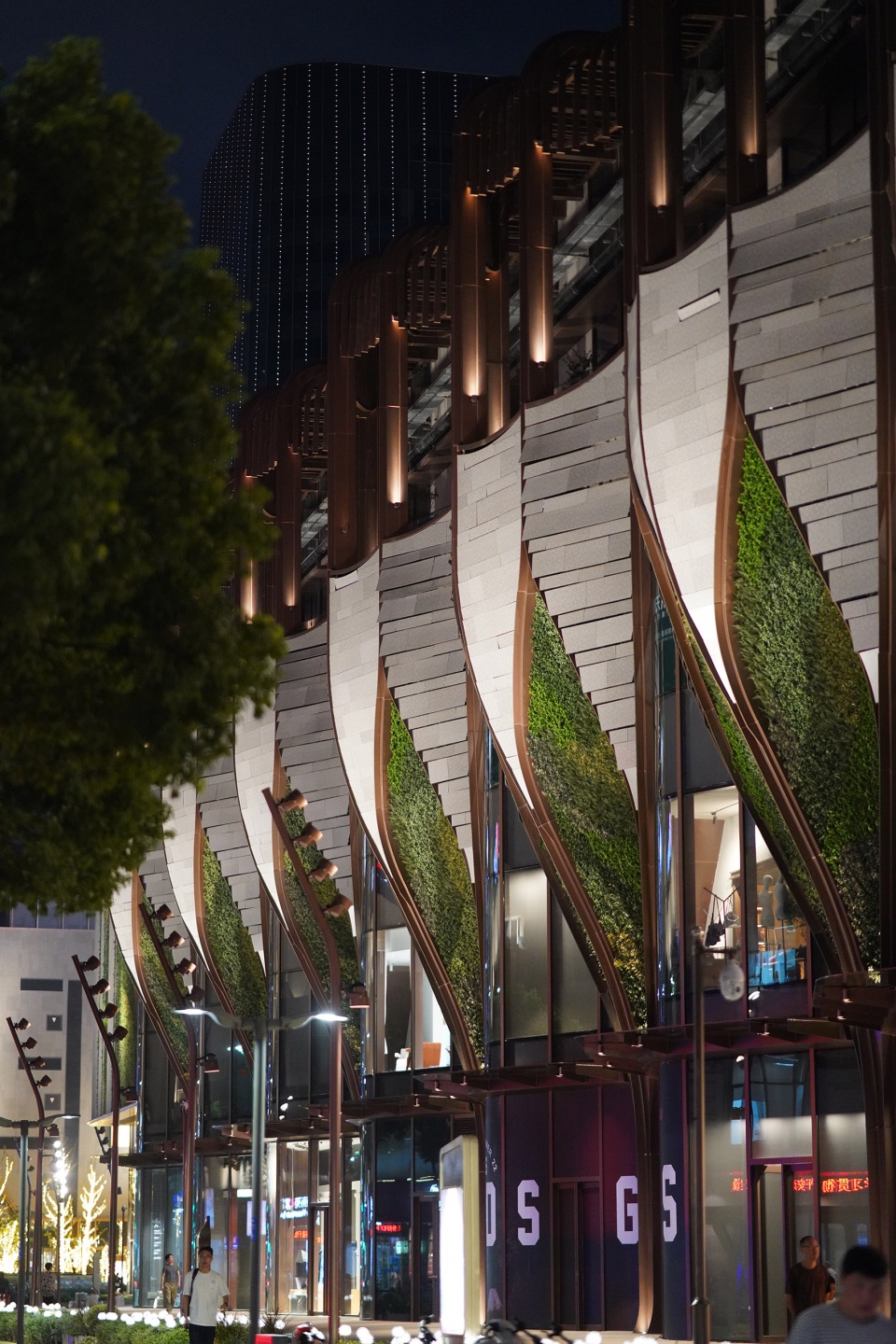
▼立面细部,facade detail
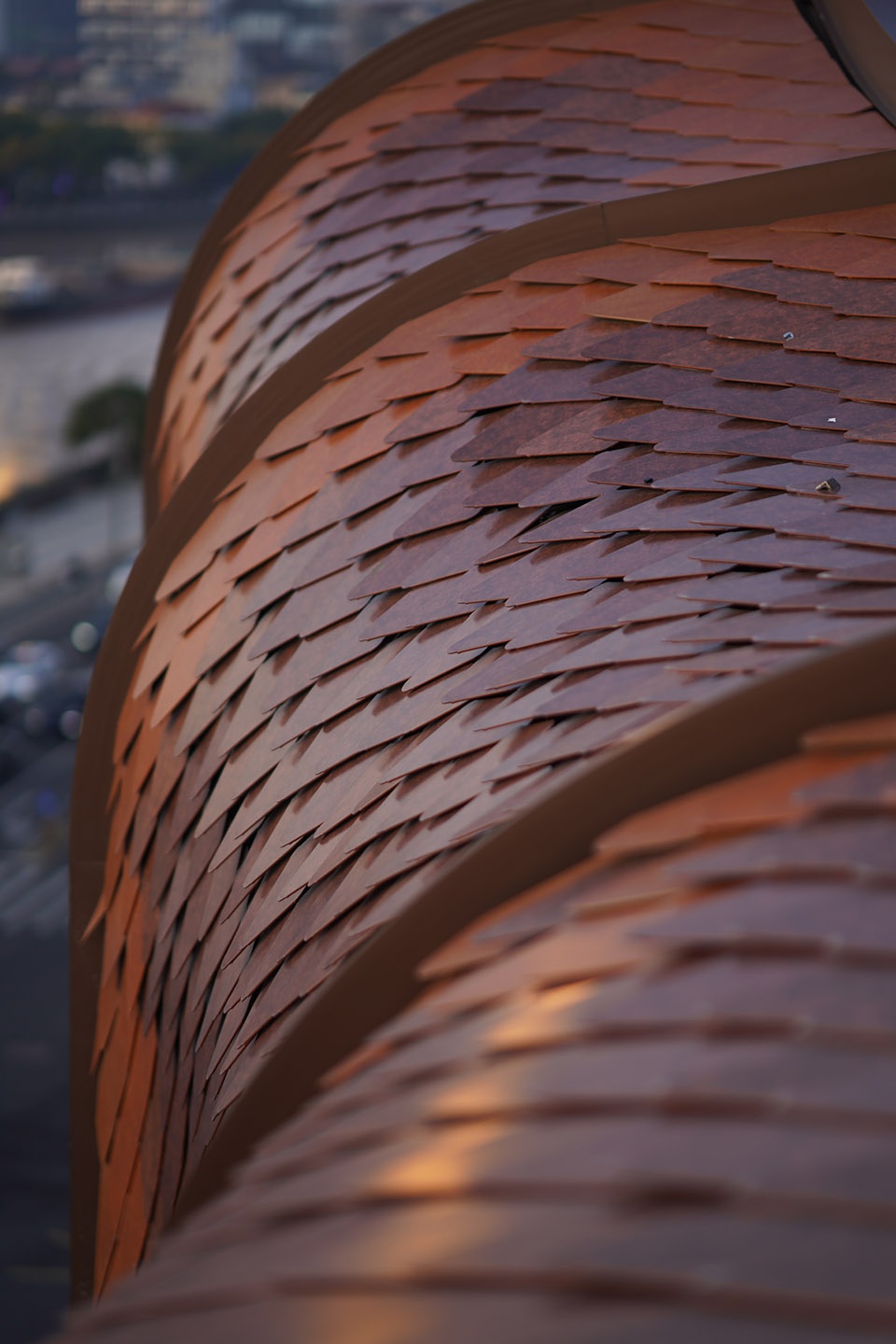
尽管项目在表达上具有鲜明的当代性,但其设计仍受到地域工艺传统的启发,尤其是铜制寺庙屋顶层叠几何关系以及材料自然老化过程的影响。这些影响并非通过直接复制来呈现,而是体现在重复逻辑、材料触感以及氛围变化之中。随着自然光不断变化,金属瓦片会对周围环境进行反射与吸收,使整个表皮呈现出一种随着时间与运动而不断变化的动态特质。
Although contemporary in expression, the design is informed by regional craft traditions, particularly the layered geometries and material ageing of copper temple roofs. These influences appear indirectly, through logics of repetition, tactility, and atmospheric change rather than literal replication. As daylight shifts, the shingles reflect and absorb their surroundings, giving the surface a dynamic quality that evolves through movement and time.
▼商场鸟瞰,aerial view of the shopping mall
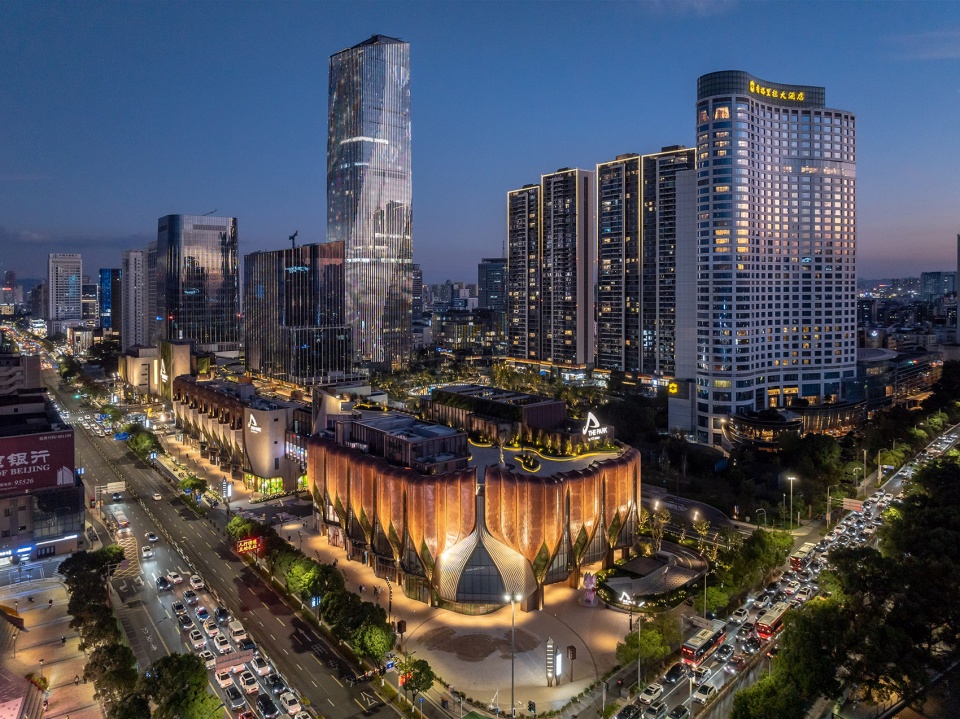
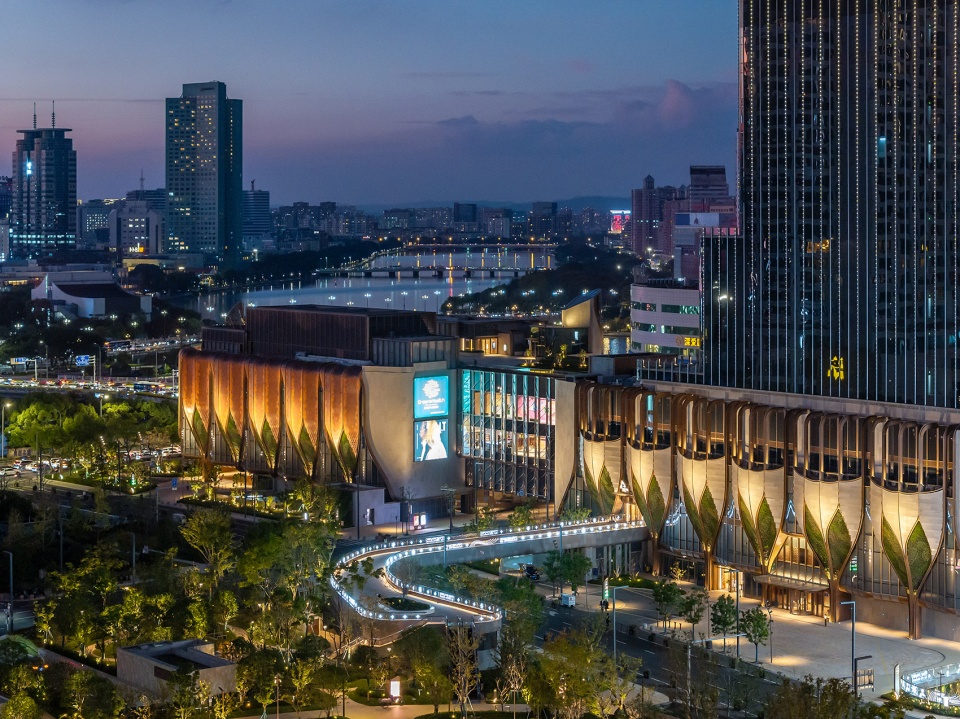
最终形成的是一套在精准性与适应性、统一性与变化性、视觉冲击与空间细腻度之间取得平衡的立面系统。它在多个建筑之间建立起明确统一的身份,同时避免了单调同质化,证明了严谨系统同样能够创造富有表现力的建筑特征。
The result is a facade that balances precision and adaptability, unity and variation, surface impact and spatial nuance. It sets a clear identity across multiple buildings while avoiding homogeneity, demonstrating that rigorous systems can also deliver expressive architectural character.
▼立面夜景,night view of the facade
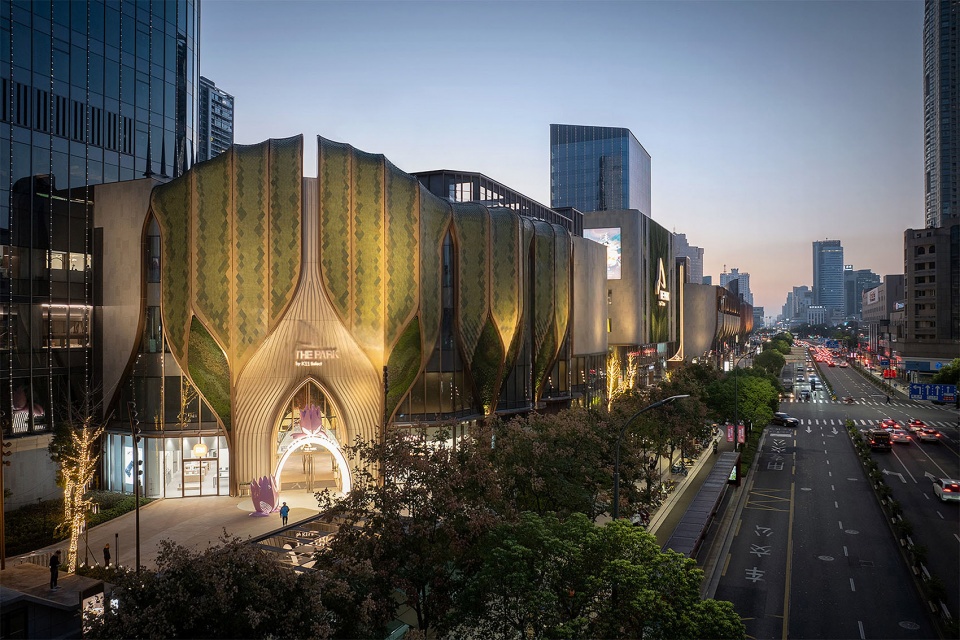
▼立面夜景,night view of the facade
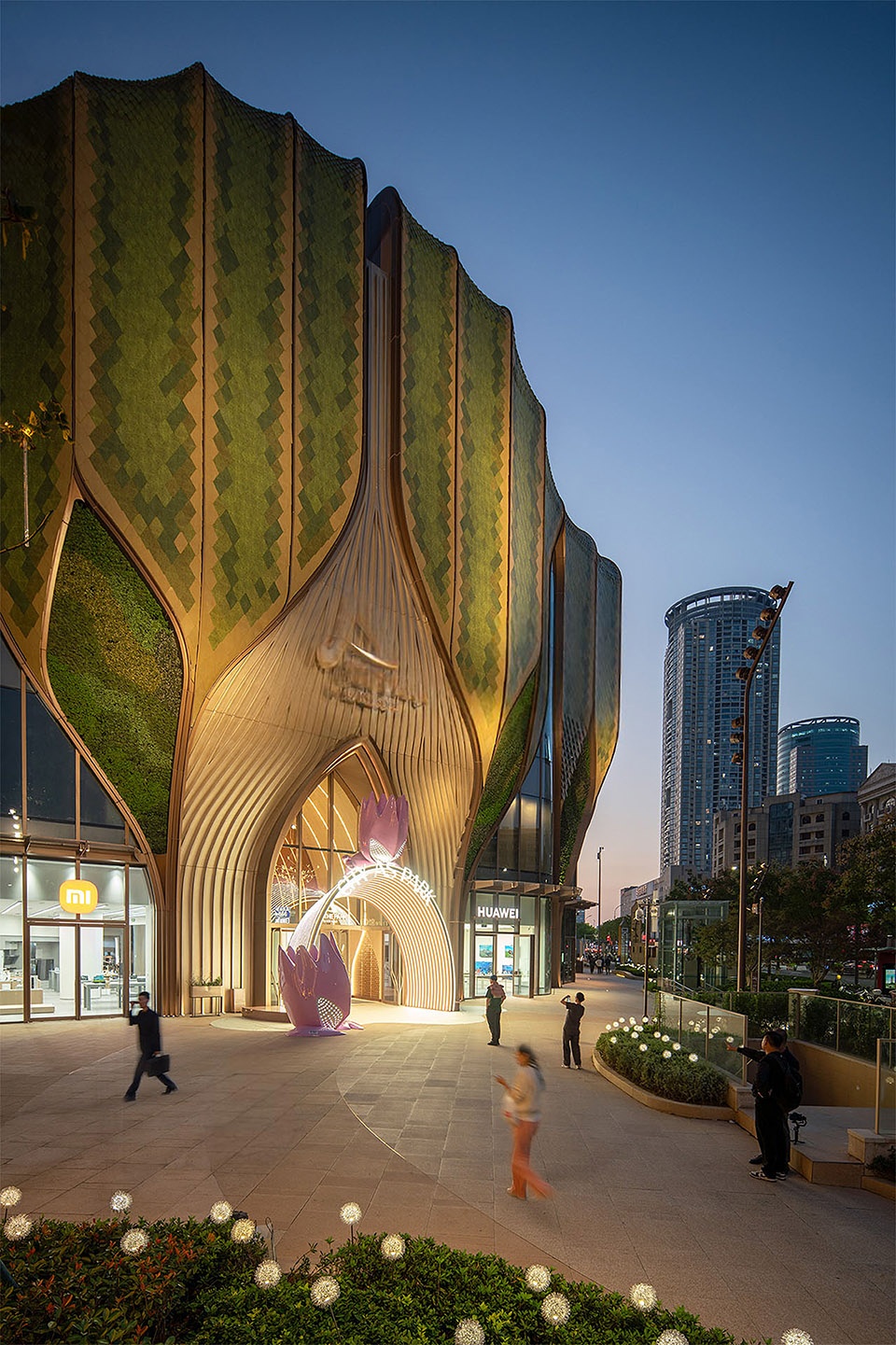
▼创造富有表现力的建筑特征,deliver expressive architectural character
在商业环境中,标识与视觉奇观往往占据主导地位,《The Park》则提出了一种另类方案。它展示了如何通过一种以设计原则为导向、与建造工艺及环境性能紧密结合的方法,打造出高效、灵活且植根于当地的大型城市建筑。其立面不仅起到围合空间的作用,更是城市环境的重要组成部分,既塑造了公共空间,同时也框定了内部的功能布局。
In a commercial landscape often dominated by signage and spectacle, The Park proposes an alternative approach. It shows how a principle-driven design, tied closely to fabrication methods and environmental performance, can produce a large-scale urban architecture that is efficient, adaptable, and rooted in place. The facade operates not merely as enclosure but as an urban contributor, shaping the public realm as much asit frames the programme within.
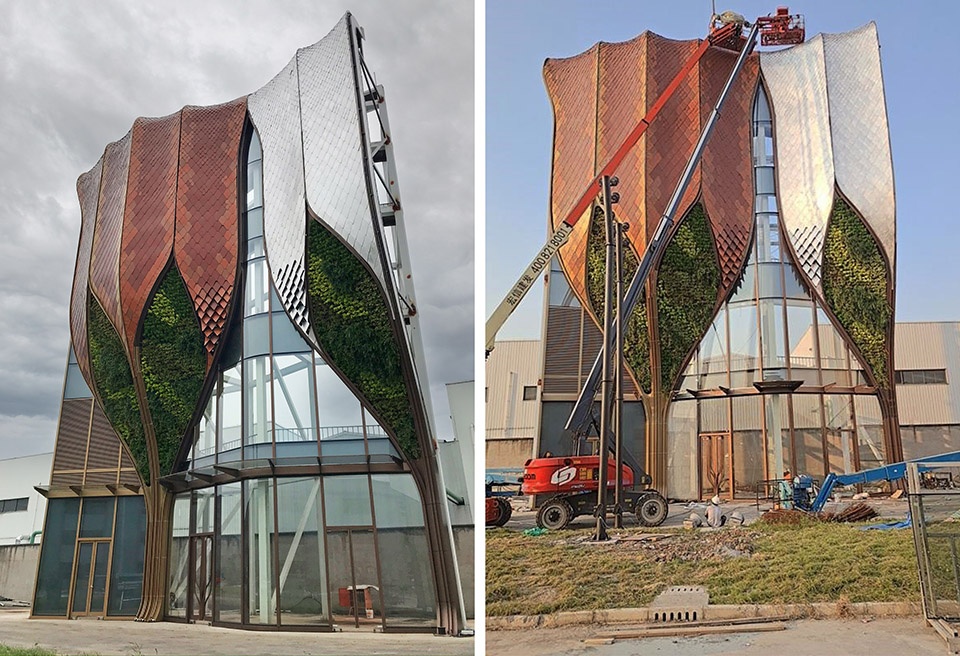
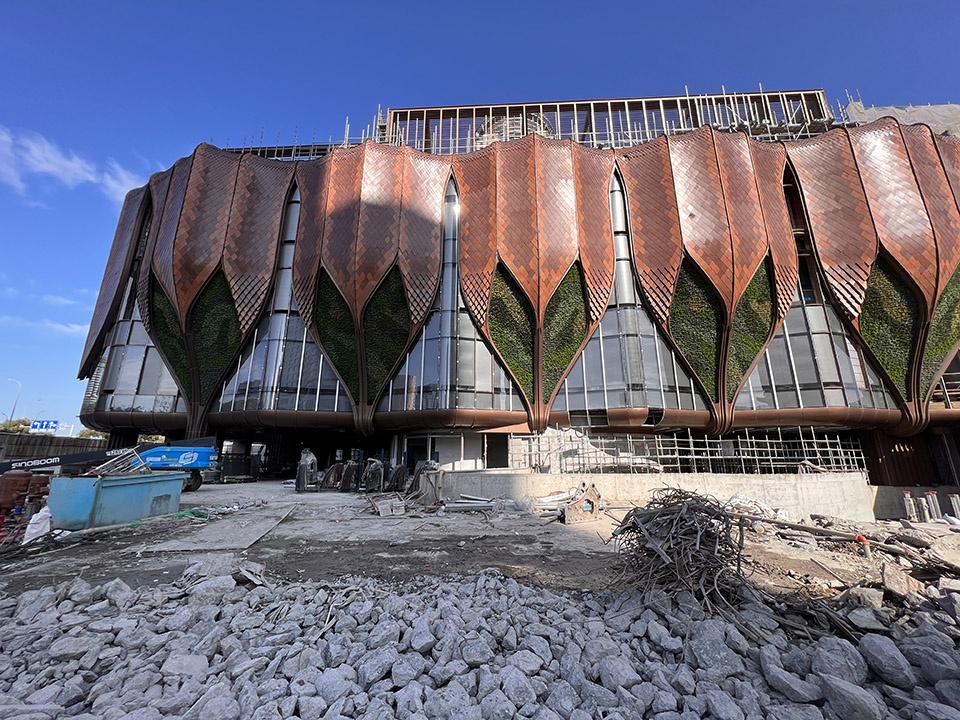
▼施工过程,under construction
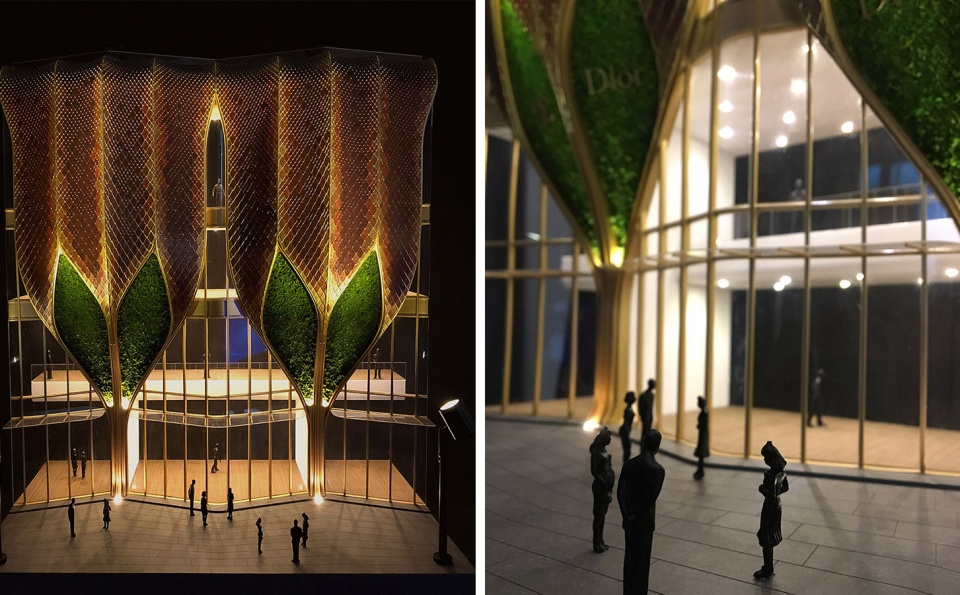
▼模型,model
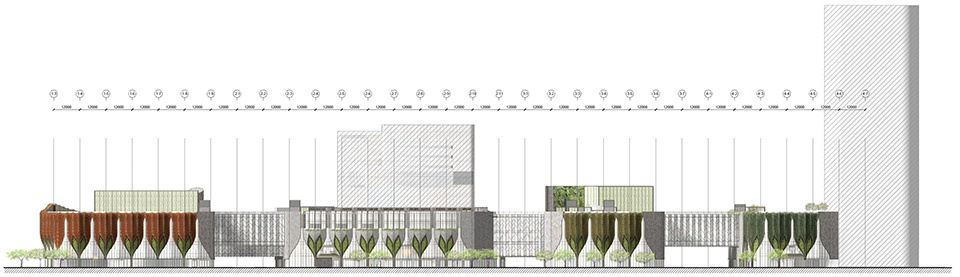
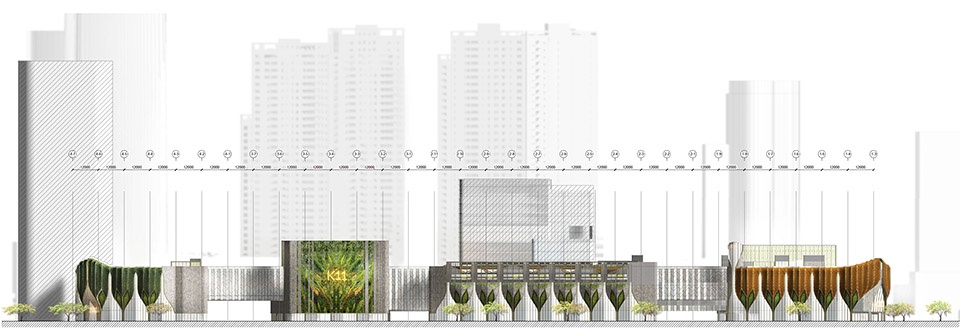
▼立面图,elevation
LOCATION | Ningbo, Zhejiang, China
CLIENT | New World China Land
FAÇADE DESIGN | LEAD – Laboratory for Explorative Architecture & Design
LEAD DESIGN TEAM | Kristof Crolla, Julien Klisz, Alex Ng, Adrien Gesulfo, Kenneth Cheung, Ben James, Simon Ng, Sian Wong Chi Hang,
Frankie Han Wing Chung, Teddy Fan Tianpeng. Luke Yau, Jason Kin Keung Lau, Nichol Long Hin Wong, Zion Chan Tik Chun.
PROJECT COORDINATION | AGC Design Ltd.
AGC PROJECT TEAM | Tony Lam, Erica Chui, Alex Wong, Eric Lai
FAÇADE DESIGN | 2016 – 2021
CONTRACTOR | China Construction Third Engineering Bureau Co., Ltd.
CONSTRUCTION | 2018 – October 2024
PHOTOGRAPHY | StudioSZ, AGC-Design, New World China Courtesy