JIC静投中心,上海 / 日建设计
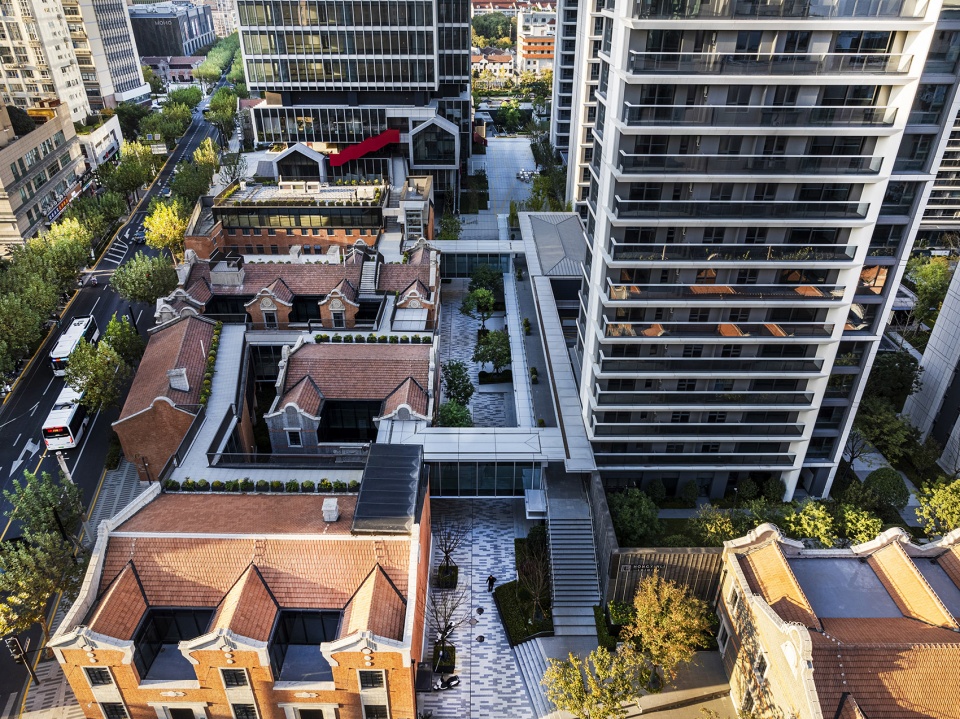
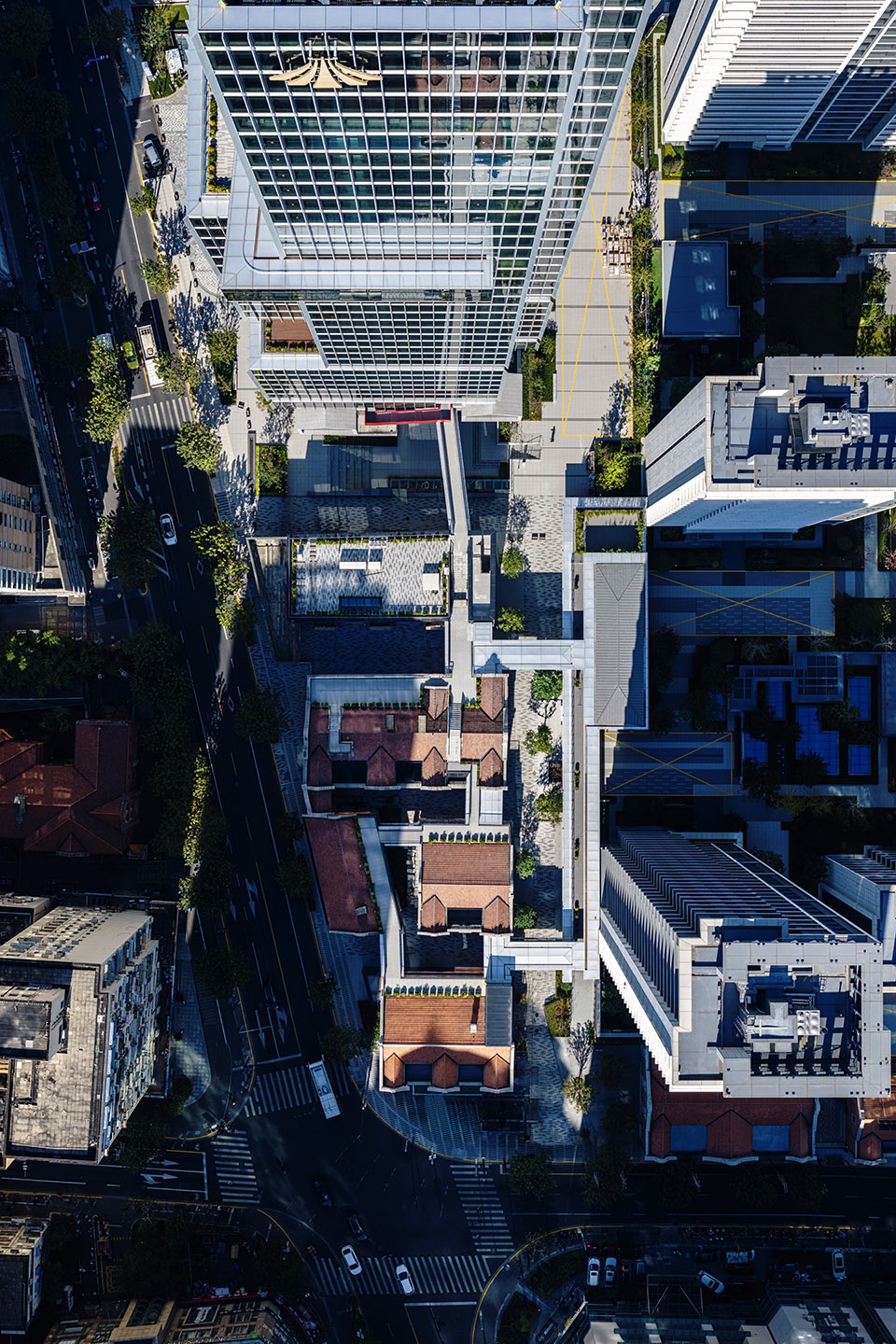
JIC静投中心毗邻传统街巷与大型商务中心比邻而居的上海静安区南京西路商圈,是一个集办公、商业和住宅于一体的综合用途城市更新项目。项目由180m高的超高层塔楼和低层部分保护再生的历史建筑构成。本项目以传承历史文脉、融合现代功能为主题,提出了一种超越保护与开发这两个对立元素的城市更新模式。上海曾遍布着被称为“里弄”的传统集合住宅,人们将建筑间隙的巷道作为社区的起居室使用。本项目提出了“立体里弄”这一概念,旨在将里弄所具有的空间丰富性与活力氛围扩展至垂直方向。以从保护的低层建筑延伸至塔楼低层、中层空中花园与休闲空间的立体动线为轴线,将街道上的繁华引向上部楼层。项目提出了一种新的城市更新模式,通过无缝连接诱发用户多样化活动的开放式空间,打造出将城市记忆传承至未来的下一代地标。
The JIC Jing’An Center is an urban regeneration project that integrates mixed-use functions (offices, retail and residential) and is situated adjacent to the Nanjing West Road commercial area in Shanghai’s Jing’An District. There, traditional streetscapes coexist alongside large-scale business hubs. The Center comprises a 180-meter tall super-high-rise tower. Preserved and revitalized historic buildings are retained and incorporated at lower level across the site. The project focuses on preserving historical context while integrating modern functions, presenting a model that transcends the dichotomy of “preservation vs. development.” Shanghai was once home to dense clusters of traditional communal housing known as ‘Lilong’, where people used the alleyways between buildings as communal living spaces. This project adopts the concept of a ‘three-dimensional Lilong’, extending their richness and vibrancy in a vertical fashion. Centered on a three-dimensional circulation route linking the preserved low-rise buildings to the sky gardens and the lower and middle tower section lounges, the design draws the city’s bustle to the upper floors. By seamlessly connecting open spaces that encourage diverse user interactions, the proposal presents a new model for urban regeneration: a next-generation landmark that passes the city’s memories on to the future.
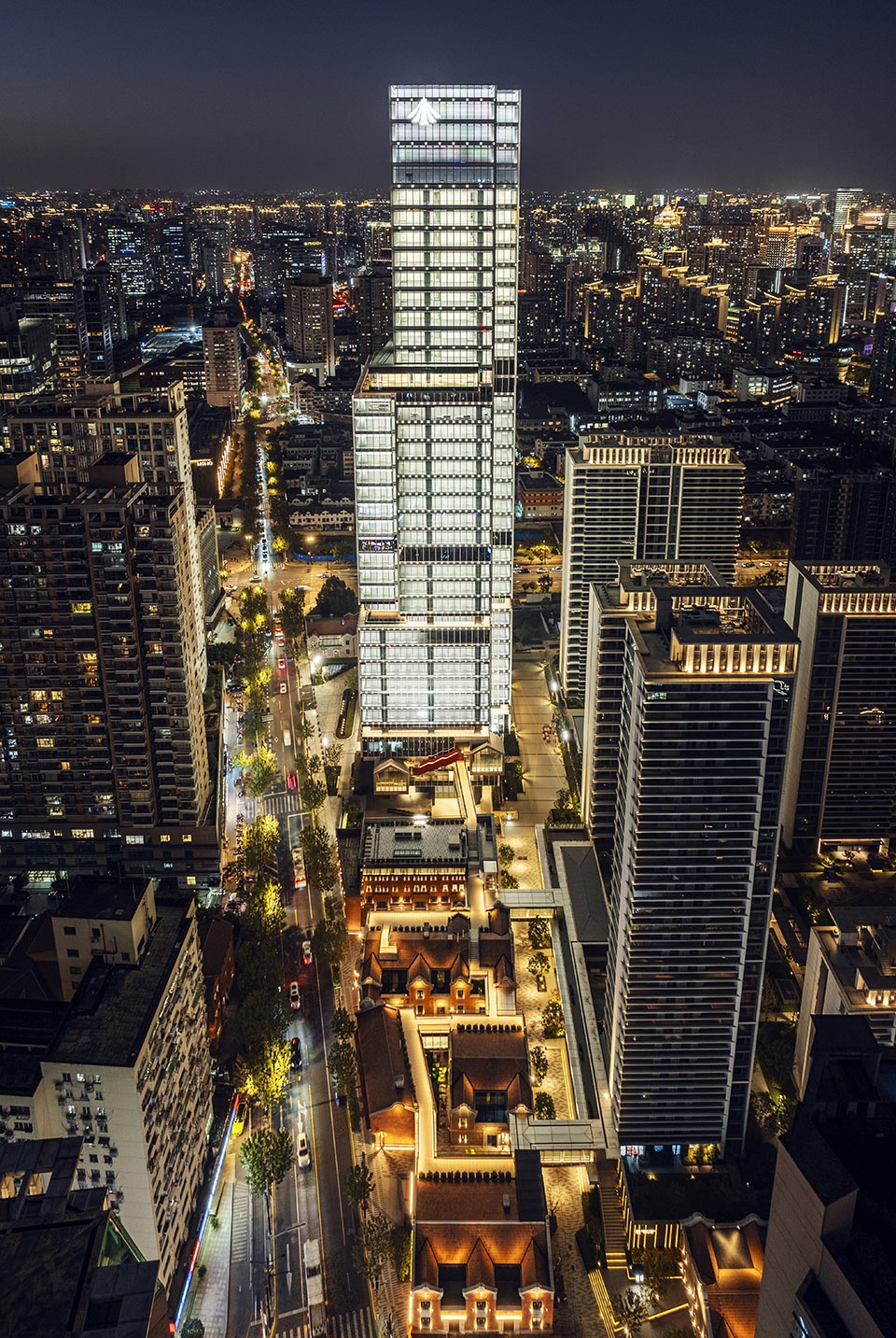
▼项目鸟瞰,aerial view of the project
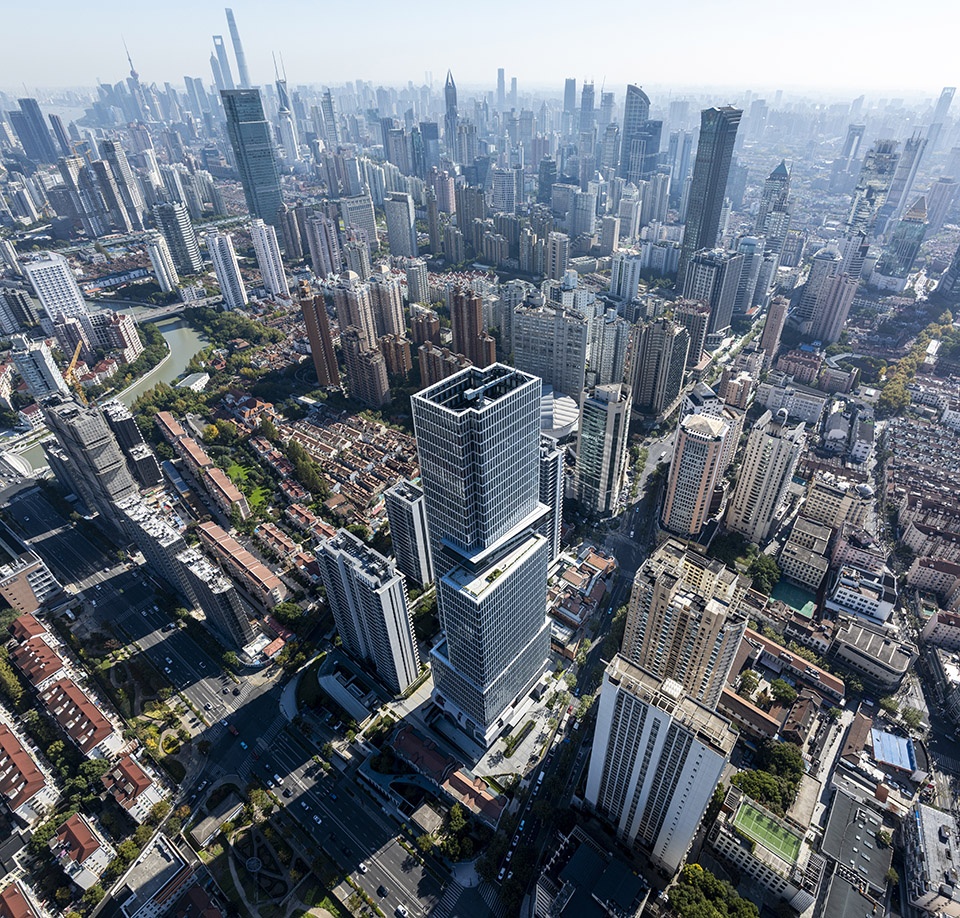
▼项目鸟瞰,aerial view of the project
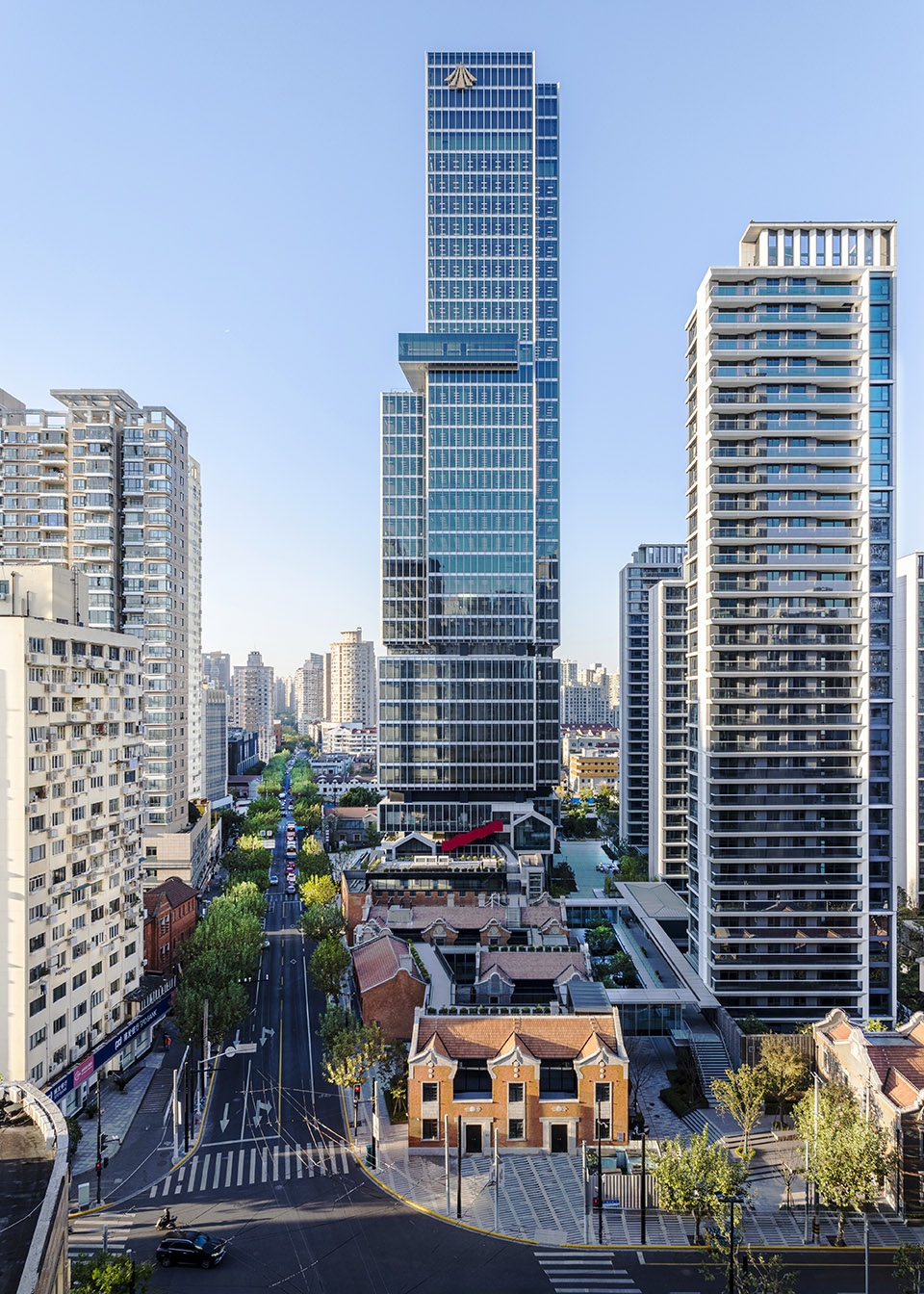
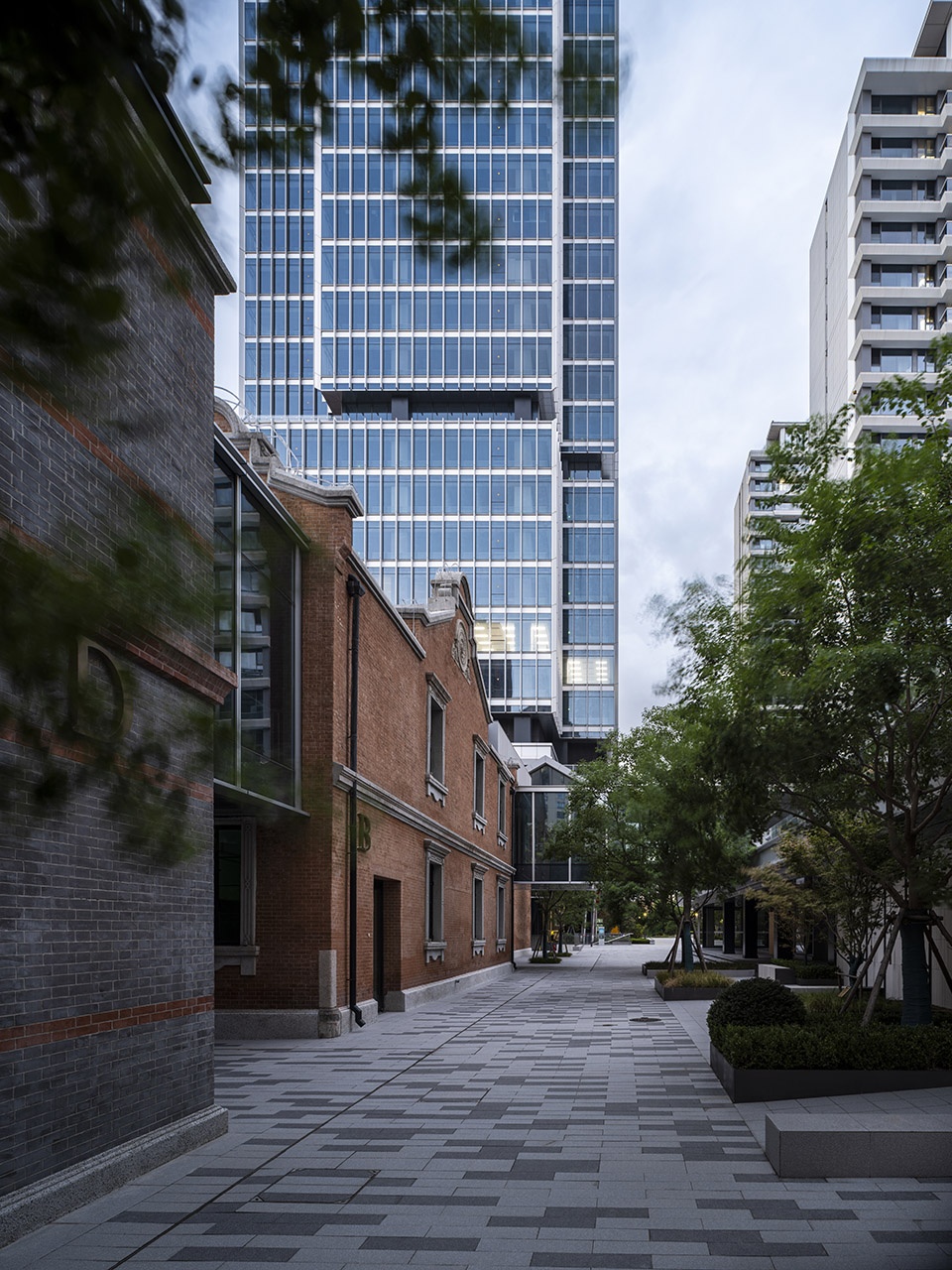
▼项目街景,street view of the project
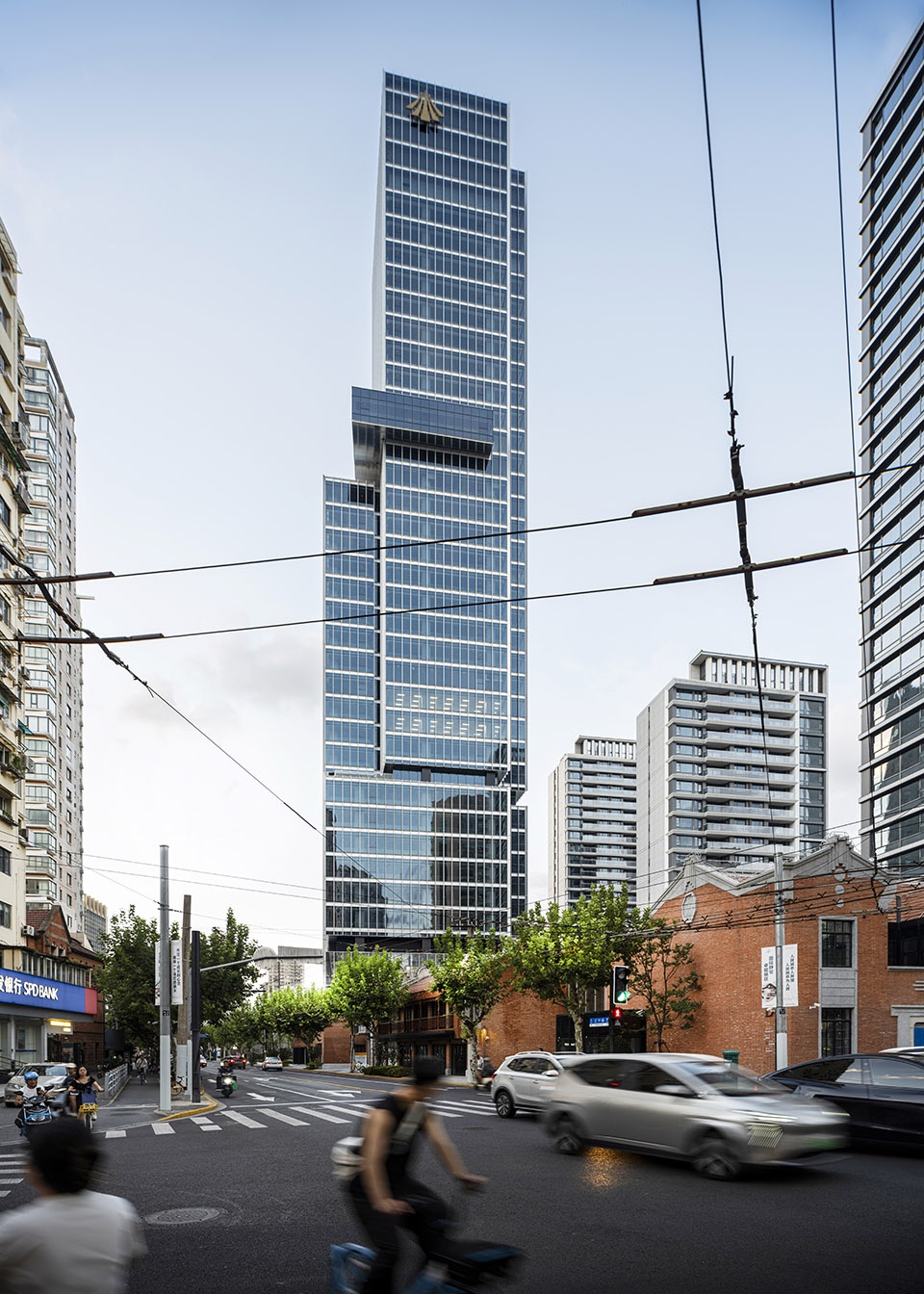
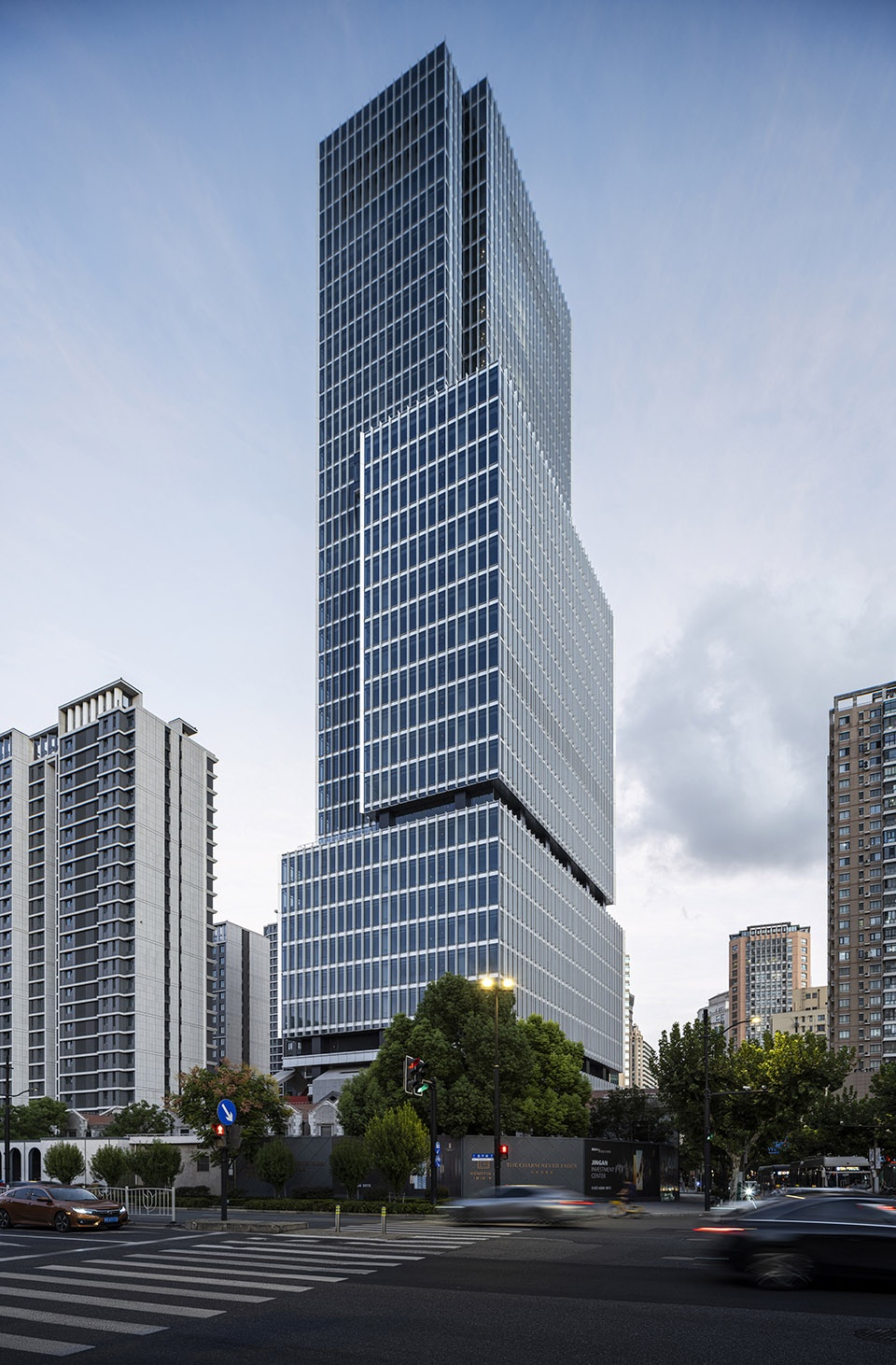
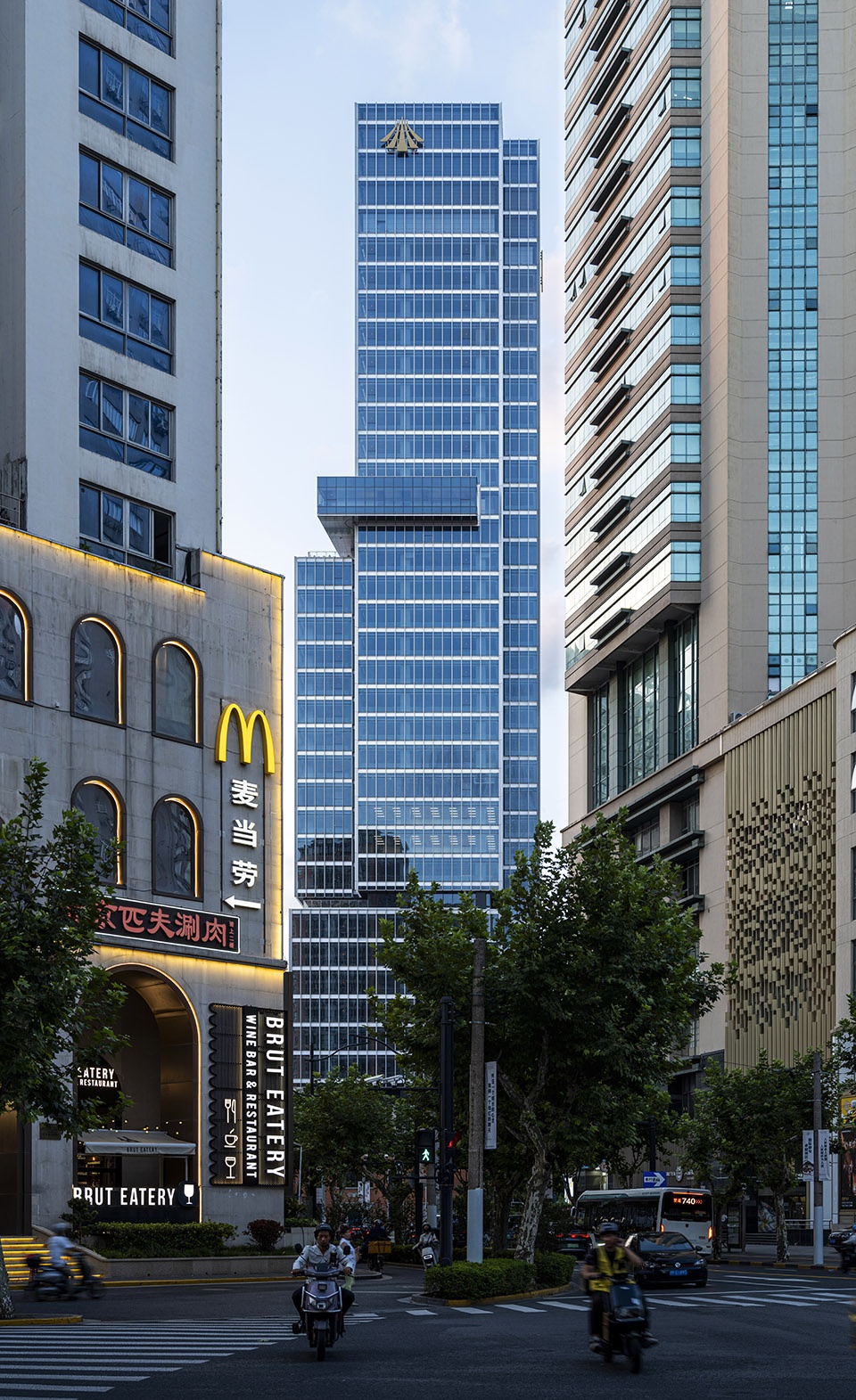
1.城市文脉的传承与适应性再利用 Inheriting the urban context and adaptive reuse
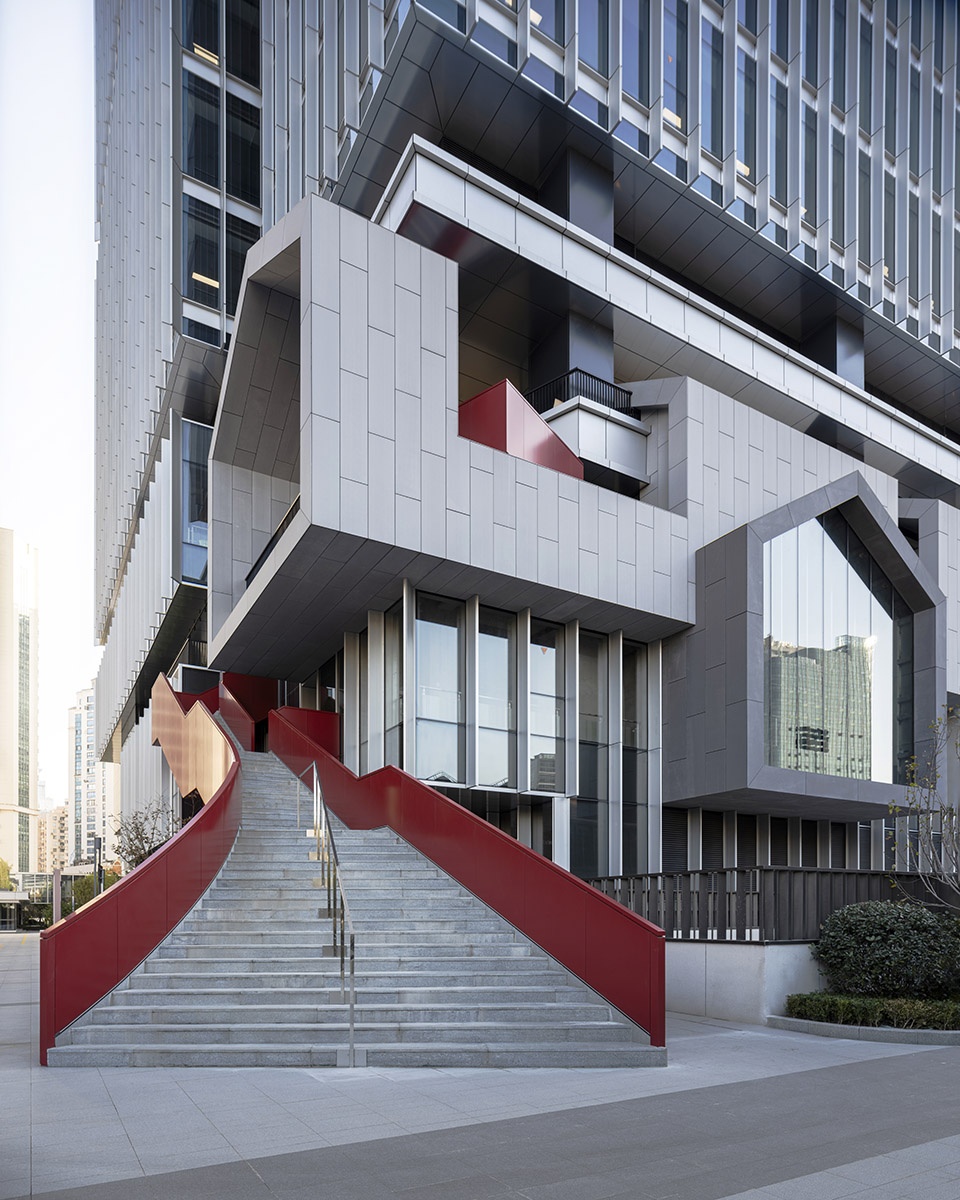
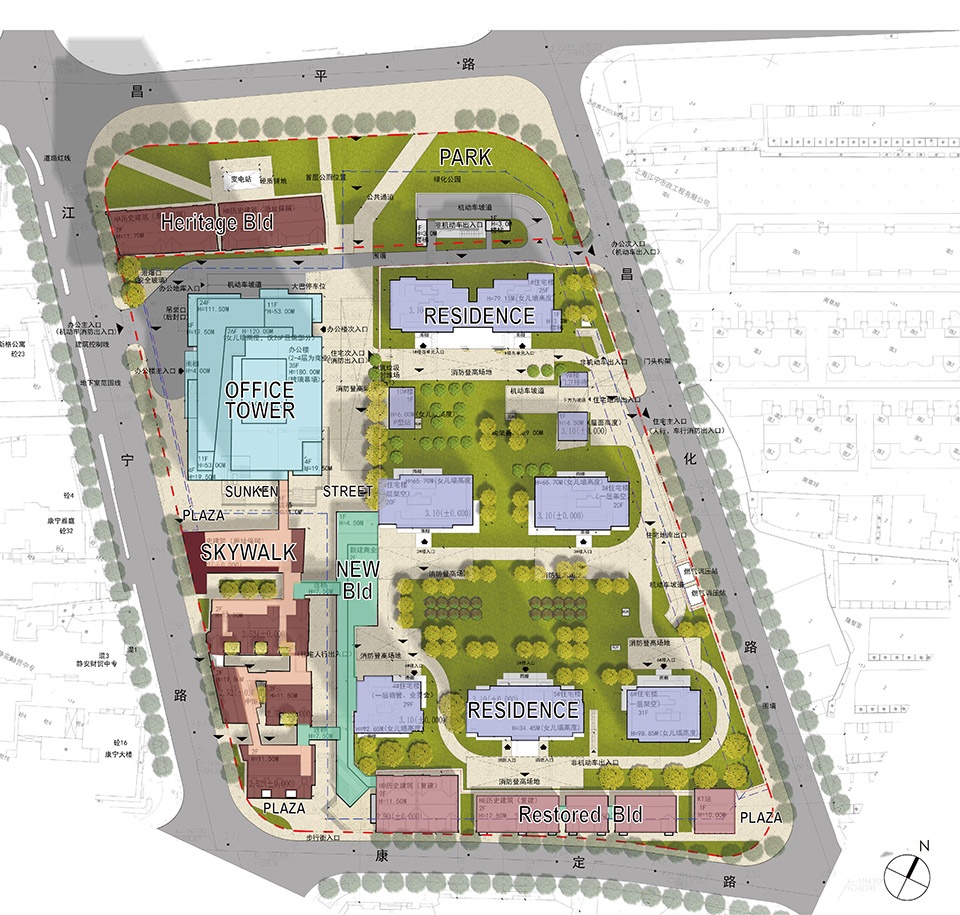
规划地周边毗邻上海市静安区南京西路商圈,该区域曾密集分布着“里弄”,穿插在住宅间的“巷道”曾作为社区起居室发挥着作用。本项目将人性化的尺度感与社区性视为新的“资产”,针对融合了西式联排住宅与中国设计元素的历史建筑,通过践行适应性再利用实现了现代化的空间利用。更新改造后的新旧融合空间成为了该地区的文化枢纽。贯穿街区南北的“主路”被定义为蕴含活力的步行友好型开放空间,并连续布置营造特色场景的“广场”(PLAZA)以及满溢繁华氛围的“支路”,自然地将人们引向场地深处。此外,地面上的熙熙攘攘不仅局限于平面,而是从保护建筑屋顶立体延伸至连接塔楼低层的“SKYWALK”。传统瓦片屋顶群与现代化塔楼同时映入眼帘,提供了一种在艺术与活动中漫步的空间体验。这一利用存量建筑提升公共空间价值的多层网络,正是可持续城市发展战略的具体体现。
▼里弄类型学,Integrate Lilong typology
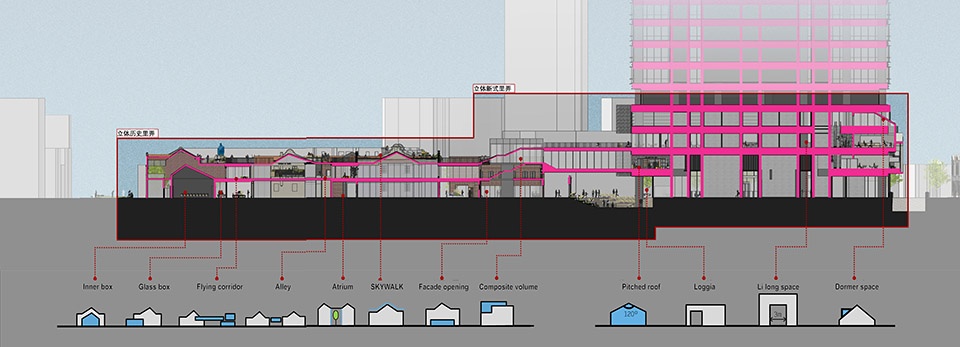
Situated in the Jing’An District of Shanghai, the site is adjacent to the Nanjing West Road commercial district. At one time, it was densely populated with ‘lanes’ (Lilong), where the alleys that ran between dwellings served as community living rooms. In this project, we have treated the intimate scale and sense of neighborhood as new assets with which to practice adaptive reuse that realizes contemporary spatial utilization within historical buildings that blend Western terraced houses with Chinese architectural materials. The renovated space, in blending the old and the new, serves as a cultural hub for the local area. The ‘main thoroughfare’ running north-to-south through the block is defined as a walkable open space imbued with a sense of vitality. A series of ‘plazas’ (PLAZA) that create distinctive scenes, along with side streets from which this liveliness spills out, are arranged in succession, naturally drawing people deep into the site. The vibrancy at the ground level extends vertically via the ‘SKYWALK’, which connects the rooftops of the preserved buildings to the lower levels of the tower. This offers a spatial experience where visitors can walk while taking in both the traditional tiled roofs and the modern tower simultaneously and engage in artistic activities and events. This multi-layered network, which utilizes existing stock to enhance the value of public space, embodies a sustainable urban strategy.
▼更新改造后的新旧融合空间,the renovated space, in blending the old and the new
▼建筑毗邻密集分布着的“里弄”,
the site is adjacent to ‘lanes’ (Lilong)
▼人性化的尺度感与社区性,
the intimate scale and sense of neighborhood
2. 从限制中诞生的“场所力量” “Power of place” born from constraints
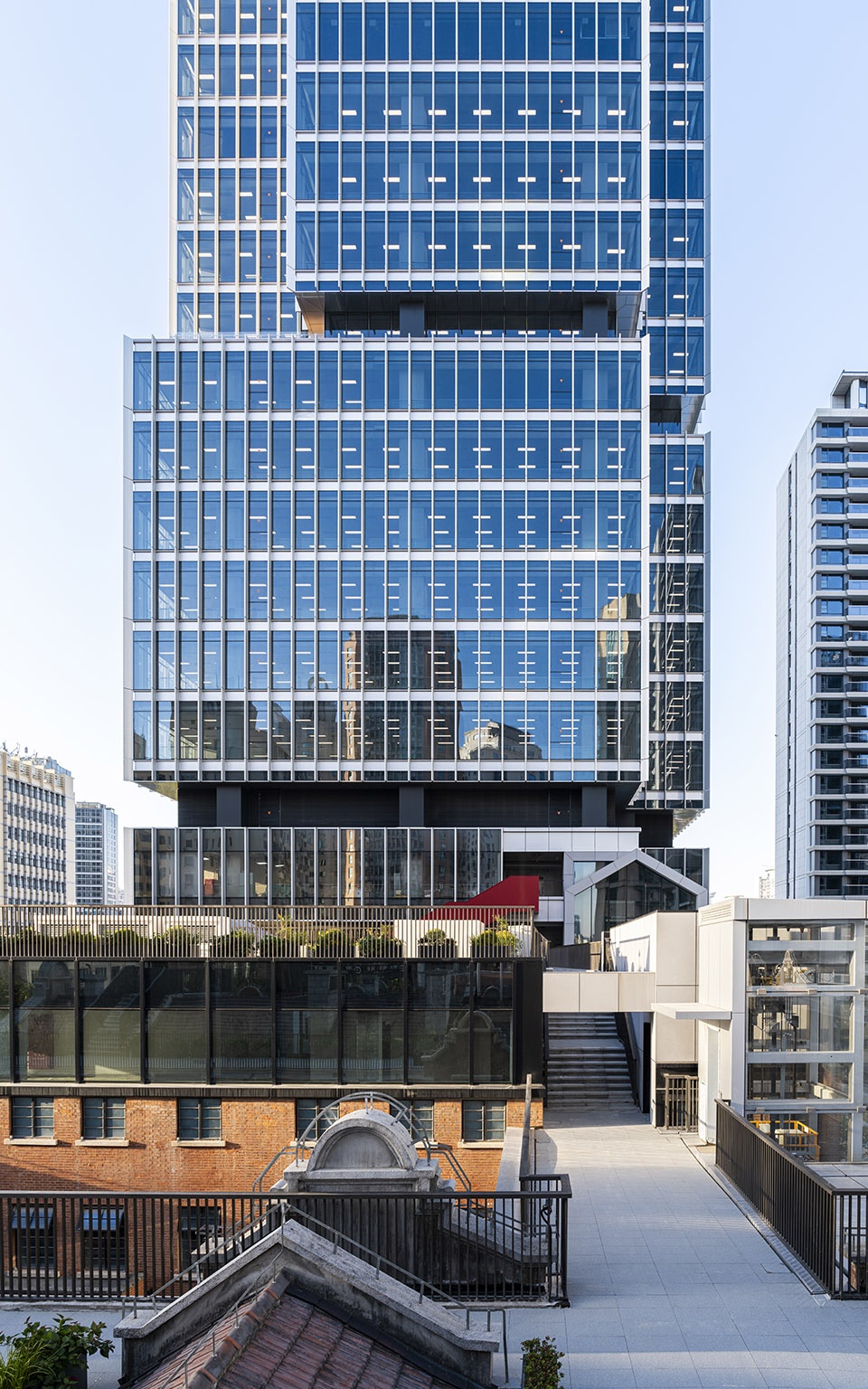
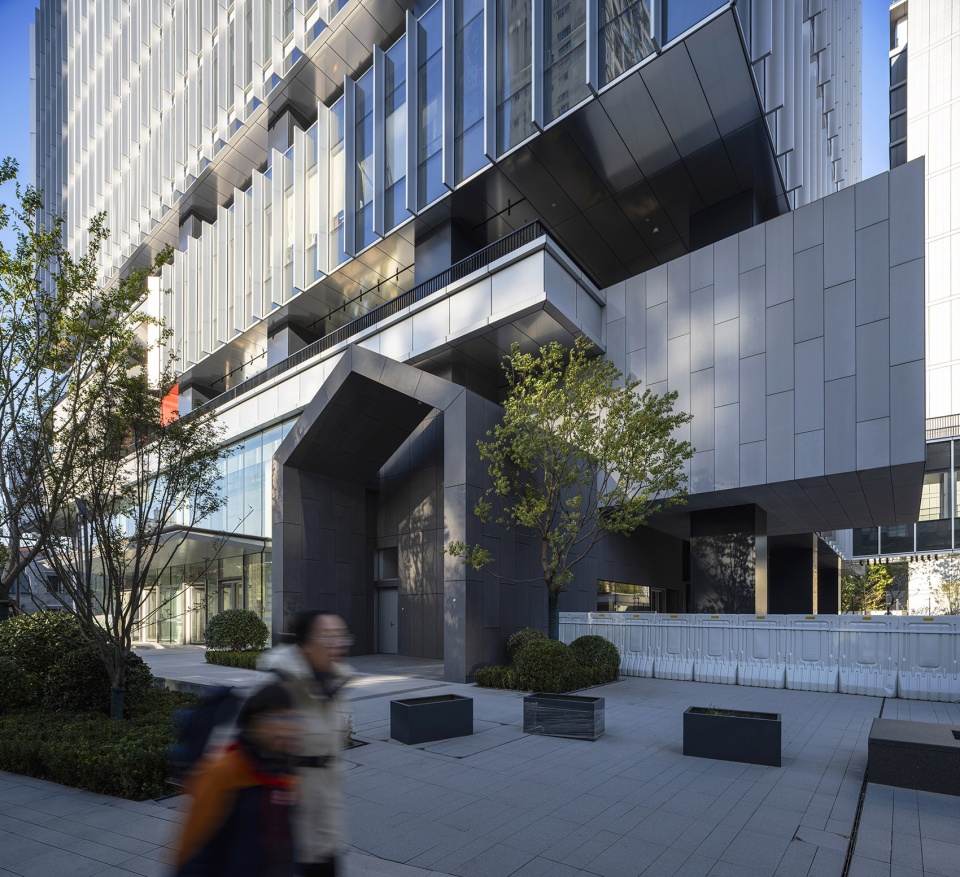
塔楼的体量是通过将法规限制转化为城市景观魅力的“形态探索”推导而出的。通过为满足与历史建筑共存的土地使用限制、北侧住宅区日照要求而进行的体量处理,使建筑在不同方向上呈现出各异的风貌。面向北侧的公园和住宅区,将建筑体量进行分段,以使其与周边尺度相呼应;南侧则作为面向城市中心的地标,打造出极具表现力的外观。通过体量调整形成的退台部分,不仅可用作俯瞰城市的露台,更成为了促进交流的“融合空间”。项目通过功能需求与城市语境的结合,将各种限制升华为场所的力量。
▼空中走廊示意,skywalk diagram
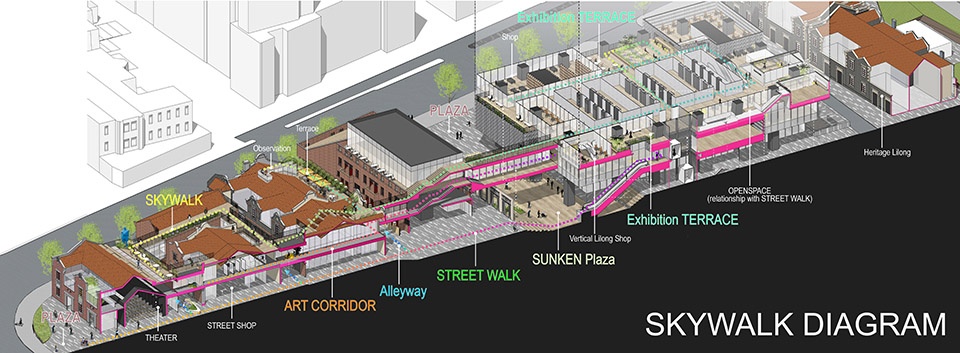
The tower’s volume was derived through “form-finding”, a process that transforms legal regulations into elements of urban landscape appeal. “Massing operations” designed to meet land-use restrictions create different expressions depending on the viewing angle. These operations arise from coexistence with preserved buildings, as well as from “shadow” regulations that apply to the northern residential area. The building’s volume, which faces the park and residential area to the north, is segmented in accord with the area’s scale. Meanhile, the striking south side facade serves as a landmark facing the city center. The architectural setbacks in the volume serve as both terraces that offer views of the city and also serve as spaces of convergence that encourage interaction. By linking functional requirements with the urban context, the constraints are transformed into “power of place.”
▼项目街景,the street view of the project
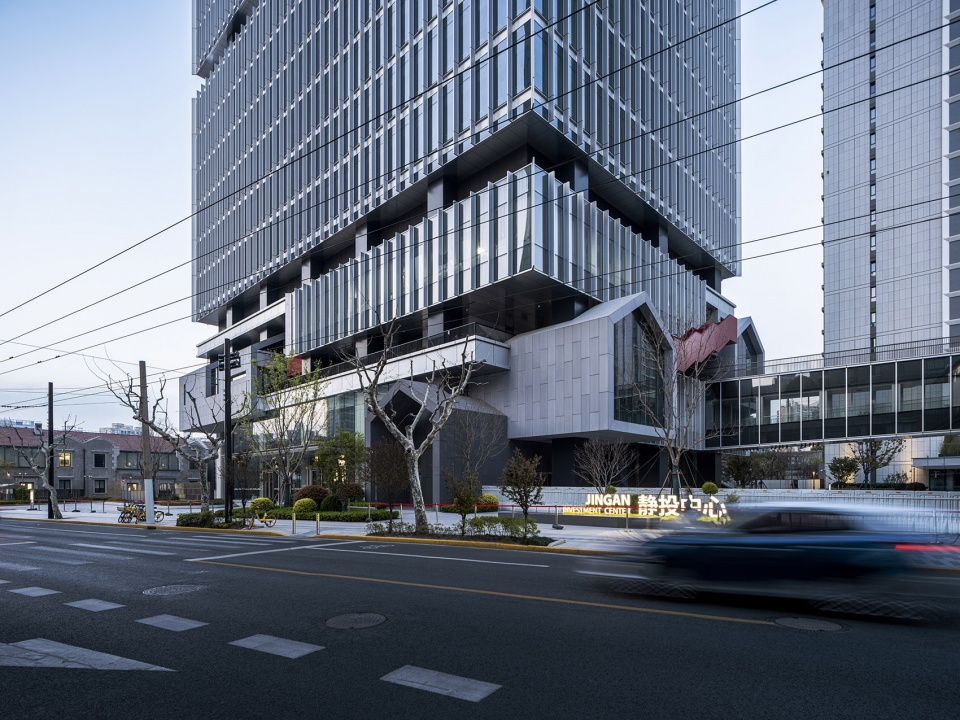
▼建筑前广场,the plaza in front of the building
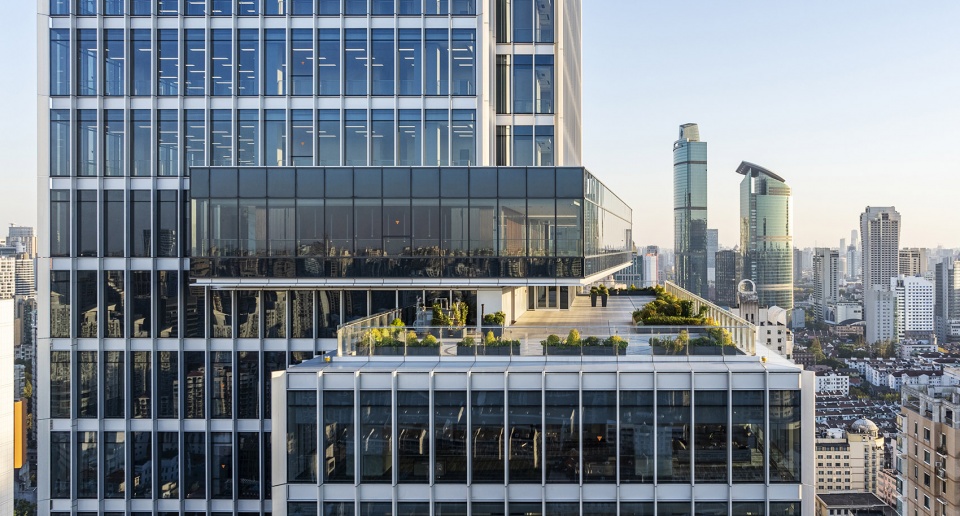
▼俯瞰城市的露台,terraces that offer views of the city
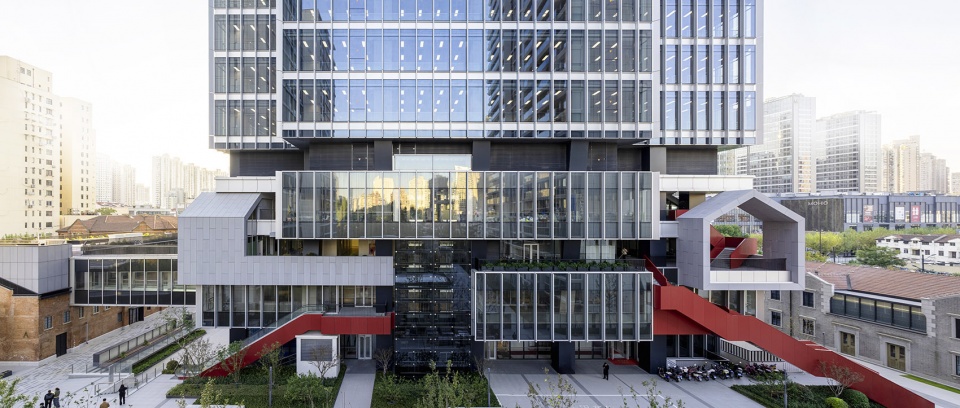
▼建筑入口,the building entrance
3. 灵活性与未来扩展性 Flexibility and future expandability
本项目的空间创新之一,是将位于地上约100m处的“避难层”重新定义为面向未来的价值创造空间。在确保安全的前提下,将原本呆板无趣且封闭的避难层打造成了一个开放的空中花园。这不仅是一个单纯的开放空间,还兼具一览上海天际线的观景功能,同时也是休憩场所和公共空间。从低层部分立体里弄乘坐直达电梯可到达的休闲层与空中花园,能灵活应对与低层部分联动的活动、社交等多元化场景。这种灵活性是一种“包含时间维度的灵活性”,它为应对不断变化的办公场所和商业设施的形态,以及无人机物流、空中出行等未来生活方式的变化和技术革新留有余地。这种可持续性空间利用方式将因法规限制产生的闲置空间转化为具有房地产价值的公共空间,为超高层建筑展现了新的可能性。
▼剖面,section
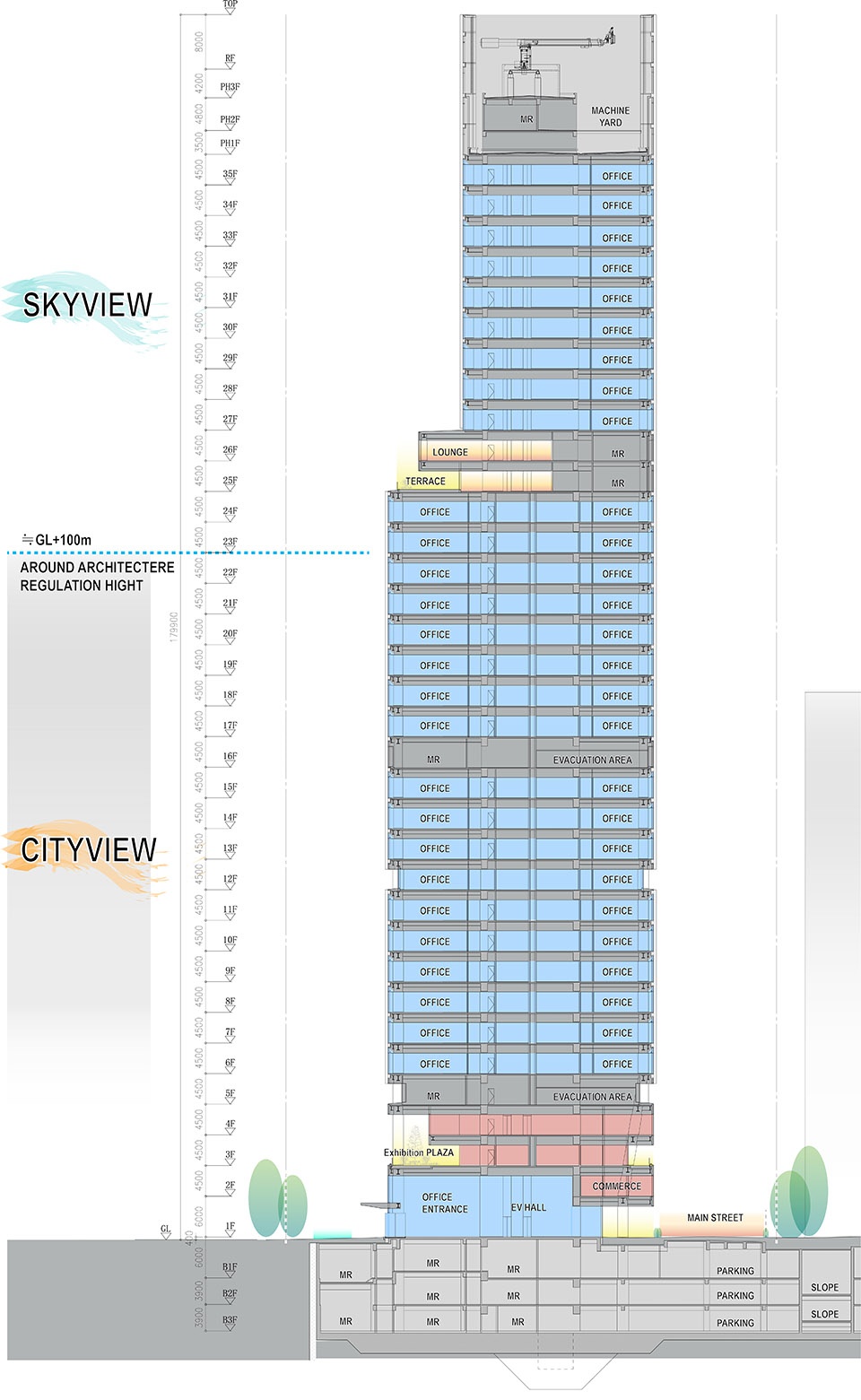
One of the project’s spatial innovations — the evacuation level — is situated approximately 100 meters above ground and has been redefined as a space for creating future value. The evacuation floor, which would otherwise be a sterile, enclosed space, was transformed into an open-air garden while ensuring safety. More than mere open space, it functions as an observation deck that affords panoramic views of the Shanghai skyline, a rest stop, and a public space. The lounge floor and the open-air garden are accessible via direct elevators from the three-dimensional alleyways in the lower sections. They can flexibly accommodate a diverse range of events and social gatherings linked to the lower levels. This flexibility “encompasses the timeline,” so to speak, leaving room for future lifestyle changes and technological innovation. These include evolving workplace and commercial facility models, as well as future drone and air mobility plans. This sustainable use of space transforms regulatory “dead space” into public space with real estate value and demonstrates new possibilities for super-high-rise architecture.
▼入口大堂,the lobby at the entrance
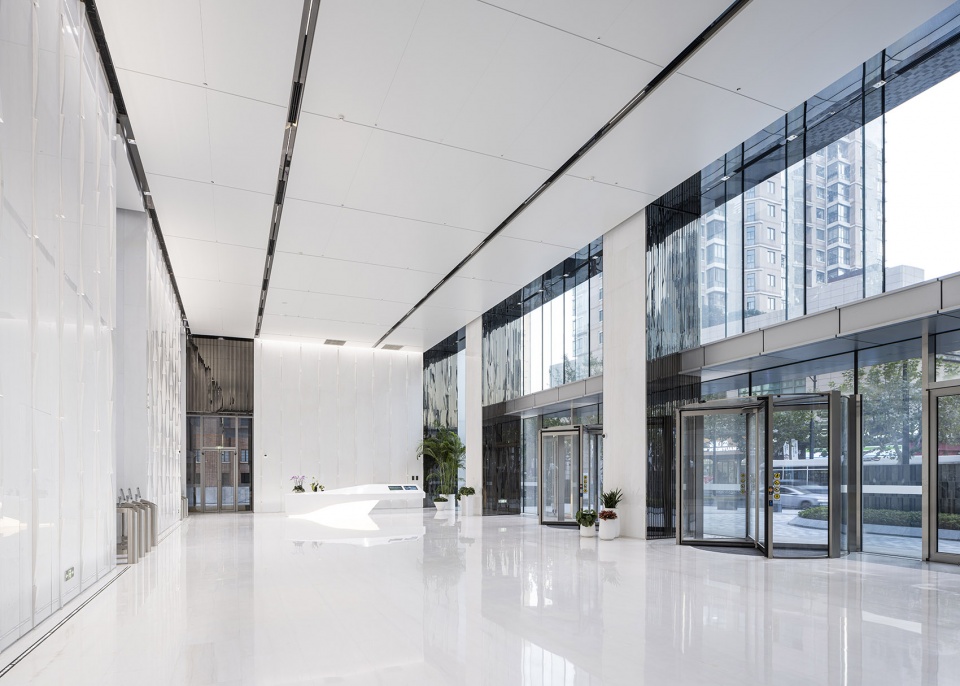
▼办公区域,office zone
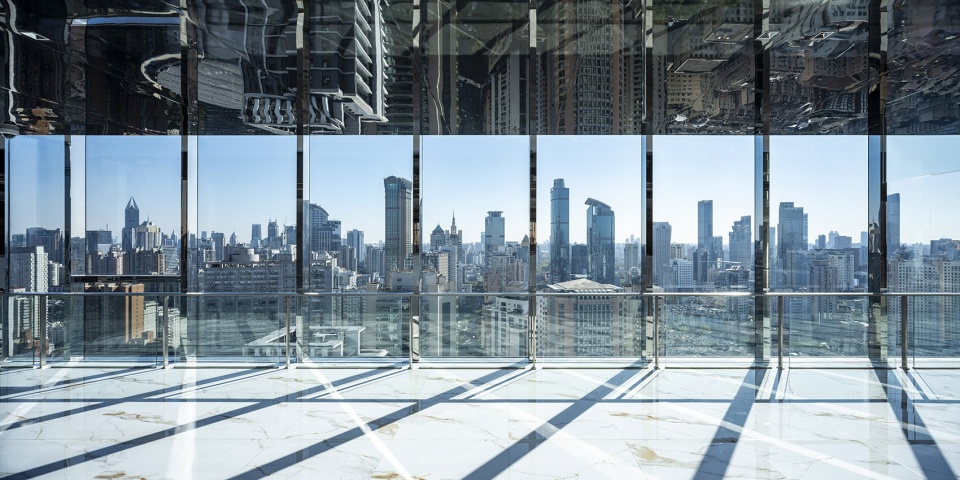
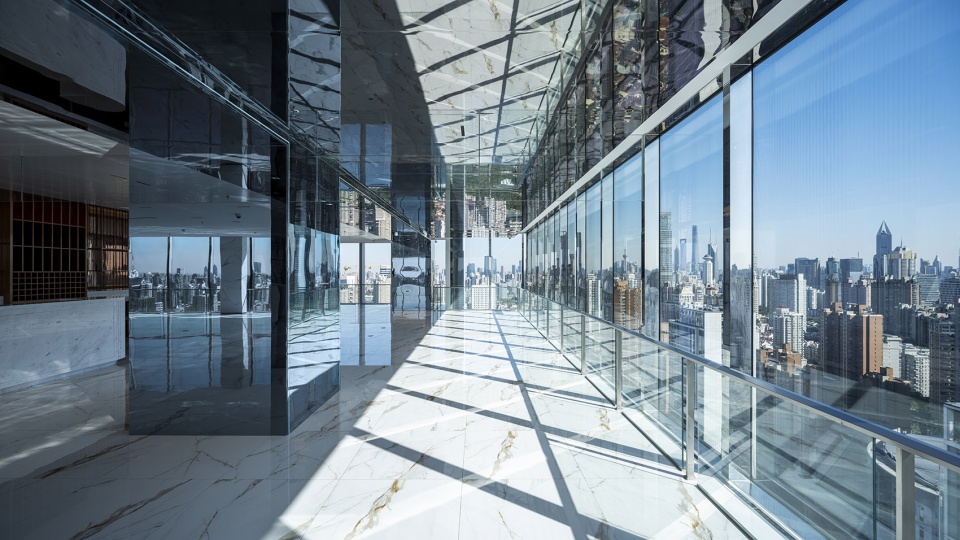
4. 设计创造的价值与城市更新的原型 Value Created by design and a prototype for urban regeneration
里弄空间、材料及立面设计,在营造场所和追求环境性能的同时,也提升了规划地特有的价值。低层部分采用承载记忆的陶土材料,立体里弄的公共动线部分则使用纤维水泥板,以此实现新旧材质质感的融合。塔楼部分采用铝合金百叶,呈现出现代而端庄的风格。随视角变化呈现不同外观、如织物般光影丰富的垂直百叶,同时也兼具降低日照负荷的环保功能。富有进深感的立面设计与CBD(中央商务区)常见的冰冷塔楼截然不同,形成了兼具历史底蕴与文化氛围的本土化地标形象。 JIC静投中心凭借其规划与设计的品质,作为对城市产生深远影响的项目,通过作为立体动线的“立体里弄”,将历史建筑的保护再生与超高层塔楼高密度开发这两个看似对立的元素整合在了一起。这种方法打造出了兼顾历史传承与城市更新的开发模式。
The alleyway spaces, materials and façade design enhance the unique value of the site, while pursuing the creation of a “sense of place” and environmental performance. Terracotta, which embodies memories, is used in the low-rise section, while fiber cement boards are employed in high public circulation areas of the multi-level alleyway. This design aspect fuses the textures of old and new materials. Aluminum louvres have been employed in the tower section to create a modern and refined aesthetic. The vertical louvres, which shift in appearance depending on the viewing angle, cloak the building in textile-like shadows, also serve to reduce solar heat gain. The facade’s sense of depth sets it apart from the sterile towers typically found in the CBD (Central Business District), establishing a local landmark imbued with history and culture. Through the quality of its planning and design, the JIC Jing’An Center is a project that makes a significant impact on the city. It integrates the conflicting elements of historic building preservation and regeneration with high-density development via a super-tall tower, uniting them through a ‘three-dimensional alleyway’ system of multi-level circulation routes. This approach represents a model that successfully balances the preservation of history with urban renewal.
▼立面细部,facade detail
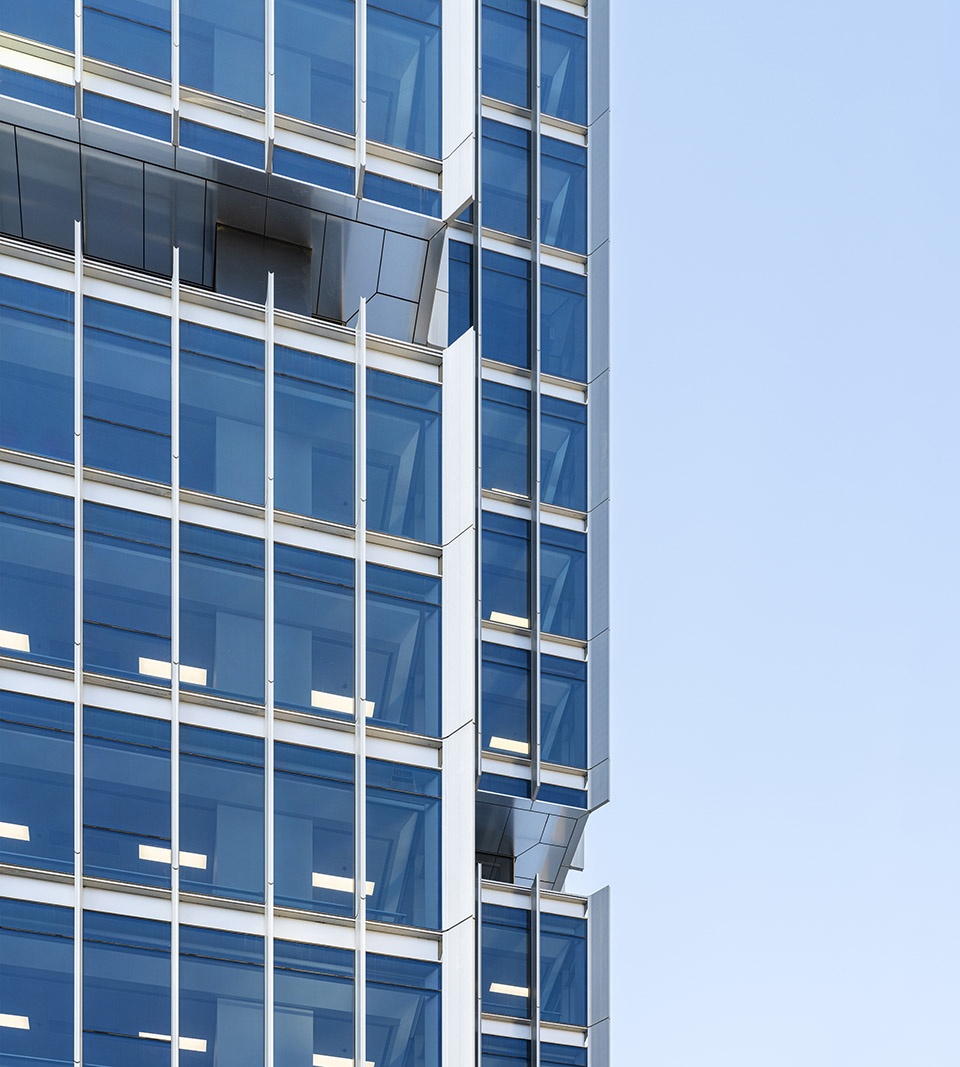
▼立面细部,facade detail
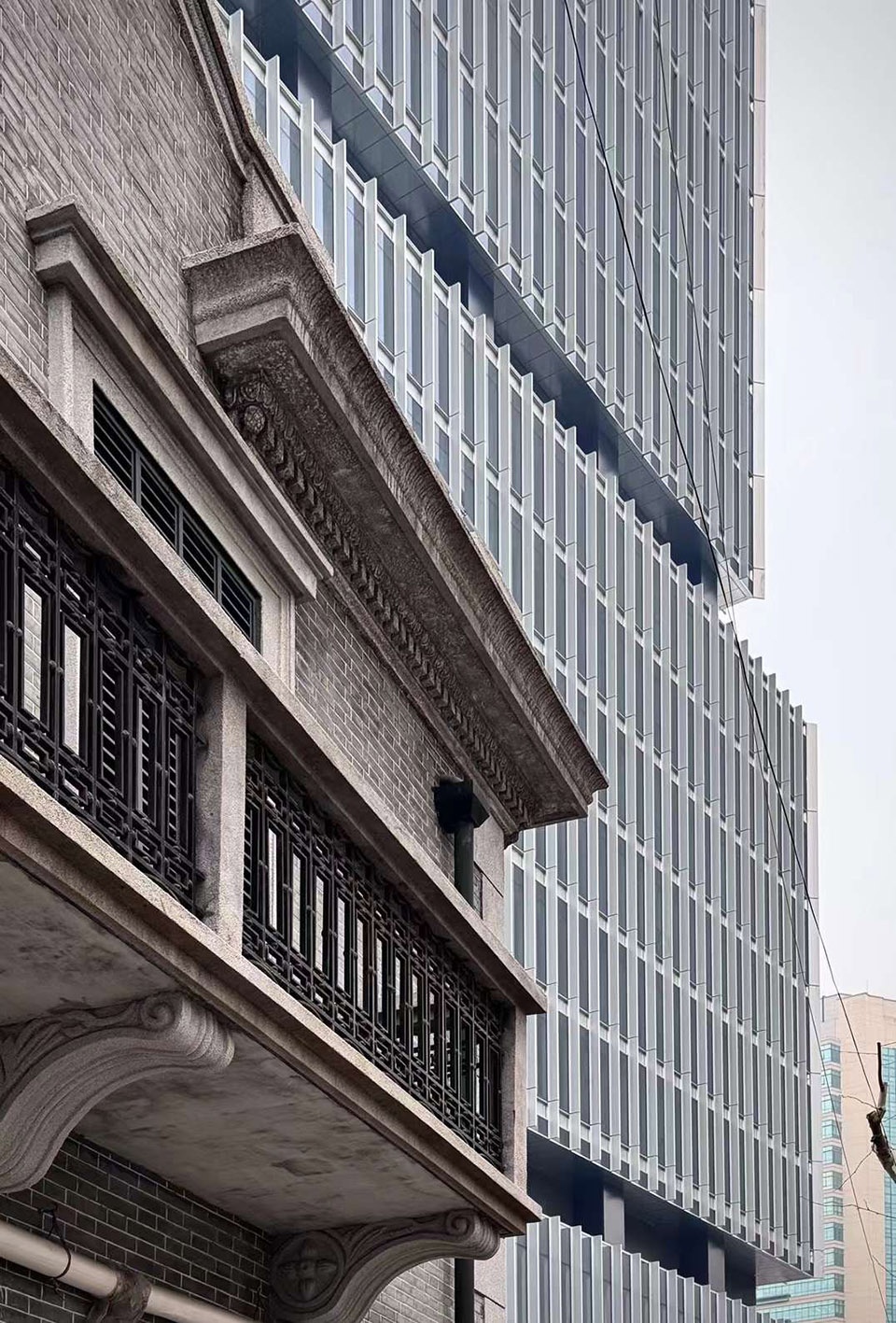
▼夜景,night view
▼场地平面,site plan
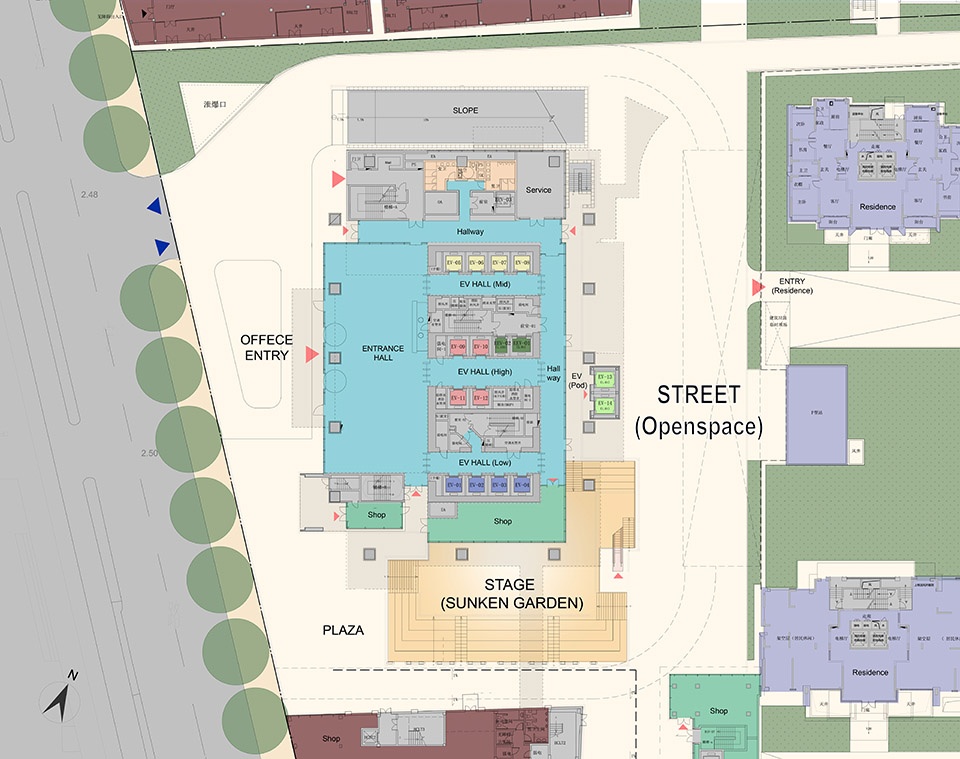
▼一层平面,ground floor plan
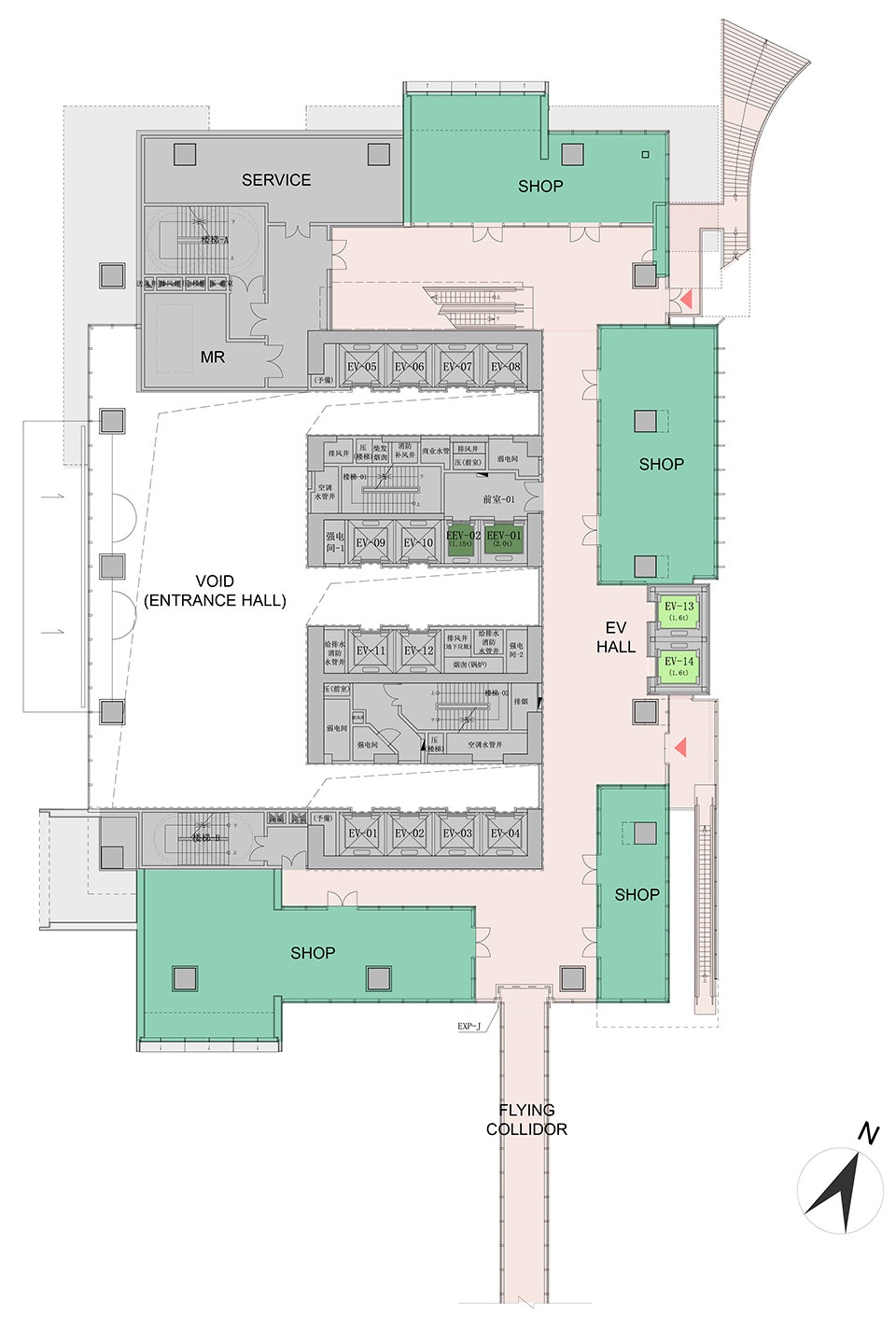
▼二层平面,first floor plan
▼三层平面,third floor plan
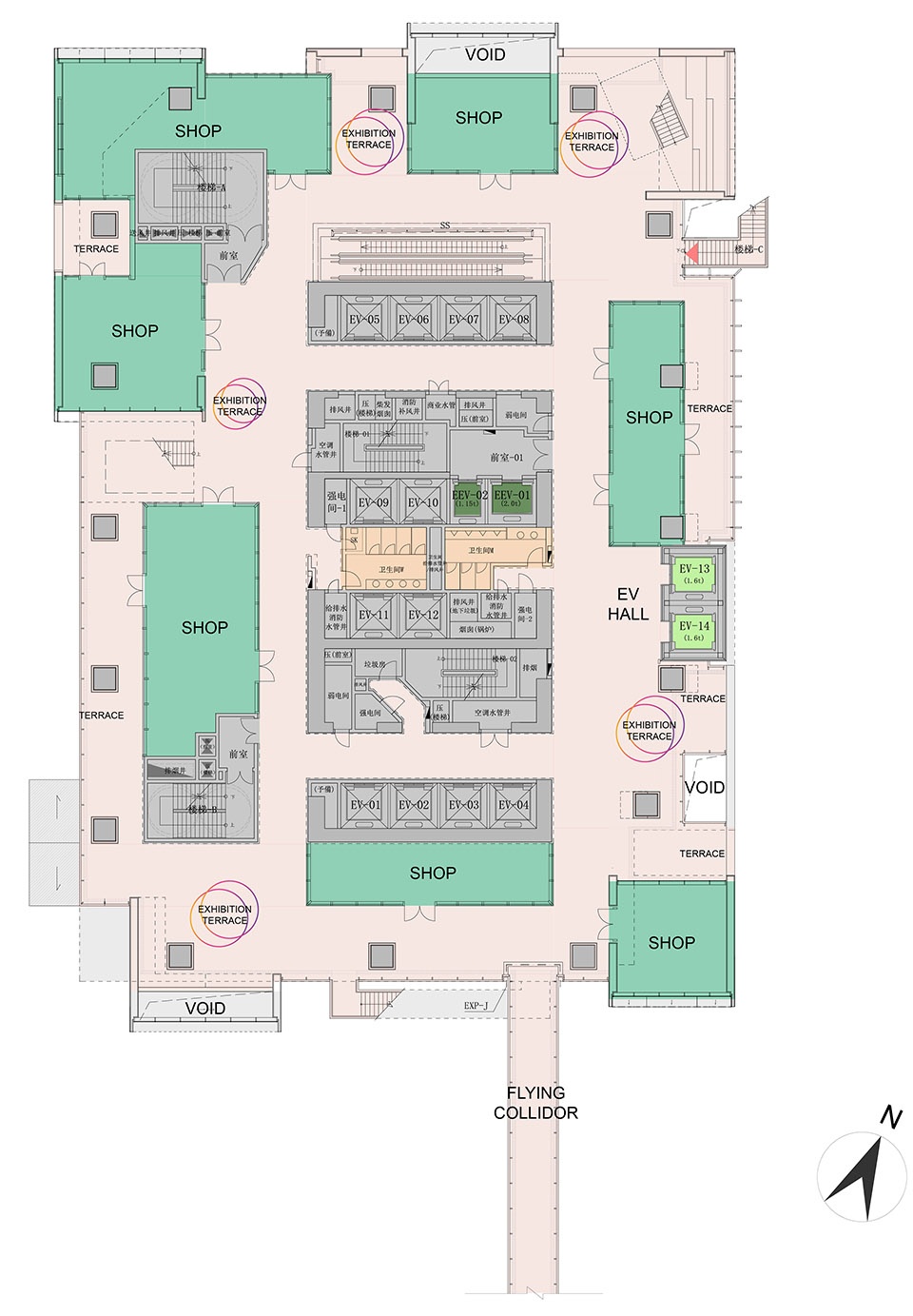
▼四层平面,fourth floor plan
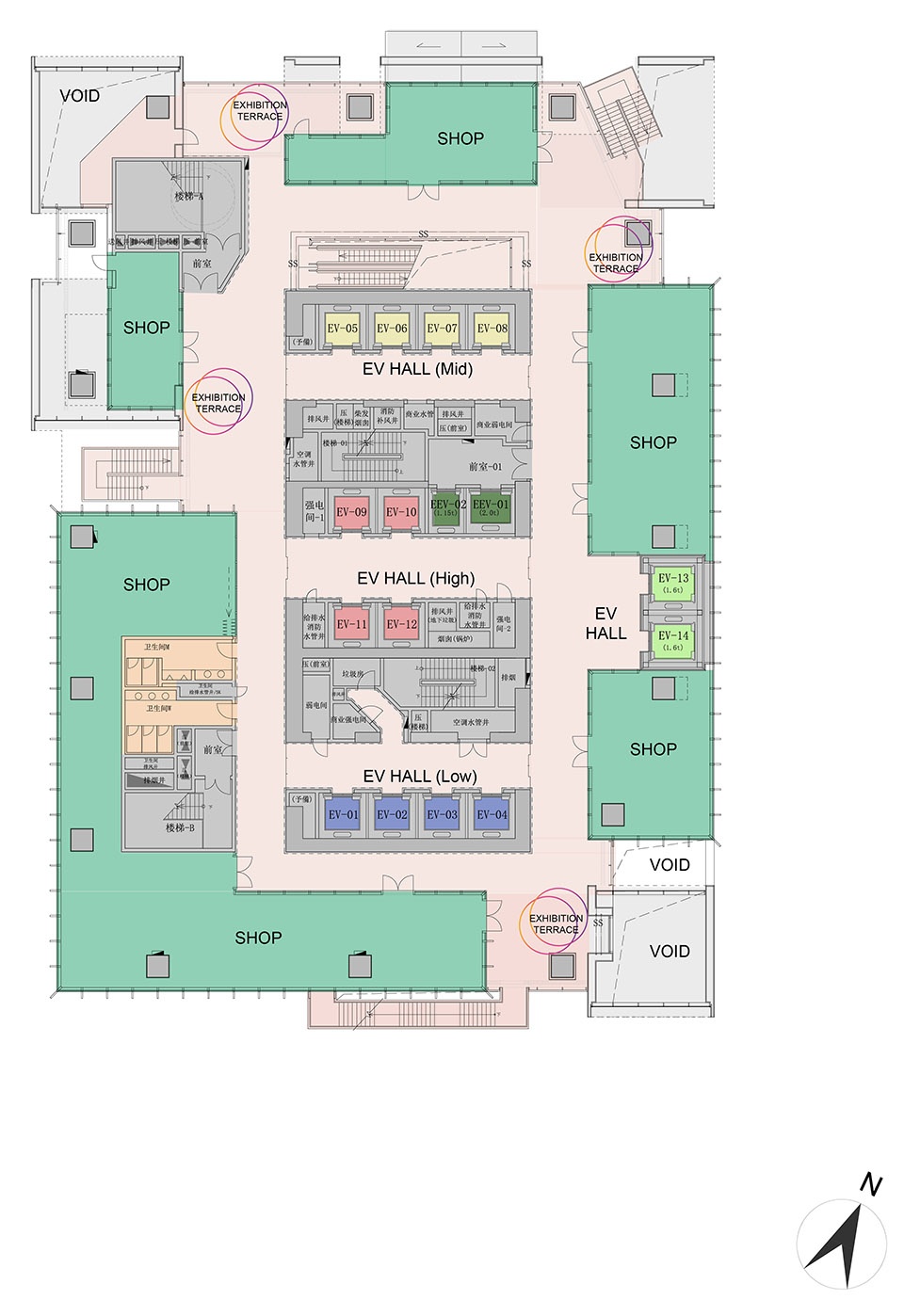
▼低层平面,lower floor plan
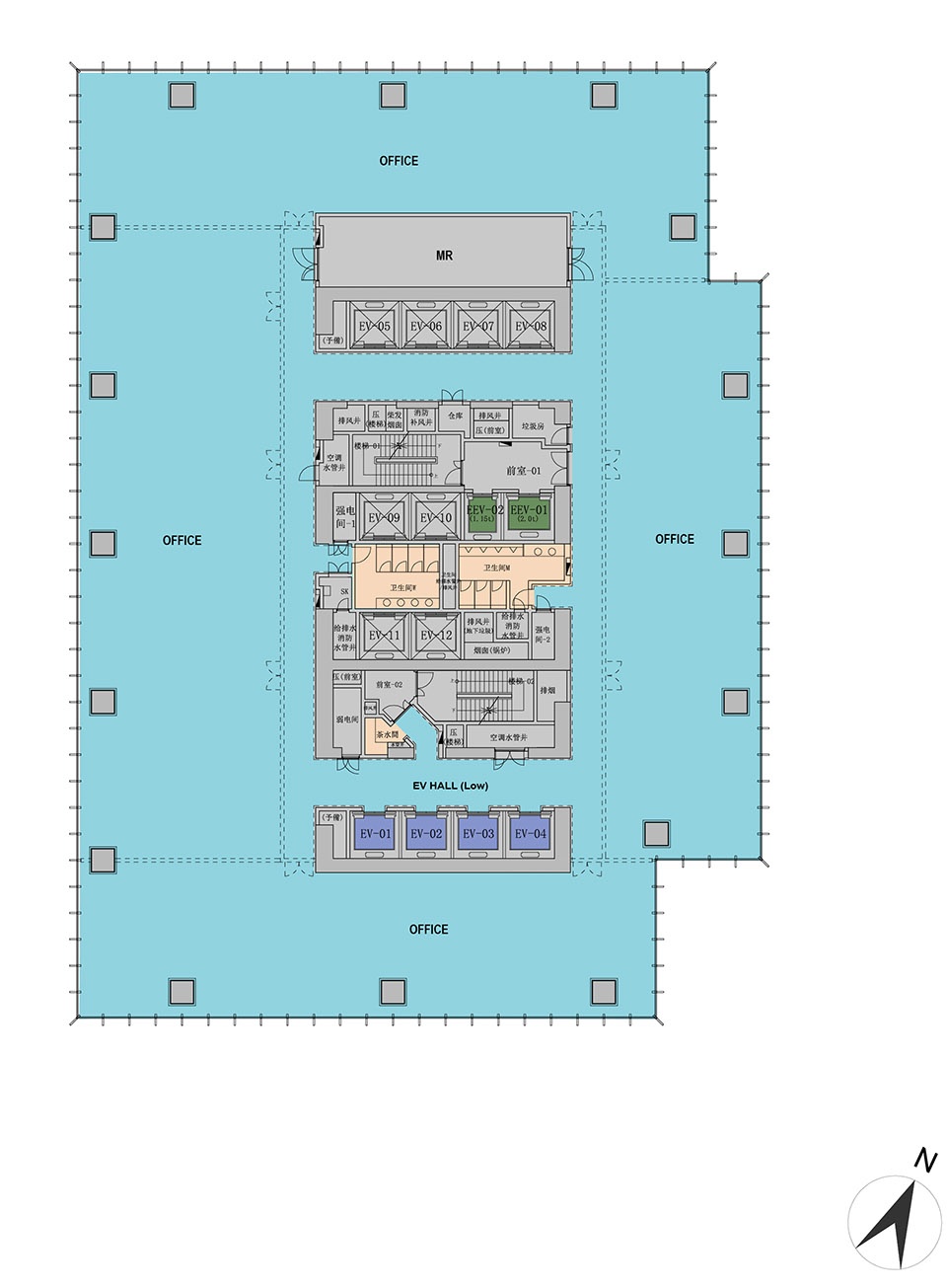
▼中层平面,medium floor plan
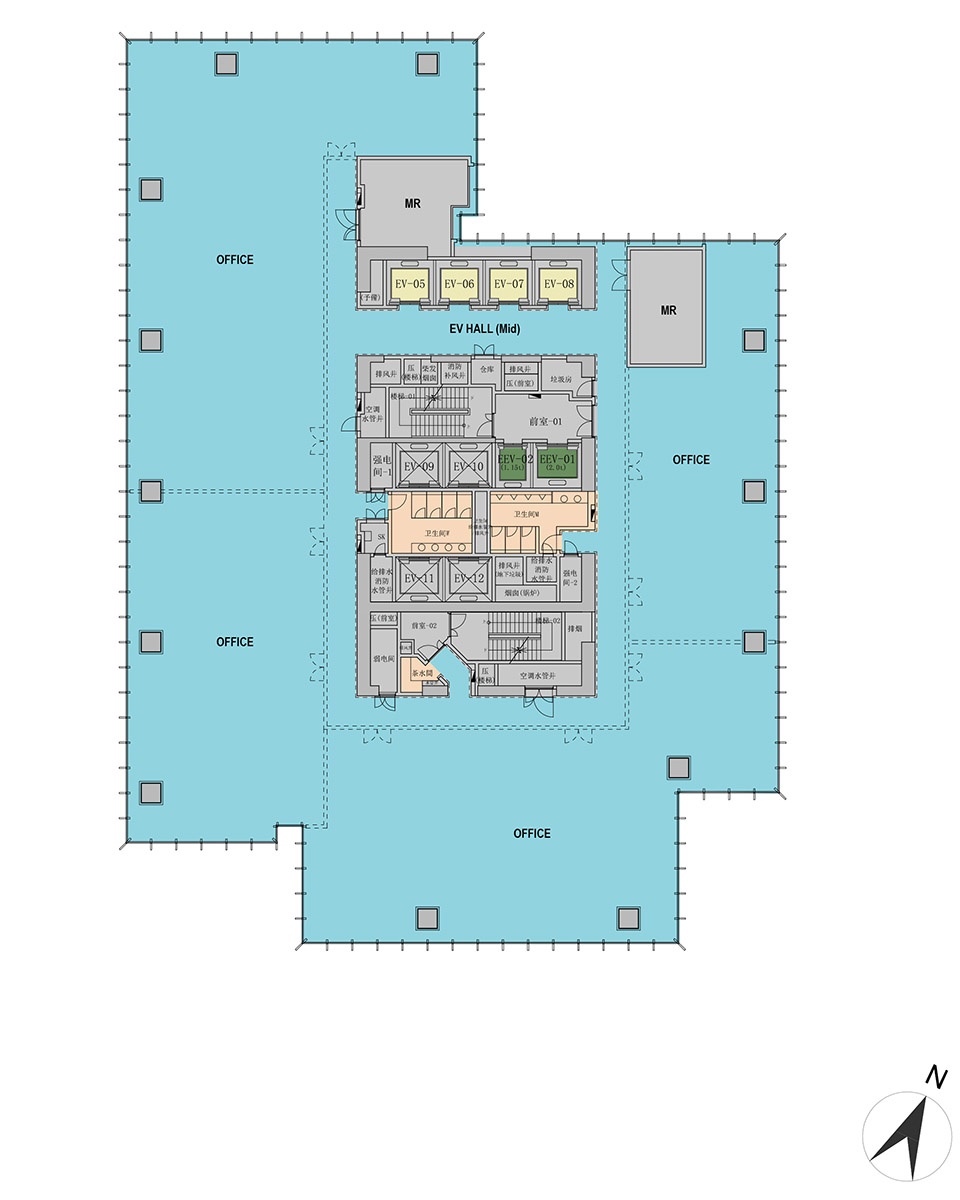
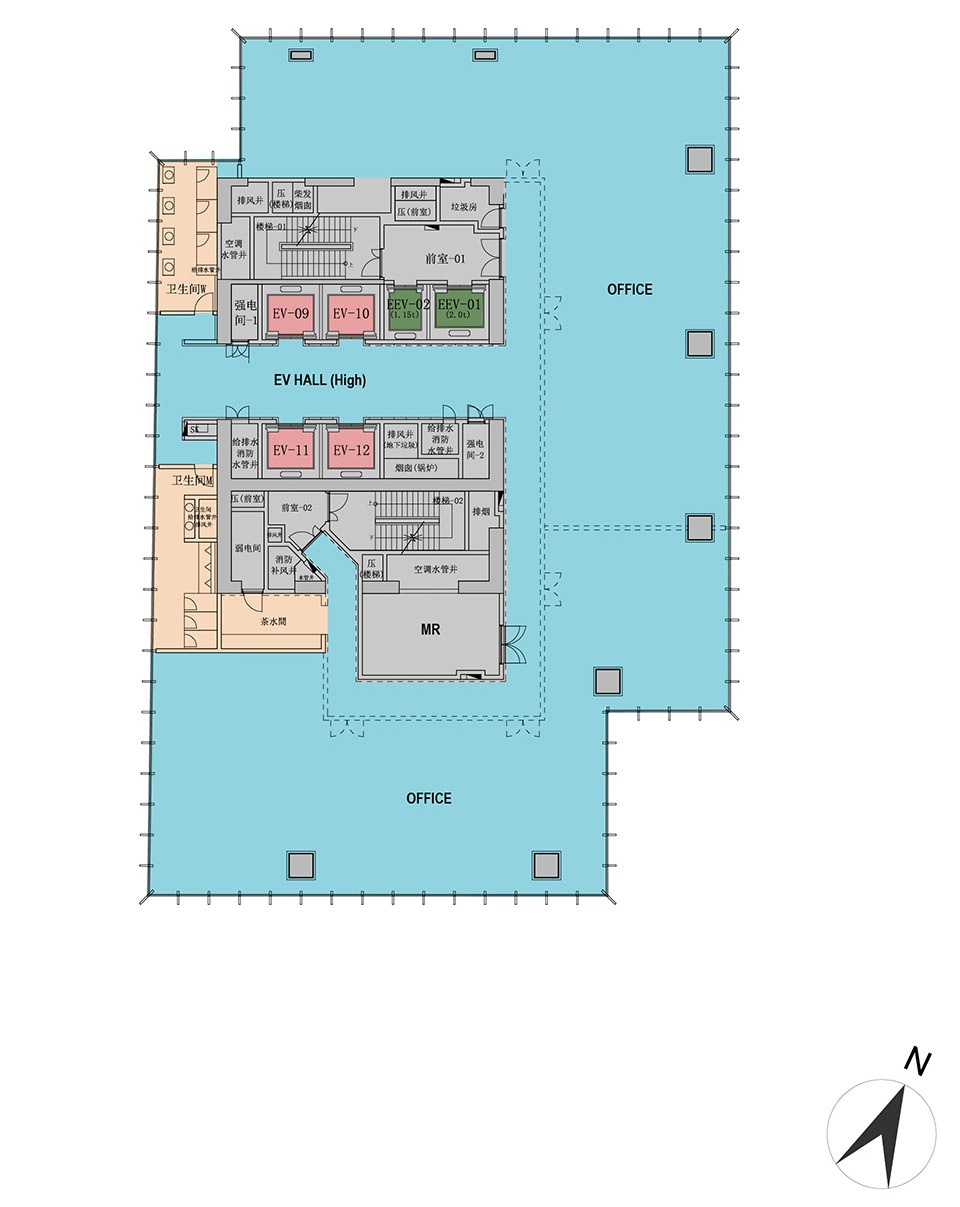
▼高层平面,higher floor plan
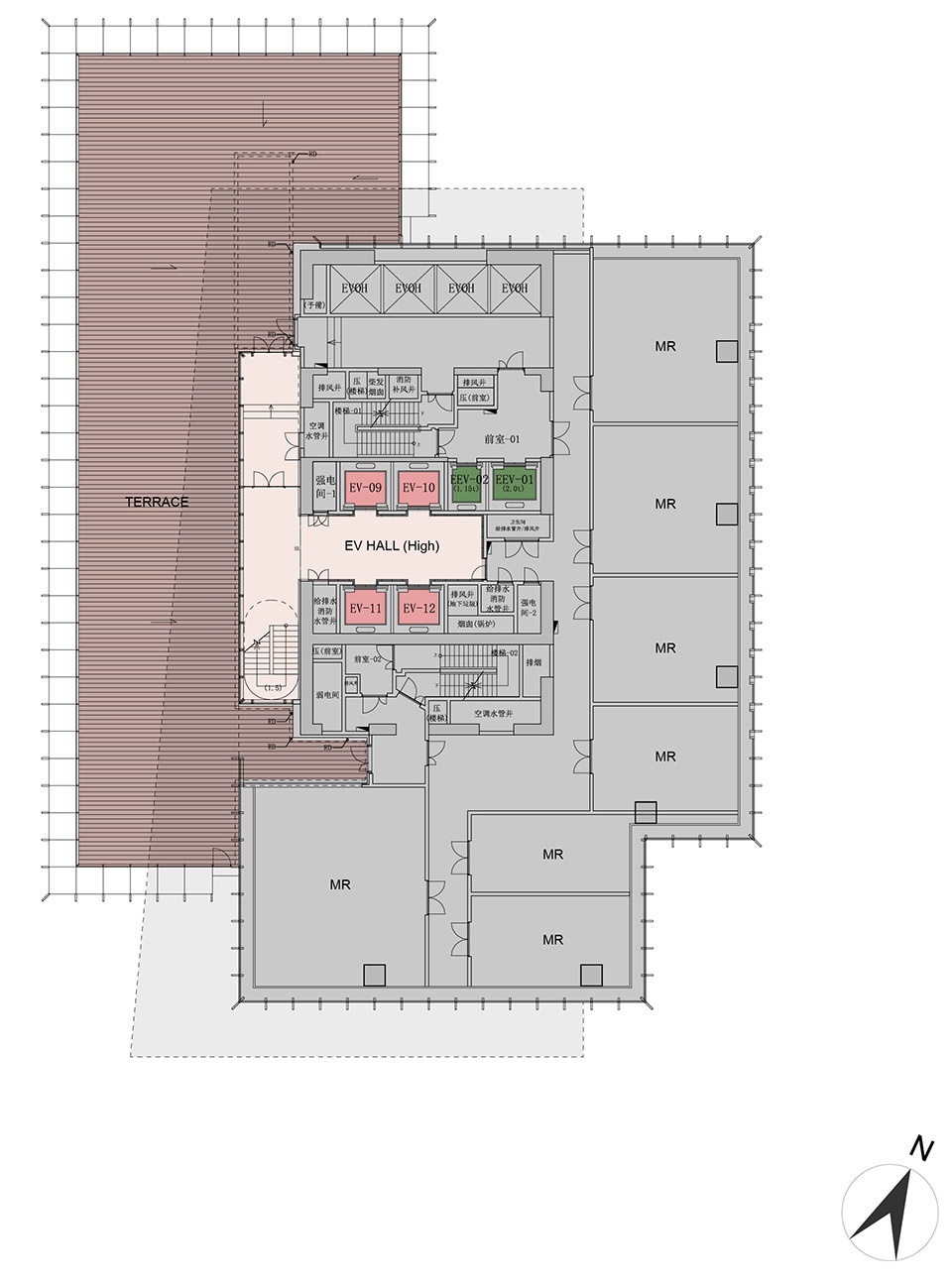
▼塔楼露台平面,tower terrace plan
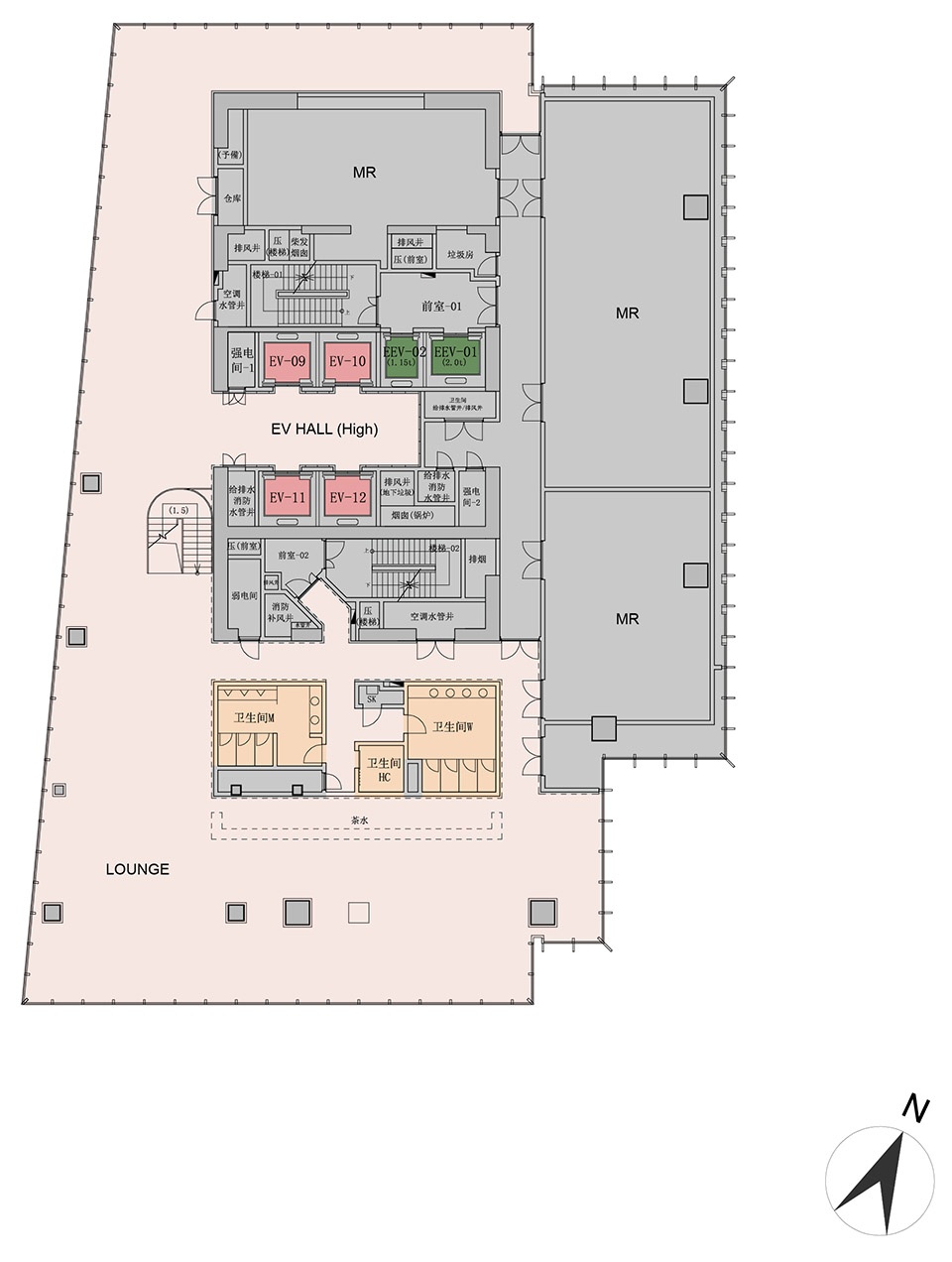
▼塔楼休息区平面,tower lounge plan
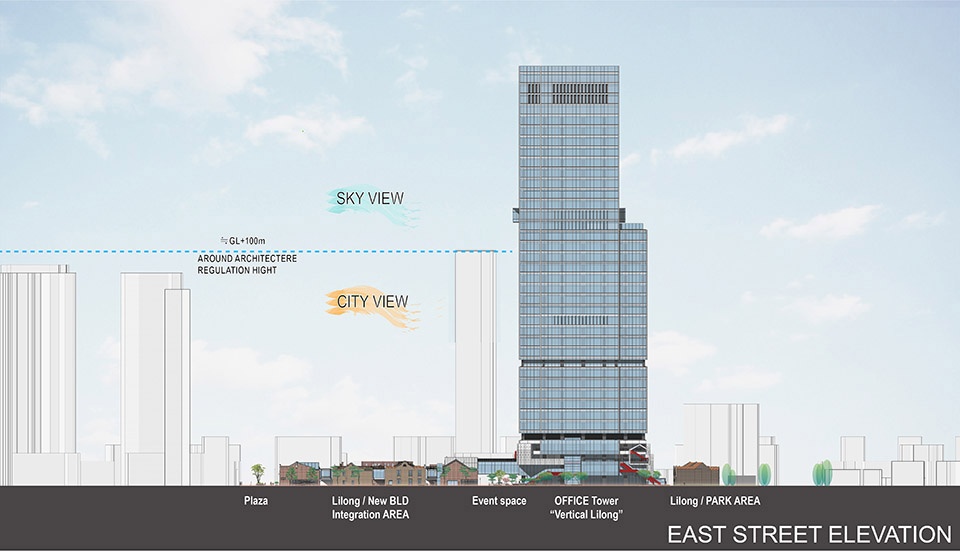
▼东立面,east elevation
项目名称(中文) JIC静投中心
项目名称(英文) Jing’An Investment Center
用途 办公、商业、住宅、地下停车场
所在地(国家省市区) 中国上海市静安区
用地面积(m2) 29,038.5
建筑面积(m2) 199,000
层数 地下3层、地上35层、屋顶设备层3层
檐口高度/最高高度(m) 180
主体结构 钢筋混凝土结构 (CFT柱,即混凝土填充钢管柱)
竣工年月 2024年12月
业主(中文) 上海静投城市建设发展有限公司
日建设计的主要业务范围 公建(除住宅部分)部分:基本规划、概念设计、方案设计、外装初步设计
保护建筑商业部分:基本规划、概念设计、部分外装设计
当地设计院(LDI) 上海建筑设计研究院有限公司
住宅部分设计单位 上海霍普建筑设计事务所股份有限公司
结构设计咨询 奥雅纳工程咨询(上海)有限公司
设备设计咨询 科进柏诚工程技术(北京)有限公司
外装设计咨询 澳昱冠工程咨询(上海)有限公司
照明设计单位 BPI上海碧甫照明工程设计有限公司
施工单位 上海建工二建集团有限公司
照片来源1(中英) 杨敏/mintwow(yangmin/mintwow)
照片来源2(中英) 日建设计(Nikken Sekkei)
玻璃 钢化夹层Low-E中空玻璃
高层部分外立面 铝合金幕墙
高层部分外立面檐口顶棚 铝合金蜂巢板
阳极氧化处理
低层部分人字形外立面 纤维水泥板
旋转门 KTV ATRIUM FLEX
Project name Jing’An Investment Center
Purpose Offices, retail, residential, underground car park
Location (city, prefecture) Shanghai, China
Site area (m2) 29,038.5
Total floor area (m2) 199,000
Number of floors -3, +35, PH3
Eave height / maximum height (m) 180
Main structure RC (CFT columns)
Completion month/year December 2024
Client name Shanghai Jingtou Urban Construction Development Co., Ltd.
Nikken Sekkei‘s main scope Public buildings (excluding residential sections): Master Planning, Concept Design, Schematic Design, Preliminary Exterior Design.
Preserved commercial buildings: Master Planning, Concept Design, Partial Exterior Design.
Local Design Institute (LDI) Shanghai Institute of Architectural Design & Research Co., Ltd.
Residential design Shanghai HYP-ARCH Architectural Design Consultant Co., Ltd.
Structural design consulting Arup International Consultants (Shanghai) Co. Ltd.
MEP design consulting WSP Engineering Technology (Beijing) Co., Ltd.
Exterior design consulting Aurecon Engineering Consulting (Shanghai) Co., Ltd.
Lighting design Shanghai Bifu Lighting Engineering Design Co., Ltd.
Construction Contractor Shanghai Construction No.2 (Group) Co., Ltd.
Photo credit 1 yangmin/mintwow
Photo credit 2 Nikken Sekkei
Material Specification/Product Name
Glass Tempered laminated Low-E double-glazed glass
High-rise façade Aluminum curtain wall
High-rise façade and Soffit Aluminum honeycomb panels
anodized finish
Low-rise gable façade Fiber cement board
Revolving door KTV ATRIUM FLEX
More:株式会社日建设计。更多关于:Nikken Sekkei Ltd