东风韵·红谷屋舍,云南弥勒 / 孟凡浩line+
▼项目一览, Project Overview
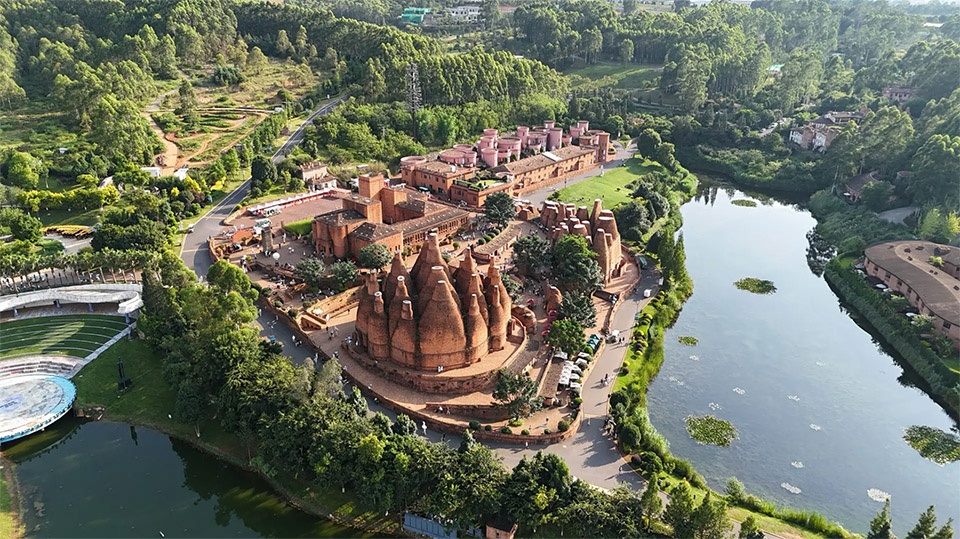
弥勒,位于云南红河哈尼族彝族自治州下辖县级市,是连接滇中城市群与滇南文化区域的重要文化节点。近年来,随着艺术家村落及一系列文化建筑的落成,一片以艺术为核心的聚落正在逐渐形成。
Mile, a county-level city in Yunnan’s Honghe Hani and Yi Autonomous Prefecture, sits at the intersection of central Yunnan’s urban network and the cultural territories of southern Yunnan. In recent years, with the emergence of artist communities and cultural facilities, the area has gradually developed into an art-oriented settlement.
▼东风韵艺术小镇,Dongfengyun Art Towen
项目延续line+在东风韵艺术中心之后的持续实践,在山谷地形中嵌入一组与自然共生的建筑群。最初的设计任务书为艺术家工作室,作为驻留、创作与交流的空间原型,建筑需要同时支持多位艺术家的协同使用,并在不同阶段实现个体驻留与集体使用之间的灵活切换。
The project extends line+’s ongoing exploration of the Dongfengyun context following the completion of the Art Center, introducing a group of buildings carefully embedded within the valley landscape. Originally conceived as artist studios, the project was envisioned as a place for residency, creation, and exchange. The brief called for a spatial framework capable of accommodating multiple artists simultaneously while allowing flexible transitions between individual retreat and collective use over time.
▼项目鸟瞰, aerial view of the project
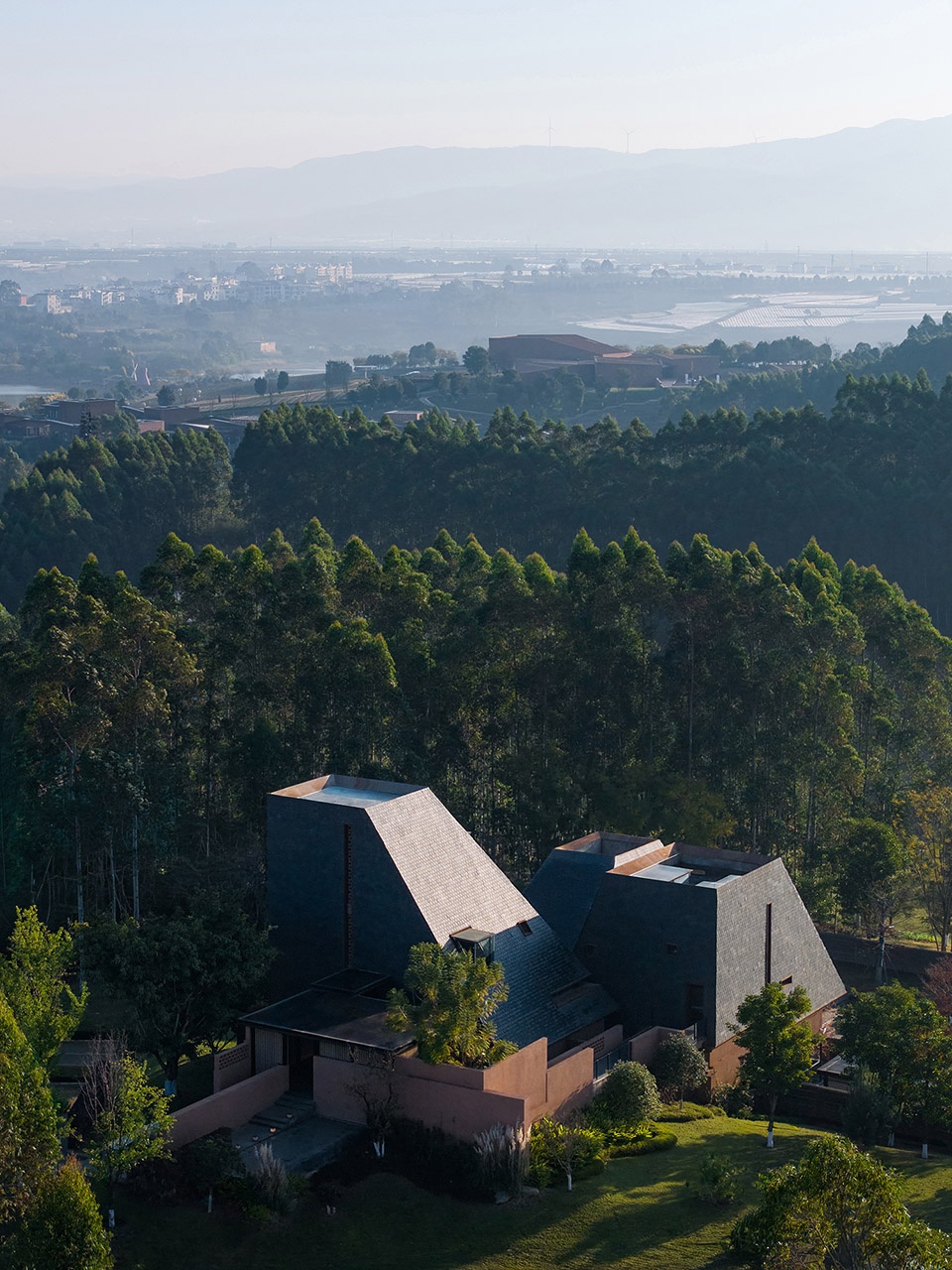
在这一前提下,设计从在地民居类型与山地地形关系出发,对哈尼族“蘑菇房”进行转译,将其空间逻辑嵌入红土坡地与桉树林之中,使建筑在自然、艺术与日常之间建立起连续的空间关系。
Starting from the relationship between local dwelling typologies and the mountainous terrain, the design reinterprets the Hani “mushroom house” as a spatial reference. Its underlying logic is embedded into the red-earth hillside and eucalyptus forest, allowing the project to establish a continuous relationship between nature, artistic activity, and everyday life.
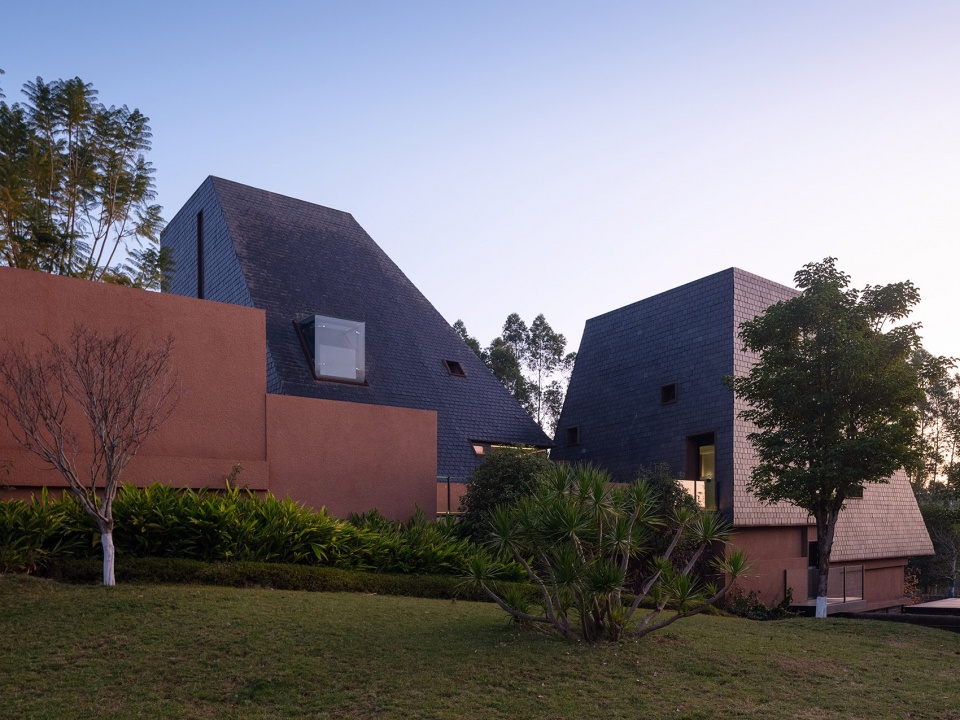
▼对哈尼族“蘑菇房”进行转译,the design reinterprets the Hani “mushroom house”
01 红谷之间,顺势入林 01 Growing into the Red Valley Landscape
场地位于东风韵双创园区西侧山谷,占地约1亩。红土坡地于桉树林间缓缓展开,地势自西侧高点向东延伸,在有限尺度内形成清晰的高差起伏关系。
The site occupies a one-mu valley plot on the western edge of Dongfengyun Innovation Park. A gentle slope of Yunnan’s characteristic red earth unfolds through eucalyptus woods, descending from a high western edge toward the east and creating distinct topographic variations within a compact site.
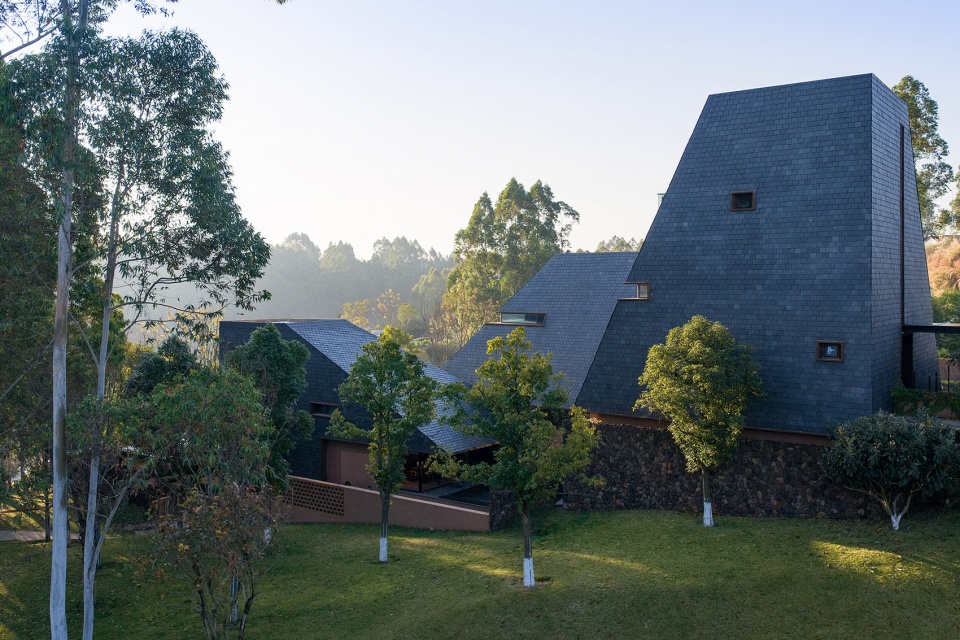
▼建筑于桉树林间缓缓展开,the building unfolds gently amidst the eucalyptus grove
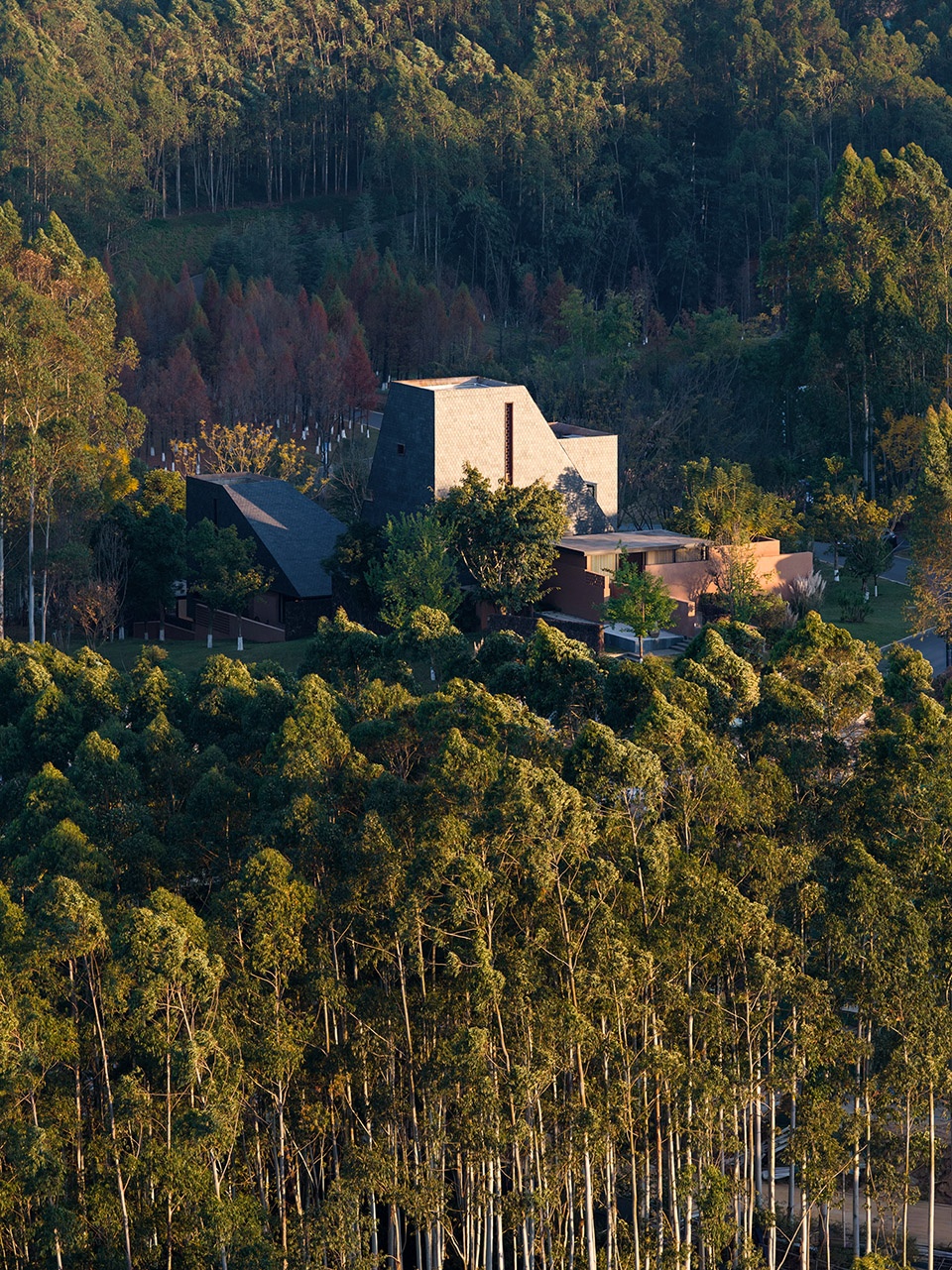
面对这一地形,建筑未以单一体量覆盖场地,而是拆分为数个彼此关联的单元,顺应坡地节奏逐层落位。建筑与院落沿山势向东铺展,在尺度与比例上与林地形成呼应。
▼生成分析,generation progress
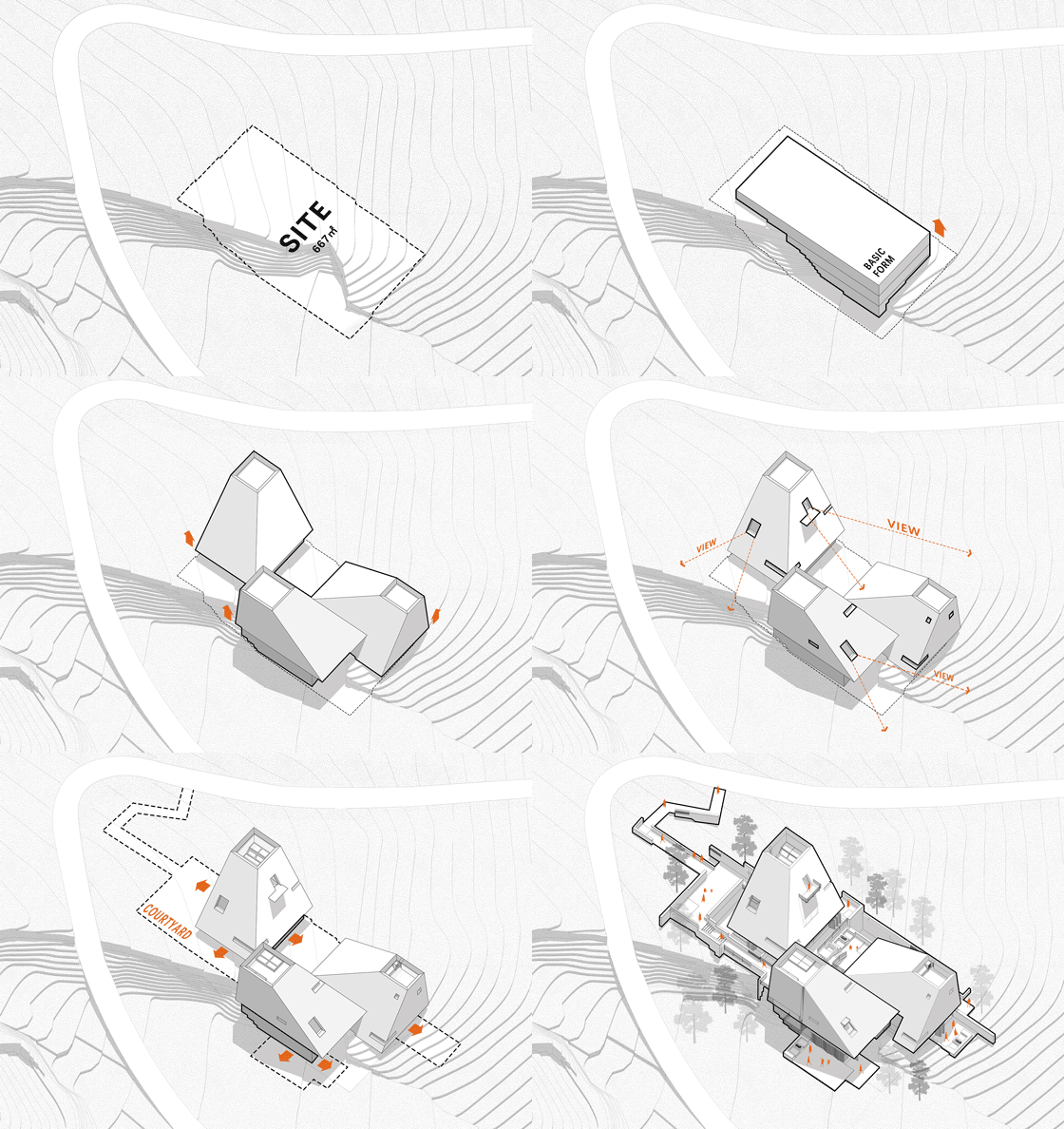
Rather than imposing a singular building mass onto the landscape, the design breaks the program into several interconnected volumes that step down with the terrain. Buildings and courtyards unfold eastward along the hillside, establishing a scale and rhythm that resonate with the surrounding forest.
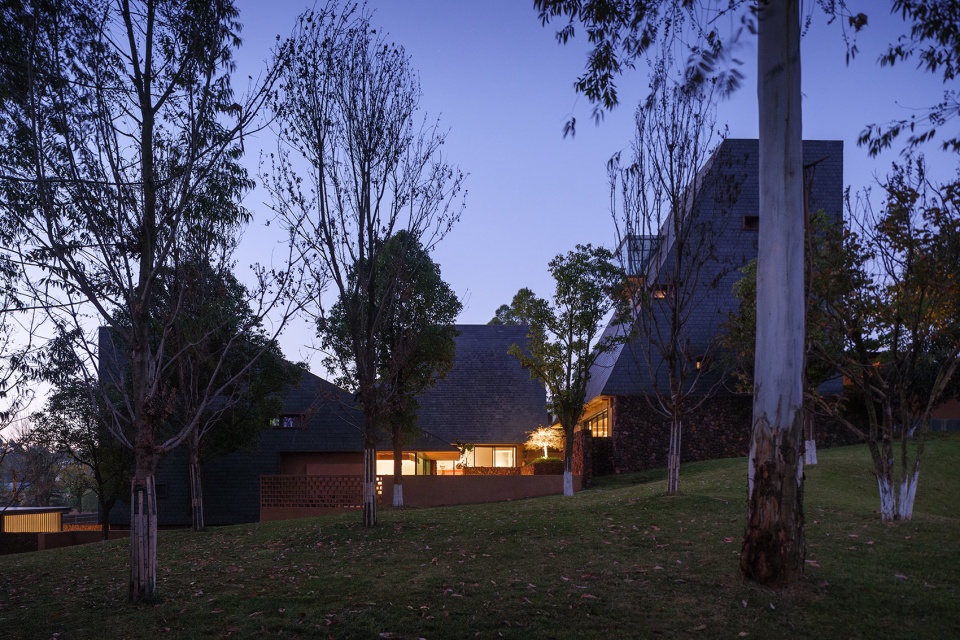
▼顺应坡地节奏逐层落位,interconnected volumes that step down with the terrain
空间路径亦由地形生成:入口位于西侧高点,经廊亭过渡进入场地,顺应高差抵达中央庭院,再由庭院向不同标高的建筑单元展开。这一由高至低、由外至内的行进序列,使建筑与地形形成连续关系。
▼模型,model
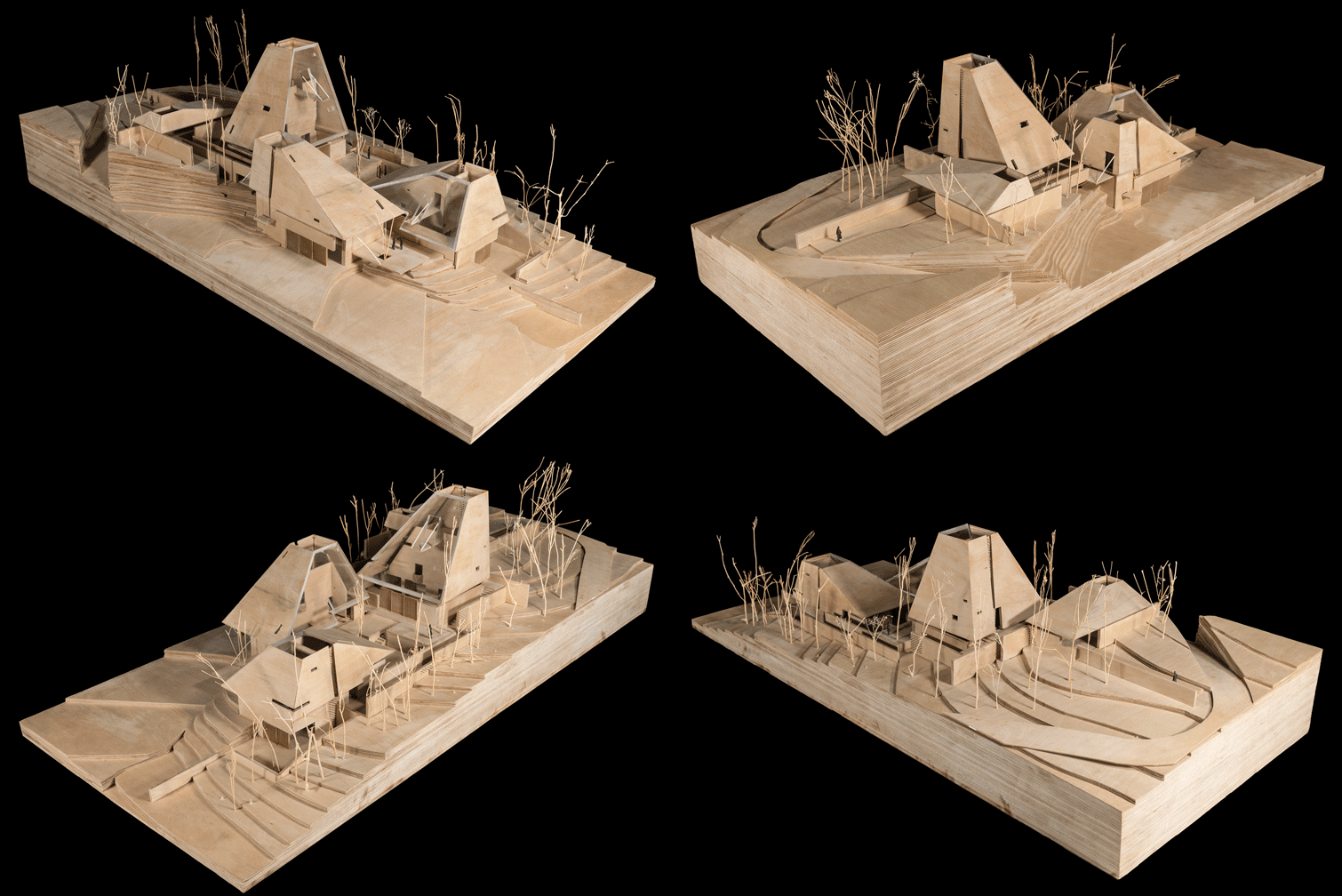
The circulation strategy also emerges directly from the site topography. Visitors enter from the western high point and pass through a transitional pavilion before descending into a central courtyard. From there, pathways branch toward architectural volumes positioned at different elevations. This movement sequence—from high to low, from exterior to interior—creates a continuous spatial relationship between architecture and terrain.
▼由高至低、由外至内的行进序列,movement sequence—from high to low, from exterior to interior
▼由高至低、由外至内的行进序列,movement sequence—from high to low, from exterior to interior
02 “蘑菇”土屋,形体新生 02 Reinterpreting the Hani “Mushroom House”
建筑形态的灵感来自云南红河地区哈尼族传统聚落中的“蘑菇房”。这种民居以夯土墙体与茅草屋顶构成独特比例:墙体向下展开,屋顶向上收拢,在视觉上形成沉稳而有力的形态关系。
▼哈尼族聚落,Hani settlement
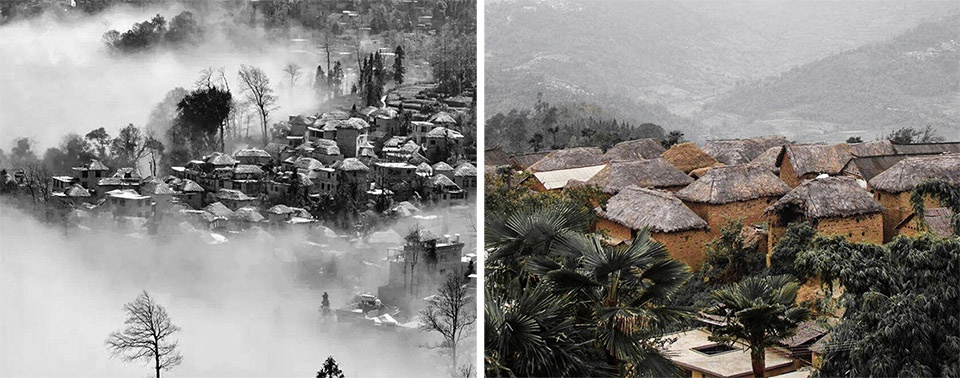
The architectural language draws inspiration from the traditional “mushroom houses” found in Hani settlements across the Honghe region. These vernacular dwellings typically combine rammed-earth walls with thatched roofs, creating a distinctive profile: broad and grounded below, narrowing upward toward the roof.
▼灵感来自云南红河地区哈尼族传统聚落中的“蘑菇房”,The architectural language draws inspiration from the traditional “mushroom houses” found in Hani settlements
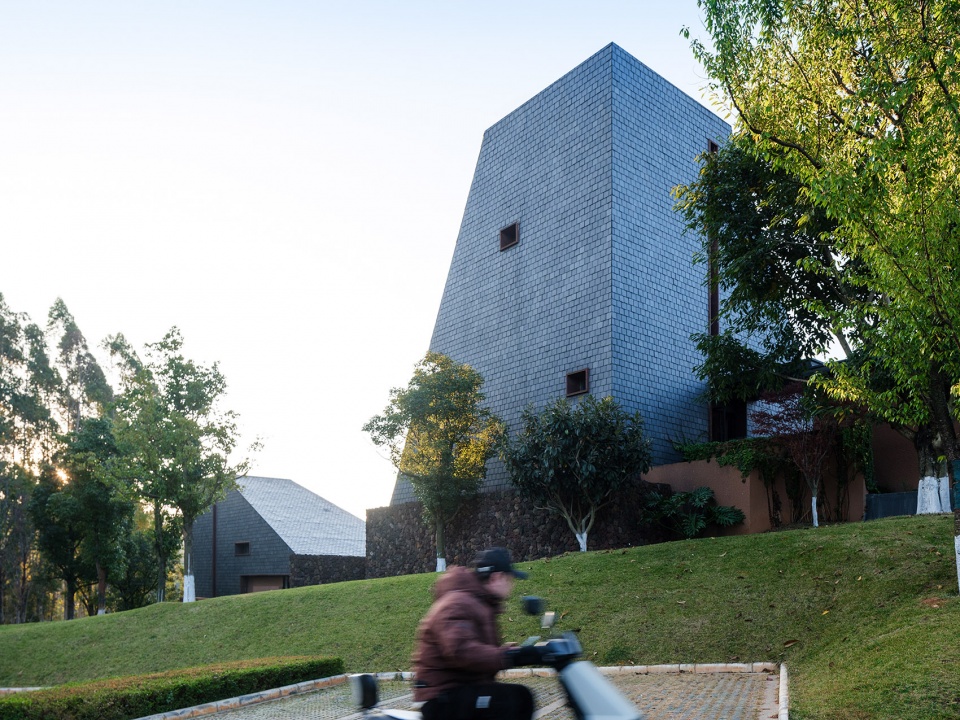
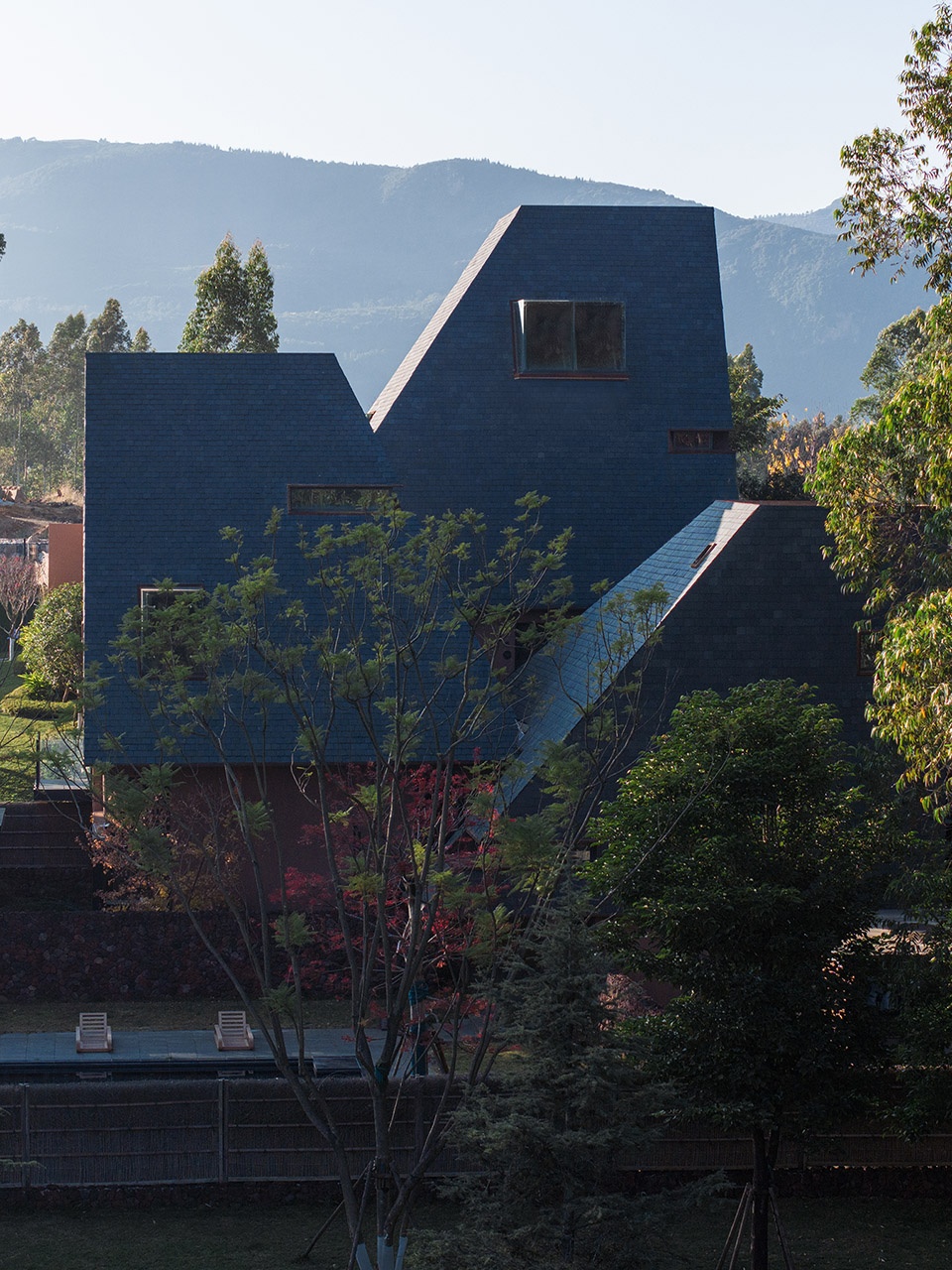
设计并未复刻这一传统形态,而是提取其“上收下展”的空间逻辑,将其转译为更为纯粹的几何构形。收敛的屋顶与厚实的墙体共同塑造具有雕塑感的体量,使建筑仿佛自然生长于红土之中。
Rather than replicating the traditional form, the project extracts its underlying spatial logic and translates it into a more abstract geometric language. Tapered rooflines and thick walls generate sculptural volumes that appear as though they have emerged directly from the red earth landscape.
▼转译为更为纯粹的几何构形,translates it into a more abstract geometric language
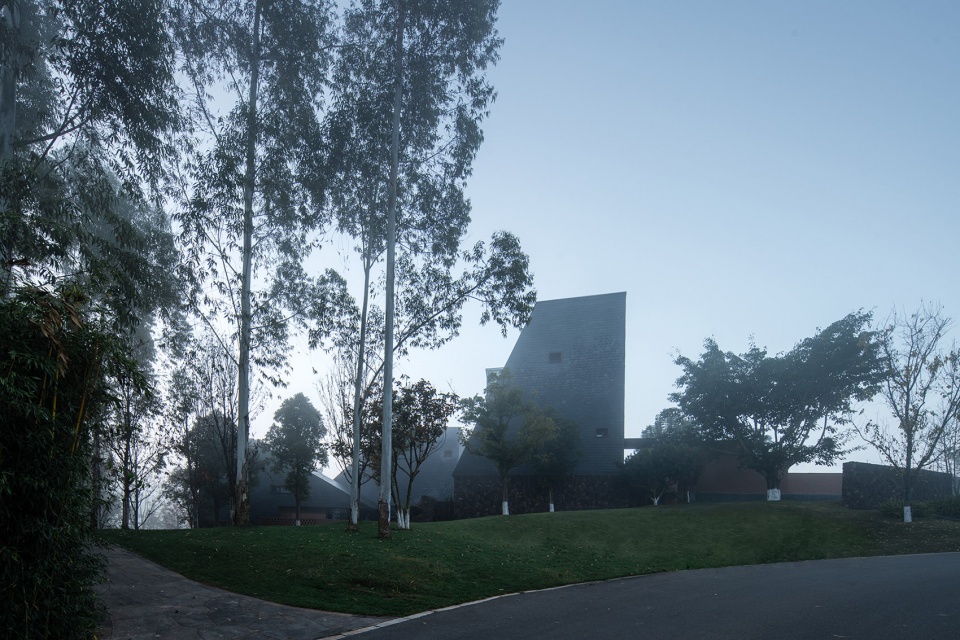
▼转译为更为纯粹的几何构形,translates it into a more abstract geometric language
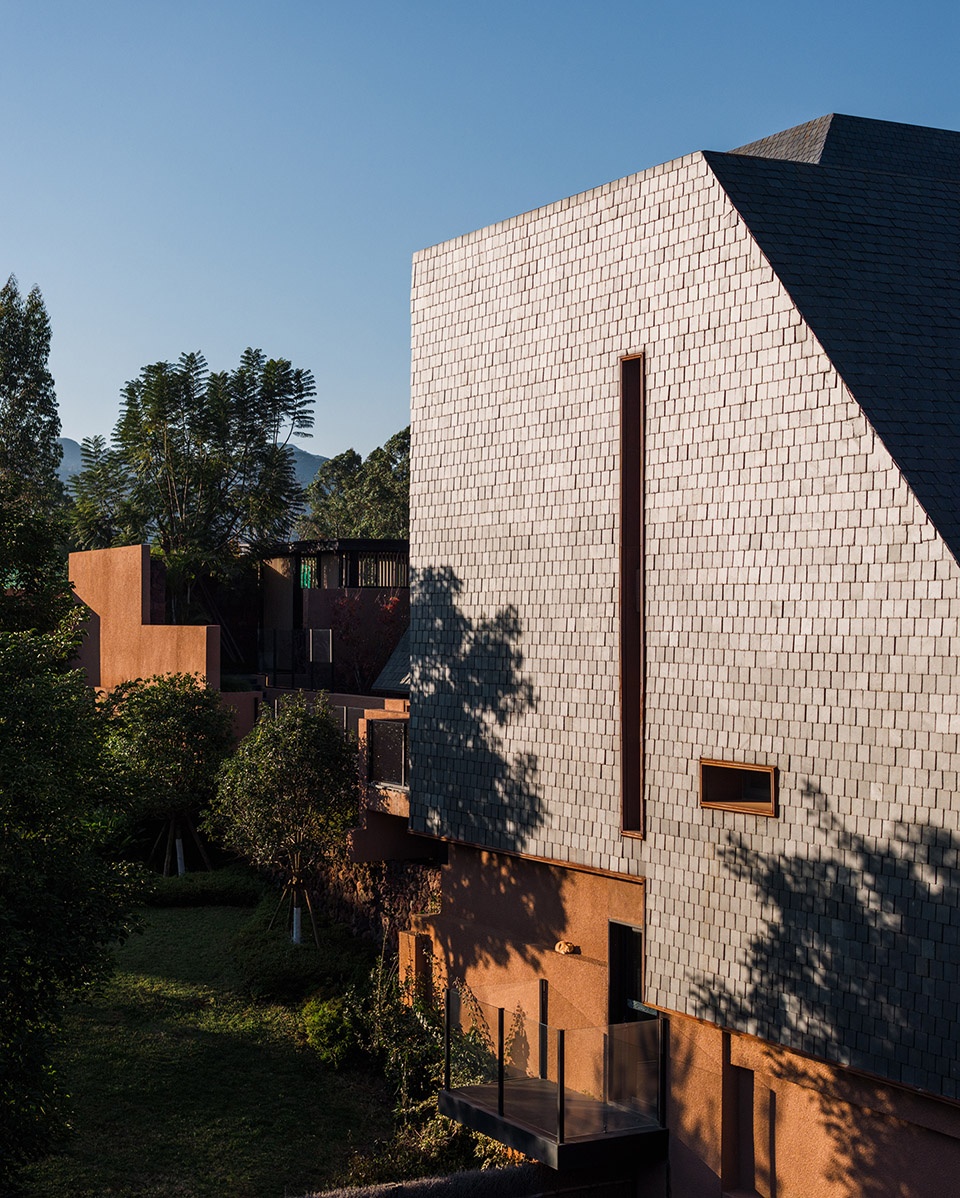
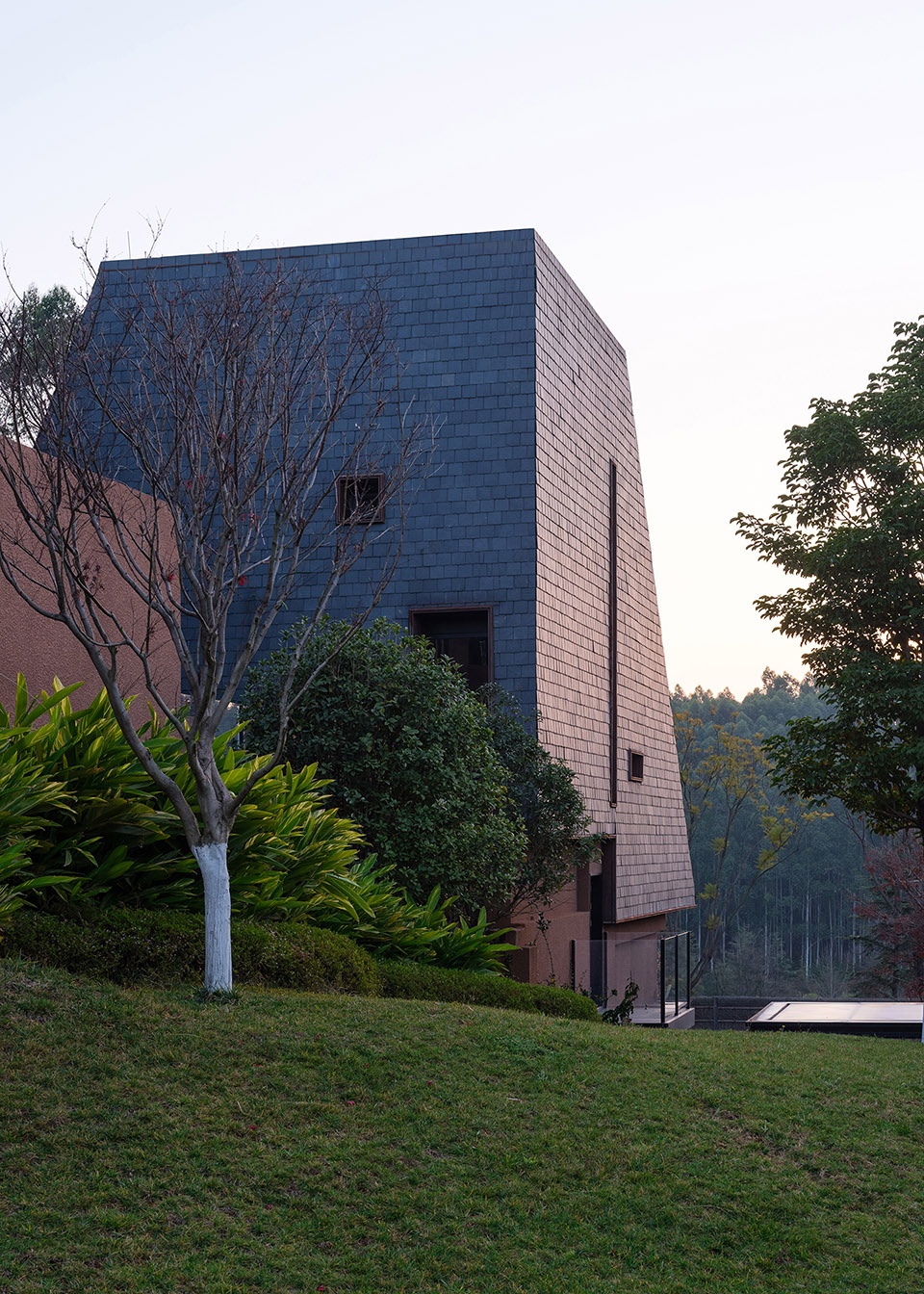
与此同时,这一原型的转译也来自对当地气候与场所经验的回应。面对云南高原强烈而直接的日照,设计并未沿用惯常追求的开放与通透,而更倾向于塑造一种厚实、内向、具有庇护感的空间状态。相较于以大面积玻璃消解建筑边界,更强调建筑作为“实体”的存在感——通过厚墙、洞口与天光的控制,让人与自然的关系并非建立在无遮挡的观看之上,而是在遮蔽、停留与感知之间逐渐发生。
This reinterpretation of the vernacular prototype emerged from a response to local climate and lived experience. Under the intense and direct sunlight of Yunnan’s plateau environment, the design avoids conventional strategies of openness and transparency, instead favoring spaces that feel grounded, inward-looking, and protective. Rather than dissolving architectural boundaries through extensive glazing, the project emphasizes the presence of the building as a solid spatial form. Thick walls, deeply recessed openings, and carefully controlled daylight create a relationship with nature that is not based on unobstructed views, but unfolds gradually through moments of enclosure, pause, and perception.
▼强调建筑作为“实体”的存在感,emphasizes the presence of the building as a solid spatial form
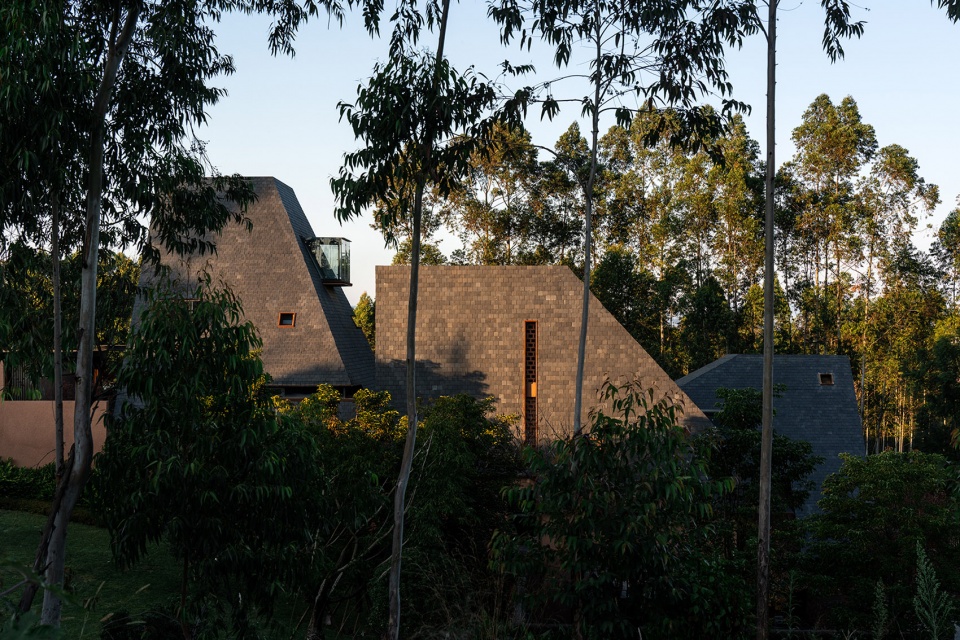
▼强调建筑作为“实体”的存在感,emphasizes the presence of the building as a solid spatial form
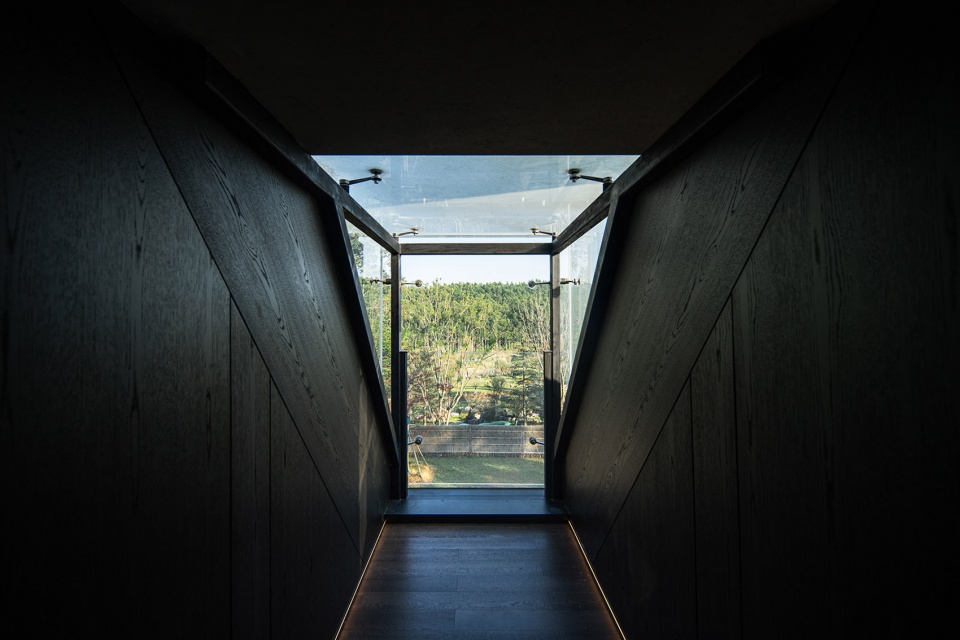
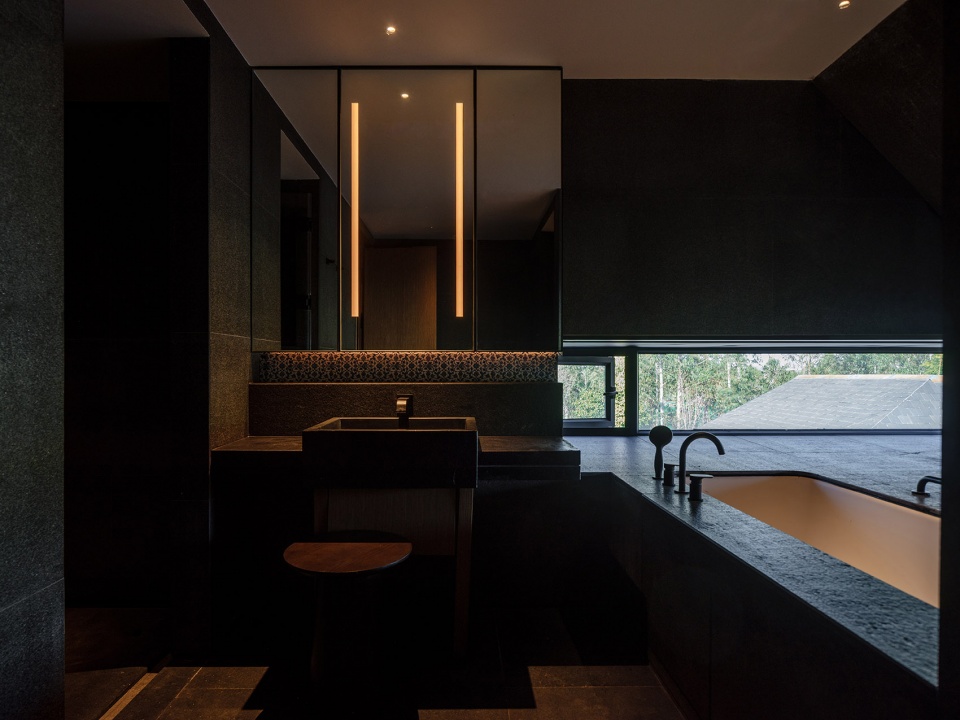
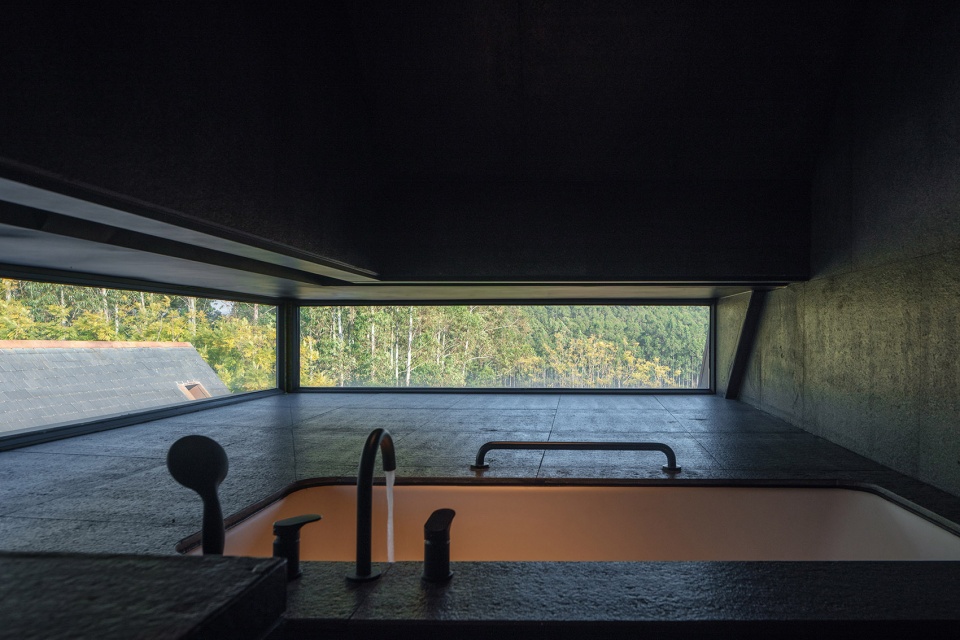
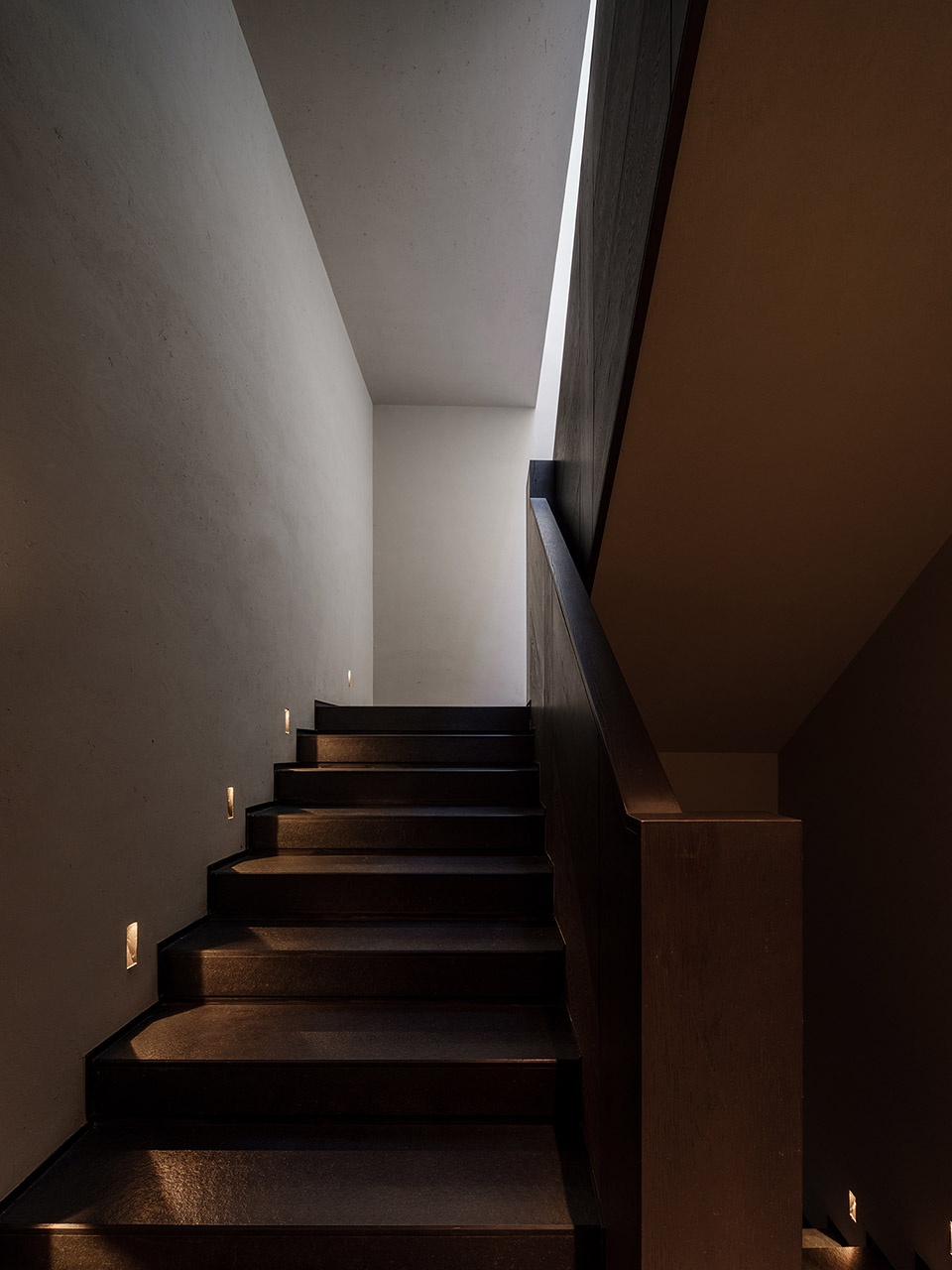
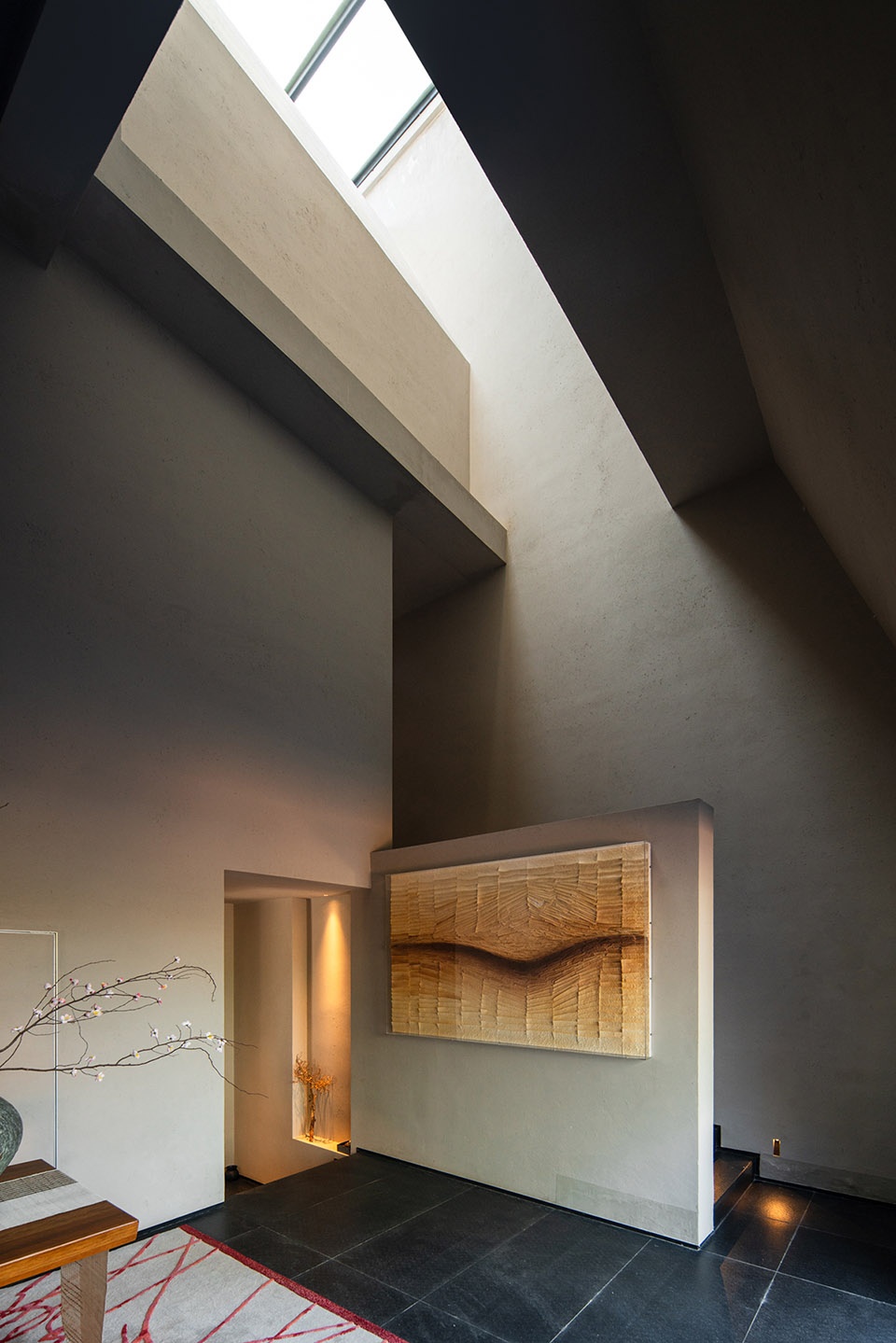
这些空间被理解为“光线的收纳盒”,内部空间通过几何开口与光线组织,呈现出富有变化的空间体验。在高原强烈日照的环境下,开窗被有意识地控制为较小尺度。
The buildings are conceived as “containers of light.” Interior spaces are shaped through carefully positioned geometric openings that choreograph changing daylight conditions. Under the intense sunlight of Yunnan’s plateau climate, window openings are intentionally reduced in scale.
▼开窗被有意识地控制为较小尺度,window openings are intentionally reduced in scale
▼开窗被有意识地控制为较小尺度,window openings are intentionally reduced in scale
▼呈现出富有变化的空间体验,Presenting a spatial experience with rich variations
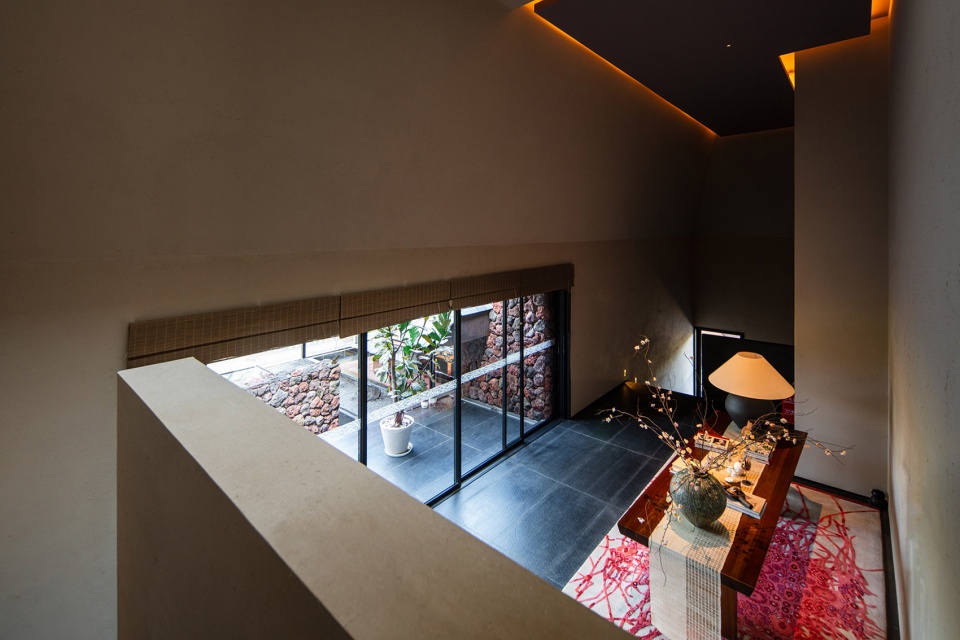
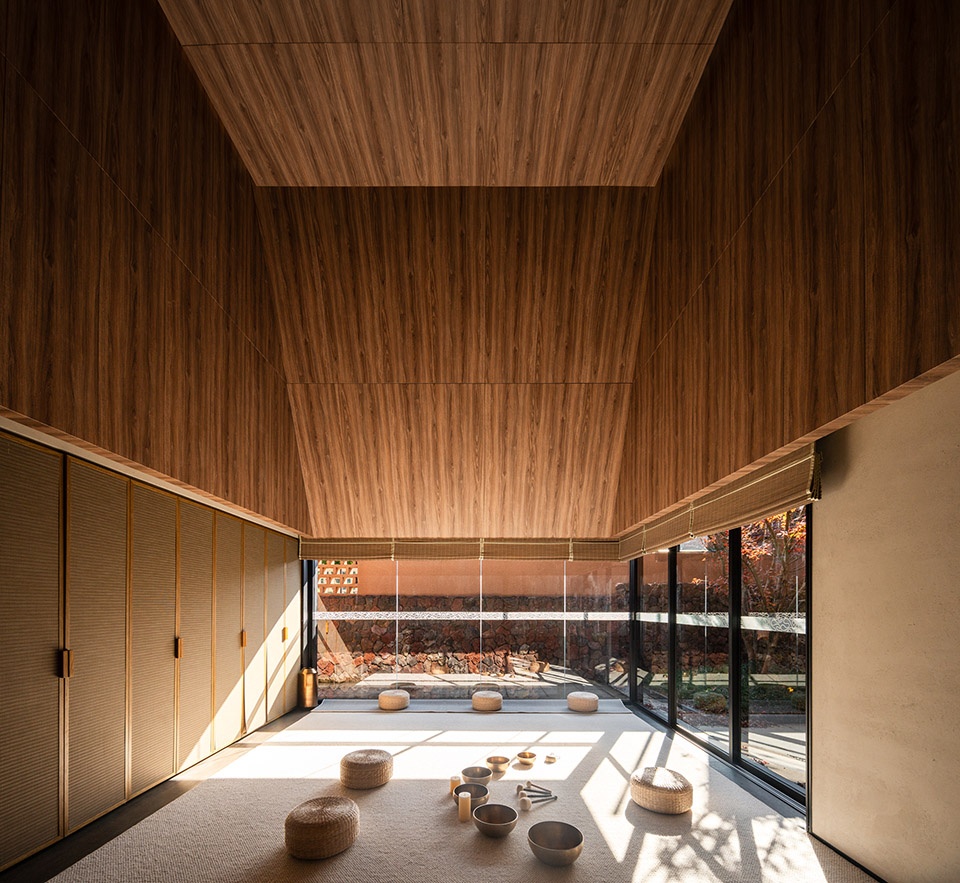
▼呈现出富有变化的空间体验,Presenting a spatial experience with rich variations
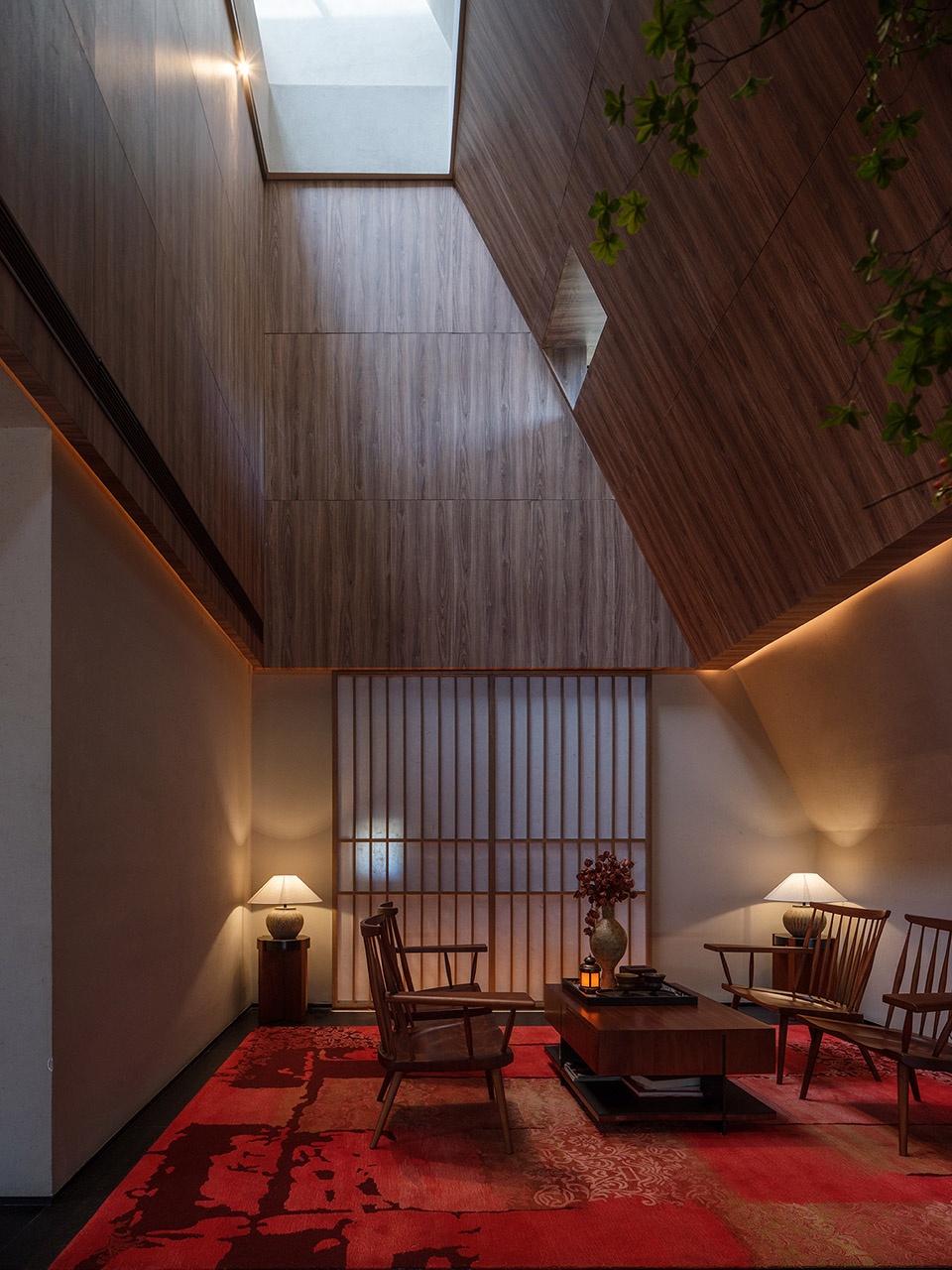
窗洞嵌入厚墙之中,如同被精细雕刻出的孔洞。随着时间推移,光线在室内缓慢移动,山谷景象也被一一引入,使空间与自然保持持续对话。
Deeply recessed within thick walls, these openings read as carved voids rather than conventional windows. As daylight slowly shifts across the interiors throughout the day, fragments of the surrounding valley landscape are selectively framed, maintaining an ongoing dialogue between interior space and nature.
▼窗洞如同被精细雕刻出的孔洞,openings read as carved voids
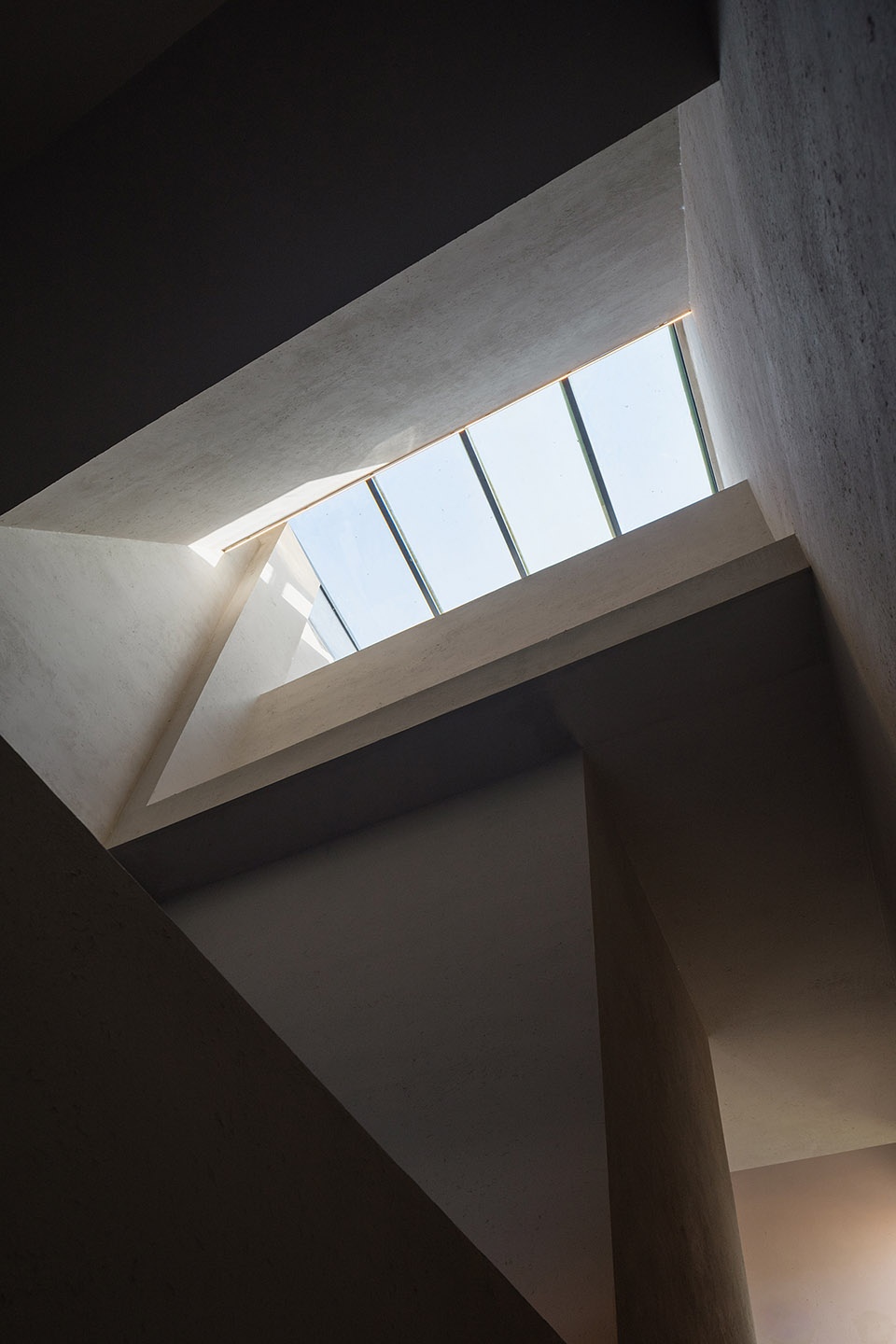
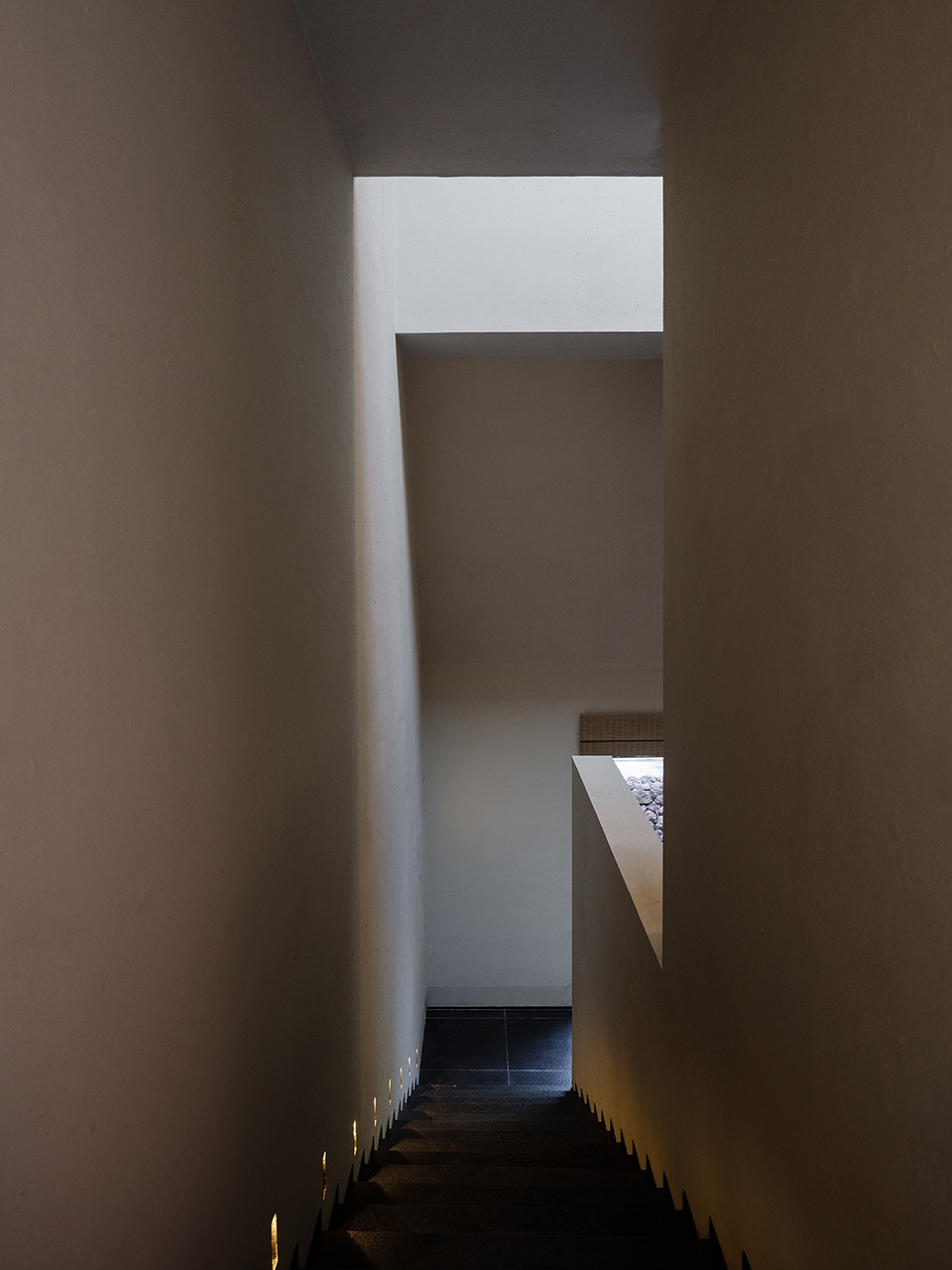
▼天光从天窗泄下,natural lights floods into the space through skylights
03 功能演替,空间适应 03 Adaptability Through Spatial Framework
项目于2020年启动设计。经过数年的建设推进后,项目于2023年进行了业态调整,由最初设想中的艺术家工作室,逐步转向以康养为核心的运营方向,并最终落位为面向公众开放的“沐心谷SPA水疗中心”,于2024年正式投入使用。
▼功能置换,function replacement
Design for the project began in 2020. After several years of development and construction, the project underwent a programmatic shift in 2023. Originally conceived as artist studios, it gradually evolved toward a wellness-oriented operational model and was ultimately transformed into the publicly accessible Muxin Valley Spa Center, which officially opened in 2024.
▼作为水疗中心向公众开放,open to the public as a spa center
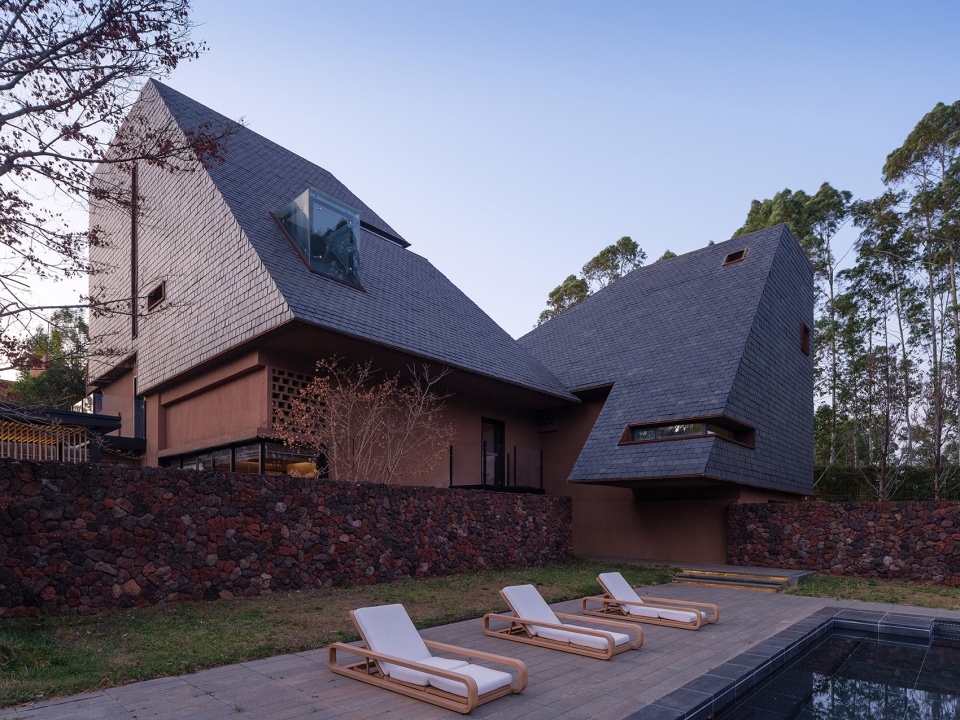
这一跨越数年的设计建设过程,也折射出当下许多项目所面临的现实语境:功能在设计阶段往往尚未完全确定,并会随着运营需求、市场环境与使用方式的变化持续演变。在此背景下,建筑所回应的,不再只是单一、确定的功能目标,而是更长期、更开放的使用可能。
The multi-year process of design and construction also reflects a condition increasingly common in contemporary practice: programmatic requirements are often not fully defined at the outset and continue to evolve in response to operational needs, market conditions, and changing patterns of use. Within this context, architecture is no longer expected to respond to a single fixed function, but instead to accommodate broader and longer-term possibilities of occupation.
▼作为水疗中心向公众开放,open to the public as a spa center
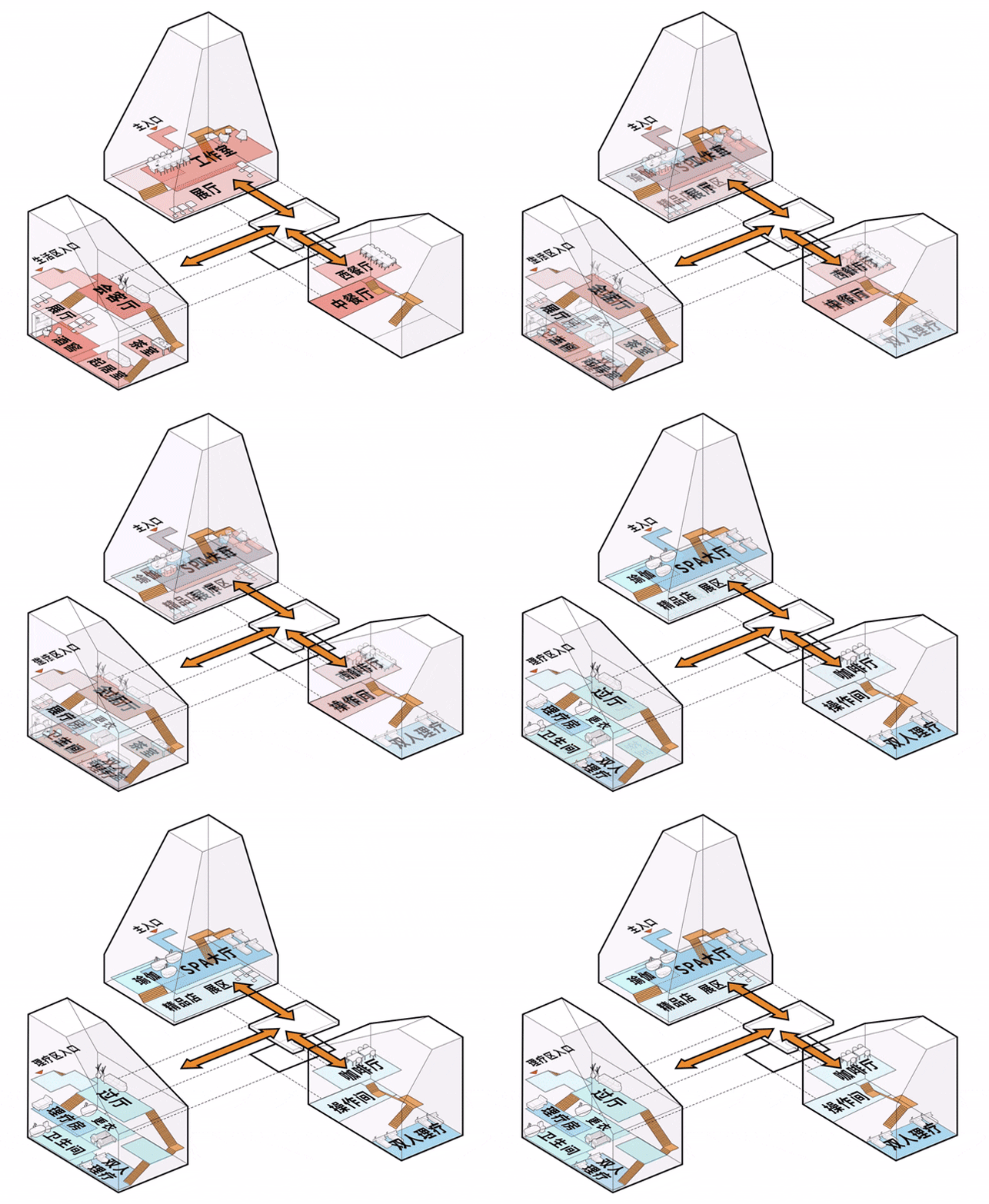
项目的空间组织——以院落为核心、以层级关系替代明确分区——成为应对这一变化的关键结构:
— 以结构与尺度为基础,避免围绕特定功能过度定制;
— 通过院落与廊道形成连续界面,弱化内外与公私边界;
— 以空间层级替代固定分区,使不同功能能够被重新组织。
▼功能分析轴测图,function analysis axonometric
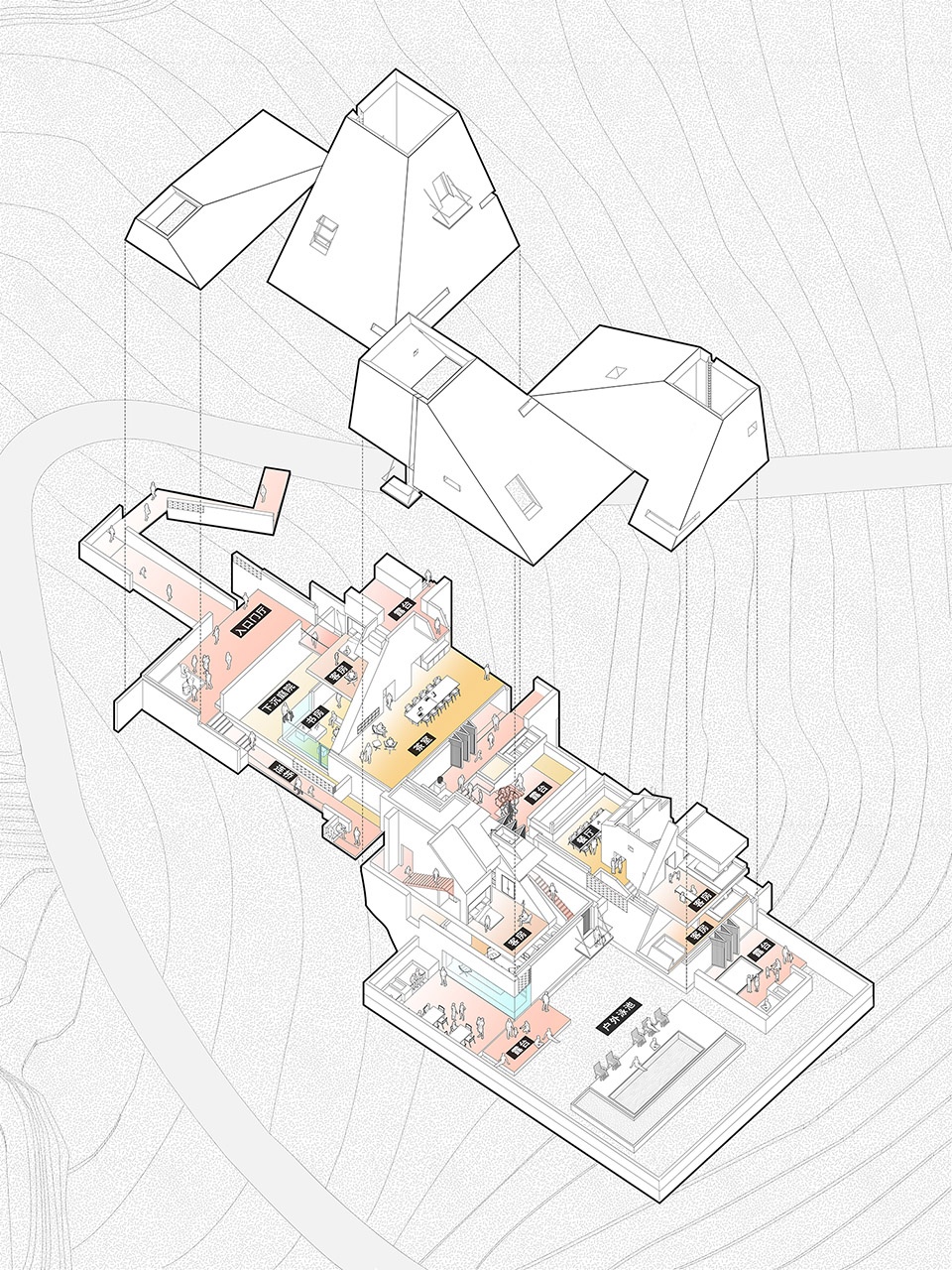
The project addresses this uncertainty through a spatial framework centered around courtyards and hierarchical relationships rather than rigid zoning:
— prioritizing structure and proportion over highly customized program-specific layouts;
— establishing continuity through courtyards and corridors to soften distinctions between inside and outside, public and private;
— replacing fixed functional divisions with spatial gradations that allow different uses to be reorganized over time.
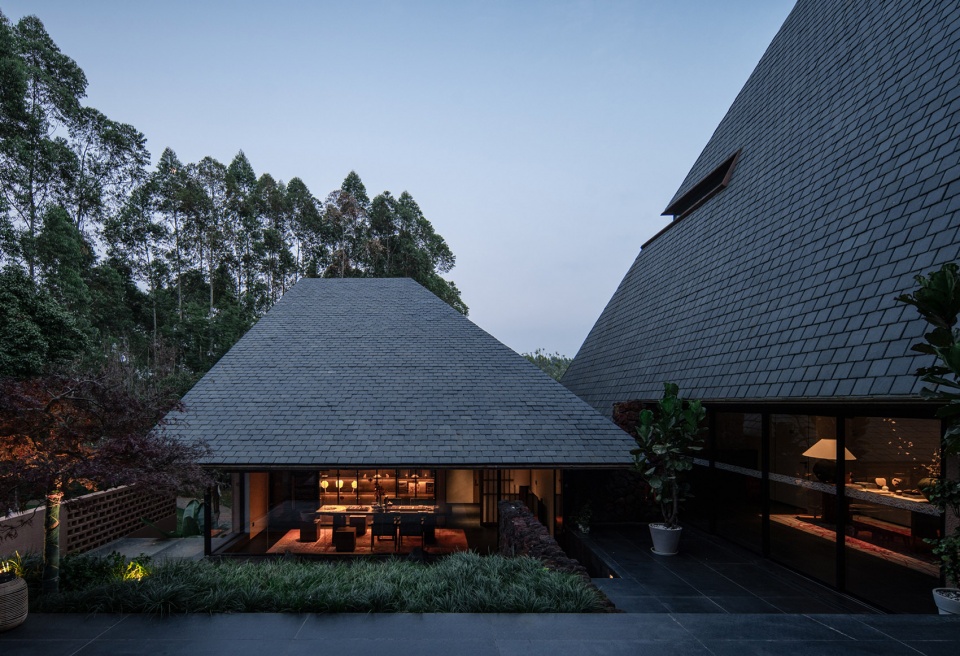
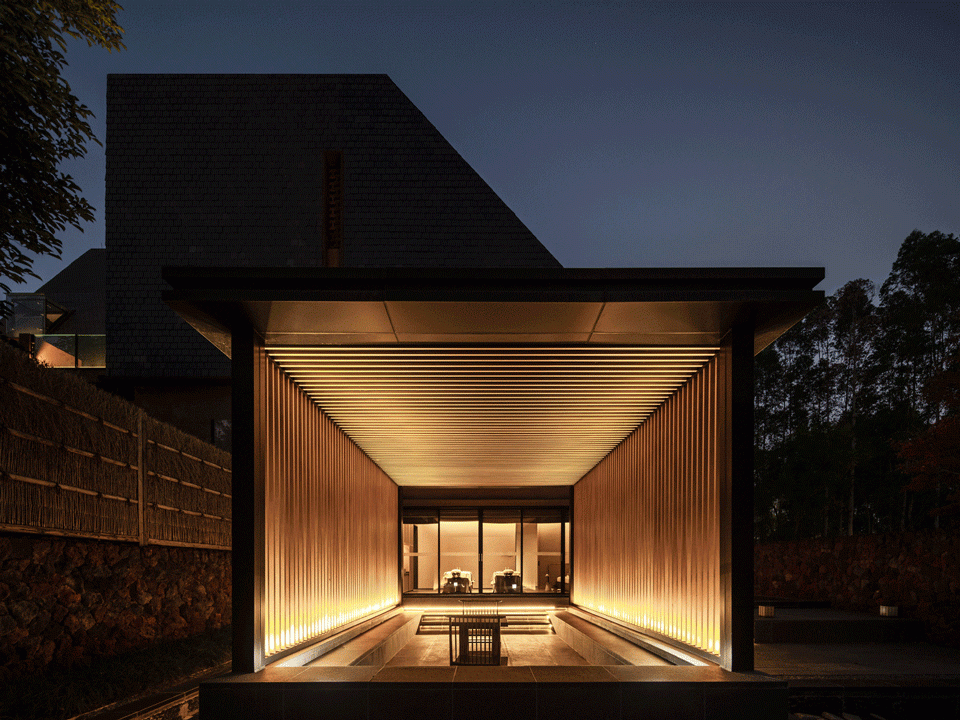
▼茶室夜景,tea room at night
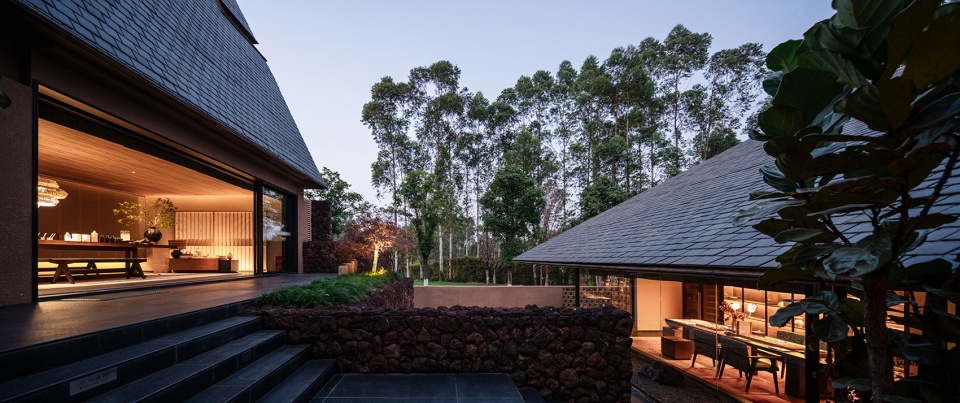
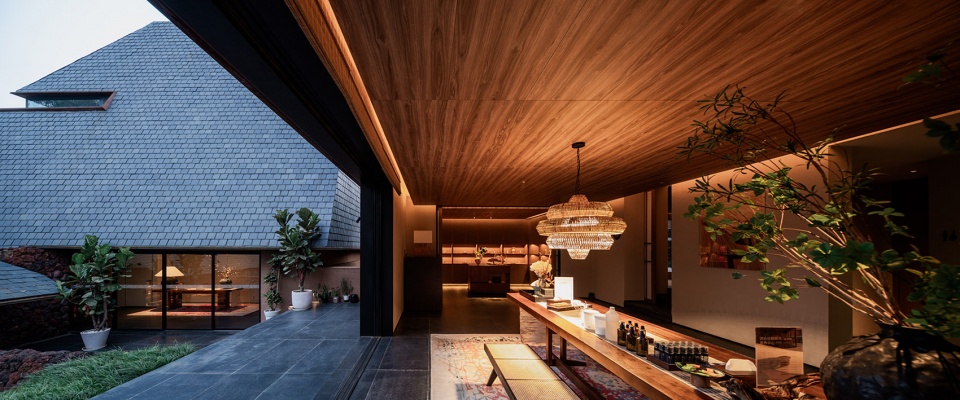
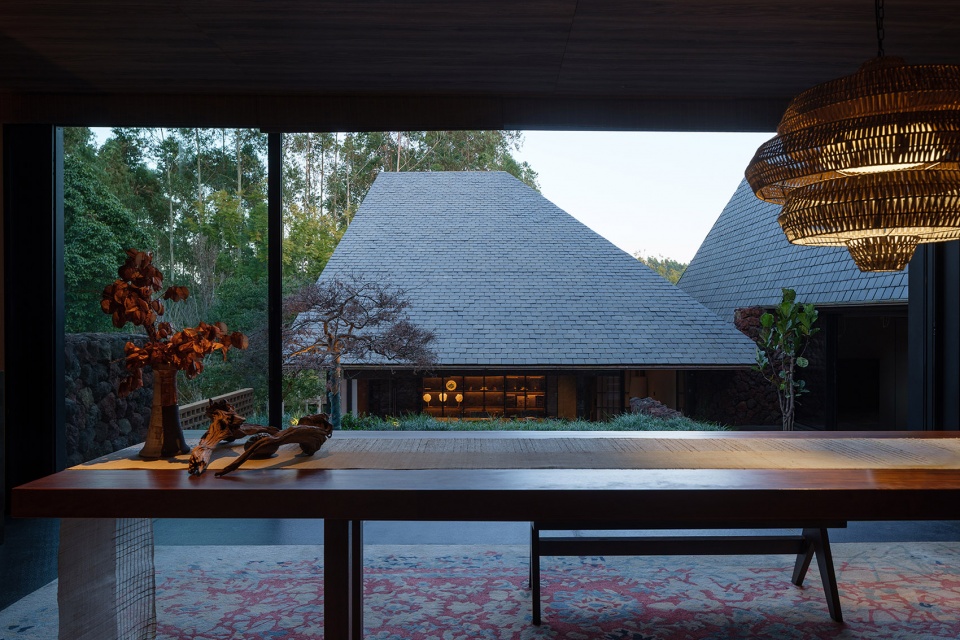
▼茶室夜景,tea room at night
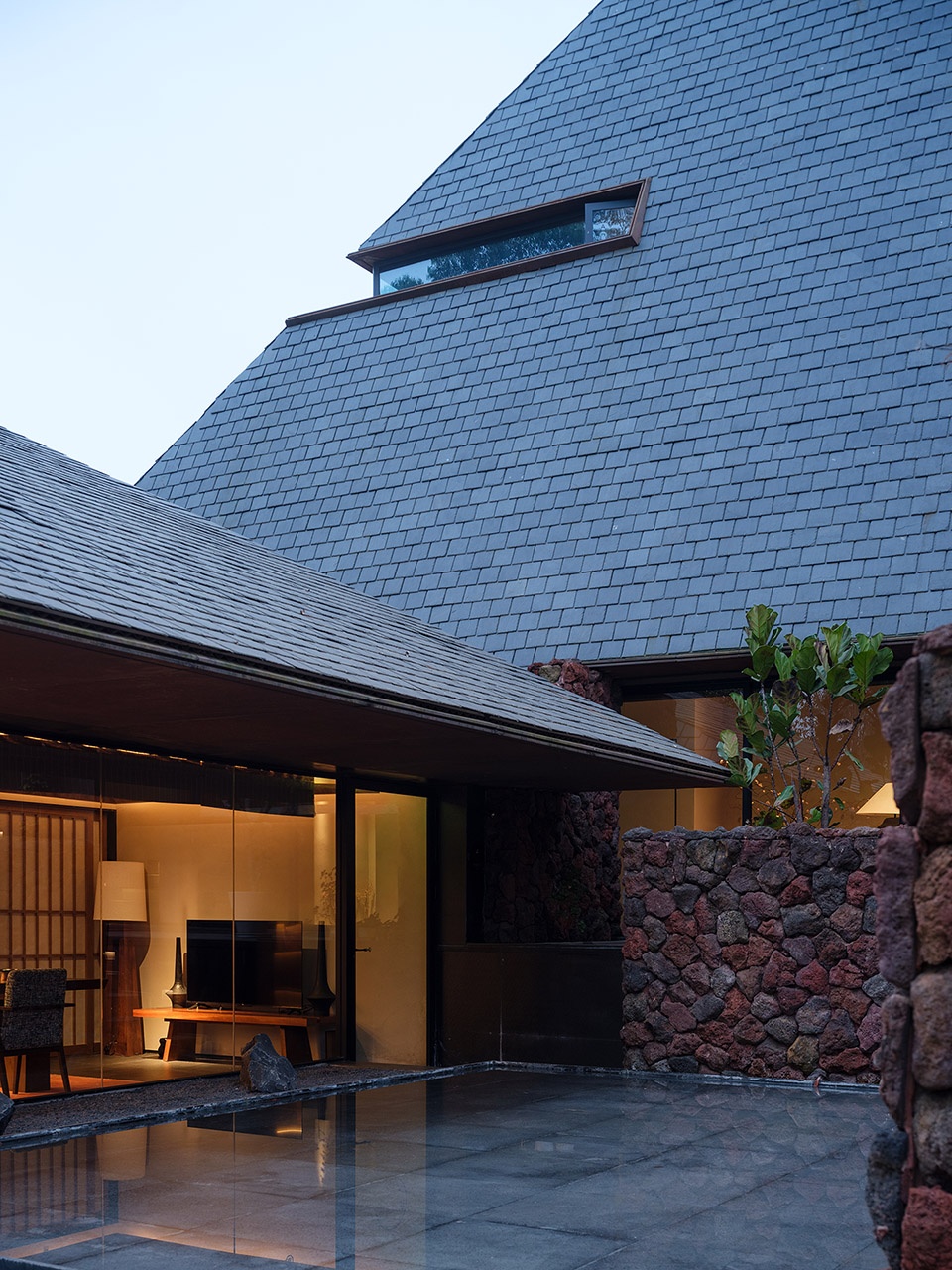
因此,当空间由工作室转向疗愈、由私属转向半公共时,建筑并未发生冲突,而是在既有框架中完成转换。在这一意义上,建筑不再是一次性完成的结果,而更接近一个可被持续改写的开放系统。
As the project shifted from studio to wellness retreat, and from private occupation toward semi-public use, the architecture required no fundamental transformation. The new functions were absorbed within the existing spatial framework. In this sense, the project is understood less as a finished object than as an open system capable of ongoing reinterpretation.
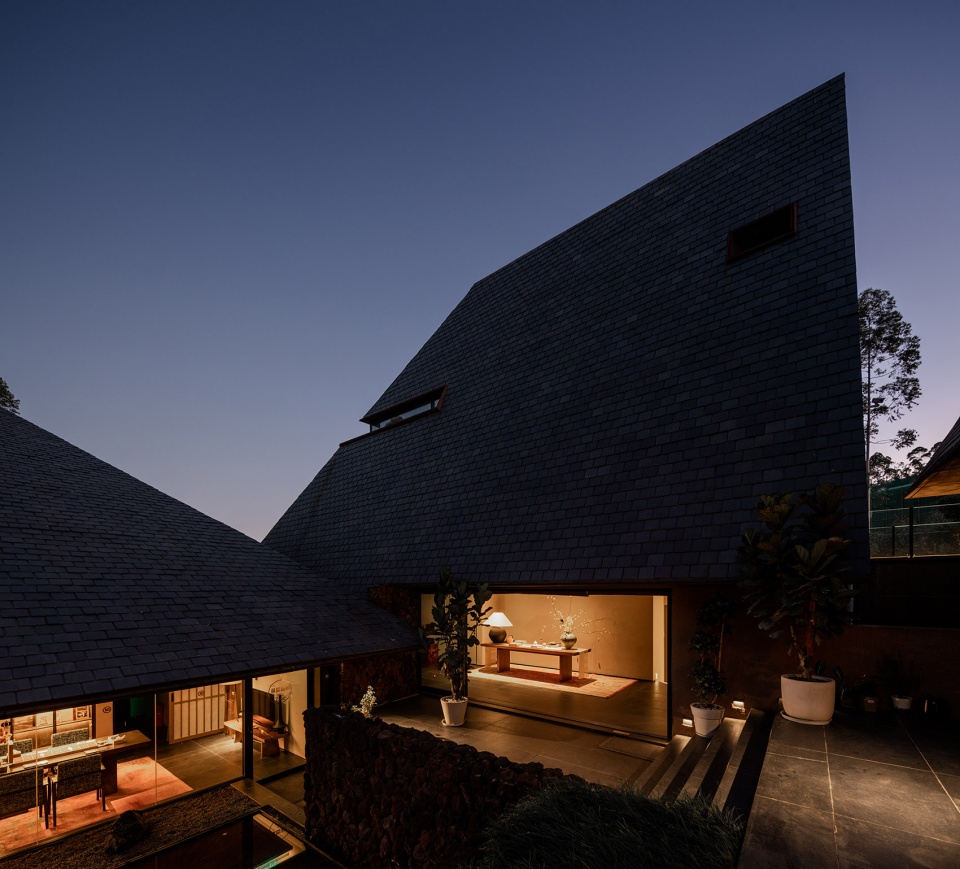
▼建筑夜景,building at night
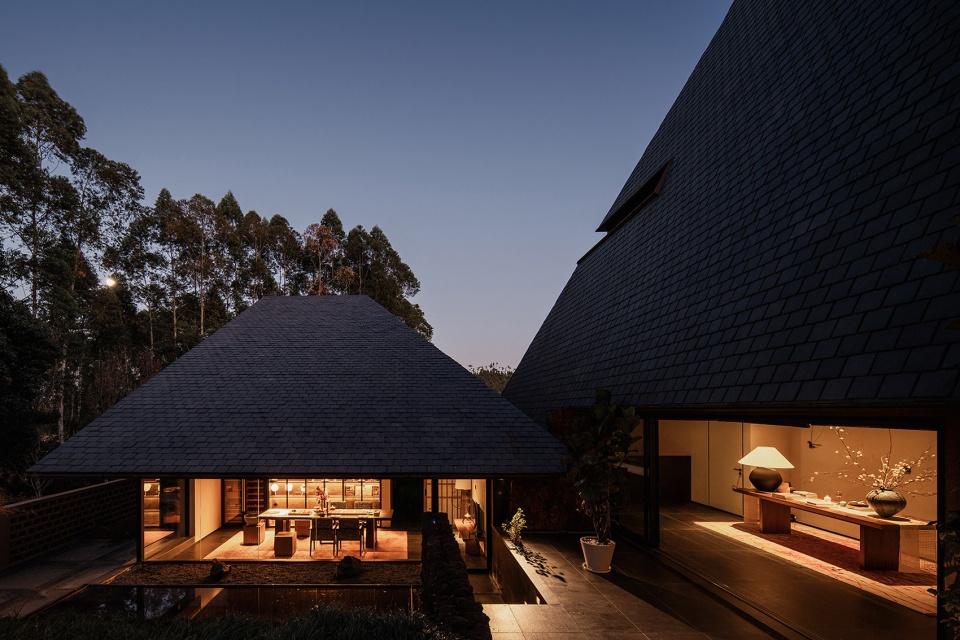
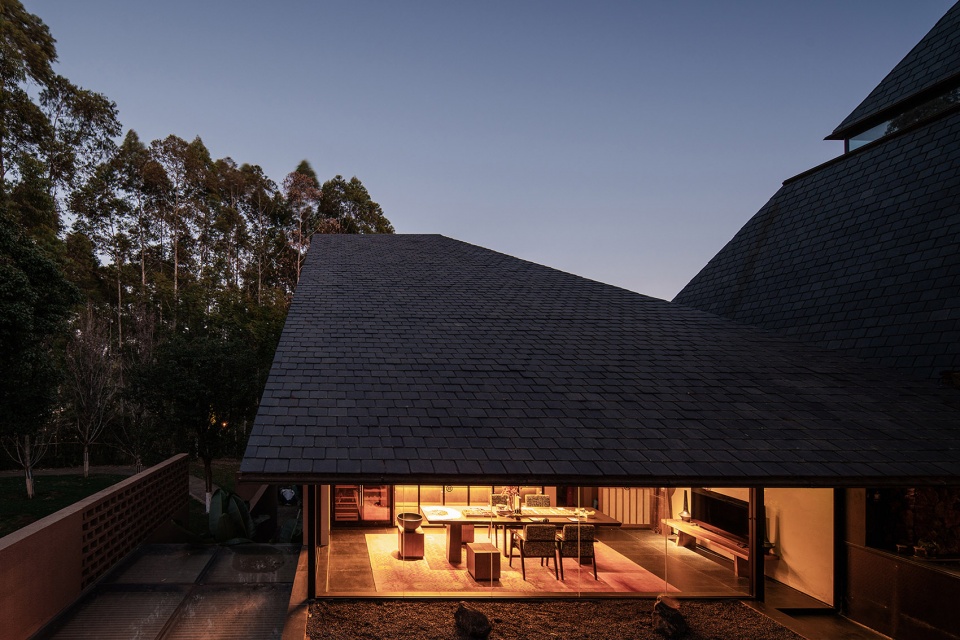
▼室内夜景,interior space at night
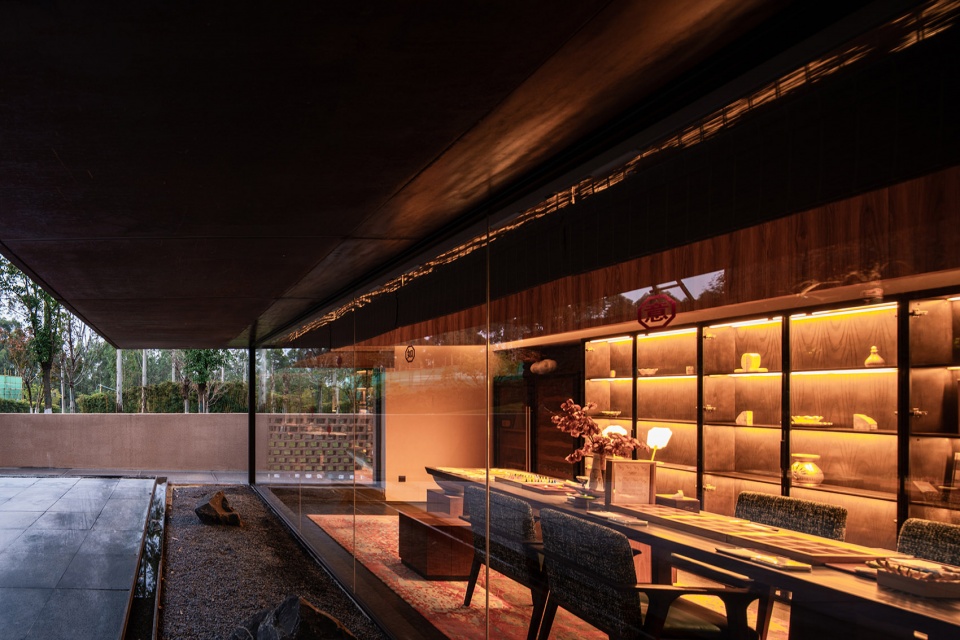
04 精择材料,回应土地 04 Materiality Rooted in the Landscape
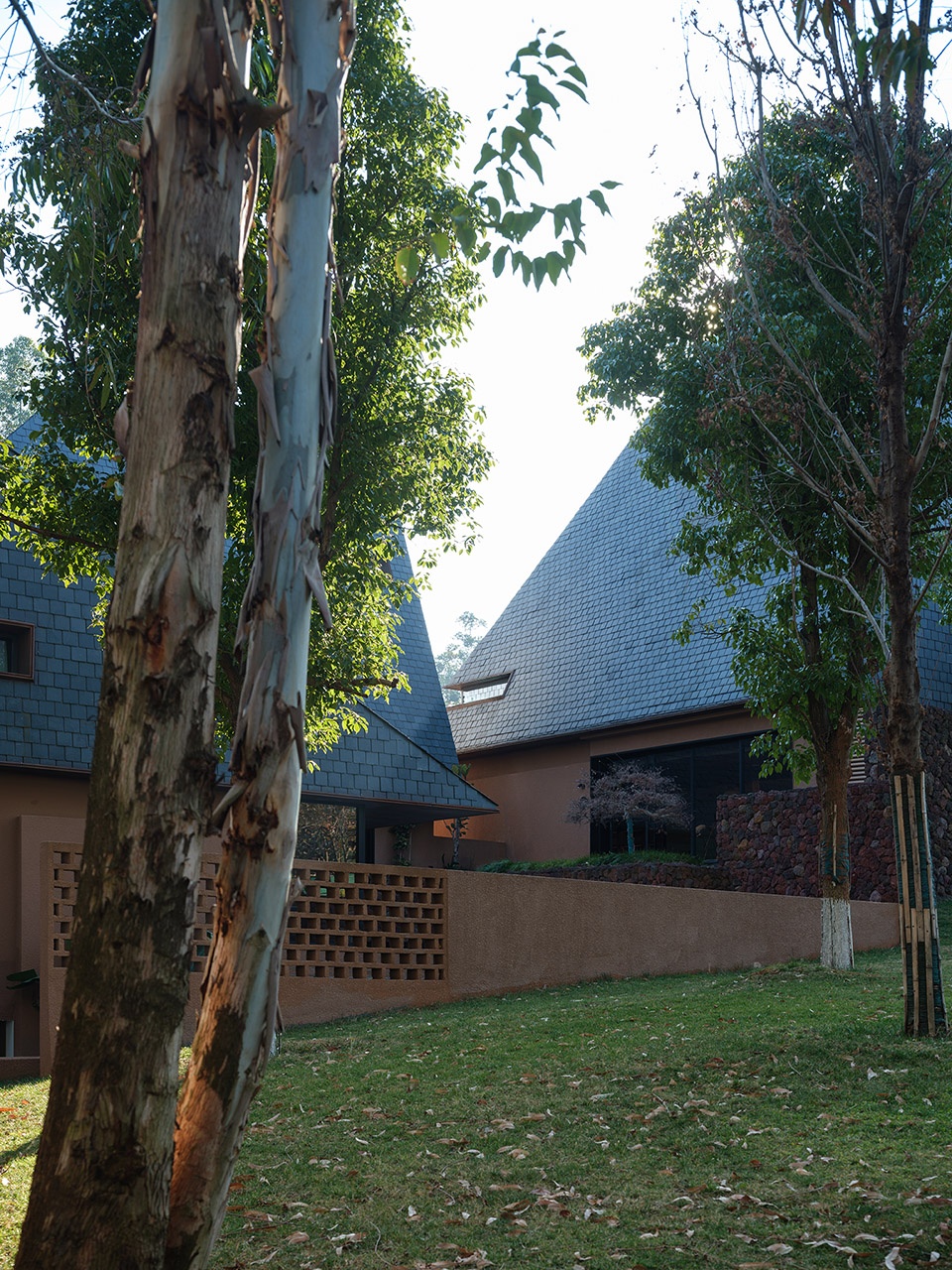
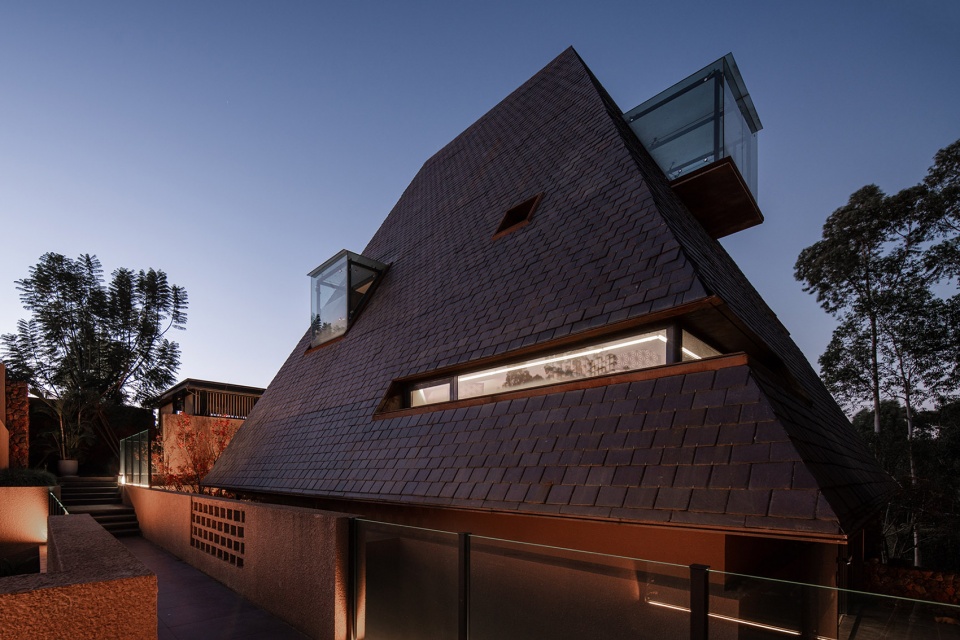
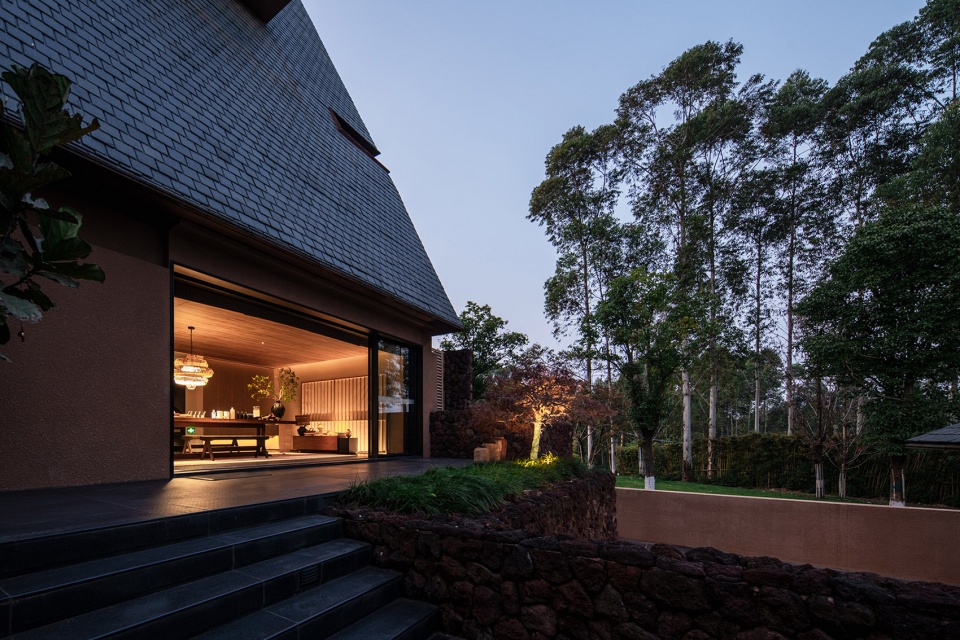
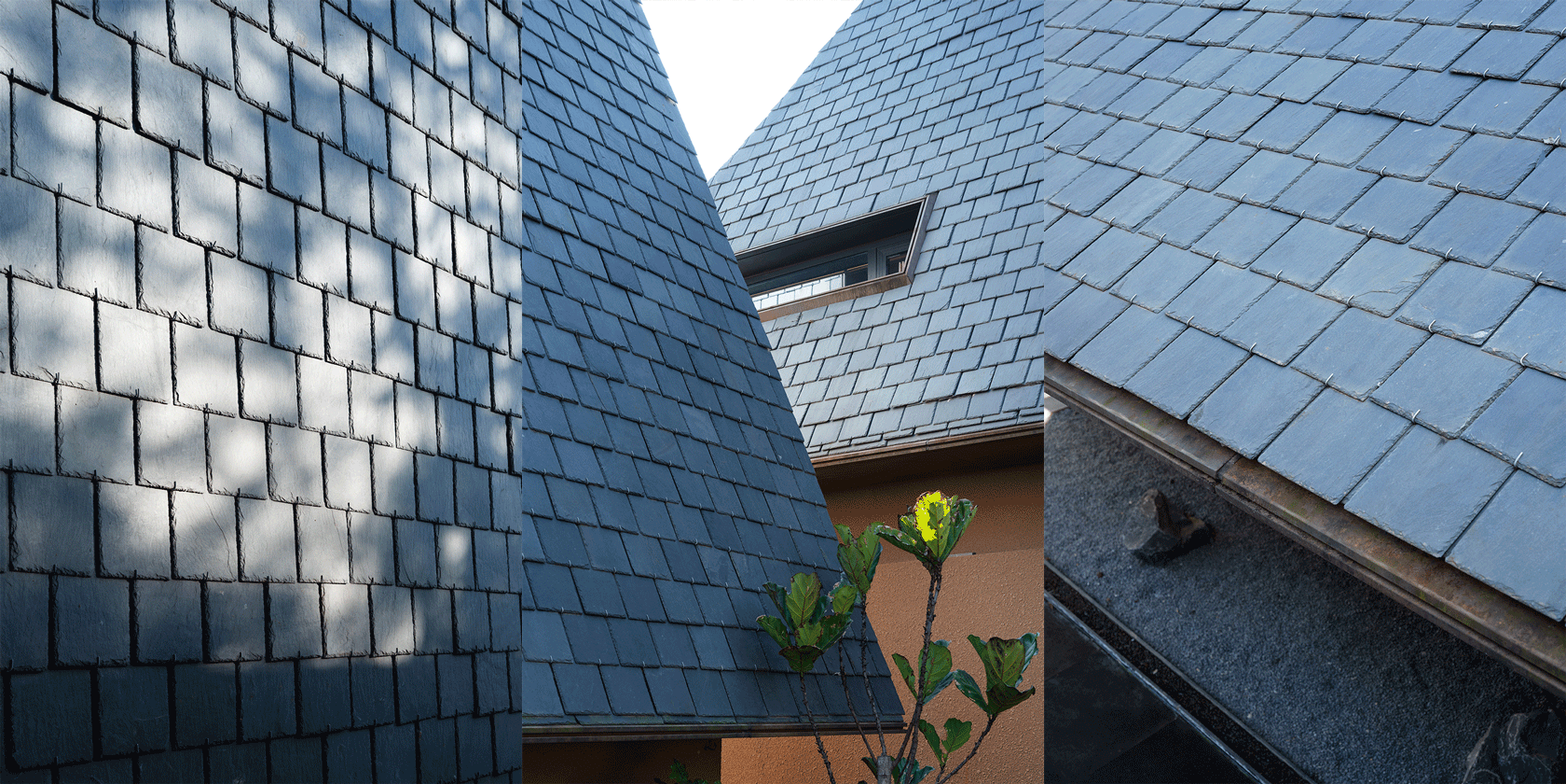
材料选择经历了多轮讨论与试验,设计最初曾考虑选用黑色耐腐蚀防暗火稻草屋面,以回应传统建造方式,最终基于耐久性与维护成本的综合考量,选用深灰色石板瓦。不同色阶与肌理的石板瓦在铺设后形成细微变化,使屋面在光线下呈现出自然层次。
Material selection went through multiple rounds of discussion and prototyping. The design initially considered a dark fire-retardant thatched roof system as a contemporary reinterpretation of traditional construction methods. However, durability and long-term maintenance requirements ultimately led to the adoption of dark grey slate tiles. Subtle variations in color and texture among individual slate pieces create a layered roof surface that shifts under changing light conditions, giving the architecture a natural sense of depth and weathering.
▼屋面选用深灰色石板瓦,the adoption of dark grey slate tiles
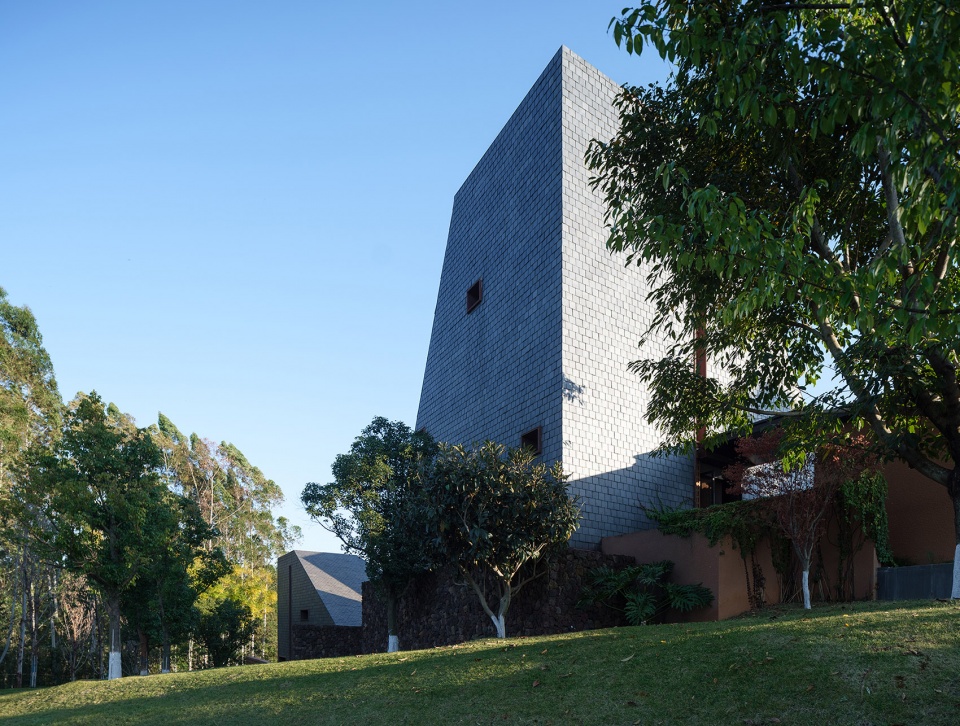
▼屋面选用深灰色石板瓦,the adoption of dark grey slate tiles
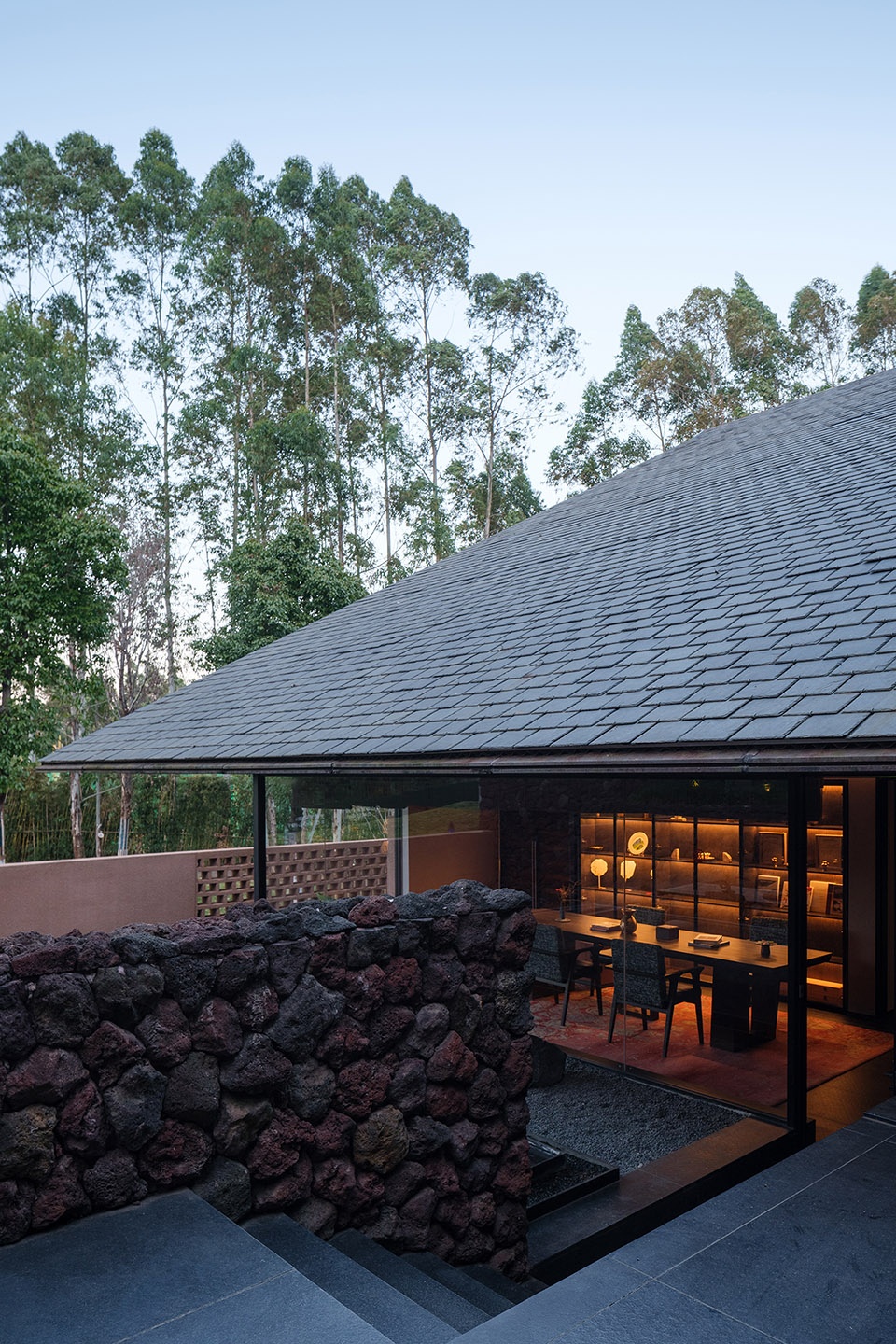
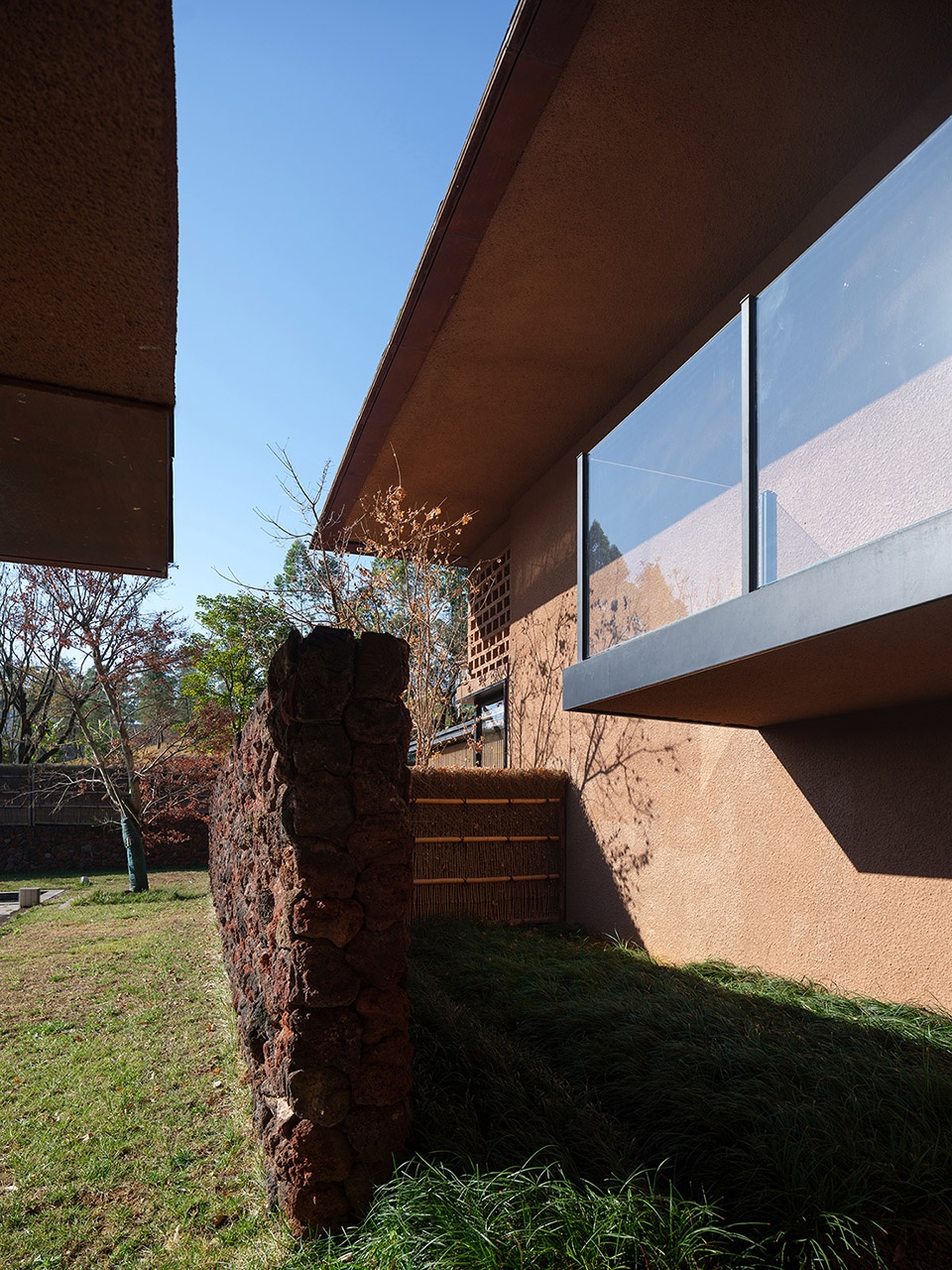
外墙以红土色调为基底,与土地形成呼应和延续。局部挡墙采用云南当地赤色火山石砌筑,门窗以黑色金属收边,在粗粝与精致之间形成微妙对比。
▼墙身节点,wall section detail
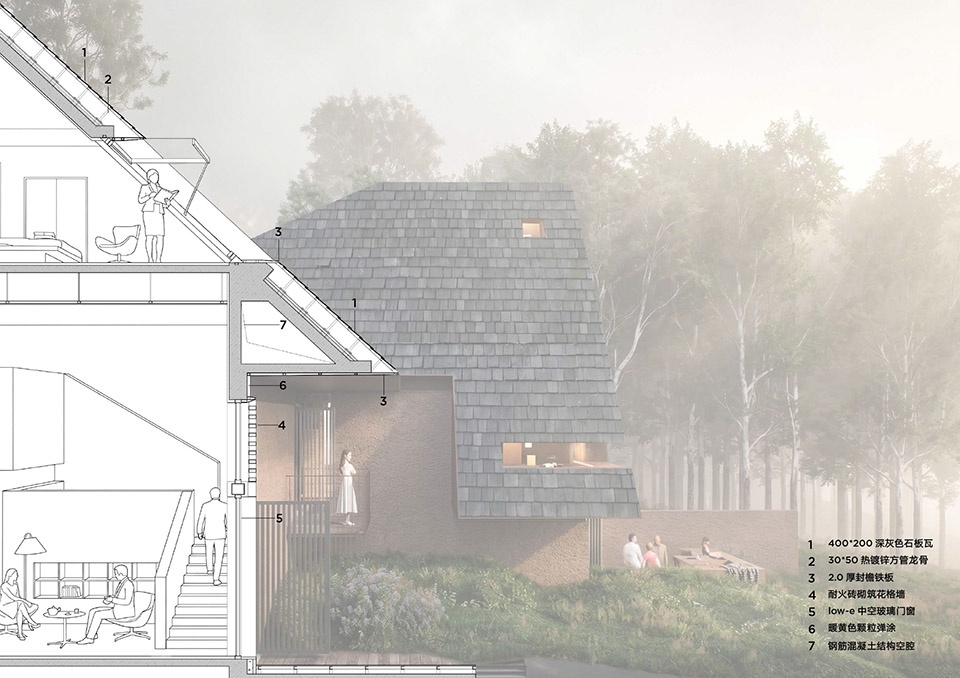
The exterior walls adopt a red-earth tone that visually extends the surrounding landscape. Retaining walls in selected areas are constructed from locally sourced red volcanic stone from Yunnan, while black metal detailing frames doors and windows. The juxtaposition of rough textures and precise elements establishes a subtle balance between tectonic solidity and crafted refinement.
▼外墙以红土色调为基底,the exterior walls adopt a red-earth tone
05 与山同息,与地共生 05 Breathing with the Mountain
红土广阔,山谷宁静。云贵高原的土地在时间中沉淀出缓慢而恒久的力量。在这样的自然背景中,建筑的意义早已不再是作为一个醒目的存在。。
Across the Yunnan–Guizhou Plateau, expansive red earth landscapes and quiet valleys carry a slow and enduring sense of time. Within such a setting, architecture no longer seeks visual prominence; instead, it finds significance through coexistence with the landscape.
▼建筑鸟瞰,aerial view of the building
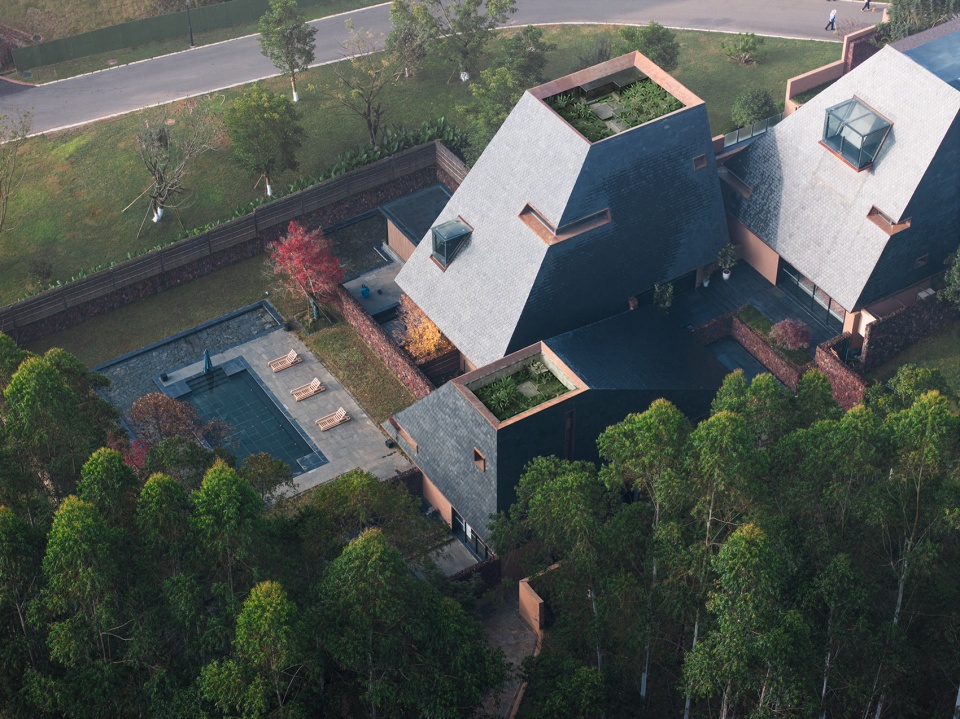
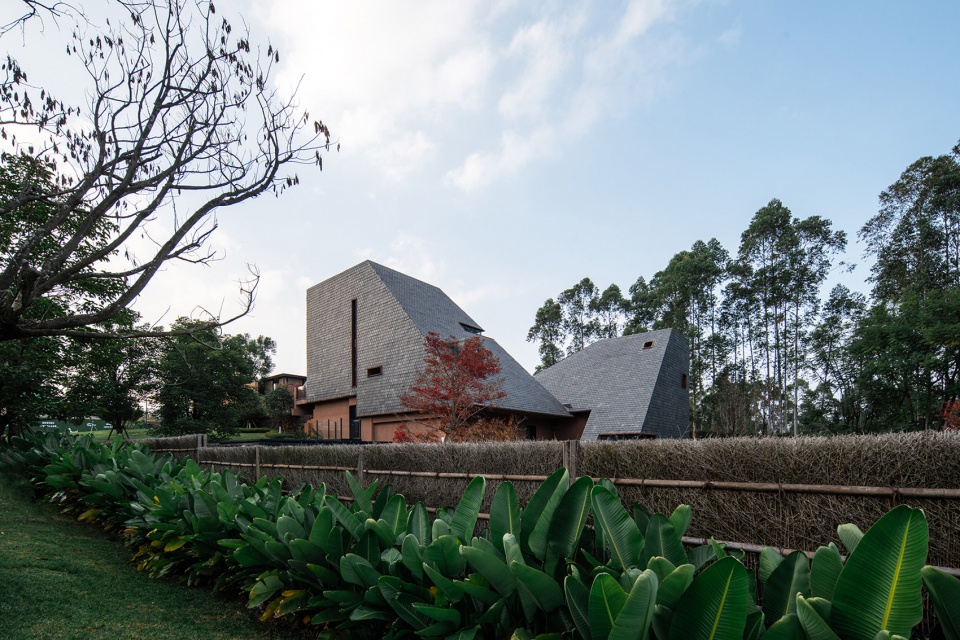
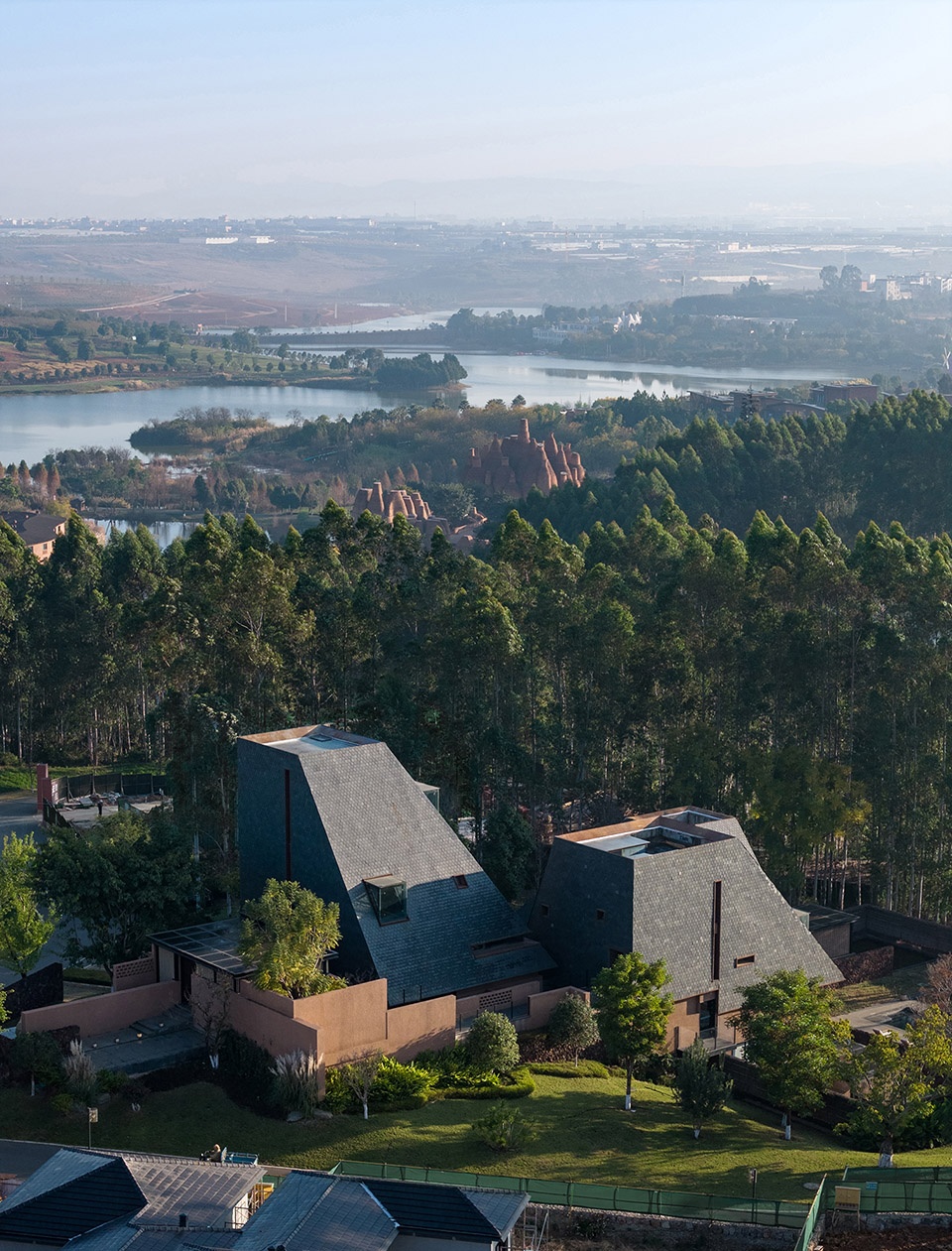
继东风韵艺术中心之后,line+再次回到这片红土地,与既有地景形成对话,以轻介入的方式让建筑以质朴、谦逊的姿态消隐于山谷与树林之间。从2020年的初次构想到最终的落成运营,随着这片土地上持续发生的过程,也沉淀为山谷中的新的故事与记忆。
Following the completion of the Dongfengyun Art Center, line+ returned to this red-earth landscape once again, engaging with the existing terrain through a strategy of minimal intervention. Rather than asserting itself as a distinct object within the valley, the project adopts a restrained and understated presence, gradually receding into the surrounding forest and topography. From its initial conception in 2020 to its eventual completion and operation, the project evolved alongside ongoing changes taking place on the site itself. Over time, these transformations became embedded within both the architecture and the landscape, allowing the project to remain part of a continuing process rather than a fixed conclusion.
▼鸟瞰,aerial view
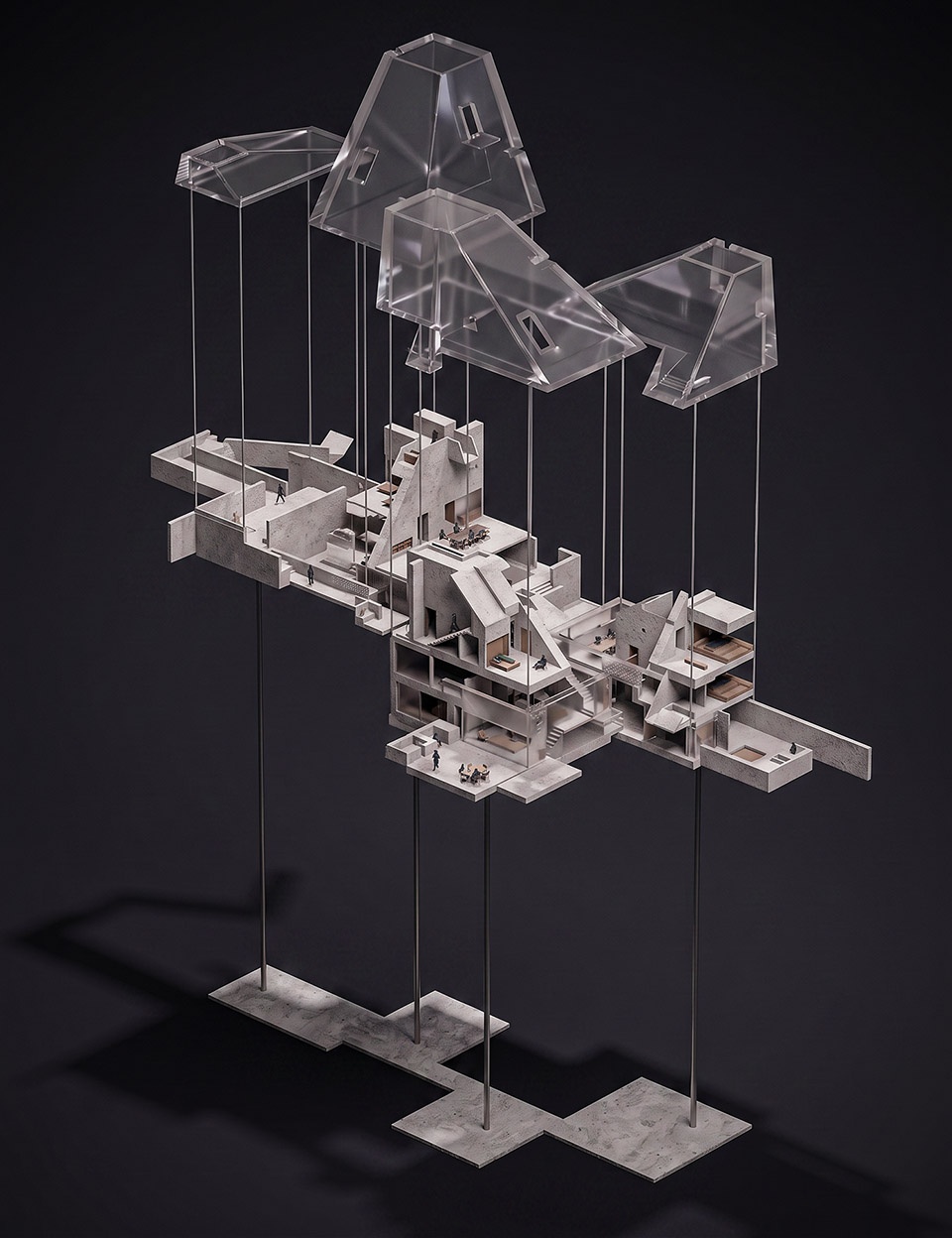
▼爆炸模型,Conceptual Model
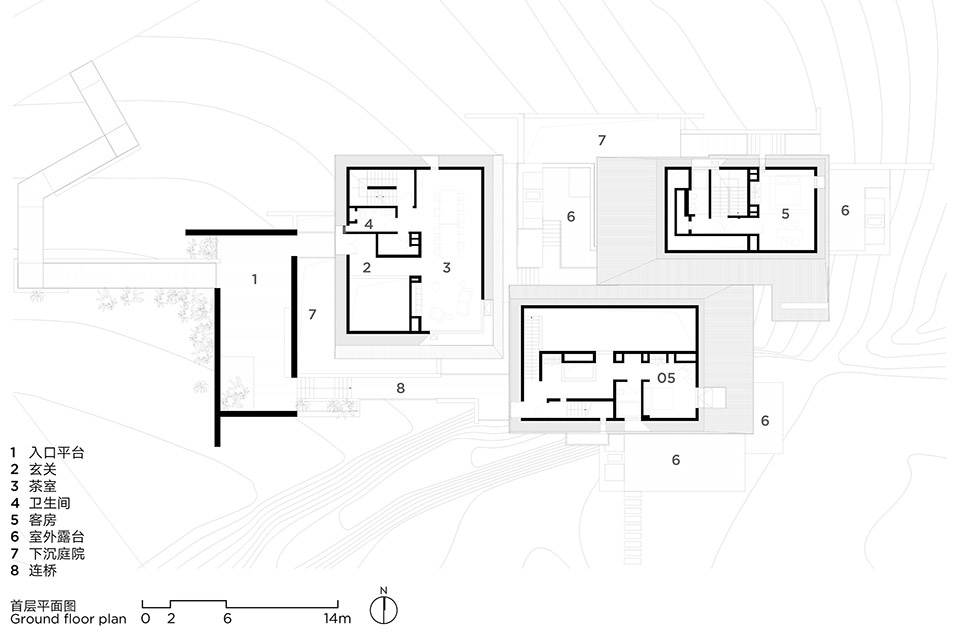
▼首层平面图,ground floor plan
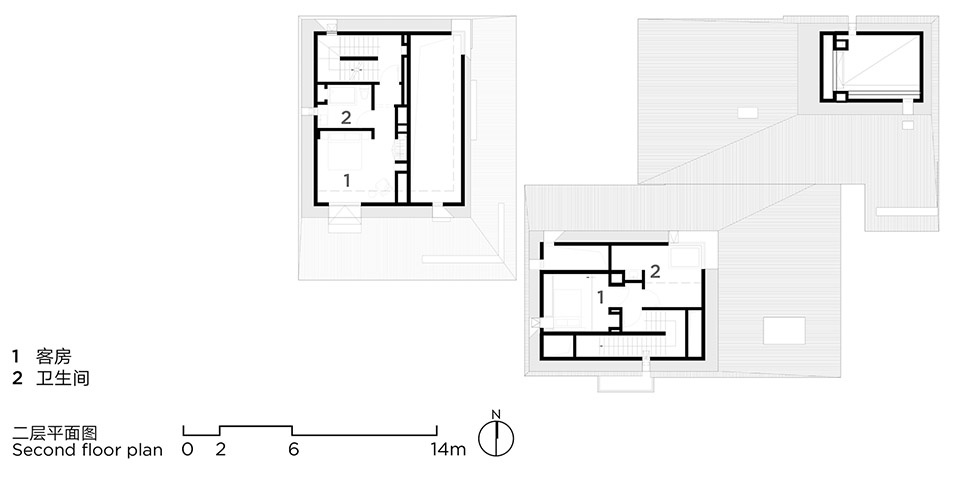
▼二层平面图,first floor plan
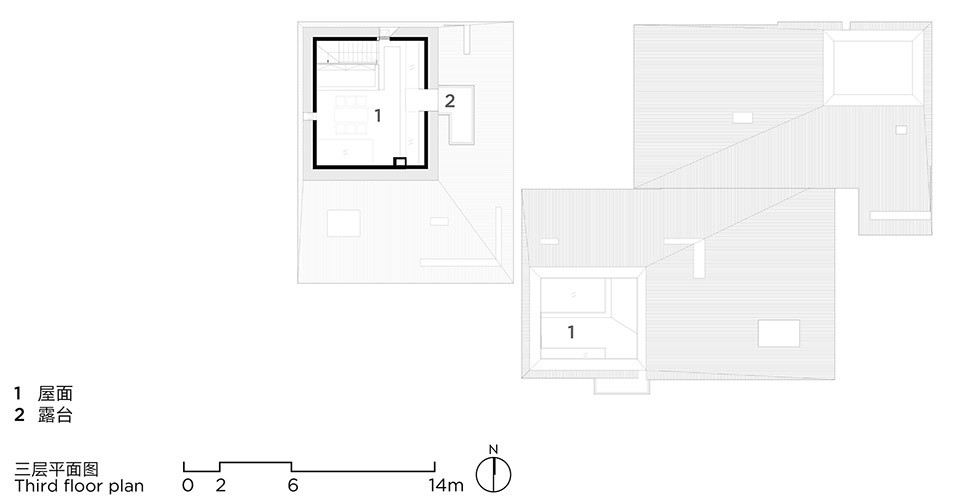
▼三层平面图,third floor plan
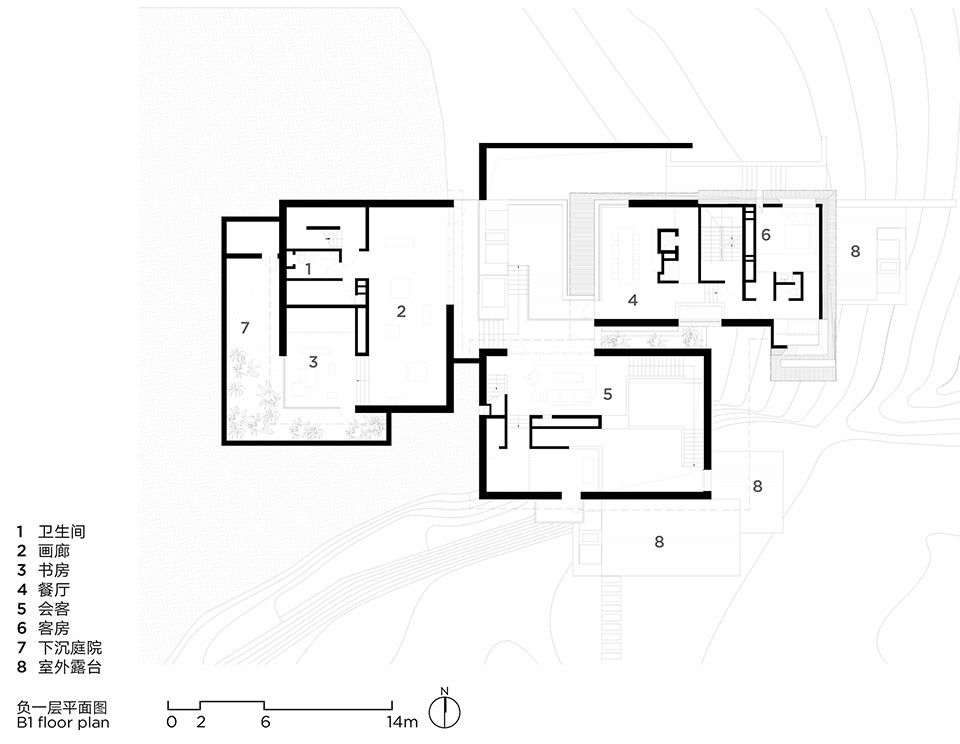
▼负一层平面图,basement 1 floor plan
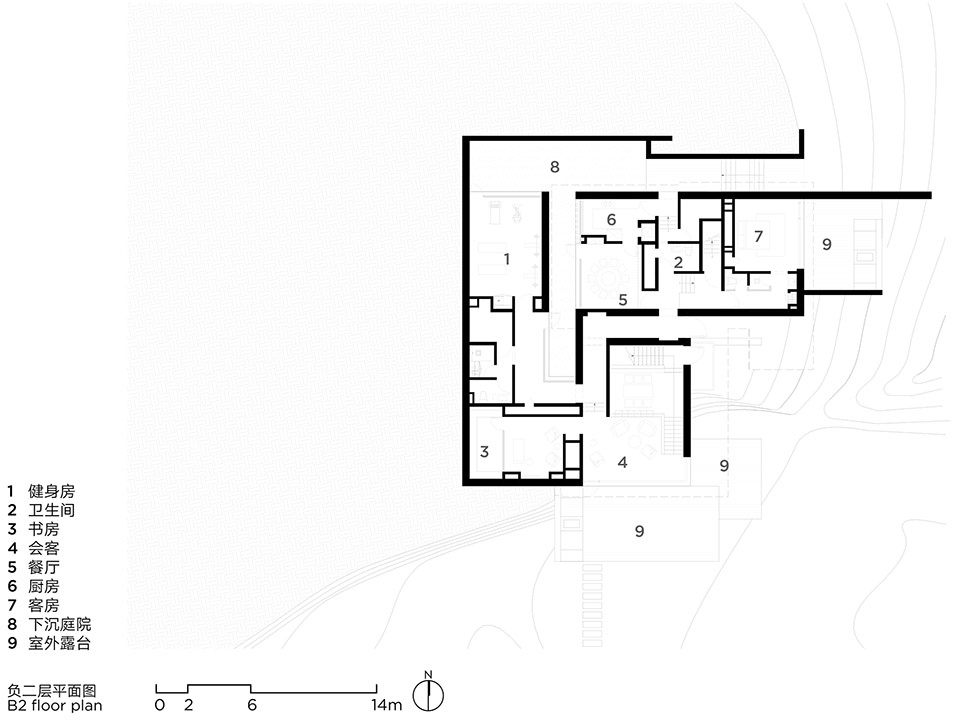
▼负二层平面图,basement 2 floor plan
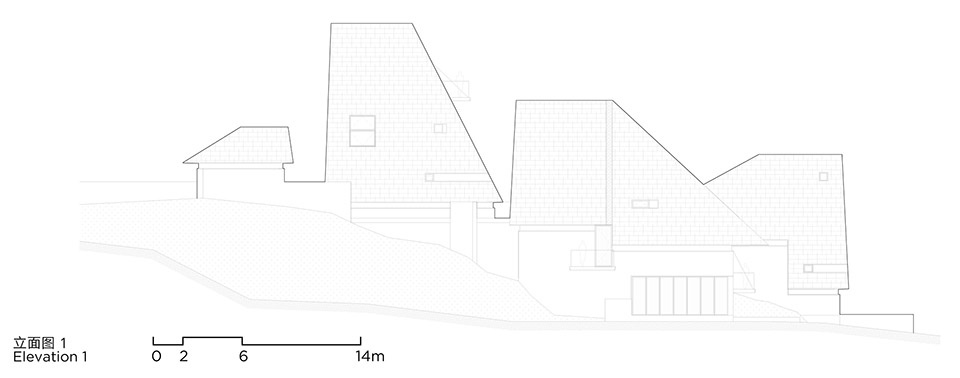
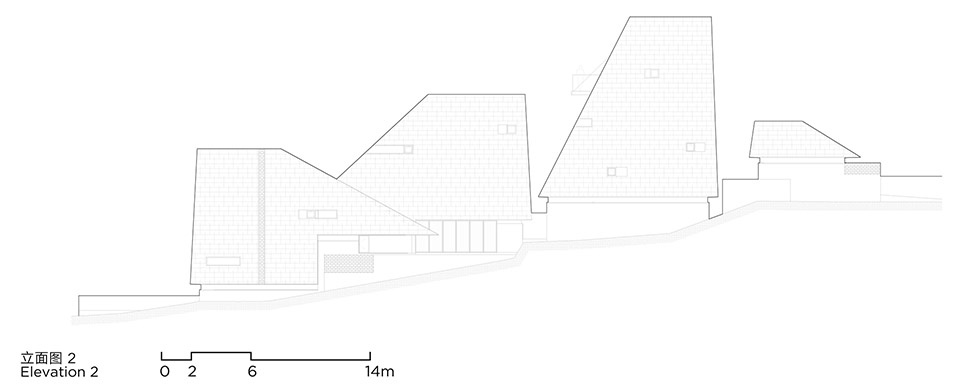
▼立面图,elevation
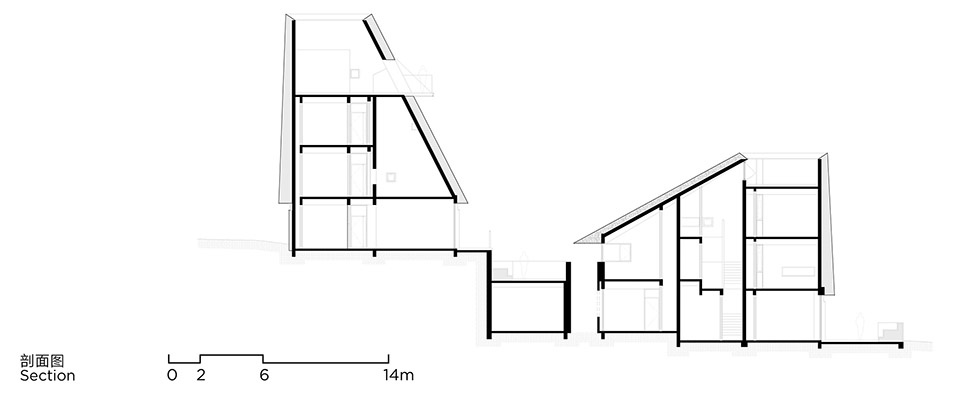
▼剖面图,section
Project Name: Red Valley Dwellings
Architecture Firm: line+ studio
Chief Architect / Project Principal: Fanhao Meng
Design Team: Hao Xu, Jun Zhu, Xiaoxiao Fan, Li Yang, Shangyang Li, Jun Li
Drawings: Zhuolu Tong, Fanlin Gou
Client: Mile Blue City Urban & Rural Development Co., Ltd.
Construction Drawings: Yunnan Design Institute Group Co., Ltd.
Location: Mile, Yunnan, China
Gross Built Area: 939.76 m²
Design Period: April 2020– November 2020
Construction Period: May 2020 – April 2024
Materials: Granular Elastic Coating, Aluminum Panels, Slate Tiles
Photography: Wang Ce, line+