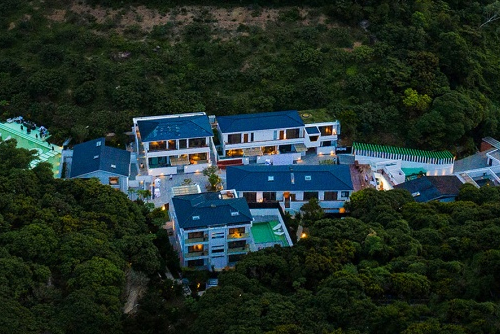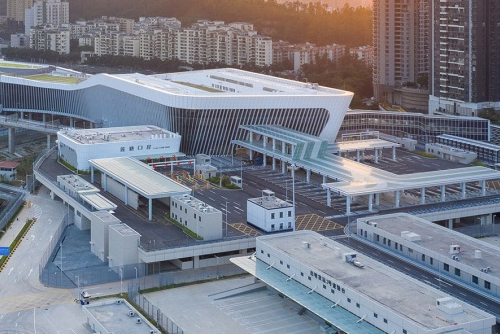
繁昌北站·城市会客厅,安徽 / 合肥许建国建筑设计有限公司
繁昌北站的城市会客厅,旨成为一座集地域文化与现代活力于一体的城市窗口。我们将历史文脉与当代美学融入空间体验,使其不仅是旅客的短暂驿站,更是连接城市与公众、过去与未来的情感枢纽。在这里,每一次抵达与出发,都将成为感知繁昌、对话繁昌的独特记忆。
The City Living Room at Fanchang North Station is designed to be an urban showcase integrating regional culture and modern vitality. We integrate historical context and contemporary aesthetics into spatial experience, making it not only a temporary stop for travelers but also an emotional hub connecting the city with the public, the past with the future. Every arrival and departure here will become a unique memory of perceiving and engaging with Fanchang.
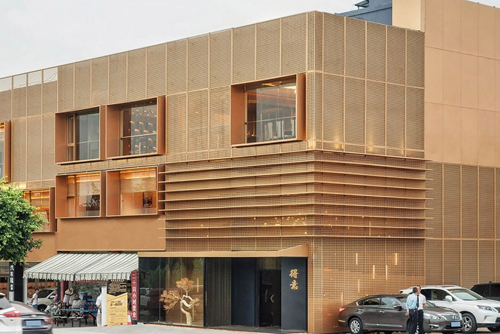
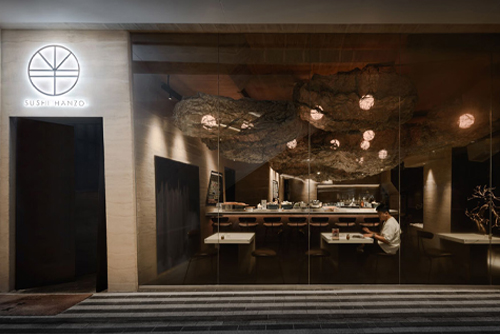
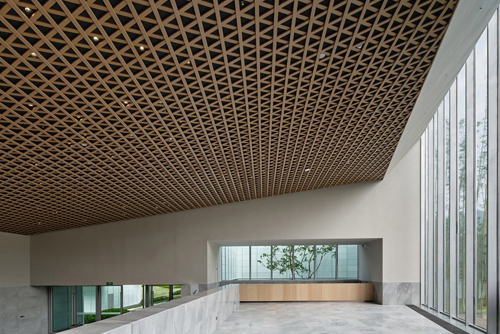
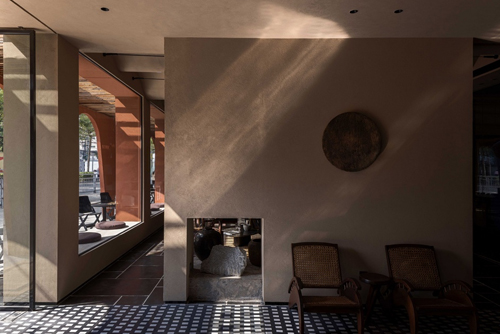
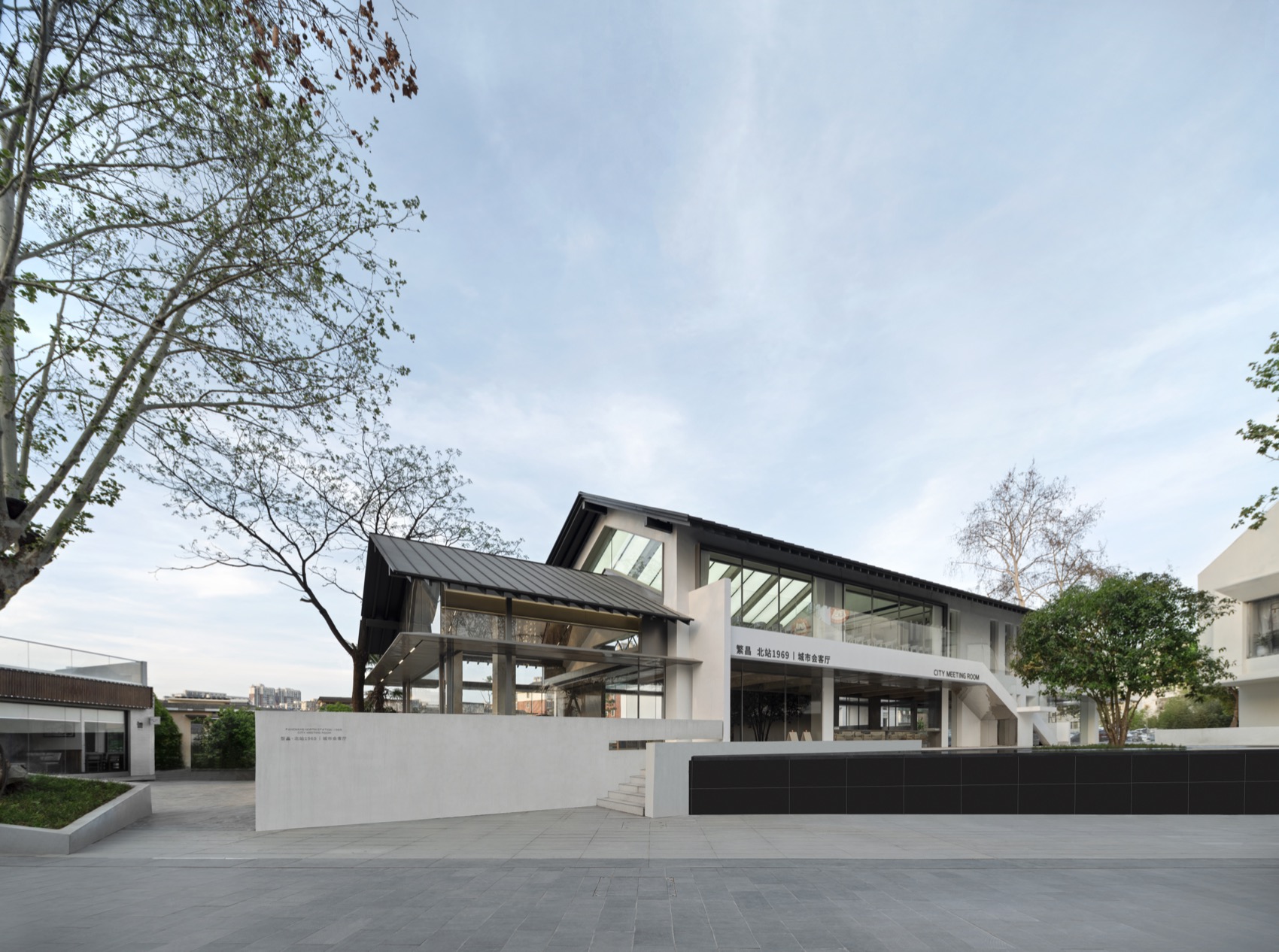
▼建筑入口与公共广场共同构成城市客厅,Building entrance and public plaza together form the urban living room
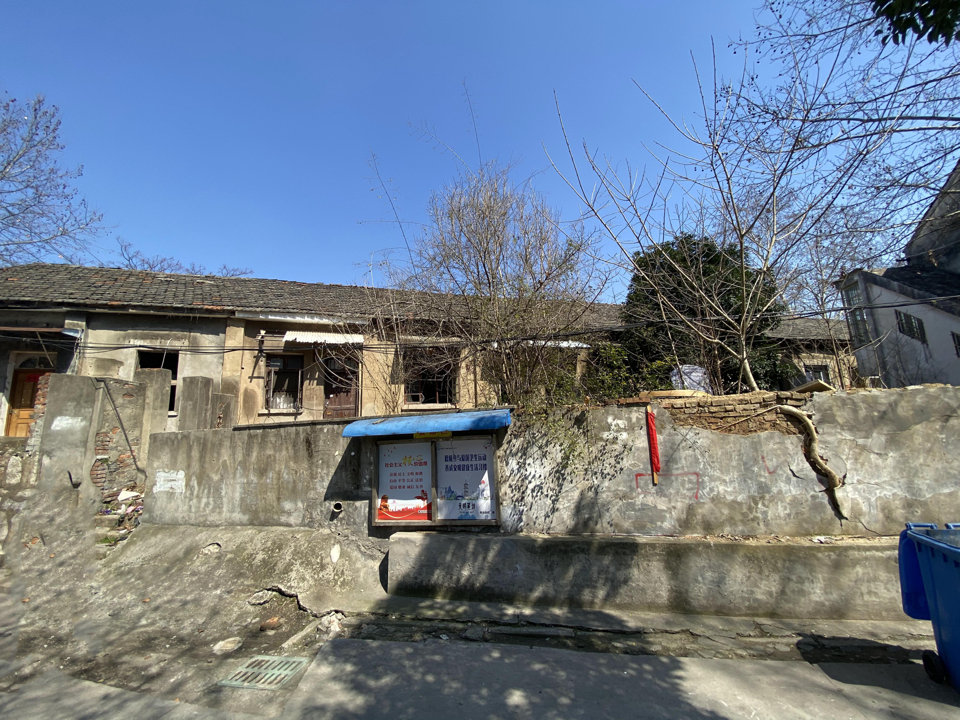
改造前为老旧砖混结构的站房附属建筑,外立面石材与砖体墙面出现风化、剥落现象,墙面肌理破损严重,失去原有建筑质感;周边植被杂乱无章,枯枝裸露,未形成系统化的景观营造;场地内仅设简易公告栏,无文化展示与公共服务设施,功能单一且缺乏地域文化表达。先对老化的砖混主体做结构加固,保留石材与砖体外立面的原生肌理并修复破损,拆除封闭隔墙引入玻璃幕墙改善采光,让老建筑重获使用与审美价值。摒弃单一居住功能,将原厅堂改造为文化展示核心区,厢房拆解为休闲交流区与商务洽谈区,房前空地打造景观休憩平台,实现接待、休闲、商务等多元功能的复合布局:同时重新规划场地动线,梳理杂乱植被并搭配绿植营造景观,让破败的民房空间蜕变为兼具历史温度与现代功能复合型城市会客厅。
▼改造前的老站房附属建筑外观,Exterior view of the old auxiliary station building before renovation
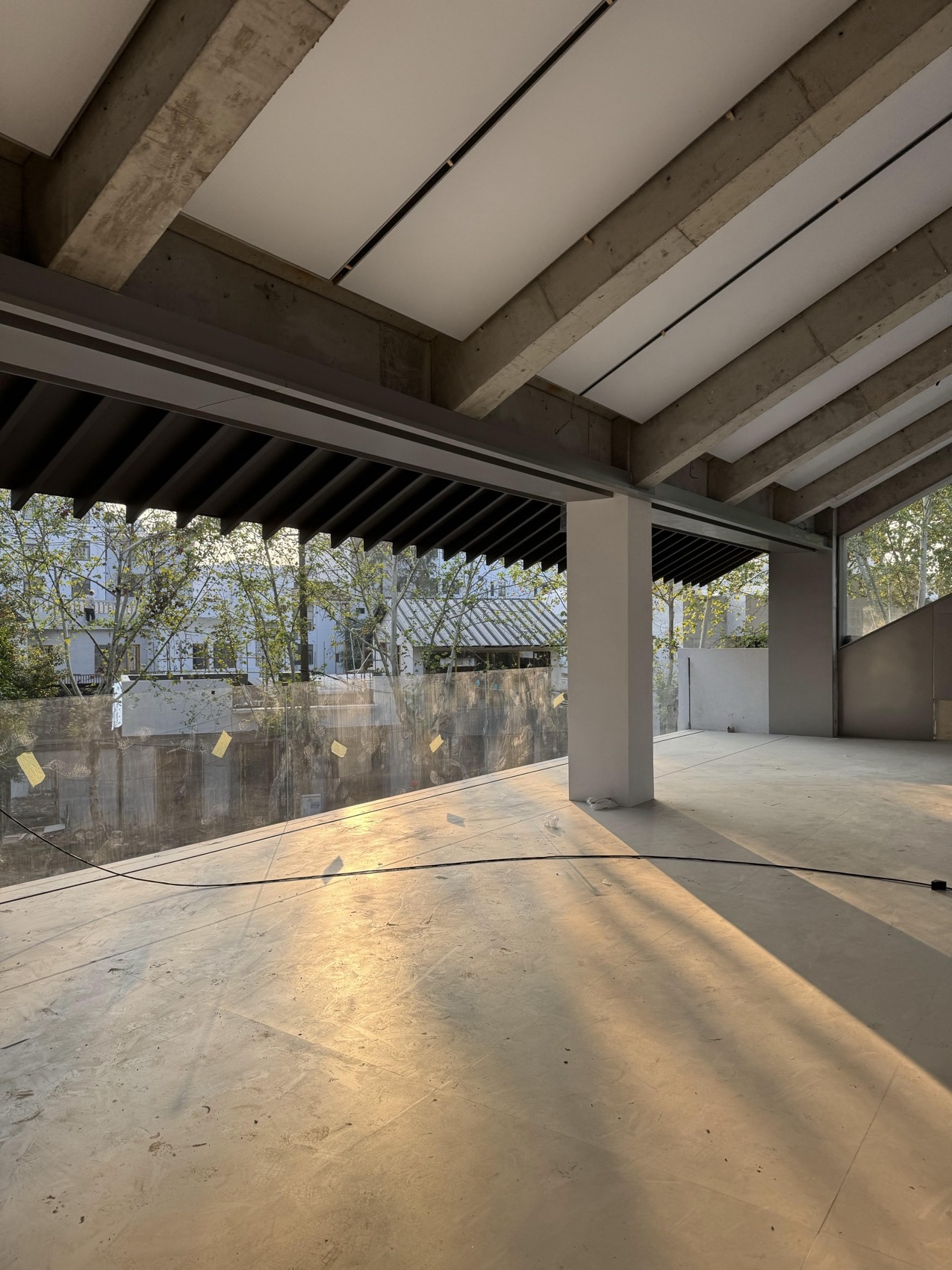
▼施工过程中的室内框架与建造状态,Interior framework and construction condition during the renovation process
The building was formerly an old brick-concrete auxiliary structure of the station building. The stone and brick exterior walls suffered from weathering, peeling, and severe damage to the wall texture, losing the original architectural texture. The surrounding vegetation was disorderly with bare dead branches, lacking systematic landscape design. The site was only equipped with a simple bulletin board, without cultural exhibition or public service facilities, resulting in a single function and absence of regional cultural expression. First, structural reinforcement was carried out on the aging brick-concrete main body. The original texture of the stone and brick exterior walls was preserved and damaged parts were repaired. Closed partition walls were demolished and glass curtain walls were introduced to improve lighting, restoring the old building’s practical and aesthetic value. Before renovation, it was an old brick-concrete auxiliary building attached to the station. The stone and brick exterior walls suffered from weathering and peeling, with severely damaged surface textures that lost their original architectural character. The surrounding vegetation was overgrown and unkempt, with bare dead branches and no systematic landscaping. The site was only equipped with a simple noticeboard, without cultural exhibition or public service facilities, resulting in a single function and a lack of regional cultural expression.
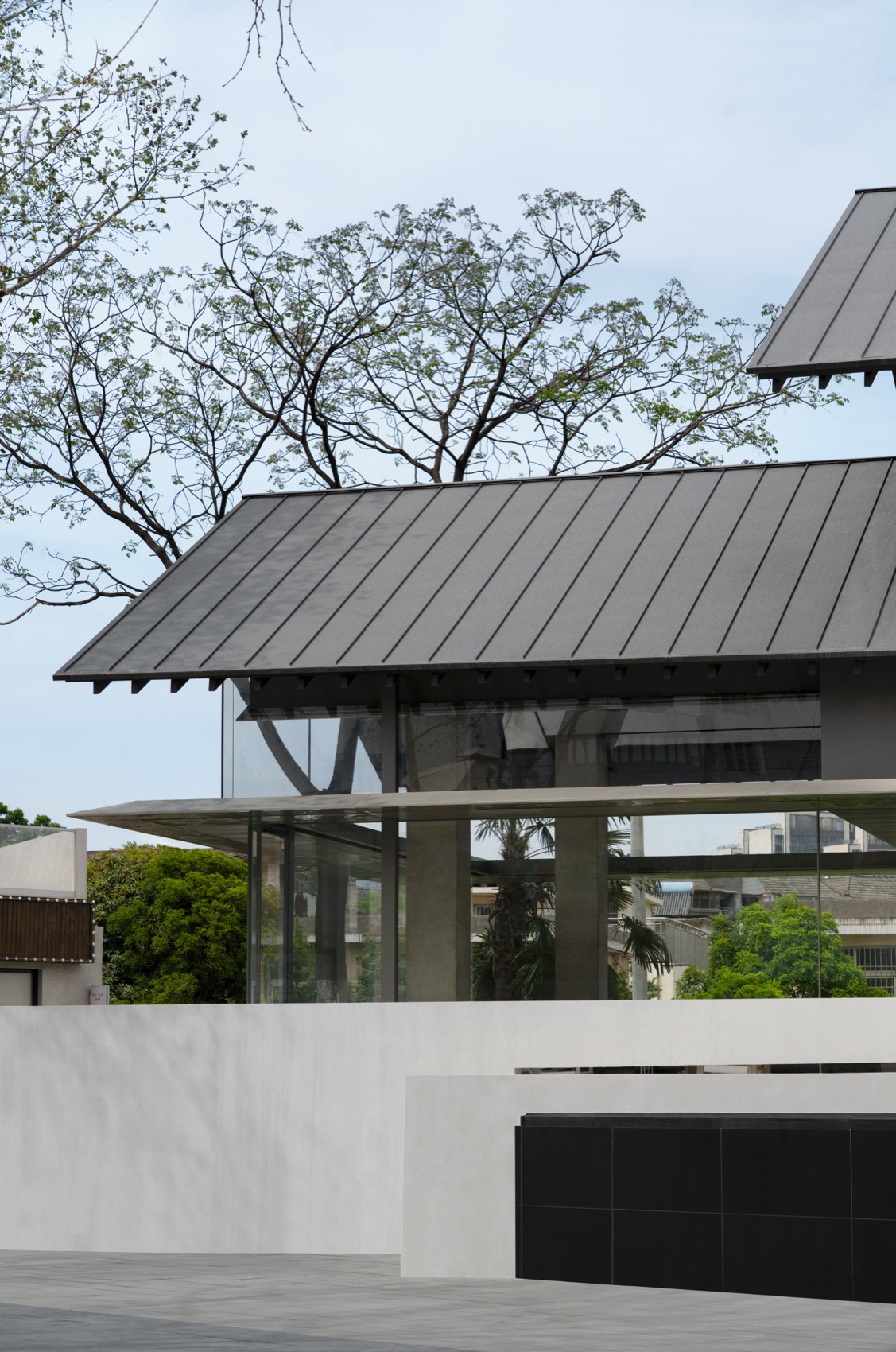
▼金属坡屋顶与树冠形成层叠景观,Metal pitched roofs layered against the tree canopy
城市会客厅的新生契机The New Opportunity of the City Living Room
繁昌北站作为区域交通节点,承载着城市对外展示的门户功能,但其原有空间仅聚焦交通服务,缺乏对地域文化的表达与城市公共功能的承载。随着繁昌城市更新进程的推进,需要一个能激活老站区活力、传承城市记忆、适配现代生活需求的复合型空间。我们以“城市会客厅”为定位,对繁昌北站历史建筑进行更新改造,通过设计实现交通节点向城市文化与社交枢纽的转型。
As a regional transportation node, Fanchang North Station undertakes the gateway function of urban external display. However, the original space only focused on transportation services, lacking the expression of regional culture and the bearing of urban public functions. With the advancement of Fanchang’s urban renewal process, a composite space is needed to activate the vitality of the old station area, inherit urban memory and adapt to the needs of modern life. Positioned as a “City Living Room”, we renovated the historic building of Fanchang North Station, transforming the transportation node into an urban cultural and social hub through design.
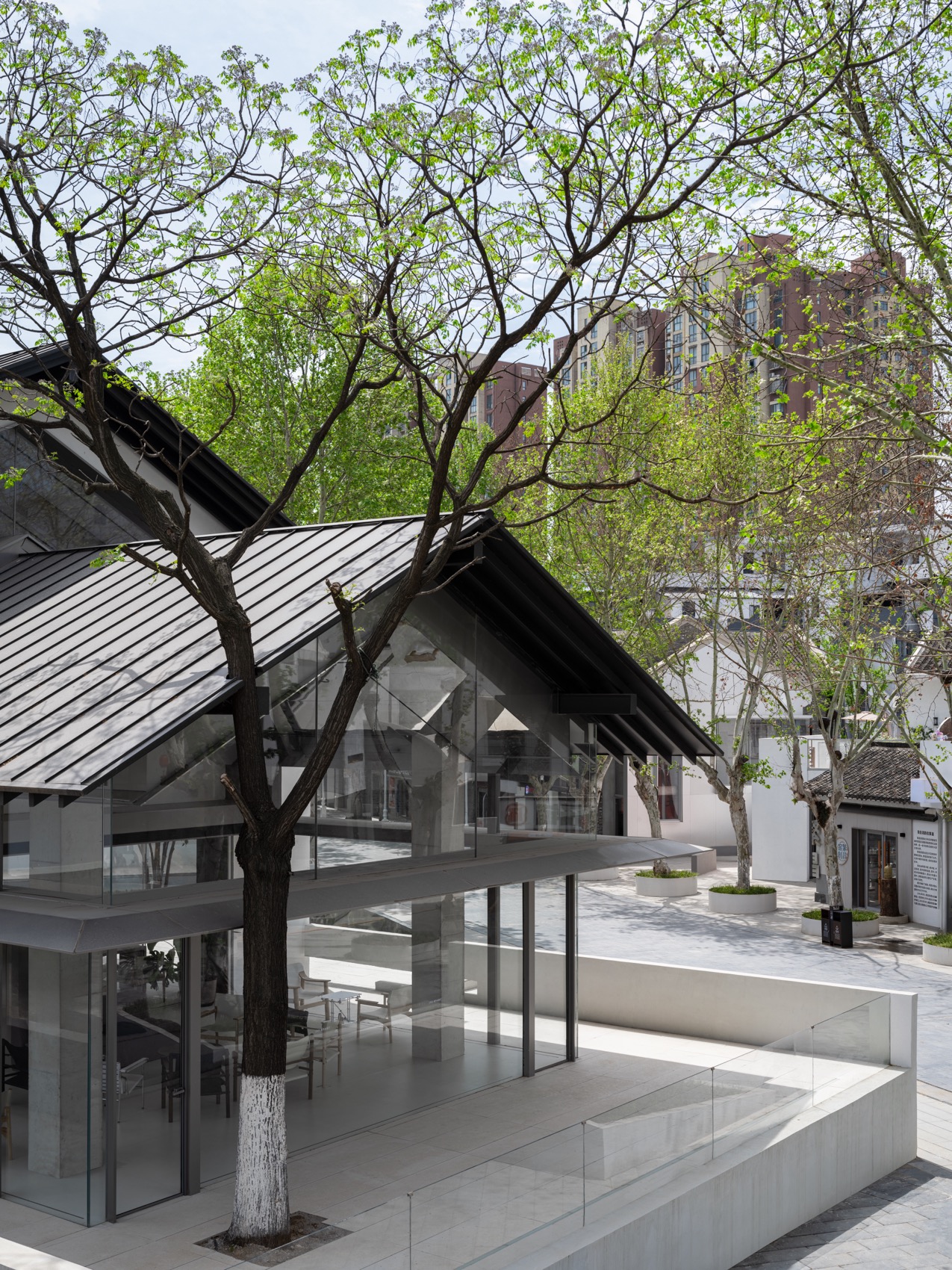
▼建筑与街区绿化形成开放共享关系,Architecture and urban greenery form an open shared environment
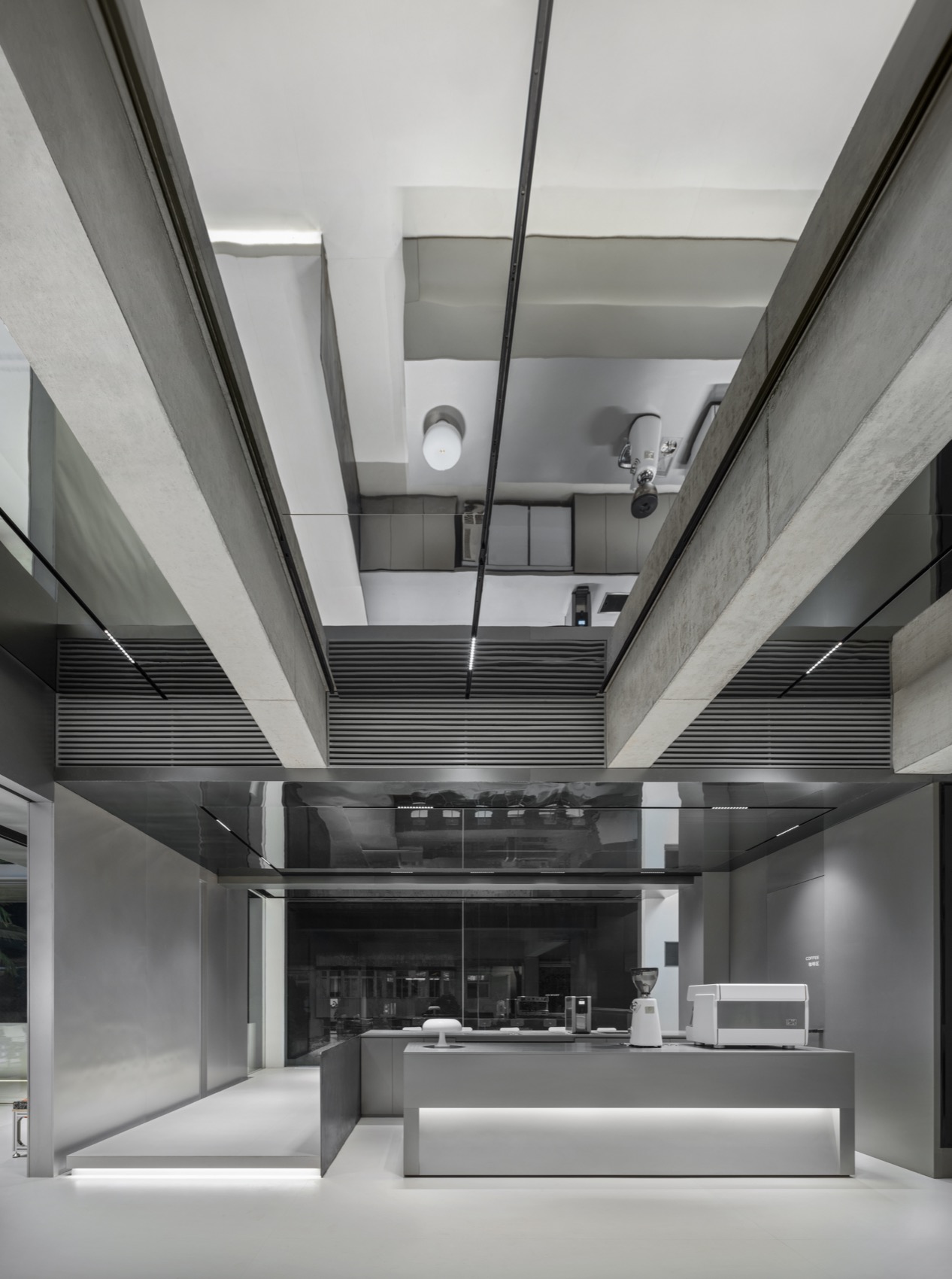
▼极简灰调空间中的接待与展示区域,Reception and display area within a minimalist grey-toned interior
城市会客厅的设计巧思Ingenious Design of the City Living Room
在保留历史建筑主体结构与风貌的基础上,通过现代材料与设计手法的介入,既避免了对老建筑过度改造,又赋予其适应现代功能的新生命力,实现历史价值与使用价值的双重激活。
▼建筑剖面呈现空间层次与结构体系,Architectural section illustrating spatial hierarchy and structural system
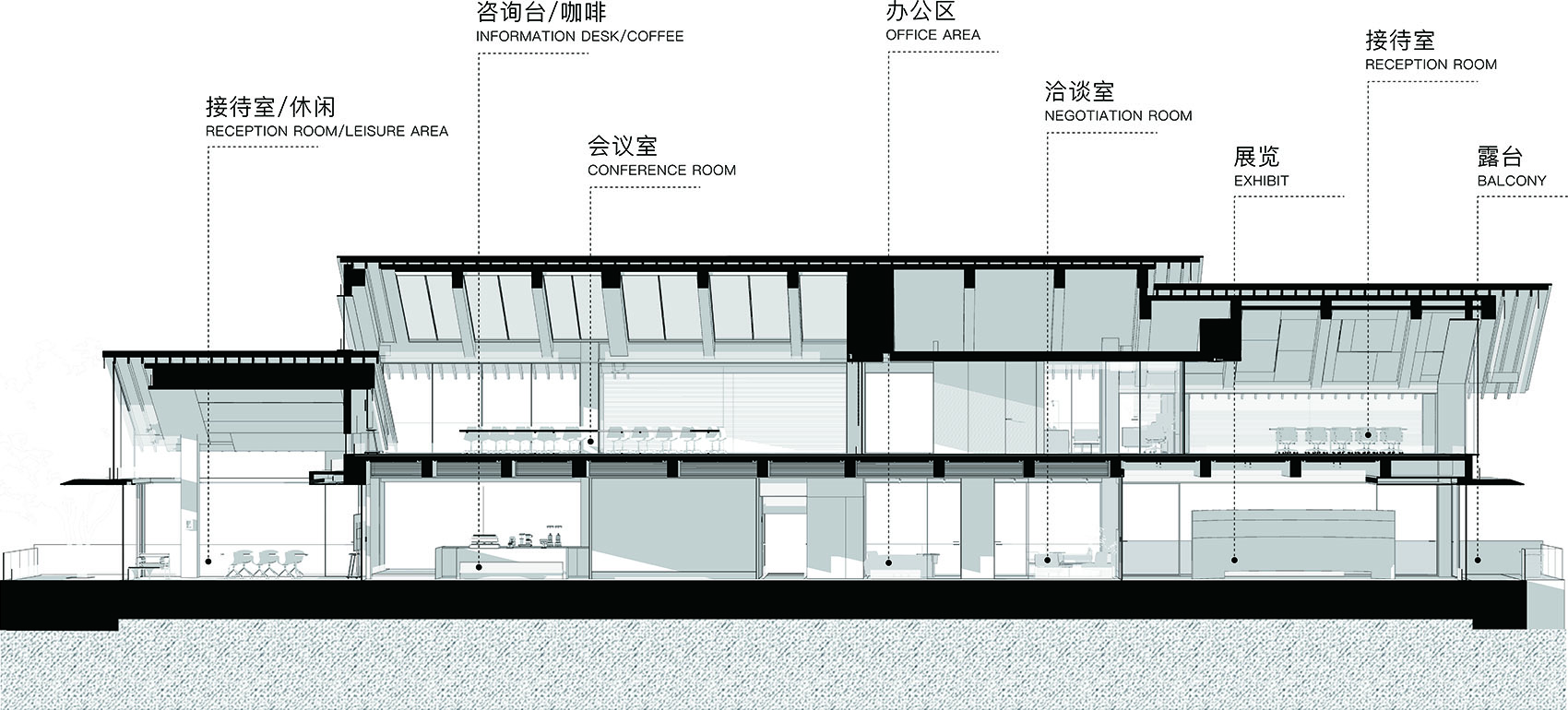
On the basis of retaining the main structure and style of the historic building, the intervention of modern materials and design techniques avoids excessive renovation of the old building, endows it with new vitality adapting to modern functions, and realizes the dual activation of historical value and use value.
▼黑色金属坡顶延续原有建筑肌理,Black metal pitched roof continues the texture of the original architecture
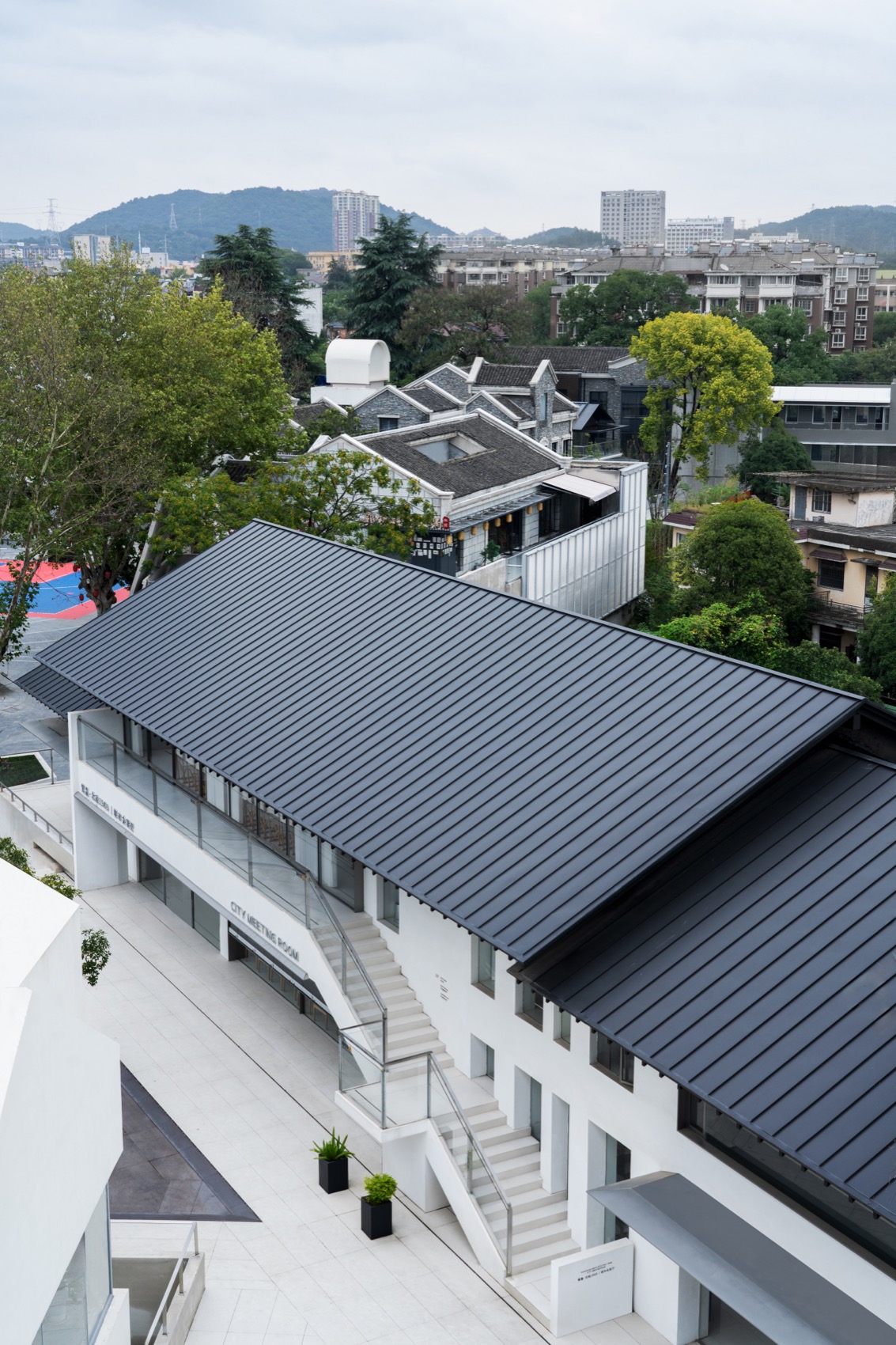
突破单一文化展示空间的局限,整合文化、社交、商务、休闲等多元功能,满足旅客、居民、商务人士等不同人群的需求,成为服务全年龄段的城市公共空间。
Breaking through the limitations of a single cultural exhibition space, it integrates diverse functions such as culture, social interaction, business and leisure, meeting the needs of different groups including travelers, residents and business people, and becoming an urban public space serving all age groups.
▼通高玻璃空间营造开放休闲氛围,Double-height glazed space creates an open leisure atmosphere
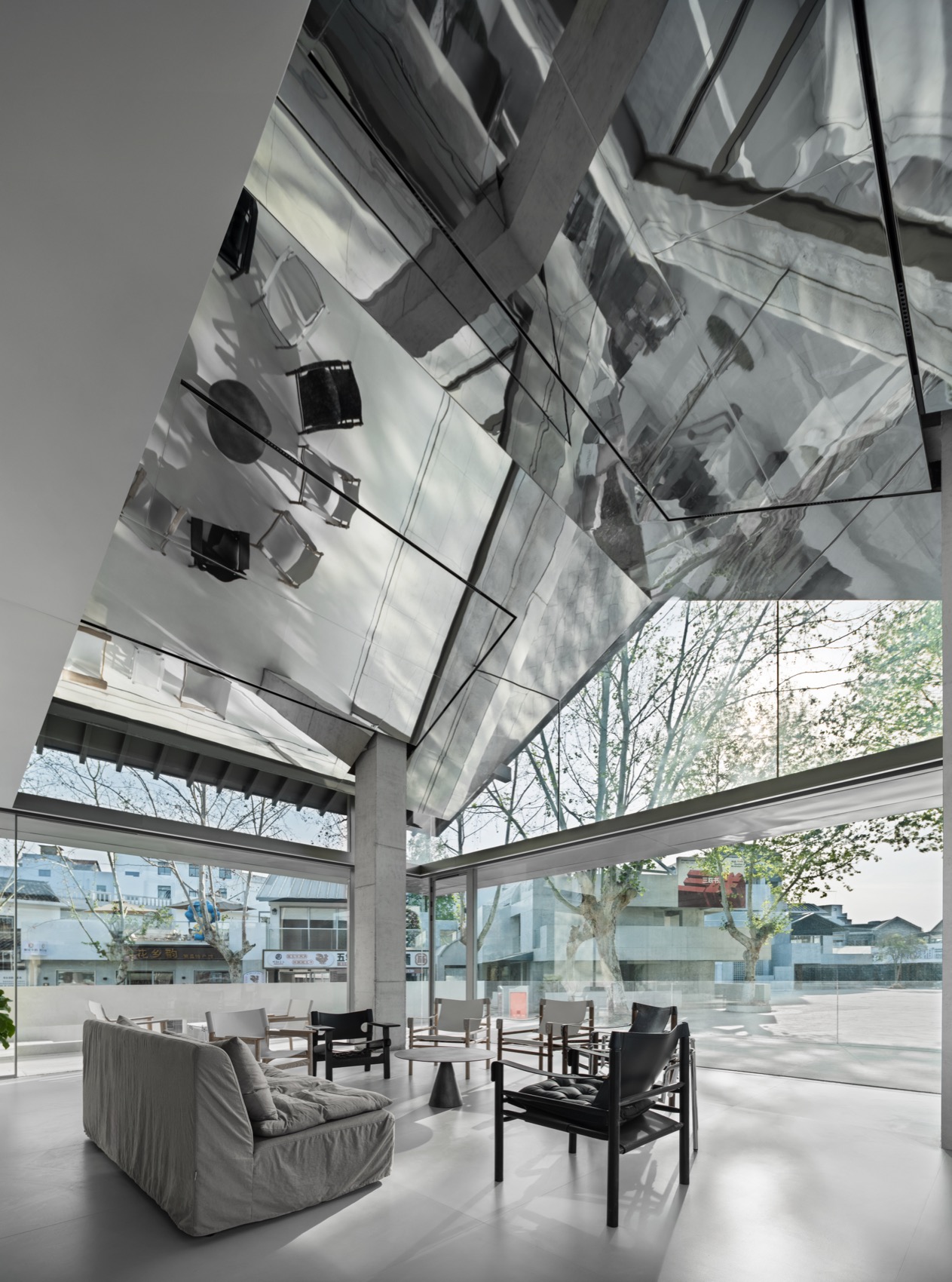
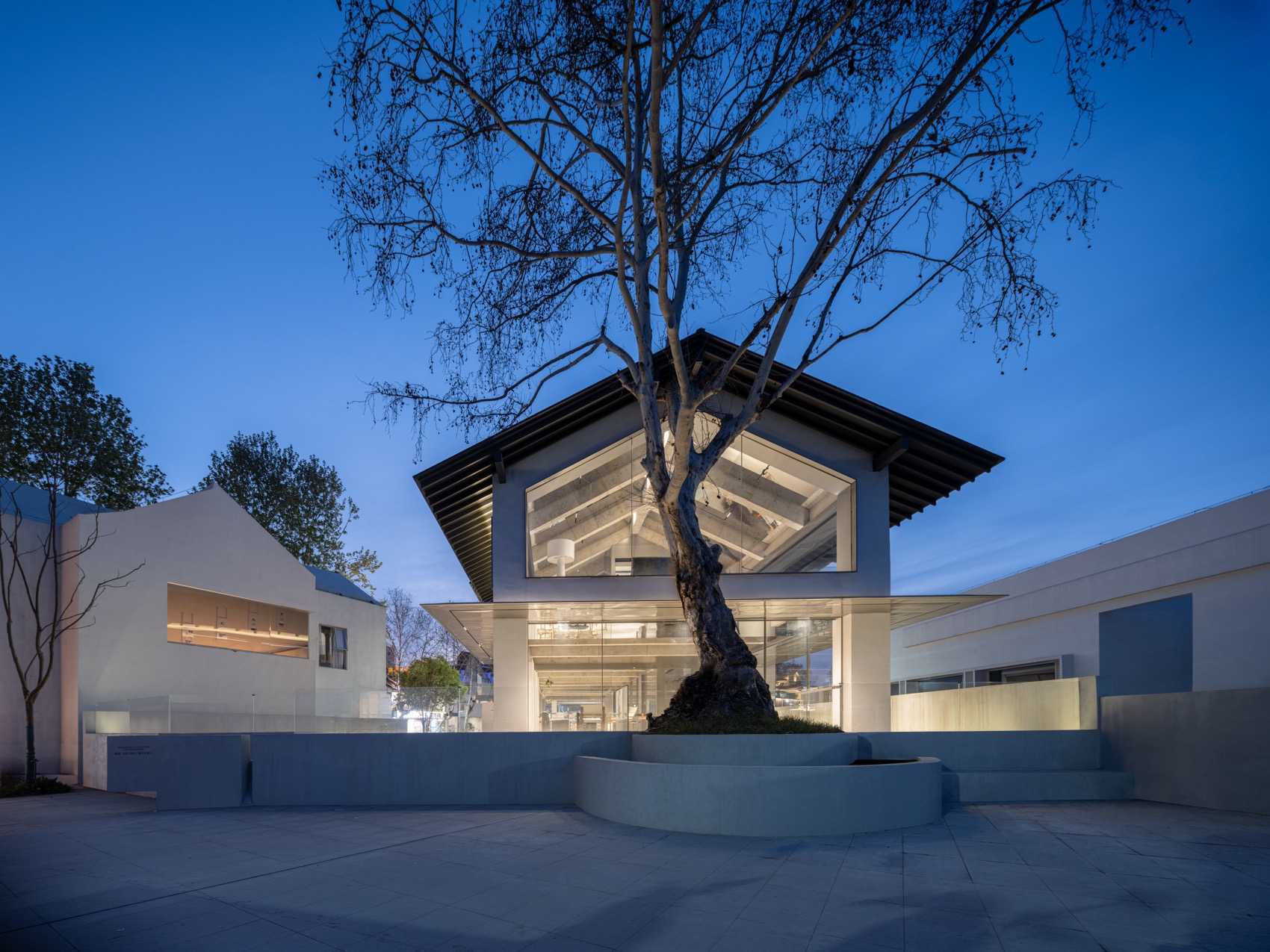
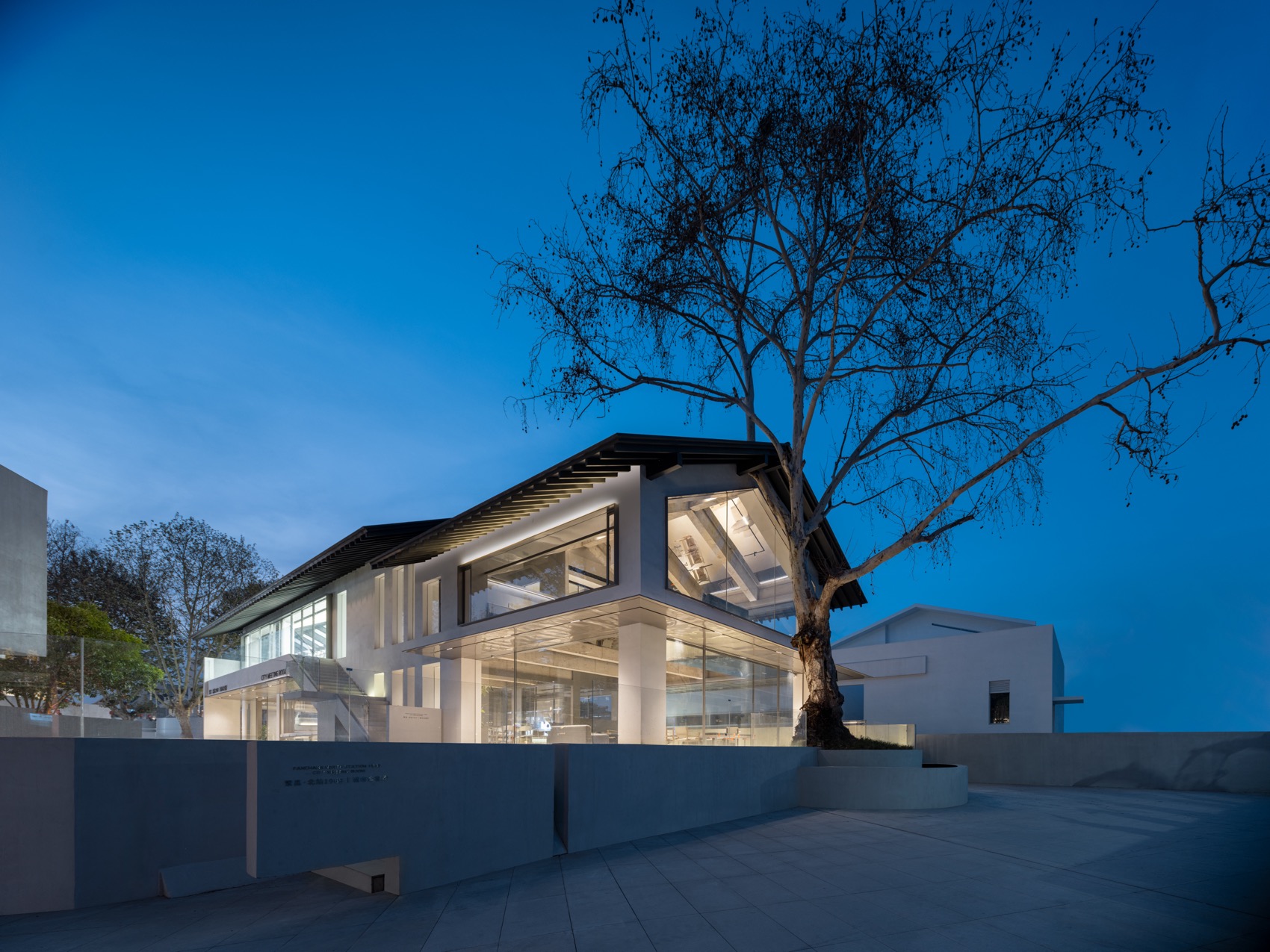
建筑外观上把原民房的人字顶作为设计核心,没有改变人字顶的整体轮廓和坡面角度,保留了这份本土建筑记忆;同时打破了传统人字顶的封闭样式,用轻盈的框架结构替代了原本厚重的砖瓦,让屋顶变得通透起来,阳光能透过屋顶洒进室内,让老建筑的经典形态和现代的设计美感融合在了一起,外立面也搭配了玻璃和金属的元素,让建筑既有历史的沉淀感,又不失现代的活力。
In terms of architectural appearance, the herringbone roof of the original civilian house is taken as the design core, without changing the overall outline and slope angle of the herringbone roof, retaining this local architectural memory. Meanwhile, the closed form of the traditional herringbone roof is broken, and the original heavy bricks and tiles are replaced with a light frame structure, making the roof transparent. Sunshine can pour into the room through the roof, integrating the classic form of the old building with modern design aesthetics. The exterior facade is also matched with glass and metal elements, making the building both full of historical precipitation and modern vitality.
▼夜景中的城市会客厅呈现通透体量,The city living room reveals a transparent volume at night
空间的场景编织Spatial Scene Weaving
注重空间的开放性和互动性,打造舒适、宜人地环境,让人们在这里可以悠闲的交流、休闲,感受城市的温度,增强居民的归属感和认同感。采用开放式的设计手法,打破传统空间的界限,使室内室外、不同功能区域之间相互渗透、融合,营造出通透、流畅的空间感受,方便人们在其中自由穿梭和交流。
▼爆炸轴测图展示建筑功能与流线关系,Exploded axonometric diagram illustrating architectural functions and circulation relationships
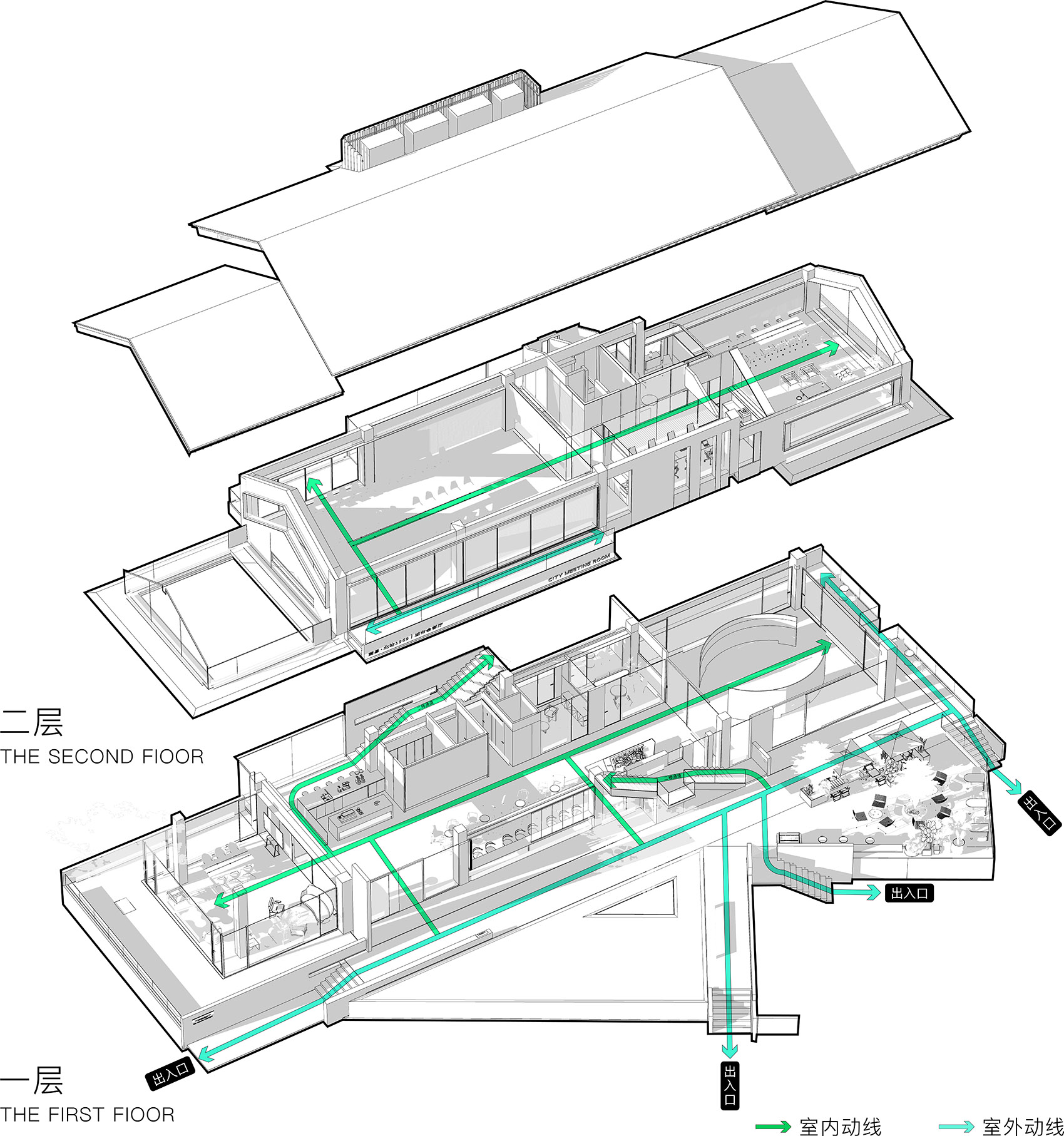
We focus on the openness and interactivity of the space to create a comfortable and pleasant environment, where people can communicate and relax leisurely, feel the warmth of the city, and enhance residents’ sense of belonging and identity.
Open design is adopted to break the boundaries of traditional spaces, so that the interior and exterior, as well as different functional areas, penetrate and integrate with each other, creating a transparent and smooth spatial experience and facilitating free movement and communication among people.
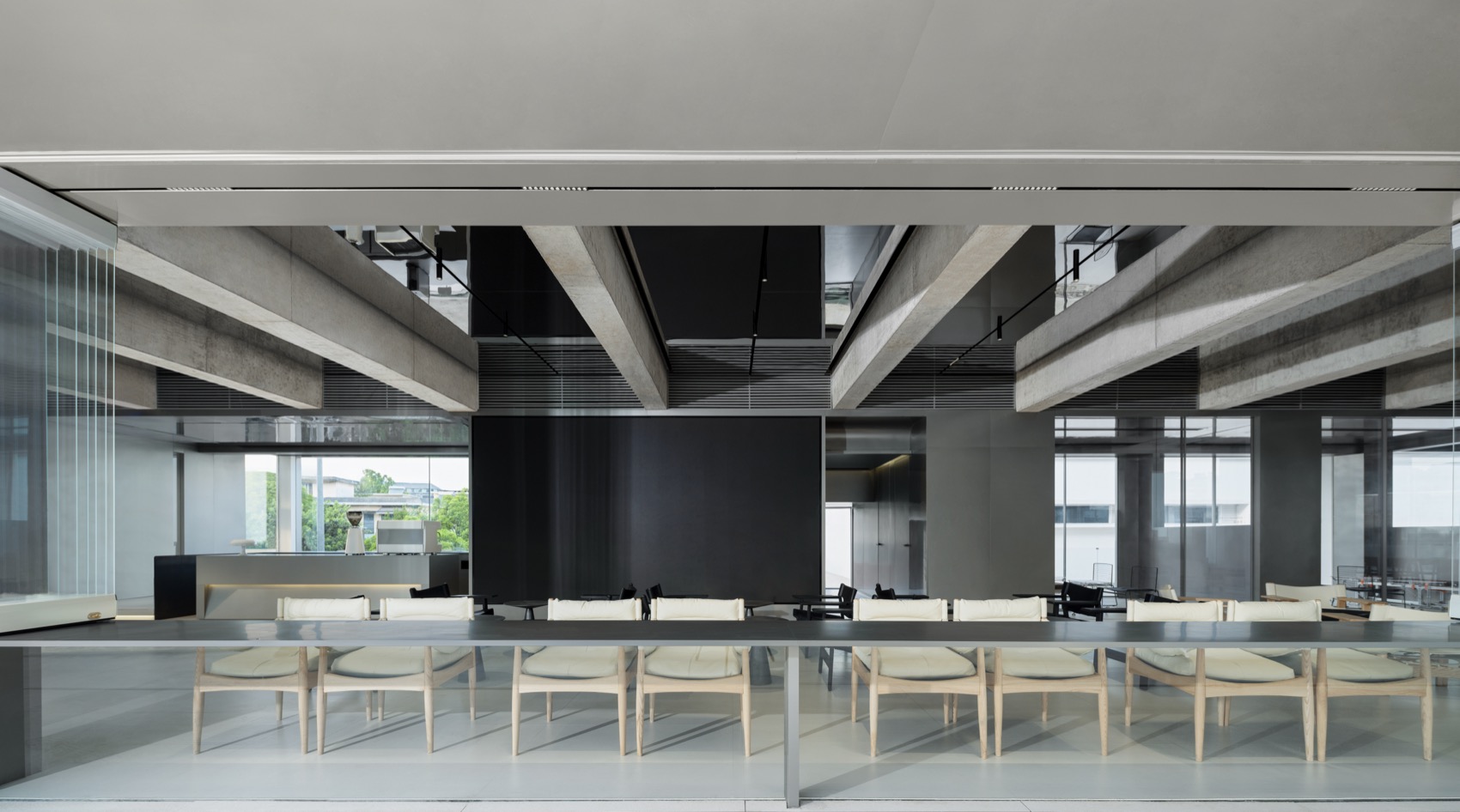
▼长桌与休闲座椅形成灵活交流场景,Long tables and lounge seating create flexible communication settings
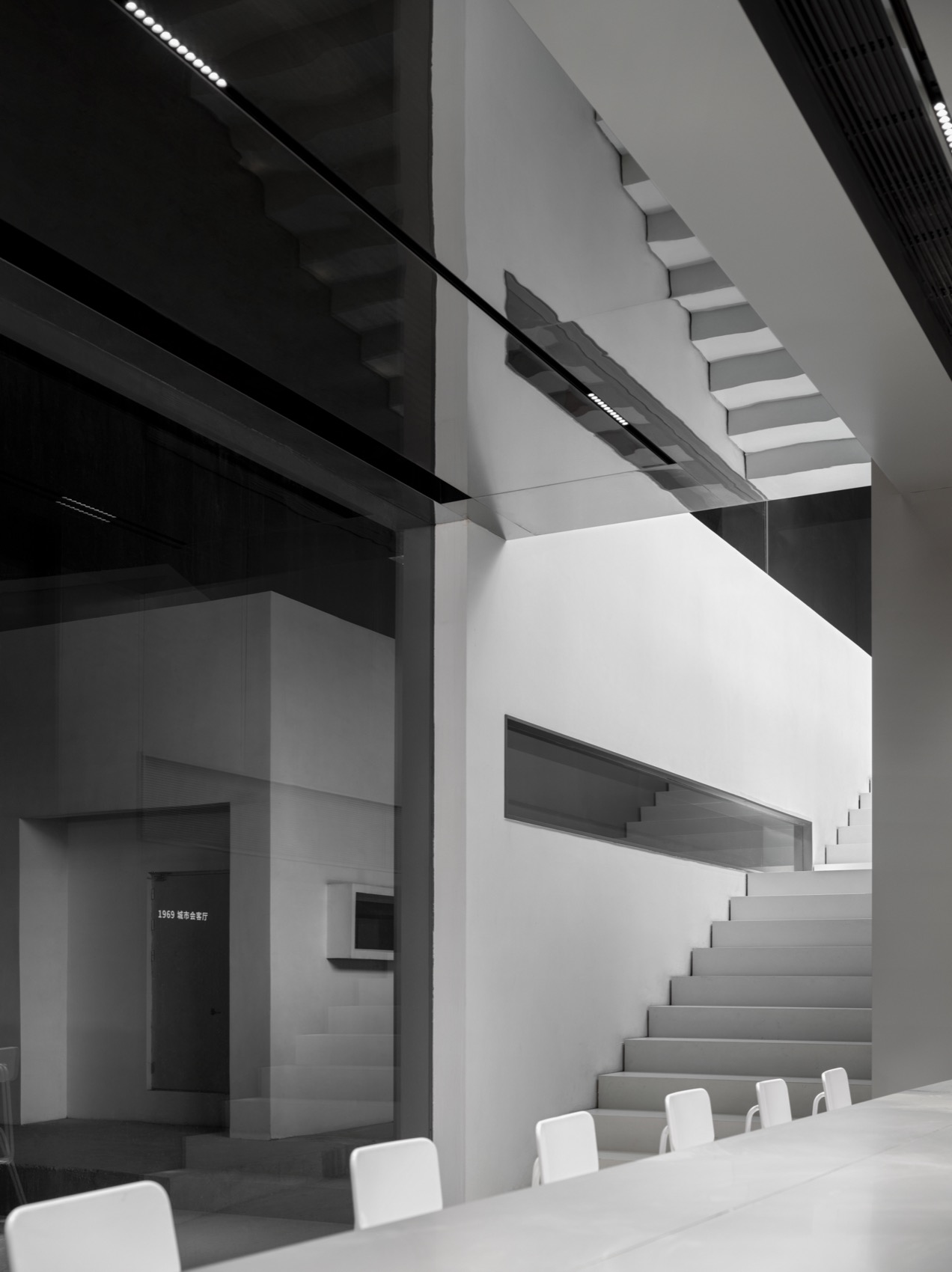
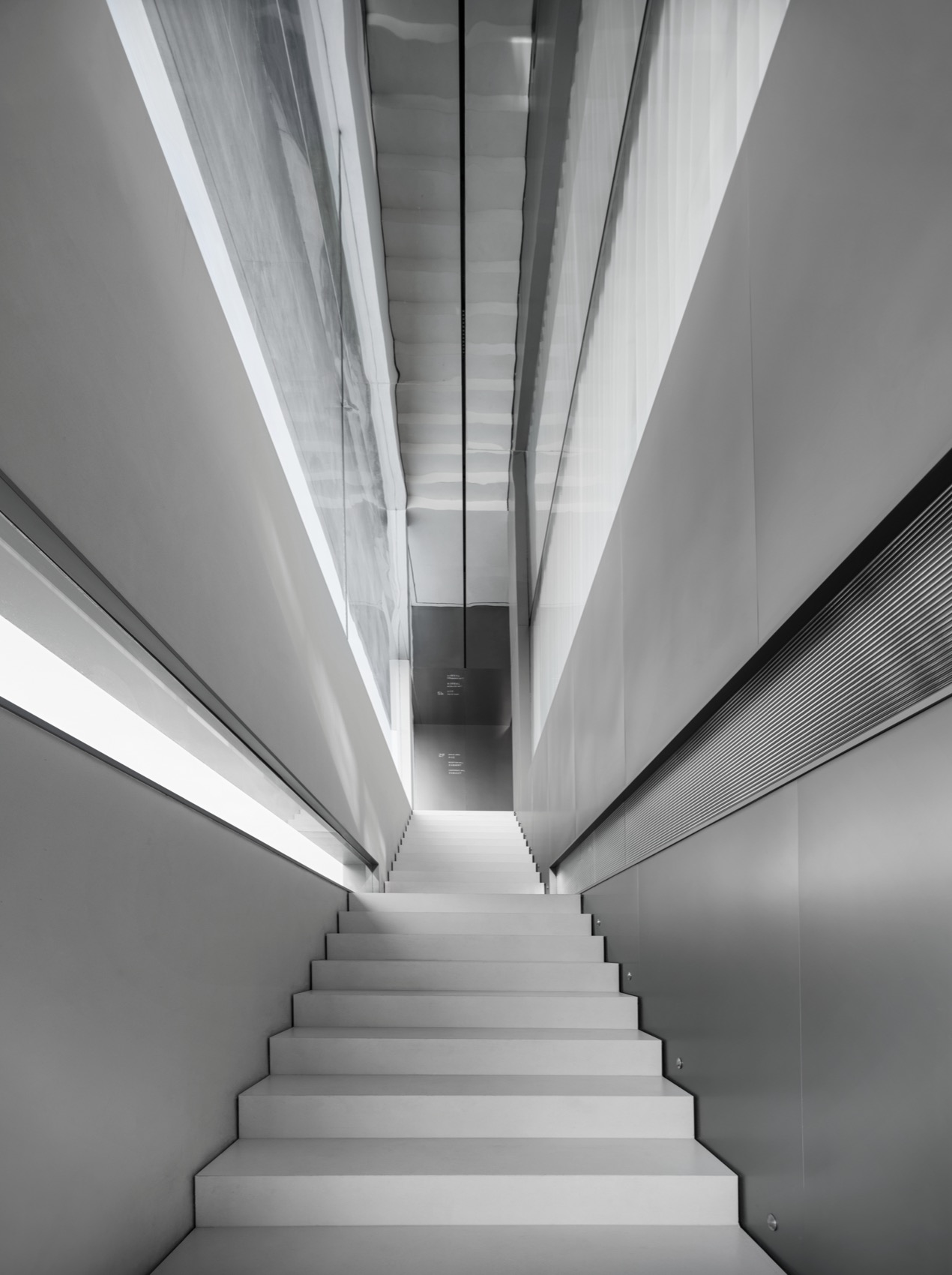
▼极简楼梯空间强化垂直动线体验,Minimal stair space emphasizes the vertical circulation experience
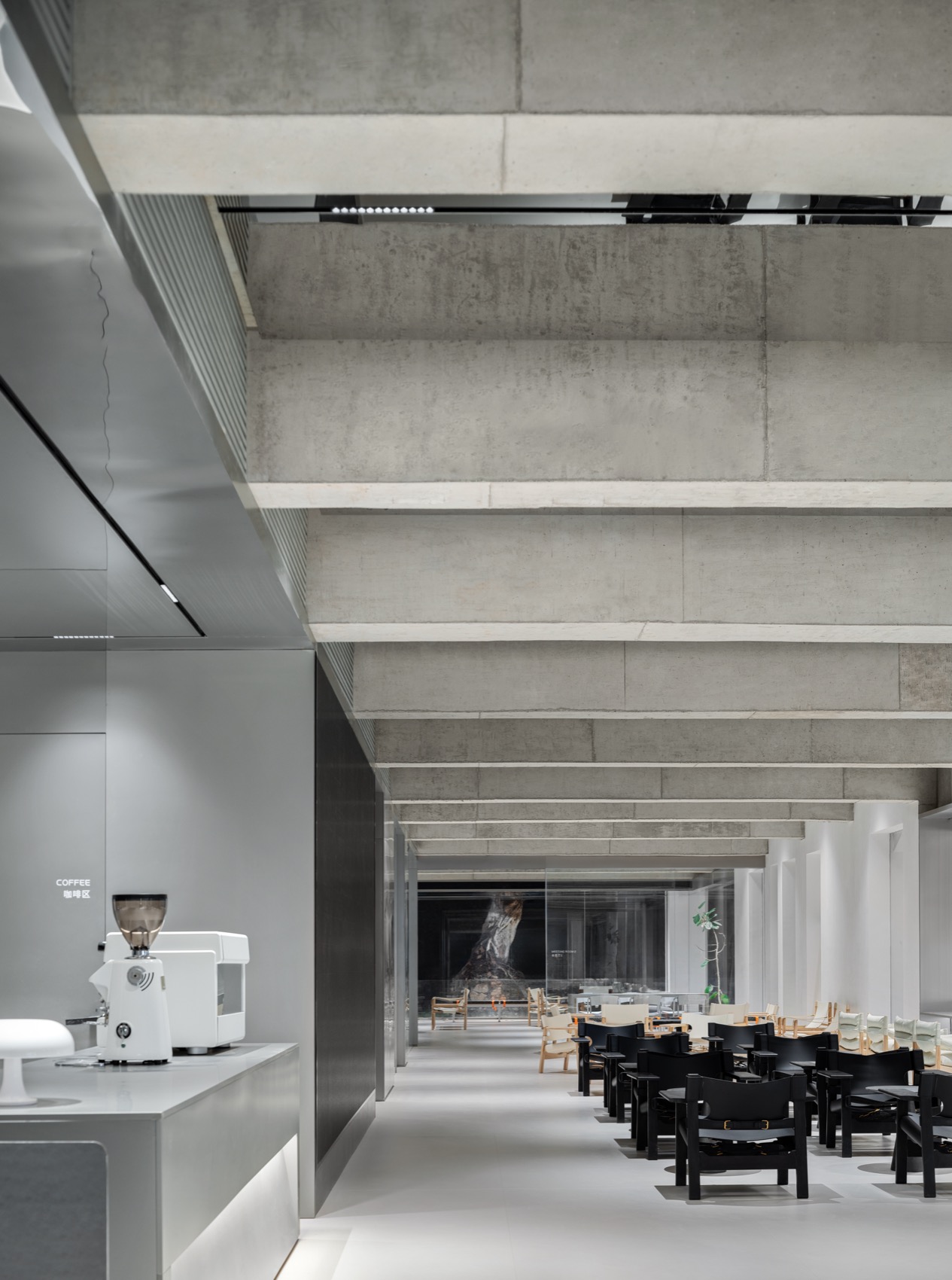
根据不同的使用需求,将城市会客厅划分为多个功能分区,每个区域都有其独特的功能和特点,同时又相互联系相互补充。休闲交流区:营造轻松自在的社交氛围。空间支持临时阅读、日常休憩与社群分享活动,是城市温暖度的直观体现。
According to different usage needs, the City Living Room is divided into multiple functional zones, each with unique functions and characteristics, while being interconnected and complementary. Leisure Communication Area: Creates a relaxed and free social atmosphere. The space supports temporary reading, daily rest and community sharing activities, which is an intuitive reflection of the city’s warmth.
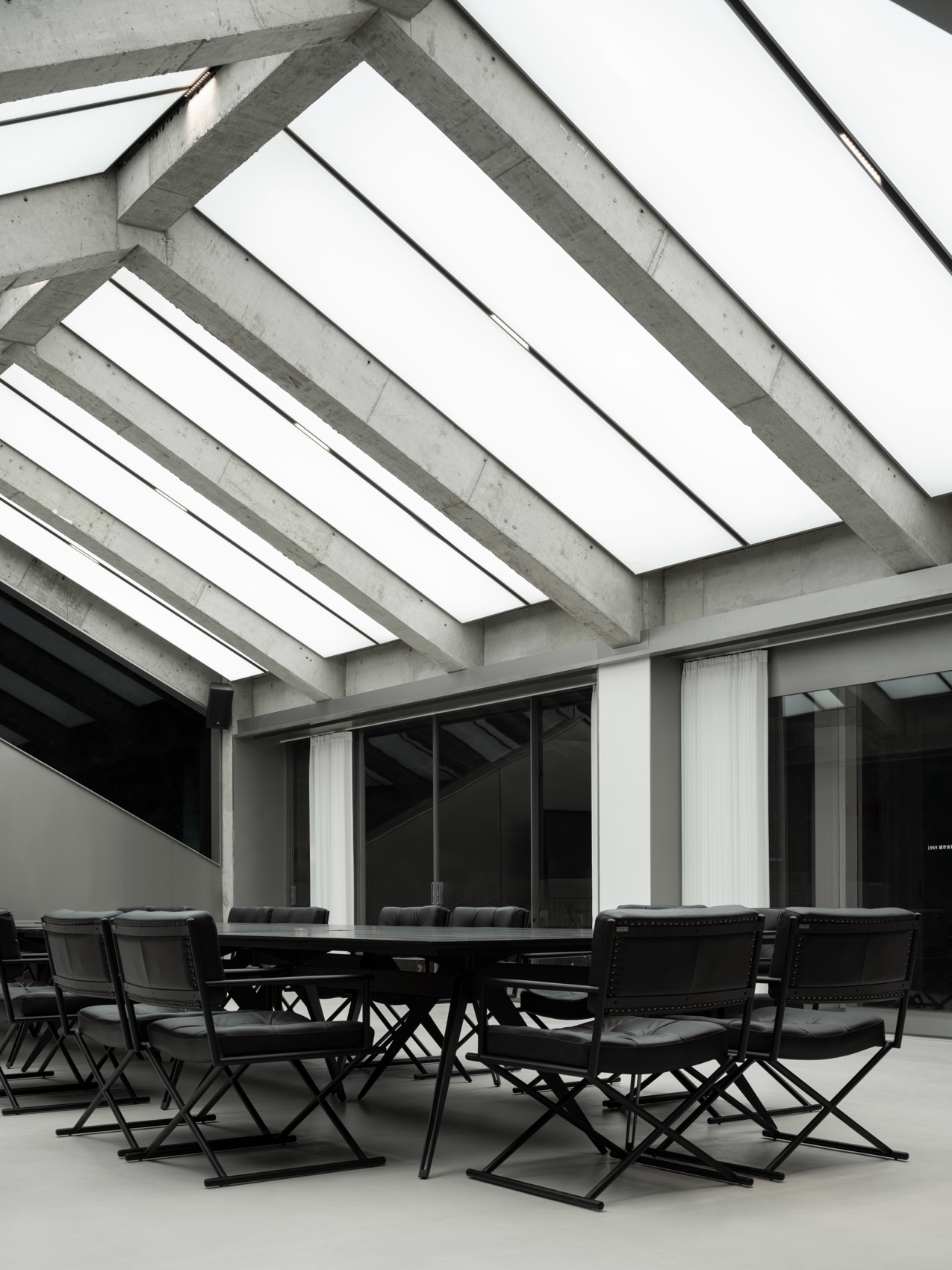
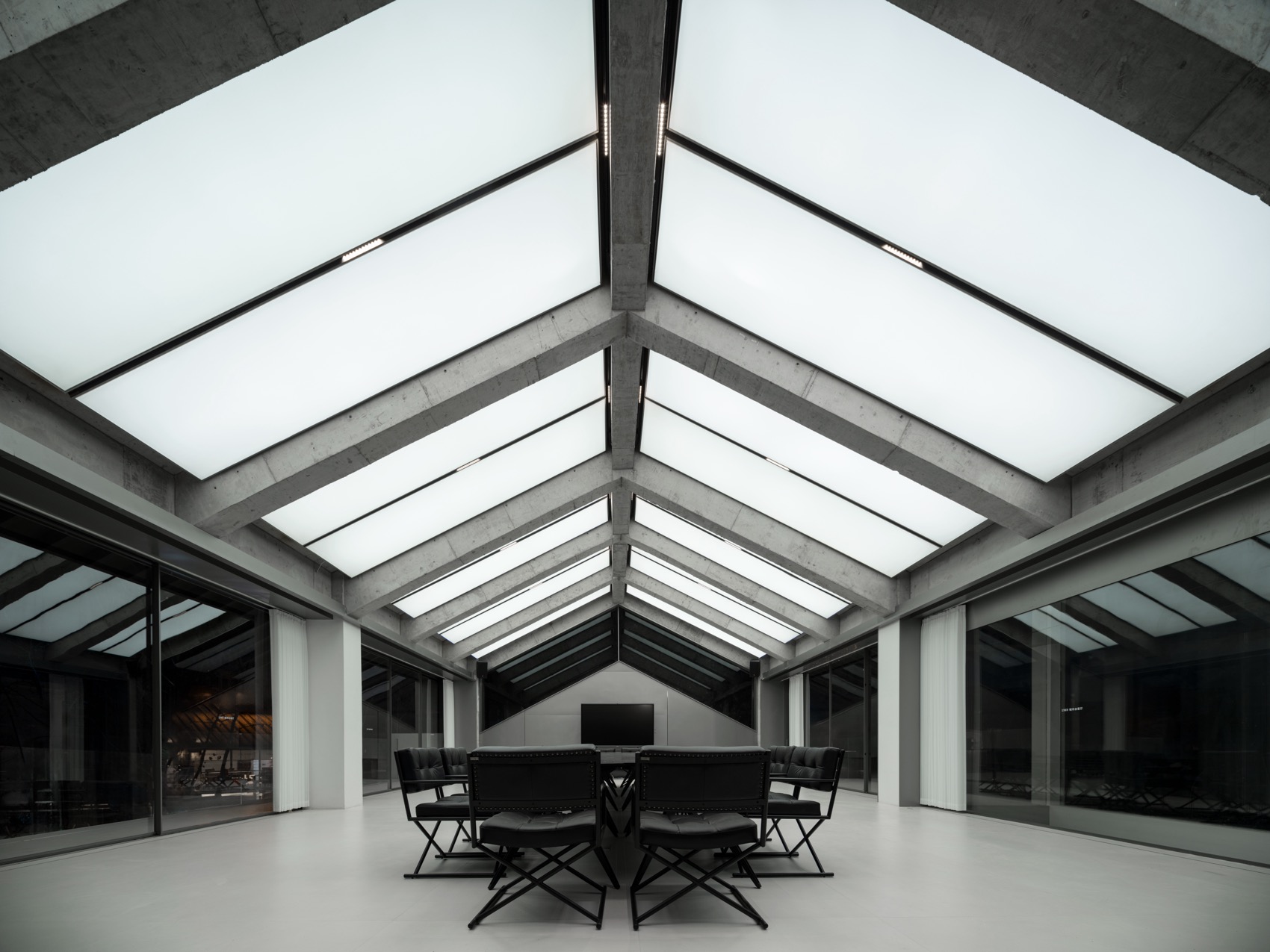
▼连续天窗为空间提供均匀漫射光,Continuous skylights provide soft and even daylight for the space
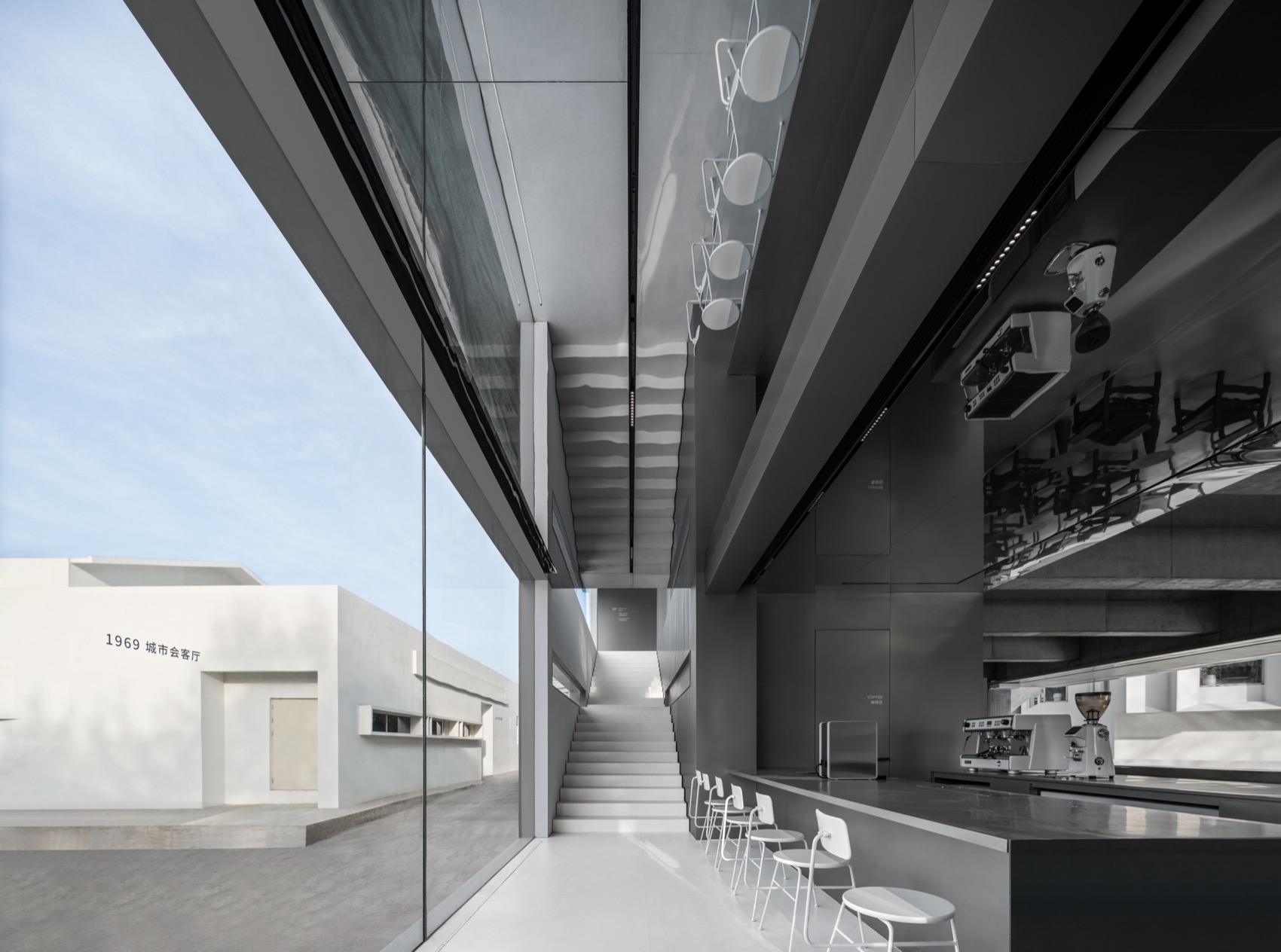
▼咖啡与休闲区域形成开放共享空间,Coffee and lounge areas form an open shared environment
商务洽谈区:设置半开放卡座与独立洽谈间,配备智能会议设备,兼顾高效商务与灵活办公需求。
Business Negotiation Area: Equipped with semi-open booths and independent negotiation rooms, as well as intelligent conference equipment, taking into account the needs of efficient business and flexible office work.
▼玻璃围合的阁楼空间呈现通透氛围,Glass-enclosed loft space creates a transparent atmosphere
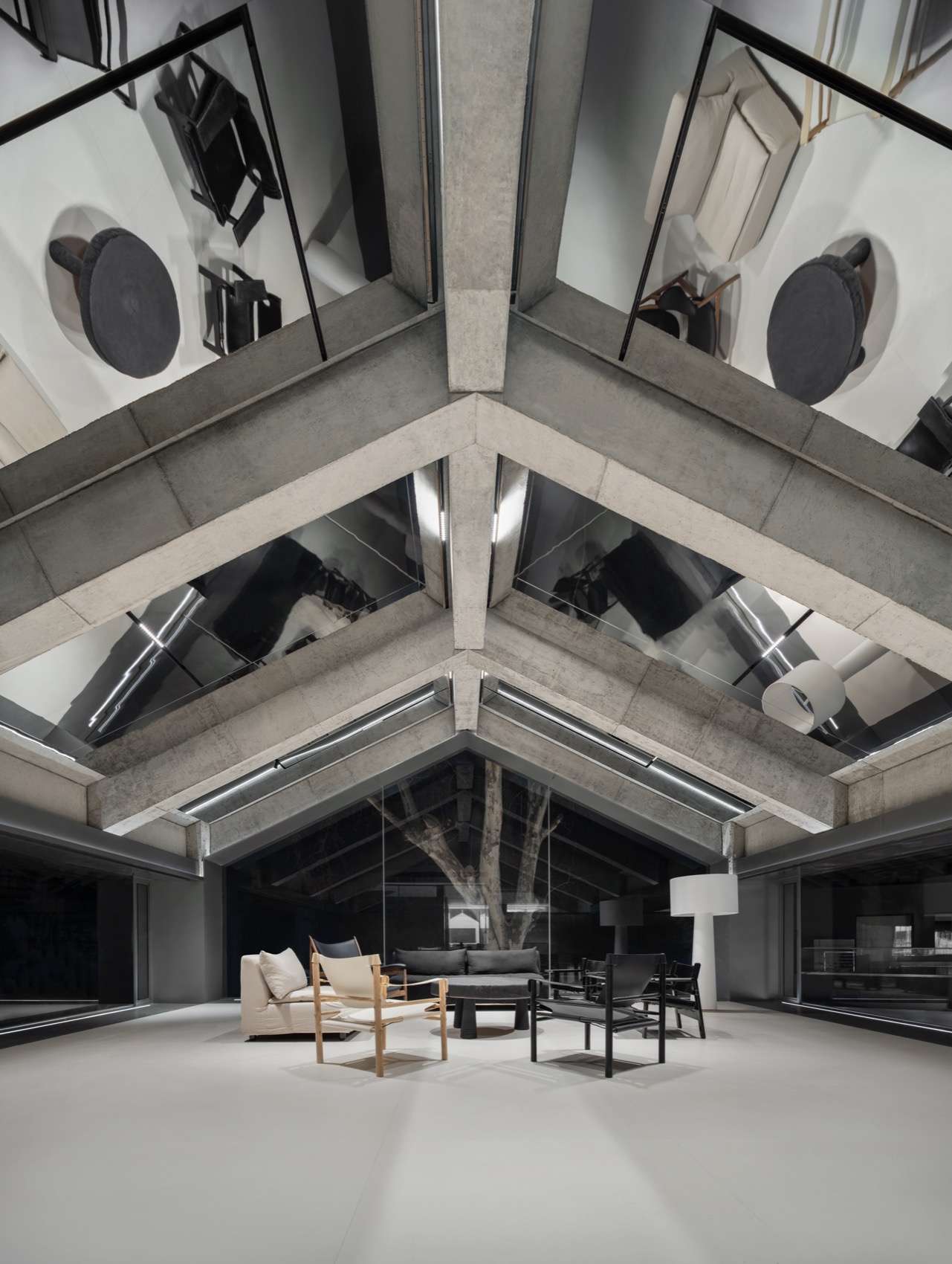
▼镜面顶面映射屋架与家具布局,Reflective ceiling mirrors the roof trusses and furniture arrangement
繁昌北站城市会客厅的改造设计,是对老建筑再生的一次实践探索,也是对城市公共空间价值的重新定义。它以历史为基、以文化为魂、以功能为脉,让交通节点蜕变为城市的文化客厅与社交枢纽,既留存了繁昌的城市记忆,又为地域发展注入了新的活力。未来,这里将持续作为繁昌对外展示的窗口、市民情感联结的纽带,在时光流转中不断生长,成为属于这座城市的鲜活名片。
The renovation and design of the City Living Room at Fanchang North Station is a practical exploration of the regeneration of old buildings and a redefinition of the value of urban public space. Based on history, rooted in culture and supported by functions, it has transformed a transportation node into the city’s cultural living room and social hub, preserving Fanchang’s urban memory and injecting new vitality into regional development. In the future, it will continue to serve as a window for Fanchang’s external display and a bond for citizens’ emotional connection, growing continuously in the passage of time and becoming a vivid business card belonging to the city.
▼结构梁与镜面天花共同延展空间尺度,Structural beams and reflective ceilings extend the spatial scale
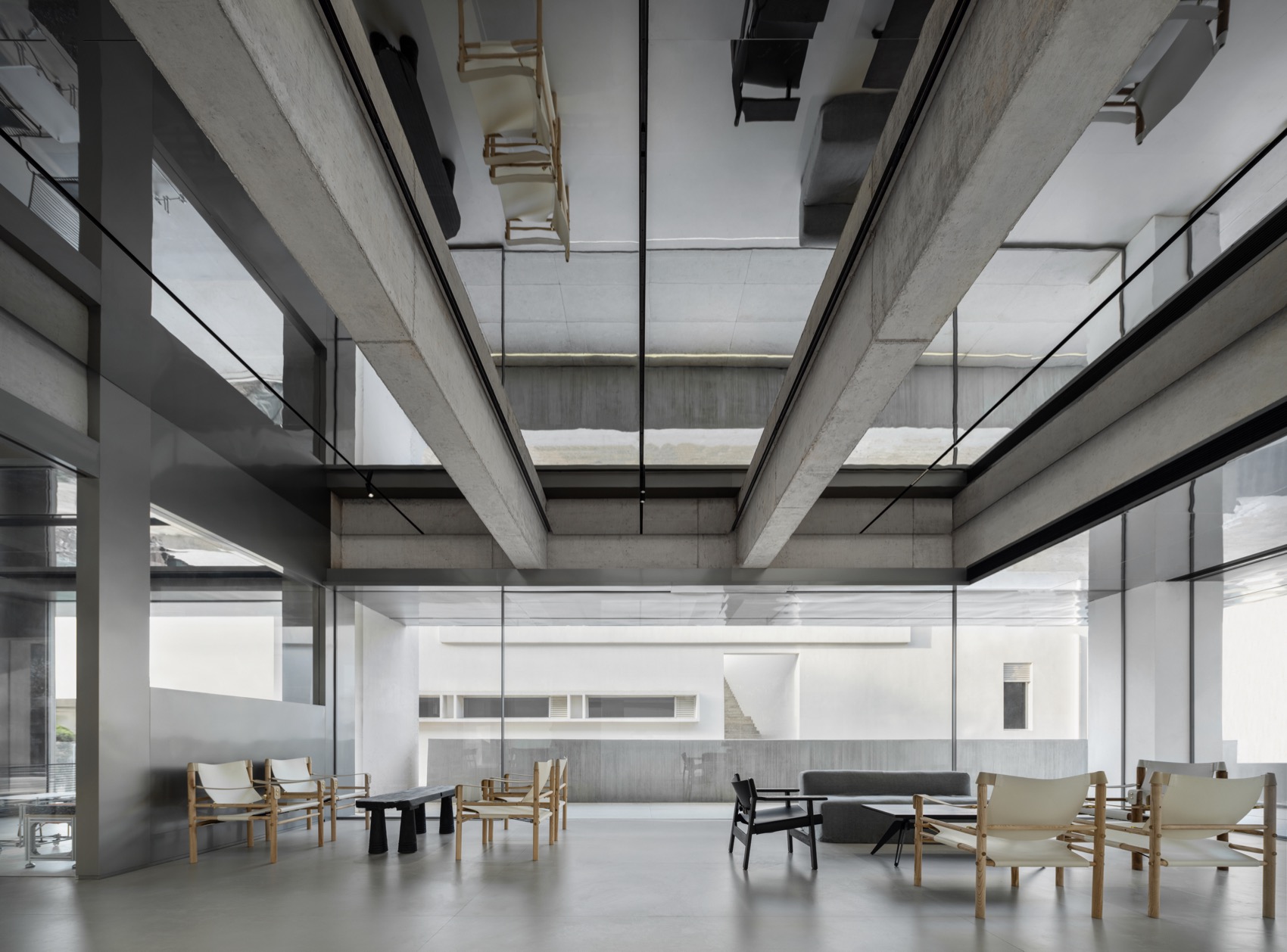
▼通高玻璃立面引入自然光线与景观,Full-height glazing brings natural light and surrounding views indoors
▼走廊共享区域,Corridor communal area
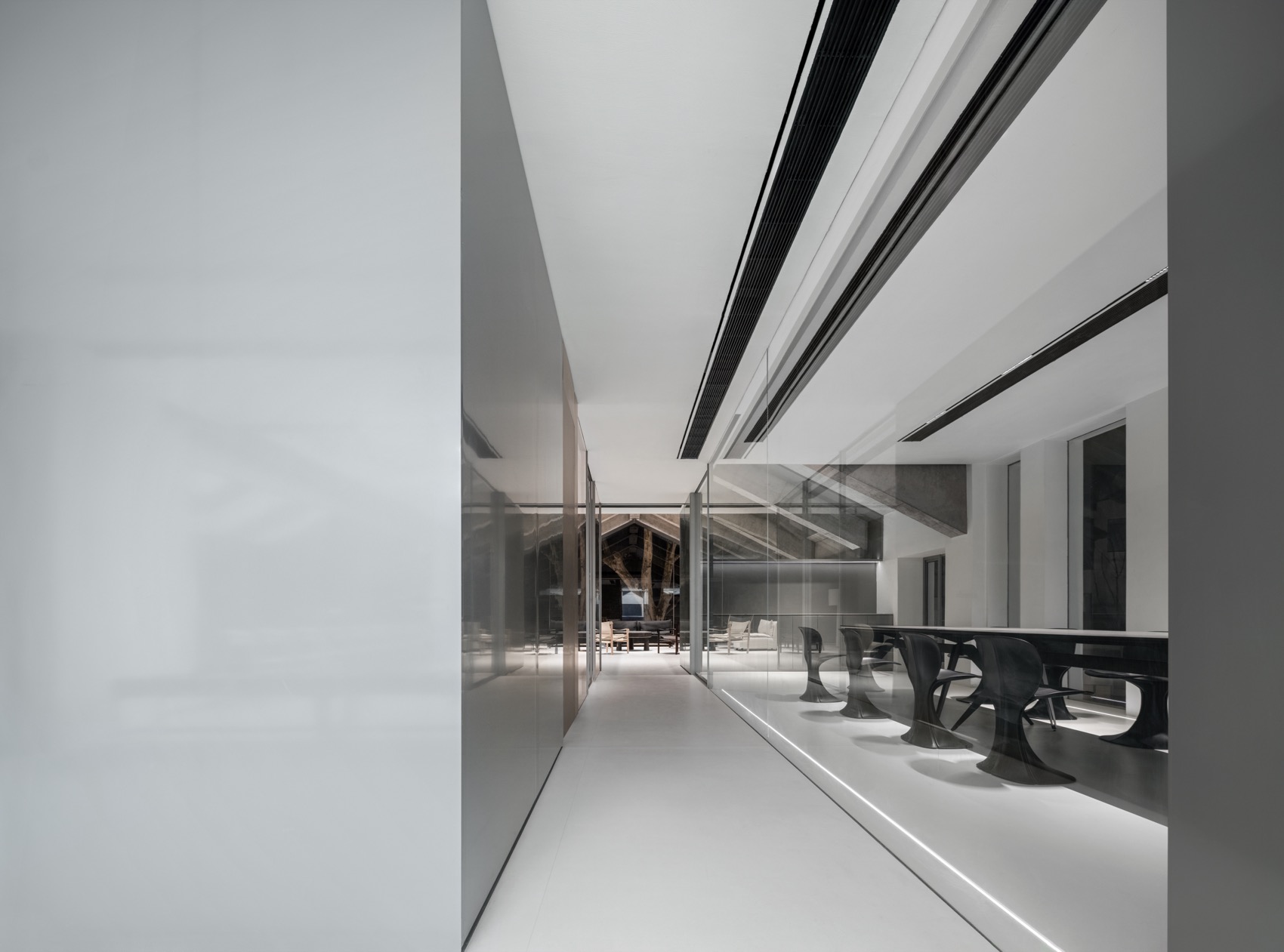
▼线性灯光与镜面界面延展空间深度,Linear lighting and reflective surfaces extend spatial depth
Project name:Fanchang North Station 1969 · Urban Lounge
Project type:Urban Public Service Facilities
Design:JIANGUO DESING
Contact e-mail:3552354932@qq.com
Design year:2023
Completion Year:2024
Leader designer & Team:JIANGUO DESING
Project location:1969Street,Fsnchang North Station,FanchangDistrict,Wuhu City,Anhui Provine
Gross built area: 710.69㎡
Photo credit: Jiangxi JiKe Media Co.,Ltd