超级理想建筑工作室,西安 / XL design atelier
01|五年之后,一次关乎场域的“对位” 01 | Five Years On: A Natural “Alignment” of Field
成立五年之际,「超级理想建筑事务所」完成了一次空间的物理迁移。 从原有的工作场地,转入西安长安区一处工业遗存改造的科技文创园。这并非刻意追求的“品牌升级”,而更像是一次关于工作状态的自然对位——随着团队设计逻辑的沉淀,我们需要一个更贴合当下实践状态的空间载体。
Marking our fifth anniversary, Super Ideal Architects has completed a physical relocation. Moving from our original workspace to a technology and cultural park converted from an industrial heritage site in Xi’an’s Chang’an District, this transition is less a calculated “brand upgrade” and more a natural alignment of our working state. As our design logic has matured, we required a spatial vessel that better resonates with our current practice.
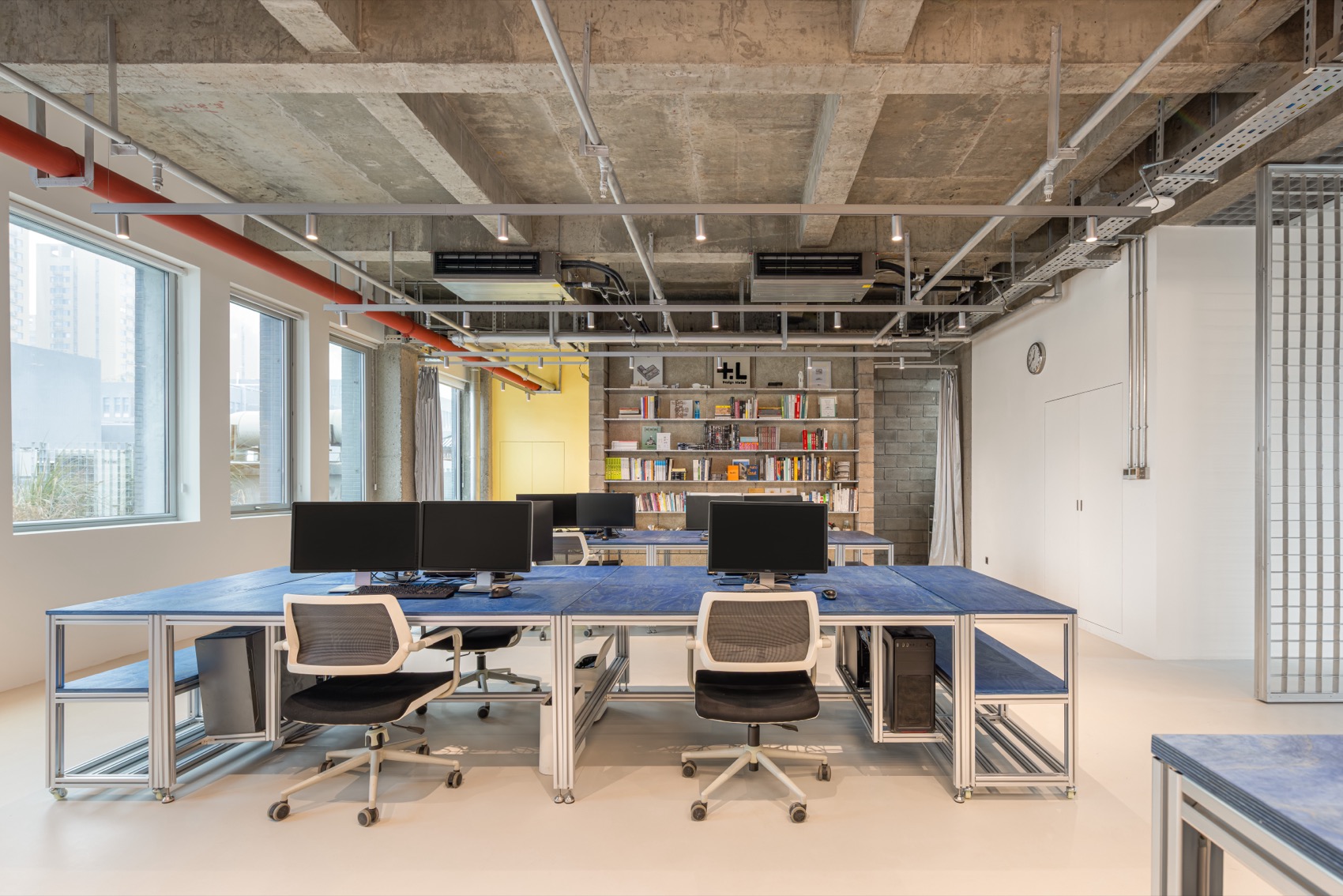
▼工业结构下的共享办公场景,Shared working space beneath the industrial structure
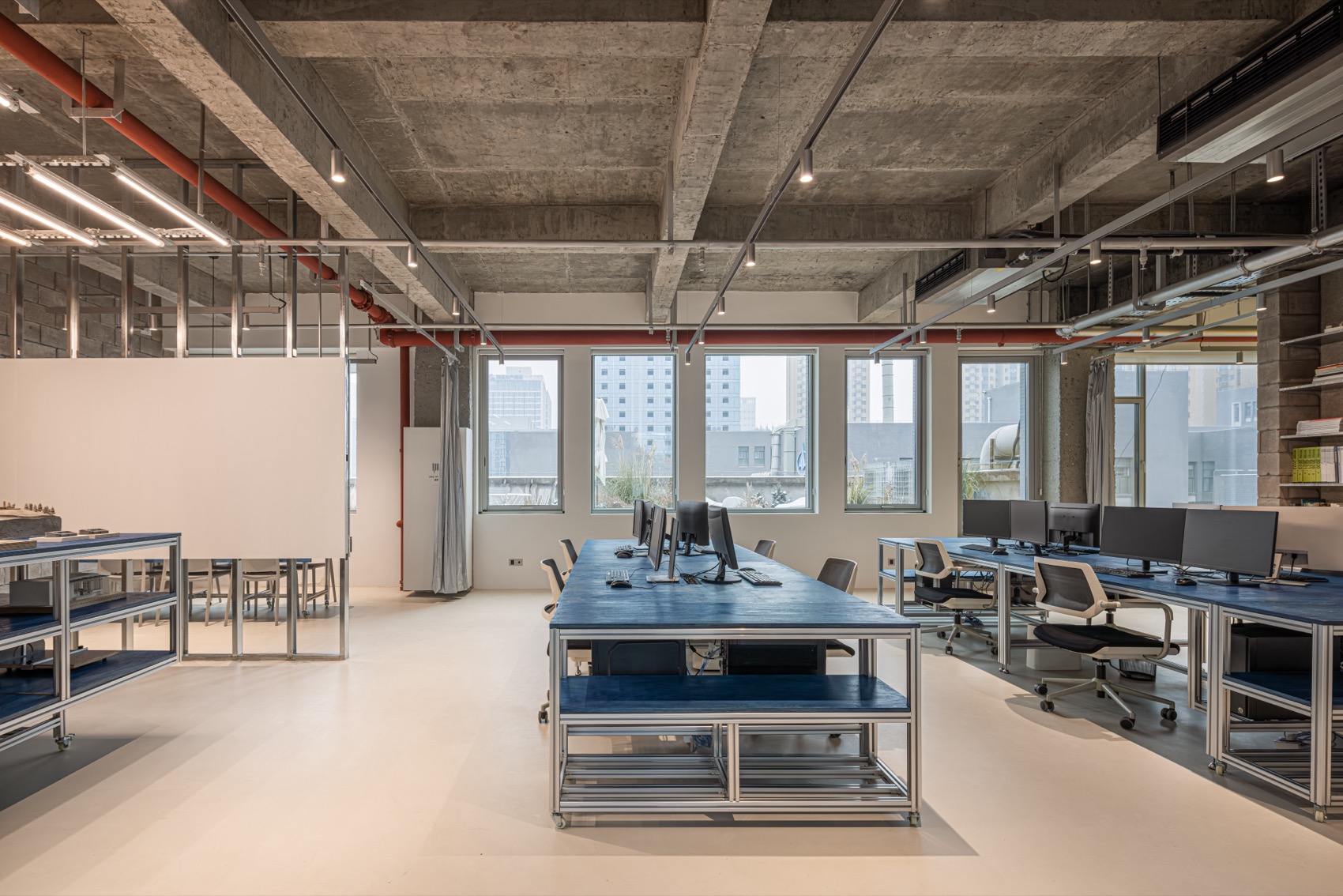
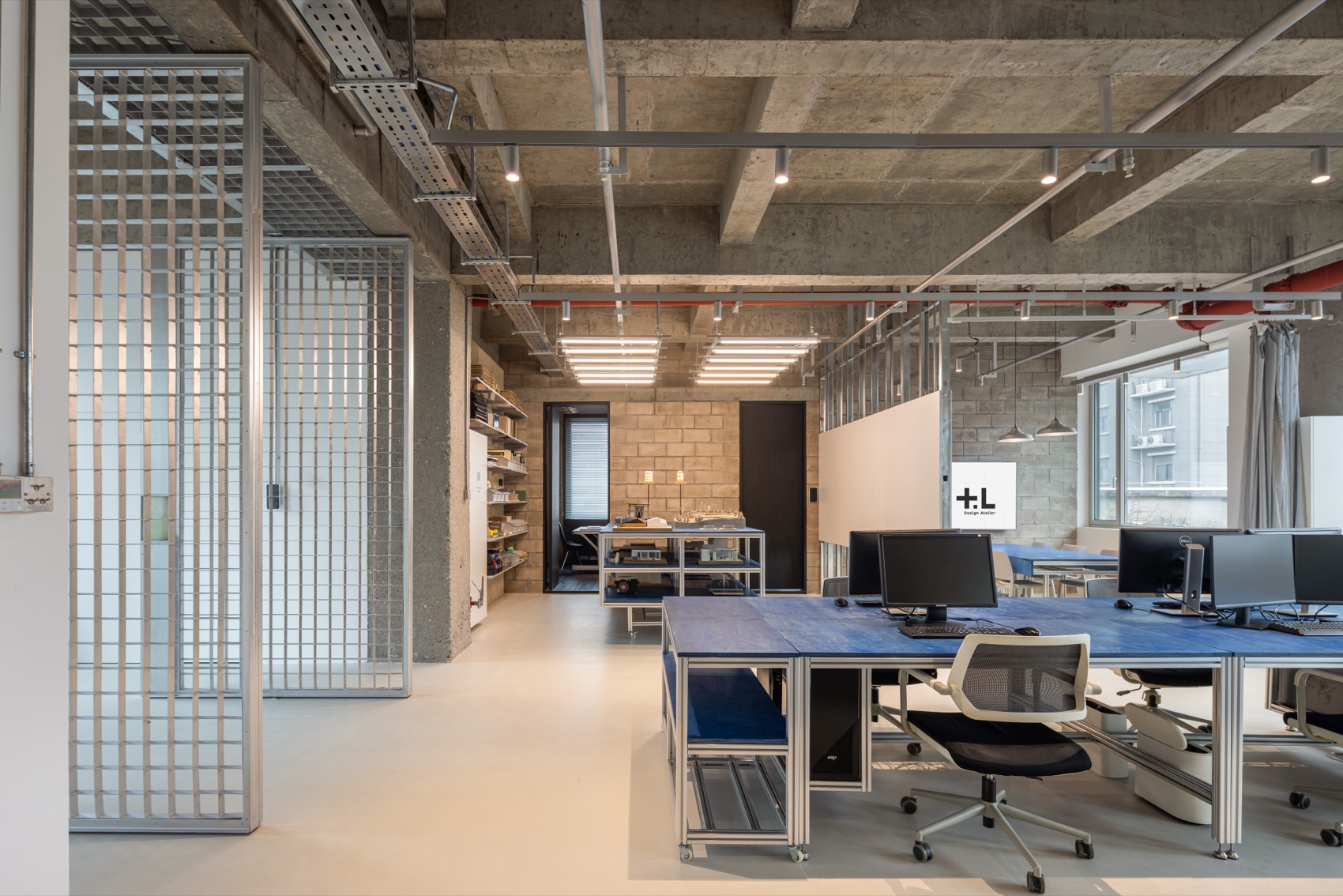
新场地由多栋低层工业建筑构成,整体环境开放且克制。这种保留了明确结构逻辑与“未完成感”的场域,与我们一贯追求的设计思考达成了某种默契。
The new site consists of several low-rise industrial buildings, offering an environment that is both open and restrained. This field—preserving clear structural logic and a sense of being “unfinished”—achieves a certain tacit understanding with our long-standing design philosophy.
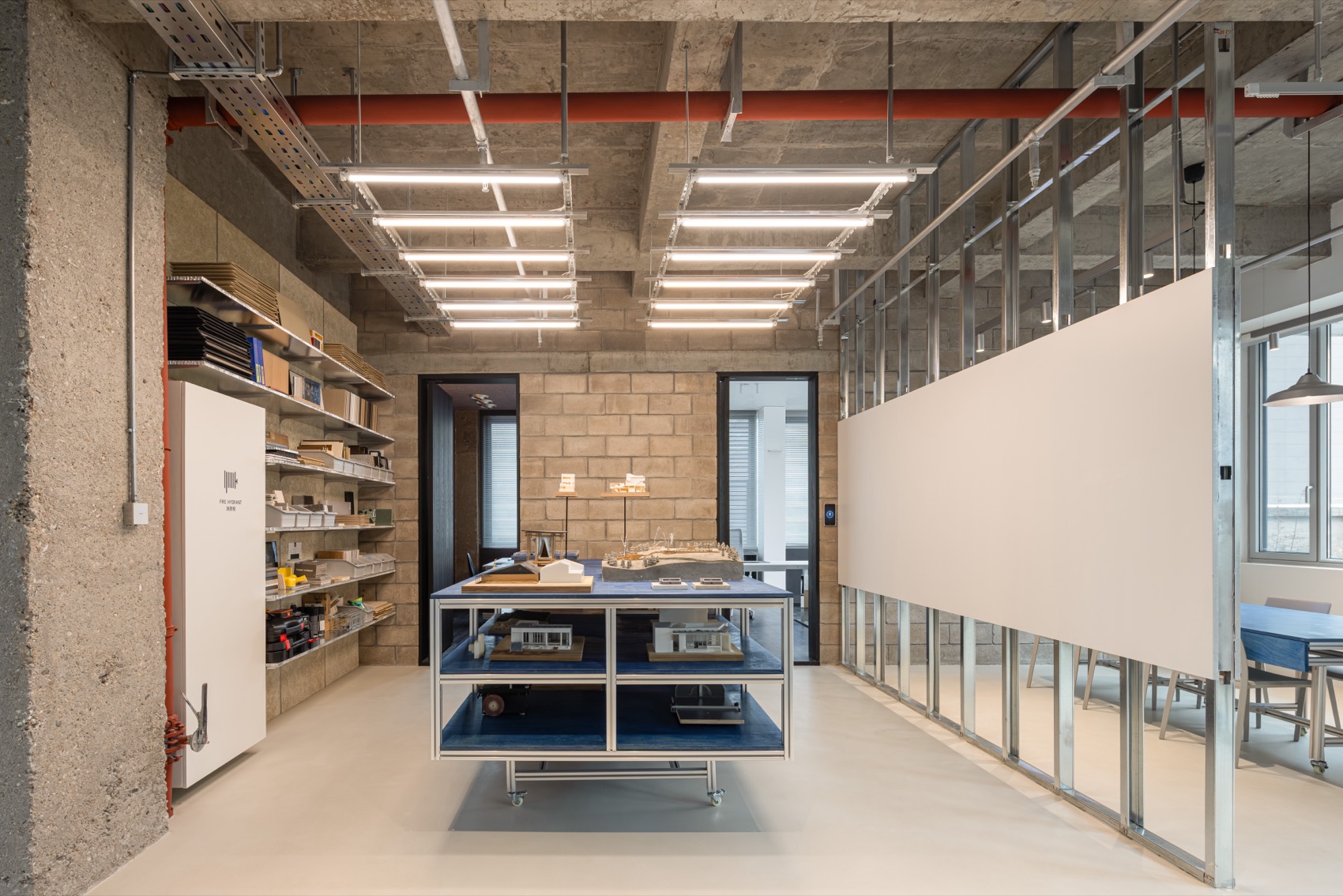
▼开放展墙与办公区域关系,Relationship between display wall and office area
02|平面解构:从功能分区,向“叙事共存”回归02 | Spatial Deconstruction: Returning to “Coexistent Narratives”
在空间组织上,我们试图消解办公空间中常见的等级边界,转向一种“共存”的流线叙事。
In terms of spatial organization, we sought to dissolve the hierarchical boundaries common in traditional offices, shifting towards a narrative of “coexistence.”
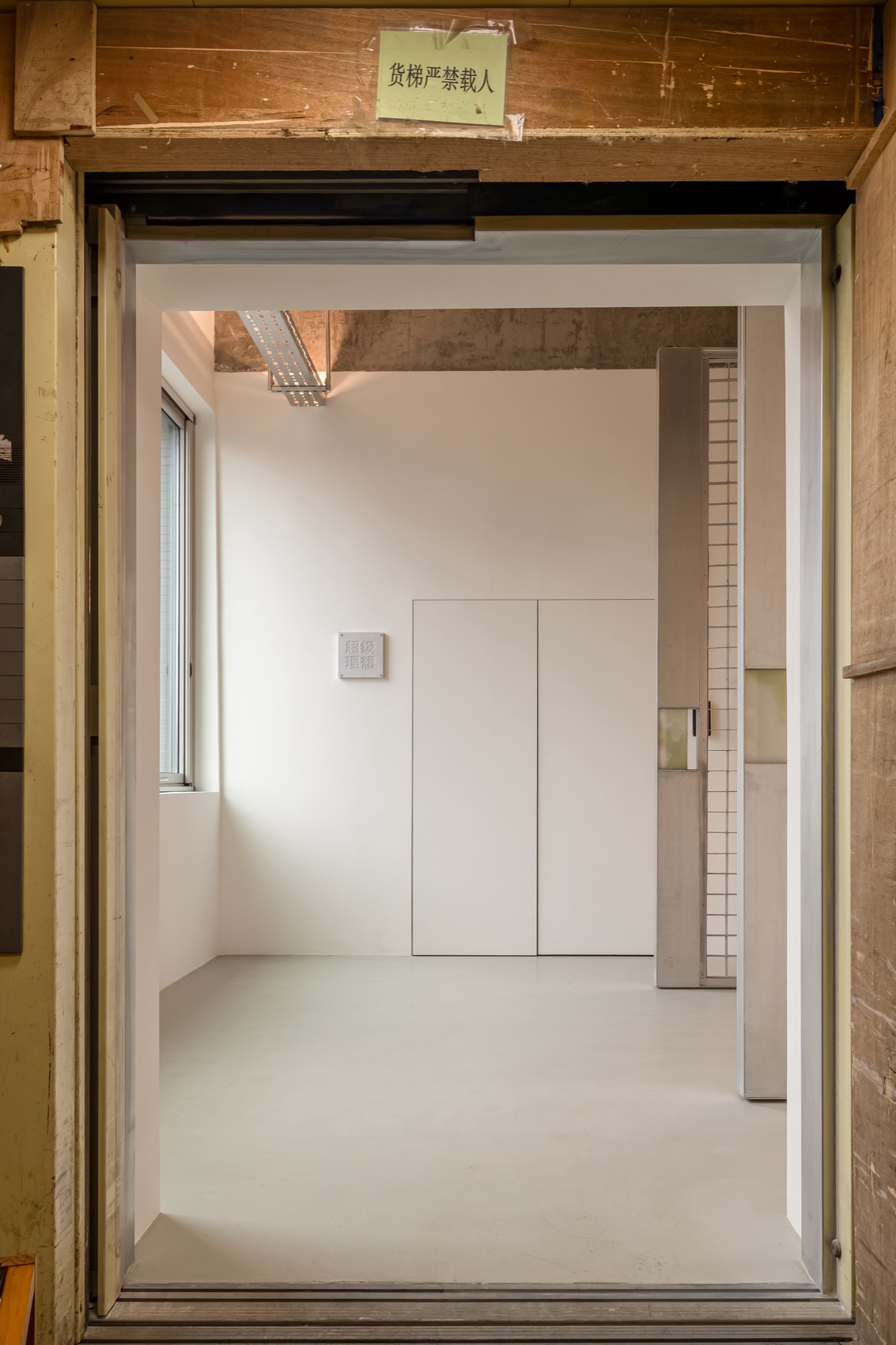
▼保留原始货梯入口的空间改造,
Spatial renovation preserving the original freight elevator entrance
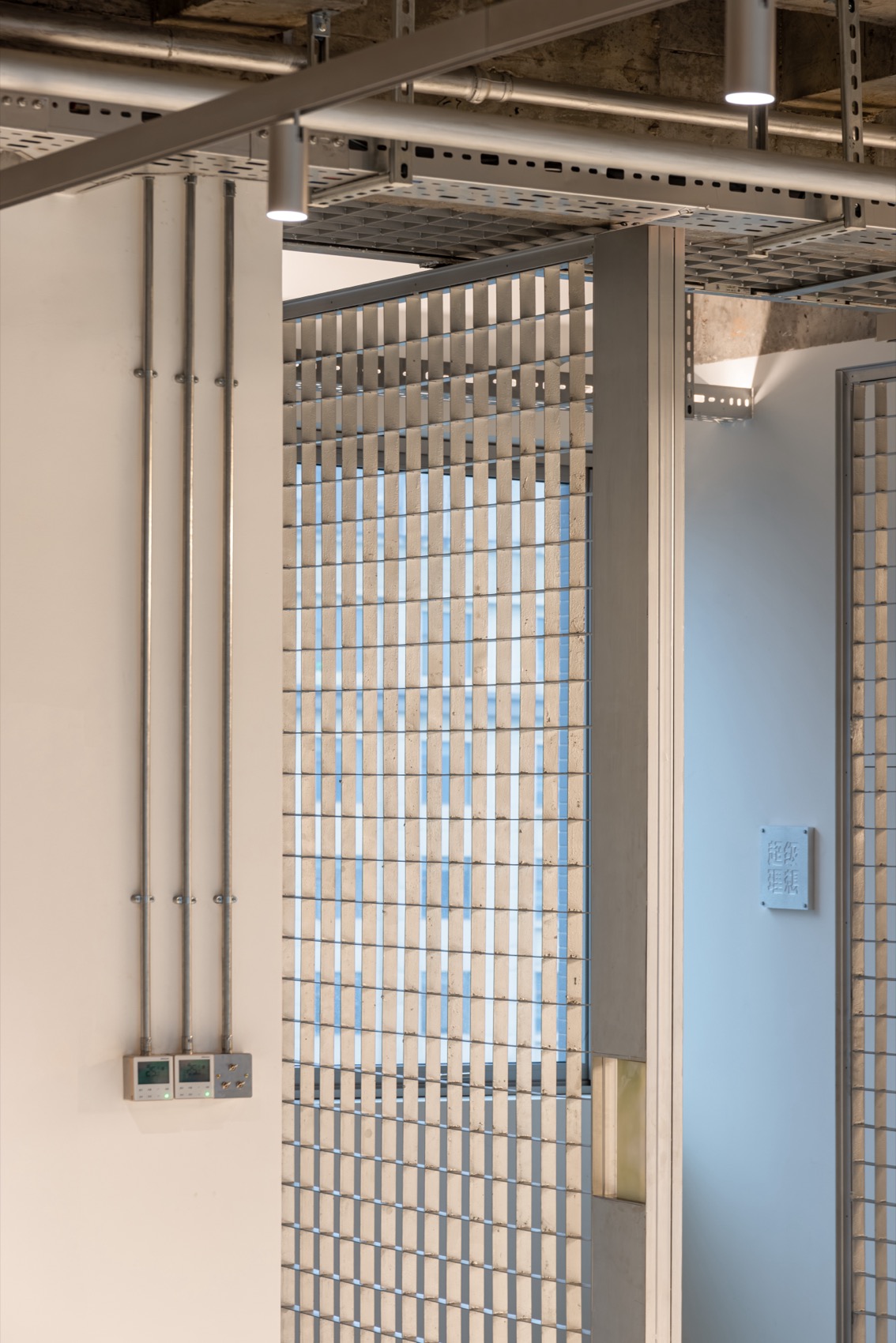
▼轻质隔断与墙面标识,
Lightweight partitions and wall signage
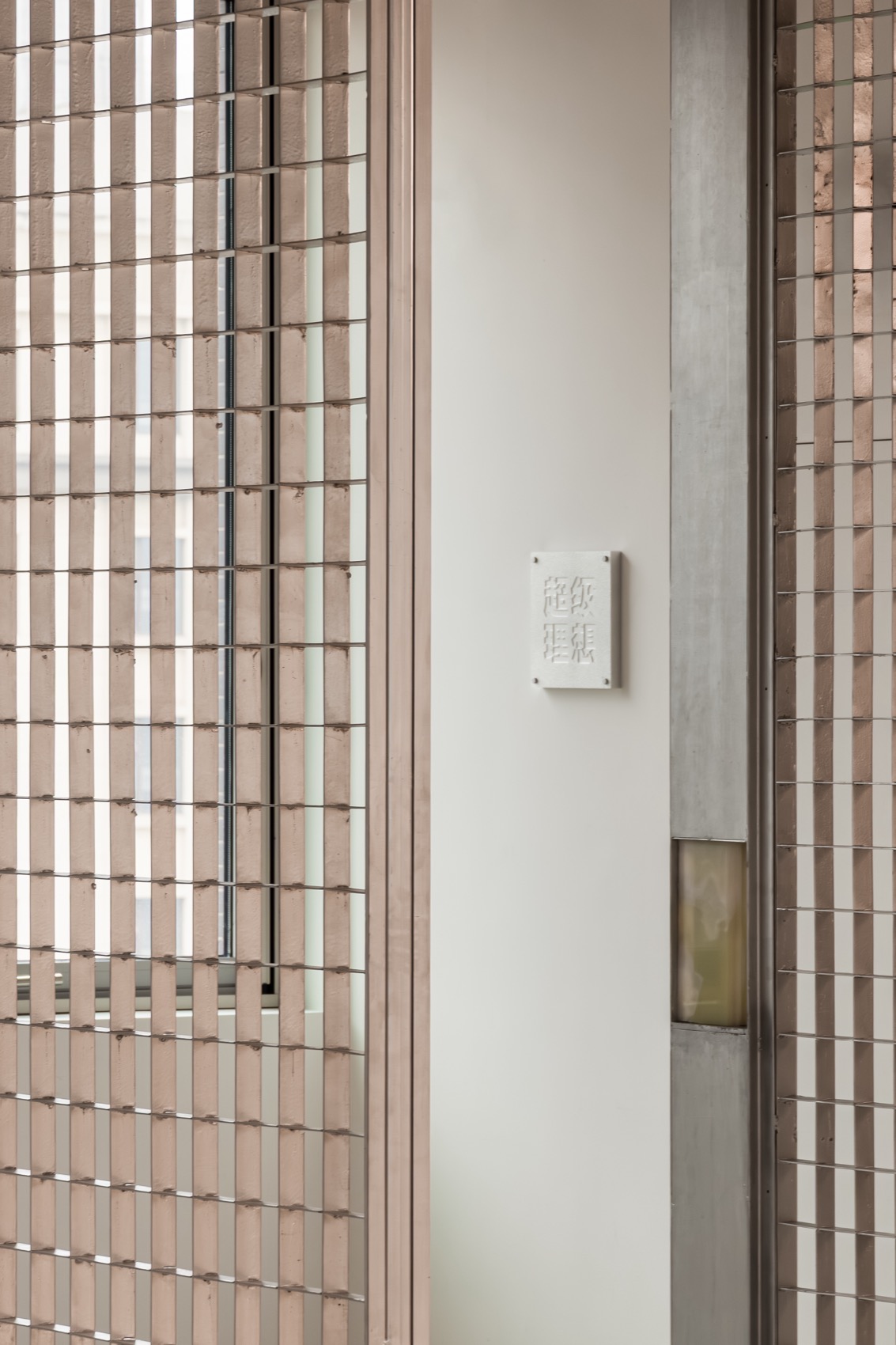
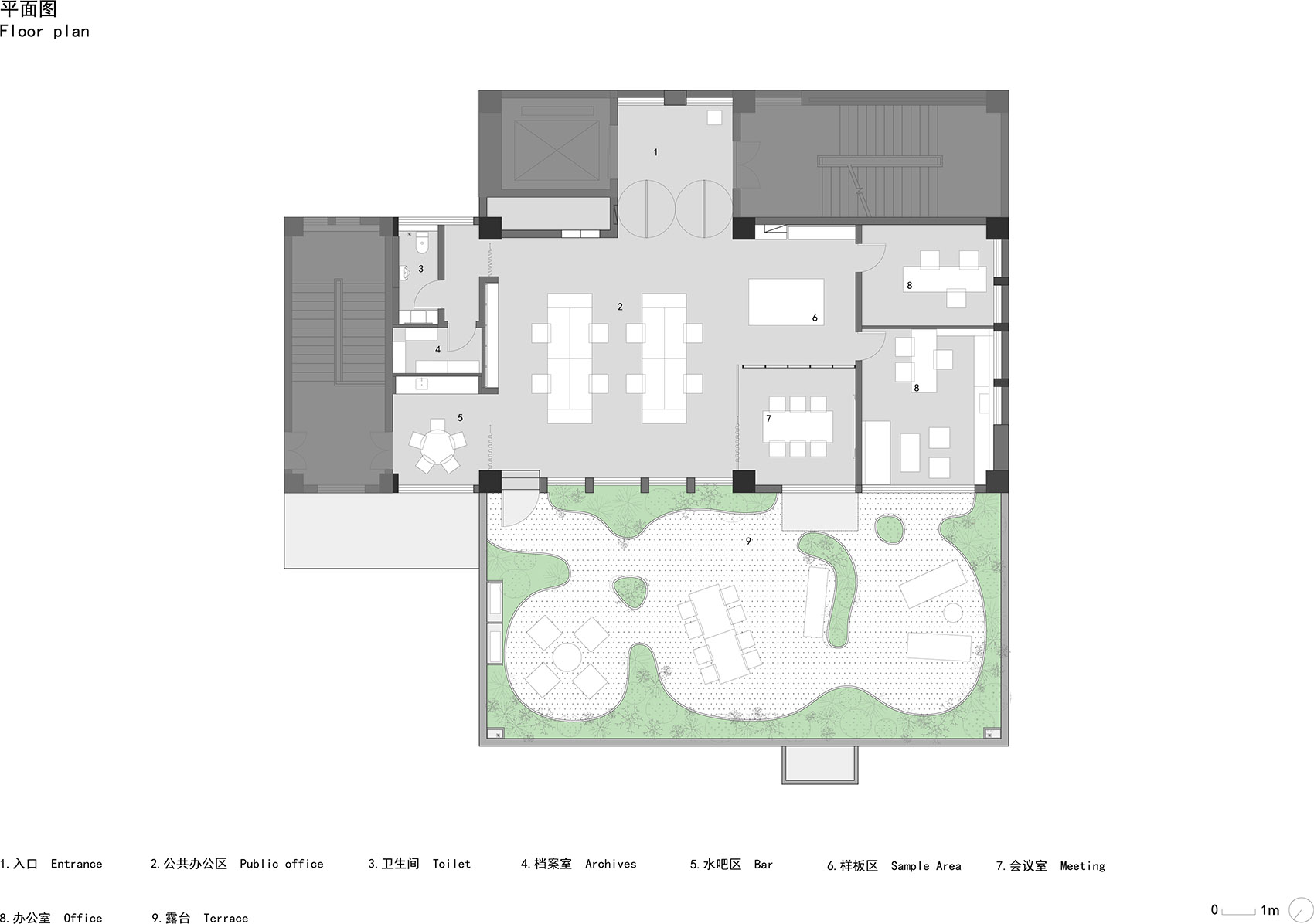
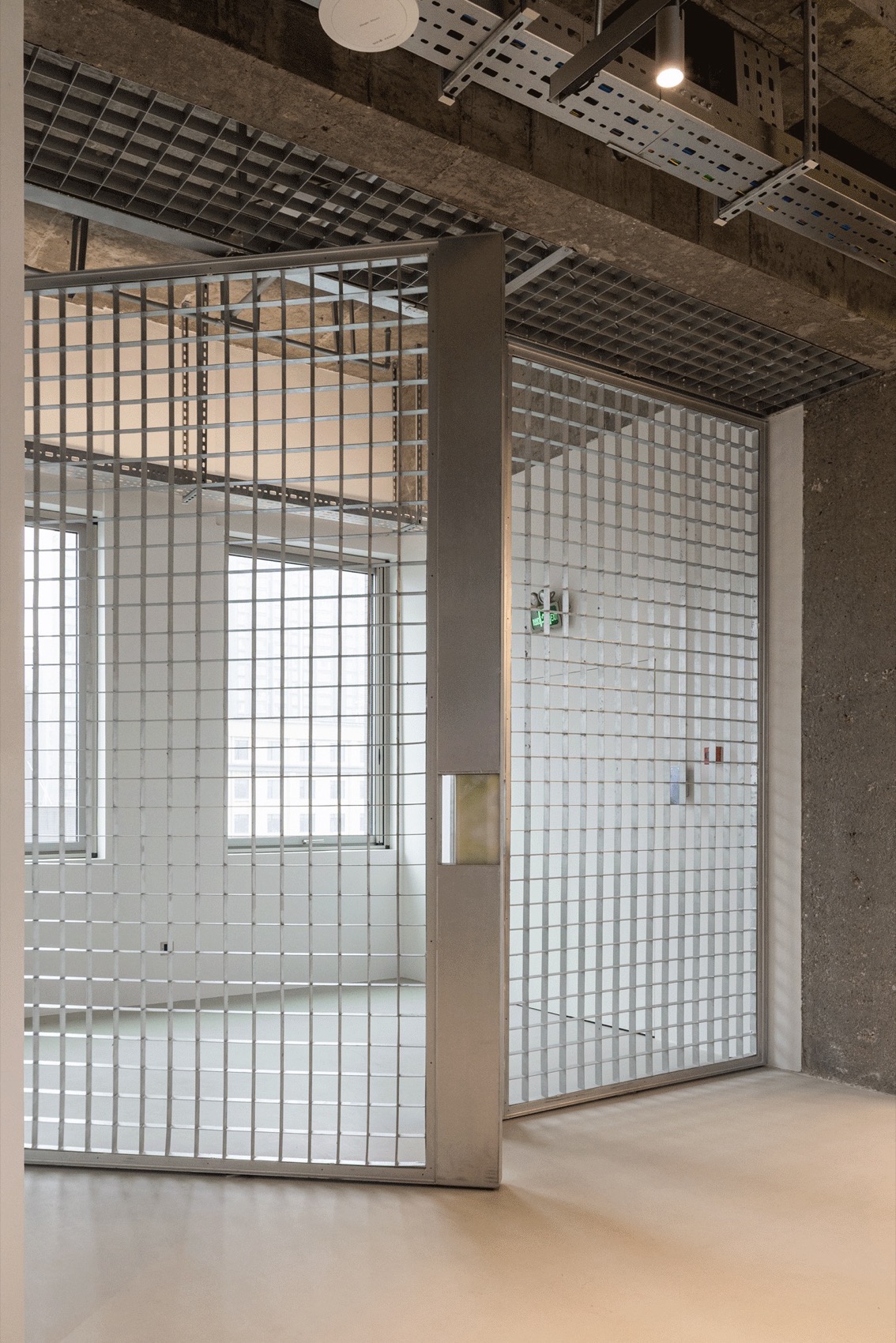
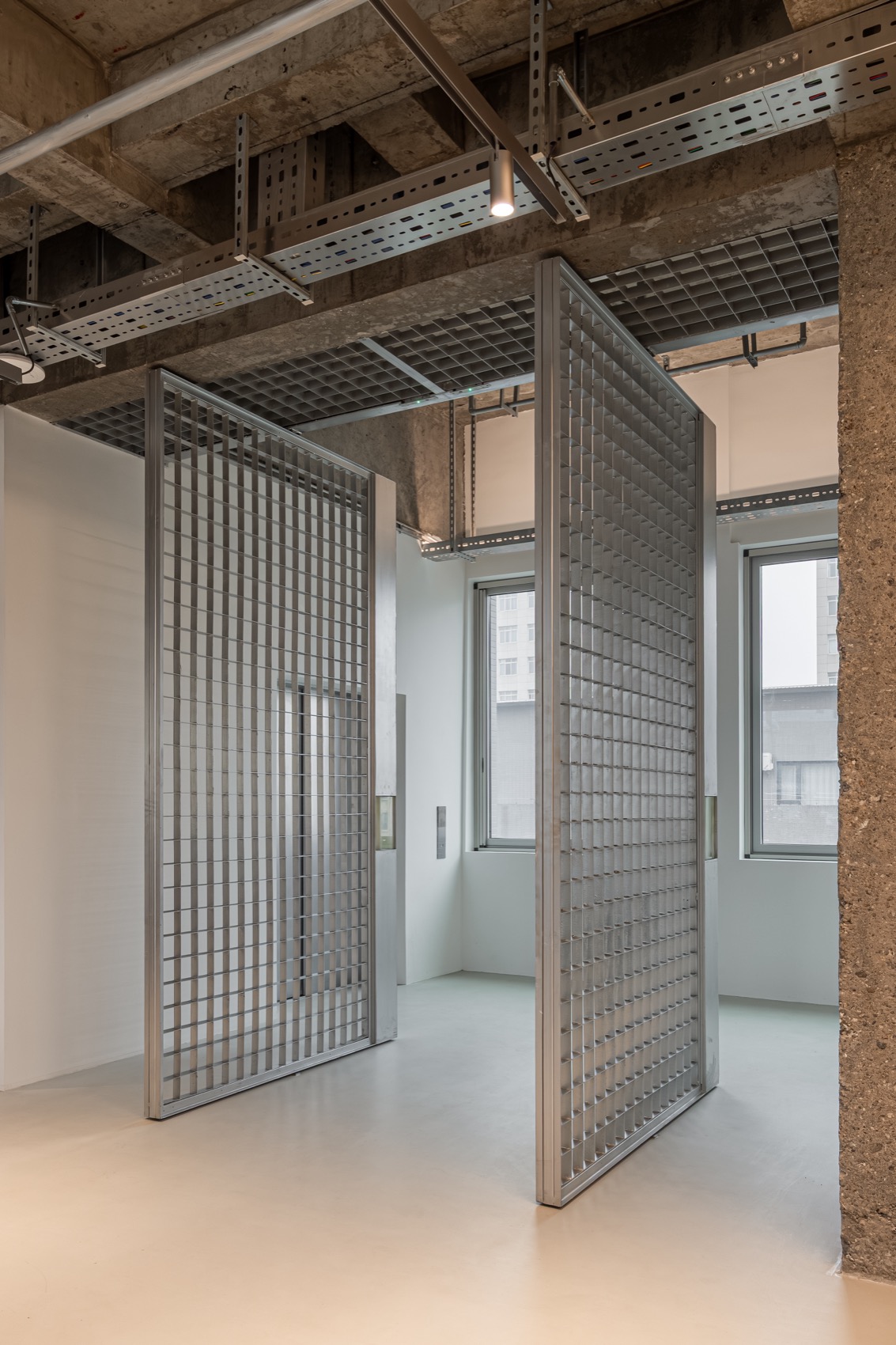
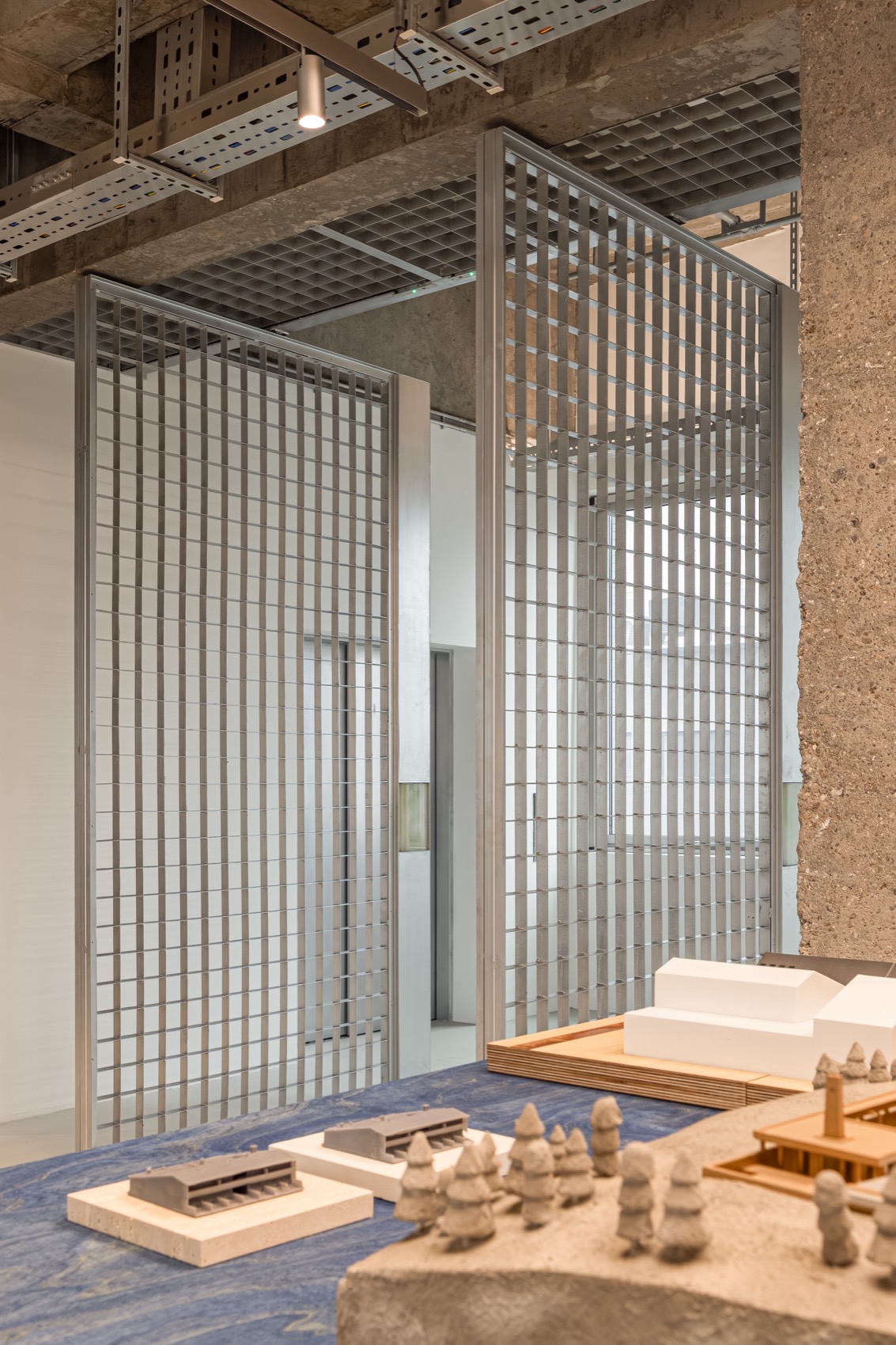
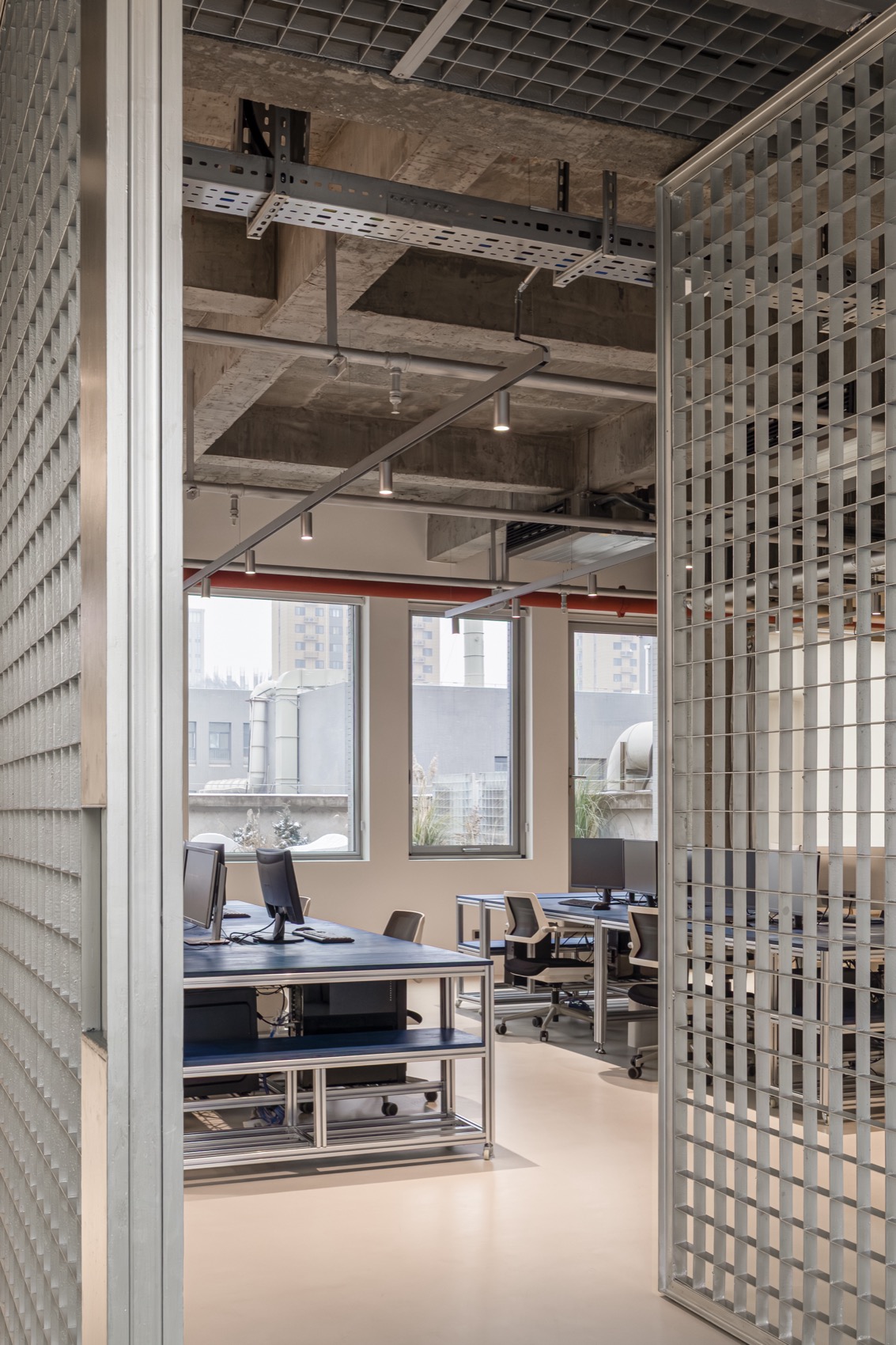
入口由两扇钢制中轴门界定,在提供必要边界感的同时,最大程度保留了视觉的南北通透。进入内部,收纳与服务功能被极简地整合至两侧,中心腹地被完整释放。办公、模型制作、材料研究与书籍陈列被并置在同一场域,不再通过物理墙体硬性划分,而是随着使用状态与时间自然更迭。这种方式在提升协作效率的同时,也带来了一种更直觉、更扁平的交流可能。
The entrance is defined by two steel center-pivot doors, providing a necessary sense of boundary while maximizing north-south visual transparency. Upon entering, storage and service functions are minimally integrated into the sides, completely liberating the central heart of the space. Workstations, model-making, material research, and book displays are juxtaposed within the same field. No longer strictly divided by physical walls, they shift naturally with the state of use and time. Beyond efficiency, this approach fosters a more intuitive, flattened potential for communication.
▼可旋转钢制中轴门与工业空间,
Pivoting steel center-pivot doors within the industrial space
03|透明界面:让思考过程,成为空间的景观03 | Transparent Interfaces: The Design Process as Landscape
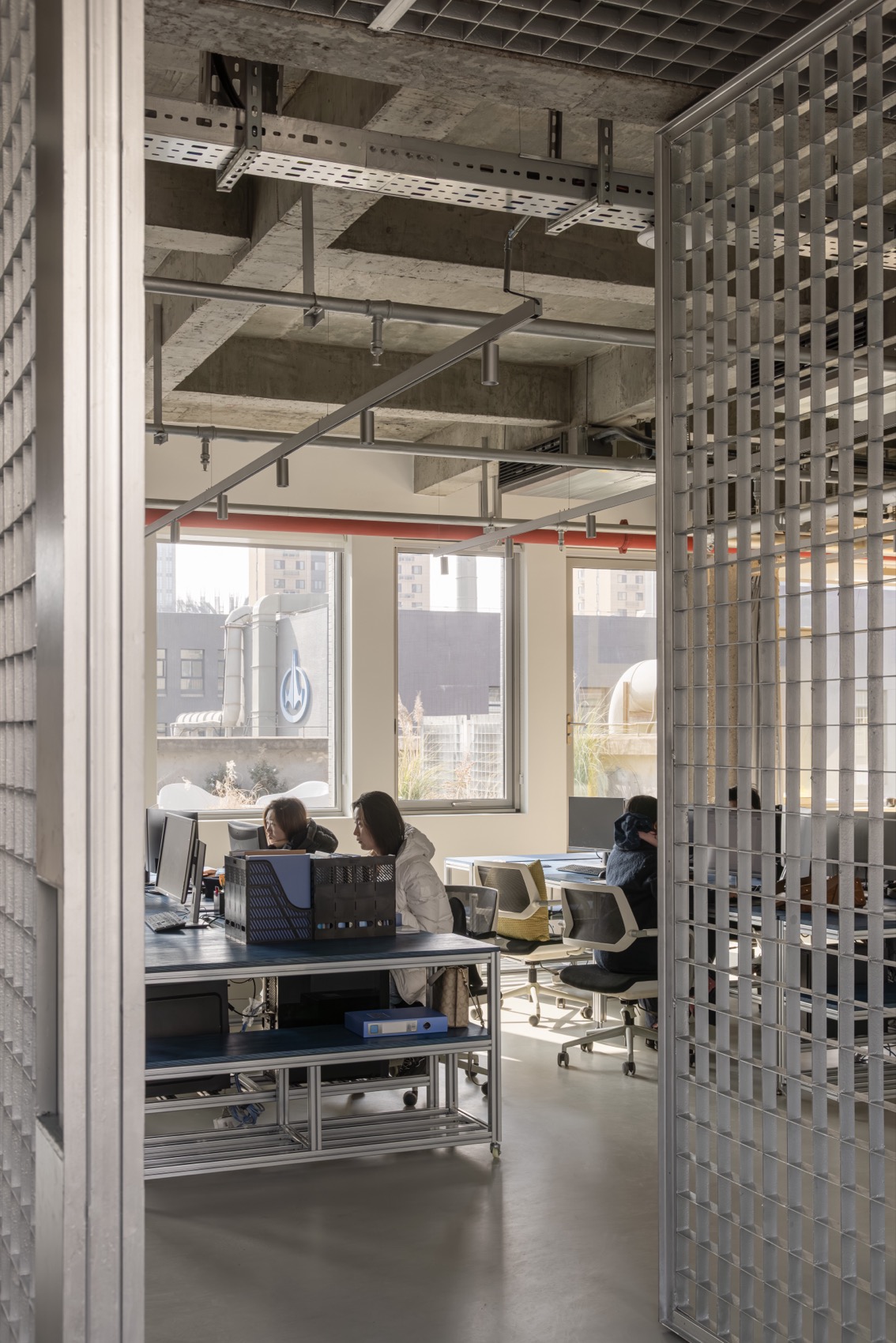
我们以轻盈的移动拉帘与开放展墙替代了固定隔断,使空间在不同项目阶段可以迅速切换。
We replaced fixed partitions with lightweight movable curtains and open display walls, allowing the space to switch rapidly between different project phases.
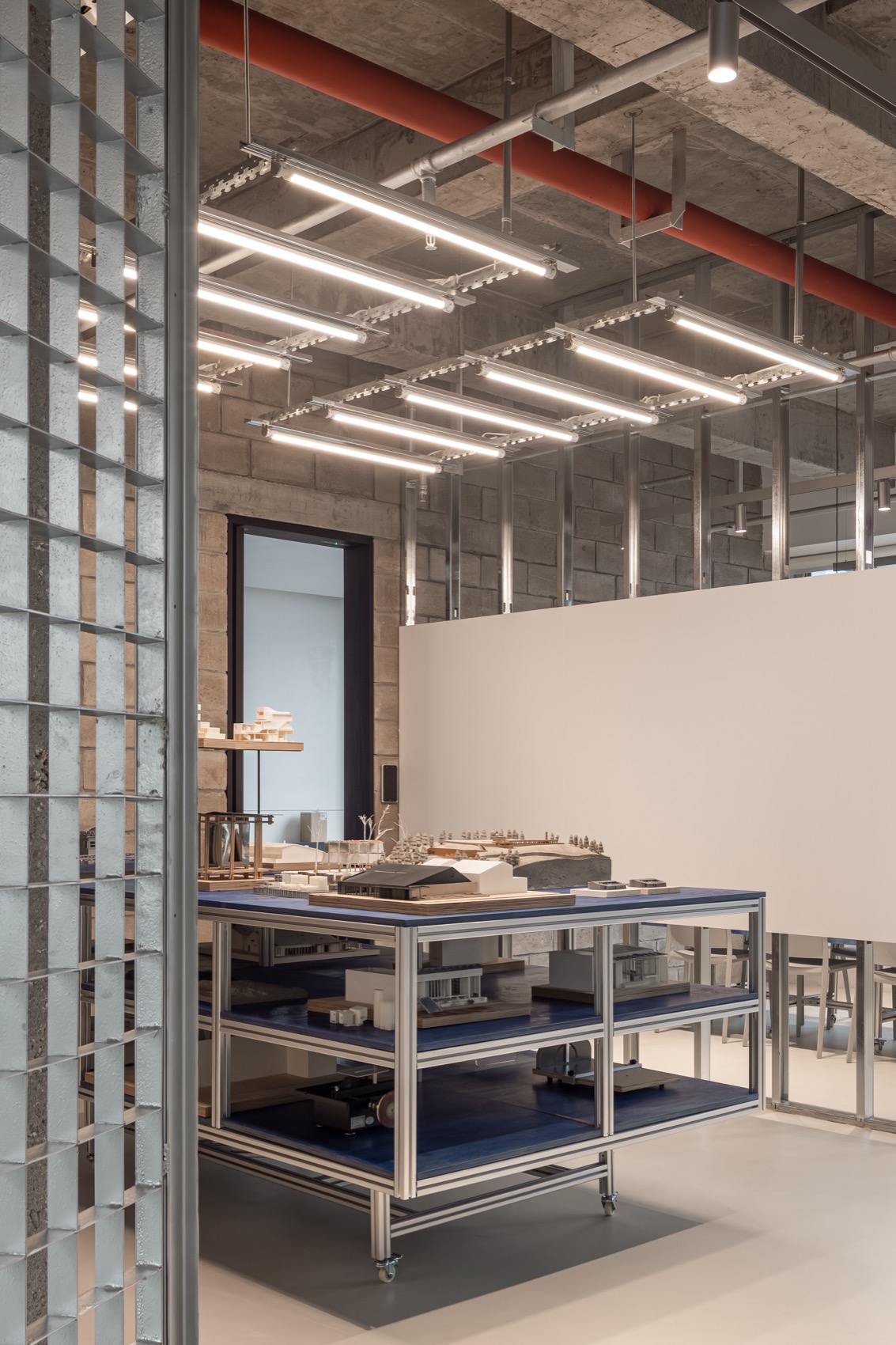
▼半开放隔断中的展示空间,Display space within semi-open partitions
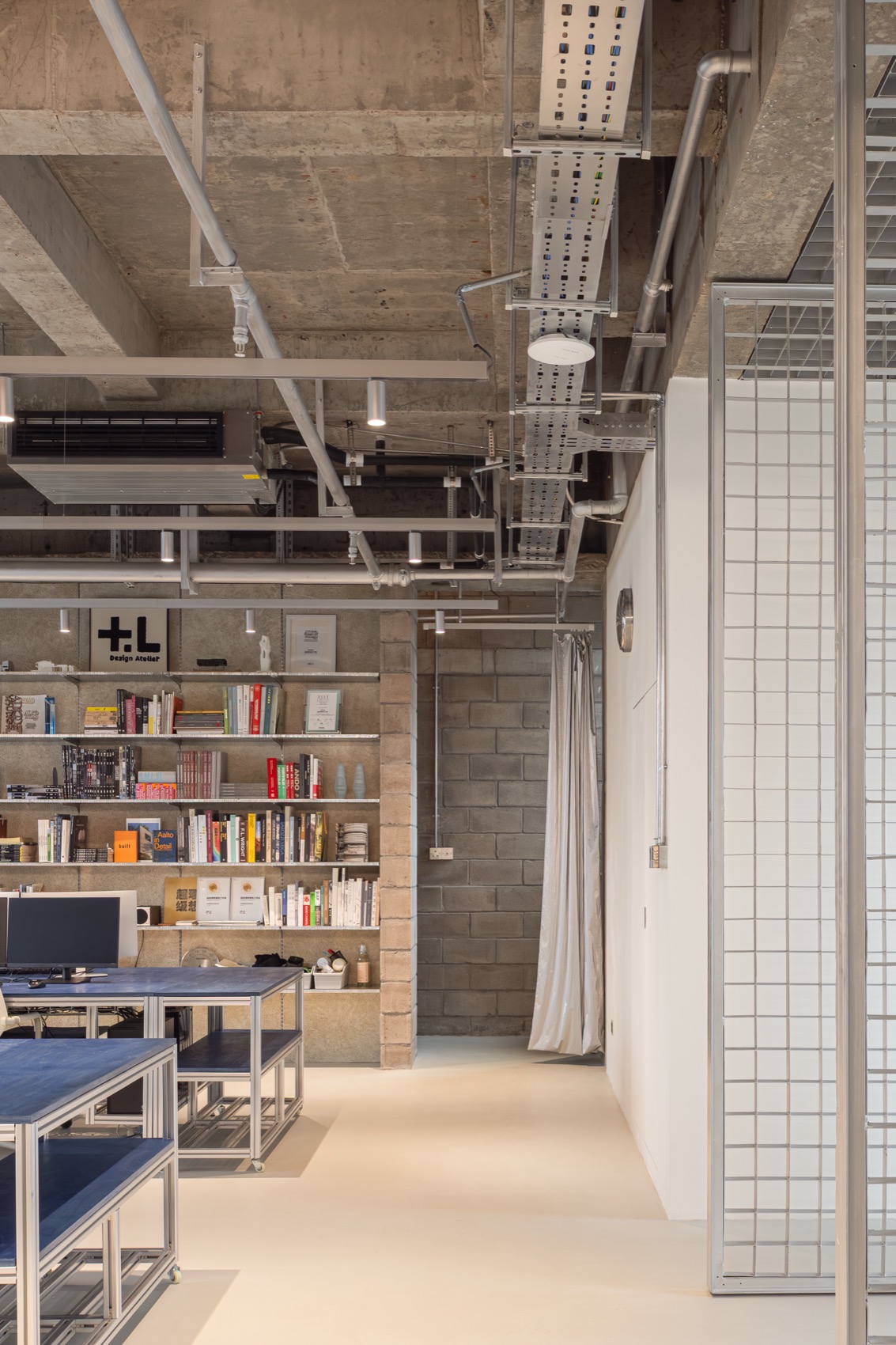
▼书架界面与办公动线,Bookshelf interface and office circulation
对我们而言,空间的“完成度”远不及“过程的透明度”重要。模型不再被收纳于角落,手稿也不仅局限于屏幕,它们共同构成了一套开放的展示系统。这种状态在某种程度上回应了建筑学时期的 Studio 经验:一个以过程为导向、强调即时反馈与思考流动性的原型空间。这种透明感,也是我们与客户建立专业信任的真实底色。
▼办公室轴测图,Office axonometric diagram
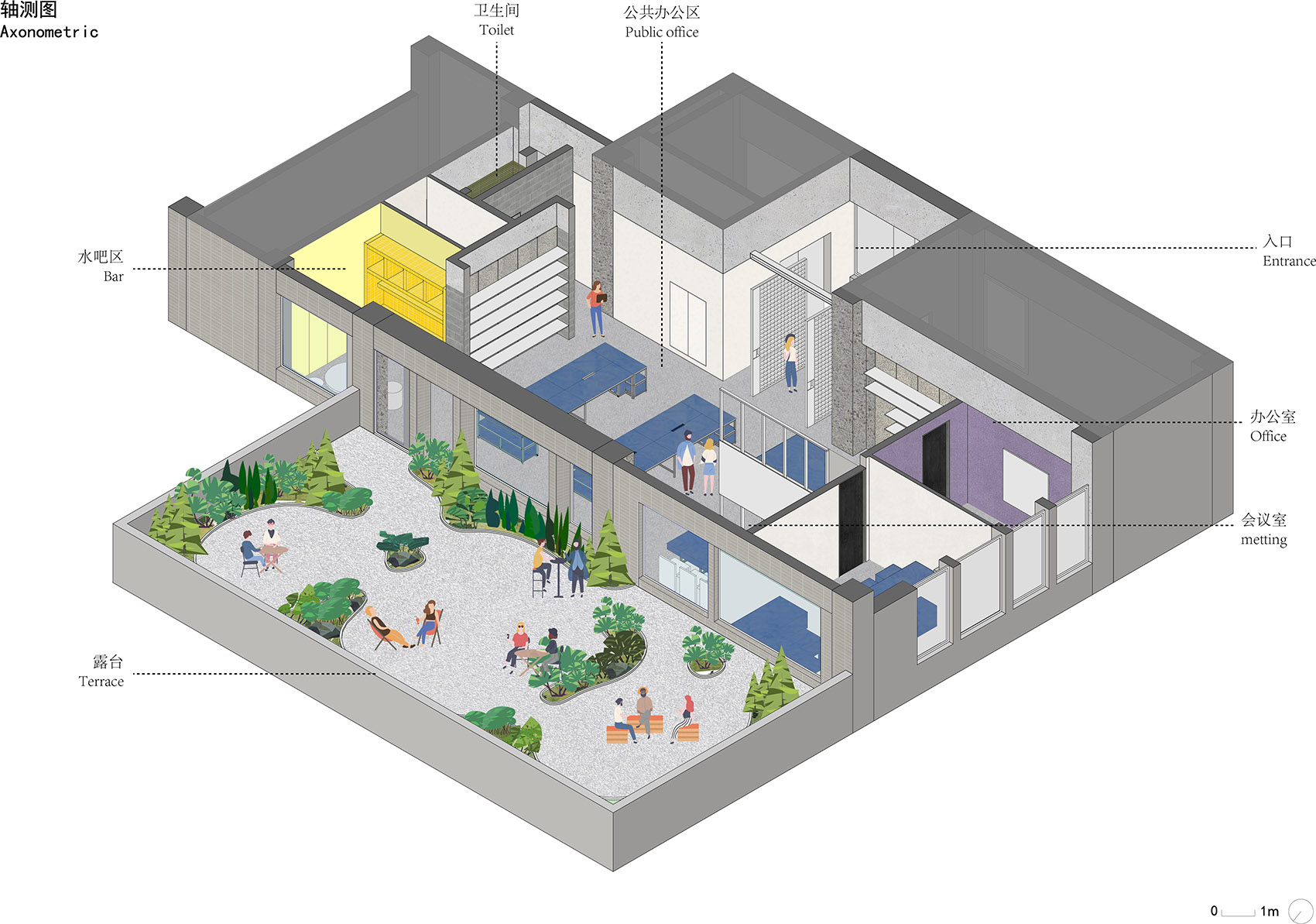
For us, the “completeness” of a space is far less vital than the “transparency of the process.” Models are no longer tucked into corners, and sketches are not confined to screens; together, they form an open display system. In many ways, this echoes the Studio experience of architecture school—a spatial prototype oriented toward process, emphasizing immediate feedback and the fluidity of thought. This transparency serves as the authentic foundation for building professional trust with our clients.
▼开放会议区与共享办公空间,Open meeting area and shared workspace
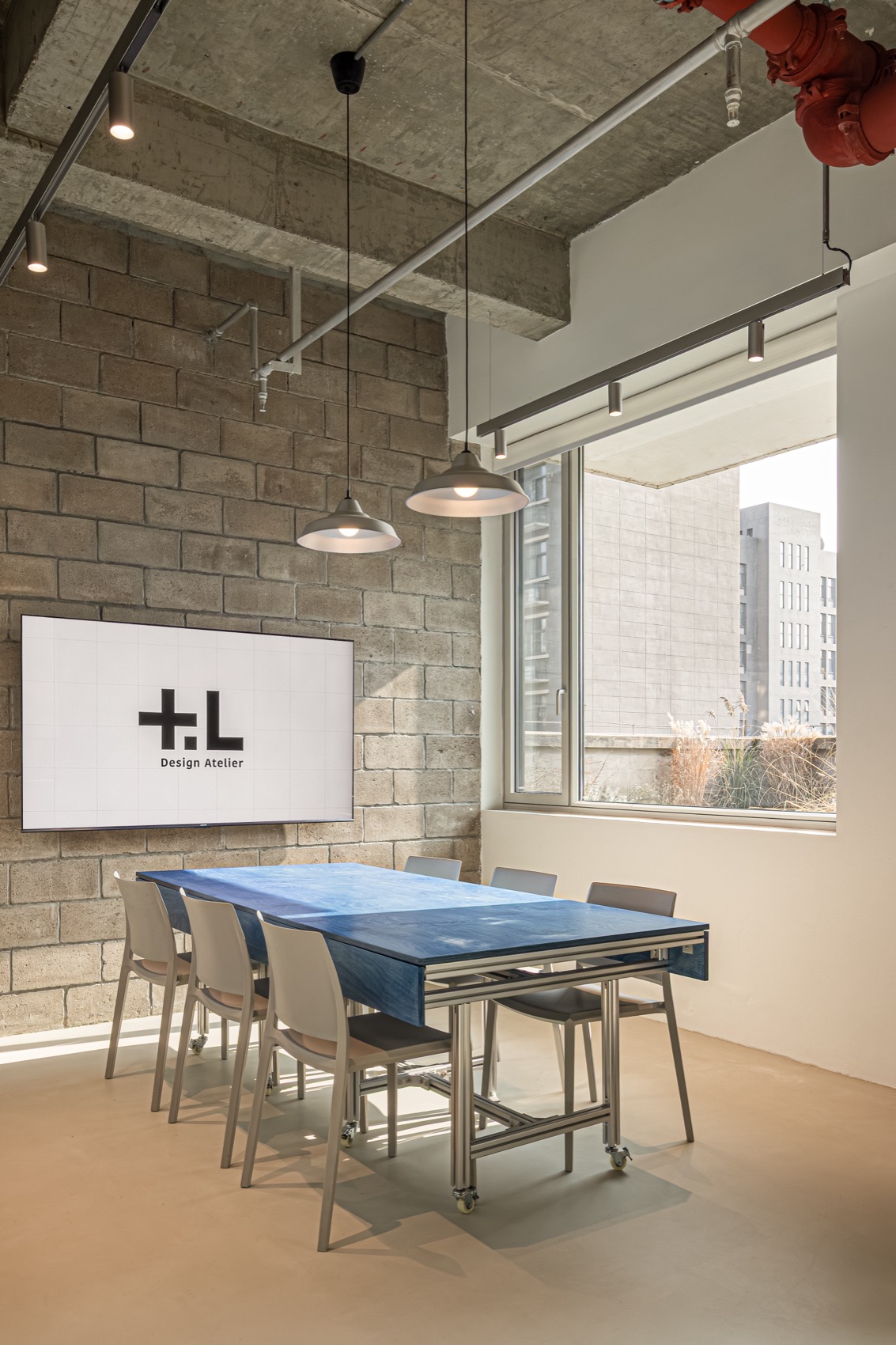
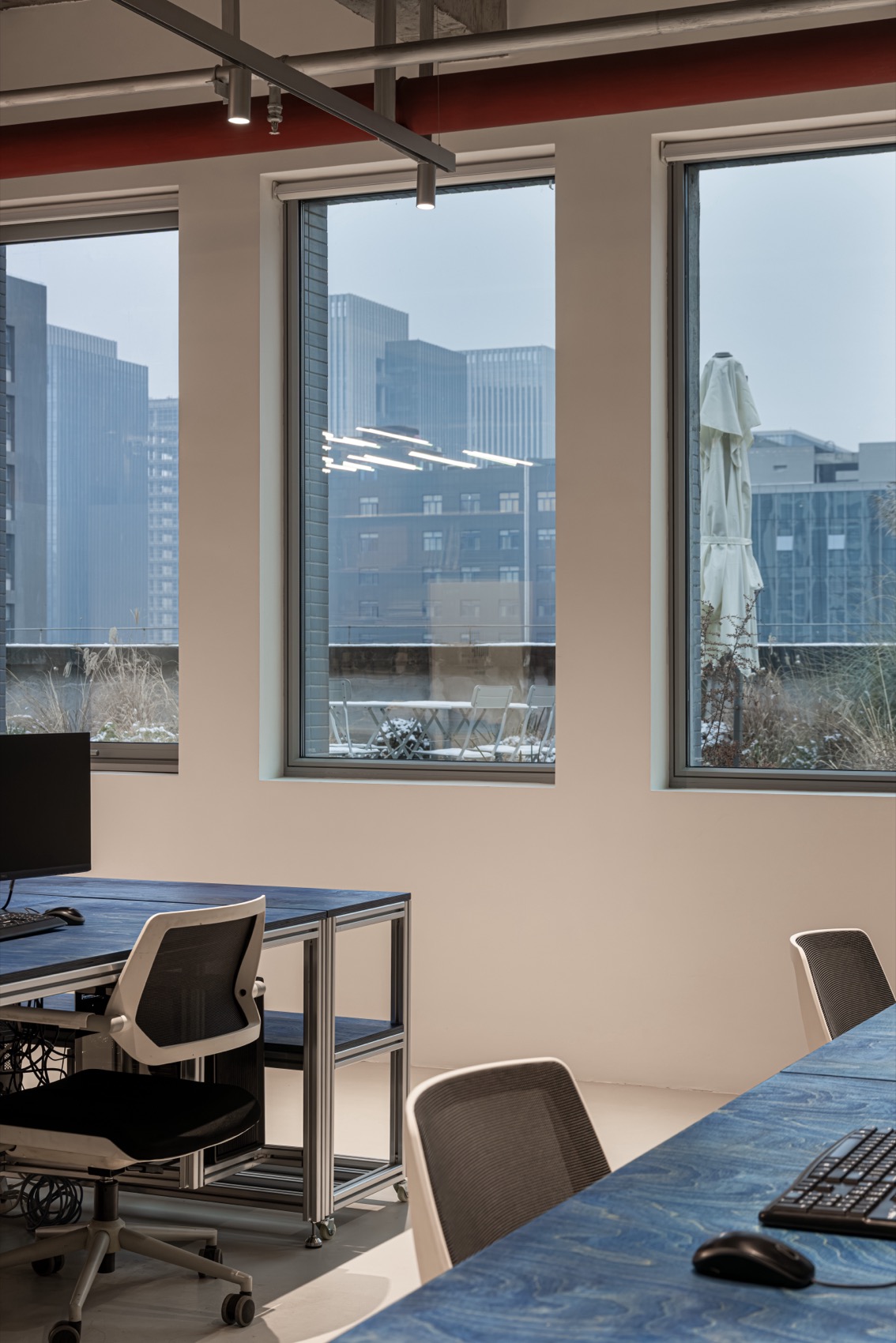
04|材料诚实:在基础构件中,捕捉构造的知觉04 | Material Honesty: Capturing Tectonic Perception in Basic Components
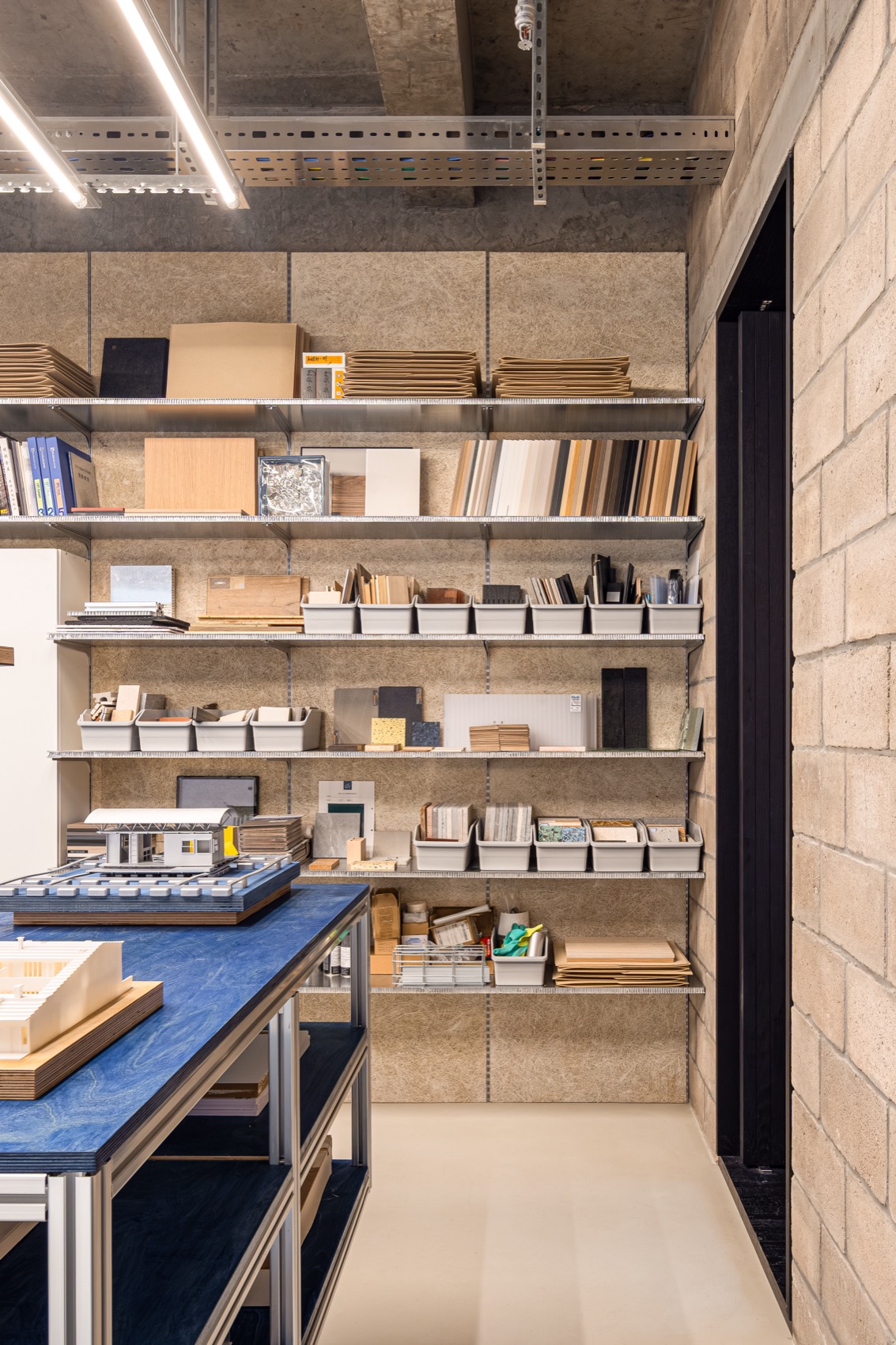
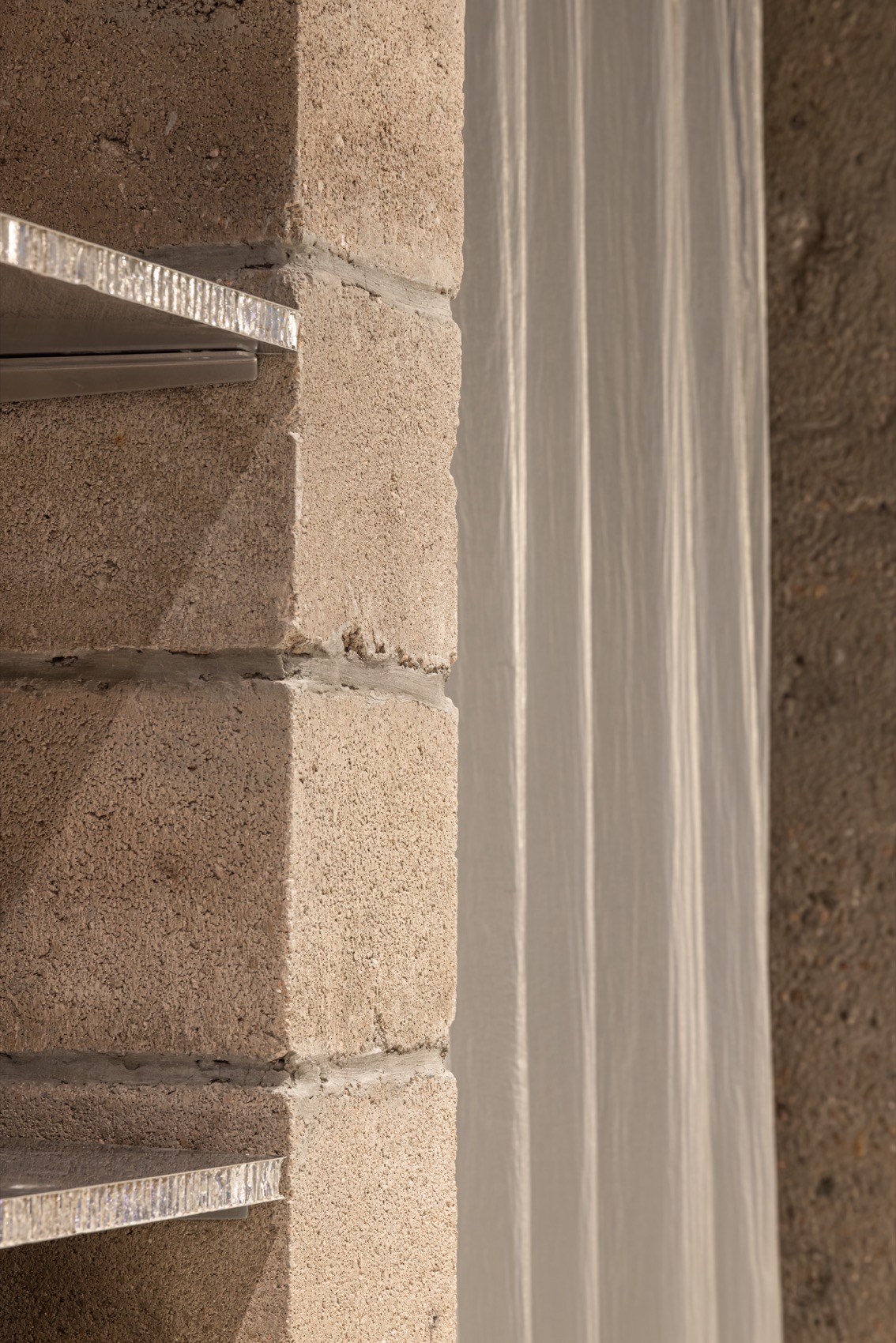
在材料选择上,我们刻意保持克制,专注于基础建筑材料的直接表达。 隔墙采用裸露的空心砖,书架背景选用木丝板,层板则由蜂窝铝板组合完成。在特定的私密区域,我们尝试将灰紫色地毯进行“上墙”处理,利用材质的包裹感围合出静谧的会客空间。
We exercised deliberate restraint in material selection, focusing on the direct expression of fundamental building elements. The partitions use exposed hollow bricks, the bookshelf backdrops are wood-wool boards, and the shelving is composed of honeycomb aluminum panels. In specific private zones, we experimented with “wall-mounted” gray-purple carpeting, utilizing the material’s sense of envelopment to create a quiet, secluded meeting space.
▼工业背景下的水吧与阅读区,Pantry and reading area within the industrial setting
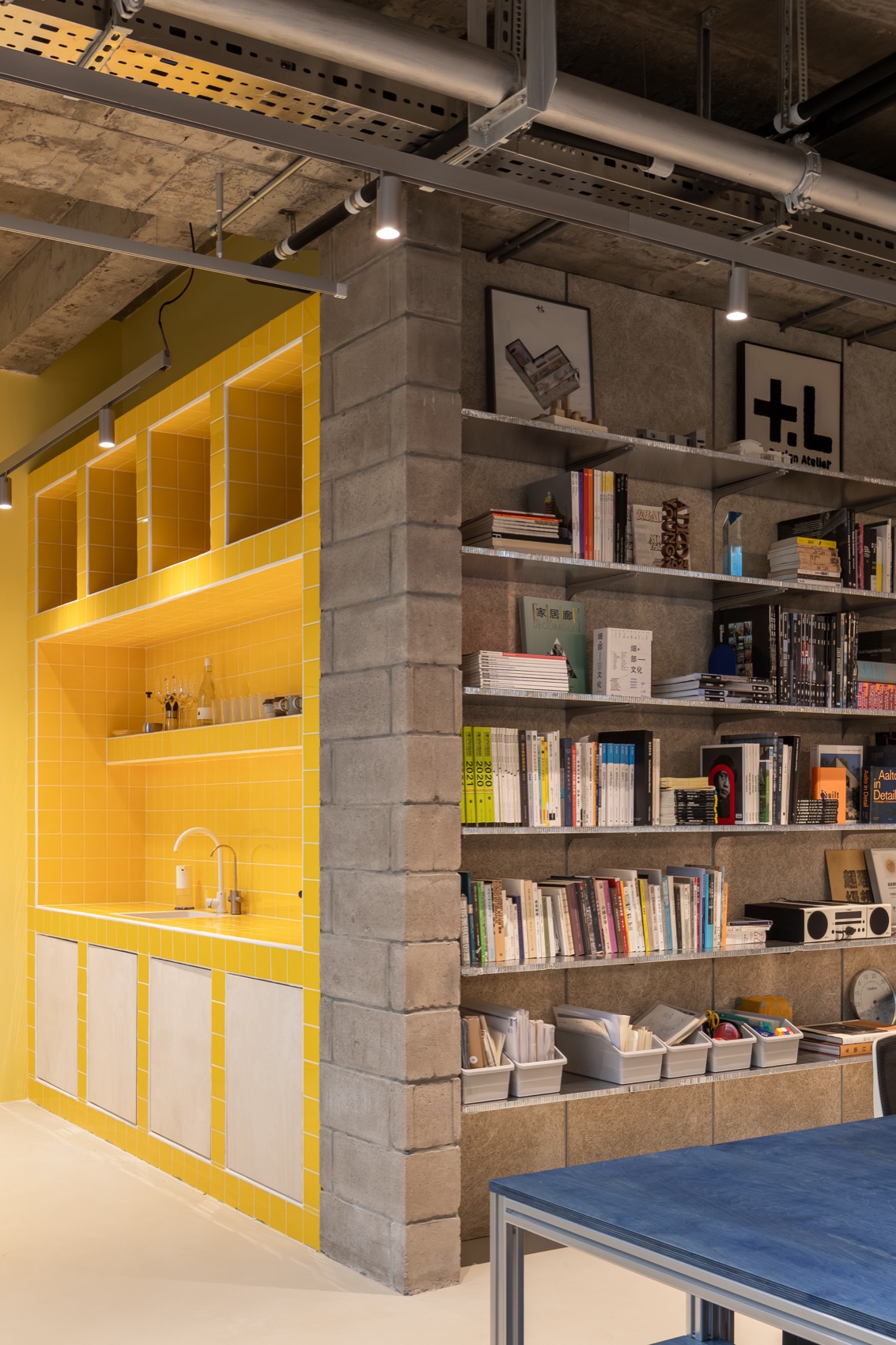
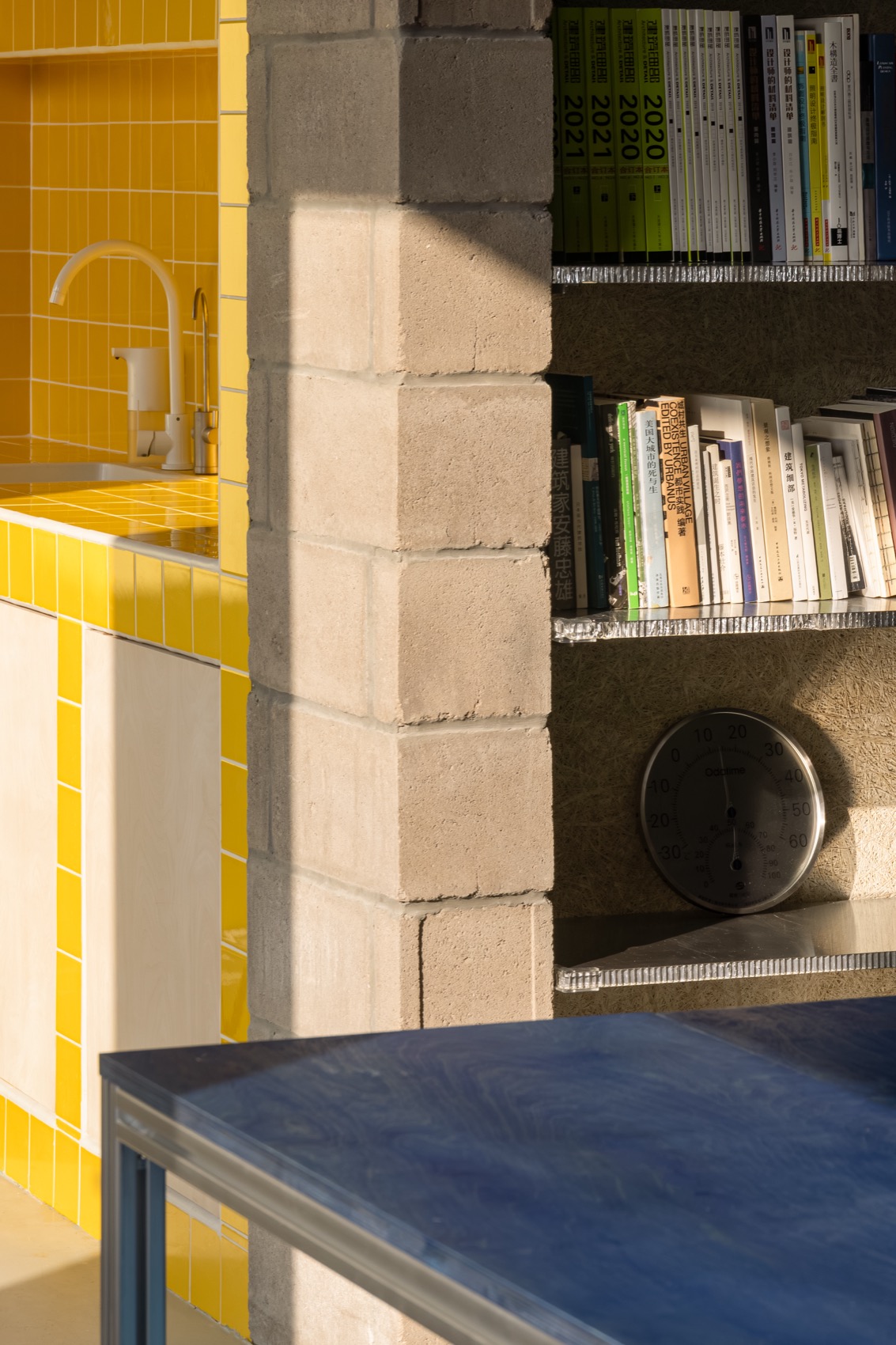
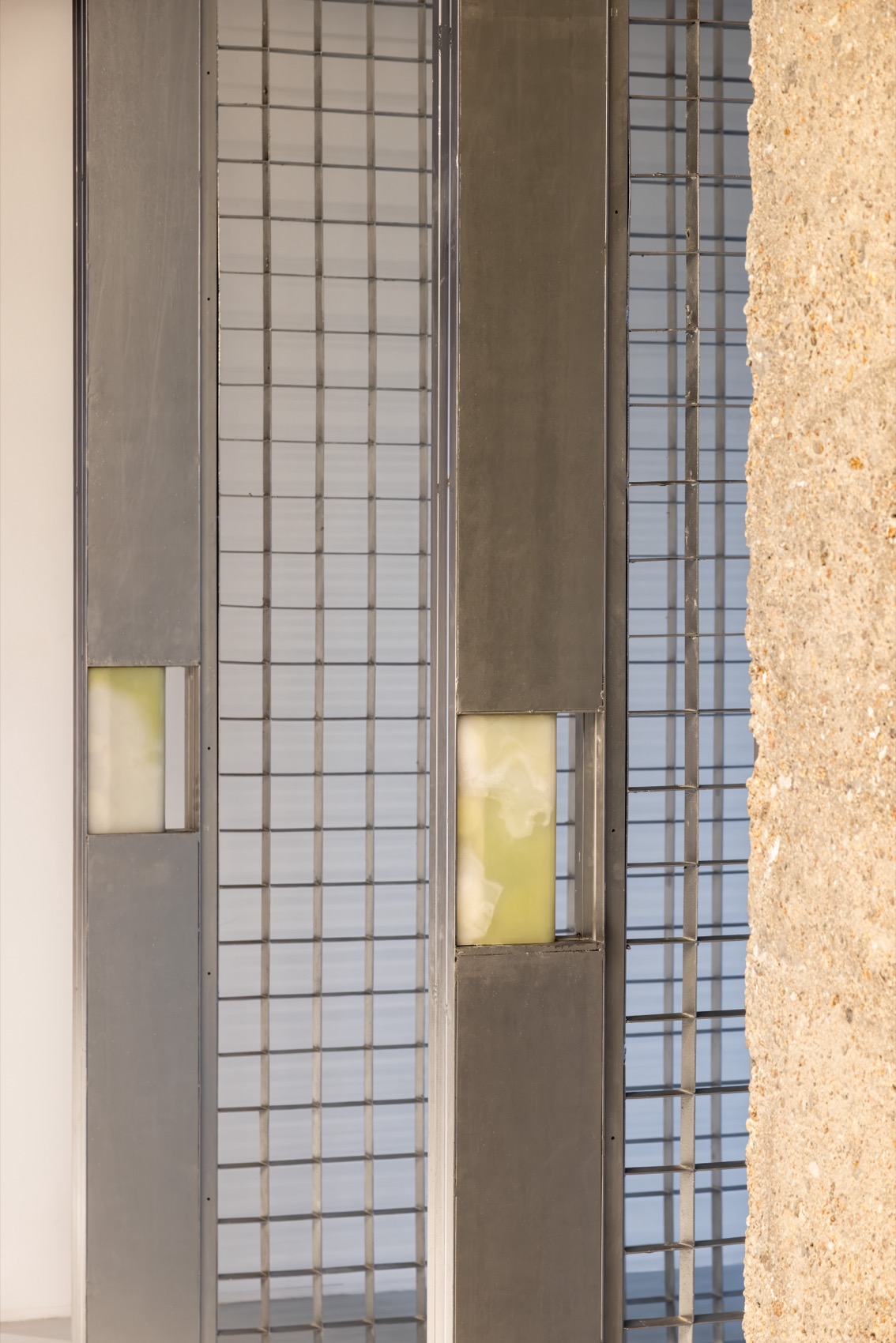
这些材料并不昂贵,但具有明确的构造属性与触感。通过清晰的拼接关系,空间呈现出一种诚实的逻辑,同时也为低成本条件下的高品质空间输出,探索出一种可行的路径。
▼桌子细节,Table details

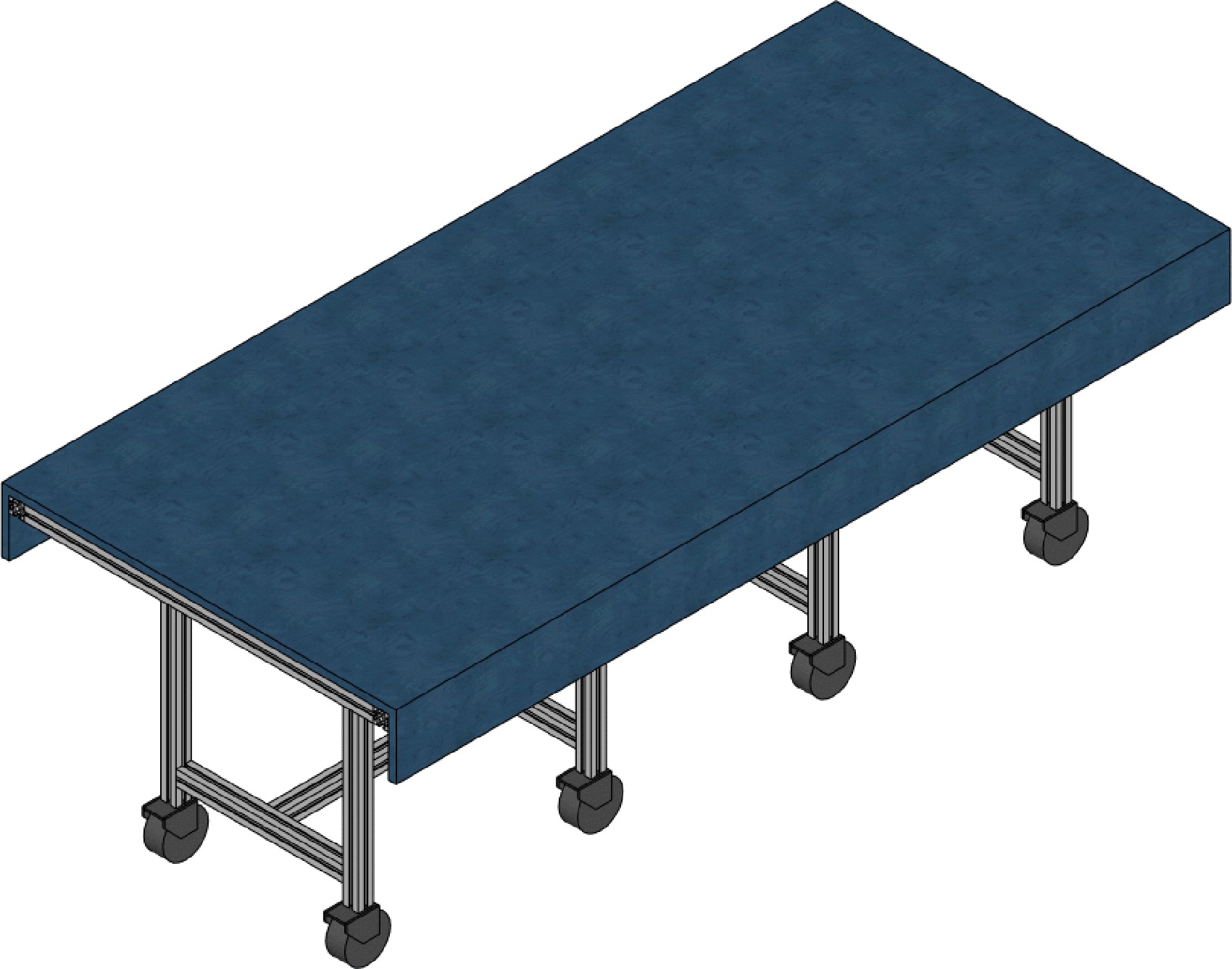
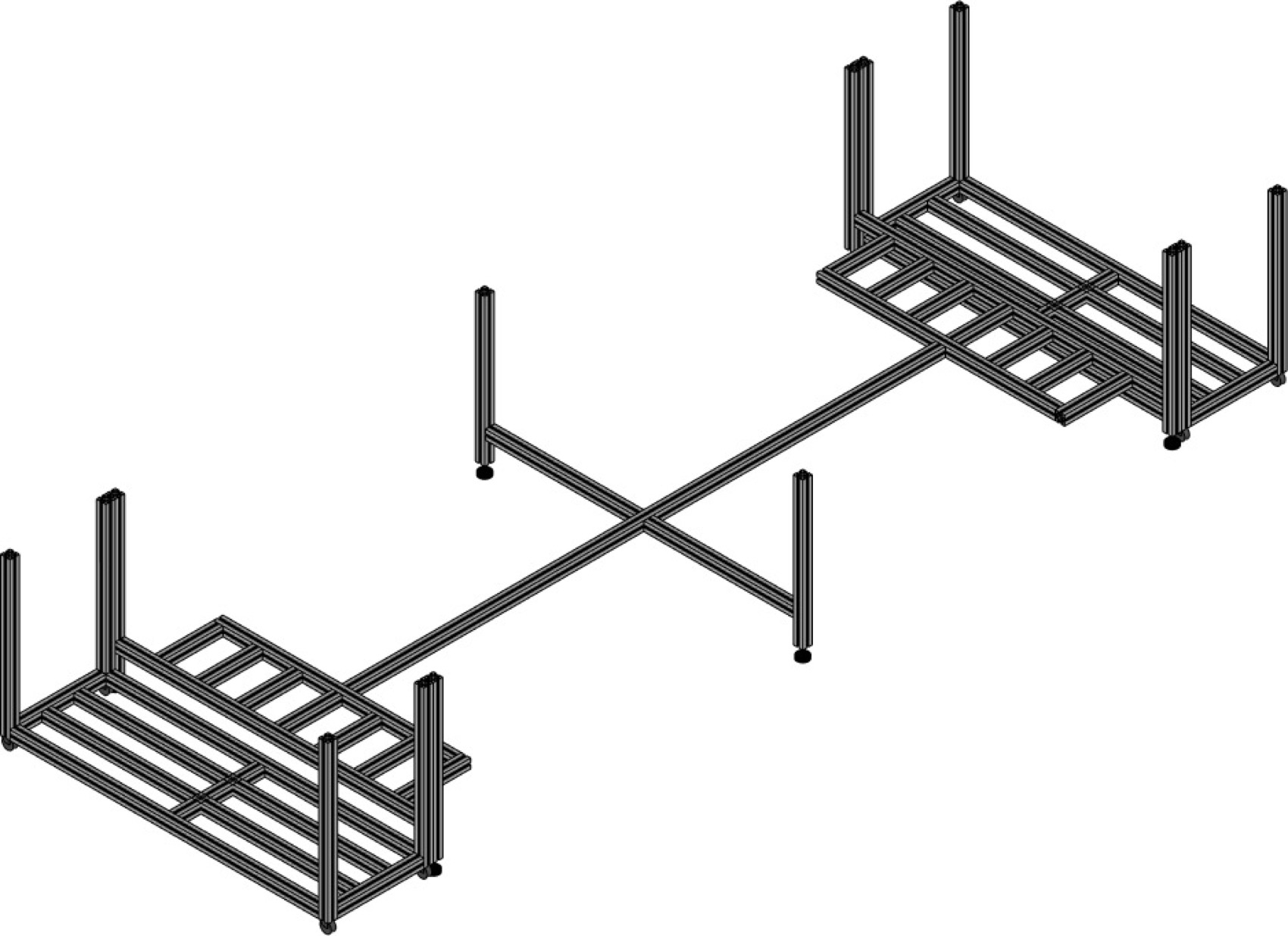
These materials are not extravagant, yet they possess clear tectonic attributes and tactile qualities. Through precise joinery, the space presents an honest logic, exploring a viable path for delivering high-quality spatial output under low-cost constraints.
▼工业构件中的材料表达,Material expression within industrial components
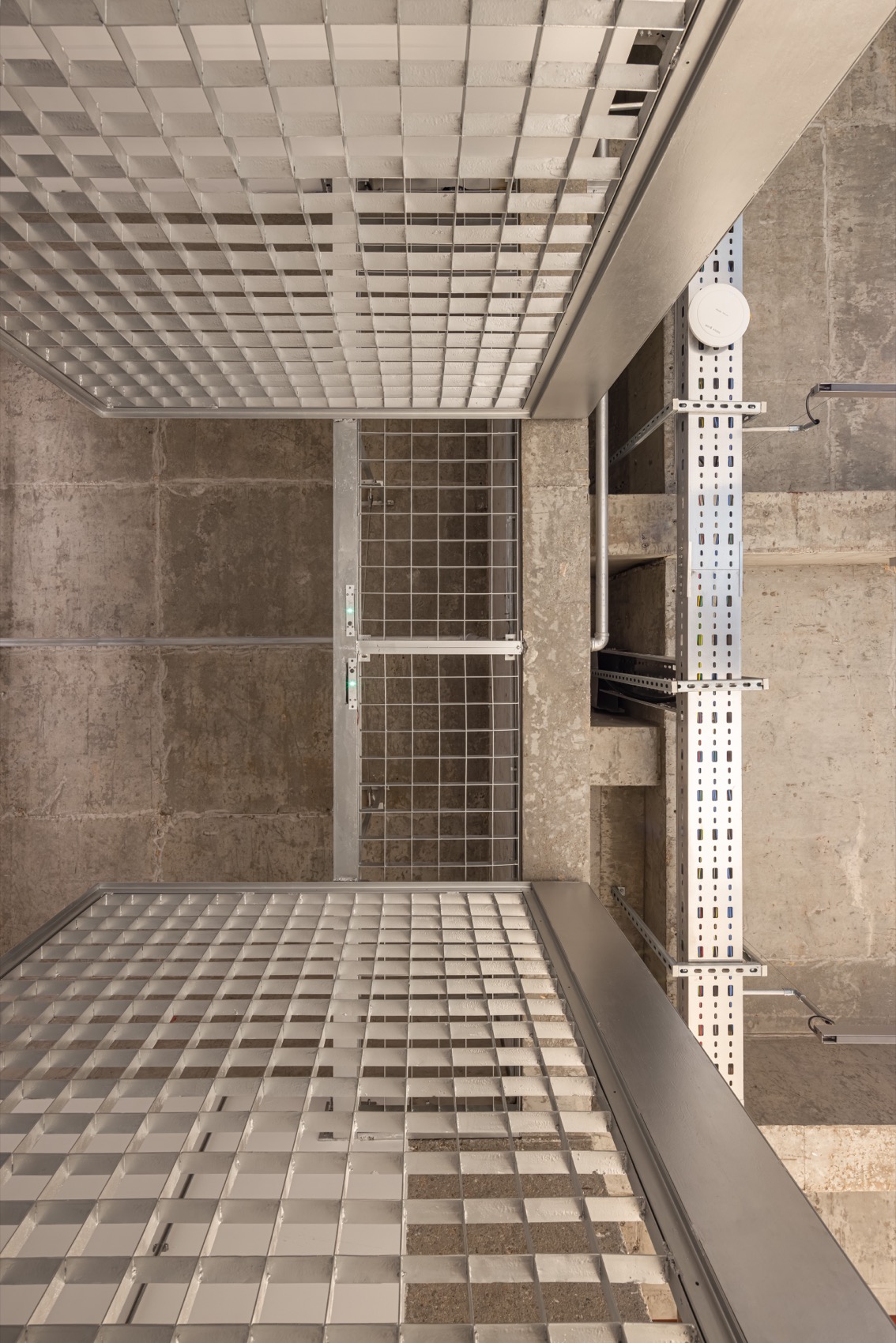
▼金属界面与构造细节,Metal interfaces and construction details
05|知觉切换:理性深蓝与感官色彩的并置05 | Perceptual Shifting: The Juxtaposition of Rational Blue and Sensory Color
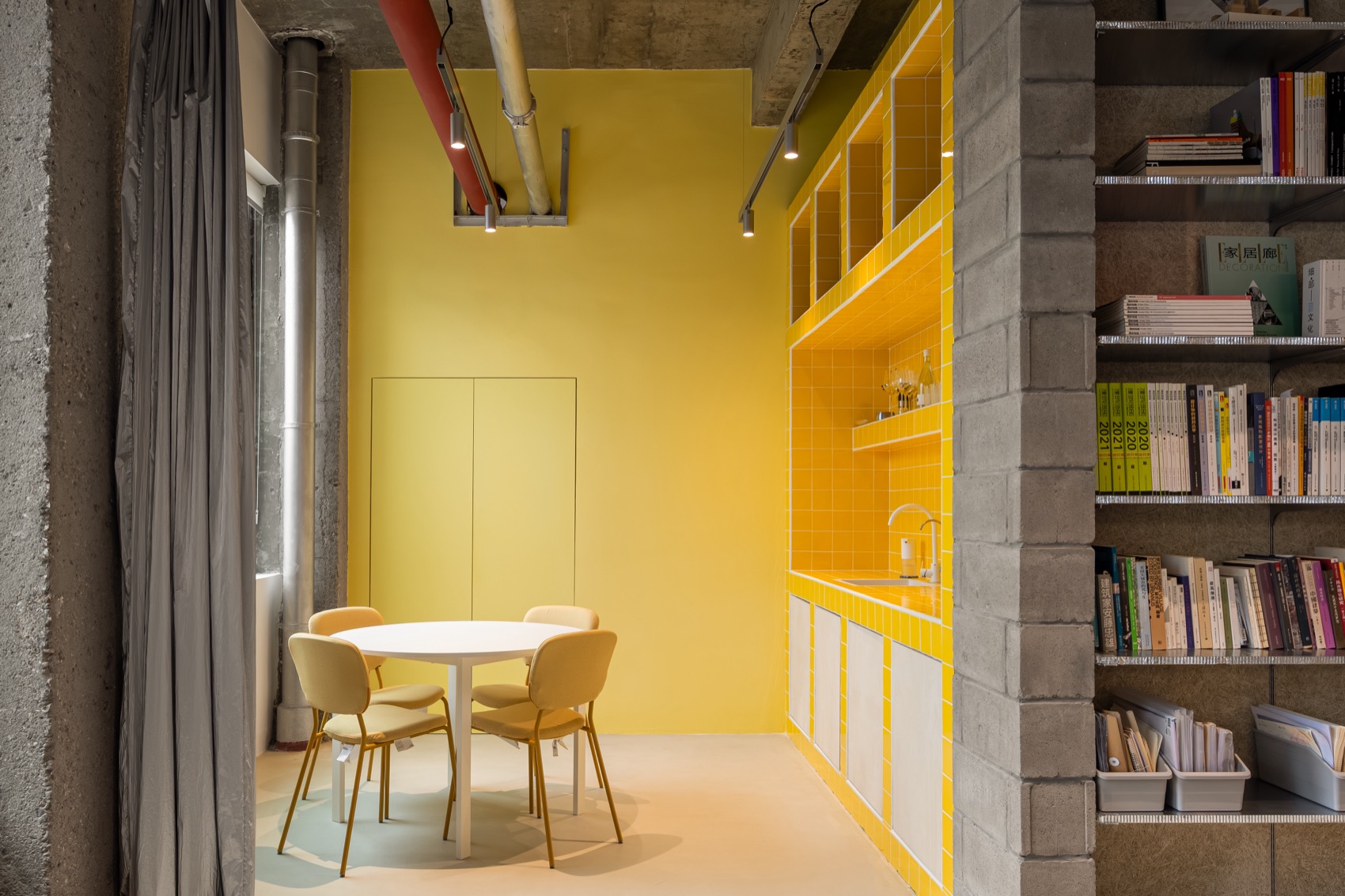
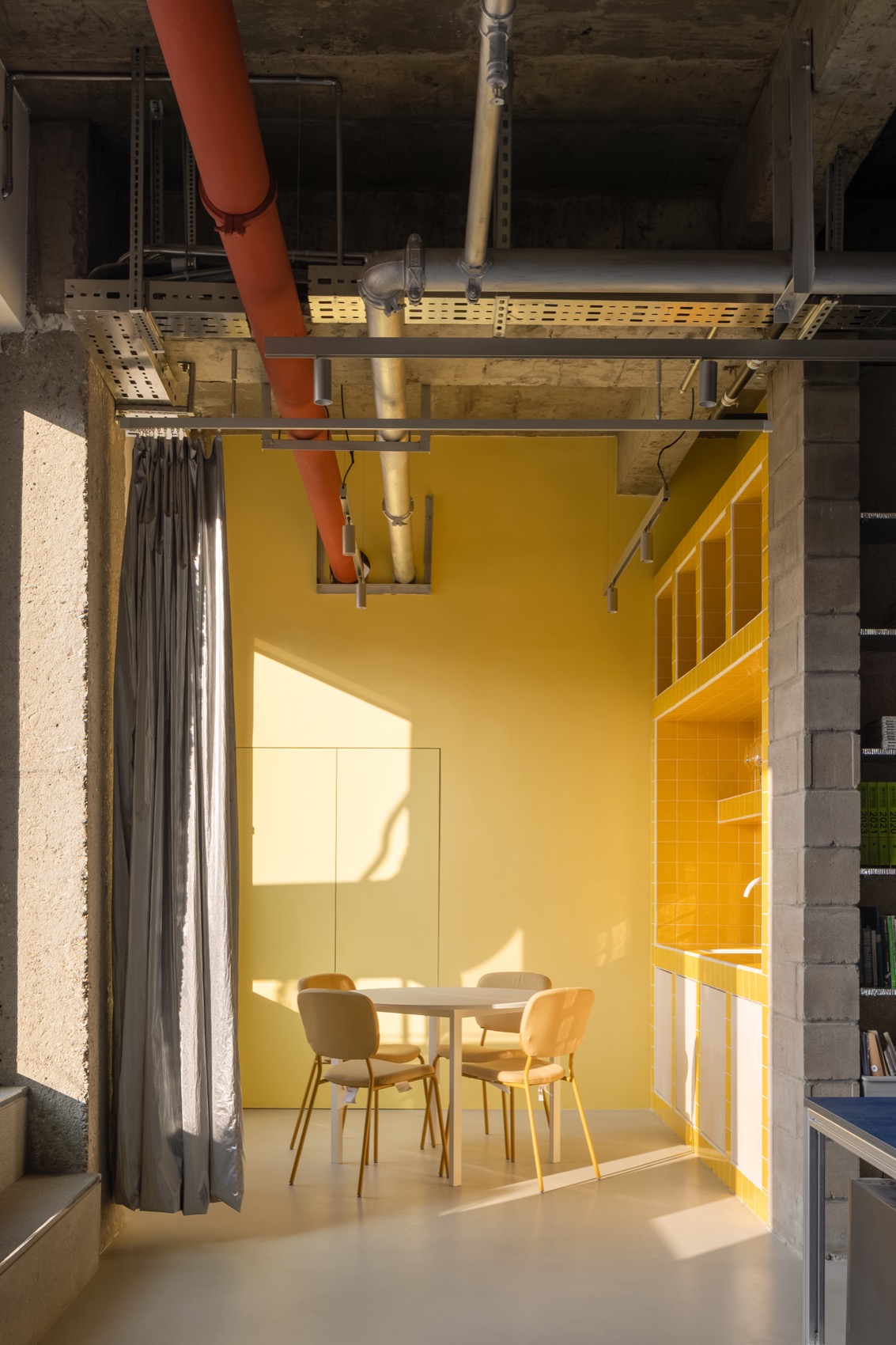
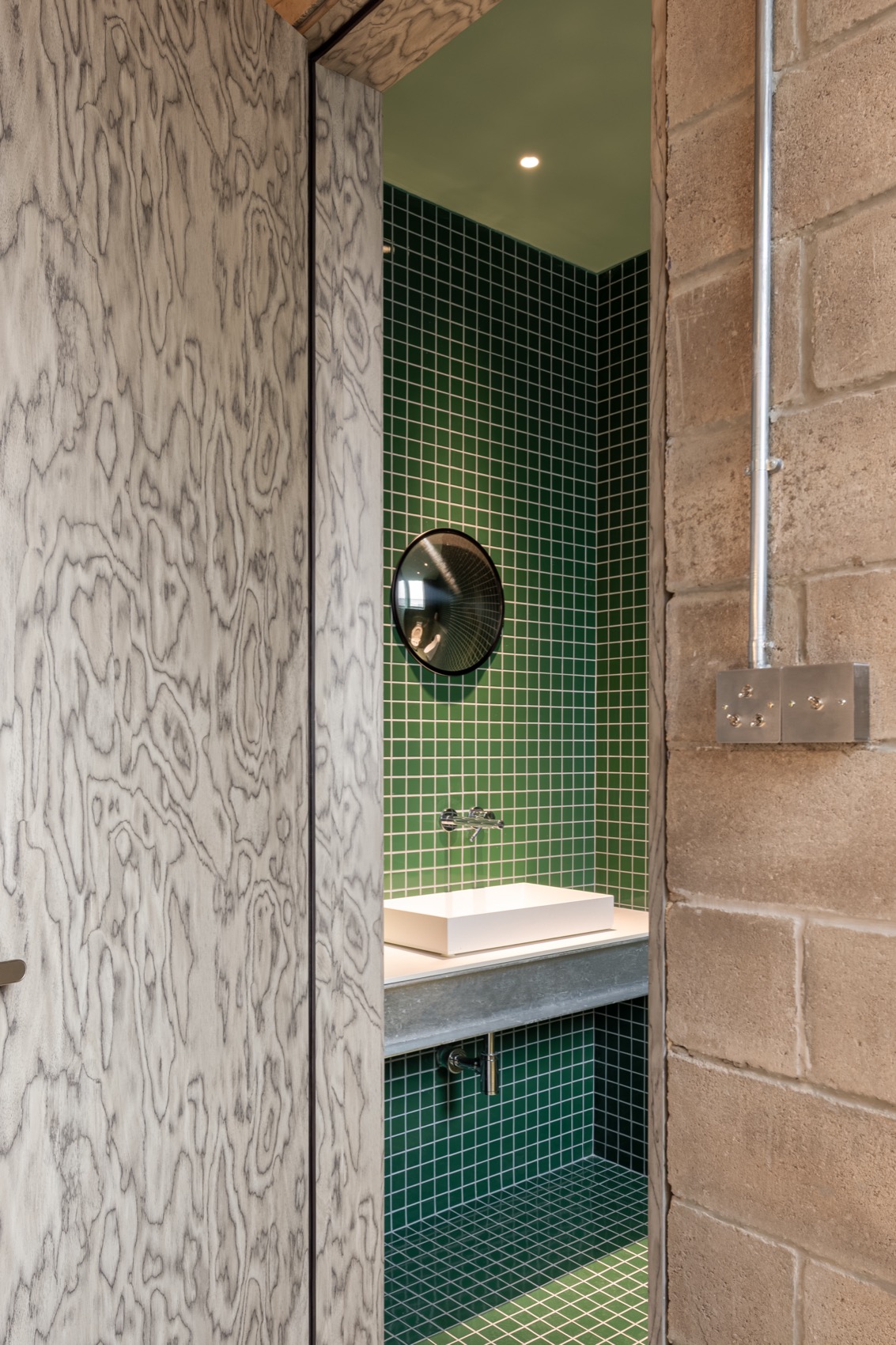
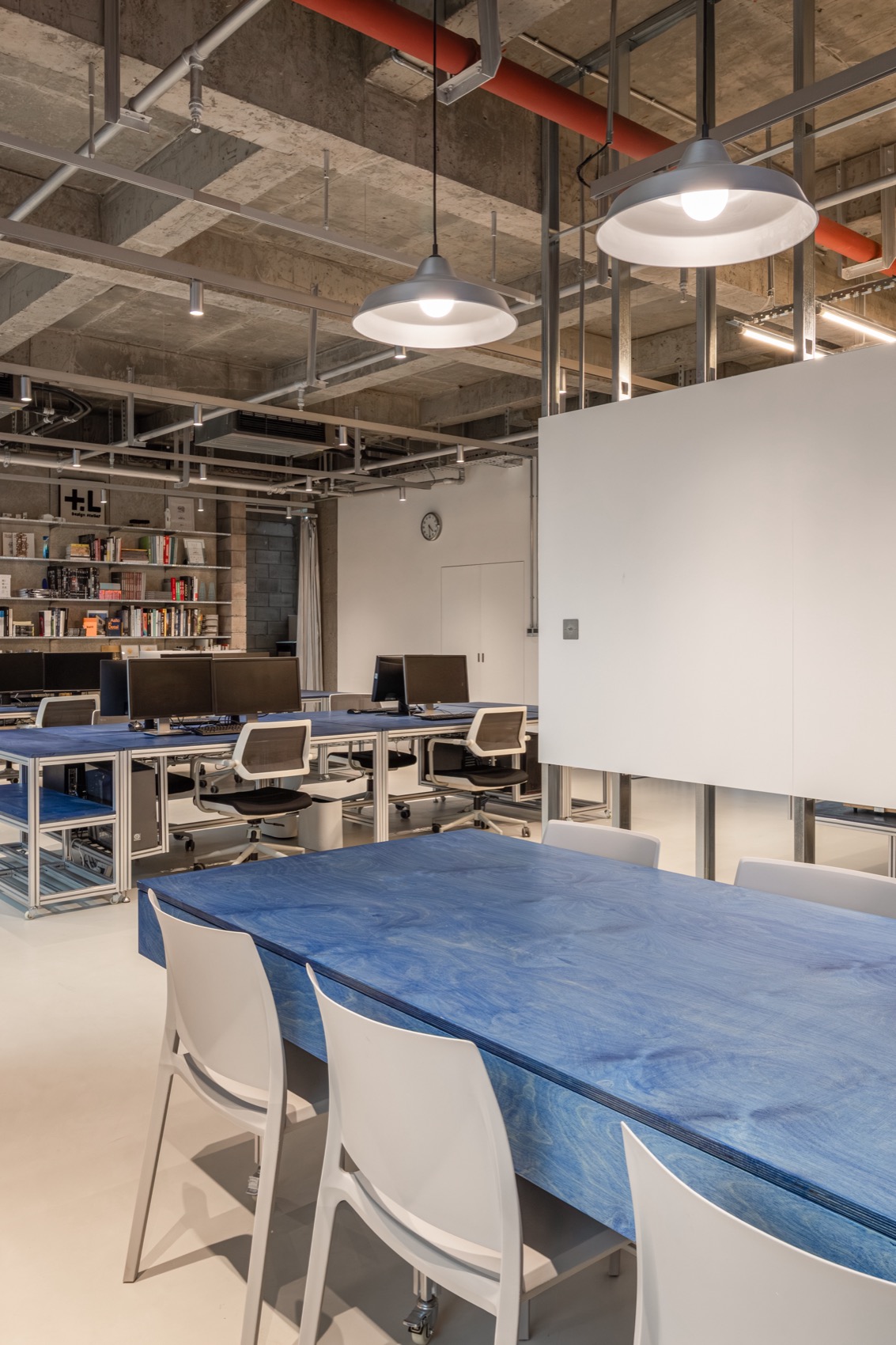
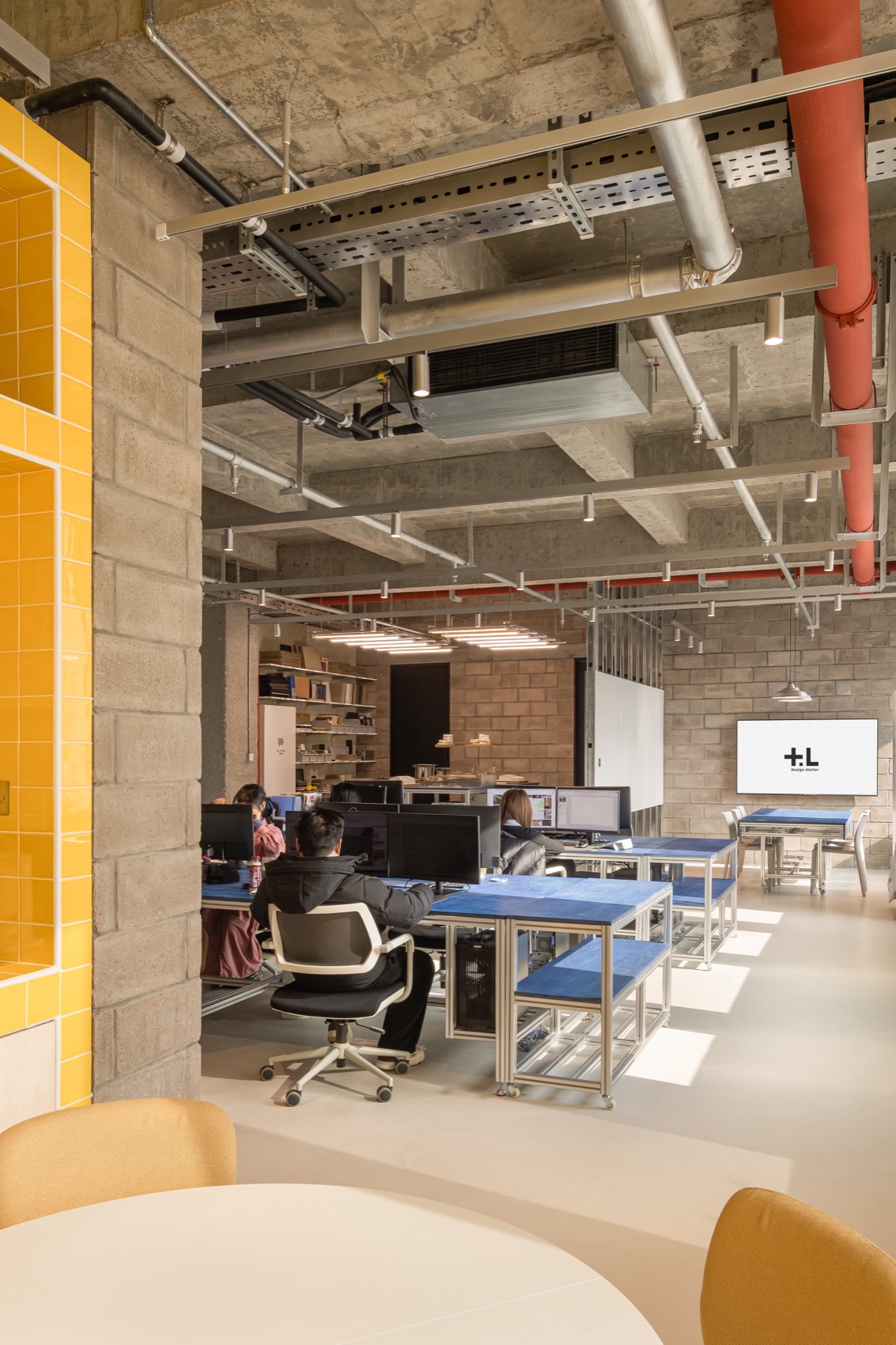
色彩系统承载了空间的情绪调节职能。 主办公区以冷色调为主,金属构件与深蓝色海洋板桌面构筑出理性的视觉基底,强调长期工作时的稳定感与秩序感。而在水吧、卫生间等功能空间中,则引入高饱和度的黄色与绿色,形成更为轻松的氛围唤醒。
The color system functions as a tool for emotional regulation. The main workspace is dominated by cool tones; metal components and deep blue linoleum-faced plywood (Ocean Board) desks establish a rational visual base, emphasizing stability and order during long working hours. In contrast, the pantry and restrooms introduce high-saturation yellows and greens, providing a refreshing sensory awakening.
▼高饱和色彩中的休闲角落,Leisure corner defined by high-saturation colors
▼自然光影,
Natural light and shadow
▼绿色瓷砖卫生间细部,
Green tiled restroom details
两种状态在同一系统内并置,既满足了实际使用的差异需求,也在感知层面完成了“深度思考”与“瞬间松弛”之间的自然过渡。
The juxtaposition of these two states within a single system satisfies functional differences while enabling a natural transition between “deep thinking” and “momentary relaxation.”
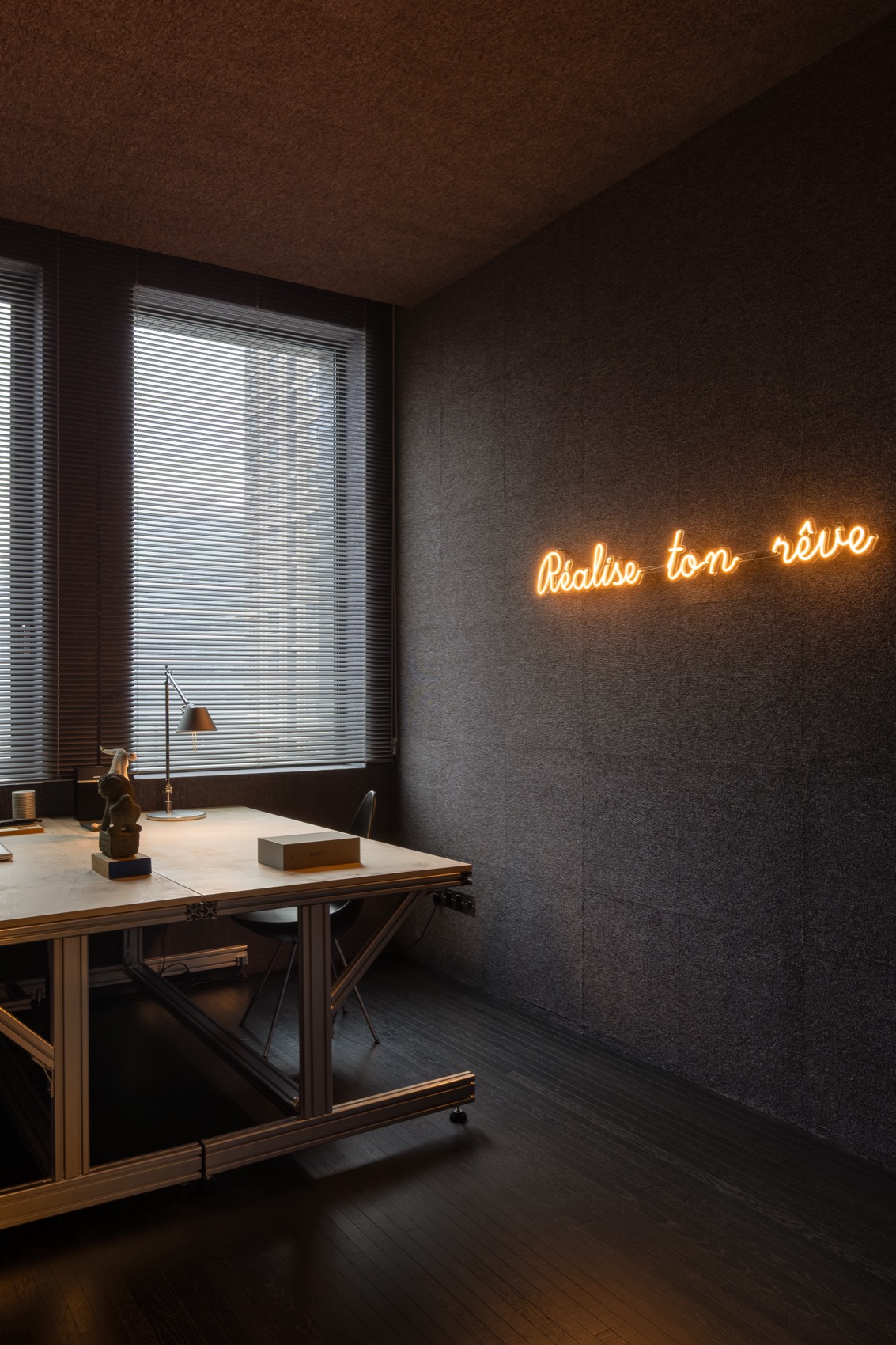
▼低照度氛围中的工作场景,
Workspace within a low-light atmosphere
06|呼吸溢出:露台作为工作节奏的自然延伸06 | Overflowing Breath: The Terrace as an Extension of Rhythm
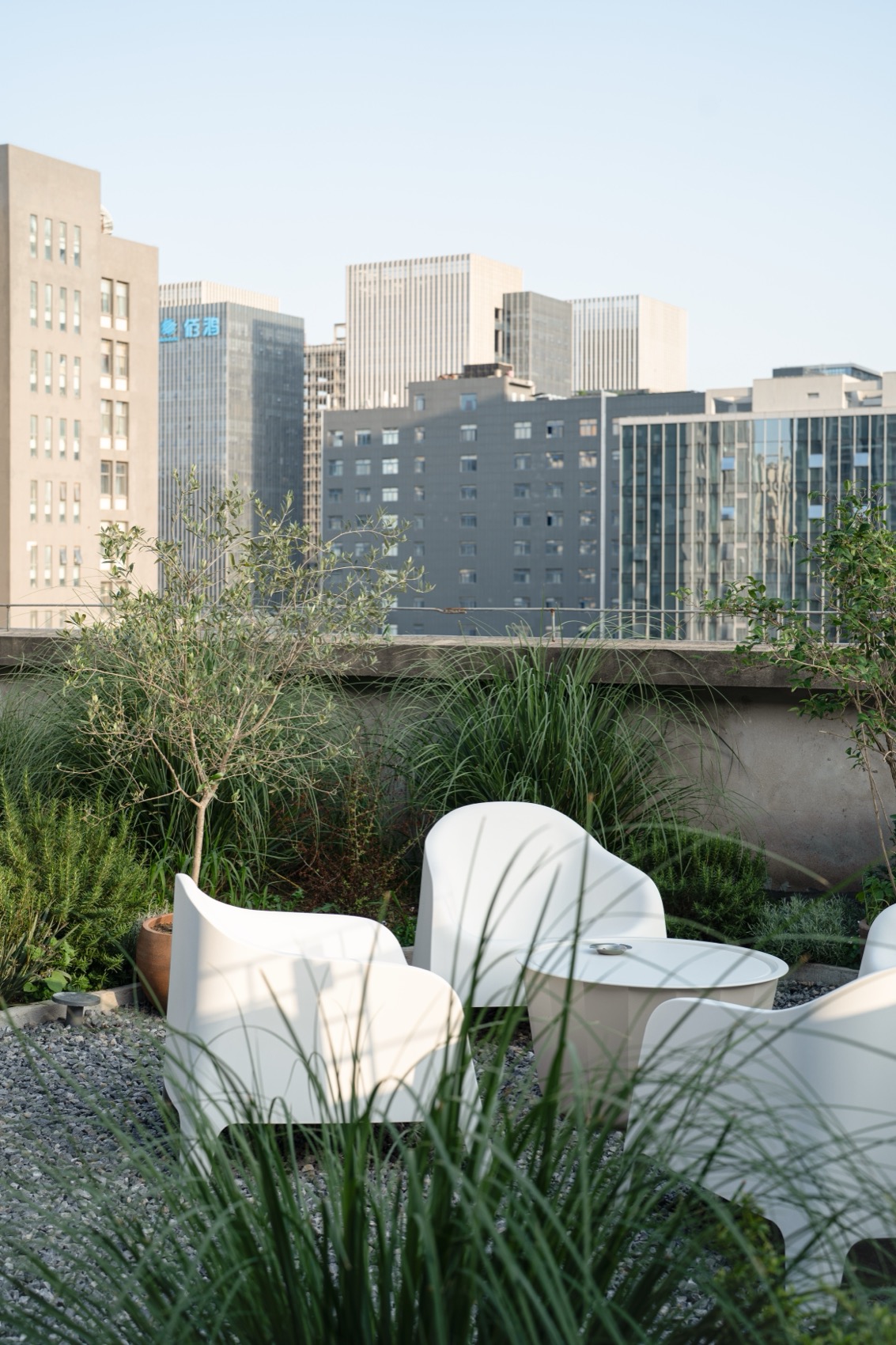
120㎡的露台花园是此次空间中至关重要的补充。 通过视线与动线的组织,室外植物被自然引入室内,成为日常叙事的一部分。它不只是一个被单独定义的“休闲区”,更像是工作节奏中的呼吸口:在这里可以停留、交流,或只是短暂地离开屏幕,与光影接触。这种室内外之间松弛的关系,赋予了工作室更强的空间弹性。
The 120-square-meter terrace garden is a vital addition to this space. Through the organization of sightlines and circulation, outdoor greenery is naturally drawn into the interior, becoming part of the daily narrative. It is not merely a defined “leisure area,” but rather a breathing vent in the rhythm of work—a place to linger, converse, or simply step away from the screen to touch light and shadow. This relaxed relationship between interior and exterior grants the studio greater spatial elasticity.
▼城市背景中的屋顶花园,Rooftop garden against the urban backdrop
07|向下扎根:作为城市触角的“空间实验室”07 | Rooting Down: A “Spatial Laboratory” as Urban Antenna
新工作室的启用,不只是一次物理意义上的位移,更是一次关于工作方式与城市关系的再思考。 在西安这座持续生长的城市中,我们希望这里不仅是生产设计的场所,也能逐渐成为一个开放的节点——承载交流、展示以及更多跨界的可能。五年只是一个台阶。新的地点,也意味着新的时间尺度。 未来,「超级理想」将在这里继续工作、实验与积累,让空间、材料与人的关系,在每一场具体的实践中不断被重新定义。
The opening of the new studio is more than a physical relocation; it is a rethinking of the relationship between work and the city. In the ever-evolving city of Xi’an, we hope this space becomes more than a production site for design—it should gradually become an open node for exchange, exhibition, and cross-disciplinary possibilities. Five years is but a step. A new location implies a new scale of time. Moving forward, Super Ideal will continue to work, experiment, and accumulate here, allowing the relationship between space, material, and people to be constantly redefined through every specific practice.
▼自然采光下的办公日常,Daily office life under natural daylight
▼办公室平面,Office floor plan