Bosque住宅,巴西 / RAWI Arquitetura
由建筑师Raphael Wittmann设计的“Bosque住宅”位于巴西圣保罗,项目源于建筑与自然之间的深度对话。住宅坐落于一块1200平方米的场地之中,基地由原生树林所定义。这座350平方米的住宅为一位父亲与他的三个孩子而建,其设计概念围绕共居、舒适,以及最重要的——对既有自然景观的尊重而展开。
Designed by architect Raphael Wittmann, founder of RAWI Arquitetura, Casa Bosque is located in São Paulo, Brazil, and emerges from a deep dialogue between architecture and nature. Set within a 1,200 m² plot defined by an existing grove, the 350 m² residence was designed for a father and his three children, guided by a concept that weaves together coexistence, comfort, and, above all, respect for the existing landscape.
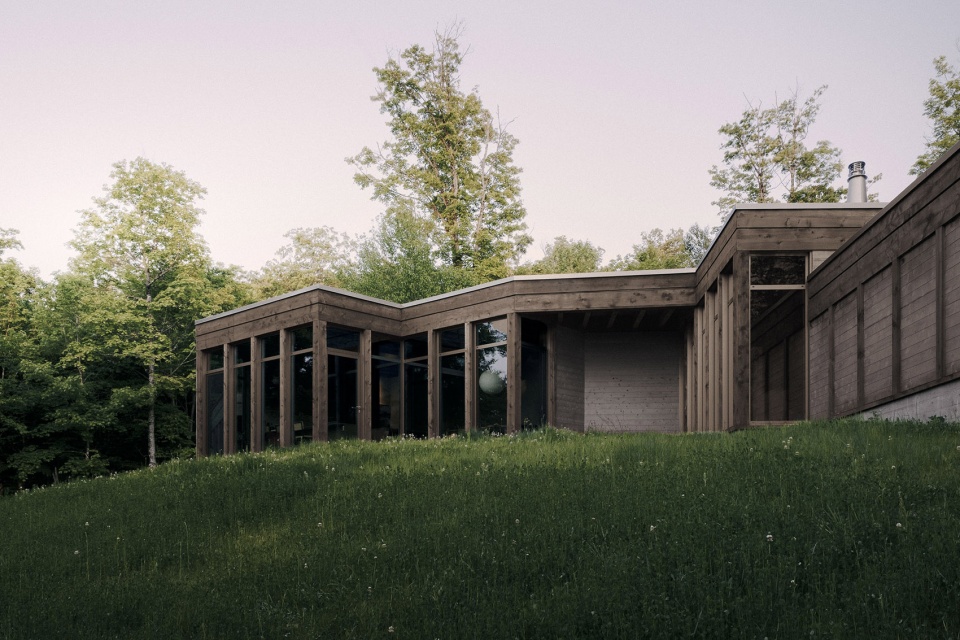
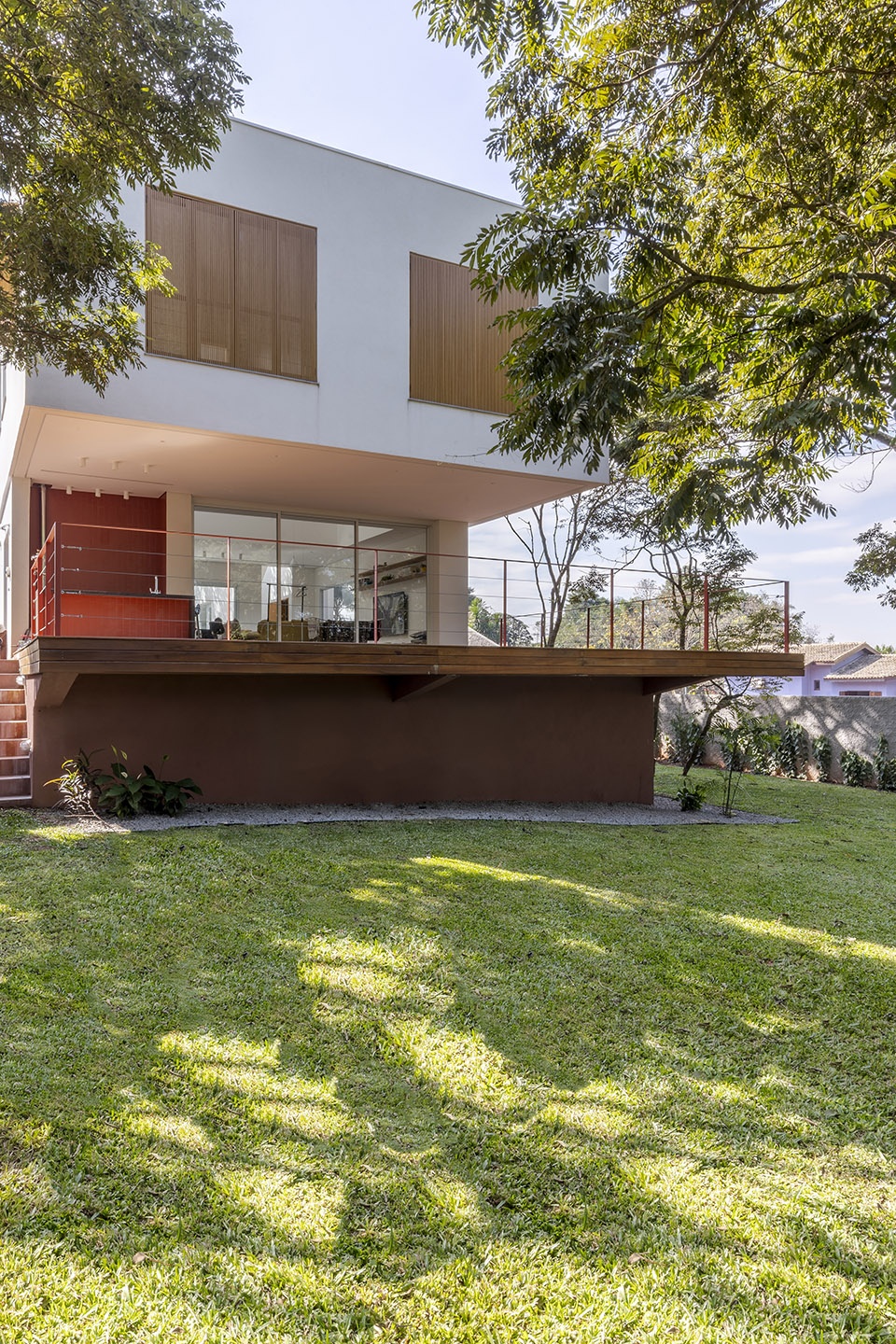
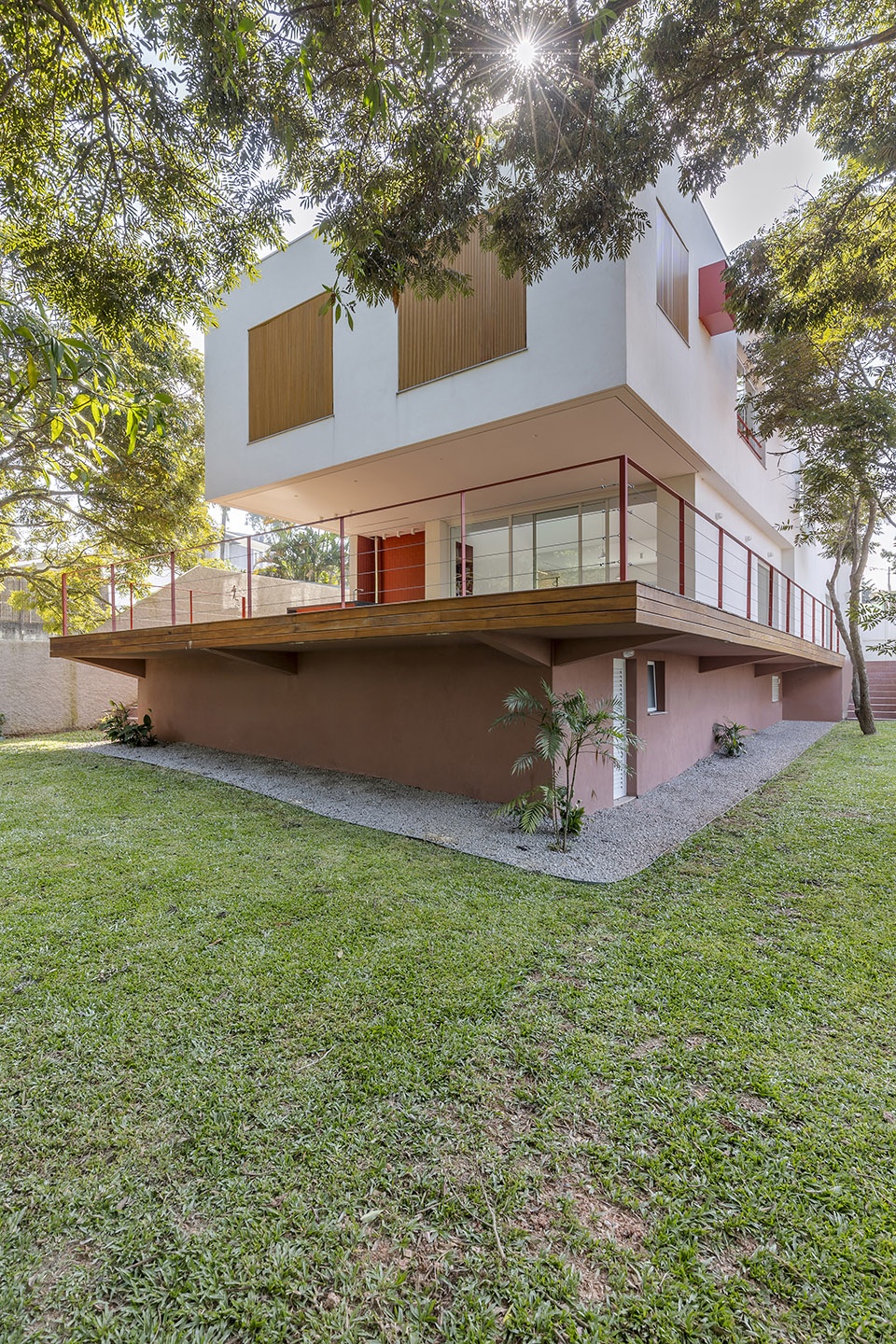
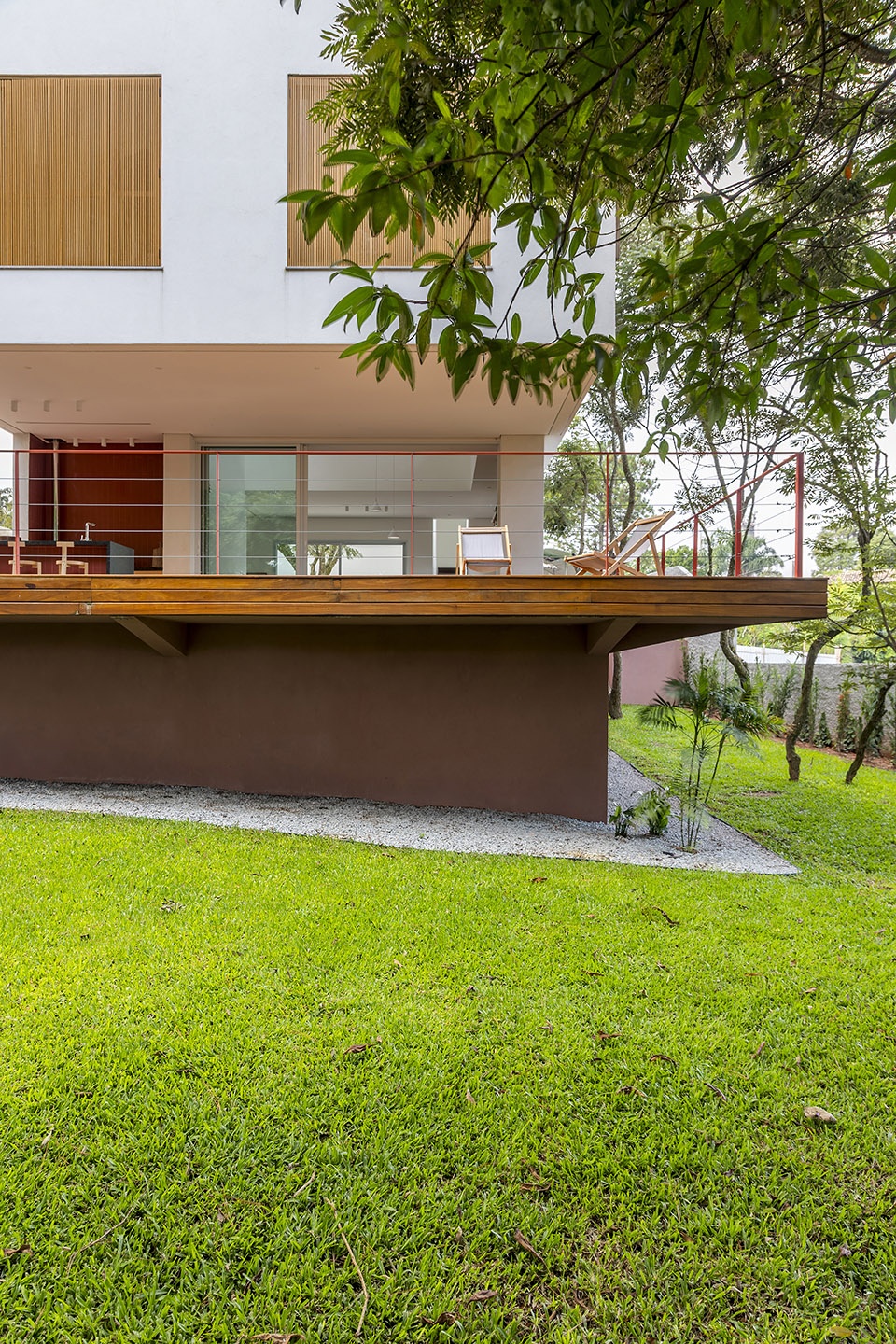
▼住宅外观,The exterior of the residence
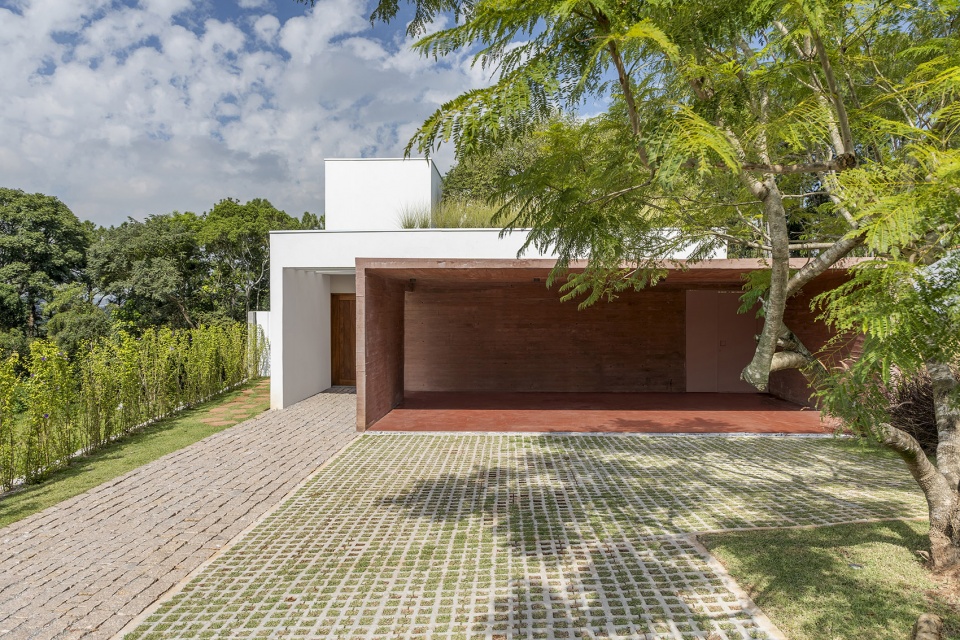
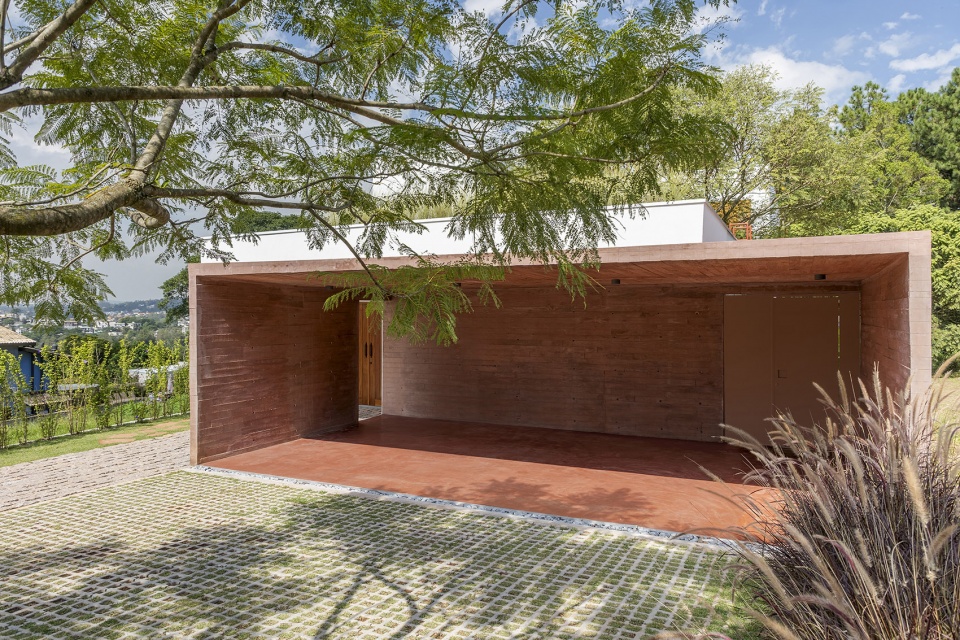
▼住宅外观,The exterior of the residence
建筑围绕住宅中心一棵被保留下来的蓝花楹树展开组织,这棵树构成了中央庭院的核心。这个“空”的空间成为项目的空间中枢,连接起公共、私密与服务功能区域,同时与后方树林建立起内在联系,而蓝花楹正是这片树林的一部分。现场浇筑的长凳与梁体勾勒出树木的轮廓,并强化了组织空间的结构性姿态。
The architecture organizes itself around a preserved jacaranda tree at the center of the house, which structures the central courtyard. This void becomes the project’s spatial nucleus, connecting social, private, and service areas while establishing an intrinsic relationship with the grove at the rear, of which the tree is part. A bench and a beam, cast in situ, frame the jacaranda’s outline and emphasize the structural gesture that organizes the space.
▼围绕住宅中心一棵被保留下来的蓝花楹树,
a preserved jacaranda tree at the center of the house
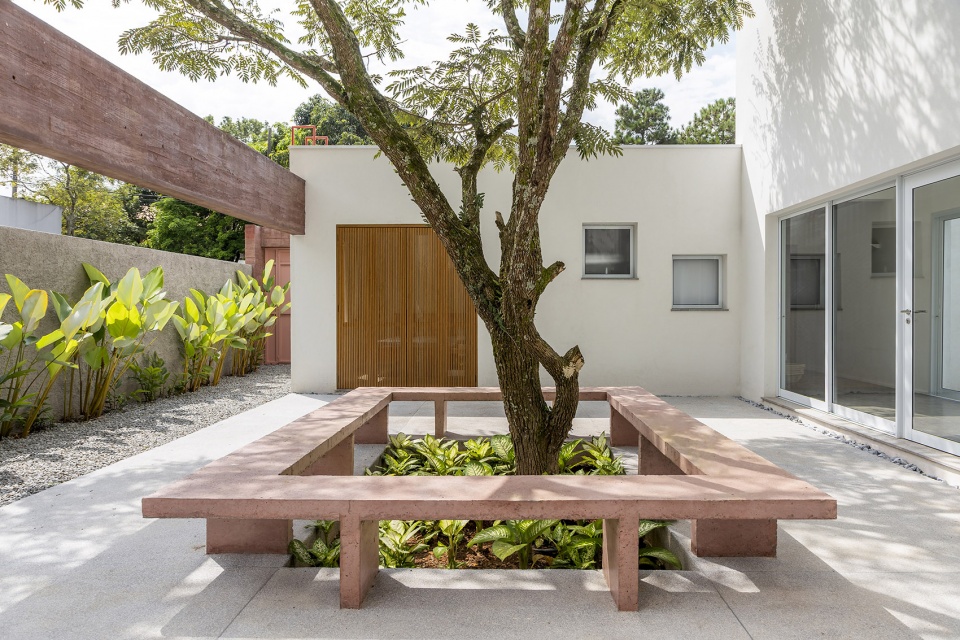
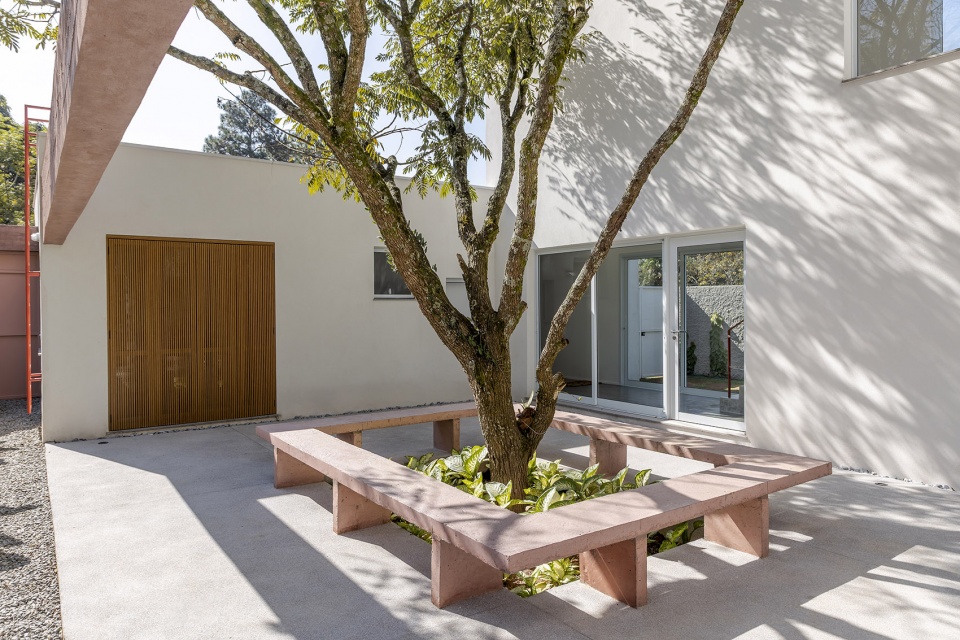
▼中心庭院,central courtyard
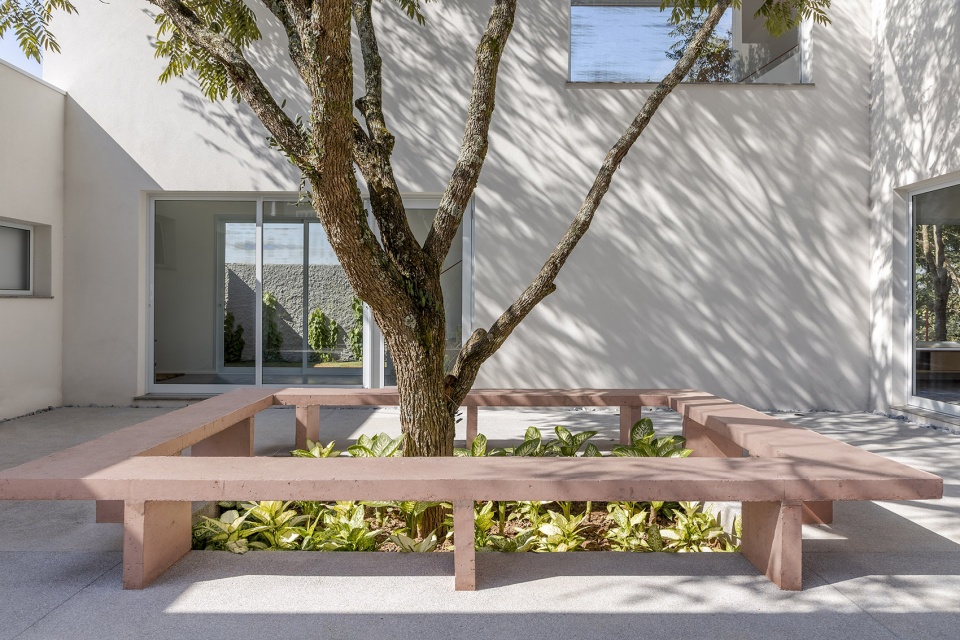
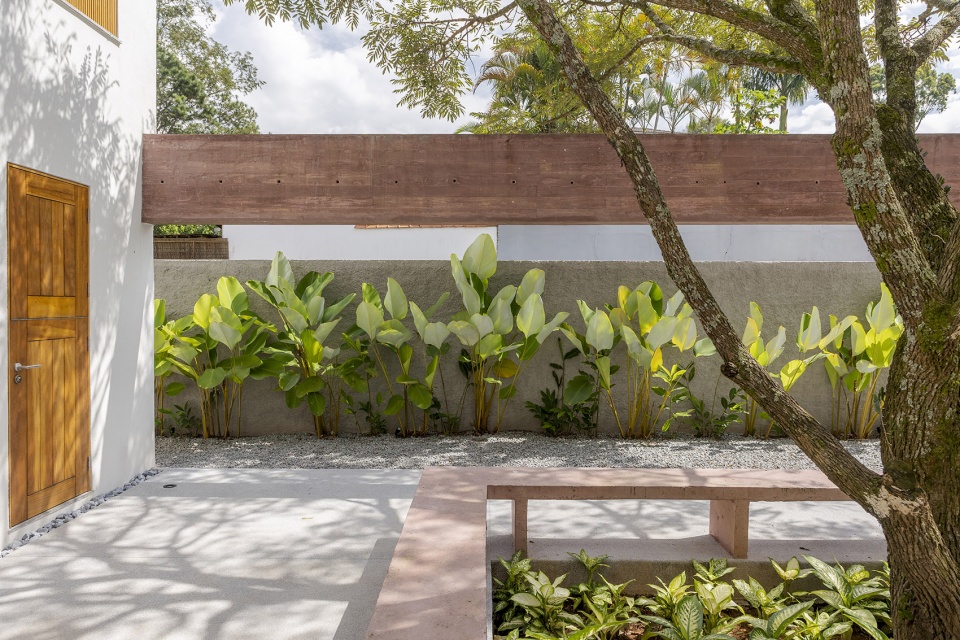
▼现场浇筑的长凳与梁体勾勒出树木的轮廓,
a bench and a beam, cast in situ, frame the jacaranda’s outline
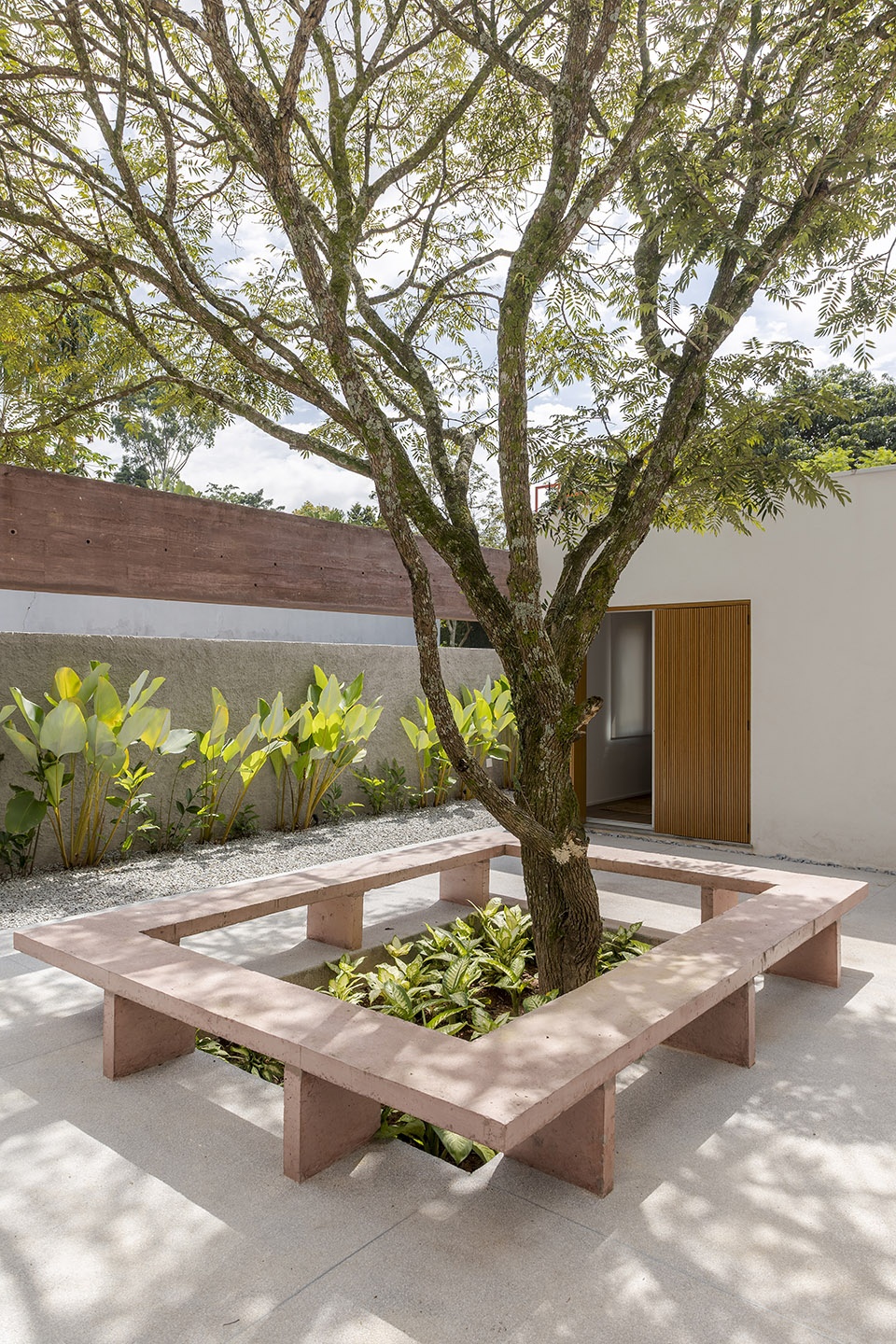
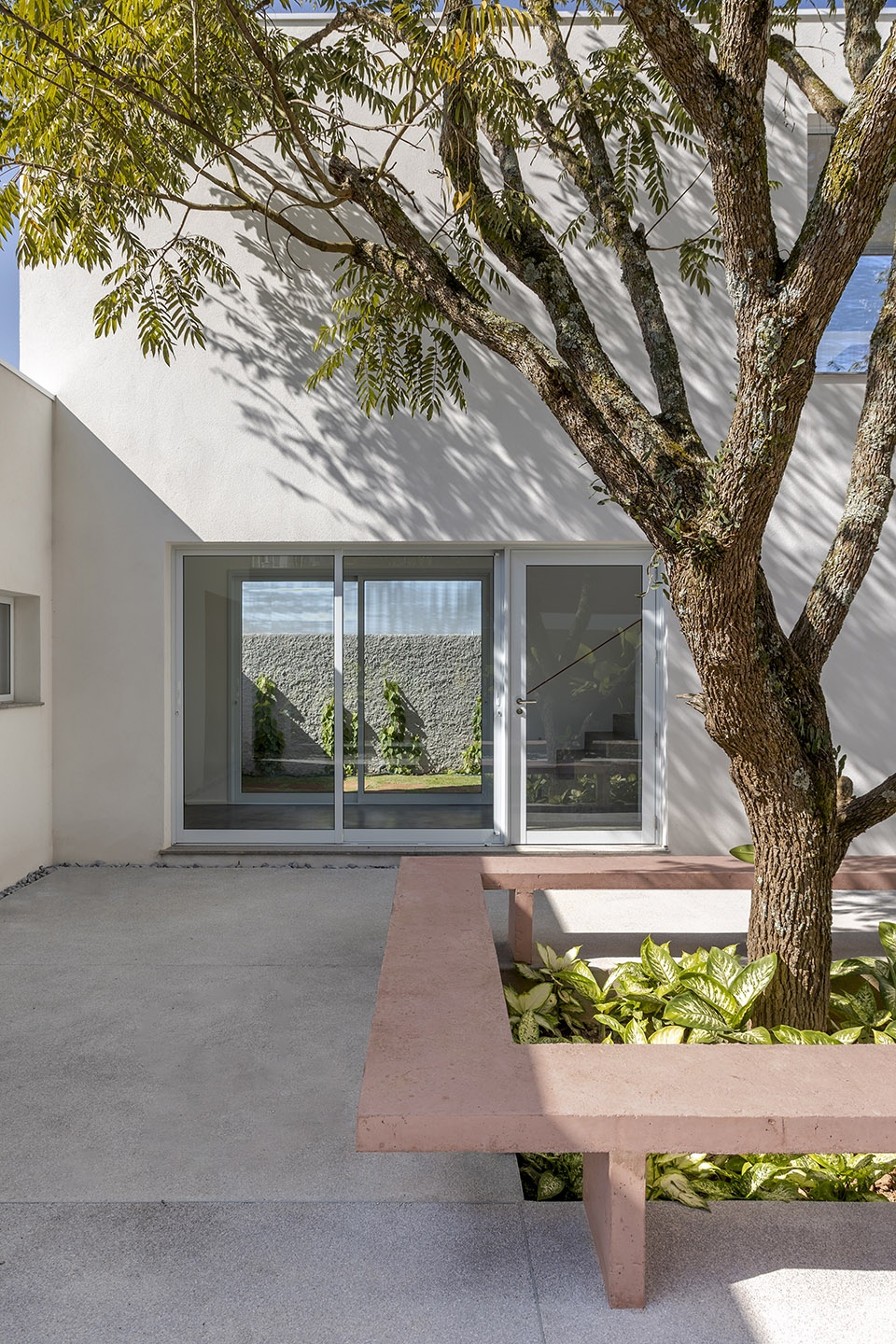
▼强化了组织空间的结构性姿态,
emphasize the structural gesture that organizes the space
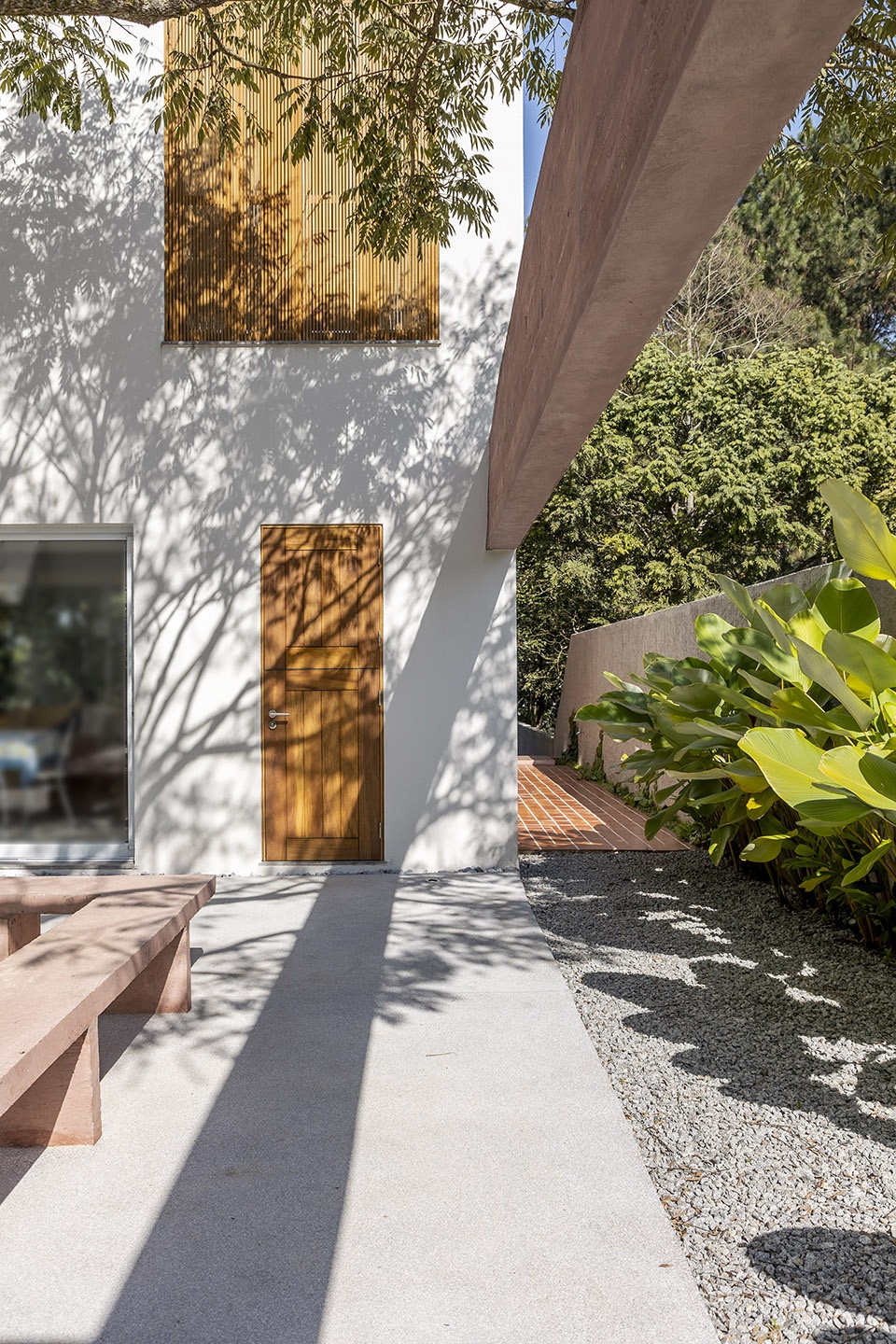
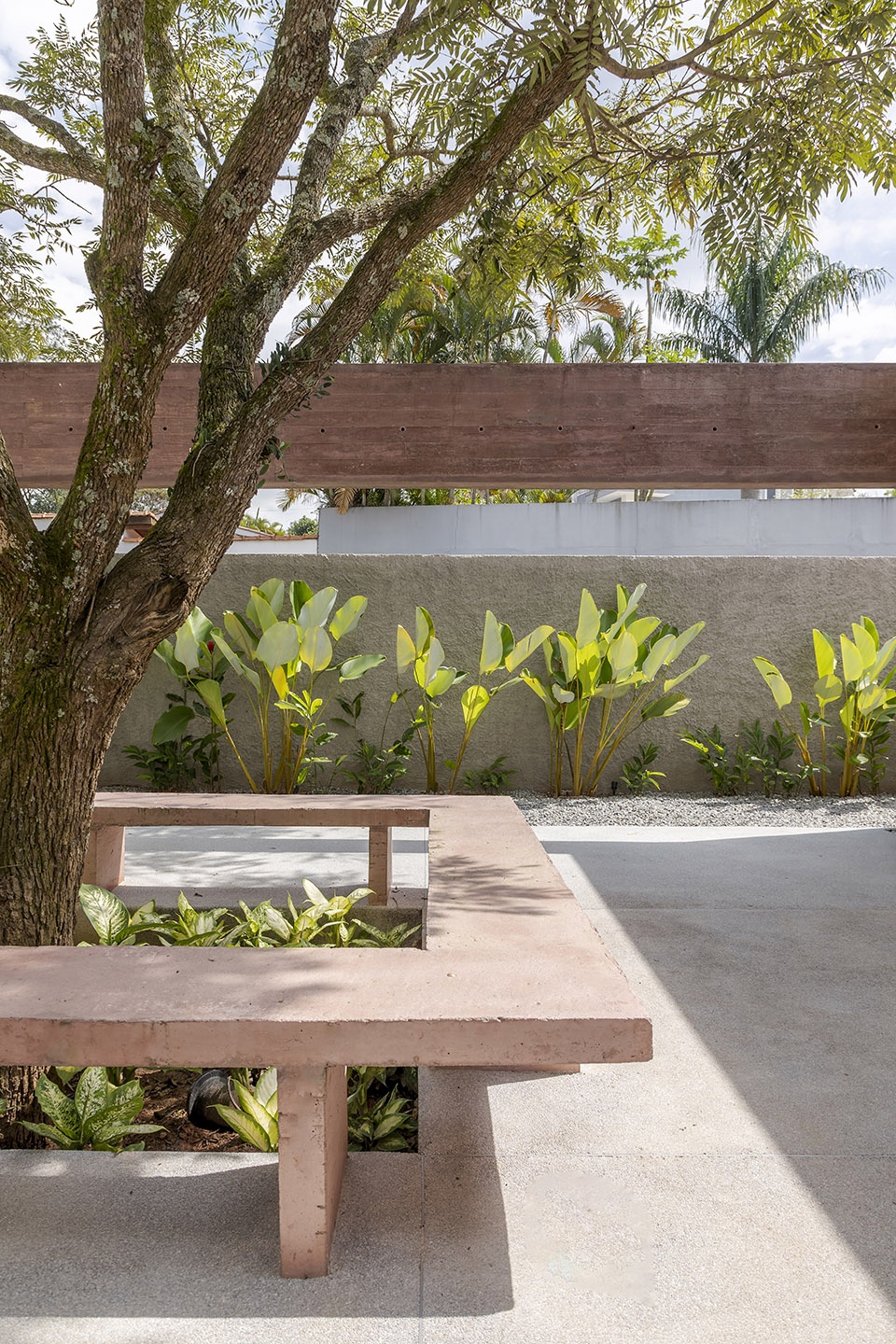
住宅采用C形平面布局,在实体与虚空、光线与阴影之间建立起精确的关系。三个元素共同定义了建筑构成:朝向树林悬挑而出的体量、组织日常生活的中央庭院,以及面向街道、由红色颜料混凝土构成的体块。
Arranged in a C-shaped plan, the house establishes a precise interplay between solids and voids, light and shadow. Three elements define its composition: a suspended volume facing the grove, the central courtyard that structures domestic life, and a pigmented concrete box marking the street-facing façade.
▼朝向树林悬挑而出的体量,a suspended volume facing the grove
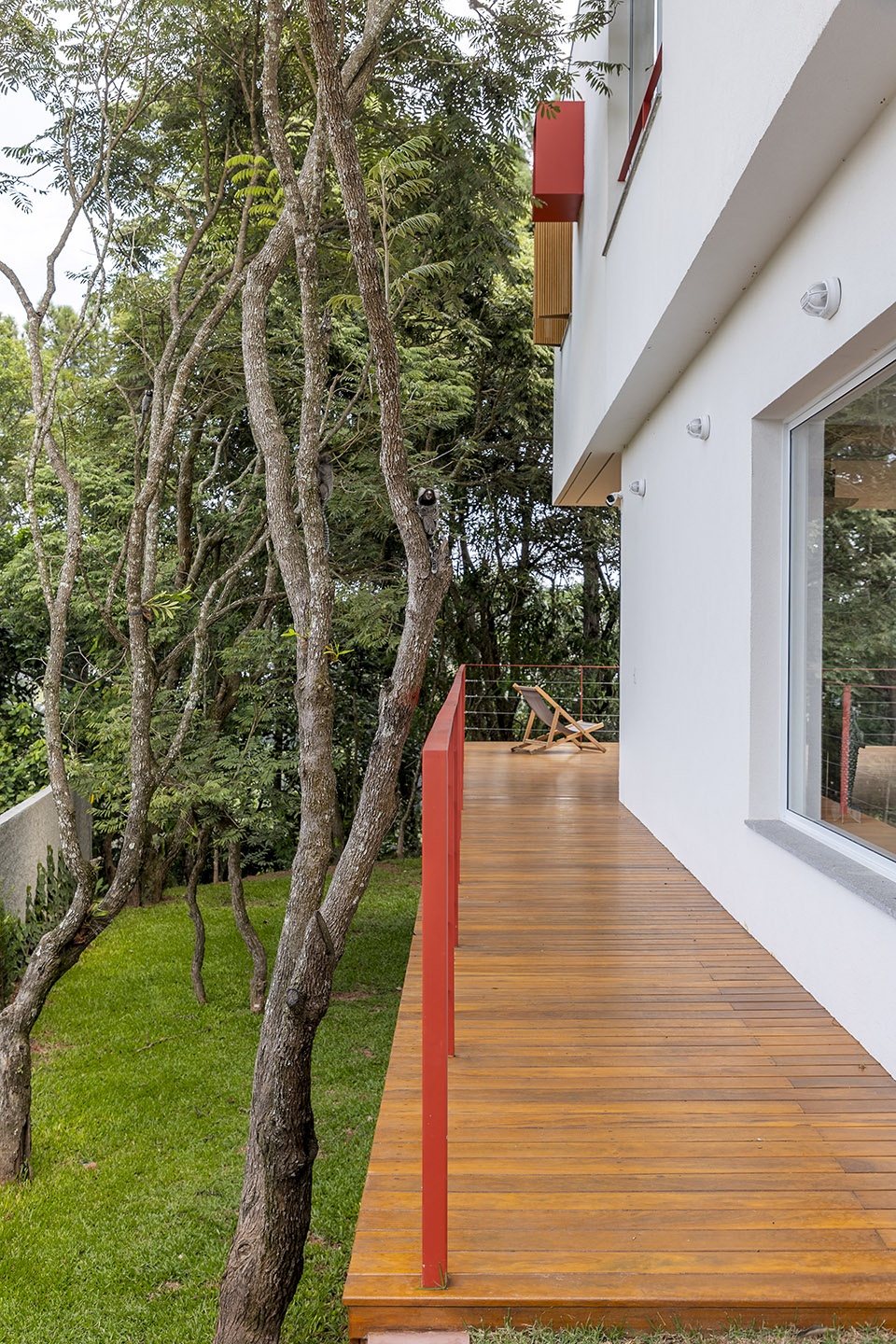
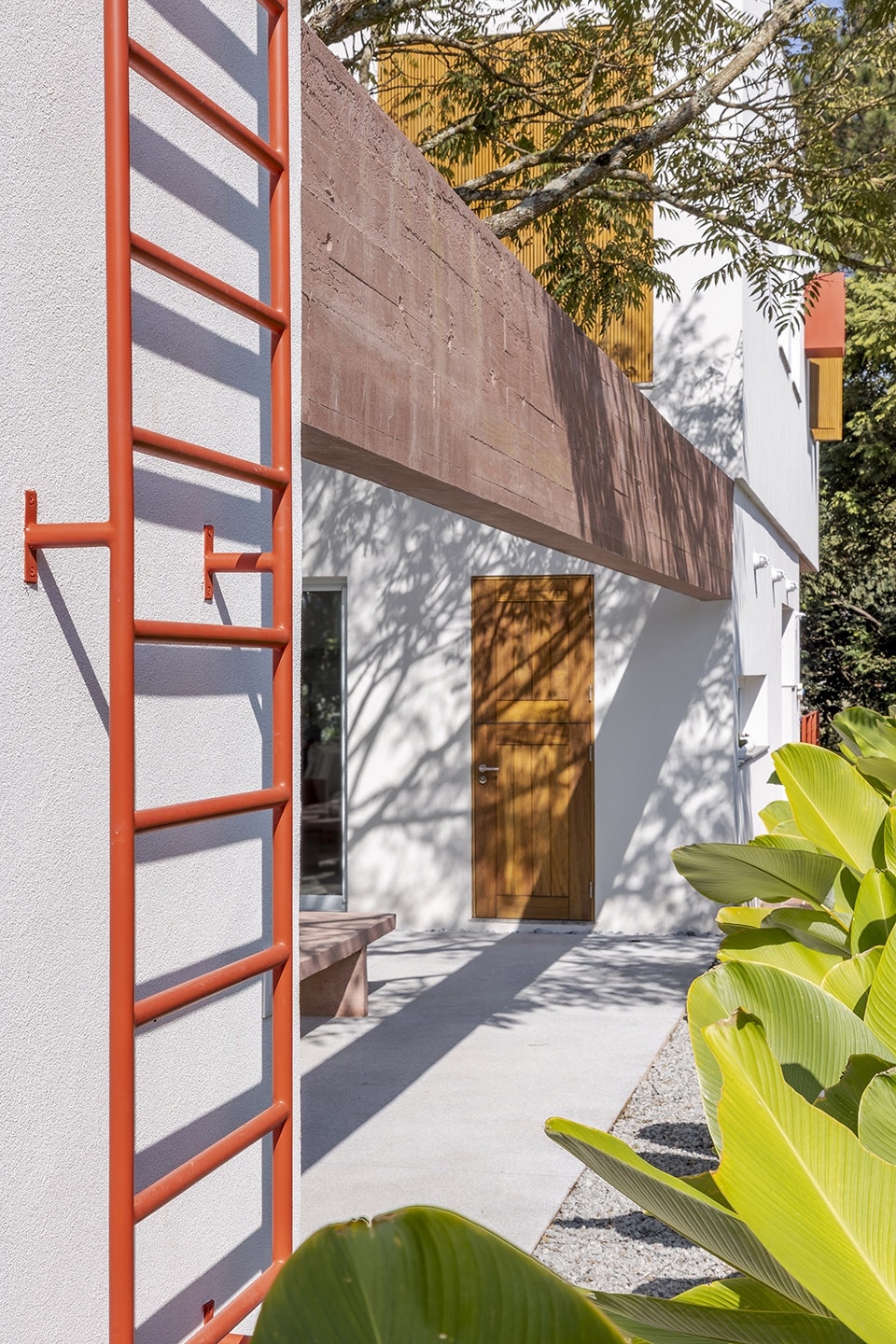
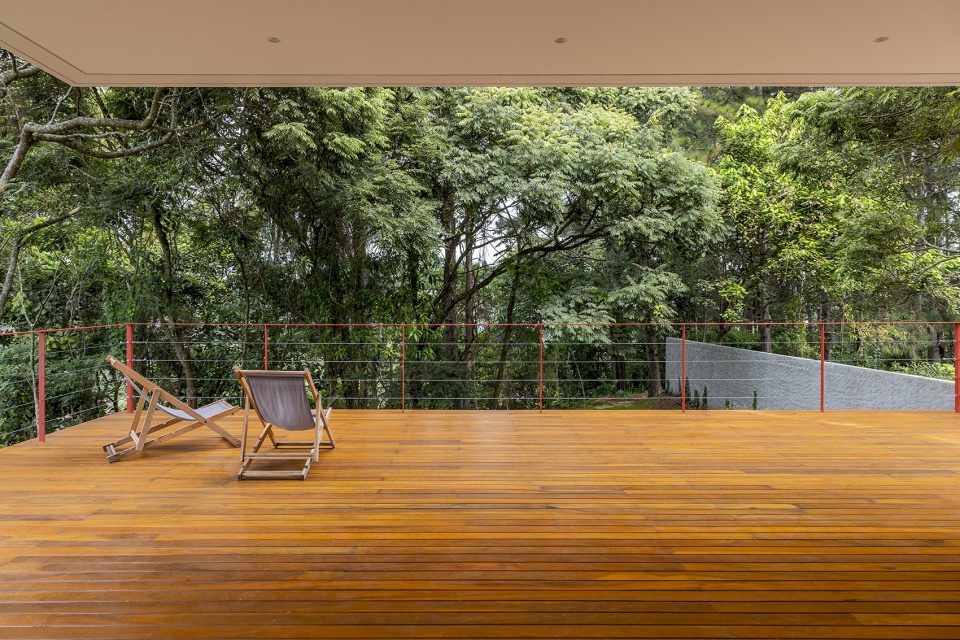
受现代主义与粗野主义建筑原则影响,项目强调裸露结构、大跨度空间与天然材料的表达。建筑体量由精确的白色几何块体与车库部分红色混凝土体量共同组成,形成富有表现力的城市界面。朝向树林的一侧通过大面积开口展开,将树木景观纳入室内视野,模糊了建筑与自然之间的边界。上层深远的悬挑空间将视线延伸至树林,而位于公共层、同样悬挑而出的木平台则进一步强化了人与自然的联系,并创造出可供沉思停留的场所。尽管基地地势倾斜,整个首层依然保持无障碍可达,而木平台则进一步拓展了这一空间视野。
Influenced by modernist and brutalist architectural principles, the project expresses exposed structure, generous spans, and natural materials. The volumetric composition combines precise white geometric blocks with the reddish concrete volume of the garage, creating an expressive urban gesture. On the grove-facing side, the house opens through wide openings that frame views of the trees, dissolving the boundaries between interior and landscape. A deep cantilever on the upper floor extends the gaze toward the grove, while a wooden deck at the social level, also cantilevered, reinforces the connection with nature and creates a space for contemplation. Despite the sloping terrain, the entire ground floor remains accessible, and the deck expands this horizon.
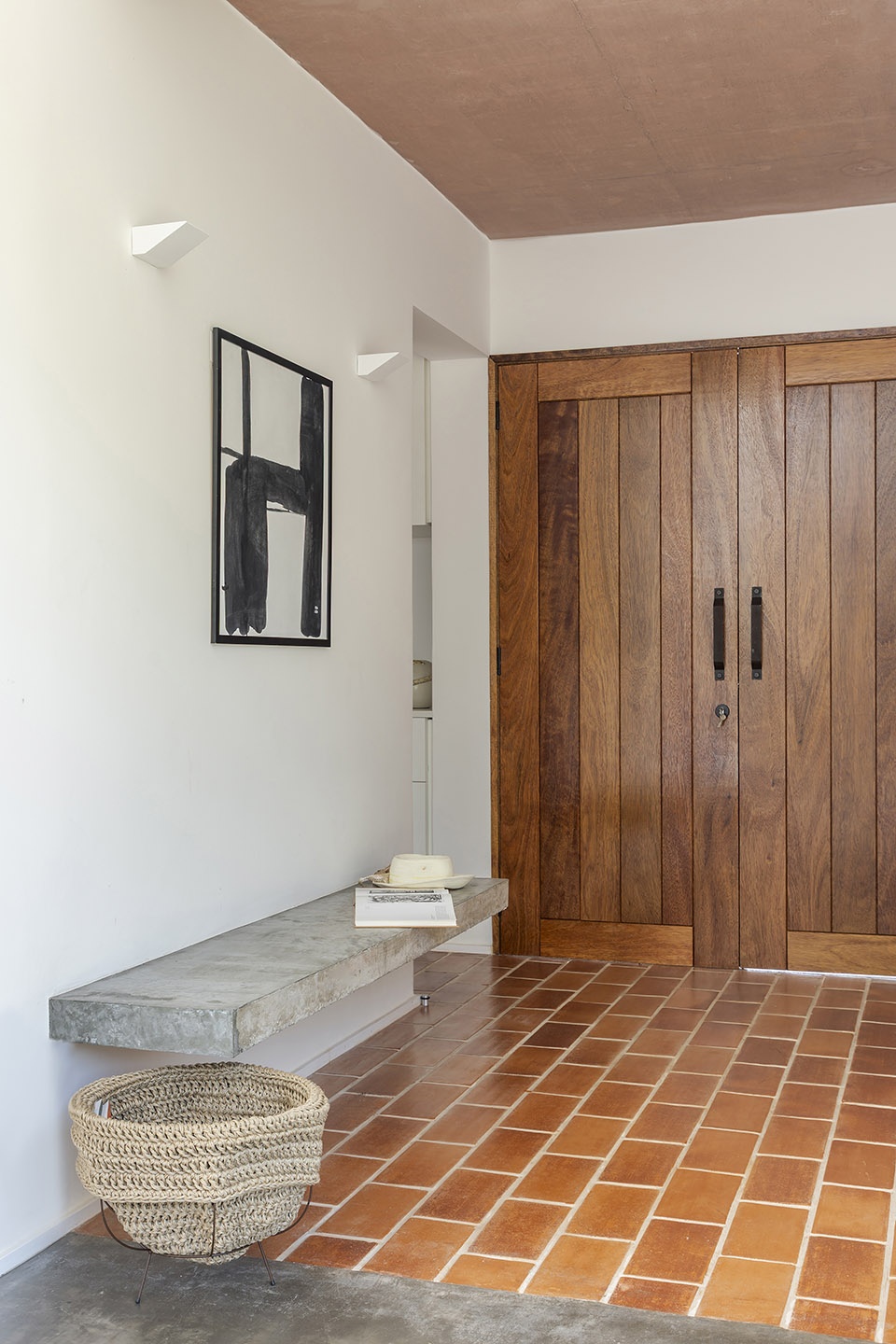
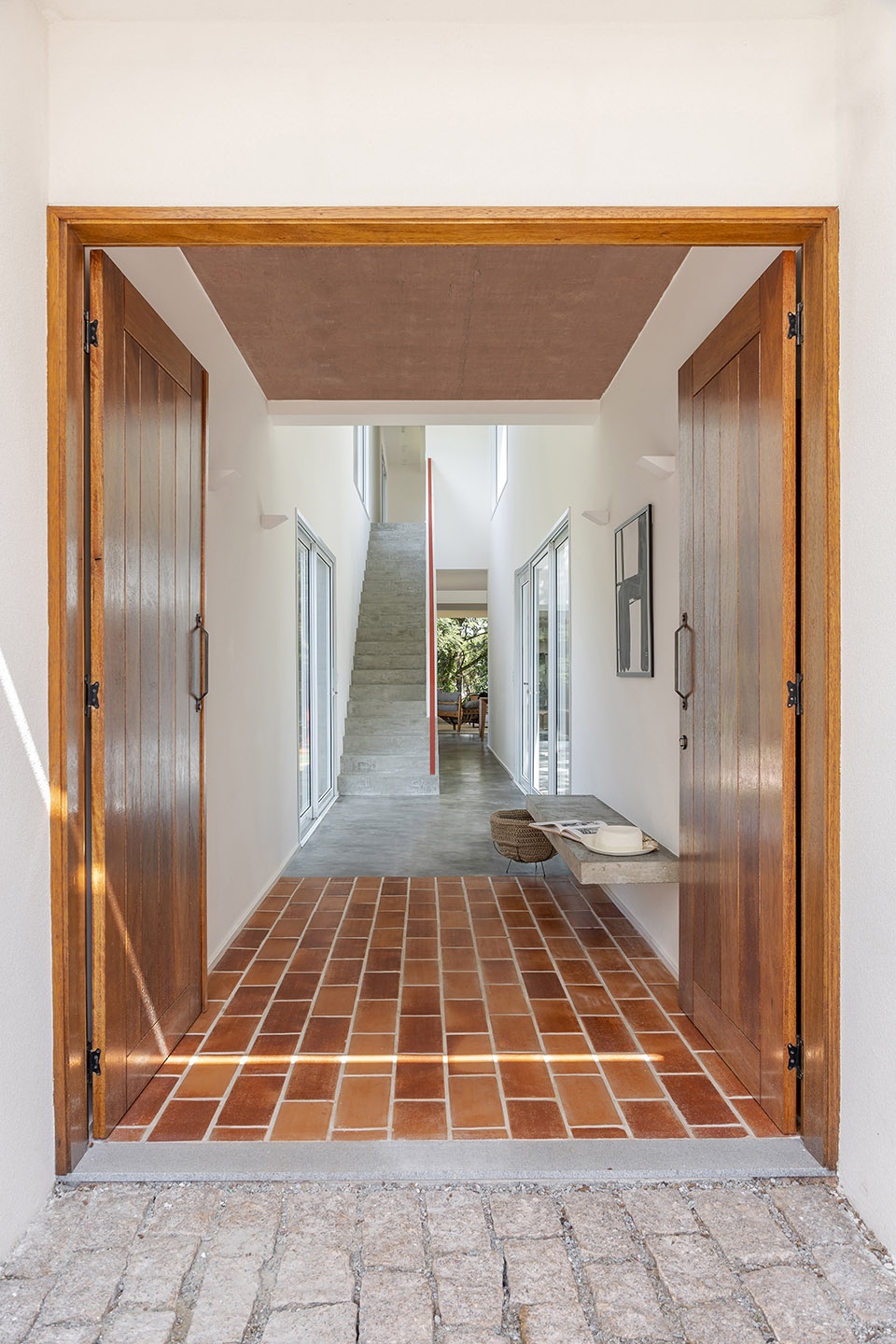
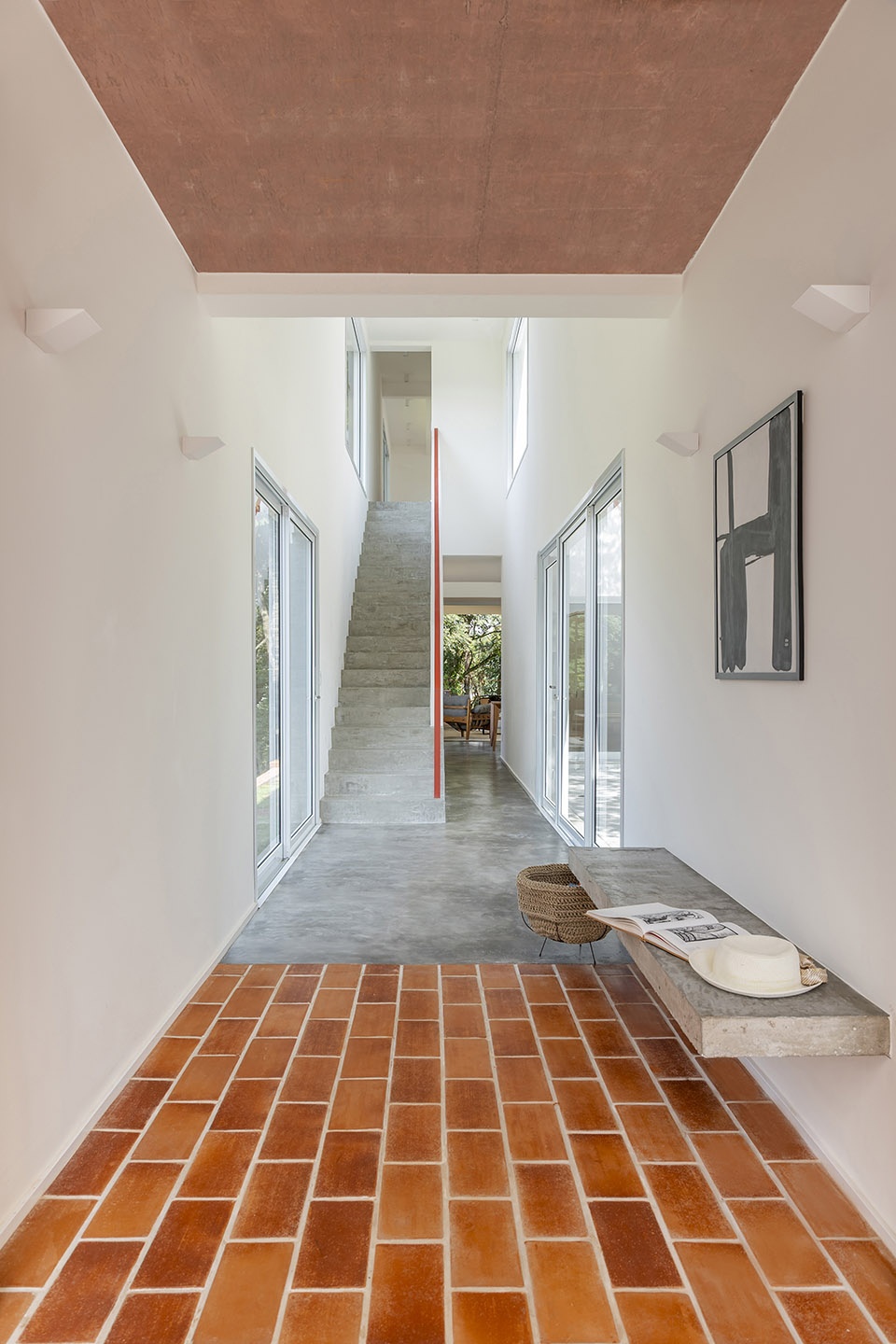
▼入口门廊,lobby at the entrance
▼客厅区域,living room
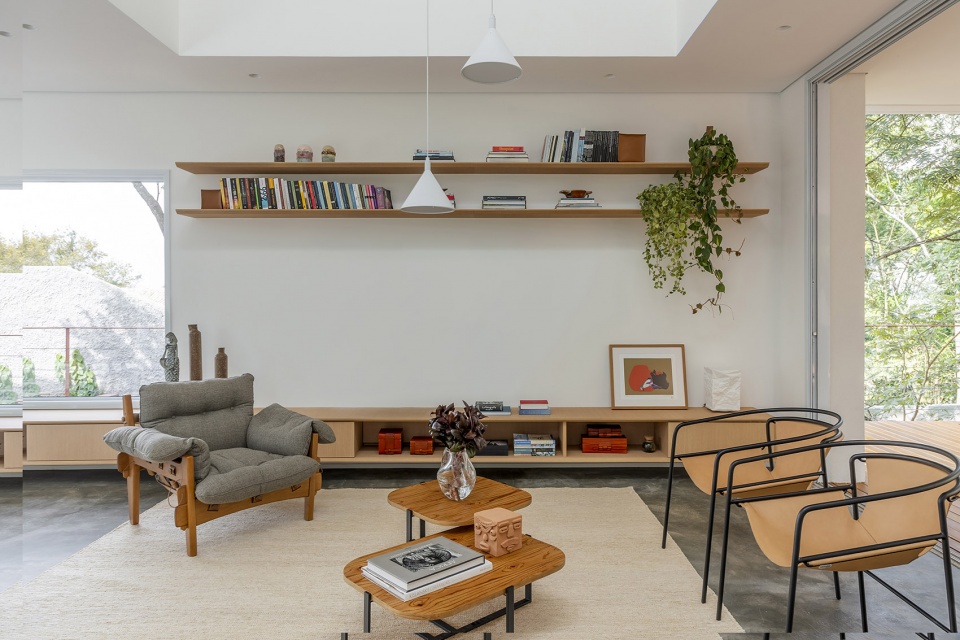
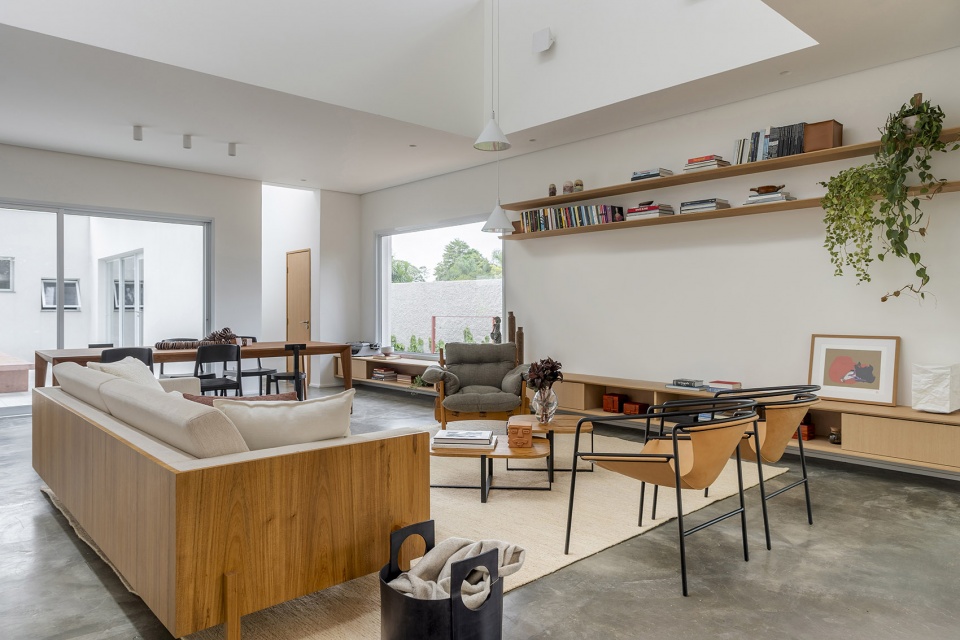
▼天窗将自然光引入室内,The skylight brings in natural light into the room
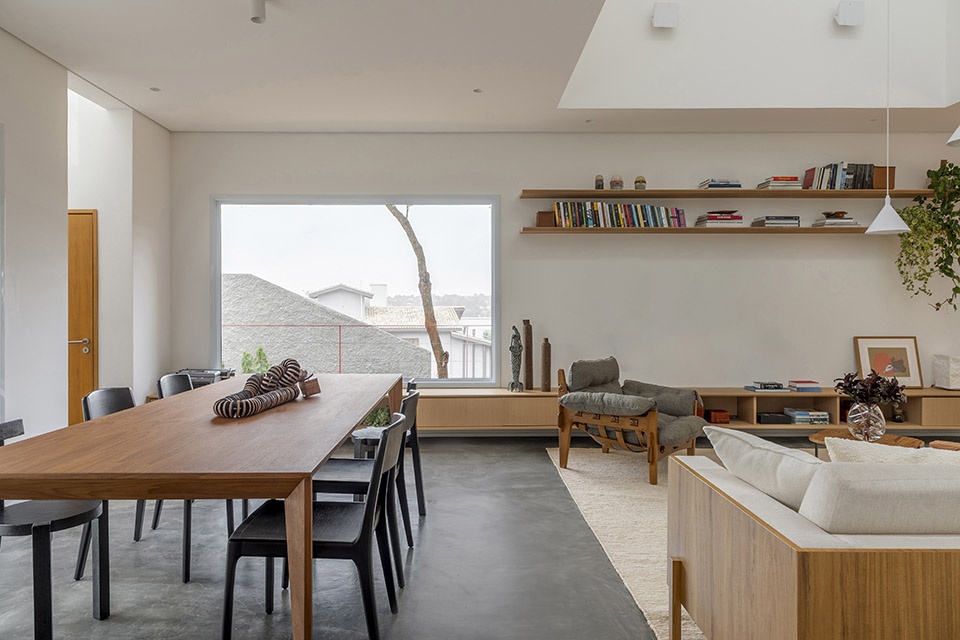
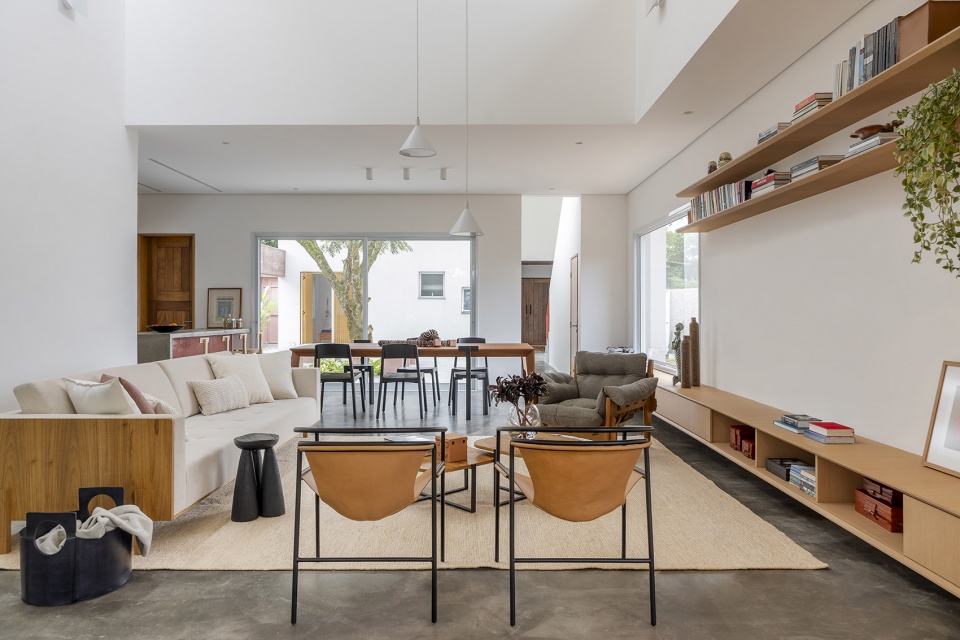
▼宽敞舒适的大空间,Large and comfortable spacious area
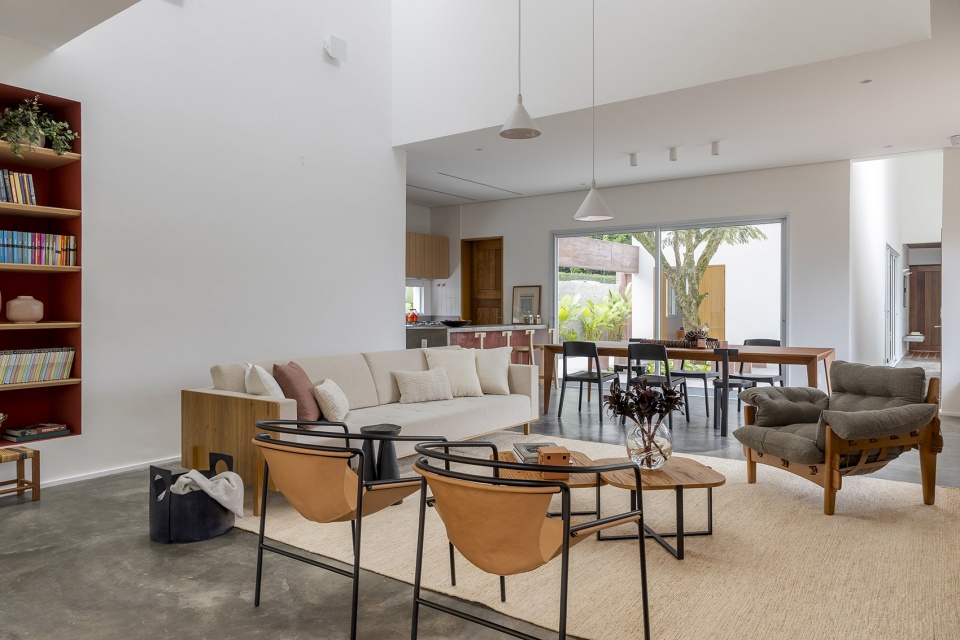
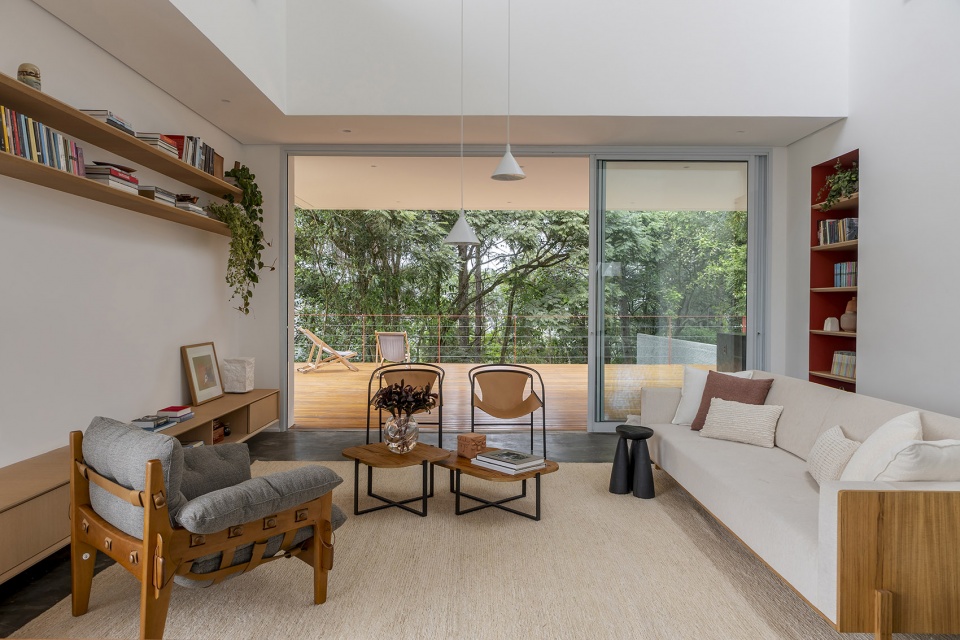
▼通高中庭,double-height atrium
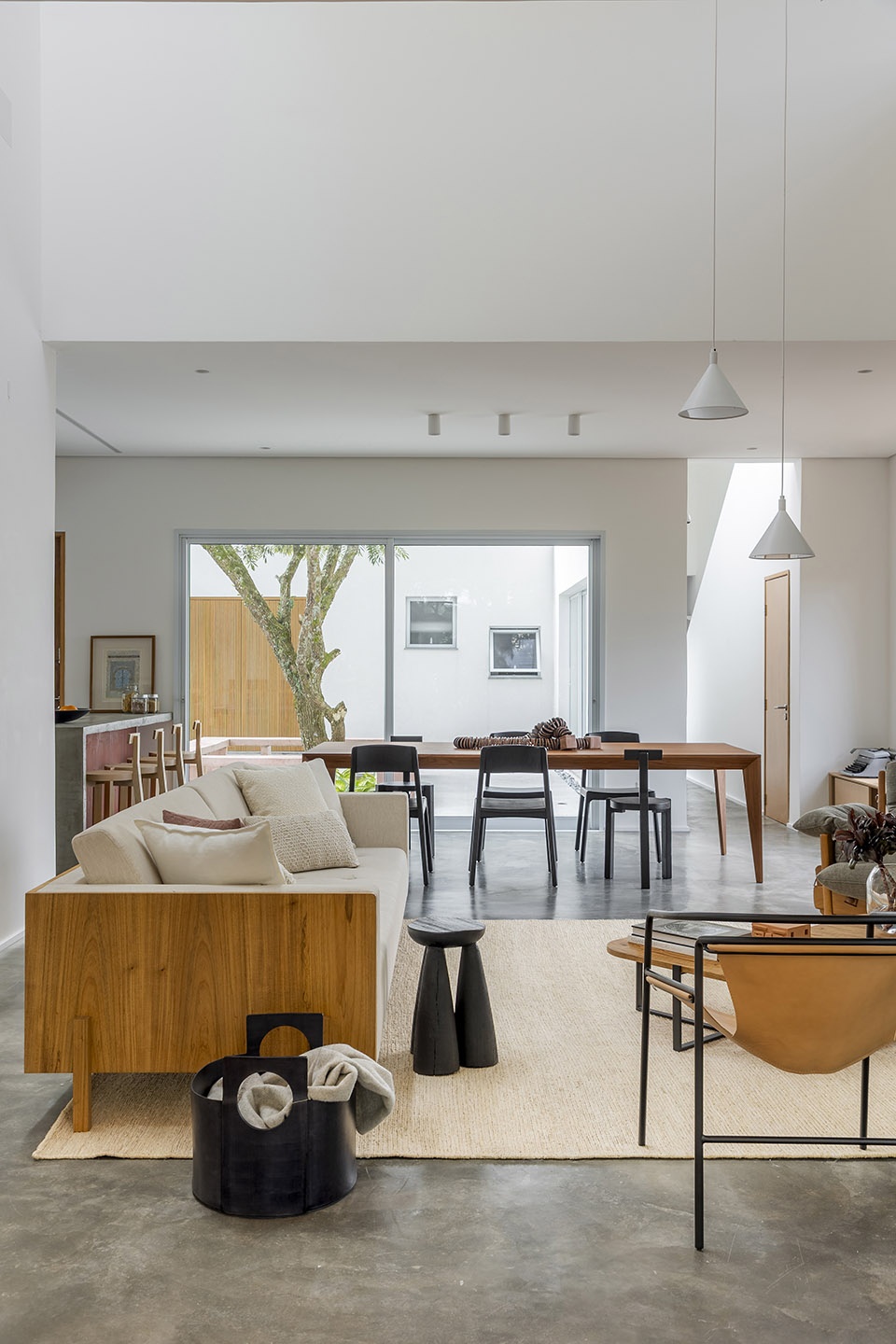
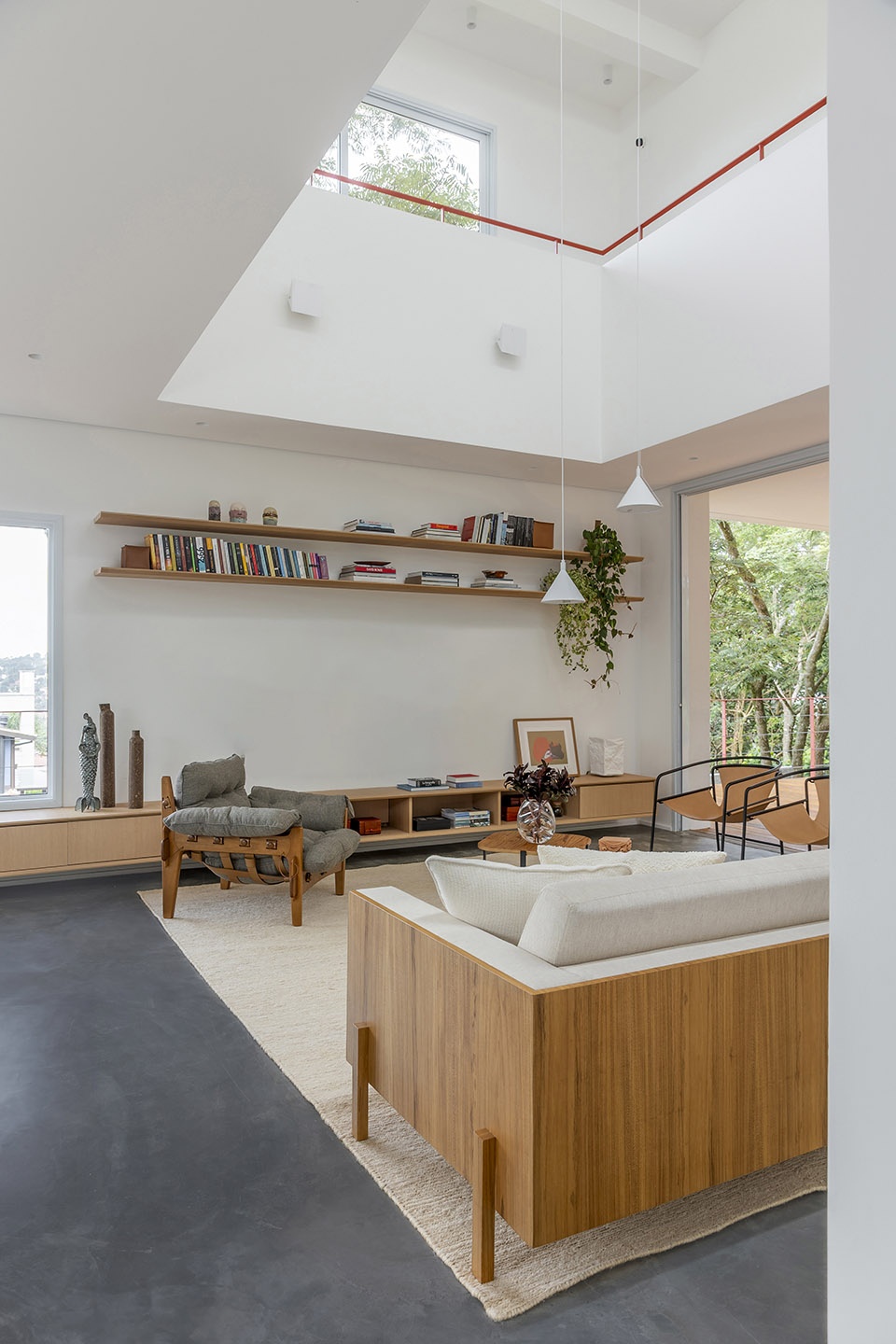
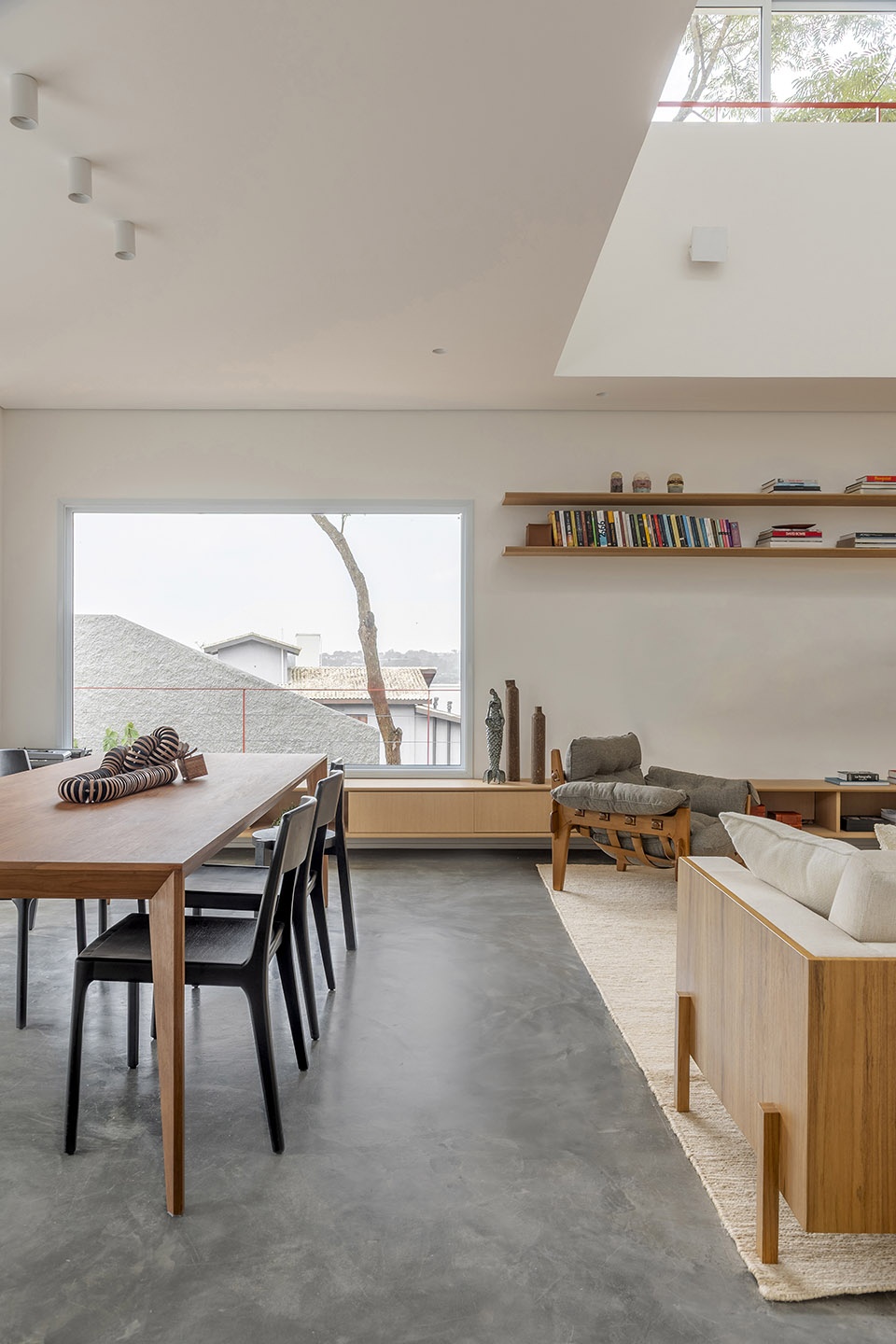
▼客厅局部,living room detail
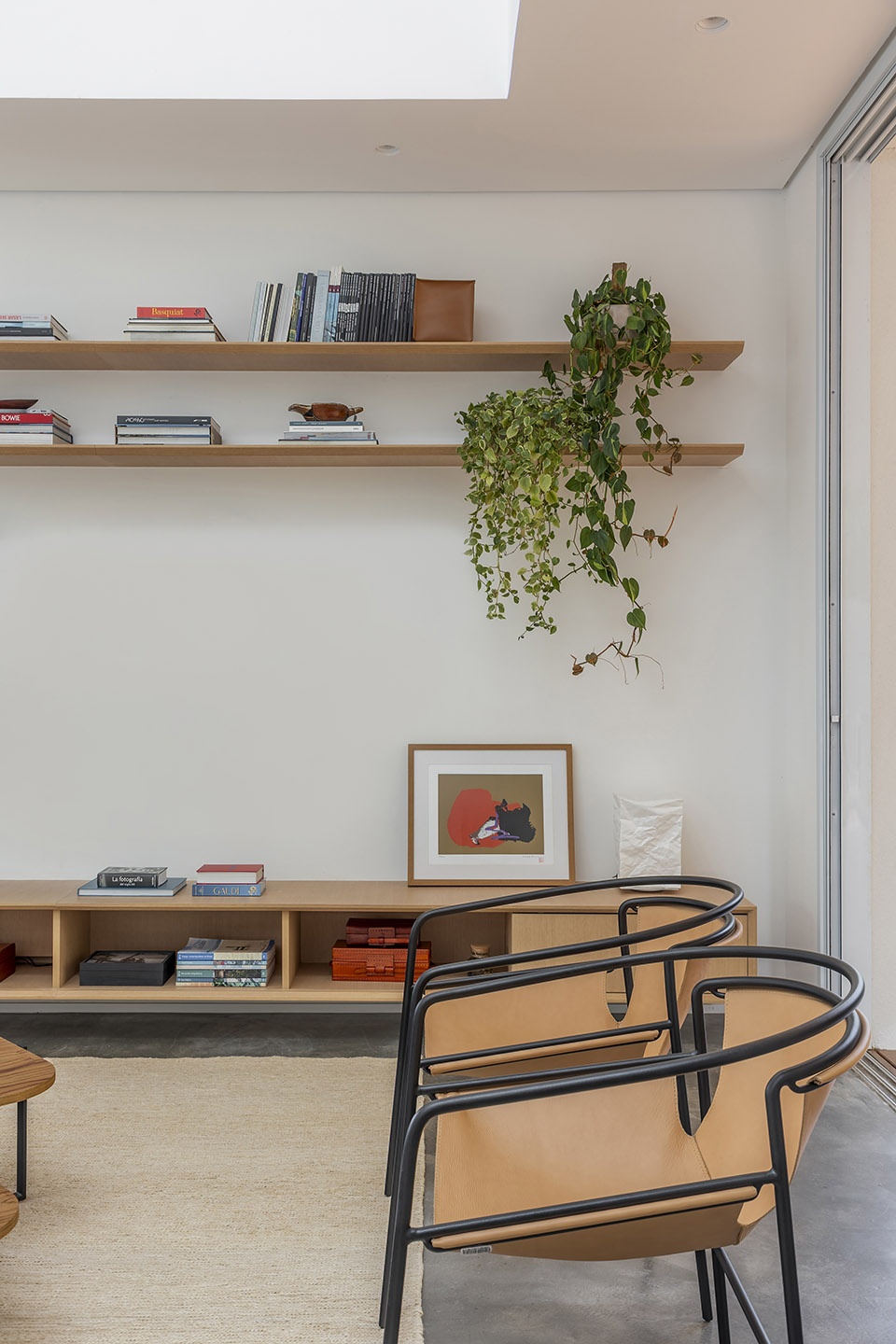
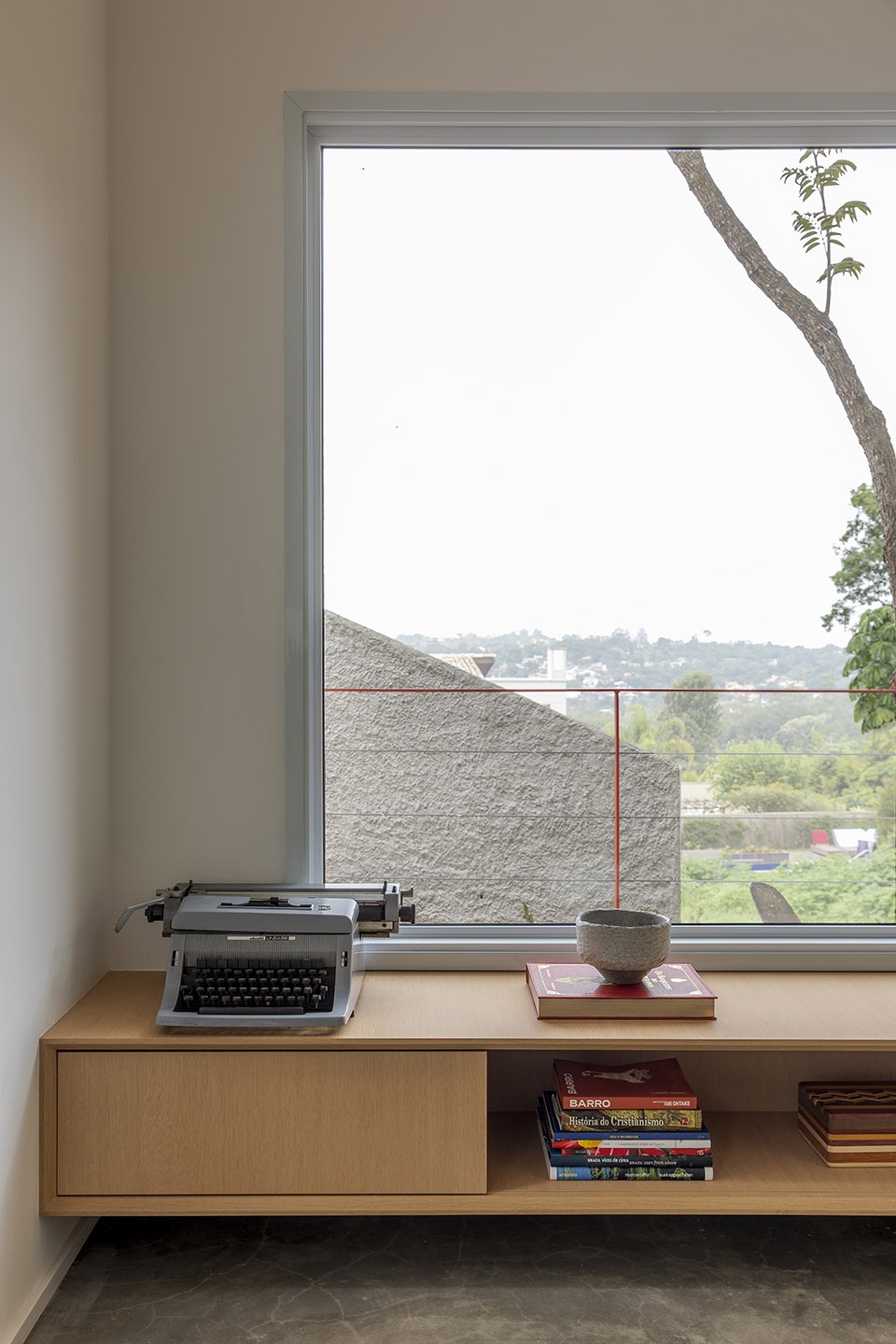
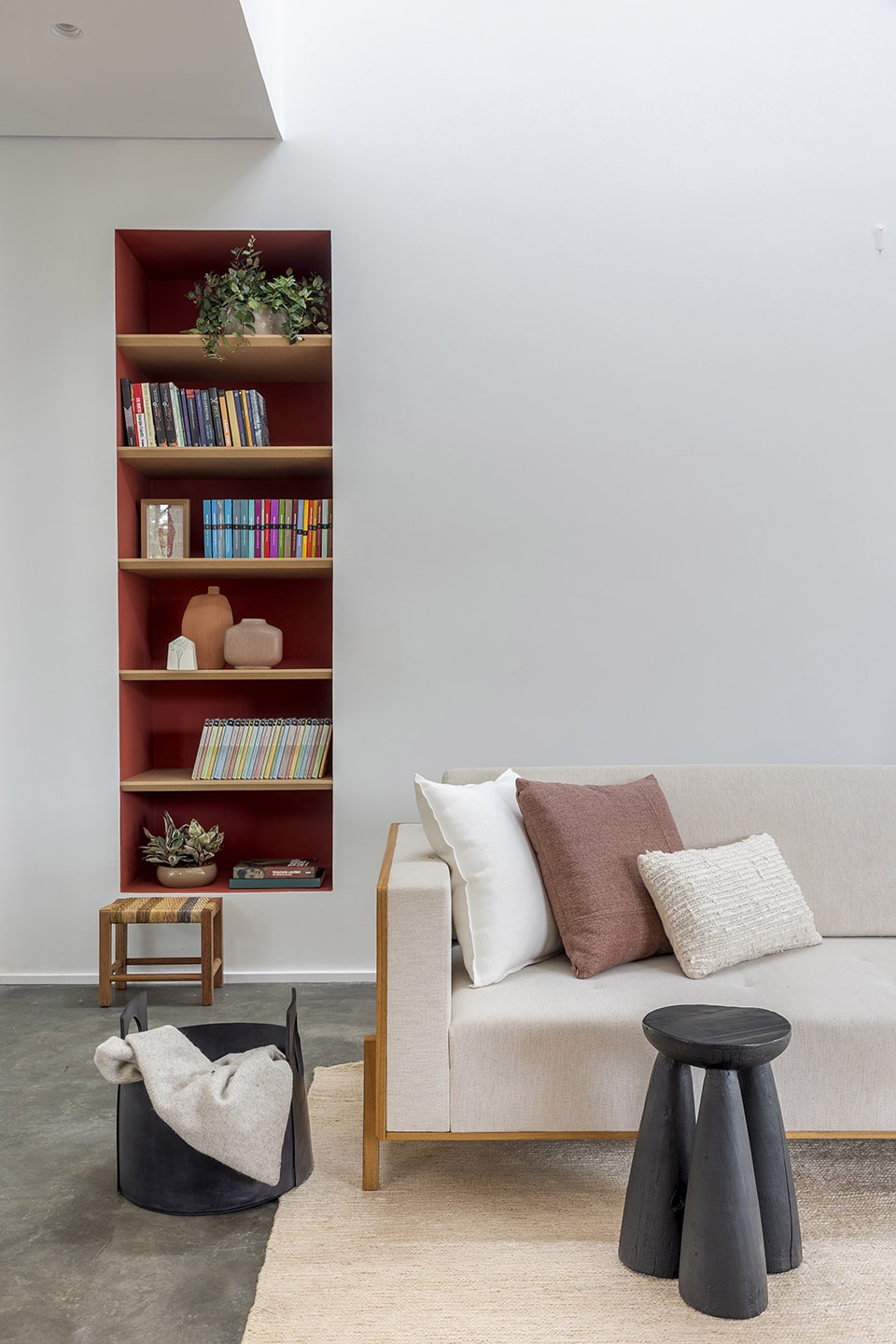
▼厨房区域,the kitchen
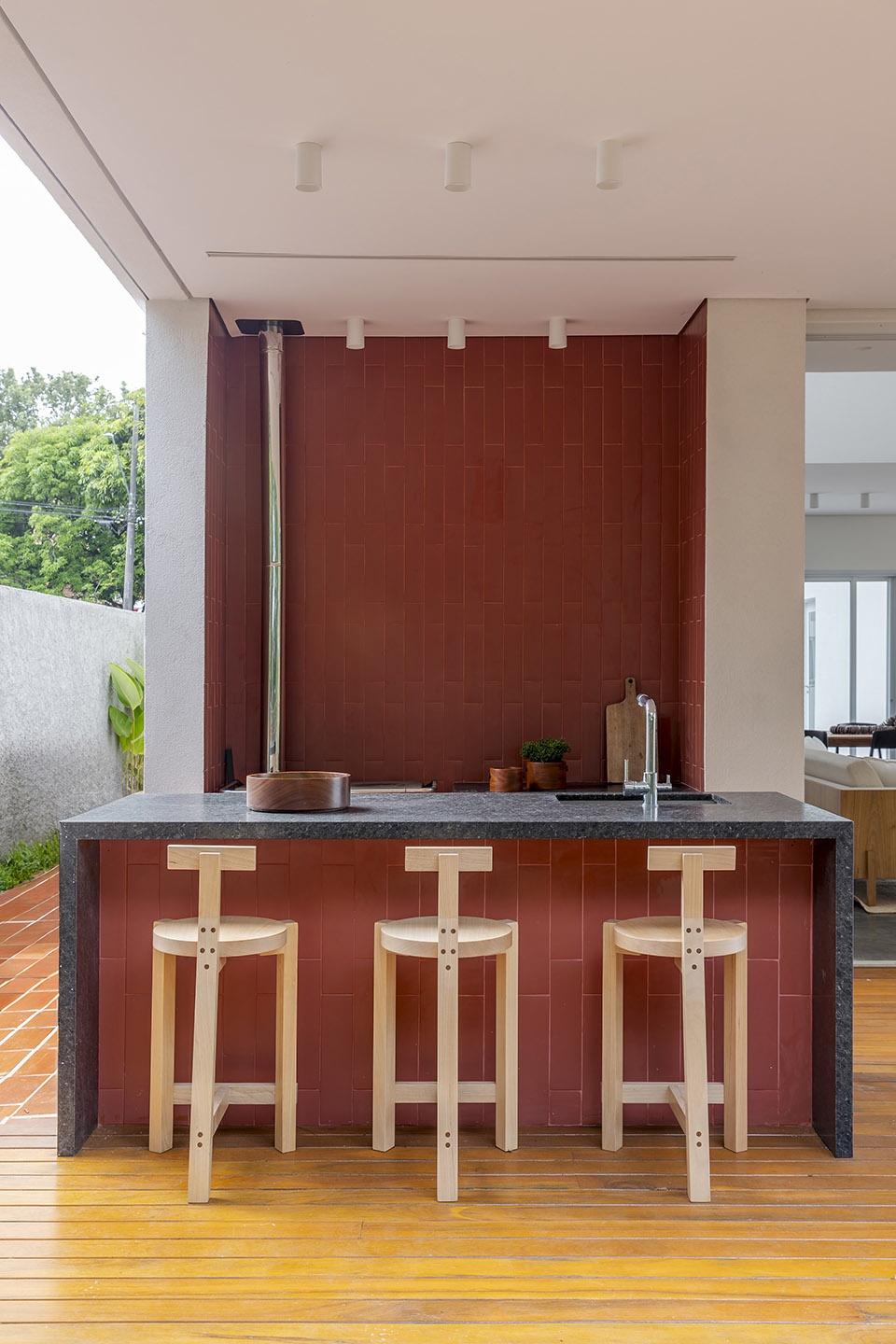
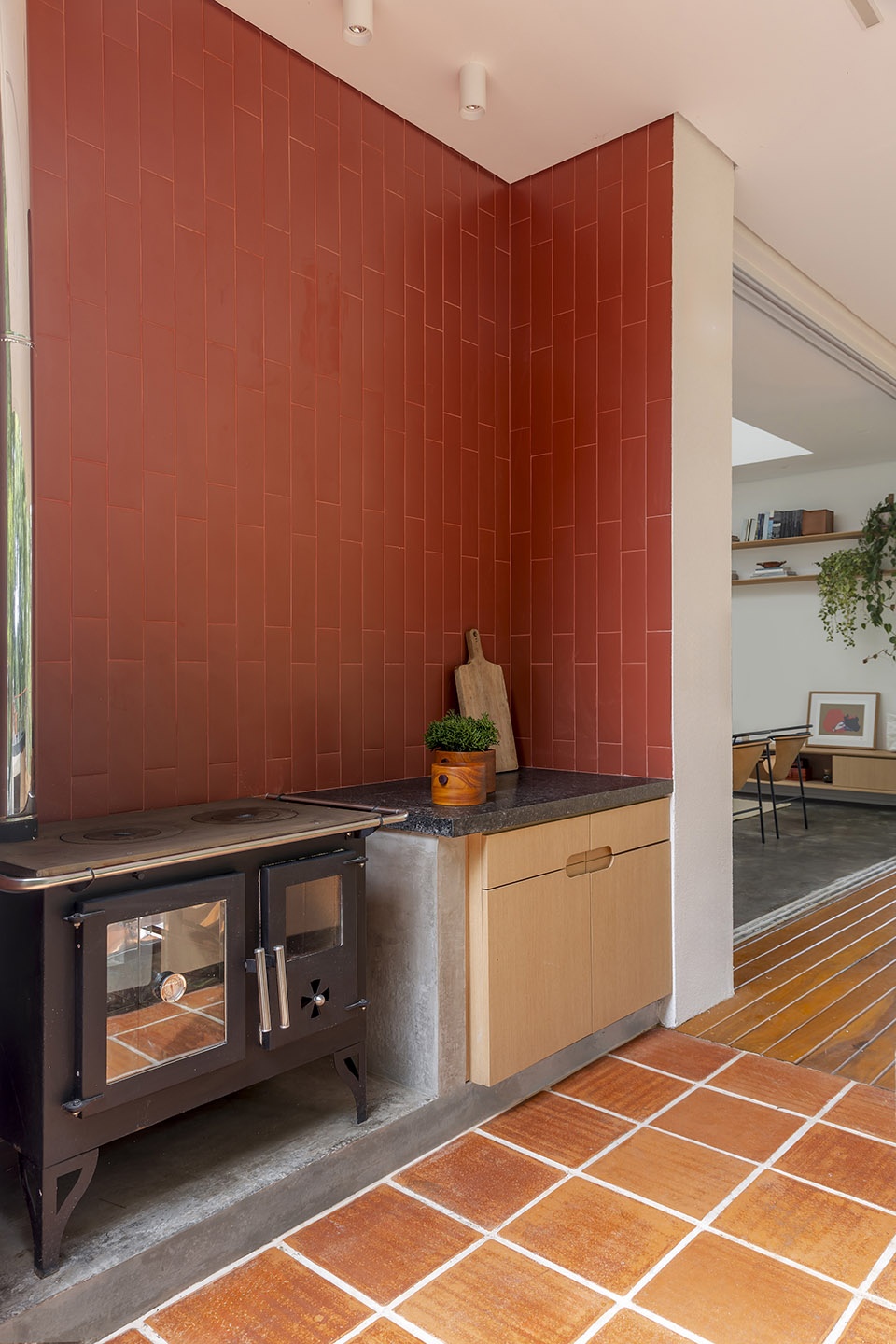
中央庭院实现了建筑的交叉通风,并将北侧光线引入公共区域,以弥补朝向南侧树林区域日照不足的问题。位于南侧后立面的卧室通过朝东与朝西的侧向开口平衡自然采光,同时实现空气对流。在通高空间中,顶部天窗将自然光引入室内,并有助于热空气排出。
The central courtyard enables cross-ventilation and brings northern light into the social area, compensating for the southern orientation facing the grove, which receives limited sunlight. In the bedrooms facing the grove along the southern rear façade, lateral openings oriented east and west balance daylight and allow cross-ventilation. In the double-height space, a skylight draws natural light into the interior and facilitates warm air escape.
▼通往二层的楼梯,the staircase towards the upper level
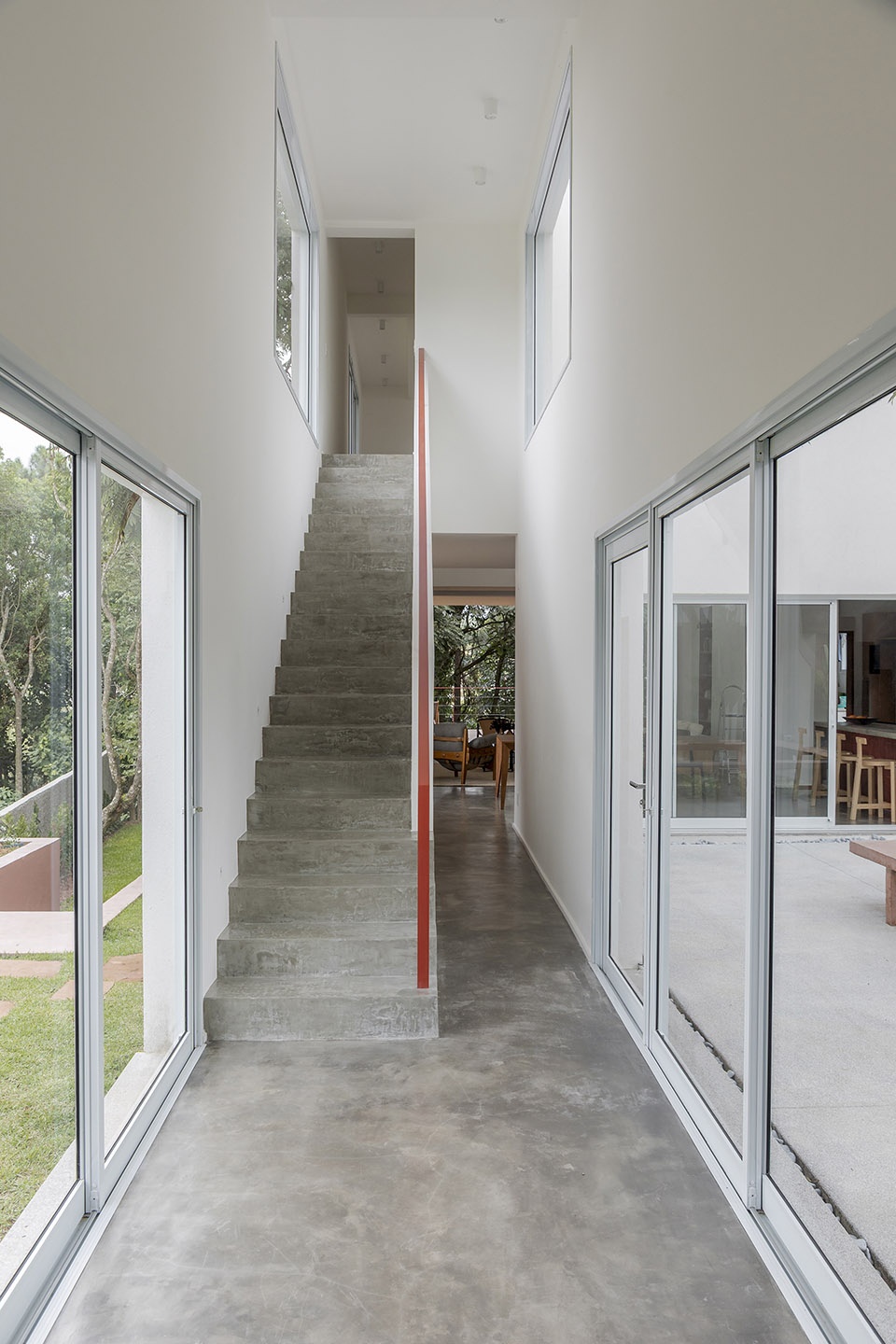
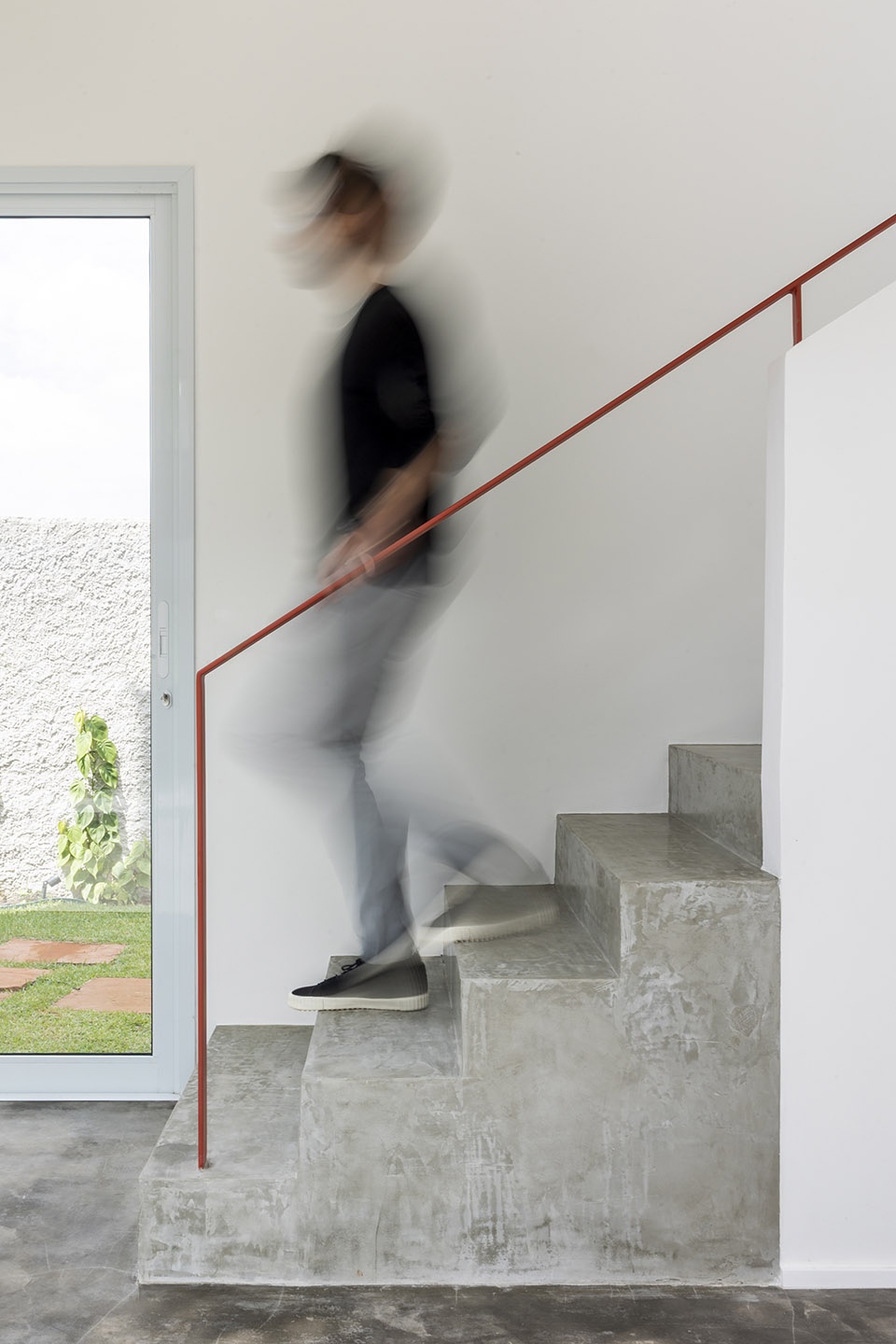
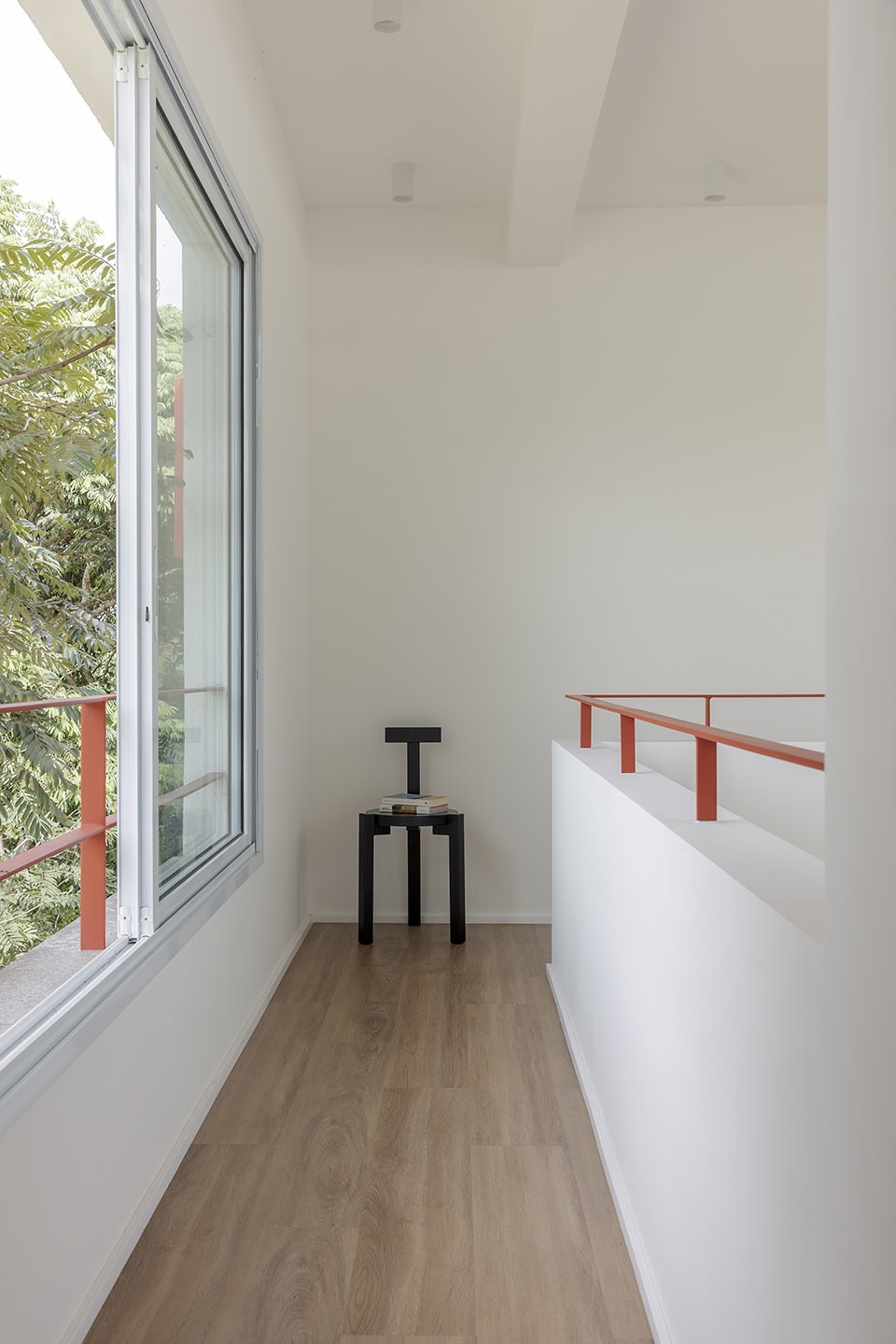
▼卧室,bedroom
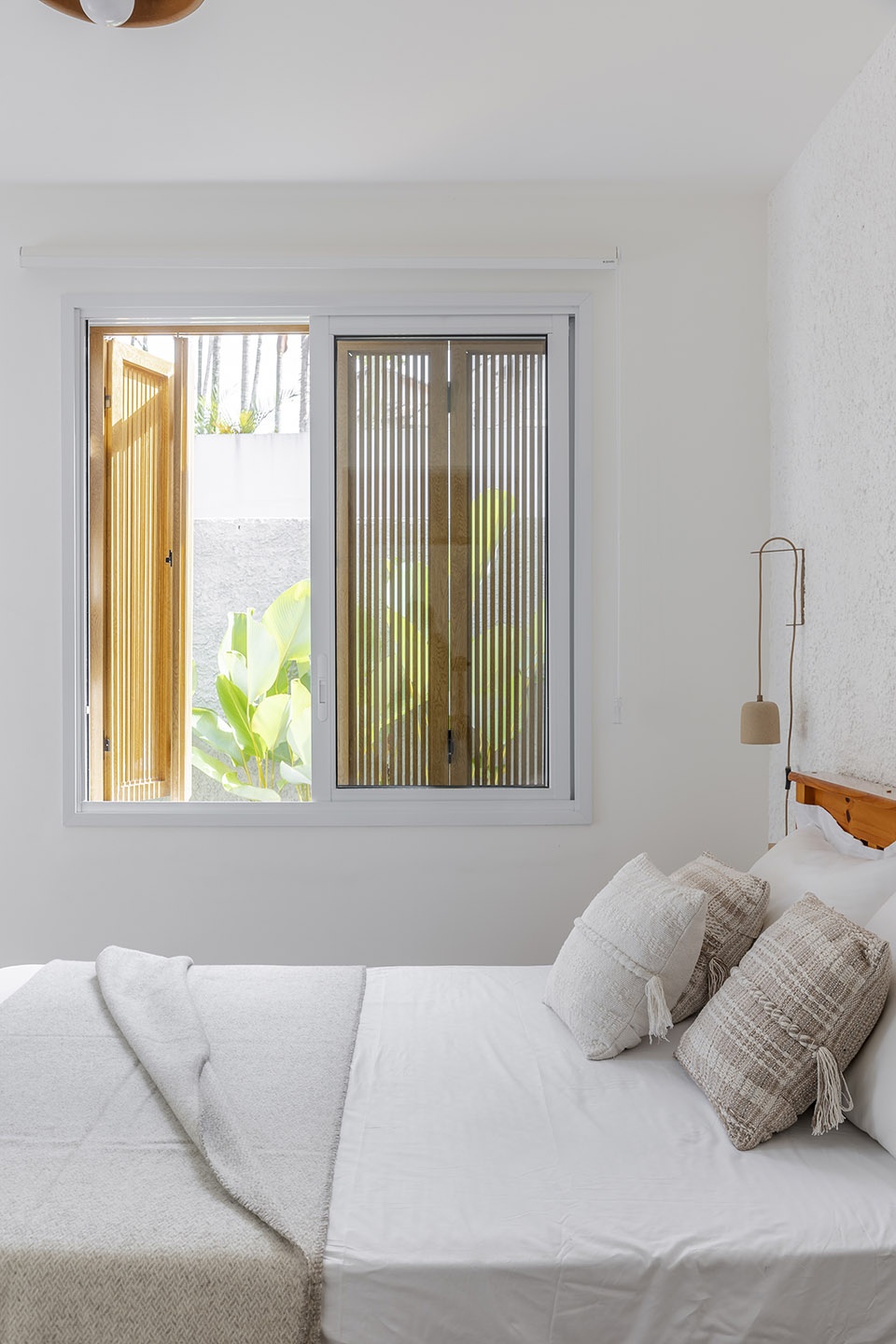
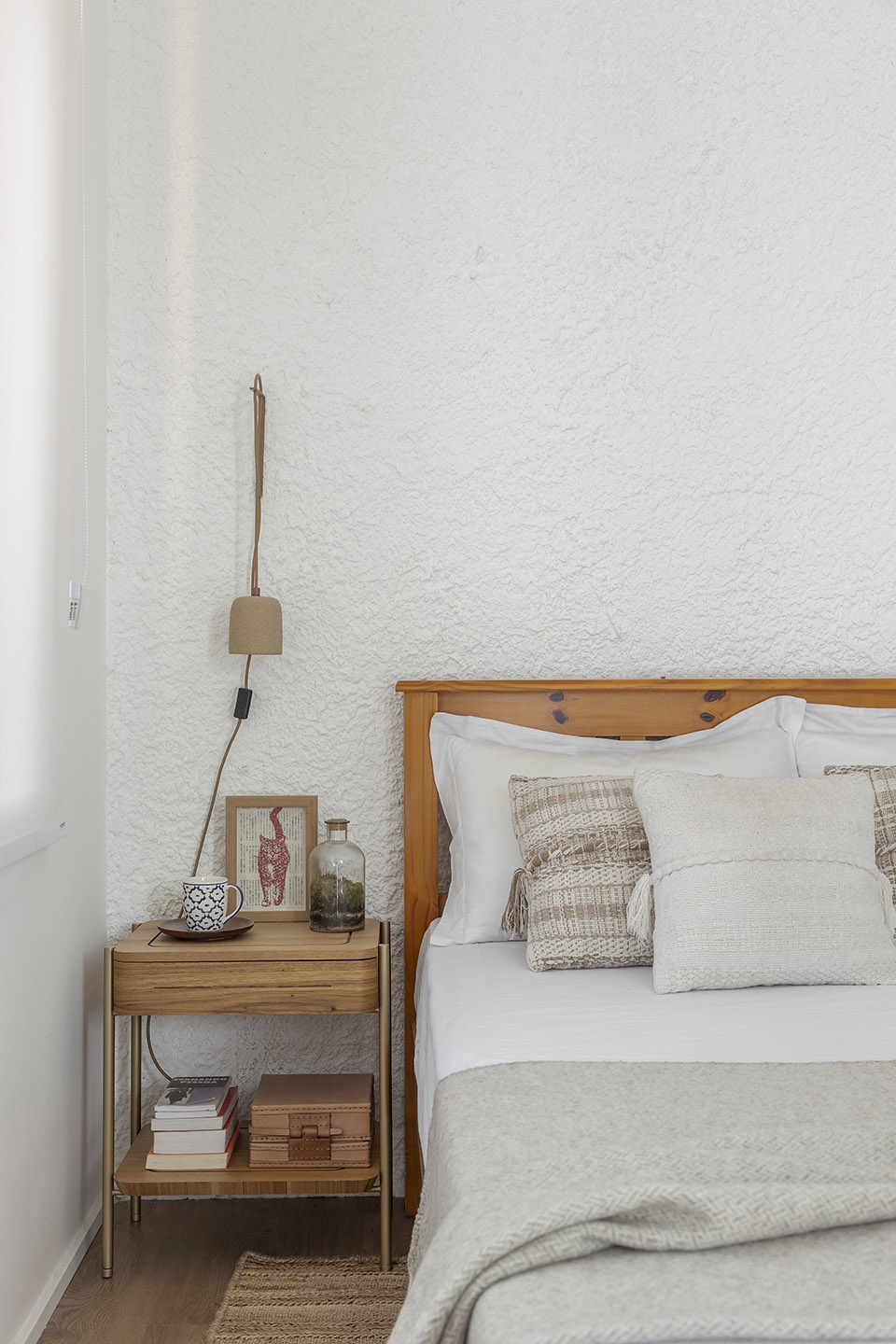
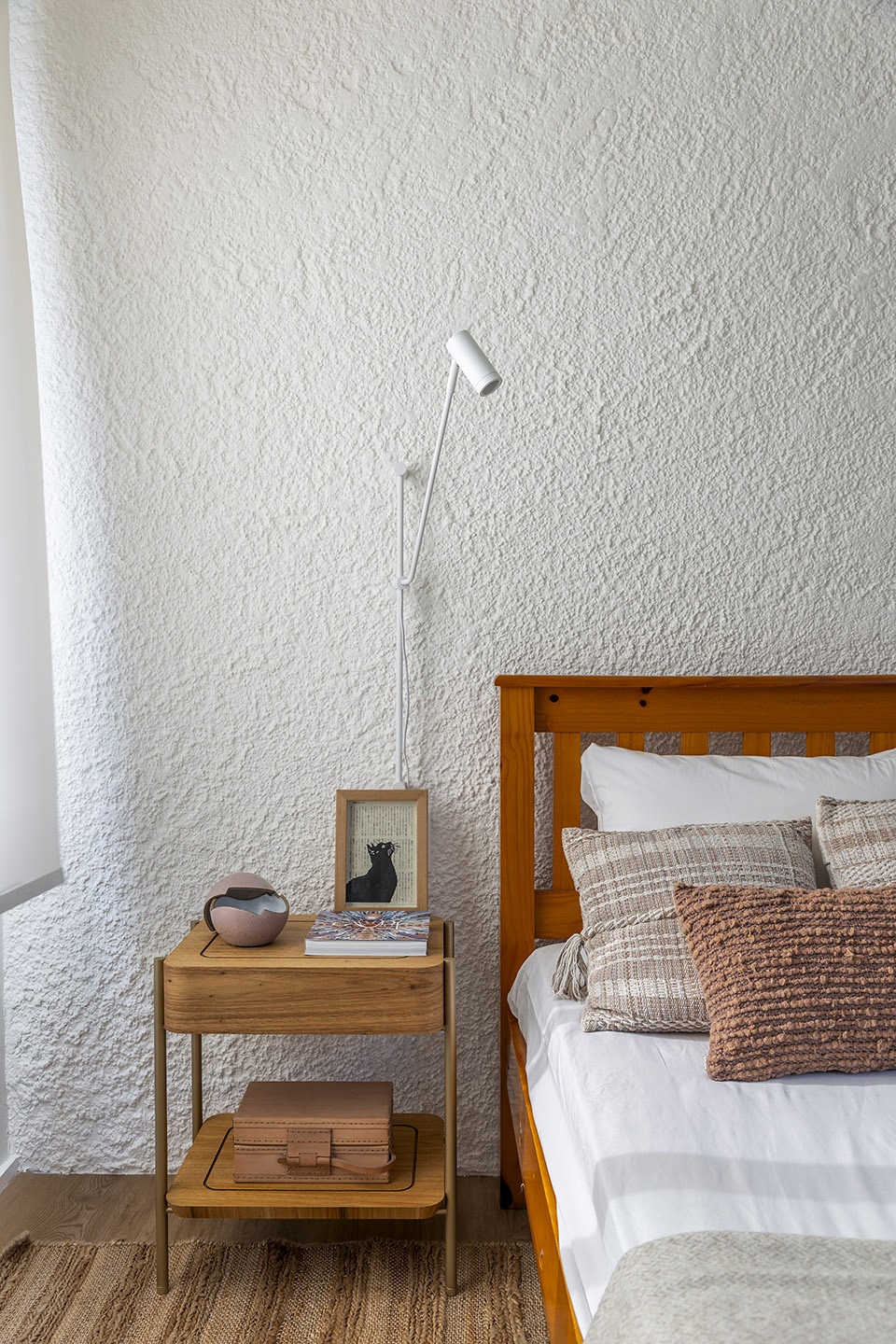
▼浴室,bathroom
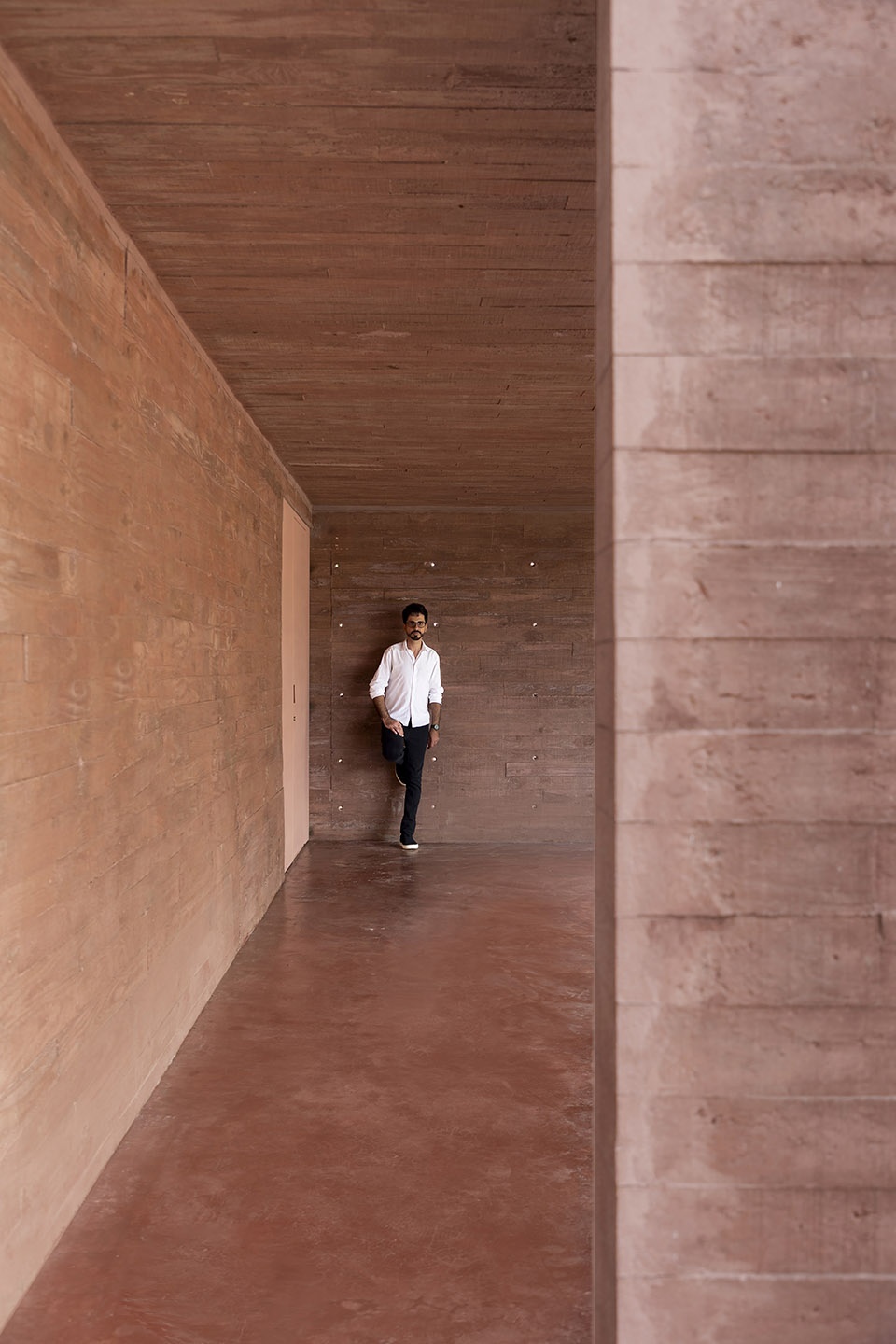
结构与材料本身被视作建筑语言的一部分。裸露的混凝土楼板、充裕的层高以及大尺度开口将光线与空气引入室内,进一步强化了空间的连续性,以及建筑与自然景观之间持续不断的对话关系。
Structure and materiality are embraced as architectural language. Exposed concrete slabs, generous ceiling heights, and ample openings draw light and ventilation into the interior, reinforcing spatial continuity and the constant dialogue between architecture and landscape.
▼裸露的混凝土楼板,exposed concrete slabs
▼大尺度开口将光线与空气引入室内,ample openings draw light and ventilation into the interior
因此,“Bosque住宅”所提出的,并非仅仅是一种置身于景观中的建筑,而是一种成为景观组成部分的建筑。被保留的树木、中央庭院以及悬浮体量共同构建出一种自然与建筑相互交织的空间体验,使树林本身成为住宅不可分割的一部分。
In this way, Casa Bosque proposes an architecture that not only situates itself in the landscape but becomes part of it. The preserved tree, the central courtyard, and the suspended volumes construct a spatial experience where nature and architecture intertwine, transforming the grove into a constitutive element of the house itself.
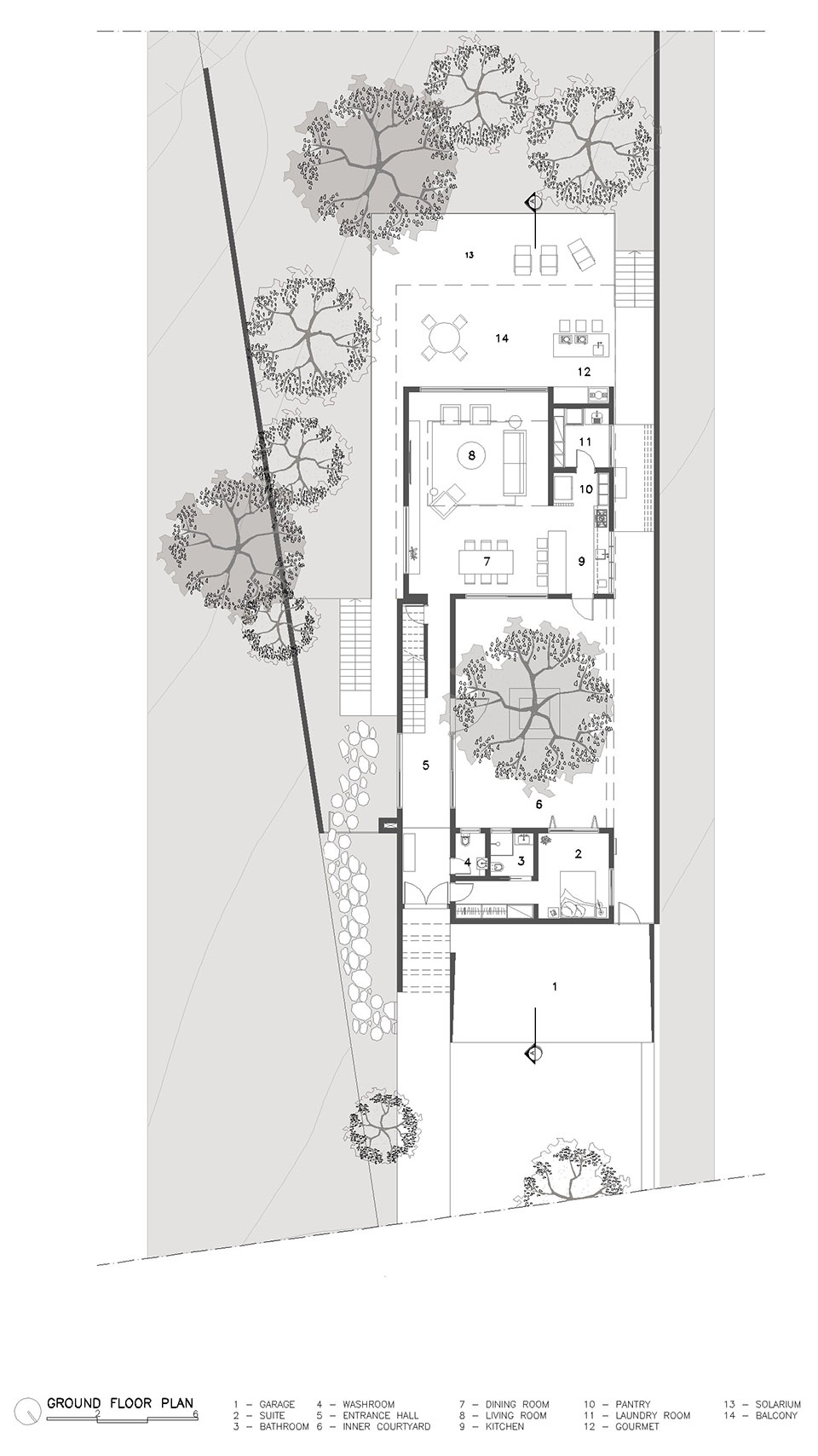
▼一层平面图,ground floor plan
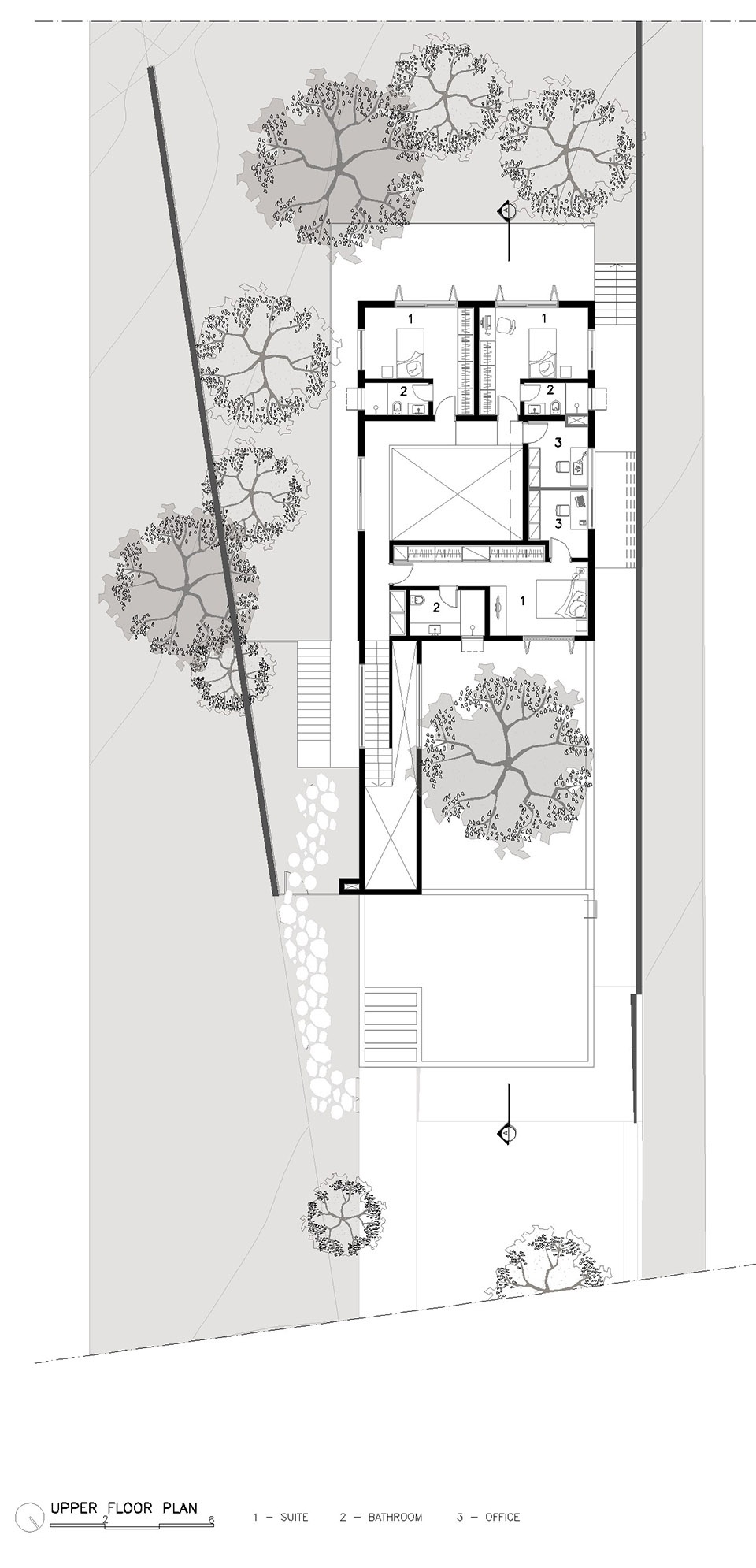
▼二层平面图,first floor plan
Architecture: Raphael Wittmann / RAWI Arquitetura
Project Team: Fernanda Rocha, Vitória Moreno, Wilmar Junior, Mayara Yamaya, and Ulisses Hubner
Location: São Paulo, Brazil
Site Area: 1,200 m²
Built Area: 350 m²
Design Year: 2023
Completion Year: 2025
Category: Residential Architecture
Structural Engineering: DMM Projetos Estruturais
MEP Engineering: Reinaldo França
Contractor: Agamedes Empreiteira
Photographer Rafael Renzo