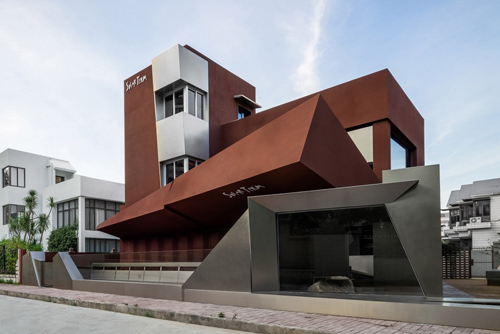
“夏弦”生活方式买手店,嘉兴 / EAF studio
夏弦:以夏为序,以弦筑境。“夏弦”以宋式美学的当代表达为空间内核,在濮院时尚古镇的蜡烛街巷中生长出来。夏弦不是一座复刻宋时的标本,而是让宋韵在日常中回响——留白、呼吸、顺应四时,在器物边缘的光线上,无声,自有弦音。
SummerChord:Summer as the prelude, strings as the boundary. SummerChord grows out of the candlewick alley in Puyuan Fashion Ancient Town, with Song-style aesthetics reimagined for today as its spatial core. SummerChord is not a replica of the Song dynasty. It’s a place where Song charm echoes in everyday life—leaving space, breathing, flowing with the seasons. In the light that falls on the edges of each object, silent, yet a string sings.
▼项目概览,Project Overview
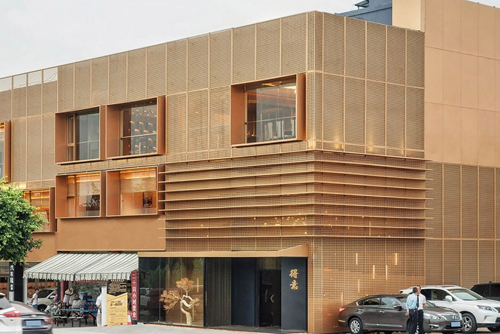
▼建筑外观,Building Exterior
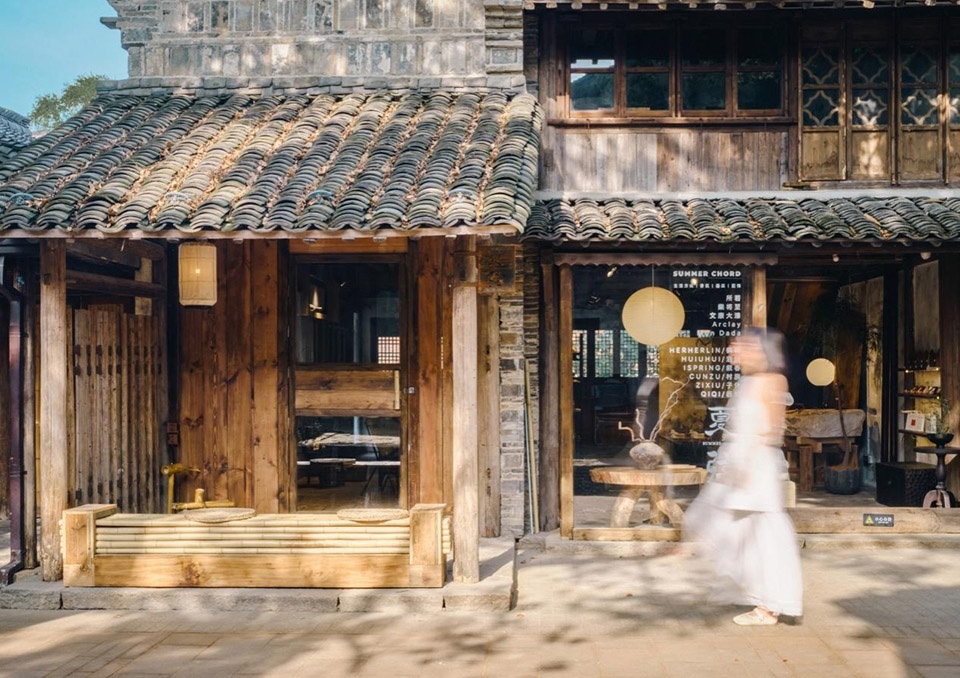
▼项目外观,Project Overview
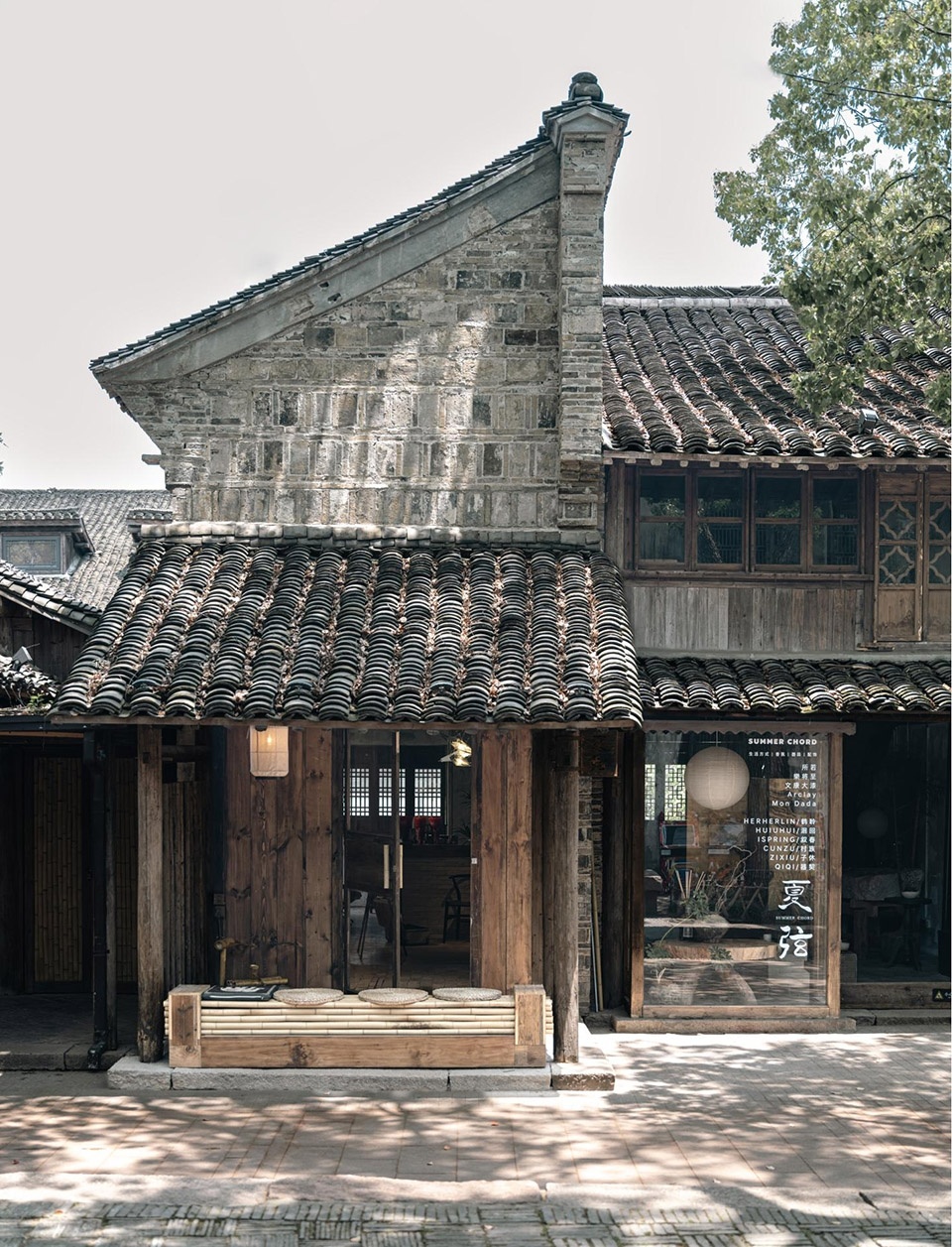
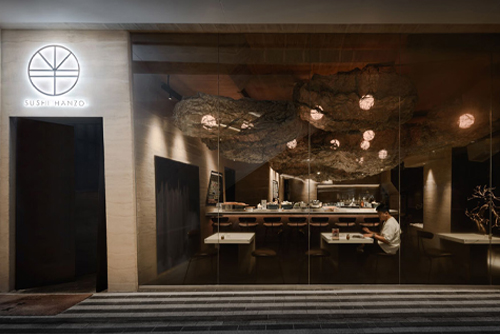
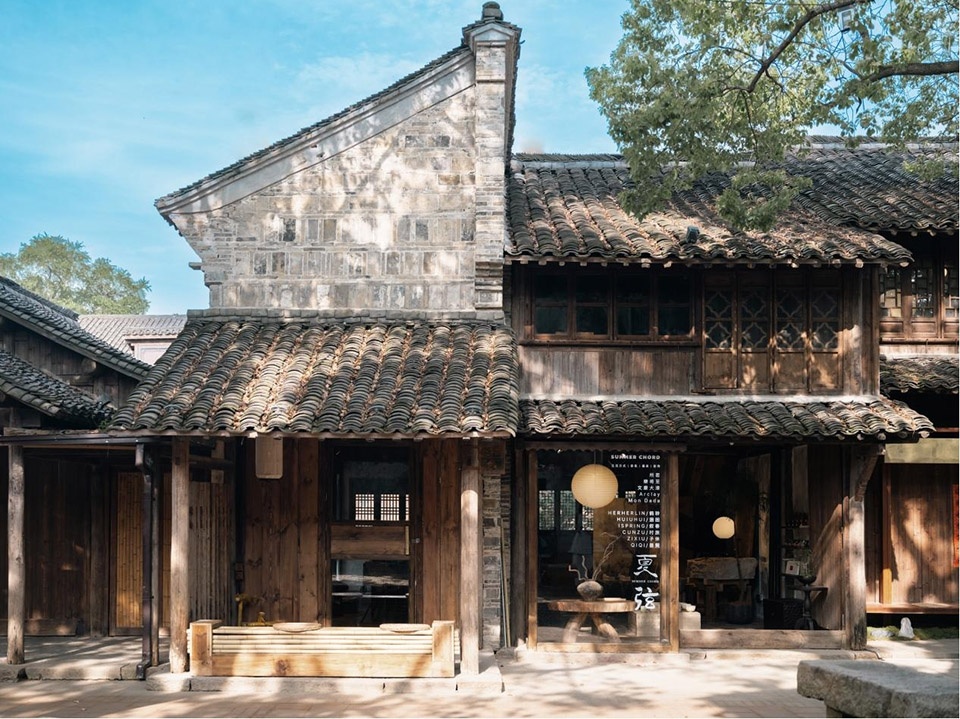
夏弦的外立面,是一次“退让”与“通透”的对话。整面玻璃门与落地窗景消解了店铺与街巷的边界——视线可以毫无阻隔地穿透进来,望见店内的石木展陈与器物轮廓。我们主动从入口处退让出一方半户外休憩区:老木为框,竹材为坐面,还原宋式竹榻的松弛感。这块小小的停留之地,不是店铺的生硬边界,而是古镇街巷的温柔延伸。
The exterior of SummerChord is a dialogue between “retreat” and “transparency.”The full-glass doors and floor-to-ceiling windows dissolve the boundary between the shop and the alley—line of sight flows through without obstruction, revealing the stone-and-wood displays and the silhouettes of objects inside. We actively stepped back from the entrance to create a semi-outdoor resting area: a frame of aged wood, seating surfaces of bamboo, evoking the relaxed feel of a Song-style bamboo daybed. This small space of pause is not a rigid boundary of the shop, but a gentle extension of the ancient town’s alleyway.
▼建筑外观细部,Building appearance details
▼入口休憩区,Entrance Resting Area
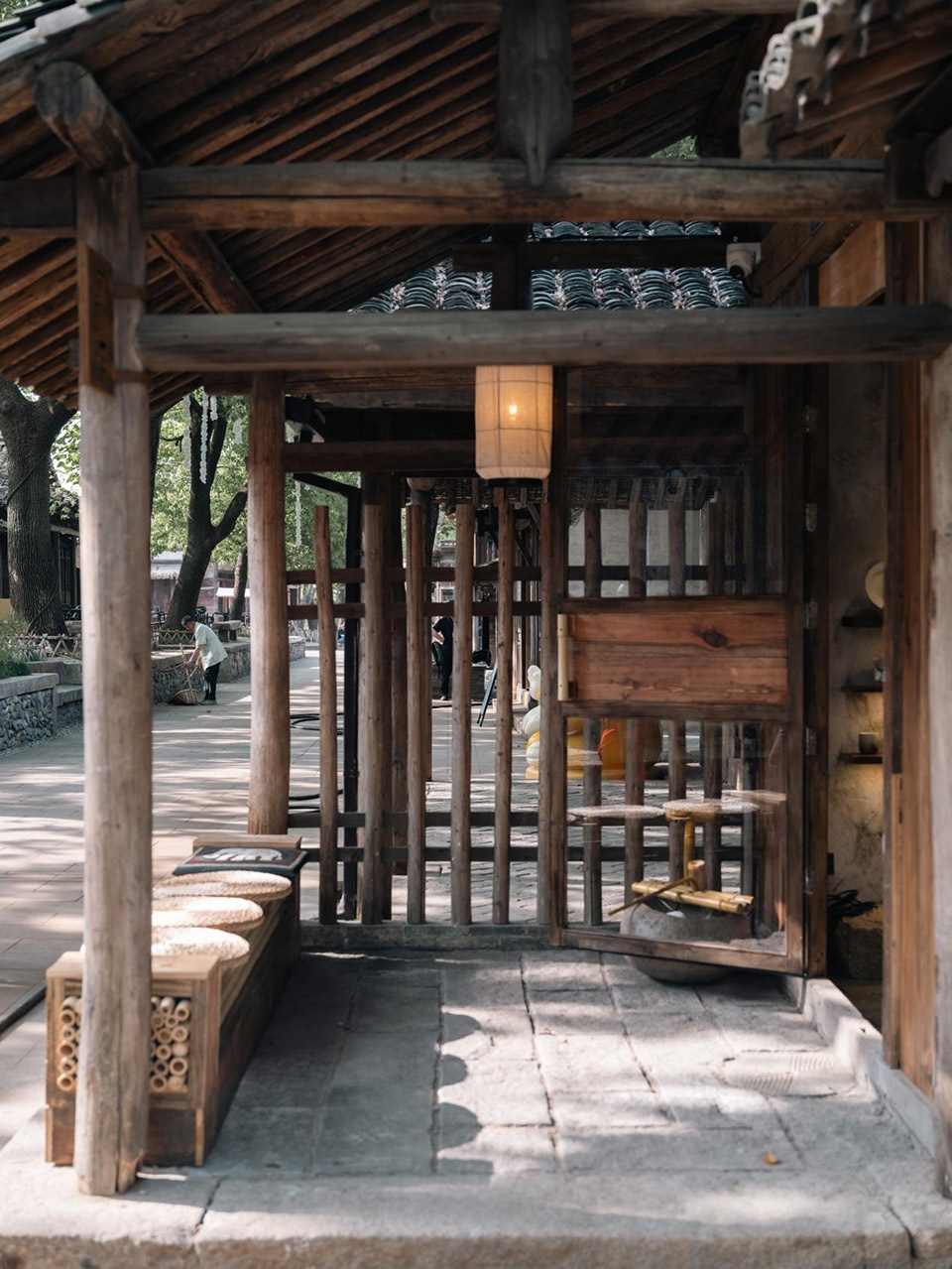
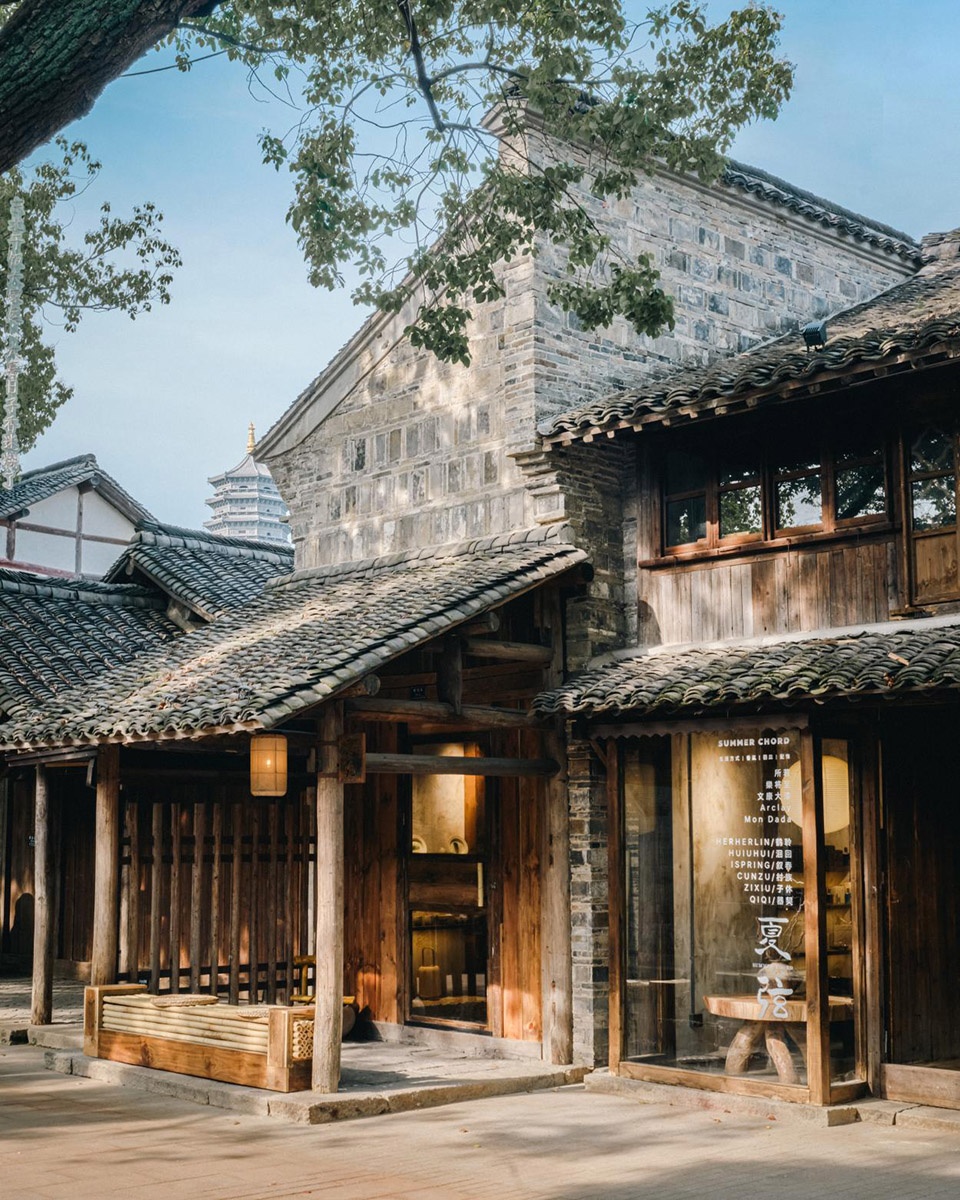
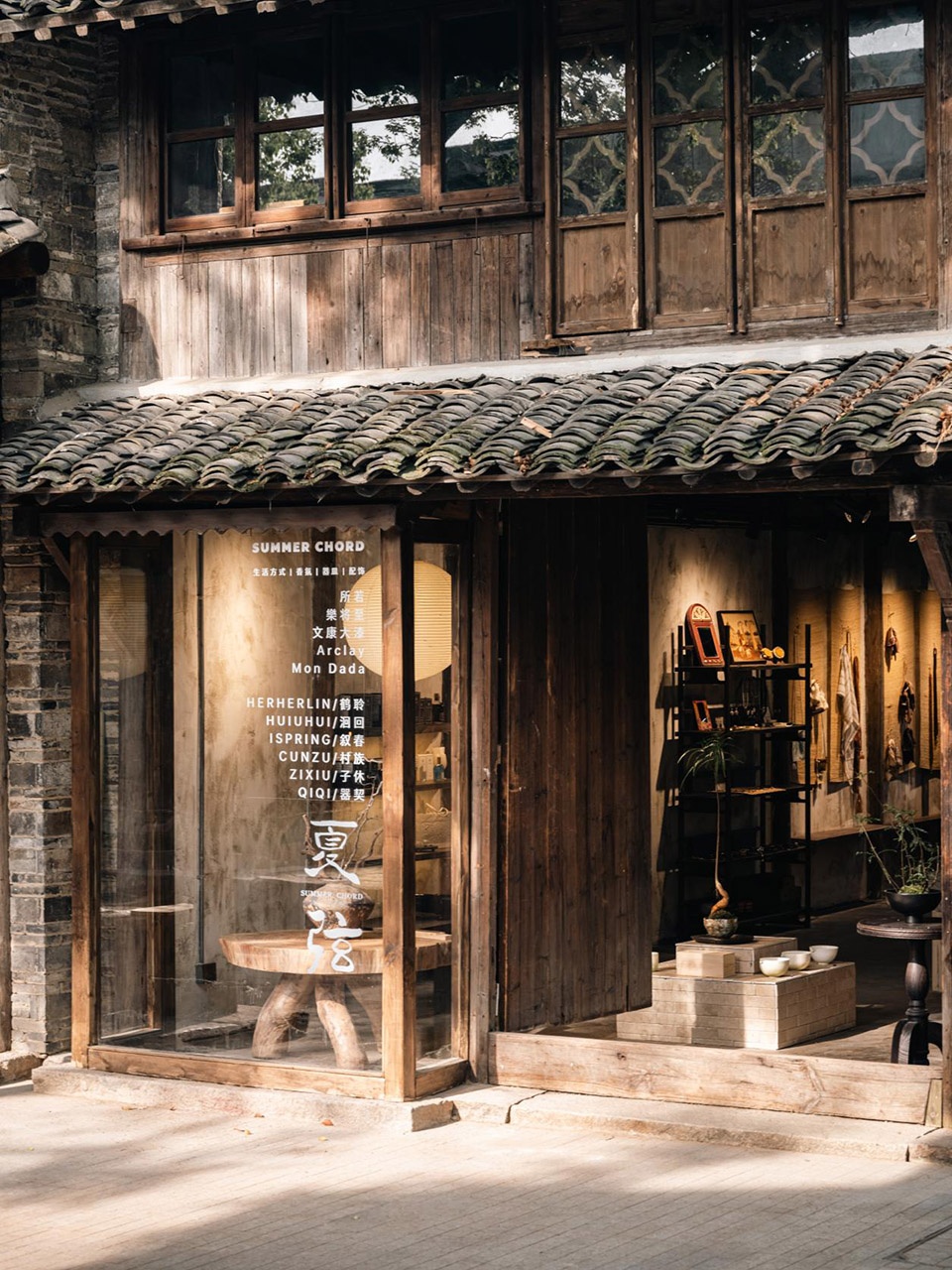
我们主动从入口处退让出一方半户外休憩区:老木为框,竹材为坐面,还原宋式竹榻的松弛感。这块小小的停留之地,不是店铺的生硬边界,而是古镇街巷的温柔延伸。竹意不止于此。门把手、楼梯栏杆同样以竹制成,取“节节高升”之意,让每一次推门、每一步登阶,都暗含一份向上的期许。玻璃通透,竹木温润,行人路过时可以歇脚、听风、晒太阳——店铺不再是封闭的容器,而成为可停留、可触摸的日常节点。
We actively stepped back from the entrance to create a semi-outdoor resting area: a frame of aged wood, seating surfaces of bamboo, evoking the relaxed feel of a Song-style bamboo daybed. This small space of pause is not a rigid boundary of the shop, but a gentle extension of the ancient town’s alleyway. The bamboo presence doesn’t stop here. The door handles and stair railings are also made of bamboo, carrying the quiet wish to “rise step by step,” so that every push of the door, every step upward holds a subtle sense of aspiration. Glass is transparent, bamboo and wood are warm. Passersby can rest here, listen to the wind, soak up the sun—the shop is no longer a closed container, but a daily node where people can pause and touch.
▼吧台近景,Close-up of the bar counter
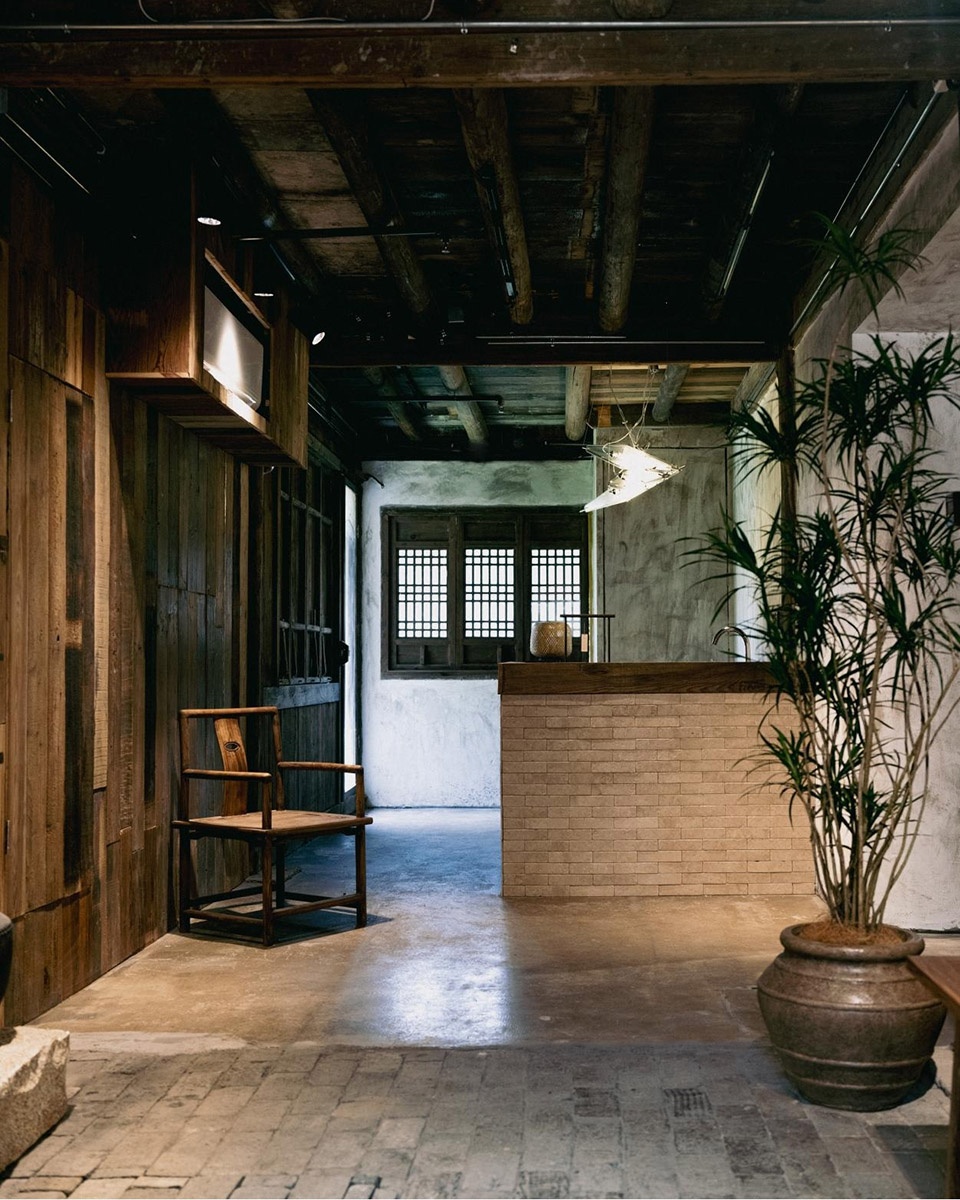
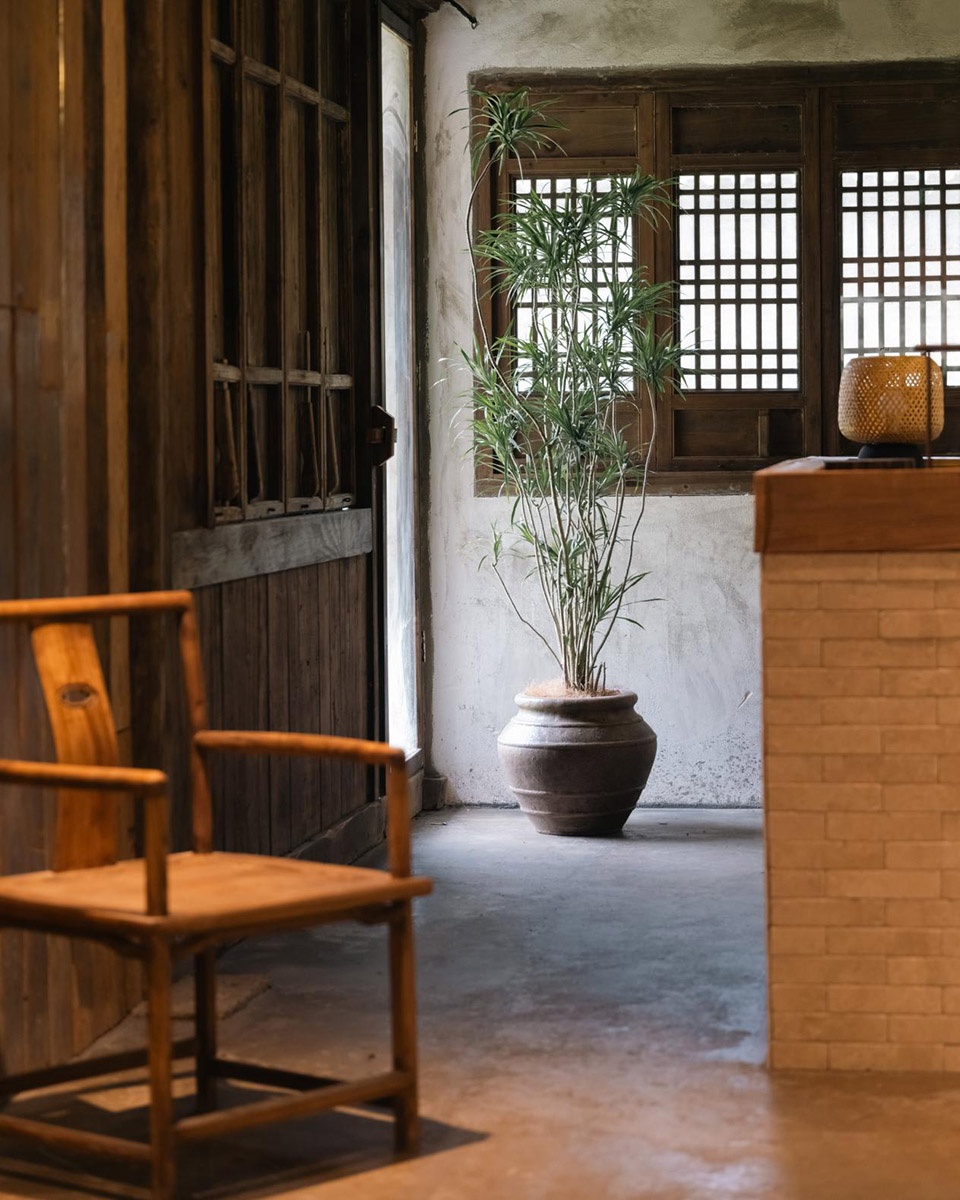
步入空间,原生老木梁与宋式雅致陈设,悄然铺展古村落般悠然沉静的空间气韵。吧台区域克制地融入了莱姆石砖、水泥地面与陶土花器——材质之间相互呼应,弱化了商业冰冷,规整的砖缝又守住了秩序感。木格窗将自然光滤成柔和光斑,让这个半围合的缓冲带成为空间的视觉终点:不打破通透,只留一处慢下来的理由。没有多余装饰,只有克制的宋韵,“以器物为引,以弦意为序”便落在了细节里。
Stepping into the space, the raw aged wooden beams and the elegant Song-style furnishings quietly unfold the tranquil and serene spatial aura of an ancient village. The bar area subtly incorporates limestone bricks, a cement floor, and terracotta planters—the materials echo one another, softening the coldness of commerce, while the neat grout lines hold onto a sense of order. The wooden lattice windows filter natural light into soft patches, making this semi-enclosed buffer zone the visual endpoint of the space: without breaking the openness, it simply offers a reason to slow down. No excess decoration, only restrained Song charm. And so, “Vessels as the Guide, Strings as the Prelude” lands in every detail.
▼吧台望向门外,View from the Bar to the Outside
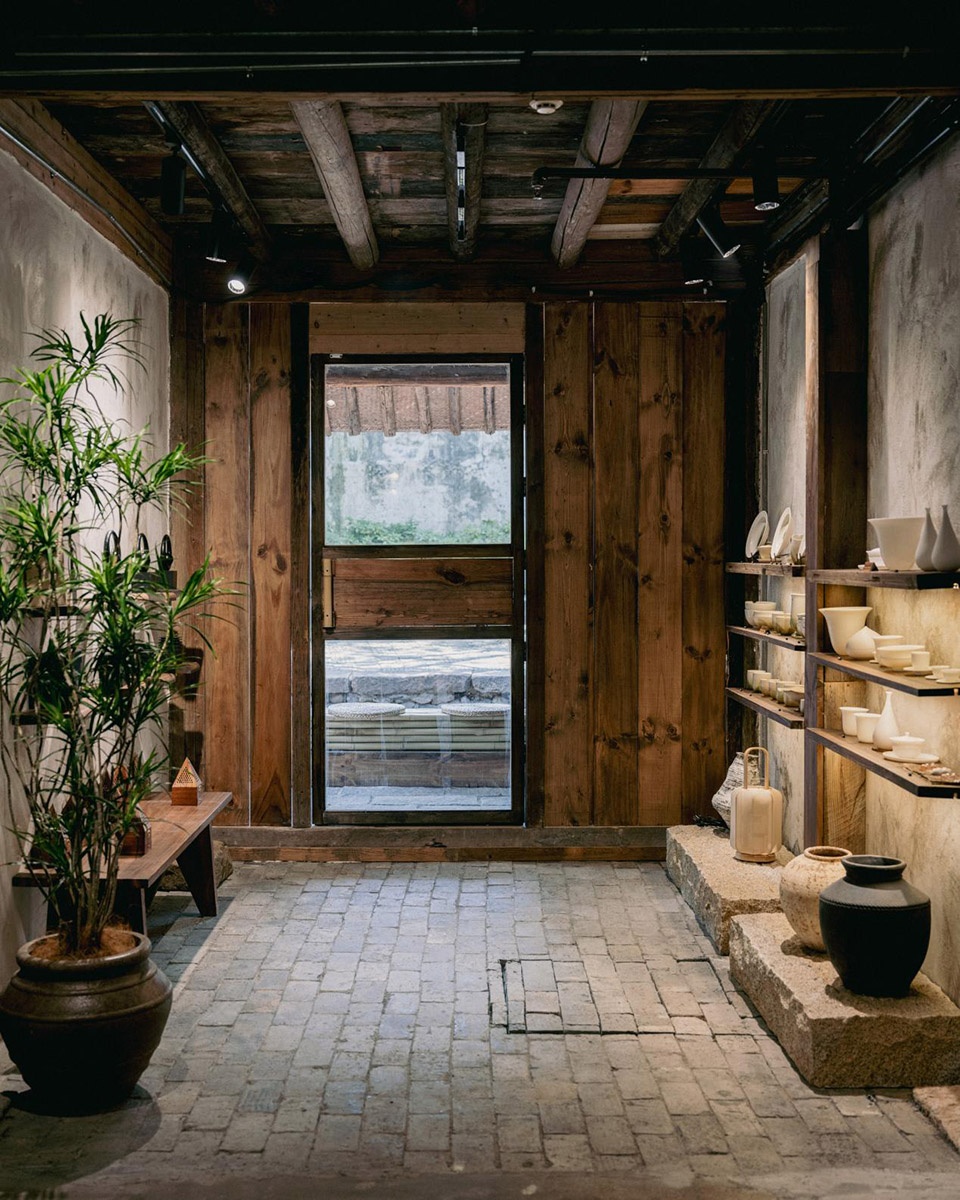
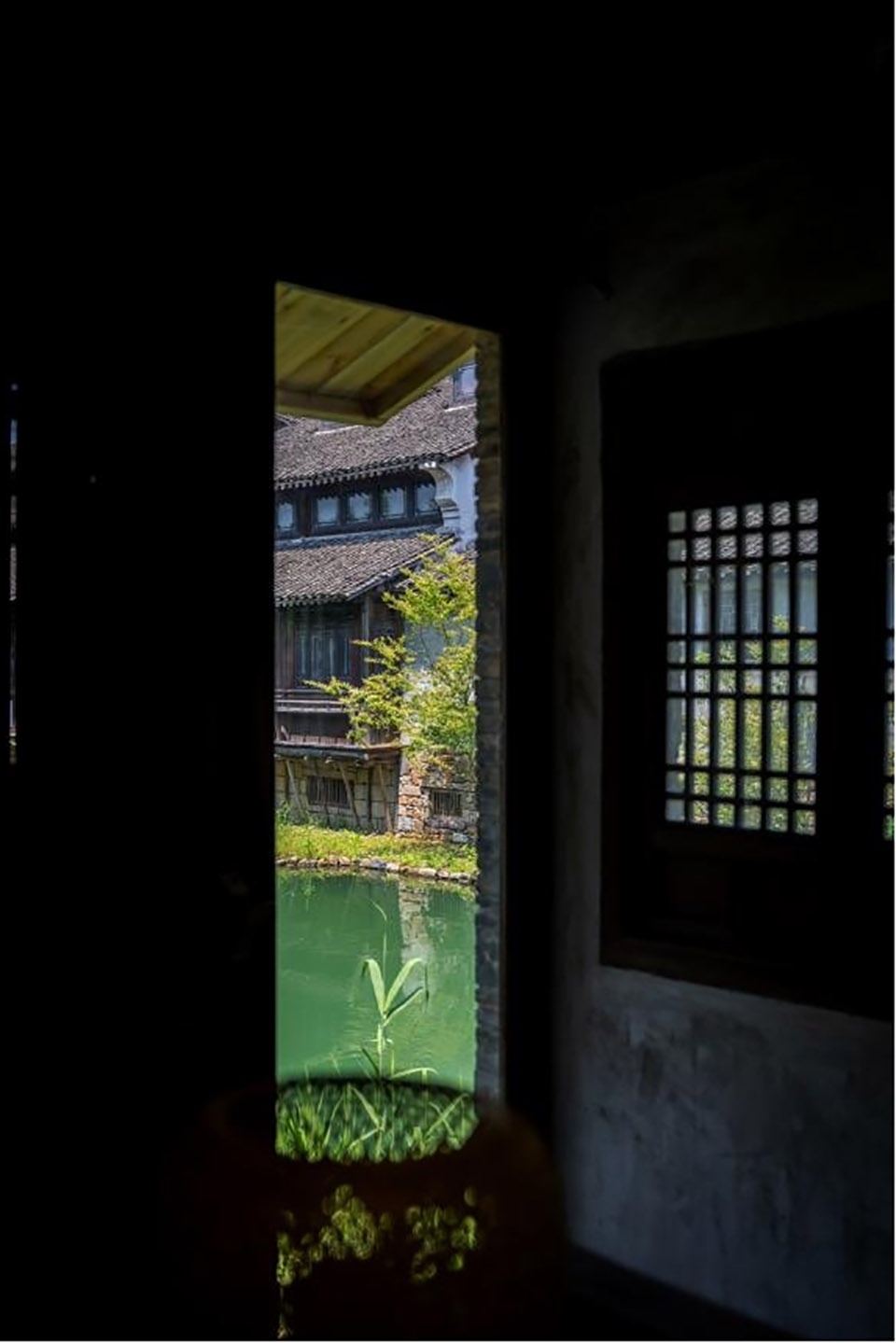
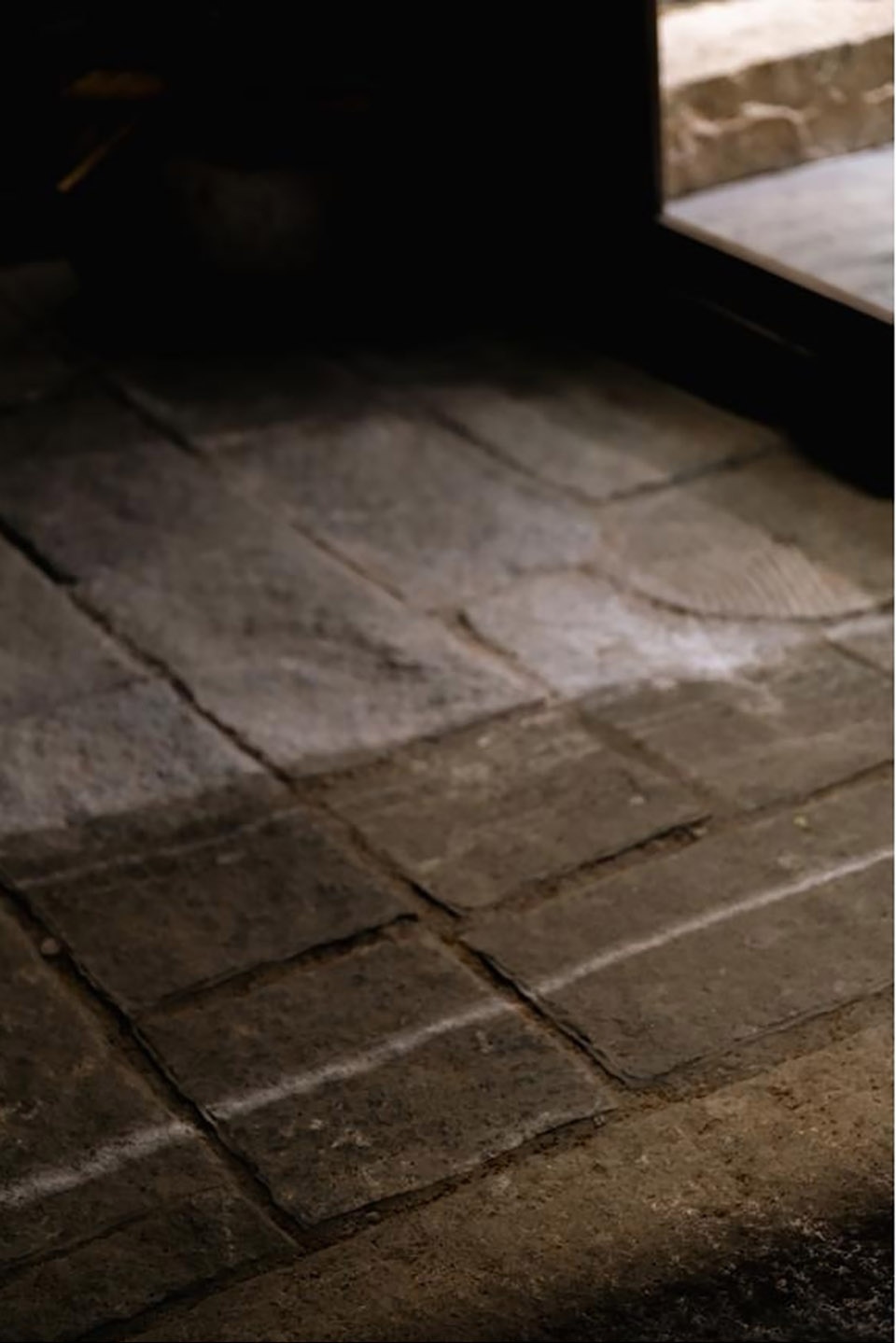
踏入夏弦,脚底老青石的温润质感,瞬间将你带入古村落的烟火温度。黄锈石、陶瓮、老木梁彼此呼应,自然之力从第一刻便将人包裹。器物与空间共生。透过木门,户外景致框成一幅流动的画。没有多余,只有青石、黄锈石、老木——最质朴的材质,还原一种未被惊扰的慢。
Stepping into SummerChord, the warm texture of Weathered Bluestone underfoot instantly brings you into the lived-in warmth of an ancient village. Yellow Rust Stone, terracotta urns, and aged wooden beams echo one another—nature’s force embraces you from the very first moment. Objects and space grow together. Through the wooden door, the outdoor view is framed as a flowing painting. Nothing extra—only bluestone, yellow rust stone, and aged wood. The most honest materials restore an undisturbed slowness.
▼入口及吧台处细节,Detail at the Entrance and Bar
▼一层展陈区,First Floor Display Area
▼一层展陈区局部,First Floor Display Area Detail
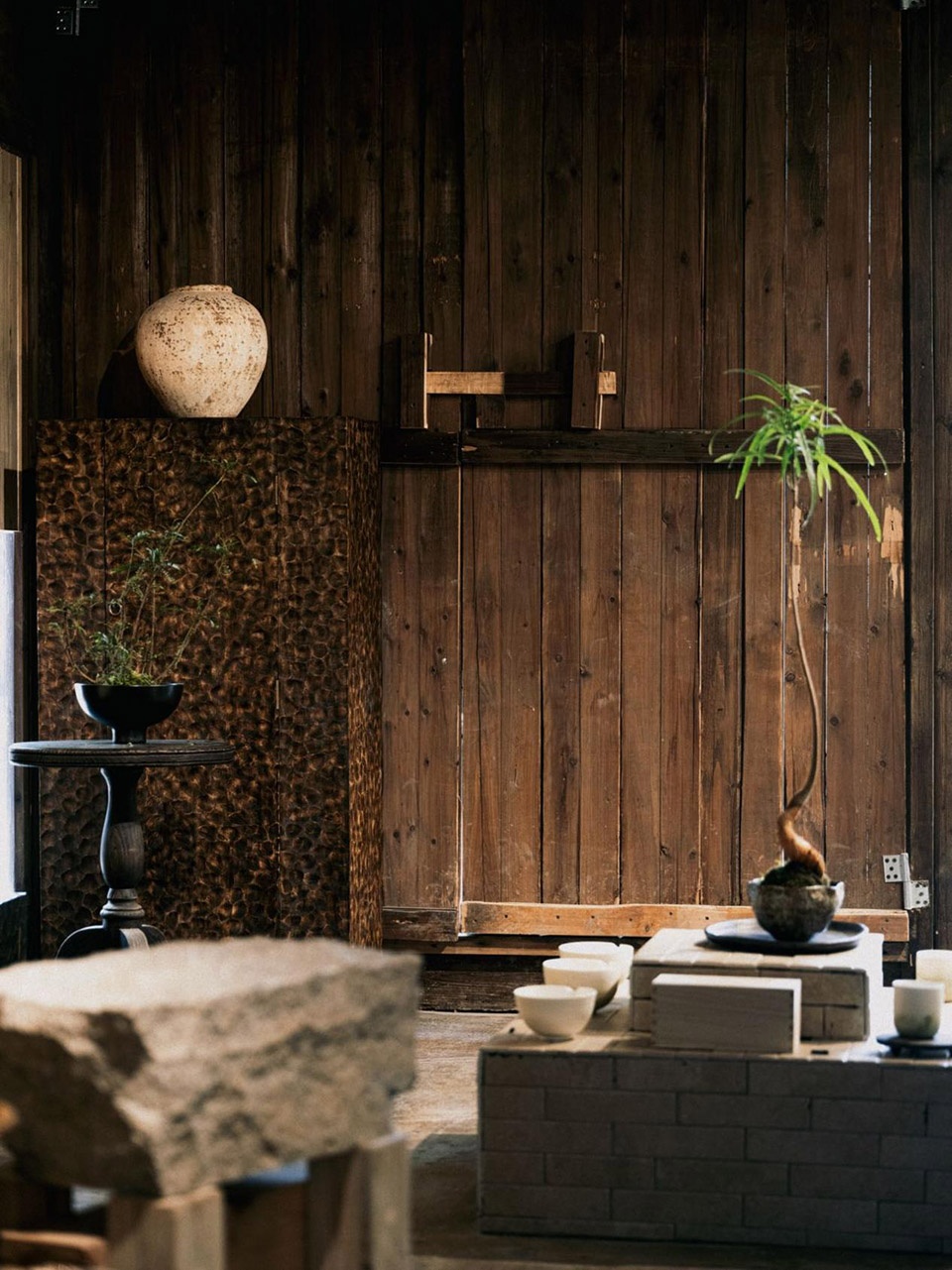
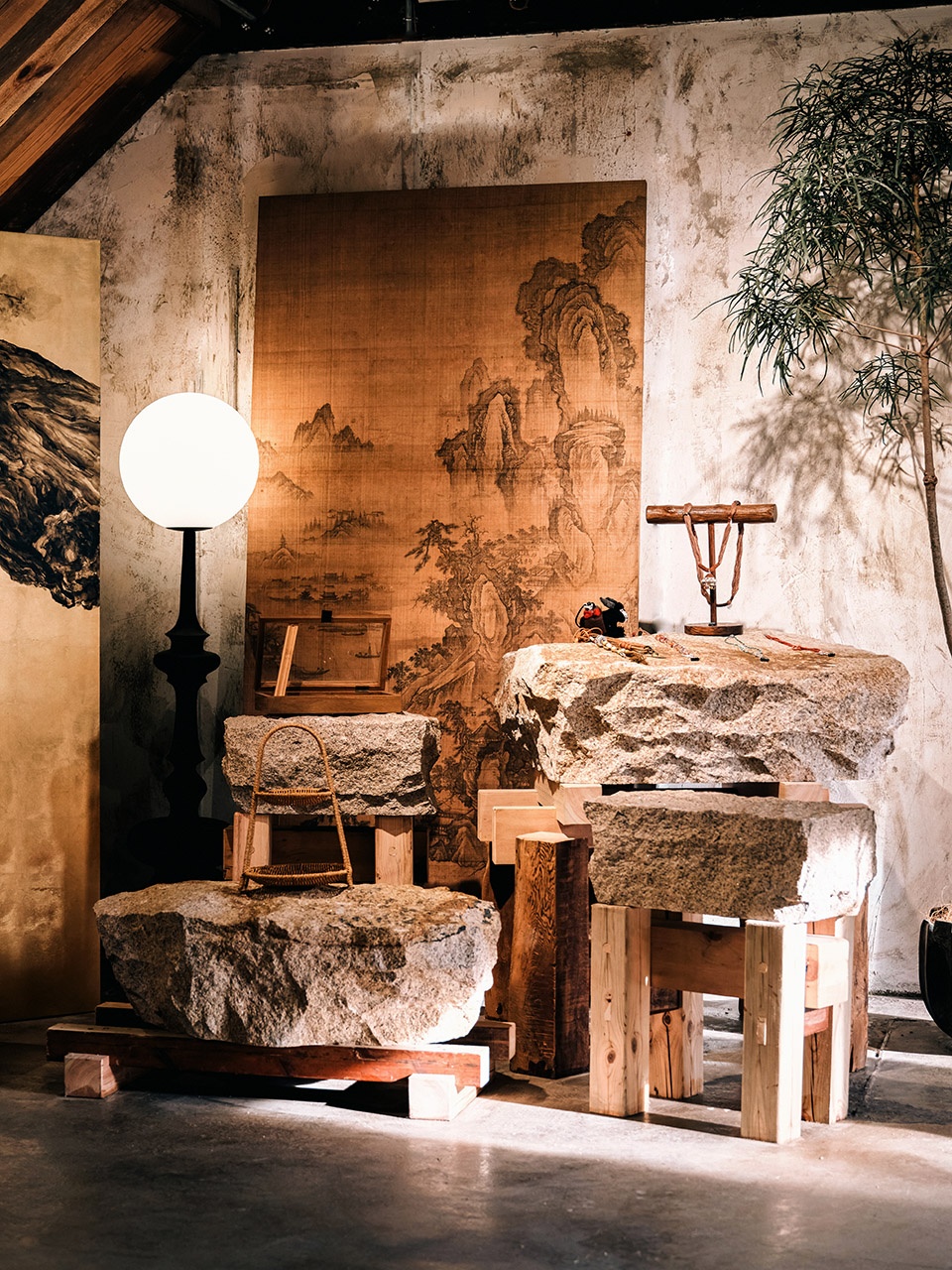
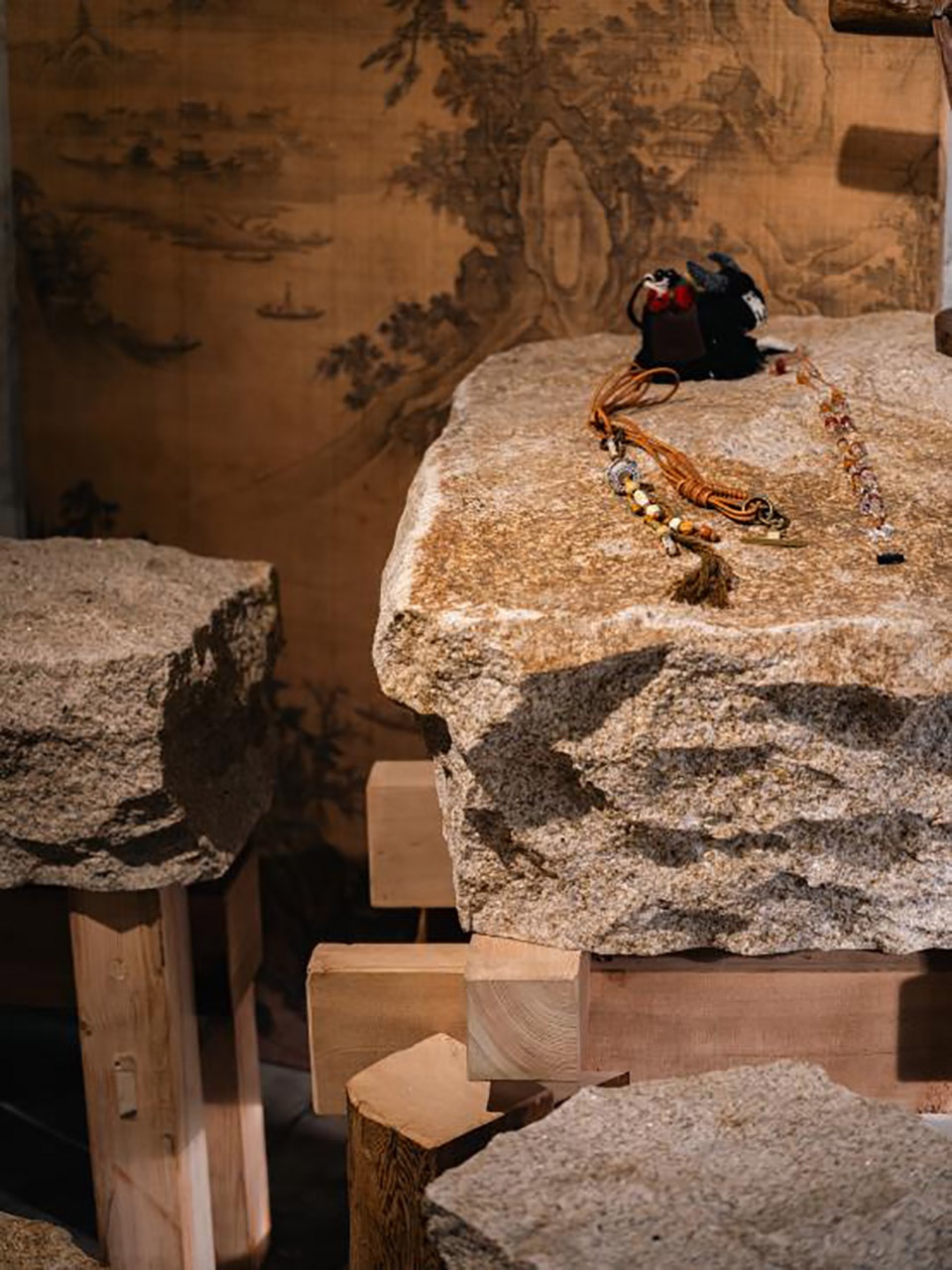
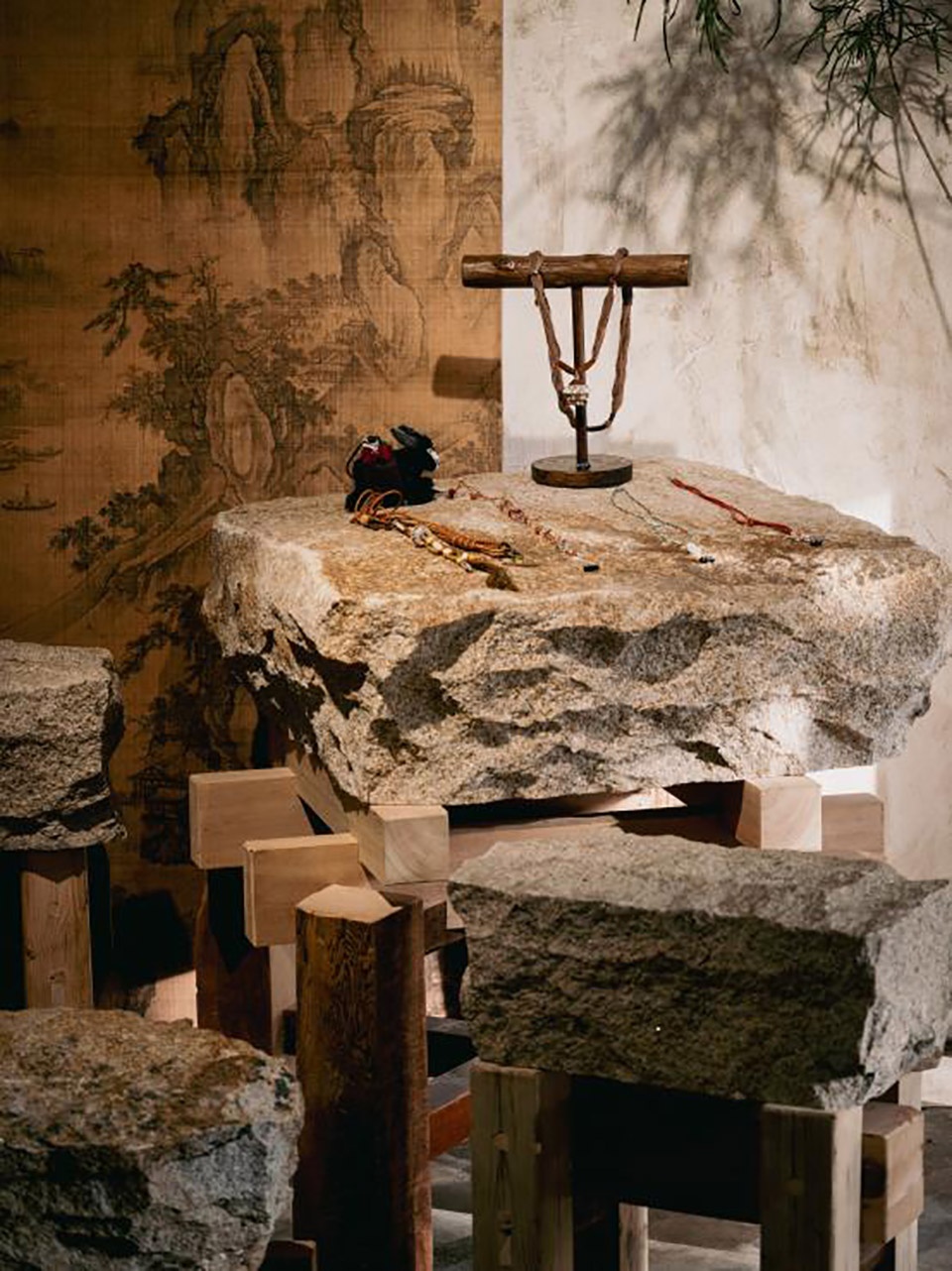
空间的灵魂,是一套完全原创的展陈语言——「原石为台,老木为骨」。它不属于任何现成的陈列系统,只属于夏弦。原生石台错落排布,像宋画里的山石,高低起伏,不刻意对称。老木架构穿插其间,承托起石台的重量,也承托起器物的姿态。
The soul of the space is a completely original display language — “stone as the pedestal, aged wood as the bone.” It belongs to no ready-made display system, only to SummerChord. Native stone platforms are scattered in an uneven arrangement, like the rocks in a Song painting — rising and falling, never deliberately symmetrical. The framework of aged wood weaves in between, bearing the weight of the stone platforms and the posture of the objects placed upon them.
▼一层展陈区细节,First Floor Display Area Detail
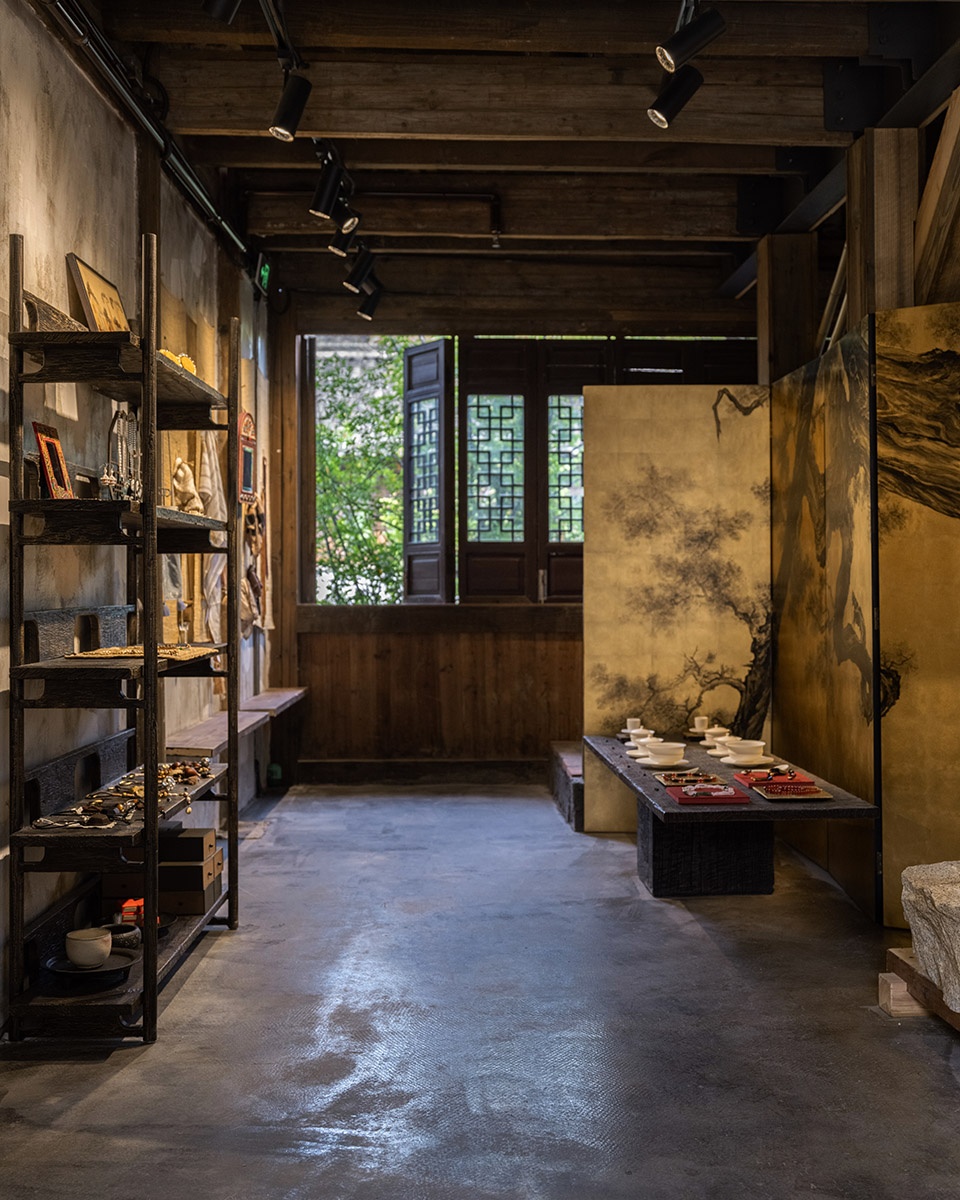
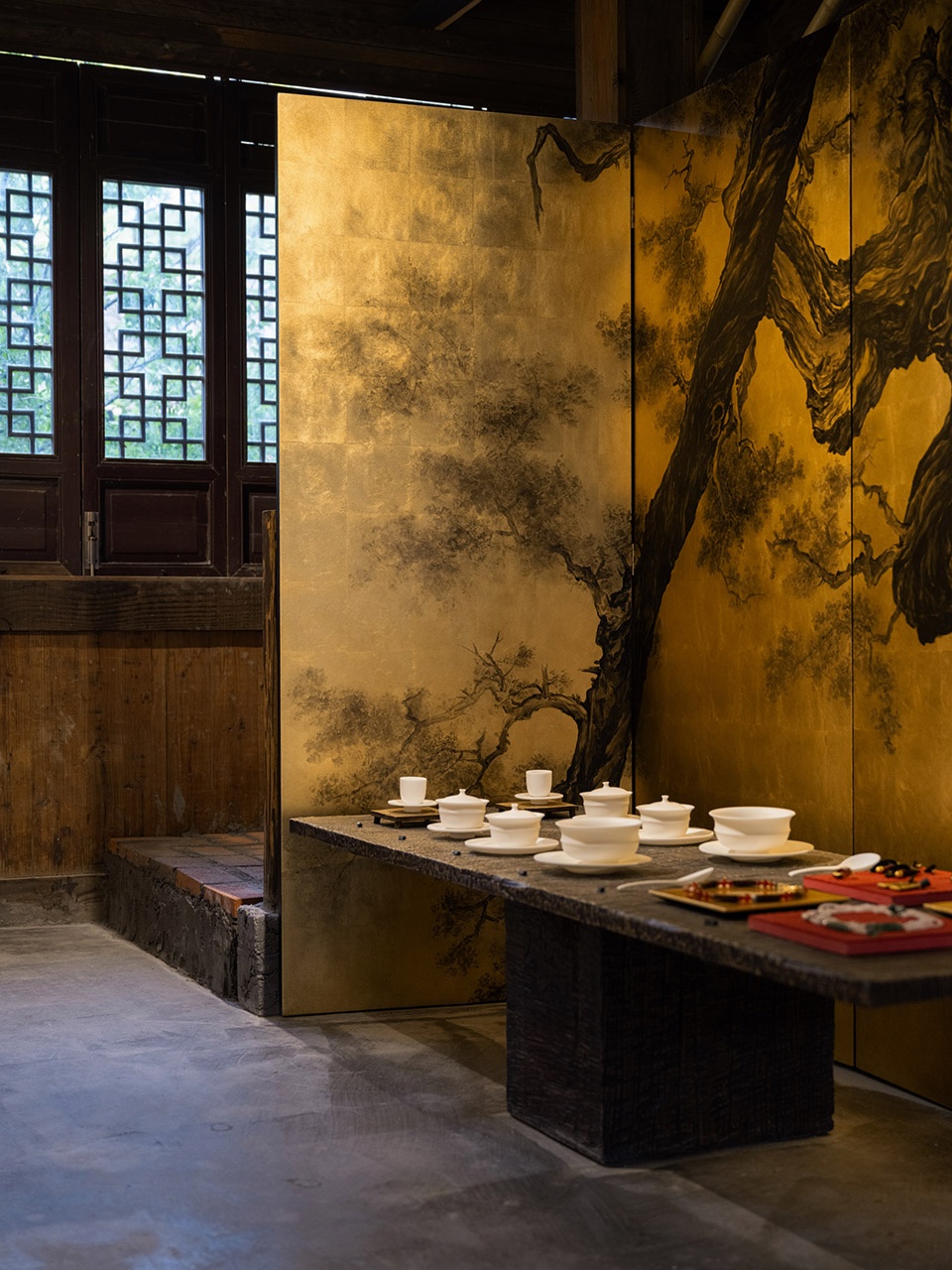
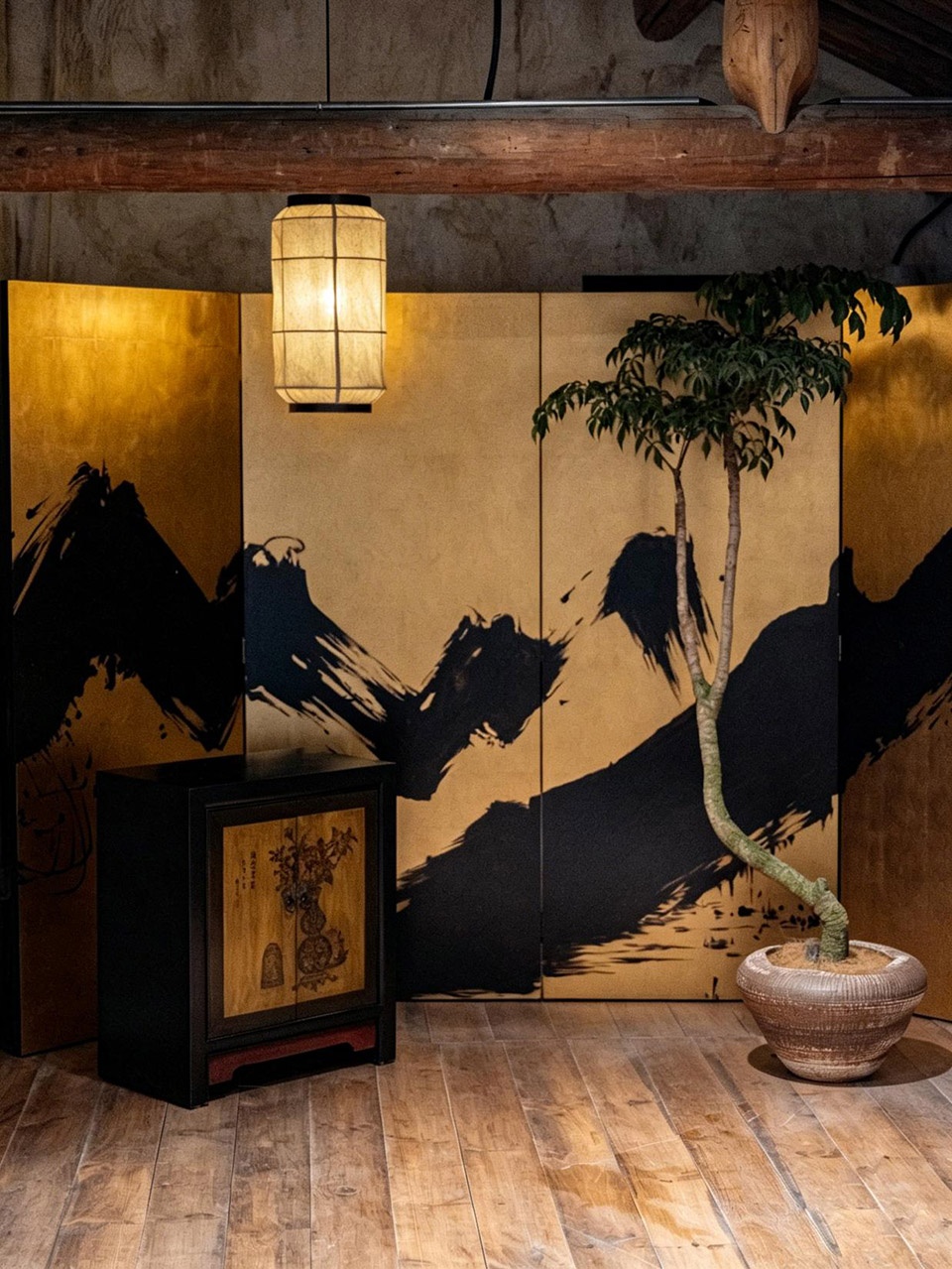
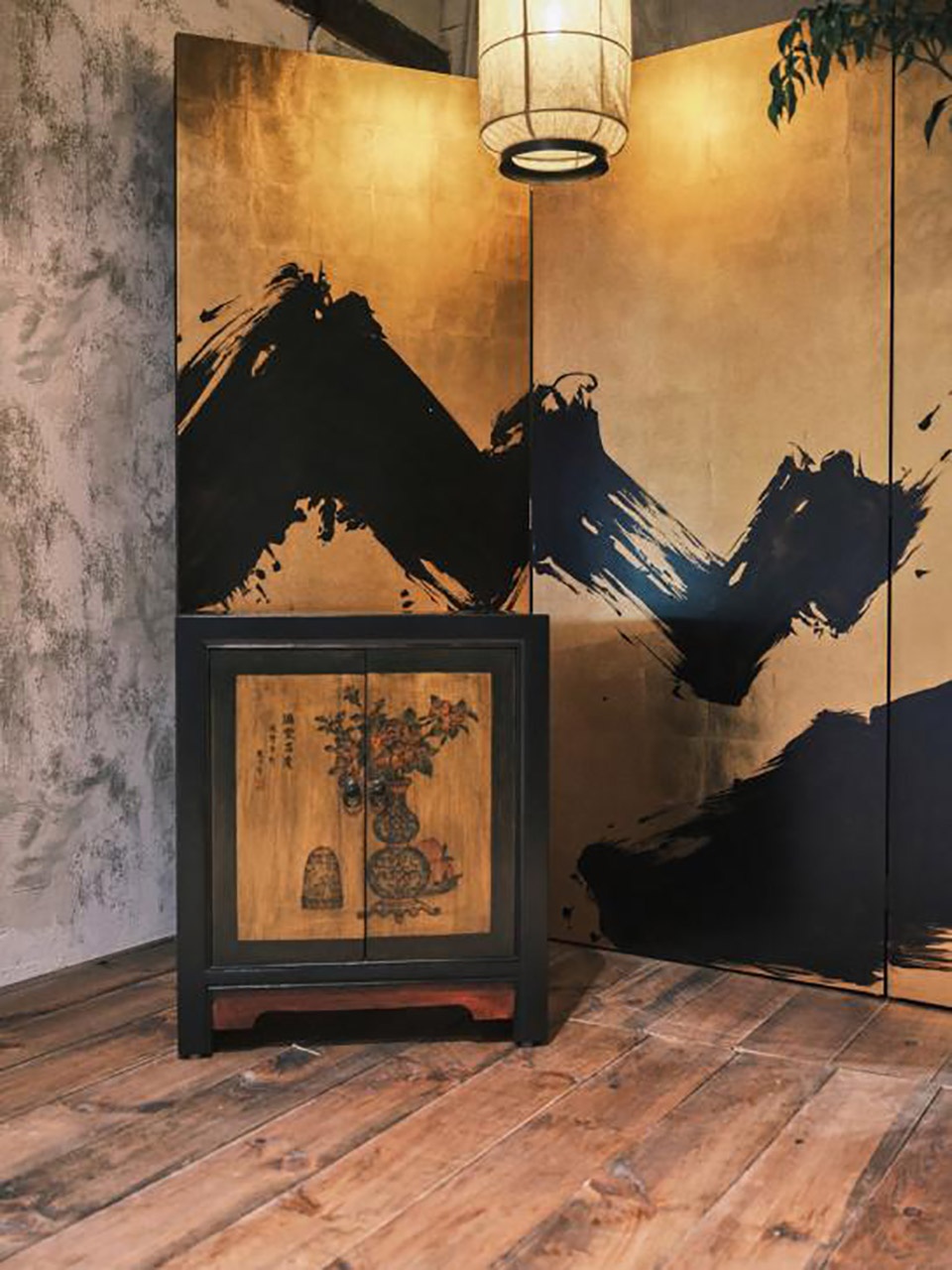
主展区以风化老木、水泥地面为背景,呈现时间沉淀的质感。黄锈石展台粗粝,与白瓷茶具的温润形成对比;金箔屏风上的松枝水墨在暖光下产生类似宋画的留白效果。自然光透过花格木窗射入,与轨道射灯结合,使器物在明暗变化中成为视觉焦点。每一扇玻璃窗都被我们当作画框——窗外可见老街、河流与福善寺塔,塔旁银杏随季节变换色彩,窗景动态更迭。光线从木格与玻璃透入,石面上随时间移动,为器物提供变化的展示环境。整体色彩与装饰克制于木、石、陶、金等大地色系,构建松弛而有节奏的空间秩序。通过材质与光影的对话,呈现宋式美学中不刻意追求完满的审美取向。
The main display area uses weathered wood wall panels and a cement floor as its backdrop, presenting a texture shaped by time. The rough Yellow Rust Stone display stands contrast with the warmth of the white porcelain tea ware; the pine-branch ink painting on the gold-leaf screen, under warm lighting, produces a blank-leaving effect reminiscent of Song painting. Natural light enters through wooden lattice windows and combines with track lights, making the objects the visual focal point amid shifting light and shadow. Each glass window is treated as a picture frame — outside, one sees the old street, the quiet river, and the Fushan Temple Pagoda. The ginkgo trees beside the pagoda change color with the seasons, creating a dynamic, ever-changing view. Light filters through the wooden lattices and glass, moving across the stone surfaces over time, providing an evolving display environment for the objects. The overall color palette and decoration are restrained to earthy tones of wood, stone, ceramic, and gold, constructing a relaxed yet rhythmic spatial order. Through the dialogue between materials and light, the design presents the Song aesthetic of an unforced, imperfect completeness.
▼一层展陈区细节,First Floor Display Area Detail
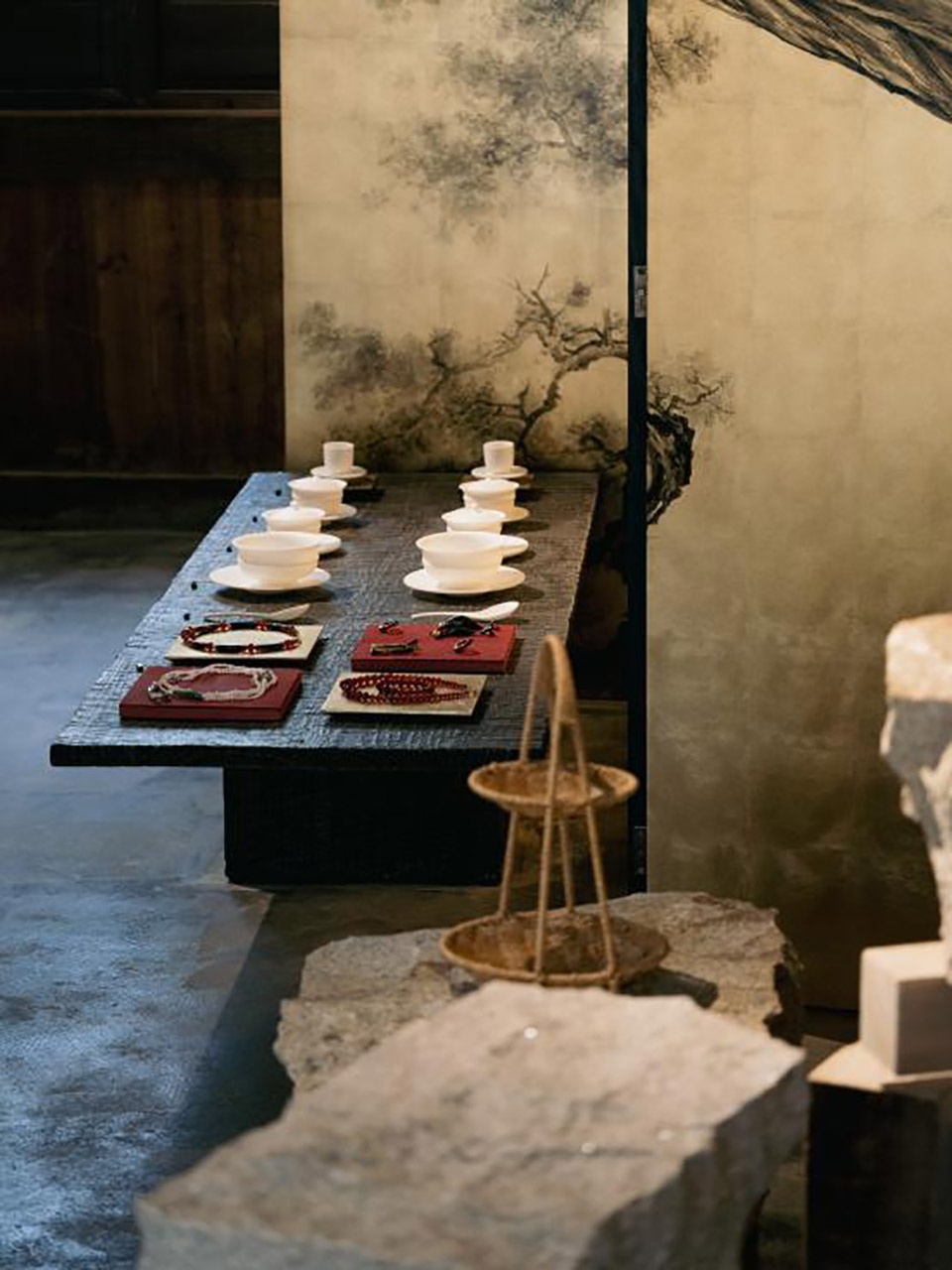
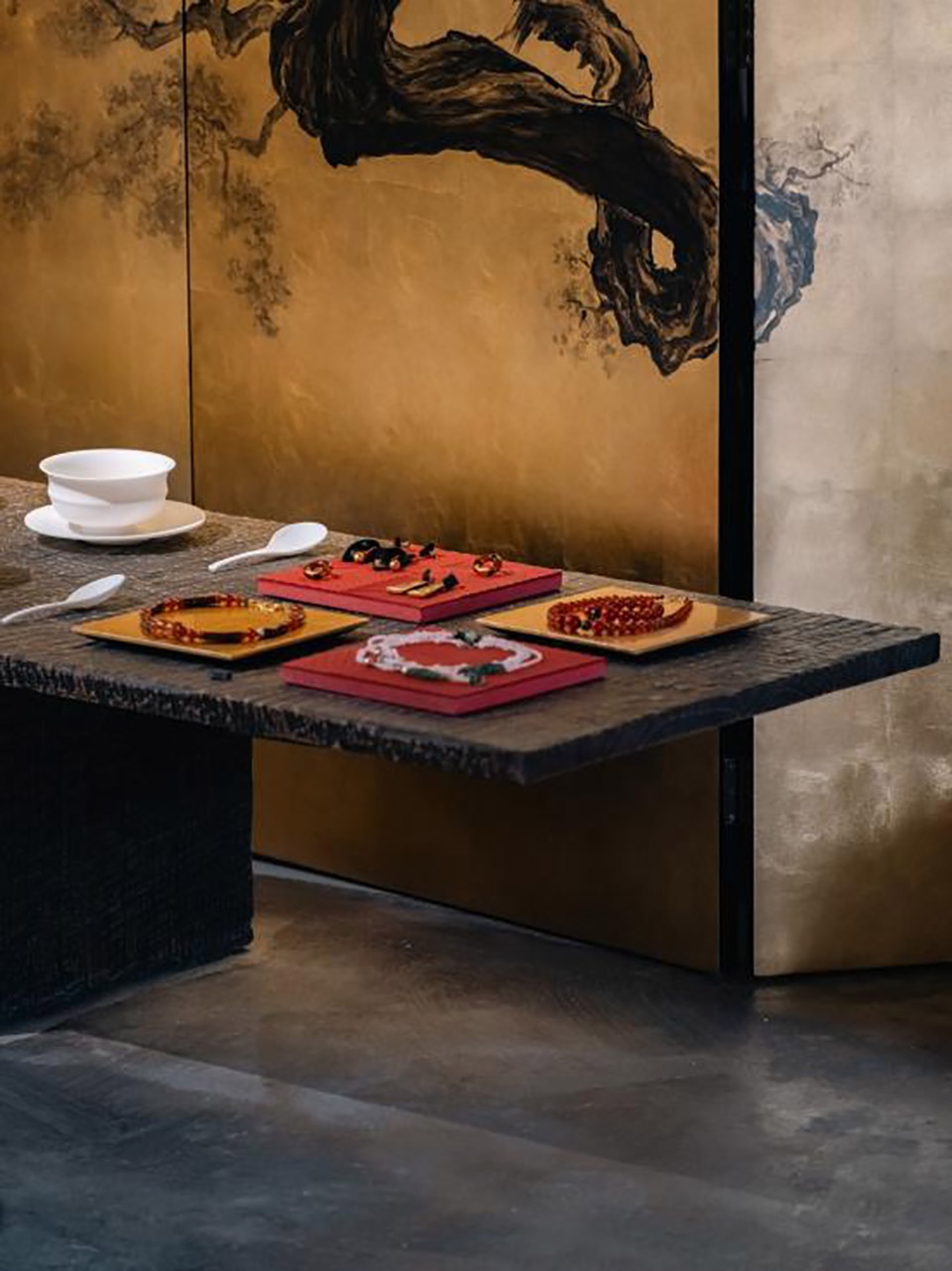
▼呈现时间沉淀的质感,Presenting a Texture Shaped by Time
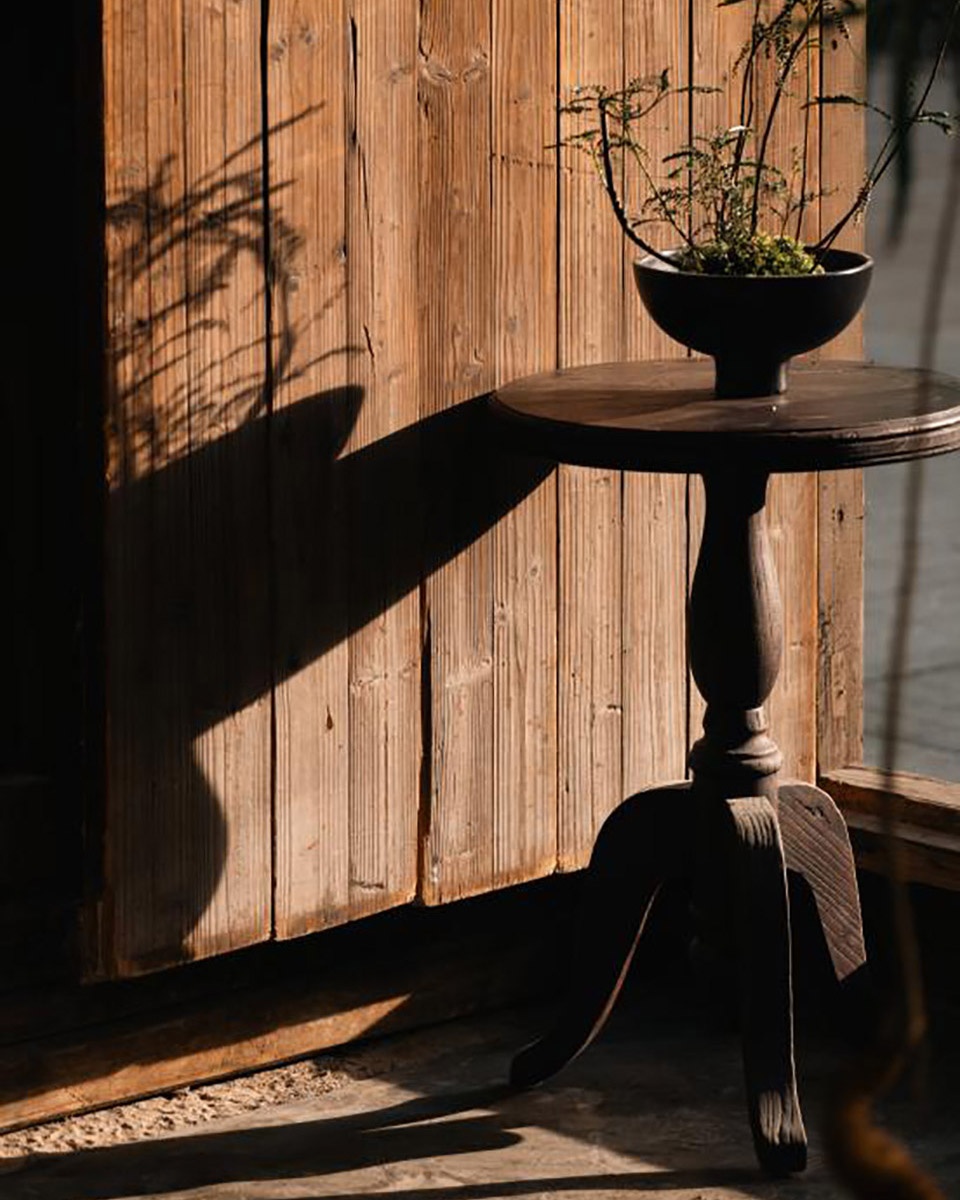
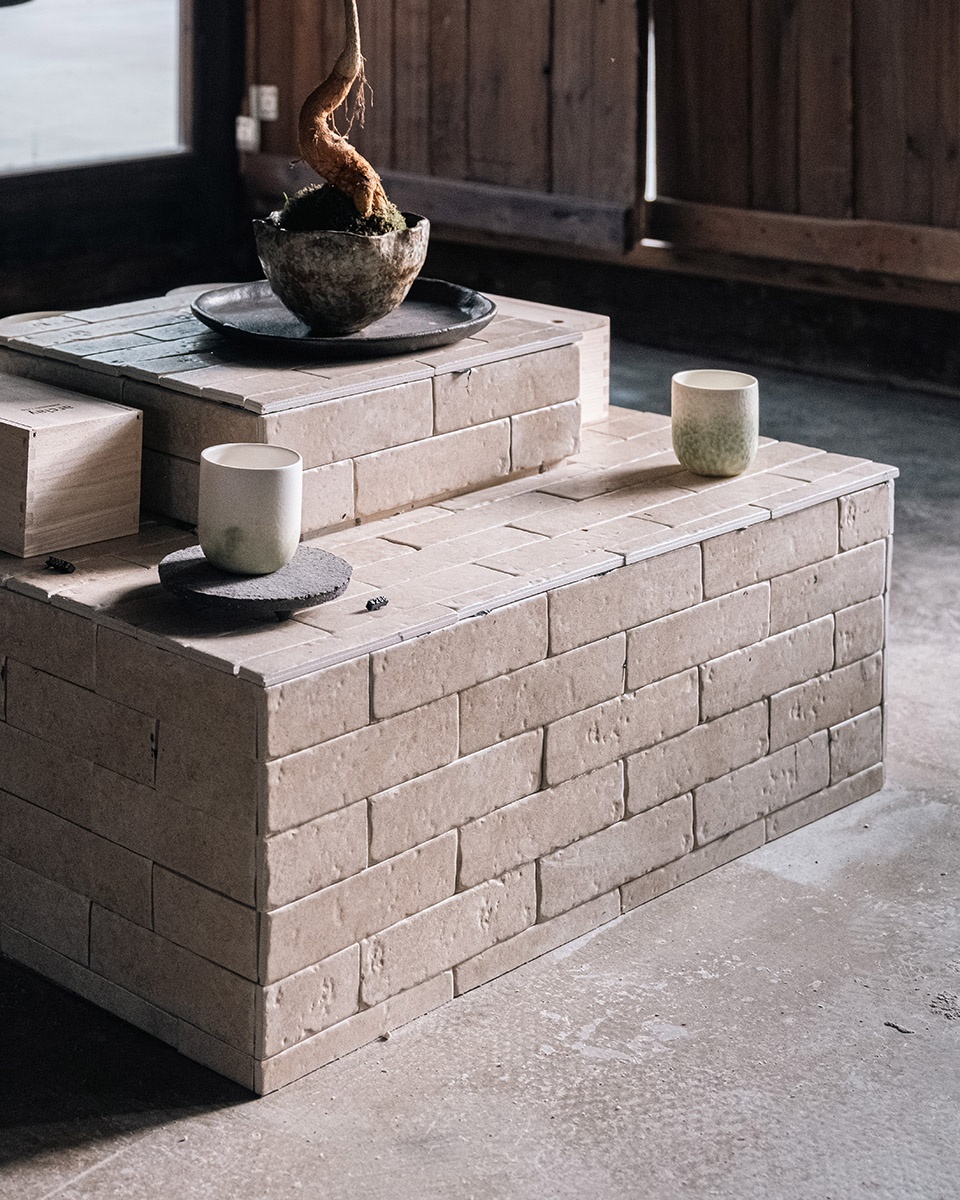
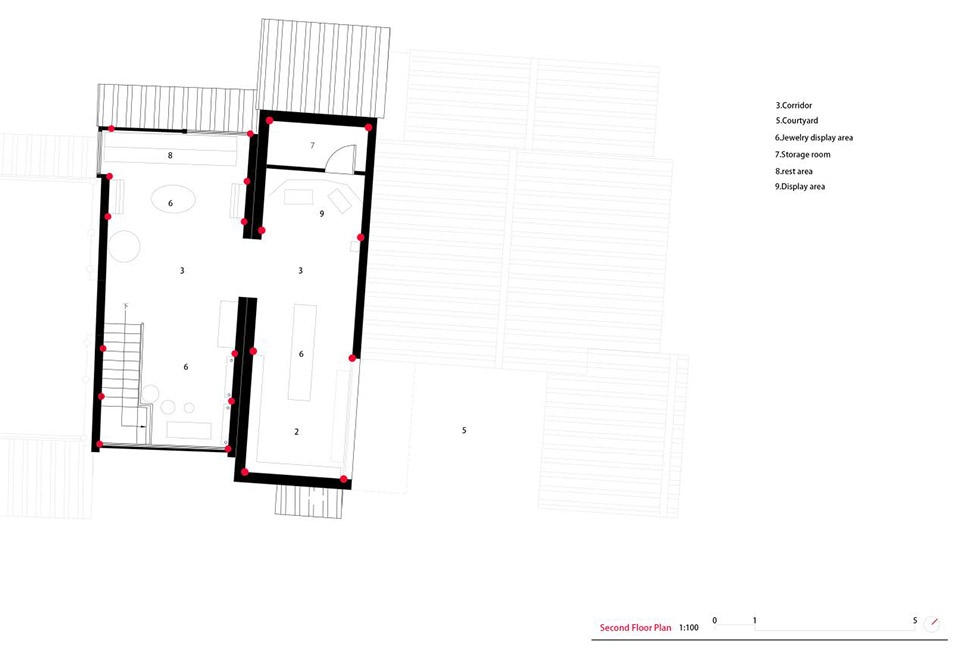
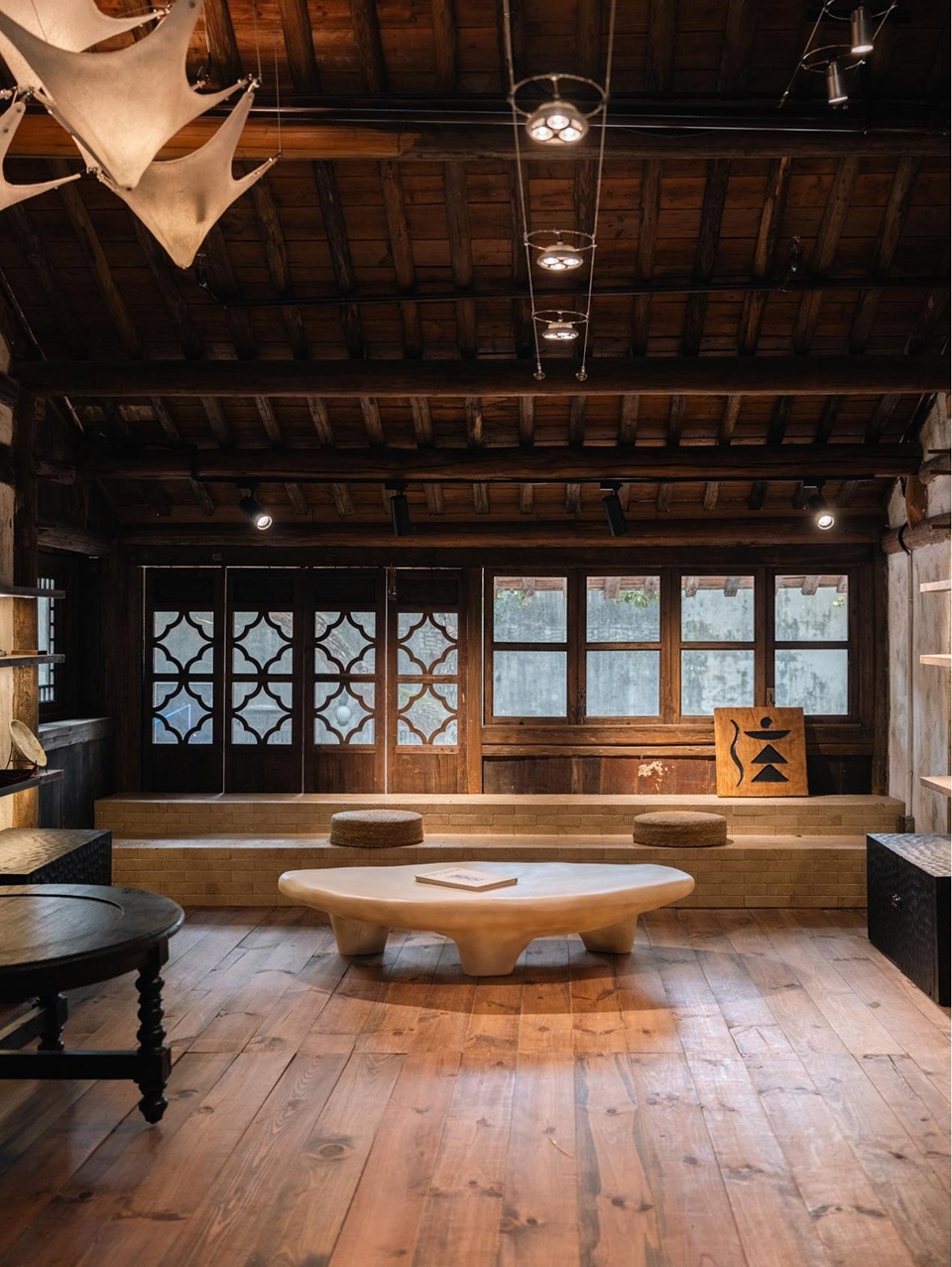
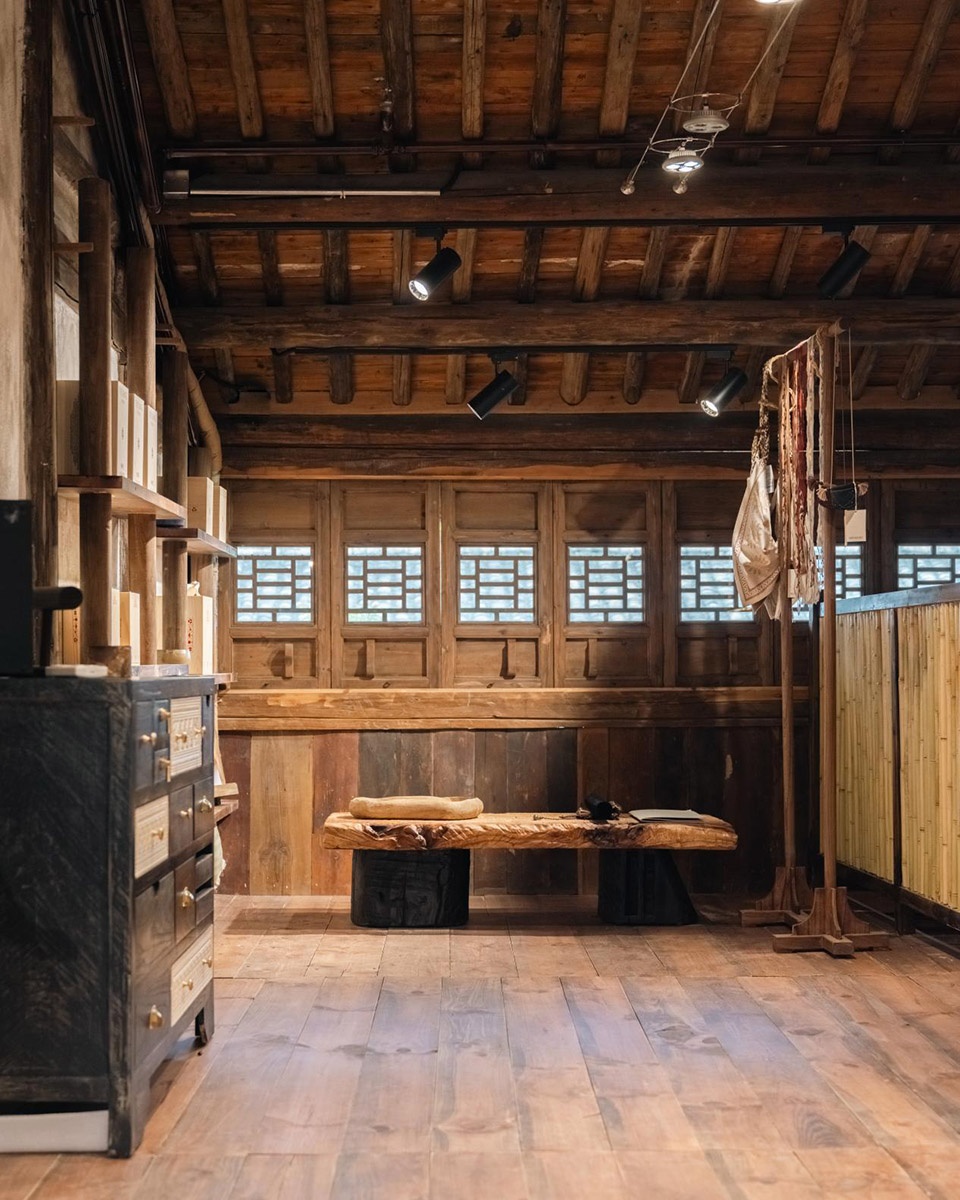
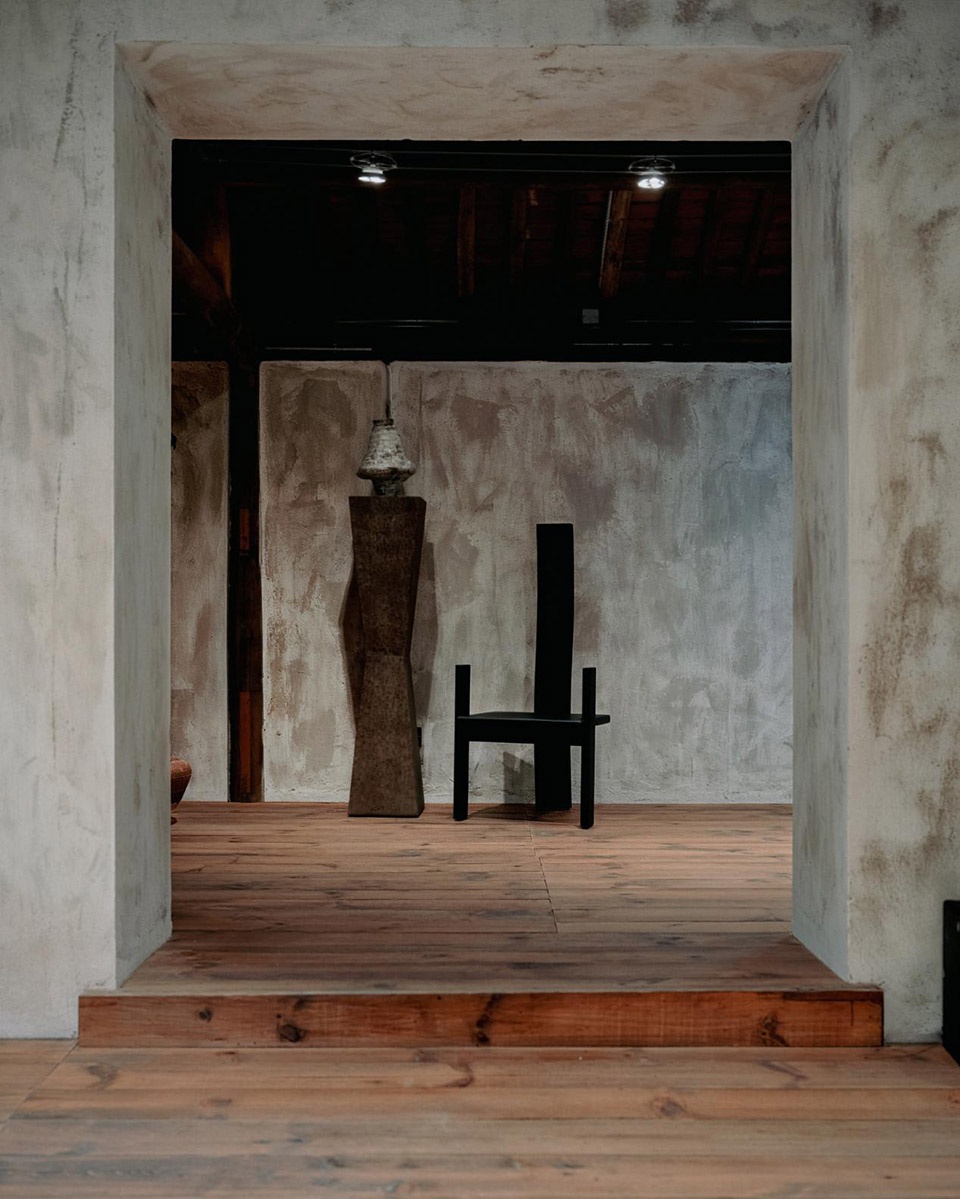
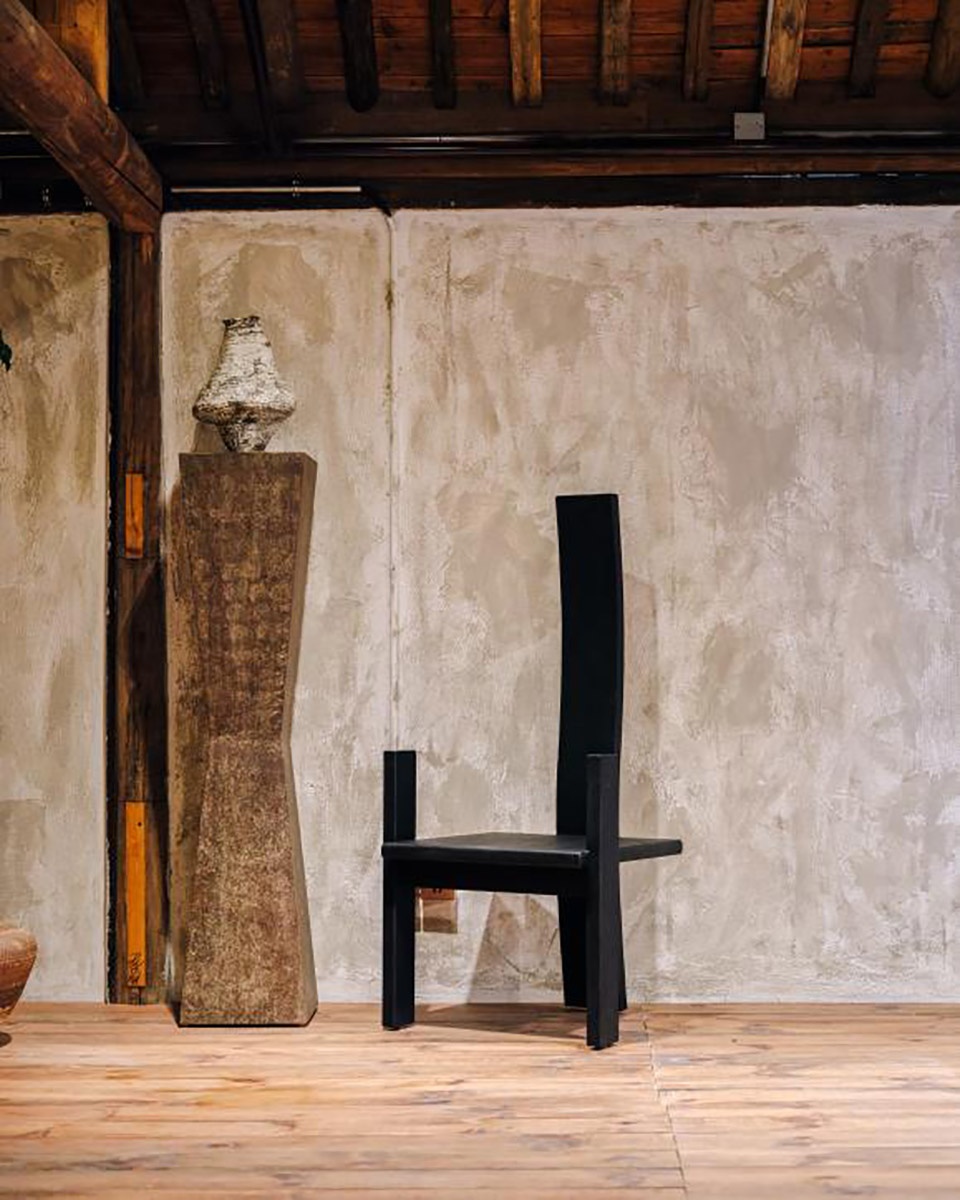
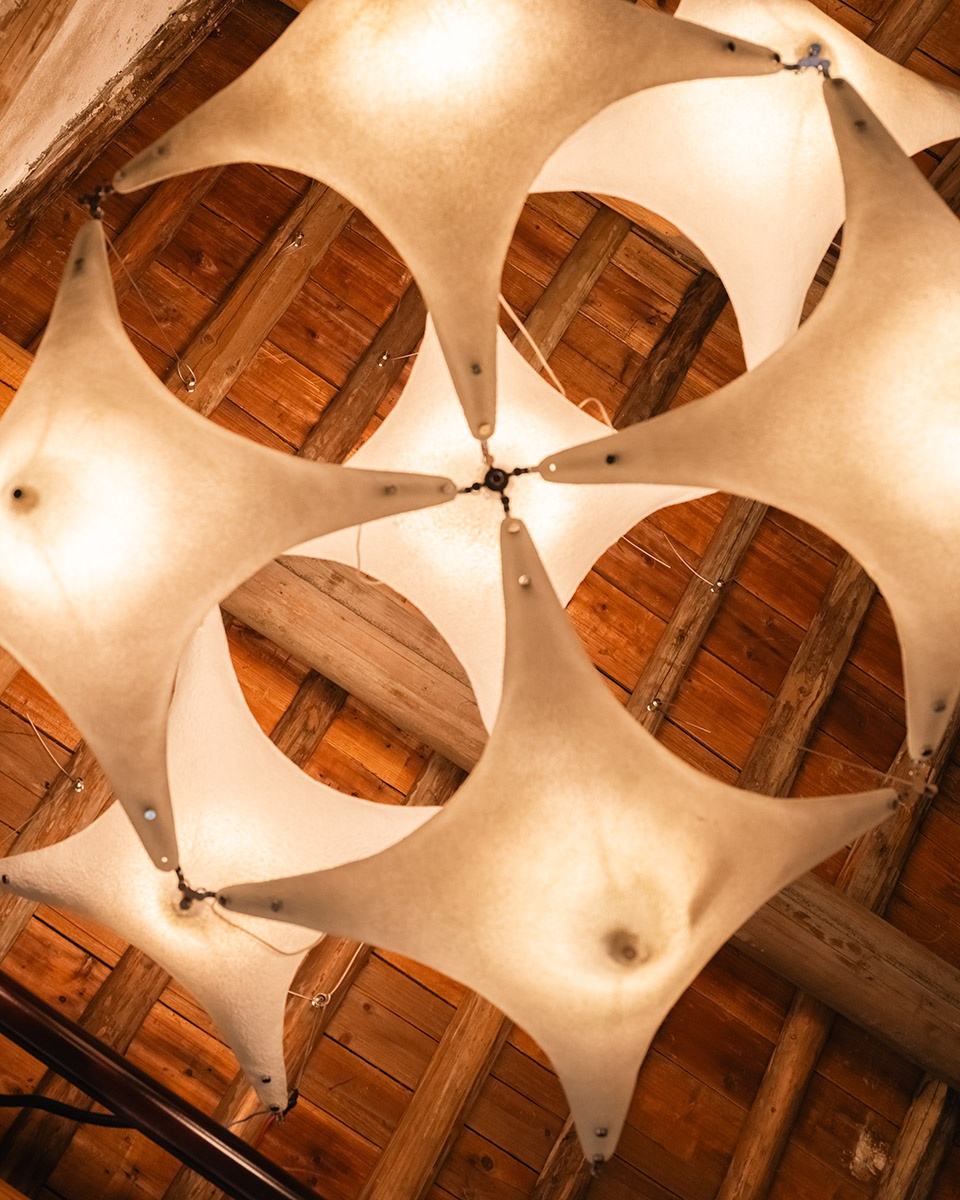
二层延续了一层宋式美学的核心,但在空间节奏上更松弛、更具呼吸感。裸露的老木屋架与斑驳墙面构成时间沉淀的底色,与一层的老木、水泥地面形成材质上的延续与对话。在设计中,我们刻意将二层展品的放置高度整体压低,使人在观赏器物时,视线自然地越过器物,延伸至窗外的街巷、河景与古塔——低头见物,抬眼即景,室内陈设与户外景致互为对景。自然光从花格窗透入,在低矮的陈列面上形成柔和的光影层次,与一层的光影逻辑相呼应。我们没有刻意堆叠展品,而是用松弛的动线、克制的留白,构建一个可以慢下来的场域。通过材质、光线与陈列逻辑的延续,让宋式的沉静与呼吸感从一层生长至二层,形成统一的空间叙事。
The second floor continues the core of Song aesthetics from the first floor, but with a more relaxed, more breathable spatial rhythm. The exposed old wooden roof trusses and the mottled walls form a backdrop of time-worn texture, creating a material continuity and dialogue with the aged wood and cement floor downstairs. In the design, we intentionally lowered the display height of the objects on the second floor, so that when viewing the pieces, one’s gaze naturally travels beyond them to the alley, the river, and the ancient pagoda outside — lowering the eyes to see the objects, raising them to take in the view. The interior furnishings and the outdoor scenery become a pair of complementary views. Natural light filters in through the lattice windows, casting soft layers of light and shadow on the low display surfaces, echoing the light logic of the first floor. We did not deliberately pile up objects; instead, we used a relaxed circulation, restrained use of negative space, to create a place where one can slow down. Through the continuity of materials, light, and display logic, the quiet and breathable Song sensibility grows from the first floor up to the second, forming a unified spatial narrative.
▼二层展陈区,Second Floor Display Area
▼形成统一的空间叙事,forming a unified spatial narrative
▼展陈区细节,display area detail
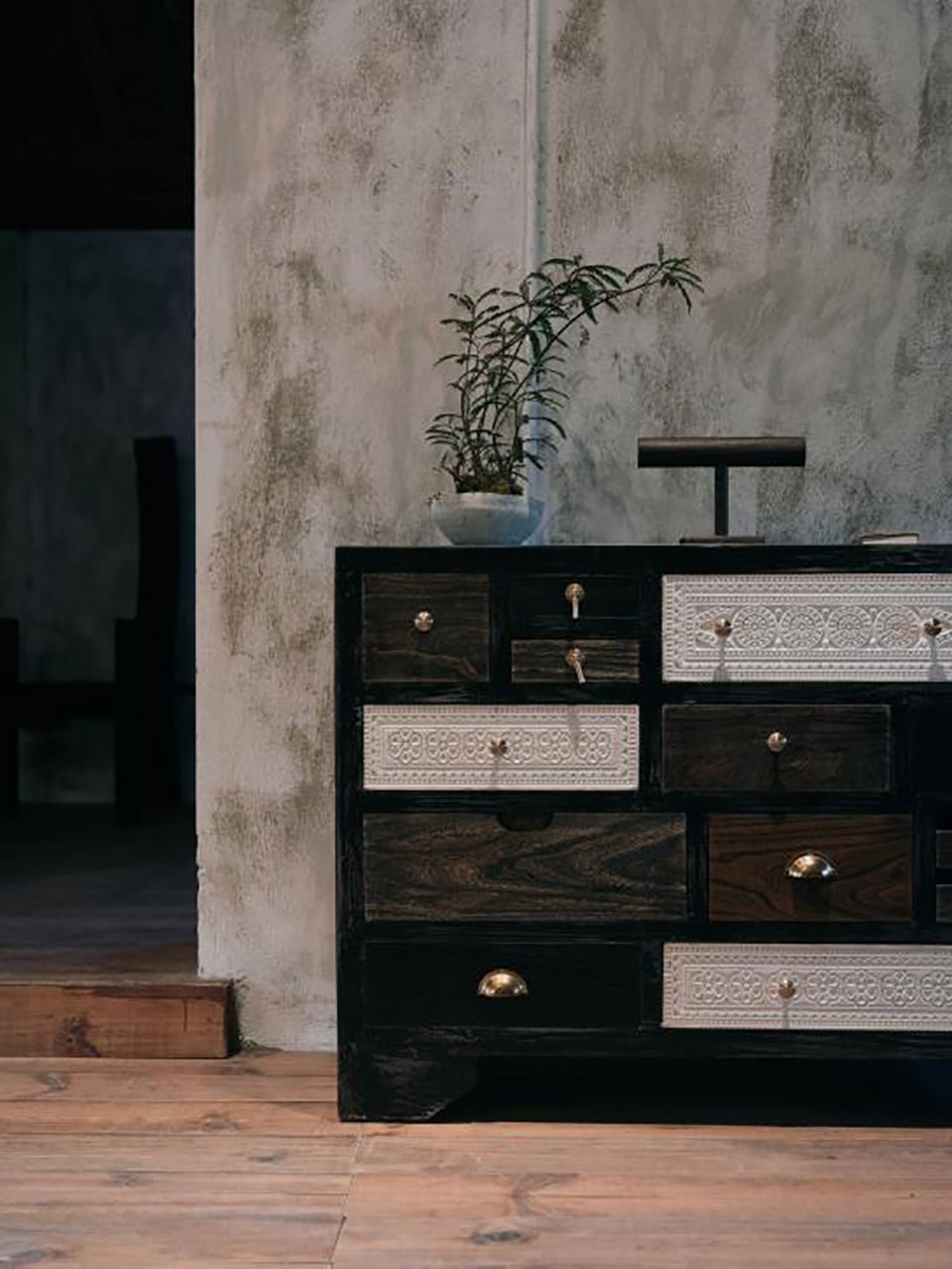
▼家具细节,furniture detail
结语 Conclusion
以夏为序,以弦筑境。我们在濮院的仿古街巷中,以“原石为台,老木为骨”的原创语言,构建了一座器物与空间共生的场域。材质忠于时间——风化老木、青石、黄锈石、莱姆石各自保有触感;光影顺应四时——木格窗滤光,玻璃框景,窗外的塔与银杏成为流动的画。从压低陈列引导视线的二楼,到退让休憩区延伸街巷的一楼,我们用克制与留白,让宋式美学不再被仰望,而是被走入、被触摸、被日常回响。夏弦,器物为引,弦音为序。
Summer as the prelude, strings as the boundary. In the simulated ancient alleys of Puyuan, we created a space where objects and environment coexist, using our original design language — “stone as the pedestal, aged wood as the bone.” Materials honor time: weathered wood, bluestone, yellow rust stone, limestone — each retains its own texture. Light and shadow follow the seasons: lattice windows filter daylight, glass frames the view — the pagoda and ginkgo trees outside become a flowing painting. From the second floor, where lowered displays guide the gaze outward, to the first floor, where a recessed resting area extends into the alley, we employ restraint and negative space so that Song aesthetics are no longer something to be looked up to from afar, but something to be walked into, touched, and echoed in everyday life. SummerChord — vessels as the guide, strings as the prelude.
▼一层平面,ground floor plan
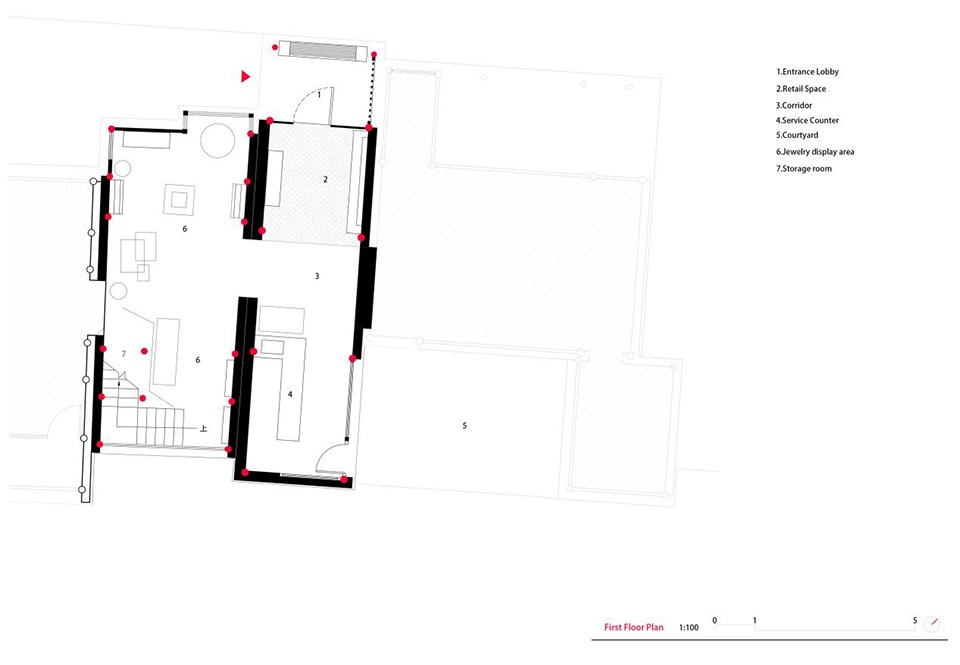
▼二层平面,first floor plan