西湖大学图书中心,杭州 / 浙江大学建筑设计研究院
2026年4月18日,西湖大学图书馆正式运营投入使用,作为西湖大学整个校园的核心标志性建筑图书中心开启了它的真正使命。
On April 18, 2026, the Westlake University Library officially opened its doors. As the core landmark building of the entire campus, the Library has now embarked on its intended mission.
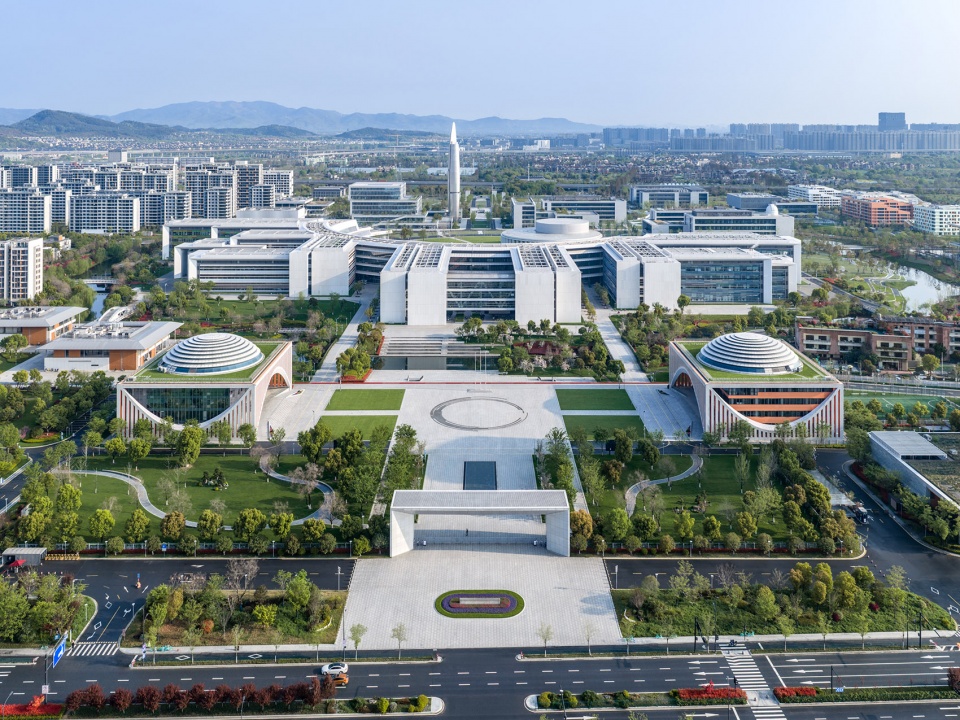
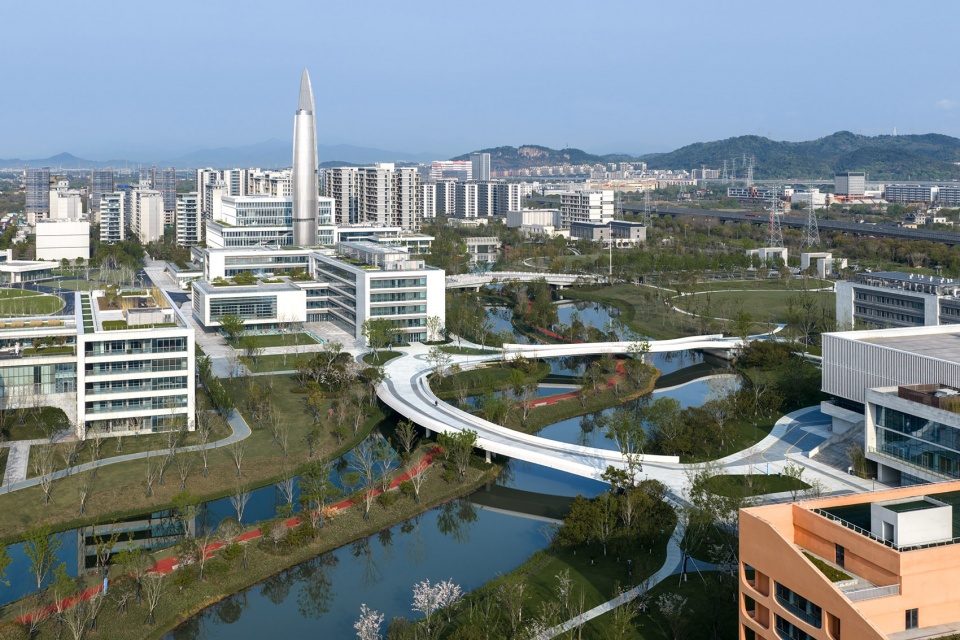
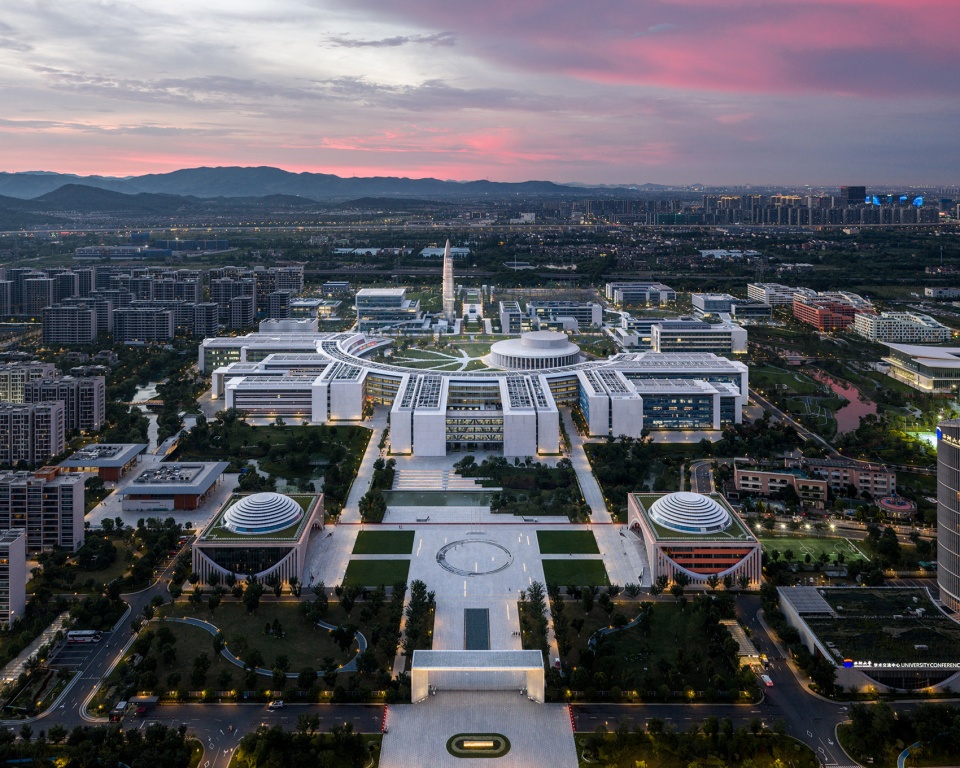
▼校园南北主轴线航拍图,Aerial View of the Campus’s North-South Main Axis
▼图书馆入口大台阶与标志塔,
The Library Entrance Steps and the Tower
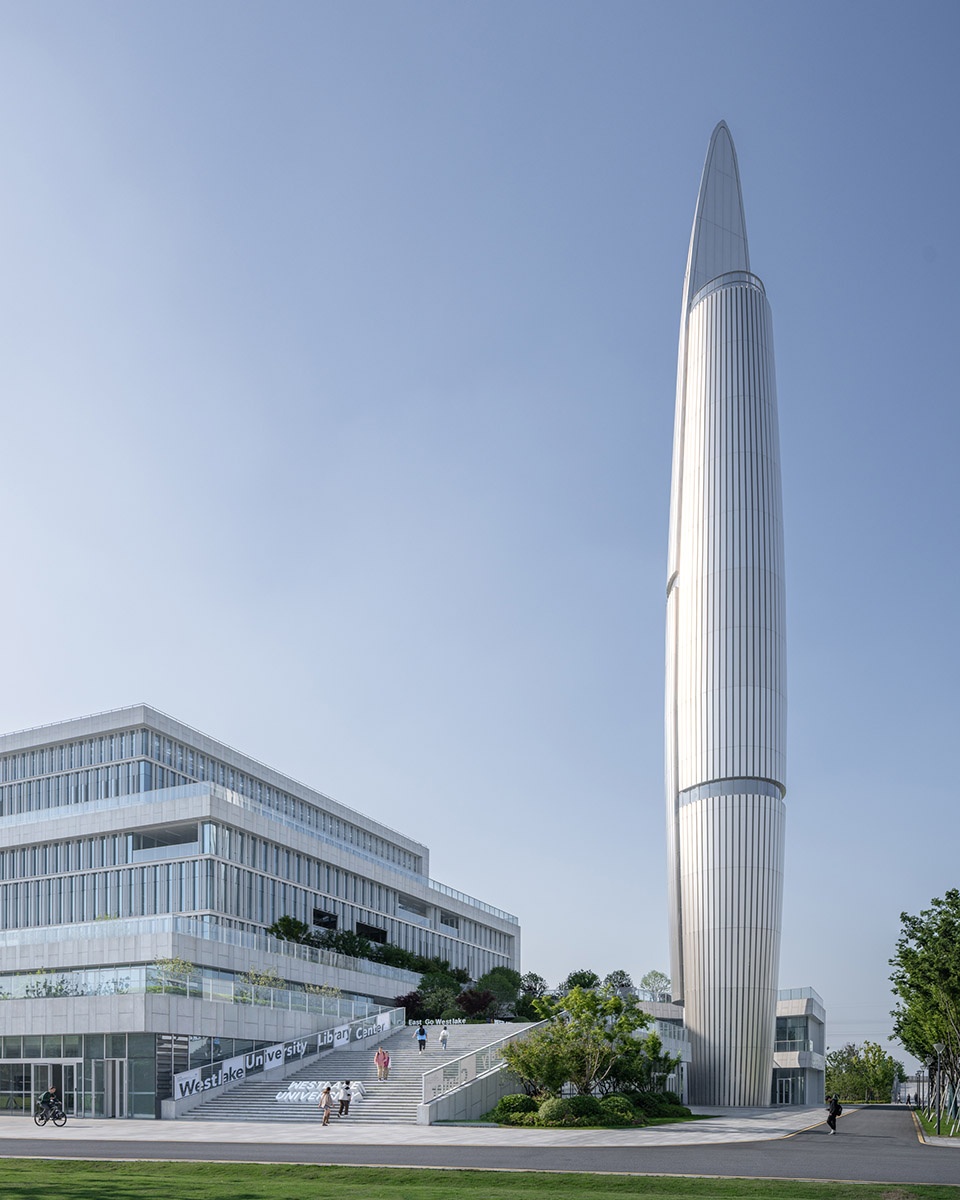
▼图书馆北侧入口台阶与标志塔,
The Library North Entrance Steps and the Tower
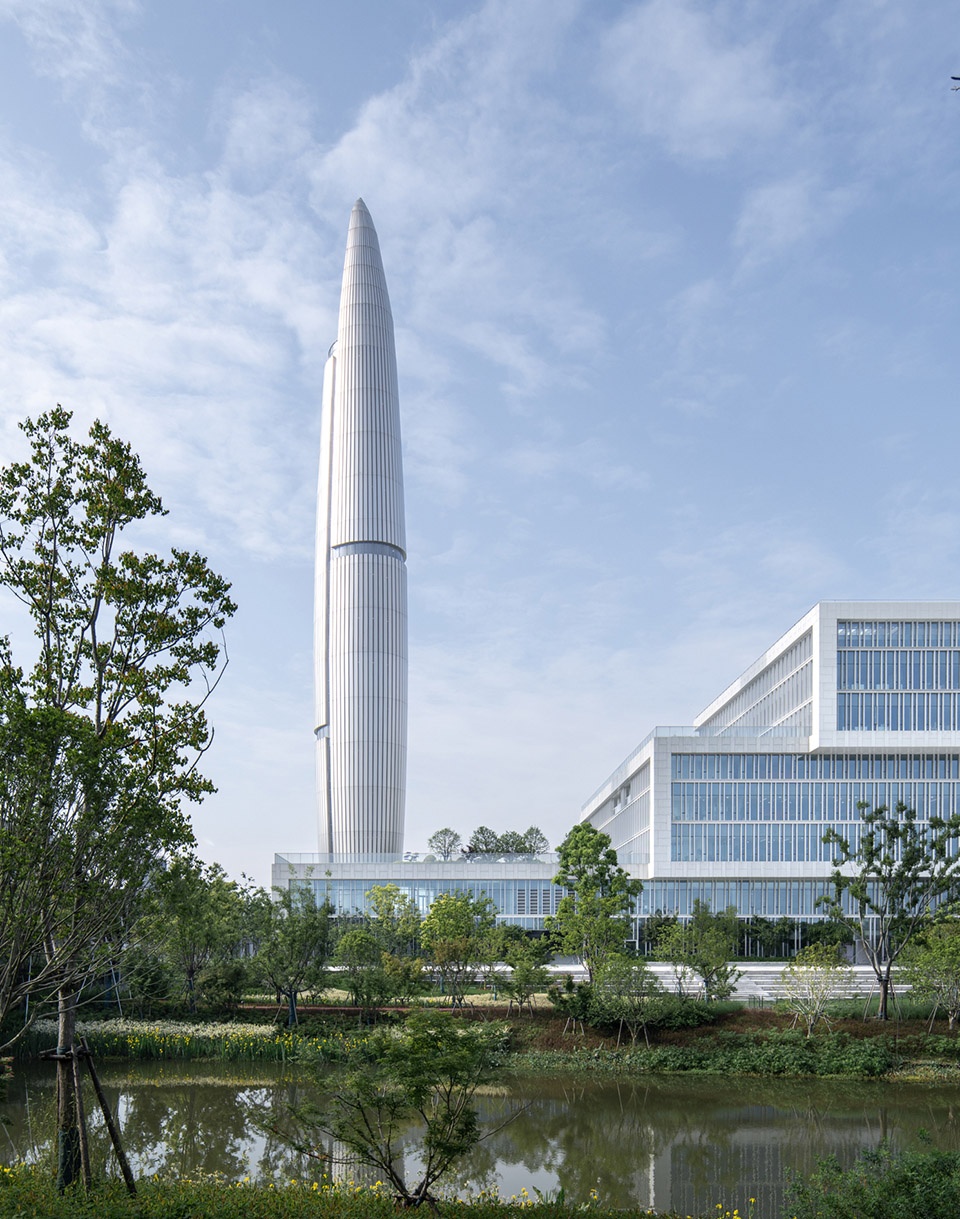
图书中心由主体的二~五层图书馆、一层的校史馆和档案馆、六~七层的AI研究中心以及标志塔共同组成,项目位于校园核心区科研岛的西北端。图书中心与会堂形成一方一圆的形体呼应关系,而108米标志塔与东南端80米学术交流中心形成高度上呼应,相互对望的同时,可以从不同视角俯瞰核心区的整体校园风貌。
▼总体轴线与空间对位关系分析图,
Map of the Overall Axis and Spatial Alignment
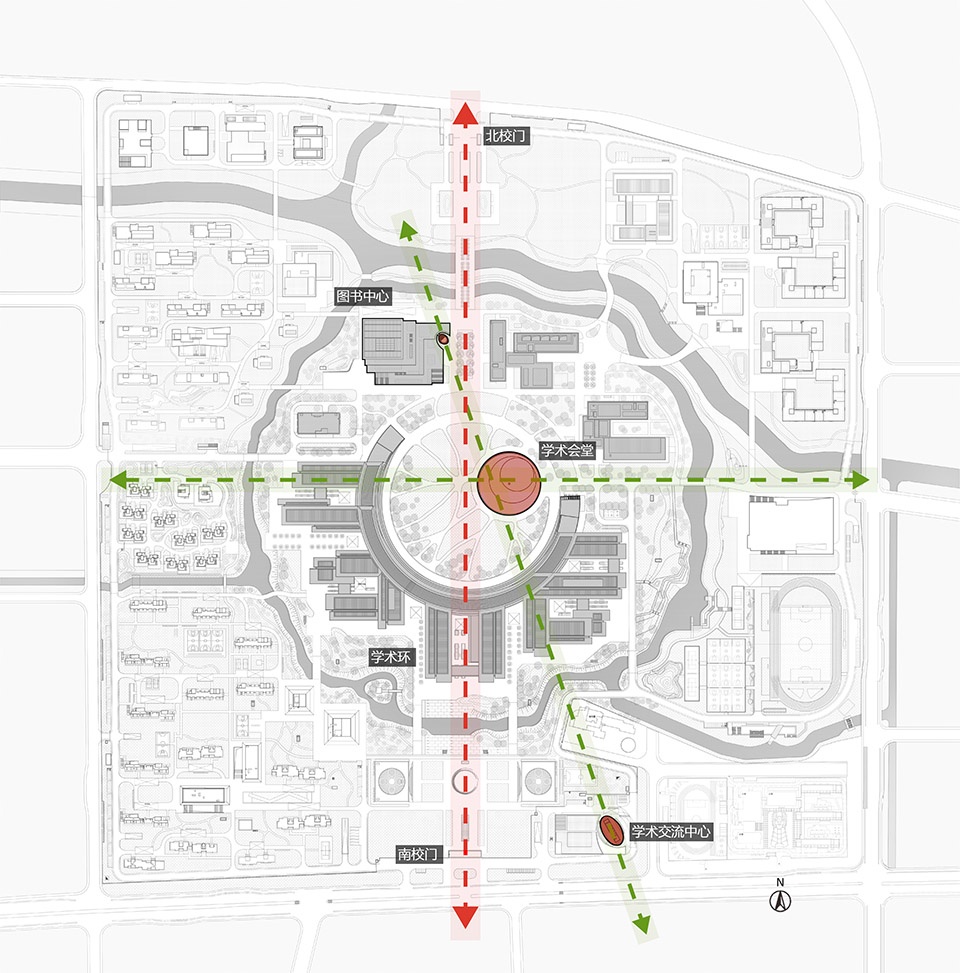
The Library brings together the Main Library (floors 2–5), the History Exhibition Hall and Archives (ground floor), the AI Research Center (floors 6–7), and a tower. Located at the northwest end of the Science and Technology Island, the building anchors the campus’s central precinct. It enters with the Academic Hall into a compositional dialogue—one square, one circular. Above, the 108-meter tower and the 80-meter Academic Exchange Center echo each other at the southeastern tip. Standing in visual counterpoint, they command sweeping views across the core campus from multiple vantage points.
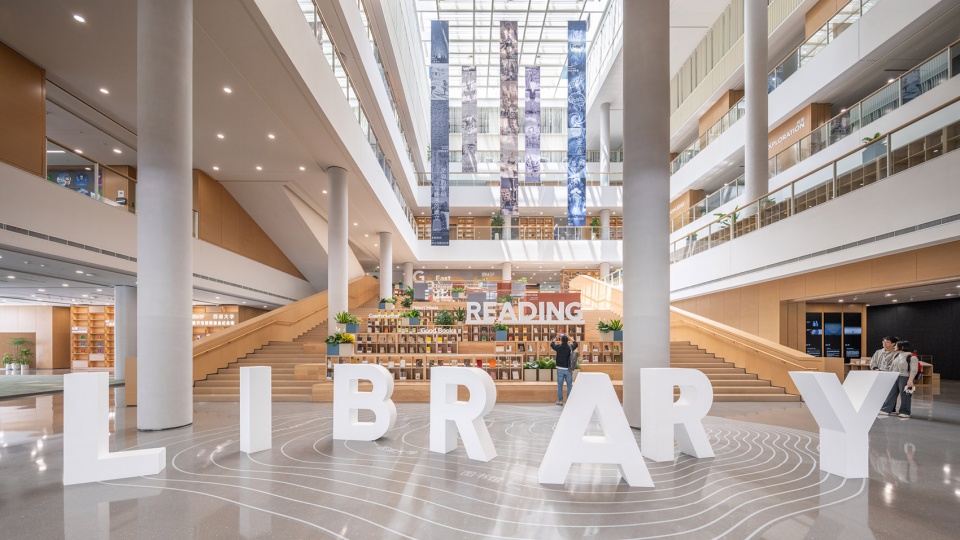
▼图书馆主入口望向中庭,View from the Library Main Entrance to the Atrium
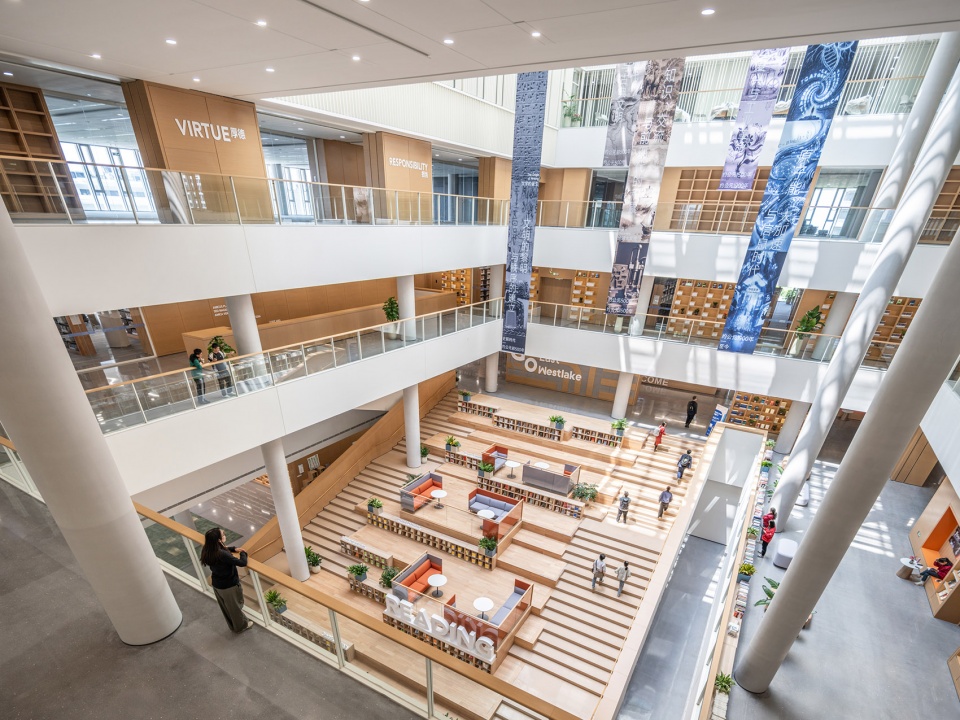
▼图书馆中庭俯视,Overhead View of the Library Atrium
不被定义的学习中心 A Learning Center That Defies Definition
现代大学图书馆已经由传统的“藏书+阅览”的单一模式转向多元学习、智慧服务、人文关怀的复合型空间,要求功能高度复合、场景多样而舒适、空间灵活可变、借阅智能快捷。当下,虽然受到图书电子化和互联网技术的影响和冲击,图书馆做为一所大学的标志性建筑,其存在的价值更多地转变为学习生活的精神记忆和社交场所,师生们到这里来更多的是找一处安静的地方看书、发呆、赏景,或是云端交流,以及参加小组讨论和各种沙龙活动等。图书馆在某种程度上已经变成了学校的一个多功能社交属性的学习中心,进而对室内外的空间体验和舒适度都提出了更高的设计要求。设计通过重组并延伸图书馆相关功能,对室内外空间进行重新定义,让不确定性过渡共享空间发挥更大的可塑性,创造出一处面向未来不被定义的社交空间和学习中心。
The modern university library has moved beyond the traditional model of mere book storage and reading. What emerges instead is a hybrid space for diverse learning, intelligent services, and human-centric care. It demands high functional density, diverse yet comfortable settings, spatial flexibility, and smart, efficient access to collections. Today, despite or perhaps because of the rise of e-books and the internet, the library’s value as a university landmark has shifted. It now endures as a place of intellectual memory and social gathering in academic life. Faculty and students come here not just for books, but for a quiet corner to read, to pause, to take in a view—or to connect in the cloud, to huddle in group discussions, to lose themselves in salons. The library has, in a sense, become a multifunctional social learning hub for the university—a transformation that raises the bar for spatial experience and comfort, both inside and out. Through reconfiguring and extending the library’s core functions, the design redefines interior and exterior spaces alike. Indeterminate transitional and shared zones are granted greater plasticity, giving rise to a future-oriented social space and learning center that defies definition.
▼门厅周边的复合过渡空间,Composite Transition Space Surrounding the Lobby
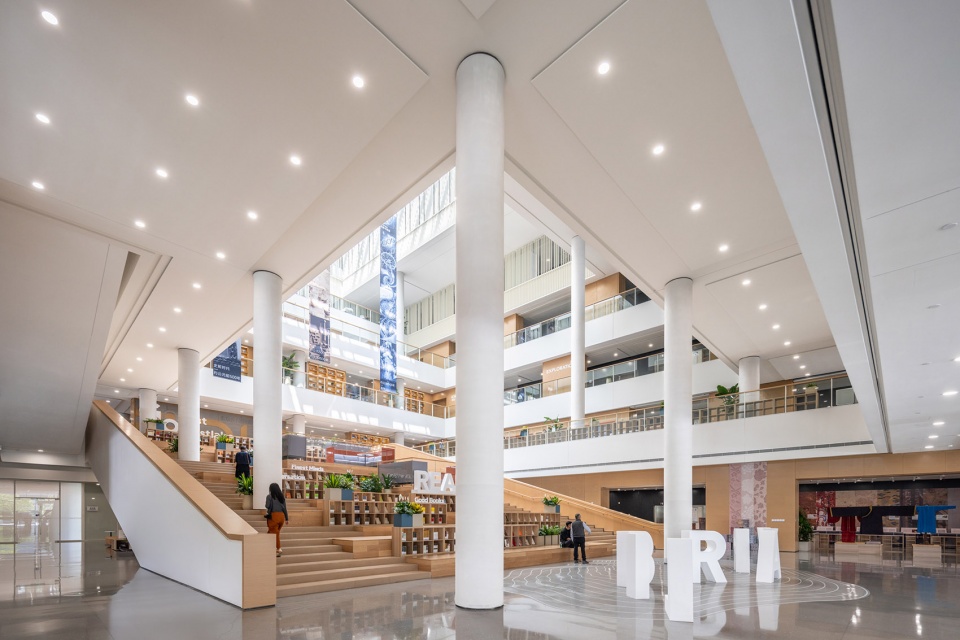
▼入口处的晓风书屋休闲交流区,Xiaofeng Bookstore Lounge Area at the Entrance
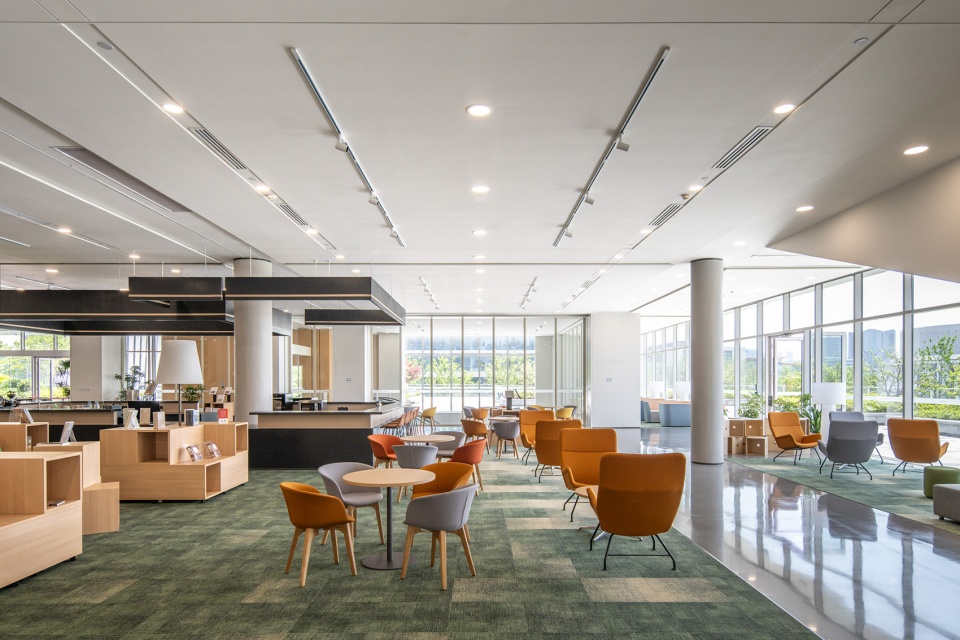
▼藏阅一体的开放休闲阅览空间,Open Leisure Reading Space Integrating Collection and Reading
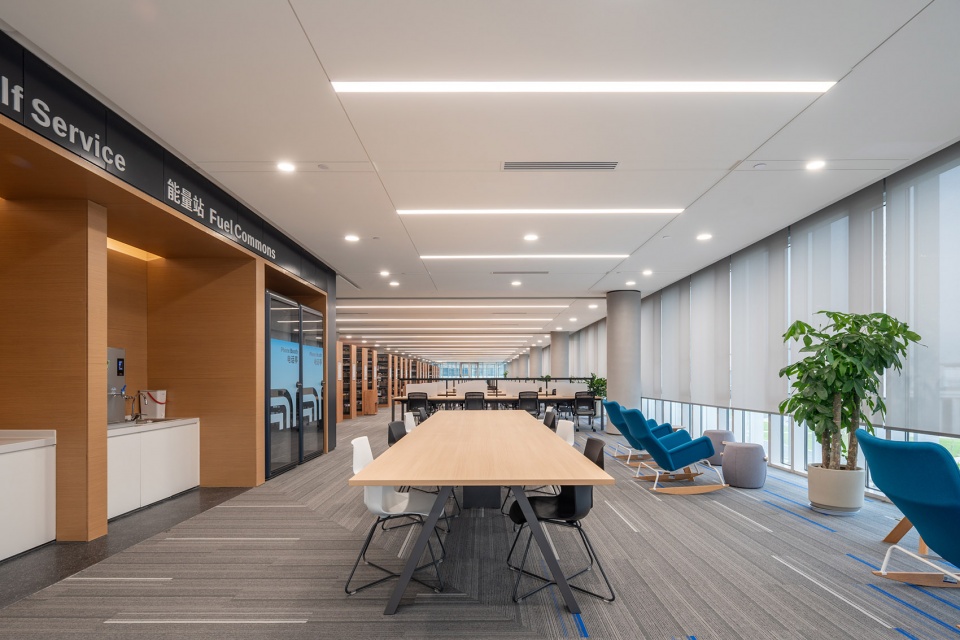
▼可以看沿河夕阳美景的临窗座位,Window-Side Seats Offering Views of the Sunset along the River
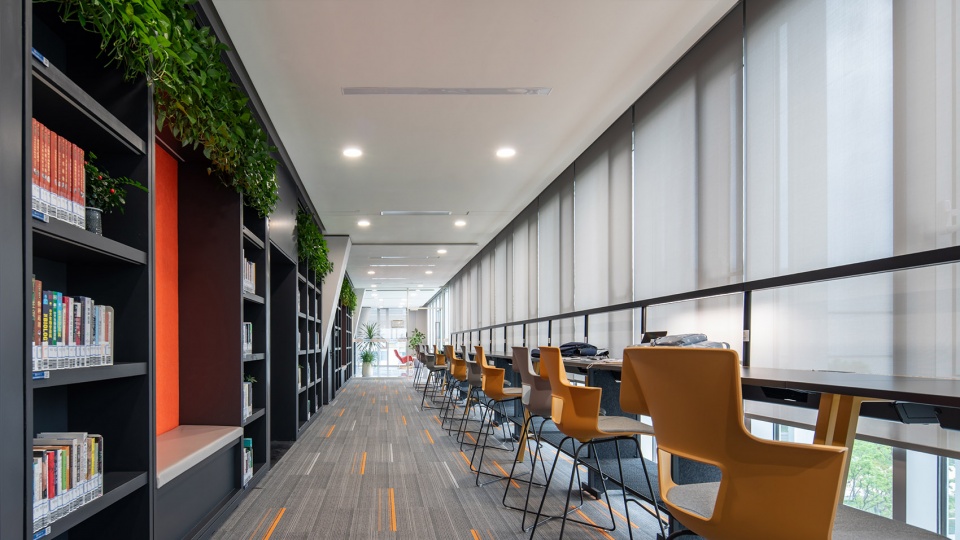
独特的室外漫游路径 Unique Outdoor Roaming Paths
在建筑外部希望创造一处现代新型大学立体的学习和交往场所,与校园中央花园及其西北侧的水环形成景观互动,建筑形体呼应了南侧中央花园、西侧生活区的14、15号桥以及北侧17号桥三个地面人流方向,在底层通过呼应三个方向的大台阶将人流同时汇聚引导至东侧二层平台图书馆的主入口处,在这里,进出图书馆的每一个瞬间都可以仰望标志塔和眺望远处的学术会堂及中央花园;在南侧二层平台设置楼梯继续顺着东南侧拾阶而上至六层的室外平台,可以满足师生在天气好的季节里通过室外的步行路径直达各个楼层,创造步移景异的景观体验的同时,也提高了不同学科师生相遇的概率,也许不同专业交叉融合的火花就在此地此刻诞生了。
▼图书中心外部路径分析图,Map of the Library External Paths
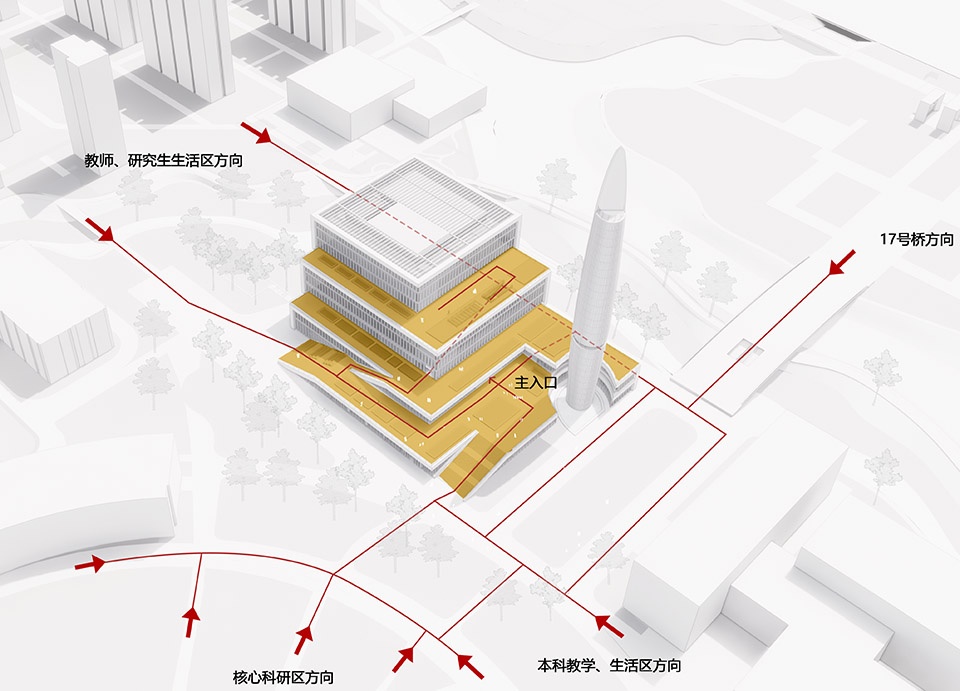
Externally, the design aspires to create a three-dimensional space for learning and interaction befitting a new model of the modern university, while engaging in a landscape dialogue with the campus’s Central Garden and the water ring to its northwest. The building’s form responds to three pedestrian flows on the ground: the Central Garden to the south, Bridges 14 and 15 of the residential quarter to the west, and Bridge 17 to the north. At ground level, a series of large staircases aligned with these three directions converge and channel visitors upward to the Library’s main entrance on the eastern second-floor terrace. Here, every moment of arriving at or departing from the Library offers a view skyward to the signature tower and outward to the Academic Hall and the Central Garden beyond. On the southern second-floor terrace, stairs continue the ascent along the southeastern side, leading up to an outdoor platform on the sixth floor. In fair seasons, this exterior path allows faculty and students to walk directly between levels, creating an ever-changing landscape experience while increasing the likelihood of chance encounters across disciplines. Perhaps the spark of cross-disciplinary fusion will be born right here, at this very moment.
▼一层不同方向的大台阶引导人流至二层主入口广场,Steps on the Ground Floor in Different Directions Guide Visitors to the Second-Floor Main Entrance Plaza
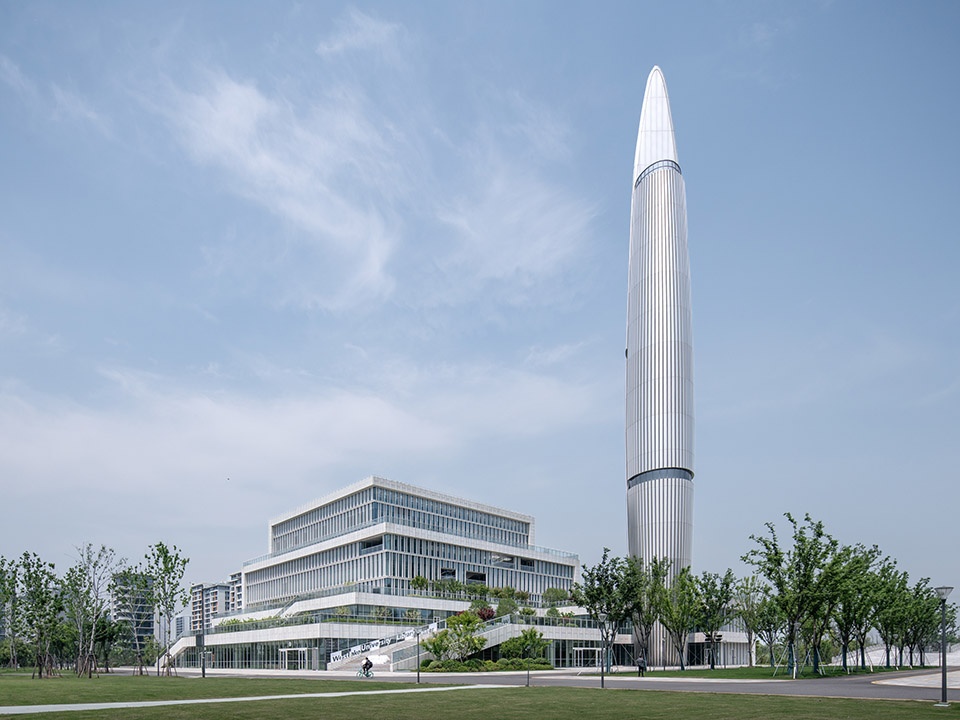
▼图书馆二层主入口广场,Second-Floor Main Entrance Plaza
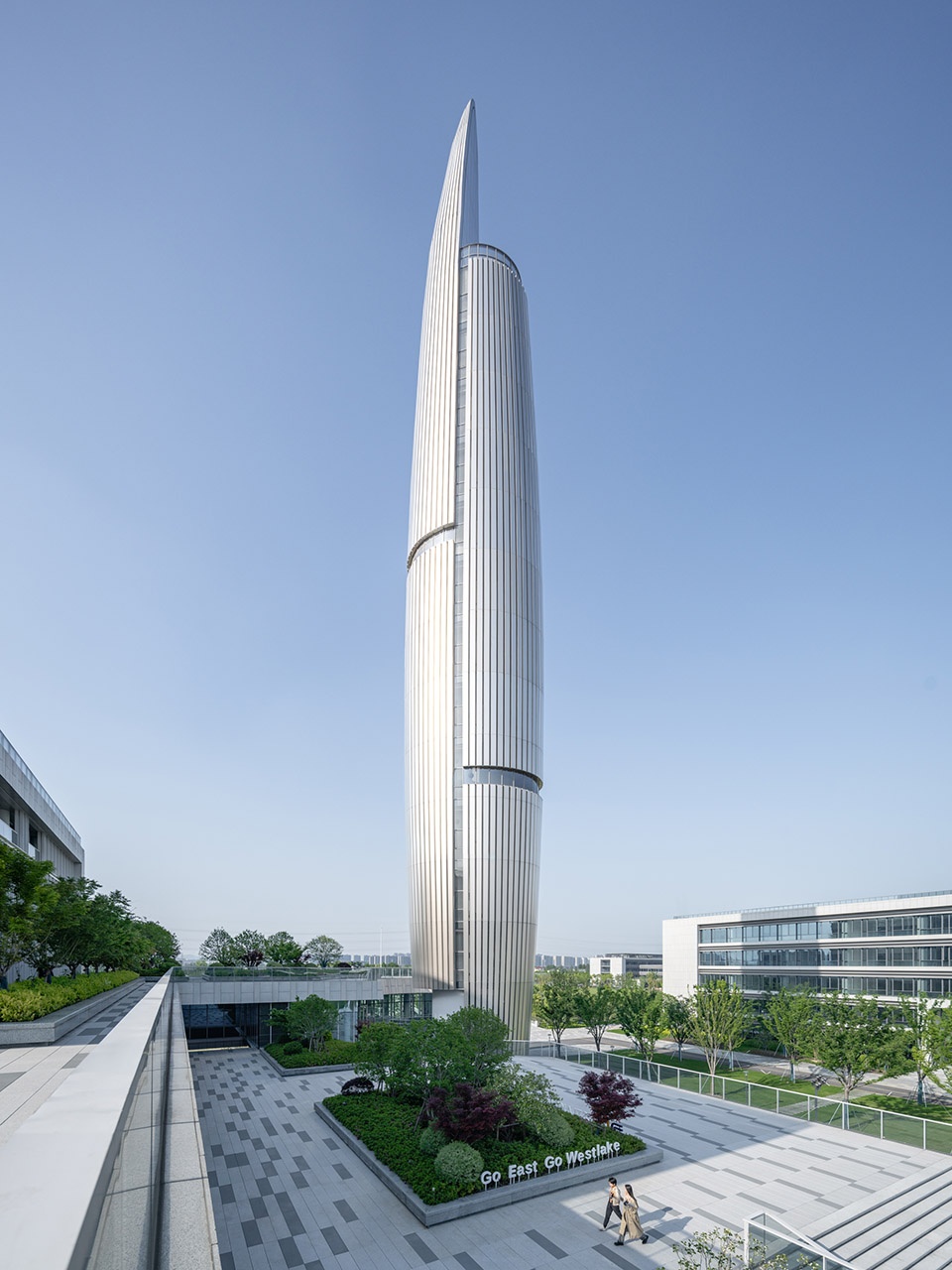
▼图书馆二层主入口,Second-Floor Main Entrance
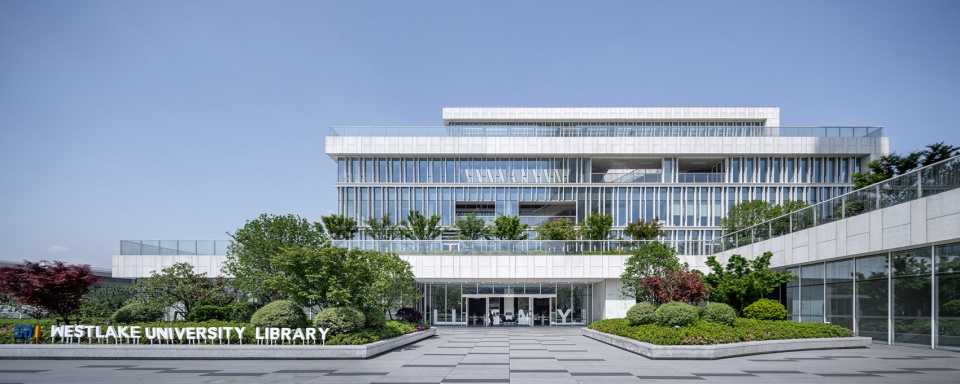
▼图书馆四层至五层景观平台,Fourth-to-Fifth-Floor Viewing Terrace
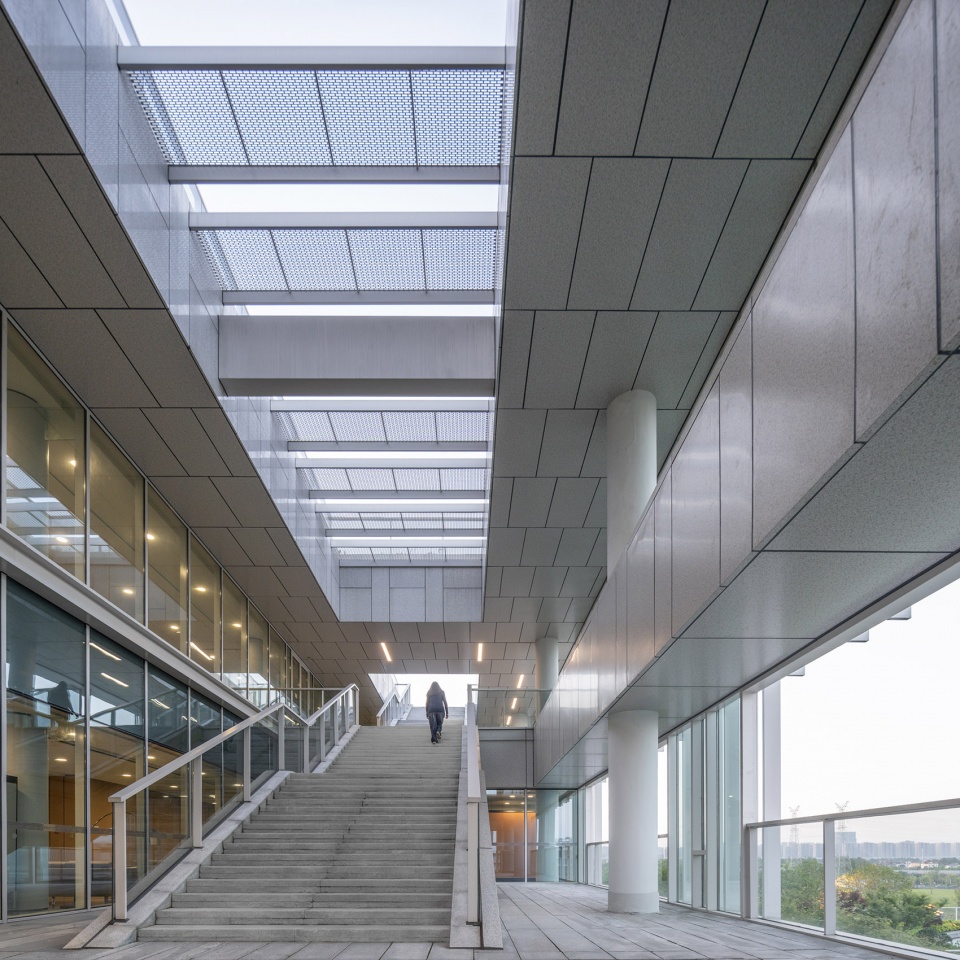
为了突出标志塔的挺拔感并避免图书中心主体高层建筑对南北主轴线的压迫感,建筑形体结合室外步行台阶,自然地形成了由东南向西北退让的退台式形体组合,最大化地创造了多首层和面向东南侧中央花园的270度最佳的景观面,图书中心错动的“三本书”的形体也自然地生成了。
To emphasize the verticality of the signature tower while avoiding any sense of compression from the Library’s main volume along the north-south axis, the building’s form, in conjunction with the exterior stepped walkways, naturally develops into a terraced composition that recedes from southeast to northwest. This strategy maximizes the creation of multiple ground levels and a 270-degree optimal view toward the Central Garden to the southeast. The Library’s staggered tripartite form “three books in motion” thus emerges organically.
▼图书中心北侧沿河形体组合,Architectural Composition along the River on the North Side of the Library
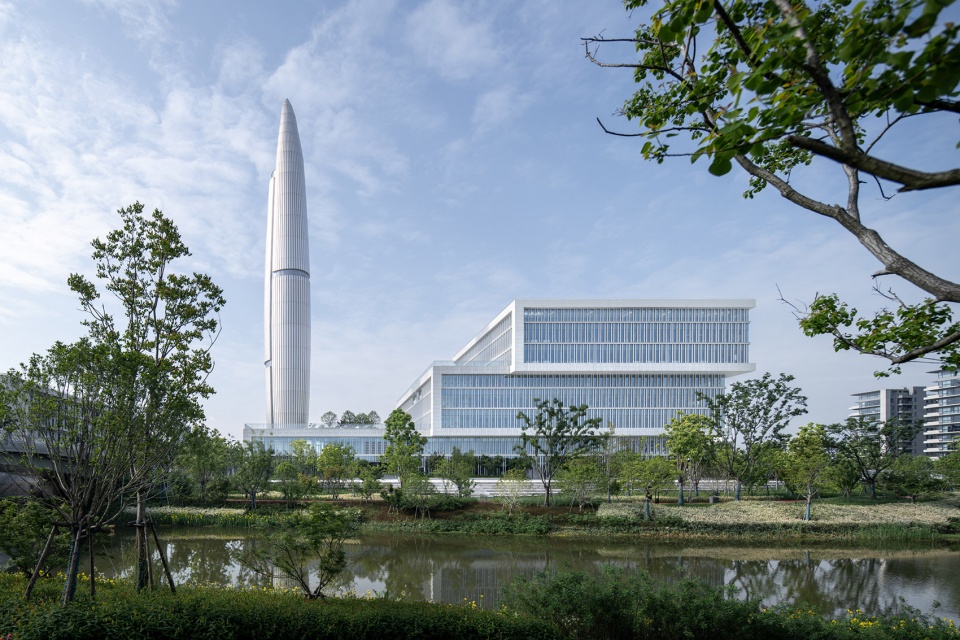
▼图书中心西南侧形体组合,Architectural Composition on the Southwest Side of the Library
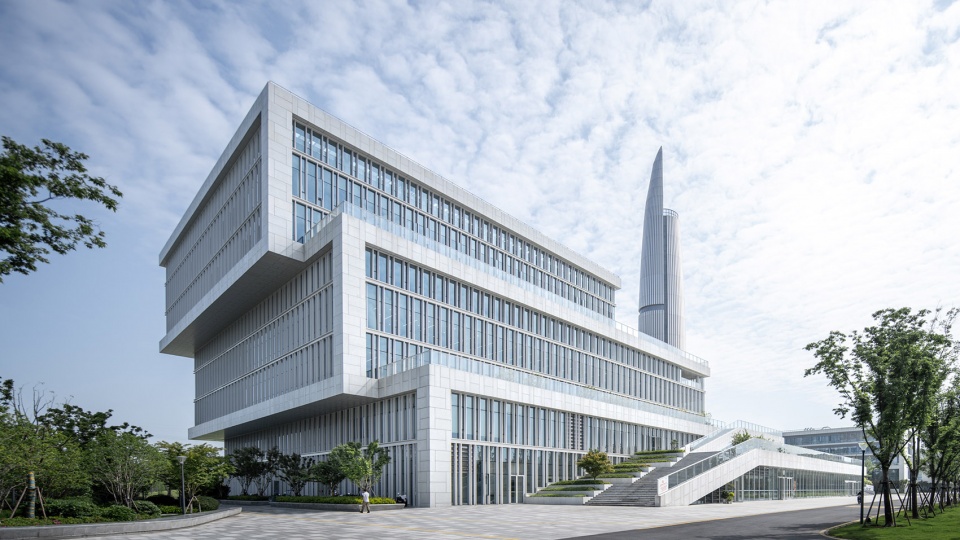
浪漫的室内中庭空间 A Romantic Indoor Atrium Space
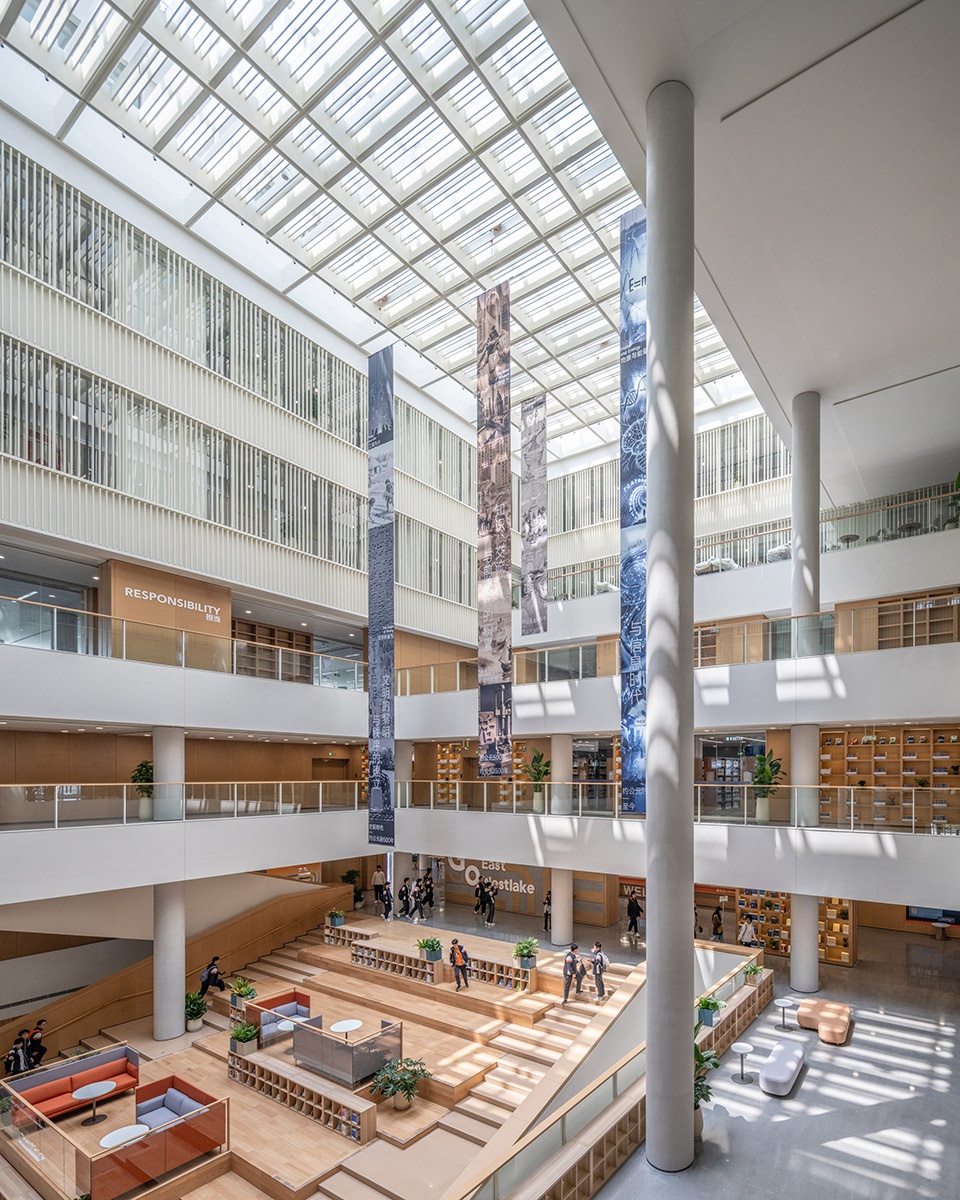
在建筑内部植入一个近35米通高的采光中庭,结合建筑外部错动的形体以及各层环绕中庭的步行台阶,将自然光最大化地引入建筑内部,力图为使用者创造室内空间室外化的心理感受。通过正对东侧主入口功能性的大台阶,将人流引入到三层,再环绕中庭设置直跑楼梯至第二本书的体块终止于五层垂直电梯的前厅区域,让室内步行流线与垂直电梯流线在此汇聚。同时,屋顶的天光洒在地面和柱子上形成的流动斑驳的光影,吸引着更多的师生追逐并拾阶而上,创造出室内外共同交互的步行交通系统,增加了这座图书馆的内部空间活力和开放式的学习交往体验。
▼图书馆内部步行路径分析图,
Map of Library Internal Passages
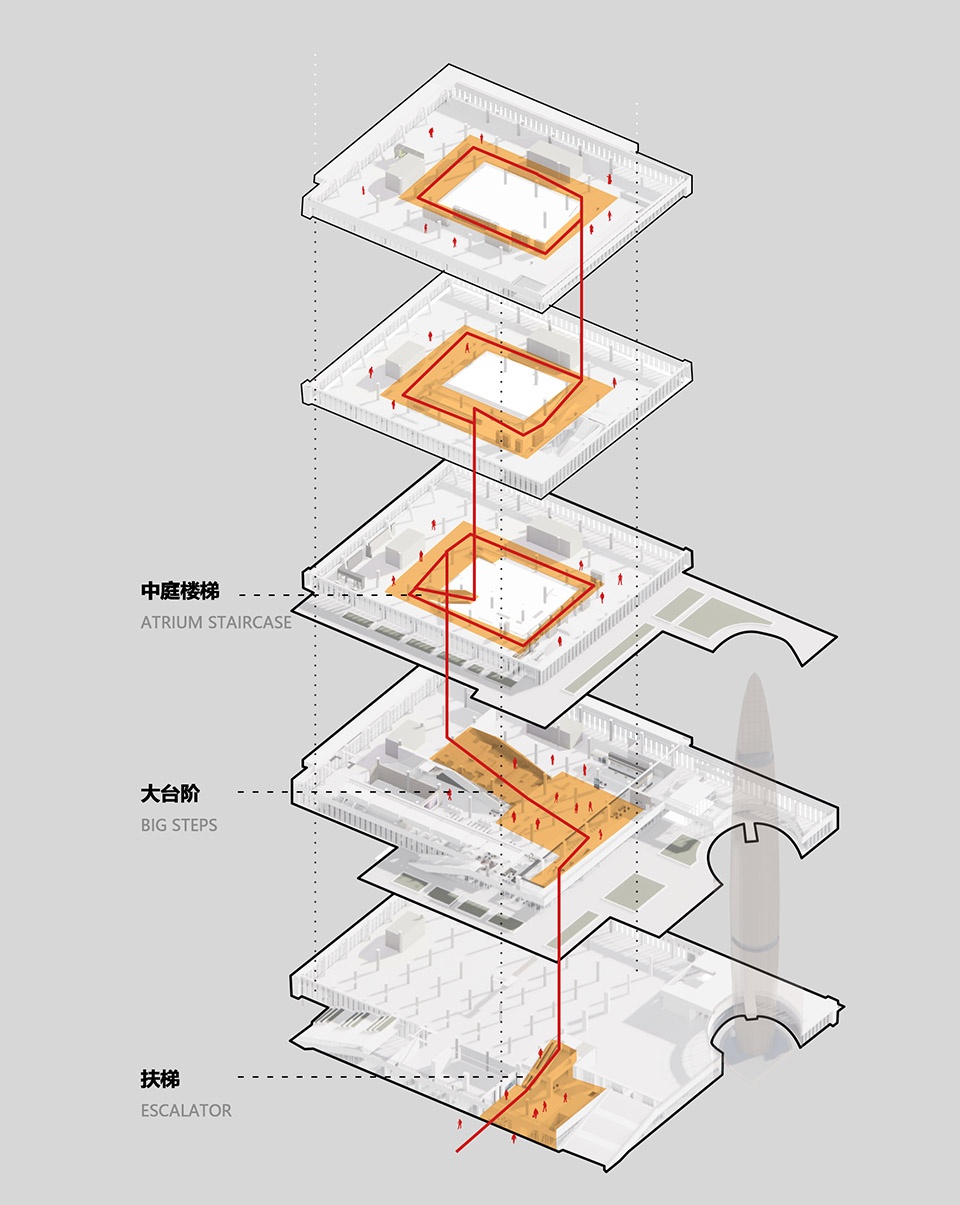
A nearly 35-meter-tall skylit atrium is inserted into the heart of the building. Together with the staggered exterior forms and the walking terraces that loop around the atrium at each level, natural light is drawn deep into the interior, striving to create a sense of the outdoors, indoors. A monumental functional stairway aligned with the east entrance draws visitors up to the third floor, where a straight-run staircase continues around the atrium, rising through the volume of the “second book” and terminating at the elevator lobby on the fifth floor. There, the indoor pedestrian flow meets the vertical circulation. Meanwhile, daylight pours in from the roof, casting shifting, dappled shadows across the floor and columns—an invitation that draws students and faculty upward, step by step. The result is an interior-exterior pedestrian system in constant interplay, one that amplifies the Library’s spatial vitality and fosters open, learning-rich encounters.
▼大台阶与东侧主入口的过渡空间,Transition Space Between the Steps and the East Main Entrance
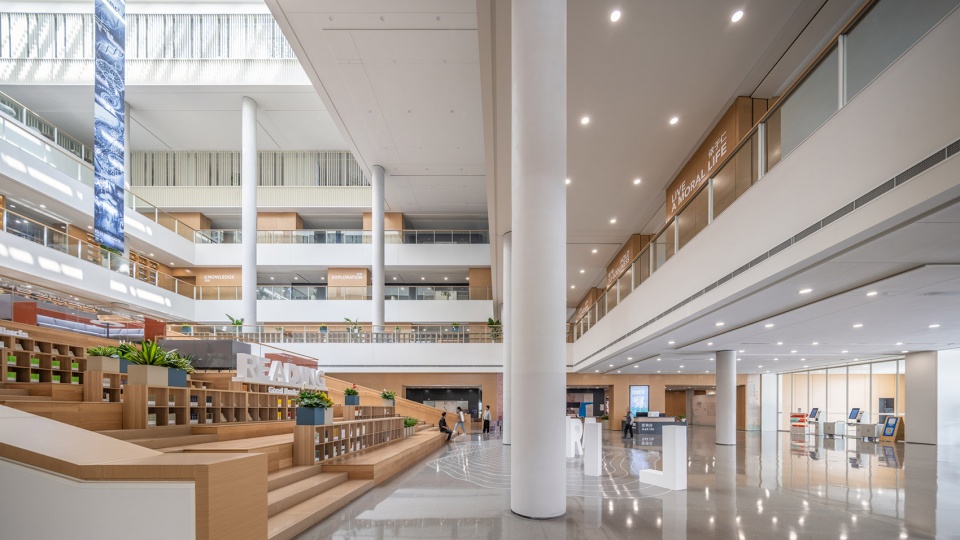
▼图书馆二层至三层步行连通路径,
Passage Connecting the Second Floor to the Third Floor
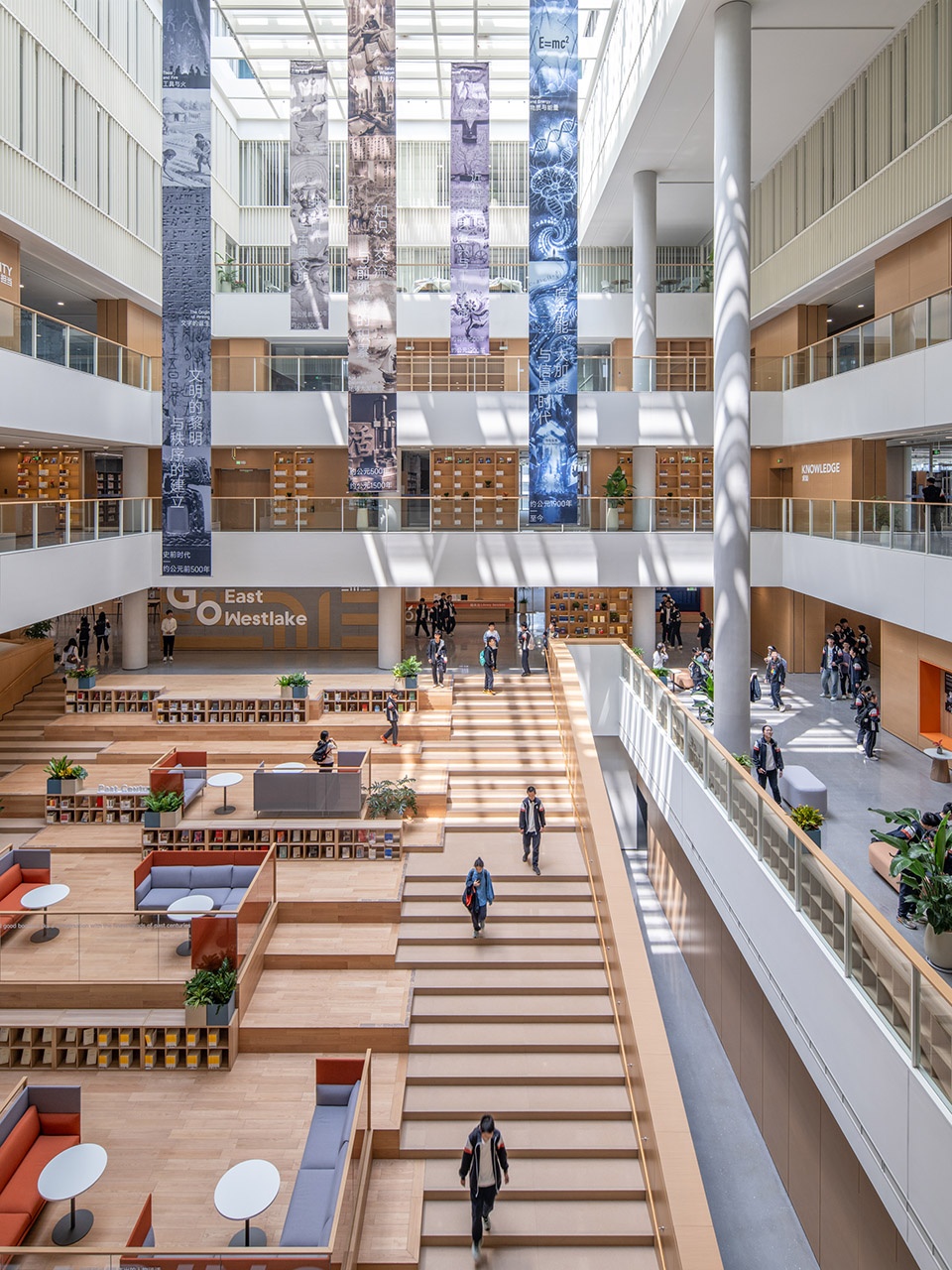
▼图书馆三层至四层步行连通路径,
Passage Connecting the Third Floor to the Fourth Floor
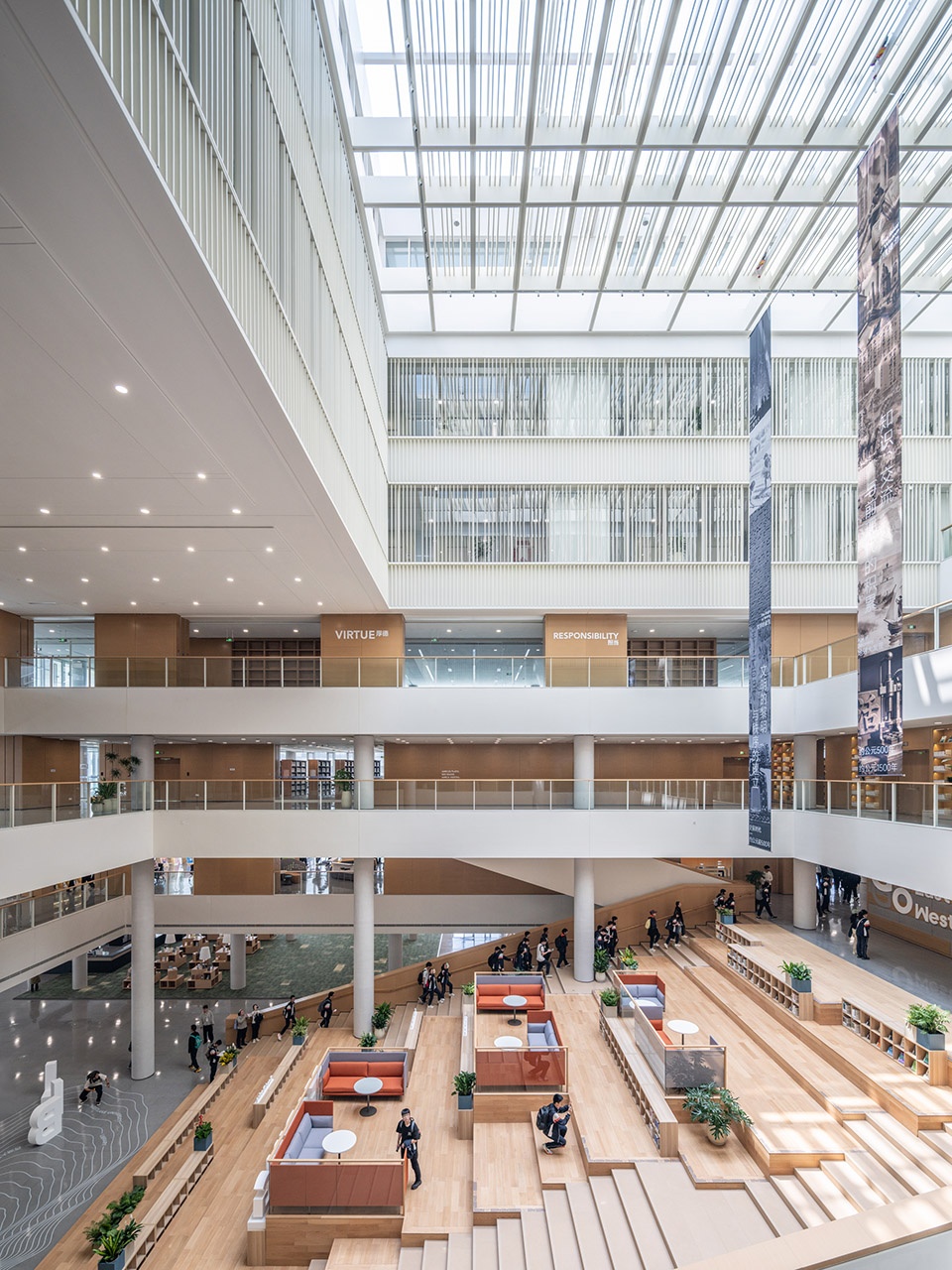
▼图书馆四层至五层步行连通路径,
Passage Connecting the Fourth Floor to the Fifth Floor
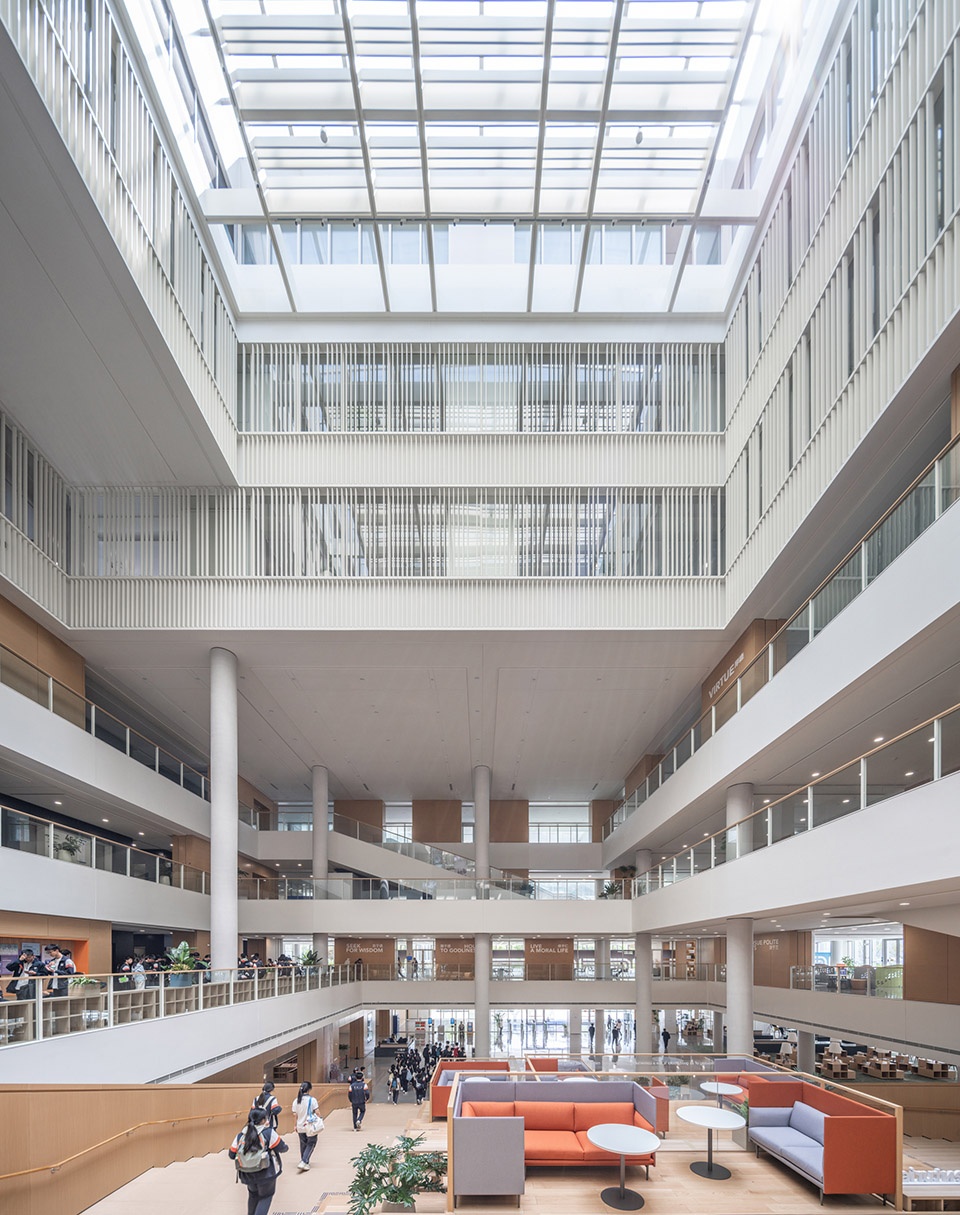
六、七层的AI研究中心自成一本书的顶部体块,将室外建筑元素白色的格栅肌理延伸到室内,形成强烈的体块穿插错动感,与二到五层图书馆中庭部分的木纹色肌理形成反差,创造出各自识别性极强的功能属性。AI研究中心的研究人员,每天通过玻璃,瞭望中庭图书馆区域的活动场景,也许会启发他们新的创造力;或许累了,想到下边图书馆门厅来喝杯咖啡,在阅览室窗边找个位置看看夕阳发发呆,可能是恢复能量和获取灵感的最好方式。
On the sixth and seventh floors, the AI Research Center forms its own distinct volume—the “third book” at the top. Here, the white grille texture of the exterior architecture extends indoors, generating a strong sense of interlocking, staggered volumes. This stands in deliberate contrast to the wood-grain texture of the atrium on floors two through five, endowing each zone with a clearly legible functional identity. For researchers in the center, a daily glance through the glass toward the lively atrium area below may spark a new idea. Perhaps, when fatigue sets in, the thought of descending to the Library’s lobby for a coffee, or finding a seat by the reading room window to watch the sunset and simply pause, becomes the best way to recharge and invite inspiration.
▼AI研究中心在顶部体块穿插效果,
The AI Research Center as an Interlocking Volume at the Top
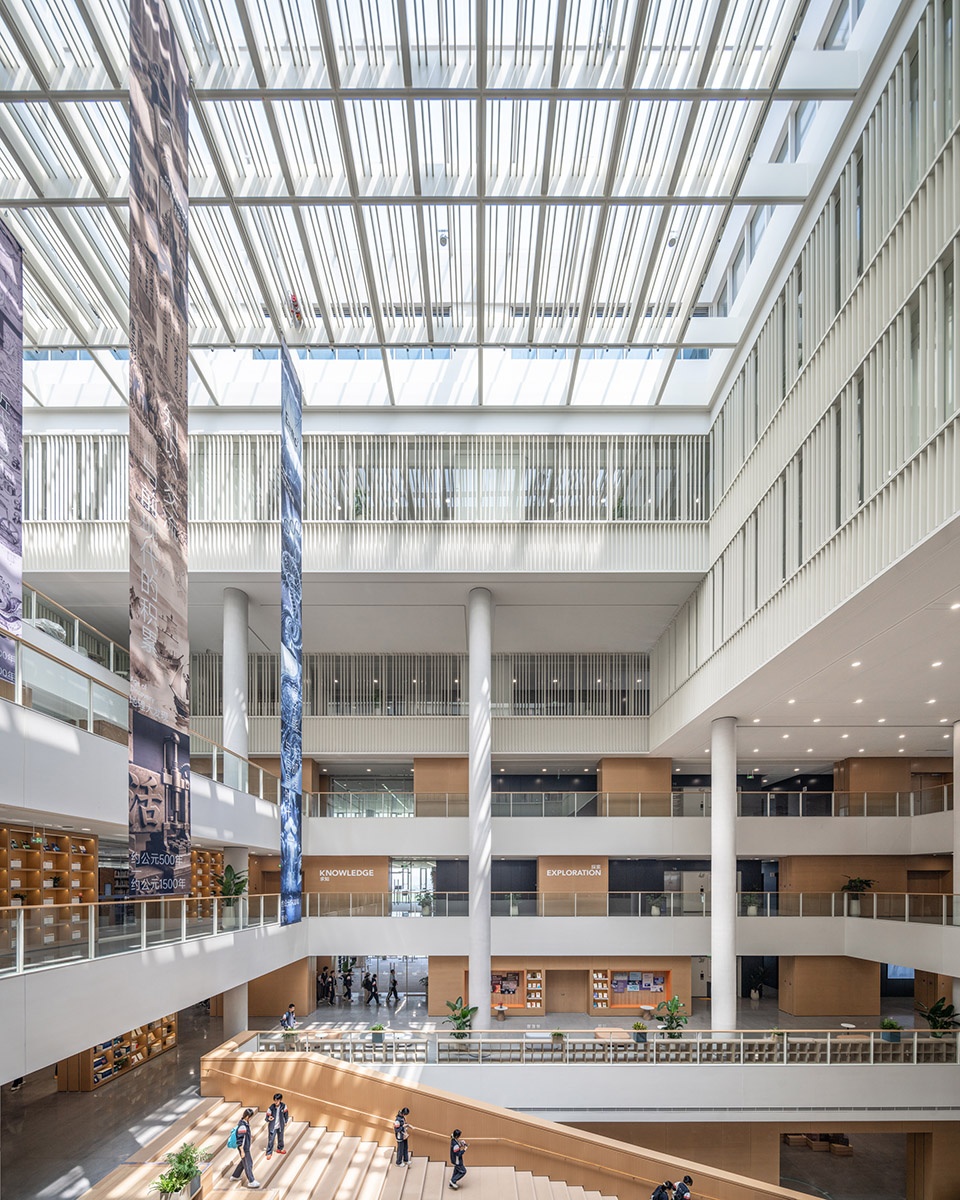
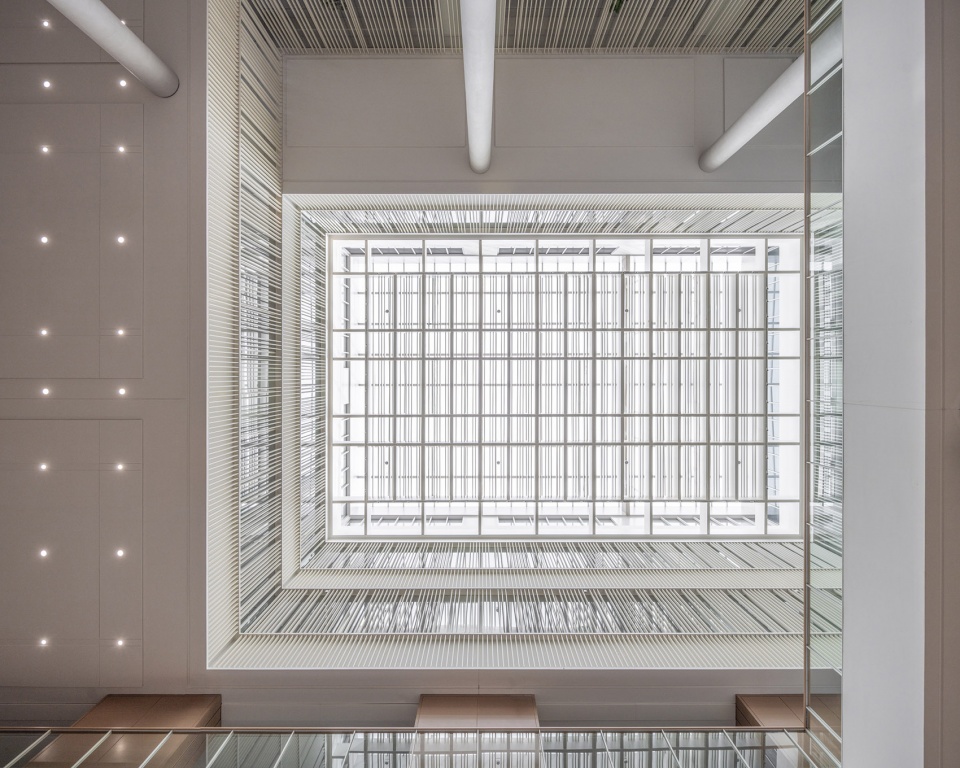
八层高的中庭顶部在七层高的部位用白色格栅屏蔽设计,有效的遮挡了玻璃顶钢结构梁和各种设备外露。同时,白天将直射太阳光线转化成漫反射光,实现了有效的遮阳效果;夜间又可以结合隐藏的灯具照明系统,为中庭提供人工照明光源。建筑的“技与艺”在这里得到了完美结合,最终呈现出纯粹而有特色的室内中庭空间效果。
The eight-story atrium is capped with a white grille screen at the seventh level, effectively concealing the glazed roof’s steel structure and exposed mechanical systems. By day, it converts direct sunlight into diffused light, providing effective solar shading. By night, it works in tandem with an integrated concealed lighting system to illuminate the atrium. Here, the art and craft of architecture are perfectly fused, resulting in an interior atrium that is both pure and distinctive.
▼采光中庭仰视玻璃顶效果,Upward View of the Glass Roof at the Skylit Atrium
▼顶部格栅屏蔽和遮阳效果,
Shading and Screening Effect of the Top Grille
具有未来感的标志塔 A Futuristic Tower
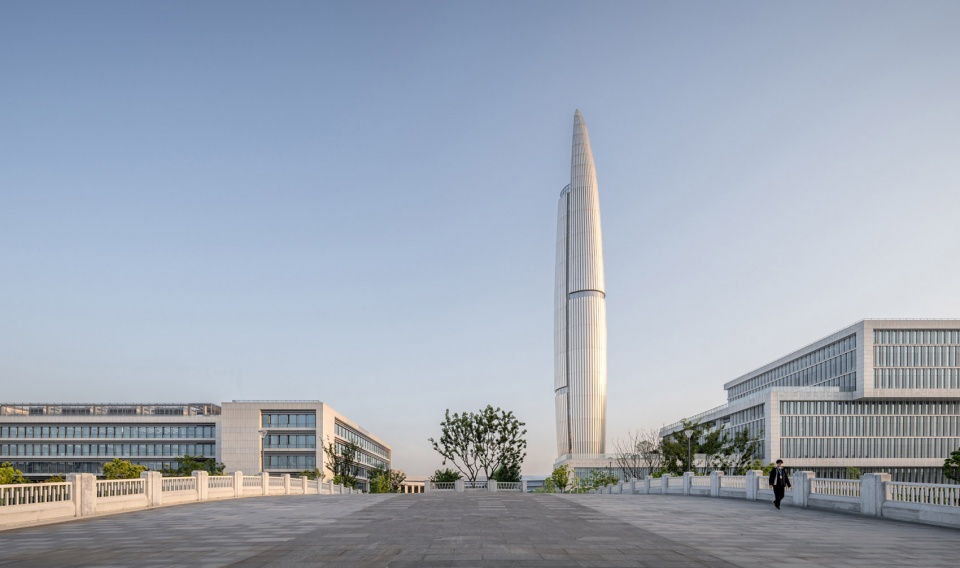
凯文·林奇《城市意象》一书中的五大核心要素一直影响着建筑师在校园设计的总体规划,大学校园犹如一座小城镇,在规划设计阶段如果将五要素充分运用好,就会设计出一座理想而有特色的人性化的大学校园。西湖大学图书中心不论是场地周边的中央花园、水系和桥梁,还是自身的建筑造型都已经实现了五大要素中的“路径、节点、区域和边界”,独缺“地标”这一要素。108米以构筑物功能定位的标志塔,经过多轮概念方案比较,最终确定了类似太空梭的上下错动的造型,并分别在30米、54米和84米处设置了三处室内外观光平台。
Kevin Lynch’s five core elements from The Image of the City have long influenced architects in their master planning of university campuses. A campus is, in essence, a small town. When these five elements are fully engaged during the planning and design phase, the result can be an ideal, distinctive, and human-scaled university campus. The Westlake University Library has already embodied four of the five elements—paths, nodes, districts, and edges—whether through the surrounding Central Garden, waterways, and bridges, or through its own architectural form. The one element still missing: landmarks. The 108-meter signature tower, conceived as a structural landmark rather than a conventional building, took shape through multiple rounds of conceptual comparison. The final design adopts a staggered form reminiscent of a space shuttle, with three indoor-outdoor observation platforms at 30, 54, and 84 meters.
▼以标志塔为制高点的校园主轴线,
Campus Main Axis with the Tower as the Highest Point
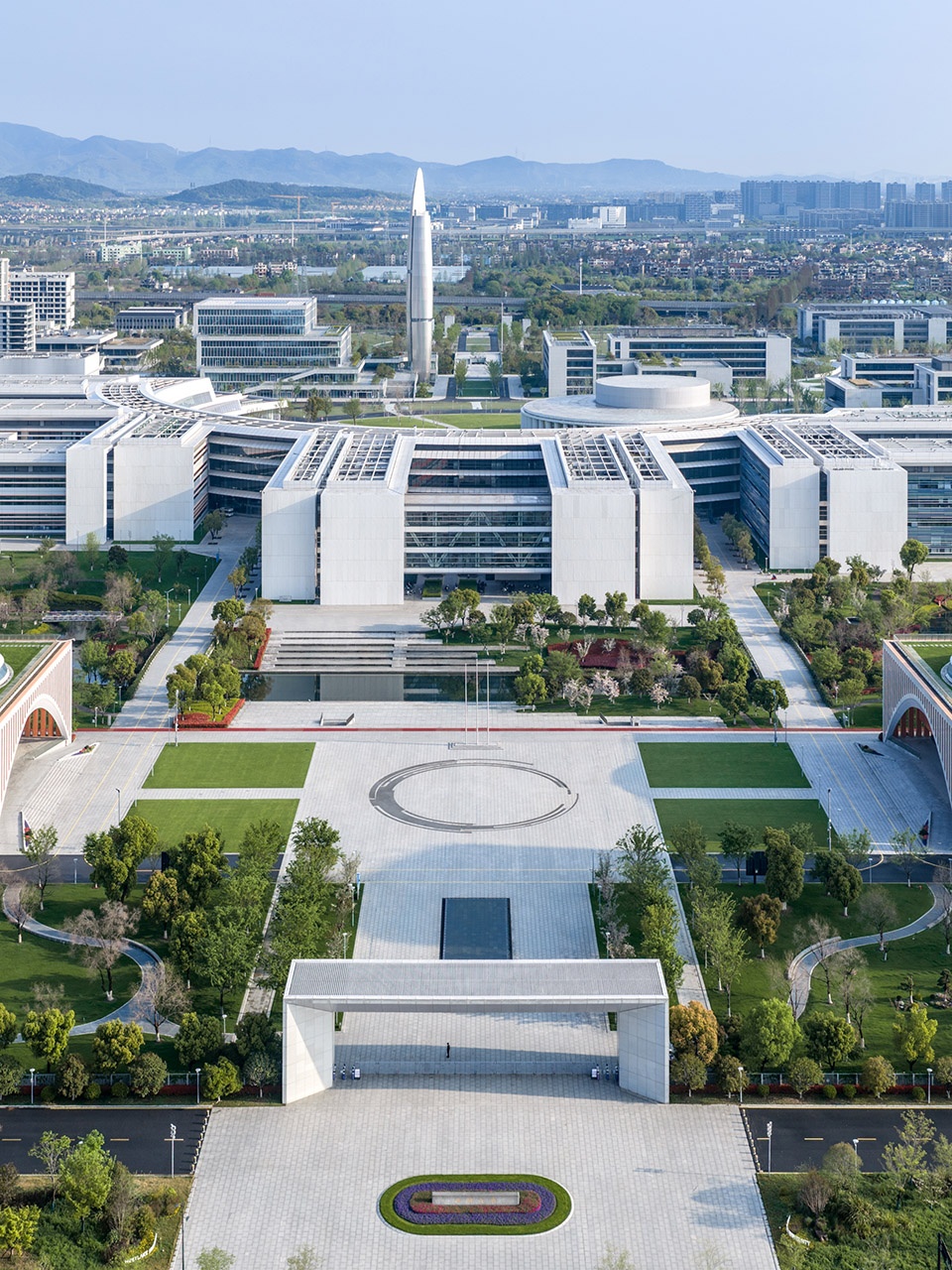
▼水环、桥梁、建筑和标志塔创造了校园空间的多样性,Water Ring, Bridges, Buildings, and Tower Create the Diversity of Campus Space
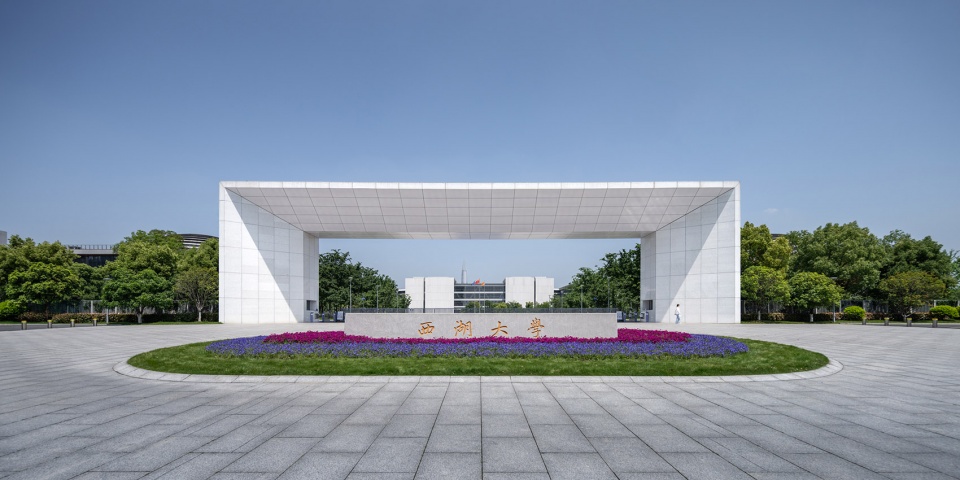
▼主轴线起点的南校门与标志塔,South Gate at the Starting Point of the Main Axis and the Tower
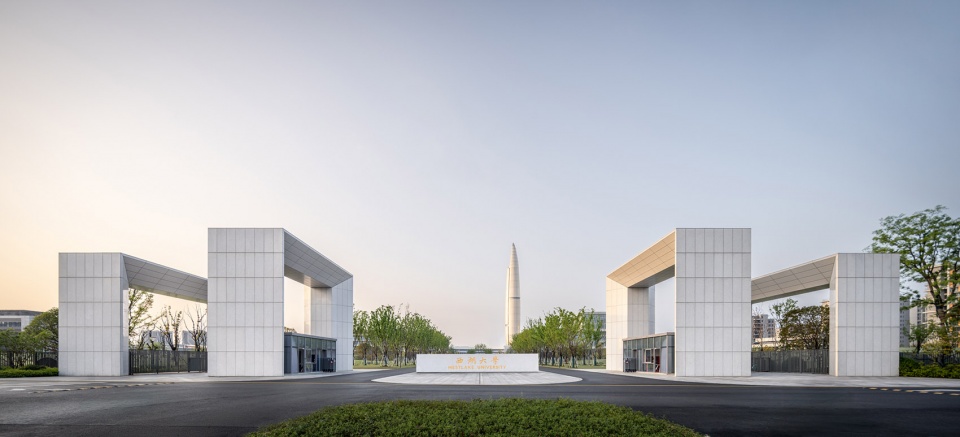
▼主轴线终点的北校门与标志塔,North Gate at the End Point of the Main Axis and the Tower
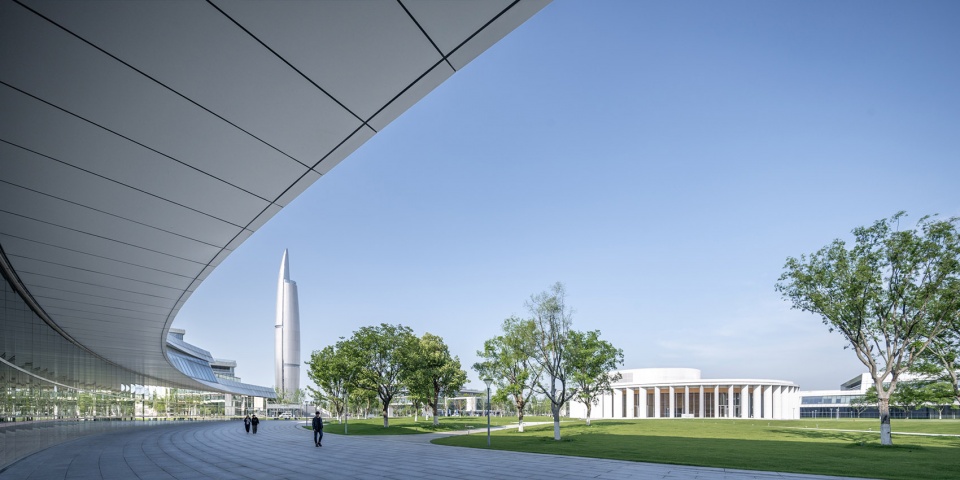
▼中央花园、学术环、会堂与标志塔,Central Garden, Academic Ring, Academic Hall, and Tower
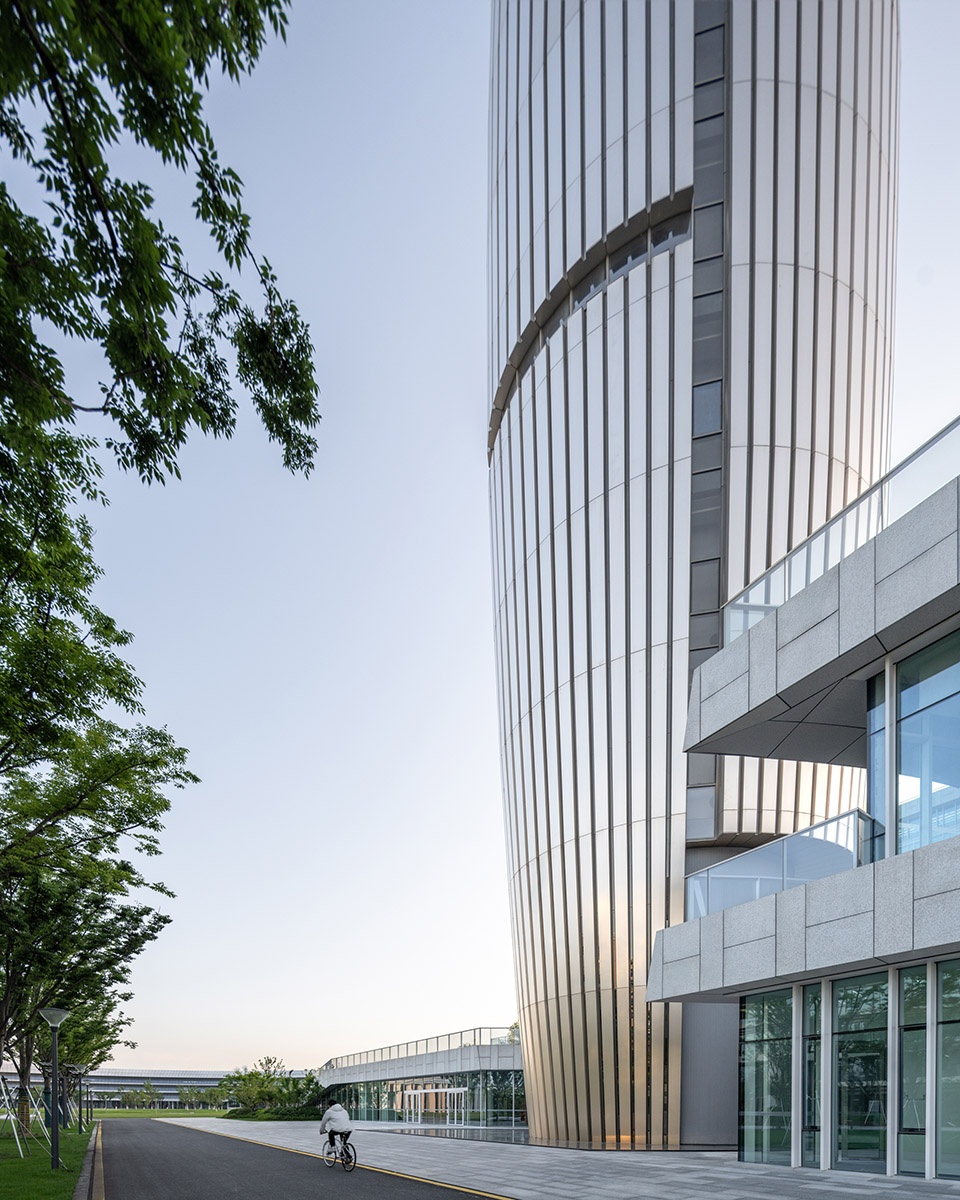
为了强化标志塔的未来感和科技感,外立面采用了钛金属材料,钛不仅自洁性好,而且颜色是天然本色,不会因时间和阳光直射而变色,属于最稳定的金属材料。并且在不同的天气条件下呈现出独特的光泽度和质感。
To heighten the tower’s futuristic and technological character, the facade is clad in titanium. Titanium is not only highly self-cleaning but also possesses a natural character that never fades with time or sunlight, making it one of the most stable of all metals. Moreover, it reveals a unique luster and texture under changing weather conditions.
▼夕阳下的17号桥方向望向标志塔,View of the Tower from Bridge 17 at Sunset
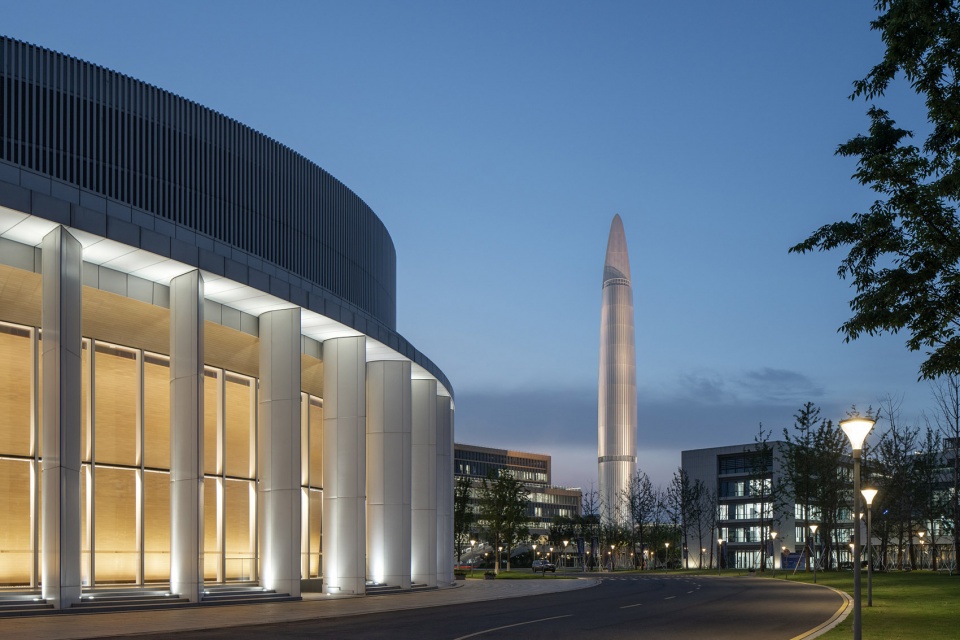
▼夜色下的会堂柱廊与标志塔,Hall Colonnade and the Tower at Night
▼标志塔近人处的细节与质感,
Details and Texture of the Tower Up Close
西湖大学图书中心建成后,不仅成为校园新的标志性建筑,也与学术环和学术会堂共同组成整个校园核心区特色建筑群,展现着我国一所新型研究型大学的全新校园形态。
With its completion, the Westlake University Library not only becomes a new landmark on campus but also joins the Academic Ring and the Academic Hall to form a distinctive architectural cluster at the heart of the university, embodying an entirely new campus typology for a new kind of research university in China.
▼华灯初上,校园核心区浪漫而独特的氛围,Romantic and Unique Atmosphere of the Campus Core Area at Dusk
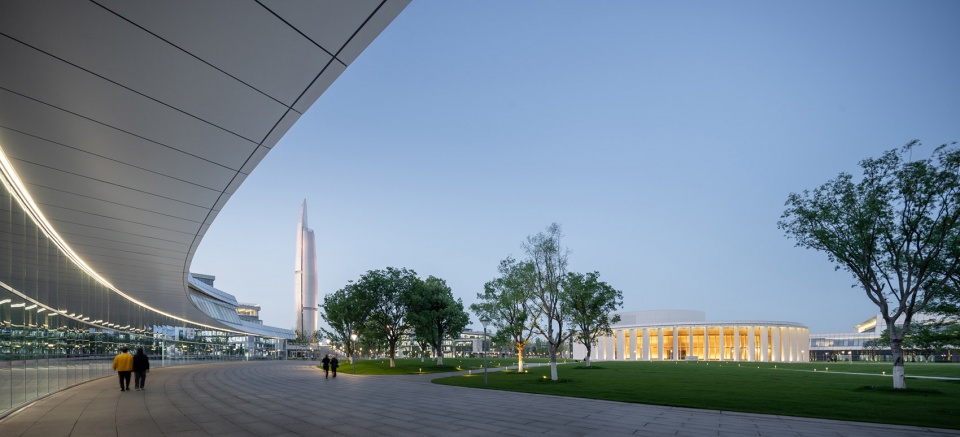
▼夜色下的校园,远处的标志塔犹如一盏明灯,The Beacon-Like Tower in the Distance at Night
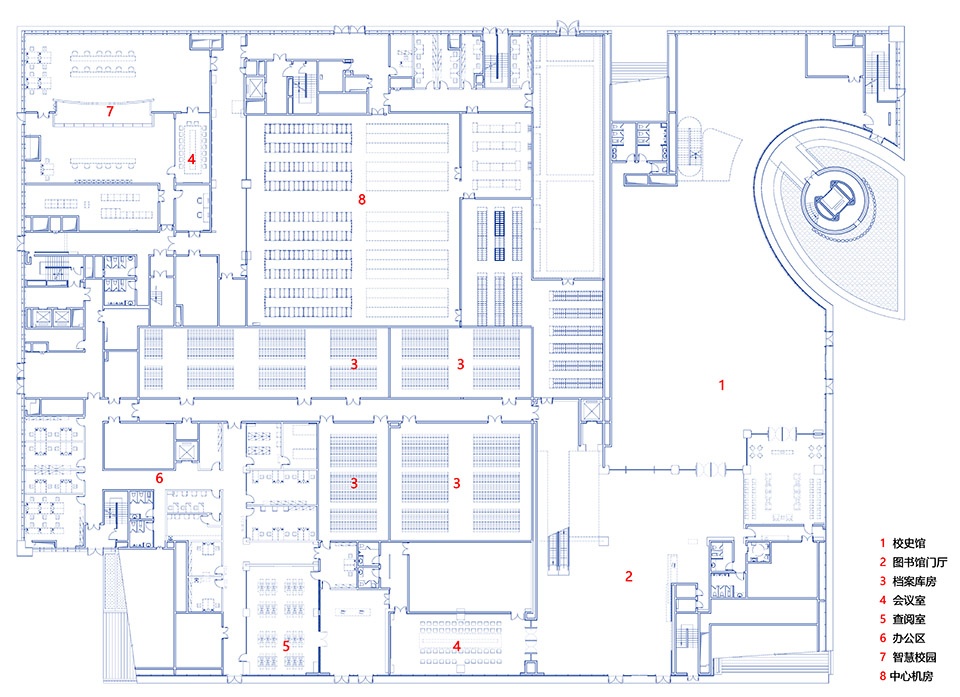
▼一层平面图,1st floor plan
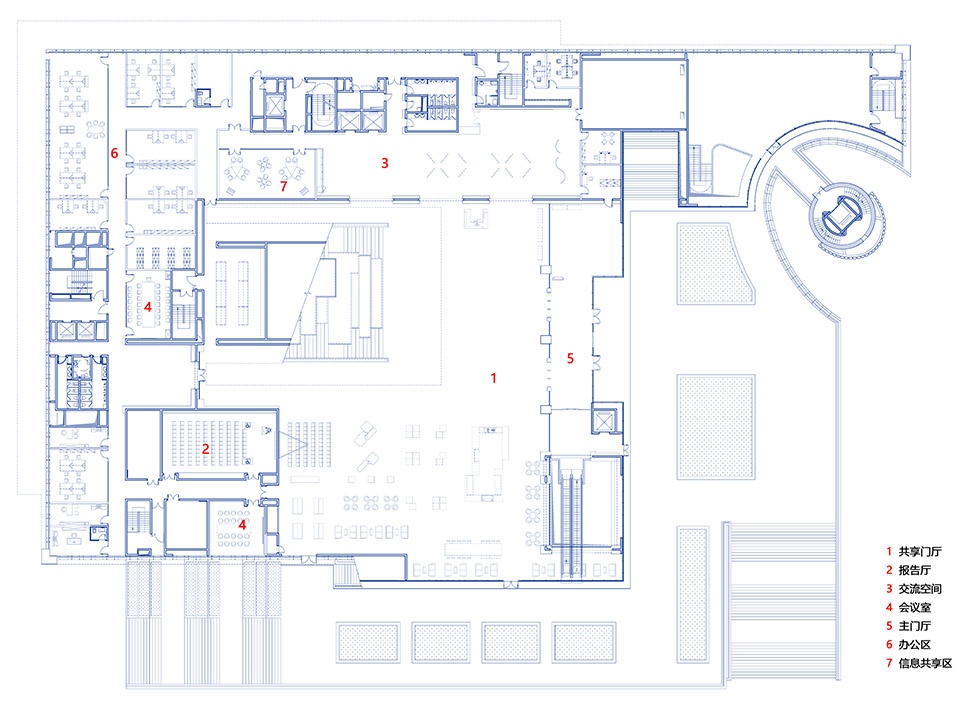
▼二层平面图,2nd floor plan
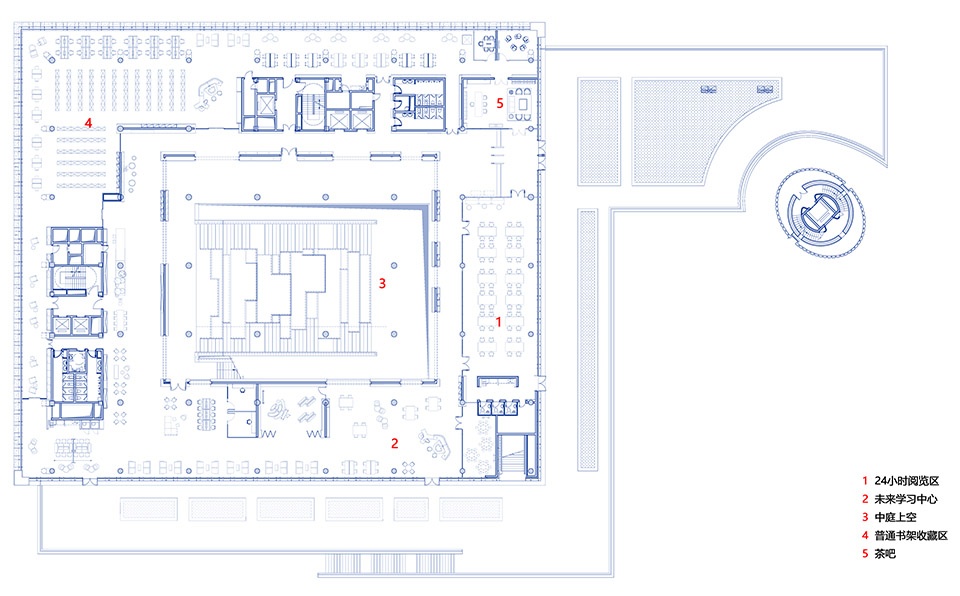
▼三层平面图,3rd floor plan
▼四层平面图,4th floor plan
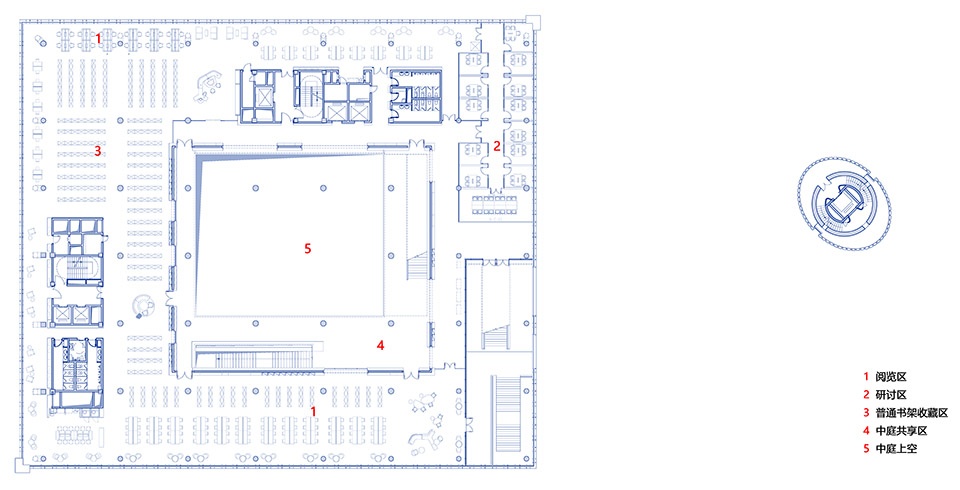
▼五层平面图,5th floor plan
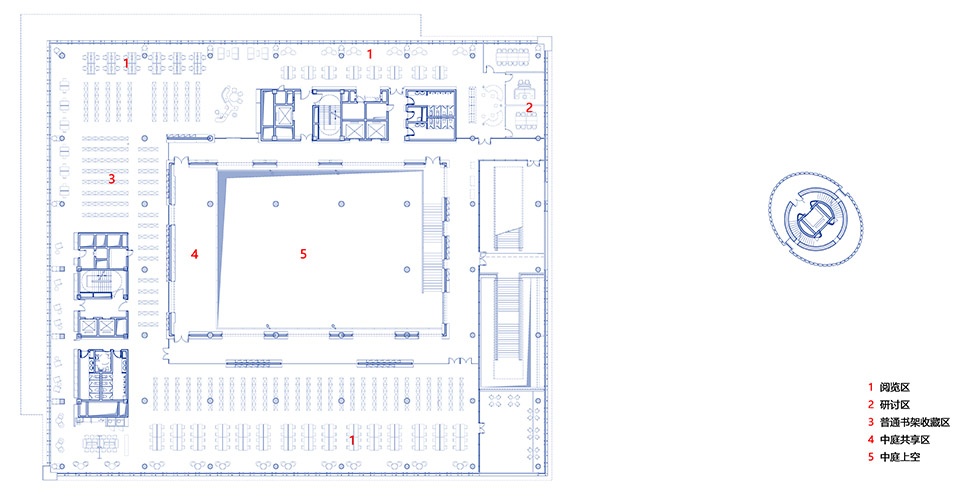
▼六层平面图,6th floor plan
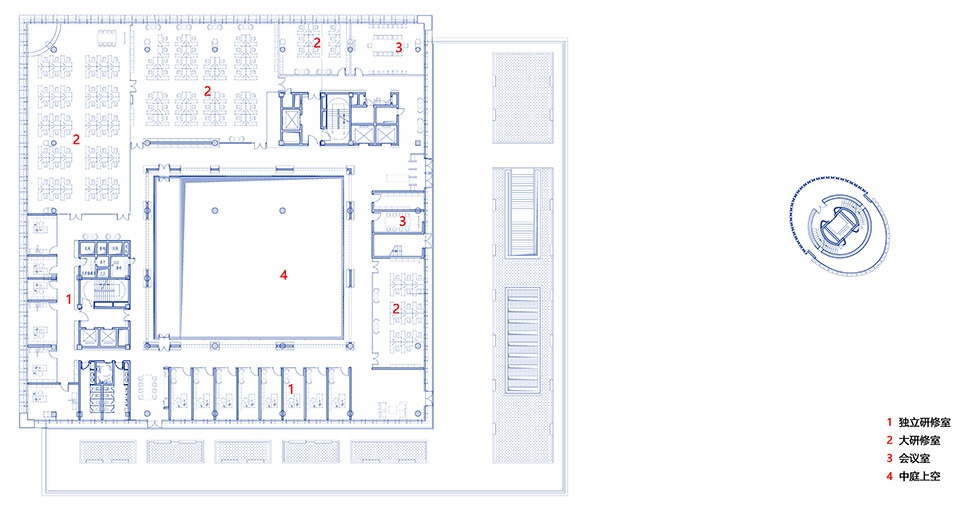
▼七层平面图,7th floor plan
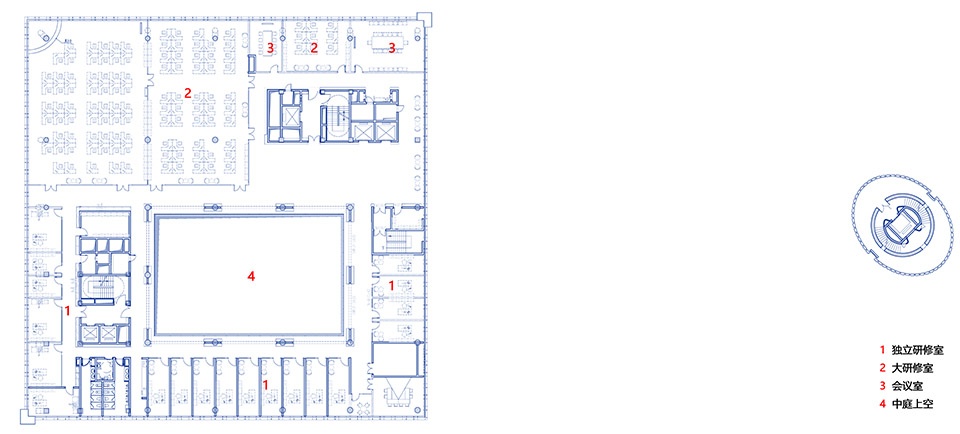
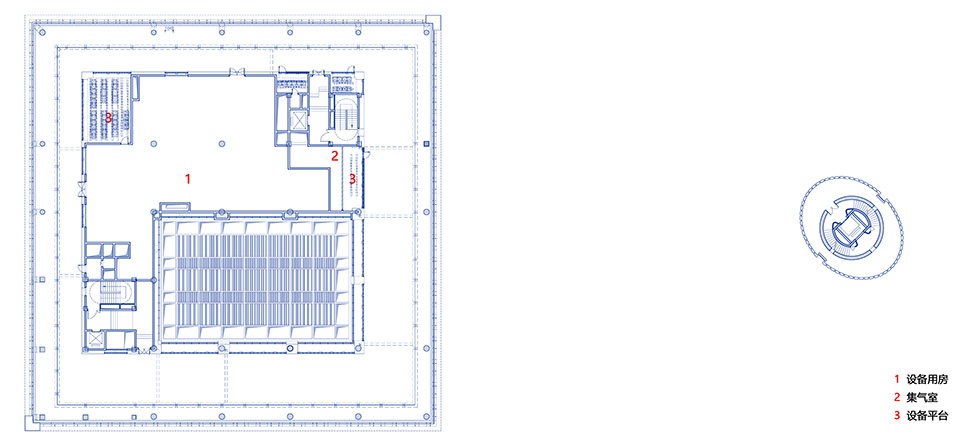
▼八层平面图,8th floor plan
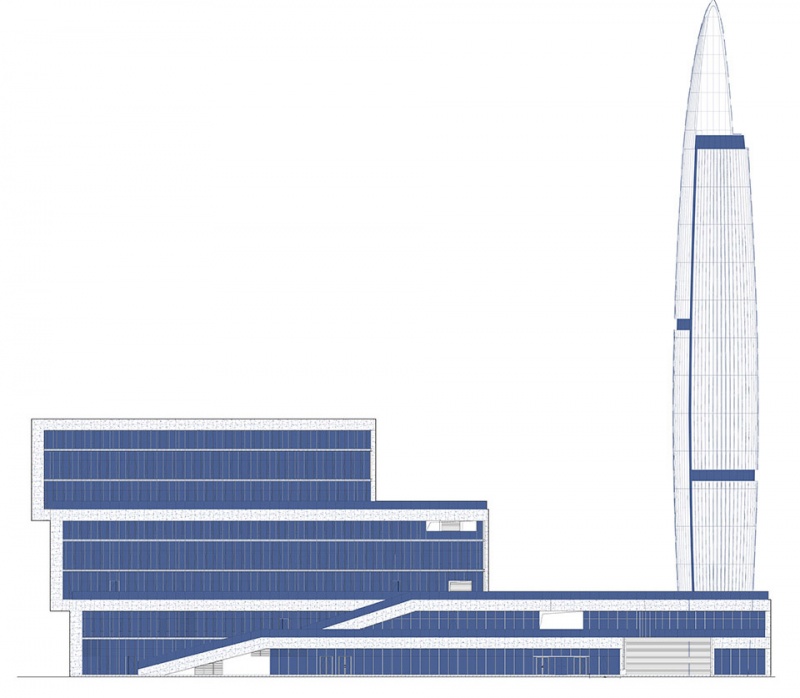
▼立面图,elevation
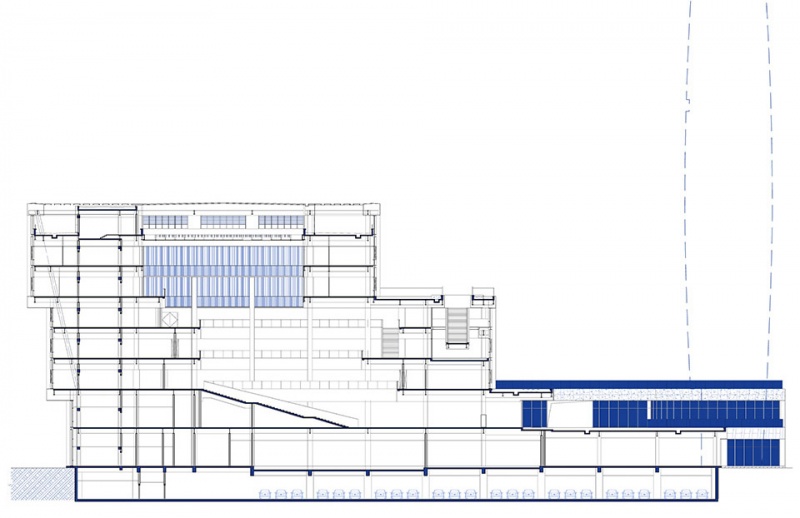
▼剖面图,section
Project name:The Westlake University Library
Project type:Cultural Architecture-Library
Design:The Architectural Design & Research Institute of Zhejiang University
Website:http://www.uad.com.cn
Contact e-mail:759660682@qq.com
Design year:2020.03–2024.07
Completion Year:2025
Leader designer & Team:
Project Directors丨Fan Xuzhuang, Li Bing, Chen Yu
Design Advisor丨Dong Danshen
Architectural Design丨Fan Xuzhuang, Zhang Yuansheng, Xu Gaoting, Yu Zhaobing
Interior Design丨Fan Xuzhuang, Hu Xu, Lu Xiaoling, Wang Guancui, Ma Jinghao, Zhang Ci, Tian Ning
Structural Design丨Shen Jin, Cheng Ke, Li Li, Wei Jieqiang, Pan Qingxiang
Plumbing Design丨Chen Ji, Chen Fei
Electrical Design丨Zheng Guoxing, Yang Kai, Ding Li, Fan Hongjian
HVAC Design丨Yu Lilun
Intelligent Systems Design丨Yang Guozhong, Li Xiangqun, Yuan Xiaonan
Curtain Wall Design丨Xiang Chun, Jiang Qianyang, Zhang Moran
Landscape Design丨Xia Jiming, Wu Jina, Lin Jianhai, Xu Hui, Shen Lei, Shen Haitao
Lighting Design丨Wang Xiaodong, Song Luoying
Foundation Pit Engineering丨Chen Yun, Gu Jiacheng
Construction Economics丨Zhang Ying, Ruan Zhihan, Su Lei, Shuai Zhaohui
Project location: Hangzhou, Zhejiang, China
Gross built area:40509㎡㎡
Photo credit: Chen Xi Studio
Partner:HENN
Clients:Westlake University