池袋公园的高窗花园,日本 / KEY OPERATION INC. / ARCHITECTS
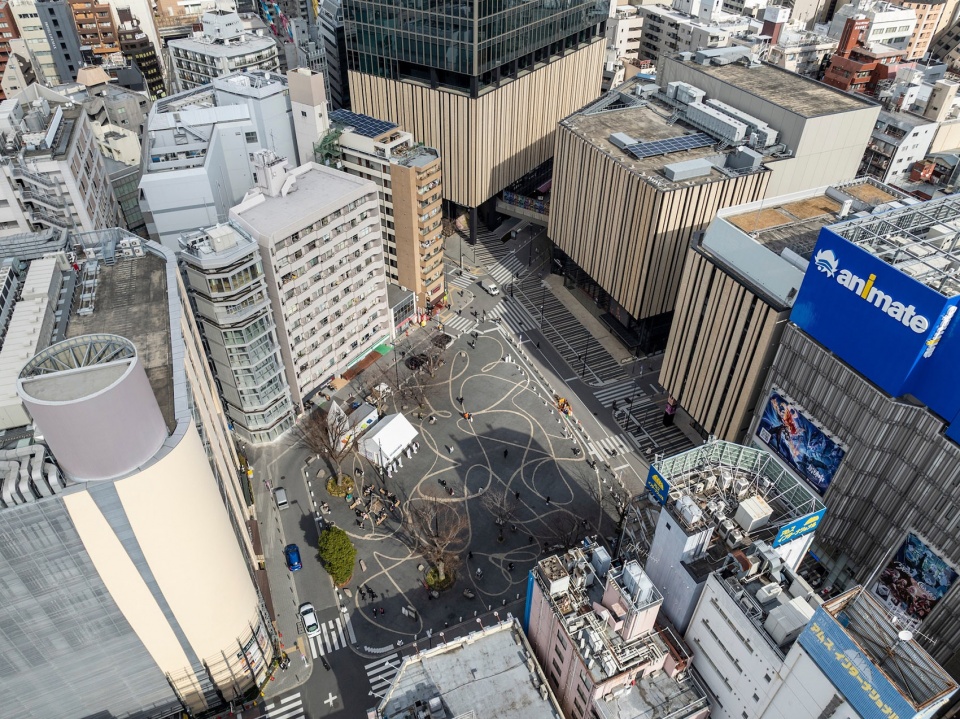
一个集商业设施与住宅于一体的混合用途建筑,计划建于中池袋公园旁,距离池袋站东口步行仅两分钟。该项目旨在与2019年开业的综合文化商业设施“Hareza Ikebukuro”以及改造后的中池袋公园相协调,共同为这一地区创造新的吸引力。中池袋公园在更新过程中,从原本的沙土地面转变为石材铺装广场,重新被塑造成具有欧洲广场氛围的空间,如今已成为支持文化活动与城市活力的重要场所。如何在建筑立面设计中营造与广场之间的统一感,成为本项目的重要主题。
A mixed-use building integrating commercial facilities and residences, planned adjacent to Naka-Ikebukuro Park and located a two-minute walk from Ikebukuro Station East Exit. This project aimed to harmonise with the mixed-use cultural and commercial facility ‘Hareza Ikebukuro’, which opened in 2019, and the renovated Naka-Ikebukuro Park, seeking to create new appeal for the area. Naka-Ikebukuro Park underwent a transformation during its renewal, shifting from a sandy surface to a stone-paved plaza. Re-established as a space evoking the character of a European square, it now functions as a venue supporting cultural events and vibrant activity. Creating a sense of unity with this plaza became a key theme in the building’s façade design.
▼场地鸟瞰,aerial view of the site
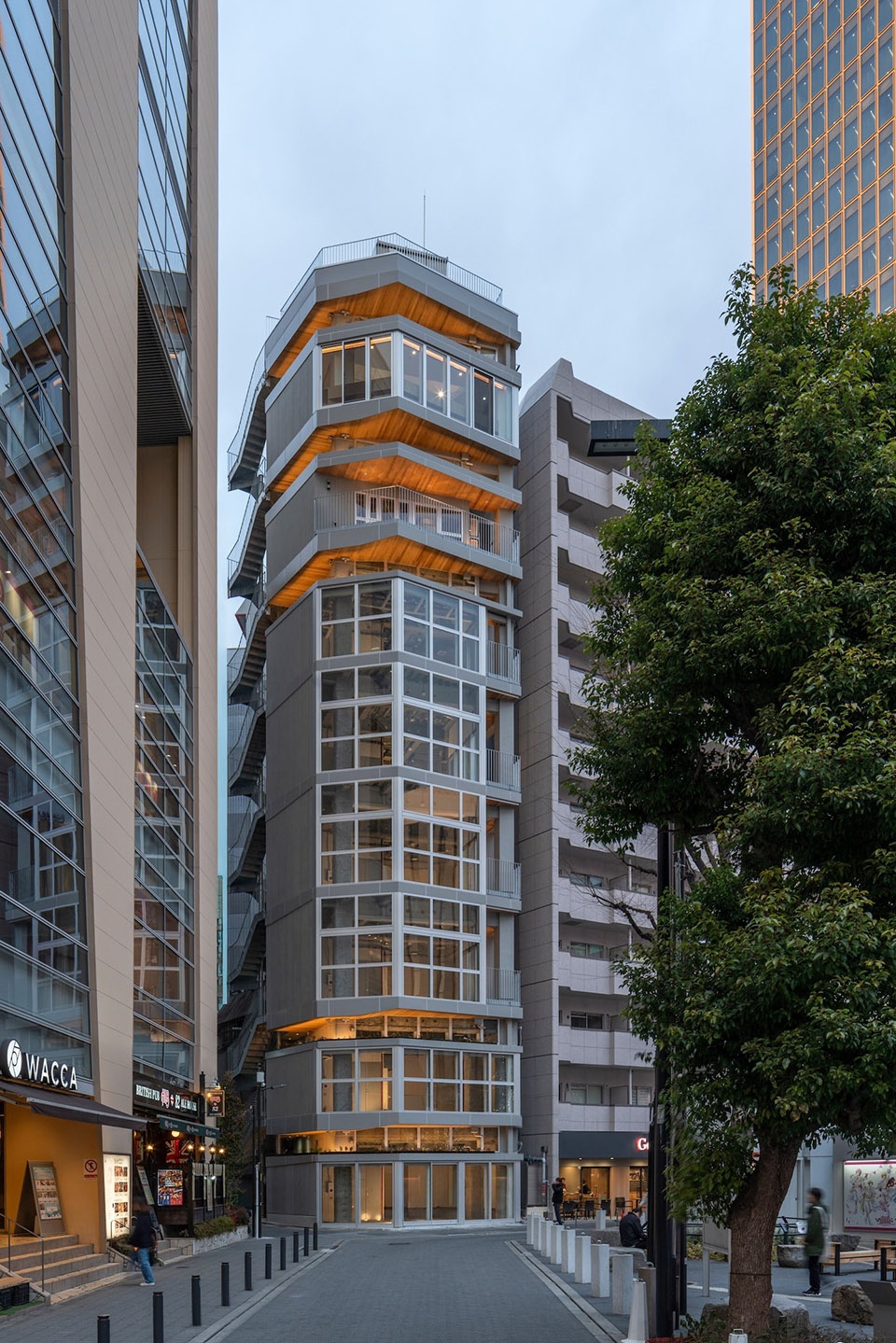
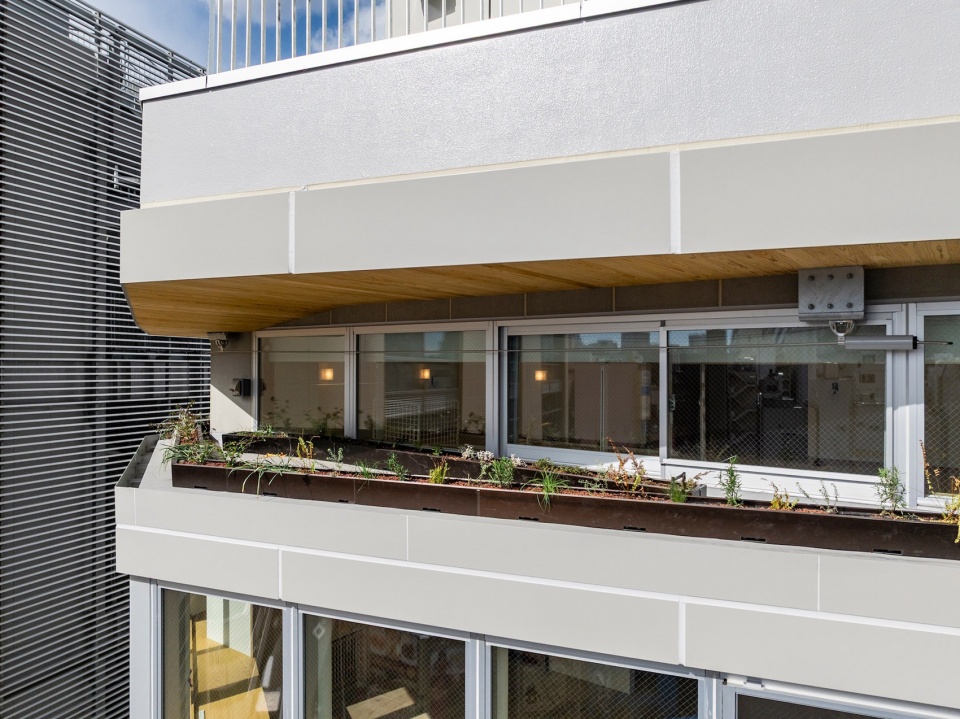
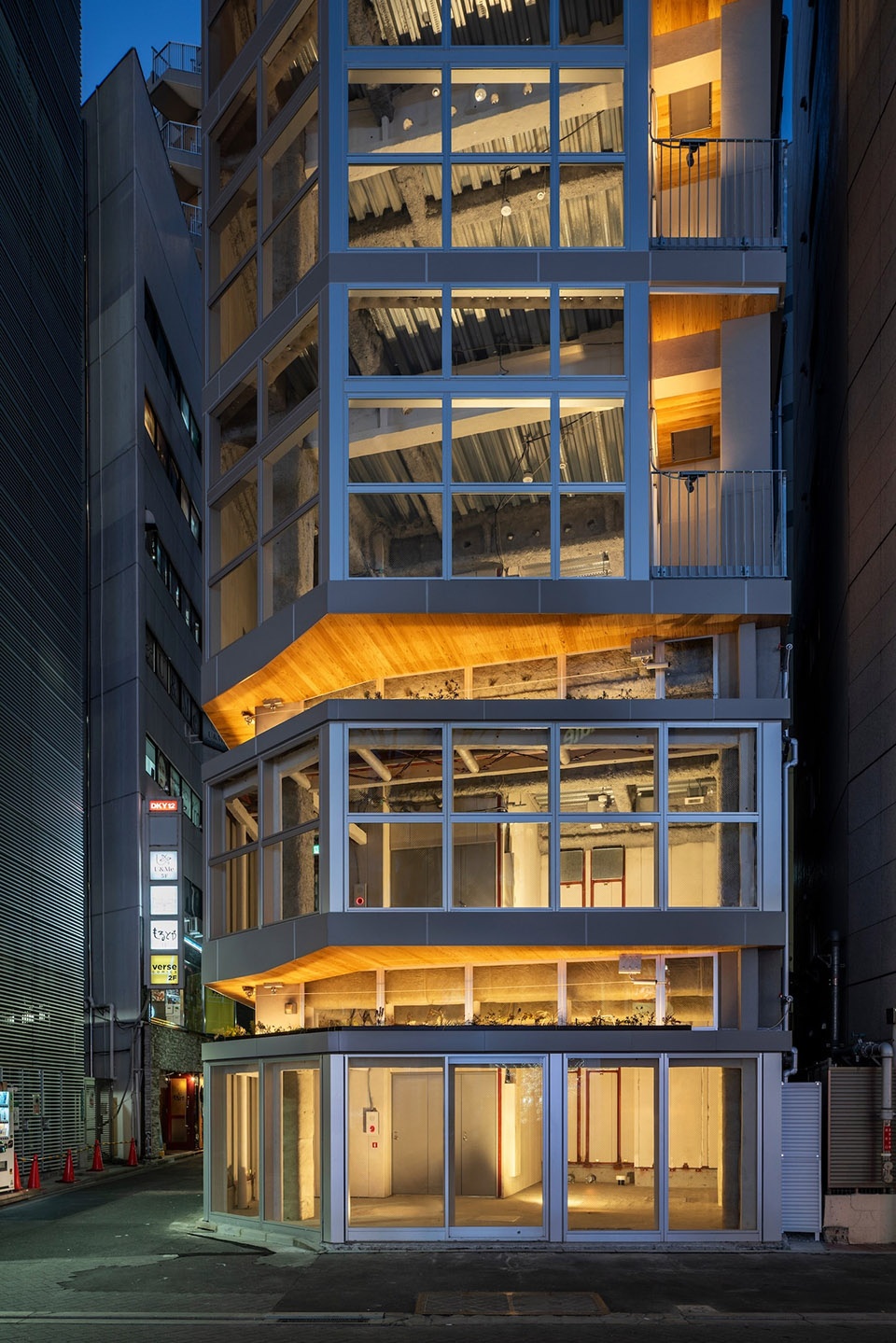
由于基地正面朝向广场,项目利用了相对宽松的高度限制条件。通过将层高设定为约4米,即使在有限的基地面积内,也实现了具有开阔感的室内空间。此外,为呼应广场丰富的绿意,建筑外立面引入了大量植栽。虽然曾考虑采用垂直绿化,但为了确保租户空间内部的可视性,设计团队最终选择在2.2米高的窗户(铝合金防火窗框设备所允许的最大高度)以及其上方的气窗部分设置立体绿植,由此形成“气窗花园(transom garden)”。这一立体花园相较于周边建筑偏硬质的印象,更能赋予建筑与广场相协调的绿色氛围。尽管气窗花园被设置于退缩空间中,但建筑下部依然延伸至基地边界,从而形成高效的剖面形式,最大化租户可使用面积。这一花园空间不仅仅是外部设计元素,同时也被设计为可从室内欣赏的景观,尤其适用于低层预设为咖啡厅等功能的空间,以及上部住宅区域。
Given the site’s frontage onto the plaza, the project leveraged the relatively relaxed height restrictions. By setting floor-to-ceiling heights at approximately 4 metres, an internal space conveying a sense of expansiveness was achieved despite the limited plot area. Furthermore, to complement the plaza’s lush green environment, the building’s exterior incorporates extensive planting. Although wall greening was considered, in order to ensure visibility within the tenant spaces, a “transom garden” was created by installing three-dimensional planting in the 2.2-metre-high windows (the maximum height for aluminium sash fire protection equipment) and the transom sections above them. This three-dimensional garden gives the building a green impression that is more in keeping with the square, in contrast to the hard impression of the surrounding buildings. While the transom gardens are set back into recesses, the lower part of the building extends to the edge of the site, creating an efficient cross-sectional shape that maximises the leasable area for tenants. This garden area is not merely an exterior design feature; it has been designed to be enjoyed from inside the building as well, functioning as an attractive space particularly on the lower floors, where cafés and similar uses are envisaged, and on the upper floors, where residences are located.
▼建筑立面,building facade
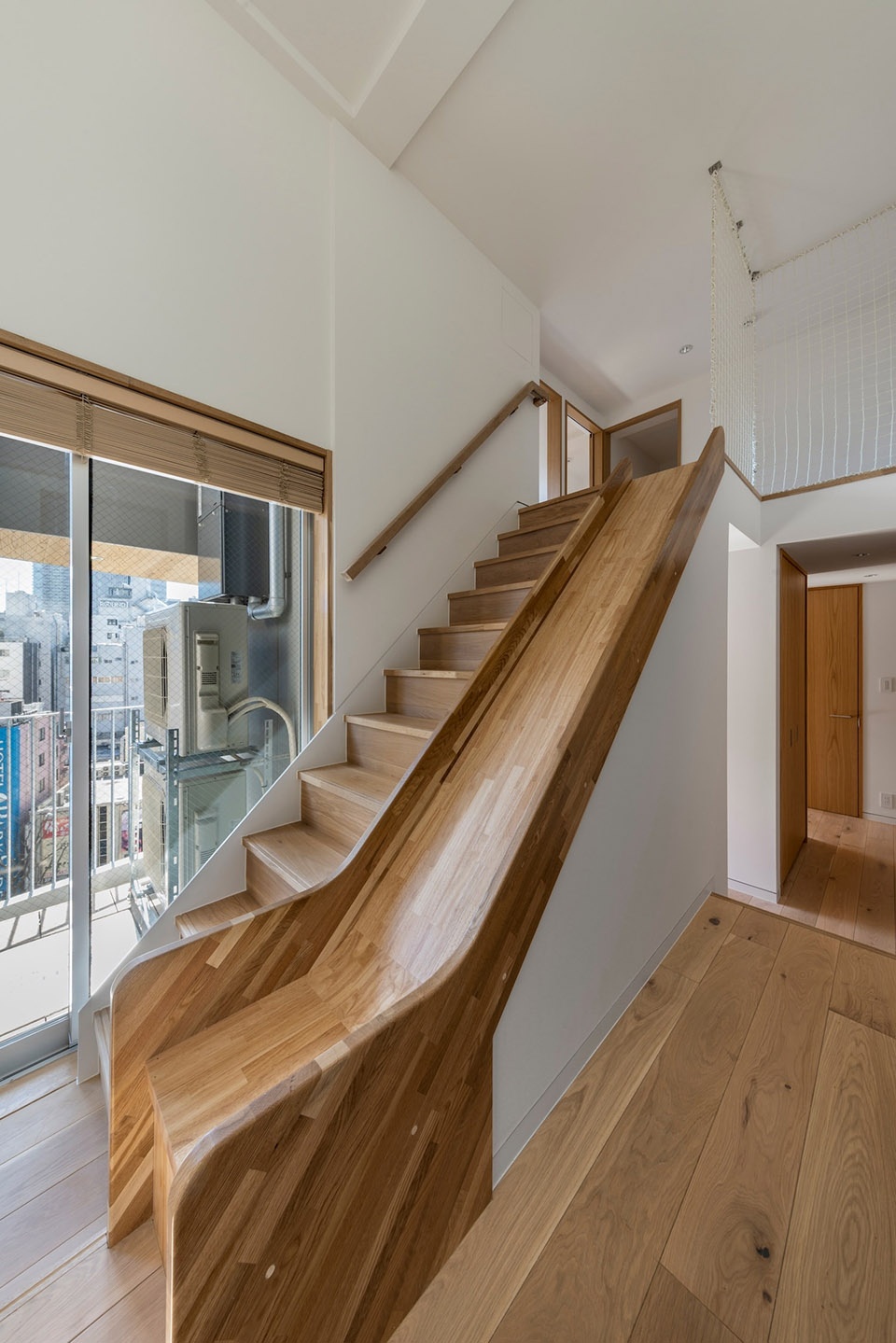
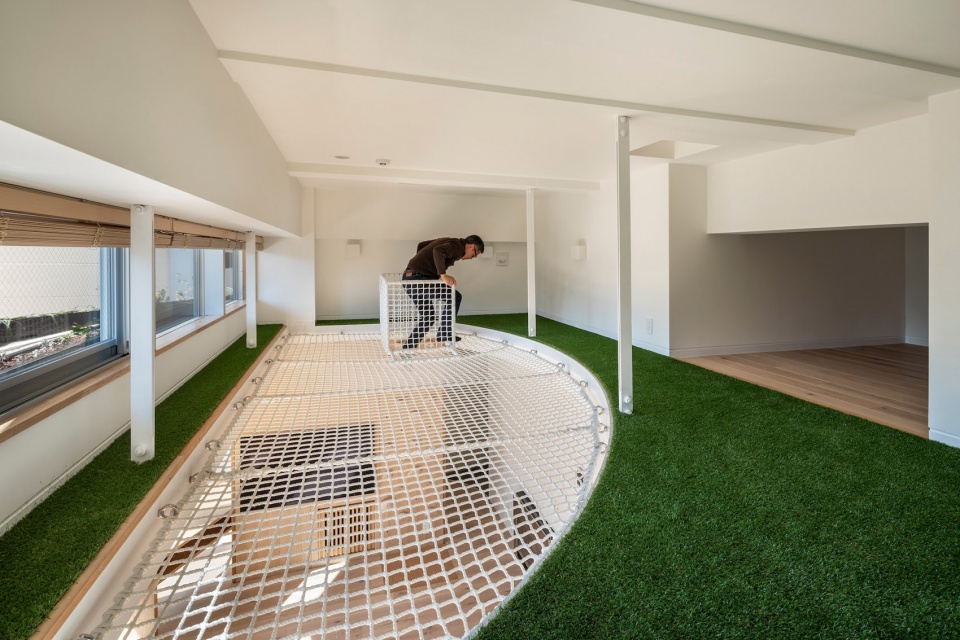
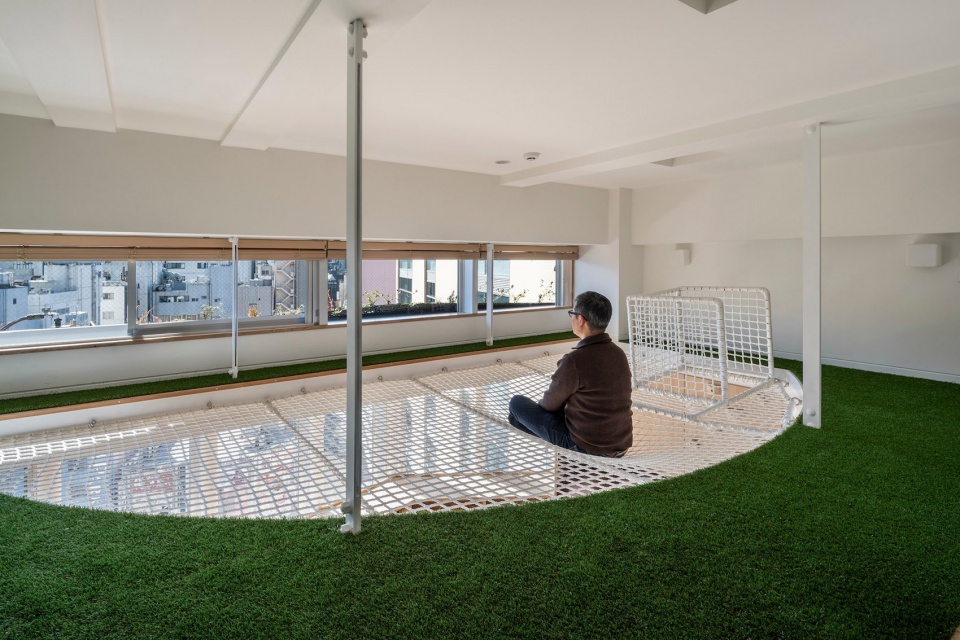
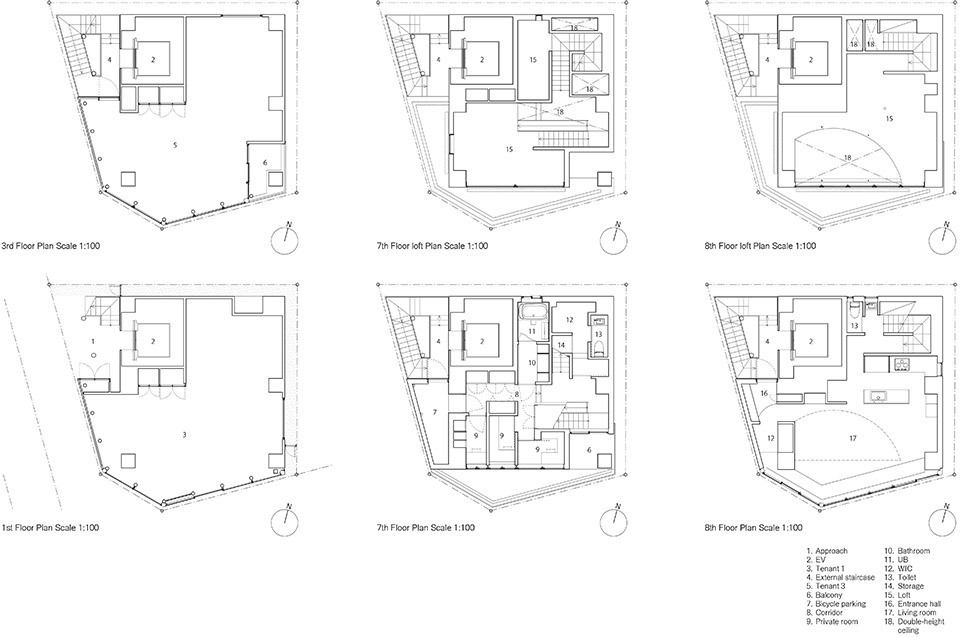
建筑正面优先服务于首层主力租户,因此楼梯与电梯设置于侧面道路一侧进入。一层与二层的租户空间既可独立使用,也可通过增设内部楼梯与传菜电梯实现一体化运营。三层至六层预设为商铺与诊所等租户空间,七层与八层则为复式住宅。住宅部分设置有客厅、餐厅与厨房,并通过阁楼空间的引入,将原本两层的复式住宅转化为四层的“Quartet(四重奏)”式空间结构,形成高度复合的立体剖面。八层的起居空间中设置了弧形挑空空间,内部悬挂的网状结构营造出类似吊床的体验,并配有攀岩墙通往上层空间。七层则布置私人房间与湿区,通过结合滑梯等元素的动线设计,实现具有立体流动感的居住空间。
The front of the building prioritises the main first-floor tenant, so the stairs and lift are accessed from the side road. The tenant spaces on the first and second floors can be used independently, but the design also allows for integrated use with the installation of internal stairs and a dumbwaiter. Tenants such as shops and clinics are envisaged for the third to sixth floors, while the seventh and eighth floors are maisonette residences. The residential sections feature living-dining areas and kitchens. The inclusion of lofts transforms these two-storey maisonettes into four-storey “Quartets”, creating a densely layered cross-section. The eighth-floor living space incorporates a curved atrium. A net suspended within creates a hammock-like environment, complemented by a bouldering wall allowing access to the upper levels. The seventh floor houses private rooms and wet areas, realising a three-dimensional living space that utilises circulation routes incorporating elements like a slide.
▼客厅、餐厅与厨房,the residential sections feature living-dining areas and kitchens
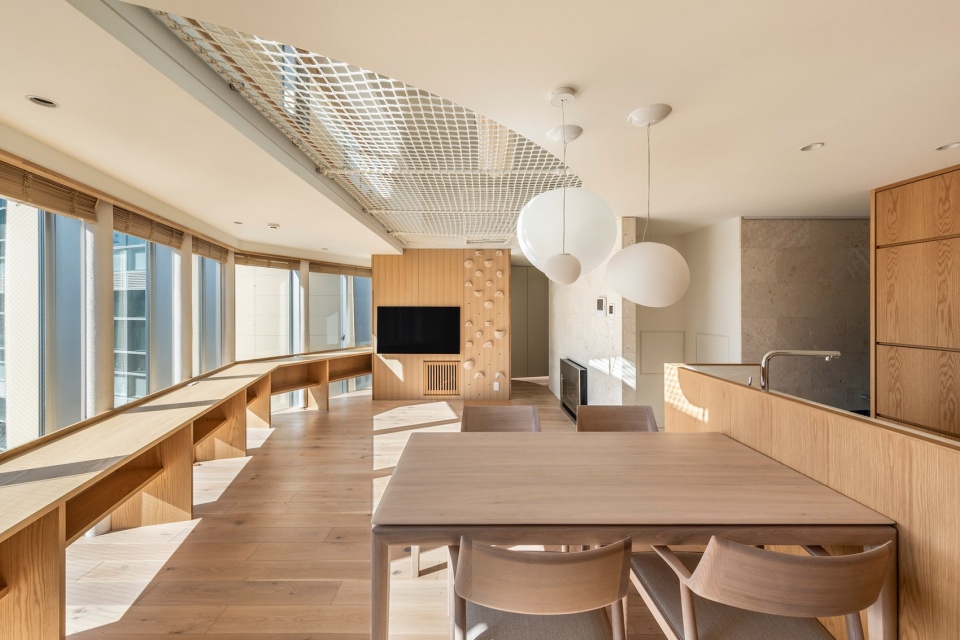
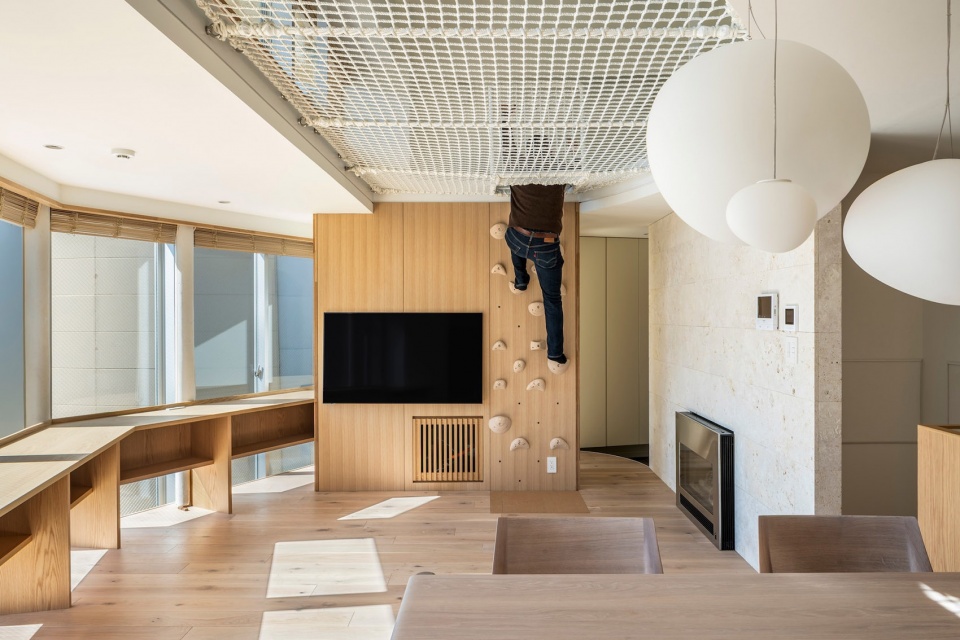
▼形成高度复合的立体剖面,creating a densely layered cross-section
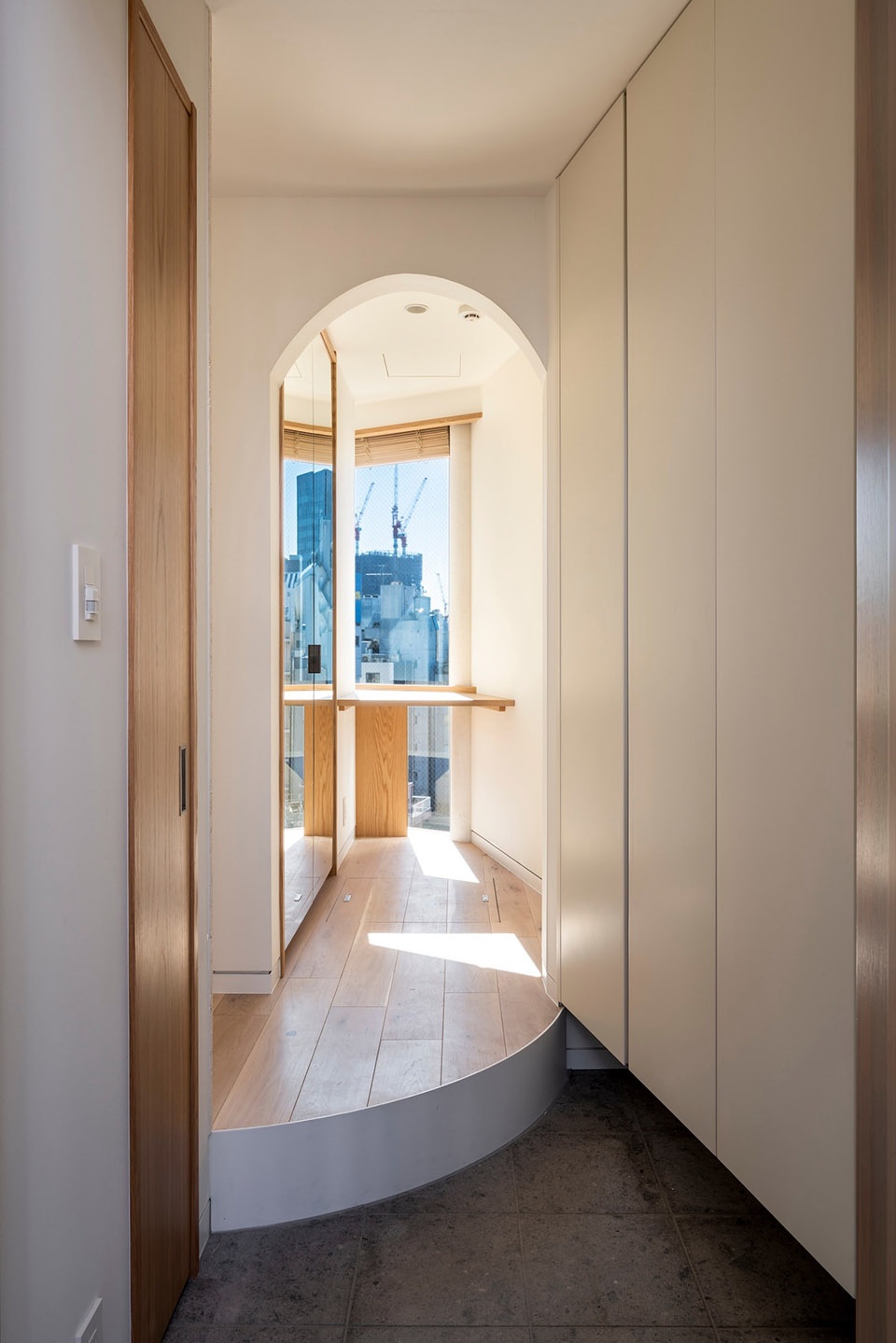
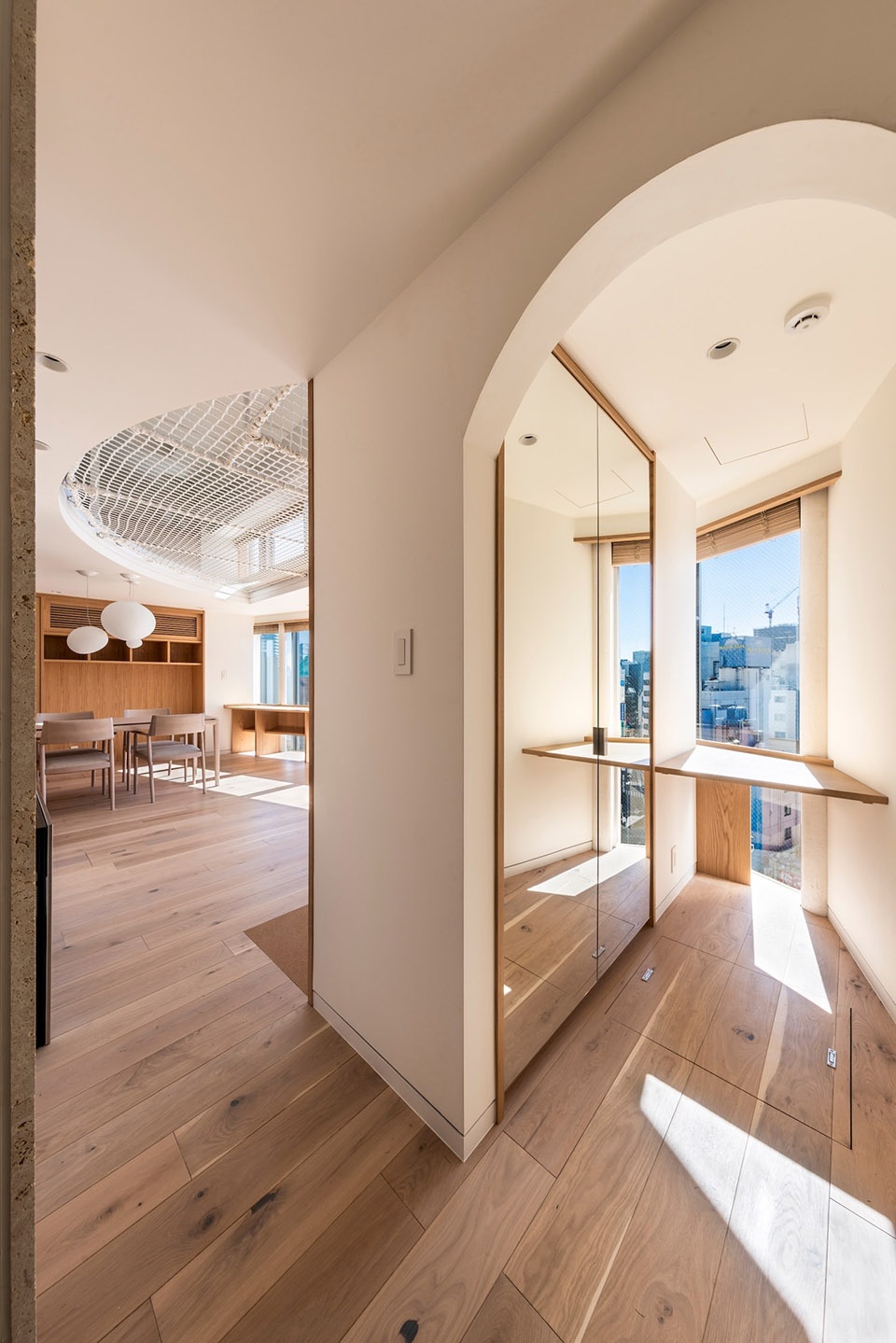
▼室内滑滑梯,Indoor slide
▼弧形挑空空间,a curved atrium
▼内部悬挂的网状结构,a net suspended within
▼封闭露台,closed terrace
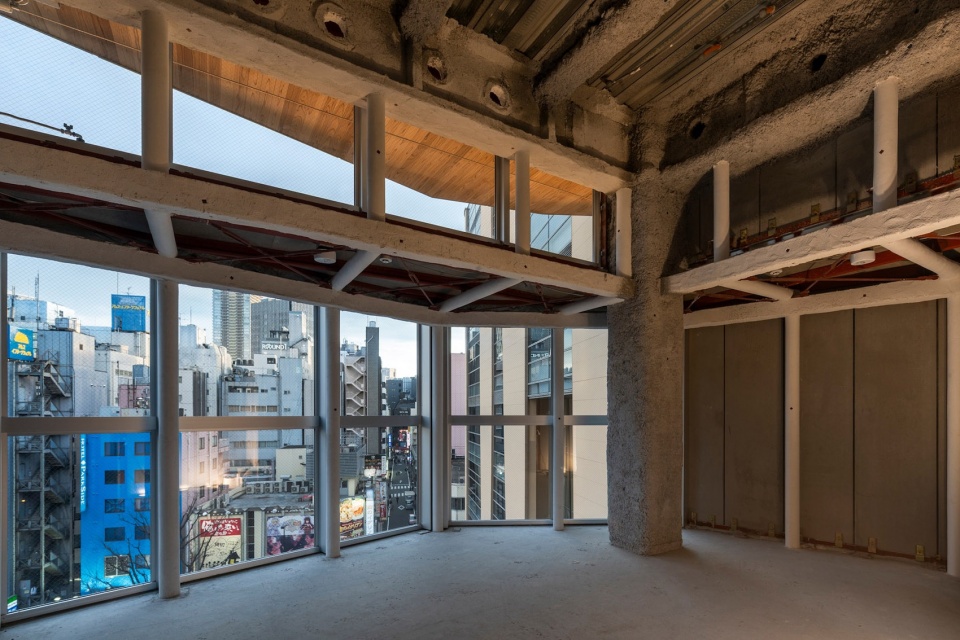
▼室内结构,indoor structure
▼阳台,balcony
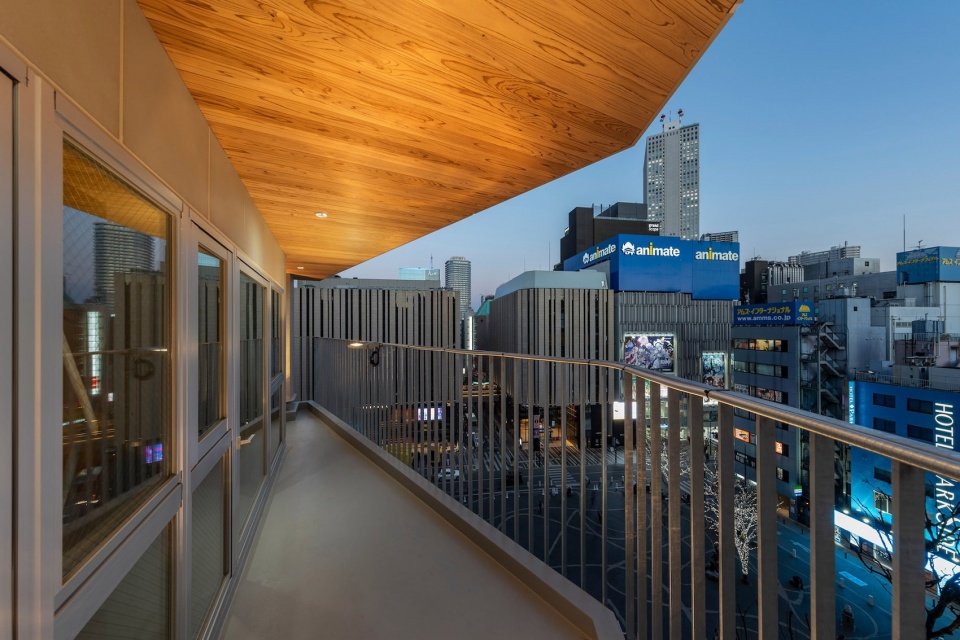
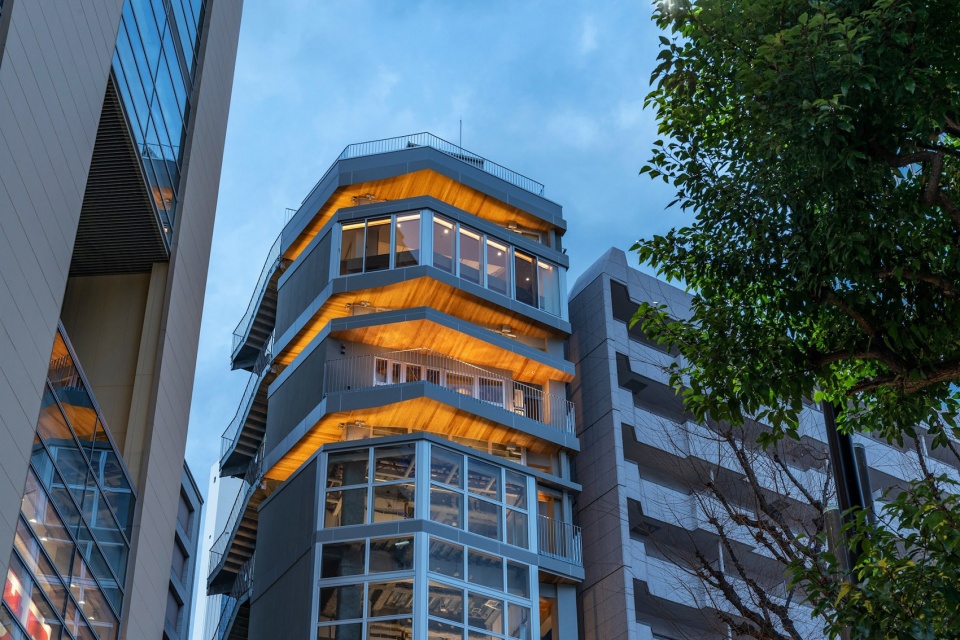
最初,项目计划根据基地形状采用与多边形外轮廓一致的结构体系。然而,考虑到成本效率,最终在中央区域采用了简洁的网格结构形式。这使建筑外部能够顺应基地形态,同时在内部实现高效的结构设计。在气窗花园后方,设置了与该网格结构对齐的窗户,由此形成“Luce Jardin(光之气窗花园)”,自然光透过气窗植栽柔和地渗入室内。此外,气窗花园檐口底部采用木材饰面。与立面视角所见不同,这形成了一个从街道仰视时可感知的“第二立面”,为整栋建筑增添了温暖感。
Initially, the plan was to establish a structural frame matching the polygonal exterior shape following the site’s form. However, considering cost efficiency, a simple grid form was adopted for the structural frame in the central section. This allowed the building’s exterior to follow the site’s shape while enabling efficient structural design internally. At the rear of the transom garden, windows aligned with this grid frame were installed. This creates the “Luce Jardin” (Light Transom Garden), where natural light softly filters through the transom’s plantings into the interior. Furthermore, timber was used on the underside of the transom garden’s eaves. Unlike the façade visible from the elevation, this creates a second façade visible when looking up from eye level, lending warmth to the entire building.
▼夜晚街景,street view at night
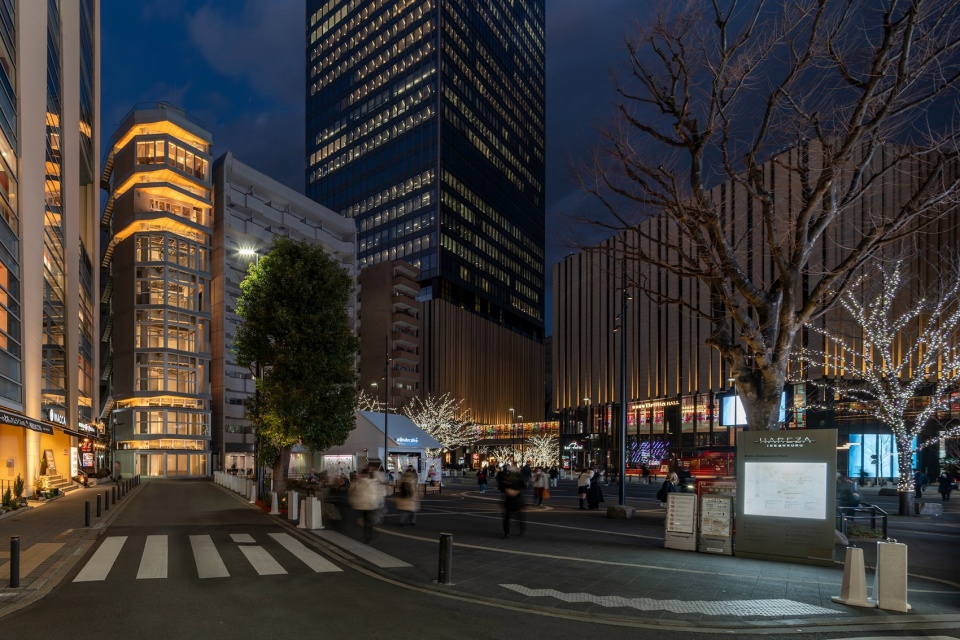
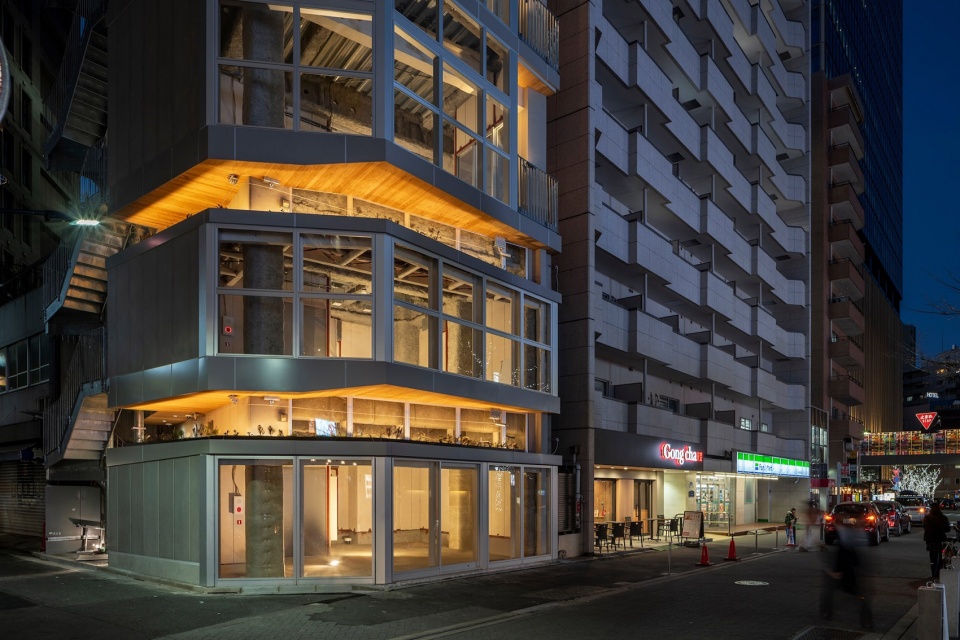
▼夜晚街景,street view at night
该项目提出了一种适用于城市中心中层建筑的新型公共建筑形式。在最大化容积率的同时,通过引入植栽间隙所形成的多孔体量,营造出与广场之间的统一感,并与城市景观相协调,提供了丰富而宜人的环境。
This project proposes a new form of public architecture for a mid-rise building in the city centre. It maximises the floor area ratio while creating porous volumes with interstitial spaces for planting. This fosters a sense of unity with the plaza, harmonises with the urban landscape, and provides a rich environment.
▼平面图,plan
Project name : Clerestory Garden at Naka-Ikebukuro Park
Location : Toshima-ku, Tokyo
Completion : 2025. 01
Principal use : Shop + Residence
Structure : Steel-frame construction
Site area : 82.84 m2
Building area : 65.47 m2
Total floor area : 469.06 m2
Contructor : Watanabe Construction Co., Ltd.
Structural engineer : Delta Structural Consultants
Facilities: Comodo Facilities Planning
Architects: KEY OPERATION INC. / ARCHITECTS
Photography : ToLoLo studio Mayu Nakamura