上海徐汇虹梅街道上澳塘党群服务中心 / 刘宇扬建筑事务所
设计理念 Concept
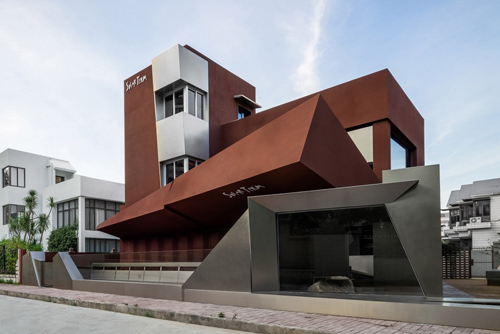
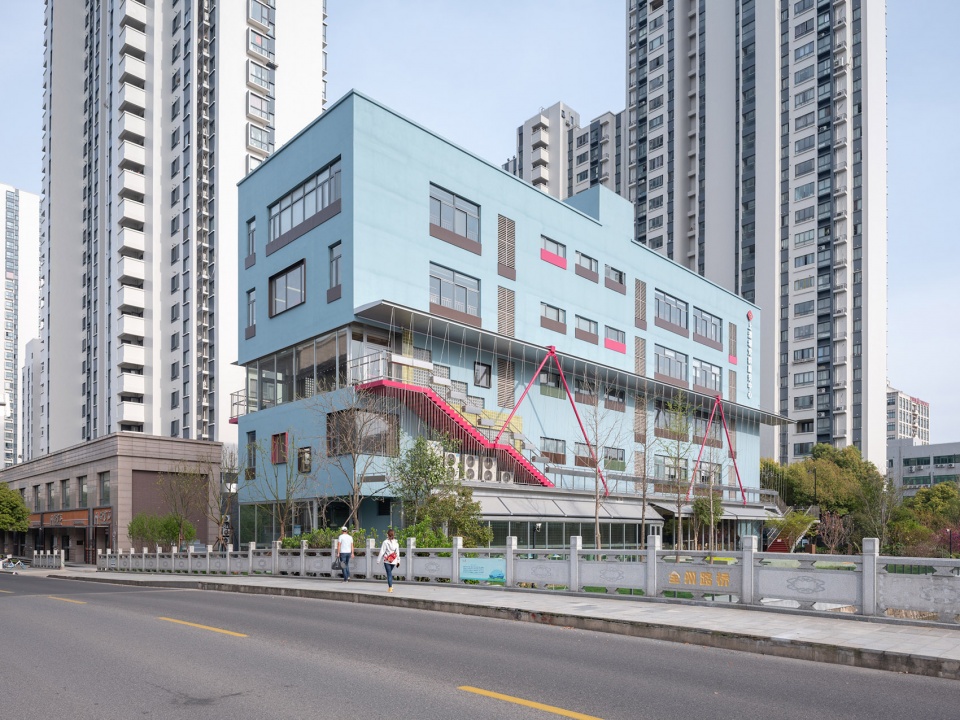
上澳塘党群服务中心位于上海徐汇区虹梅街道,地处上澳塘滨水步道与全州路的交叉口,是上澳塘街区滨水城市更新项目中的重要节点。作为社区生活的文化核心,该项目承载着丰富的公共功能,包括社区食堂、社区图书馆、党建中心、演艺空间和舞蹈教室,为周边居民提供了多元化的服务场所。
Shang’Ao Canal Social Service Center is located at the intersection of Shang’ao Tang Waterfront Path and Quanzhou Road, serving as a critical node in the Shang’ao Tang neighborhood’s urban waterfront renewal initiative. As the cultural heart of the community, the project integrates a variety of public functions, including a senior cafeteria, community library, performance space, and dance studio, offering a diverse array of services to nearby residents.
▼作为社区文化核心的社区中心,community center as the core of community life
本次改造以提升整体风貌和功能品质为核心目标,聚焦外立面焕新和室内公共空间的重新规划。通过设计策略的优化与创新,我们力求将其打造成一个具有独特辨识度的滨水社区活动空间。
▼色彩意向,Color reference
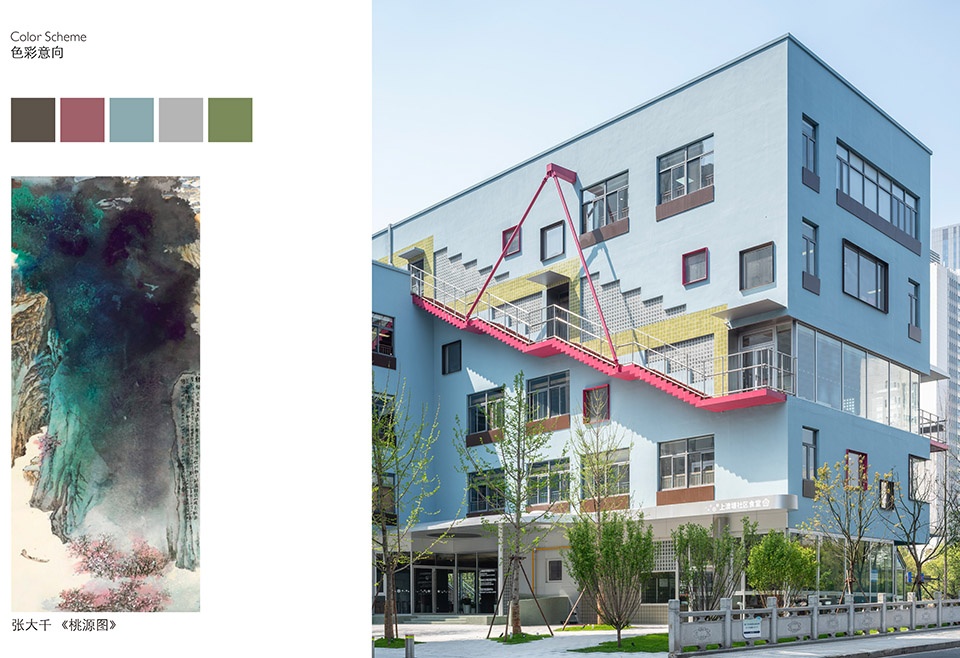
This renovation aimed to enhance the overall aesthetic and functional quality, focusing on reconstructing the façade and reconfiguring the interior public spaces. Through strategic design innovations, we sought to transform the center into a distinctive and recognizable cultural hub along the waterfront.
▼具有独特辨识度的滨水社区活动空间,a distinctive waterfront public space
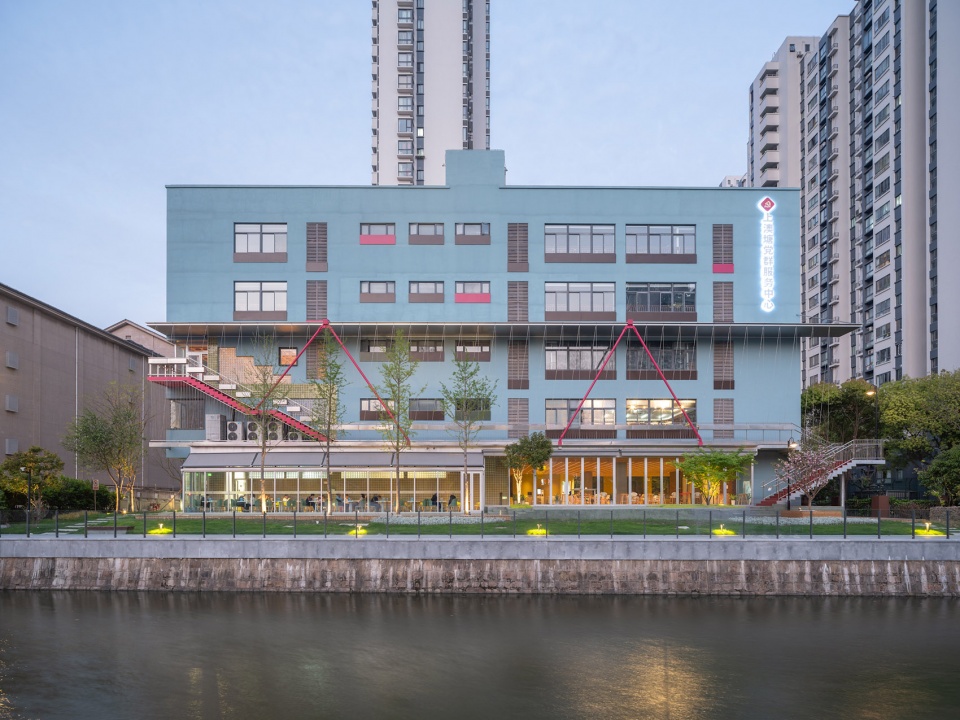
场地背景与设计挑战 Context and Design Challenges
项目地块北侧毗邻全州路,东北侧为主入口,东侧紧邻高密度居民区,西侧则是上澳塘河道的滨水绿化带。河对岸的水杉树形成了开阔的自然视野。然而,原有建筑以传统混凝土框架结构为主,外观普通,缺乏标识性和开放性。同时,建筑主体阻隔了东侧入口广场与西侧滨水空间的直接联系,也限制了社区活动的流动性。
▼场地区位,site location
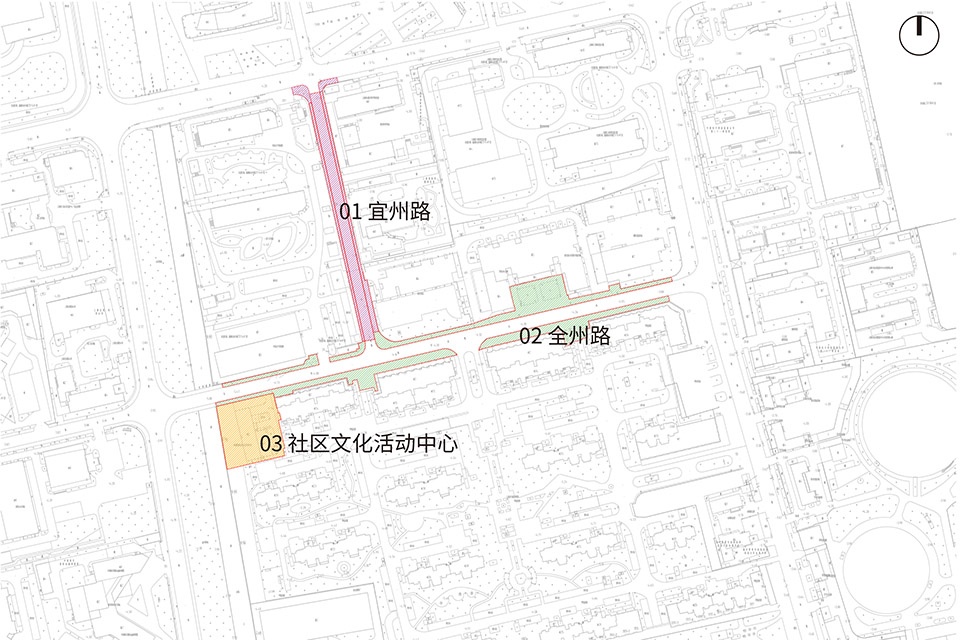
The project site is bordered by Quanzhou Road to the north, with the main entrance situated to the northeast. To the east lies a dense residential community, while the west opens onto the Shang’ao Tang River’s waterfront green space. Across the river stands a line of verdant dawn redwoods, providing expansive natural views.However, the original building, characterized by its traditional concrete frame structure, presented a plain and unremarkable appearance, lacking distinctive identity. The building also obstructed the direct connection between the eastern entrance plaza and the western waterfront space, limiting the flow of community activities.
▼夜幕时分的社区中心,community center at dusk
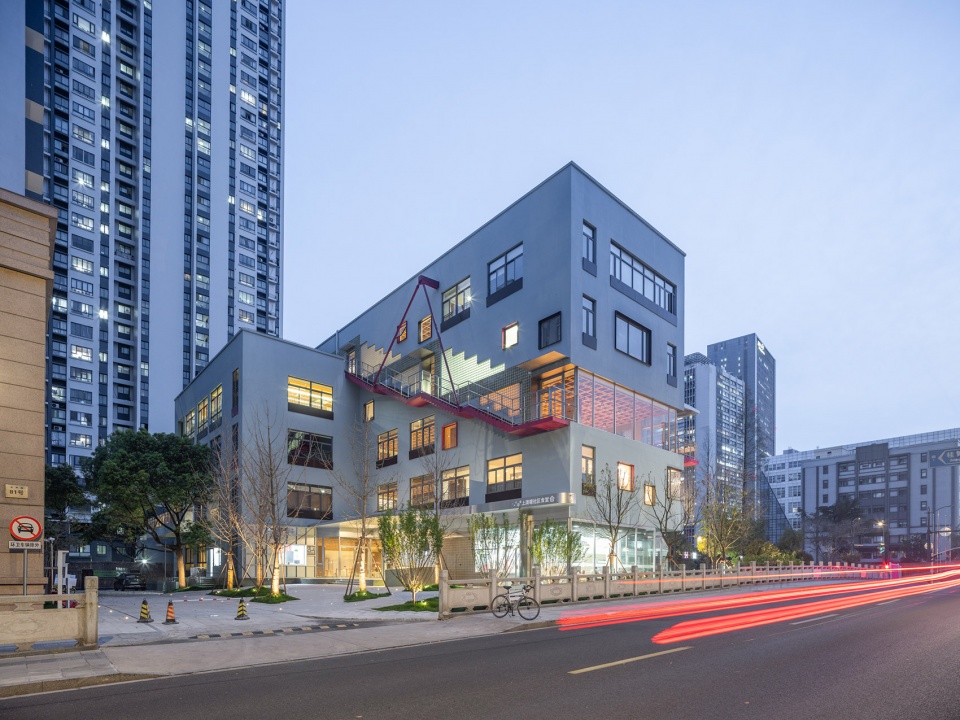
如何在有限条件下通过设计实现场地的贯通、提升功能体验,并赋予建筑新的活力,成为此次改造的核心挑战。
▼改造前后对比,before and after renovation
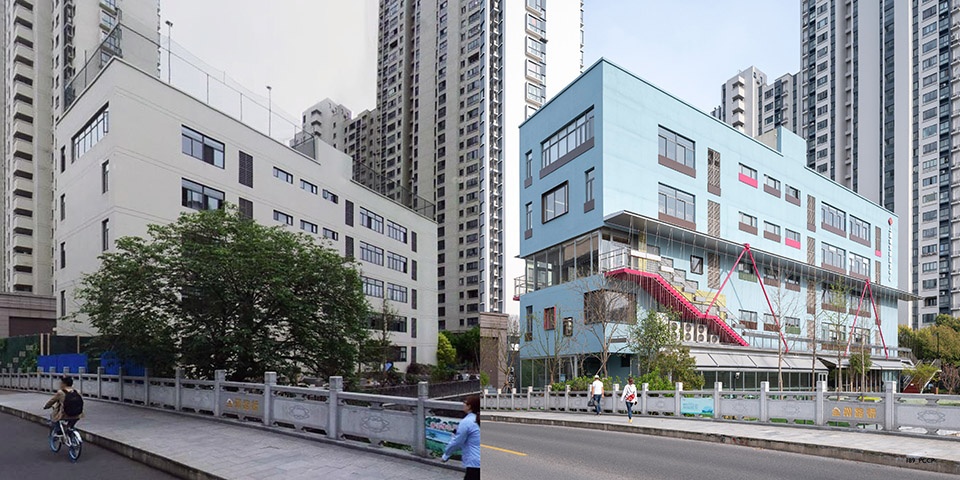
The primary challenge was to overcome these constraints through design—connecting the site, enhancing user experience, and injecting new vitality into the building.
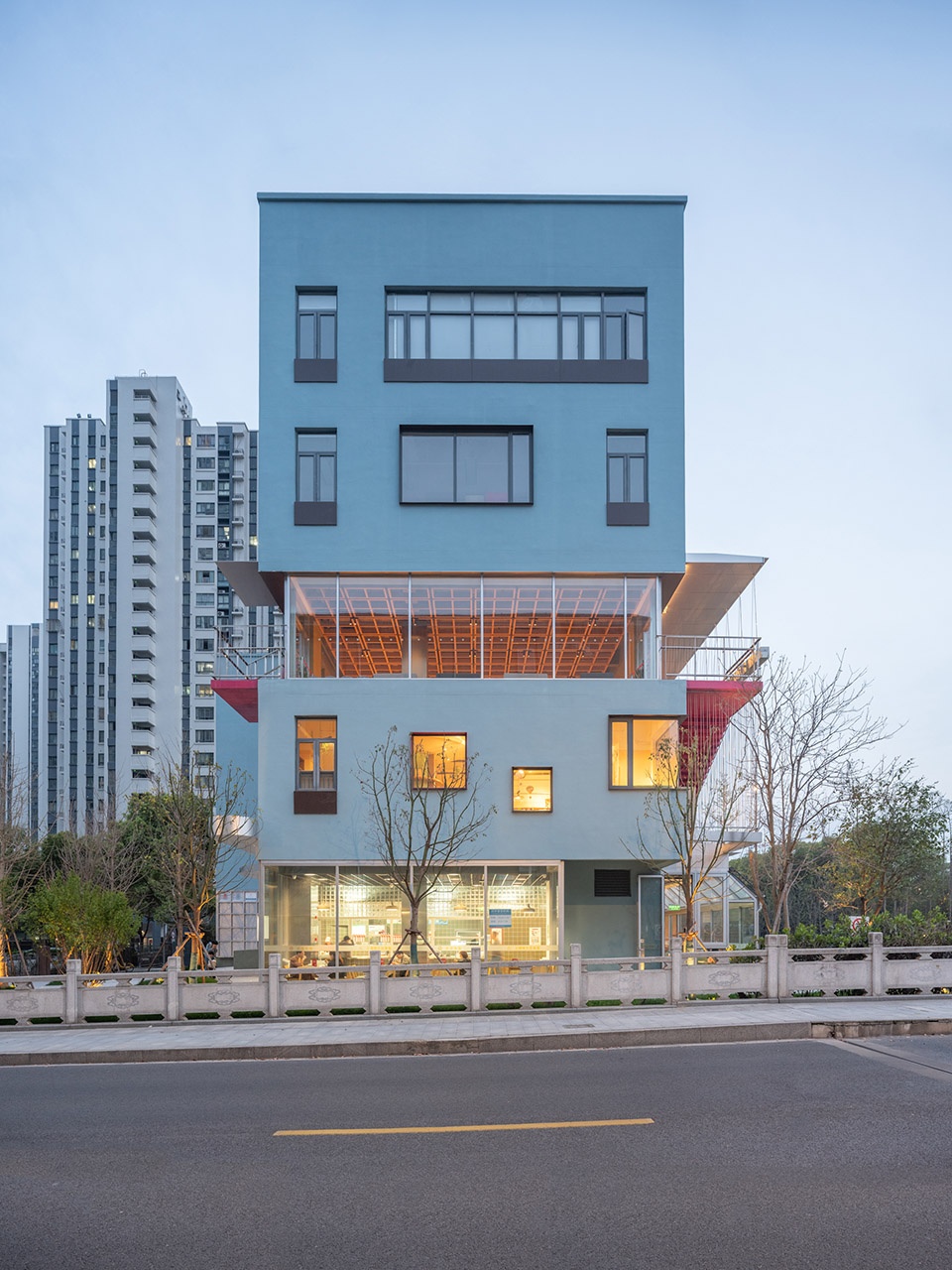
▼从主干道望向社区中心,view from the main road
设计策略:从空间串联到趣味体验 Design Strategies: From Spatial Connection to Playful Engagement
贯通与延伸:场地空间的再组织 Connection and Extension: Reorganizing Site Spaces
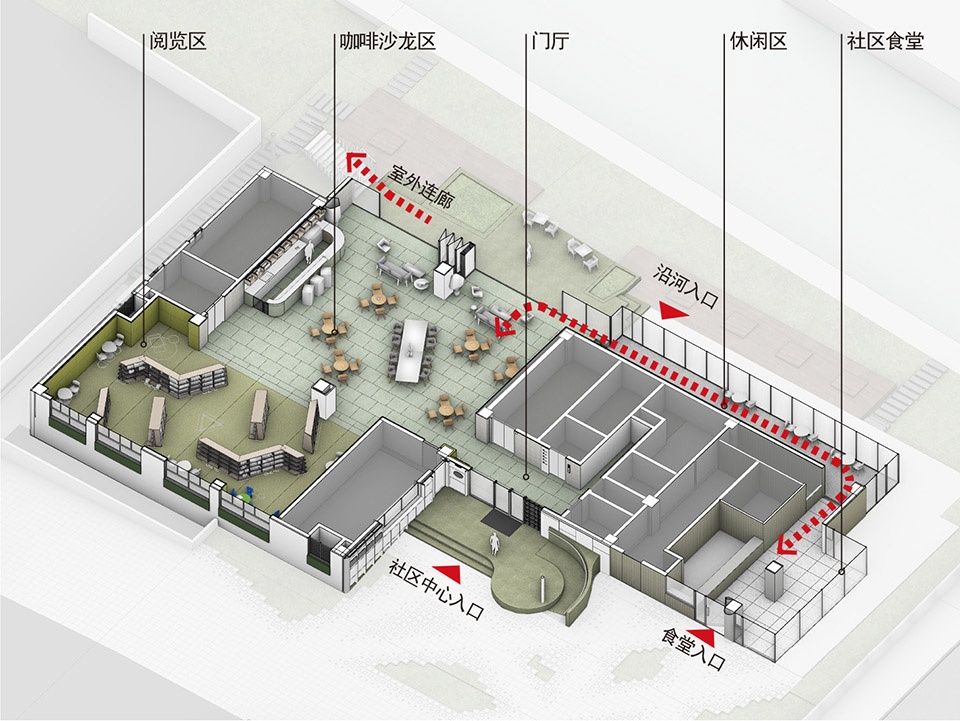
为了打破原有建筑对场地空间的分割,我们在设计中新增了一条贯穿东西的连续室外廊道,串联东侧入口广场和西侧滨水空间。这一策略不仅延展了建筑的空间边界,也创造了一条由内向外的趣味路径,将上澳塘滨水绿化带的自然景观引入社区中心。
To break the spatial segmentation caused by the original building, we introduced a continuous outdoor corridor running east-west, linking the eastern entrance plaza to the western waterfront space. This strategy extended the spatial boundaries of the building and created an engaging path that draws the Shang’ao Tang greenway’s natural scenery into the community center.
▼东侧入口广场,east entrance plaza
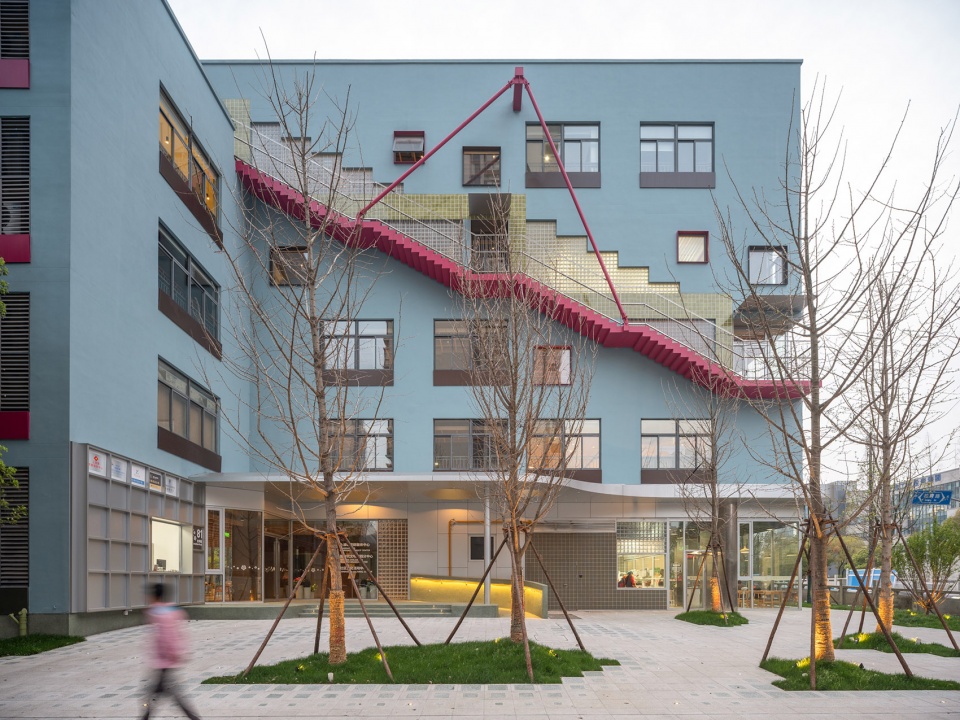
在传统垂直交通流线之外,我们设计了一条具有观赏性与互动性的流动步道。廊道不仅是交通连接的功能路径,更是一种空间体验装置。通过趣味性的路线设计,我们希望激发人们的探索欲望,为社区中心注入活力。
▼节点模型及场地策略,nodes models & site strategy
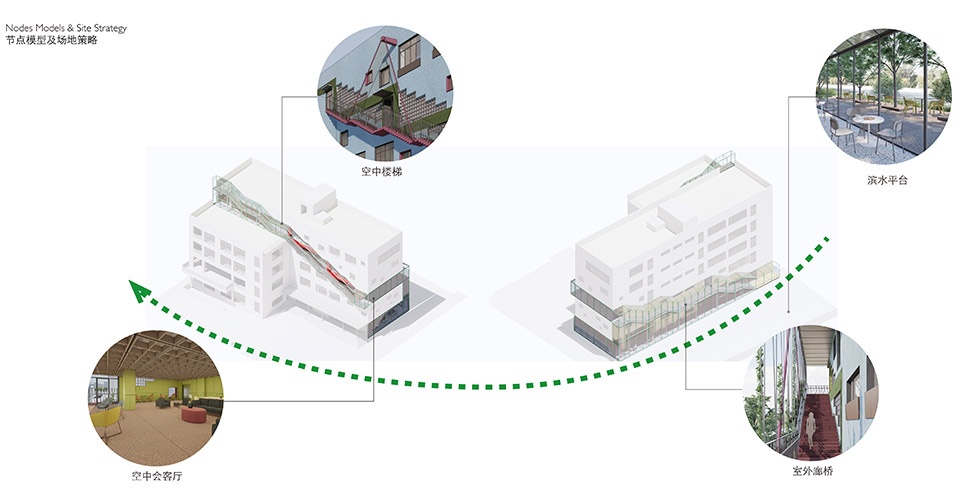
Beyond traditional vertical circulation routes, we designed a dynamic and interactive pathway. The corridor serves not only as a functional circulation path but also as an experiential space, inviting exploration and infusing the community center with energy.
▼社区中心河畔的室外活动空间,outdoor activity space by the riverside
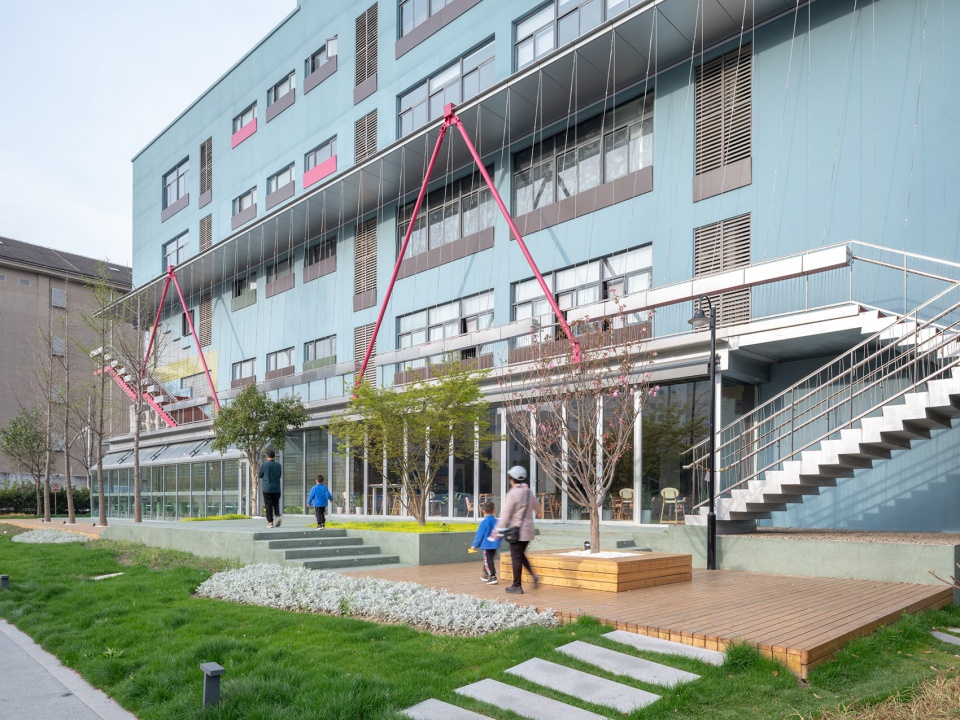
▼贯穿东西的连续室外廊道,continuous outdoor corridor running east-west
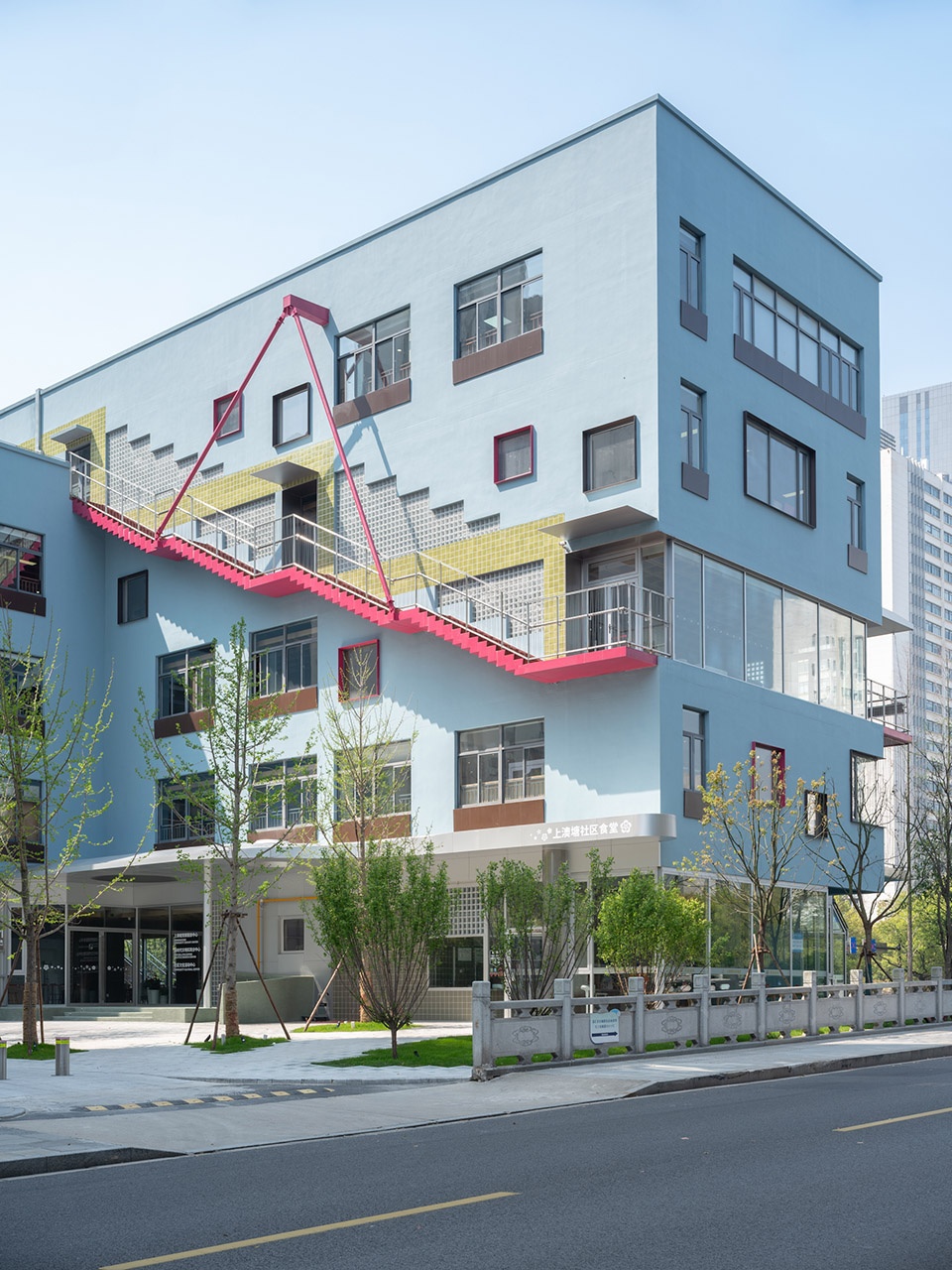
轻与重的对话:结构设计的创新 Dialogue Between Lightness and Solidity: Structural Innovation
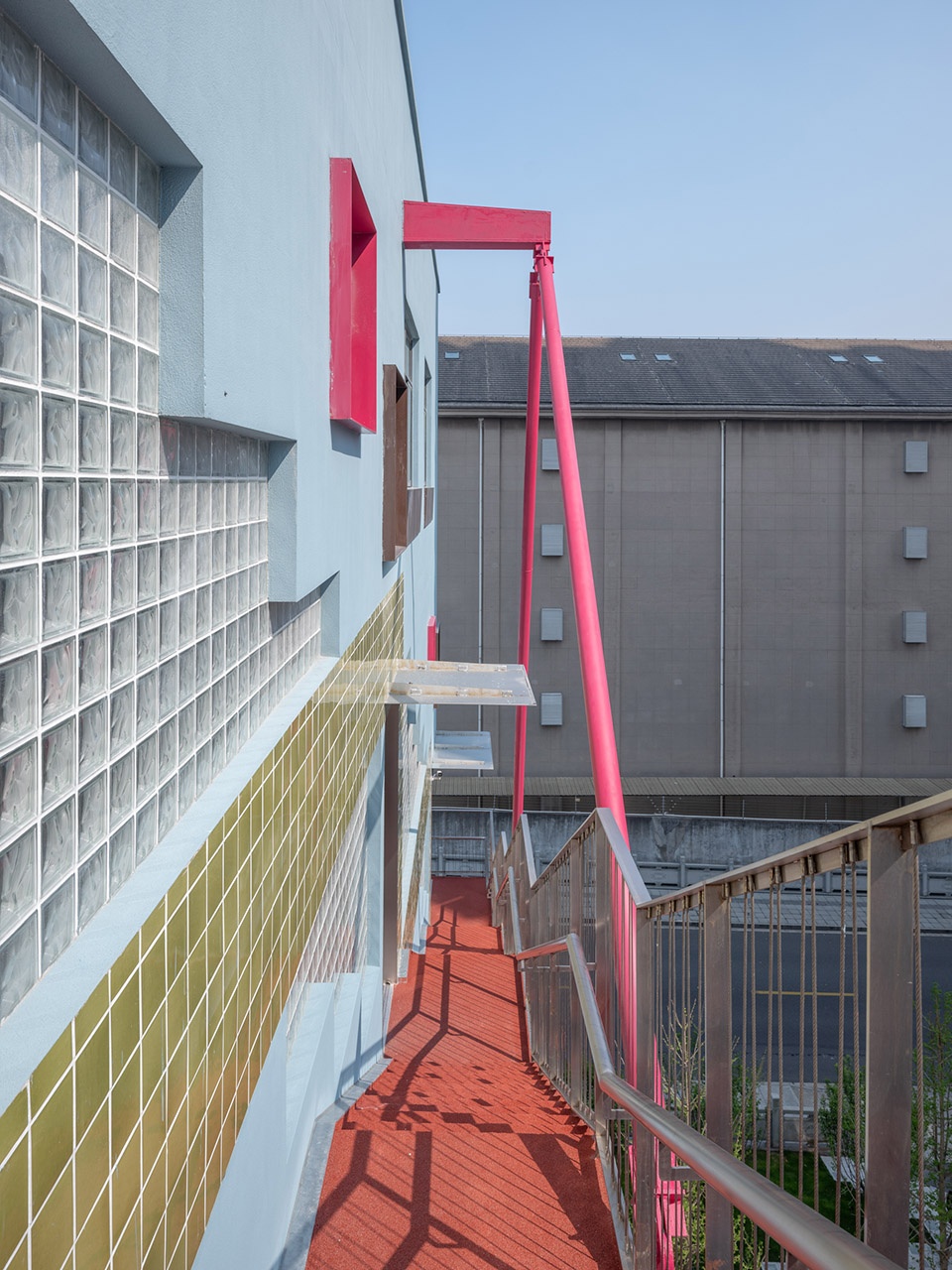
原有建筑的混凝土框架和洞窗体系赋予其厚重感,而新设计的外挂钢结构廊桥和楼梯则在视觉与物理上实现了轻盈感的对比。我们借鉴山西悬空寺的设计语言,通过悬挑梁与拉杆结构,将钢梁嵌入原建筑梁柱交错的受力点,从而确保结构的稳定性和轻薄感。
The original building’s concrete frame and window system conveyed a sense of heaviness, while the newly added steel-structured external corridor and stairways introduced a contrasting sense of lightness. Drawing inspiration from the Hanging Temple in Shanxi, we utilized cantilevered beams and tension rod systems to embed steel beams into the building’s structural strong points at beam-column intersections, ensuring both stability and slenderness.
▼社区中心与河畔的公共生活,public life at the community center and riverside
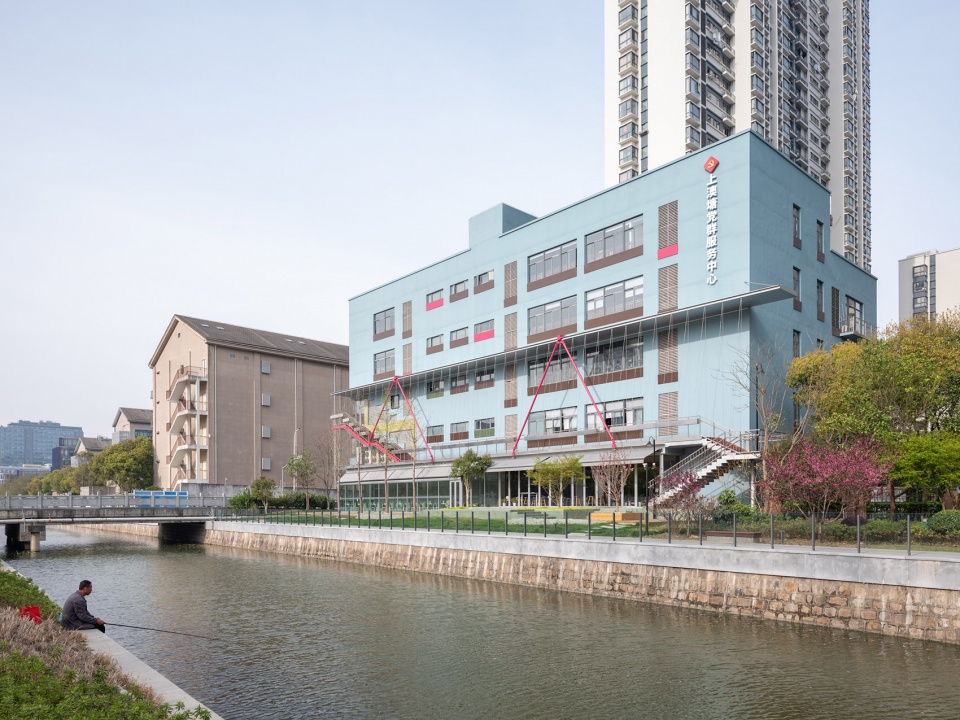
这一设计不仅在形式上打破了传统建筑的沉闷感,还通过廊桥和步梯创造了多维度的空间体验。站在廊桥上,既能通过洞窗与内部功能互动,也可俯瞰滨河景观,实现了建筑内部功能与外部自然的无缝衔接。
This design approach not only broke the monotony of the original building but also created a multi-dimensional spatial experience. Standing on the corridor, users can interact with internal functions through the windows and enjoy panoramic views of the waterfront landscape, seamlessly blending interior functionality with the surrounding natural environment.
▼外挂的廊桥与步梯,externally attached bridge and staircase
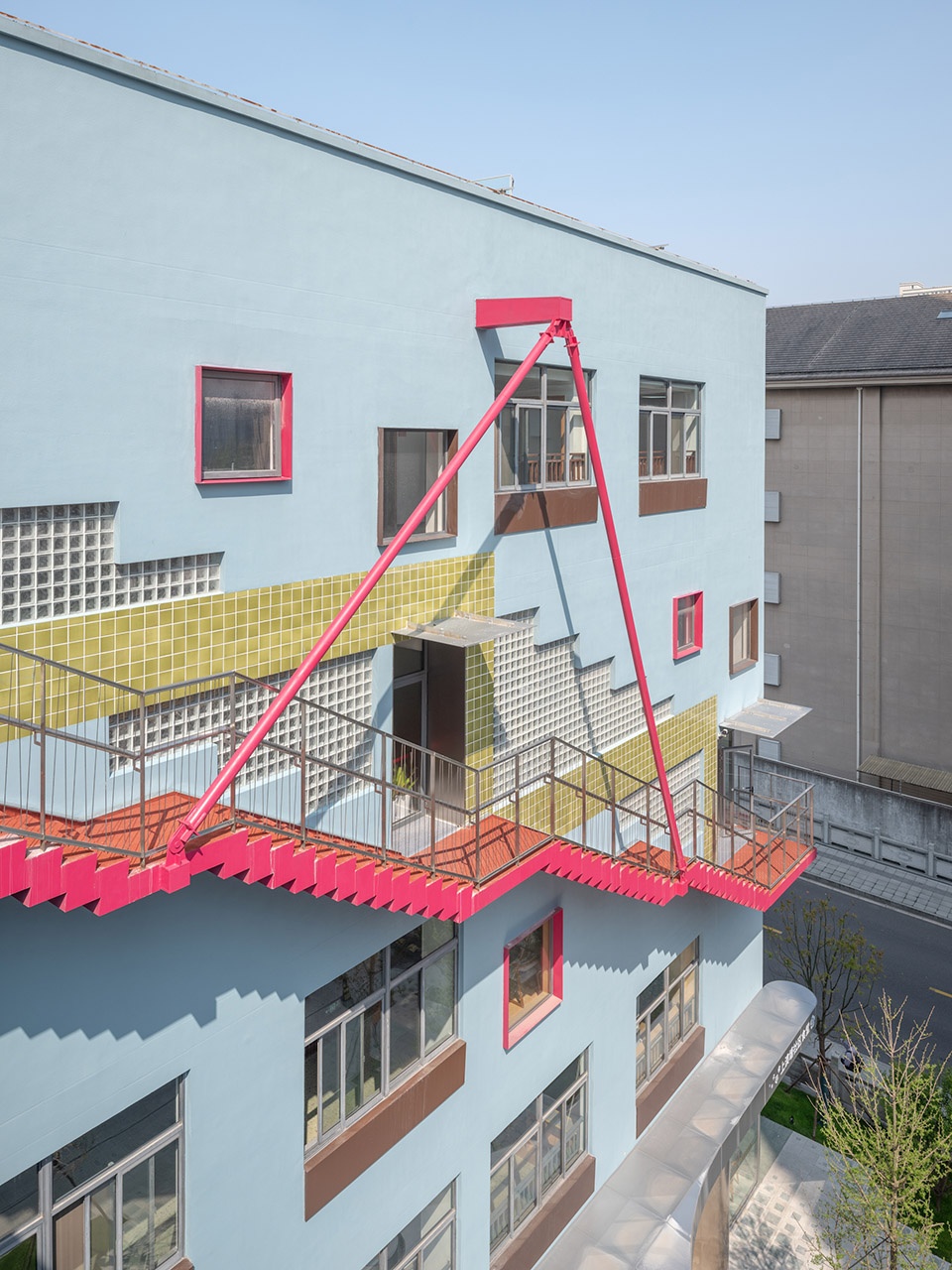
外立面设计:色彩的叙事 Façade Design: Narrating Through Color
颜色选择在本次改造中扮演了重要角色。主立面采用青蓝色为基调,通过灰度与饱和度的调整,与周围的绿色景观形成和谐对话。这种蓝绿融合的设计语言,营造出一种如置身山间的自然氛围。与此同时,我们在室外步梯上选用了高饱和度的玫红色作为点缀。玫红色如山中红梅般,成为建筑中最富活力的视觉焦点,为整体设计注入了一抹热情与生机。正如红梅在寒冬中的象征意义,它在平凡中散发非凡的感染力,这也是我们所秉持的设计理念——“平凡中的非凡”。
▼室外楼梯细部,exterior staircase detail
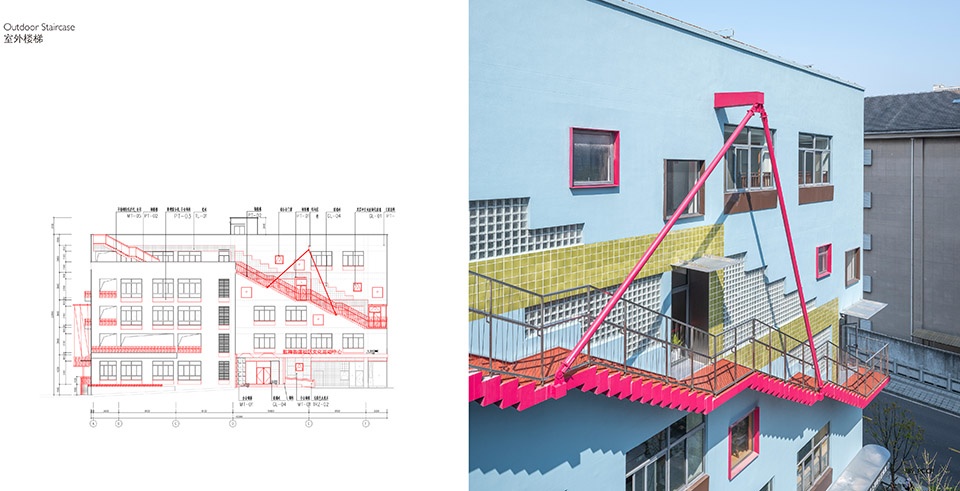
Color played a pivotal role in the renovation. The primary façade employs a blue-green palette, harmonizing with the surrounding greenery through adjusted tones of gray and saturation. This blend of blue and green evokes a serene, mountain-like atmosphere.Additionally, we chose vibrant magenta for the outdoor stairways as a striking accent. Like plum blossoms in the mountains, the magenta provides a lively focal point amidst the blue-green backdrop, injecting warmth and vitality. Symbolic of resilience in winter, the plum blossom embodies the project’s design philosophy: discovering the extraordinary within the ordinary.
▼新置入的拉索结构室外楼梯,newly installed cable-stayed outdoor staircase
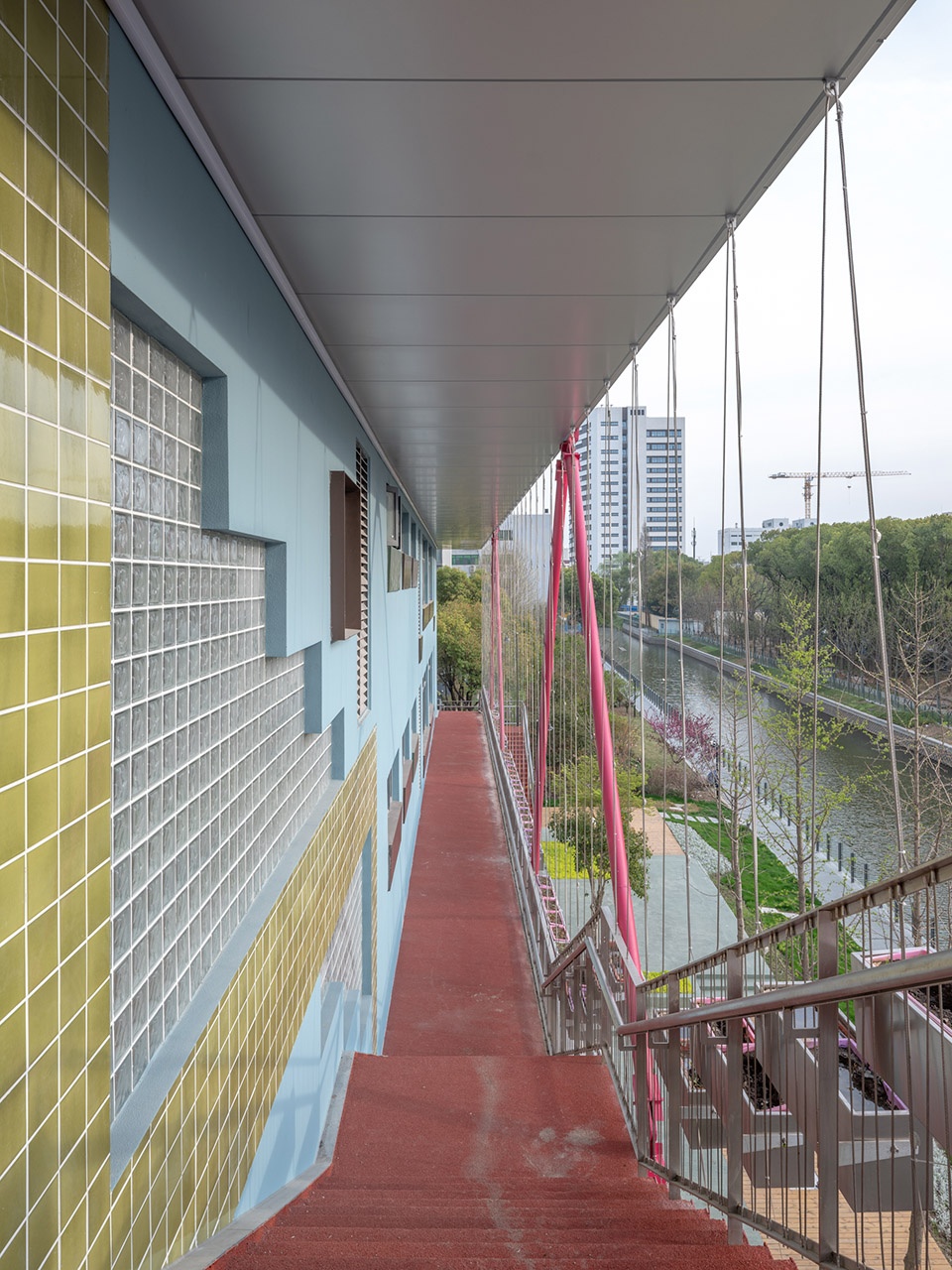
▼廊桥与步梯细节,externally attached bridge and staircase
打造现代社区的文化意境 Cultivating a Cultural Essence for Modern Communities
上澳塘党群服务中心改造项目通过贯通空间流线、优化功能布局以及立面焕新,成功地将一座普通的建筑转化为一个独具特色的滨水文化节点。项目充分体现了设计对自然与社区生活的尊重与回应。
▼首层公共空间轴测图,ground floor public space axonometric
Shang’Ao Canal Social Service Center renovation project successfully transformed an ordinary building into a distinctive cultural node by connecting spatial flows, optimizing functional layouts, and rejuvenating the façade. The project exemplifies respect for both nature and community life through design.
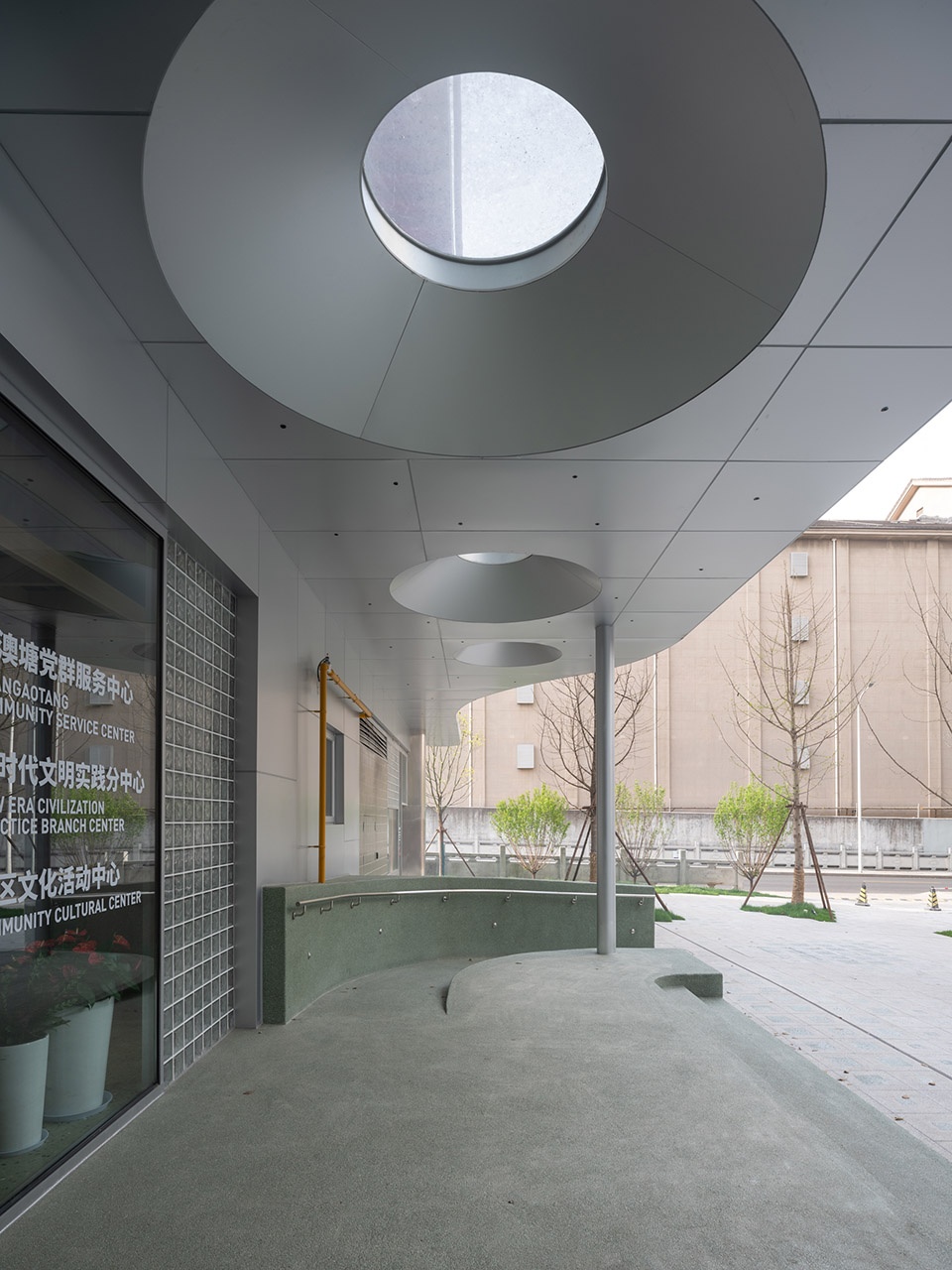
▼东北侧的主入口,main entrance on the northeast side
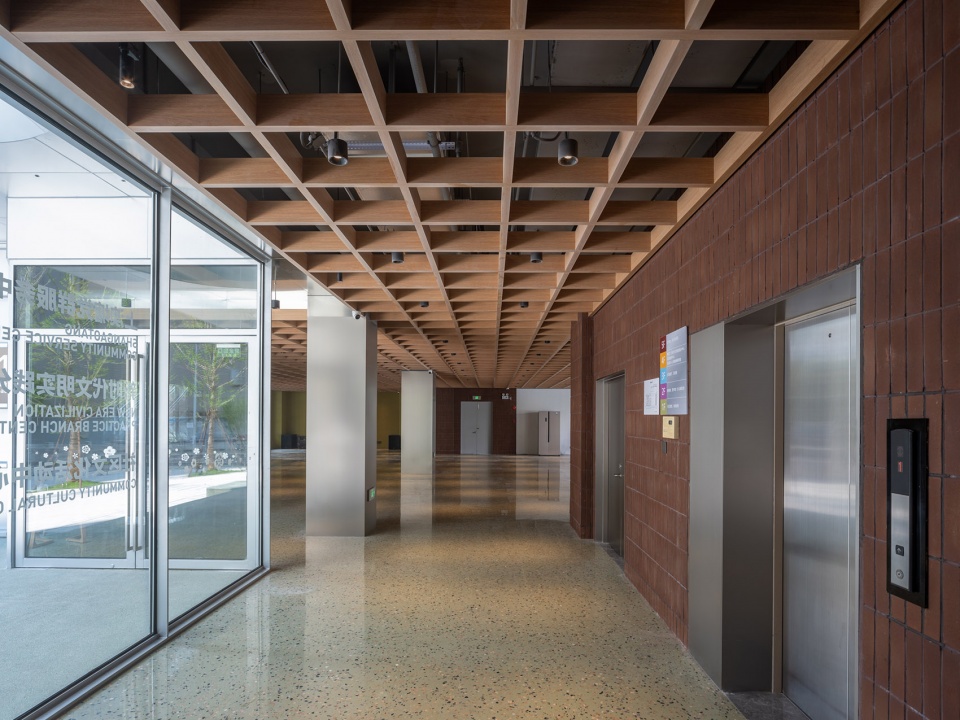
▼一层门厅,first-floor lobby
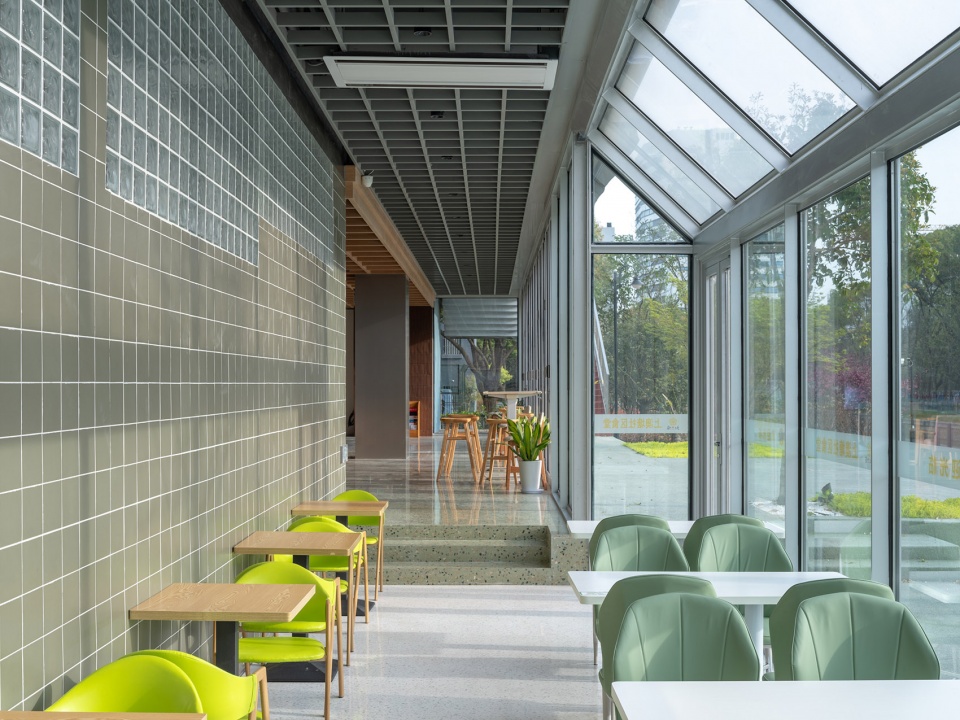
▼一层社区食堂,first-floor community canteen
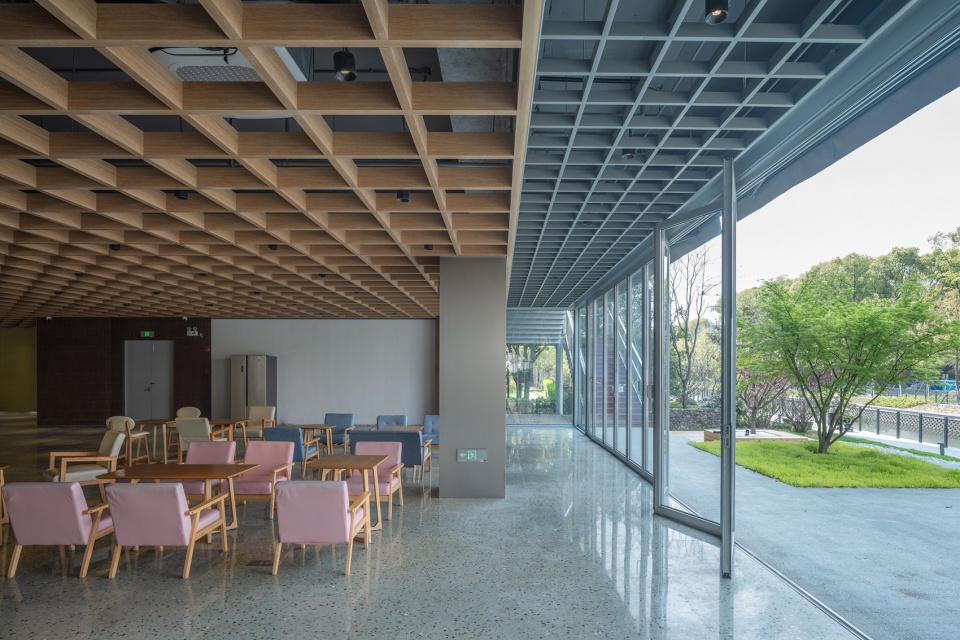
▼咖啡沙龙区 开放的首层,coffee salon area – open ground floor
正如刘宇扬所言,“能用最轻的方式体现自然本质的建筑,才是有意义的建筑。” 本项目在实践中践行了这一理念,用轻盈的结构与鲜明的色彩,为社区注入新的生机与趣味,成为滨水城市更新中的亮点与范例。
As Liu Yuyang, the Principal of ALYA, once stated, “Meaningful architecture captures the essence of nature in the lightest way possible.” This project embraces that philosophy, using lightweight structures and vibrant colors to breathe new life and joy into the community, establishing itself as a highlight and benchmark in waterfront urban renewal.
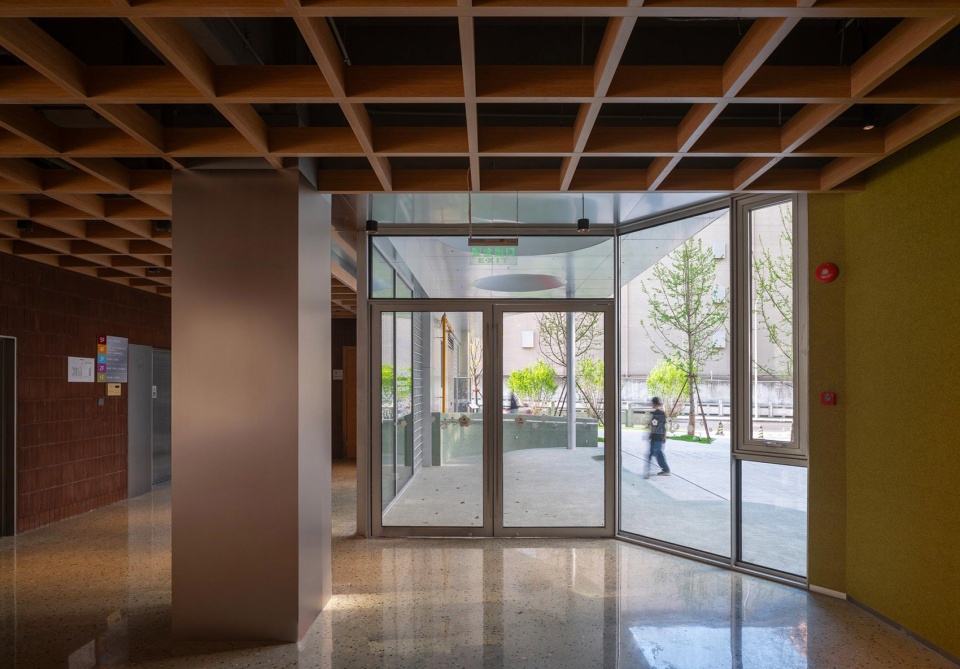
▼从沙龙区回望主入口,looking back from the salon area
▼三层梅花厅室内,interior of the plum blossom hall on 3rd floor
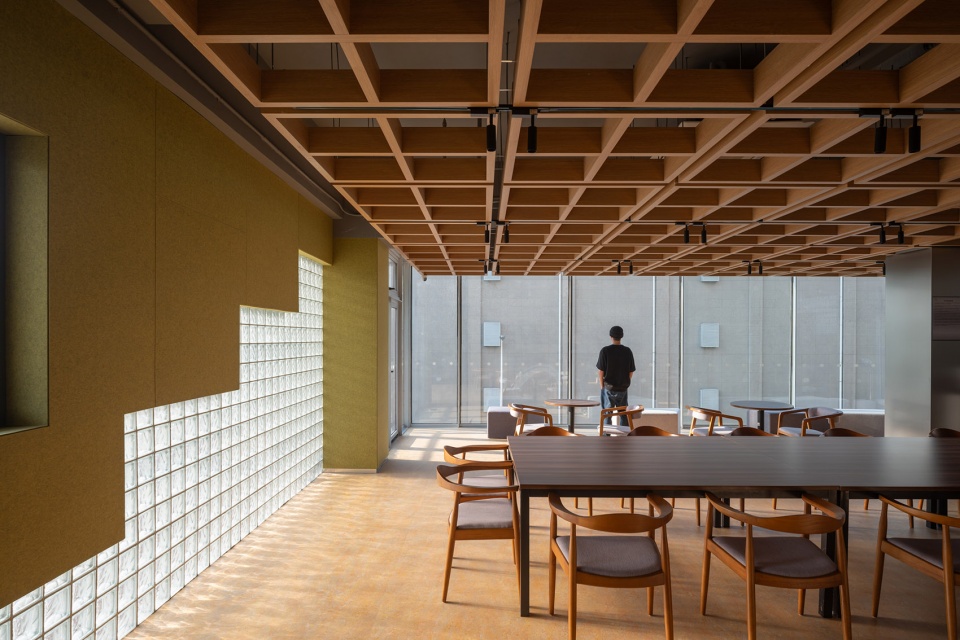
▼室内走廊 光线可从洞窗透入室内,interior corridor with light filtering
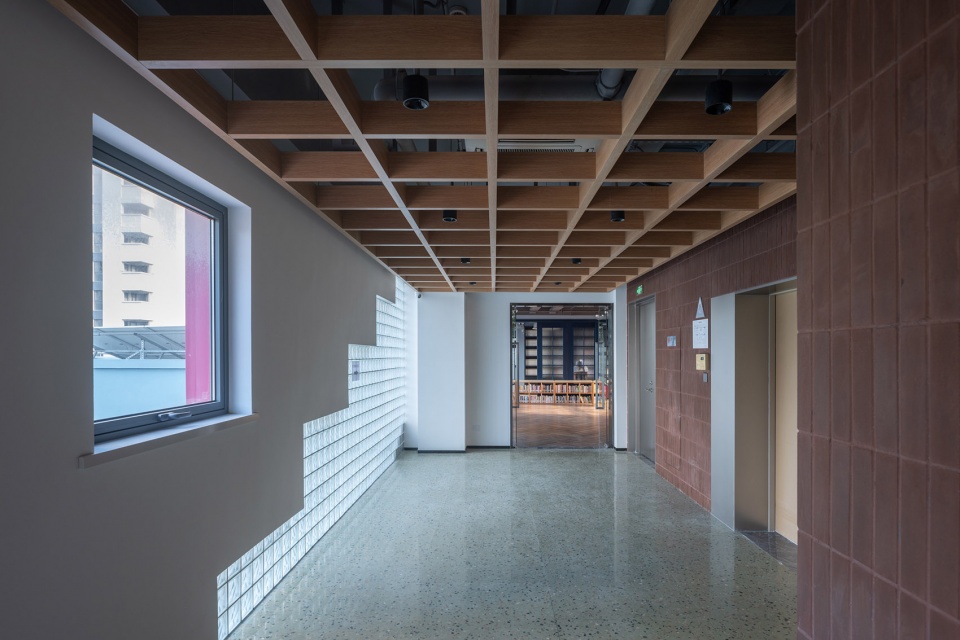
道路与社区中心的联动 Integration of Roads and the Community Center
设计团队还对社区中心周边的街道进行了更新。宜州路与全州路,这两条与社区居民日常生活息息相关的道路,作为上澳塘党群服务中心所在地的核心街道,成为本次城市更新的核心路段。
We also upgraded the streets around the community center. Yizhou Road and Quanzhou Road—two key streets closely tied to residents’ daily lives and home to the community center—became the core of this urban renewal. The project improved pavement, streetside greenery, and open plazas along both roads, enhancing the walking experience while adding spatial nodes and rest areas.
▼宜州路改造后拓宽的人行道,Yizhou Road: widened sidewalk after renovation
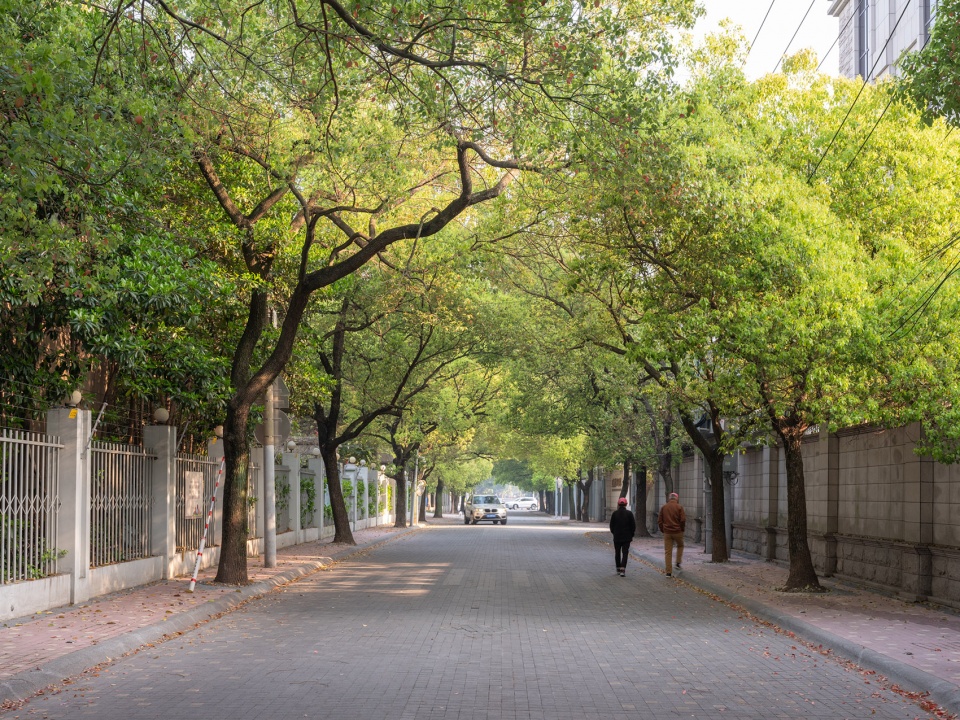
▼宜州路改造后的空间节点-紫藤驿站,Yizhou Road: renovated spatial node – wisteria station
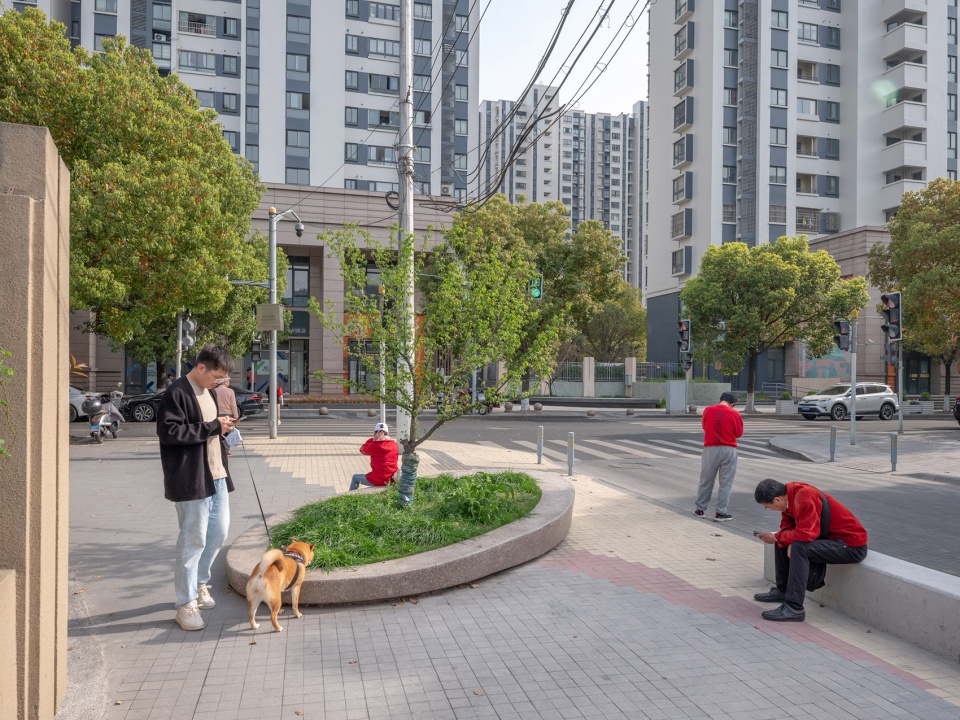
▼宜州路友好的步行和骑行体验,Yizhou Road: pedestrian and cycling friendly
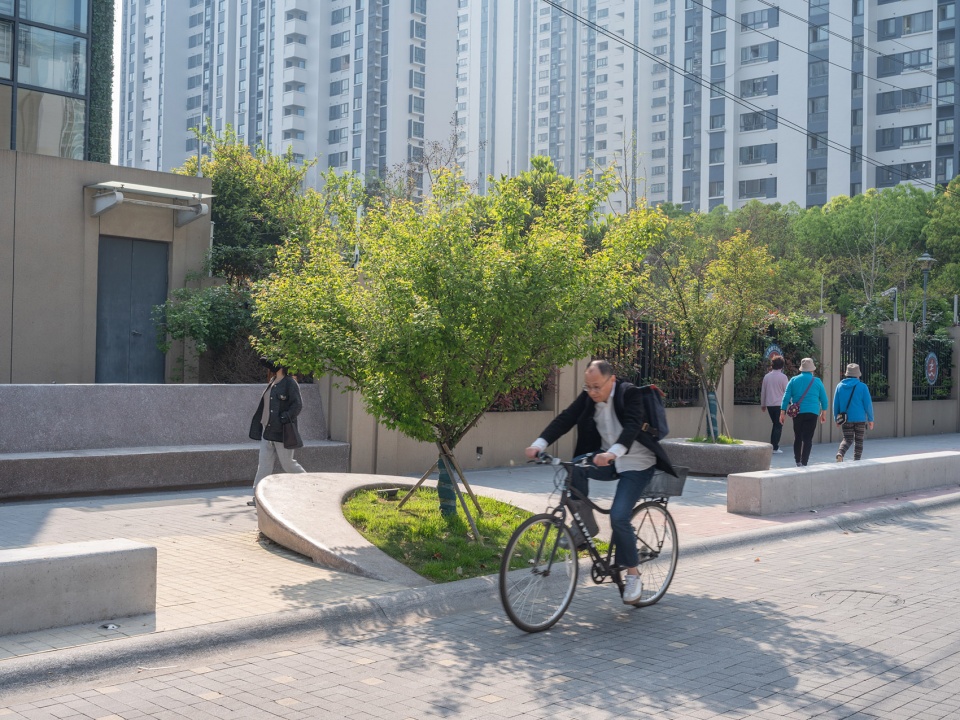
项目对全州路及宜州路的道路铺装、沿街绿化及空地广场进行了整体改造提升,在改善步行体验的同时,植入一系列空间节点和休憩设施。设计以“梅花”为出发点,红色系为主题色彩,寓意着宜州路与全州路交汇相融,宛如梅花的花瓣相交于此。城市更新的力量也会如梅花般绽放,一年四季,不同时节,为虹梅街道带来各异的风采。
Inspired by the plum blossom, the design uses a red color scheme, symbolizing the convergence of Yizhou and Quanzhou Roads like overlapping plum petals. The power of urban renewal, like blooming plum blossoms, brings diverse charm to Hongmei Subdistrict across all seasons.
▼全州路改造后的空间节点-玩景广场,Quanzhou Road: renovated spatial node – civic center plaza
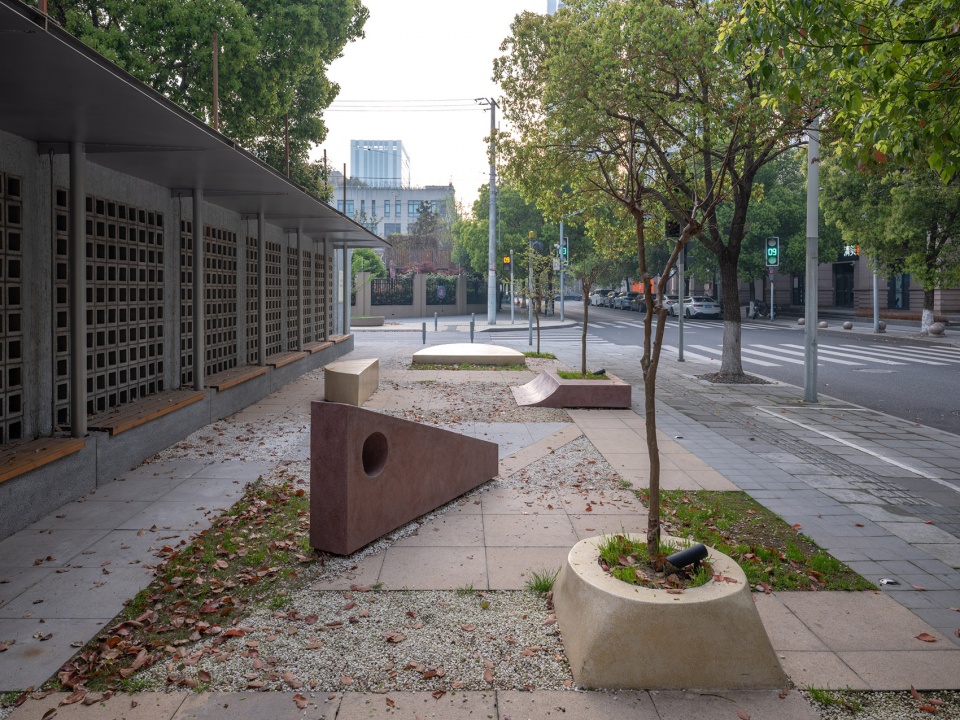
▼全州路改造后的空间节点-市民中心广场,Quanzhou Road: enovated spatial node – civic center plaza
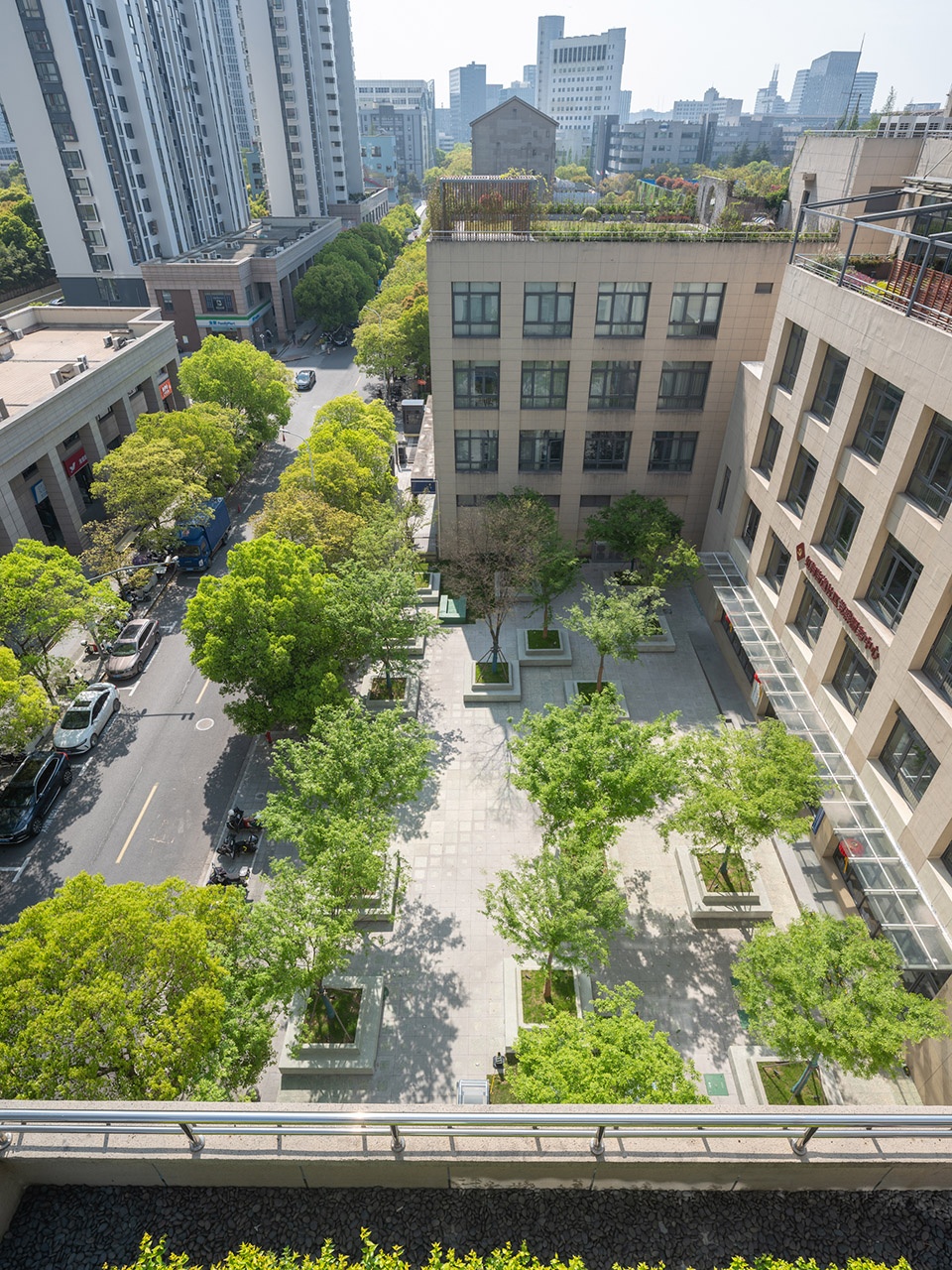
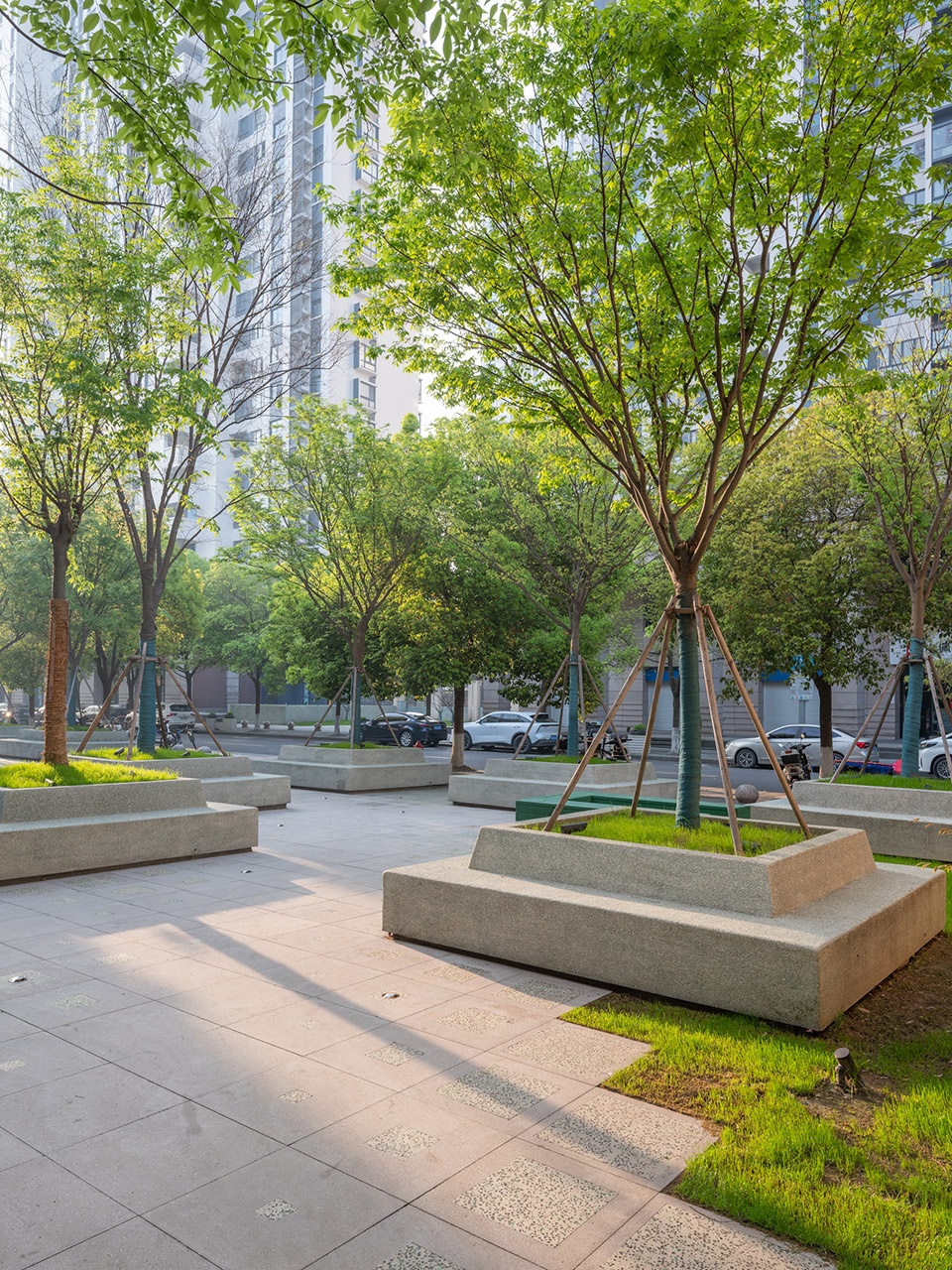
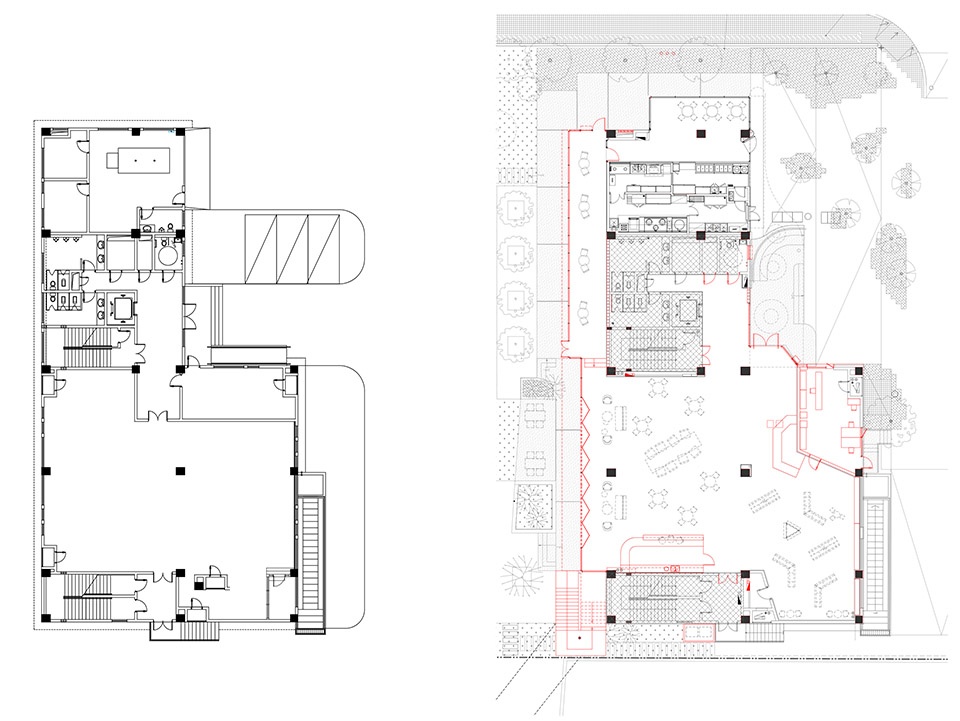
▼一层平面图改造前后对比,Comparison of the interior layout before and after renovation
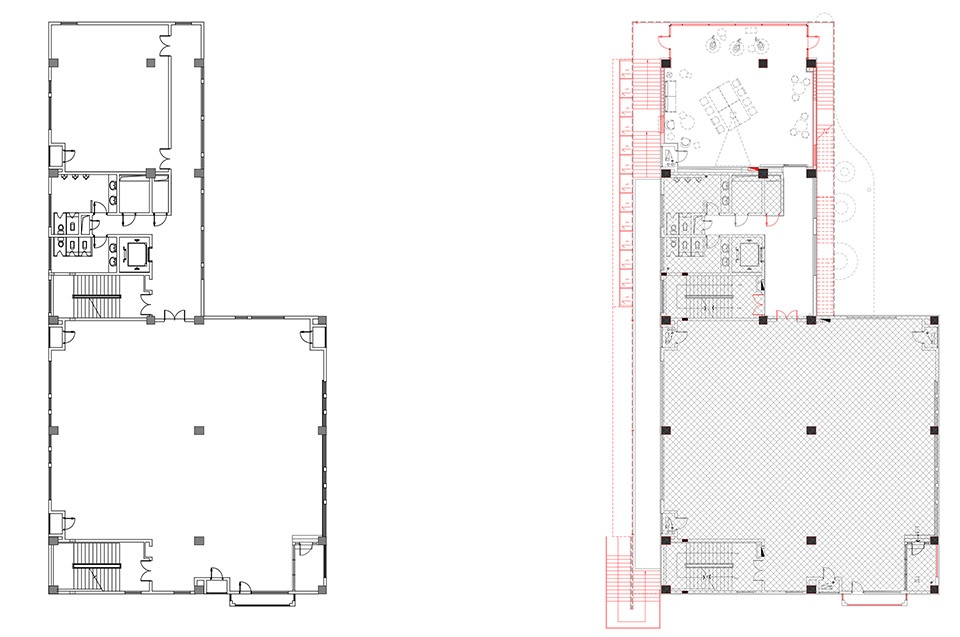
▼三层平面图改造前后对比,Comparison of the interior layout before and after renovation
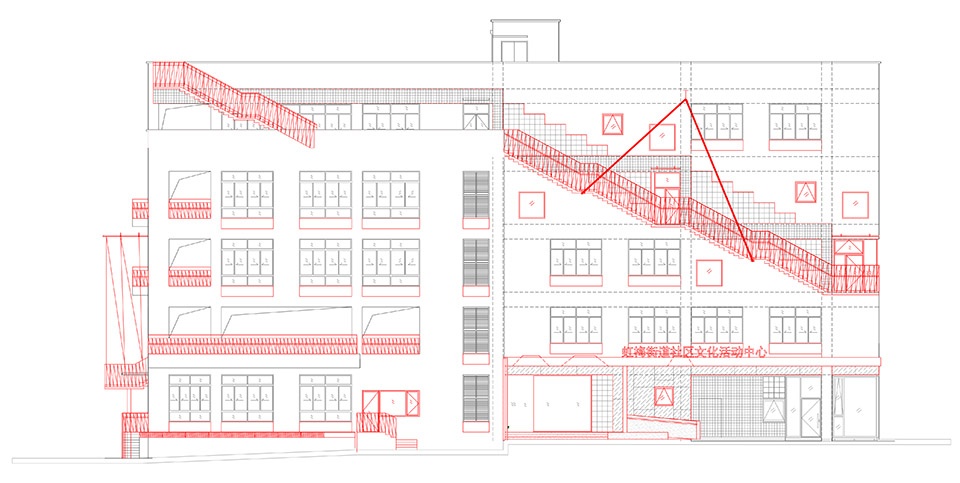
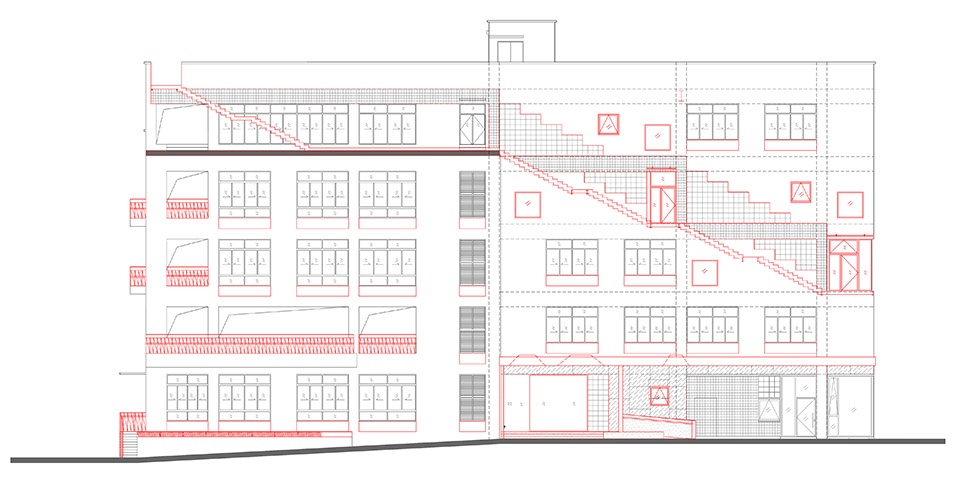
▼东立面图,East elevation
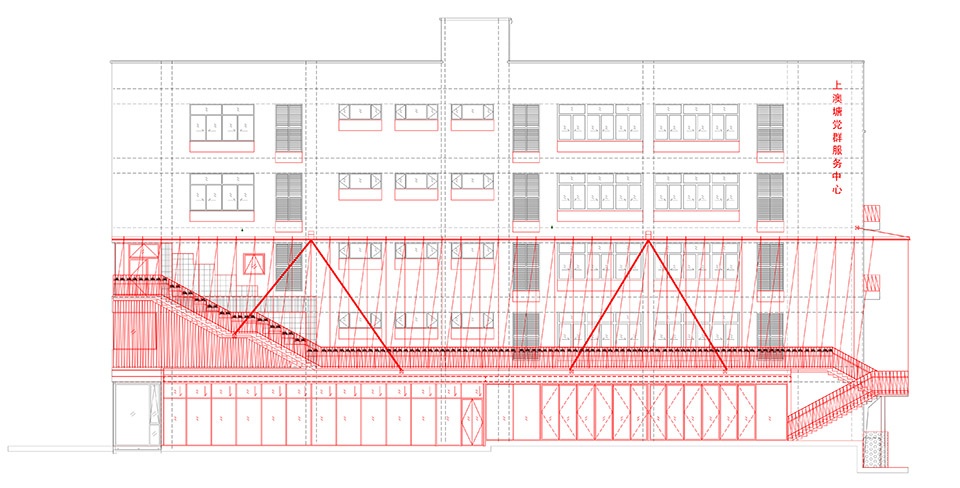
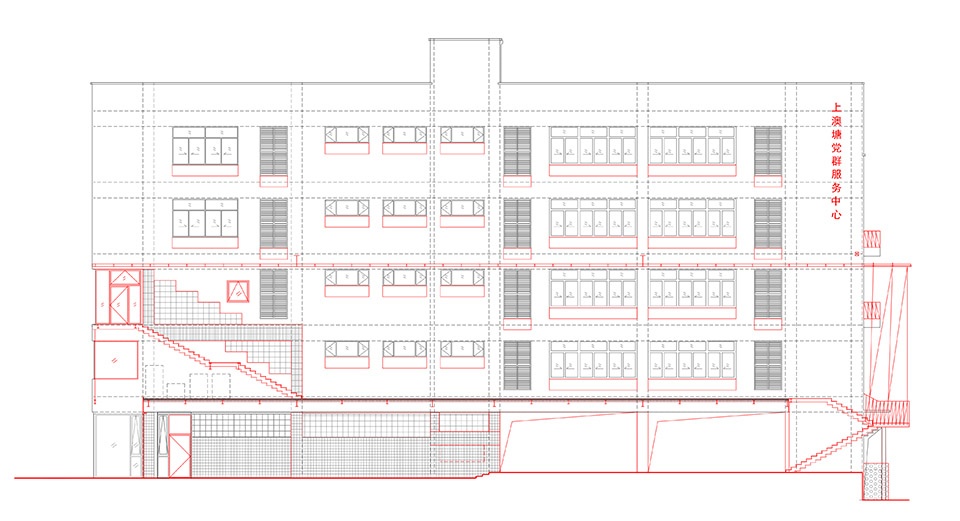
▼西立面图,West elevation
▼剖面图,Section
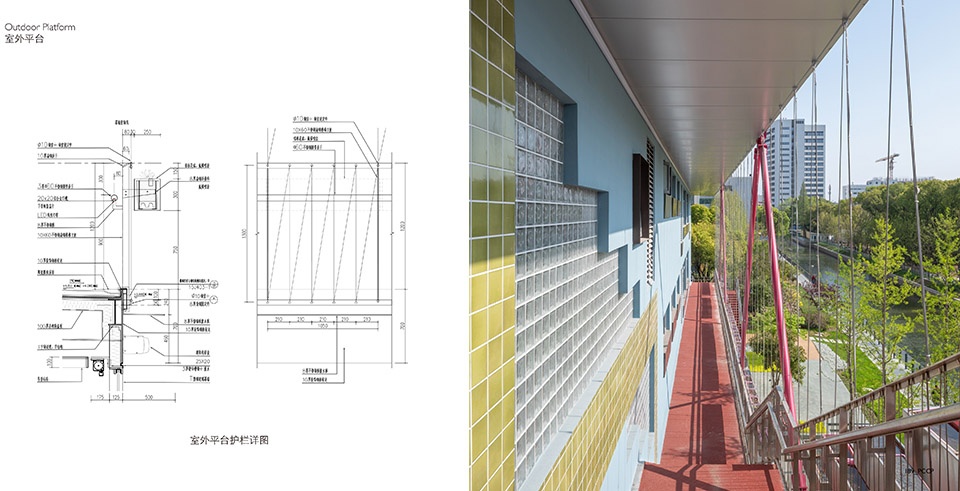
▼平台栏杆细部,Platform railing detail
Project Name: Shang’Ao Canal Social Service Center ,Shanghai
Location: Quanzhou Road , Xuhui District, Shanghai
Type: Community Center, Renovation
Site Area: 2244 sqm
Building Area: 3864.6sqm
Design Stage: 2022.-2023
Construction Stage: 2023-2024
Architect: Atelier Liu Yuyang Architects
Design Principal: Liu Yuyang
Project Leader: Wang Chuxue
Architect on site: Wang Chuxue
Design Team: Wu Congbao,Wang Chuxue, Fan Zhikang, Zhu Chenglin, Xu Jiarui
Scope of work: Architecture, Interior design, Landscape design
Client: Hongmei Subdistrict office of Xuhui District, Shanghai
Structure Consultant: Shi Wei, Zhang Yaxiong
M&E Consultant: Shanghai Sanjiang Mechanical & Electrical Technology Co., Ltd.
Collaborating Designers: Yi Architecture Studio (Community Canteen), Wanbang Zhihe (Architectural & Interior Signage)
Construction Agent: Shanghai Housing Technology Construction Development co., ltd.
Construction Contractor: Shanghai Huicheng Construction Development Co., Ltd.
Building Structure: Reinforced Concrete Frame Structure
Main Building Material: Metal Structure, glass brick, Exterior Paint
Main Landscape Material: Exterior wood flooring, washed stone
Main Interior Material: Terrazzo, wall tile
Landscape Renovation: Quanzhou Road and Yizhou Road Landscapes
Project Scale: Quanzhou Road Landscape – 4,500 m², Yizhou Road Landscape – 2,520 m²
Design / Completion: 2022–2023 / 2024
Design Team (Landscape): Liu Yuyang, Fan Zhikang, Yu Qing
Collaborating Designer (Quanzhou Road Landscape): FLIP Design Studio
Photography: Tian Fangfang