餐桌花园,上海 / UnderRoof Shanghai
自闭症谱系障碍(ASD)儿童常被称为“星星的孩子”,如同暗夜星辰,独自闪烁却难以与周围的世界建立联结。他们往往因社交互动障碍、沟通困难及感官敏感,困于自我封闭的独特世界,对外界的喧嚣与刺激充满不安。因此,设计以“餐桌”为空间载体,打造了一处低介入的疗愈空间——通过安全的围合边界、天然的材质触感与可食用的自然互动,营造一个易于互动、充满安全感的容器,旨在以温和的方式引导他们放松,并重新建立与世界的感知与联结。
Children with autism spectrum disorder (ASD), often referred to as “children of the stars,” are like stars in the night sky—shining individually while finding it difficult to connect with the surrounding world. Social communication challenges and sensory sensitivities can make external environments overwhelming and unsettling. Feast Garden uses the dining table as a spatial medium for a low-intervention healing environment, creating a secure setting through protective boundaries, tactile natural materials, and edible interactions with nature. The project gently encourages relaxation and supports children in rebuilding sensory awareness and connection with the world around them.
▼花园全景,Overview
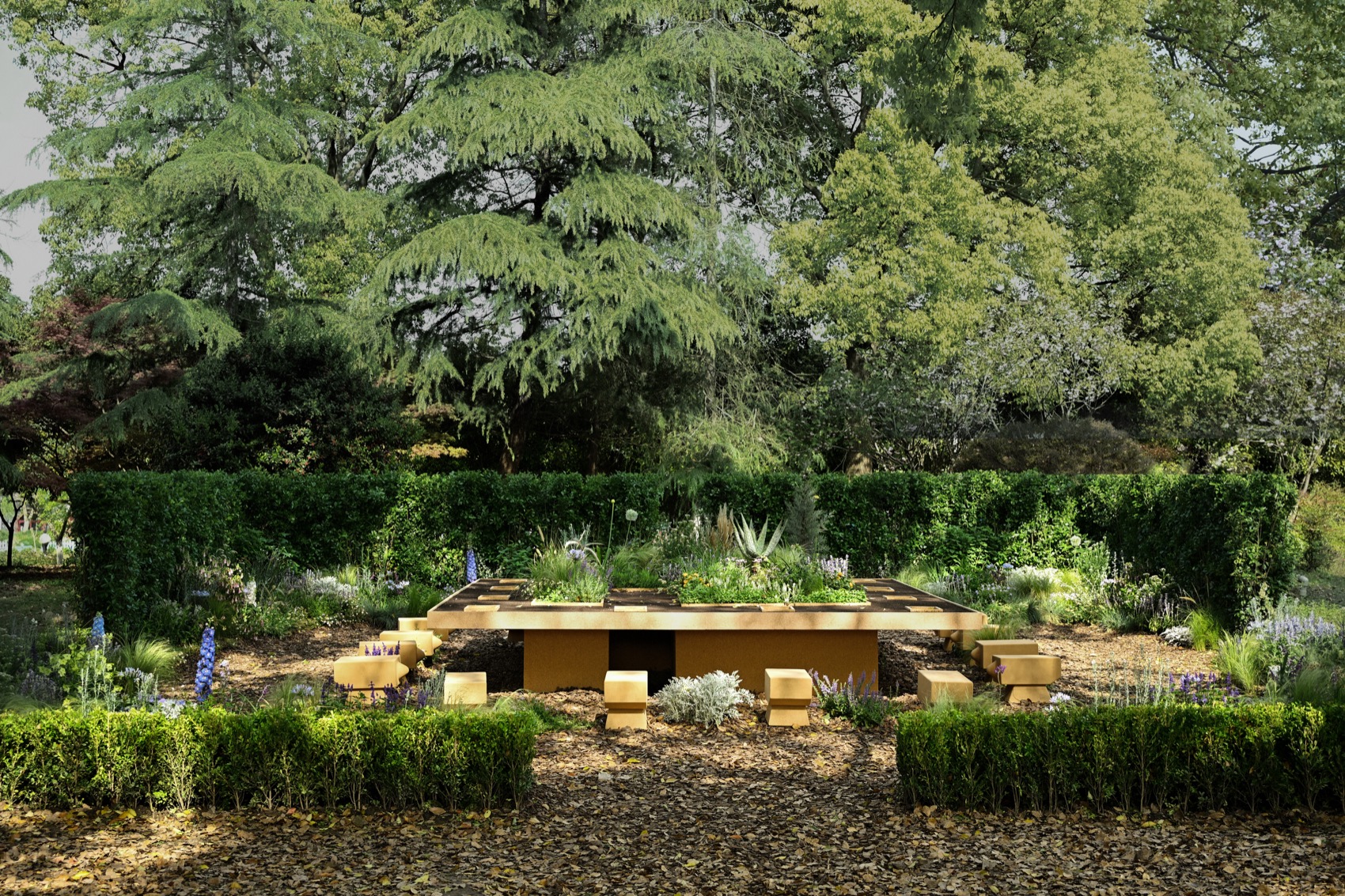
绿篱边界:层次化的感官庇护Hedge Boundary: A Layered Sensory Refuge
针对ASD儿童对视觉过载的敏感,设计摒弃了单一封闭的围合方式,转而构建“前低后高”的层次化边界。场地后方设置1.8米高的黄杨绿篱,有效阻隔外部杂乱视线与干扰,仅保留场地外围的大乔木作为场地背景;前方则以0.45米的低矮绿篱界定空间范围,在保留视线通透性的同时明确心理安全边界。这种“前透后靠”的空间格局,既确保了庇护所的私密性与安全感,又避免了高墙带来的压抑,让孩子们在开放而受保护的环境中,自然建立与外部世界的连接。
In response to the heightened sensitivity of children with ASD to visual overload, Feast Garden replaces a singular enclosed boundary with a layered strategy of a “low-front, high-back” enclosure. A 1.8-meter-high boxwood hedge at the rear filters external visual distractions and environmental disturbance while retaining existing canopy trees as the visual backdrop. A 0.45-meter hedge at the front defines the spatial territory while maintaining visual openness and establishing a clear sense of psychological safety. This spatial configuration provides privacy and refuge without the oppressive feeling of solid walls, allowing children to engage with the outside world within an environment that is both open and protected.
▼花园边界,Garden Boundary
可食餐桌:自然与社交的互动场Edible Table: A Shared Field for Nature and Social Interaction
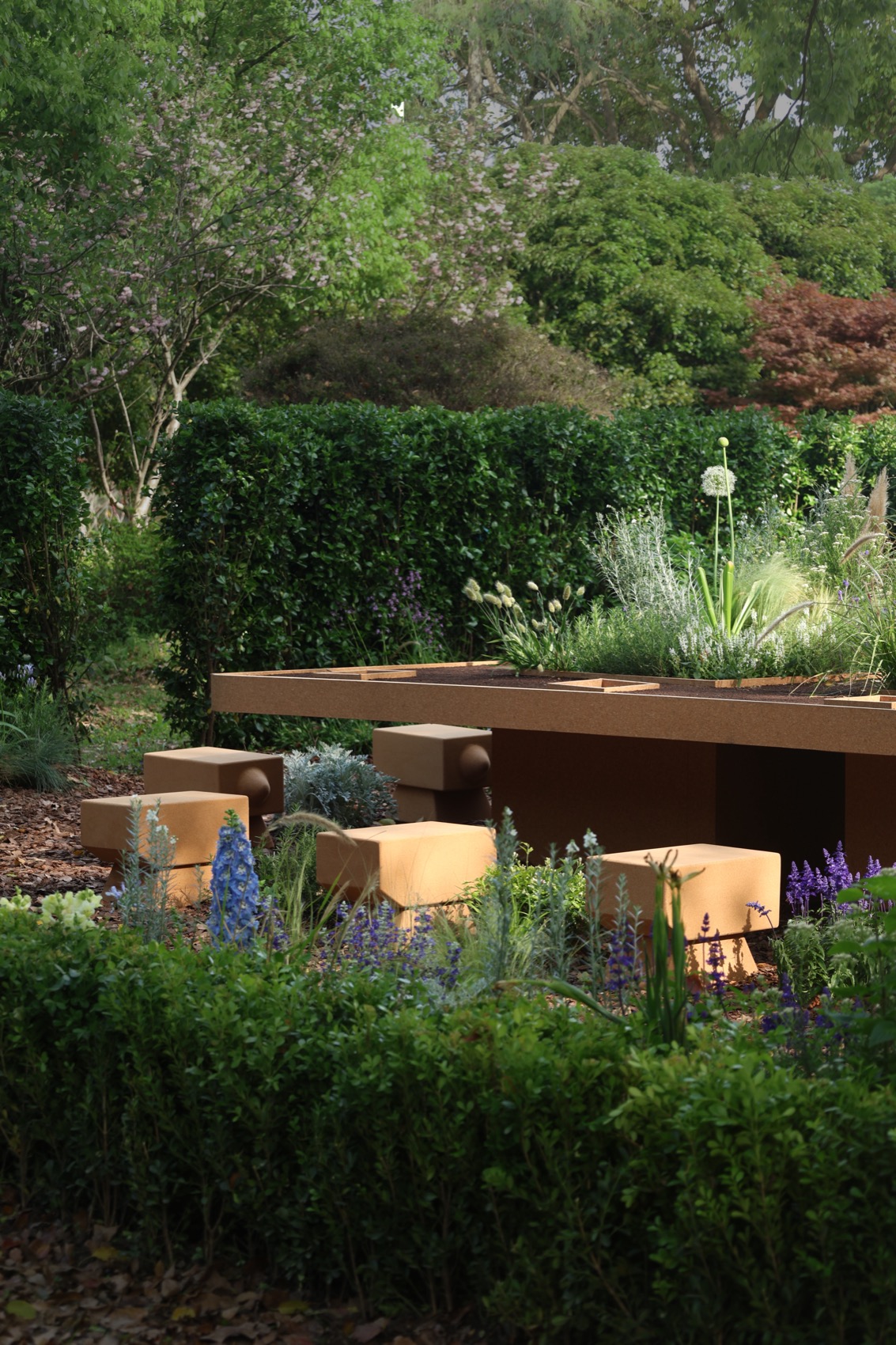
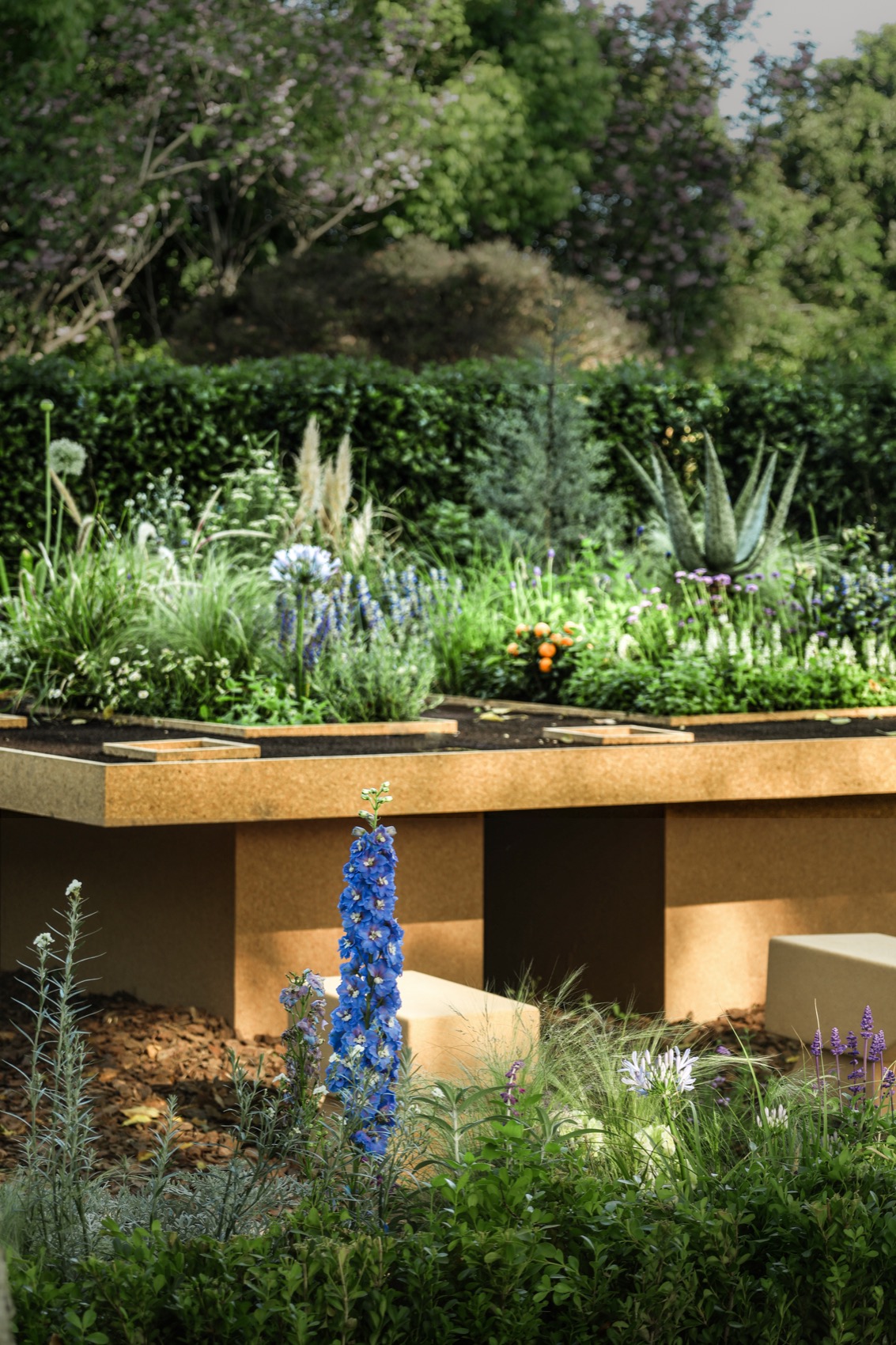
餐桌以北宋《文会图》为灵感,旨在将其中所蕴含的“于自然中聚会、在交流中共融”的人文意境,转化为一个互动性的户外疗愈空间。画中的“食案”被具象为一张4×4米的野餐桌,放置于场地中央,并转化为一个充满生命力的互动装置——桌面上的四个花箱内栽植着可食用花卉与植物,如同食案上的佳肴,邀请孩子们通过视觉、嗅觉与味觉进行探索。同时,孩子们可以近距离观察植物生长、触摸土壤、采摘果实,实现“从种植到食用”的完整体验,这种参与感强化了人与自然的联结,为社交互动提供了天然的共享话题。
Inspired by the Northern Song painting Literary Gathering and its spirit of gathering in nature and connecting through shared experiences, Feast Garden translates the painted banquet table into a 4×4-meter picnic table placed at the center of the site. The table becomes an interactive installation containing four integrated planters filled with edible flowers and plants, inviting children to explore through sight, smell, touch, and taste. Children can observe plant growth, touch the soil, and harvest fruits and herbs, completing a cycle from planting to eating. This participatory process strengthens the connection between people and nature while creating a natural shared focus for social interaction.
▼可食餐桌,Edible Planter Table
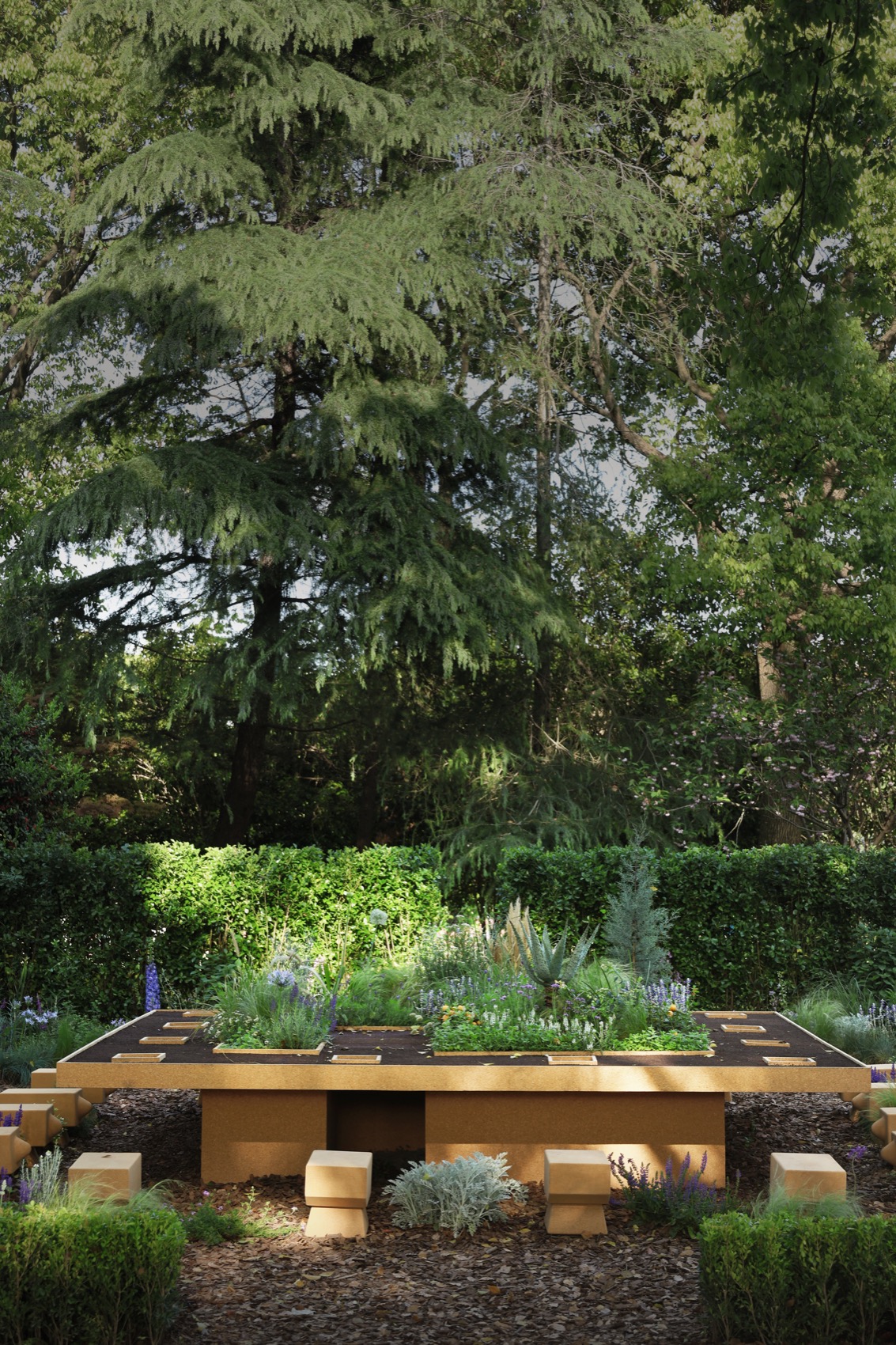
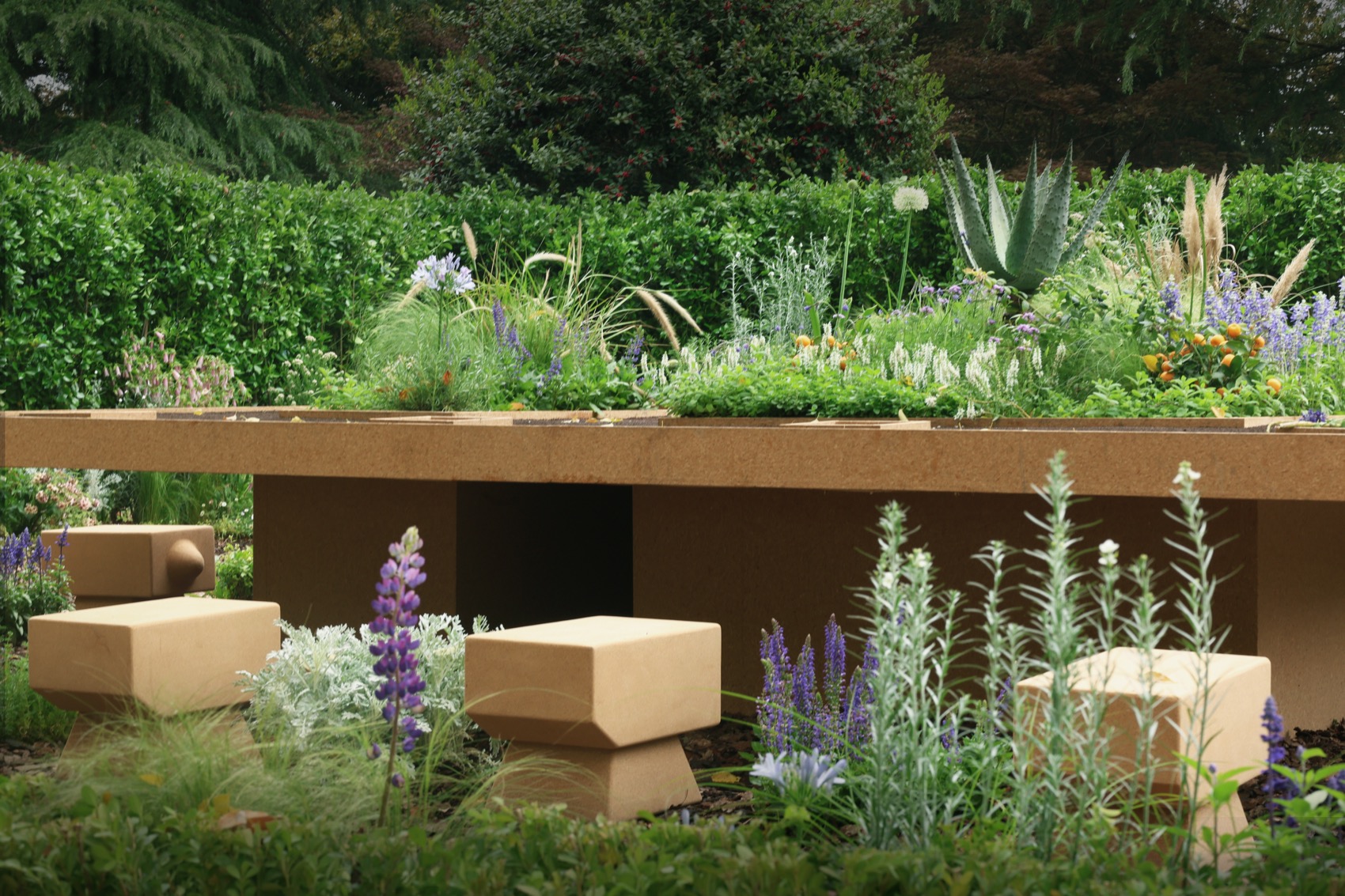
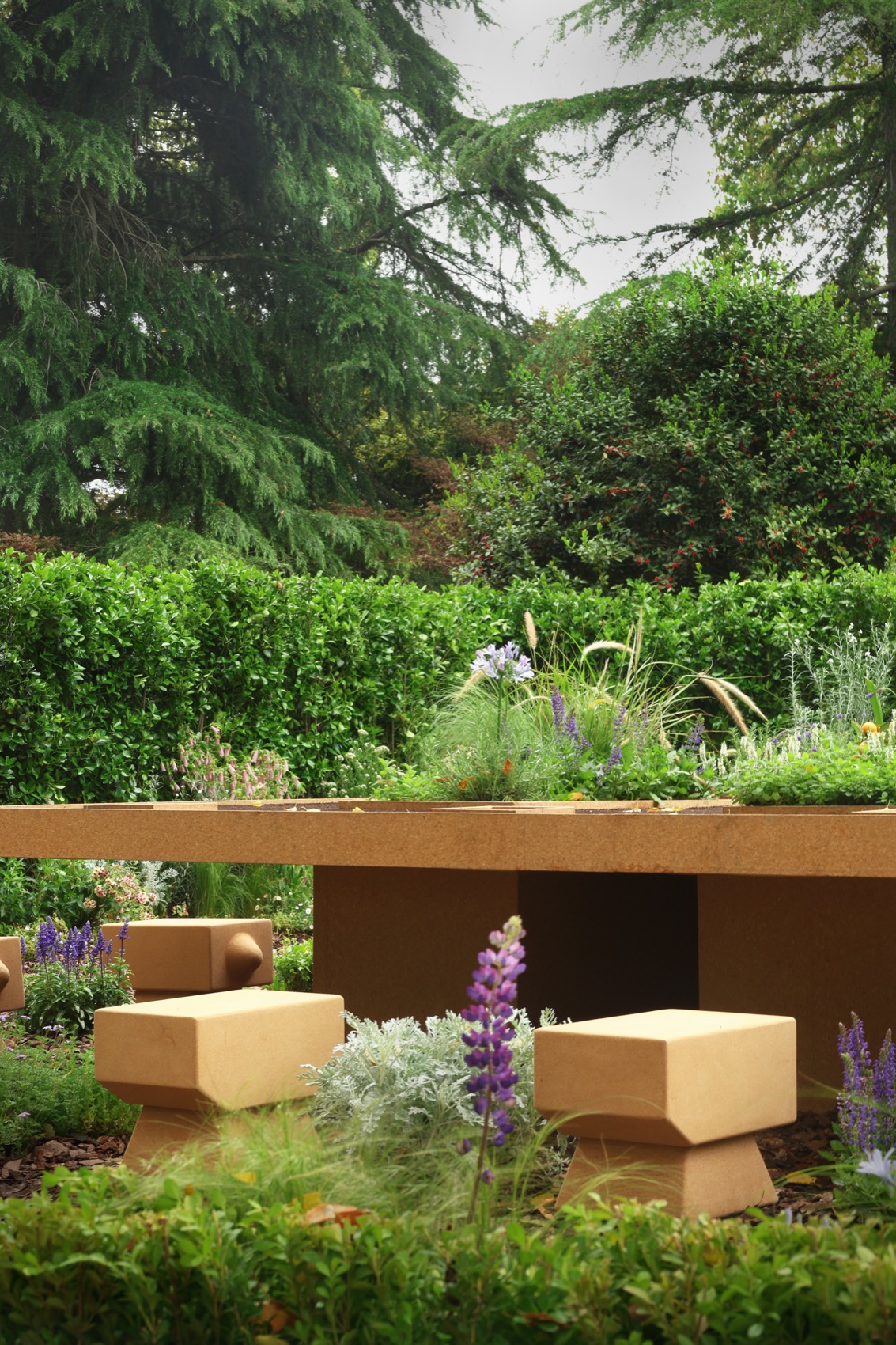
餐桌由桌面与四个大小各异的桌腿构成,形成稳定的支撑结构。桌腿兼具结构功能与植物种植功能:其内部中空,可作为花箱容纳土壤与植物,使自然生长与家具形态融为一体。桌腿及桌面外侧均覆以软木薄板,既起到保护作用,又通过材质的统一性强化整体视觉的协调感。桌面则使用软木颗粒制作的软木板,其多孔隙结构赋予表面柔和触感,同时具备透水性,避免桌面表面积水,延长使用寿命。软木材质天然的防水、防霉与耐候特性,使餐桌可适应户外多变的天气条件,无需频繁维护。这一设计通过材料特性与结构创新的结合,在保障功能性的同时,实现了触觉体验、环保理念与场景适应性的多重目标。
▼餐桌结构,Table Strucutre
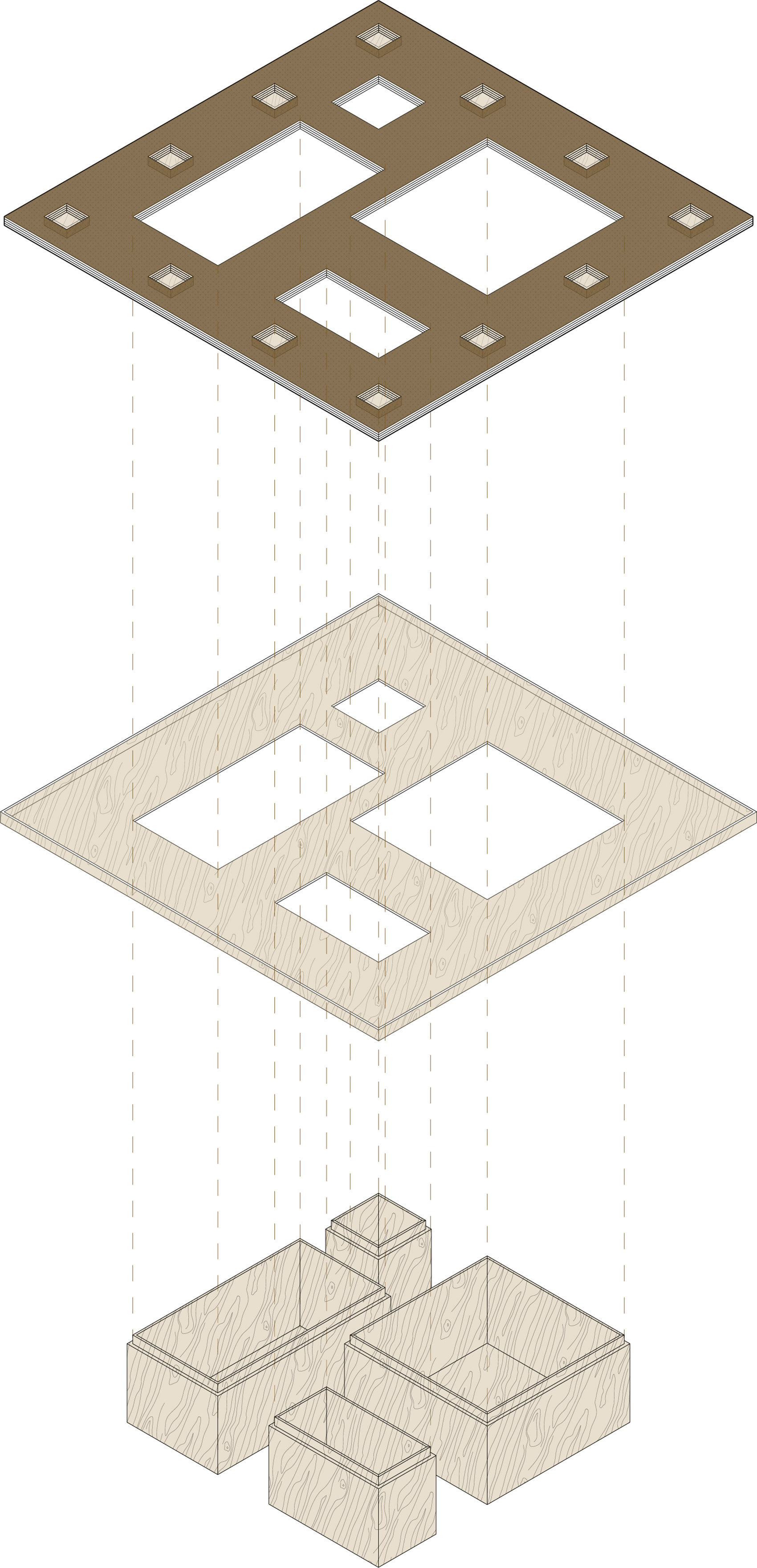
The table is composed of a tabletop and four legs of varying sizes, forming a stable supporting structure. The legs serve both structural and planting functions: their hollow interiors act as integrated planters that hold soil and vegetation, seamlessly merging natural growth with furniture form. The legs and tabletop edges are clad with cork veneer panels, offering protection while reinforcing visual coherence through material consistency. The tabletop itself uses agglomerated cork panels, whose porous structure provides a soft tactile quality while allowing rainwater drainage to prevent surface ponding and extend durability. Cork’s natural resistance to moisture, mold, and weathering enables the installation to adapt to changing outdoor conditions with minimal maintenance requirements. Through the integration of material performance and structural innovation, the design balances functionality with tactile richness, environmental responsibility, and adaptability to its setting.
▼可食用植物与香草共同构成多感官花境,Edible plants and herbs create a multi-sensory planting landscape
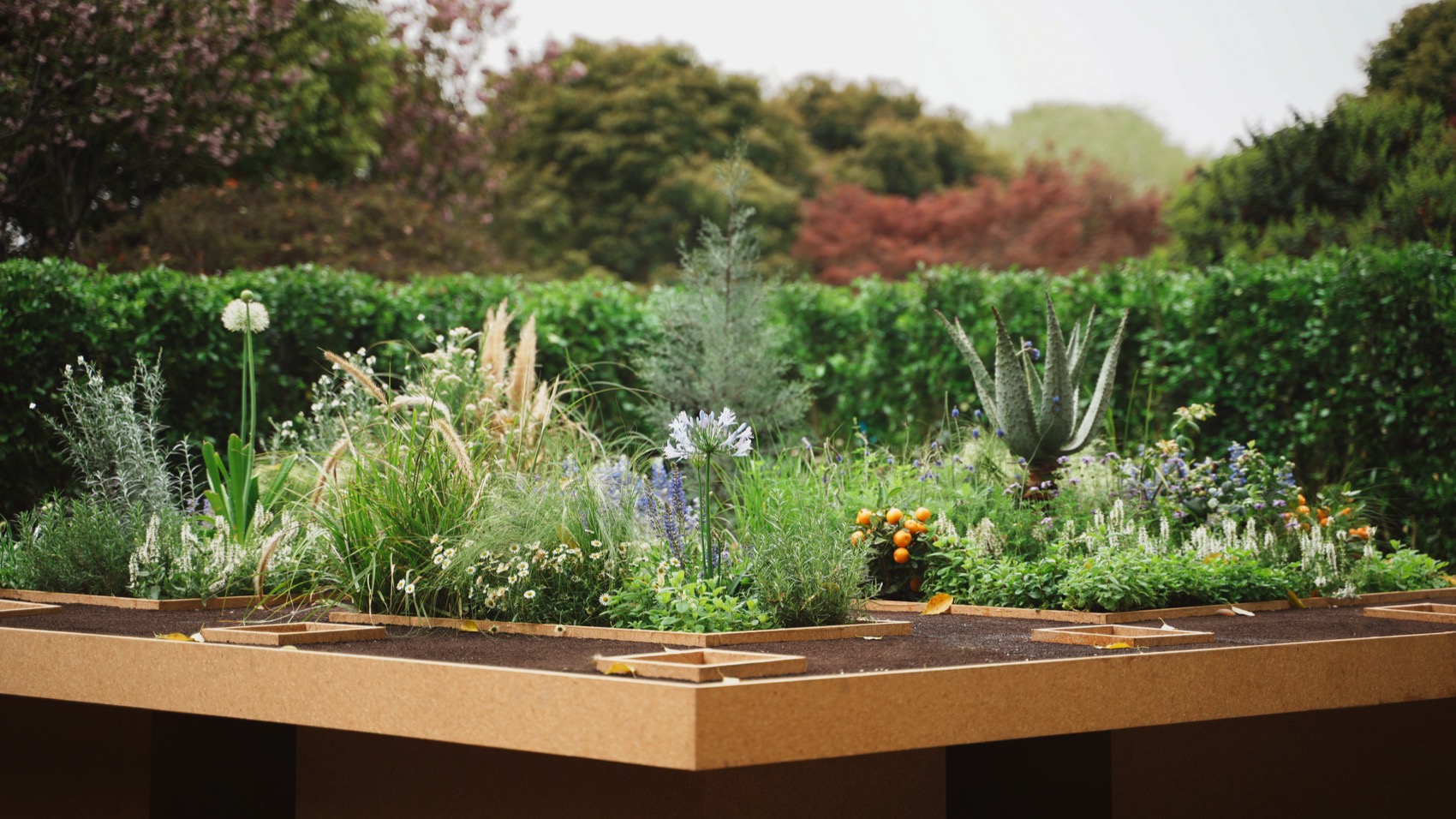
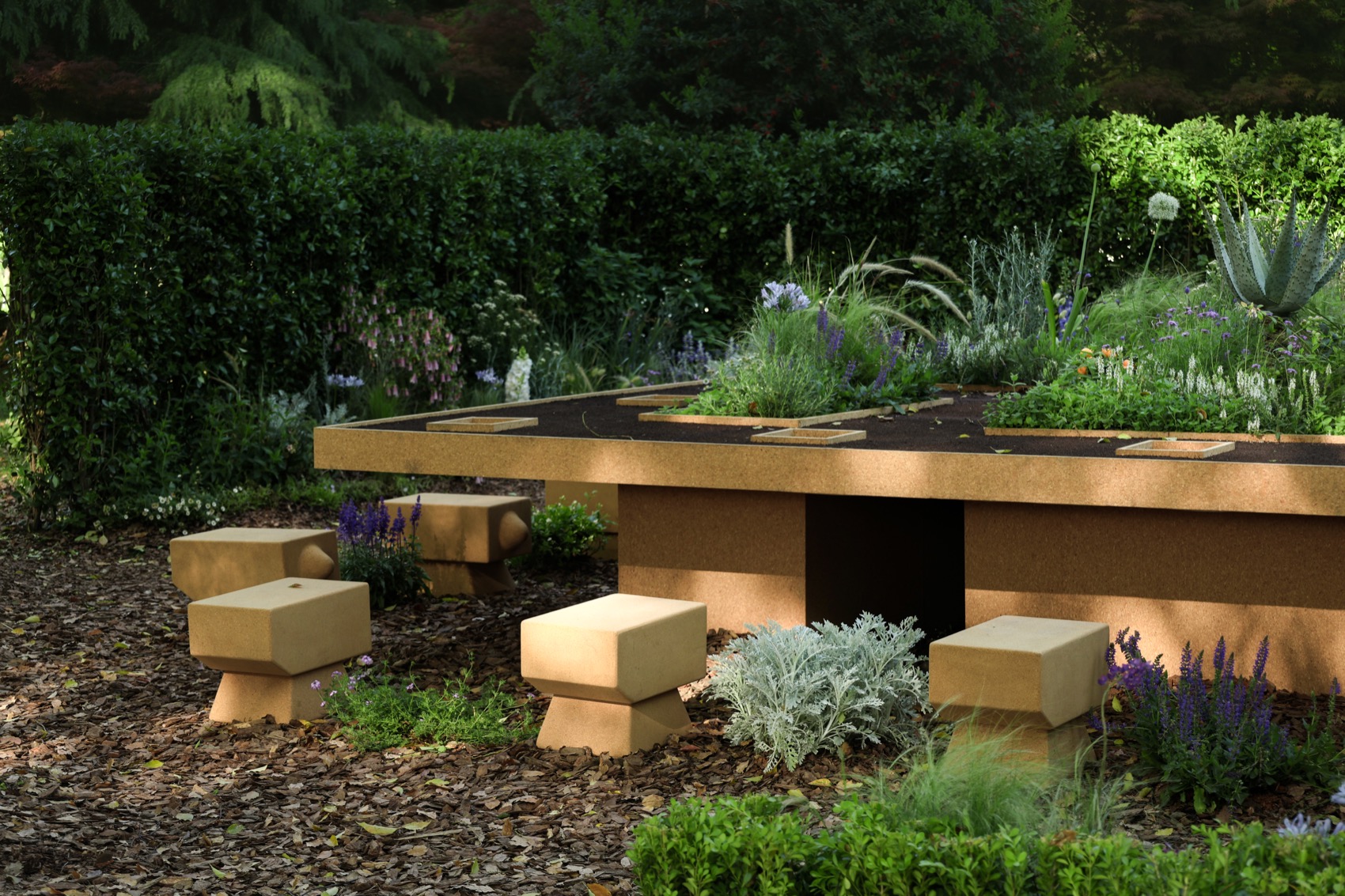
▼种植花境围绕共享餐桌展开自然互动,
Planting borders surround the communal table to encourage natural interaction
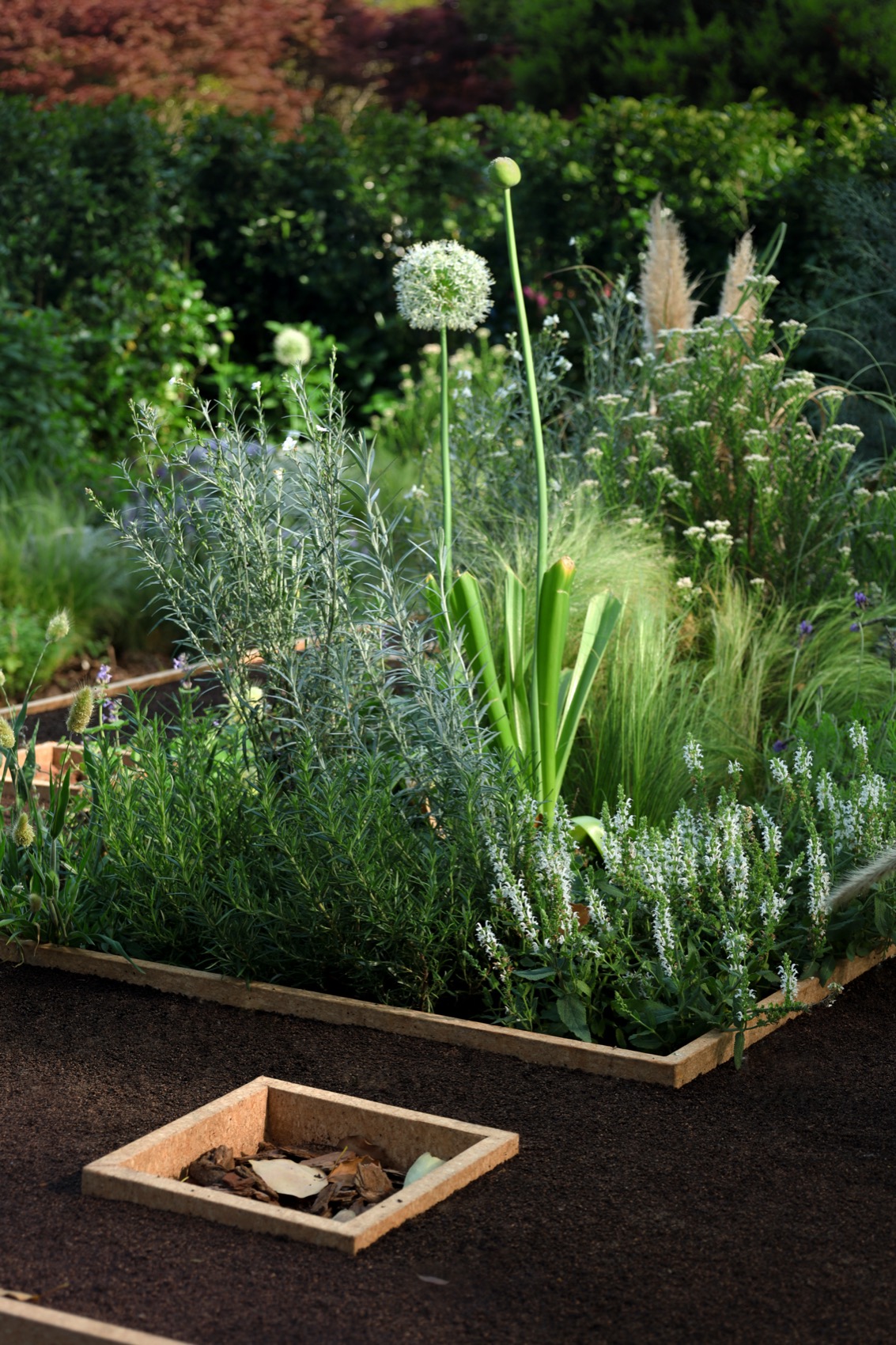
植物系统:蓝绿基调中的感官引导Planting System: Sensory Guidance through a Blue-Green Palette
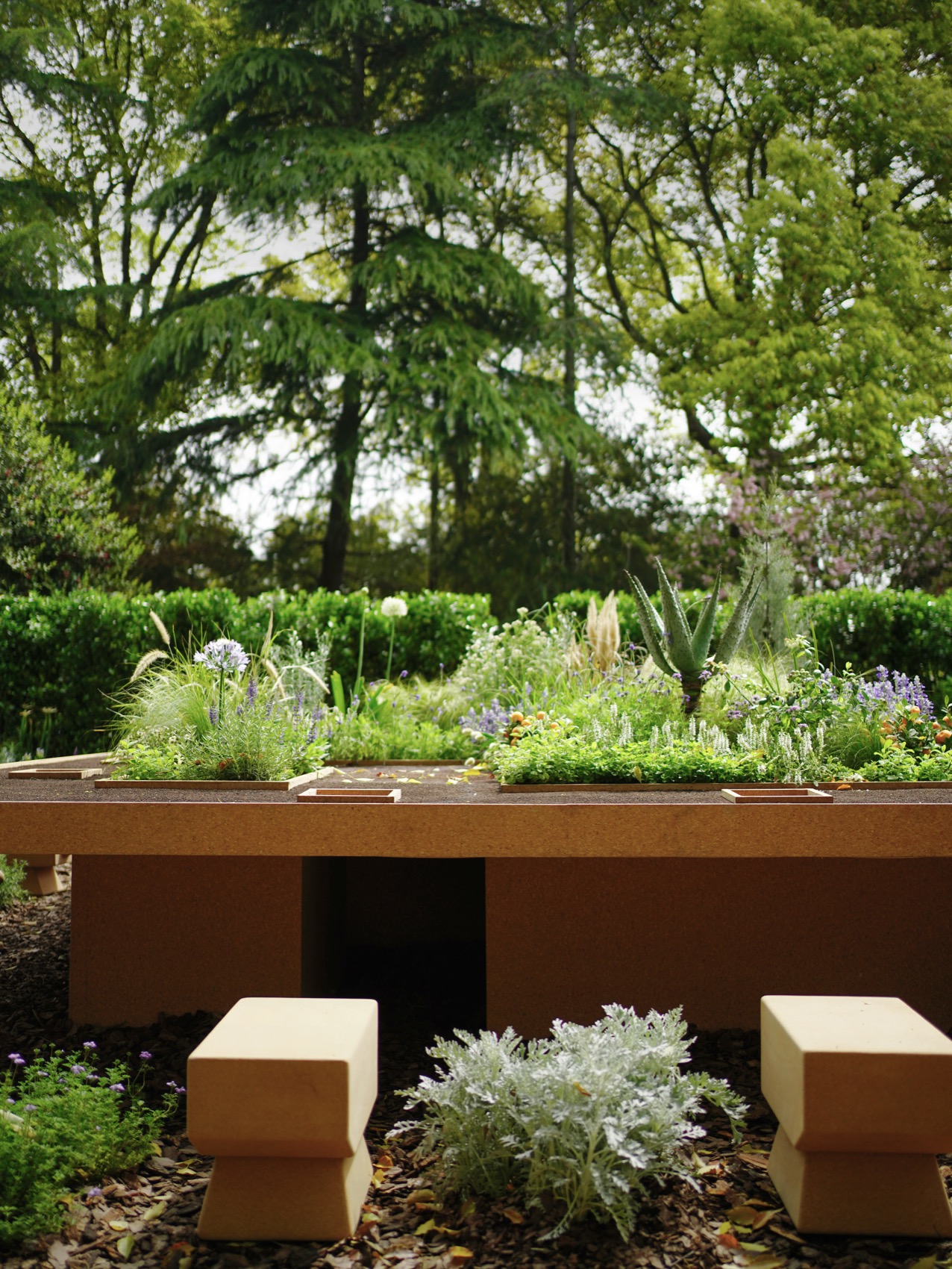
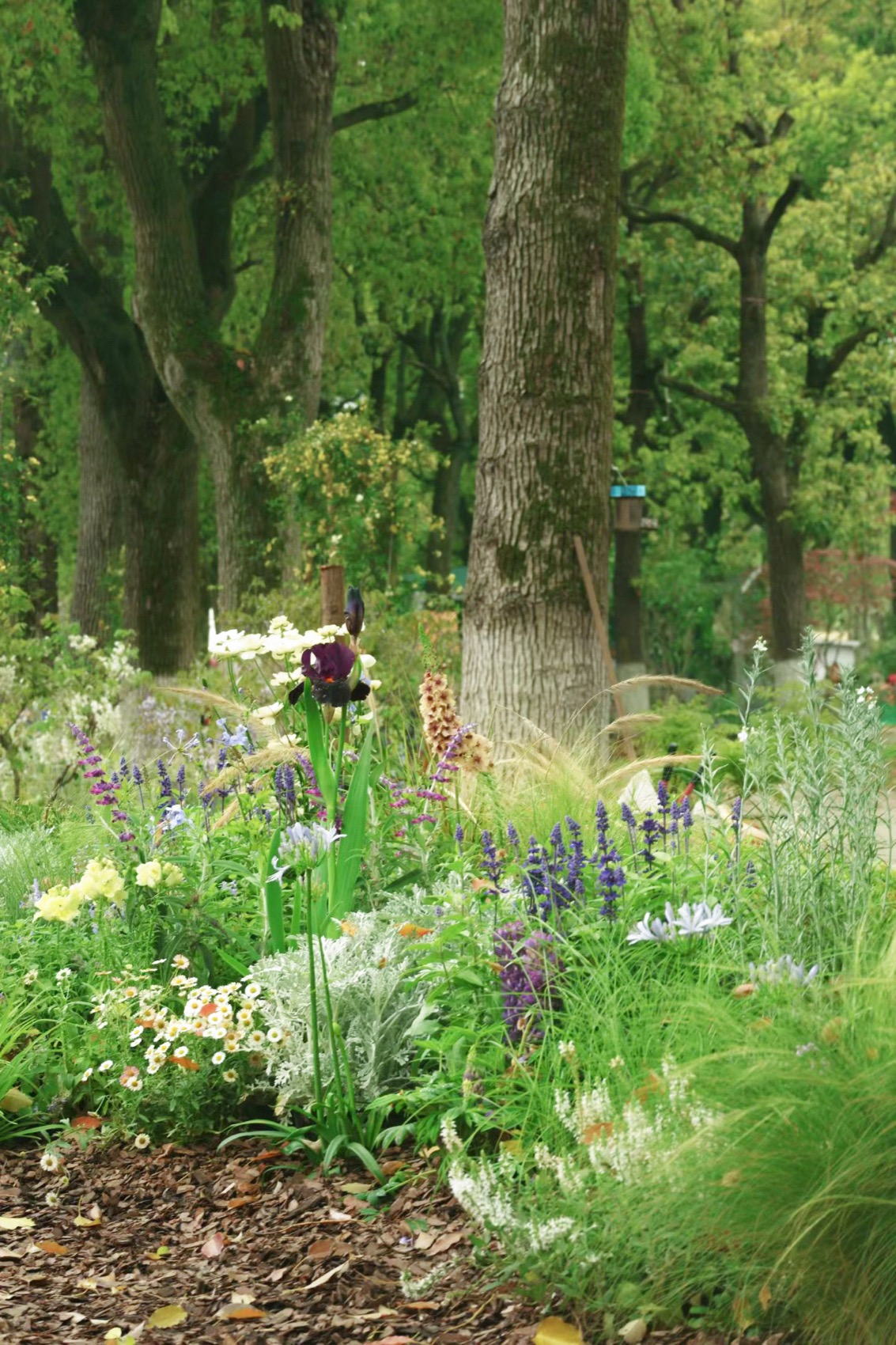
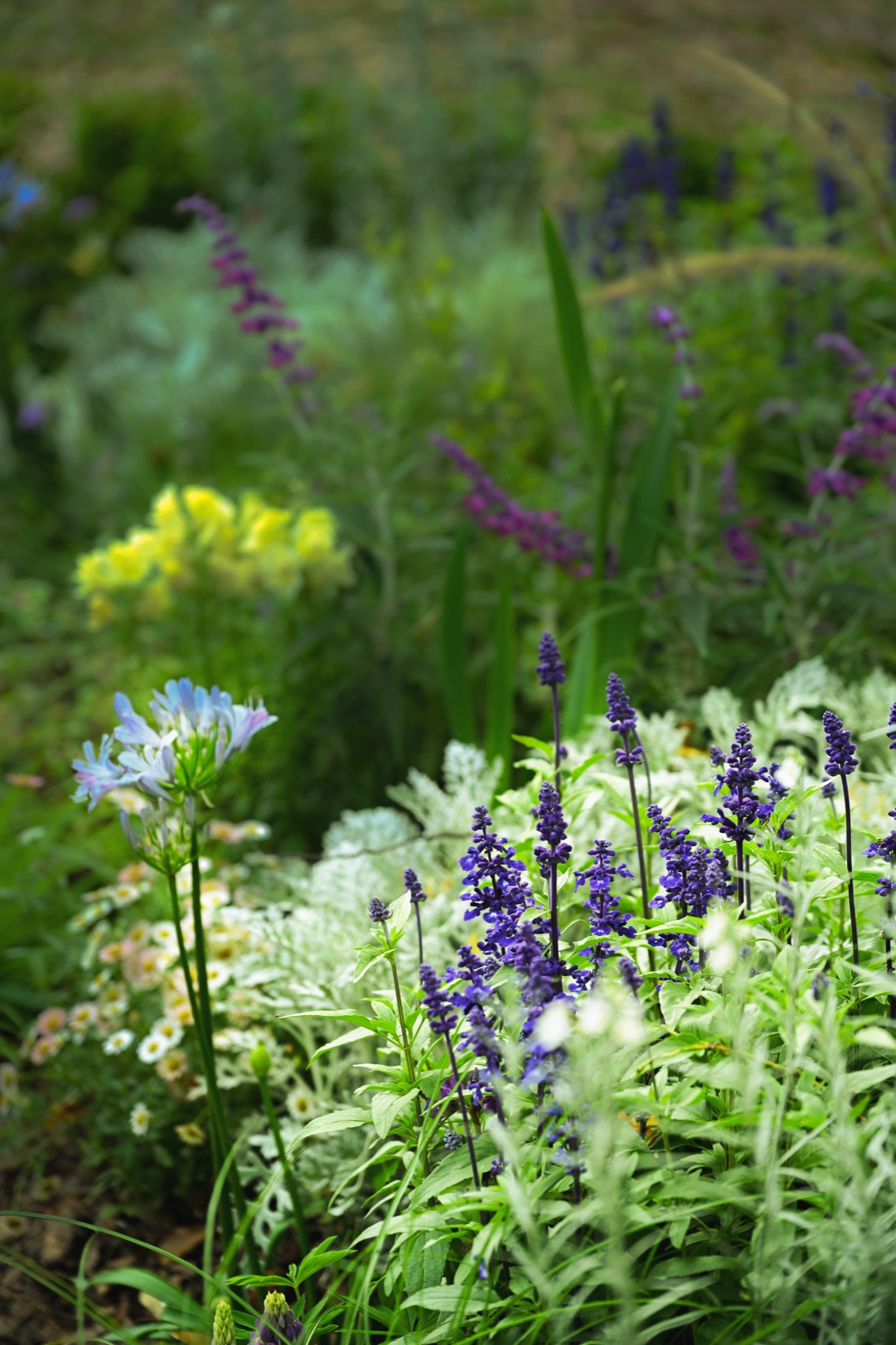
植物的配置以蓝绿色系为整体基调,通过色彩与感官的层次化设计,为ASD儿童营造平静舒缓的自然氛围。外围花境以细叶针矛、蓝羊茅、银叶菊、柳叶星河等冷色调植物为主,其柔和的触感与低饱和度色彩可以起到平复情绪、缓解焦虑的作用,同时融入多种蜜源性植物,在提供松弛感的环境之余,亦为蜜蜂等昆虫构筑了另一重“自然餐桌”。
The planting strategy is anchored in a blue-green palette, using layered color and sensory design to create a calm and restorative atmosphere for children with ASD. The peripheral flower borders feature cool-toned species such as Nassella tenuissima, Festuca glauca, Jacobaea maritima, and Laurentia axillaris. Their soft textures and muted colors help ease emotions and reduce anxiety. Nectar-rich species are woven throughout the planting composition, creating a relaxing environment while simultaneously providing another kind of “natural table” for bees and pollinators.
▼外围植物,Perimeter Plants
餐桌的花箱内则加入了迷迭香、薄荷、鼠尾草、蓝莓、芦荟等可食用植物。香草类植物释放的清新气味通过嗅觉引导情绪舒缓,可食用植物则为儿童提供了具象化的社交练习场景,自然衍生的互动环节为社交交流提供了“非指令性”的触发点,帮助ASD儿童在多感官沉浸中逐步建立情感联结与协作意识。
Within the integrated planters of Feast Garden, edible species including rosemary, mint, sage, blueberry, and aloe are introduced. The fresh aromas released by herbs provide emotional comfort through olfactory stimulation, while edible plants offer tangible opportunities for social engagement. Naturally unfolding interactions become non-directive triggers for communication, helping children with ASD gradually develop emotional connection and a sense of collaboration through multi-sensory immersion.
▼花园局部,Garden Detail
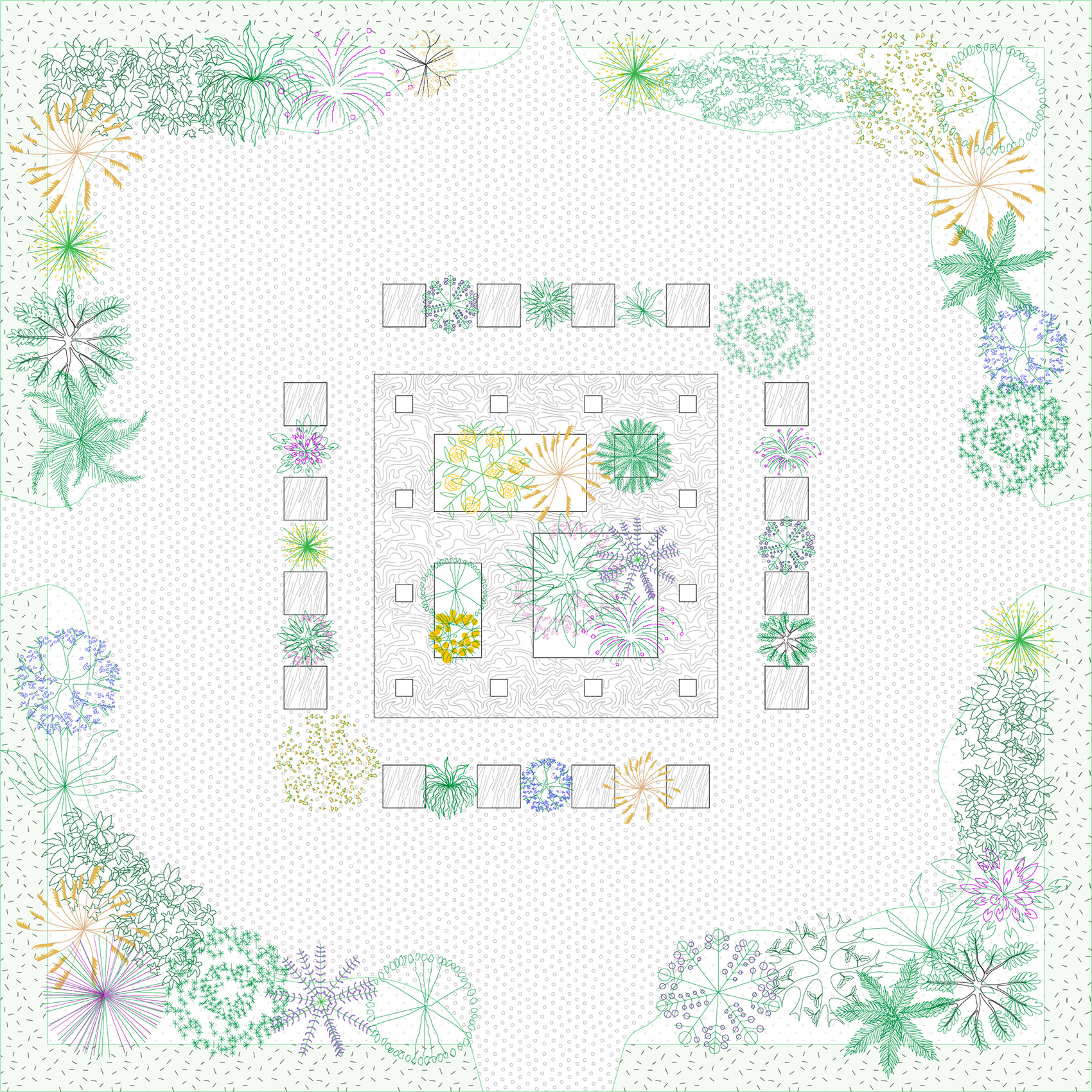
花园通过植物搭配与空间塑造,在五感疗愈中融入社交互动:外围花境以蓝绿色系营造平静视觉,柔软触感的植物增强情感依恋,蜜源性植物吸引蜜蜂与植物摇曳声共同构建听觉层次;边缘绿篱净化视觉,内部延续蓝绿基调创造松弛体验;餐桌区域大量种植可食用植物,激发味觉探索;空间采用轴对称布局,通过清晰的空间层次引导空间感知,以强化前庭觉体验,不同形态的软木则提供多元触觉体验。花园在自然疗愈与人文互动中实现双重疗愈效果,为ASD儿童打造多感官沉浸的共感空间。
Through planting design and spatial composition, Feast Garden integrates social interaction into a framework of multi-sensory healing. Peripheral flower borders establish visual calm through a blue-green palette, while soft-textured plants encourage emotional attachment. Nectar-rich species attract pollinators, whose presence and movement contribute to an acoustic layer alongside the rustling of vegetation. Boundary hedges simplify visual perception, and the interior maintains the blue-green atmosphere to reinforce a sense of relaxation. The table area is densely planted with edible species to stimulate taste exploration. A symmetrical spatial layout and clear spatial hierarchy strengthen vestibular perception, while varying forms of cork create diverse tactile experiences. Through the integration of natural therapy and human interaction, Feast Garden creates an immersive multi-sensory environment for children with ASD.
▼蓝紫色花卉与观赏草营造自然层次,
Blue and purple flowers together with ornamental grasses create natural layers
餐桌花园致力于通过有序的空间布局、可控的多感官刺激以及共享型的互动社交场景,温和地干预自闭症儿童常面临的感觉处理障碍、社交焦虑及与自然的疏离问题,营造一个安全、放松、可探索、轻社交的疗愈花园。
Through an orderly spatial layout, controlled multi-sensory stimulation, and shared social settings, Feast Garden gently addresses sensory processing challenges, social anxiety, and disconnection from nature often experienced by children with ASD. The project creates a healing environment that is safe, calming, exploratory, and softly social.
▼项目平面图,Project floor plan
Project Feast Garden
项目类型:景观装置
Project type: Landscape Installation
设计方:UnderRoof Shanghai
Design: UnderRoof Shanghai
设计团队:胡琳涵,庄弘毅,付梦晗(合作)
Leader designer & Team:Linhan Hu、Hongyi Zhuang、Menghan Fu (Collaborator)
联系邮箱:underroofdesign@126.com
Contact e-mail:underroofdesign@126.com
项目设计:2026.1
Design year:2026
完成年份:2026.4
Completion Year:2026
项目地址:上海鲜花港
Project location: Shanghai Flower Port
建筑面积:100㎡
主办单位:上海花卉园艺(集团)有限公司
Organizer: Shanghai Flower and Horticulture (Group) Co., Ltd. (SFG)
软木材料支持:卡洛林软木
Cork Material Support: CAROLIM