阿尔伯塔大学共享中心,加拿大 / Zeidler Architecture
阿尔伯塔大学正式揭幕了大学共享中心,这是一项面积达40.5万平方英尺的更新改造工程,由原有拥有百年历史的牙科学院与药学院建筑转化而来。该项目由Zeidler Architecture设计,通过这一具有变革性的内部更新,重新塑造了校园核心空间,并体现了阿尔伯塔大学作为领先学术机构的发展演变——整体空间被全面重构,以促进更加开放、可达与包容的校园体验。项目位于北校区的重要入口位置,大学共享中心不仅是字面意义上的“校园门户”,也象征着一种新的校园精神,为学生、教师与工作人员提供了一个能够聚集、学习,并感受校园生活变化节奏的动态场所。
The University of Alberta has officially unveiled University Commons, a 405,000 sq. ft. transformation of the former century-old Dentistry and Pharmacy facility. Designed by Zeidler Architecture, the transformative fit-out establishes a new campus heart, and reflects the University of Alberta’s evolution as a leading institution, fully reimagined to promote a renewed sense of openness, accessibility, and inclusivity. Positioned at a key entrance to the North Campus, University Commons represents both a literal and symbolic front door, offering a dynamic space where students, faculty, and staff can gather, learn, and reflect on the evolving rhythms of campus life.
▼项目概览,Overview of the project
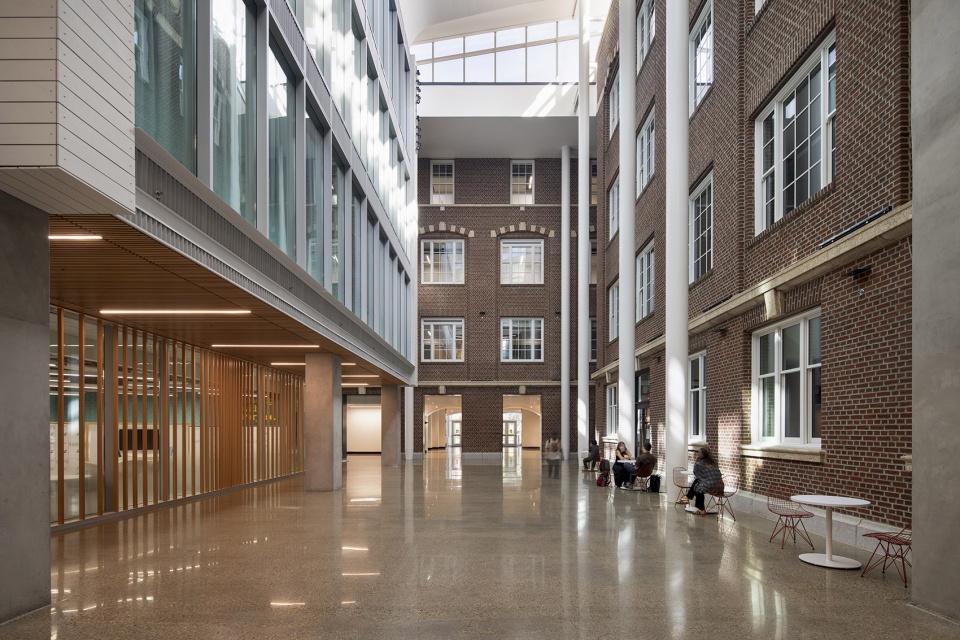
以跨学科协作为基础的包容性设计Inclusive design rooted in interdisciplinary collaboration
从项目伊始,共享中心便被设想为一个汇聚学生、教师与研究人员的共享中心,其设计理念基于一种认知:最具活力的教育机构,往往能够鼓励并赋能跨学科创新。为了改变空间的使用体验,原本按学院划分且彼此割裂的内部空间被彻底重构,取而代之的是开放而灵活的办公空间、教室与步行流线。
From the outset, University Commons was envisioned as a hub for students, faculty, and researchers to come together in a single space, guided by the understanding that the most dynamic institutions encourage and empower interdisciplinary innovation. To transform the way the space is experienced, the former faculty-specific and fragmented interiors were completely replaced with open and flexible office spaces, classrooms, and walkways.
▼汇聚学生、教师与研究人员的共享中心,a hub for students, faculty, and researchers to come together
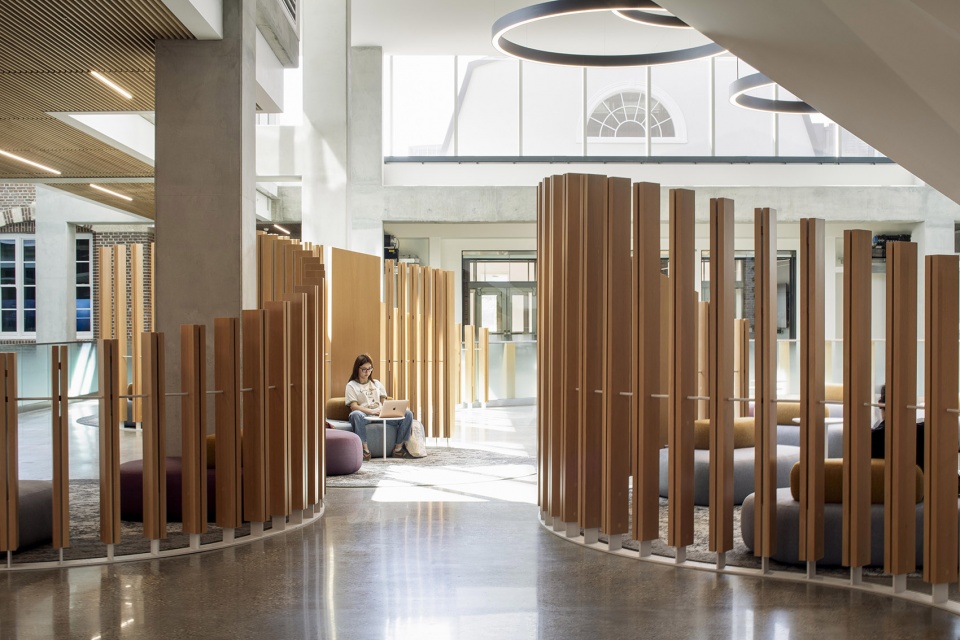
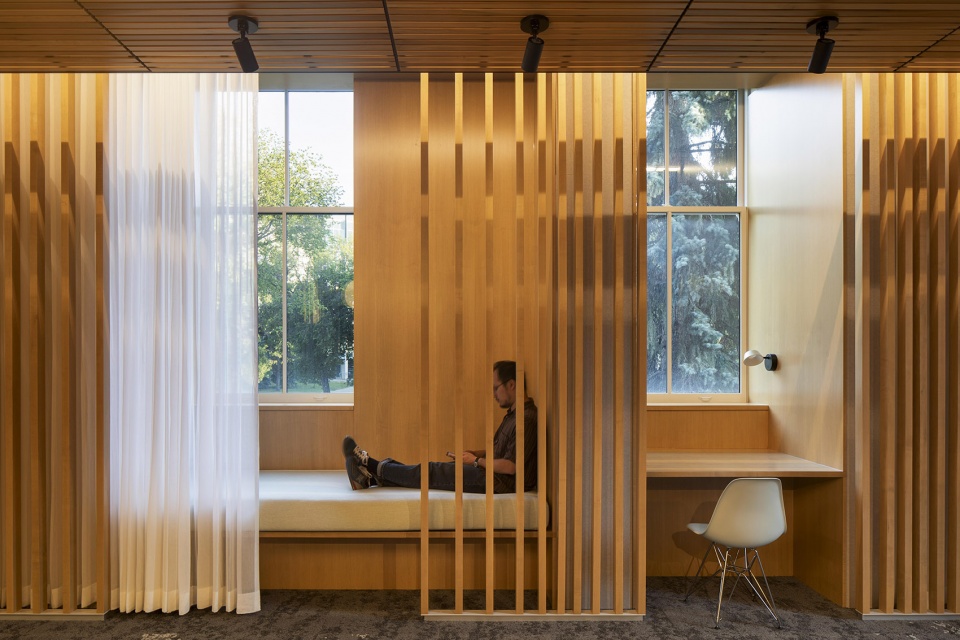
▼汇聚学生、教师与研究人员的共享中心,
a hub for students, faculty, and researchers to come together
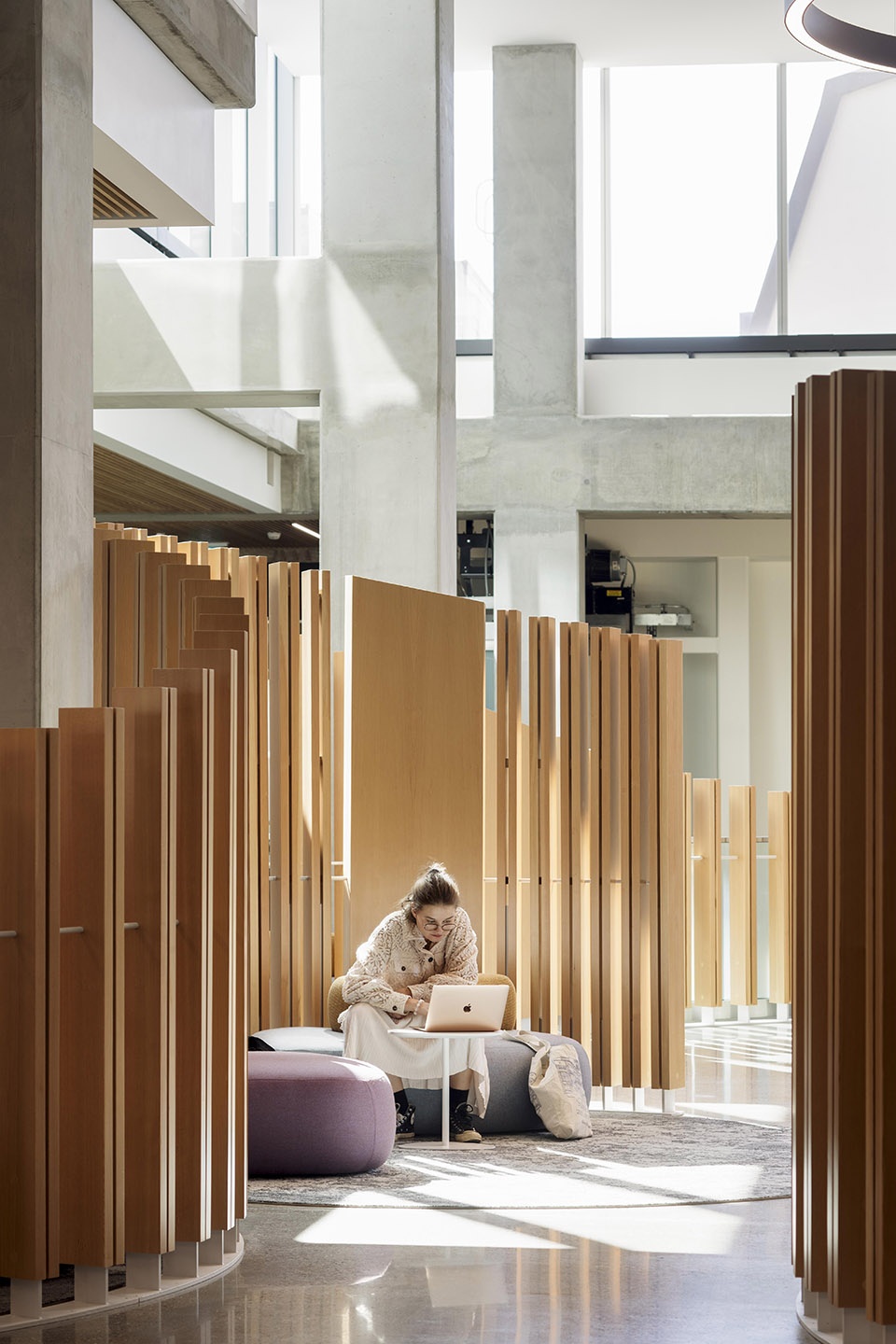
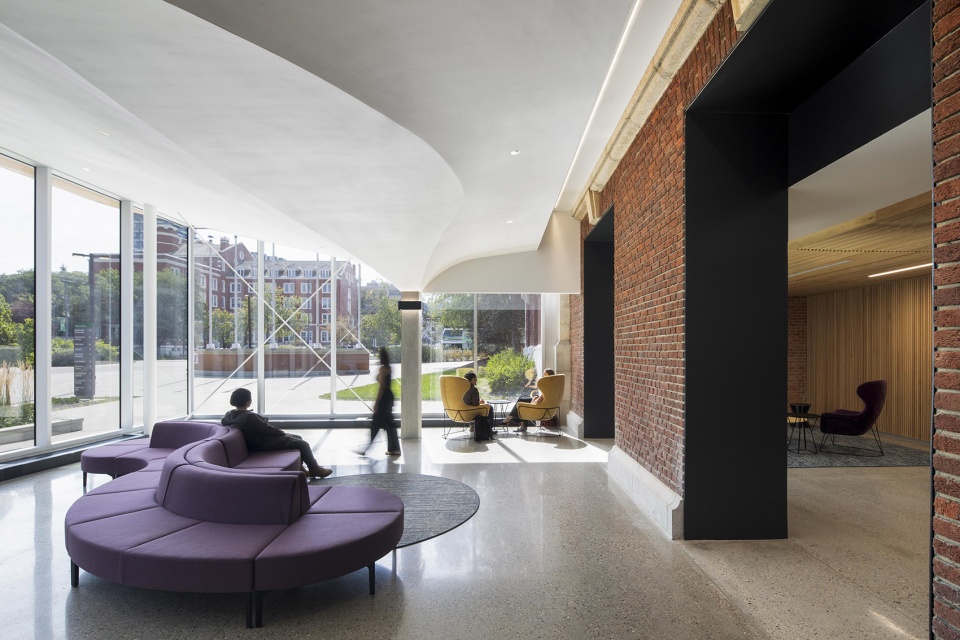
▼让学生感到被欢迎、被支持,并真正属于其中的地方,A place where they feel welcome, supported, and part of something
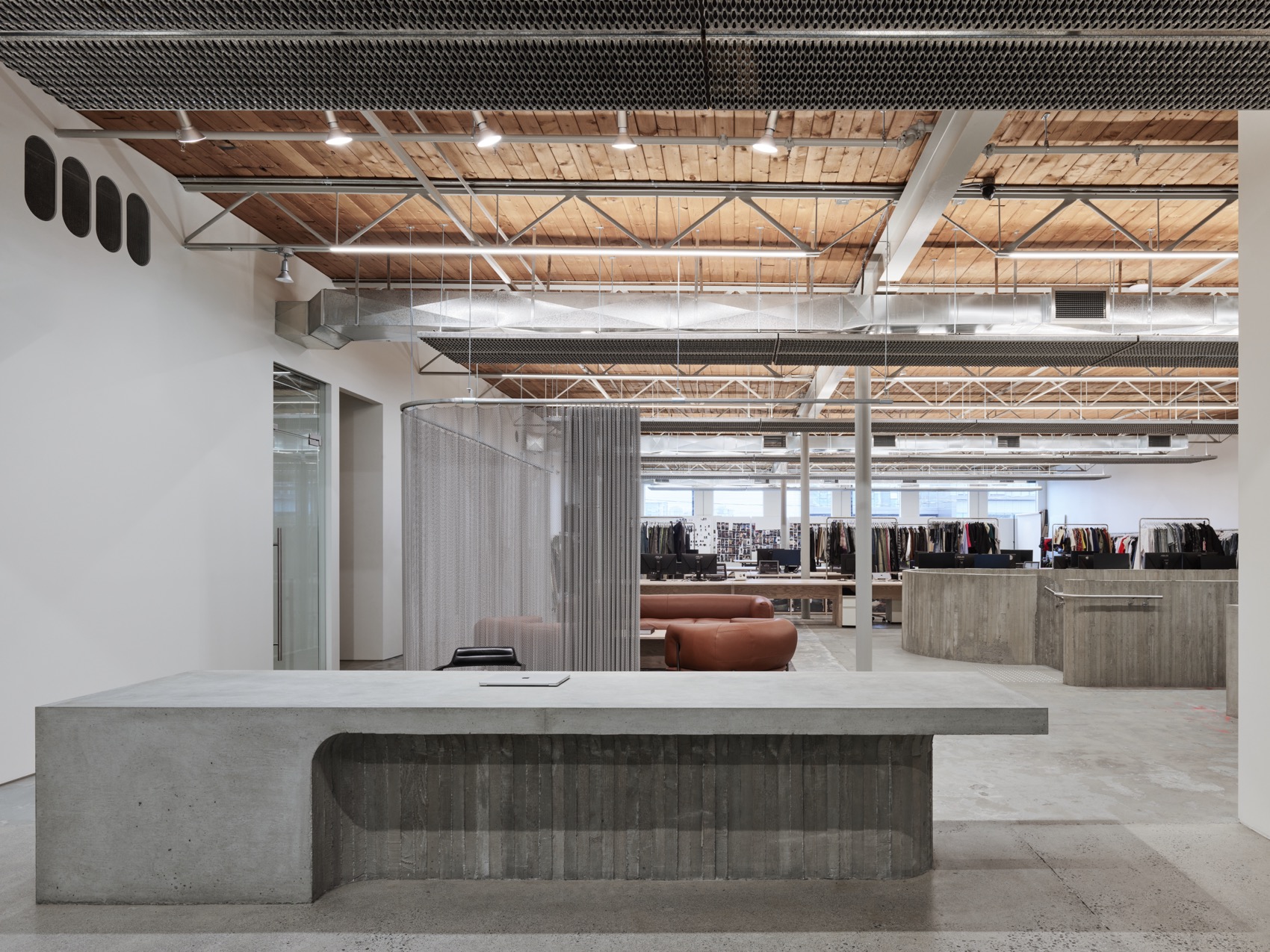
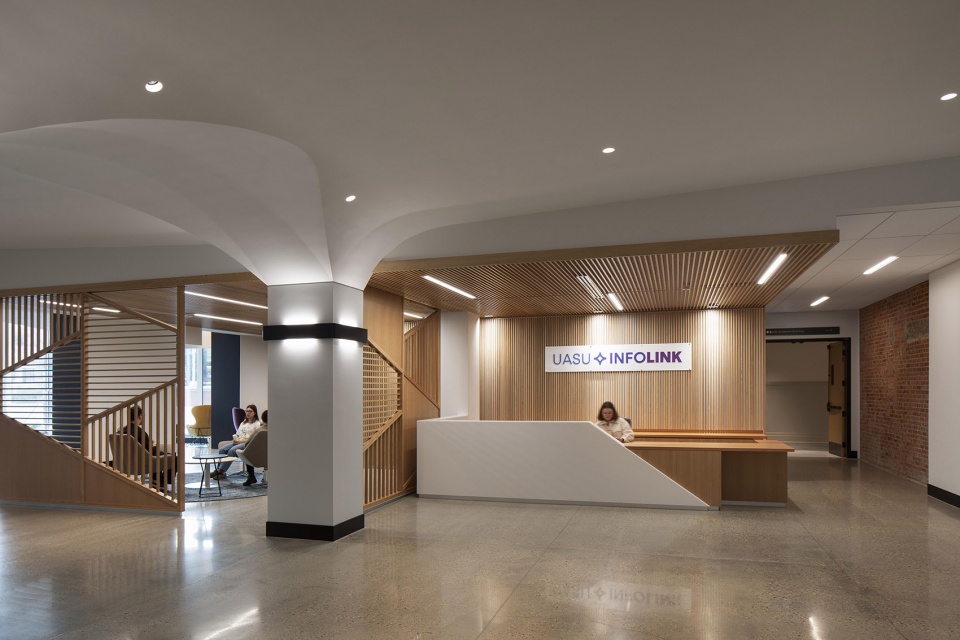
▼入口接待台,reception desk at the entrance
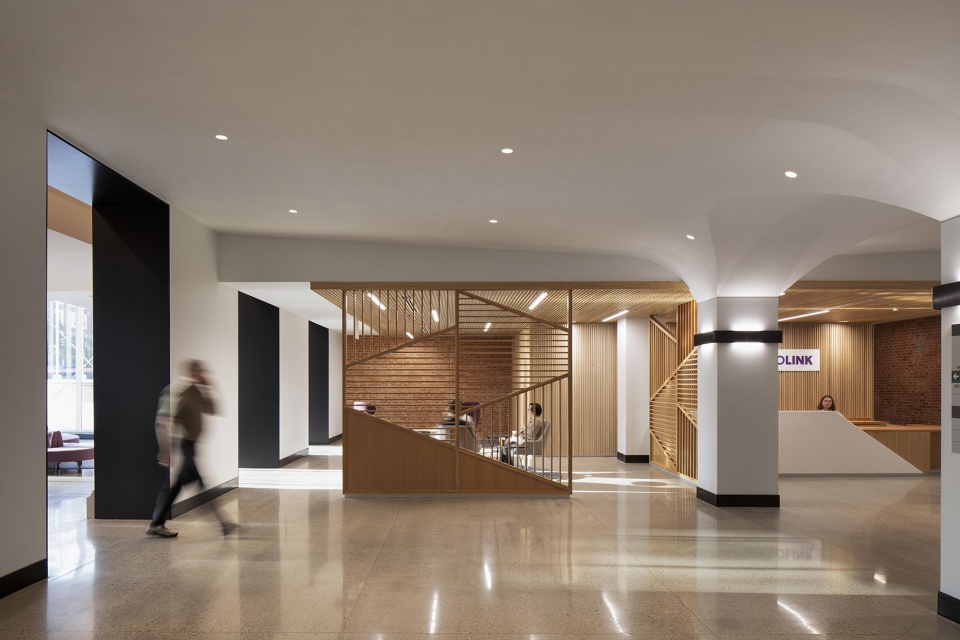
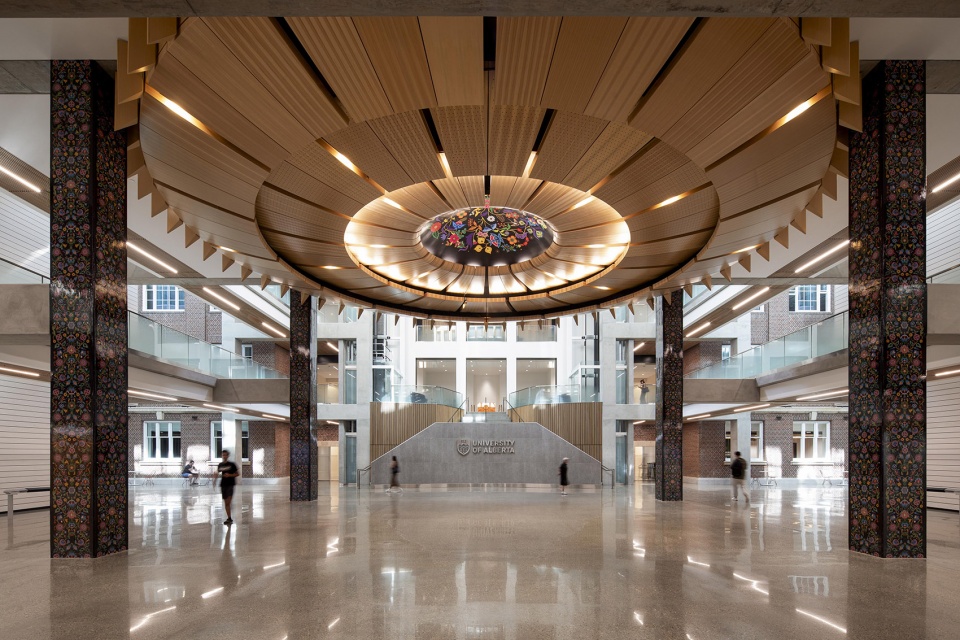
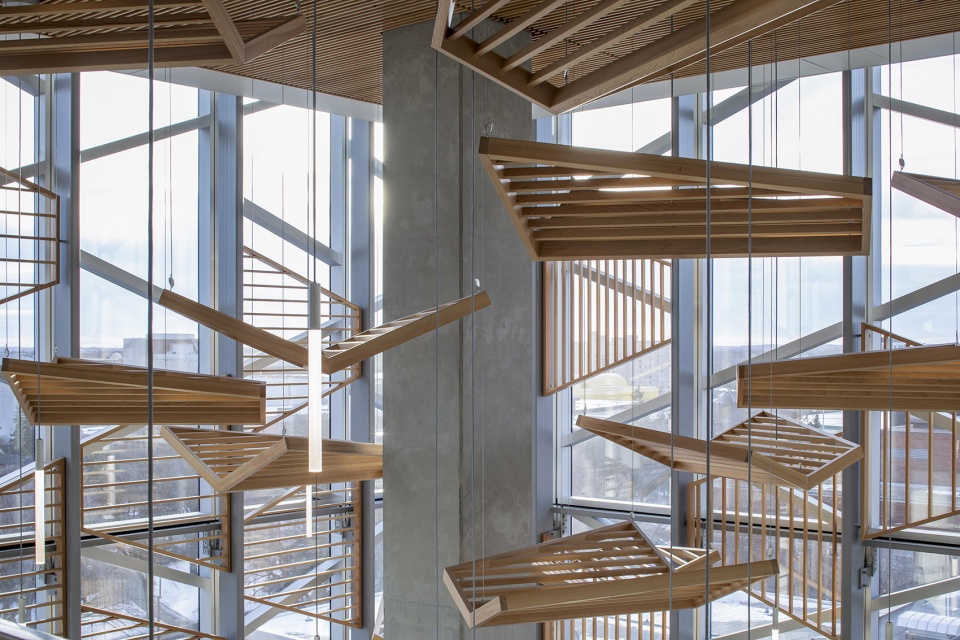
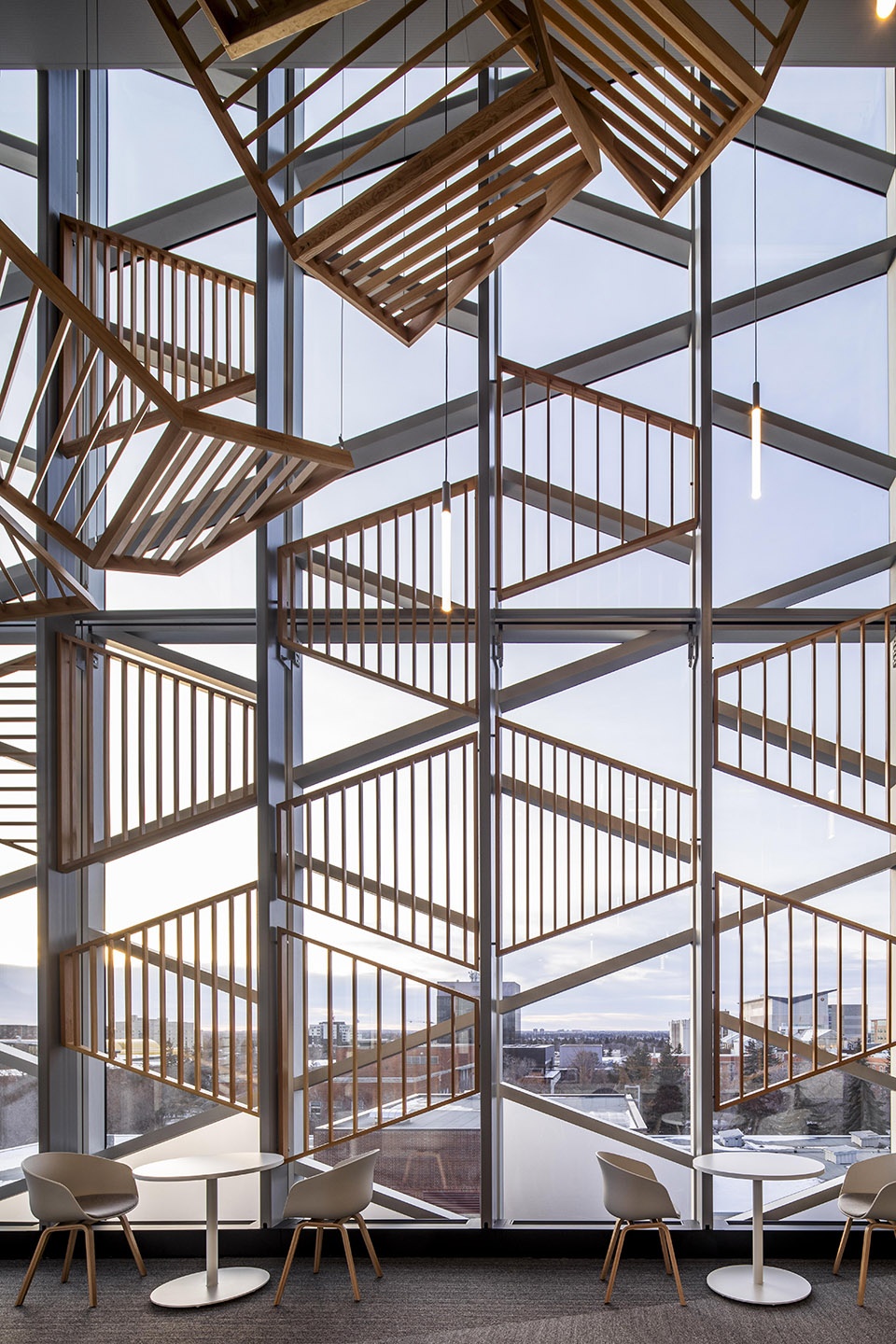
大学共享中心的概念基础来源于多个富有象征性的隐喻,包括“知识之树”以及“共享餐食”的行为。建筑的流线组织呼应自然形态,从中央中庭向外辐射至开放学习区、协作空间与灵活教学环境。中庭不仅引入自然光,也组织了多层空间中的流动,并将人们连接至建筑内丰富的功能体系。
University Commons’ conceptual foundation draws inspiration from powerful metaphors, including the tree of knowledge and the act of a shared meal. Reflecting natural forms, the building’s circulation radiates from a central atrium outward toward open learning zones, collaborative spaces, and flexible teaching environments. The atrium draws in light while organizing movement across multiple levels and connecting individuals to the building’s full range of uses.
▼中央中庭,a central atrium
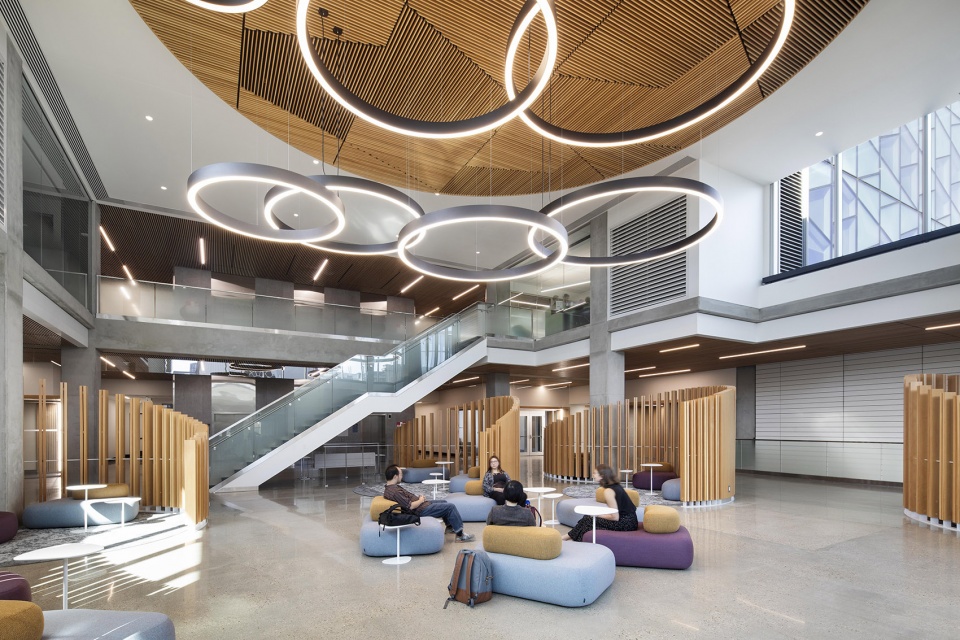
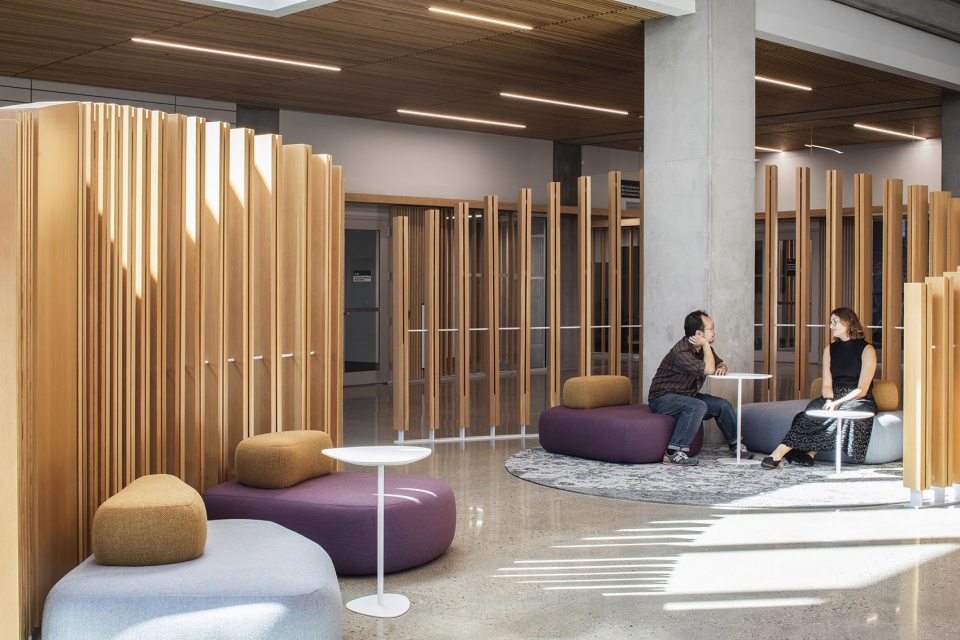
▼围合的半包围交流空间,
enclosed semi-closed communication space
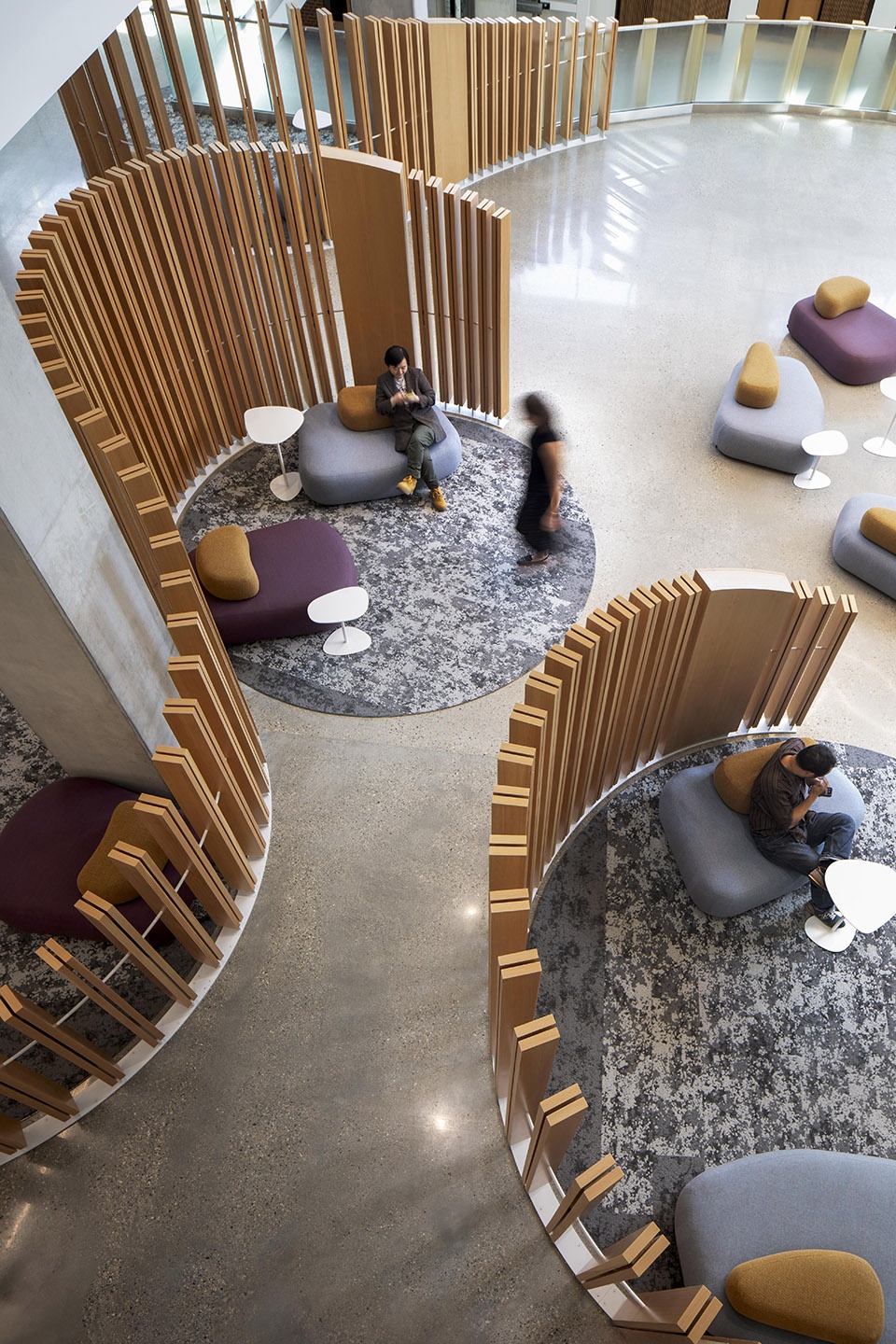
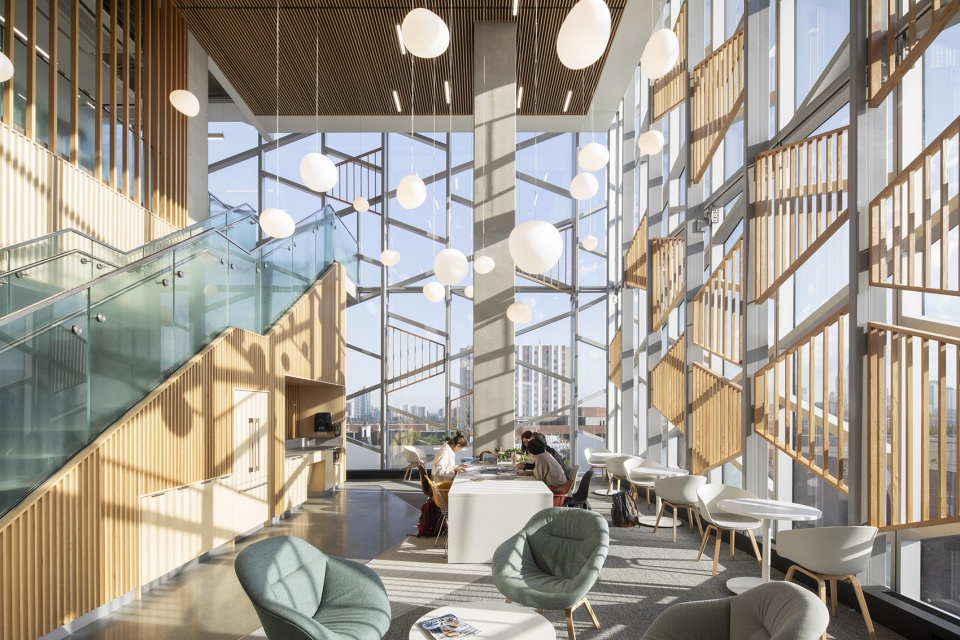
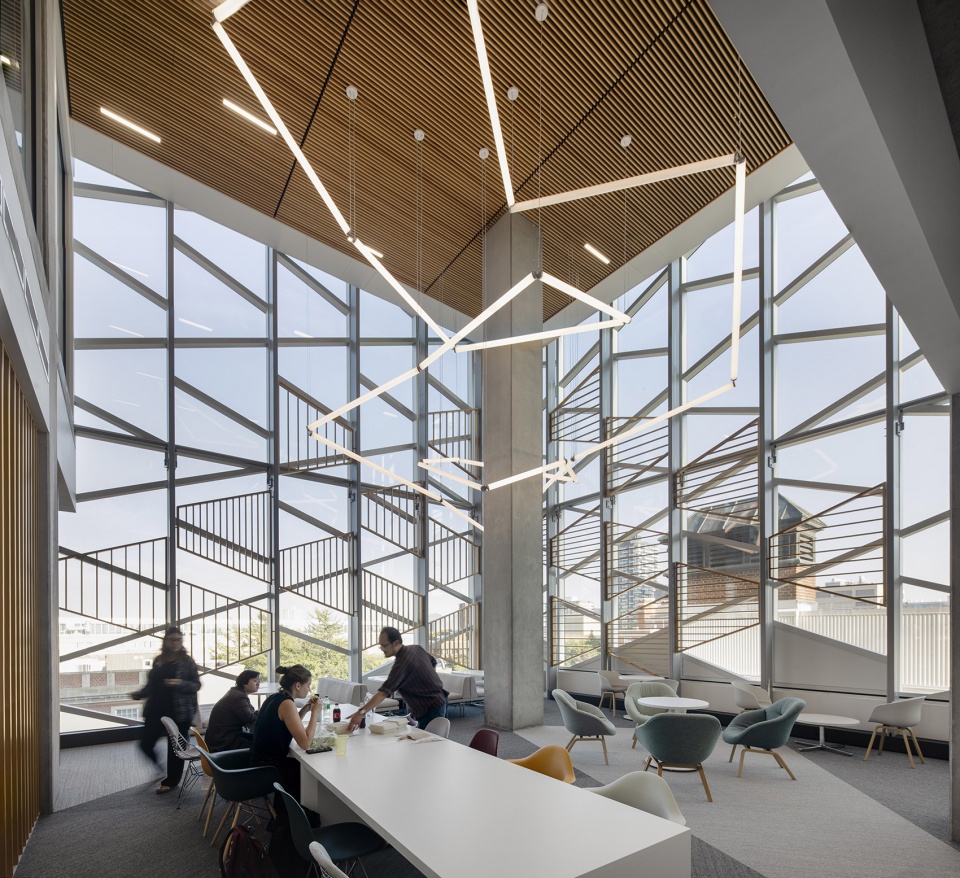
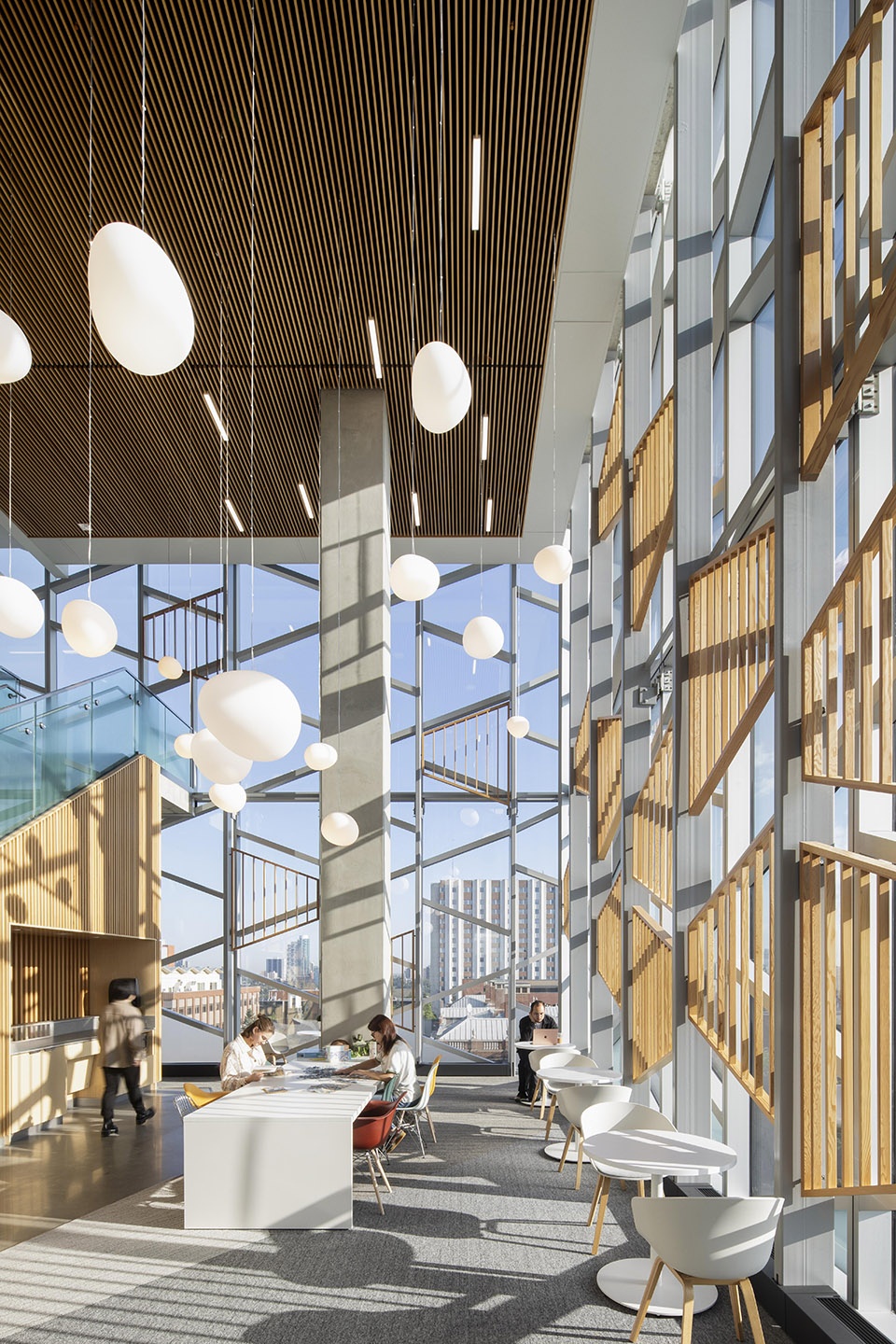
延续这一逻辑,位于建筑角部的季节性“邻里空间”形成了一系列具有双层通高的聚集场所,鼓励人们停留、交流与建立联系。这些空间受到共享餐桌所蕴含的 conviviality(欢聚感)启发,被刻意设计为非程序化空间,以促进非正式、非等级化的相遇与互动。
Extending this logic, seasonal “neighbourhoods” positioned at the building’s corners offer distinct, double-height gathering areas that invite pause, conversation, and connection. Inspired by the conviviality of a shared meal, these spaces are intentionally unprogrammed, encouraging informal and non-hierarchical encounters.
▼双层通高的聚集场所,double-height gathering areas
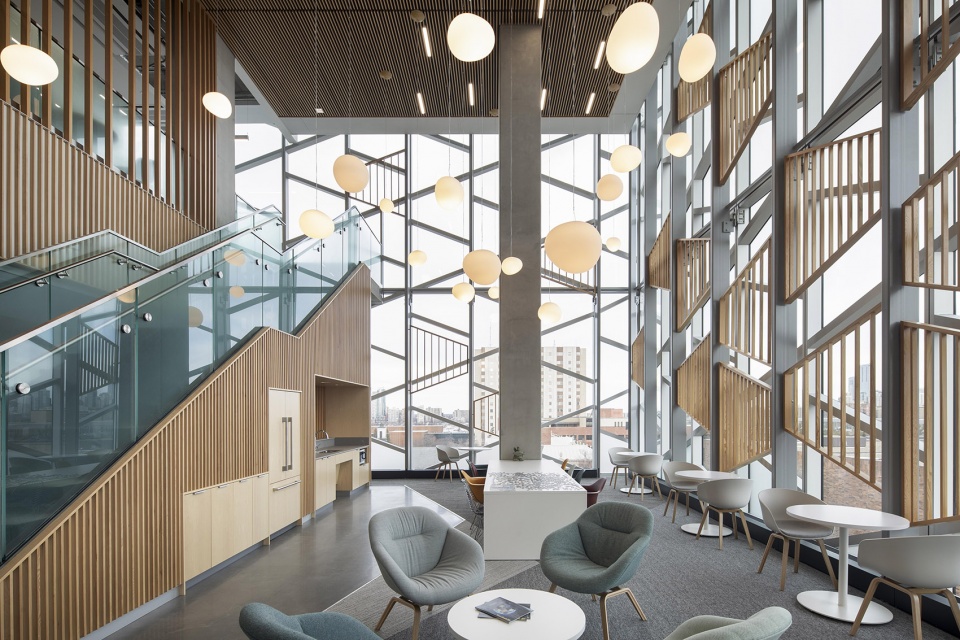
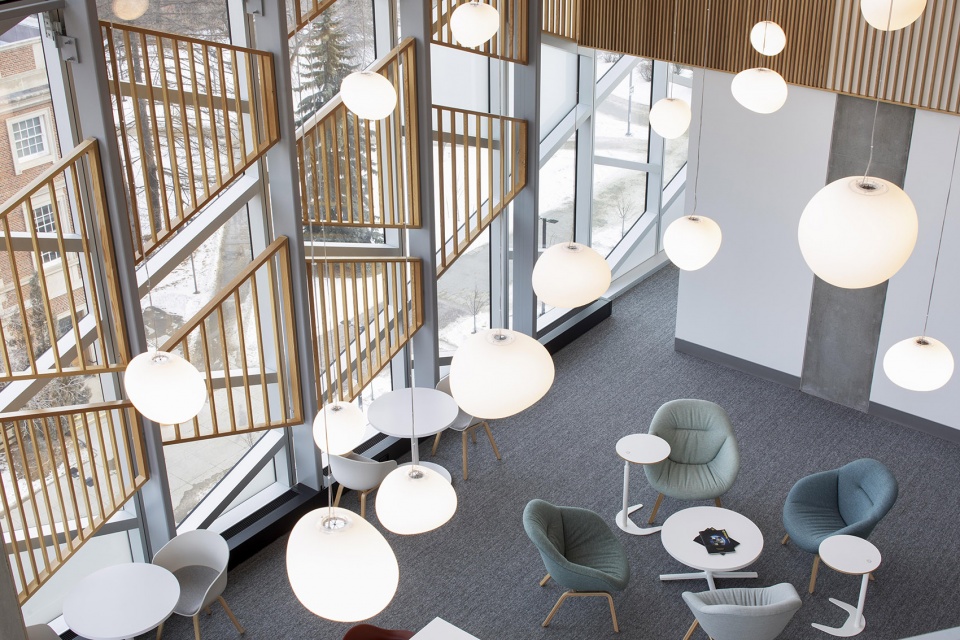
▼交流空间,communication space
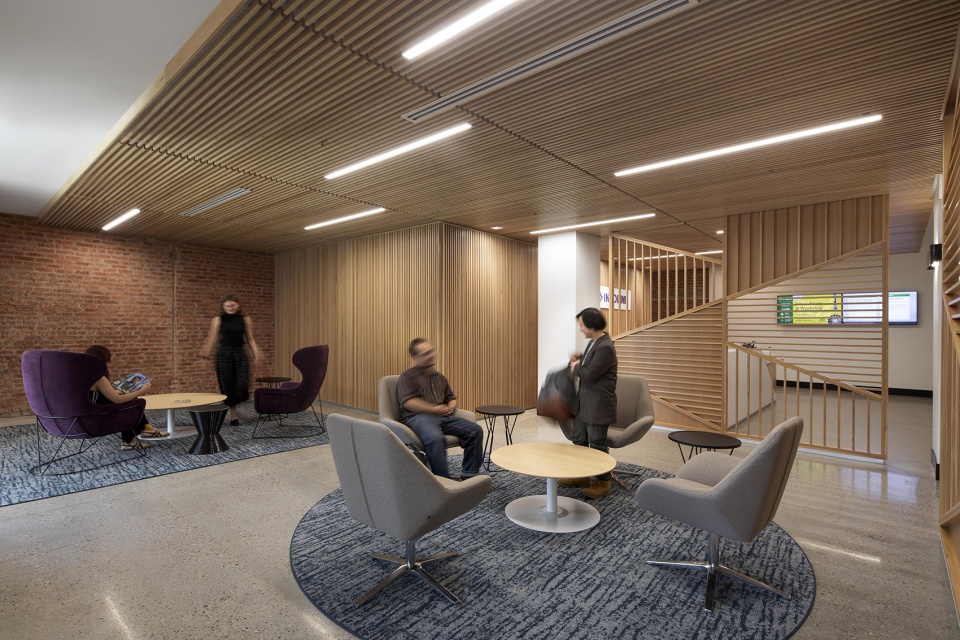
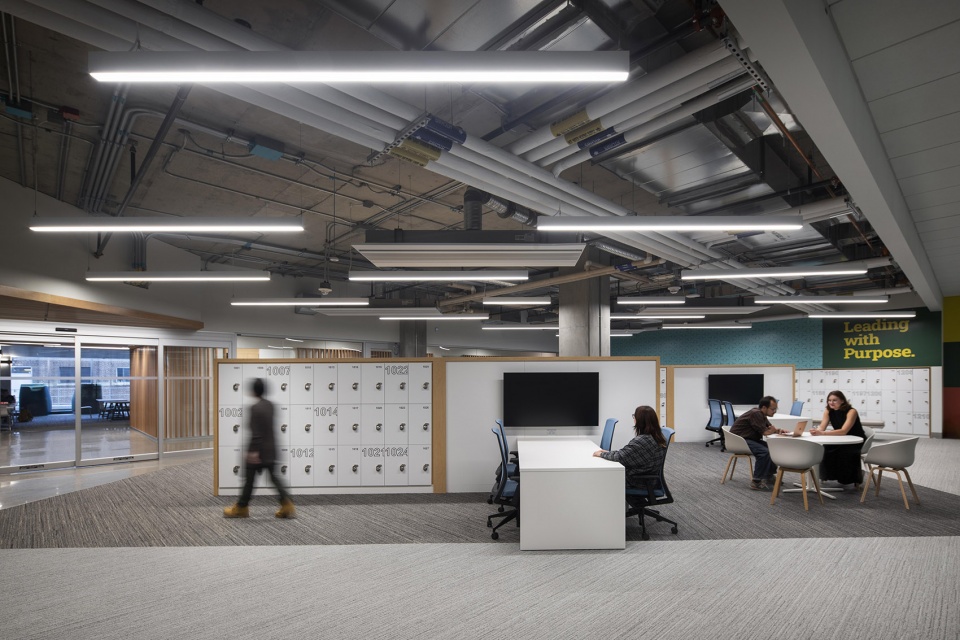
为了真正将大学共享中心融入本地社区网络,该空间不仅向学生与教师开放,也定期举办各类活动,使公众能够共同体验这一新的学习与交流中心。
To truly integrate University Commons into the local community fabric, the space is open not only to students and faculty, but also hosts regular events that bring people together to experience a new hub of learning and connection.
▼举办各类活动的空间,space that hosts regular events
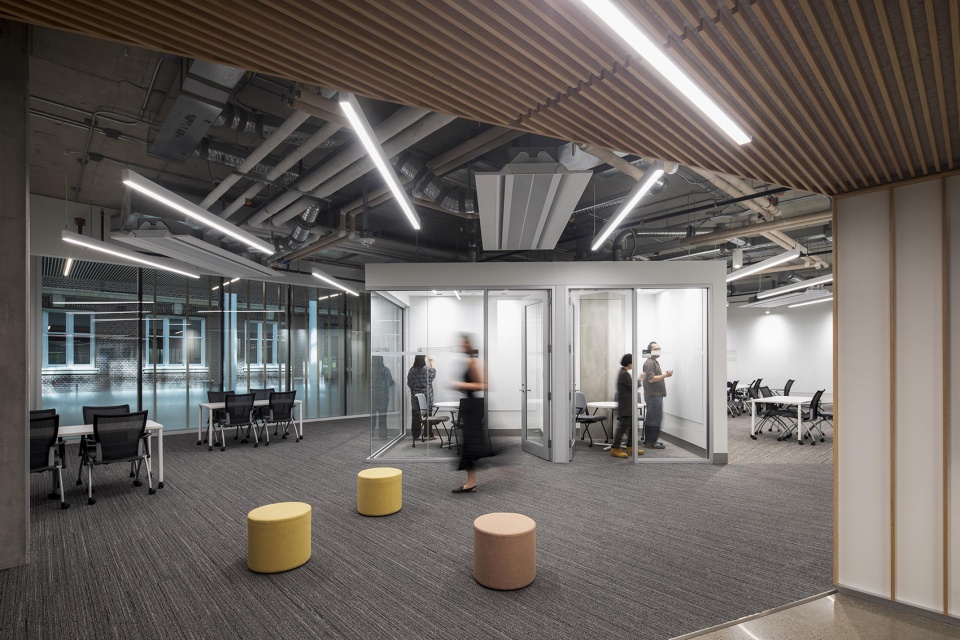
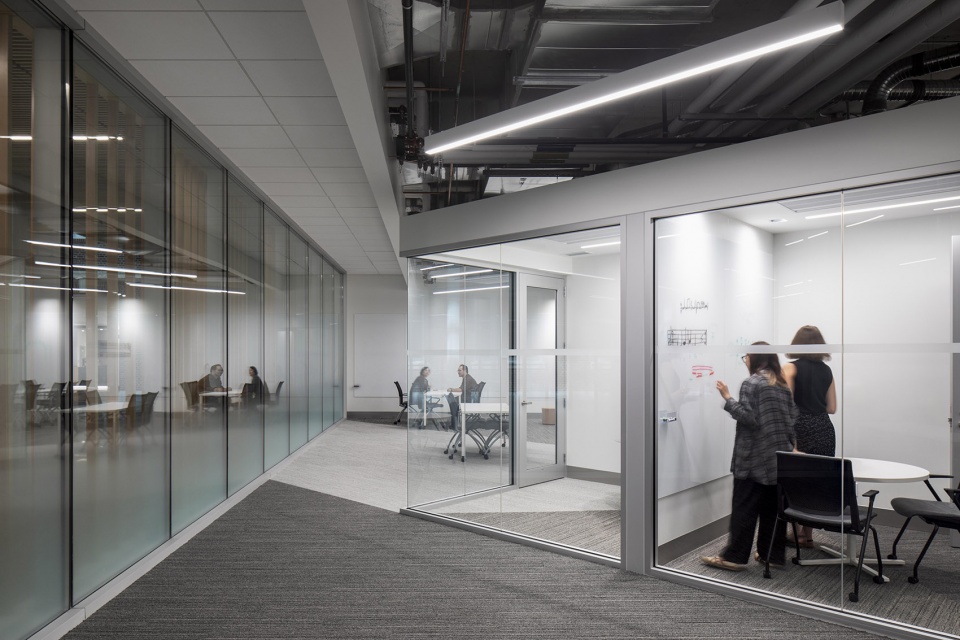
▼举办各类活动的空间,space that hosts regular events
面向包容性的空间组织Programming for inclusivity
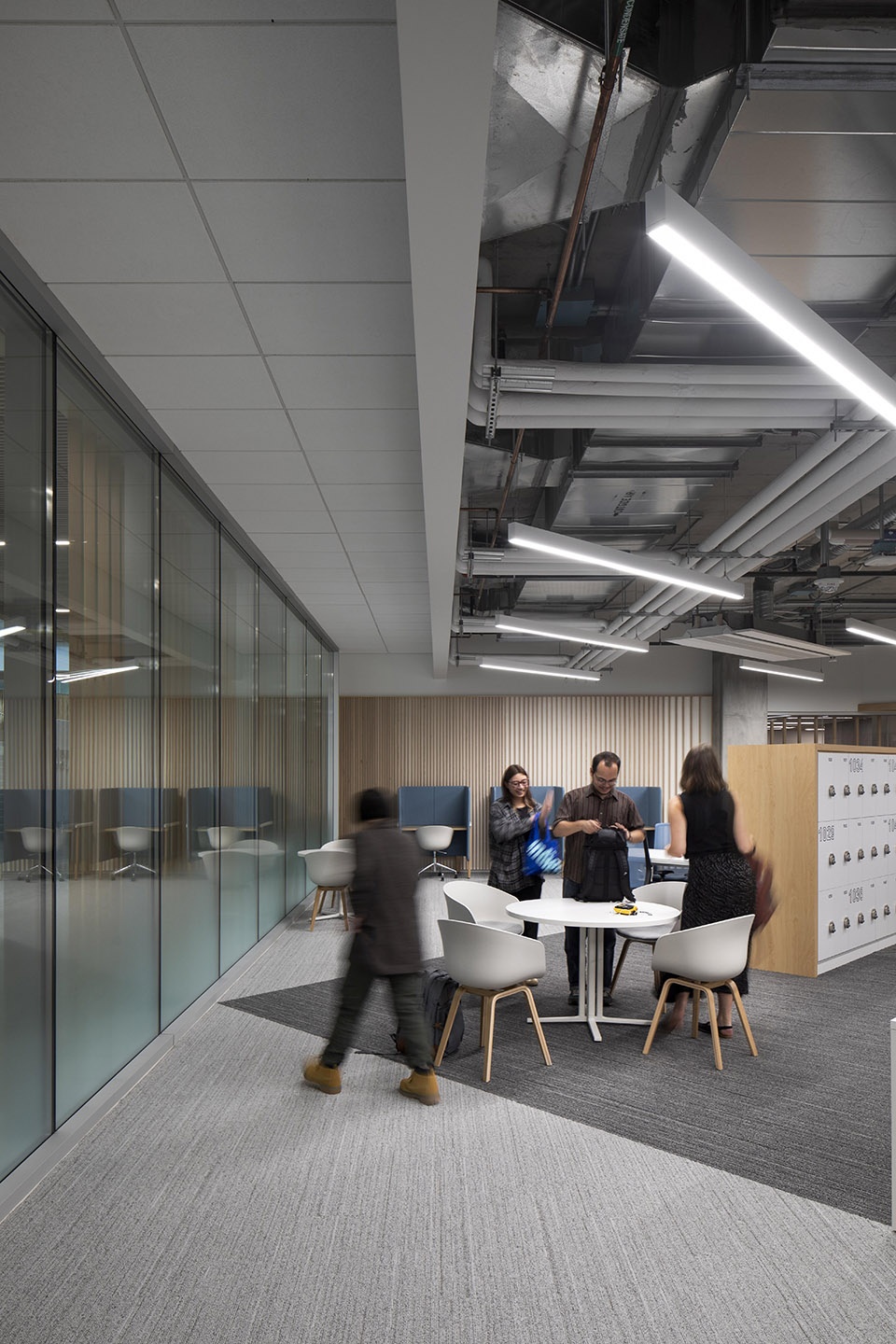
消除制度性边界并回应多元需求,是共享中心改造中的核心原则之一,以确保学生能够平等地获得自然光、空间与机会。为实现这一目标,学校将包括注册处、学生事务办公室以及高级行政部门在内的重要服务功能,与学术部门、开放学习区、可预约会议室及协作项目空间进行集中整合。
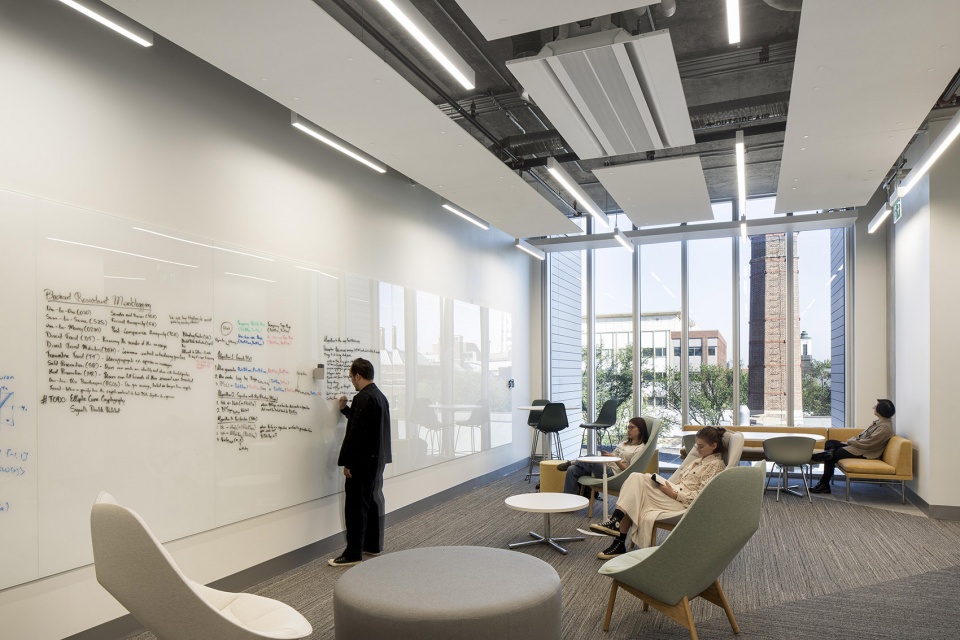
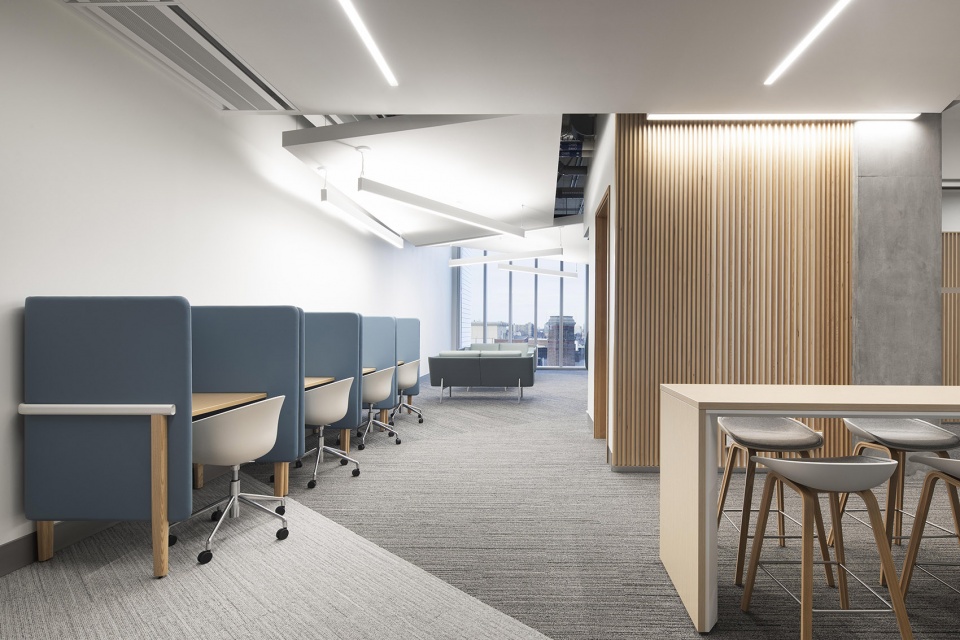
Eliminating institutional barriers and supporting diverse needs was a defining principle of University Commons’ renovation, ensuring students have equal access to daylight, space, and opportunity. To achieve this, essential services—including the registrar, dean of students, and senior administration—were centralized alongside academic departments, open study areas, bookable meeting rooms, and collaborative project spaces.
▼开放学习区,open study areas
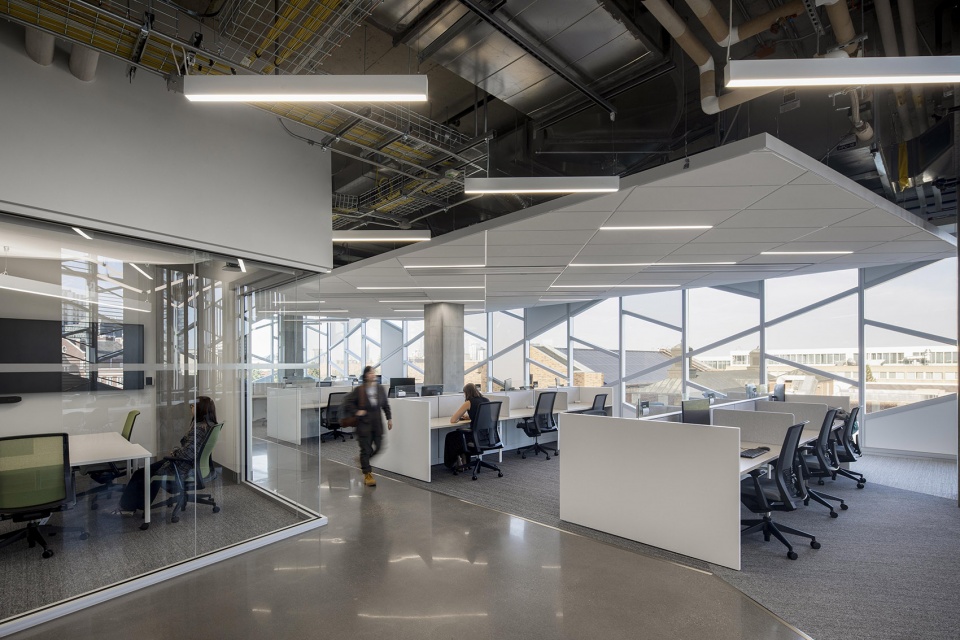
▼可预约会议室,bookable meeting rooms
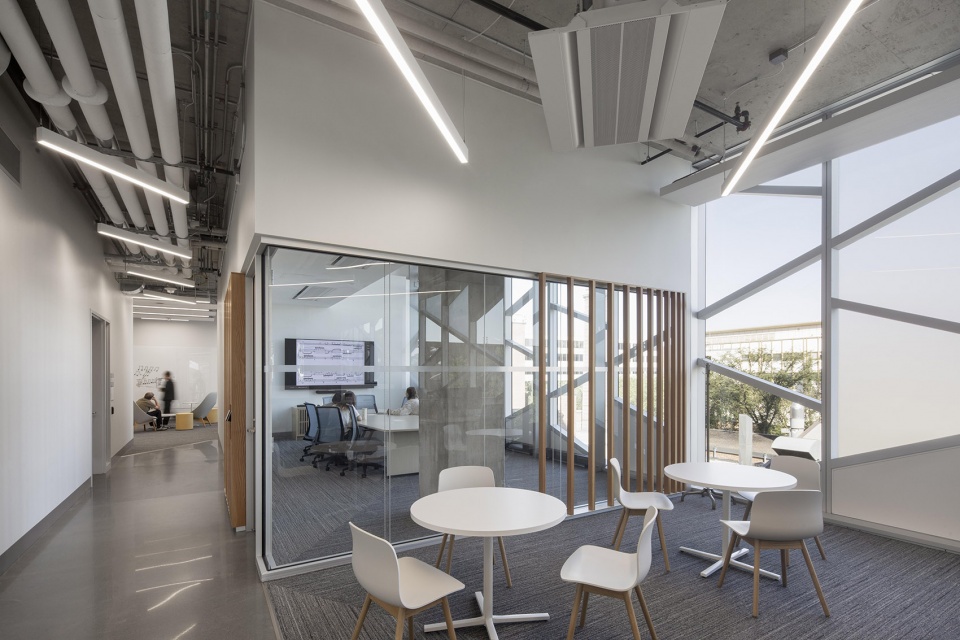
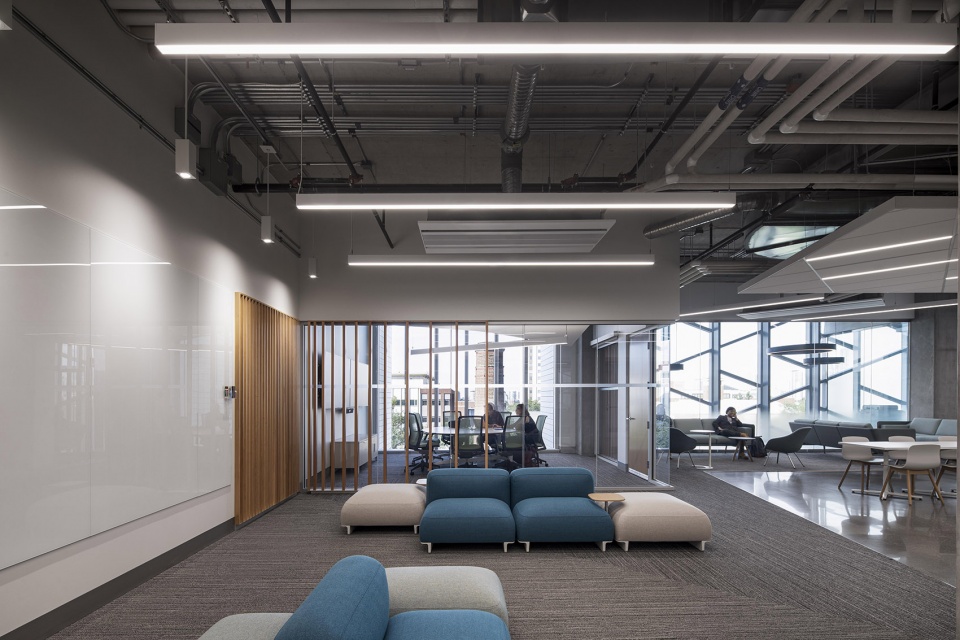
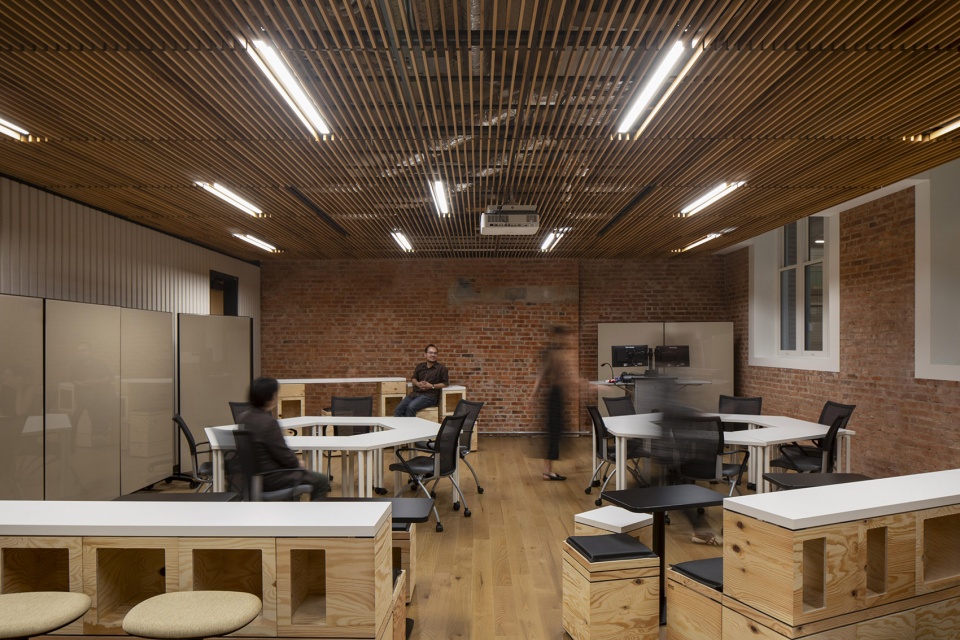
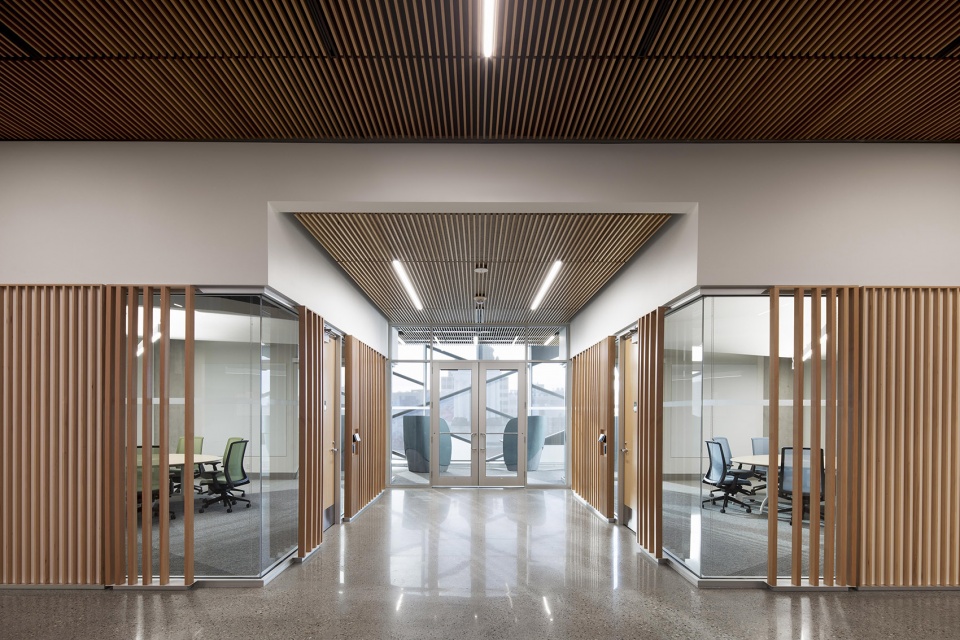
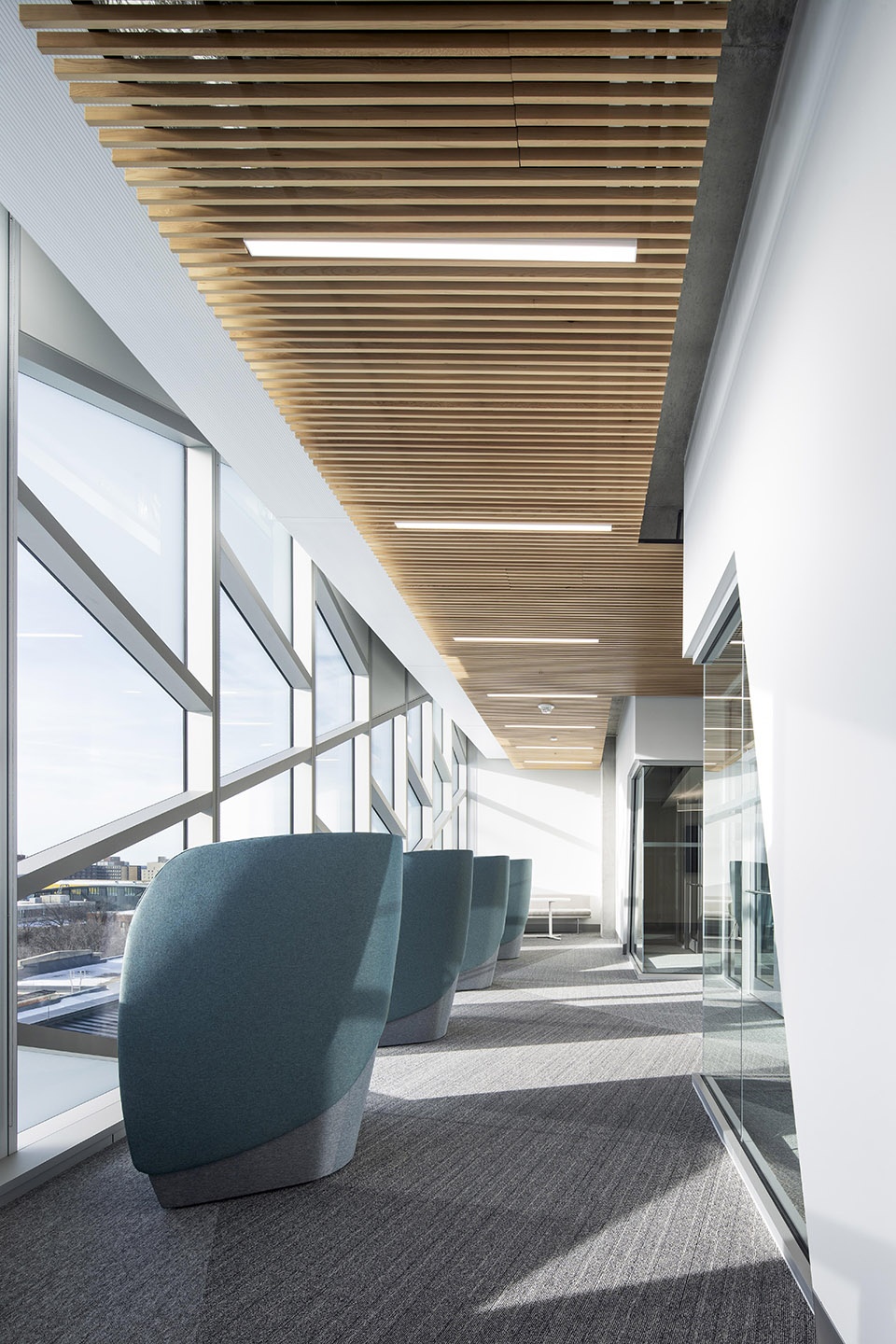
共享中心的室内空间被有意识地设计为多样化环境,以适应不同的学习方式。项目提供了具有一致性且可灵活调整布局的模块化教室,同时设置开放休息区与公众可进入的会议空间,消解传统学生空间与教师空间之间的界限。定制化的室内设计采用专属材料体系、声学处理与设计师家具,以营造温暖舒适的氛围,支持一个既具有欢迎感又适合长期使用的环境。
University Commons’ interiors are deliberately diverse to accommodate unique learning styles, offering modular classrooms with consistent, adaptable layouts, as well as open lounges and publicly accessible meeting rooms that dissolve the traditional boundaries between student and faculty space. The bespoke interiors employ custom material palettes, acoustic treatments, and designer furniture that promote warmth and comfort, supporting an environment that is both welcoming and adaptable for long-term use.
▼公众可进入的会议空间,publicly accessible meeting rooms
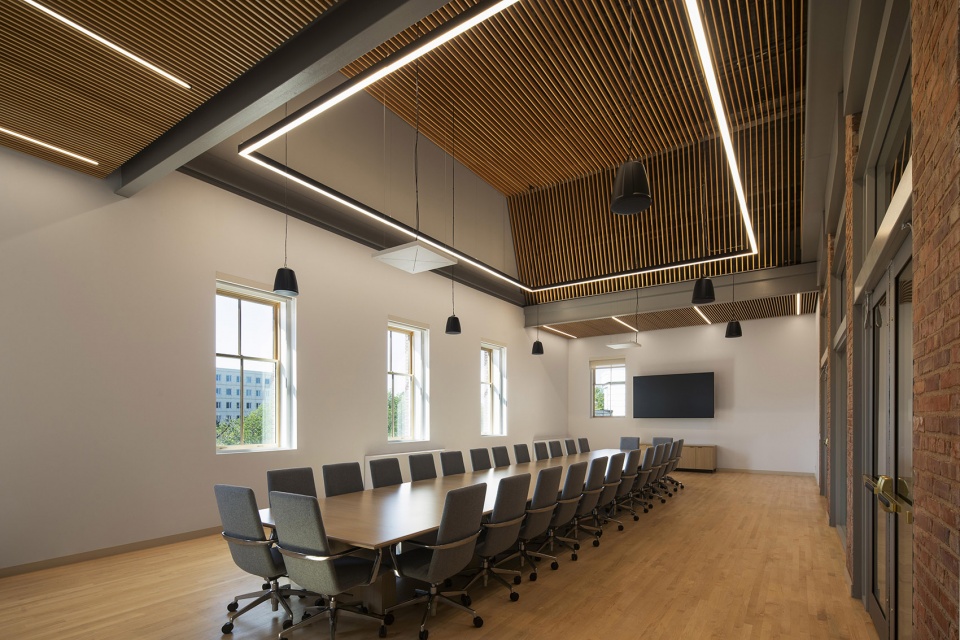
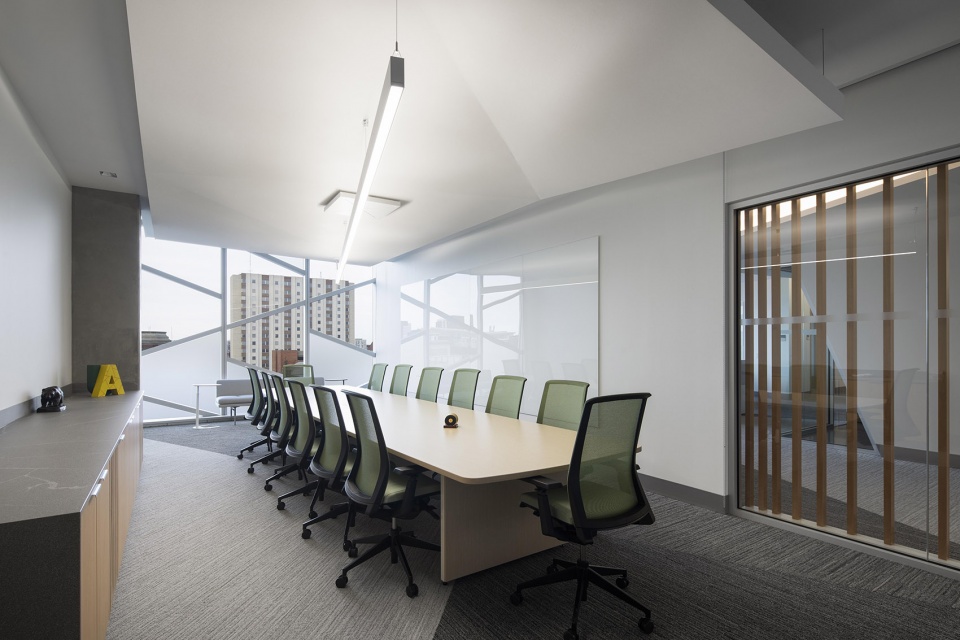
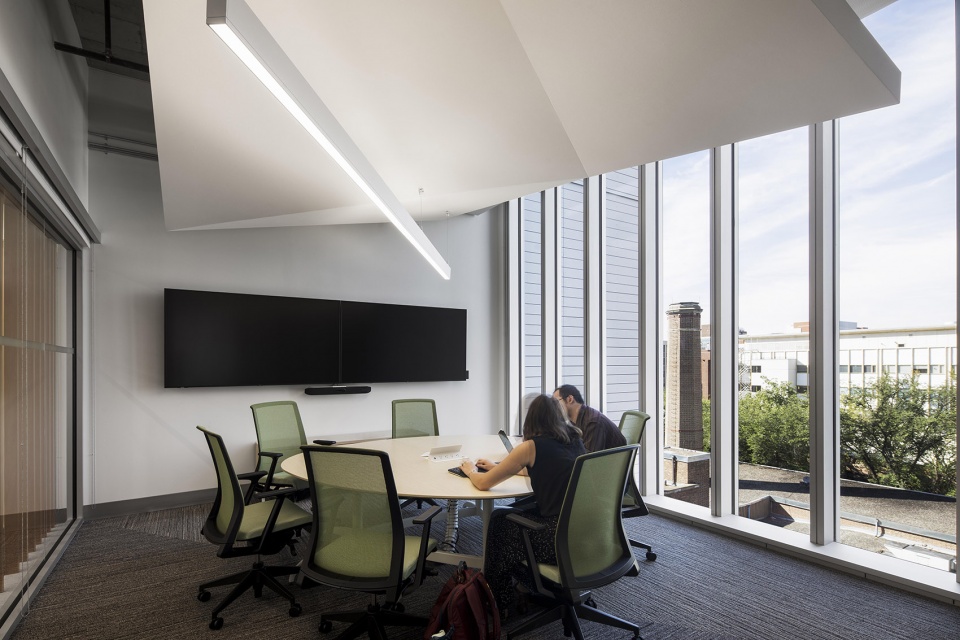
▼共享学习讨论空间,shared study room
用于专注与沉思的安静空间同样受到重视,其中包括“静心室”——一个关注感官体验与心理恢复的空间,由一位阿尔伯塔大学学生通过校园设计竞赛完成设计。该学生设计竞赛旨在优化大学共享中心中的学习体验,提升参与感与创造力,同时鼓励学生运用自身技能解决真实的校园问题。
Quiet areas for focus and reflection are equally represented, including the Calming Room—a sensory-conscious space for mental restoration designed by a University of Alberta student through a campus-wide design competition. The goal of the student design competition was to optimize the University Commons’ learning experience for engagement and creativity, empowering students to use applicable skills to solve real-world institutional challenges.
▼丰富的空间类型,diverse spatial types
这种丰富的空间类型经过精心组织,以支持从社交互动到安静专注的多种活动,进一步强化了共享中心既作为公共论坛、又作为个人避所的双重属性。
This spatial variety was carefully curated to support everything from social interaction to quiet concentration, building on University Commons’ purpose as both a collective forum and a personal refuge.
▼通高空间俯瞰,Panoramic view from the top of the space
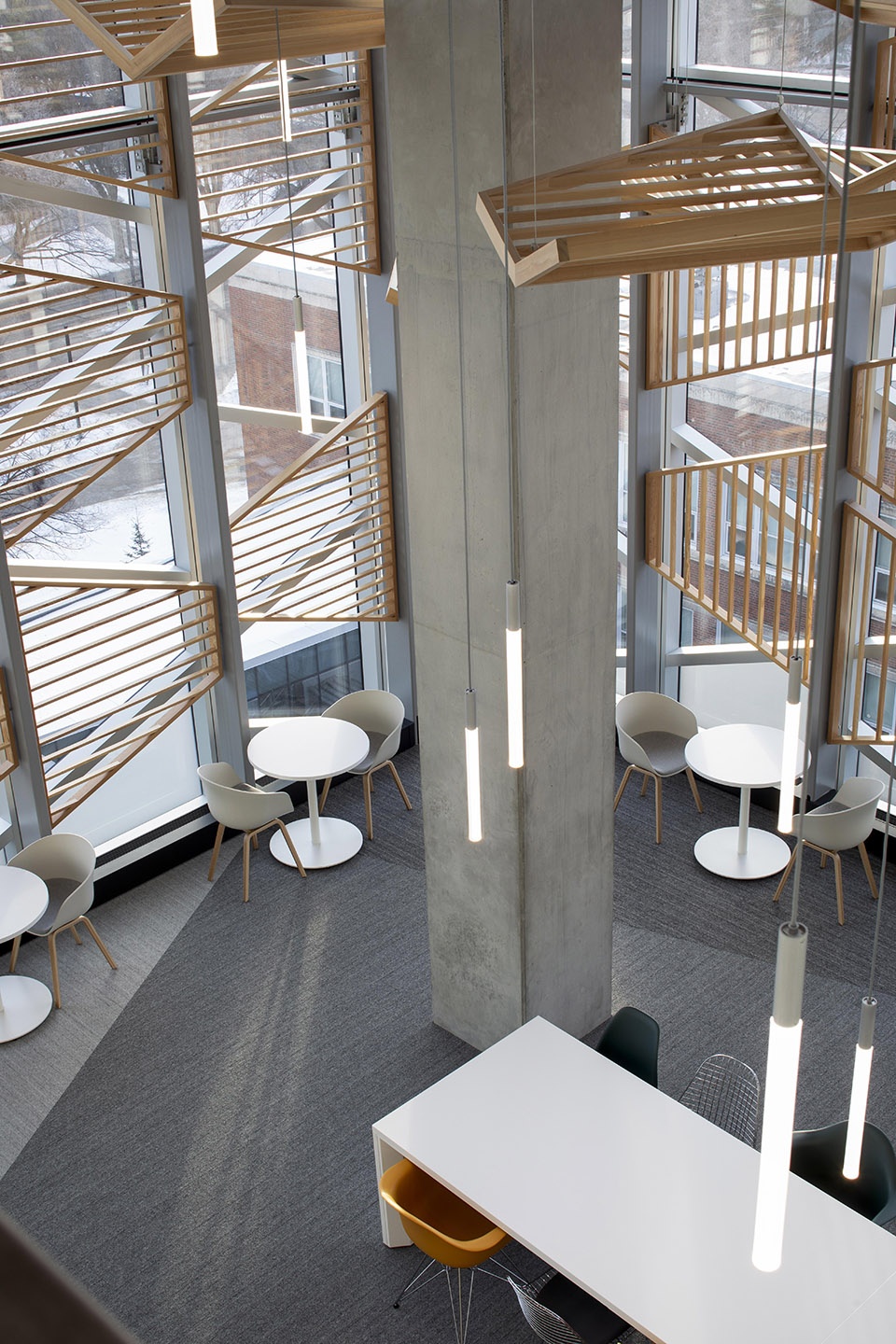
▼明亮宽敞的学习空间,bright and spacious study room
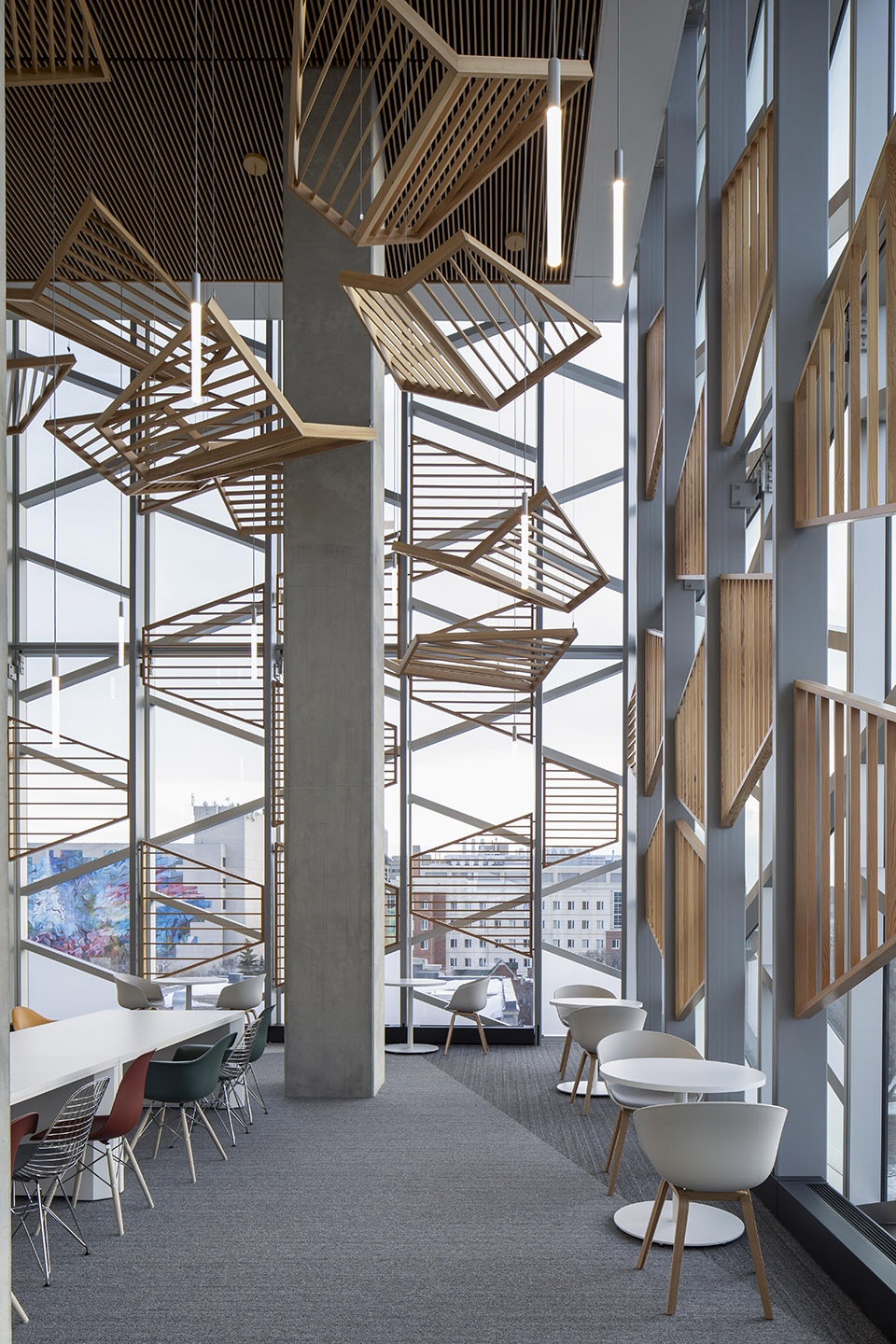
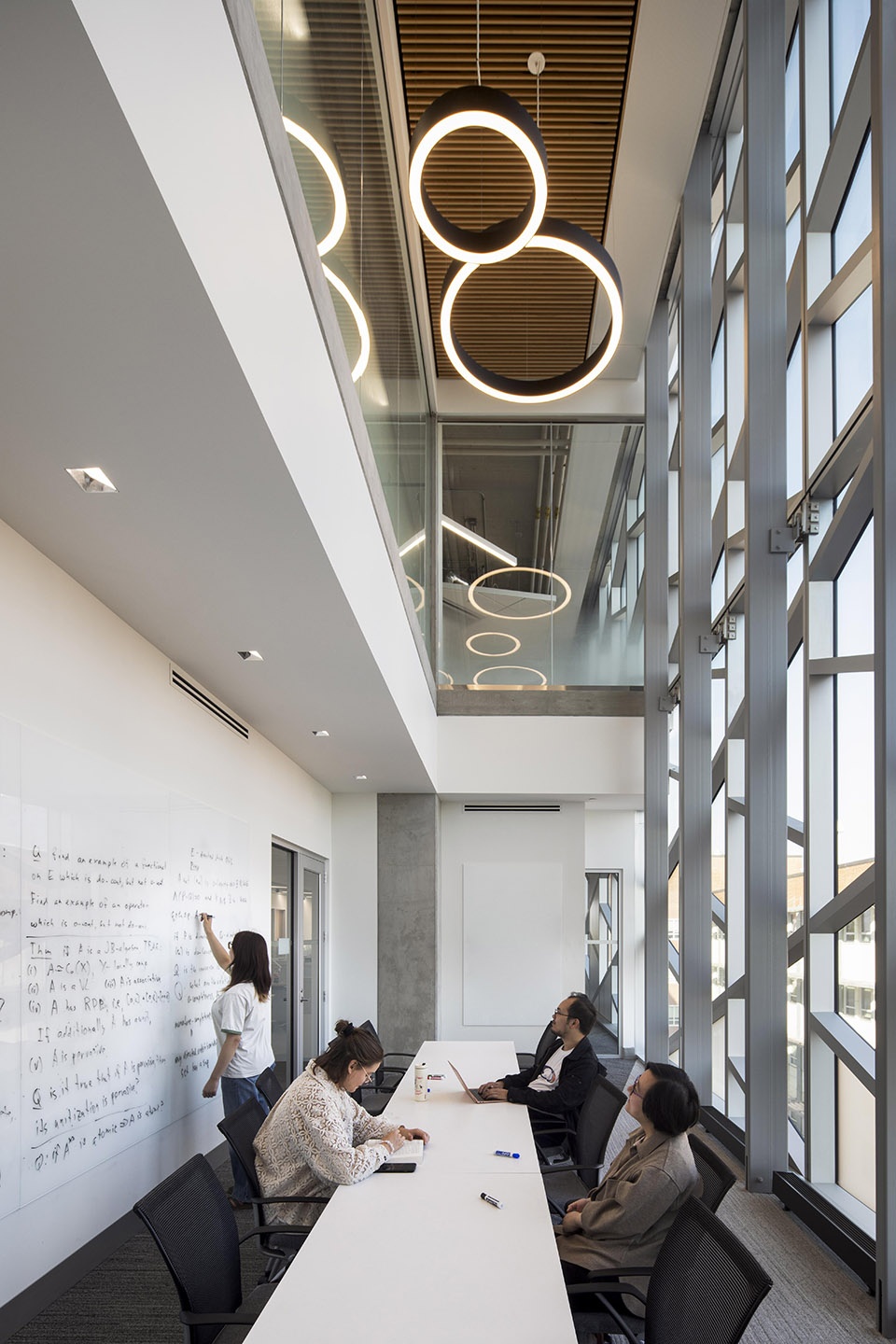
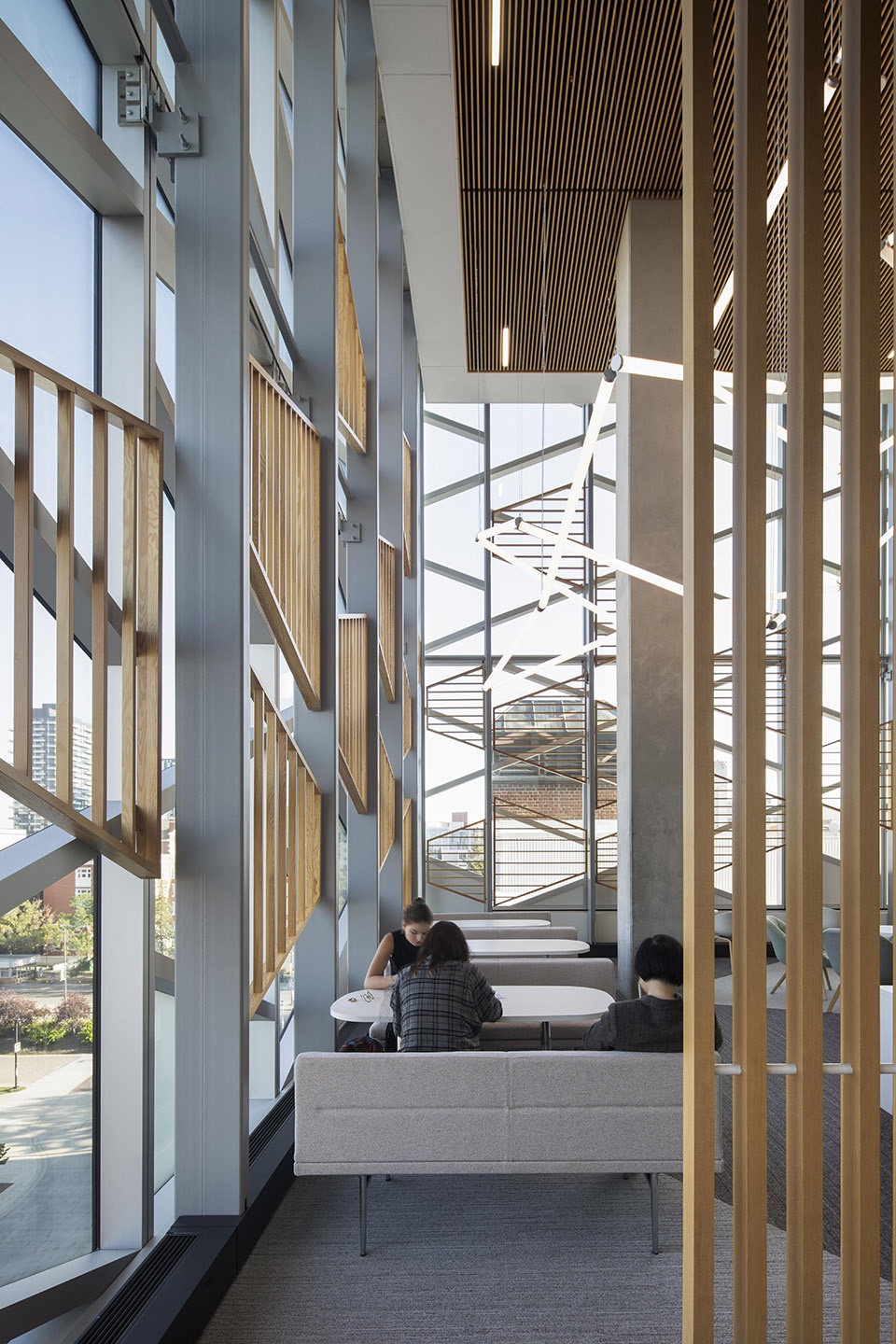
▼以城市界面为背景,With the urban interface as the backdrop
扎根于原住民叙事的空间表达Anchoring University Commons in Indigenous storytelling
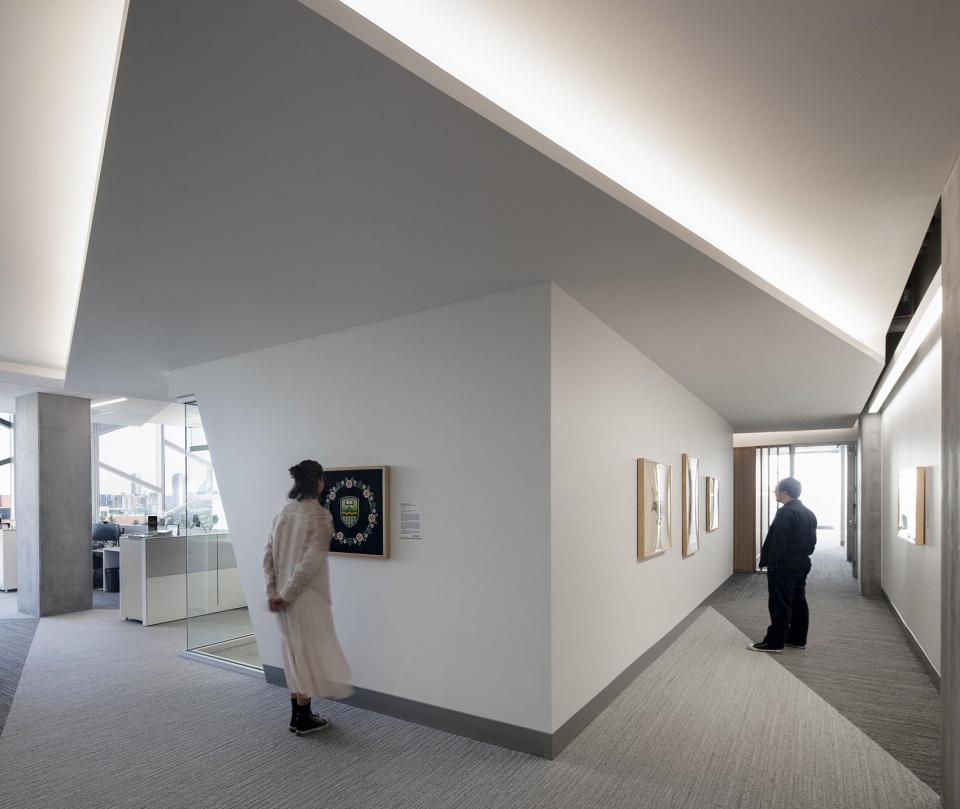
大学共享中心中的原住民叙事由梅蒂斯艺术家Christi Belcourt贯穿其中。作为一位备受赞誉的讲述者,她对悠久传统与知识体系怀有深厚敬意。她具有自然主义风格的作品分布于大学共享中心的共享空间中,通过文化叙事与身份认同激活日常环境,并从本土植物精妙复杂的形态中汲取灵感,在自然与社区之间建立联系。通过这些充满善意的艺术介入,Belcourt的作品使人们在共享中心中的日常相遇始终与历史与身份产生关联,激发反思,并营造深刻的场所感。 Belcourt的作品被加拿大国家美术馆与安大略美术馆等重要机构收藏。她曾获得包括加拿大总督创新奖与安大略省长艺术奖在内的国家级荣誉,是加拿大最具代表性的当代原住民艺术家之一。
Indigenous narratives are embedded throughout University Commons by Métis artist Christi Belcourt, an acclaimed storyteller with a deep respect for longstanding traditions and knowledge. Her naturalistic works animate shared spaces throughout the Commons with storytelling and cultural recognition, drawing inspiration from the delicate intricacies of native flora to weave connections between nature and community. Through these well-intentioned accents, Belcourt’s art ensures that daily encounters in the Commons are underpinned by history and identity, encouraging reflection, while fostering a deep sense of place. Belcourt’s work is held in major institutions, including the National Gallery of Canada and the Art Gallery of Ontario. She has earned national recognition, including winning a Governor General’s Award for Innovation and the Ontario Premier’s Arts Award, making her one of Canada’s most celebrated contemporary Indigenous artists.
▼艺术介入,art intervention
大学共享中心是Zeidler近年来为加拿大高等教育机构完成的最新更新与适应性再利用项目。事务所曾主导多个具有转型意义的项目,包括约克大学校园教室整体更新项目、维多利亚大学ACET研究总部,以及多伦多大学文理学院计算机科学系项目,并于近期获得阿尔伯塔大学Convocation Hall更新项目委托。建筑信息模型(BIM)技术在这一复杂的内部改造中发挥了协调作用,帮助明确空间关系、整合新系统,并提升跨专业协作效率。目前,University Commons已正式开放,学生、教师与访客均可前往体验阿尔伯塔大学全新的校园核心空间。
University Commons is Zeidler’s latest renewal and adaptive reuse project for a Canadian post-secondary institution. The firm has led transformative projects, including the York University Campus-Wide Classroom Renewal, the University of Victoria ACET Research Headquarters, and the University of Toronto Faculty of Arts & Science Department of Computer Science, and was recently awarded the Convocation Hall Renovation at the University of Alberta. Building Information Modelling (BIM) coordinated the complex fit-out, clarifying spatial relationships, aligning new systems, and enabling efficient collaboration across disciplines. University Commons is now open, and students, faculty, and visitors are invited to experience University of Alberta’s new campus.
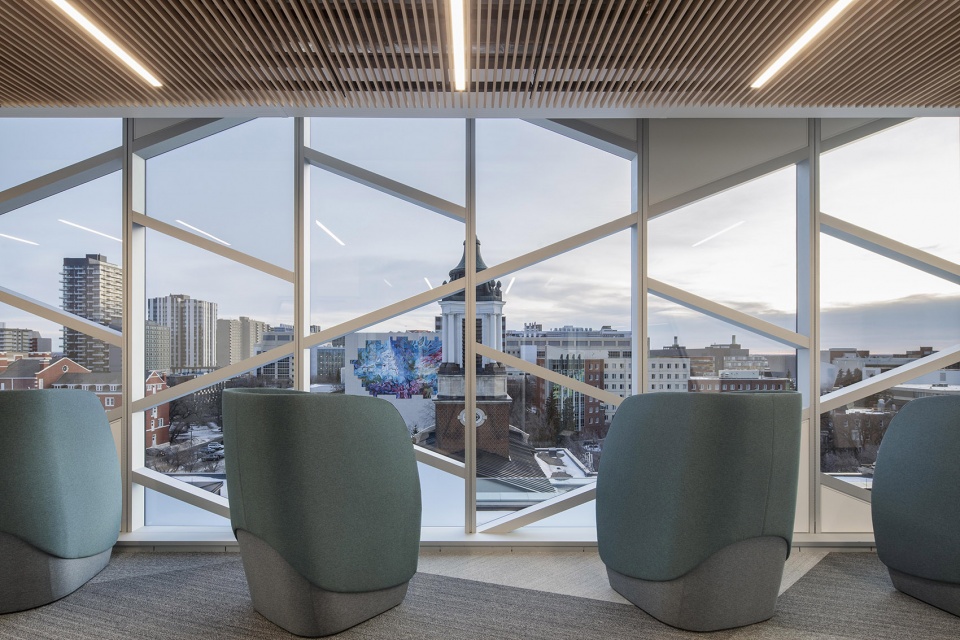
▼面向城市景观,facing the cityscape
▼面向城市景观,facing the cityscape
Client: University of Alberta
Base building architect and architect of record: GEC Architecture
Interior architecture and design: Zeidler Architecture
Functional Space Program in Collaboration with
Noun Consulting
Artwork: Christi Belcourt
Photos: Adrien Williams