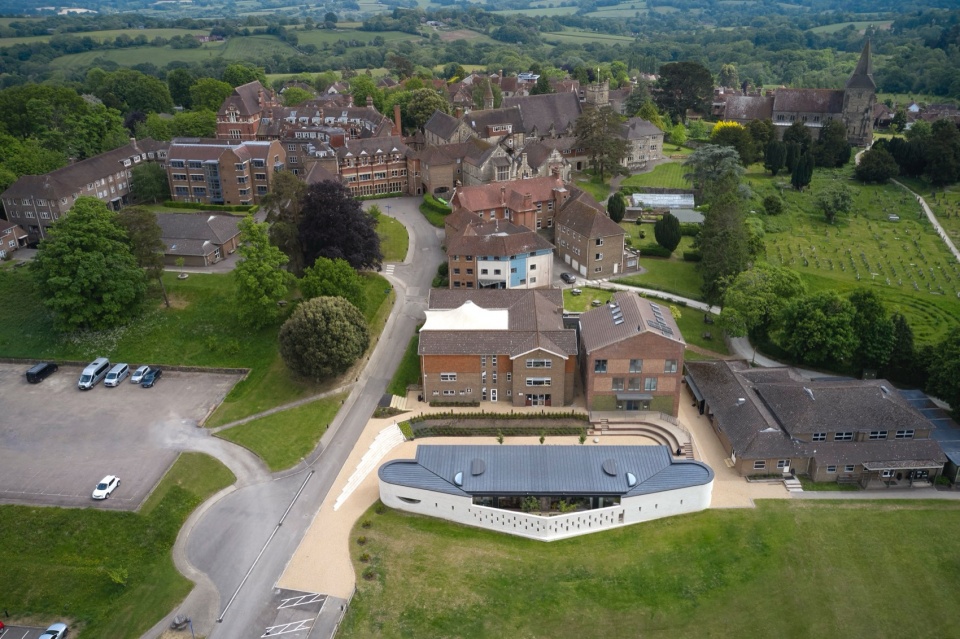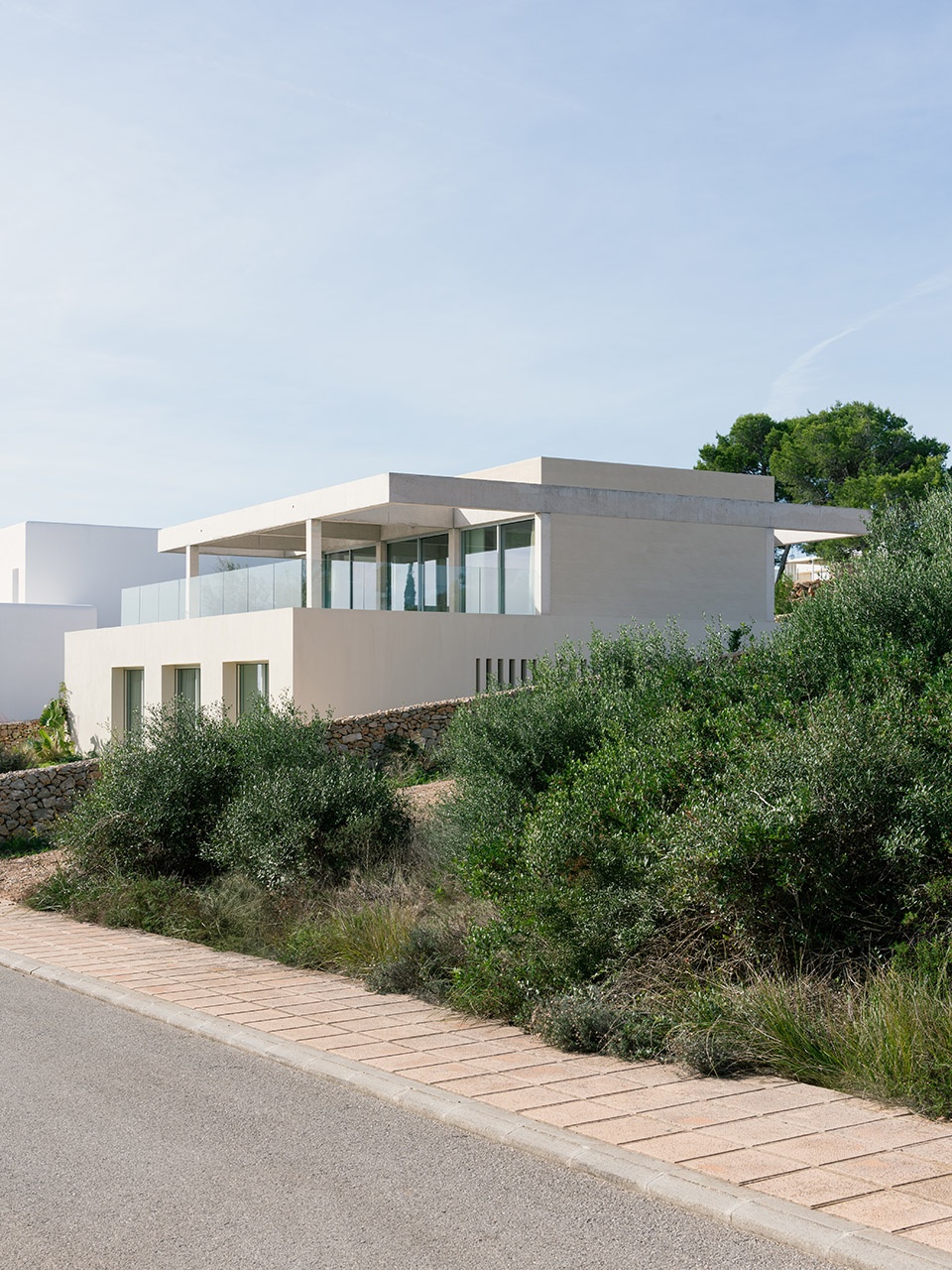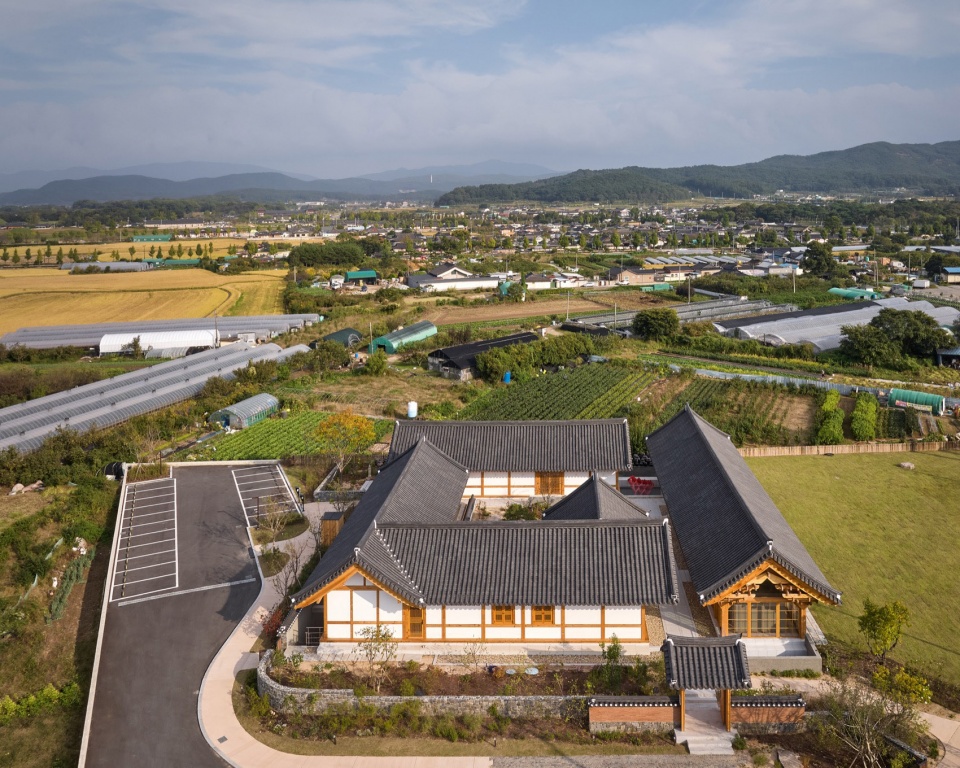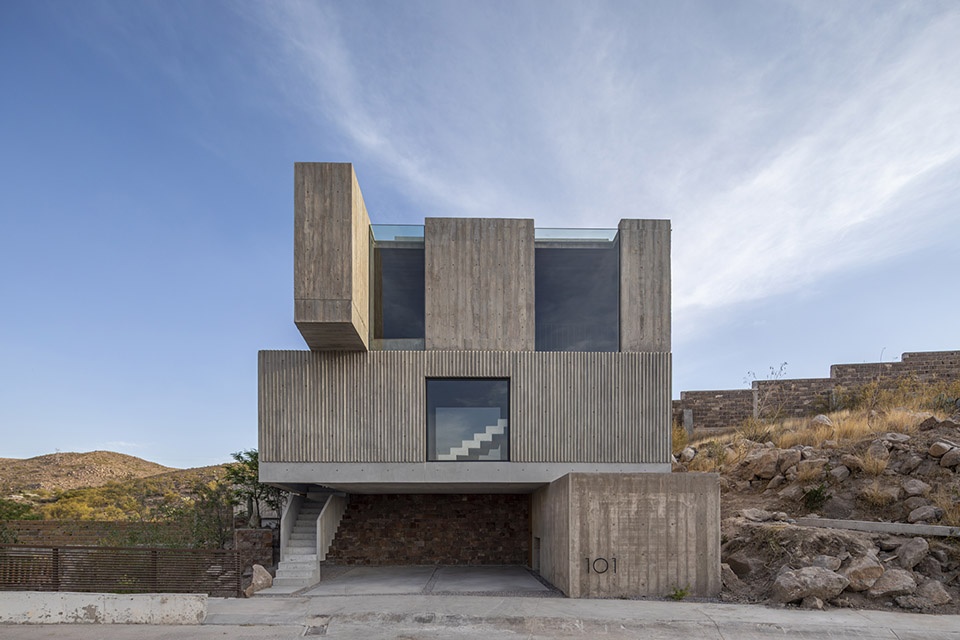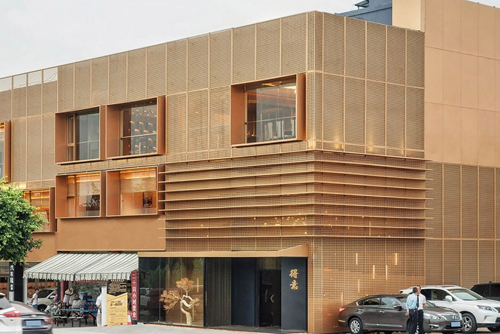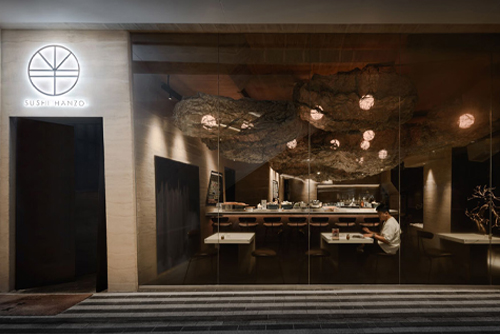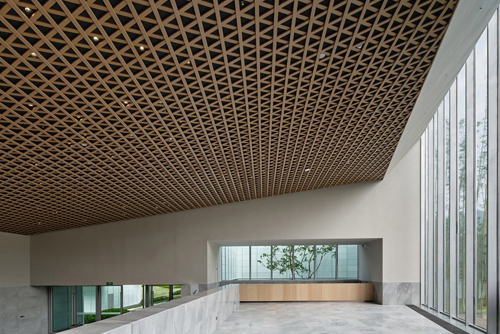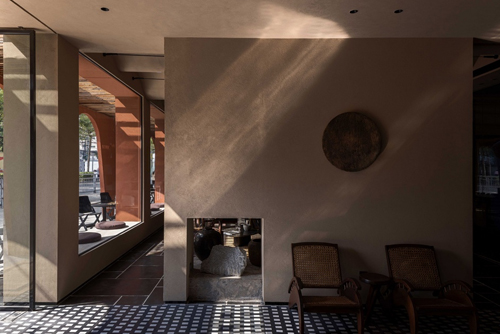
世博会国家馆日大厅,日本 / 平田晃久建筑设计事务所
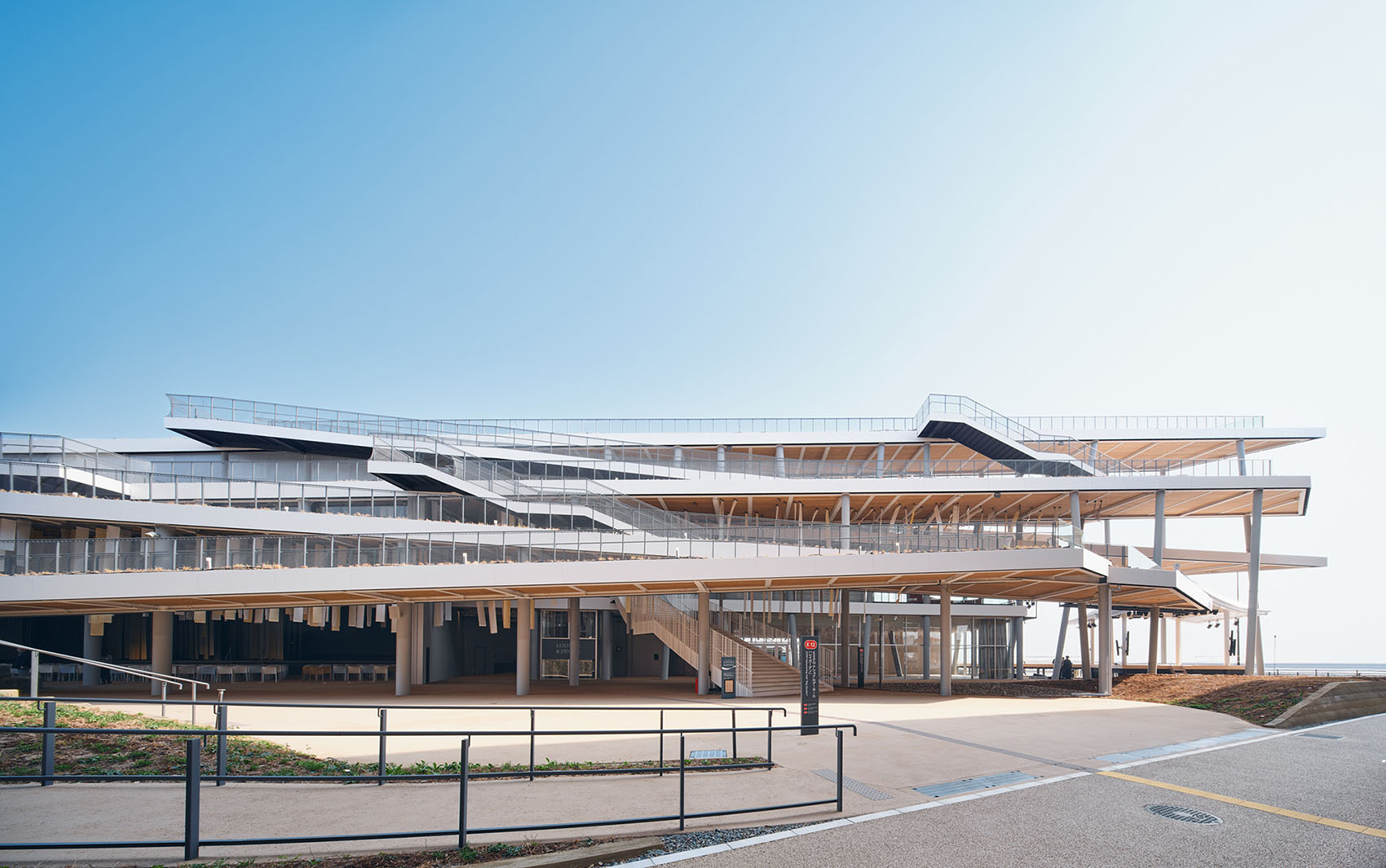
该建筑是为2025年大阪·关西世博会建造的综合设施,包含用于举办典礼与演出的活动大厅、展示传统工艺的展览馆,以及餐厅与休闲酒廊。世博会主题为“设计一个生命绽放光彩的未来社会”,因此建筑设计旨在呈现一种生命体般的状态,使天空、风、水与大地彼此交织融合。
The building is a complex of an event hall for ceremonies and performances, an exhibition hall for traditional crafts, and a restaurant and lounge for the 2025 Osaka-Kansai Expo. The theme of the Expo is “Designing a future society where life shines brightly,” and the architectural design is intended to be life-like, with sky, wind, water, and earth intertwined with each other.
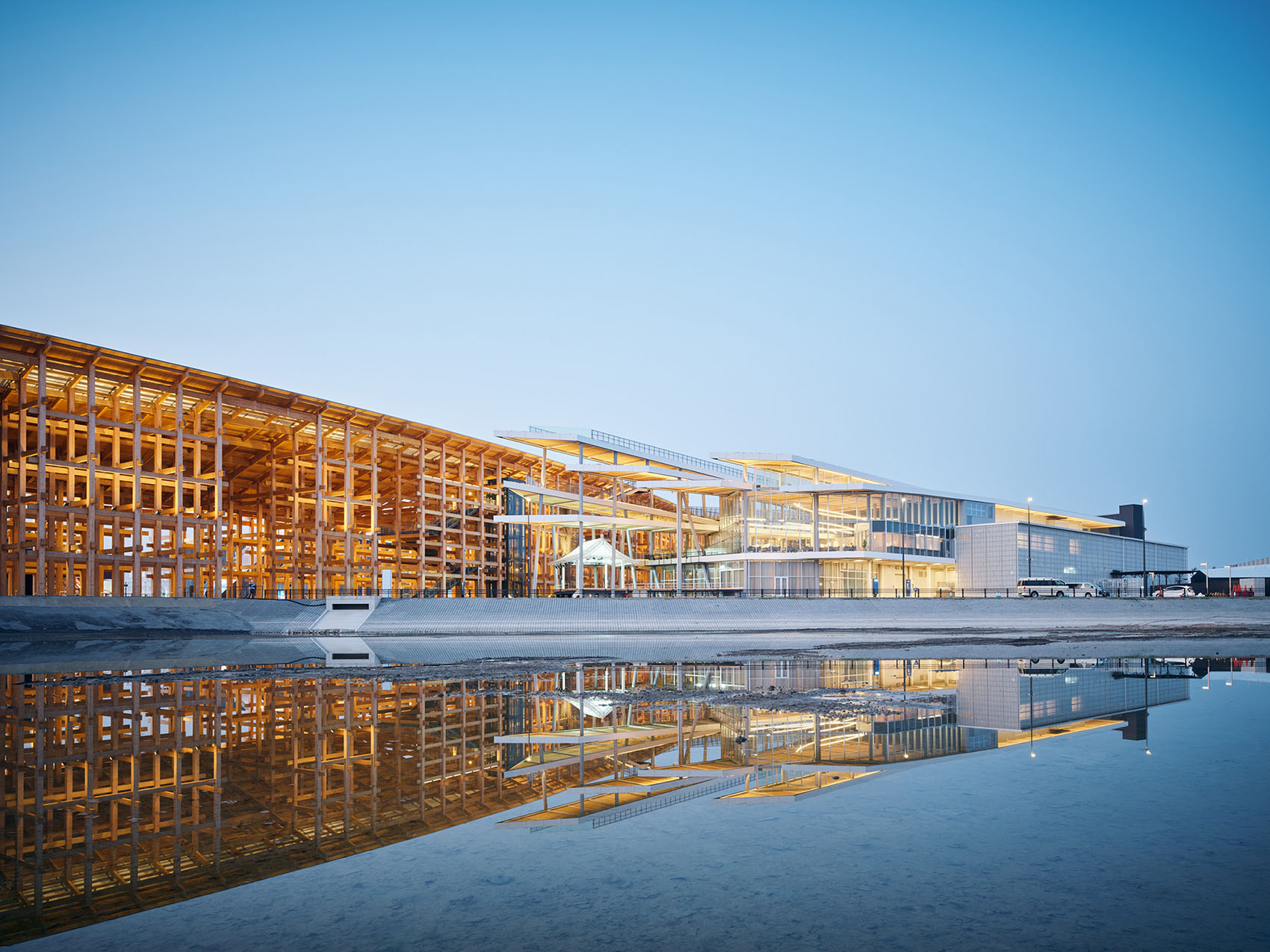
▼建筑外观概览,Building exterior overview
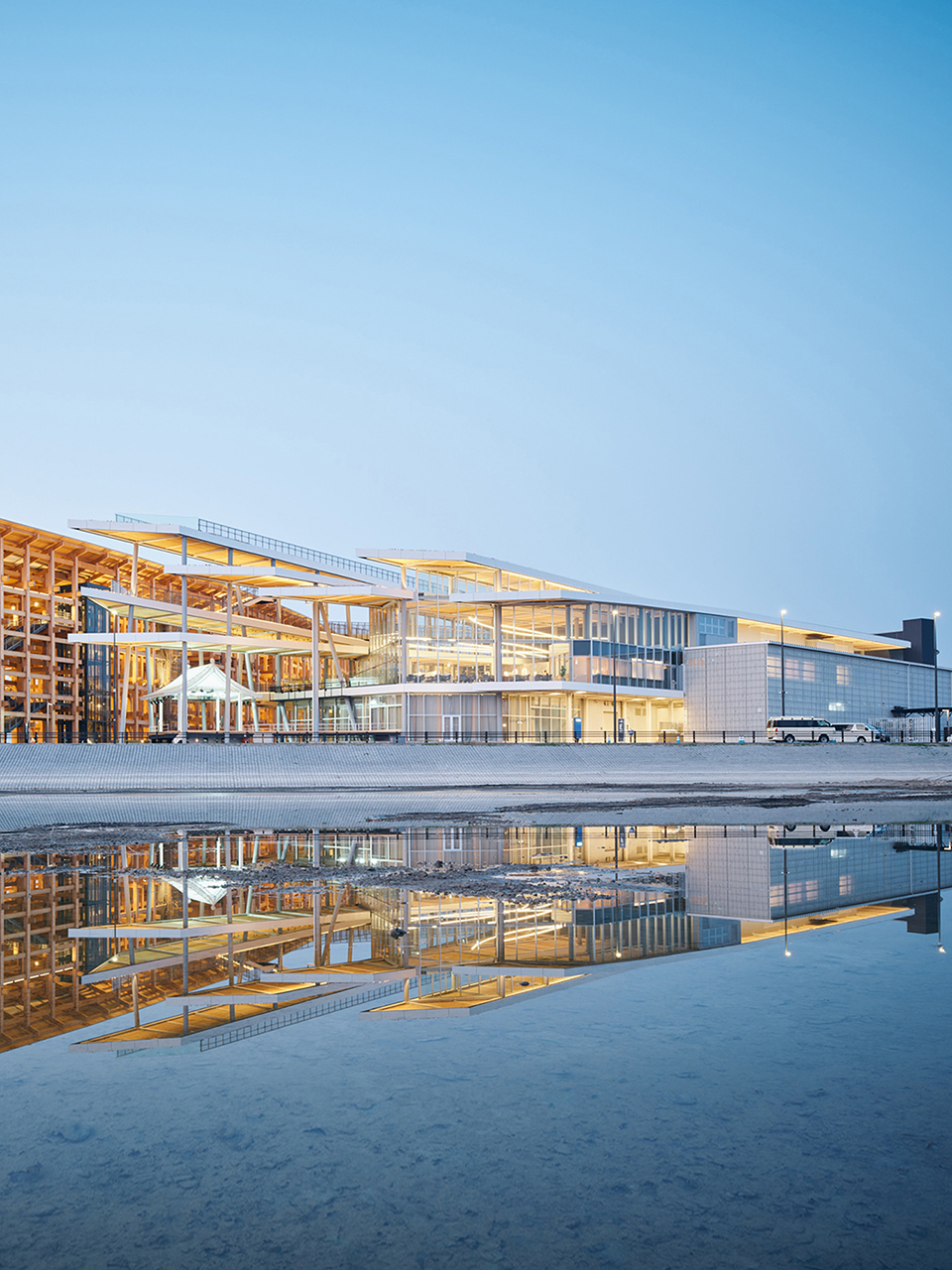
▼入口立面,Entrance facade
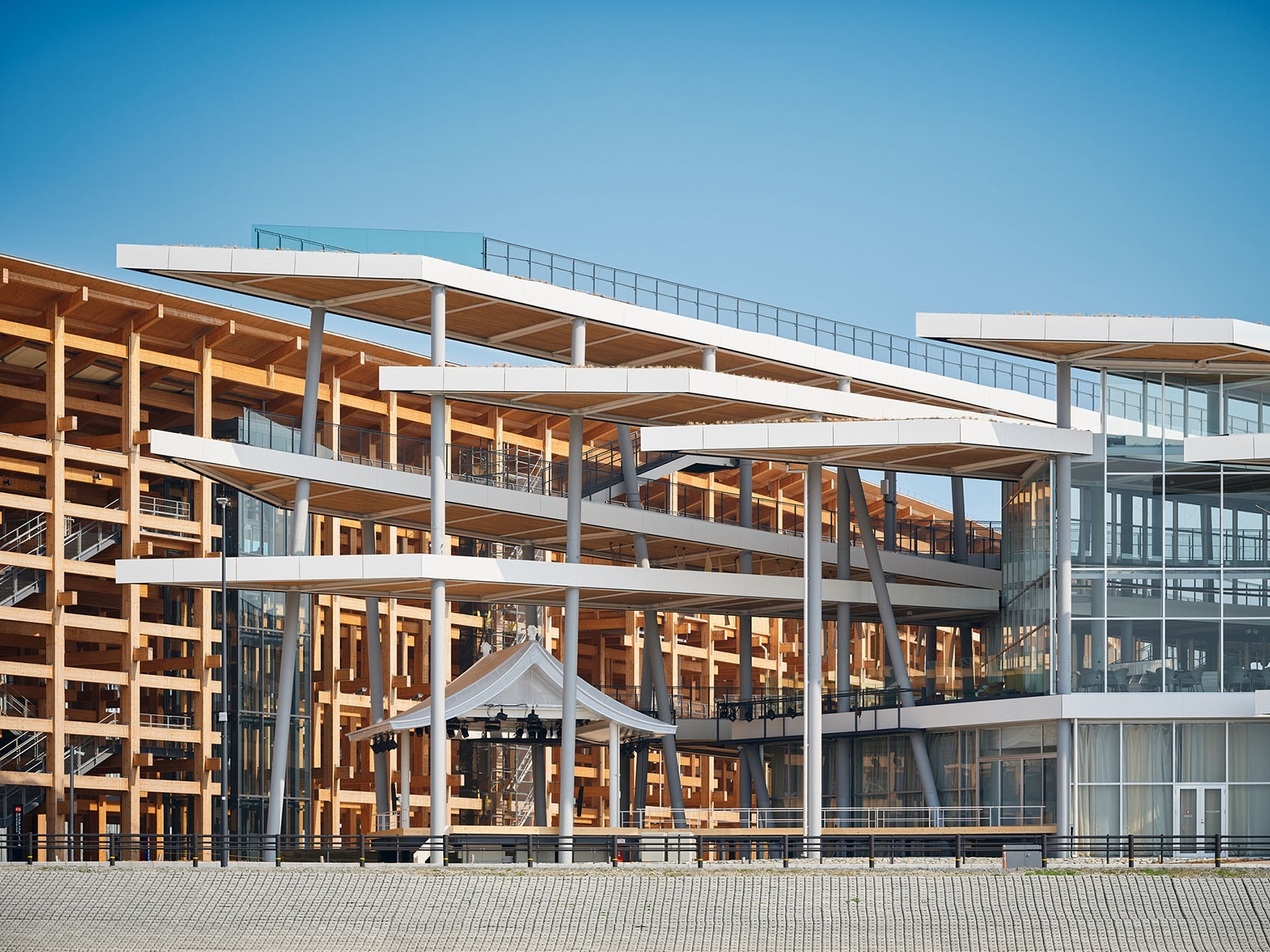
▼侧立面,Side facade
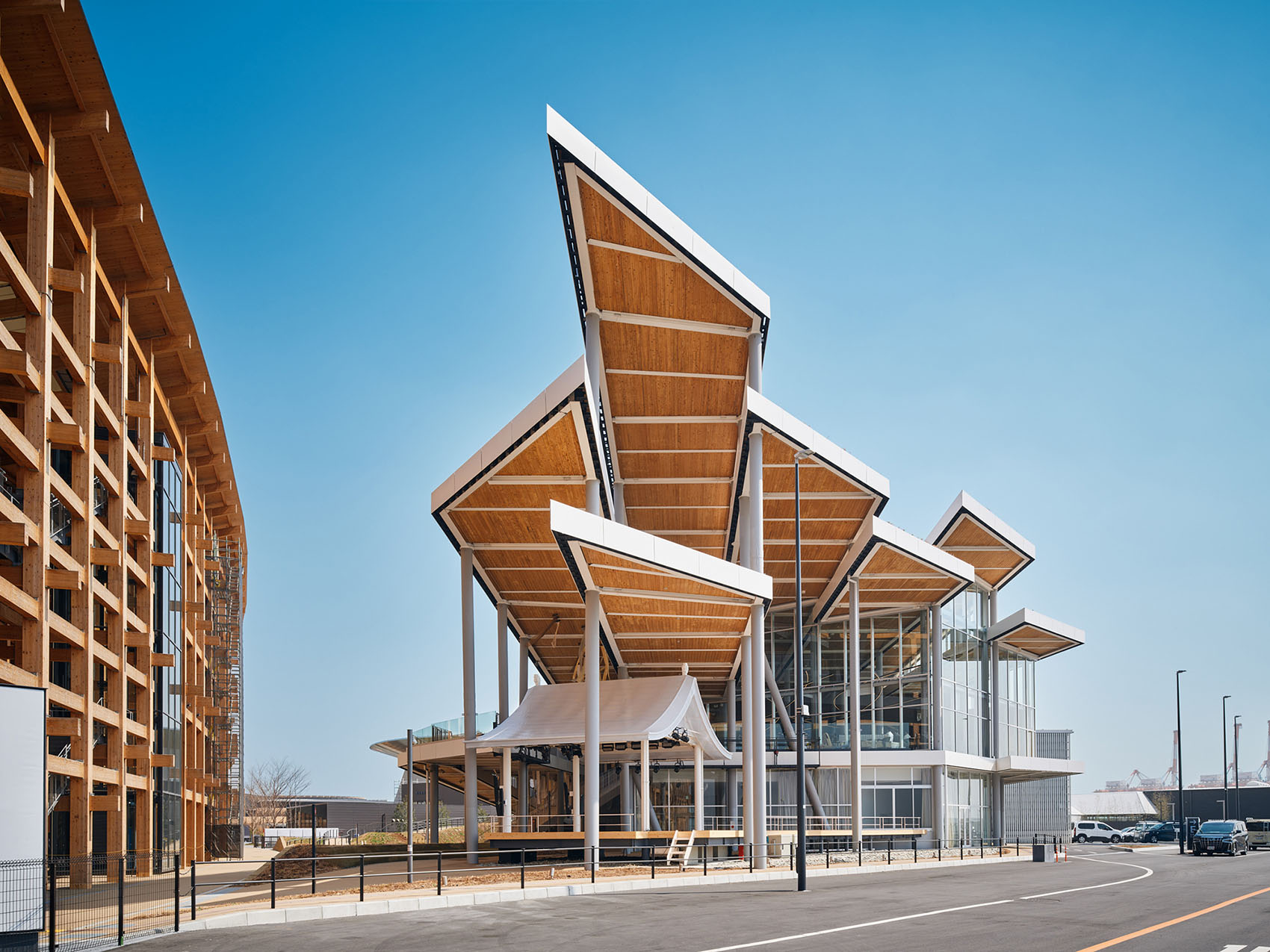
▼侧立面近景,Side facade close view
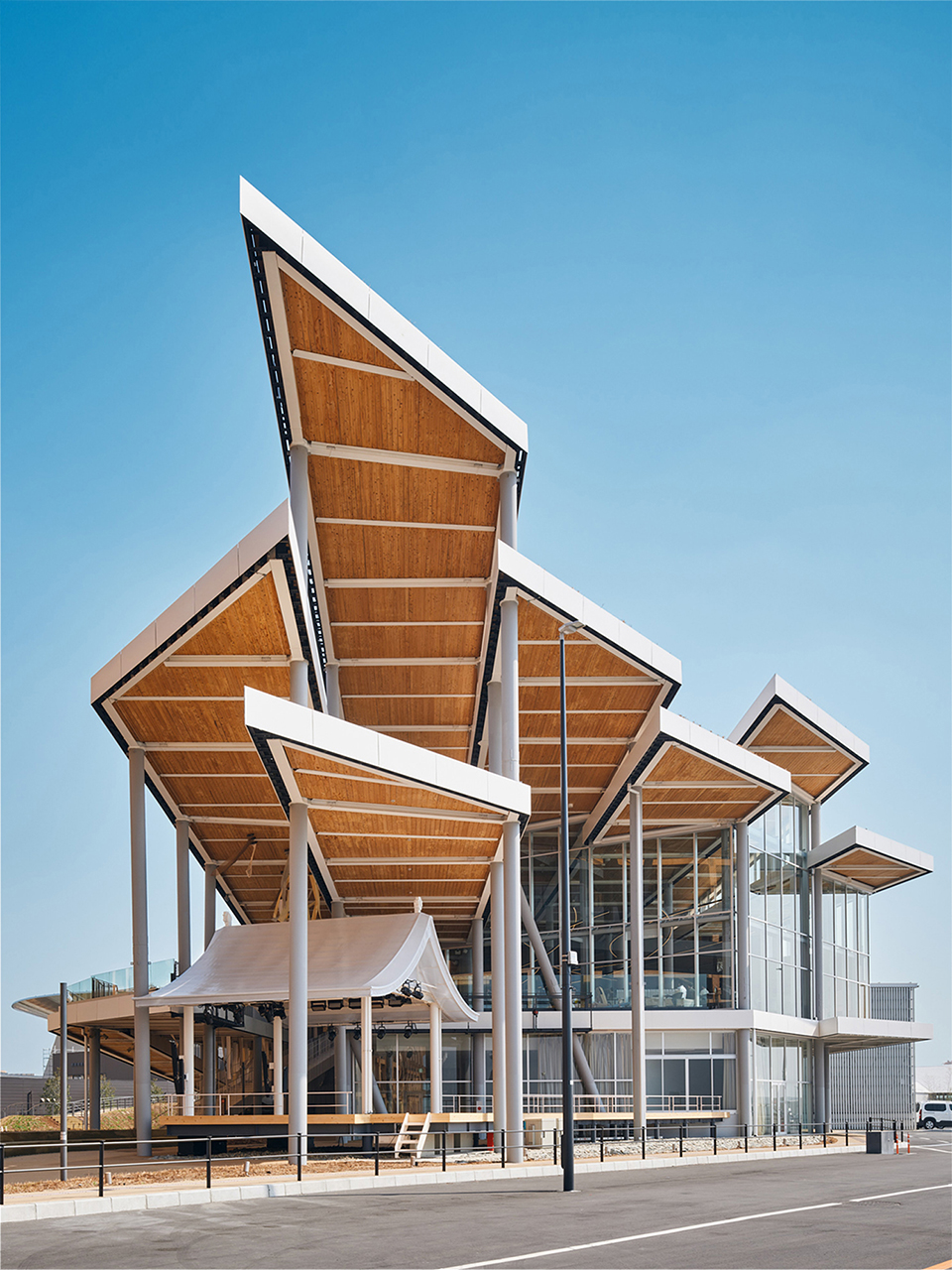
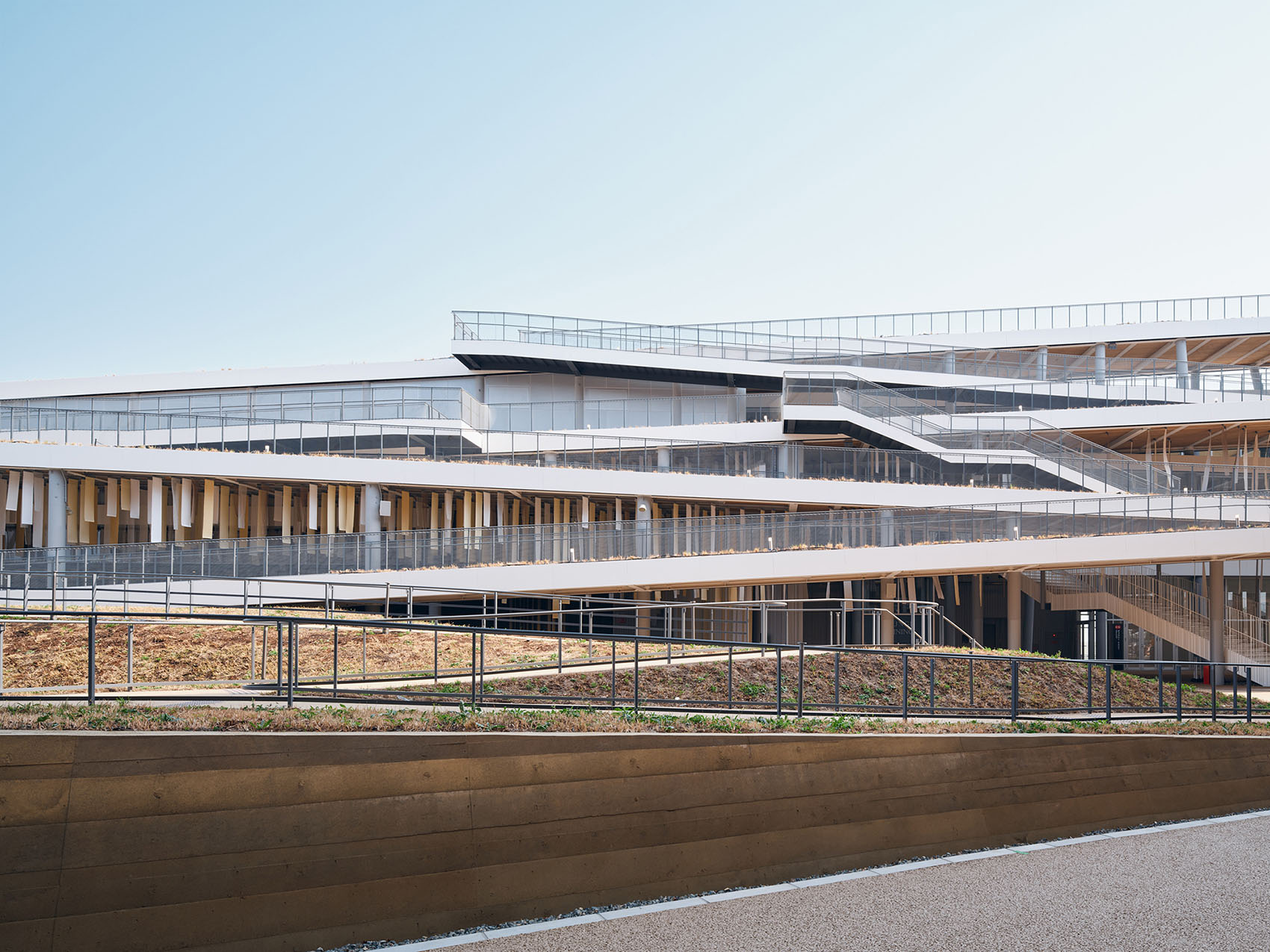
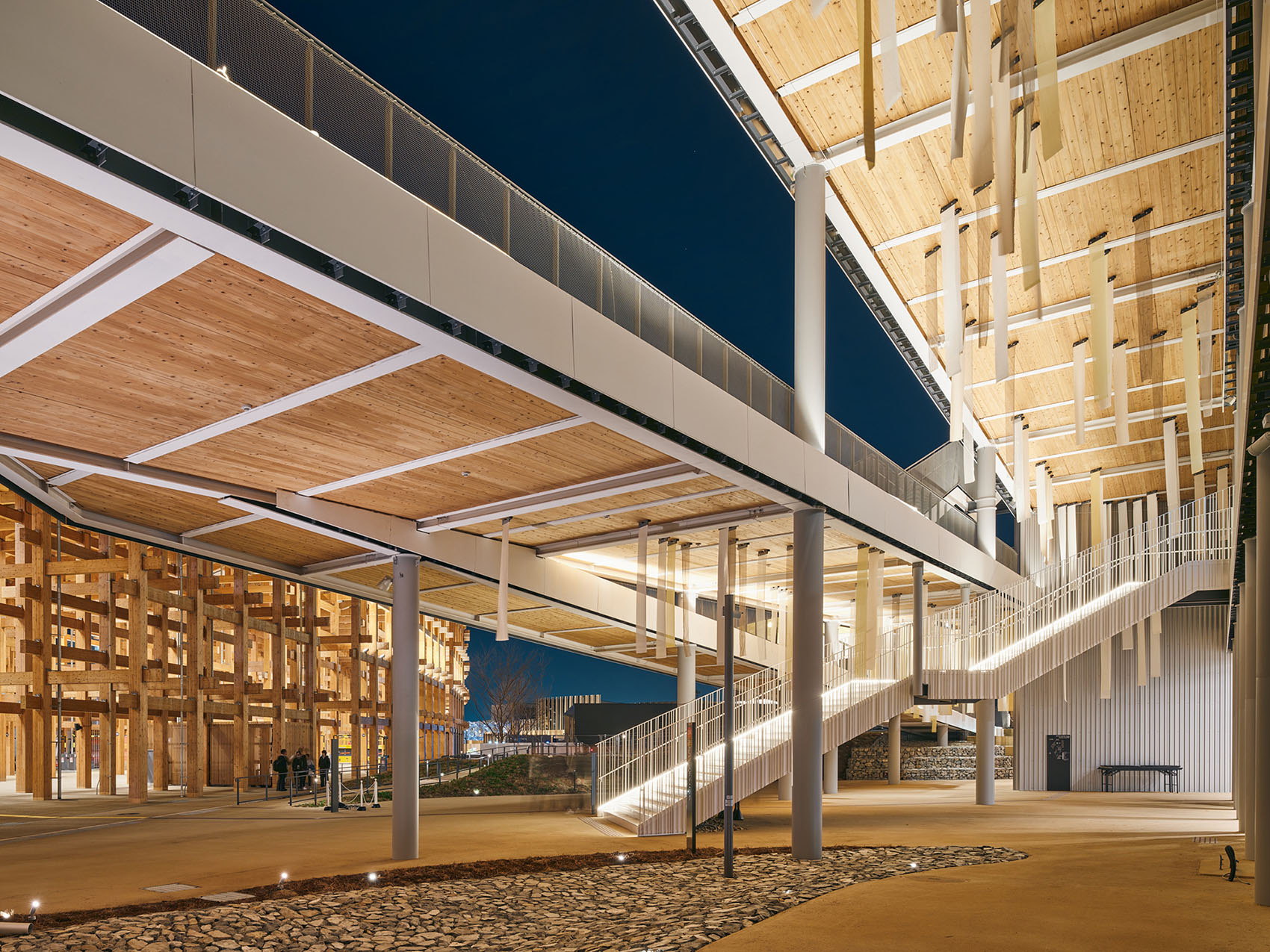
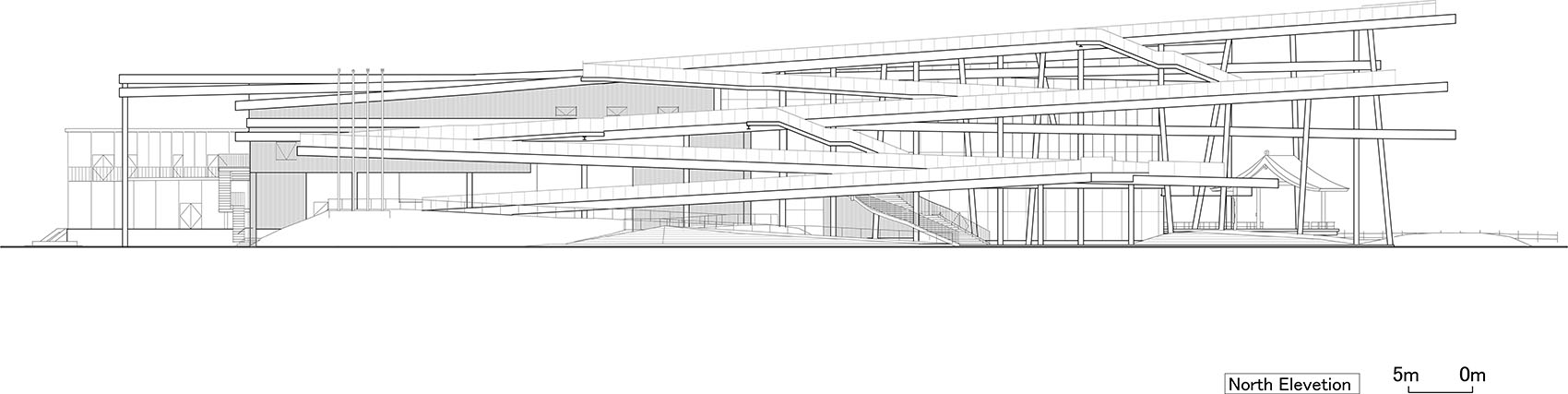
向场地斜向延展的屋顶是建筑最具特征性的设计元素。这一方向对应着关西地区地形凹陷的走向,并朝向淀川河口。由板块相互挤压形成的地形褶皱,因中央构造线的影响而呈斜向倾斜。由这颗“活着的大地”的地质活动所塑造的基础地貌,孕育了淀川水系,而淀川水系又进一步孕育了包括人类活动在内的生态系统。与大阪地形相呼应的条带方向,也恰好与从大阪湾吹来的海风方向一致。这些条带同时作为“捕风器”,能够收集海风,并将其引导至室内空间或屋顶下方的广场。
The roof, which extends at an angle to the site, is a distinctive feature of the building. This direction corresponds to that of the depression in the topography of the Kansai region, and is oriented toward the mouth of the Yodo River. The topographic wrinkle created by the plates pressing together is obliquely tilted by the Median Tectonic Line. This foundation created by the activities of the living earth has nurtured the Yodogawa River system, which in turn has nurtured ecosystems, including human activities. The direction of the stripes, corresponding to the topography of Osaka, coincides with the direction of the sea breezes blowing from Osaka Bay. The strips also serve as wind catchers that capture such winds and direct them indoors or to the plaza under the roof.
▼屋顶花园与活动广场,Roof garden and event plaza
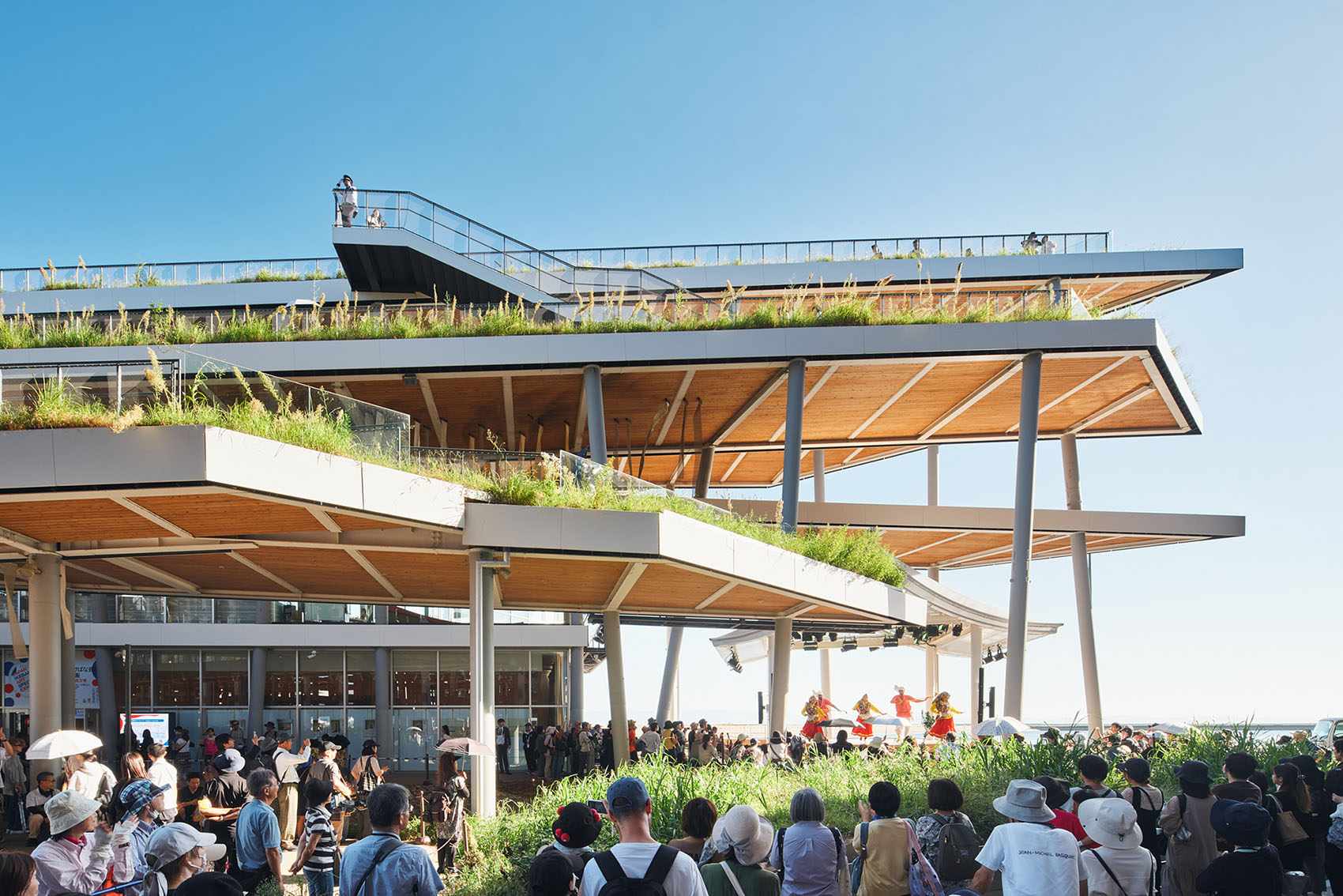
▼层叠屋顶系统,Layered roof system
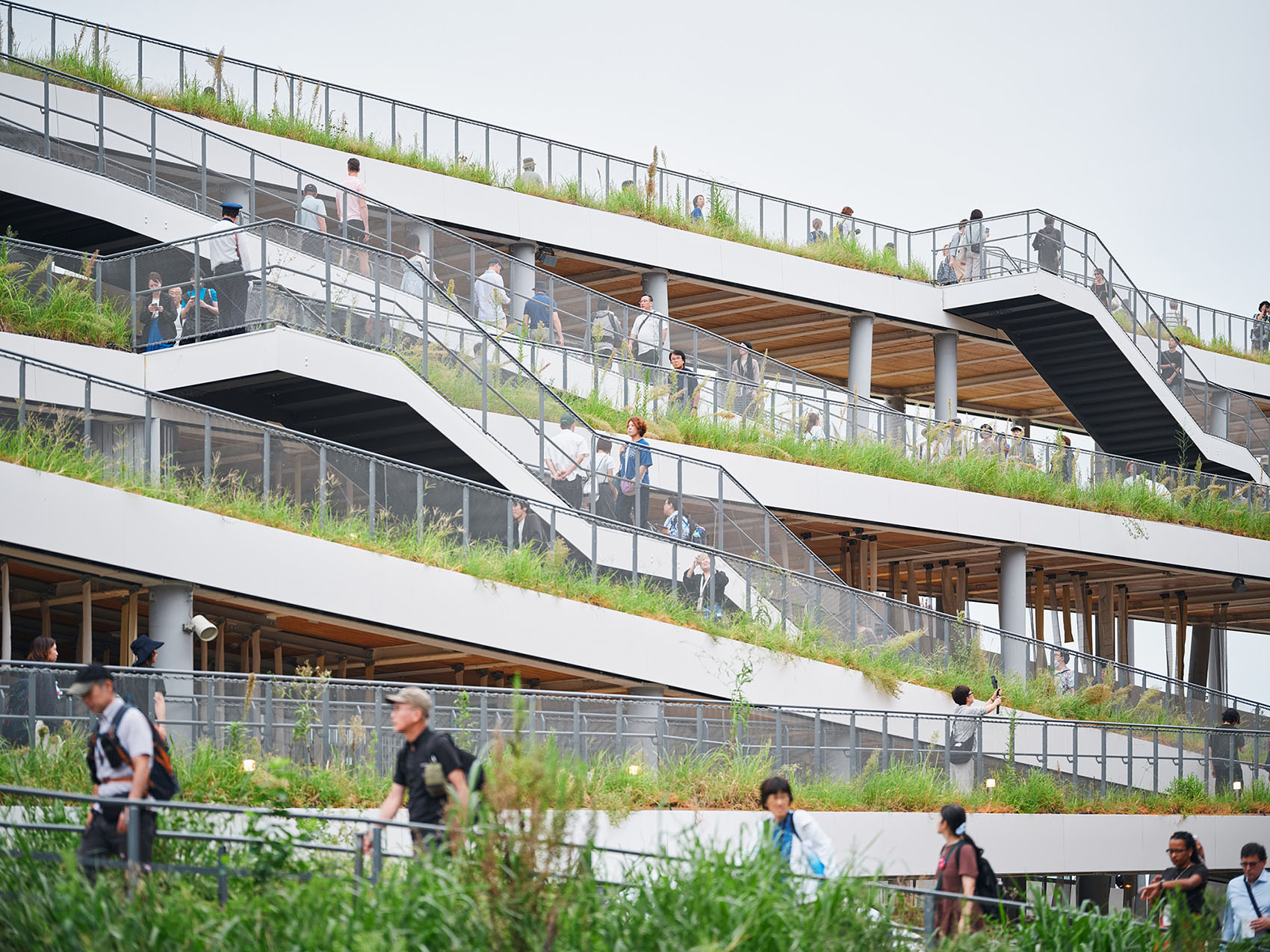
这种效果又通过绿化条带所带来的蒸发冷却作用得到进一步增强。我们希望创造一个建筑与花园、人工与自然相互重叠的场所,使室内与室外彼此渗透。建筑与景观被视为一个整体进行设计,而柔和起伏的坡地则形成了一种可连接至屋顶的地形。利用场地原有的自然植被条件,种植设计以营造野趣氛围为目标,以茅草等植物作为主要元素。正如生物体通过吸收周围环境中的各种要素来塑造自身生存环境一样,在这座建筑中,光与风、水与植物之间的相互作用共同创造出一种支持人与人交流的微气候。与承担着连接各种事物功能的世博会“大屋根环”相接触时,这座建筑如同一道能够使人“放松下来”的咒语。建筑容纳着庆祝人与海洋关系的空气与光线,并将在与“大屋根环”和谐共生的同时,向辽阔海景敞开会场空间。
The effect is further enhanced by the evaporative cooling of the green strips. We wanted to create a place where architecture and garden, artificial and natural, overlap, where inside and outside permeate each other. The architecture and landscape are considered as an integrated whole, and a gentle slope creates a topography that connects to the rooftop. Taking advantage of the natural vegetation of the site, the planting was designed to have a wild atmosphere, with chigayas and other plants as the main elements. Just as a living organism creates its own environment by incorporating elements from its surroundings, in this architecture, the interplay of light and wind, water, and plants work together to create a microclimate that supports human interaction. This architecture is like a spell that “loosens up” while coming into contact with the ring of the Expo, which functions to “connect” various things. The architecture, containing air and light that celebrates the relationship with the sea, will open the venue to the expanse of the sea, in harmony with the ring.
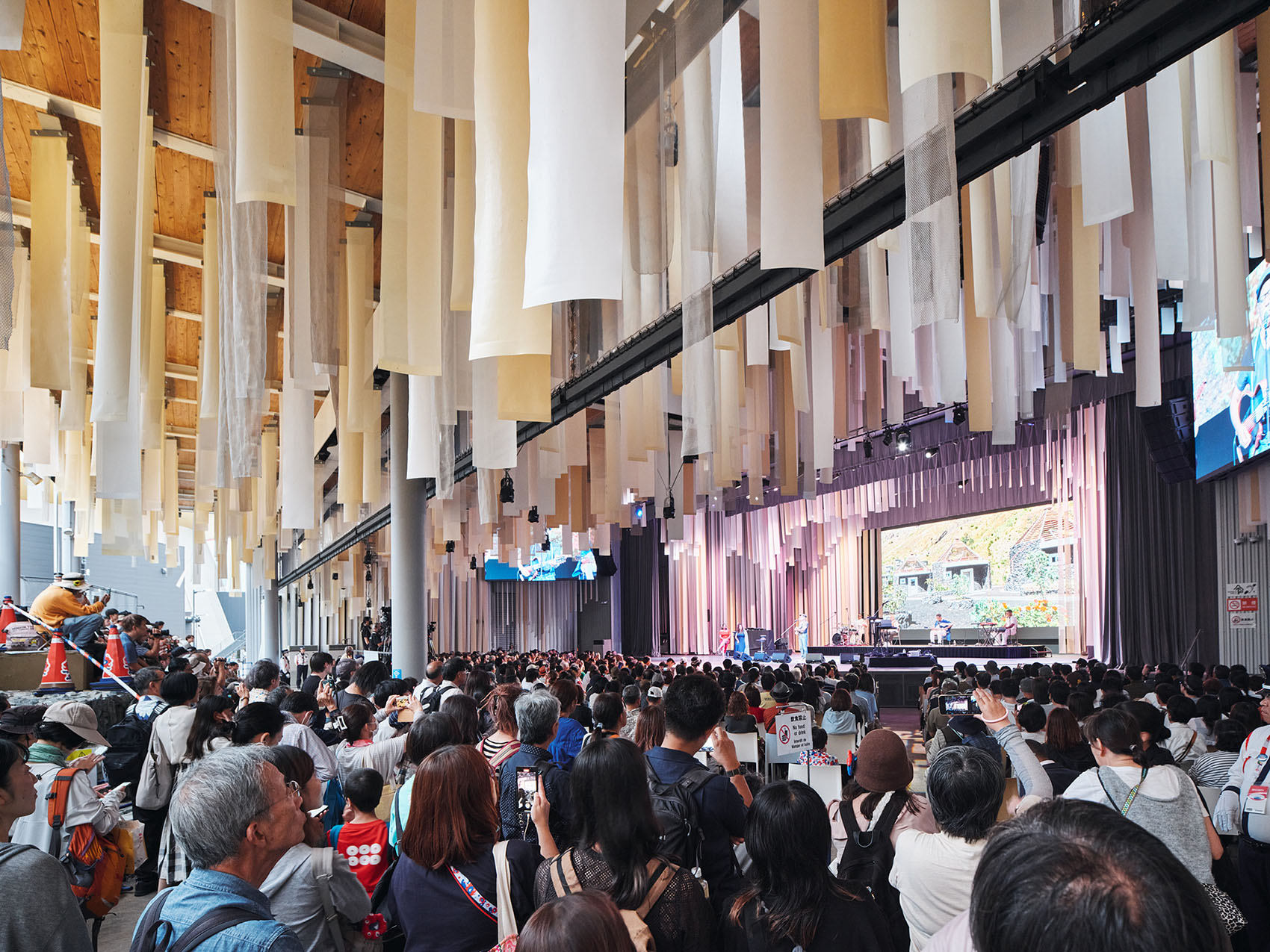
▼活动大厅空间,Event hall interior
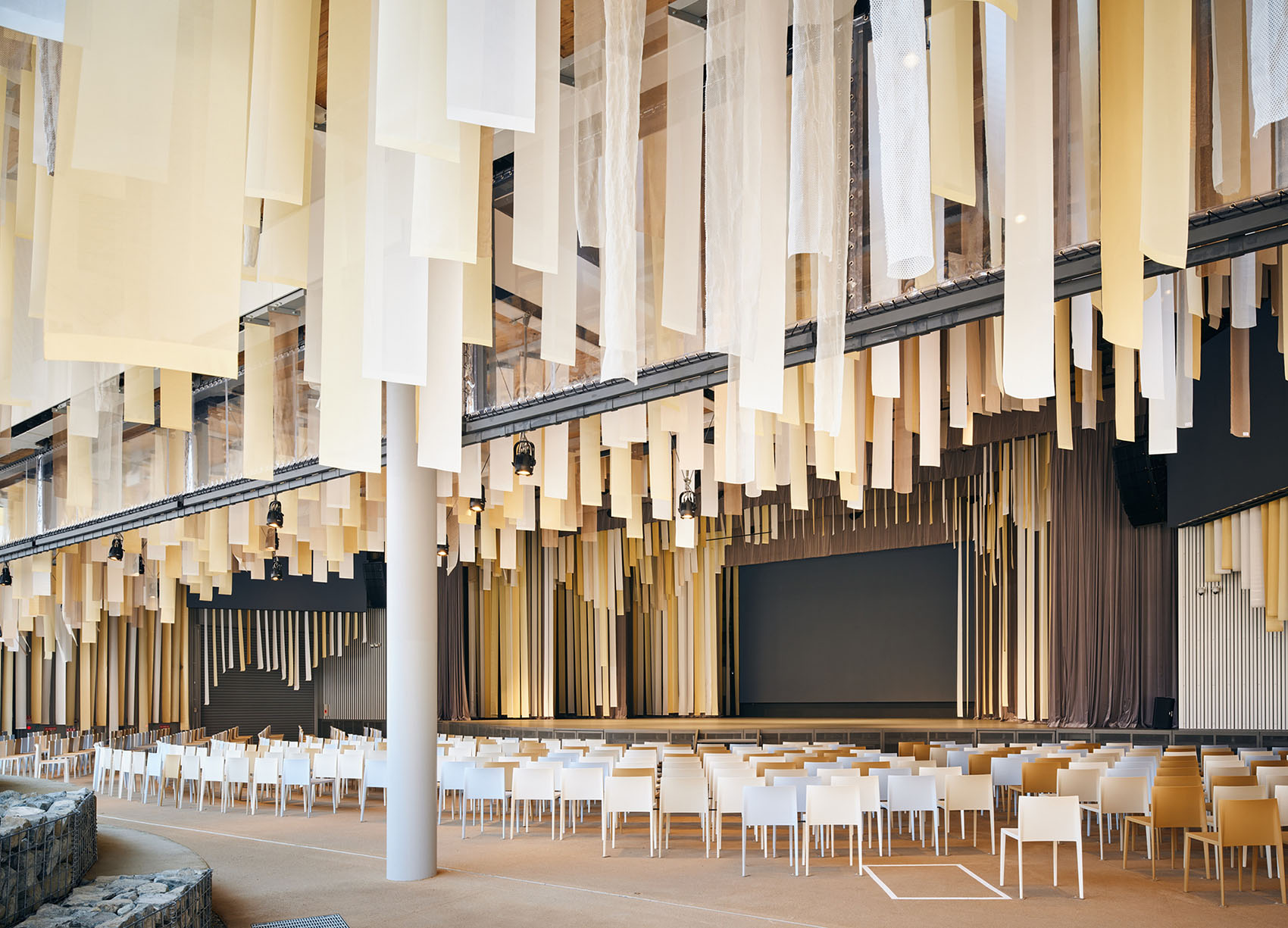
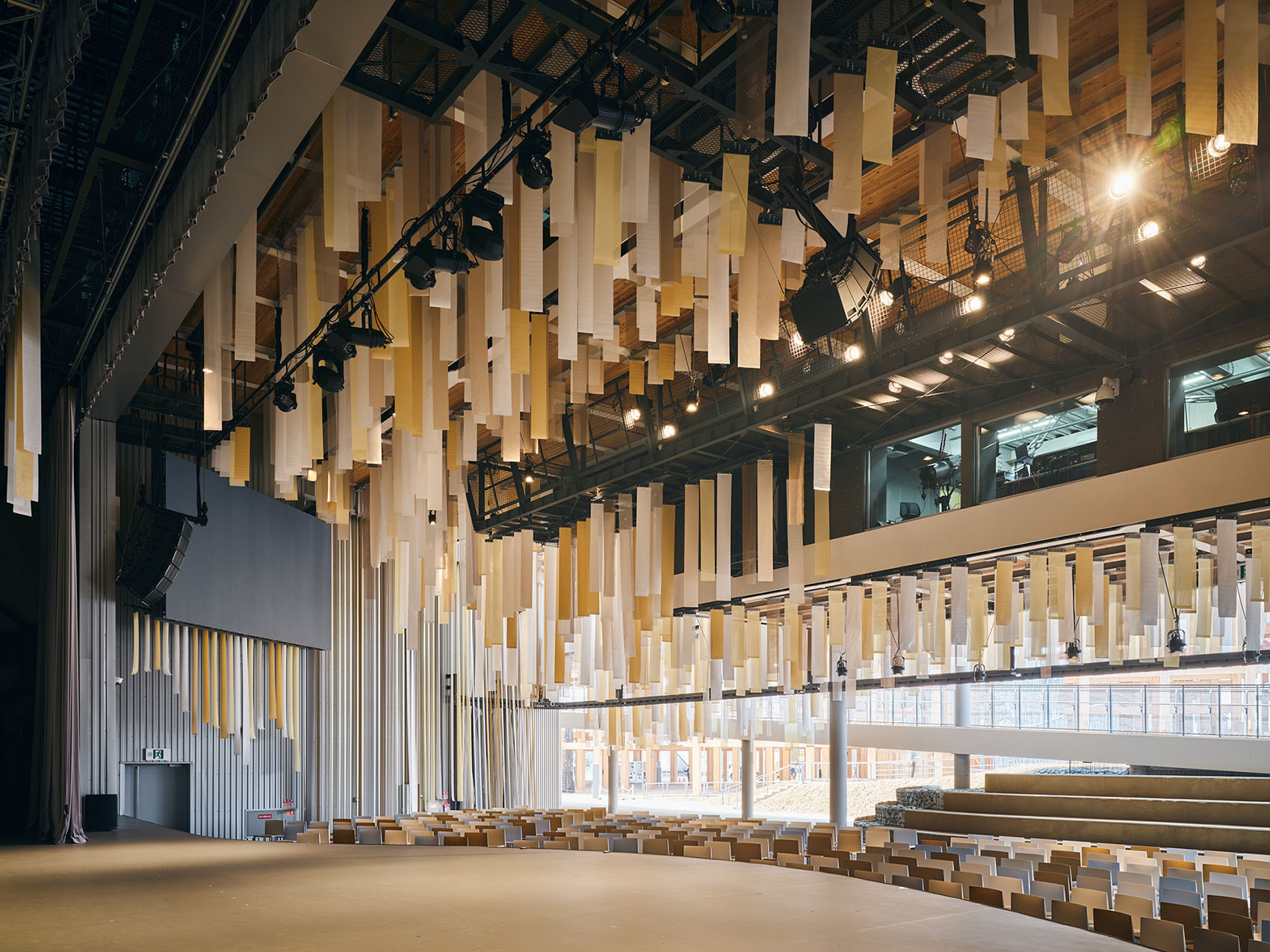
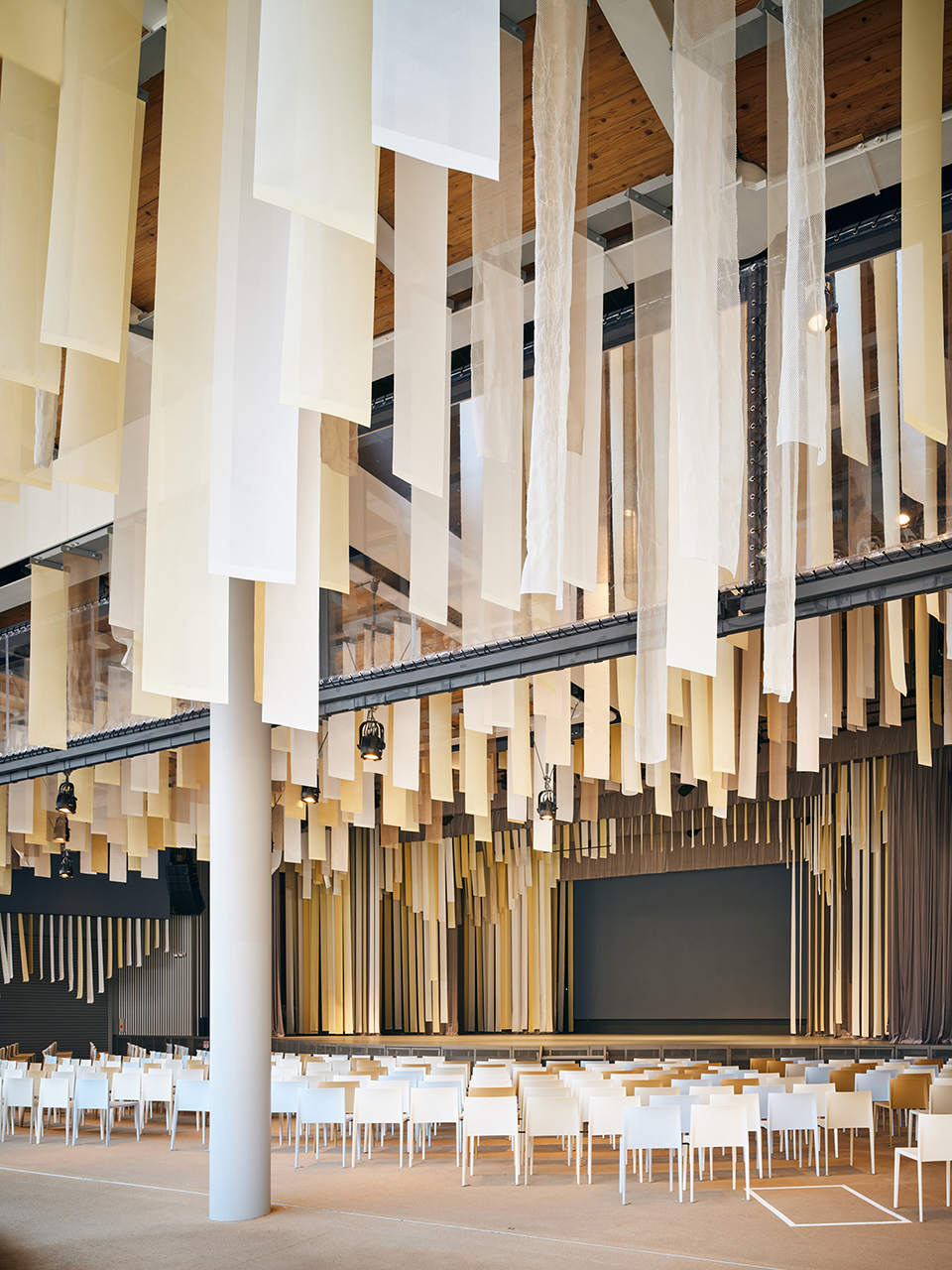
▼活动大厅局部,Event hall partial view
▼活动场景,Event scene
▼夜间建筑外观,Exterior at night
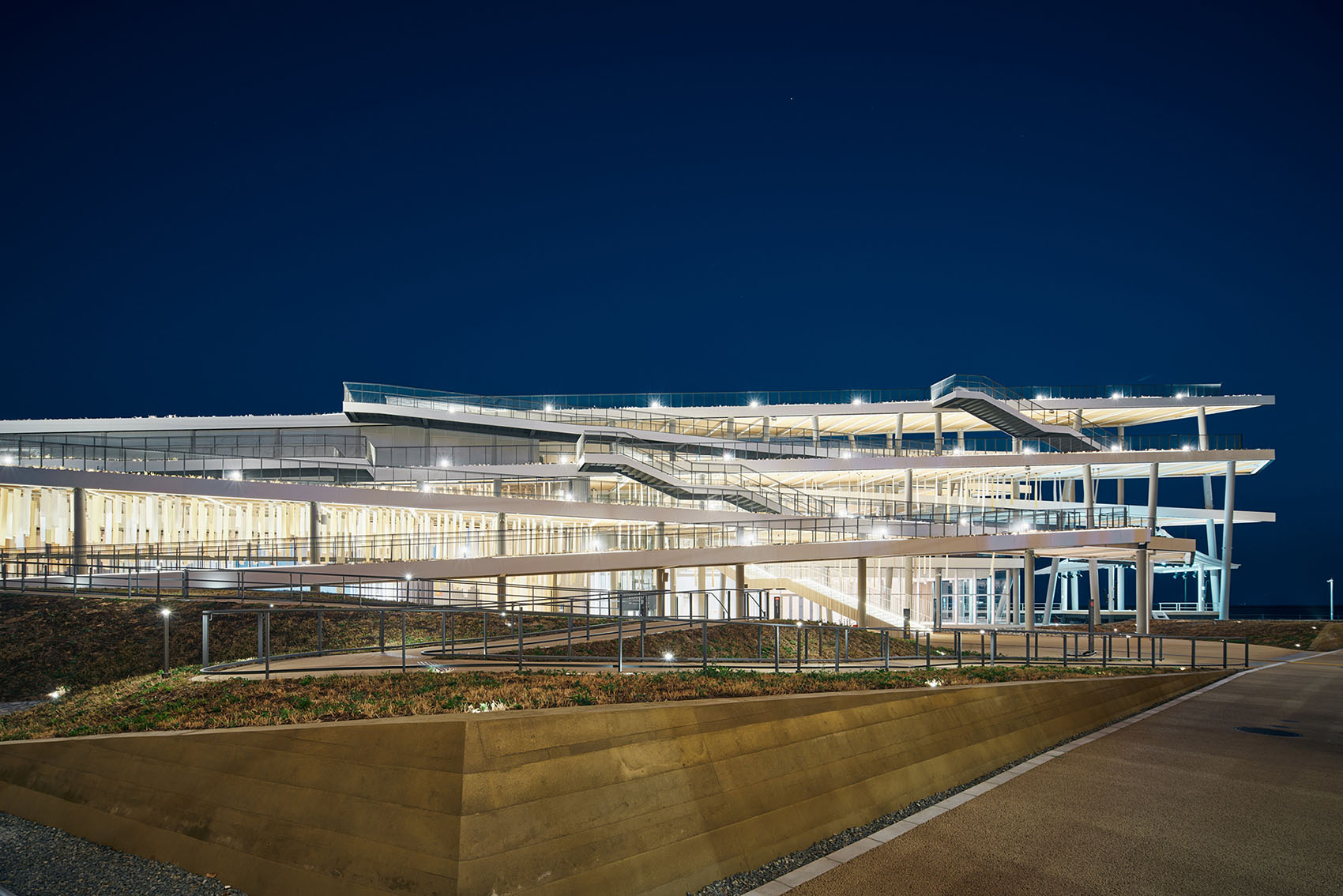
▼夜间建筑局部,Exterior partial view at night
▼开放公共空间夜景,Public space night view
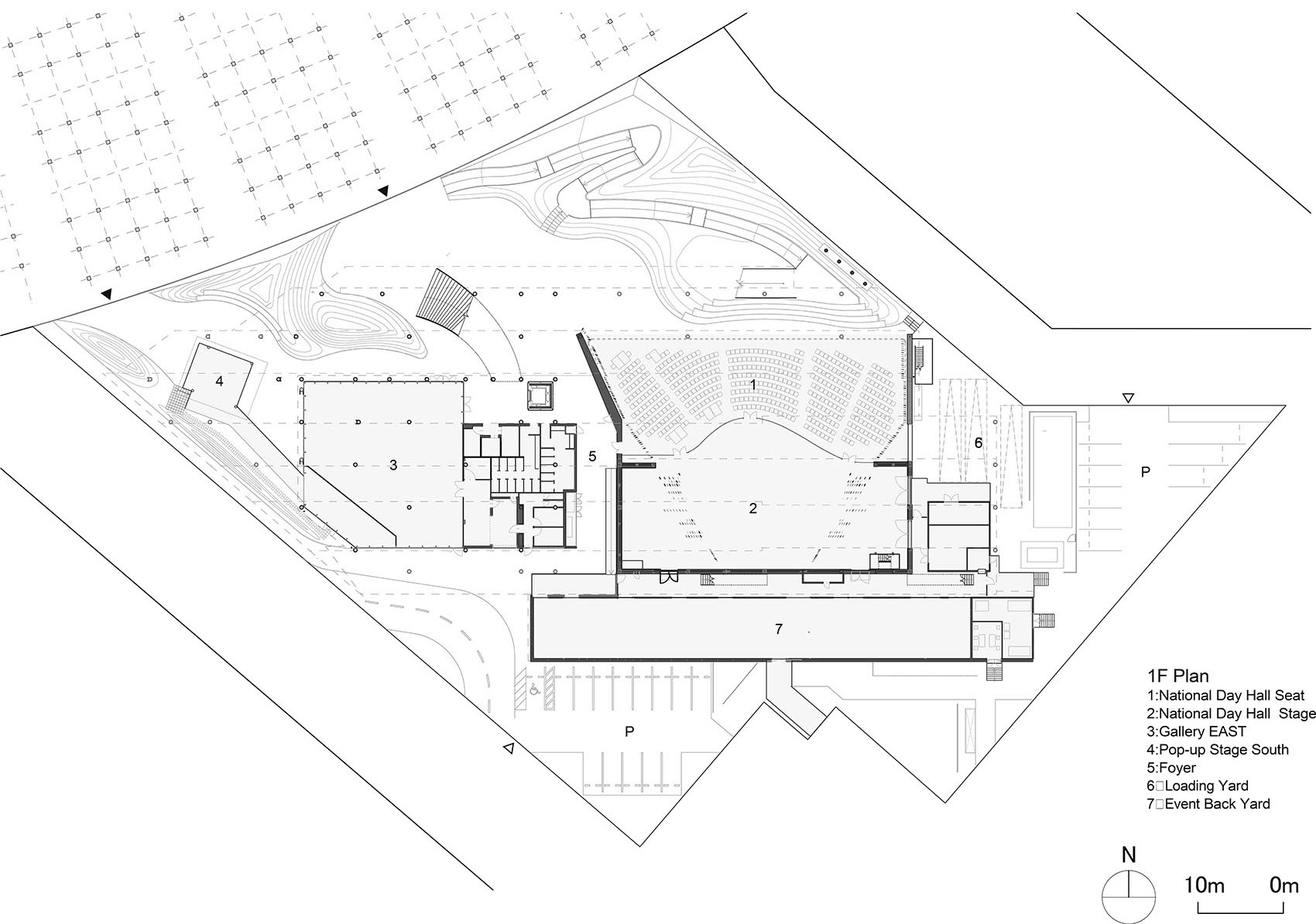
▼一层平面图,1F plan
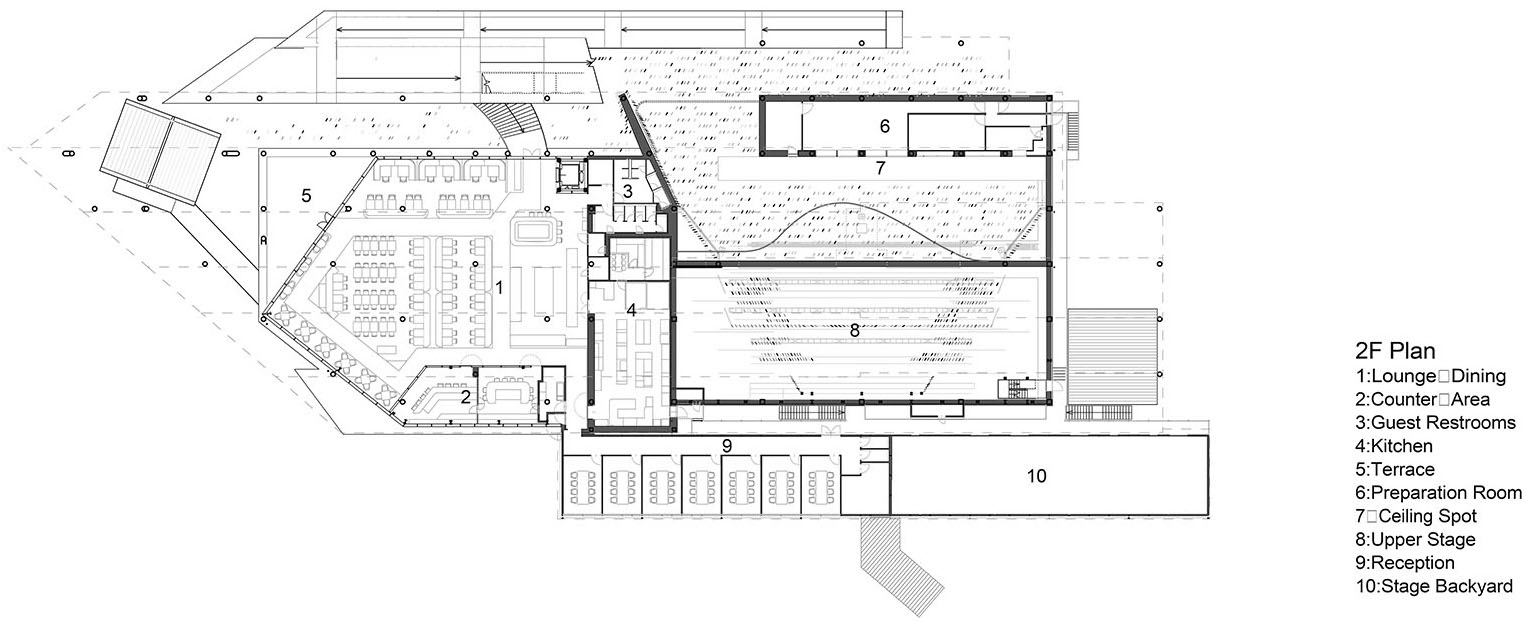
▼二层平面图,2F plan
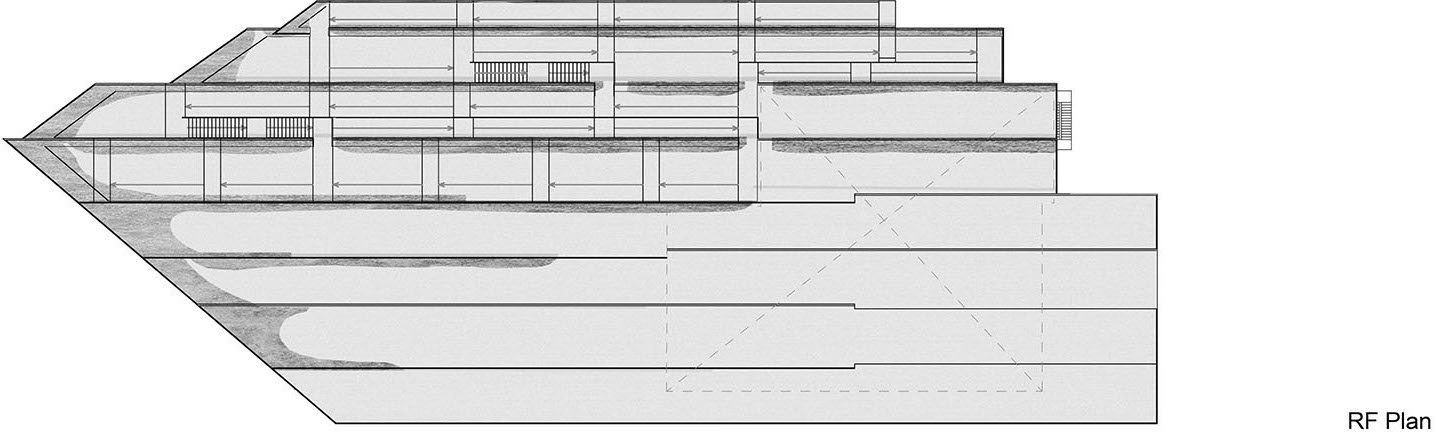
▼屋顶层平面图,RF plan
▼北立面图,North elevation
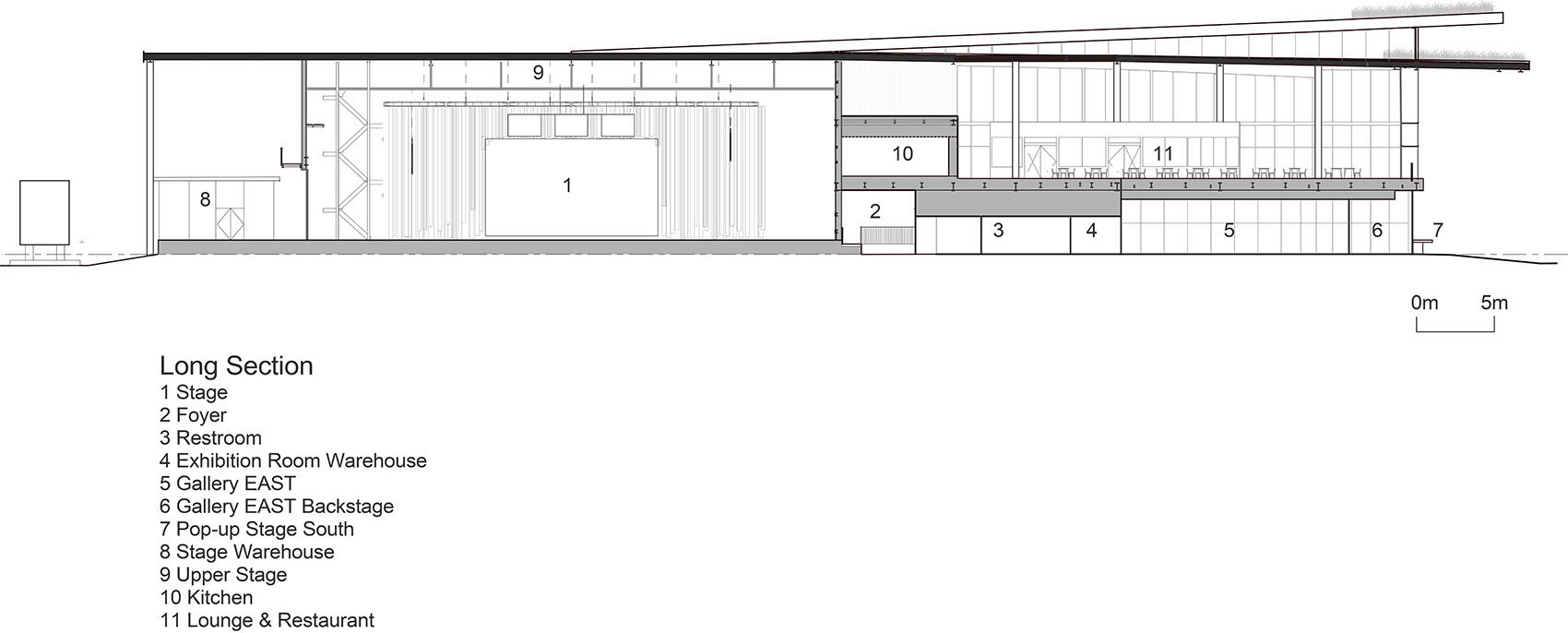
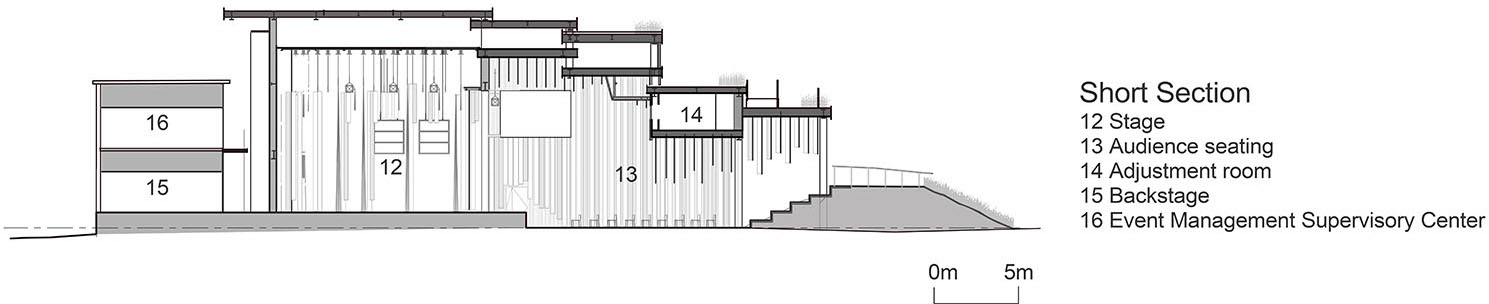
▼剖面图,Sections
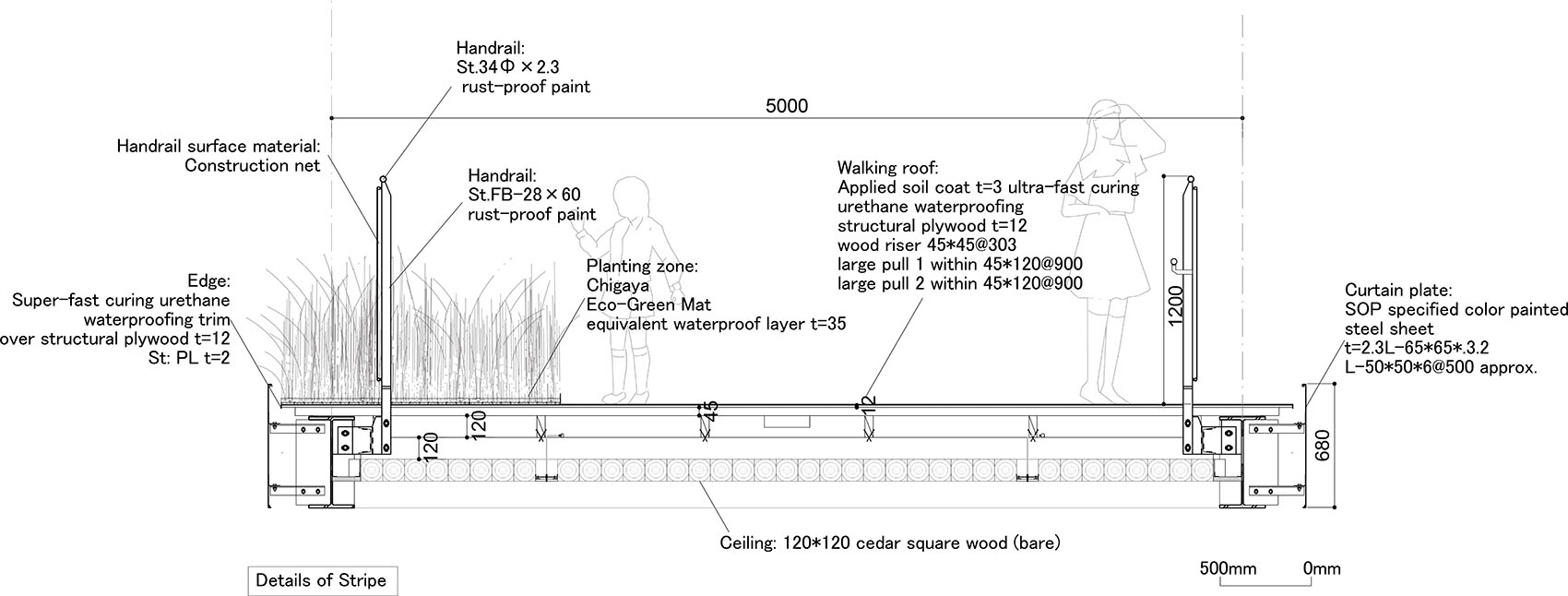
▼条带构造详图,Stripe detail
Project data
Site :Osaka, JAPAN
Design period : November 2021 – October 2023
Construction period : December 2023 – March 2025
Architecture Design:
Koji Muramatsu, Hirofumi Watanabe, Eisuke Kurosawa, Ryosei Inayama,
Terashima, Minehiro Maruyama, Hikaru Matsubara (Yasui Architects & Engineers,INC)
Structural Design :
Yasuno, Yoshiaki Yamamoto (KONOIKE CONSTRUCTION CO., LTD.)
Mitsuhiro Kaneda, Kazuma Goto, Yusuke Chaya(ARUP)
Facility Design : Yoichi Kobayashi, Chika Terai (Yasui Architects),
Taishi Oiwa, Keigo Hirata (KONOIKE CONSTRUCTION CO., LTD.)
Shuichi Tamura, Kazumasa Mukai, Masahiro Kawabata, Yutaro Ogawa (ARUP)
Exterior Design : Tatsuya Hiraga, Jun Murase, Mikio Sakamoto (Landscape Plus)
Stage Design : Tetsuhito Adachi, Ryo Kamisaka (OTO)
Construction Supervision : Kenji Oka, Kazutaka Kasai, Takunobu Ushiro (Yasui Architects & Engineers,INC)
Constructors : Naoki Sagiyama, Ryosuke Shigihara, Keisuke Ishiura, Yoshinobu Iiboshi, Toshiki Yoshioka, Tomoya Terasaki, Mayu Sakabe
Satoshi Matsuo, Mototoshi Noguchi (Konoike