小千谷图书馆与档案馆,日本 / 平田晃久建筑设计事务所
在为位于新潟县豪雪地带、人口约3.3万人的小千谷市设计图书馆与档案馆的竞赛中,核心挑战在于如何将信息空间与实体空间无缝融合,而这一目标唯有通过社区参与才能实现。我们提出了一套以协作工作坊为基础的框架,使设计能够通过与社区持续的信息交流逐步生成并显现。通过这一参与式设计过程,形成了三个关键建筑要素:Float(漂浮体)——由可移动家具与书架构成的系统;Anchor(锚点)——供人们聚集交流的空间;以及 Roof(屋顶)——能够承受三米积雪荷载的屋面结构。
In a competition to design a library and archive for Ojiya, a city of about 33,000 in Niigata Prefecture’s heavy snowfall zone, the challenge was to seamlessly integrate informational and physical spaces—an achievement possible only through community participation. We proposed a framework of collaborative workshops, allowing the design to manifest itself gradually through the information exchange with the community. Three architectural devices emerged from the participatory design process: Float as a system of movable furniture and bookshelves, Anchor as gathering spaces, and Roof, designed to withstand three meters of snowfall.
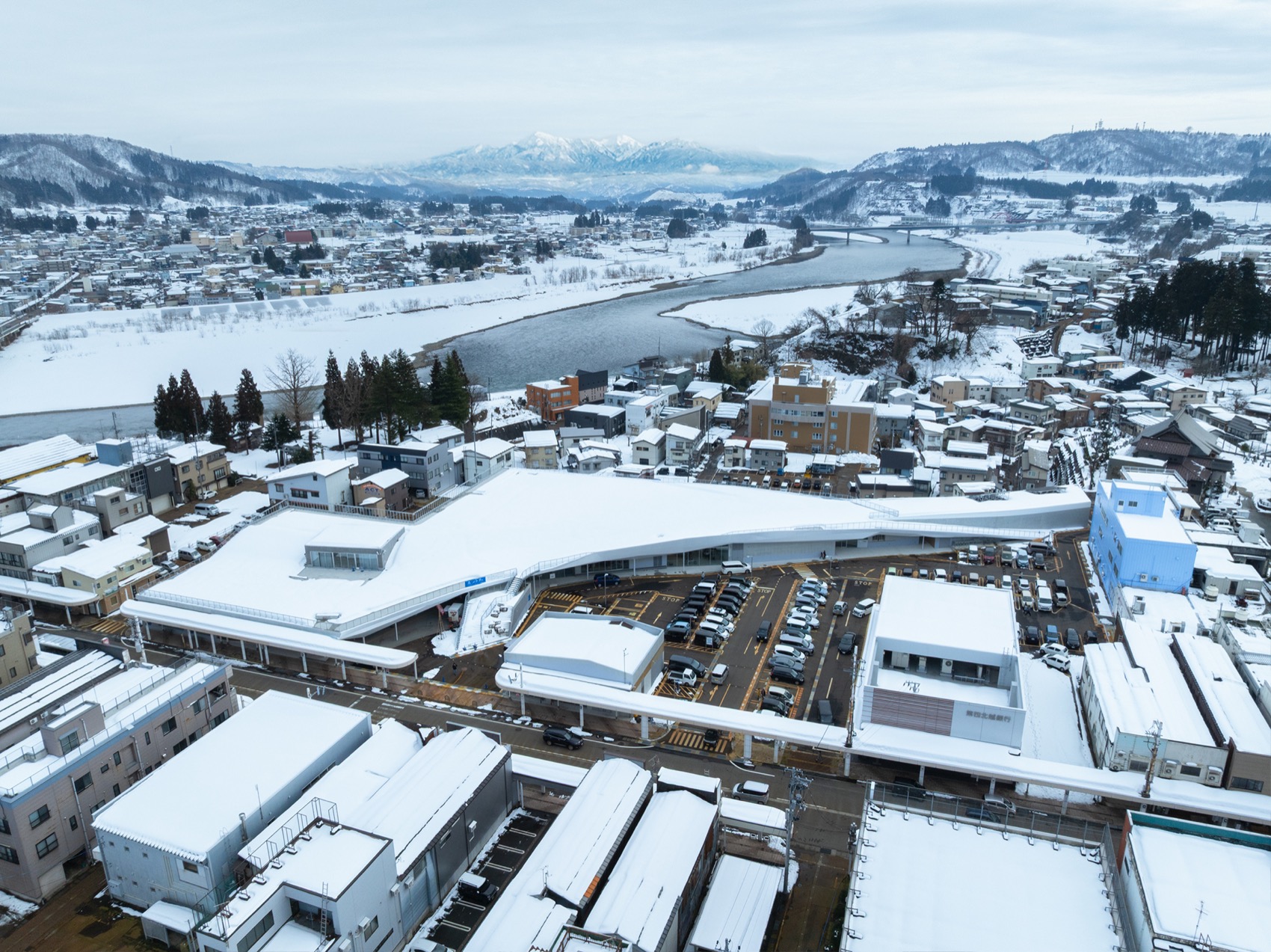
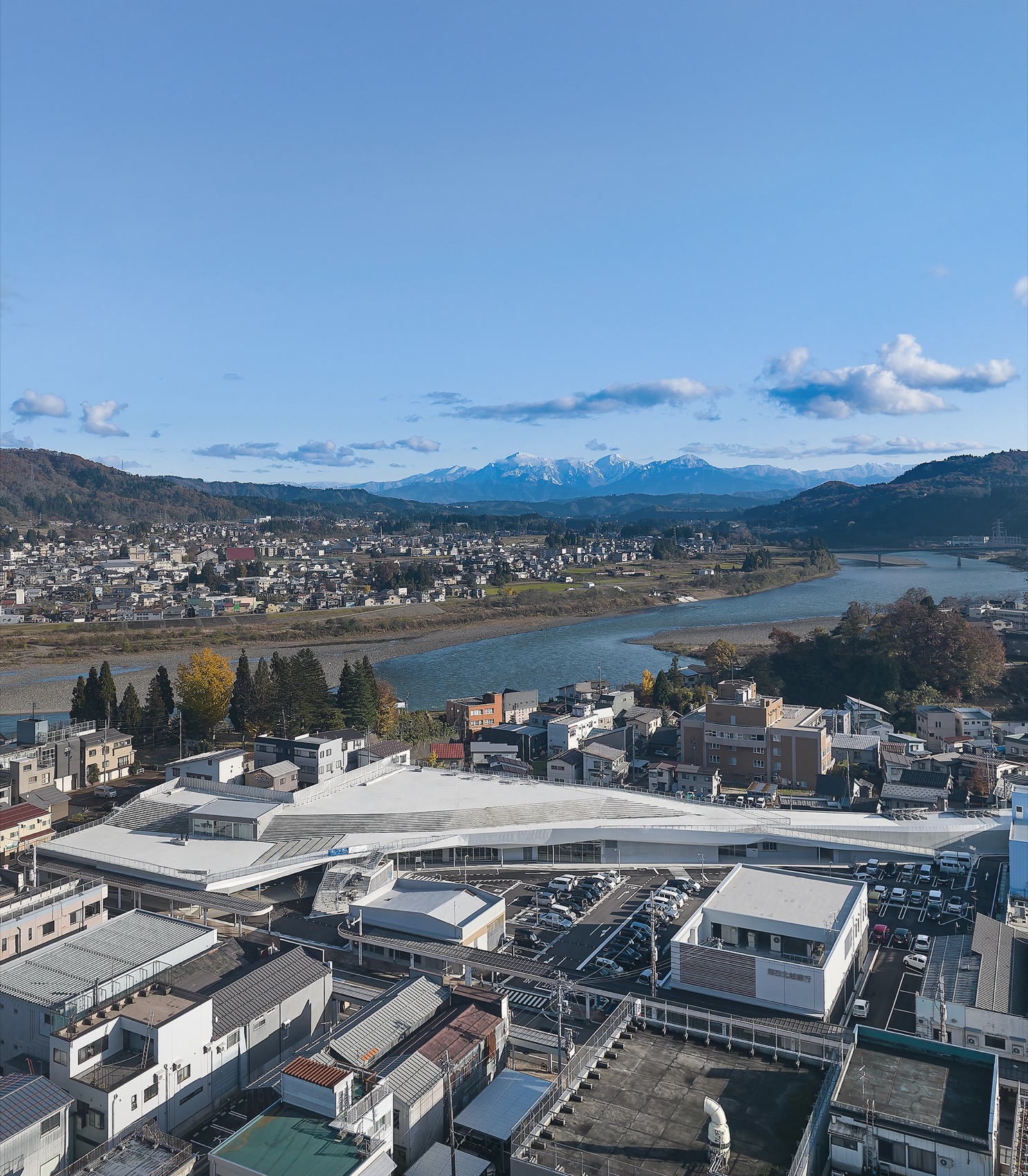
▼雪覆屋顶与河谷全景,Snow-covered roof and river valley panorama
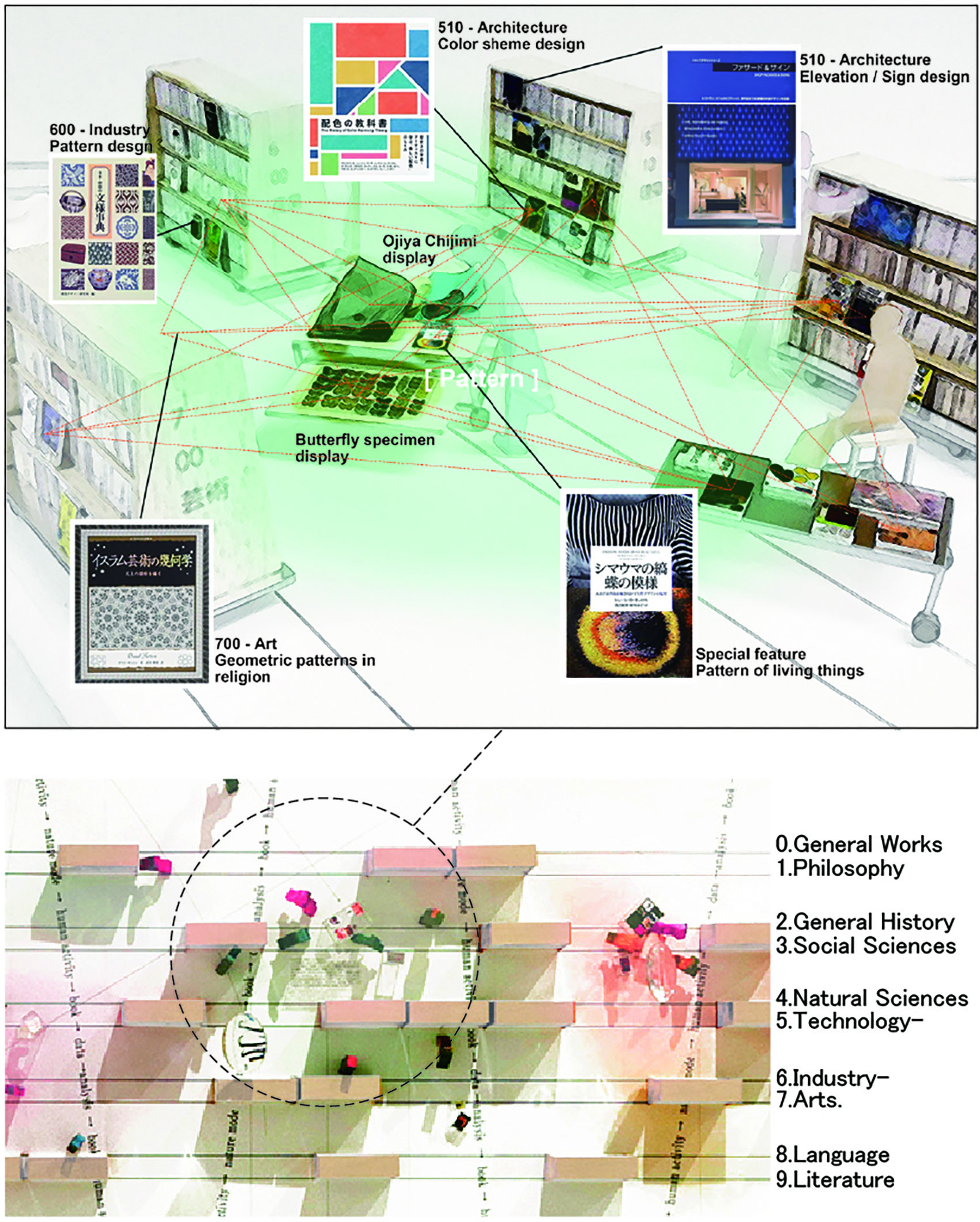
漂浮书架沿轨道移动,并按照图书分类进行排列。这不仅提升了检索效率,也使不同类别的书籍能够在空间中产生偶然相遇的机会。随着季节变化和活动开展,书籍聚集的形态不断发生转变,从而形成一座映射小千谷“生物节律”的图书馆。Float 如同博物馆中的展品一般,以特定主题吸引拥有共同兴趣的人们聚集。
The floating bookshelves move along rails, arranged by book classification. This facilitates searchability while allowing books from different categories to randomly encounter one another. The resulting clusters of books transform with the seasons and activities creating a library that reflects Ojiya’s biorhythm. Floats behave like museum exhibits, attracting people with specific interests.
▼河流与城市背景中的公共建筑,
Public building within the river and urban landscape
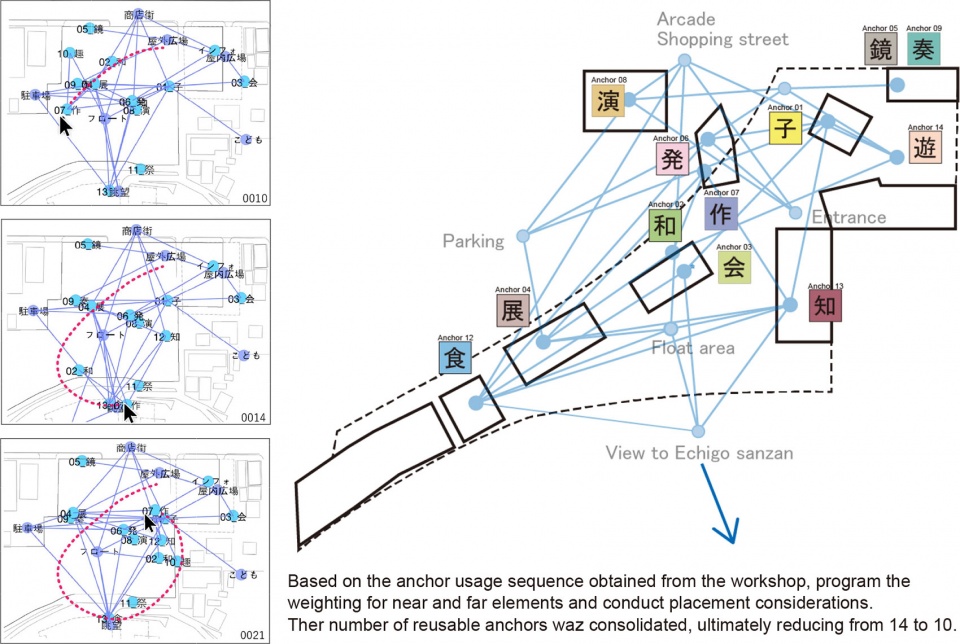
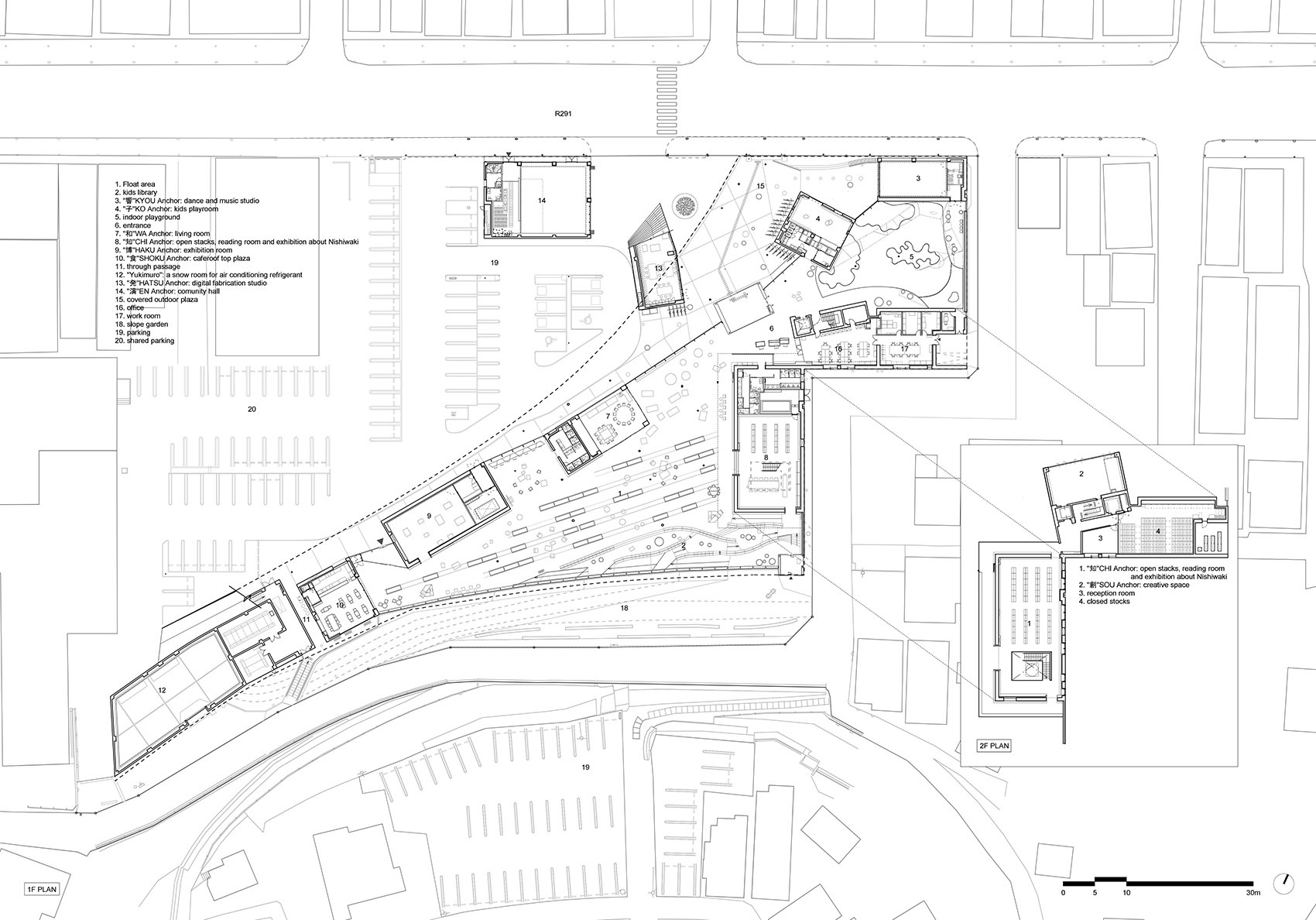
Anchor 则是承载这些群体活动的聚会空间。在社区工作坊中,共催生出超过一百种不同类型的活动。为了确保这些活动能够合理融入建筑,我们开发了一套数学分析方法,通过引入多重评价维度的弹簧模型,对各类活动之间的关系进行映射。这一方法帮助我们识别哪些活动能够共享同一空间,并进一步确定 Anchor 的特征与数量。此外,参与式工作坊所收集的意见也被纳入模型之中,从而确保社区诉求能够真实体现在 Anchor 的布局安排上。该方法具备良好的可扩展性,未来亦可应用于规模更大的数据集分析。
▼小千谷复杂的Anchor网络,
Ojiya Complex Anchor network
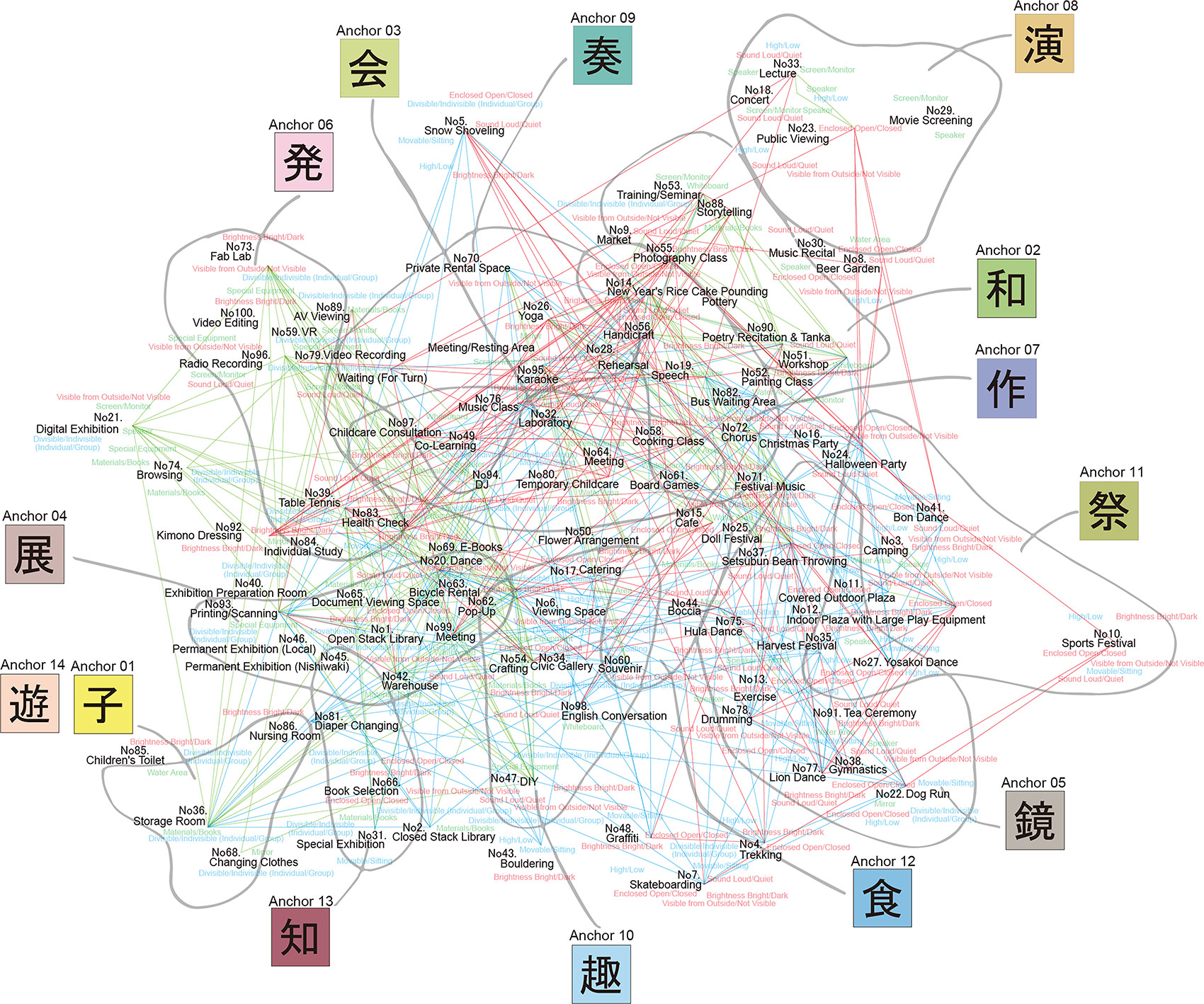
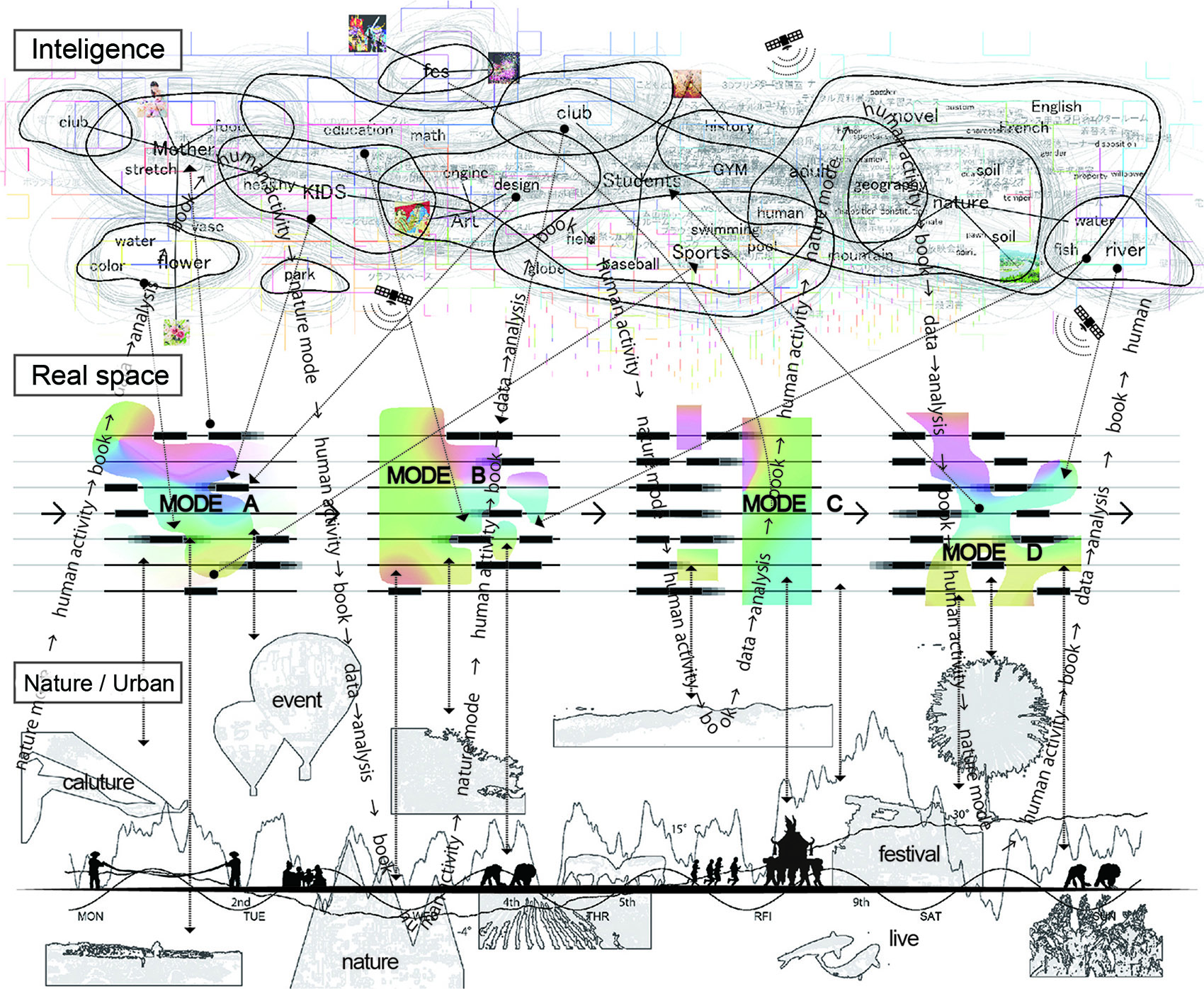
Anchors are the gathering spaces that accommodate these groups – over one hundred different activities emerged from the community workshops. To ensure its seamless integration, we developed a mathematical approach that mapped the activities’ relationships using a spring model that layered multiple evaluation axes. This allowed us to identify activities that could share a space and determine the characteristics and number of Anchors. In addition, the participatory workshops informed our model ensuring that the community desires were incorporated in the Anchor’s placements. This method is scalable and can be applied with an even larger data set in the future.
▼折面屋顶塑造入口空间,Folded roof shaping the entrance space
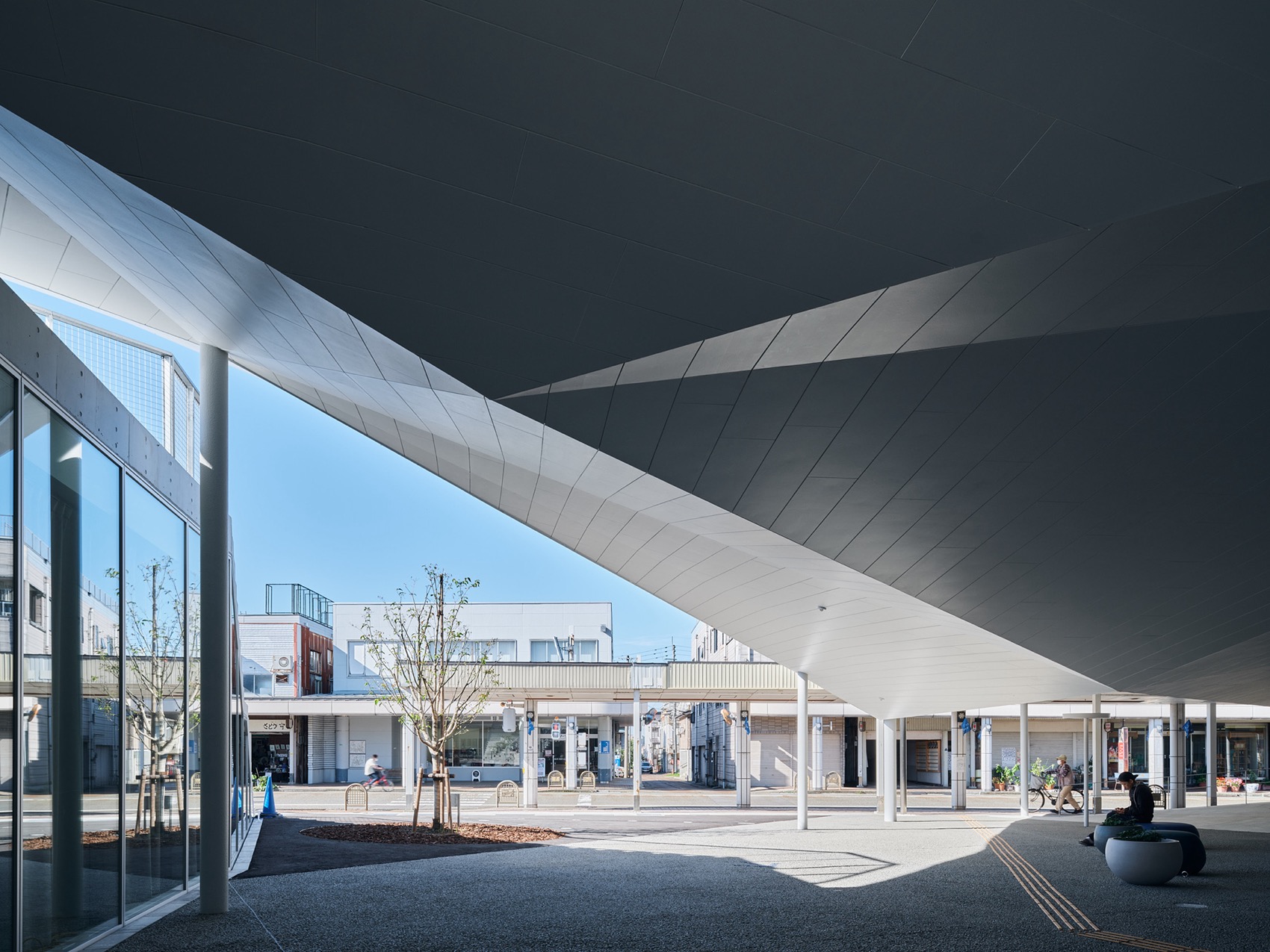
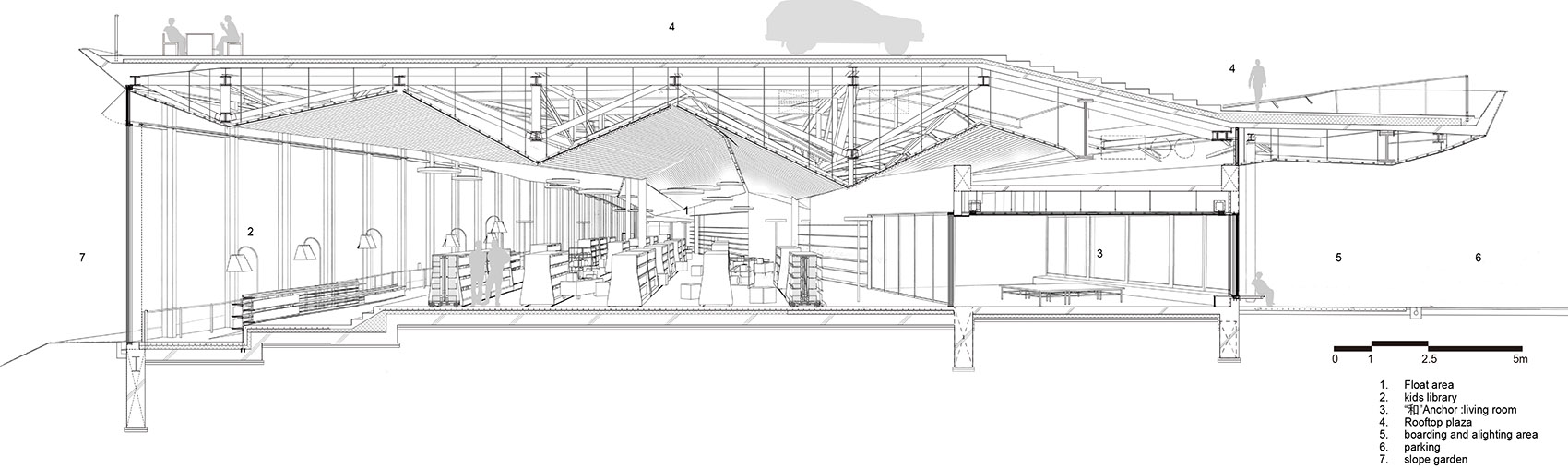
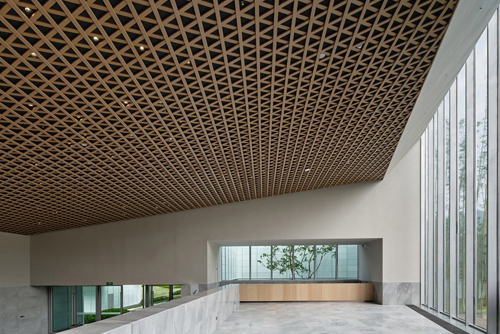
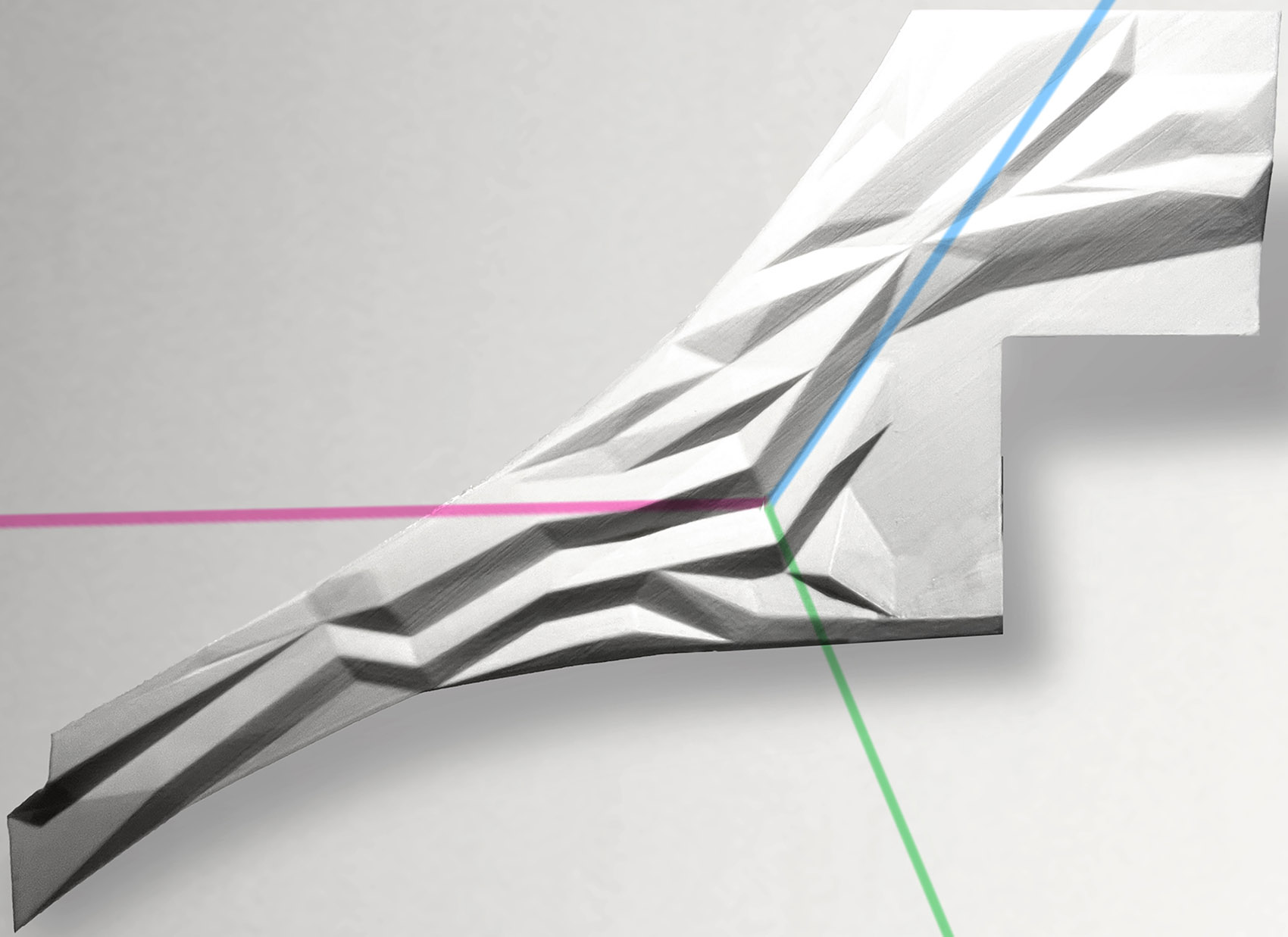
屋顶设计灵感来源于雄伟壮丽的越后三山。项目场地原为市立医院旧址,是当地少数能够无遮挡眺望山脉与鱼野川河谷景观的位置之一。小千谷人民对这一标志性景观的崇敬或许可以追溯至绳文时代(约公元前14000年至公元前300年)。因为在这一地区曾出土过具有代表性的火焰形土器遗存。为了创造一个承载这种古老想象力的场所,我们设计了一座屋顶,其形态既回应了小千谷复杂起伏的地形,也借鉴了当地传统织物“小千谷缩(Ojiya-chijimi)”细密褶皱的肌理特征。在起伏流动的屋顶之下,是一套坚固的桁架结构系统,能够承受严苛的积雪荷载。这一建筑构想是在竞赛阶段之后逐渐形成的,其发展源于现场调研以及与社区居民之间富有意义的交流。
▼浮区岛,float area island
▼使用spling工具进行布局研究,
layout study using spling tool
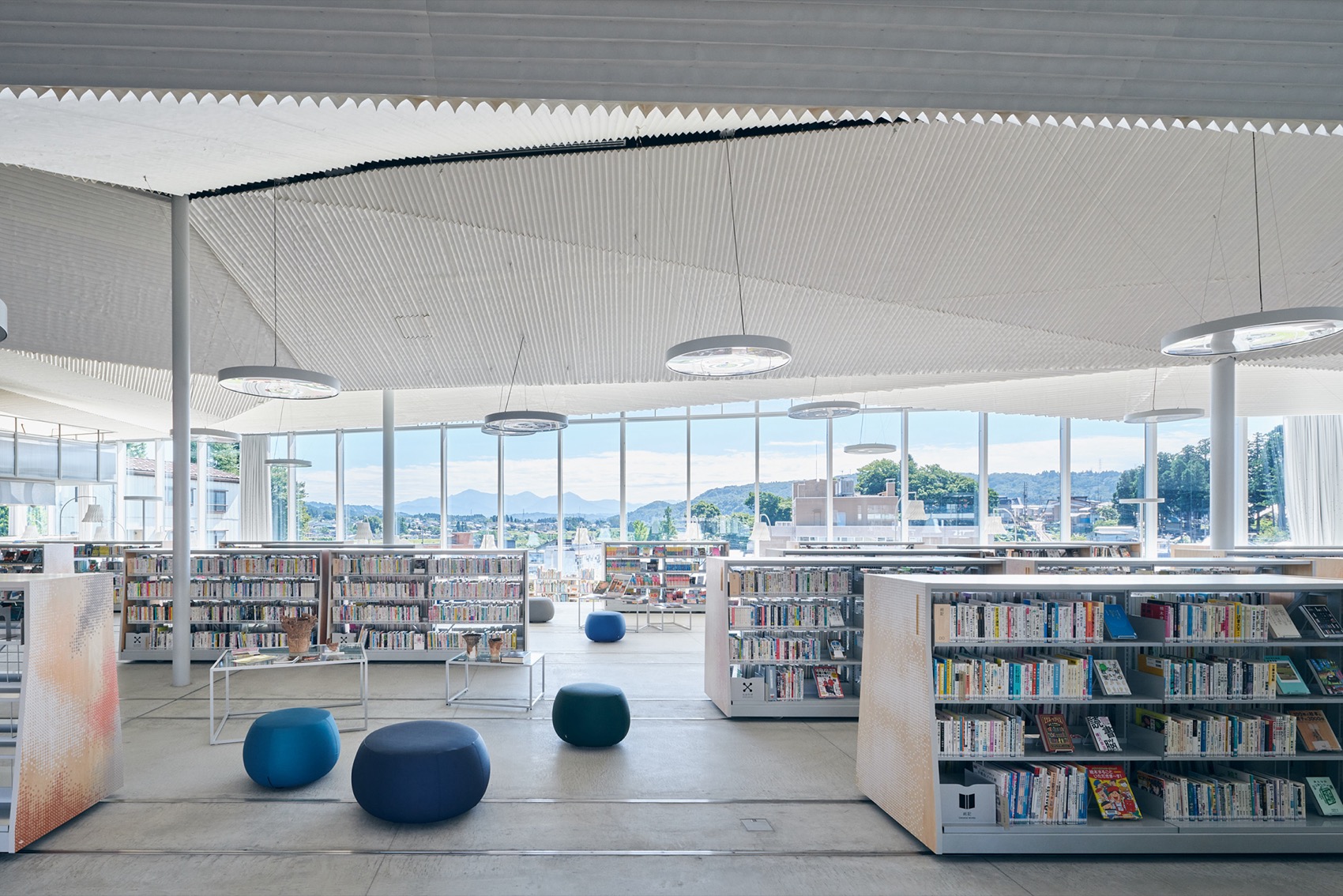
The roof design was inspired by the majestic Echigo Sanzan mountains. The site, formerly home to the city’s hospital, is one of the few locations offering unobstructed views of the mountain range and the Uono River Valley. The people of Ojiya have venerated these iconic view probably since the Jomon period (c. 14,000 to 300 BC) since remnants of their characteristic earthenware flame pots have been unearthed in the area. To create a place imbued with this ancient sense of imagination, we designed a roof that references the complex terrain of Ojiya as well as the wrinkly folds of its traditional textile, Ojiya-chijimi. Beneath its undulating form lies a robust truss-structure, engineered to withstand heavy snow loads. This architectural idea emerged after the competition stage, shaped by site surveys and meaningful conversations with the community.
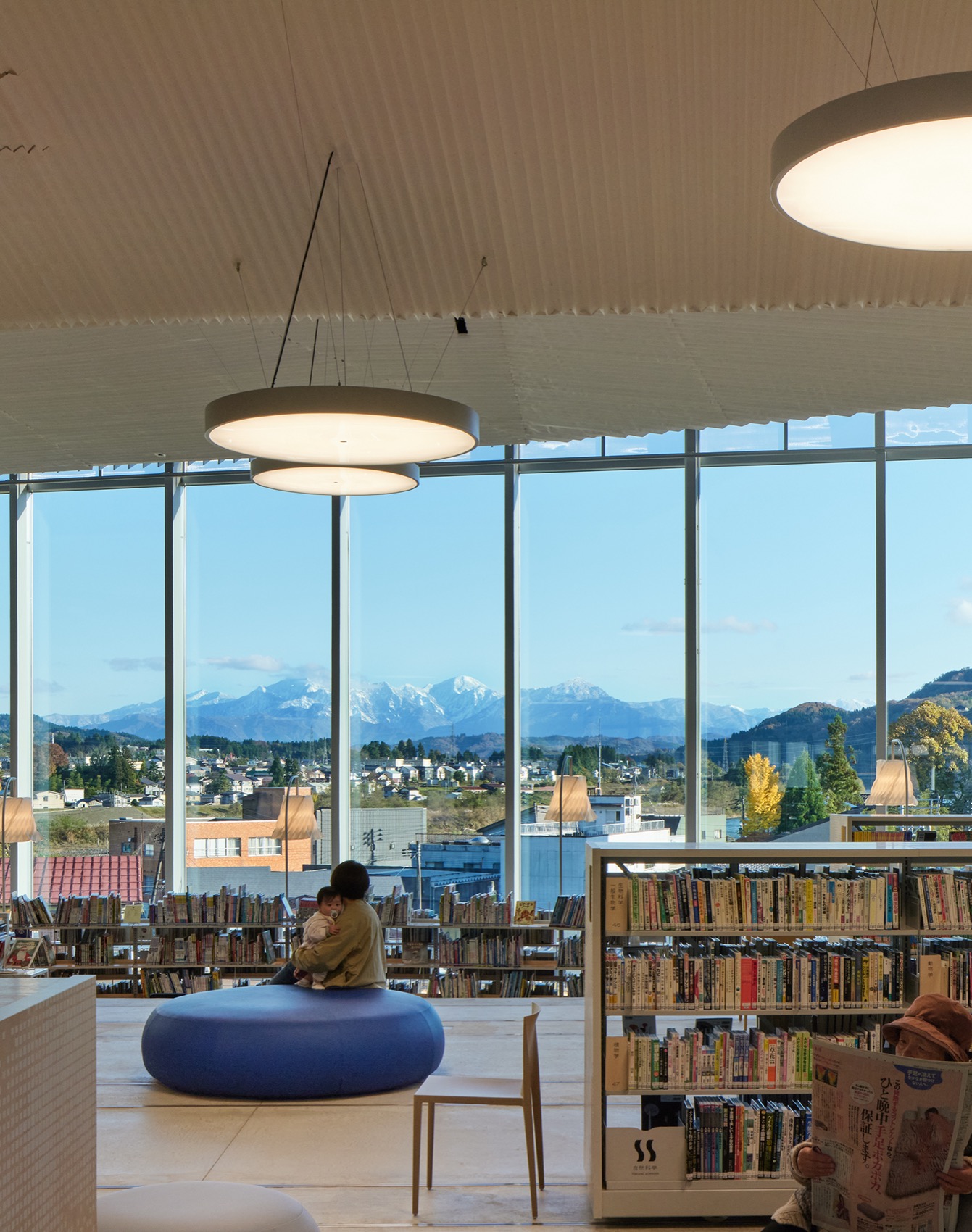
▼书架与山景相互映照,Bookshelves framed by mountain views
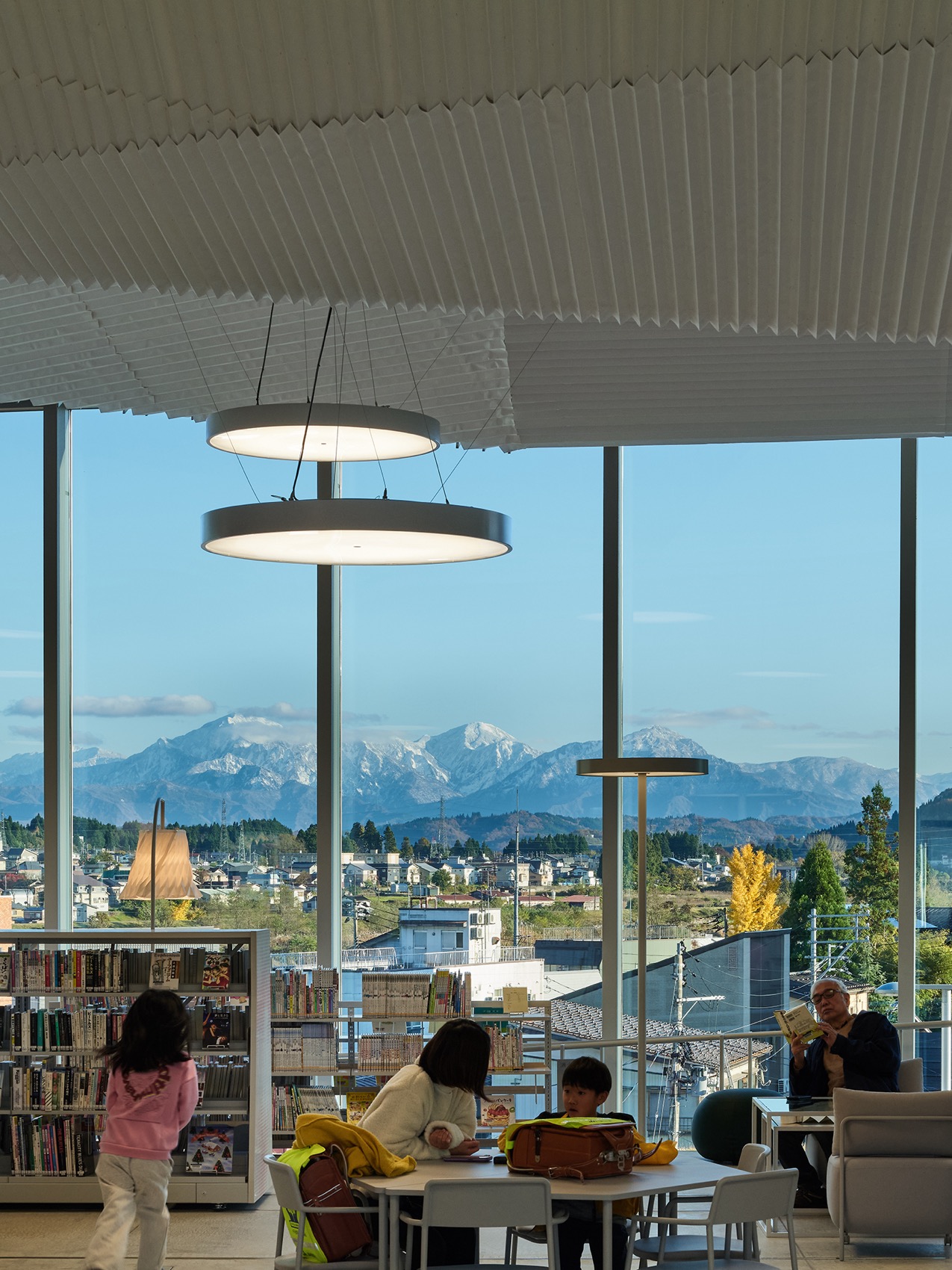
▼可移动书架组织阅读空间,Movable bookshelves organizing the reading area
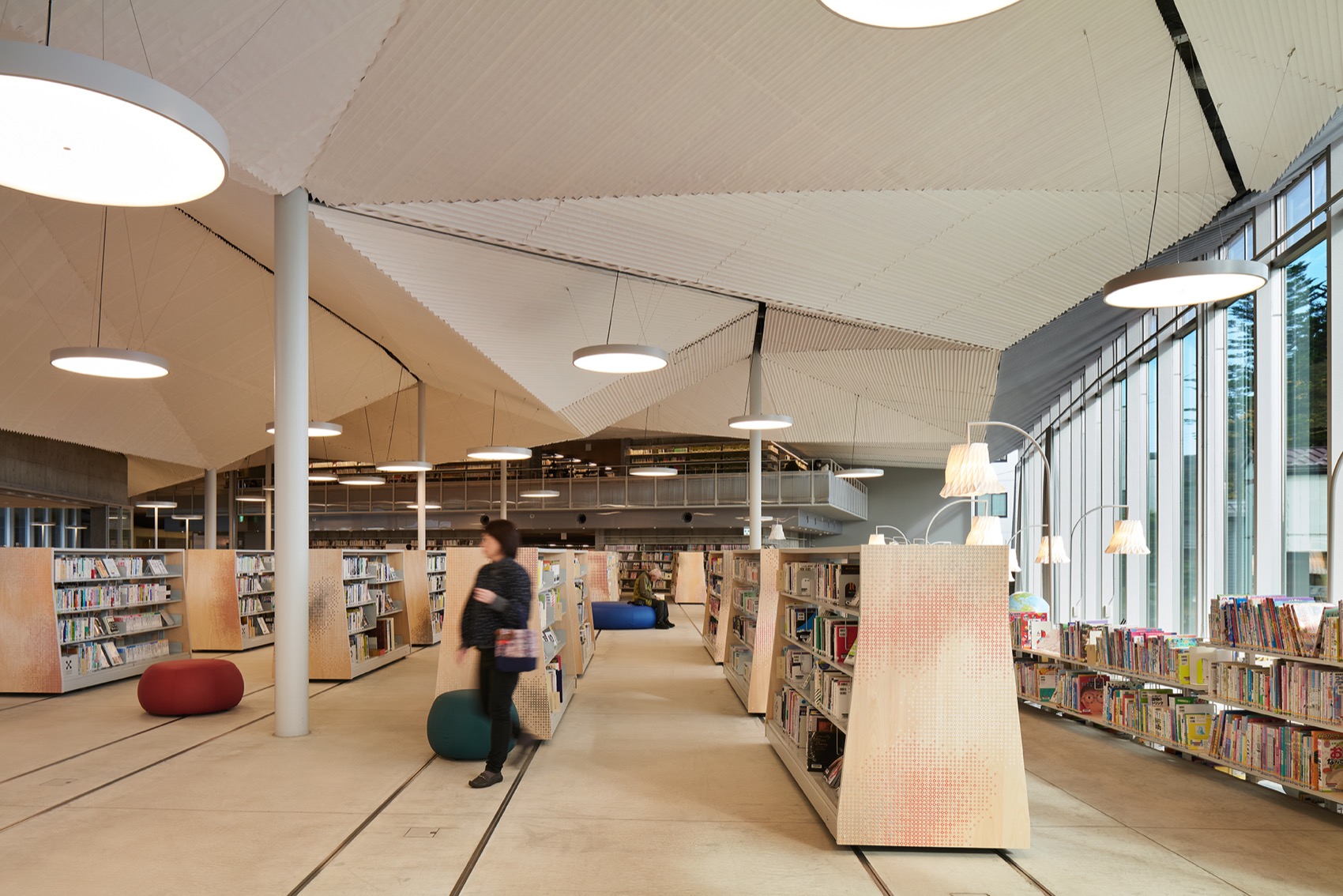
▼地形化空间激发自由活动,Topographic interior encouraging free movement
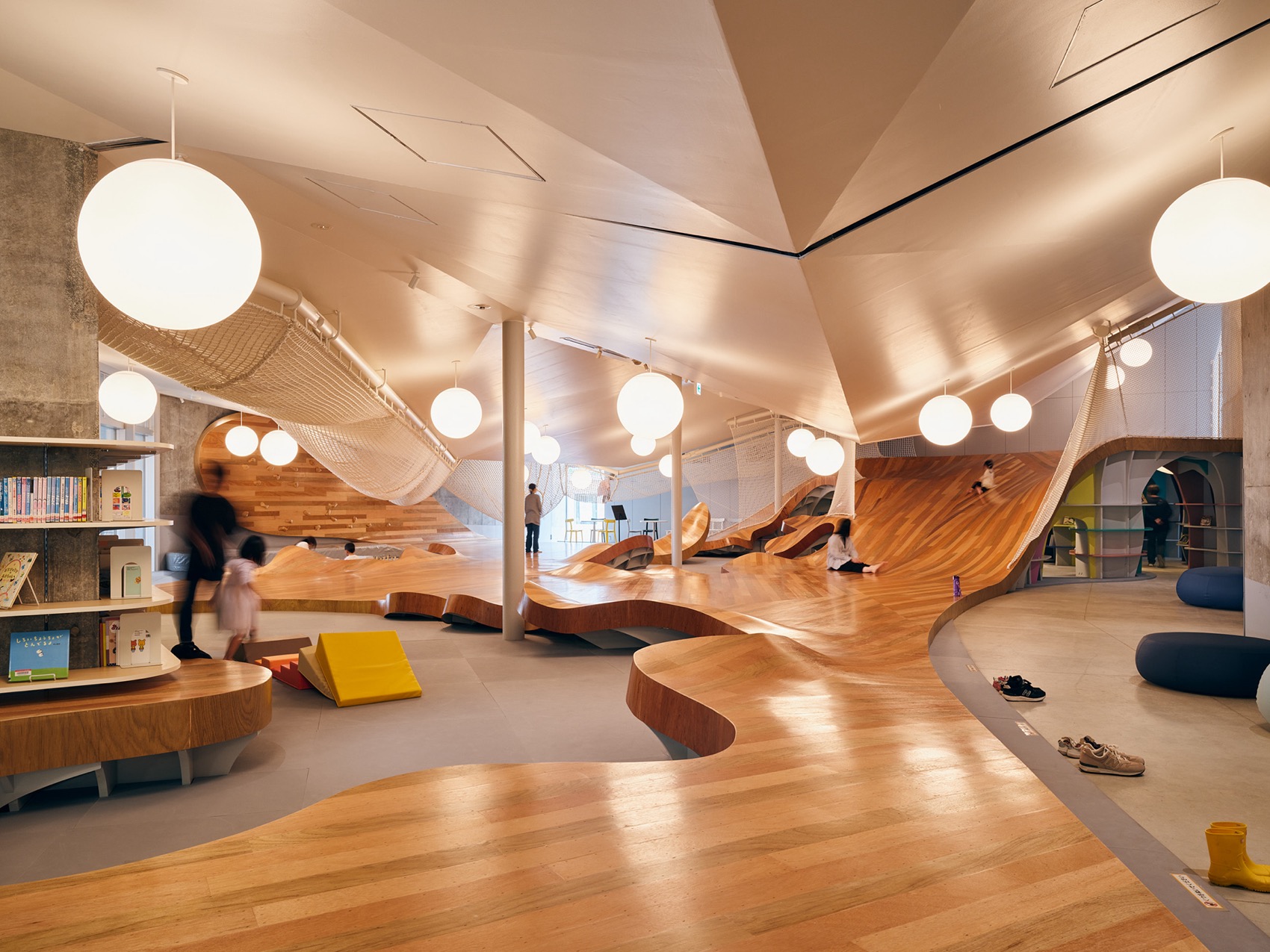
正是在这样的过程中,建筑设计逐渐成形:Anchor 环绕着由 Float 构成的场域,而 Roof 则犹如一片倒置的地形悬覆其上。最终形成的建筑如同一座花园,与越后三山壮丽的自然背景无缝交融。从某种意义上说,这是一处当代的“圣地”。得益于工作坊合作伙伴——社区发展组织 Ojiya Living Lab 的支持,这座图书馆已经成为一个充满活力的活动中心,其所激发的社会能量远远超出了最初的预期。
▼屋顶形态生成模型,
Roof form generation model
Through this process, the architectural design took shape, featuring Anchors surrounding a field of Floats and a Roof shaped like an inverted terrain. This design creates a garden that blends seamlessly with the scenic backdrop of the Echigo Sanzan mountains. In a sense, this is a modern-day sacred place. Thanks to our workshop partner, the community development organization Ojiya Living Lab, the library has become a hub of activities that has surpassed all expectations.
▼山景成为室内阅读背景,
Mountain scenery as the backdrop to reading
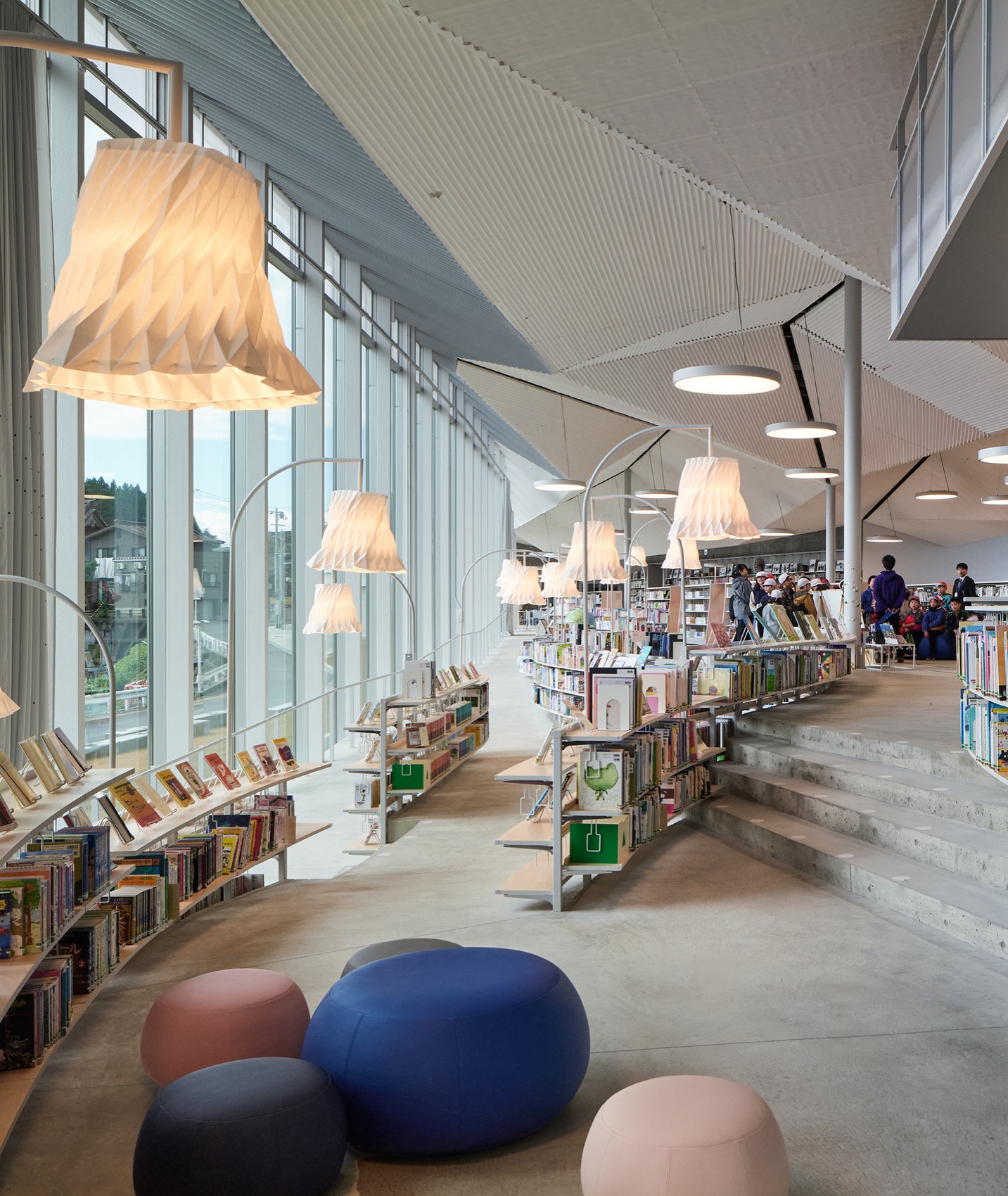
▼河谷地貌中的建筑布局,Building layout within the river valley landscape
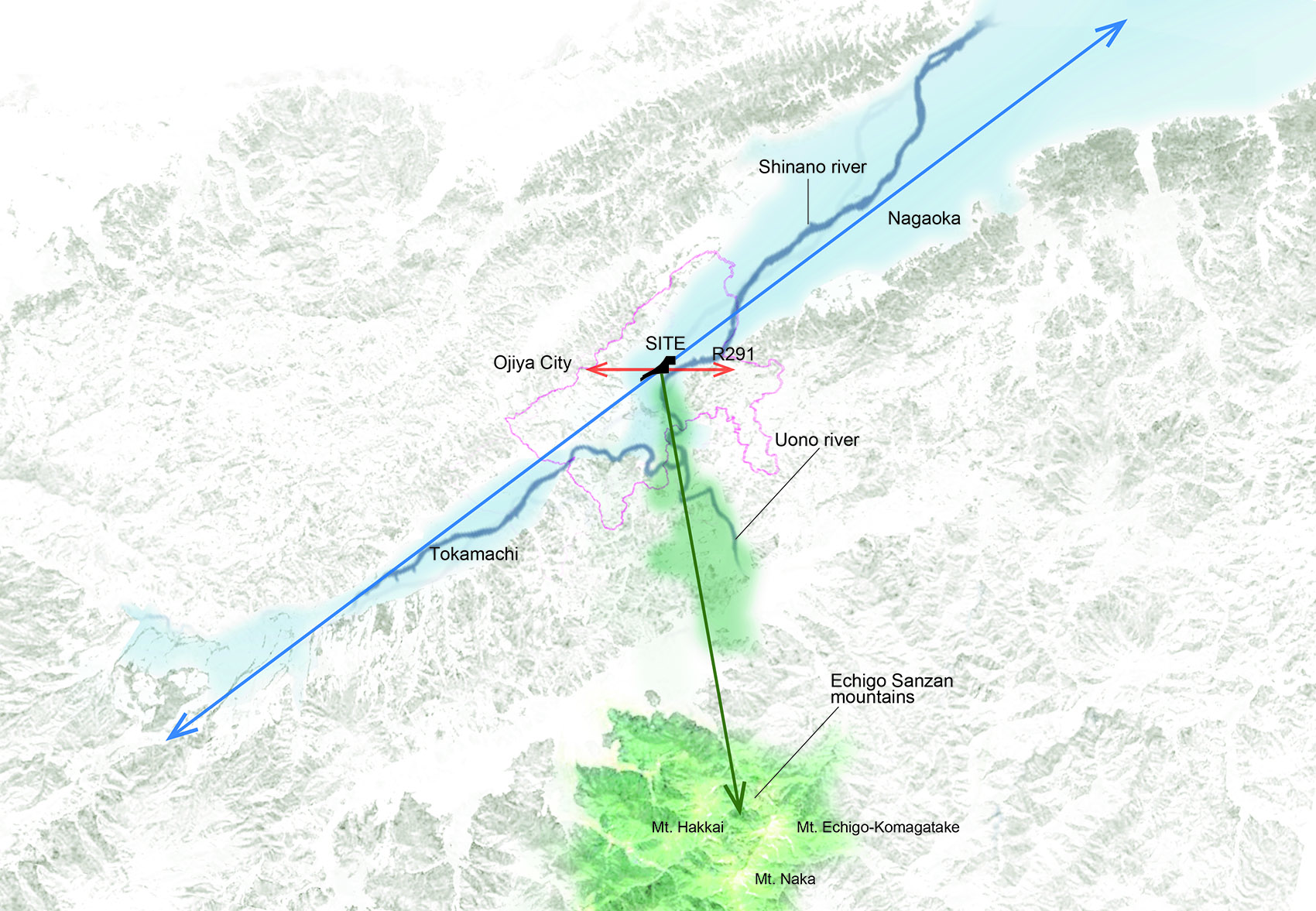
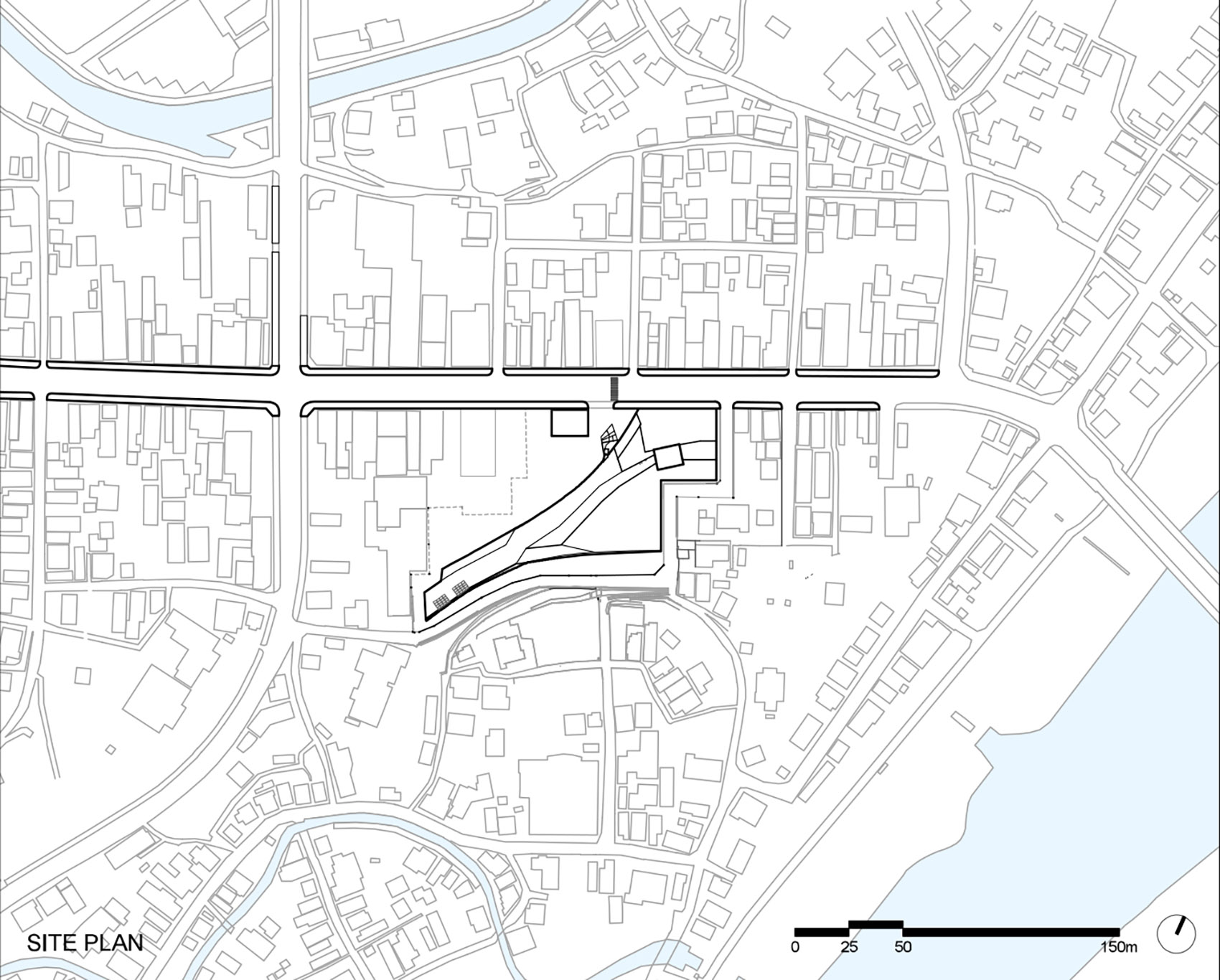
▼项目区位图,Site plan
▼平面图,Floor plan
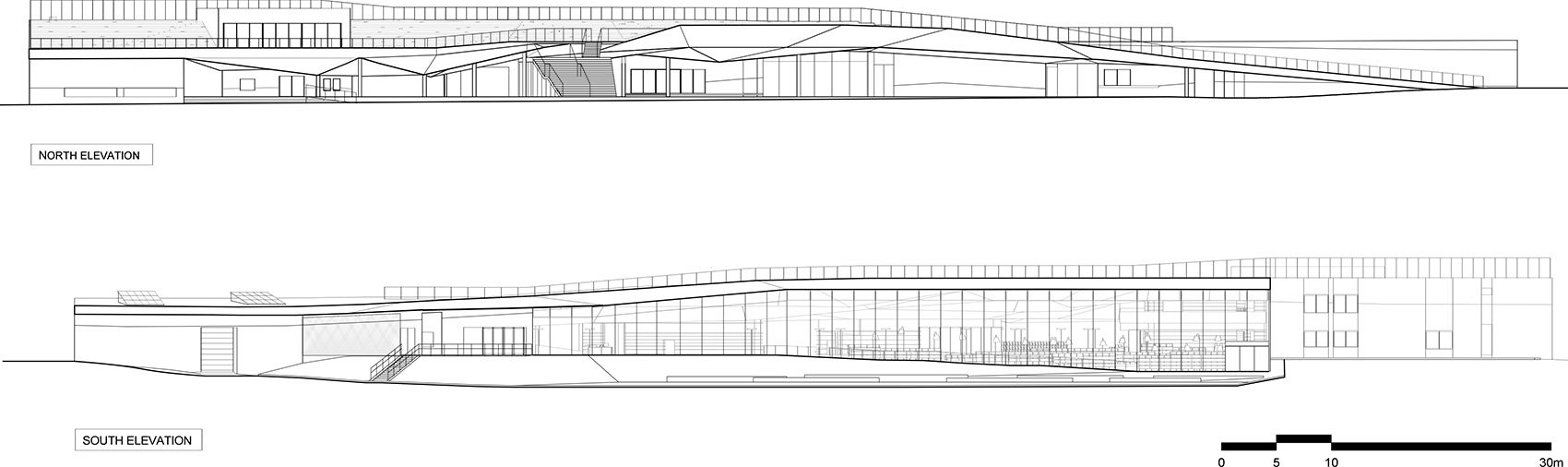
▼立面图,Elevation
▼剖面图,Section