桑茨社会中心,巴塞罗那 / Laos Arquitectura + Mercè Zazurca Codolà + César Sánchez Medrano
项目的改造以“人”为核心前提,将居民、社区、活动与社会生活置于建筑设计的中心。该方案将一栋始建于1950年、历经多次改造而面貌改变的建筑,转化为一处当代化、灵活且可持续的公共设施,使其能够继续作为活跃的社区聚会场所,同时保留其历史记忆与城市身份。此次介入将建筑视为服务于公共利益的社会基础设施,使其能够伴随社区的发展持续演变,并为使用者创造富有意义的空间体验。原建筑由首层及两层楼层组成,项目保留了首个结构开间,新增一层建筑体量,通过缩减建筑进深形成后院,并引入一个带顶棚的中央中庭。
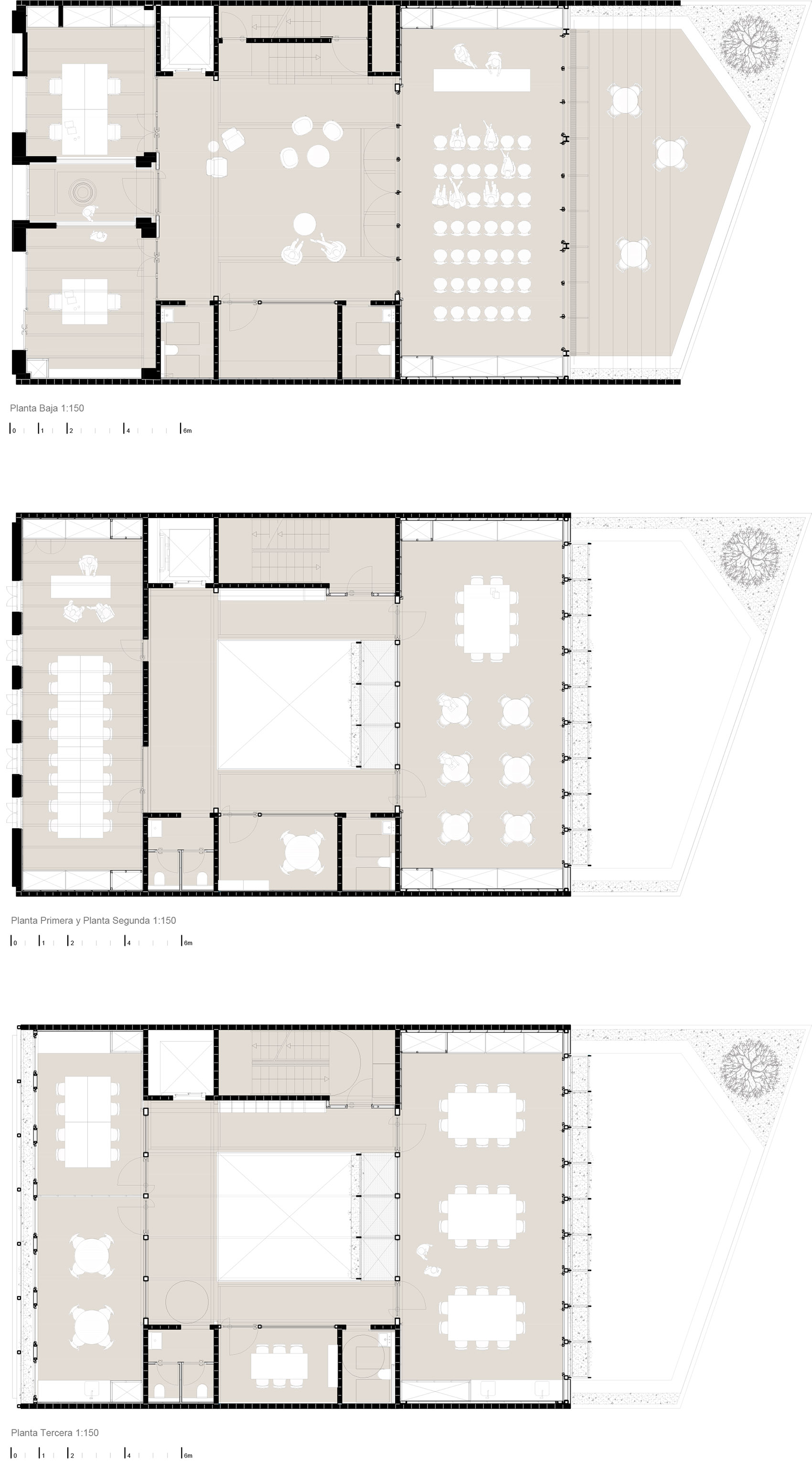
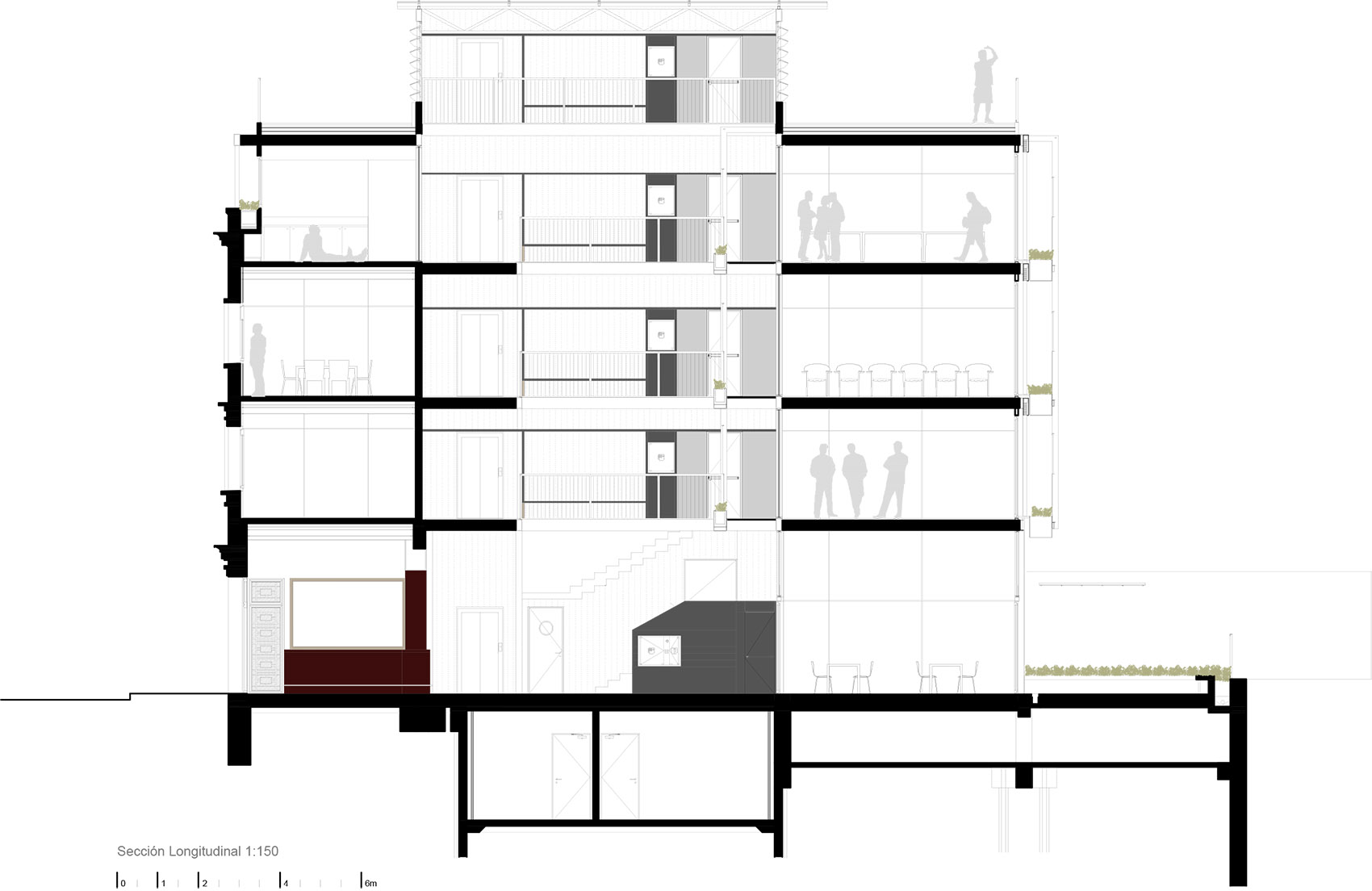
The rehabilitation project is based on the premise of placing people, the neighbourhood, activities, and social life at the centre of architecture. The proposal transforms a building originally constructed in 1950, deeply altered over time, into a contemporary, flexible, and sustainable facility capable of continuing to serve as an active meeting place, without compromising its memory or urban identity. The intervention understands the building as a social infrastructure serving the common good, capable of accompanying the community’s evolution over time and generating meaningful user experiences. Originally composed of a ground floor and two upper floors, the project preserves the first structural bay, adds a new upper level, reduces the building depth to create a rear courtyard, and introduces a covered central atrium.
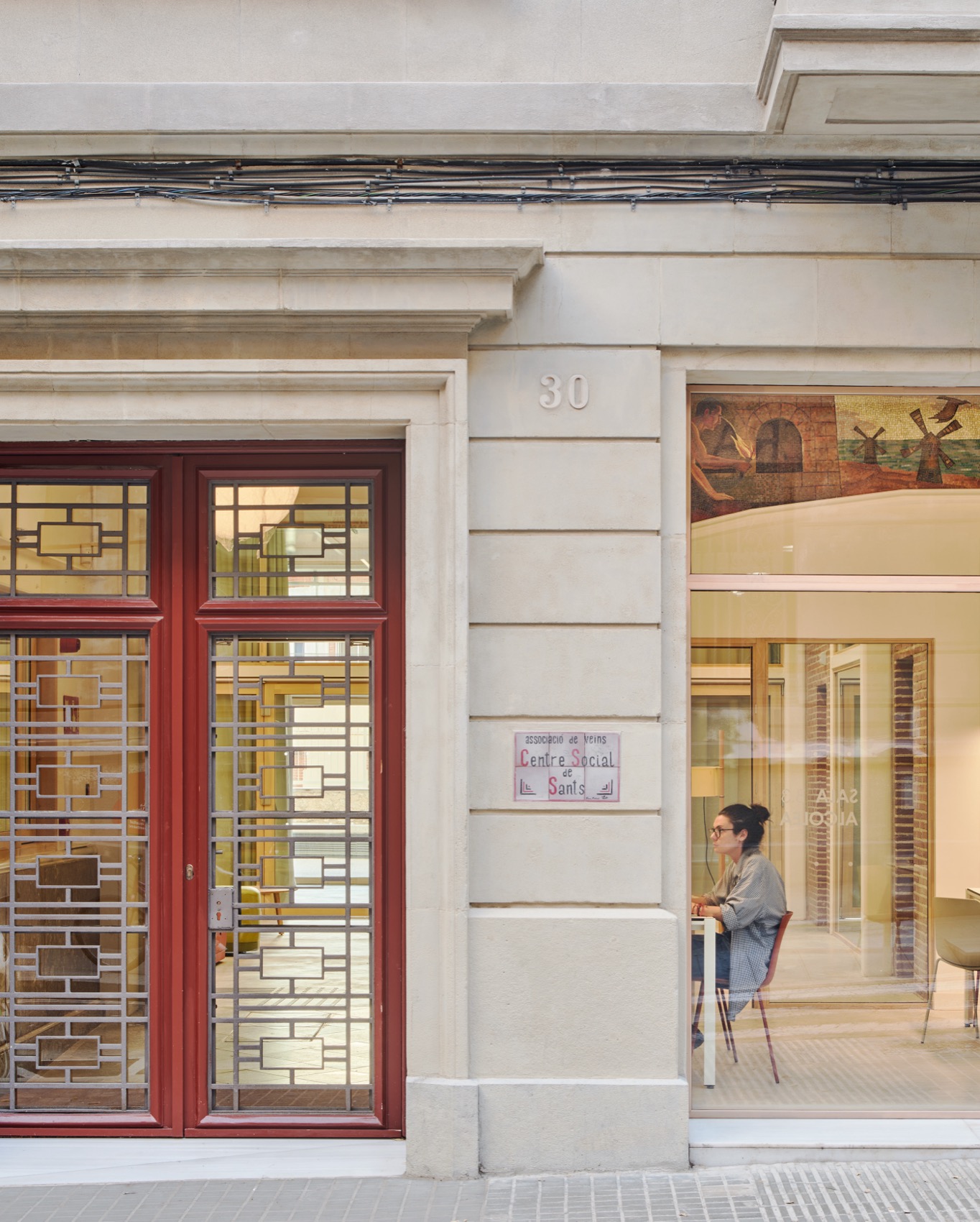
▼社区中心融入周边街区,
Social centre integrated into the surrounding urban fabric
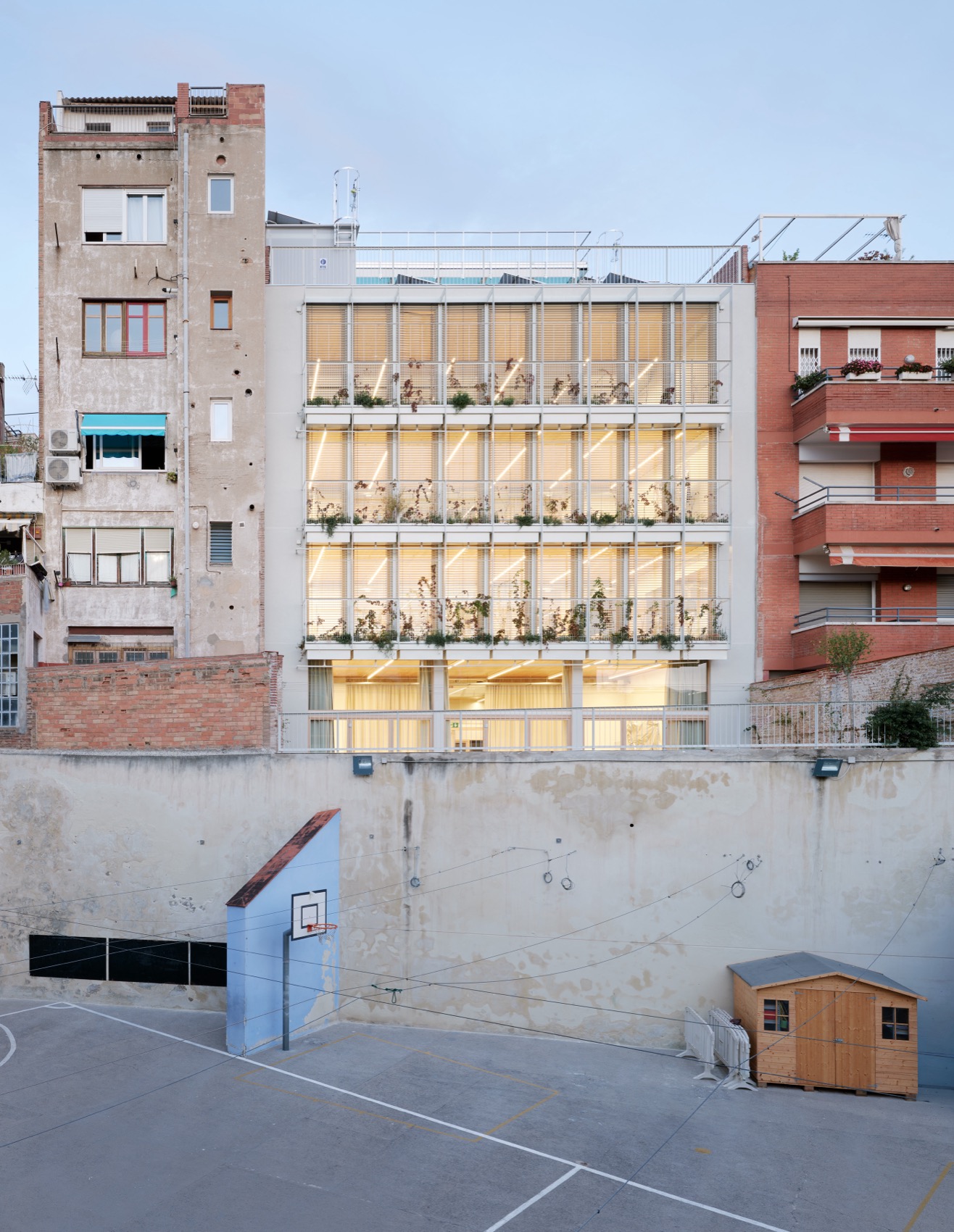
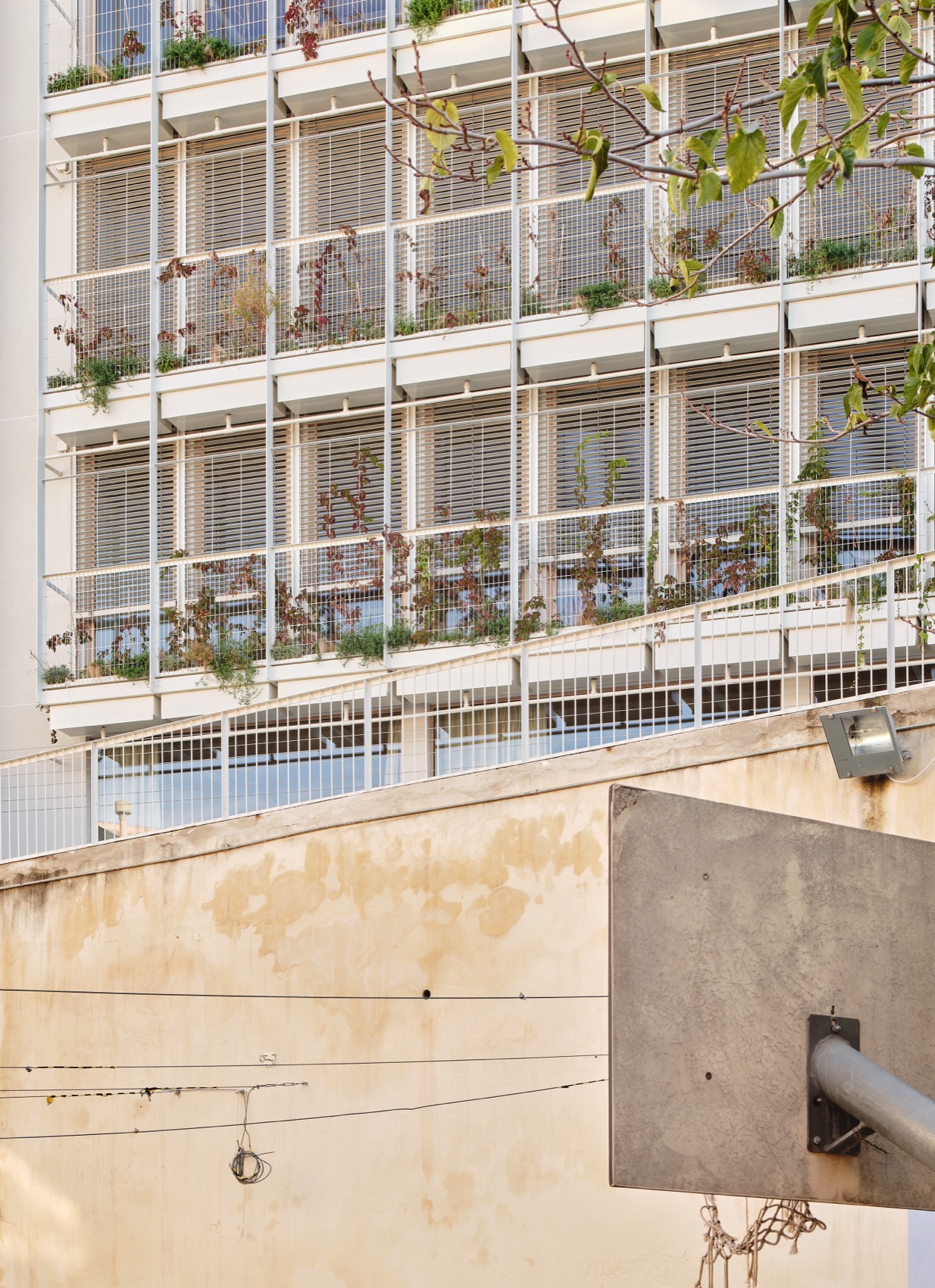
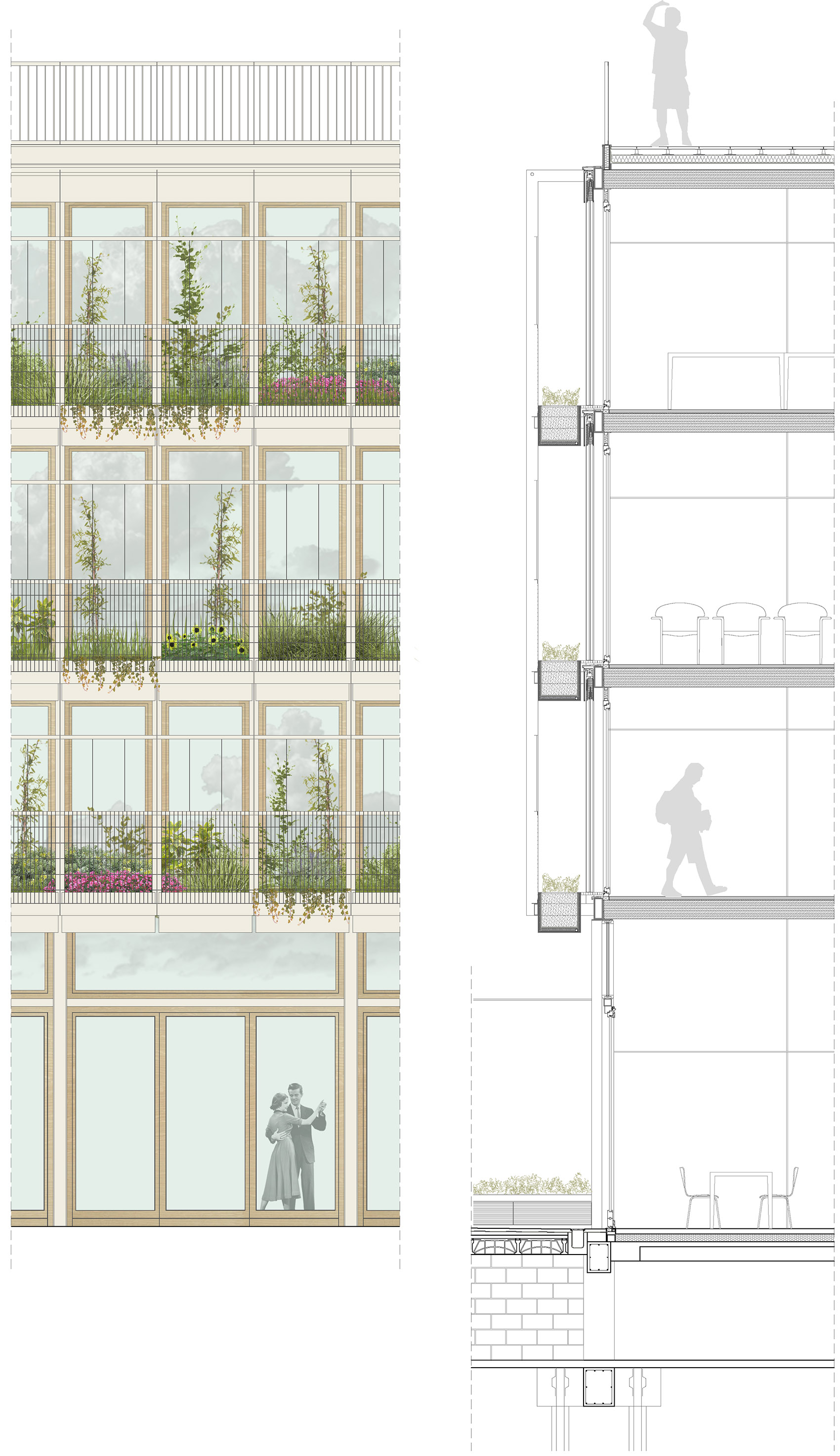
▼立面绿化回应社区环境,
Vegetated façade responding to the neighbourhood context
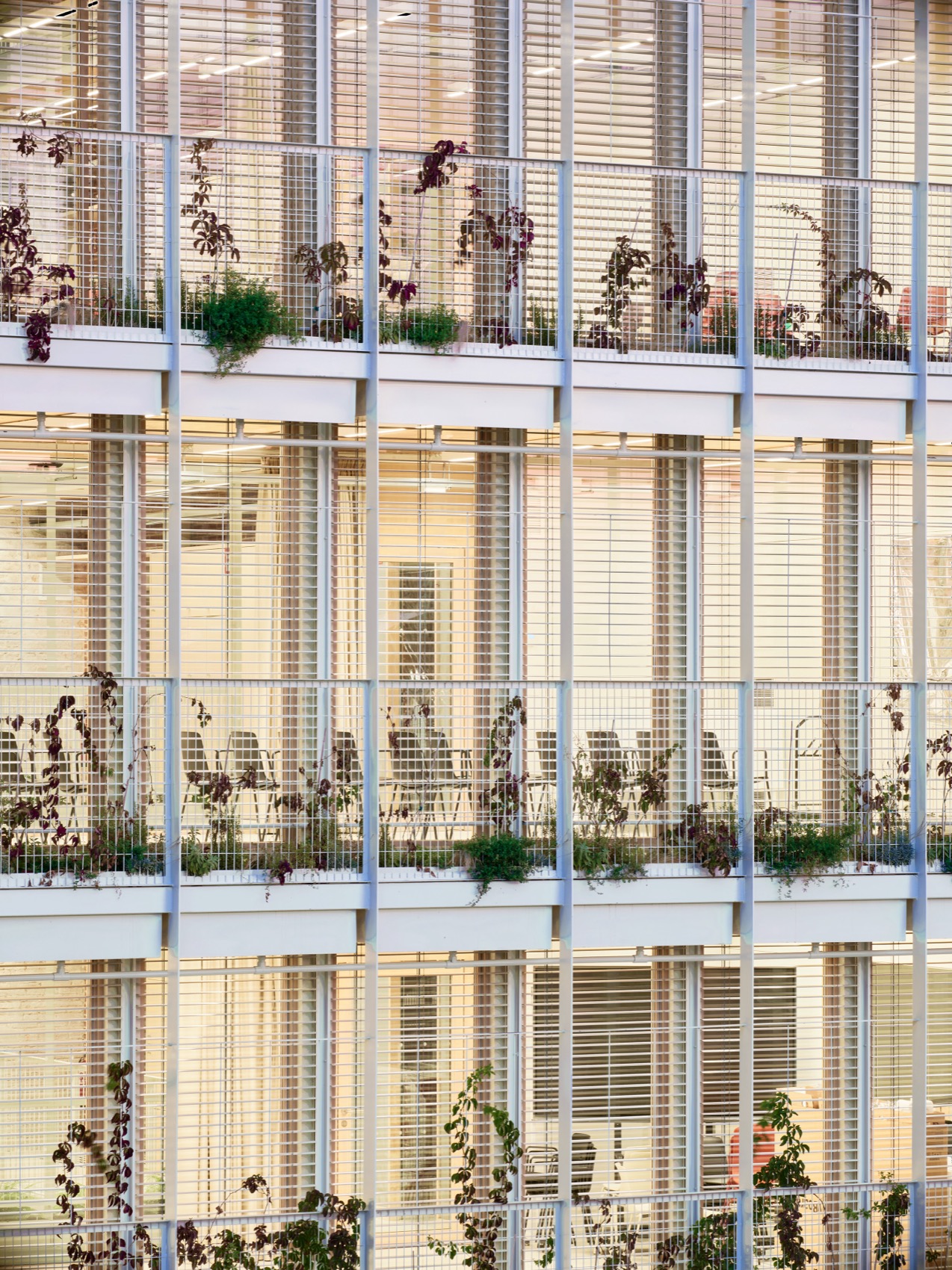
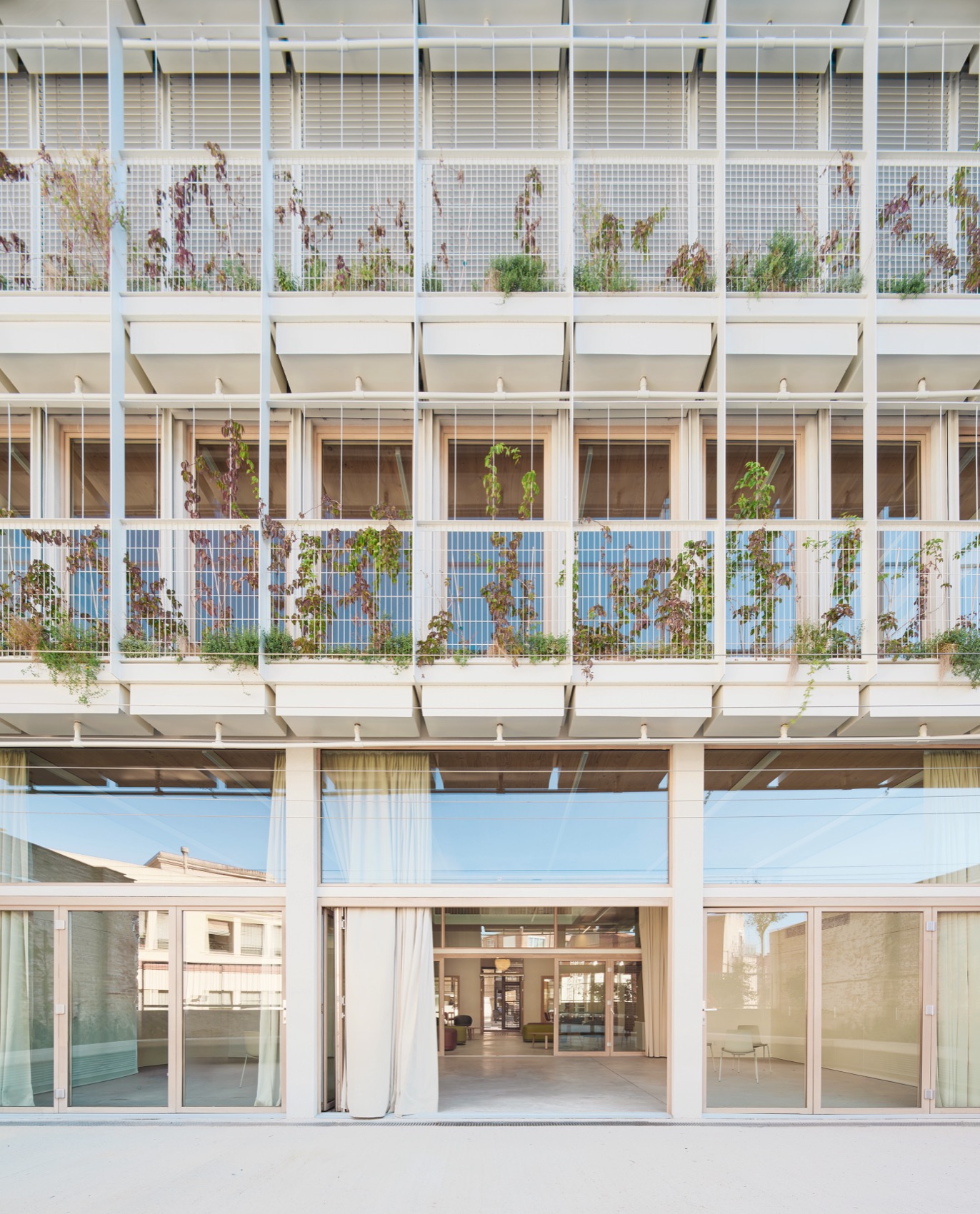
▼通透首层连接室内外空间,
Transparent ground floor connecting indoor and outdoor spaces
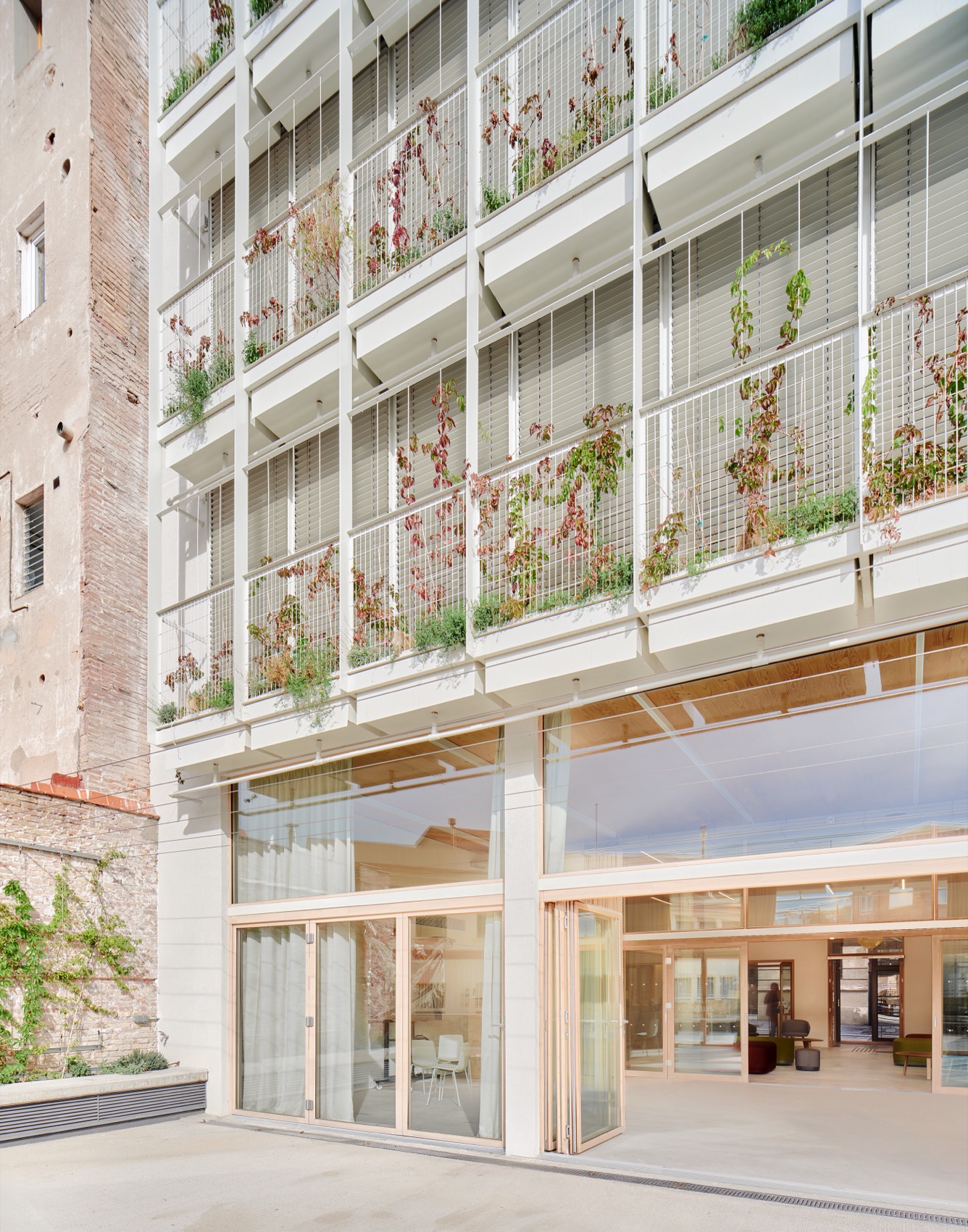
这一中庭既是气候调节装置,也承担组织交通流线和引导空间识别的功能。融入中庭、后院、屋顶扩建部分以及后立面的植物景观,通过过滤光线、柔化声学环境,营造出更私密、更宜人、更适于停留的空间氛围。植物成为建筑构成的重要元素,不仅提升并赋予空间以人性化特质,也带来更丰富的感官体验,同时强化了室内外之间连续与开阔的空间感知。中庭成为人们相遇、交流、工作与生活的场所,促进社会互动与日常关系的建立。
This atrium acts as a climatic regulator, organises circulation, and facilitates orientation within the building. The vegetation incorporated into the atrium, rear courtyard, rooftop extension, and rear façade contributes to environmental comfort by filtering light, softening acoustics, and generating spaces that are more intimate, welcoming, and habitable. Vegetation becomes an architectural element that enhances and humanises the spaces, providing a richer sensory experience and reinforcing the perception of continuity and spaciousness between interior and exterior. The atrium becomes a place where people can meet, share, work, and live, fostering social interaction and everyday relationships.
▼立体绿化激活公共交流,
Vertical greenery fostering social interaction
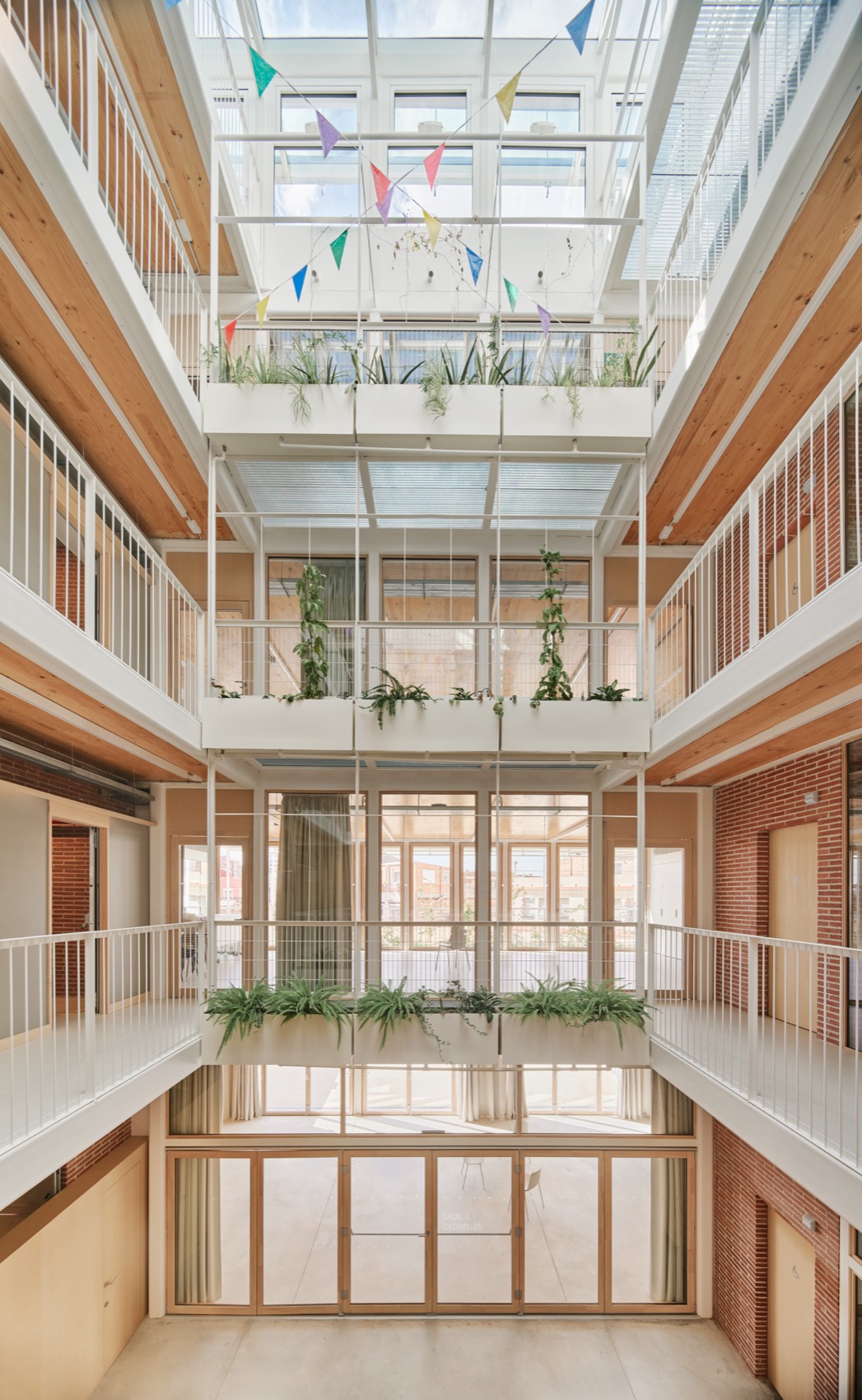
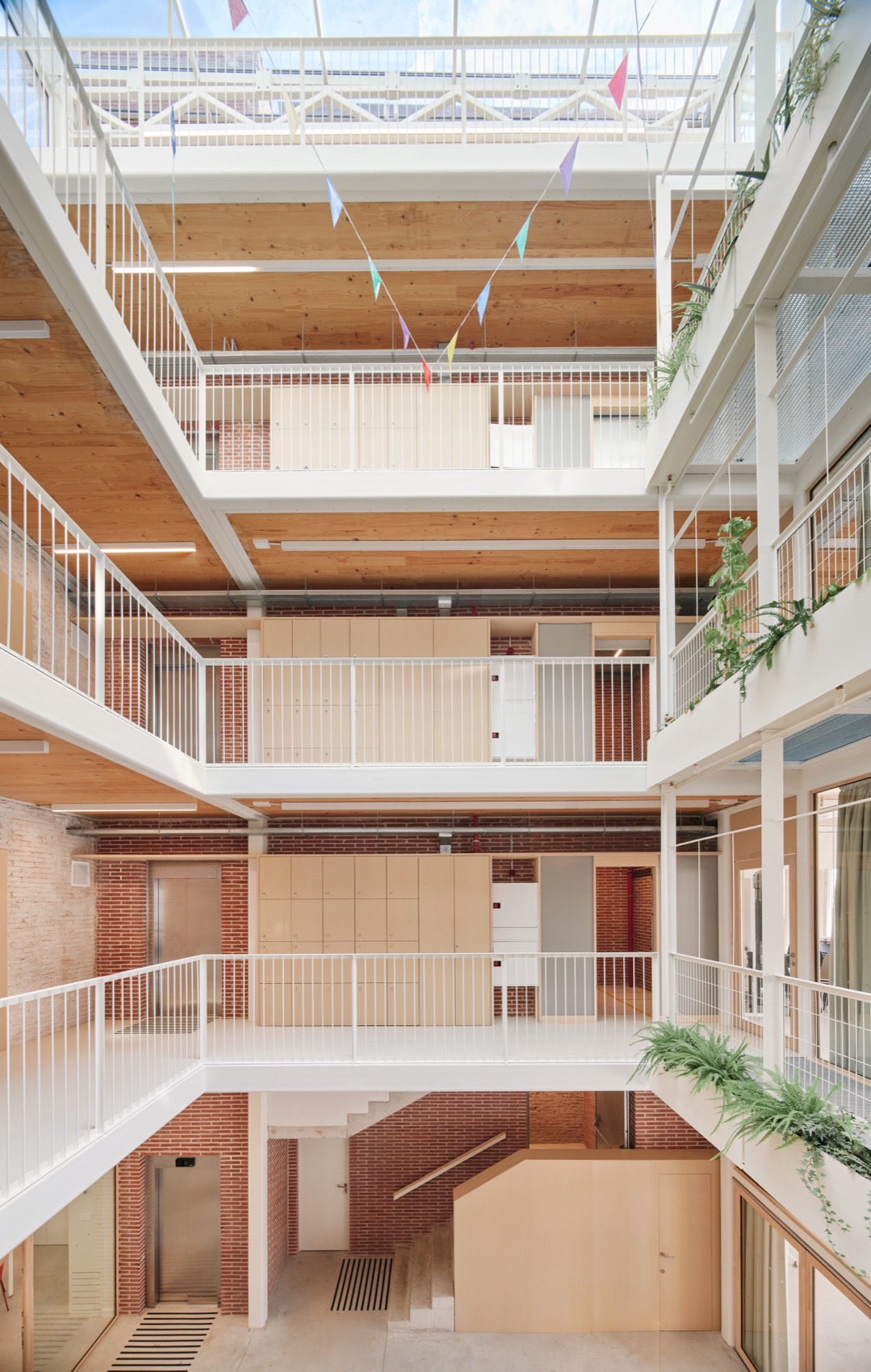
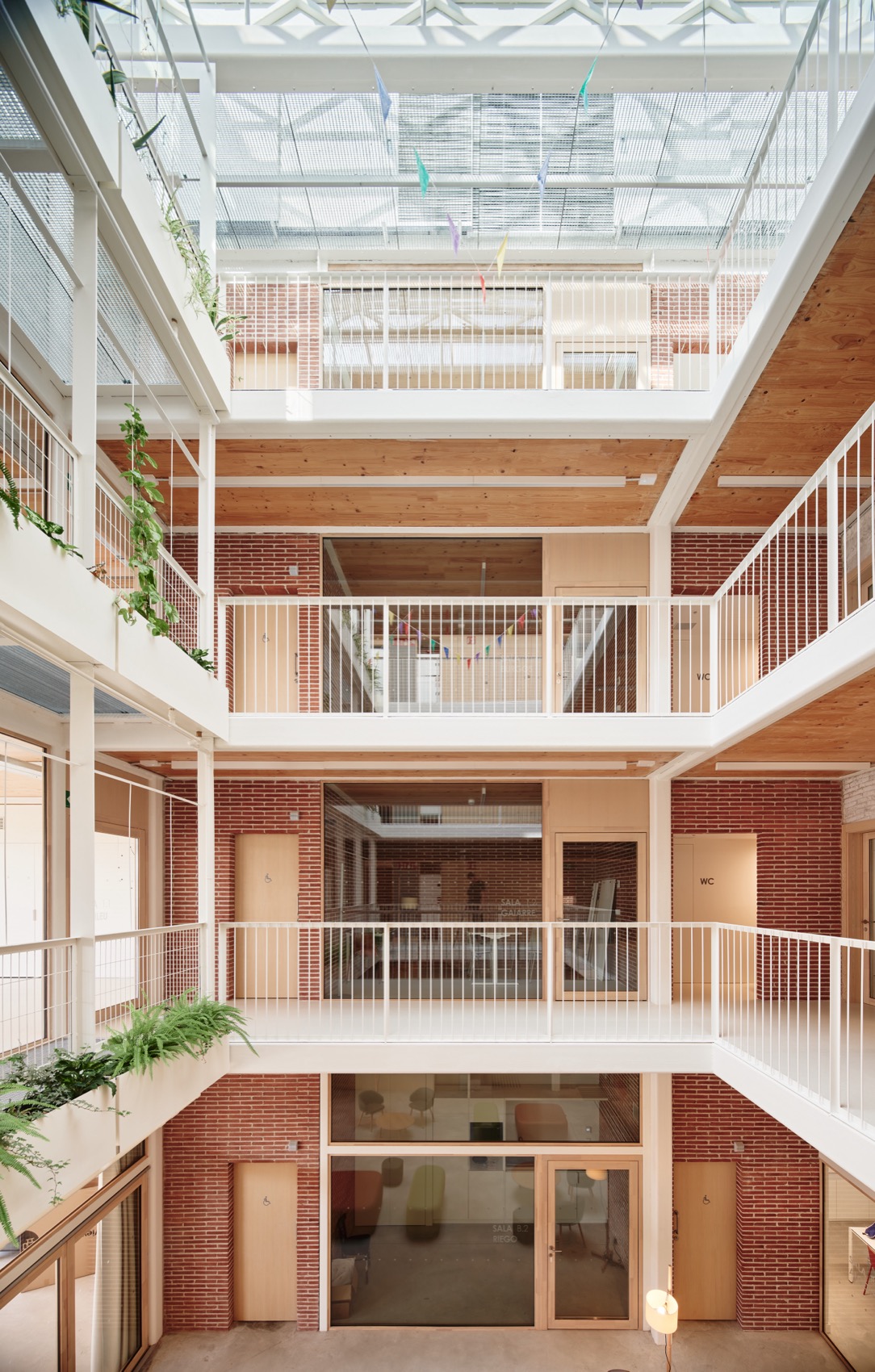
▼玻璃屋顶引入充足天光,
Glazed roof bringing abundant natural light
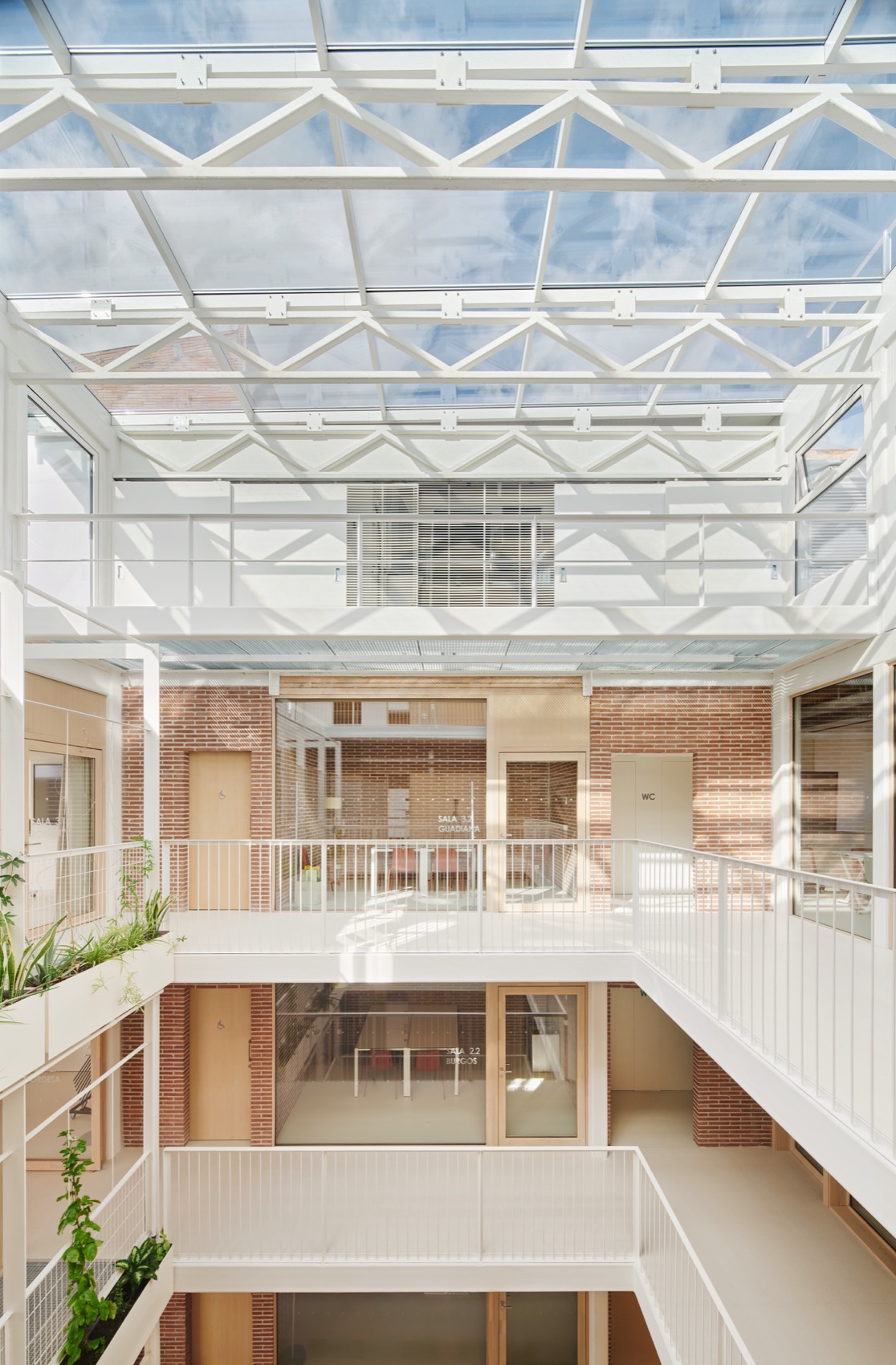
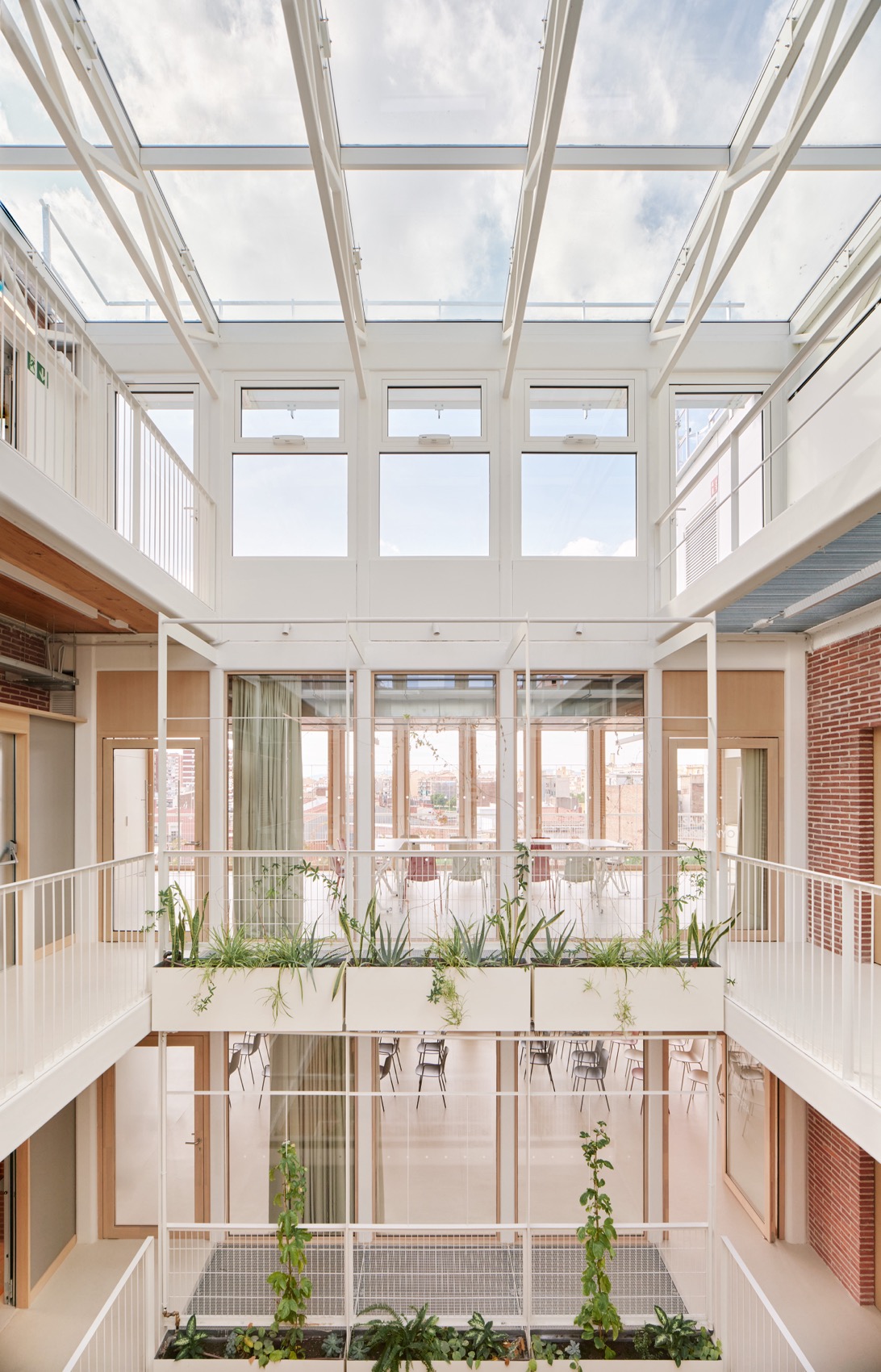
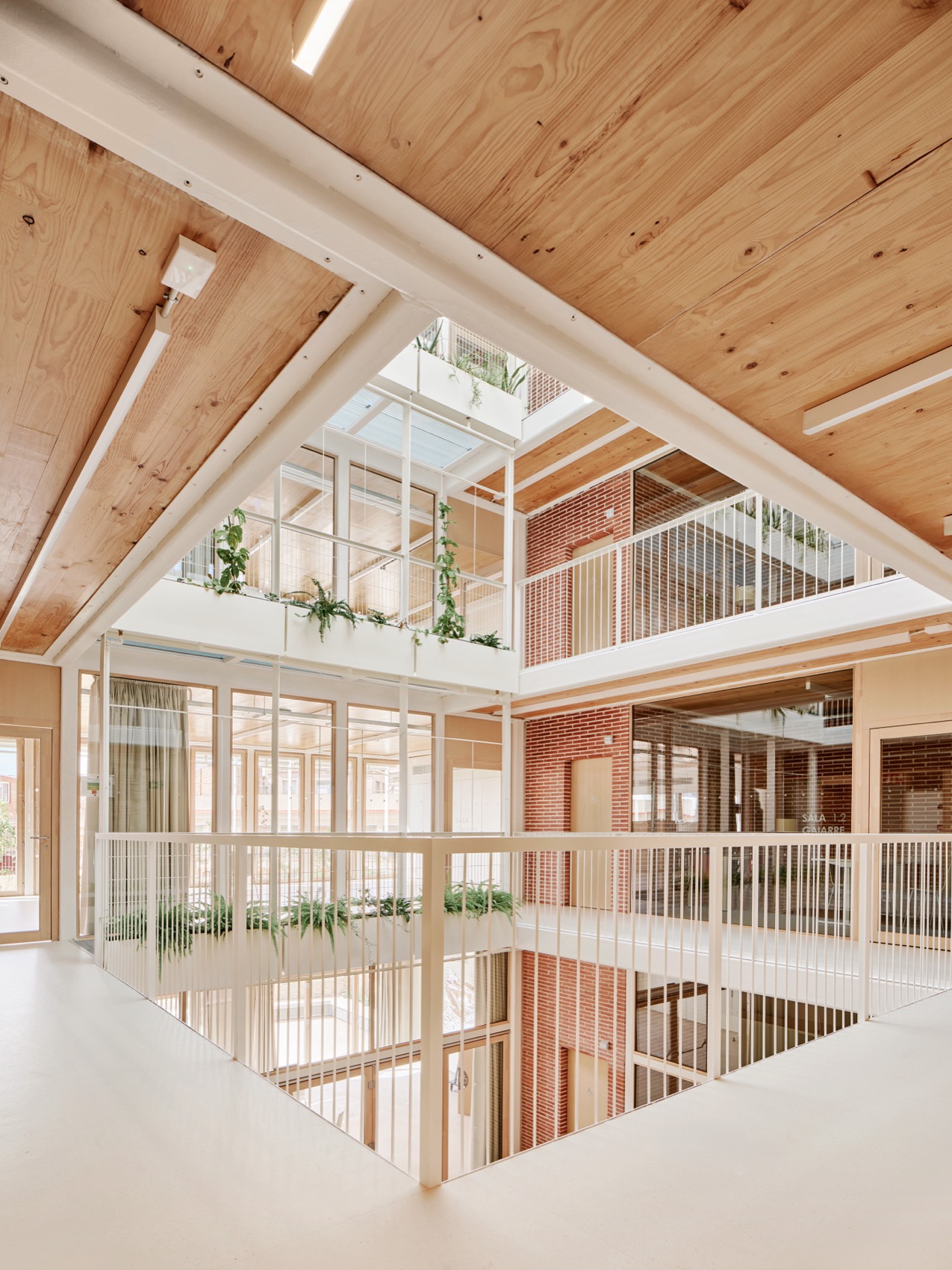
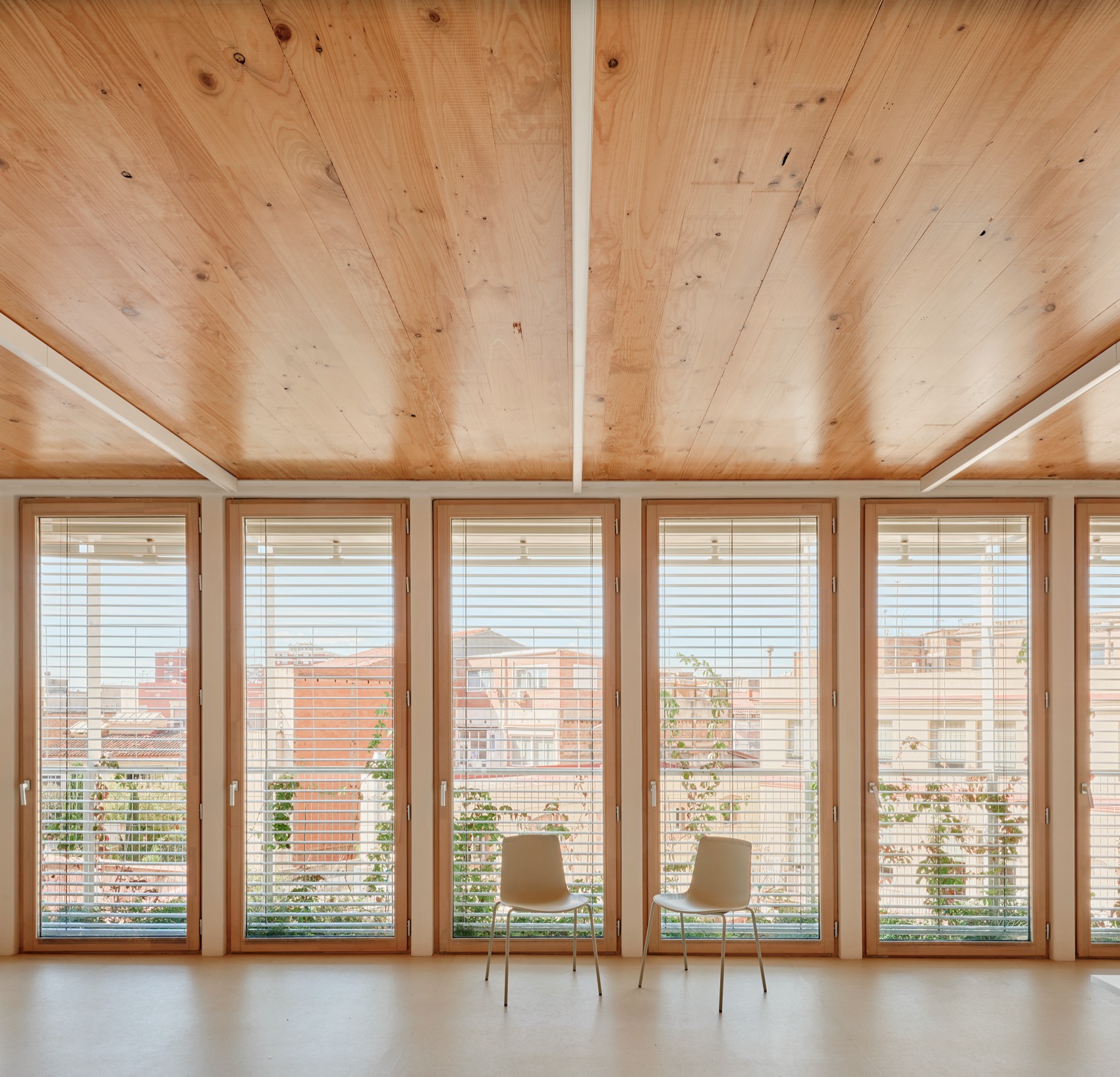
新增部分采用轻型结构与工业化建造体系,以交叉层压木(CLT)楼板作为主要结构构件,从而降低环境影响、优化施工流程,并减少对原有基础的干预。灵活且可拆卸的干式建造逻辑,使空间能够根据不同需求进行重新组织与调整,而不会影响结构完整性。保留部分通过审慎而尊重原有建筑的介入方式得到提升与强化,以延续建筑记忆;新增空间则采用温暖、自然且低环境负荷的材料,营造舒适、健康且无障碍的使用环境。
The new construction is executed using lightweight structures and industrialised systems, with cross-laminated timber floor slabs that reduce environmental impact, optimise construction processes, and minimise interventions on the existing foundations. The dry-construction logic, flexible and demountable, allows spaces to be reorganised and adapted to different uses without compromising structural integrity. The preserved spaces are enhanced through respectful interventions that reinforce the building’s memory, while the new spaces are configured with warm, natural, and low-impact materials, generating comfortable, healthy, and accessible environments.
▼连桥与回廊组织空间流线,
Bridges and galleries organising circulation
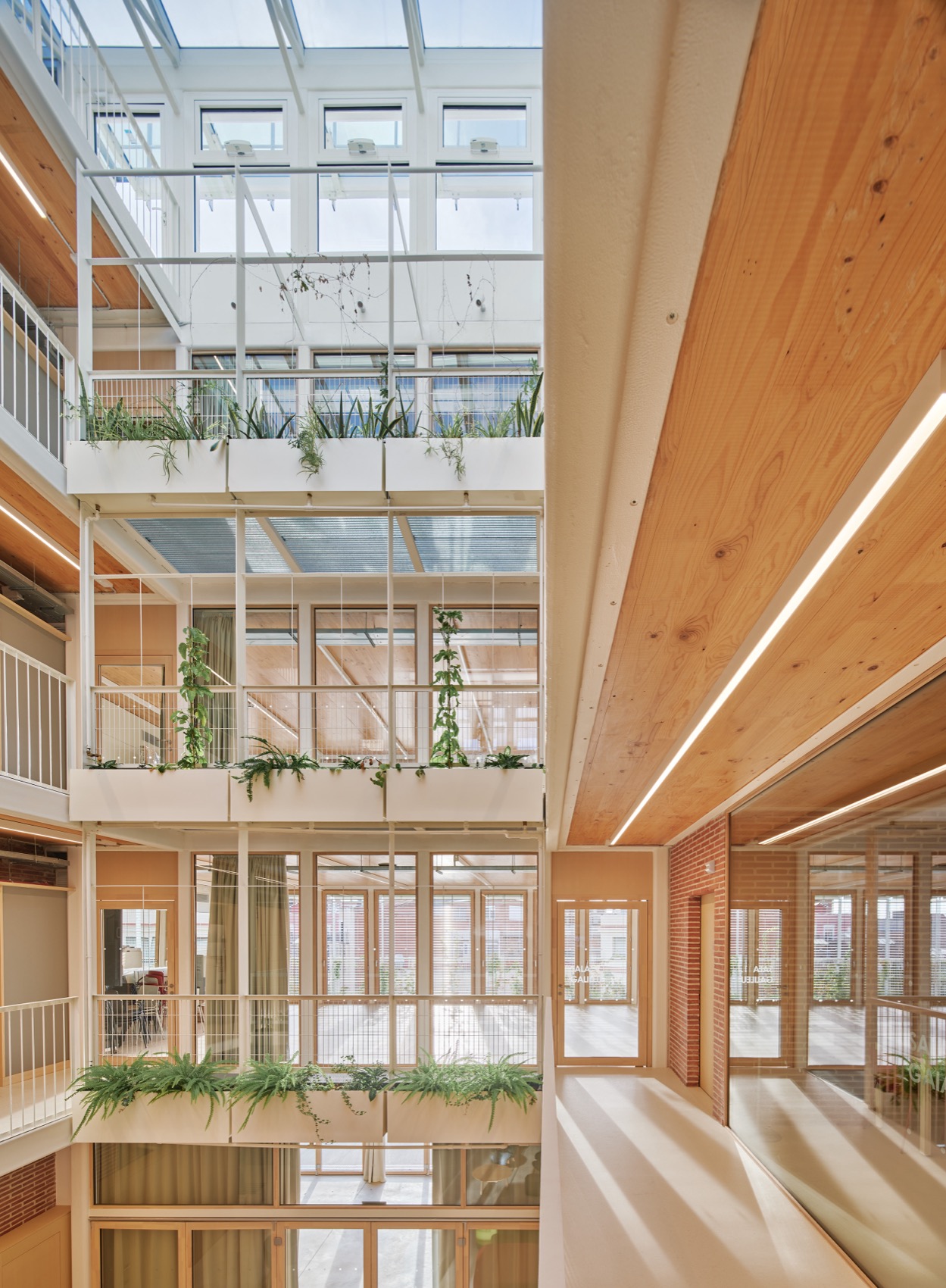
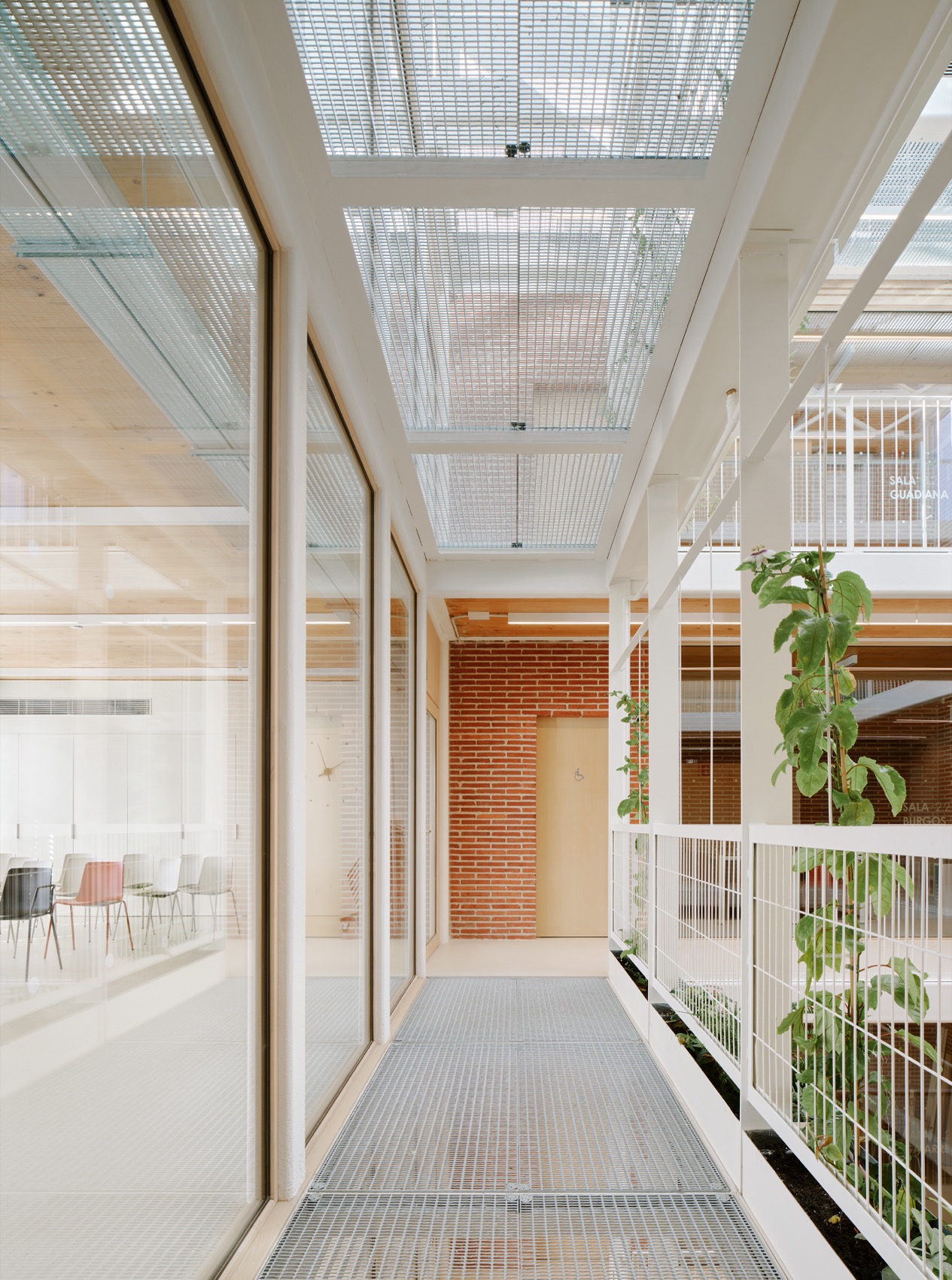
首层空间与庭院及中庭形成清晰联系,被打造为一处室内“城市广场”,鼓励使用者之间的交流与互动。室内空间灵活且具有适应性,可容纳多样化活动,同时兼顾耐久性与环境品质。横向自然通风、遮阳控制及植物景观等被动式可持续策略,有助于降低能源需求,并提升热环境与声环境的舒适度。
The ground floor, clearly connected to the courtyards and the atrium, functions as an interior agora, encouraging encounters and exchange among users. The interiors, flexible and adaptable, can accommodate diverse activities without compromising durability or environmental quality. Passive sustainability strategies, such as cross ventilation, solar control, and vegetation, contribute to reducing energy demand and improving thermal and acoustic comfort.
▼绿植花槽串联共享空间,
Planters connecting shared spaces
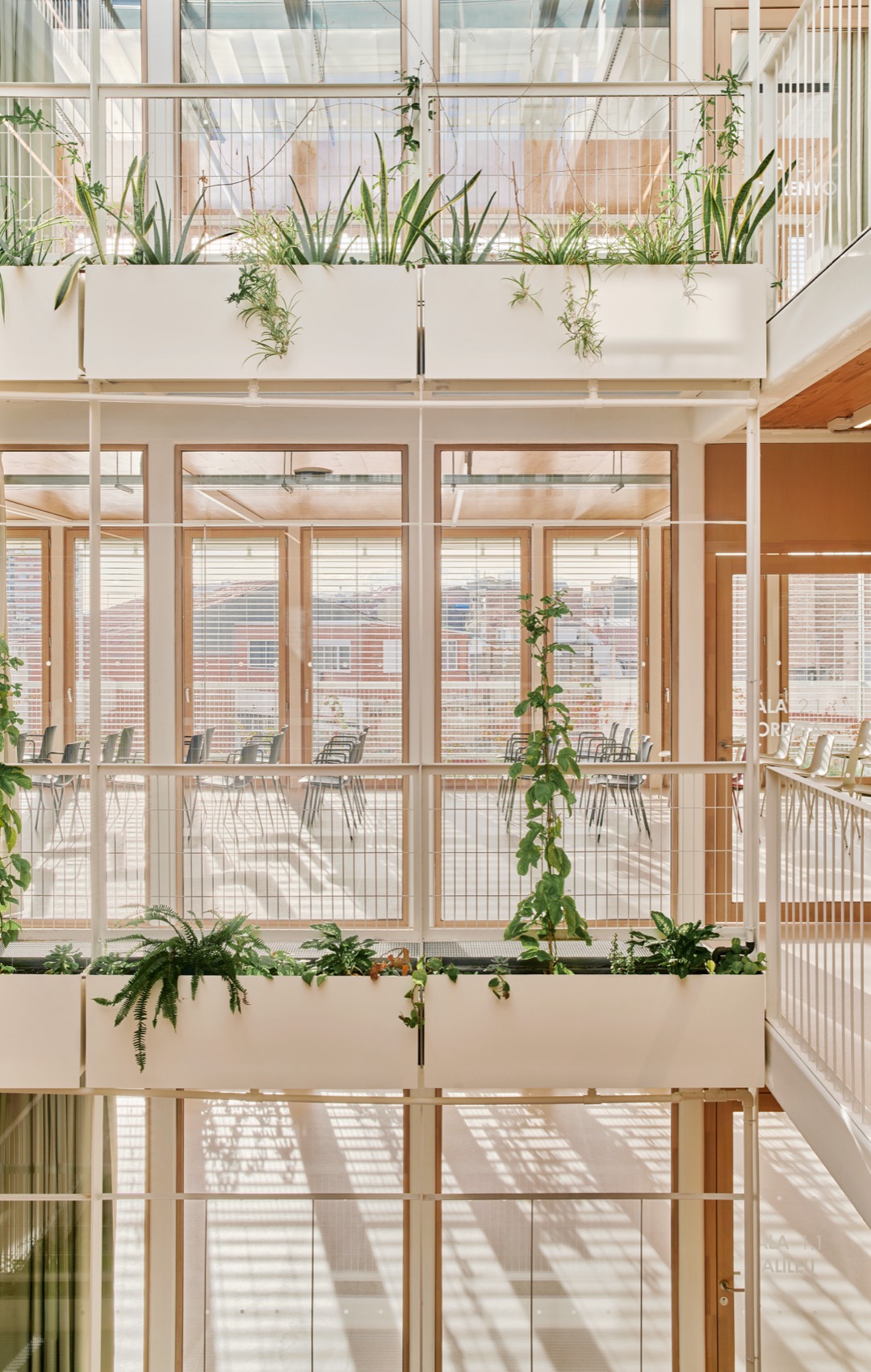
▼活动空间面向中庭展开,
Activity room opening toward the atrium
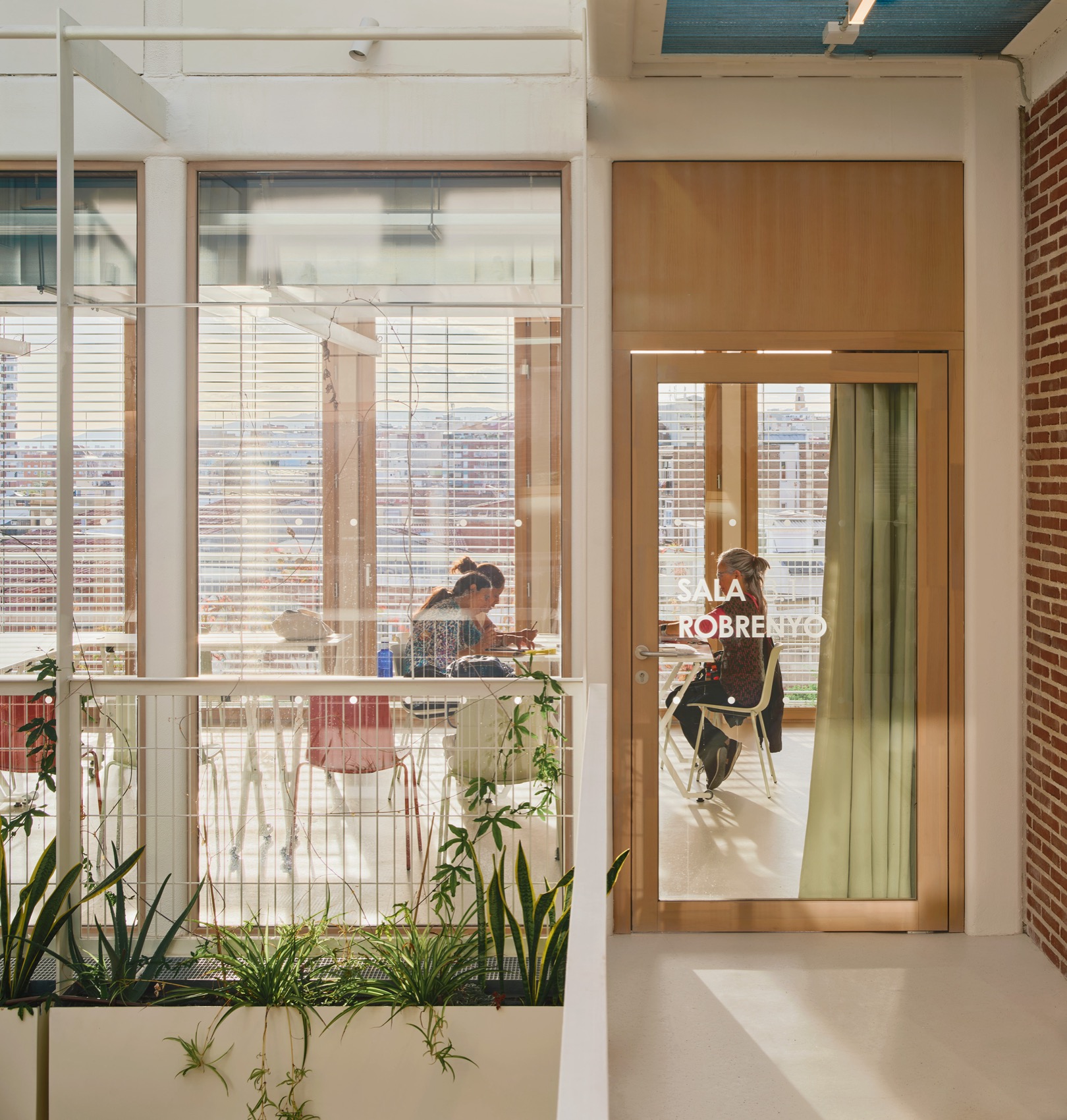
▼落地开窗引入城市景观,
Full-height openings framing urban views
总体而言,桑茨社会中心的改造实现了遗产保护与当代更新之间的平衡。新空间兼具灵活性、舒适性与可持续性,而植物作为核心设计元素,不仅提升了空间品质,也强化了社区生活,并改善了环境感知体验。项目将一栋历史建筑转化为连接人与活动的公共设施,进一步巩固了社会中心作为社区交流与互动场所的重要角色。此次改造在形式、功能与环境策略层面展现出高度一致性,证明了建筑更新能够在不失去建筑与社区记忆及身份认同的前提下,强化并重塑空间品质、场所关系以及使用者体验。
Overall, the rehabilitation of the Sants Social Centre represents a balance between heritage and modernity. The new spaces are flexible, comfortable, and sustainable, while vegetation acts as a central element that enhances spatial quality, strengthens social life, and improves environmental perception. The project transforms a historic building into a facility that connects people and activities, consolidating the Social Centre as a place of encounter and interaction within the neighbourhood. The intervention stands out for its formal, functional, and environmental coherence, demonstrating how rehabilitation can reinforce and regenerate the quality of space, the relationship with the surroundings, and the users’ experience without losing the memory and identity of the building and the neighbourhood.
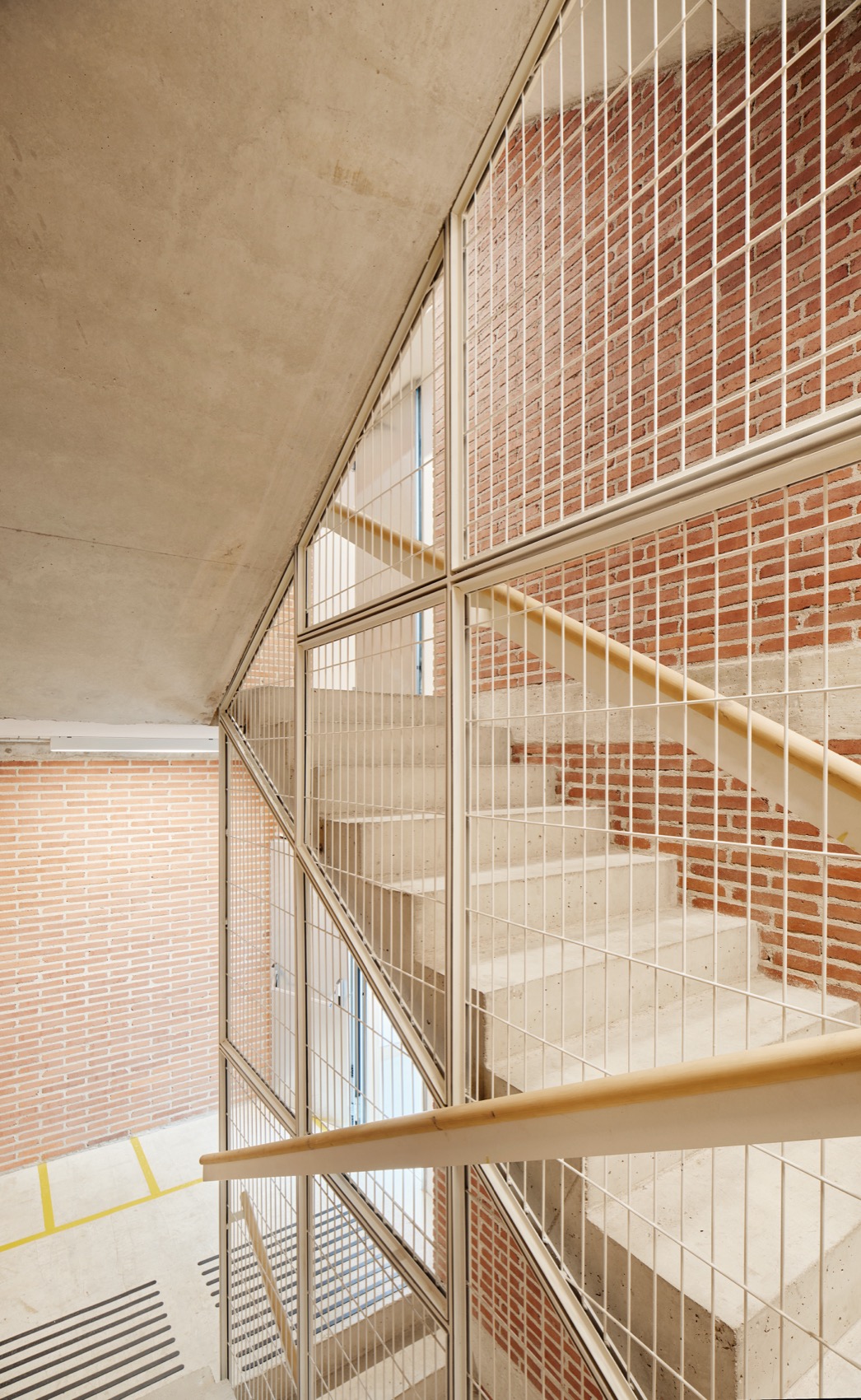
▼楼梯连接建筑各层空间,
Staircase connecting different levels of the building
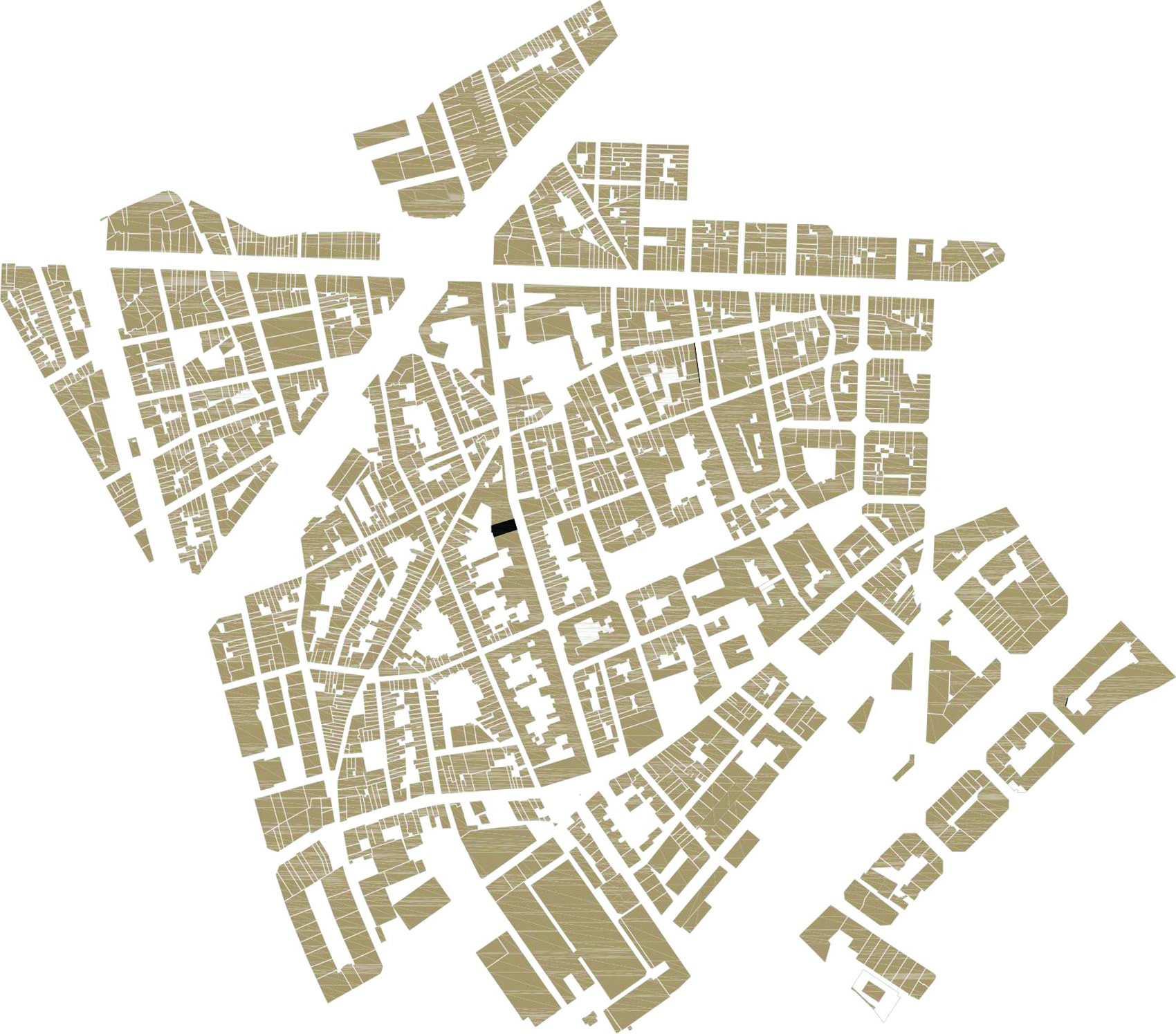
▼项目区位图,
Site plan
▼平面图,
Floor plan
▼剖面图,
Section
▼细节大样图,
Detail
Project Title: Sants Social Center
Authors: Laos Arquitectura + Mercè Zazurca Codolà + César Sánchez Medrano
Photography: Jose Hevia
Collaborators: BBG (structures)
TDI (engineering)
Joan Olona (quantity surveyor)
Client: Barcelona City Council
Location: Barcelona
Date of construction: 2025