松岛浦项超级综合体,韩国 / Morphosis
松岛浦项超级综合体最核心的创新,并非单一地标建筑,而是将一条从地铁站延伸至海岸线、长达1.6公里的连续公共商业系统,转化为融合商业、文化、景观与海洋体验的全新城市基础设施。项目试图重新定义购物中心的概念——商业不再是被封闭于建筑内部的消费空间,而成为组织城市公共生活的核心框架。
The key innovation of the Songdo Posco Global Supercomplex is not a single iconic tower, but the transformation of a 1.6-kilometer public commercial sequence — stretching from the subway station to the waterfront — into a new urban infrastructure integrating retail, culture, landscape, and the experience of the sea.
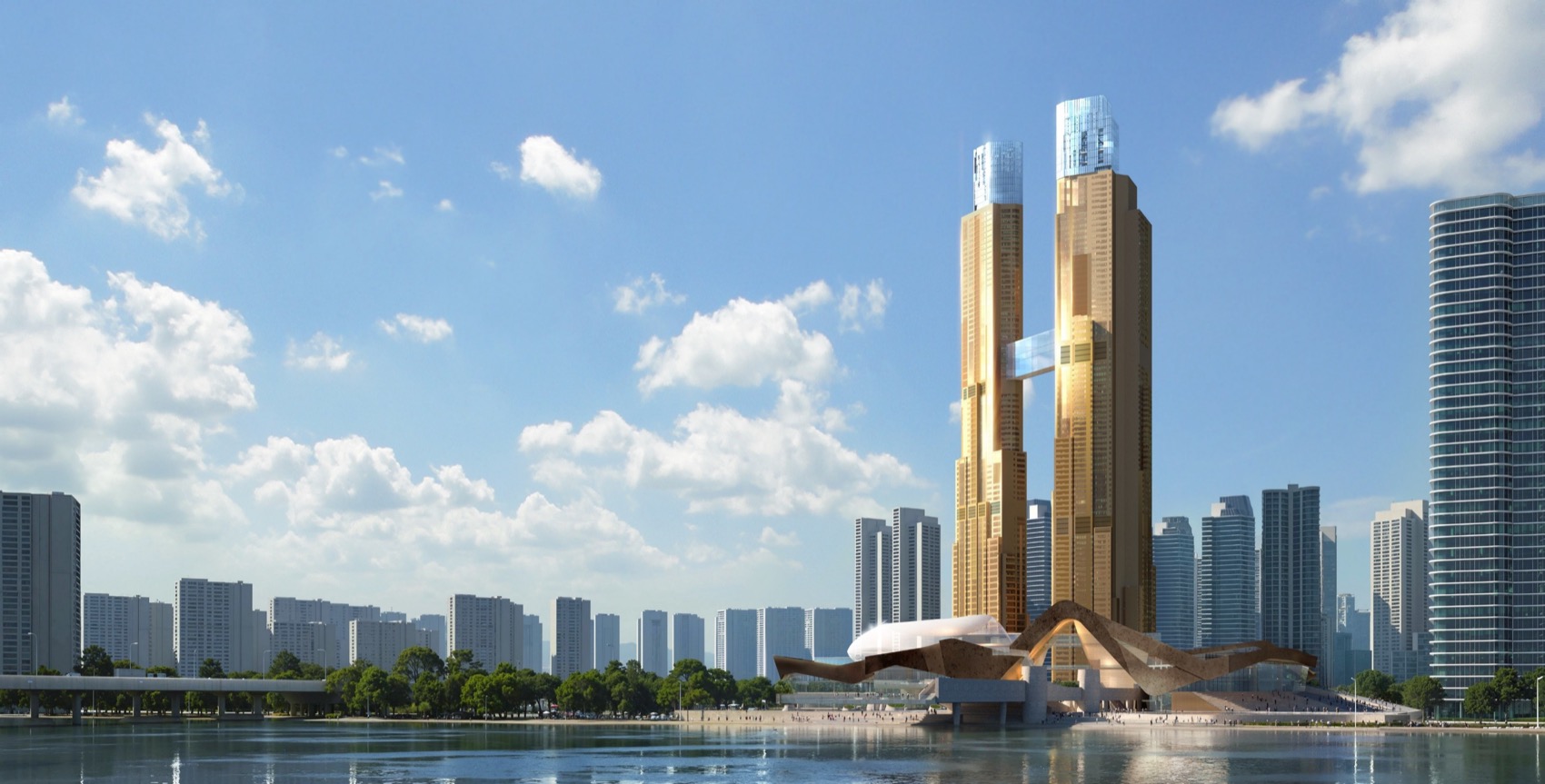
▼双塔地标与城市门户,Twin-tower landmark and urban gateway
项目介绍Project Description
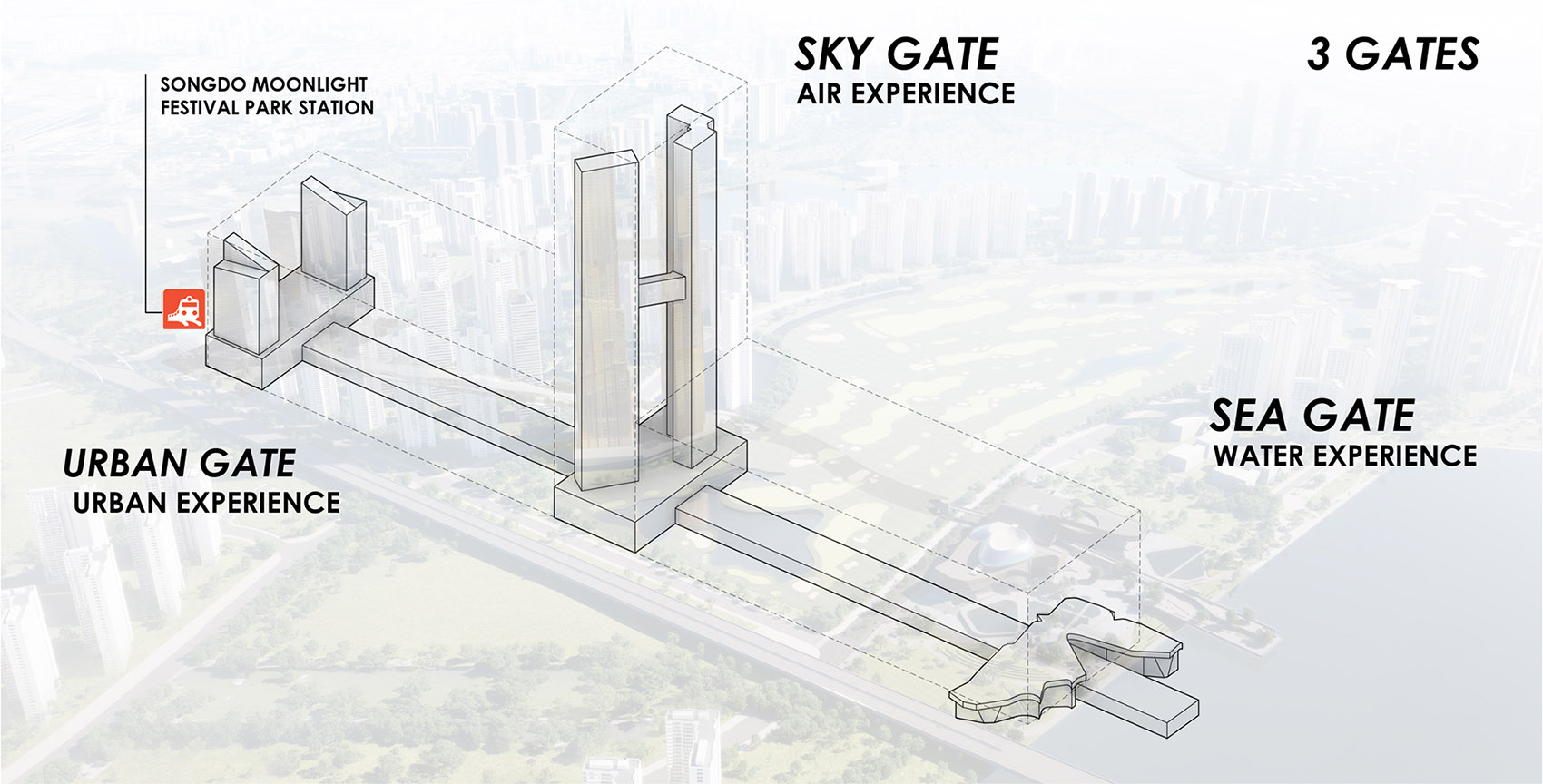
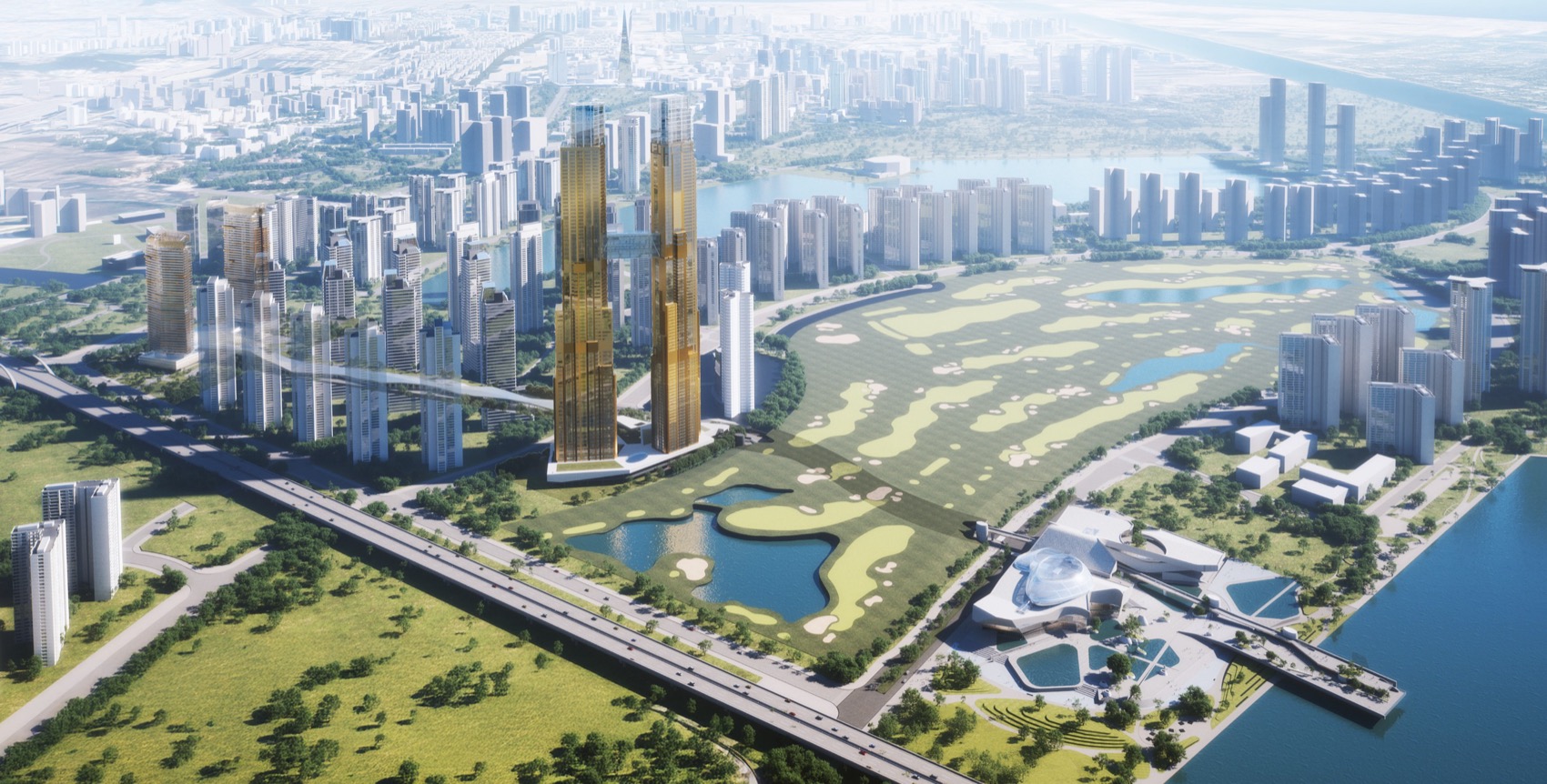
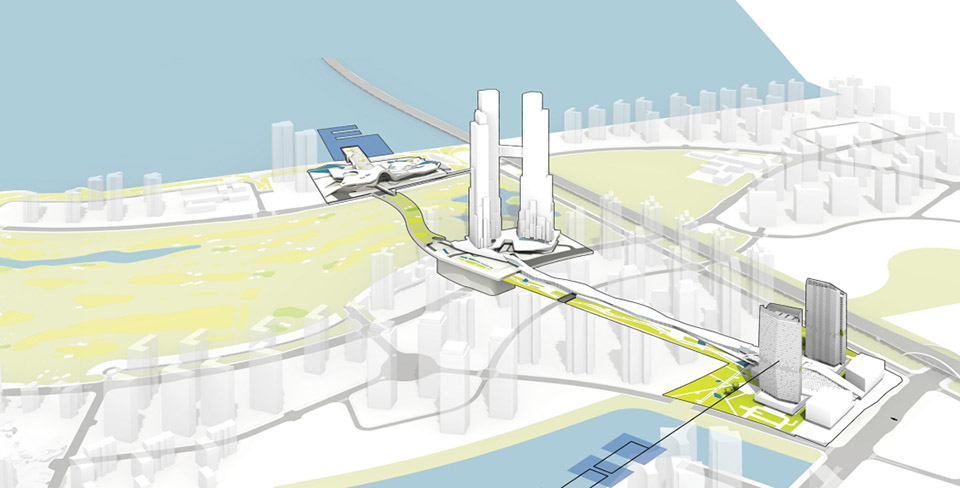
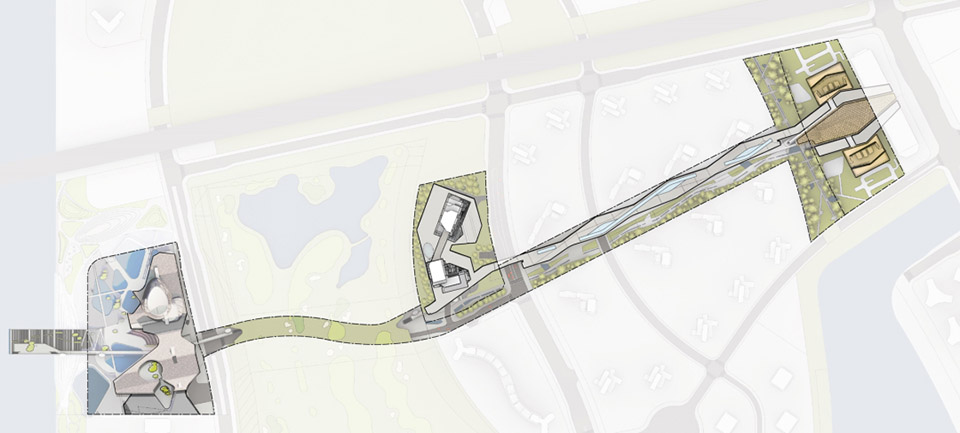
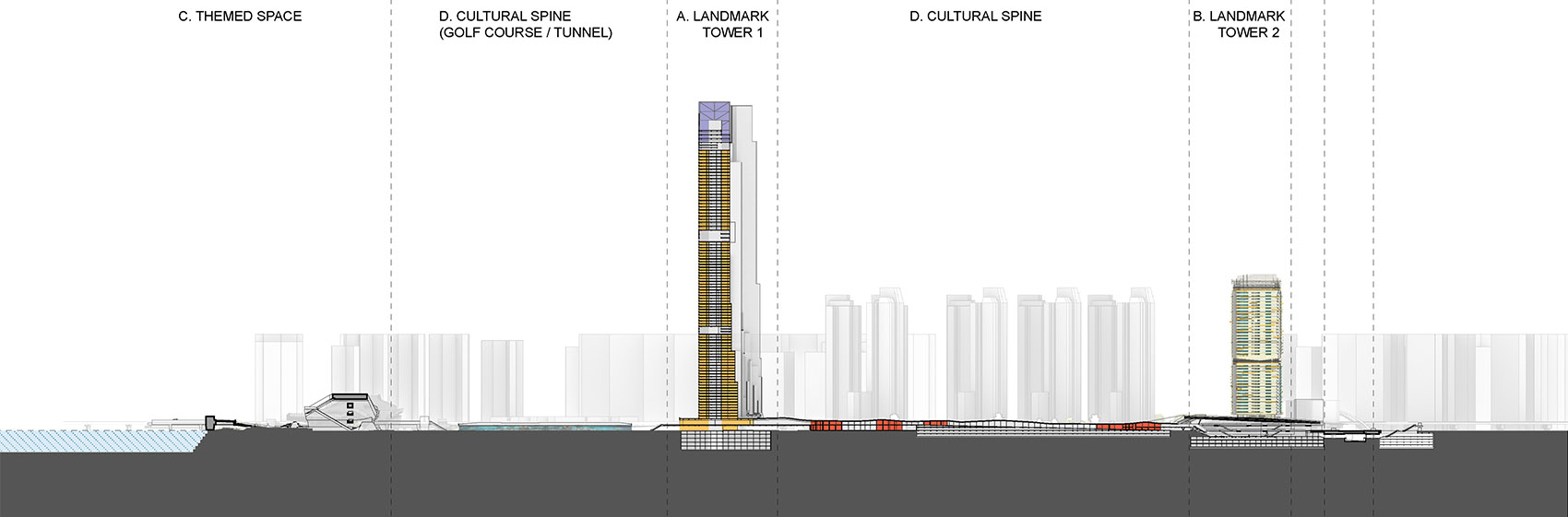
松岛浦项超级综合体(INEX)位于韩国仁川松岛国际新城西侧,紧邻仁川国际机场,距离首尔约一小时车程。项目总建筑面积约345,000平方米,包含住宅、酒店、办公、商业、文化、滨海公共空间等多元业态。作为韩国最具国际化的新兴城市之一,松岛正在逐渐成为连接东北亚的重要门户,而INEX则被构想为整个城市全新的滨海门户。 不同于传统城市综合体以单体建筑为中心的开发逻辑,项目采用一条长达1.6公里的线性城市组织方式,从城市交通枢纽一路延伸至西海海岸。整个空间由 Landmark Tower 2、Landmark Tower 1与海岸Theme Space三个核心节点组成,并通过贯穿场地的“Cultural Spine(文化脊柱)”串联起来。整个空间体验围绕“Urban Gate(城市之门)”“Sky Gate(天空之门)”“Sea Gate(海洋之门)”三重空间转换展开,形成从城市到海洋的完整公共叙事。
The Songdo Posco Global Supercomplex (INEX) is located on the western edge of the Songdo International City in Incheon, adjacent to Incheon International Airport and approximately one hour from Seoul. With a total gross floor area of approximately 345,000 square meters, the project integrates a diverse mix of programs including residential, hospitality, office, retail, cultural venues, and waterfront public spaces. As one of Korea’s most international emerging cities, Songdo is gradually establishing itself as a key gateway connecting Northeast Asia, while INEX is envisioned as a new waterfront gateway for the city as a whole. Unlike conventional mixed-use developments centered around individual buildings, the project adopts a 1.6-kilometer linear urban organization that extends from the city’s transportation hub to the western coastline. The spatial framework is anchored by three core nodes—Landmark Tower 2, Landmark Tower 1, and the coastal Theme Space—linked together by a continuous “Cultural Spine.” The overall spatial experience unfolds through a sequence of three transformative thresholds—“Urban Gate,” “Sky Gate,” and “Sea Gate”—creating a coherent public narrative that transitions seamlessly from the city to the ocean.
▼线形三段式方案概念布局,Linear Three-Part Conceptual Masterplan Layout
城市不是购物中心,购物中心成为城市The city is not a shopping mall — the shopping mall becomes the city.
项目最重要的创新之一,是将商业系统作为整个开发的组织核心。在传统商业开发中,购物中心通常作为一个封闭盒子存在,而在INEX中,商业成为贯穿整个城市空间的连续公共系统。Morphosis提出“Hyper Mix Retail + F&B”概念,希望通过零售、餐饮、公共活动、文化体验和社交空间的高度混合,重新定义未来商业空间的角色。商业不再服务于消费本身,而成为激活城市生活的社会基础设施。
One of the project’s most significant innovations is the positioning of the commercial system as the organizational core of the entire development. In conventional commercial developments, shopping malls typically exist as enclosed boxes. At INEX, however, commerce becomes a continuous public system embedded throughout the urban fabric. Morphosis introduced the concept of “Hyper Mix Retail + F&B,” aiming to redefine the role of future commercial space through a highly integrated mix of retail, dining, public activities, cultural experiences, and social spaces. Commerce is no longer designed solely to serve consumption itself, but instead becomes a form of social infrastructure that activates urban life.
▼方案鸟瞰效果图,Aerial Rendering of the Proposal
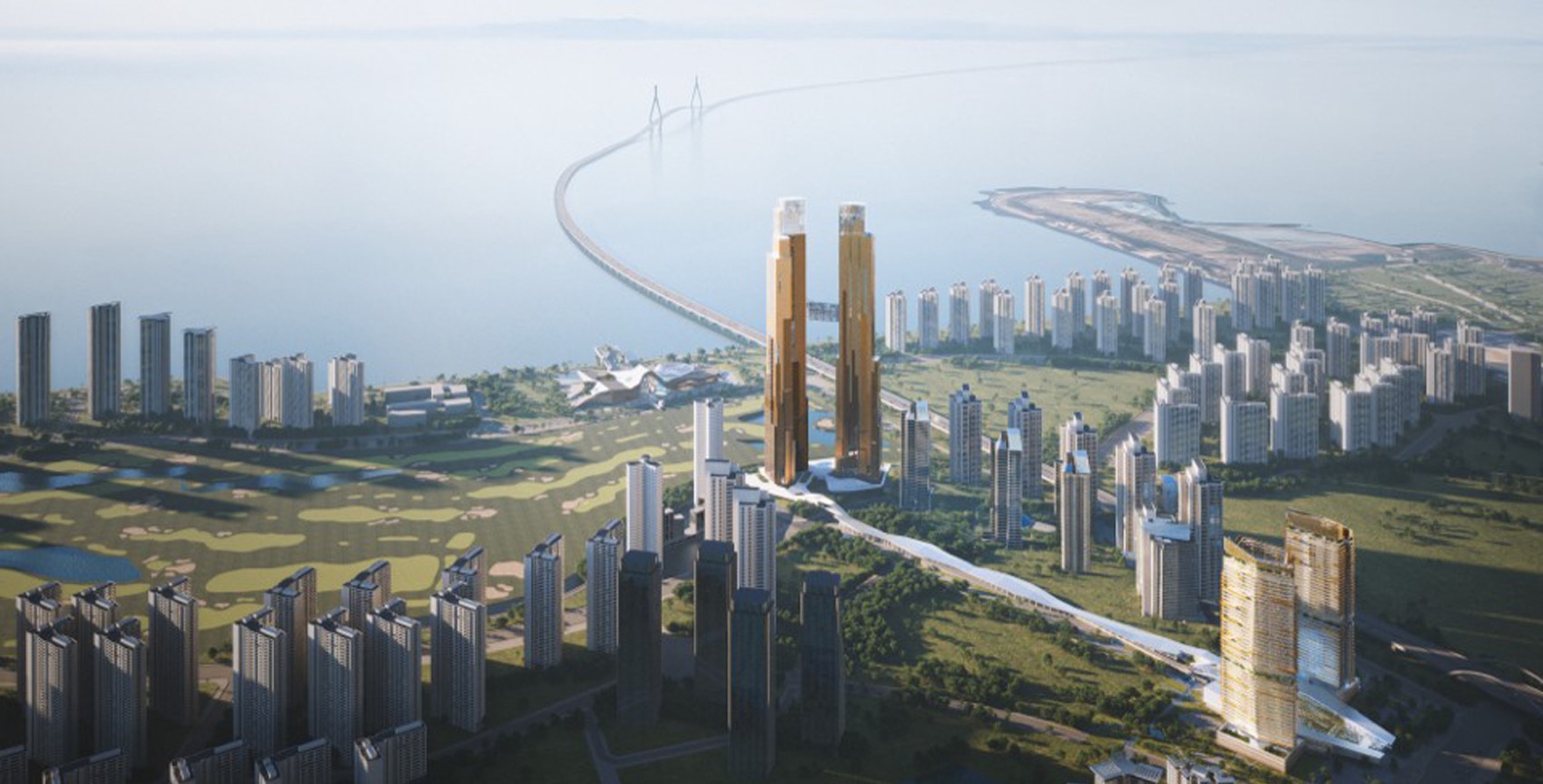
Cultural Spine:一条1.6公里的商业基础设施Cultural Spine: A 1.6-Kilometer Commercial Infrastructure
项目商业体验从Songdo Moonlight Festival Park地铁站开始。访客离开地铁后并不会进入传统购物中心,而是直接进入 Landmark Tower 2 的下沉式商业中庭。该中庭采用三层挑空设计,大面积自然光通过玻璃顶棚进入室内。顶部悬挂起伏变化的折板金属遮阳系统,在提供遮阳功能的同时,也塑造出具有动态感的空间体验。光线不断变化,使整个入口空间更像城市广场,而不是交通大厅。
The commercial experience begins at the Songdo Moonlight Festival Park Station metro station. Rather than entering a conventional shopping mall after exiting the station, visitors are guided directly into the sunken retail atrium of Landmark Tower 2. The atrium features a triple-height spatial design, allowing abundant natural light to penetrate the interior through a large glass canopy above. Suspended overhead is an undulating folded-metal shading system that not only provides solar protection but also creates a dynamic spatial experience. As light continuously shifts throughout the day, the entrance space feels more like an urban plaza than a transportation concourse.
▼城市之门-方案鸟瞰效果图,Urban Gate – Aerial Rendering of the Proposal
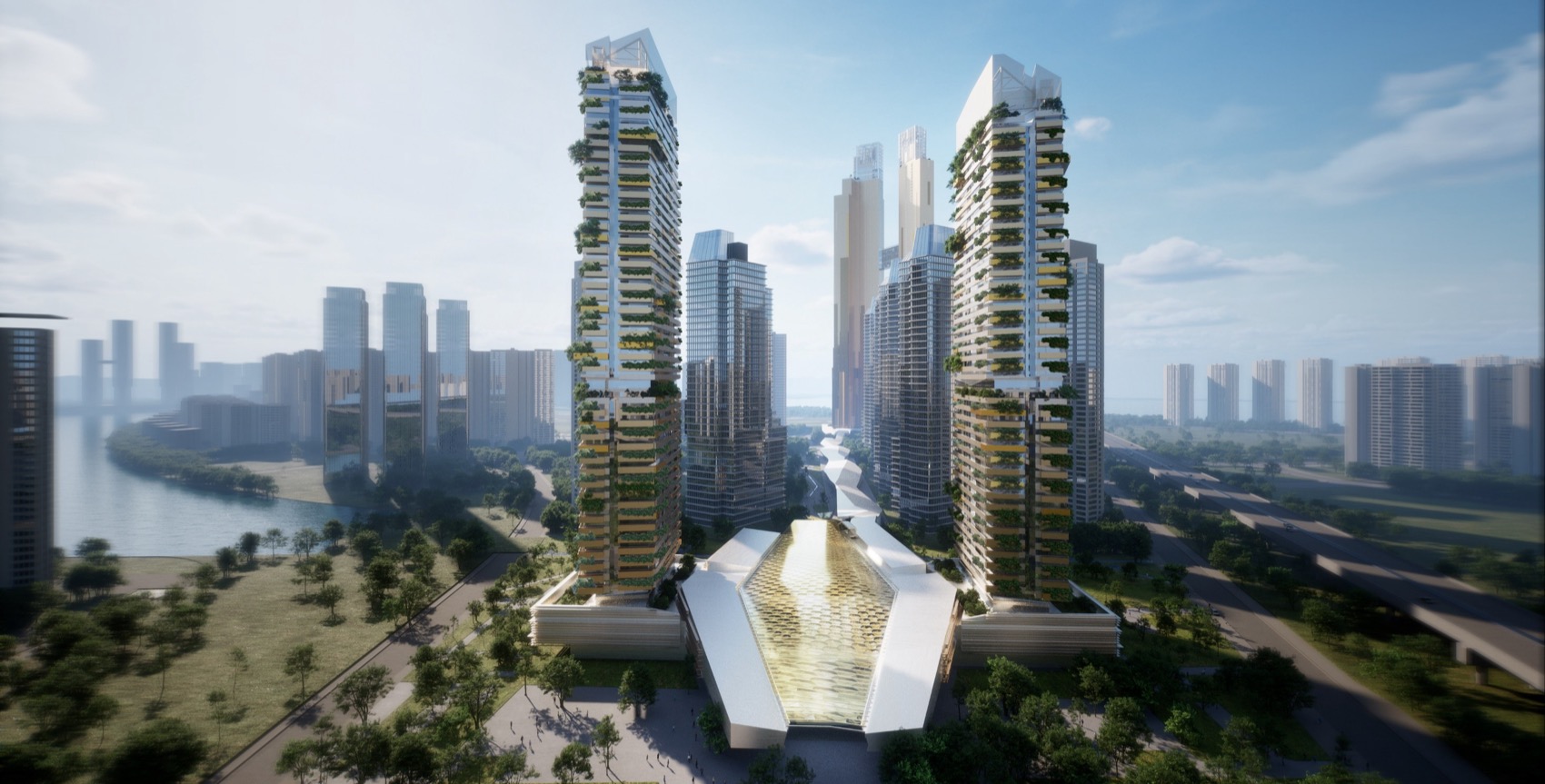
城市入口空间Urban Gateway Space
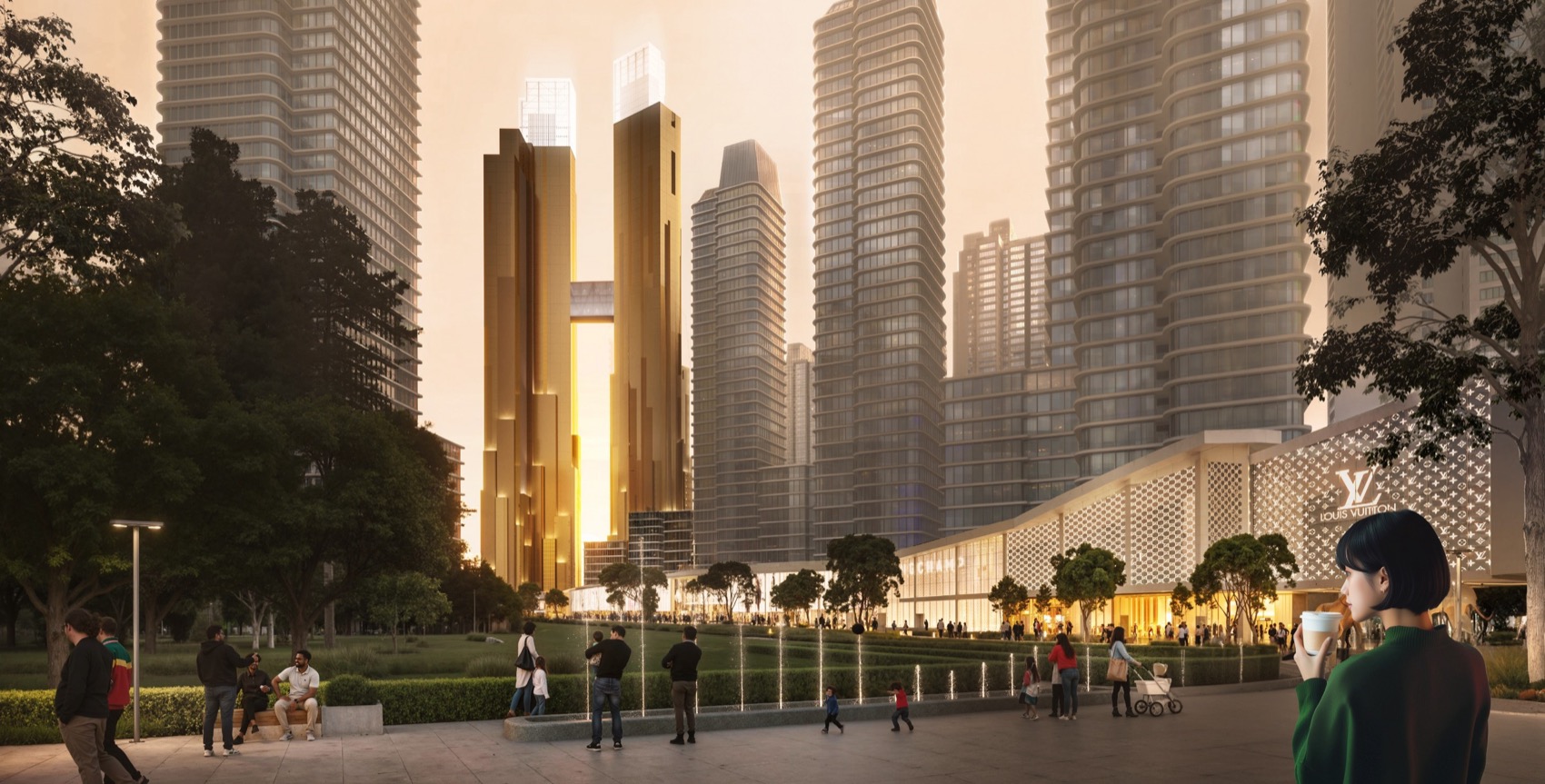
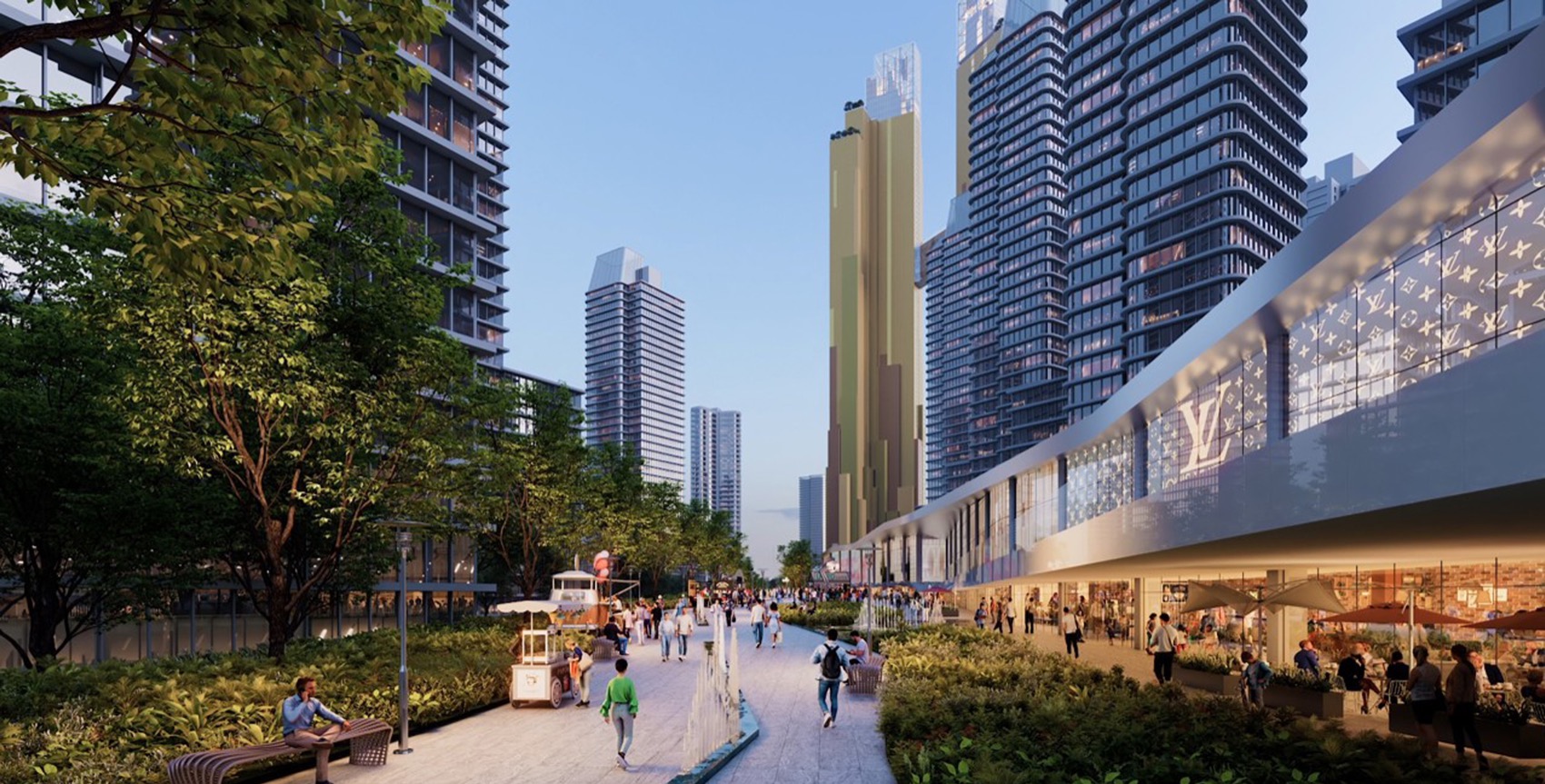
通过空中连桥及扶梯系统,人流继续进入 Cultural Spine Retail Mall。这条开放式商业街全长约500米,北侧为连续商业界面,南侧则向海景公园完全打开。不同于传统商业体固定租赁模式,项目采用模块化店铺系统,允许单层、双层及组合型空间灵活适应不同品牌需求。部分双层挑空店铺则强化商业展示性,并在整体街区中形成丰富的空间节奏。商业顶棚设计灵感来源于流动的海水。连续起伏的顶棚形成室内商业与滨海景观之间的视觉延续,让购物体验始终与自然发生联系。
Through a network of skybridges and escalators, visitors continue into the Cultural Spine Retail Mall. This open-air retail street extends approximately 500 meters, with a continuous commercial frontage on the north side and a full visual opening toward the waterfront park on the south. Unlike conventional retail developments that rely on fixed leasing formats, the project adopts a modular retail system, allowing single-level, double-height, and hybrid spatial configurations to flexibly accommodate different brand requirements. Selected double-height retail spaces further enhance commercial visibility and create a rich spatial rhythm throughout the district. The commercial canopy draws inspiration from the movement of water. Its continuously undulating form establishes a visual continuity between the retail environment and the waterfront landscape, ensuring that the shopping experience remains constantly connected to nature.
▼购物中心-方案效果图,Shopping Mall–Project Rendering
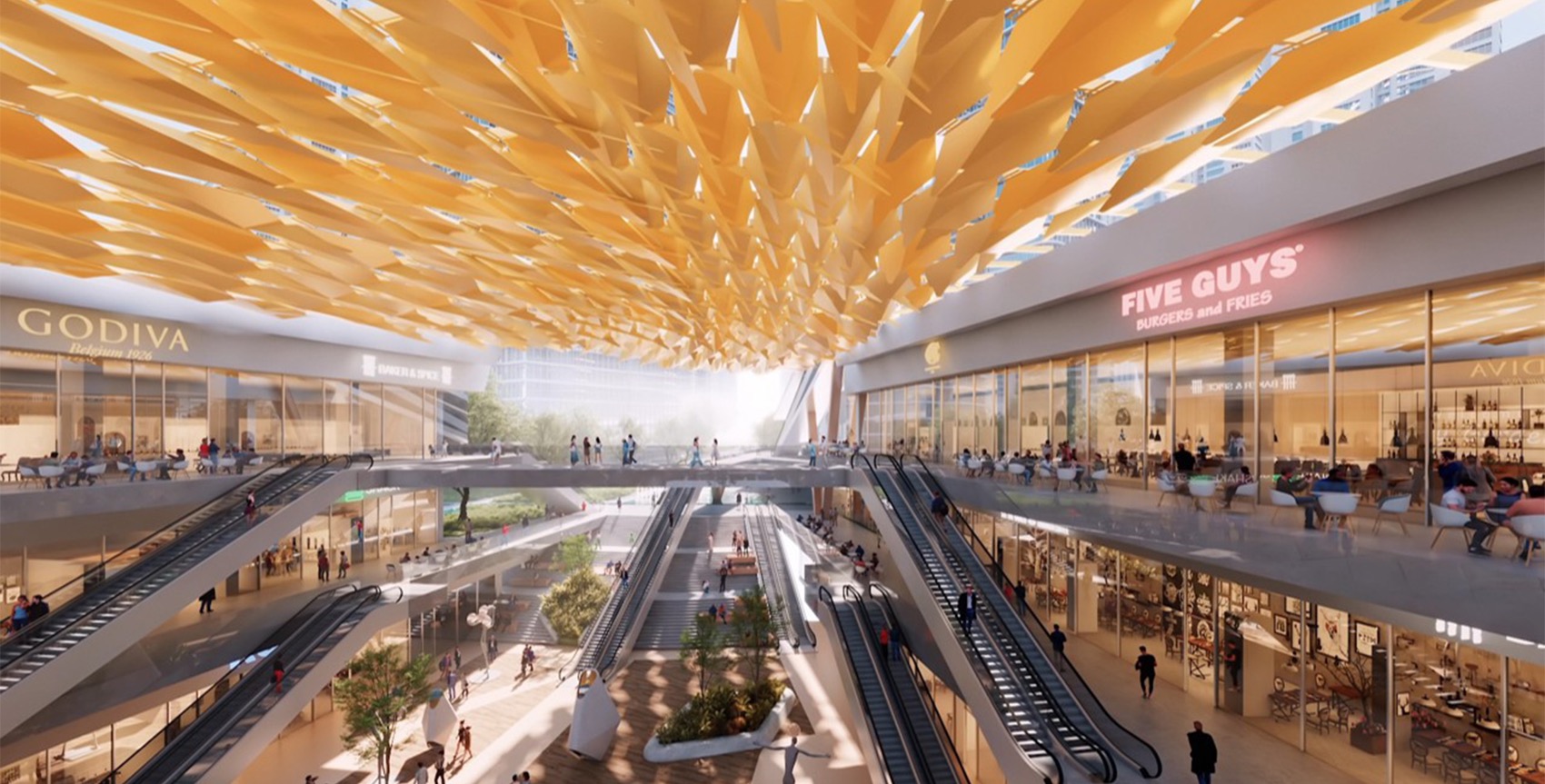
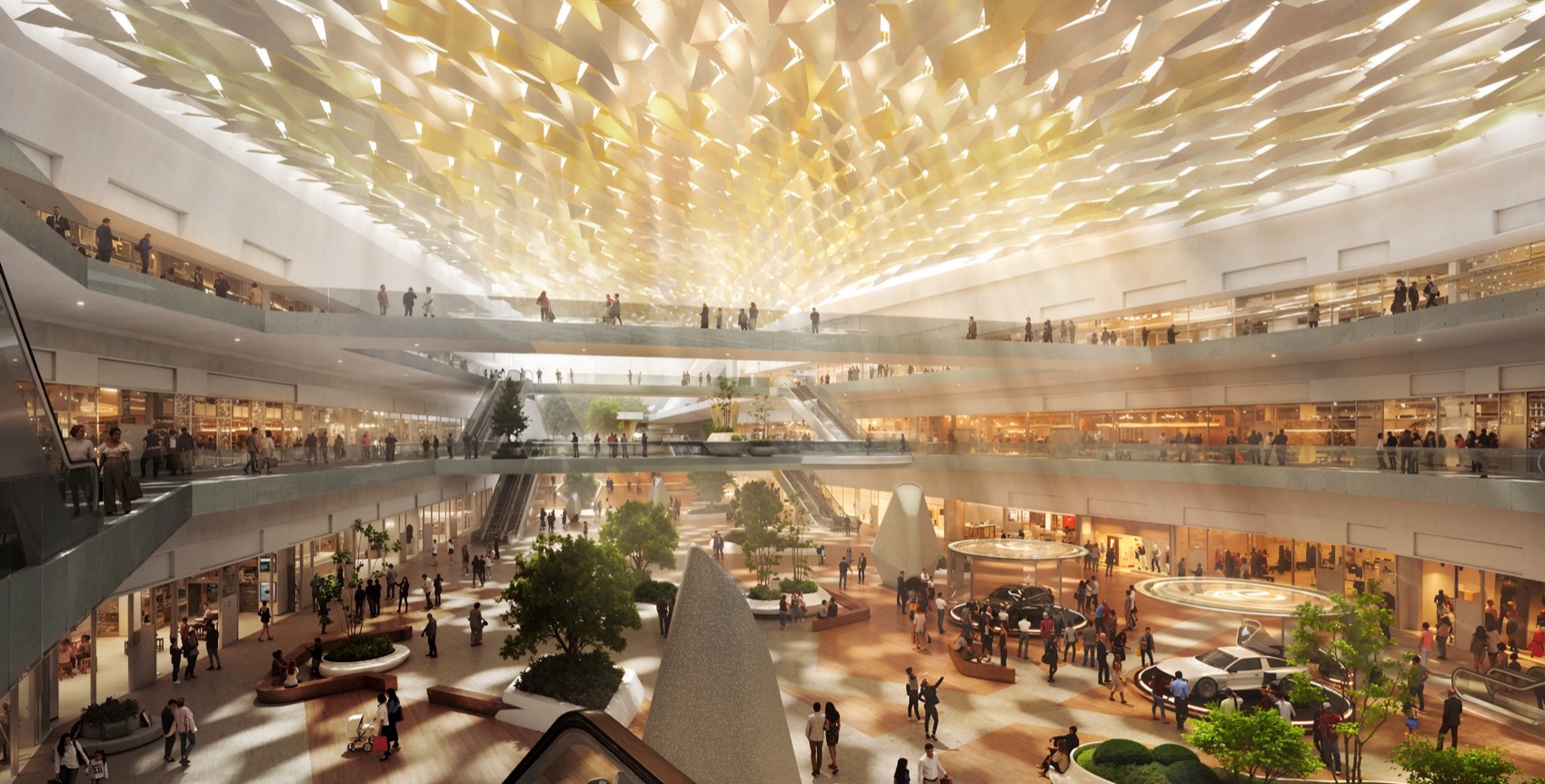
开放商业街区:商业与滨海景观融合Open Retail District: The Integration of Commerce and Waterfront Landscape
整个商业系统并非附属于塔楼,而是真正成为整个项目最重要的城市公共骨架。商业、景观、步行系统与公共活动被编织为一个完整系统,形成介于城市街道、公园与购物中心之间的新空间原型。
Rather than functioning as an accessory to the towers, the commercial system becomes the project’s primary urban public framework. Retail, landscape, pedestrian circulation, and public activities are woven into an integrated system, forming a new spatial prototype that exists somewhere between an urban street, a public park, and a shopping mall.
▼线形购物街区-方案效果图,Linear Retail District – Project Rendering
Landmark Towers:城市门户与天空地标Landmark Towers: Urban Gateway and Skyline Landmark
项目中的两座塔楼共同构成整个开发的核心空间框架,并分别承担不同尺度的城市功能。
The two towers within the project collectively establish the core spatial framework of the entire development, each accommodating urban functions at different scales.
▼Landmark Tower -天际线效果图,Landmark Tower – Skyline Rendering
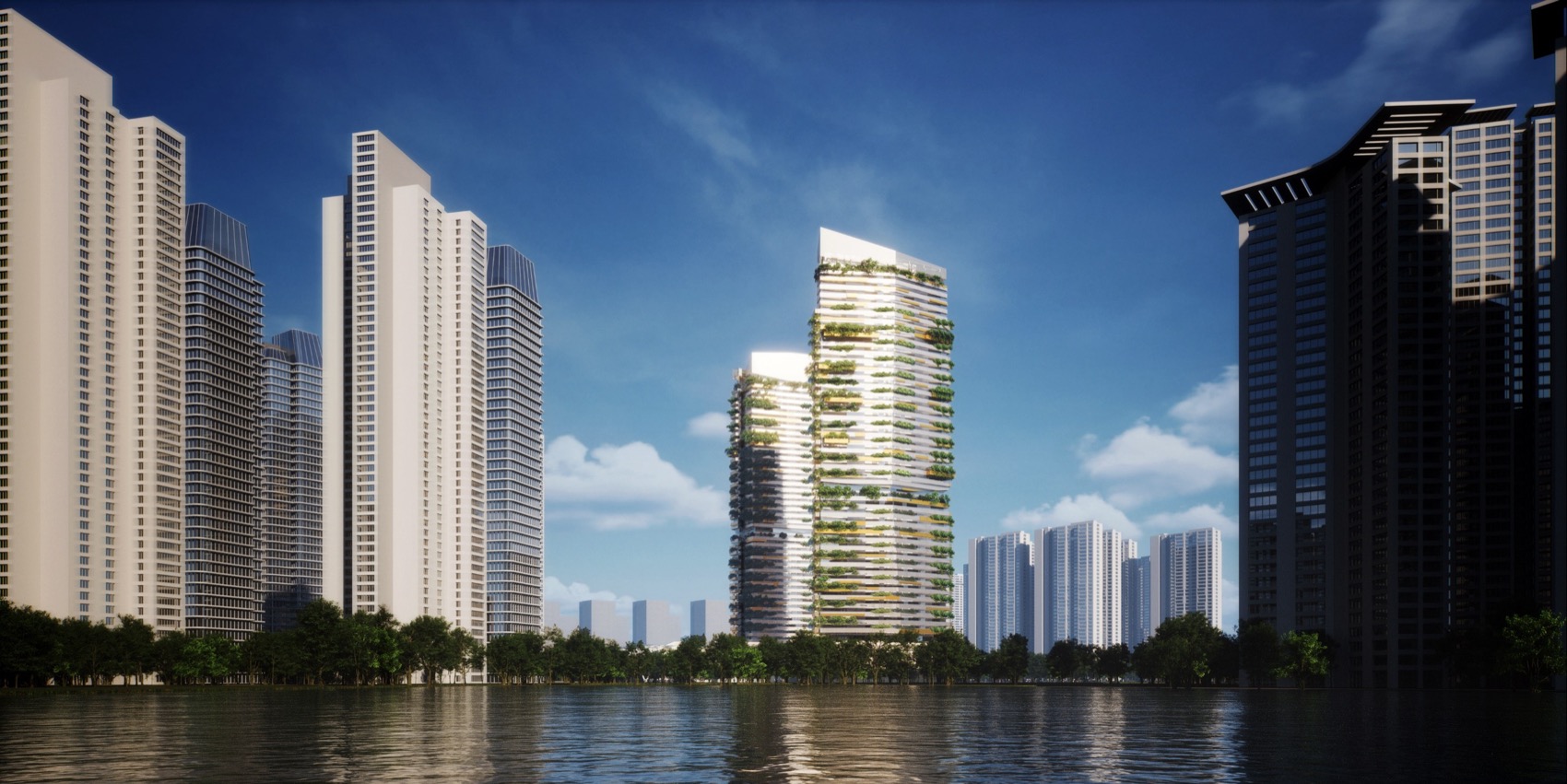
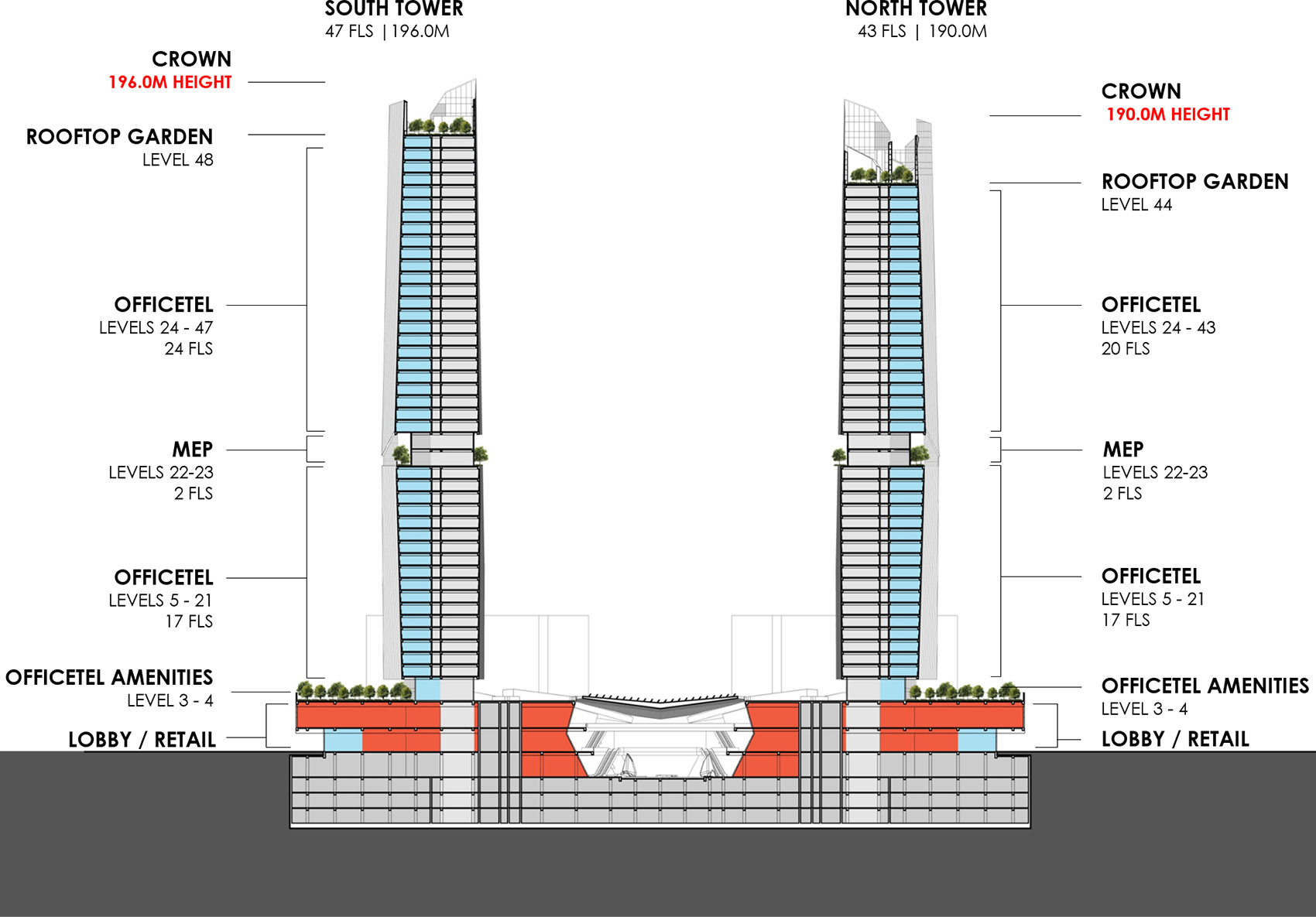
位于场地东侧的 Landmark Tower 2 高约196米,集办公、酒店式公寓、会议及文化功能于一体,并通过下沉式商业中庭直接连接地铁系统,成为整个项目最重要的城市入口。大多数访客都将从这里进入项目,并通过商业与公共空间系统进入整个城市序列。它不仅是一座塔楼,更是城市交通、人流与商业活动的组织节点。
Located on the eastern side of the site, Landmark Tower 2 rises approximately 196 meters and integrates office space, serviced apartments, conference facilities, and cultural programs. Directly connected to the metro system through a sunken retail atrium, it serves as the project’s principal urban gateway. Most visitors enter the development from this point and move through the commercial and public-space network into the broader urban sequence. More than simply a tower, it functions as a key organizational node for urban mobility, pedestrian flow, and commercial activity.
▼绿色立面与空中花园系统,Green façade and sky garden system
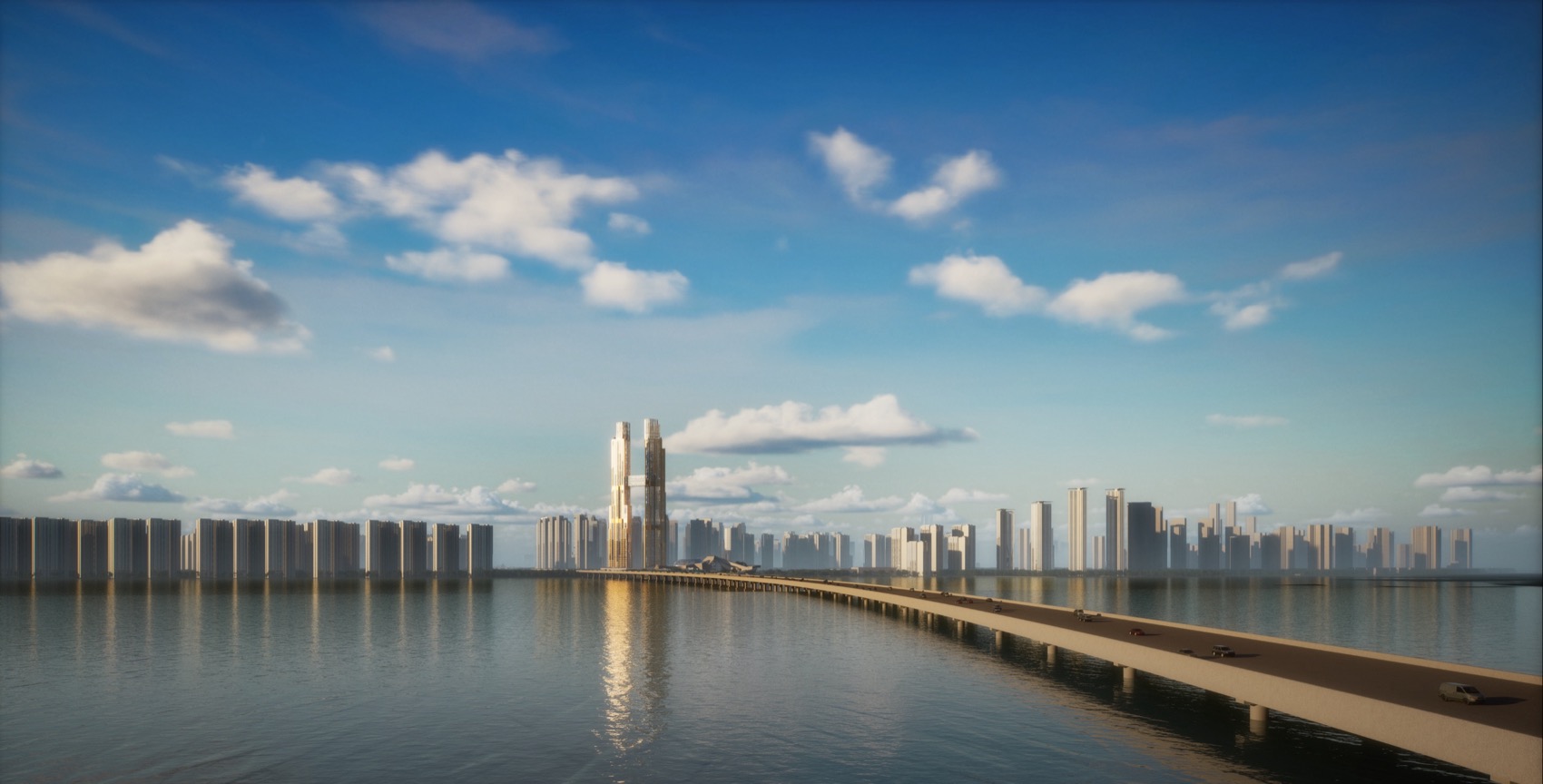
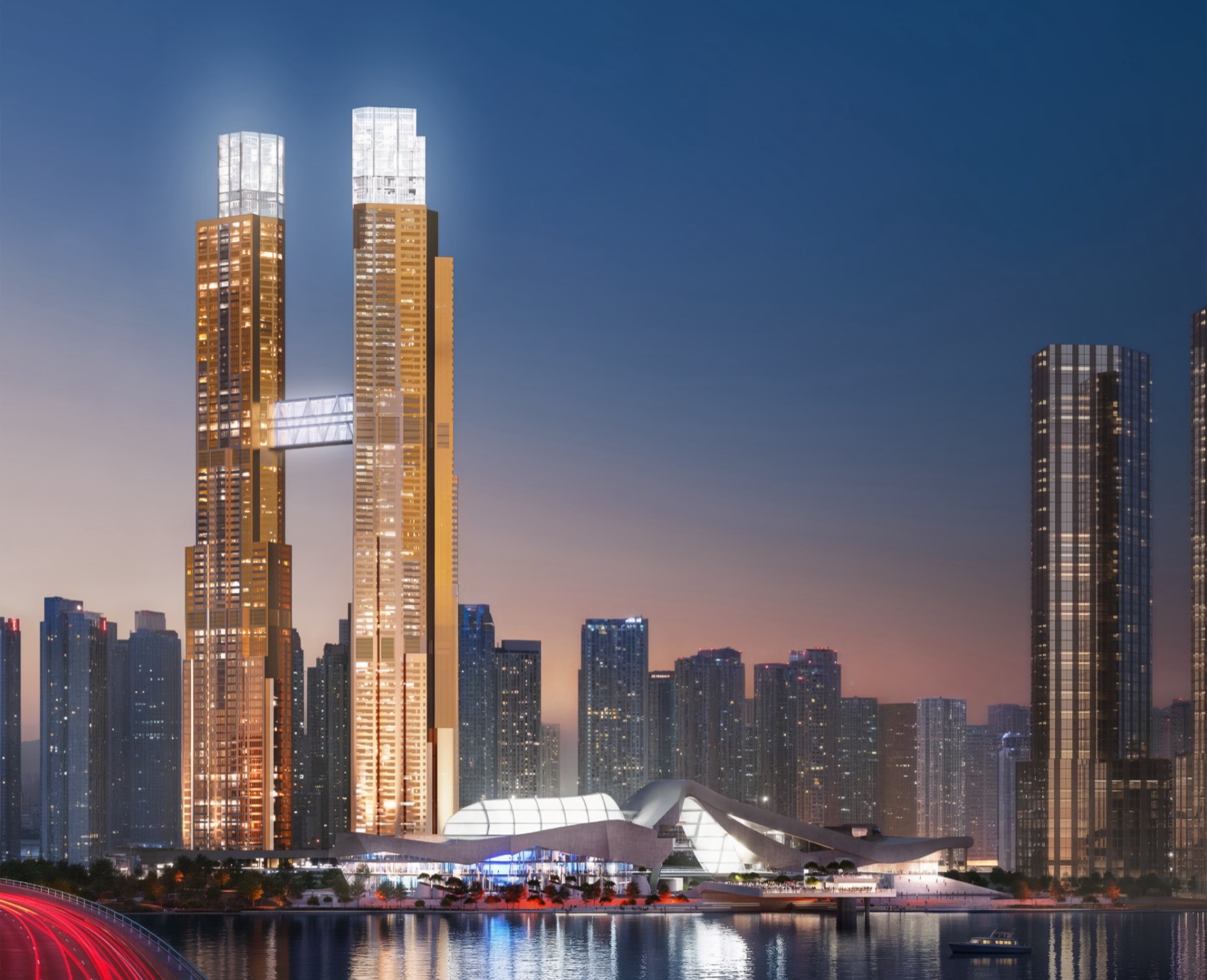
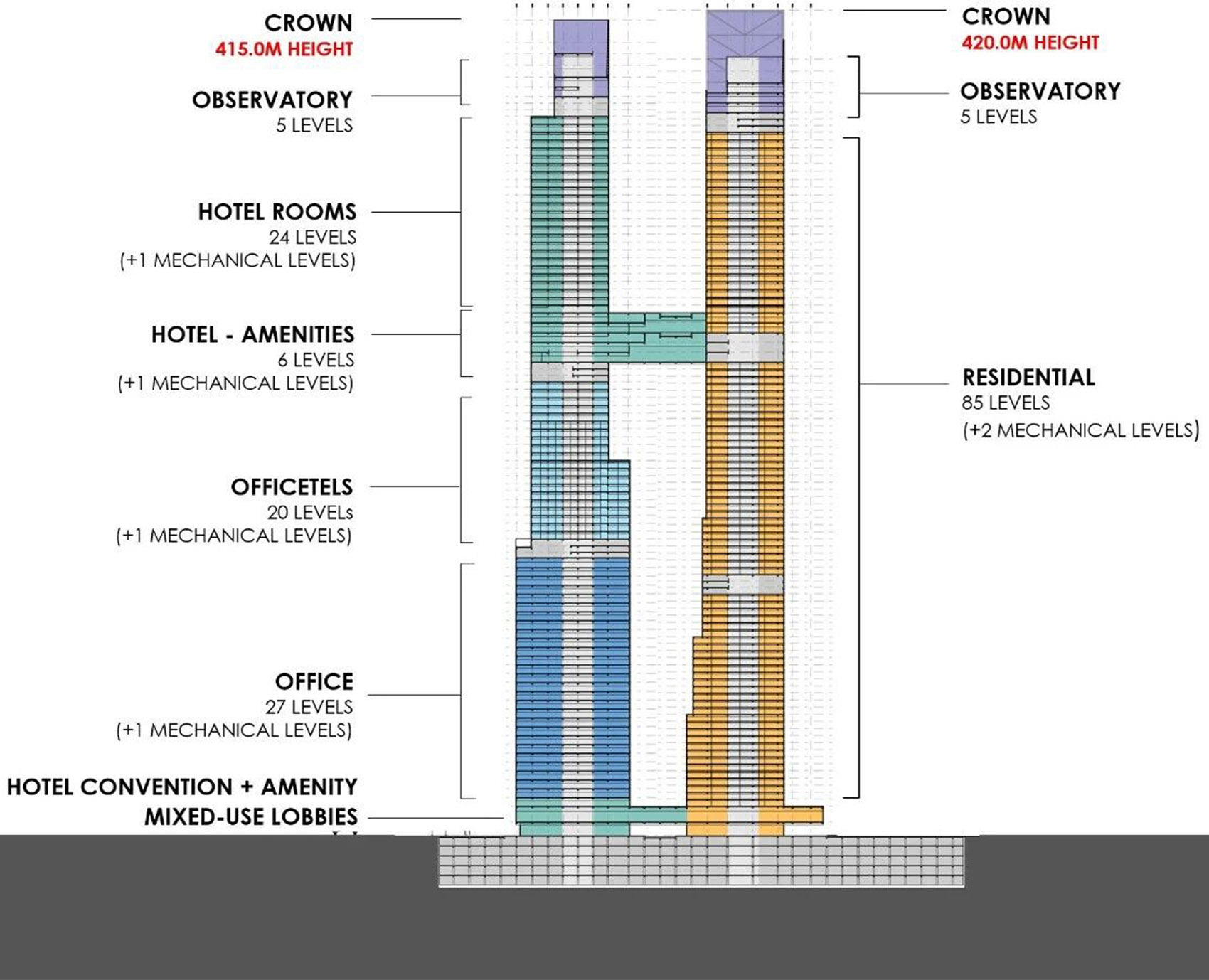
位于场地中央的 Landmark Tower 1 则构成整个项目最具辨识度的垂直地标。塔楼高度超过100层,并将成为全球第二高双塔建筑,仅次于吉隆坡双子塔。建筑由两座垂直塔体组成,中间形成45米高巨大空洞,在西海岸天际线上形成一个巨大的城市门户。其建筑语言直接来源于韩国著名的柱状节理(Jusang-jeolli)玄武岩地貌,将自然岩柱群聚形成的几何秩序转译为建筑形态,以表达韩国自然景观的力量感与国家身份。
Located at the center of the site, Landmark Tower 1 serves as the project’s most recognizable vertical landmark. Rising over 100 stories, it is envisioned as the world’s second-tallest twin-tower development, following the Petronas Twin Towers. The building is composed of two vertical tower volumes, separated by a monumental 45-meter-high void that creates a dramatic urban gateway along the western coastline skyline. Its architectural language is directly inspired by Korea’s iconic columnar-jointed basalt formations, known as Jusang-jeolli. The geometric order of clustered natural rock columns is translated into architectural form, expressing both the power of Korea’s natural landscape and a sense of national identity.
▼城市天际线中的垂直焦点,Vertical focal point within the skyline
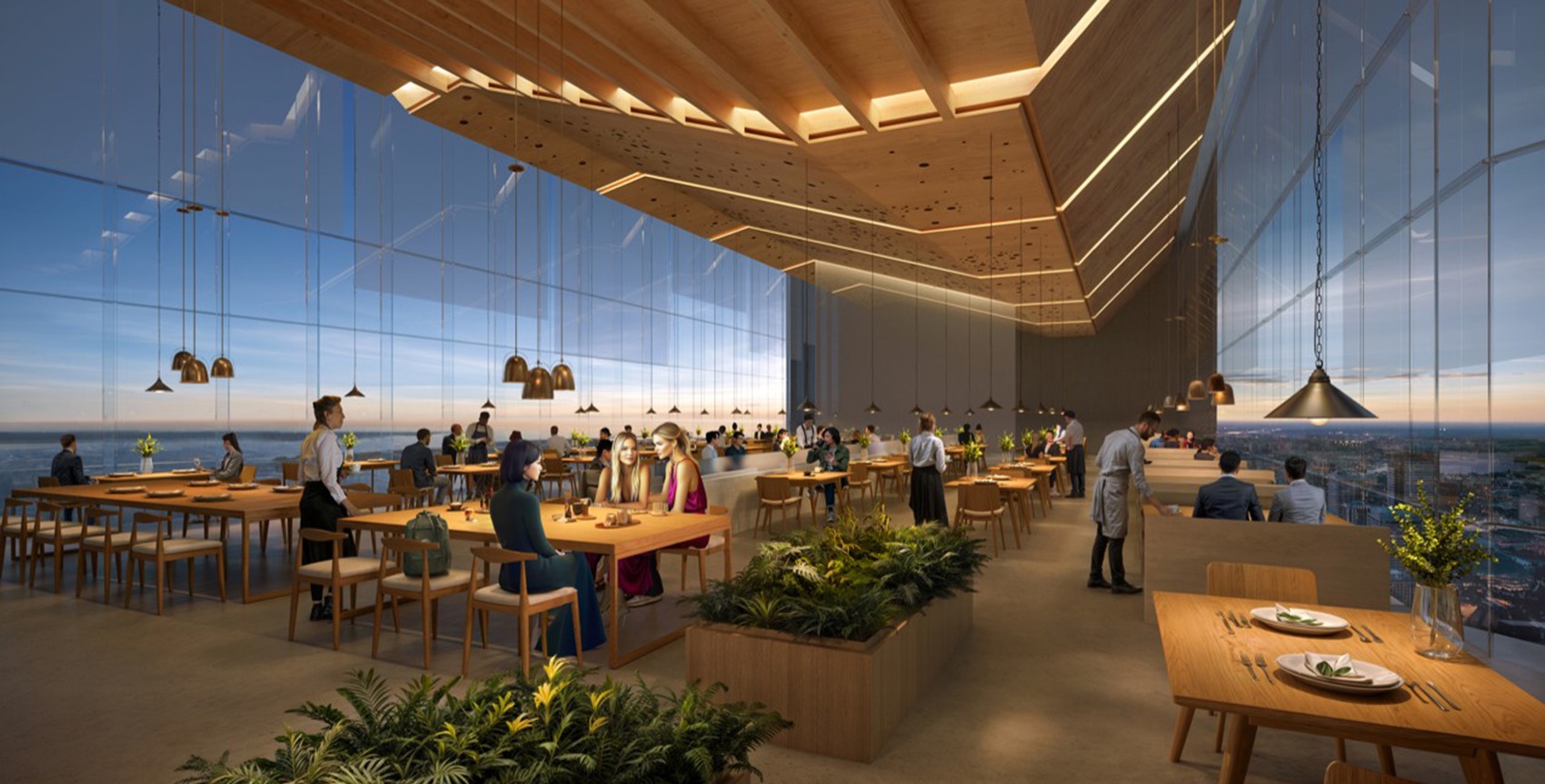
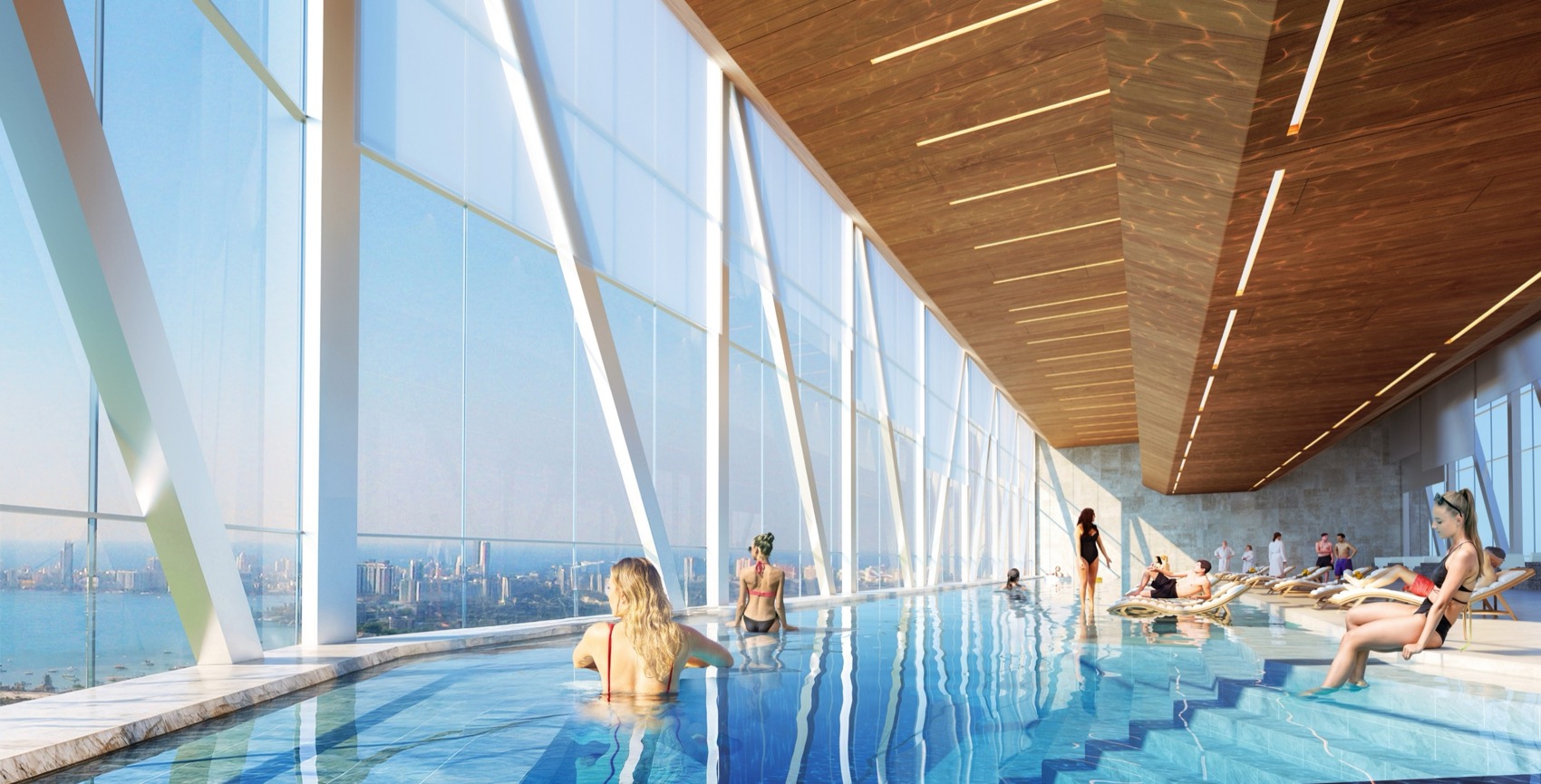
项目最特别之处则位于塔楼中部的空中连桥。不同于传统超高层建筑中的交通桥梁,这座连接双塔的空中结构内部整合了完整的高端酒店功能,包括餐厅、酒吧、水疗、泳池、休息区与接待空间,使其成为世界首个真正被“激活”的空中酒店公共空间。它连接的不仅是建筑本身,更将公共生活带入天空。
The project’s most distinctive feature is the skybridge located at the midpoint of the towers. Unlike conventional circulation bridges found in supertall buildings, this elevated connecting structure integrates a complete luxury hospitality program, including restaurants, bars, spa facilities, a swimming pool, lounges, and reception areas, transforming it into the world’s first truly “activated” elevated hotel public space. It connects not only the architecture itself, but also brings public life into the sky.
▼塔楼空中连桥-酒店餐厅效果图,Tower Skybridge – Hotel Restaurant Rendering
韩国的新门户Korea’s New Gateway
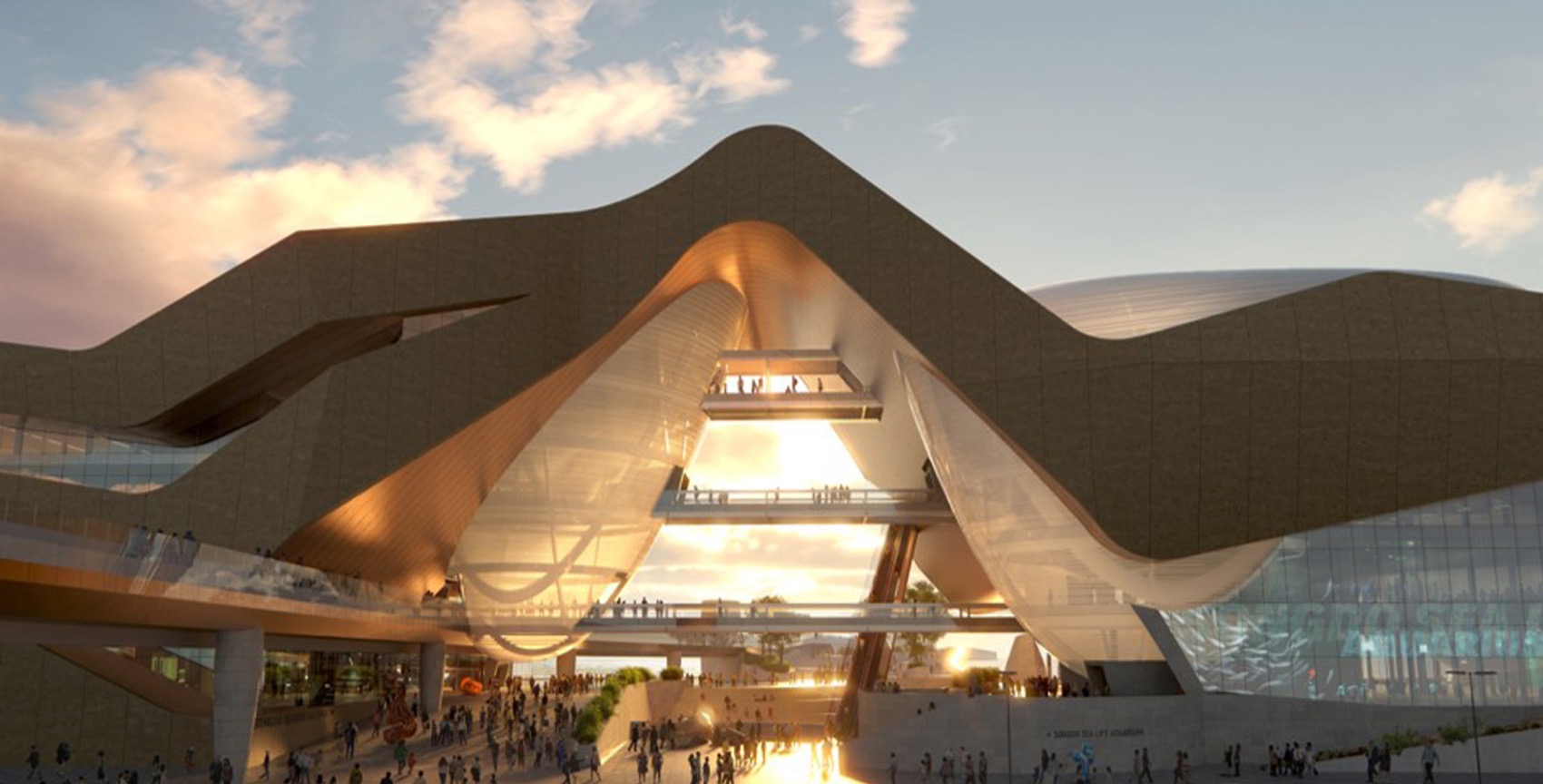
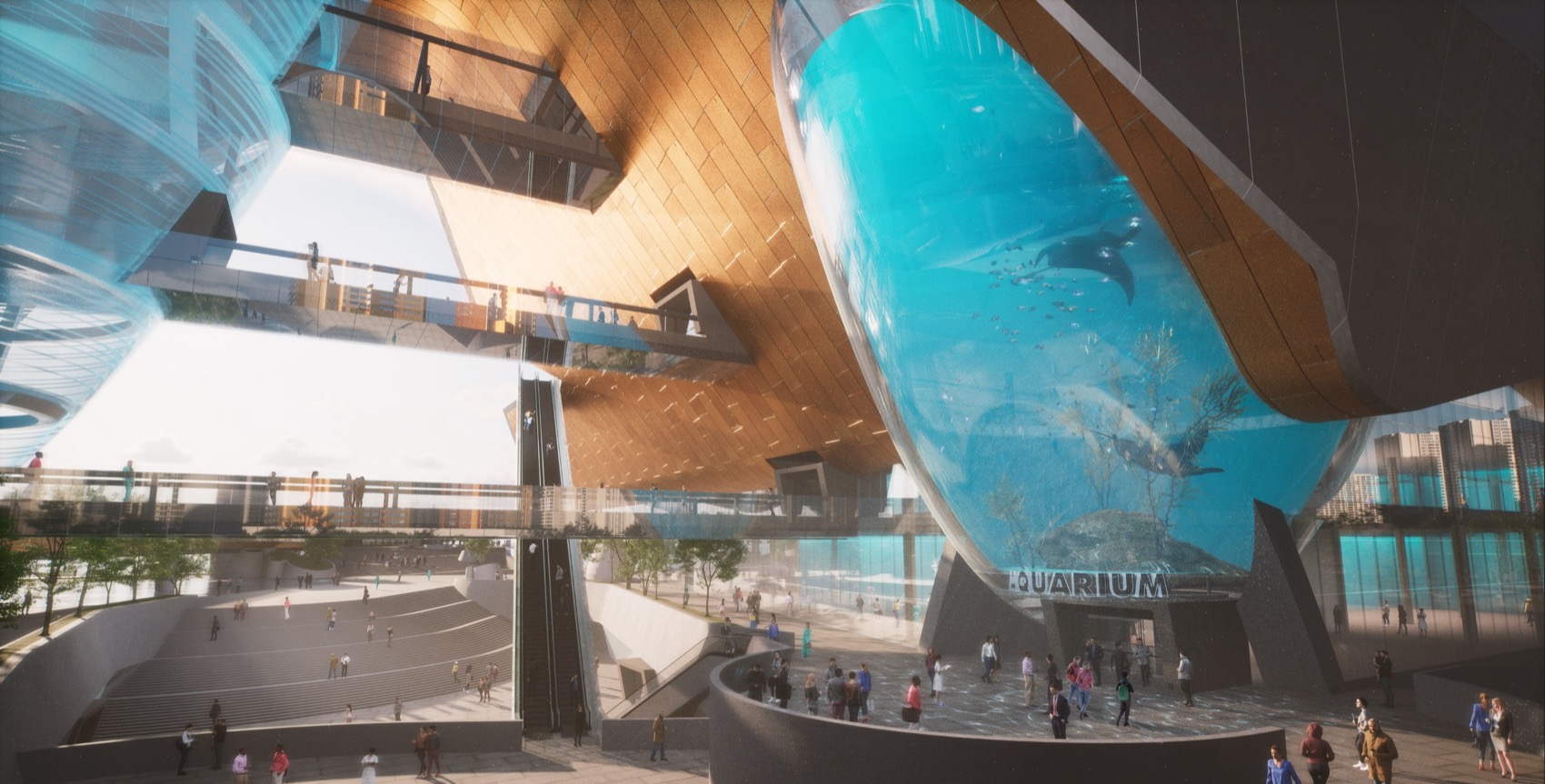
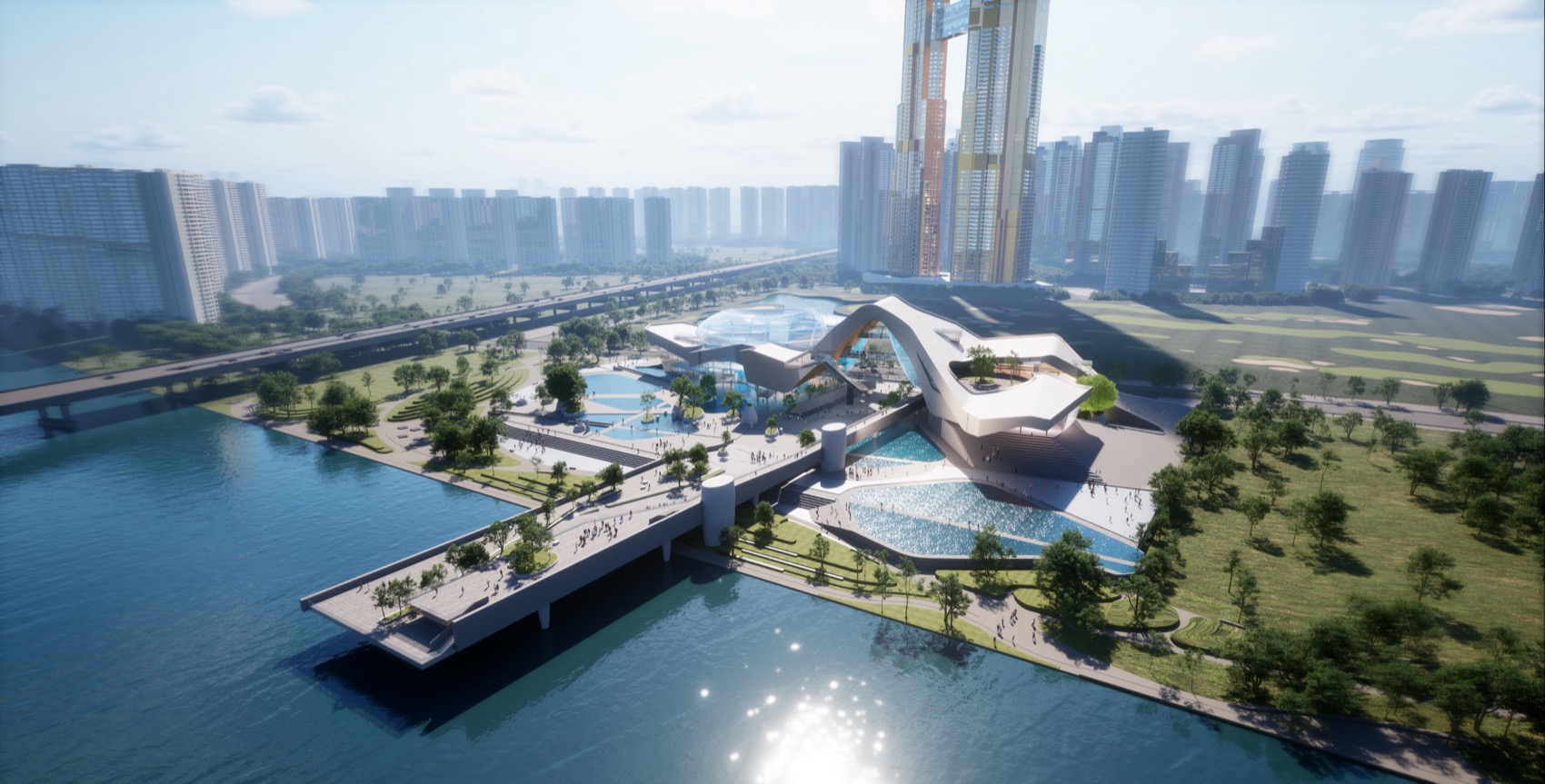
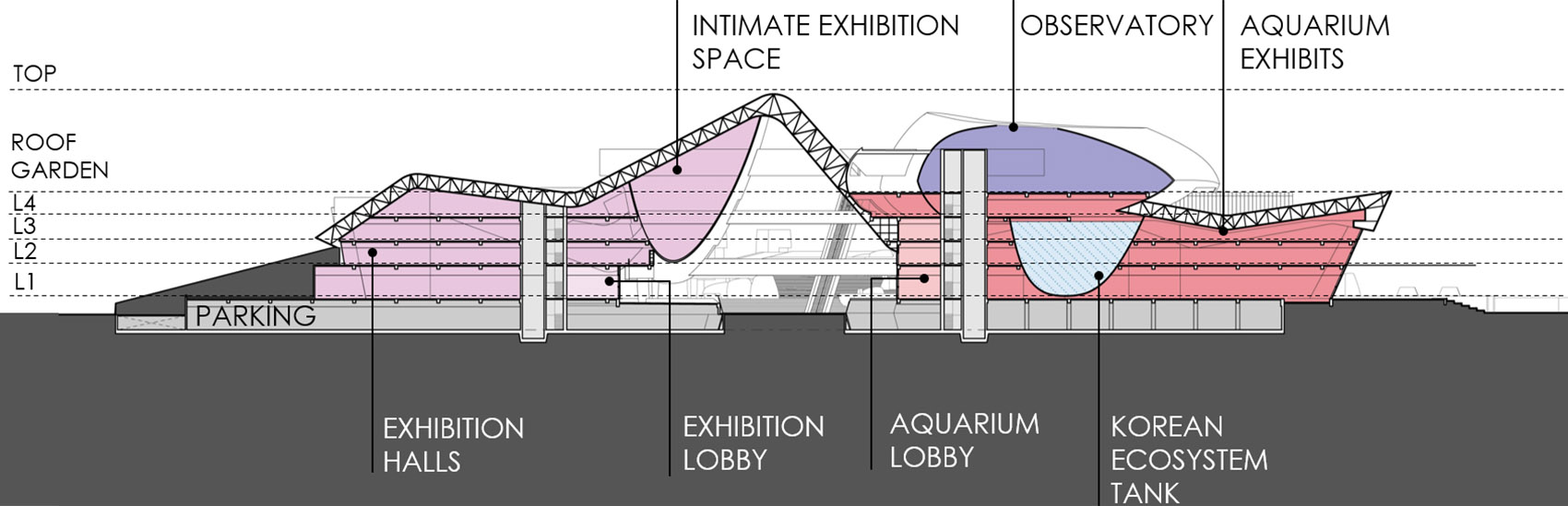
项目最西端的Theme Space则构成整个空间序列的终点。建筑形态以海浪为灵感,并结合数字水族馆、展览及滨海公共活动空间,形成整个城市旅程最后的“Sea Gate(海洋之门)”。
At the westernmost edge of the project, the Theme Space marks the culmination of the entire spatial sequence. Inspired by the form of ocean waves, the building integrates a digital aquarium, exhibition spaces, and waterfront public programs, forming the final “Sea Gate” within the city’s experiential journey.
▼海洋之门-建筑效果图,Sea Gate – Architectural Rendering
从城市入口,到商业脊柱,再到海岸空间,INEX试图建立的不只是新的城市天际线,而是一种新的城市生活模式:一个由商业、公共活动、景观和海洋共同构成的连续公共空间系统。Morphosis希望通过这条1.6公里的城市旅程,将松岛塑造为韩国真正意义上的未来门户。
From the urban gateway to the commercial spine and ultimately the waterfront destination, INEX seeks to establish not merely a new skyline, but a new model of urban life: a continuous public-space system shaped by commerce, public activity, landscape, and the ocean. Through this 1.6-kilometer urban journey, Morphosis aims to position Songdo as Korea’s true gateway to the future.
▼海洋之门-建筑鸟瞰效果图,Sea Gate – Aerial Architectural Rendering
▼方案轴测图,Axonometric Diagram of the Proposal
▼总平面图,Master Plan
▼总体长剖面图,Overall Longitudinal Section
▼“城市之门”建筑剖面图,“Urban Gate” Building Section
▼“天空之门”建筑剖面图,“Sky Gate” Building Section
▼“海洋之门”单体建筑剖面图,“Sea Gate” Building Section
地点:韩国,松岛
业主:Bluecore PFV Co., Ltd.
建筑面积:345,645㎡
场地面积:12.1公顷
项目类型:商业综合体 / 超高层 / 城市设计
项目功能:商业、高端零售、餐饮、办公、酒店式公寓、酒店、住宅、水疗、观景平台、滨海公园、数字水族馆、展览空间
设计时间:2024–至今
Team
Thom Mayne, Xiangyu Ray Chen, Eui-sung Yi
项目经理
Sung Sung-soo
项目建筑师
Jason Minor, Calvin Sin
项目成员
Robin Williams, Caronlyn Ng, Aaron Berman, Kevin Choi, Samantha Shanne, Barbara Soo, Hyungdoo Youn, Yitao Gu
项目助理
Nicole Meyer