“巢穴”与“瀑布”社区综合体,阿尔巴尼亚 / Zaha Hadid Architects
“巢穴”与“瀑布”社区综合体位于地拉那发展最快的区域——Kodra e Diellit,是ZHA为当地开发商Agikons打造的全新社区项目。作为阿尔巴尼亚首都,地拉那以其色彩鲜艳的后共产主义时期建筑和充满活力的咖啡文化而闻名,大都市区人口接近一百万。随着阿尔巴尼亚快速迈向欧盟成员国地位,其经济预计将在未来几年实现显著增长,而地拉那正是这一增长的核心。
Located in Kodra e Diellit, the fastest-growing district of Tirana, the Nest and Cascades are new additions to the community designed by ZHA for the local developer Agikons. Renowned for its colourful post-communist architecture and vibrant café culture, Tirana is the capital of Albania with almost one million residents living within its greater metropolitan region. Progressing rapidly towards European Union membership, the Albanian economy is predicted to grow significantly in the coming years—with Tirana as the centre of its growth.
▼“巢穴”山地住宅建筑,“Nest” Hillside residential building
Kodra e Diellit社区位于地拉那首都南侧山坡上,可俯瞰整座城市的全景。目前该片区以大型独栋住宅和联排住宅为主,是一个充满活力的社区,通过步行道网络和庭院空间彼此联结,并融入Dajti山的自然景观与林地之中。作为社区的重要组成部分,Kodra e Diellit拥有广受欢迎的儿童俱乐部和游乐场、体育俱乐部及联赛、学校和幼儿园,以及医疗中心、购物和餐饮设施。社区通过L.1B专线公交与市中心相连,公交服务从白天至夜间每10至15分钟一班。此外,Kodra e Diellit社区还可通过L.2和L.16两条本地公交线路到达。Kodra e Diellit社区的受欢迎程度带来了显著的住宅需求,尤其是适合年轻家庭、伴侣、年轻专业人士以及不再需要大型家庭住宅的退休人士的居住产品。ZHA设计的巢穴与瀑布项目,正是为了回应该社区对于更加多样化住宅类型的强劲需求。
The Kodra e Diellit district of Tirana is located on the hillside to the south of the capital with panoramic views across the city. Currently consisting of large family villas and town houses, the neighbourhood is a thriving community interconnected by a network of pedestrian walkways and courtyards within the natural landscapes and woodlands of the Dajti Mountain. Integral to this community, Kodra e Diellit offers popular children’s clubs and playgrounds, sports clubs and leagues, schools and kindergartens, as well as health centres, shopping and dining. Connected to the city centre by the L.1B dedicated bus route with scheduled services operating every 10 to 15 minutes throughout the day and evening, the Kodra e Diellit neighbourhood is also served by local bus routes L.2 and L.16. The popularity of the Kodra e Diellit neighbourhood has created notable demand for residential accommodation that offers greater accessibility for younger families, couples, young professionals and retirees who no longer require a large family home. ZHA’s design of the new Nest and Cascades developments provide apartments that respond to this significant demand for a wider variety of residential accommodation in Kodra e Diellit.
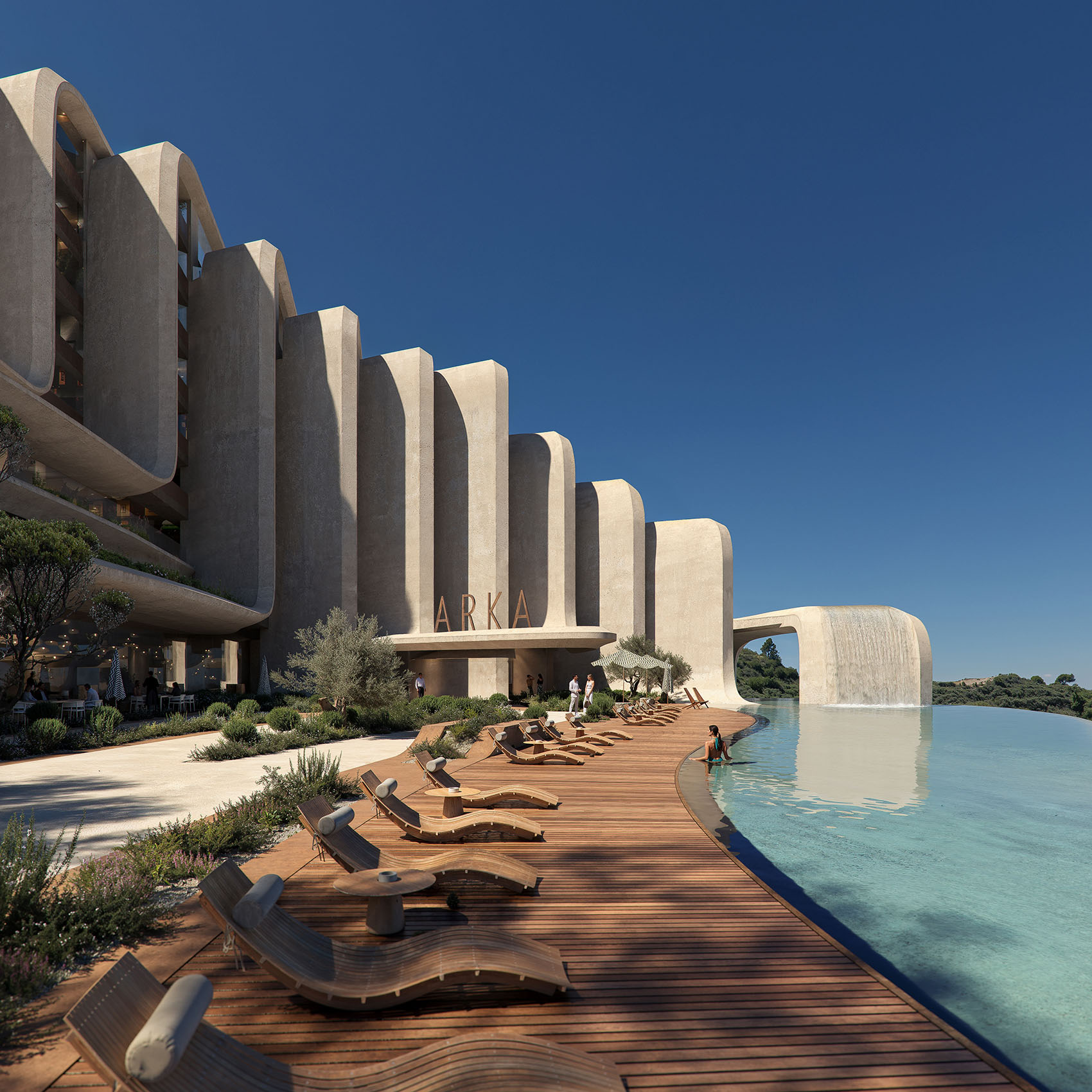
▼“瀑布”的泳池与立面,Pool and facade of Cascades
“巢穴”
Nest
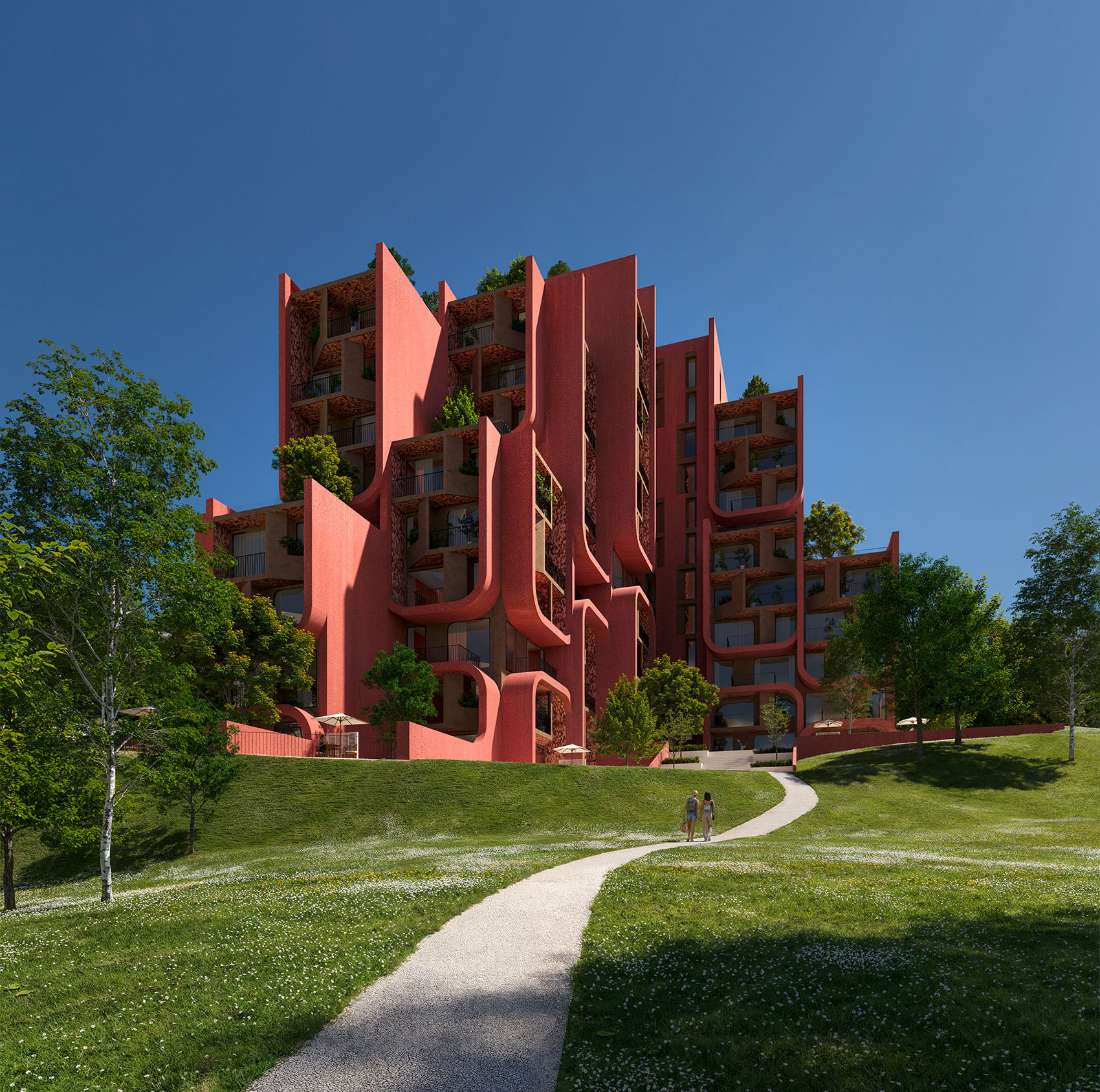
“巢穴”项目分布于Kodra e Diellit社区内四个地块之上,围绕一座种植地中海本土植物的社区公园展开,提供从一居室到三居室的多样化公寓产品,为居民在夏季创造荫蔽舒适的户外环境。“巢穴”的设计由其区位与环境所定义。项目基于对场地的全面分析,通过数字测绘详细记录地形变化、太阳辐射、温度、湿度、主导风向、空气质量以及全年降雨情况。通过将这些详尽的数据输入复杂的数字模型中,ZHA不断优化与完善设计方案,以提升景观视野并增强建筑性能。建筑立面经过精细校准,可捕捉地拉那盛行的东风,实现每套公寓的自然穿堂通风,最大化居住舒适度。内凹露台和悬挑阳台则为每套住宅提供了受庇护的户外空间。可持续发展理念决定了“巢穴”的建筑朝向、立面设计及景观策略,项目目标是获得LEED v4.1住宅BD+C(多户住宅)金级认证。
Organized across four plots within the Kodra e Diellit neighbourhood, the Nest encompasses a diverse range of one- to three-bedroom apartments around a community park planted with local mediterranean flora to shelter residents during the summer months. Defined by its location and environment, the Nest’s design has been informed by comprehensive analysis of the site and mapped to ascertain detailed fluctuations in topography, solar radiation, temperature, humidity, prevailing winds, air quality and rainfall throughout the year. Applying these comprehensive datasets to complex digital models, ZHA has developed and refined the design to optimise views and enhance building performance. The façades have been calibrated to enable cross-ventilation throughout each apartment by capturing Tirana’s prevailing easterly winds, maximizing comfort for residents. Recessed terraces and cantilevered balconies offer each apartment sheltered outdoor spaces. Sustainability considerations have determined the Nest’s building orientation, façade design and landscape strategy—targeting Gold certification under LEED v4.1 Residential BD+C: Multifamily Homes.
▼“巢穴”住宅建筑外观,“Nest” Residential exterior
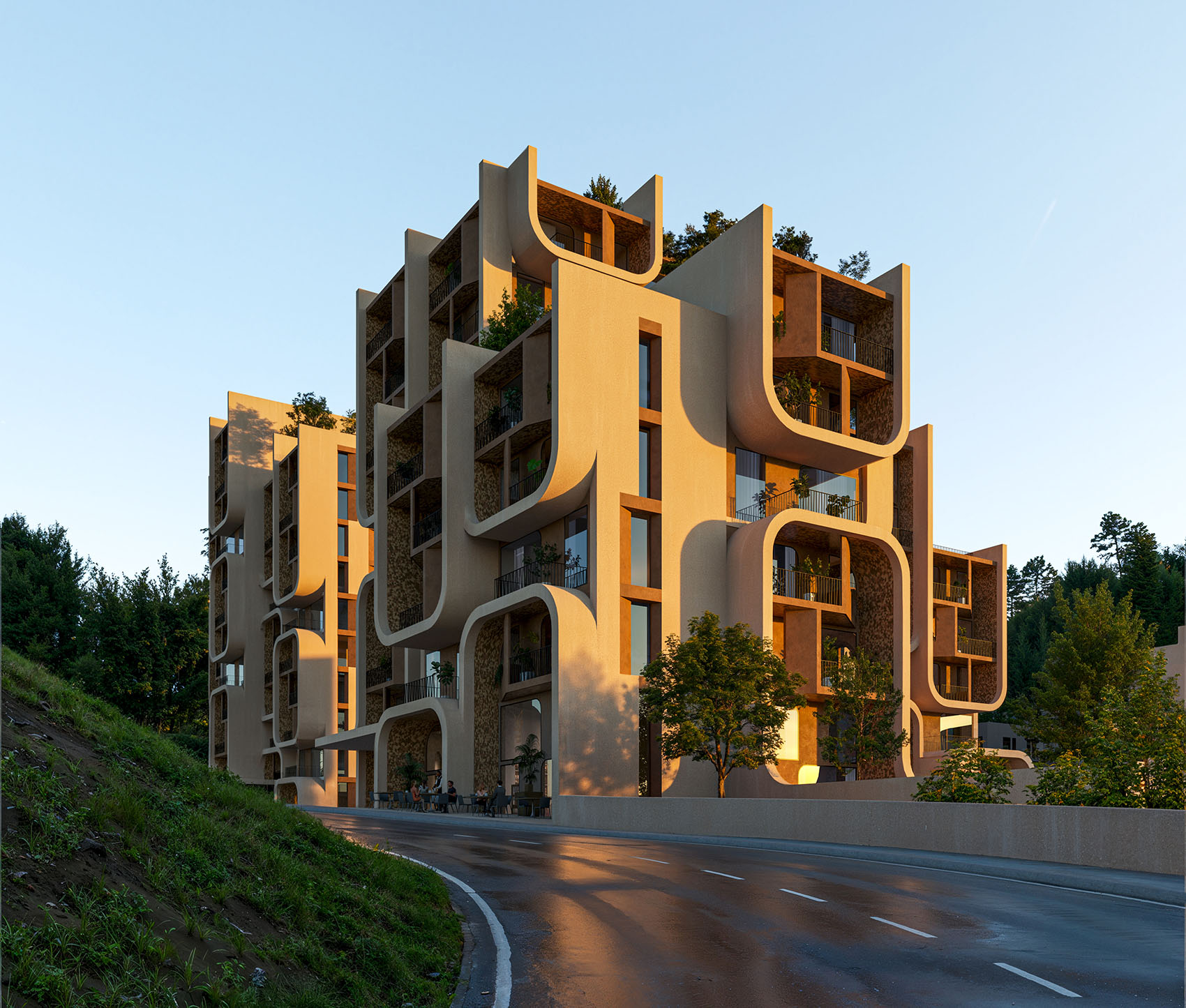
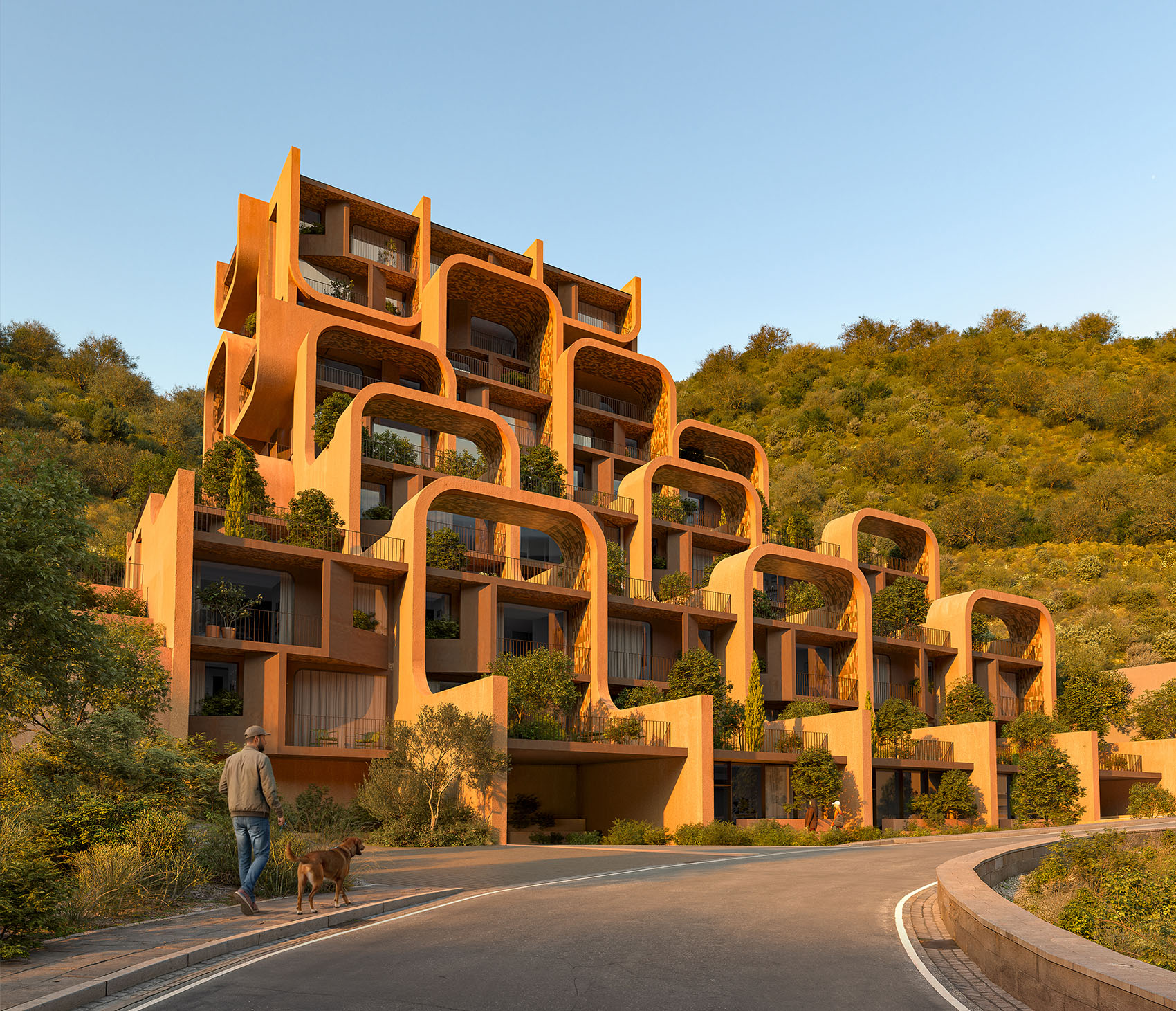
项目设计直接回应地拉那湿润亚热带地中海气候特征,使建筑本身成为一套被动环境调节系统。深窗洞、悬挑阳台和内退开口均通过计算设计生成,在夏季阻挡太阳辐射的同时,将冬季较低角度的阳光引入室内深处,使项目95.3%的使用空间获得高水平自然采光。完整的生命周期评估(LCA)显示,“巢穴”的隐含碳强度为471 kgCO₂e/m²,显著低于区域平均水平566 kgCO₂e/m²。这一评估结果指导了项目材料选择,包括采用模块化建造、再生骨料以及陶土覆层,以替代碳排放更高的幕墙系统。“巢穴”中的每栋建筑都根据周边景观环境形成不同的立面表达——其中两栋采用浅褐色材料体系,第三栋采用陶土色调,第四栋则采用深红色灰泥饰面,以呼应邻近山坡富含铁元素的地貌特征。中央公园景观不仅连接整个社区,同时兼具气候基础设施和公共活动空间功能。设计通过营造种植遮荫区域,使其温度比暴露于阳光下的硬质铺装区域低最多16°C。总体规划将55%的场地面积用于绿地,较LEED开放空间要求高出83.3%。高反射率铺装、透水铺地以及本土植物配置,共同缓解了通过热环境测绘识别出的城市热岛效应。项目中的水资源采用闭环管理模式:雨水收集用于灌溉,中水经现场处理后循环用于非饮用用途,而本土植物配置则进一步降低了灌溉需求。屋顶太阳能阵列提供可再生电力,同时配备电动车充电设施、自行车存储空间以及完善的社区配套,支持居民实现可步行、低碳的生活方式。
The design responds directly to Tirana’s humid subtropical mediterranean climate, with the architecture serving as a passive environmental system. Deep façade reveals, overhanging balconies, and recessed openings are computationally designed to intercept summer solar radiation while admitting low winter sun deep into the apartments—bringing high levels of natural light to 95.3% of occupied spaces within the development. A full Life Cycle Assessment benchmarks the Nest at an embodied carbon intensity of 471 kgCO₂e/m² – substantially below the regional average of 566 kgCO₂e/m² – informing material choices including modular construction, recycled aggregates, and terracotta cladding in preference to higher-carbon curtain wall alternatives. Each building within the Nest incorporates façades informed by its surrounding landscape— two buildings are finished in a fawn-coloured material palette, the third in terracotta, and the fourth in a deep red stucco echoing the iron-rich terrain of its adjacent hillside. The central park’s landscaping connects the community and functions as climate infrastructure as well as social amenity. Designed with planted shading zones that remain up to 16°C cooler than exposed hardscape, the masterplan dedicates 55% of total site area to green space – exceeding LEED open space requirements by 83.3%. High-albedo surfaces, permeable paving, and native planting actively mitigate urban heat island effects identified through thermal mapping of the surrounding urban fabric. Water throughout the development is managed as a closed loop, with rainwater harvested for irrigation, grey water treated on-site for non-potable reuse, and native planting reducing irrigation demand. Roof-mounted solar arrays supply renewable electricity, while EV charging, bicycle storage, and local civic amenities support a walkable, low-carbon lifestyle for residents.
▼“巢穴”住宅建筑正立面,“Nest” Residential front facade
“瀑布”Cascades
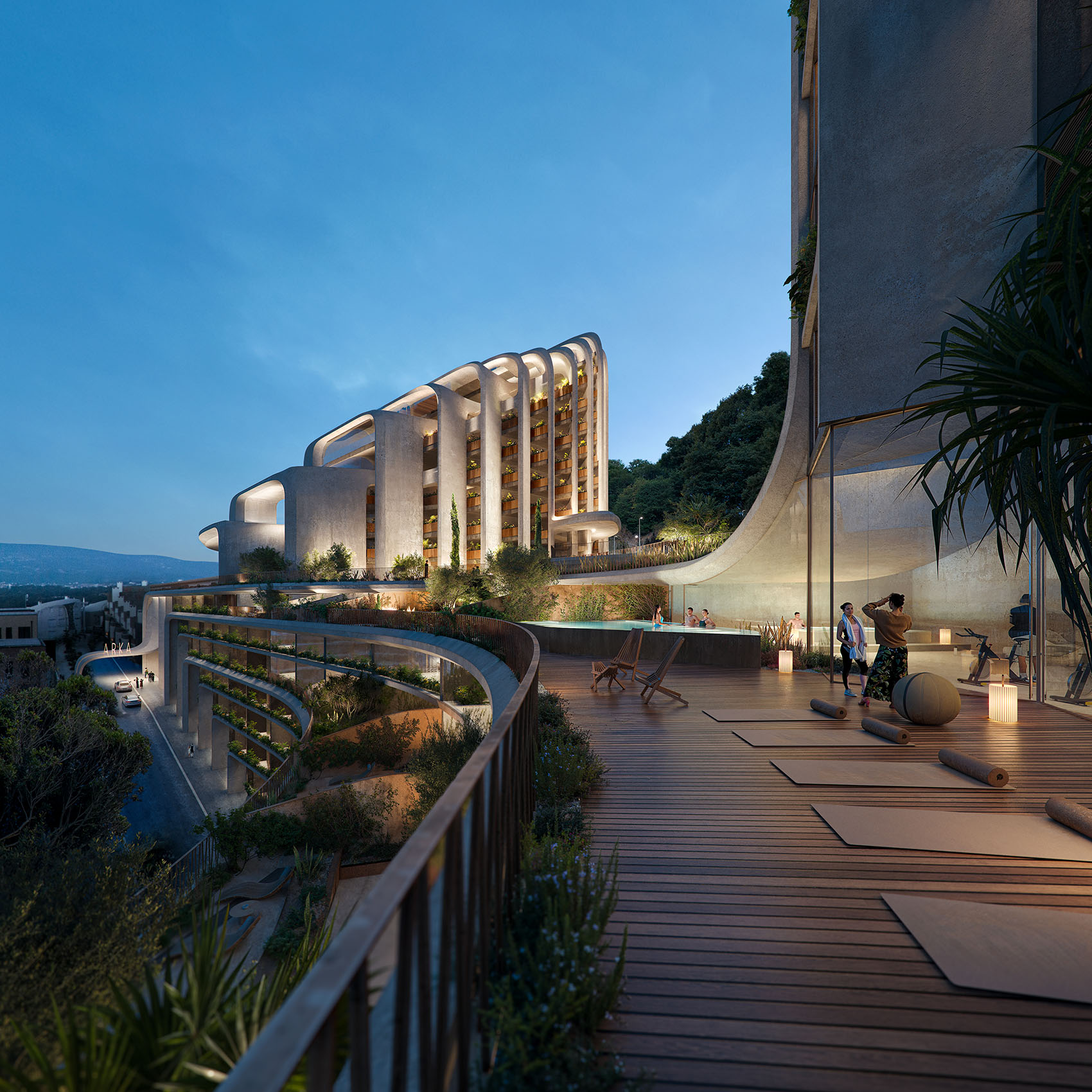
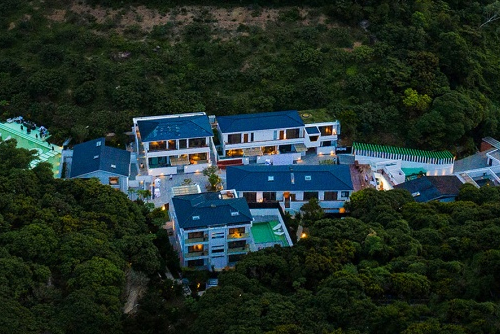
“瀑布”项目作为Kodra e Diellit区域现有Arka Art Hotel的扩建部分,俯瞰整座城市。项目包括新增一座120间客房的酒店翼楼、一段长60米的泳池延伸部分,以及设置于基座之上并嵌入山体中的公寓住宅翼楼。两处景观庭院作为瀑布住客与居民的共享聚会空间。泳池庭院延续了现有酒店露台及餐厅廊架空间,而山坡花园庭院则营造出更加安静、层层退台的景观环境,并可俯瞰城市全景。建筑设计汲取当地材料与工艺传统,其整体构成由周边山坡地形塑造,通过层层跌落的花园露台朝向山谷展开,以优化景观视野。ZHA通过数字测绘与环境模拟对场地进行分析,从而优化“瀑布”的总体布局、朝向、结构体系、窗墙比以及太阳辐射性能。深进深露台作为酒店客房和住宅公寓的延伸空间,为居民、住客及访客提供丰富的公共与私密户外活动场所,并获得良好的遮蔽体验。
Extending the existing Arka Art Hotel within Kodra e Diellit that overlooks the city, the Cascades’ design comprises a new 120-room hotel wing, a 60-metre extension of the hotel’s existing swimming pool, as well as a new residential wing of apartments situated above its podium that is embedded within the hillside. Two landscaped courtyards serve as gathering places for the Cascades’ guests and residents. The Poolside Courtyard extends the existing hotel terrace and restaurant veranda, while the Hillside Garden Courtyard offers a quieter, terraced landscape with panoramic views of the city. Drawing on local materials and craftsmanship, the architecture’s composition is defined by the topography of the surrounding hillside with a series of cascading garden terraces orientated to optimise views across the valley. ZHA’s analysis of the site using digital mapping and environmental modelling have informed the design to optimise efficiencies in the Cascades’ composition, orientation, structure, facade-to-floor ratios and solar irradiation. Serving as extensions of the hotel’s guest rooms and the residential apartments, deep terraces provide residents, guests and visitors with a variety of public and private sheltered outdoor spaces.
▼“瀑布”的景观步道系统,Landscape pathways of Cascades
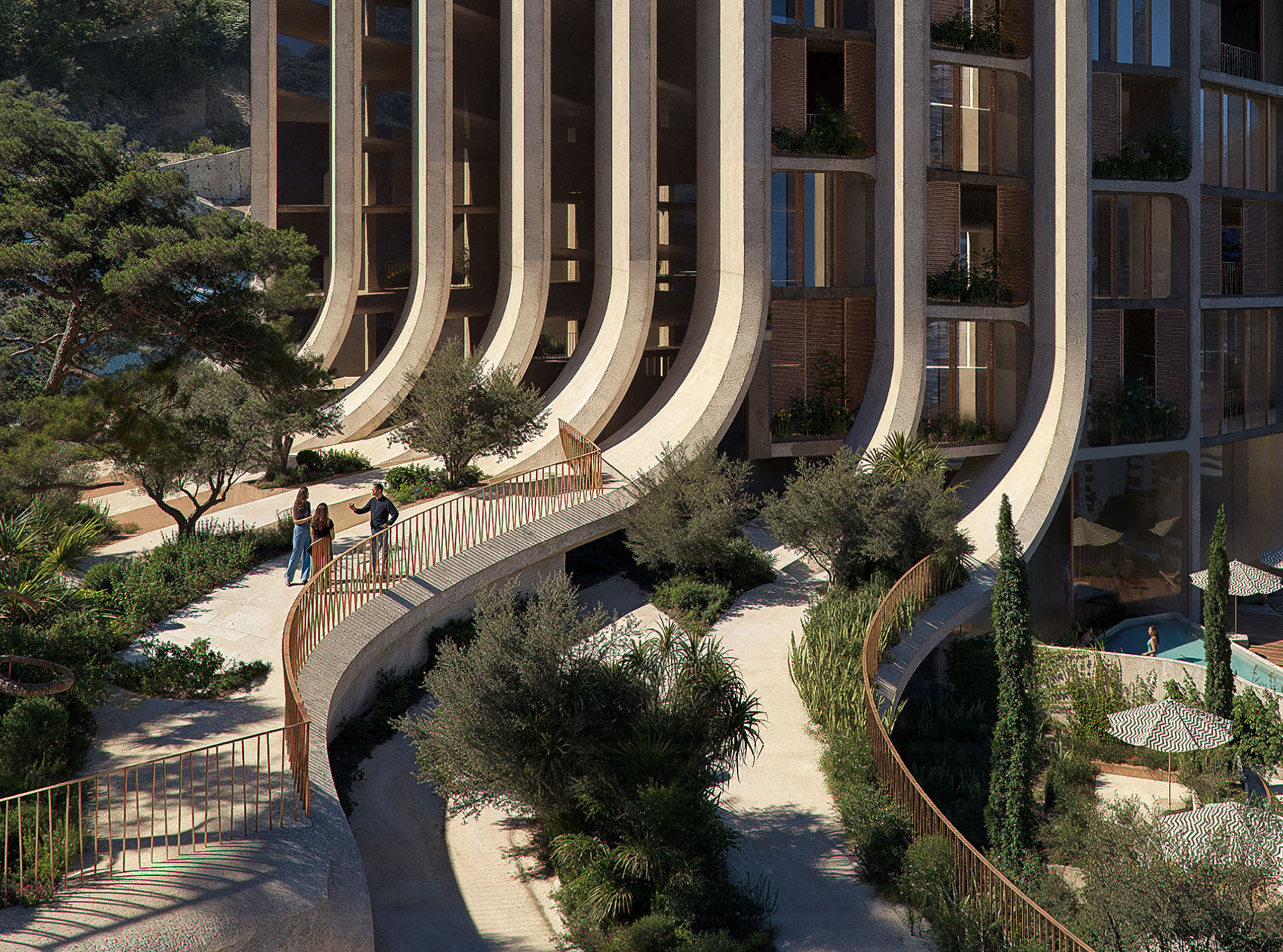
“瀑布”项目坐落于本地开采石灰岩打造的基座之上,其立面采用GRC(玻璃纤维增强混凝土)板材制作,并融入这种著名本地石材独特的色彩与纹理,呼应周边景观的自然特征。GRC板材以模块化条带形式现场浇筑,不仅降低了结构荷载与运输距离,也使区域地质特征中的纹理能够真实映射于建筑立面之上。板材浅色表面有助于反射太阳辐射,降低制冷需求,而其薄型构造则可减少高达70%的原材料消耗。同样的资源节约理念也贯穿于室内材料选择。石灰基灰泥能够自然调节空气湿度,无需使用合成涂料;铸铜栏杆同样无需额外维护涂层;可持续采伐的栗木地板则提供了耐久且自然舒适的步行表面。通过整合雨水收集、中水回收、绿色屋顶、外遮阳系统以及带余热回收功能的自然混合通风系统,“瀑布”实现了长生命周期、极低隐含碳排放,并形成了一套呼应周边山地景观的材料体系。
Situated on a podium of locally quarried limestone, the Cascades’ façades are crafted in GRC panels incorporating the distinct colours and textures of this renowned local stone, echoing the unique qualities of the surrounding landscape. Cast on site in modular strips, the GRC panels minimise structural loads and transport distances while also allowing the textures evident within the region’s geology to be reflected in the development’s façades. The panels’ light colour reflects solar radiation, easing cooling demand, while its thin profile reduces raw material use by up to 70%. The same resource-aware approach has determined interior finishes. Lime based stucco naturally regulates humidity and requires no synthetic paint. Similarly, balustrades cast in bronze also require no maintenance coatings. Sustainably-harvested chestnut flooring provides a resilient natural surface underfoot. Incorporating rainwater collection, greywater recycling, green roofs, external solar shading, and natural hybrid ventilation with waste heat recovery, the Cascades’ design delivers long service life, minimal embodied carbon, and a material palette defined by the surrounding hillsides.
▼“瀑布”屋顶露台夜景,Rooftop terrace night view of Cascades