MORE办公楼改建,北京 / TAOA 陶磊建筑
郎园Station前身是建于上世纪60年代的北京纺织仓库,是一个由旧工业遗址改造而成的、融合历史印记与现代活力的文化创意产业园区,这里聚集了众多中国电影行业的公司及众多新潮商业店铺。
Langyuan Station was formerly a Beijing textile warehouse built in the 1960s. Transformed from an old industrial site, it has become a cultural and creative industry park where historical traces coexist with contemporary vitality. Today, the park is home to numerous companies in China’s film industry, as well as a wide range of emerging commercial brands and lifestyle venues.
▼西南视角,Southwest View
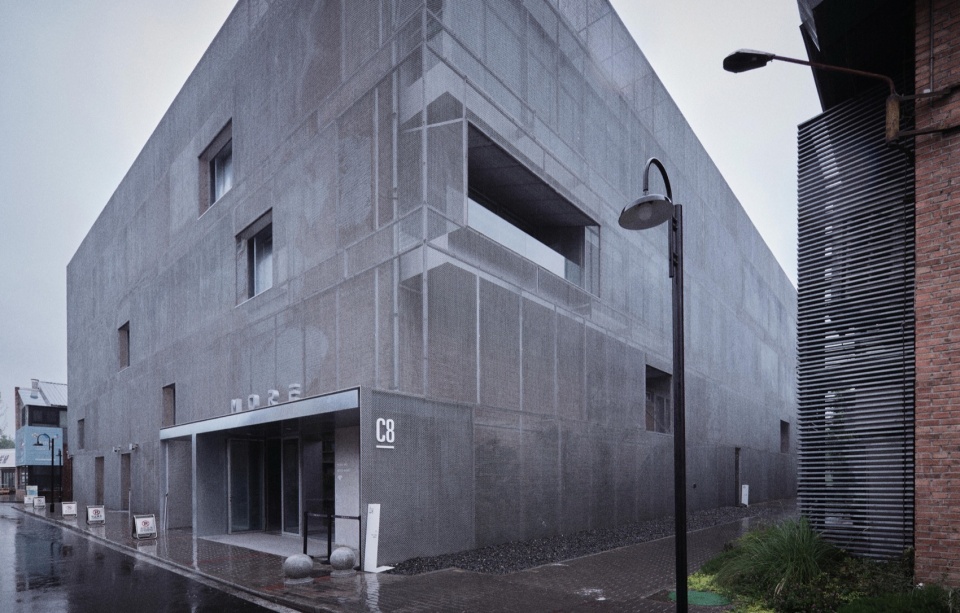
▼南立面,South Elevation
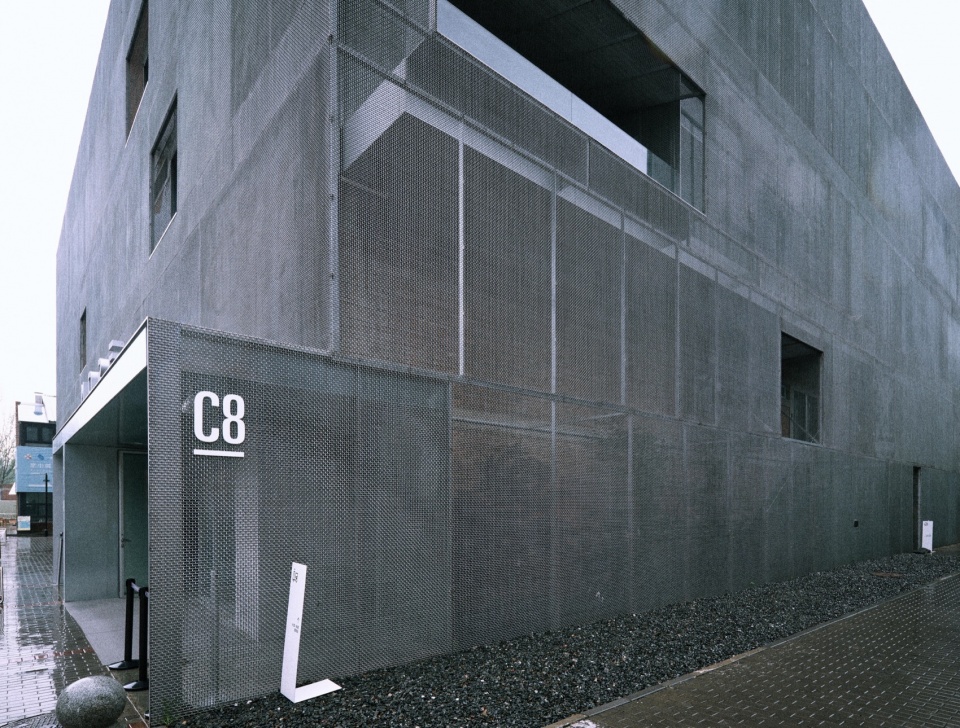
▼东侧出入口,East Entrance
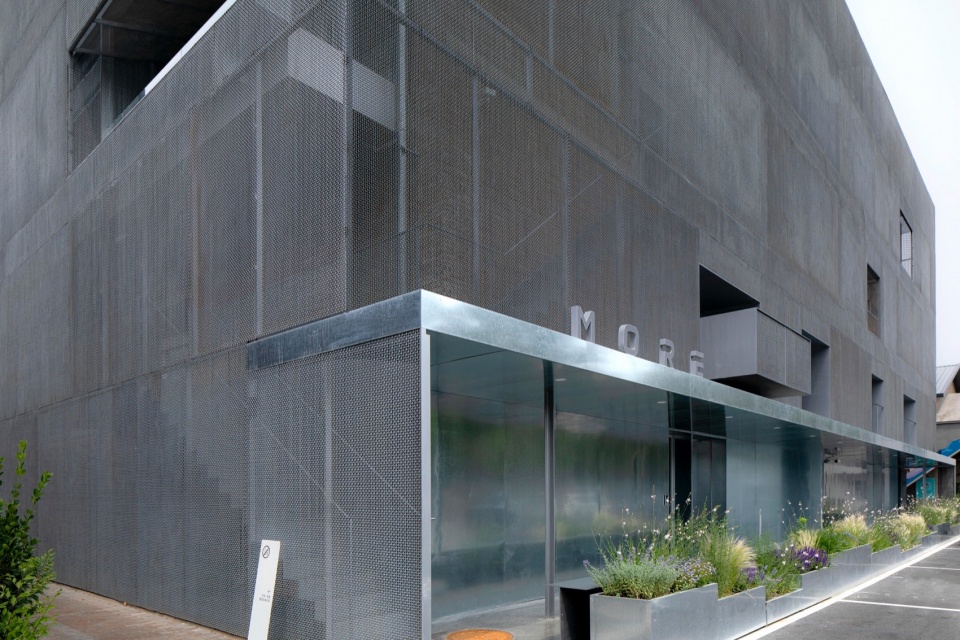
▼东侧出入口,East Entrance
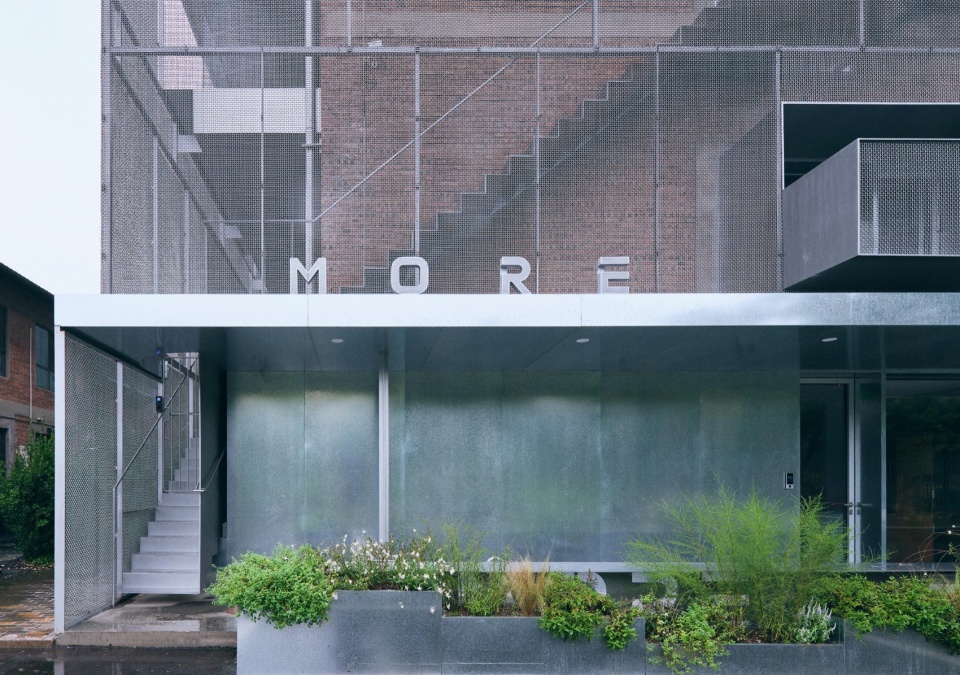
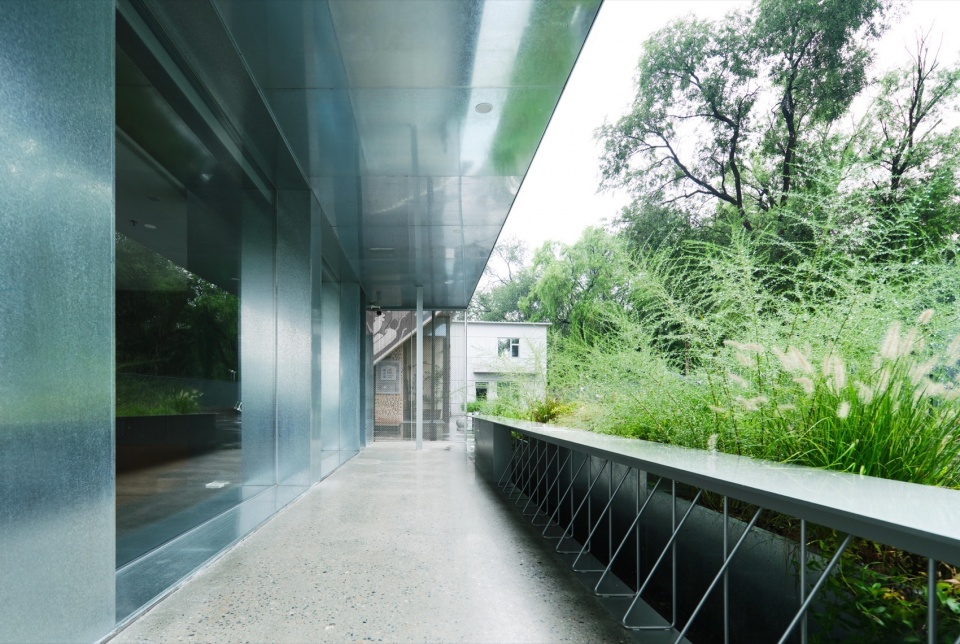
▼东侧雨棚廊,East Canopy Corridor
MORE作为一家中国著名的电影特效制作公司,因公司发展的需要,在郎园园区中选择了一整栋高大的红砖仓库作为新的工作场所,库房内部已由园区管理方改造成为三个标准钢框架楼层,原有库房红砖外墙被完整的保留,红砖外墙、大进深平面、密集柱网和宽大的仓库尺度,共同构成了这次改建必须回应的现实。
▼原始建筑外观 & 均匀密集柱网,Original Building Exterior & Dense Regular Column Grid
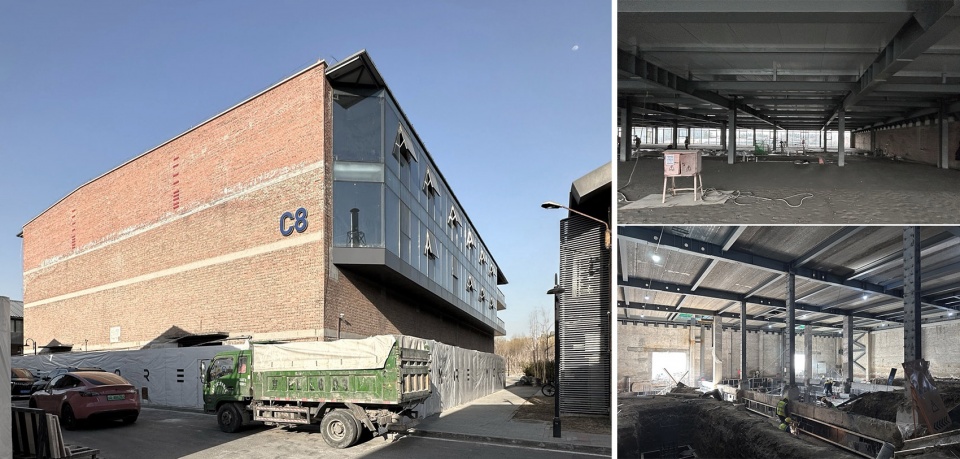
▼幕墙金属网施工过程,Metal Mesh Curtain Wall Installation Process
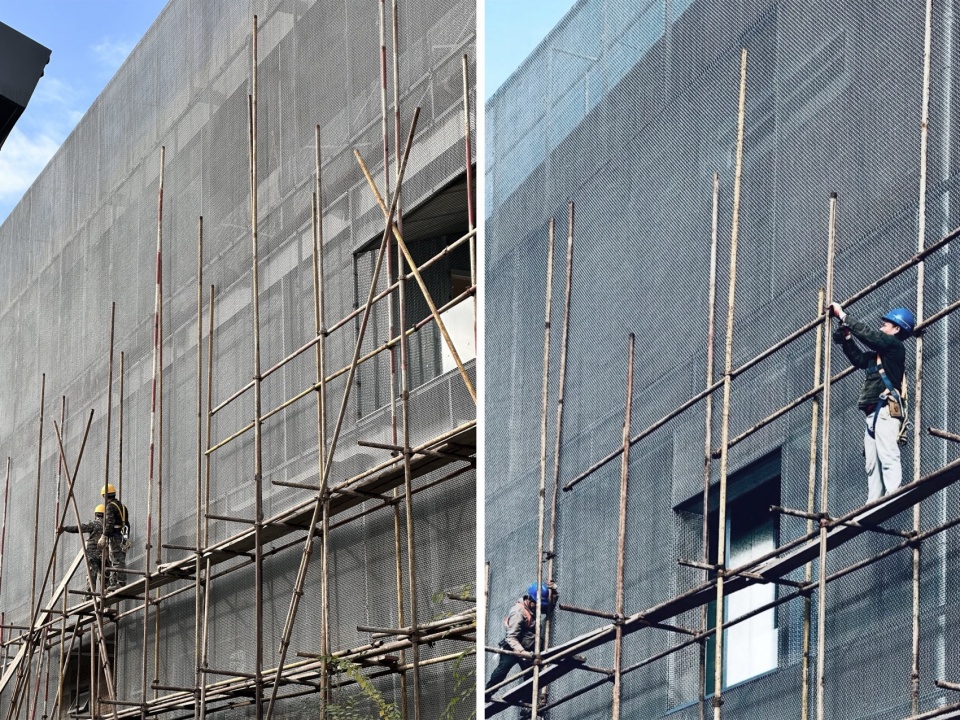
MORE, a well-known Chinese visual effects production company, selected an entire large red-brick warehouse within Langyuan Station as its new workplace in response to the company’s growth. The interior of the warehouse had already been converted by the park’s management into three standard floors with a steel-frame structure, while the original red-brick exterior walls were fully preserved. The red-brick envelope, deep-plan floor plates, dense column grid, and generous warehouse scale together formed the existing conditions to which this renovation had to respond.
▼西北视角,Northwest View
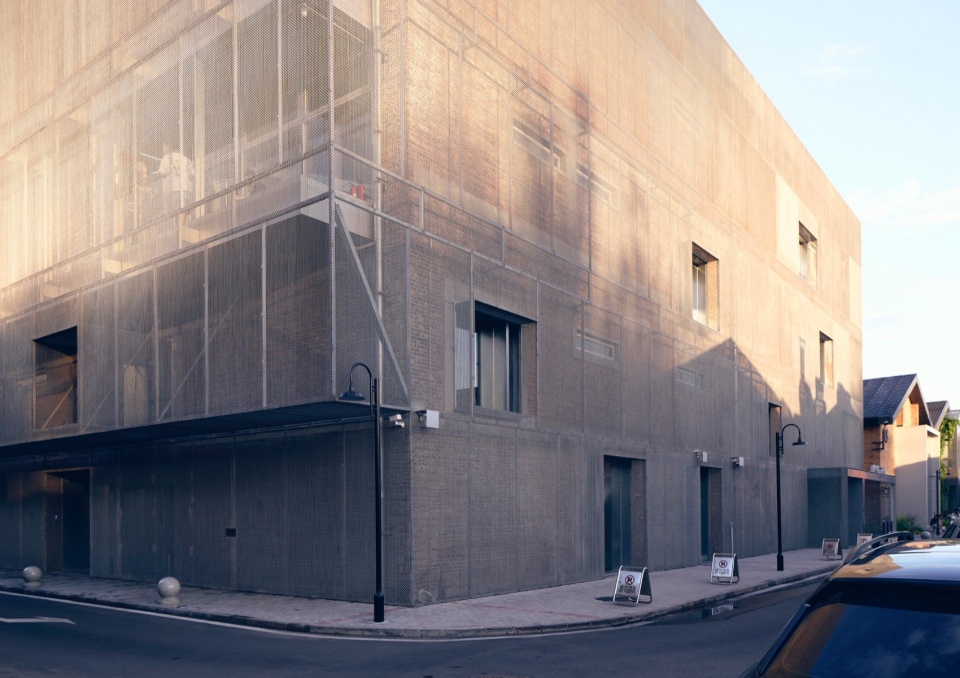
▼北立面,North Elevation
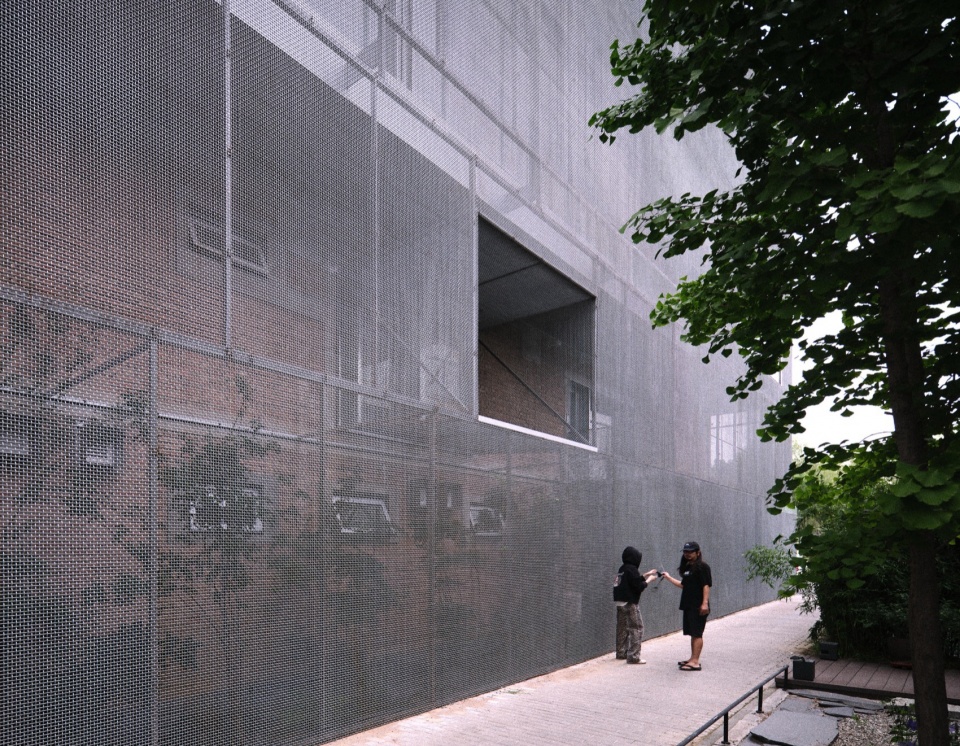
▼北侧檐廊通道,North Covered Walkway
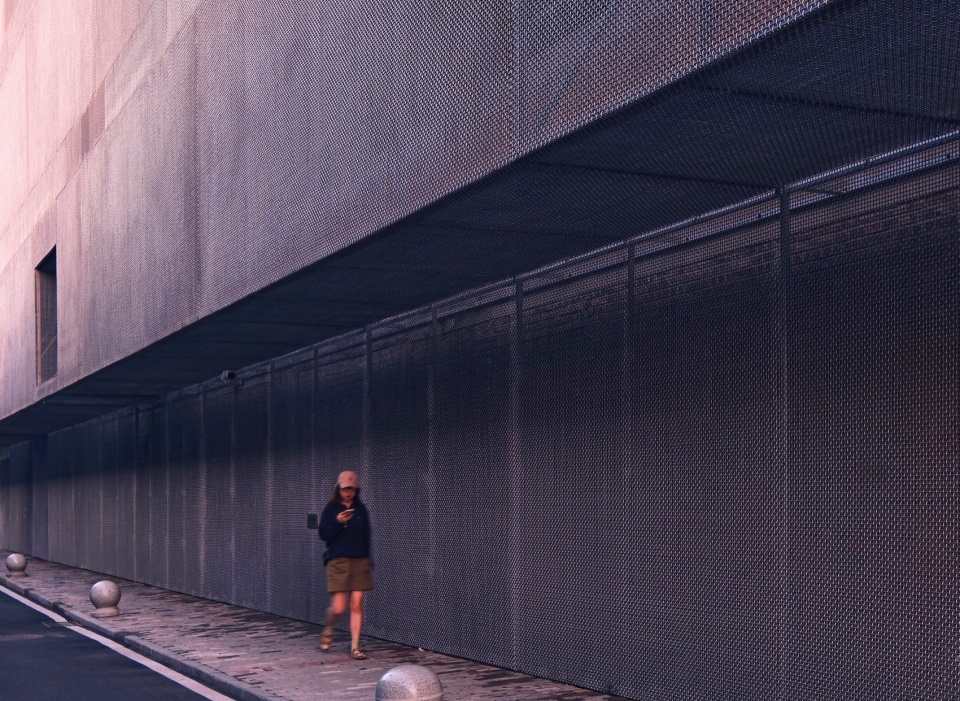
▼西立面,West Elevation
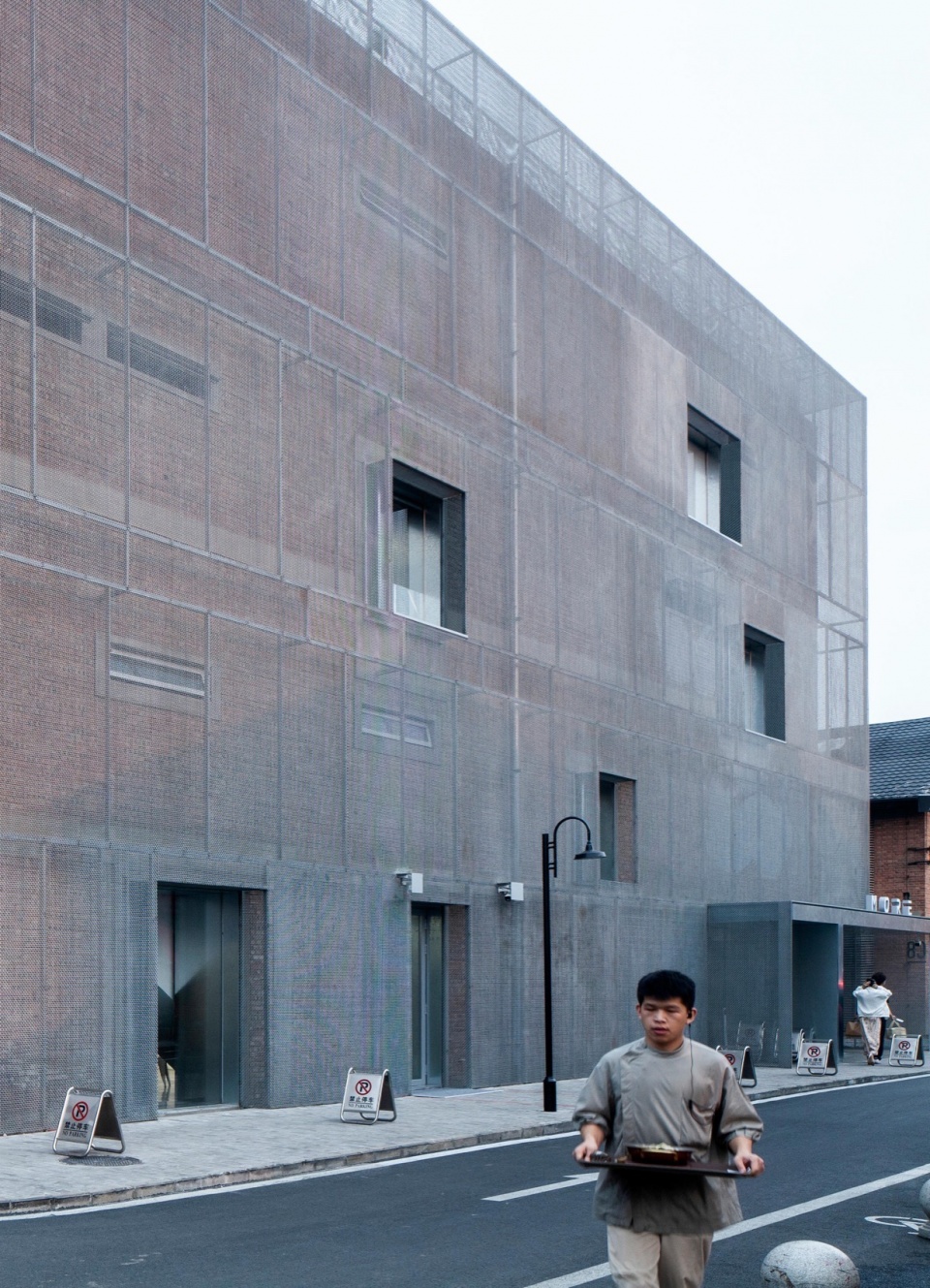
▼金属网窗洞口,Metal Mesh Window Opening
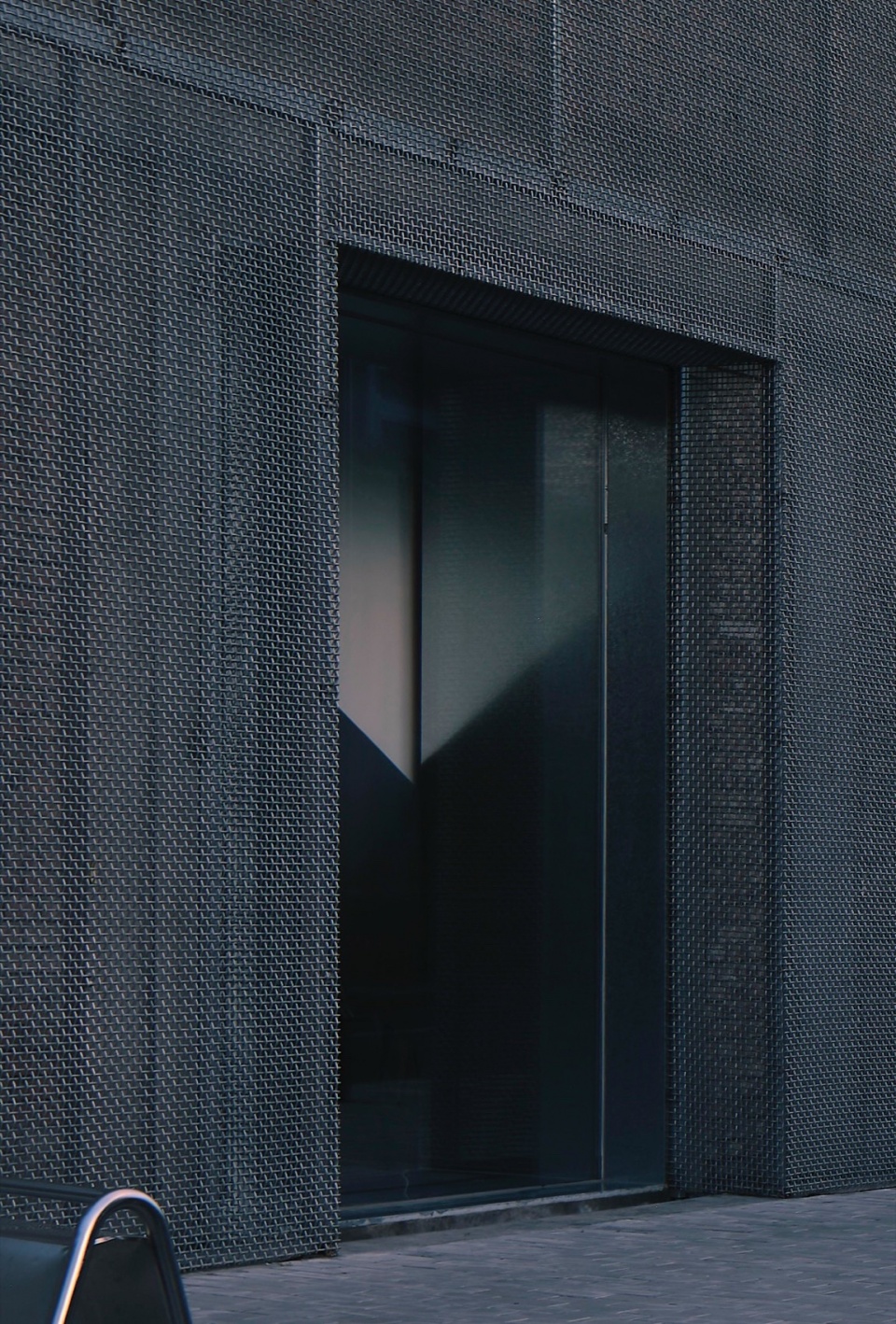
▼窗洞口细节,Window Opening Detail
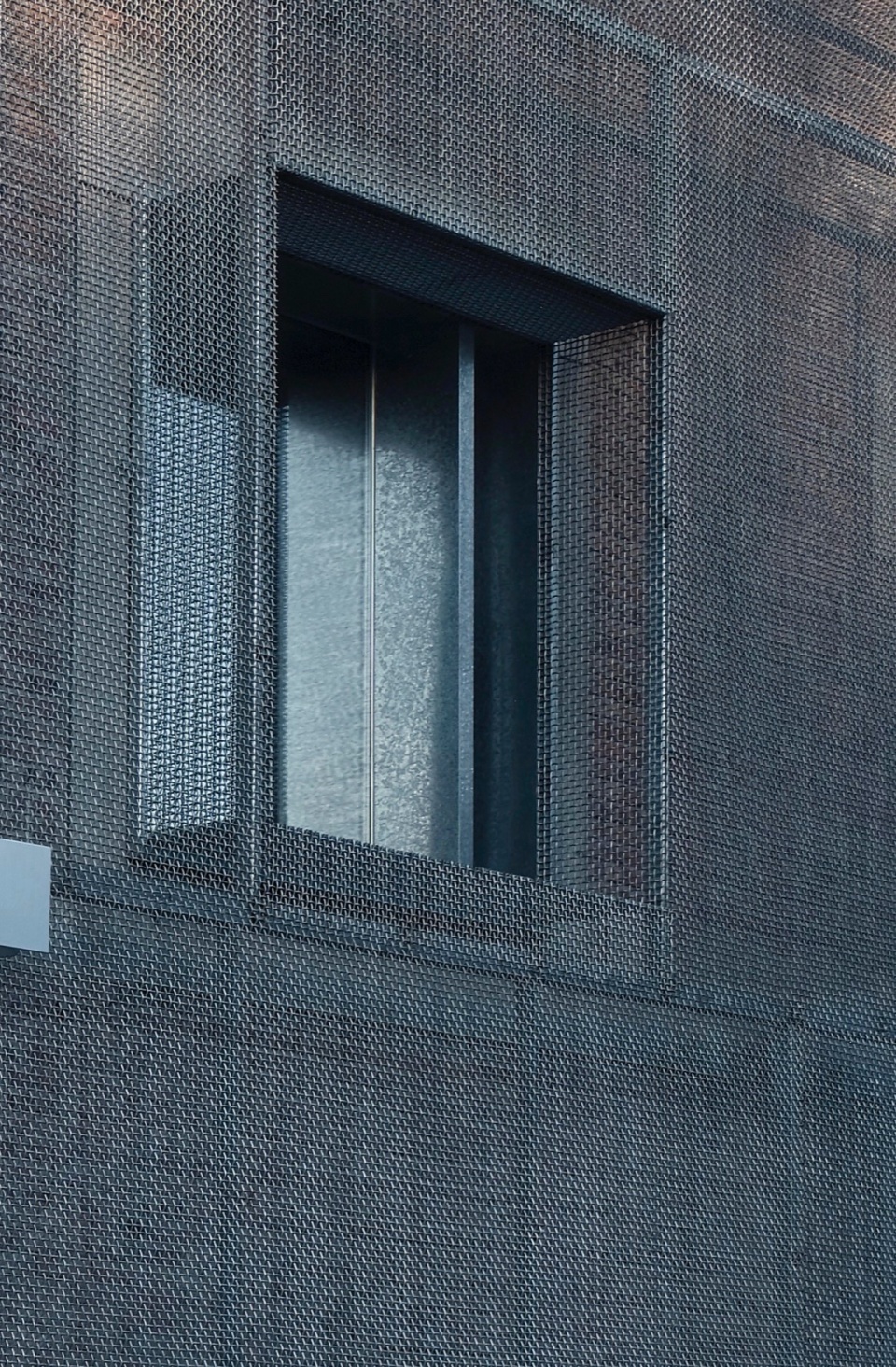
▼立面金属网细节,Facade Metal Mesh Detail
电影制作不仅需要创意,也是工作强度很高的行业,作为一个400人规模的创意型公司,能否为员工创造一个舒适、愉悦且思想自由的环境成了MORE公司的首要目标。如何用较低的造价做出一个富有变化且具有精神性的空间也是该项目的另一个重要原则。原有场地的条件,公司运营特有的工作方式以及寻找合适的低成本材料成为这次设计的三个出发点,这三个要素将互为因果统一在空间里,相辅相成。
▼分析图,Analysis diagram
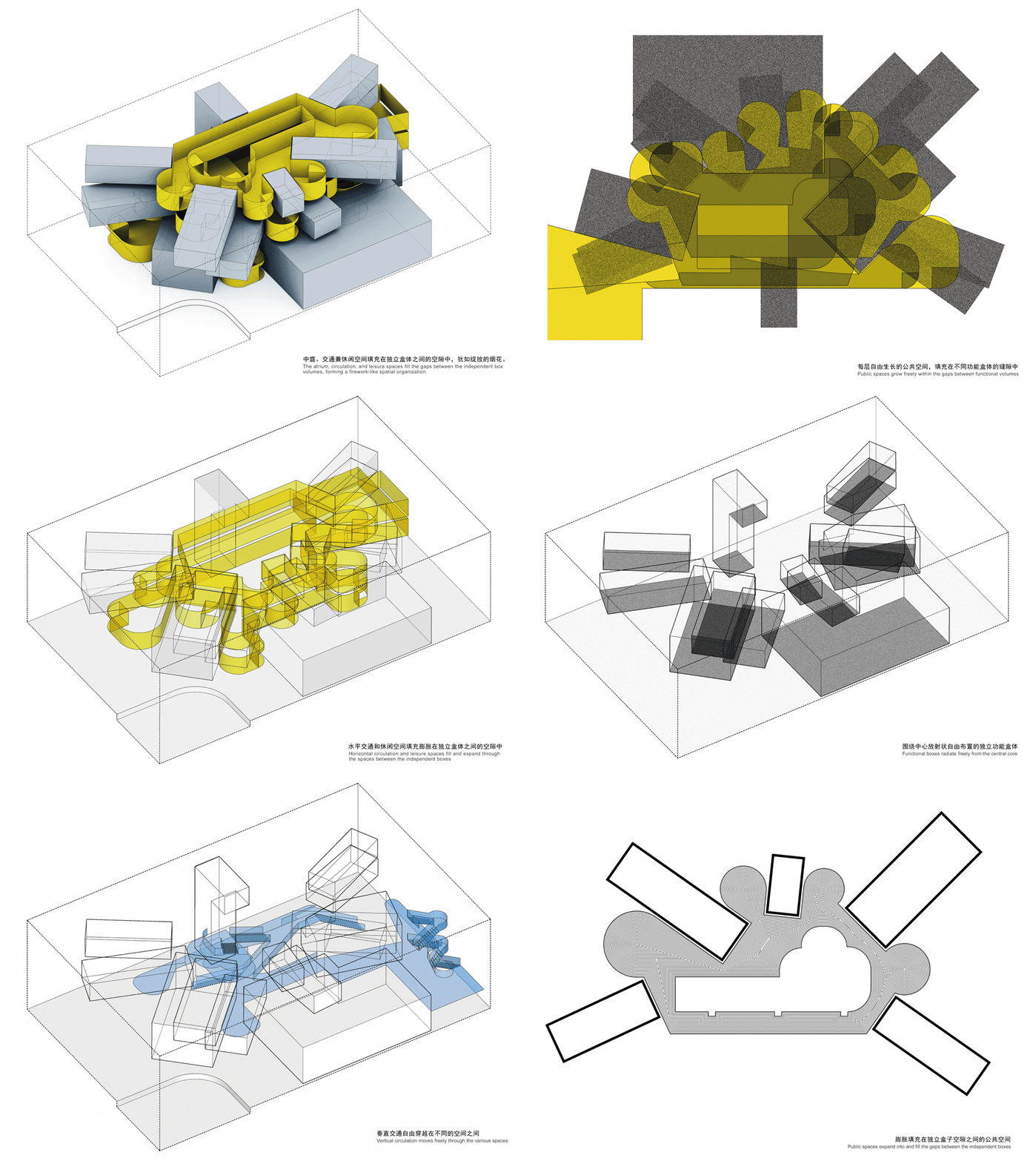
Film production requires not only creativity but also an intense mode of work. As a creative company with approximately 400 employees, MORE’s primary goal was to provide its staff with a comfortable, pleasant, and intellectually free working environment. Another important principle of the project was to create a spatial experience rich in variation and spiritual quality within a relatively limited construction budget. The existing site conditions, the company’s particular mode of operation, and the search for appropriate low-cost materials became the three starting points of the design. These three factors were integrated into the space as mutually reinforcing conditions.
▼穿梭缠绕在盒子之间的交通,Circulation Threading Through and Around the Boxes
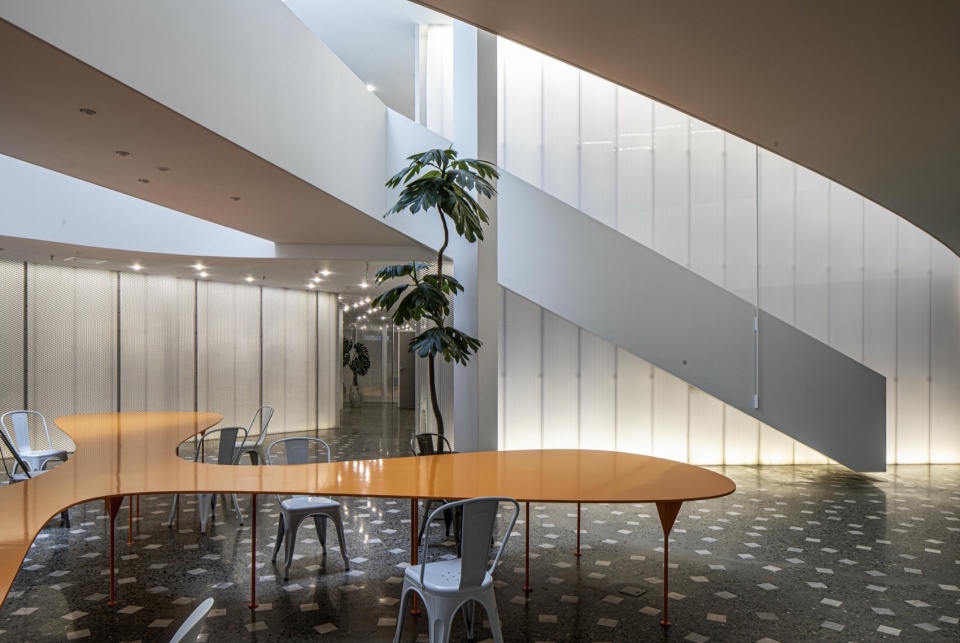
▼穿梭缠绕在盒子之间的交通,Circulation Weaving Around the Boxes
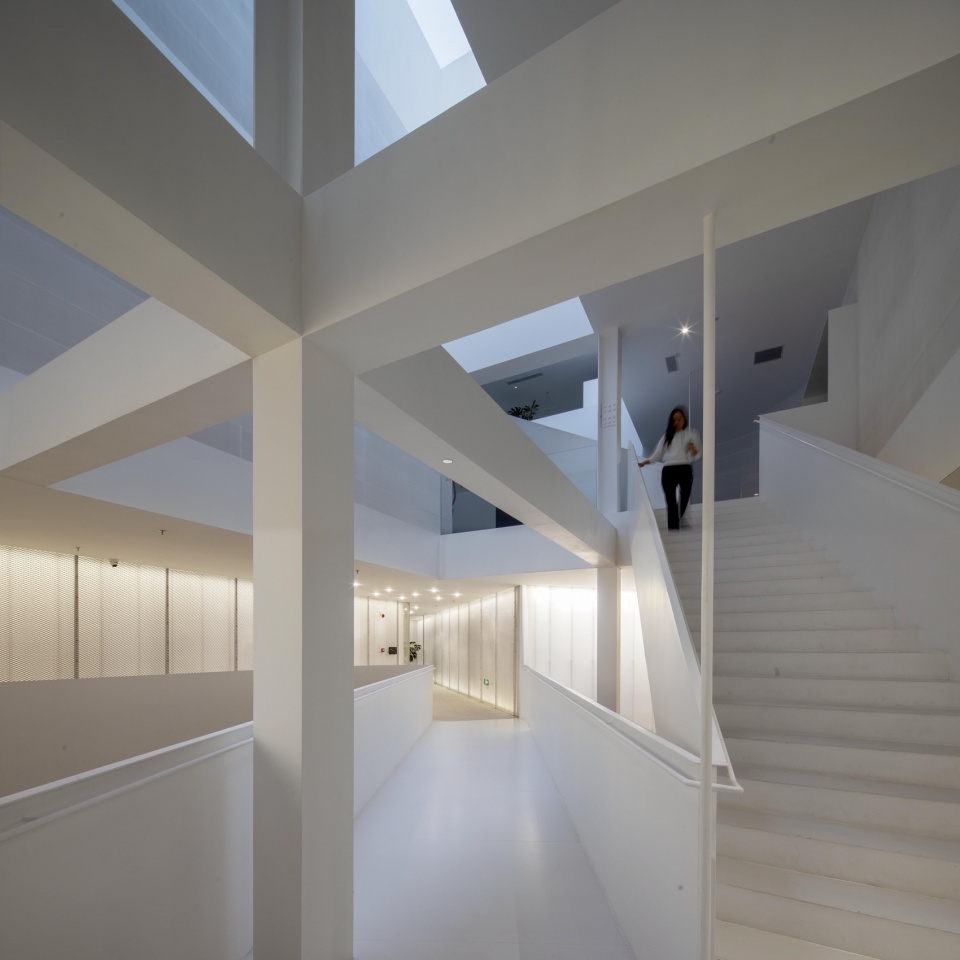
▼穿梭于柱网的楼梯,Staircase Weaving Through the Column Grid
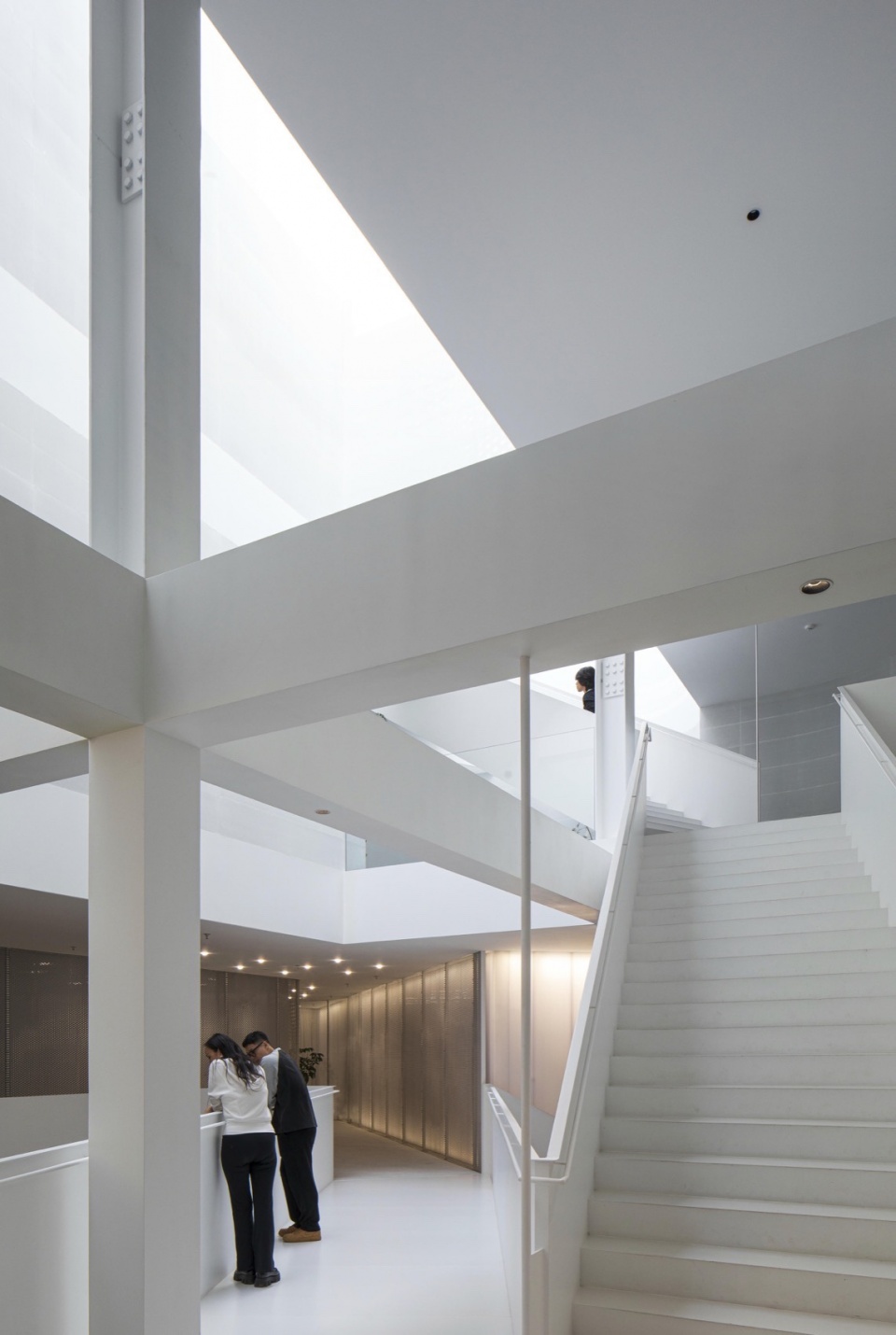
▼顶层中庭空间,Top Floor Atrium
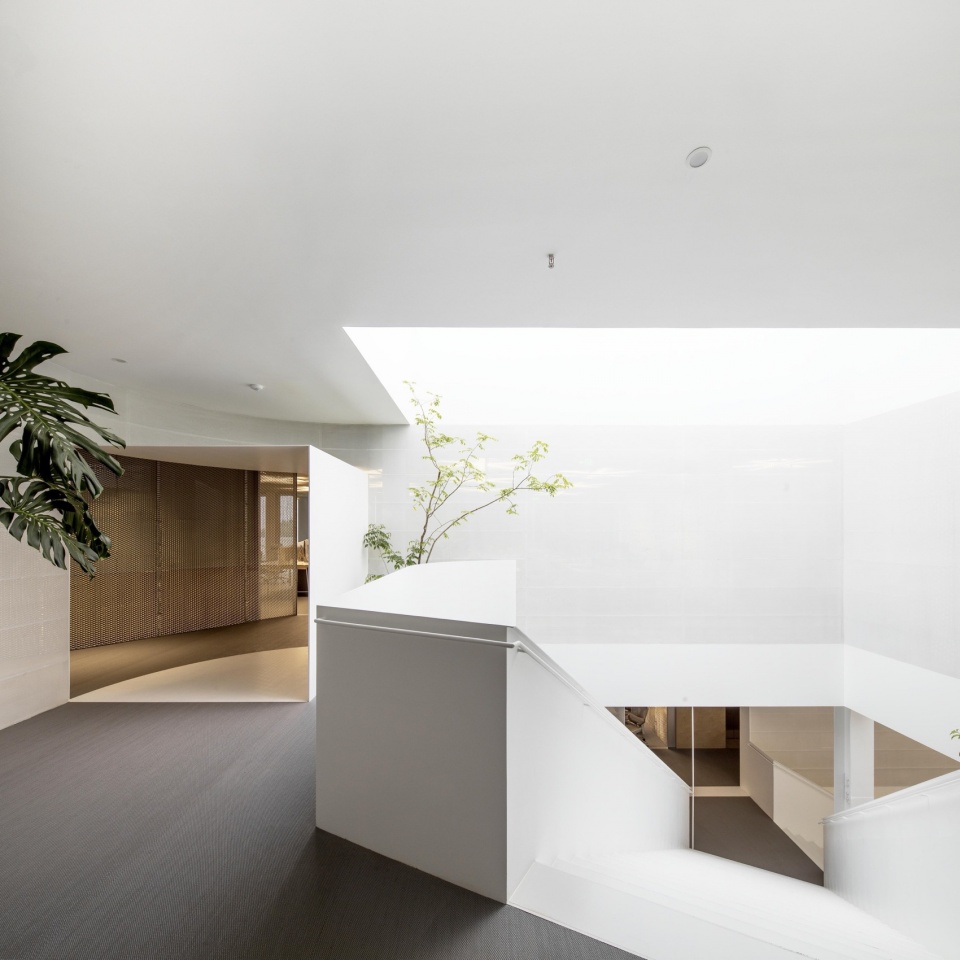
▼二层中庭交通空间,Second Floor Atrium Circulation
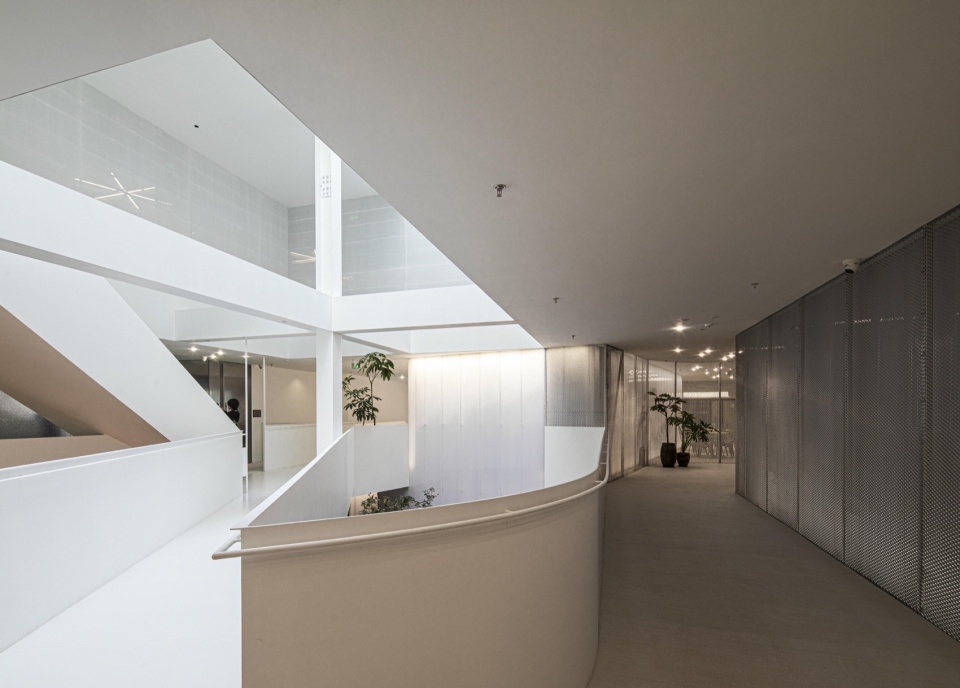
▼具有精神性的中庭空间,Spiritual Atrium
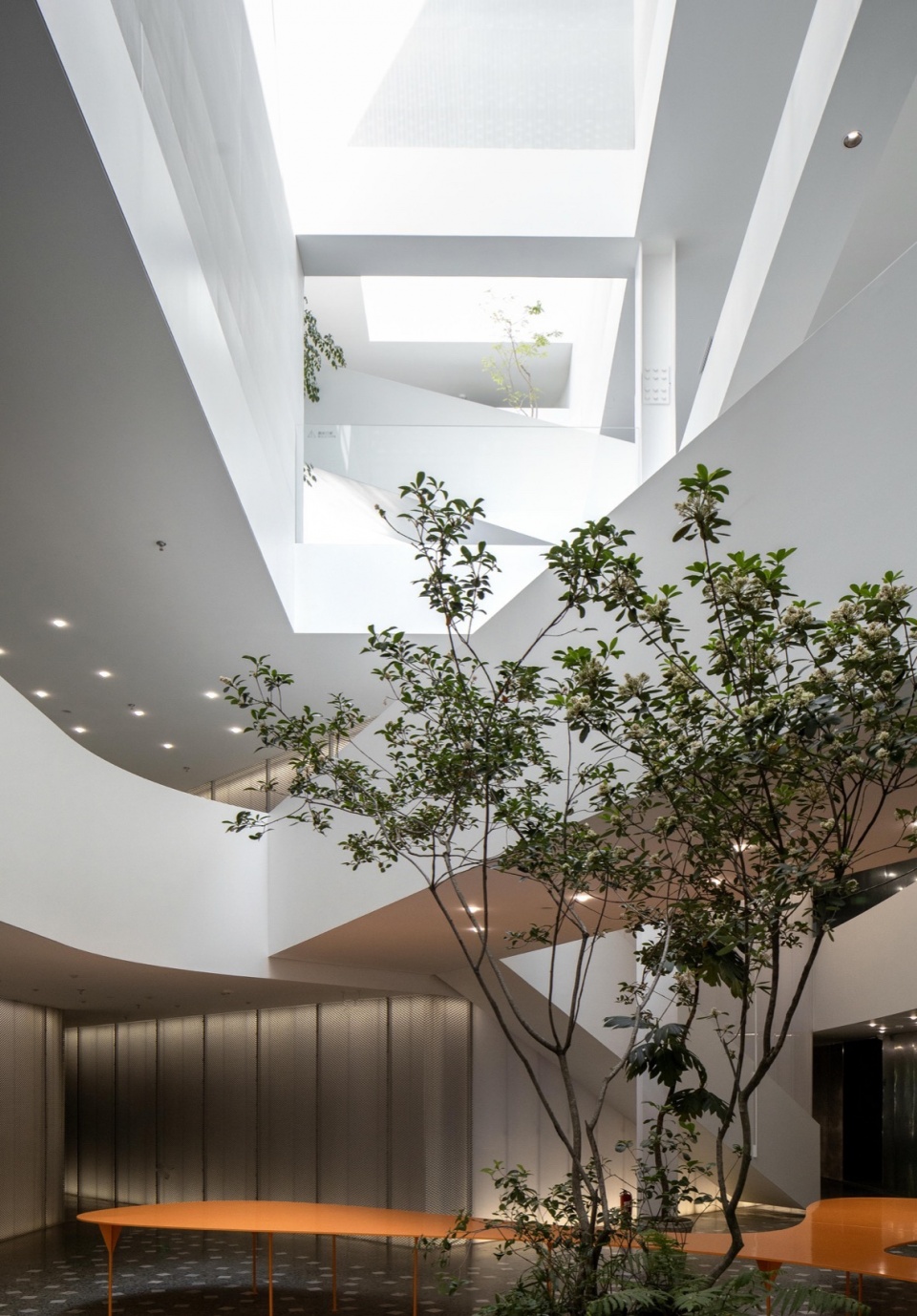
▼三层中庭空间,Third Floor Atrium
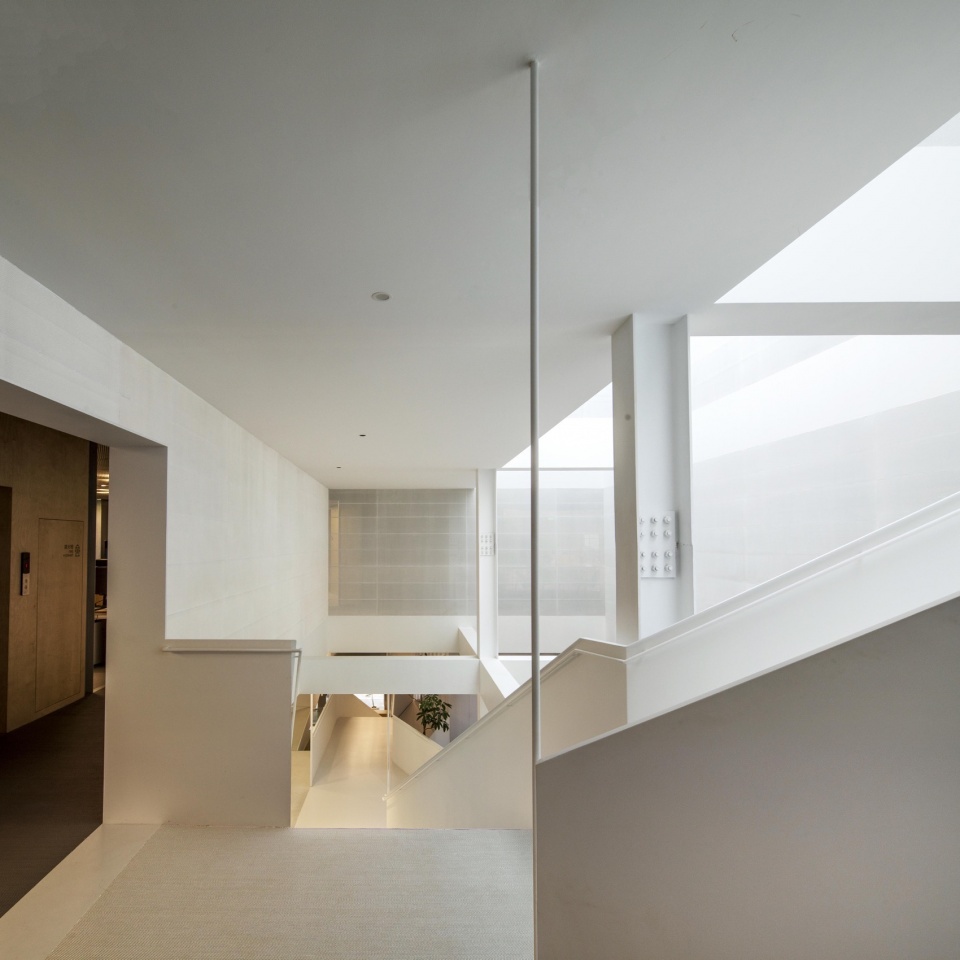
▼中庭光筒,Atrium Light Well
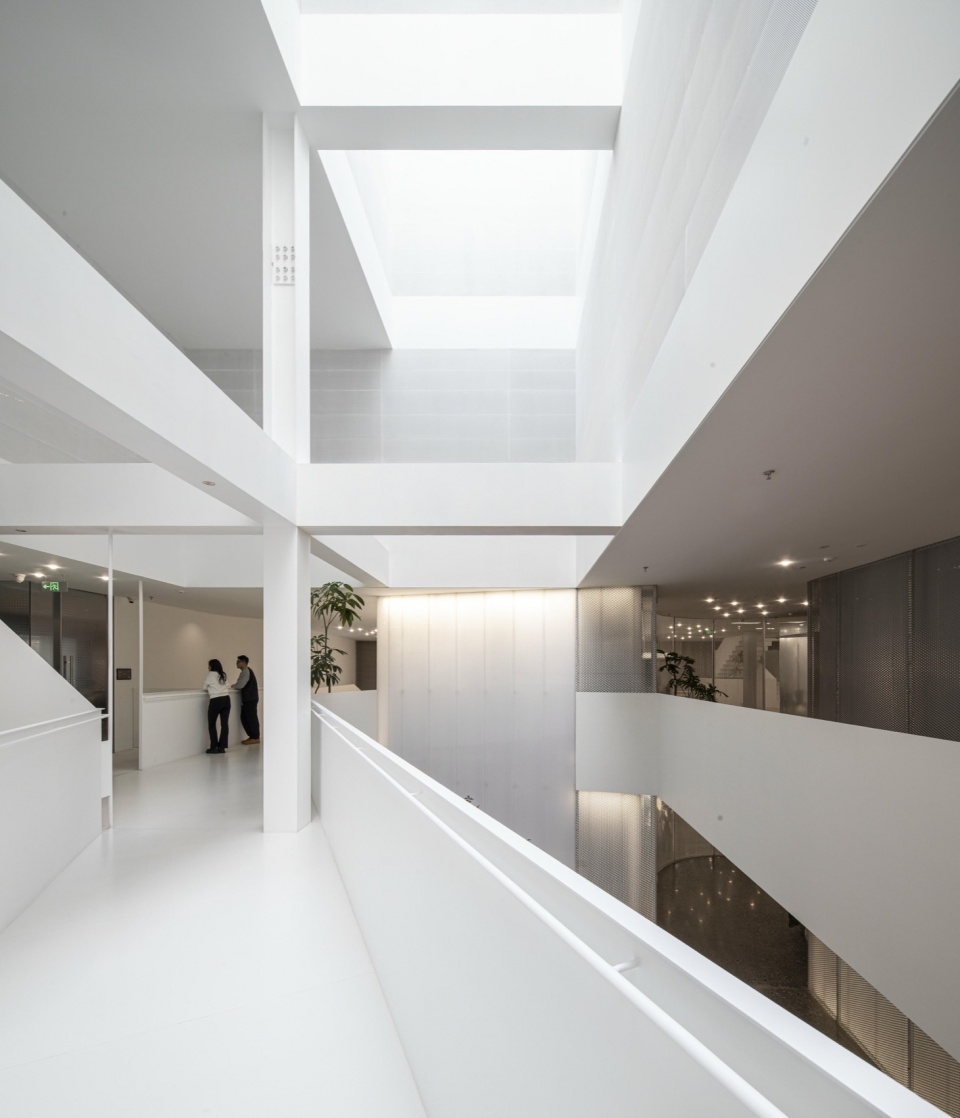
▼中庭空间,Atrium
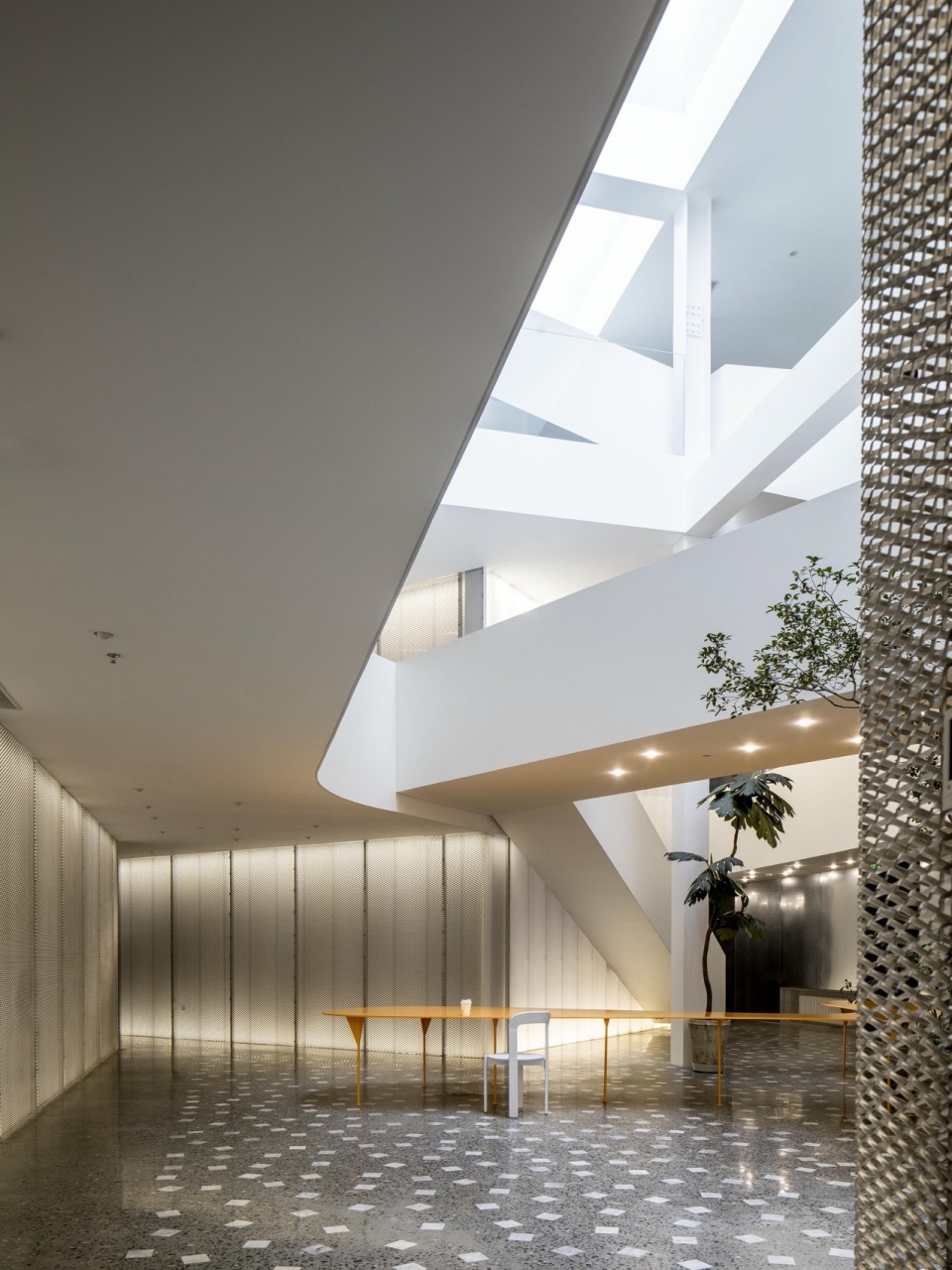
▼主入口楼梯,Main Entrance Staircase
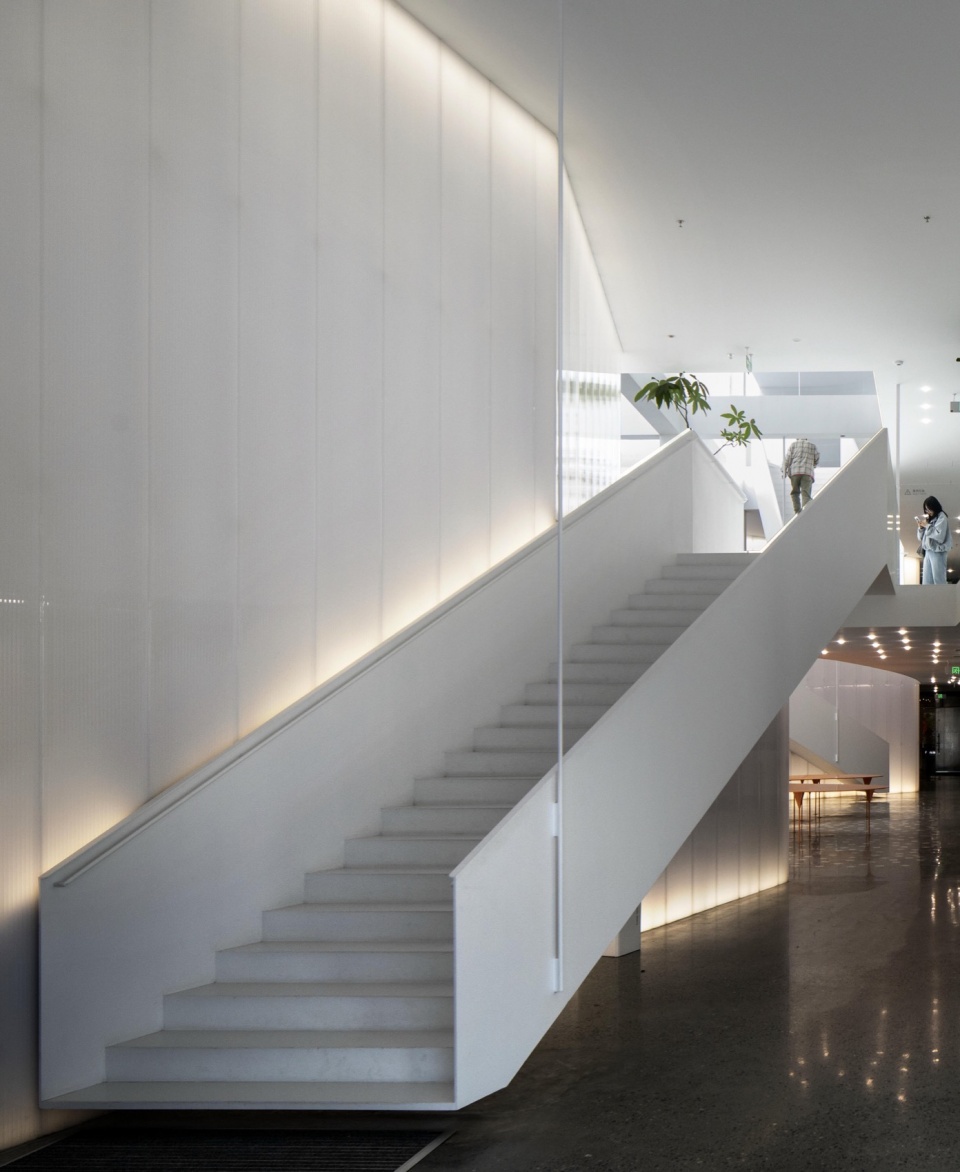
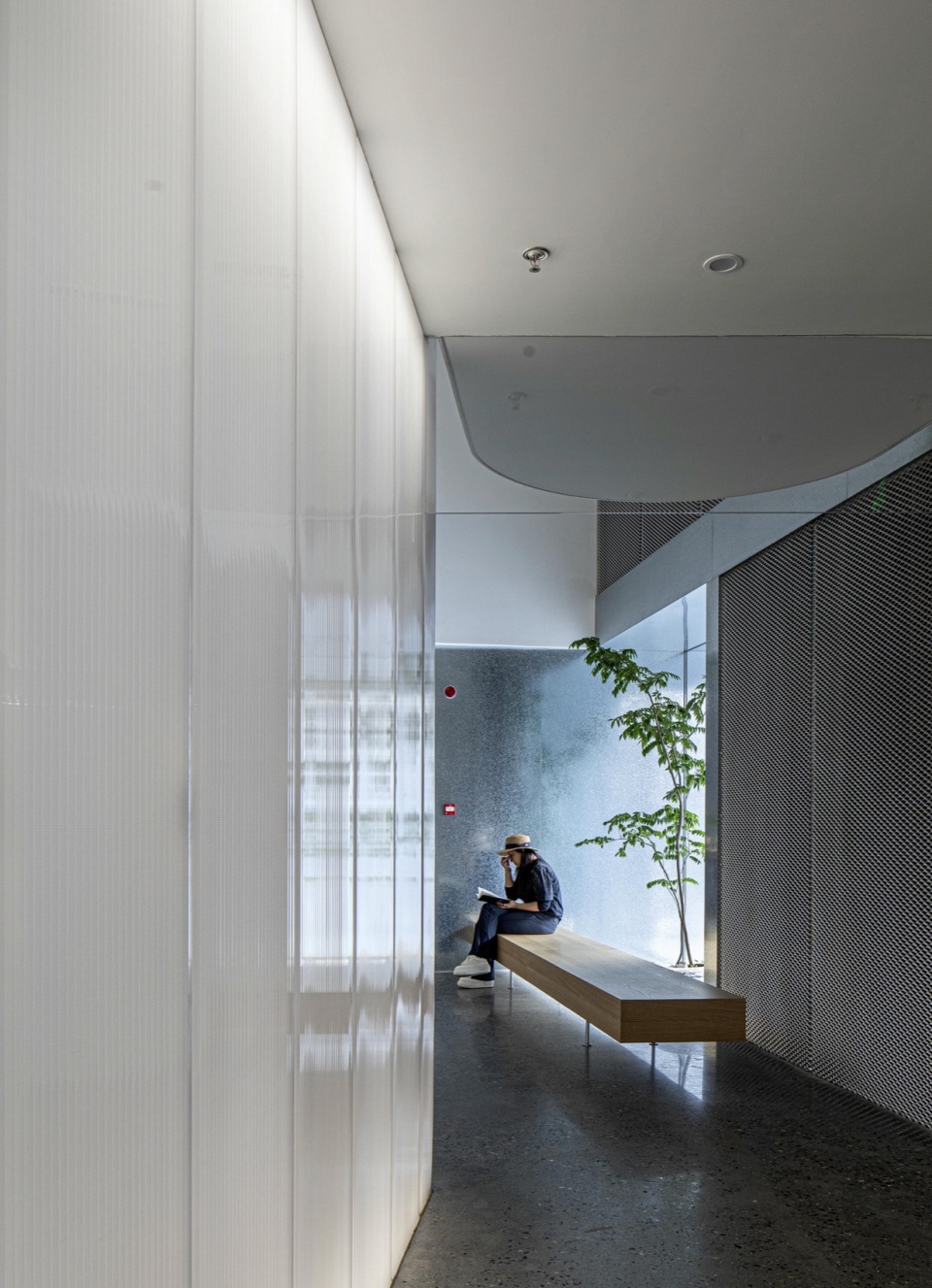
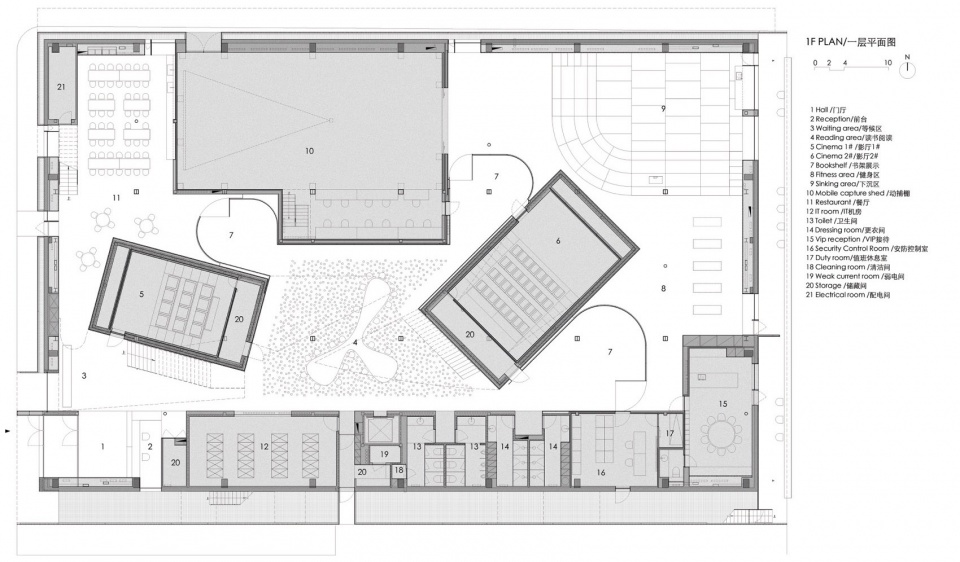
一开始,我们便将关注点放在人们在建筑中如何工作,如何相遇,如何感知时间和场地上。在这个大进深且密集柱网的标准楼层里为了获得更好的自由性,功能被分解成了独立空间和开放空间两大类,诸如影院、动捕棚、会议、财务管理、卫生间等这些被定义为独立空间,其它诸如工作、餐厅、休息空间则完全开放。原有的楼层边界被打破,所有的功能安排不再以柱网为参照,不再受制于柱网的约束。 一系列的独立空间有两种构成形式,一种是由PC阳光板围合成的发光盒体,另一种是由单层胶合板加玻璃组成的简单木盒。先将这些需要独立的功能自由地安置在合理的位置,剩余的大量空白作为开放的连贯的空间。
From the beginning, our focus was placed on how people work, encounter one another, and perceive time and place within the building. In the standard floor plates, defined by great depth and a dense column grid, the program was divided into two spatial types in order to achieve greater spatial freedom: independent rooms and open spaces.
▼木盒子会议室,Wooden Box Meeting Room
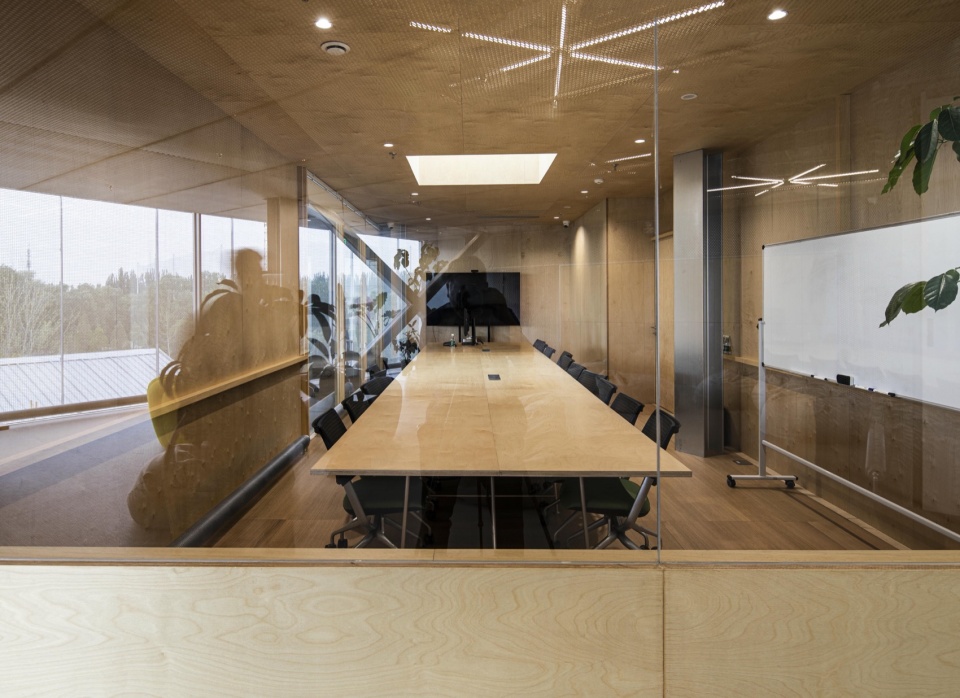
▼木盒子会议室内部,Wooden Box Meeting Room Interior
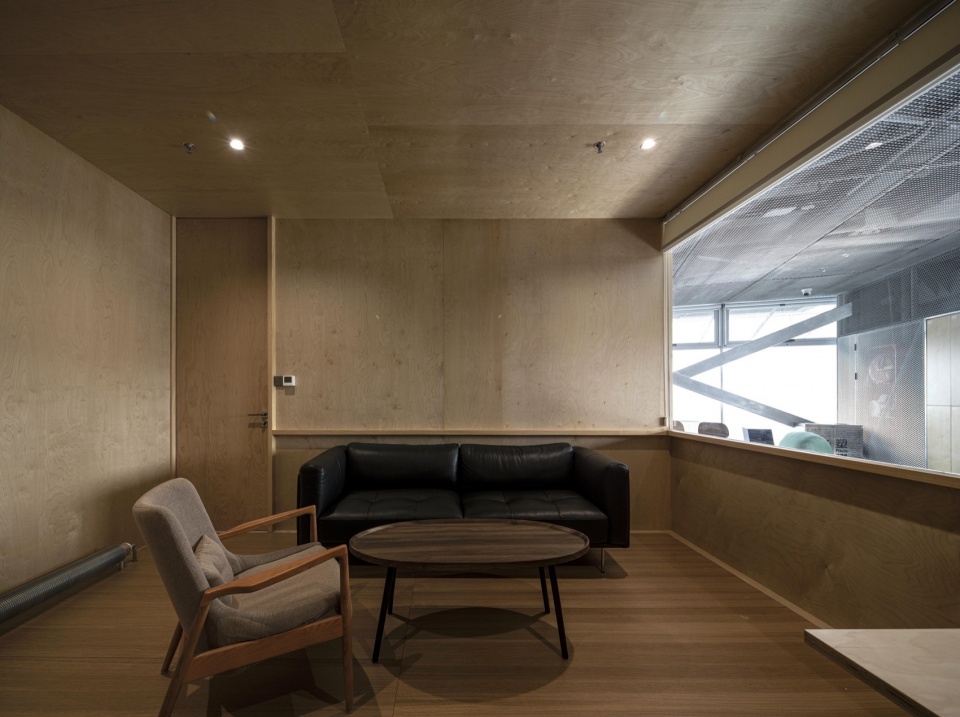
▼影厅与动捕棚PC阳光板盒子,Polycarbonate Box for Screening Room and Motion Capture Studio
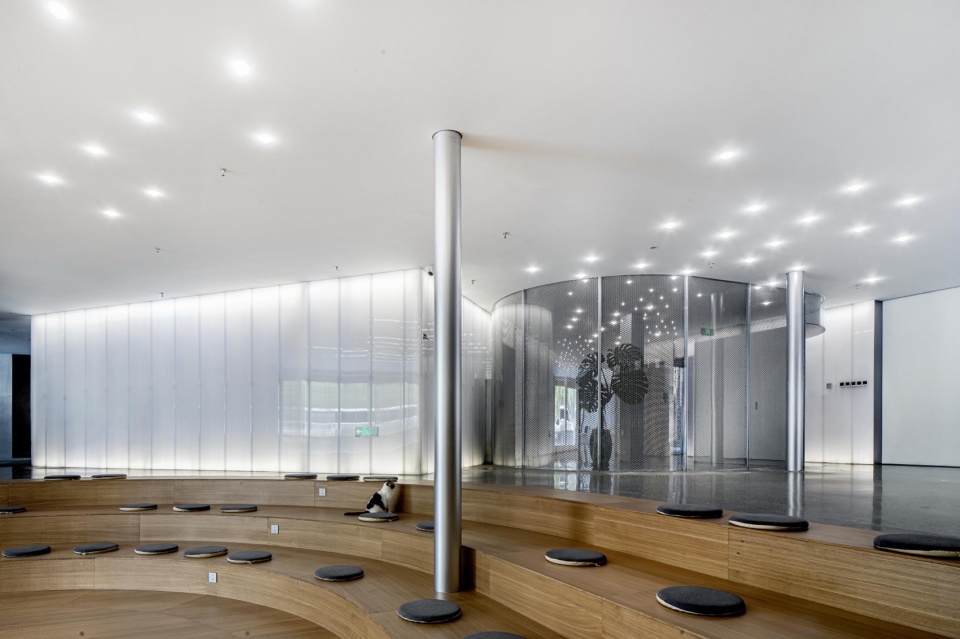
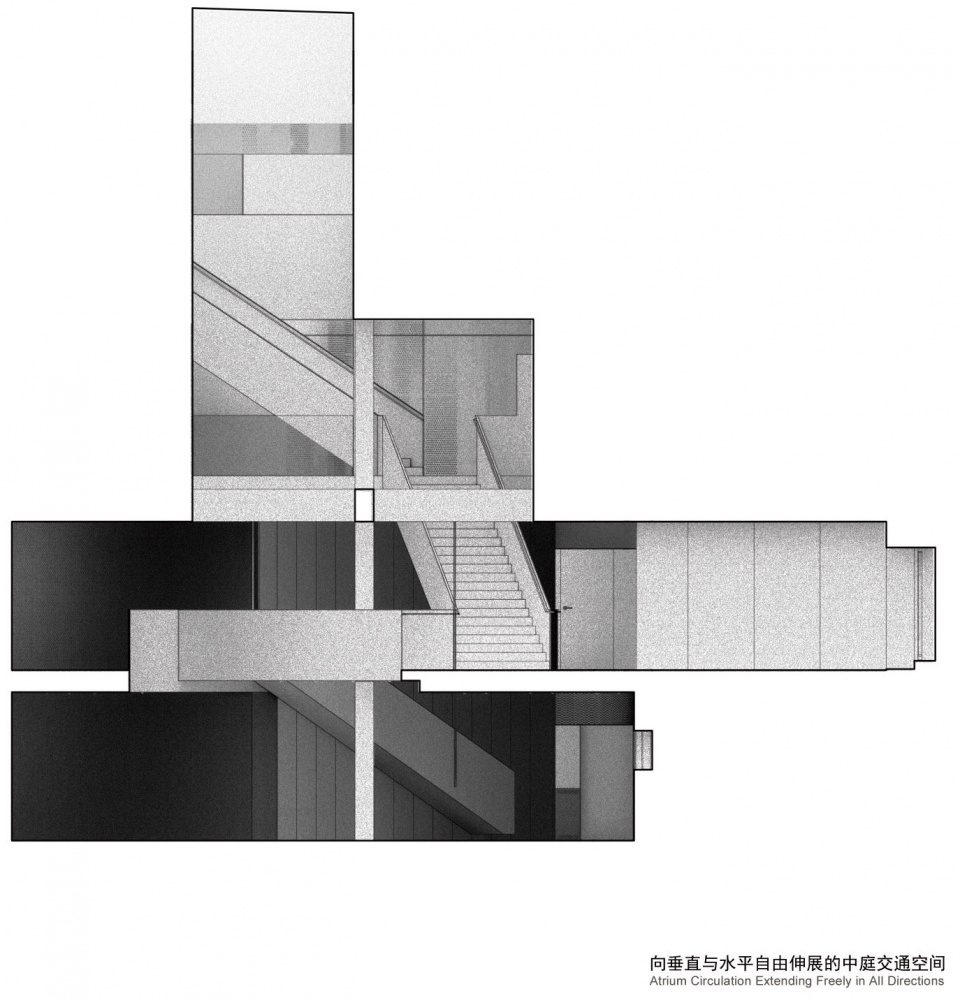
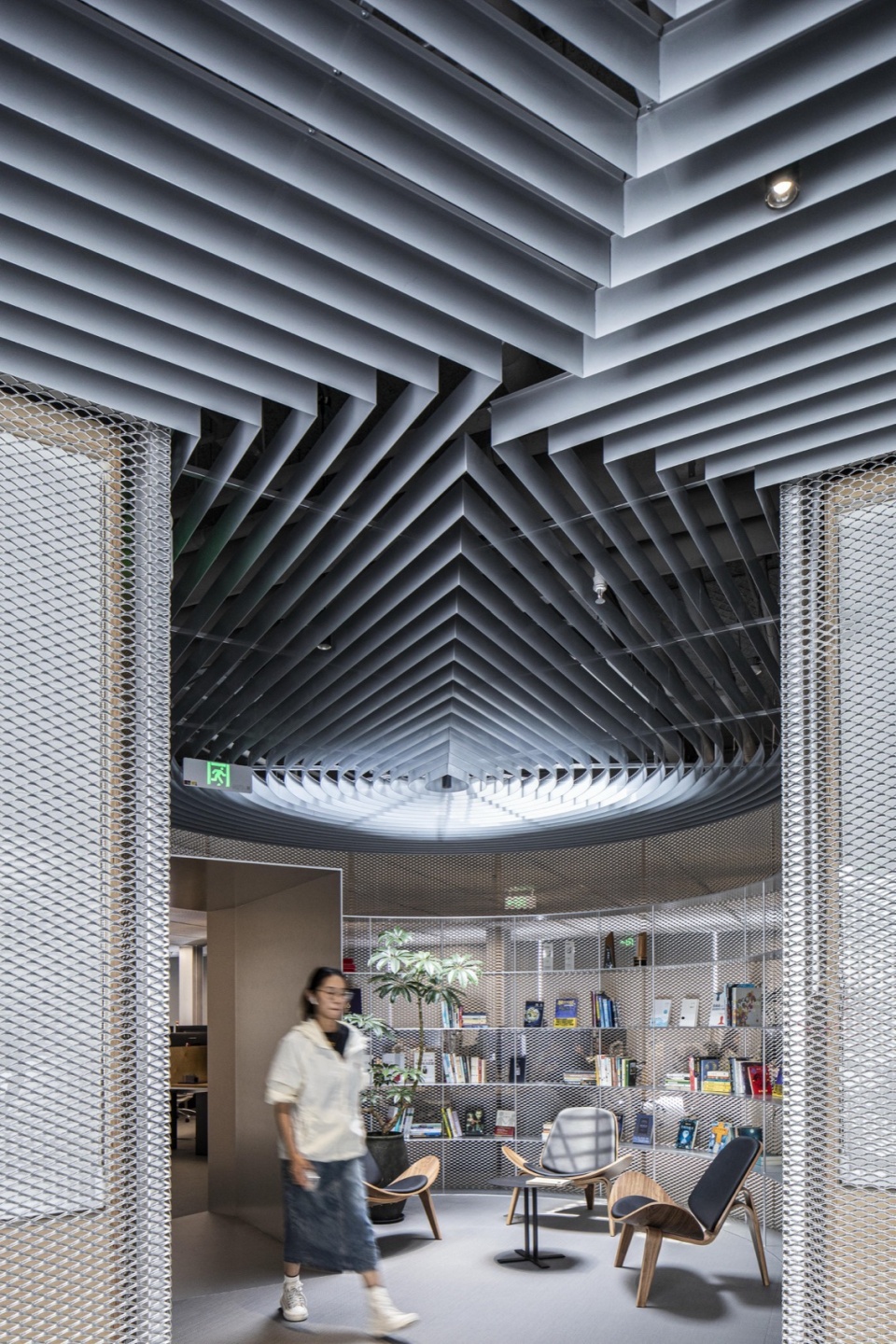
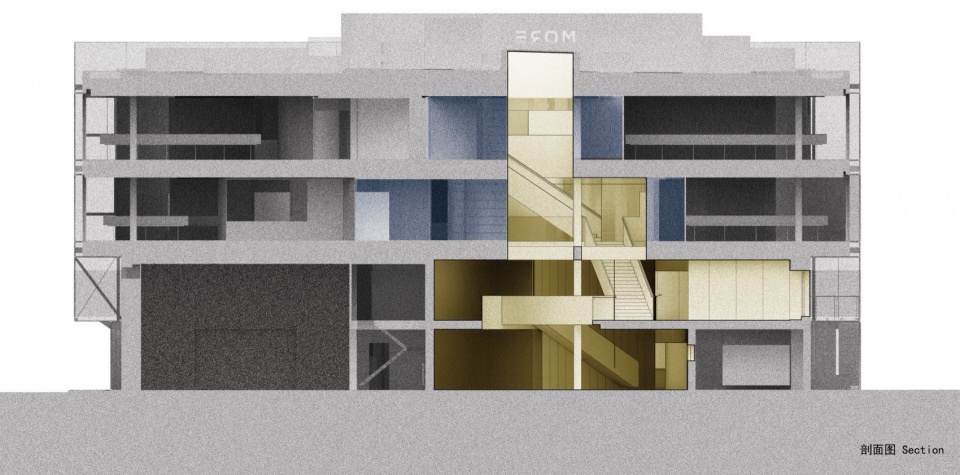
为了交通的便捷,主要的垂直交通被安置在宽大的楼体中央,按照合理的路径自由穿梭于立体的柱网中,也穿梭于独立空间的缝隙中。从入口到中庭再至顶层,所遇到有阻碍的楼板都被拆除,顶层随之打开天窗,自然光从顶部贯穿全部楼层,这个贯穿的交通空间也随之形成了共享空间。这个中心并不是一个孤立的中庭,光线、楼梯、视线和人的移动在这里相遇,使原本封闭而均质的仓库内部获得方向感和公共性,原本扁平压抑的深平面被转化为自然光充盈,形态高挑又自由伸展的,包纳公共生活的空间装置。
▼向垂直与水平自由伸展的中庭交通空间,
Atrium Circulation Space Extending Freely Vertically and Horizontally
Functions such as the cinema, motion-capture studio, meeting rooms, finance and administration offices, and restrooms were defined as independent rooms, while work areas, dining areas, and lounges were kept entirely open. The original boundaries of the floor plates were broken down, and the arrangement of functions no longer took the column grid as its primary reference, nor was it constrained by it.
▼餐厅处楼梯,Dining Staircase
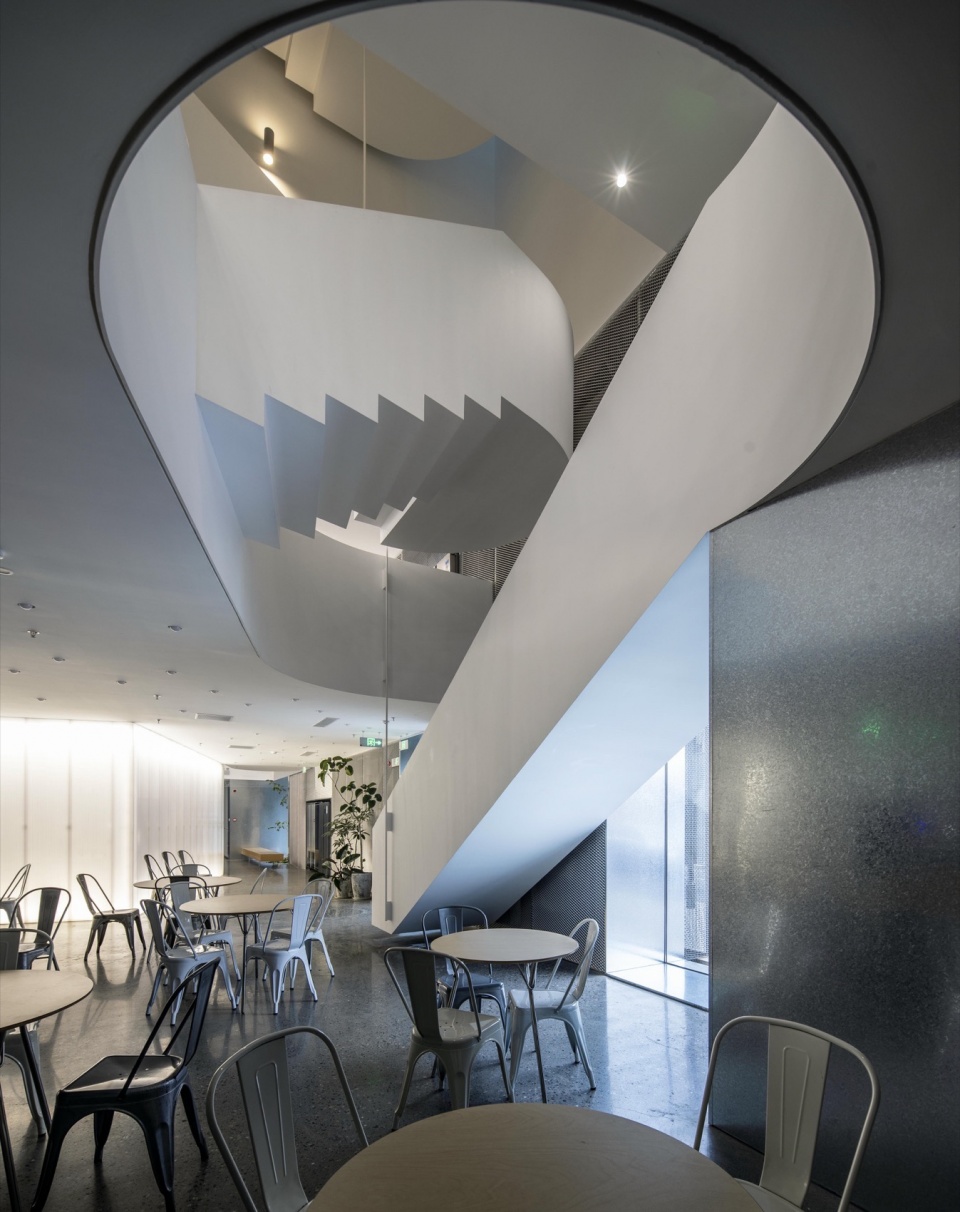
▼餐厅处楼梯,Dining Staircase
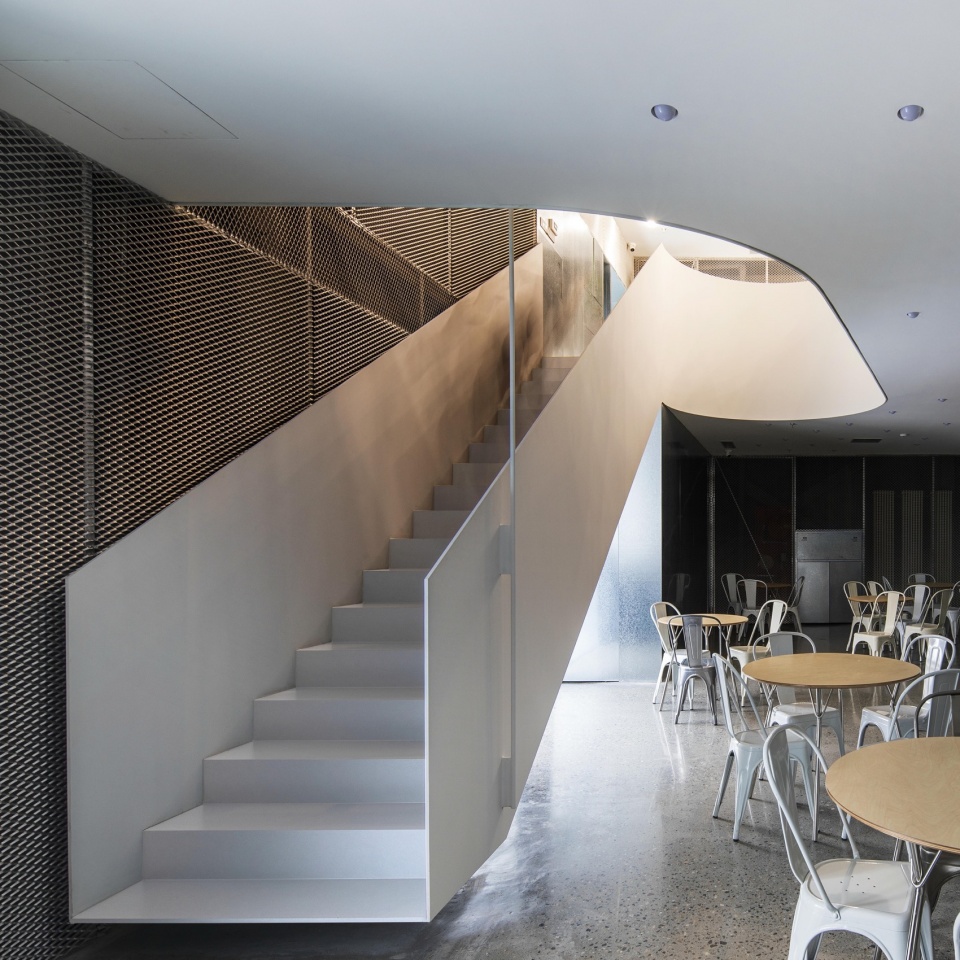
▼餐厅处楼梯,Dining Staircase
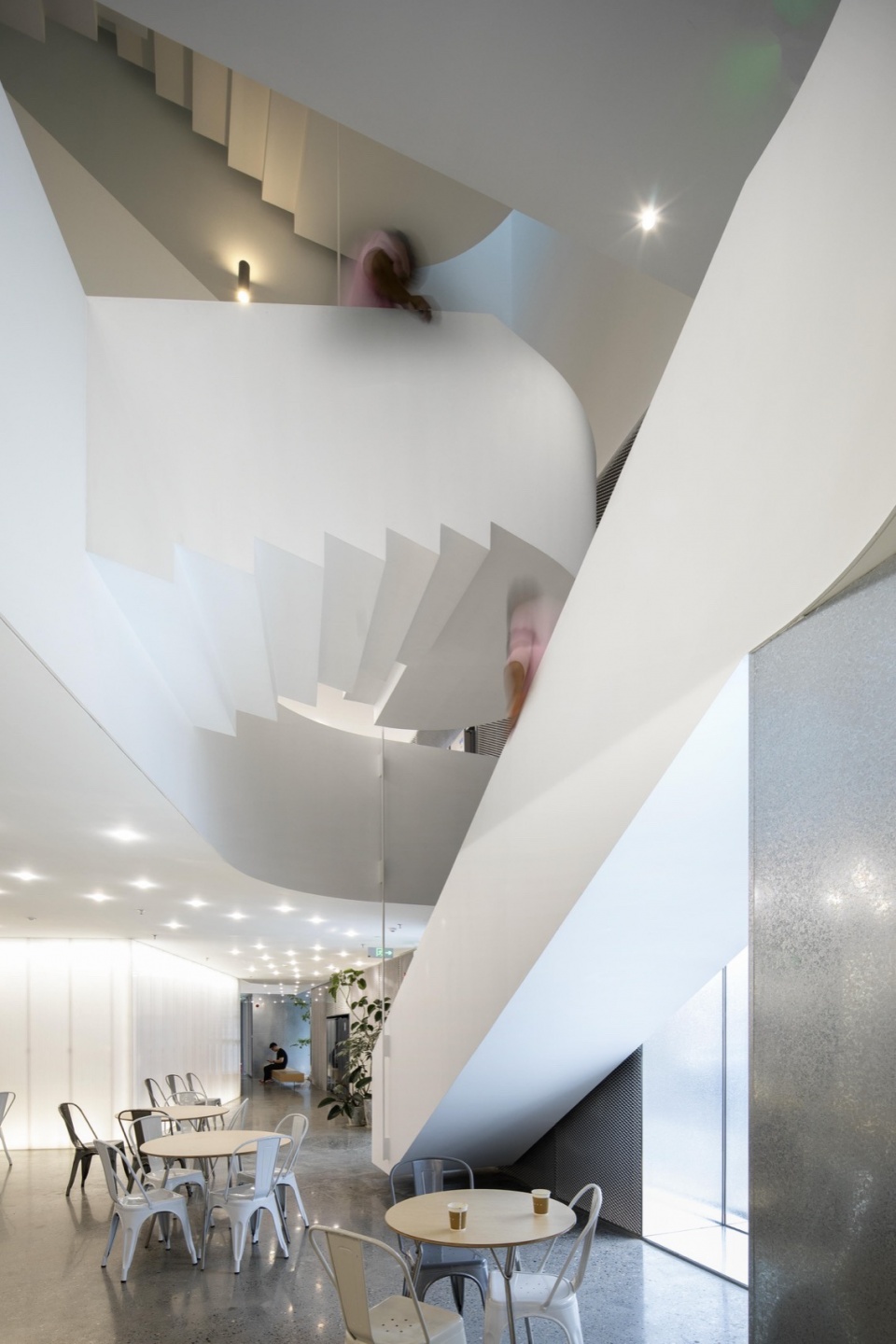
▼旋转钢楼梯,Sculptural Steel Staircase
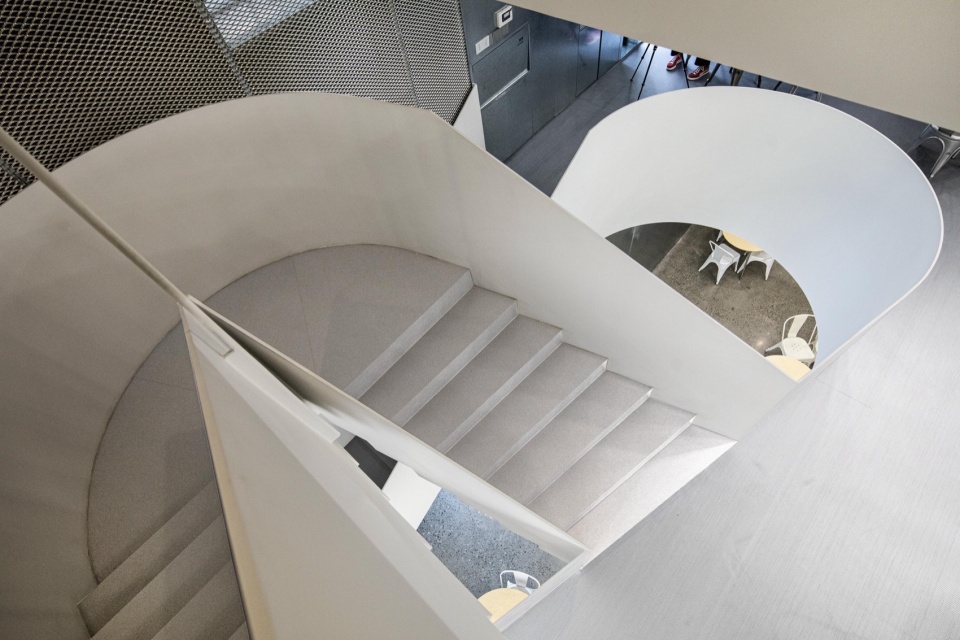
那些独立空间则呈放射状围绕在这条自由之路周围,独立空间之间的缝隙变成了水平交通和工作之余的休闲场所。这里成为了不设边界的水吧、书吧、餐厅、健身以及展示之处,也成为了公司原有的几只小猫的自由世界。在独立空间和空隙之外,便成了开放、形态自由的工作场所,所有部门被那些独立的空间分离成不同的区域,但是所有部门之间是互通互联的空间整体。
The independent room boxes are formed in two ways: some are luminous boxes enclosed by polycarbonate panels, while others are simple timber boxes made of plywood and glass. These enclosed functions were first freely positioned in appropriate locations, leaving the remaining large areas as continuous open space.
▼灯笼纸般的半透明界面,Lantern-Like Translucent Screen
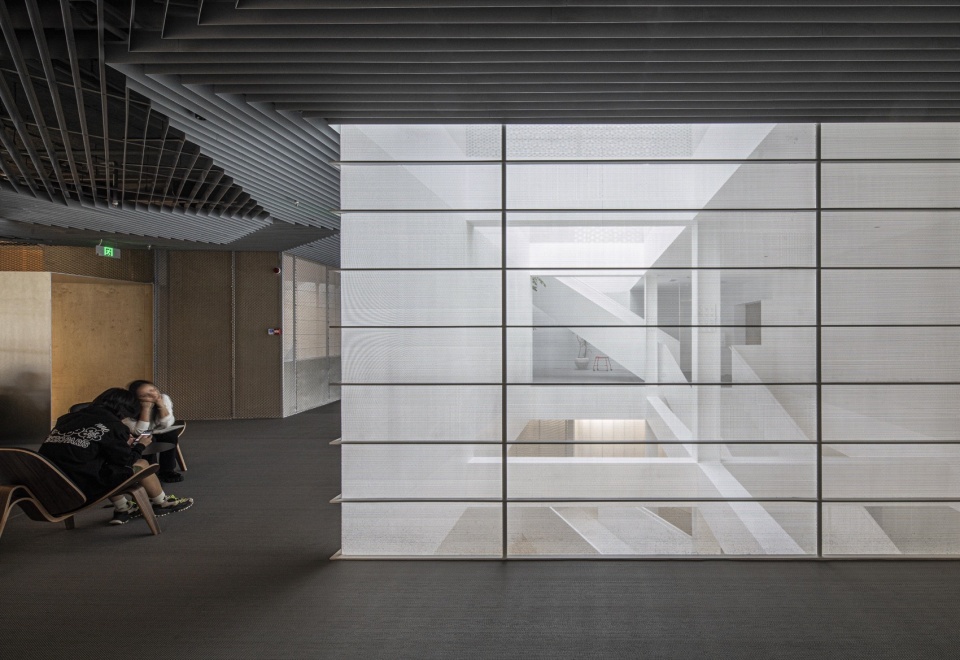
▼盒子之外的水平交通空间,Horizontal Circulation Space Outside the Boxes
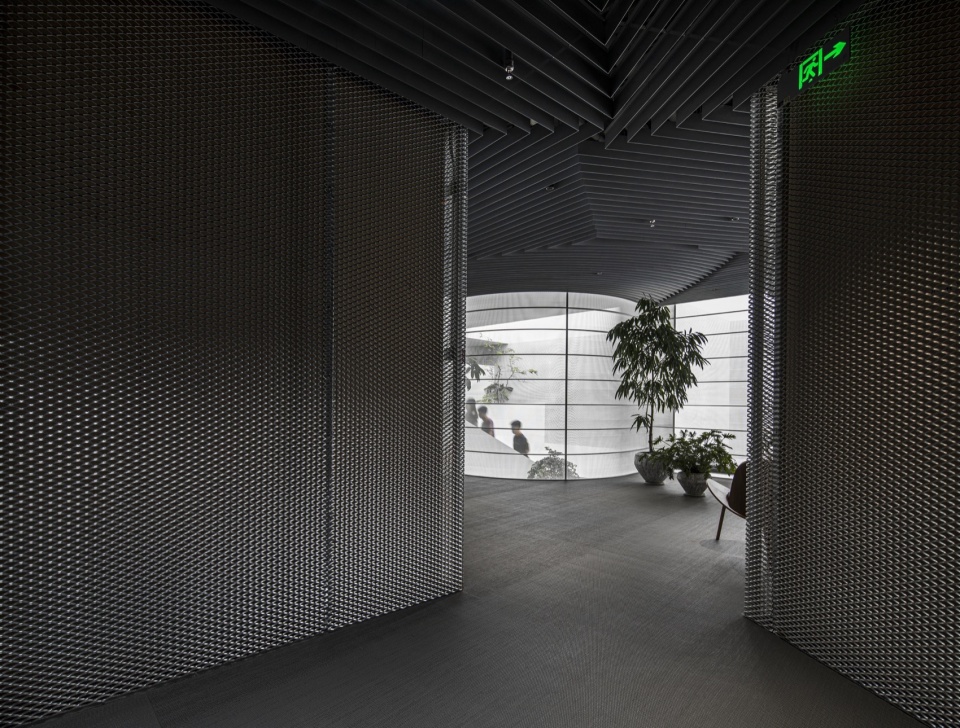
▼三层中庭半透明界面,Third-Floor Atrium Translucent Enclosure
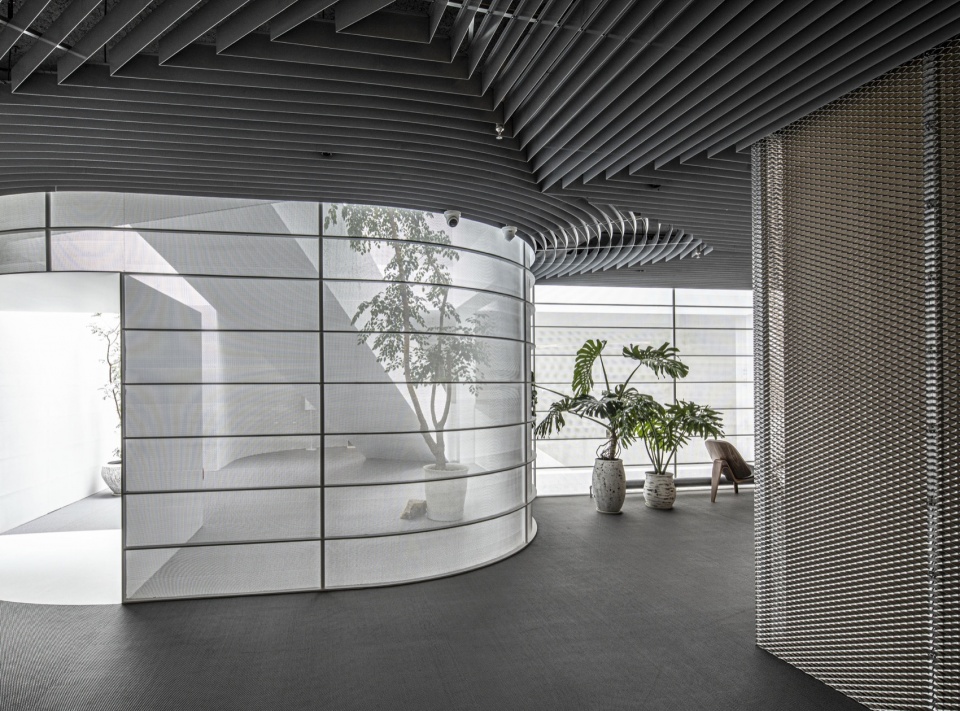
▼填充在盒子与中庭之间的水平交通,Horizontal Circulation Infilled Between the Box and Atrium
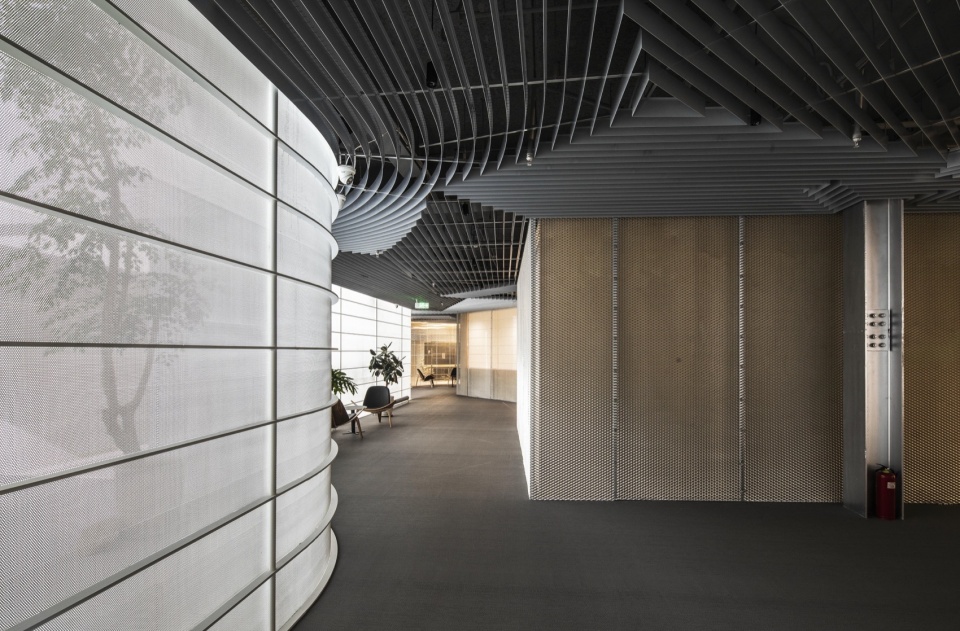
▼自由膨胀的中庭界面,Freely Bulging Atrium Enclosure
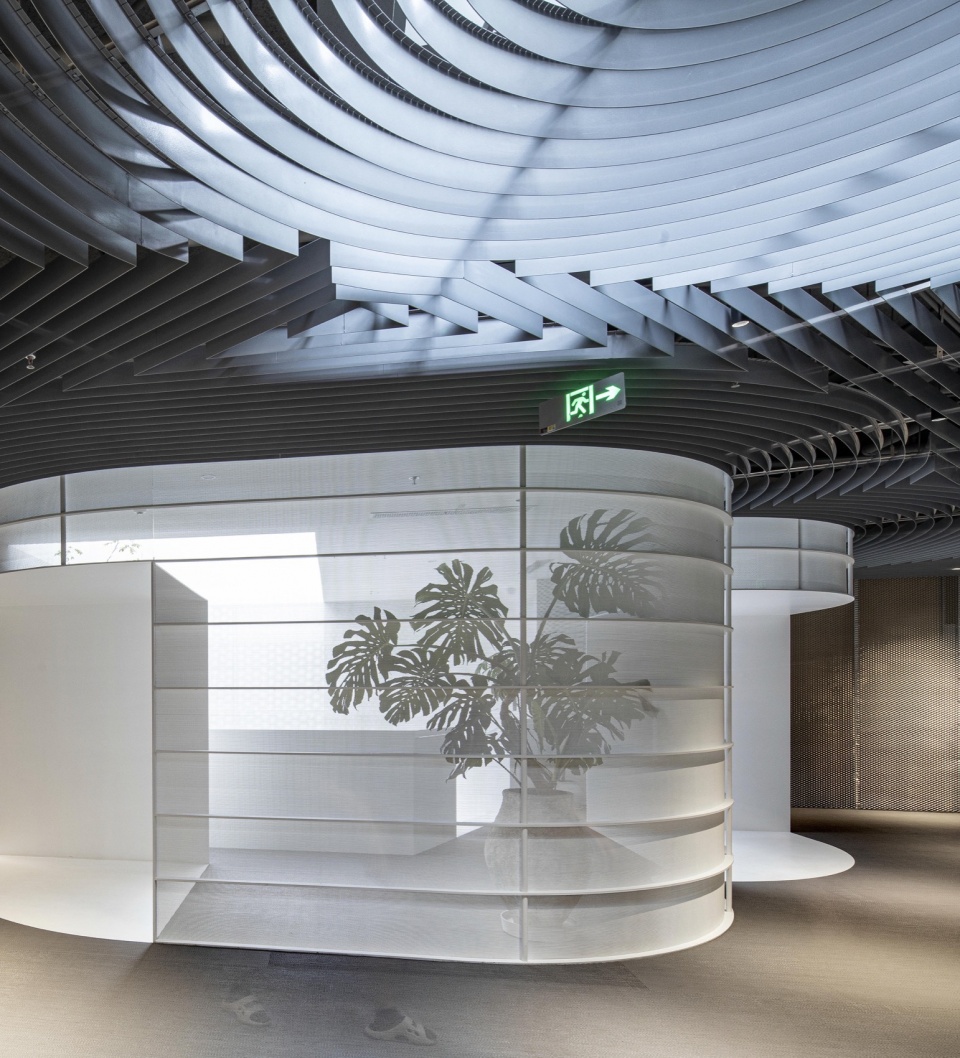
▼自由生长的中庭空间界面,Interface of the Freely Growing Atrium Space
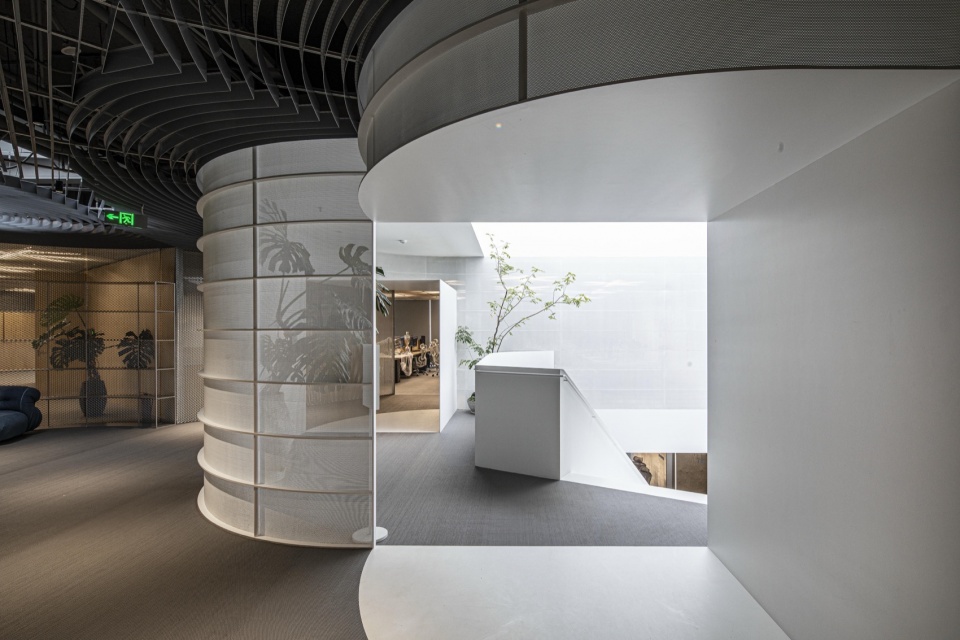
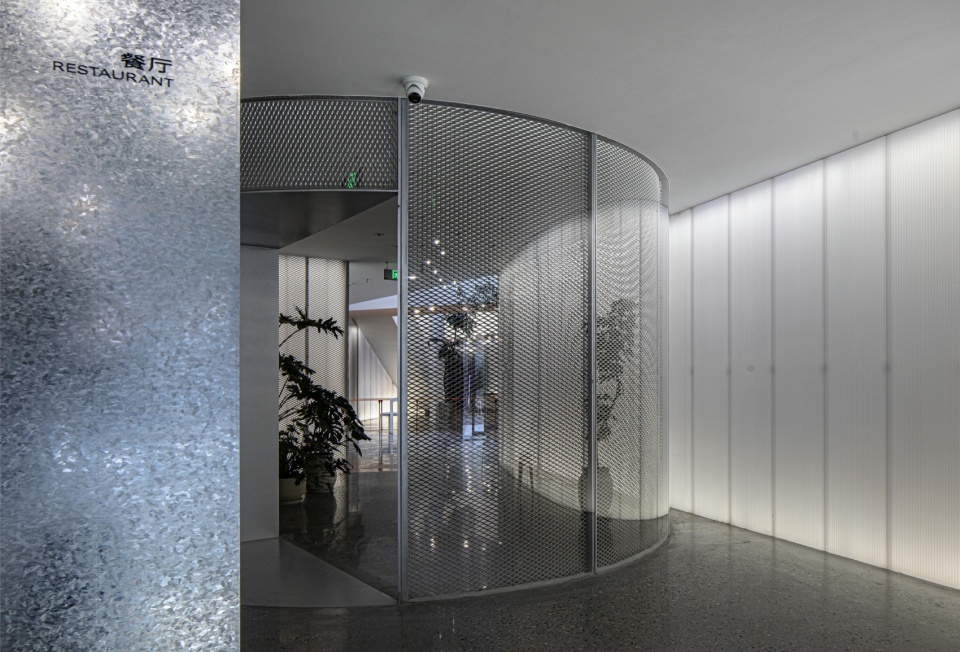
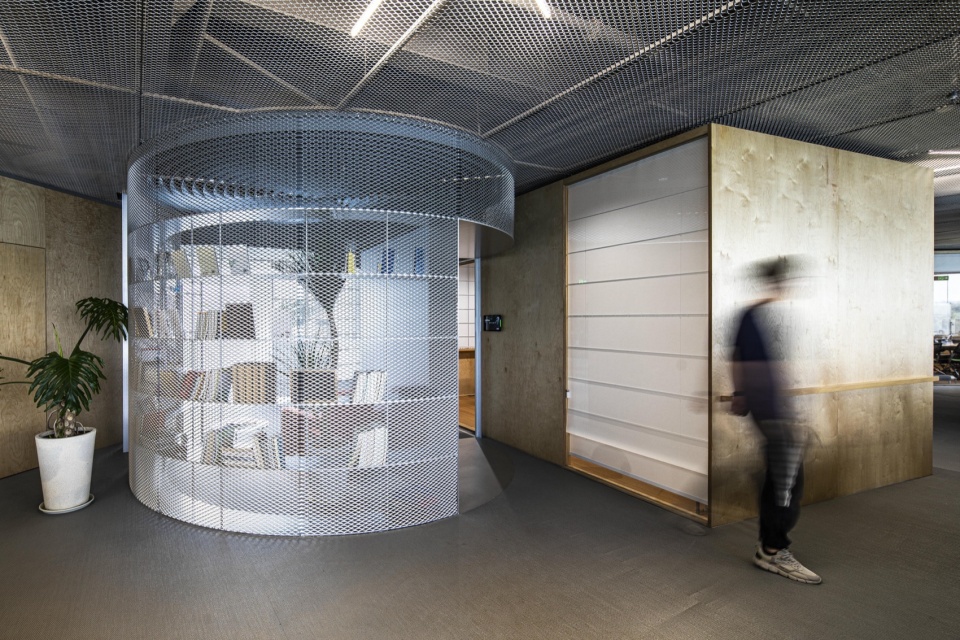
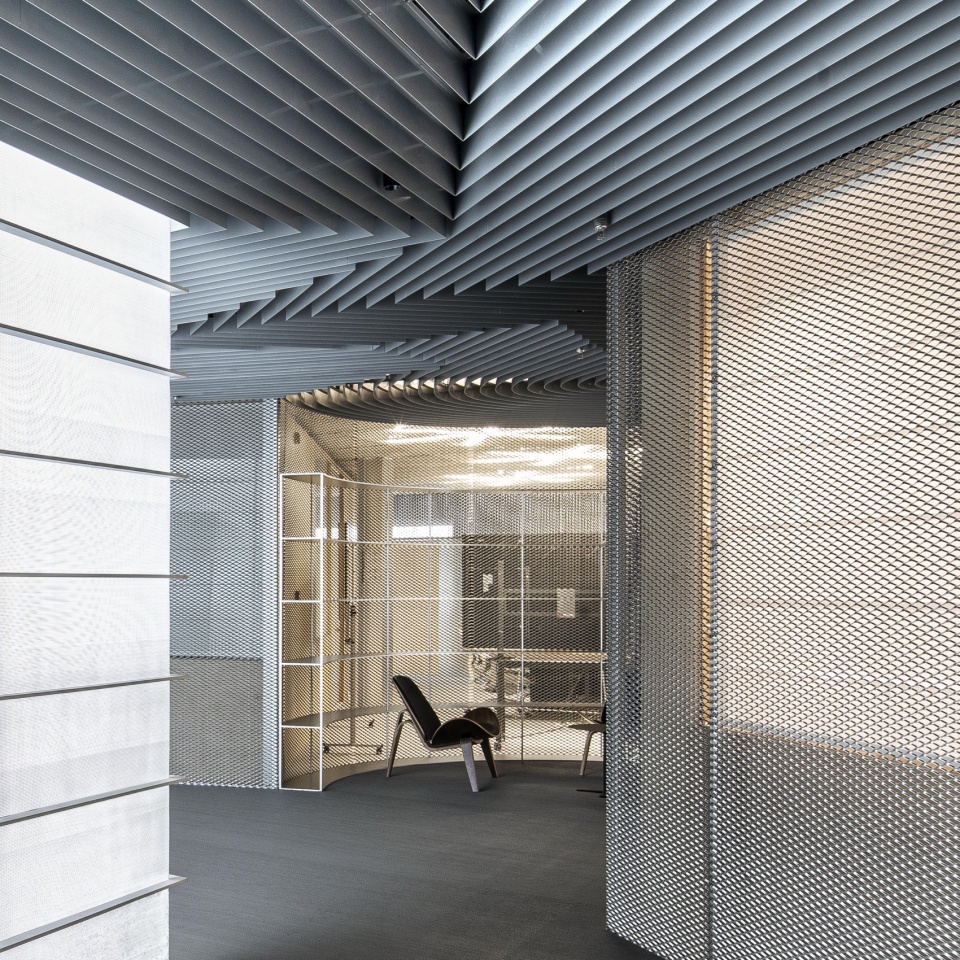
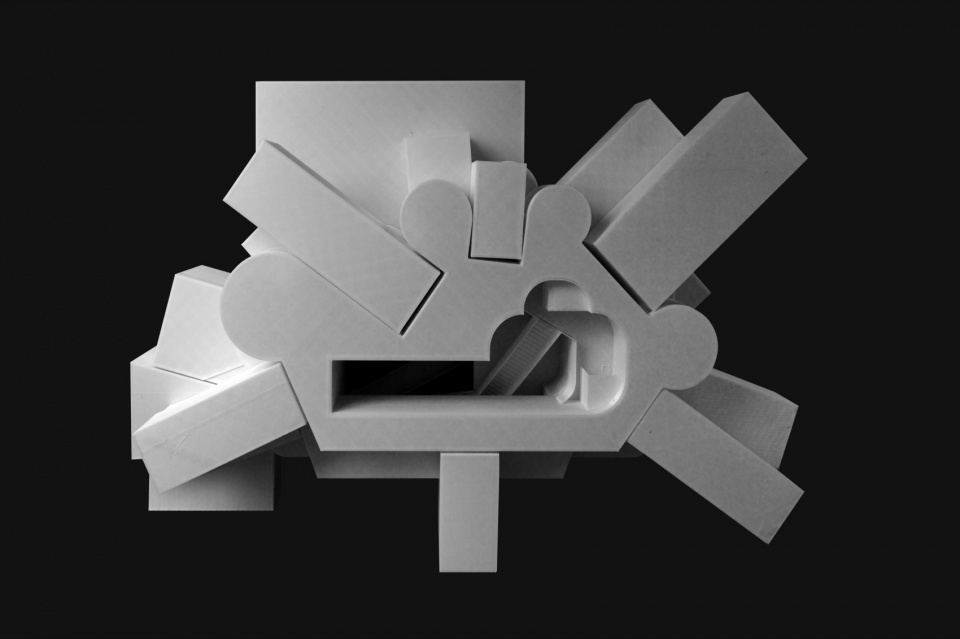
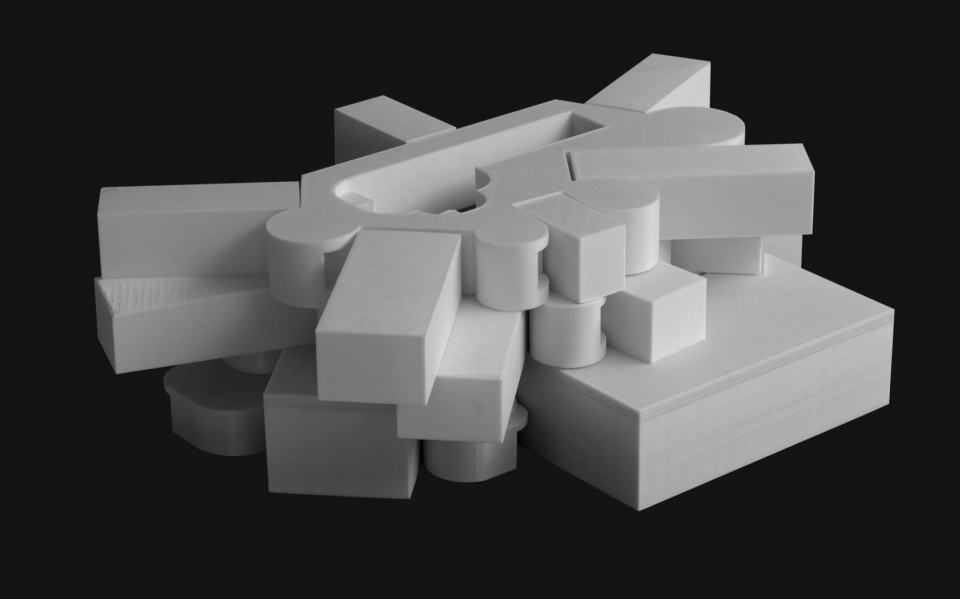
如果有上帝之眼,则可以看穿整个建筑空间的组织结构像一个绽放的烟花,中庭的垂直交通像是烟花的内核,独立空间和四周的工位像是放射状飞散的花火。从整体上看,这是一个内核清晰、结构完整的空间结构;回到个人的具体视角,空间感受便是丰富多样和自由的,且具有空间叠加的张力。为了更好地达成这种空间的叠加,不同通透度的金属网成为主要的材料之一。这种更工业化的材料所形成的半透明性,在很好地形成不同界面的同时,也保留了空间之间的互动,塑造了一系列有形无界的空间体。
Seen from a God’s-eye view, the spatial organization of the entire building resembles a firework in bloom: the vertical circulation of the atrium forms the core, while the independent rooms and surrounding workstations scatter outward like radiating sparks. As a whole, the project has a clear core and a complete spatial structure. From the individual’s perspective, however, the spatial experience is rich, diverse, and free, with a tension created by the layering of spaces. To better achieve this spatial layering, metal mesh with varying degrees of transparency became one of the primary materials. The translucency of this more industrial material defines different interfaces while preserving interaction between spaces, creating a series of spatial volumes that are tangible yet without rigid boundaries.
▼玻璃泡泡,Glass Bubble
▼盒子之间挤出的泡泡,Bubble Squeezed Out Between Boxes
▼交通空间与休闲空间融合,Circulation and Lounge Spaces Integrated
▼向外膨胀的金属鱼鳞网泡泡,Expanding Metal Mesh Bubble
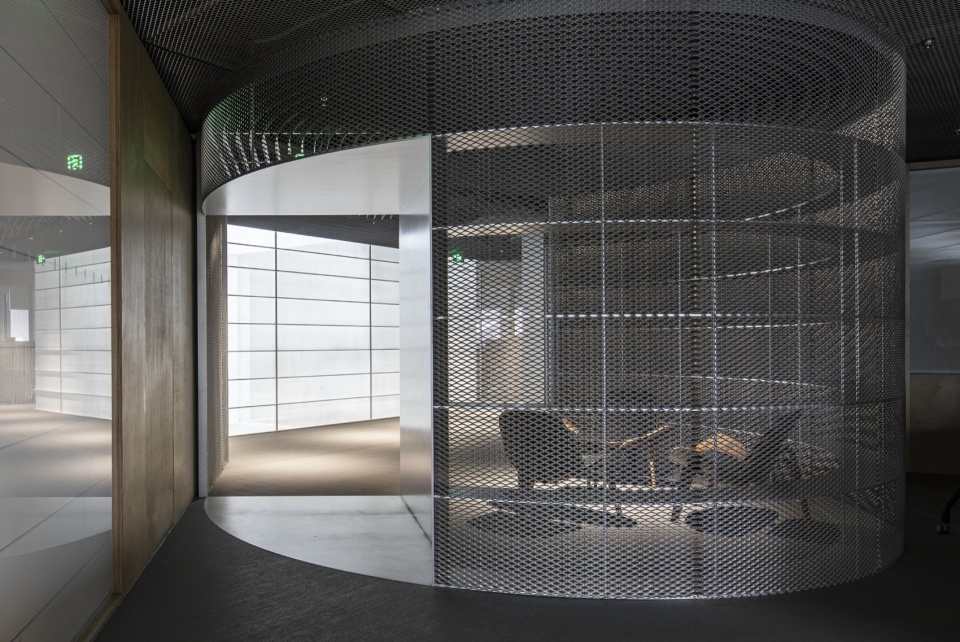
通过中心向外自由扩散的空间处理,是希望在保留公司内部沟通的效率的同时,也表达出空间的灵活性与自由状态。这种不同形态的空间相互交替,将工作与休息的日常状态有序地混合在一起。
The spatial strategy of freely radiating outward from the center aims to maintain efficient internal communication while expressing flexibility and freedom. The alternation of different spatial forms organizes the everyday states of working and resting into an ordered mixture.
▼休闲泡泡,Lounge Bubble
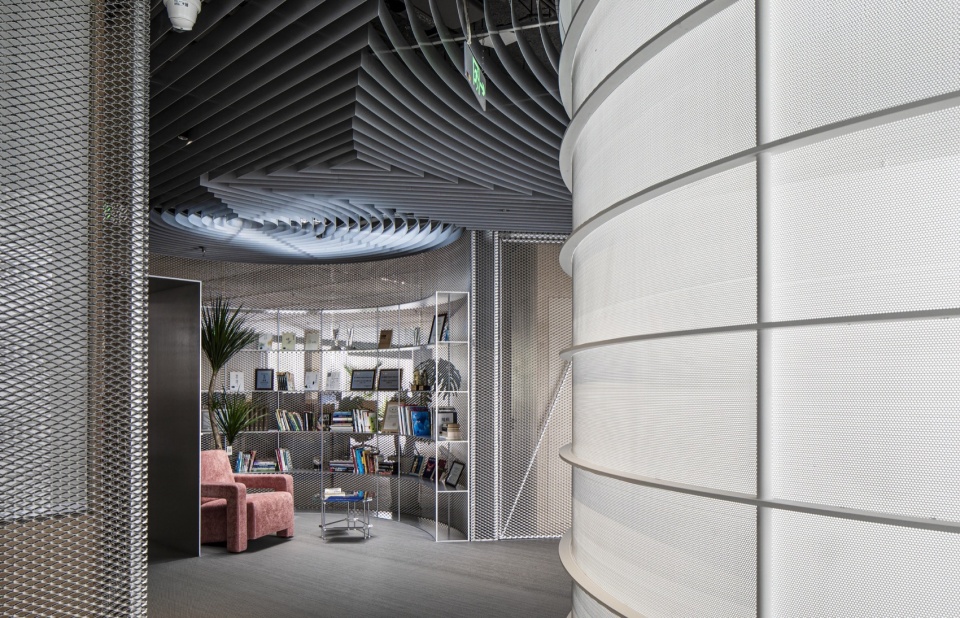
▼休闲泡泡空间,Lounge Bubble Spaces
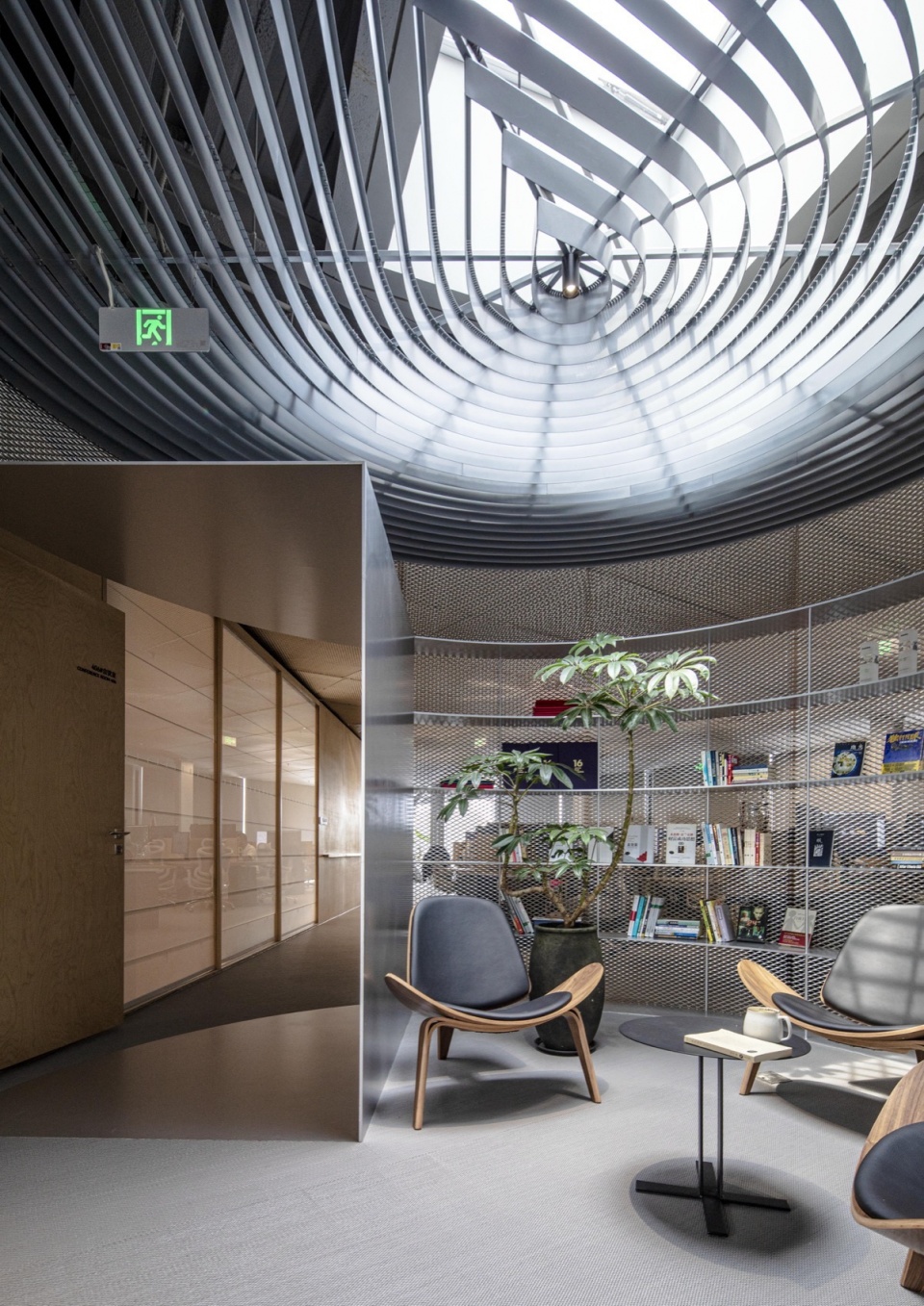
▼休闲泡泡与独立盒子外的工作区,Work Area Outside the Lounge Bubble and Freestanding Box
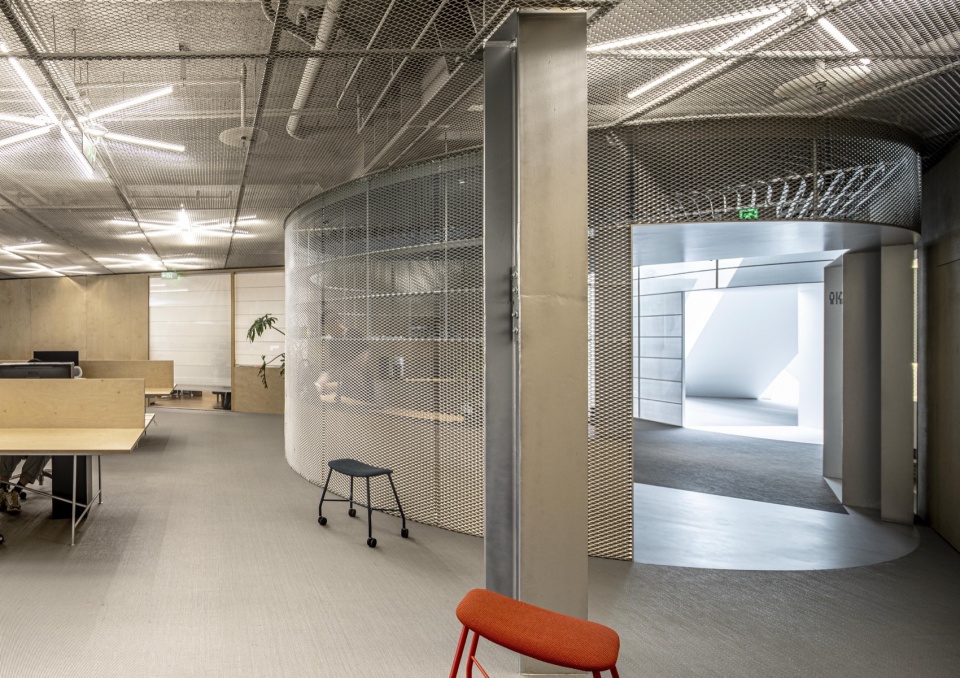
▼在两个盒子之间挤出的休闲“泡泡”,Lounge Bubble Squeezed Out Between Two Boxes
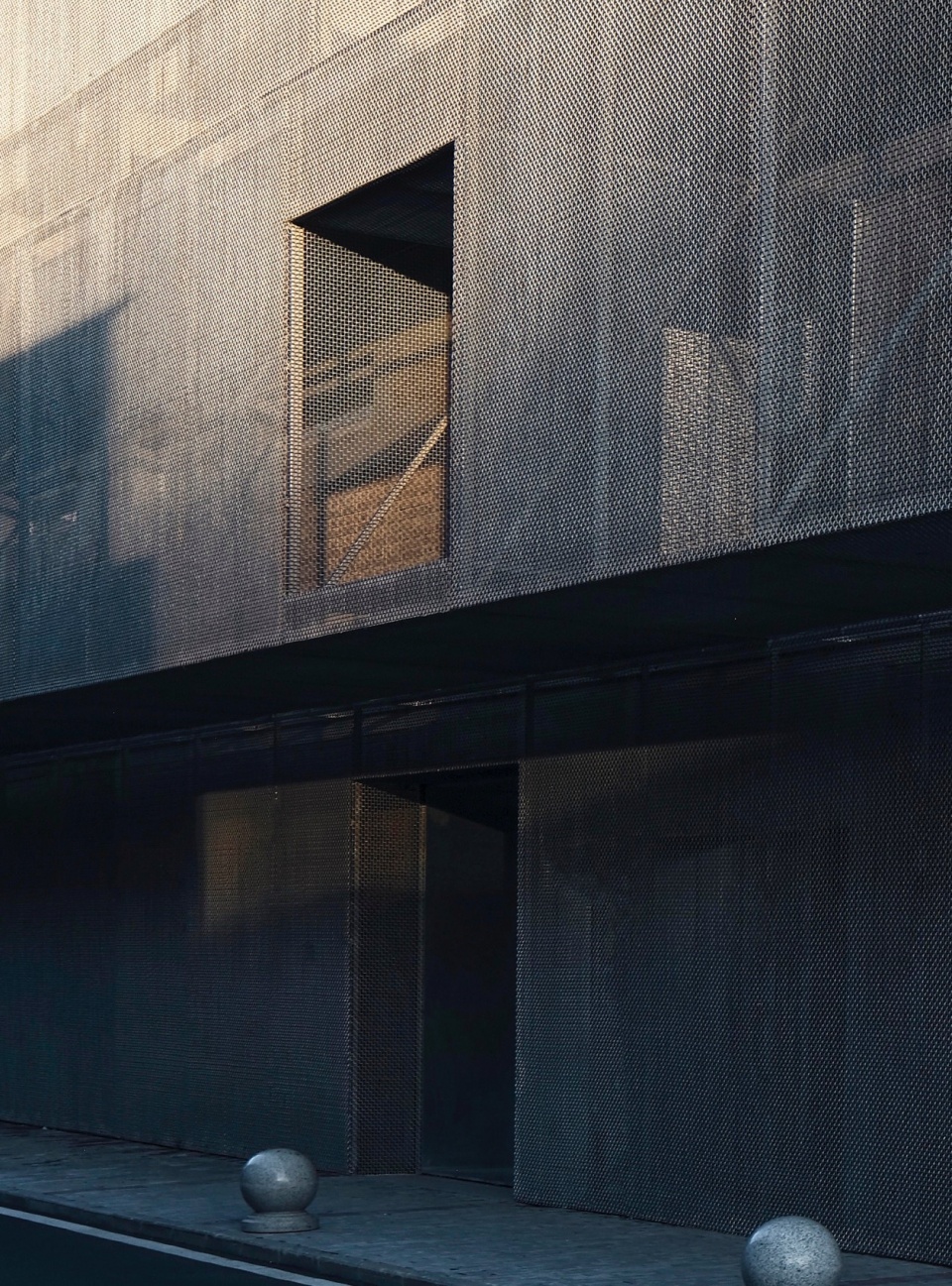
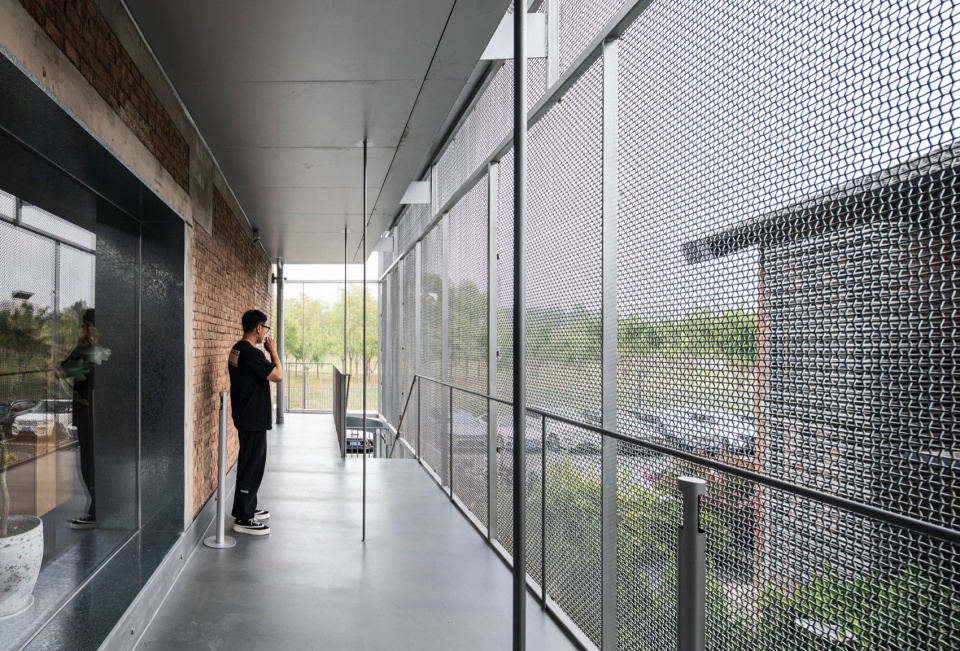
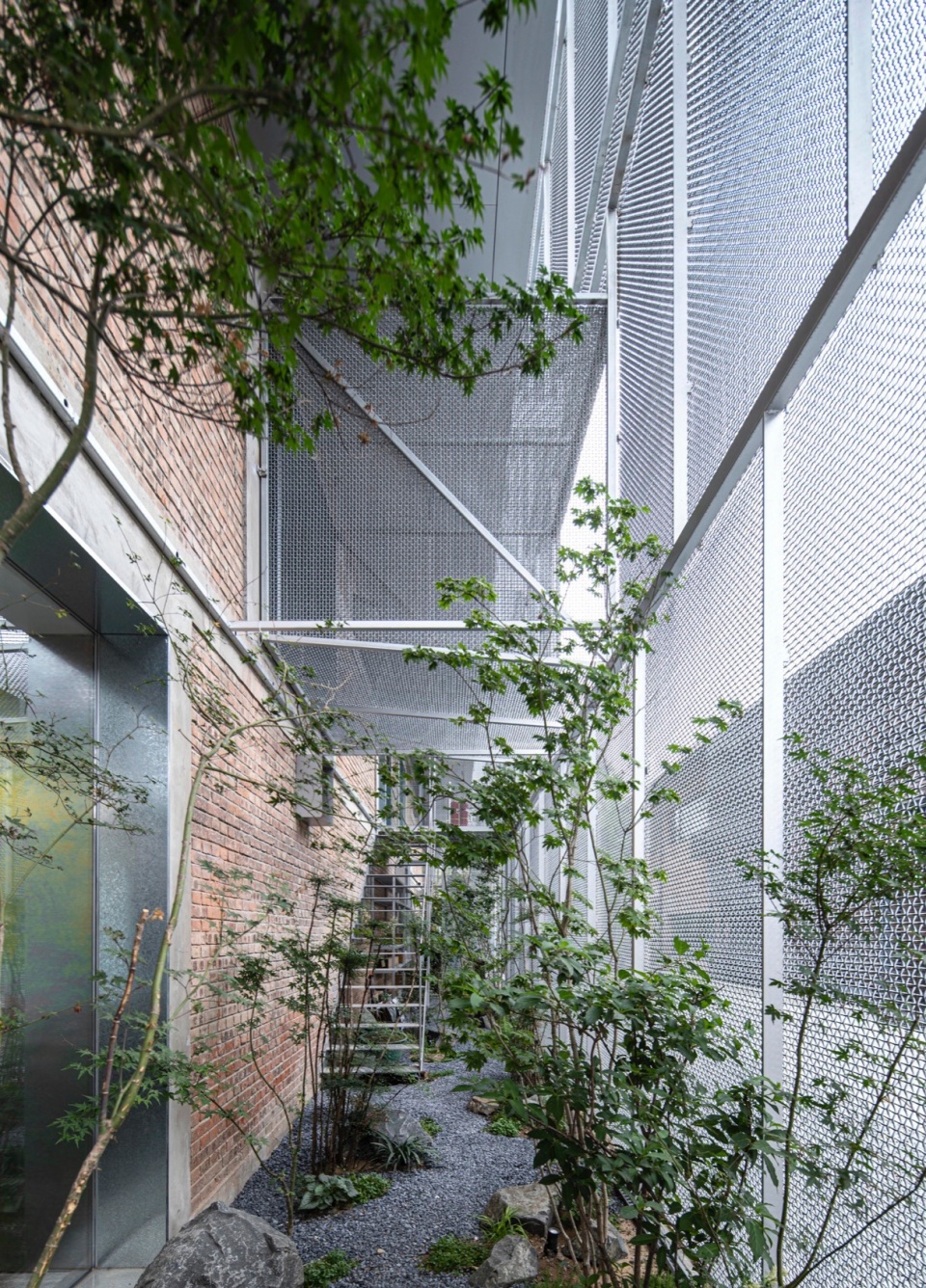
红砖外墙是这个建筑历史的一部分,时间的印记被保留了下来,因呼应内部空间的需要,原有砖墙做了适度的开窗。为了建筑既能够保留真实的时间记忆,又可获得全新的意义,砖墙连同玻璃窗一同被一层工业用的金属网笼罩起来,在金属网与红砖之间形成了一道夹缝空间,这里有绿化种植和室外消防楼梯。
The red-brick exterior wall is part of the building’s history, preserving the traces of time. In response to the needs of the interior space, new openings were moderately introduced into the original brick walls. In order for the building to retain an authentic memory of time while acquiring new meaning, the brick walls and glass windows were together wrapped by a layer of industrial metal mesh. Between the metal mesh and the red brick, an interstitial space was formed, accommodating planting and outdoor fire stairs.
▼立面局部,Facade Detail
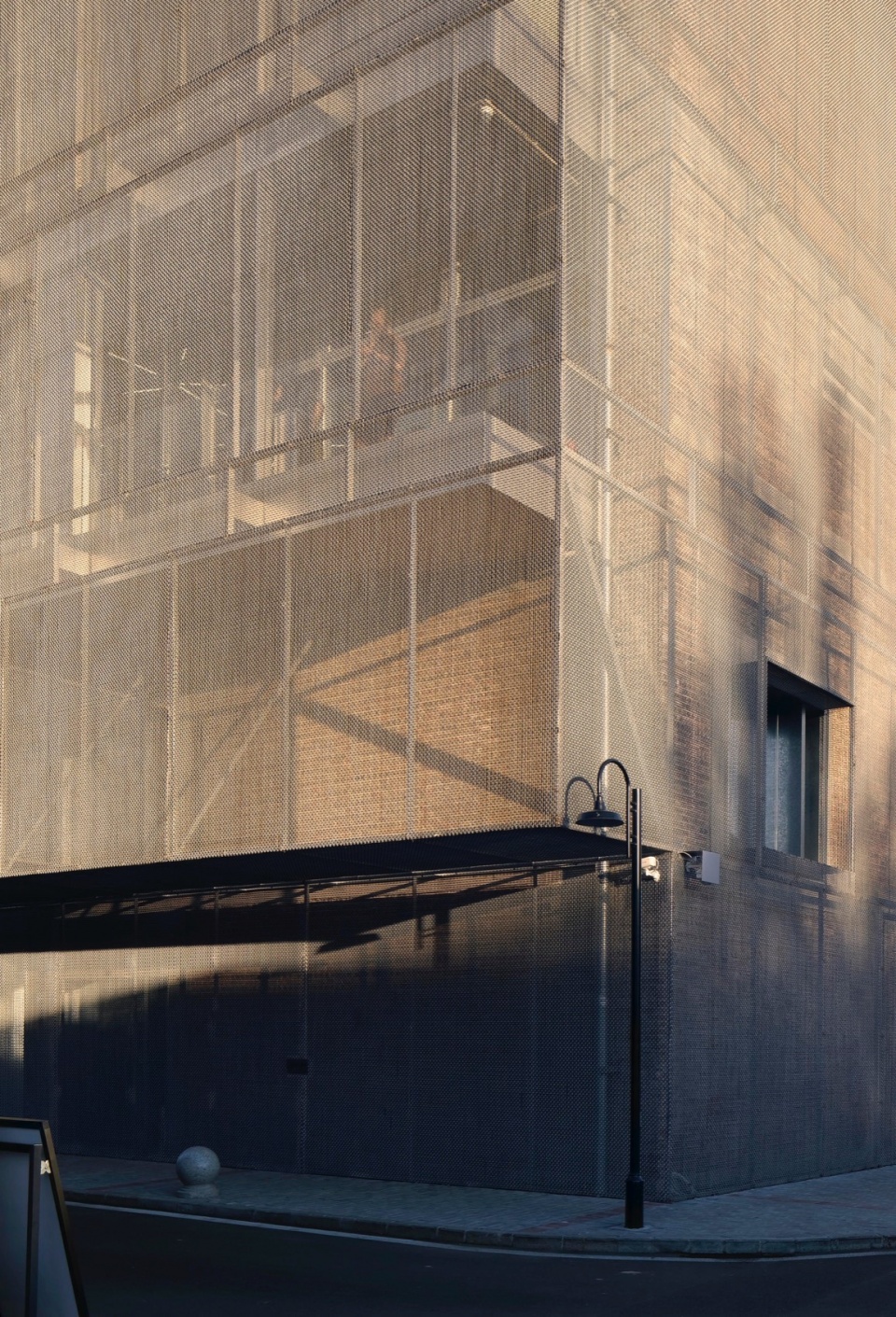
▼内凹的金属网洞口套口,Recessed Metal Mesh Opening Frame
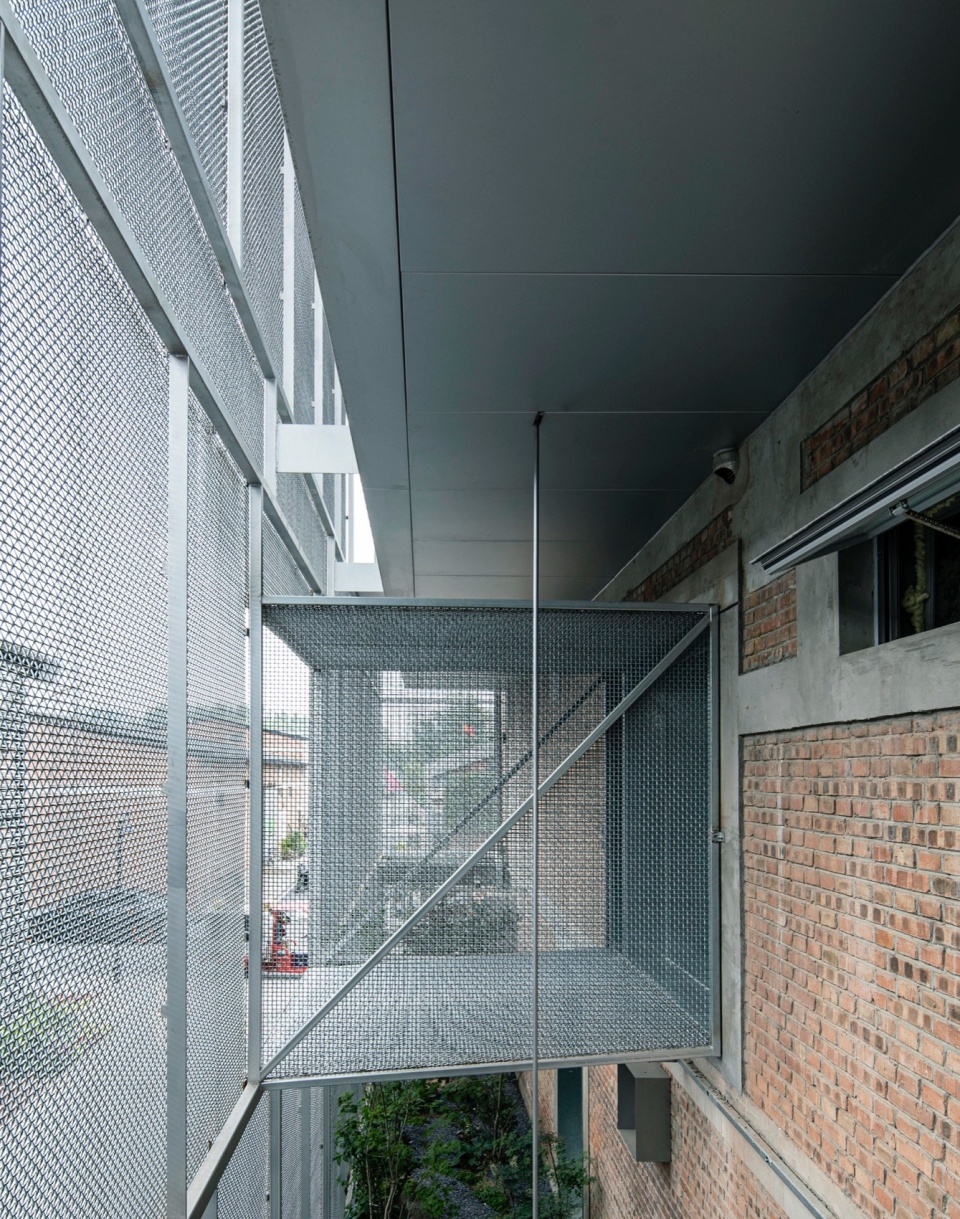
▼消防疏散楼梯,Fire Escape Staircase
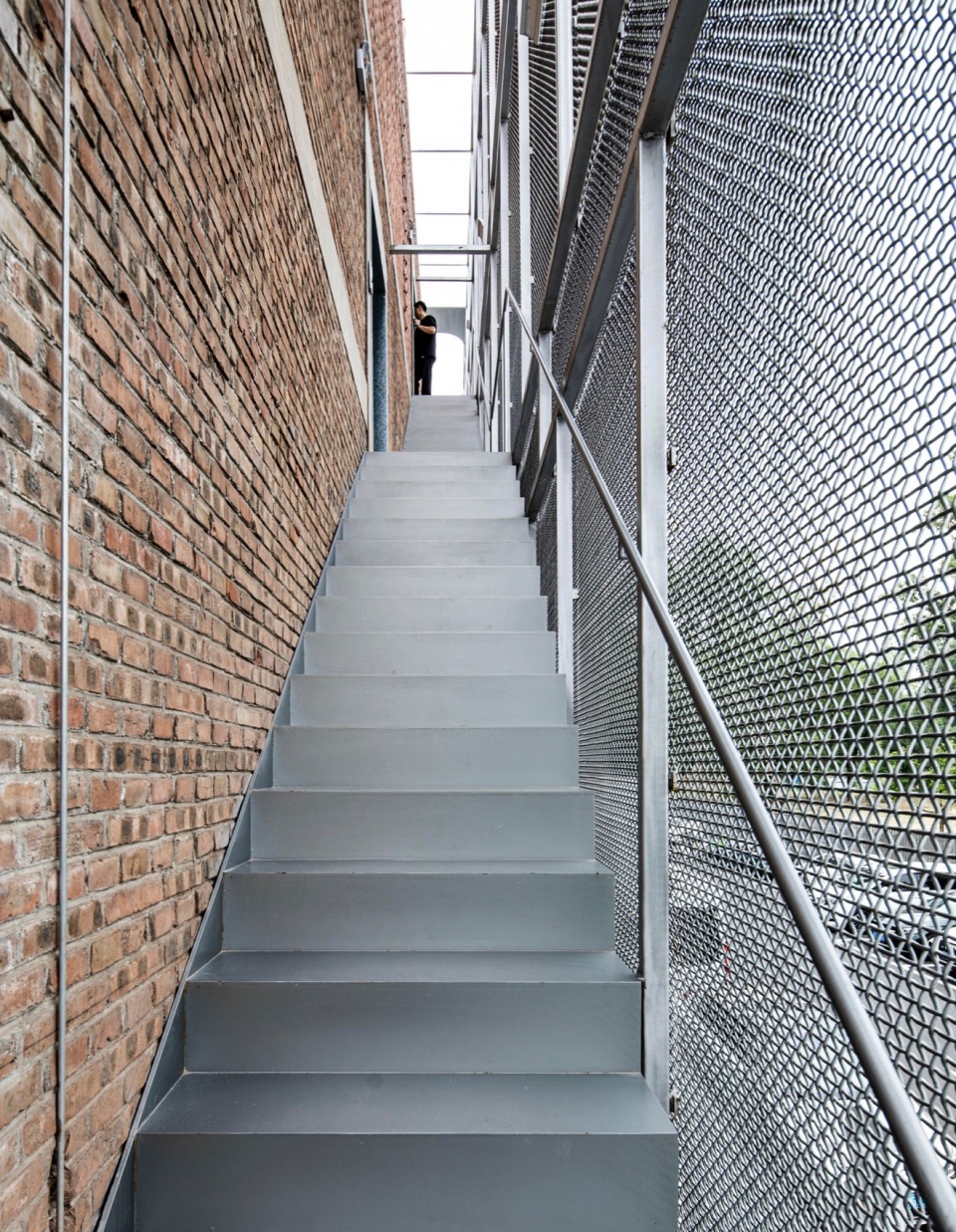
金属网给这层空间创造了一层虚化的边界,也给建筑带来了既真实又虚幻的轮廓,它的真实,来自对功能和构造的回应:原有砖墙、新开玻璃窗、室外消防楼梯和绿化夹缝,被整合进同一个外部层次之中。它的虚幻,则来自金属网自身的半透明性和编织特征:在不同时间、角度和距离下,建筑的透明度、光影和轮廓都会发生变化;看似完整而有力的金属形体背后,原始红砖外墙、楼梯与绿植仍然若隐若现。
The metal mesh creates a softened boundary for this layer and gives the building a contour that is both real and illusory. Its reality comes from its response to function and construction: the original brick walls, newly inserted glass windows, outdoor fire stairs, and planted interstitial zone are integrated into a single exterior layer. Its illusory quality comes from the semi-transparency and woven character of the metal mesh itself. At different times of day, from different angles and distances, the building’s transparency, light and shadow, and silhouette all shift. Behind the seemingly complete and powerful metallic form, the original red-brick walls, stairs, and greenery remain faintly visible.
▼夹缝休息平台,Resting Platform in the Gap
▼夹缝空间景观,Landscape in the Gap Space
▼夹缝空间休息平台,Resting Platform in the Gap Space
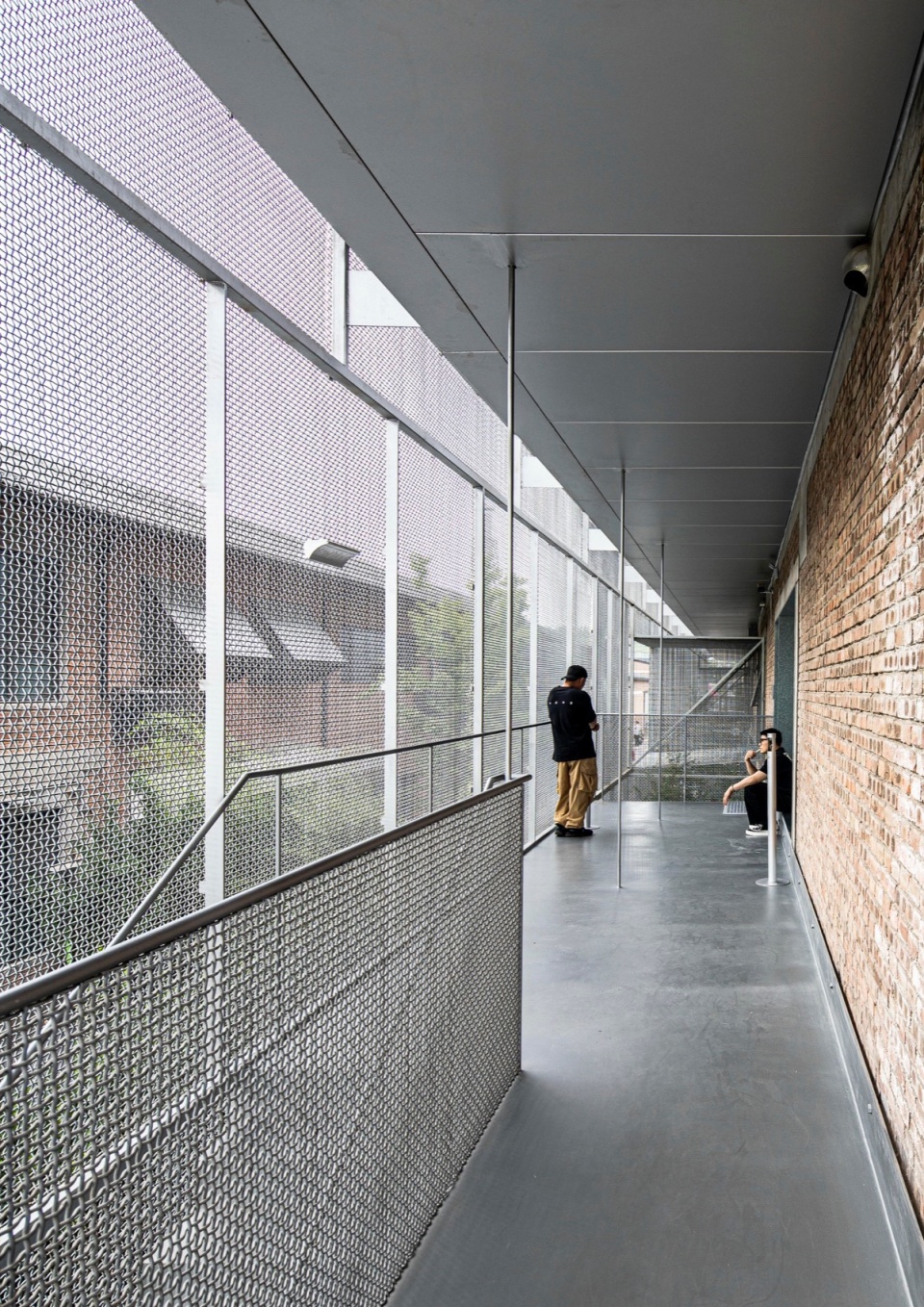
我们希望旧厂房的红砖不是作为一幅被保留下来的背景出现,也不是被新的表皮完全覆盖,而是与金属网、玻璃、楼梯、绿化一起,重新进入建筑的日常使用之中。通行、采光、通风和外部感知都在这层夹缝里发生,工业遗留与当下使用、历史痕迹与日常活动也因此叠合在一起。建筑的外形不再只是内部空间的直接外壳,而成为功能、结构和时间痕迹共同作用后的结果,并在新与旧之间形成自洽而富有变化的表达。
We hoped that the red brick of the old factory would not appear merely as a preserved backdrop, nor be completely covered by a new skin. Instead, together with the metal mesh, glass, stairs, and planting, it re-enters the everyday use of the building. Movement, daylighting, ventilation, and exterior perception all take place within this interstitial layer. Industrial remains and contemporary use, historical traces and daily activity, are thus superimposed. The building’s exterior form is no longer simply the direct envelope of the interior space, but the result of the combined action of function, structure, and traces of time, forming a coherent yet richly varied expression between old and new.
▼办公区休闲角,Office Lounge Corner
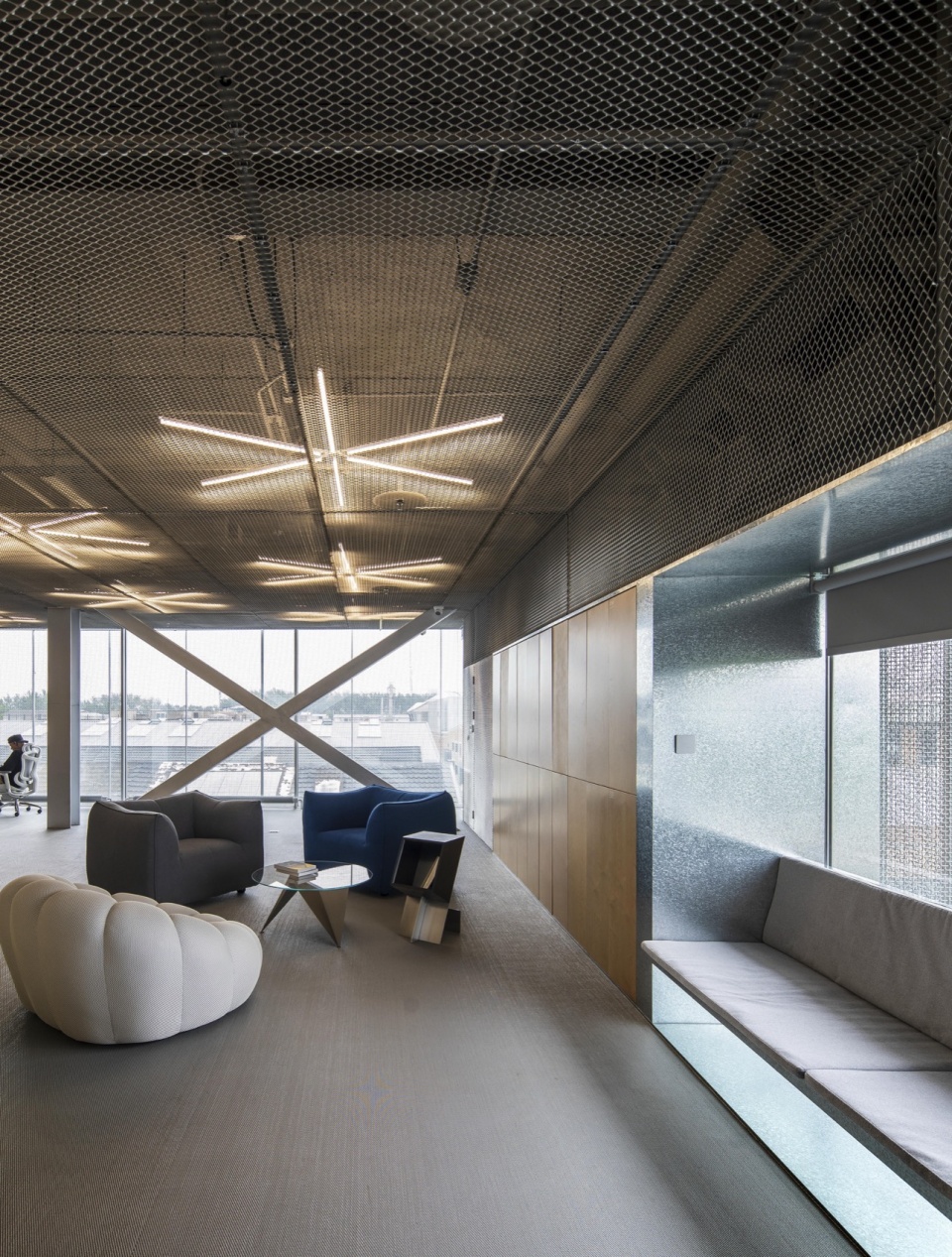
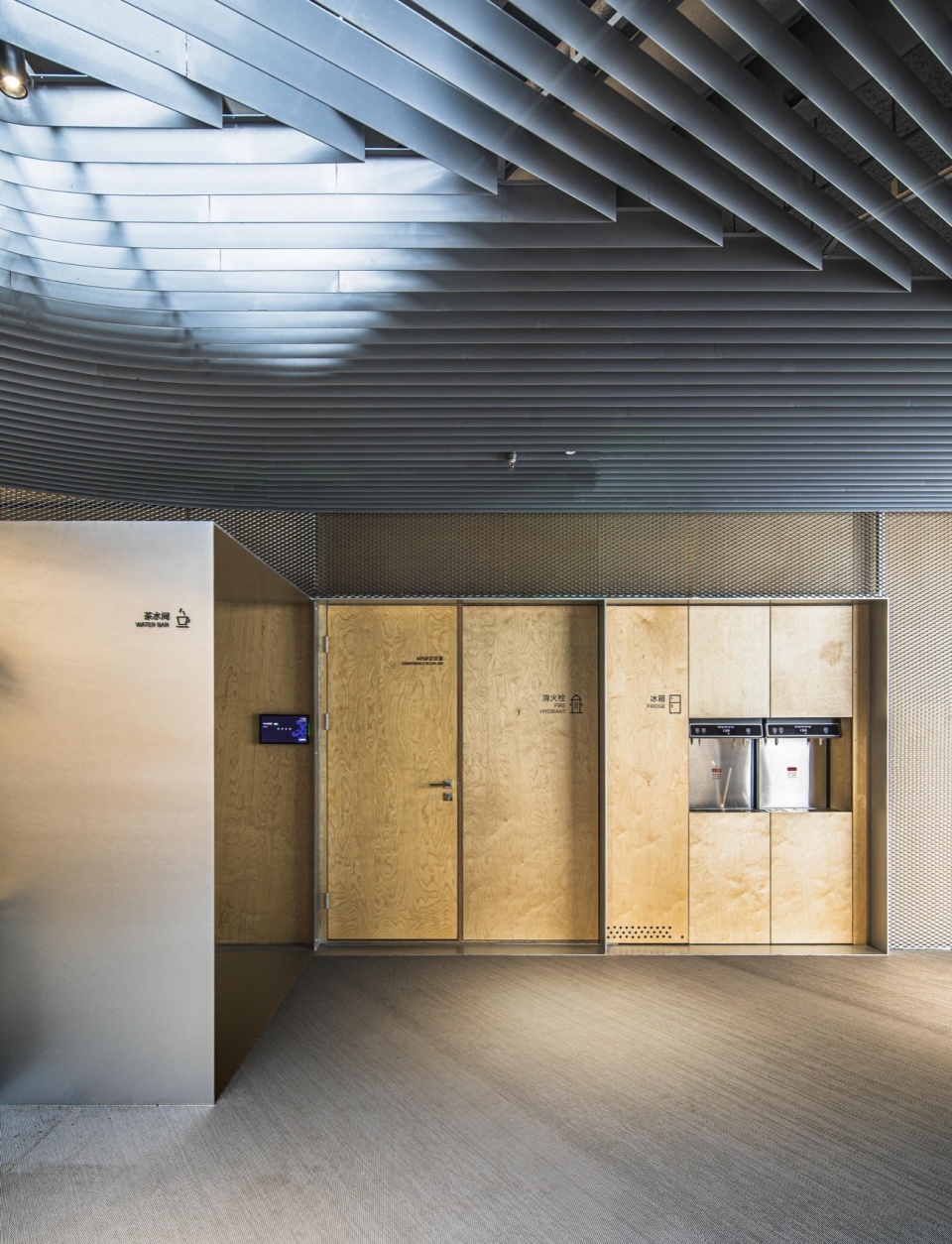
▼茶水间,Pantry
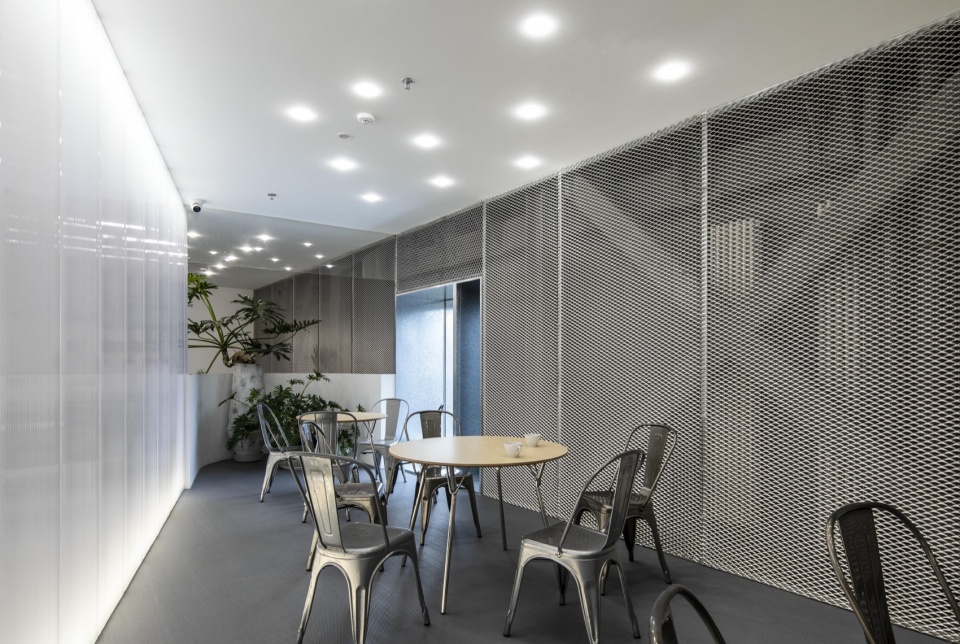
▼二层餐厅,Second Floor Dining Area
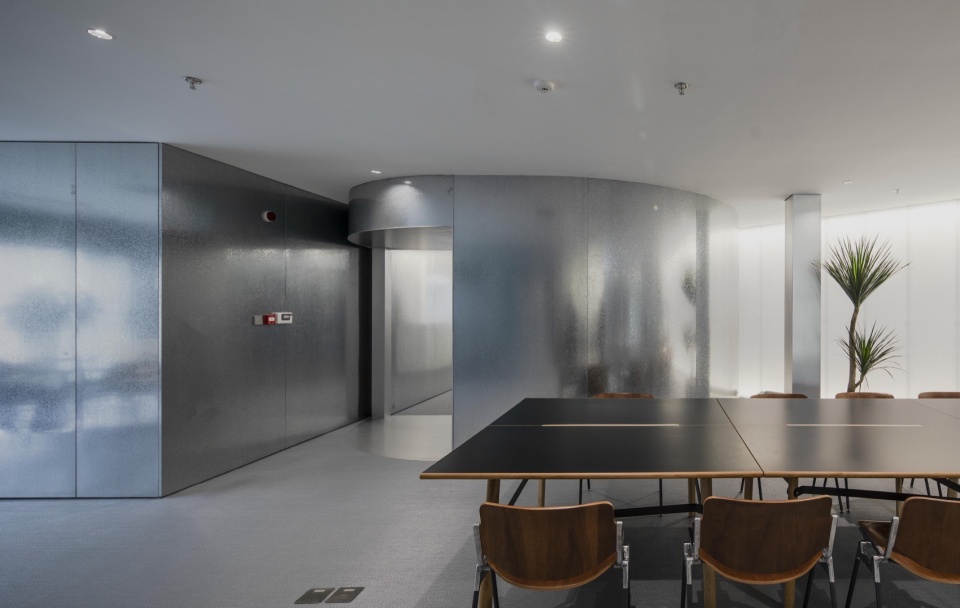
▼二层大会议室,Second Floor Large Meeting Room
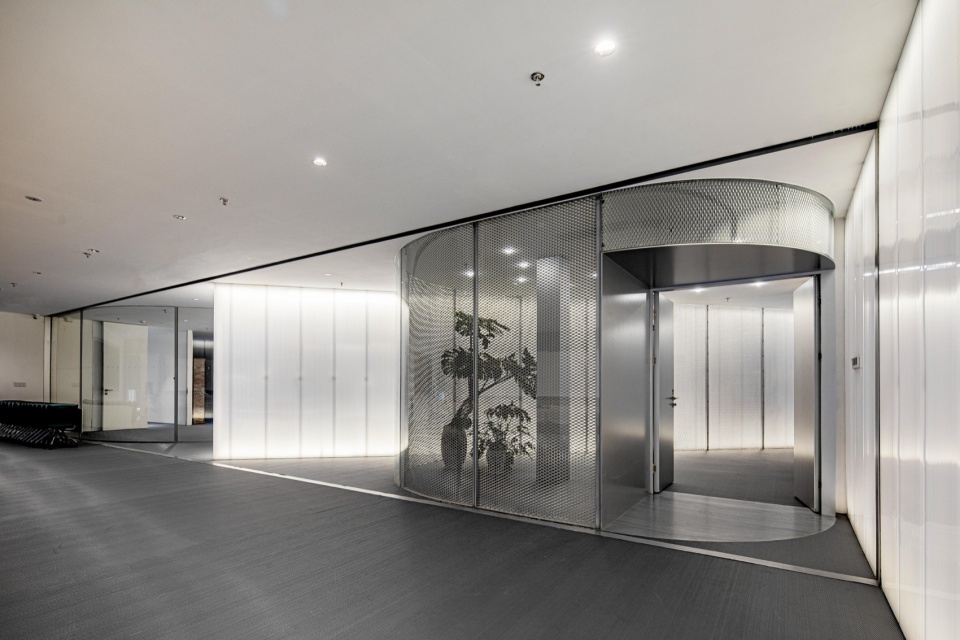
▼二层会议休闲空间,Second Floor Meeting Lounge Space
这次工业遗存改建并不试图用新旧对比来确认旧建筑的价值,也不把历史变成可被观看的符号。我们更希望让建筑重新进入时间,并在时间中继续被使用。旧厂房的价值最终回到具体的场地、结构、材料、光线和人的活动之中。只有当红砖、柱网、金属网、天光、楼梯和日常工作重新发生关系时,过去才不只是被保留下来,而是在清晰的空间组织中,继续容纳开放、流动而自由的工作生活。这也回应了这个艺术区的特殊身份,工业遗留与时尚、历史与当代的重合,在新与旧之间寻找一种自洽的表达。将工业遗存焕新,营造出一种松弛、时尚又带有历史厚重感的独特氛围,是本次城市更新和文化升级的一种尝试。
This renovation of an industrial relic does not attempt to affirm the value of the old building through a contrast between old and new, nor does it turn history into a symbol to be viewed. Rather, we hope to allow the building to re-enter time and continue to be used within it. The value of the old factory ultimately returns to the specific site, structure, materials, light, and human activities. Only when red brick, column grid, metal mesh, skylight, staircases, and everyday work establish new relationships can the past be more than merely preserved; within a clear spatial organization, it continues to accommodate an open, fluid, and free mode of working life. This also responds to the particular identity of the art district, where industrial remains and fashion, history and contemporaneity overlap. Between old and new, the project seeks a self-consistent architectural expression. Renewing an industrial relic and creating a relaxed, fashionable, yet historically grounded atmosphere is an attempt at urban regeneration and cultural upgrading.
▼盒子和墙面之间挤出的悬挑平台,Cantilevered Platform Between Box and Wall
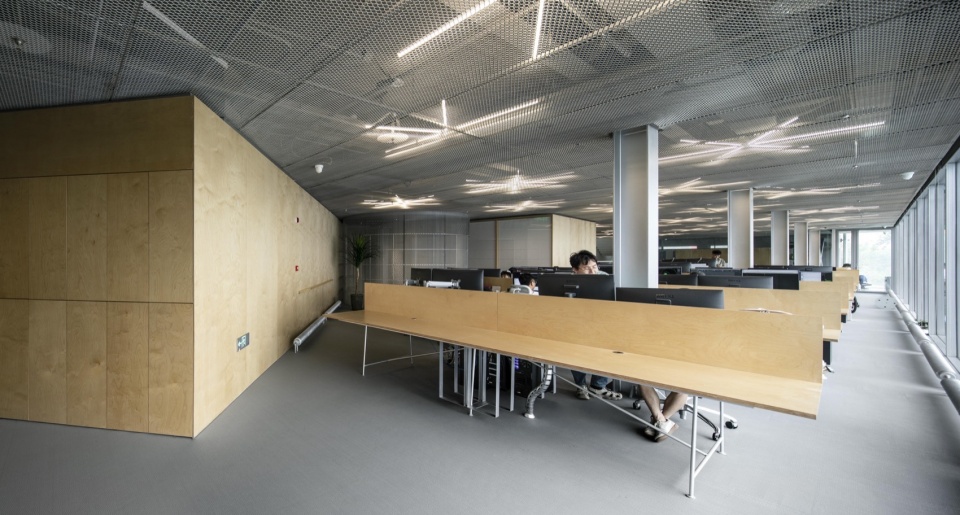
▼开放的工作区,Open Work Area
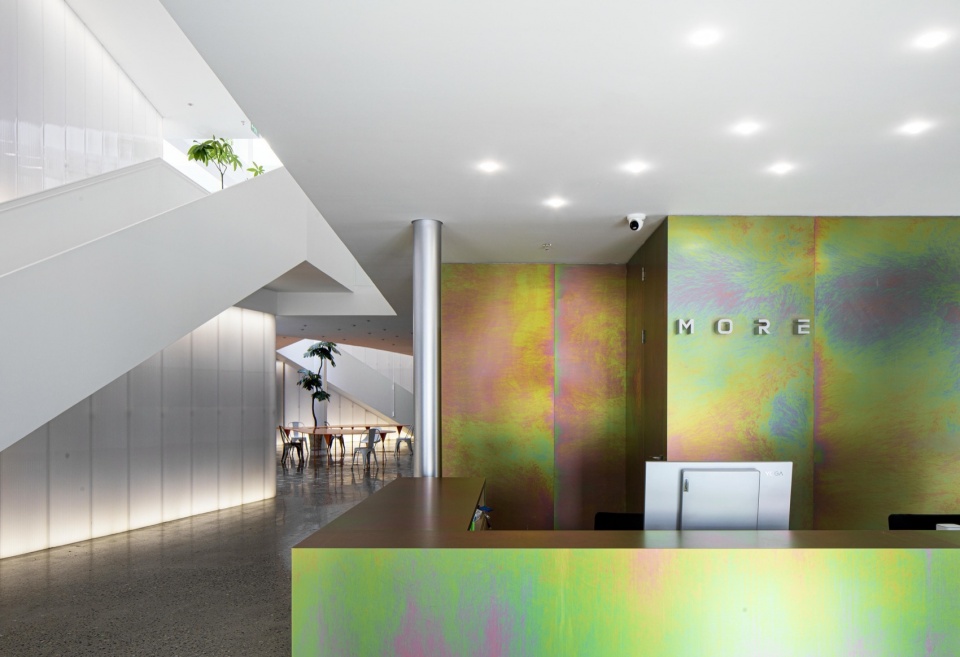
▼炫彩不锈钢前台,Iridescent Stainless Steel Reception Desk
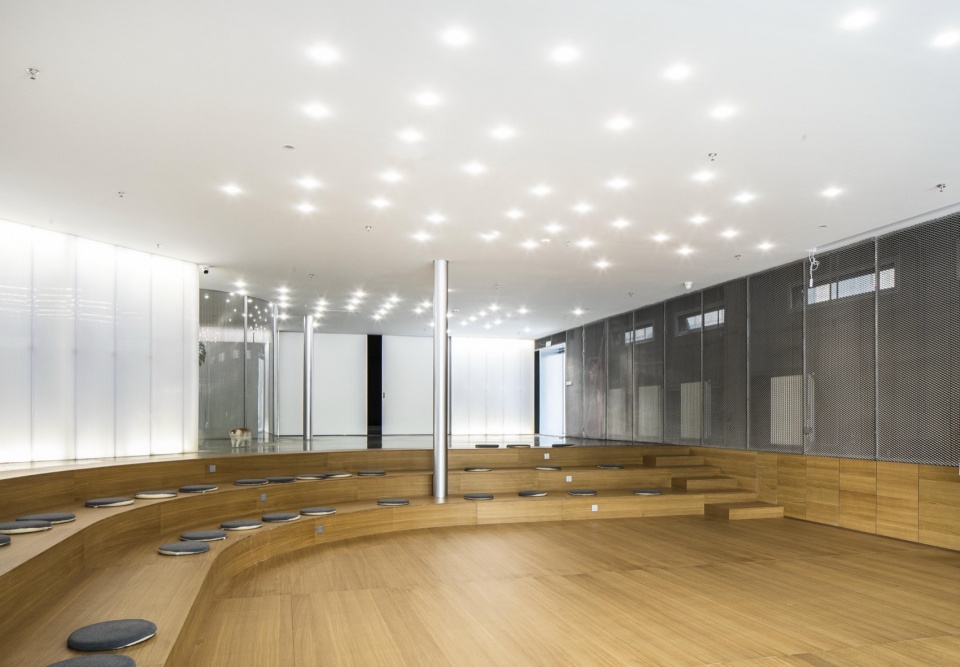
▼一层下沉活动区,First Floor Sunken Activity Area
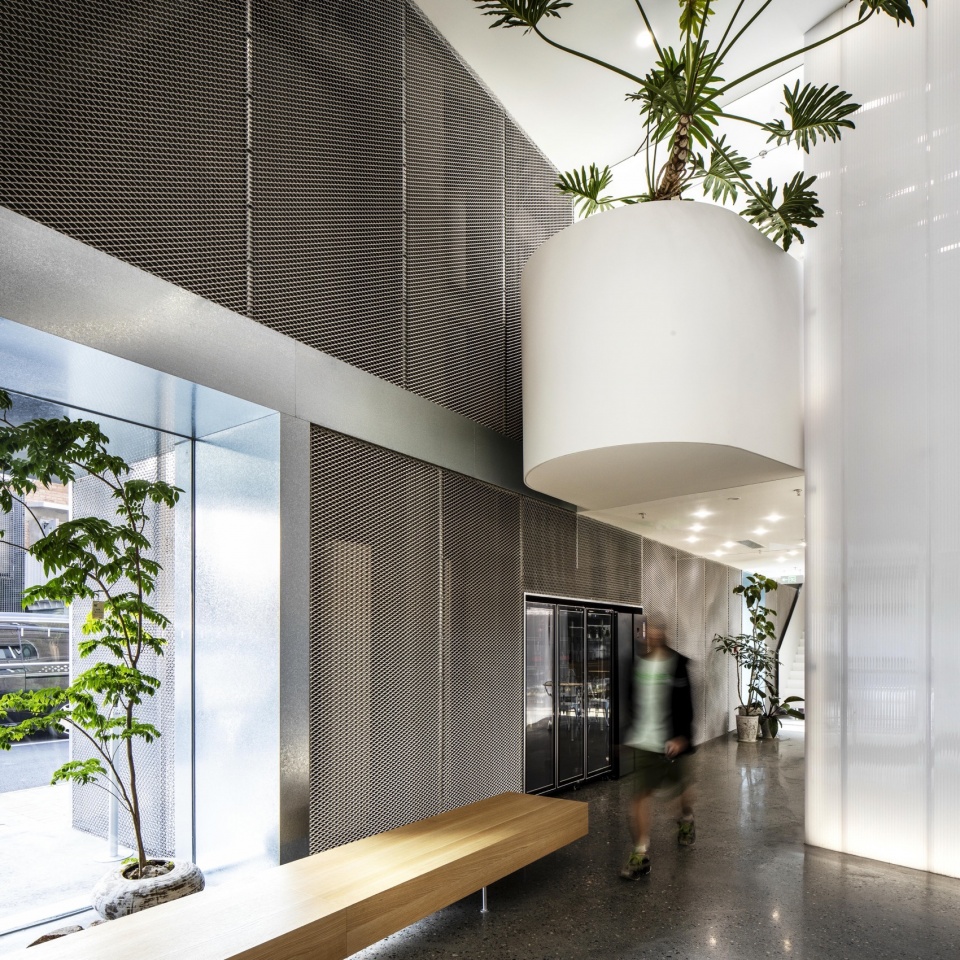
▼一层休闲空间,First Floor Lounge Space
▼模型,Model
▼一层平面图,First Floor Plan
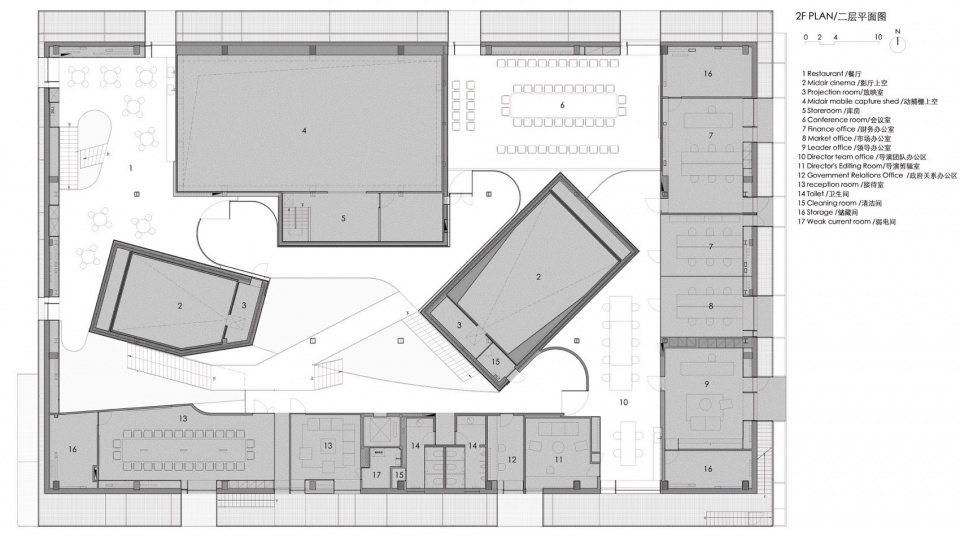
▼二层平面图,Second Floor Plan
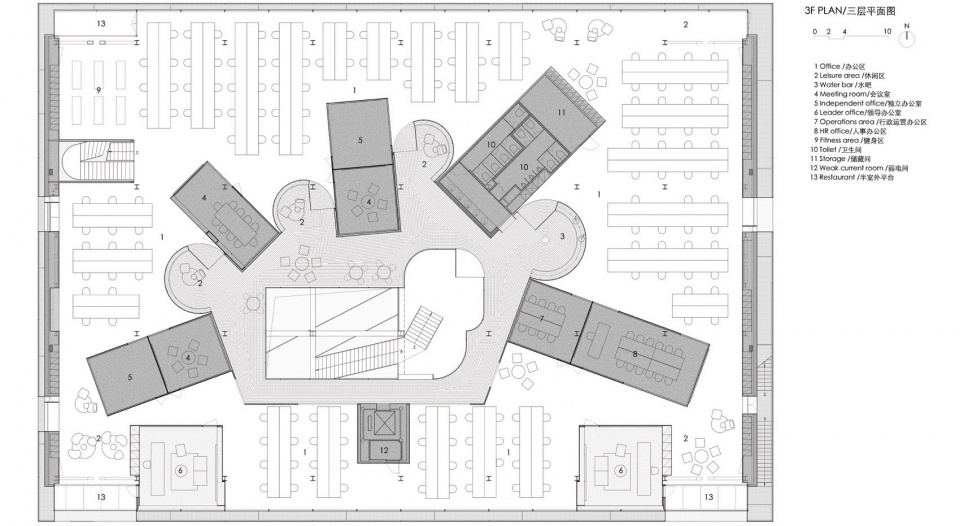
▼三层平面图,Third Floor Plan
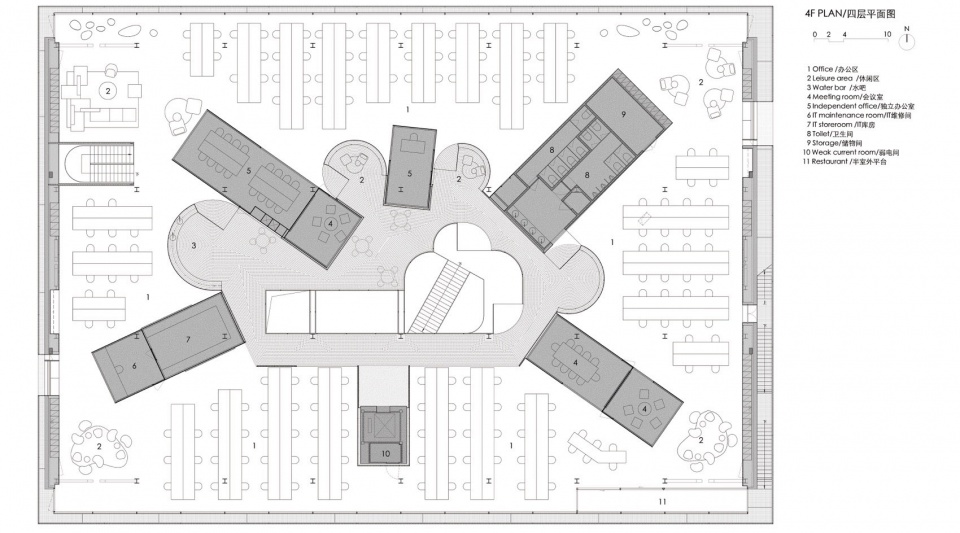
▼四层平面图,Fourth Floor Plan
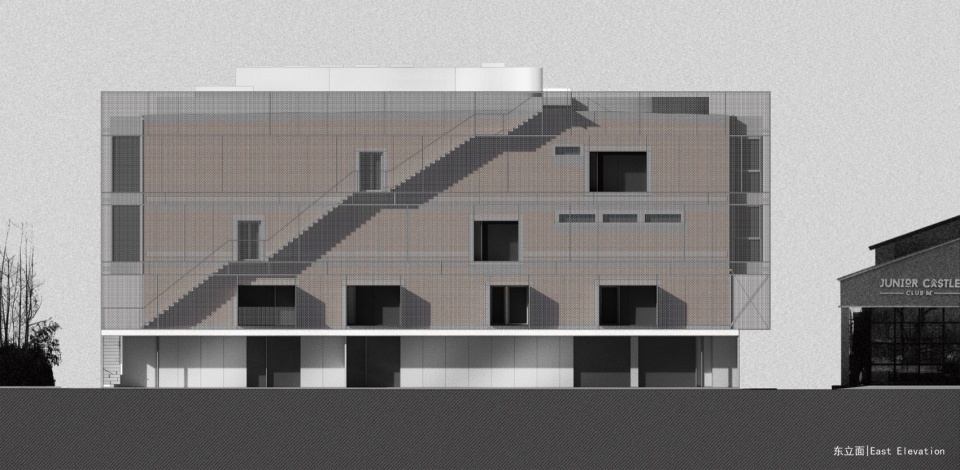
▼东立面,East Elevation
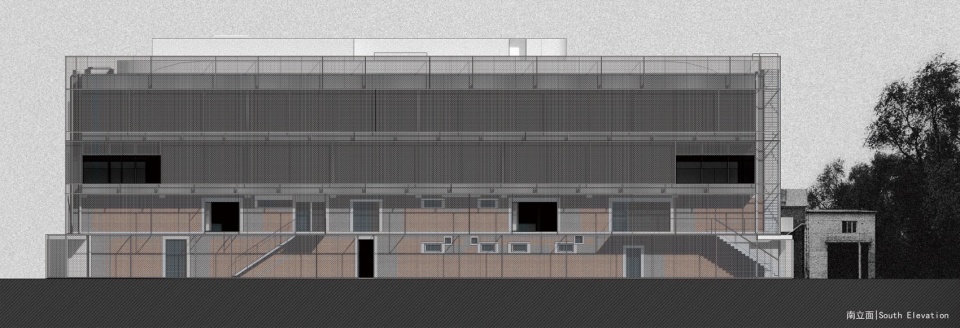
▼南立面,South Elevation
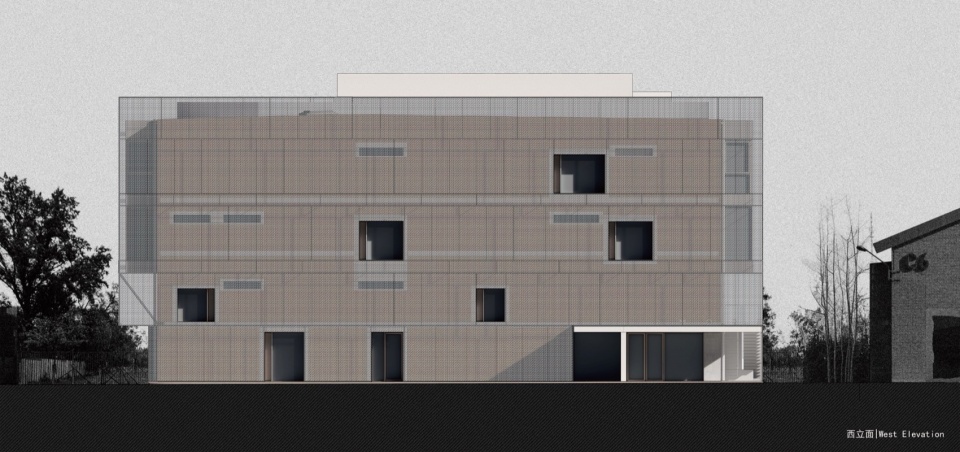
▼西立面,West Elevation
▼剖面图,Section
项目信息
Instagram:taoarchitecture
联系邮箱:s@i-taoa.com
项目设计:2024
完成年份:2025
设计团队:主创建筑师:陶磊
设计团队完整名单:陶磊 陈真 崔翔 陶冶 孙朗 张梦莹 张晓环 王淑晨 蒋林霖(实习)
项目地址:中国-北京-朝阳区-郎园station
用地面积:2102㎡
建筑面积:5565㎡
摄影版权:陶磊
撰文:陶磊
建筑、幕墙、室内精装施工图:TAOA团队(陈真 崔翔 陶冶 孙朗 张梦莹 张晓环 王淑晨)
合作方:
结构:张选林 李仡
灯光:TAOA团队
施工:思享营造
客户:墨境天合(MORE)
甲方负责人:陈向正
材料: 矿筛编织金属网,雪花镀锌板,PC阳光板(聚碳酸酯板),铝拉网,微孔金属板,钢板,铝板,PVC编织地板,多层胶合板。
Project Information
Project Name: MORE Office Renovation
Project Type: Renovation, Office, Architecture, Interior
Design Scope: Architecture, Interior, Landscape, Soft Furnishing
Design Firm: TAOA Company
Website: http://www.i-taoa.com/
Official WeChat Account: TAOA
Xiaohongshu (RED) Account: TAOA陶磊建筑
Instagram: taoarchitecture
Design Year: 2024
Completion Year: 2025
Design Team:
Principal Architect: Tao Lei
Full Design Team: Tao Lei, Chen Zhen, Cui Xiang, Tao Ye, Sun Lang, Zhang Mengying, Zhang Xiaohuan, Wang Shuchen, Jiang Linlin (Intern)
Project Location: Langyuan Station, Chaoyang District, Beijing, China
Site Area: 2,102㎡
Building Area: 5,565㎡
Photography Copyright: Tao Lei
Written Content: Tao Lei
Construction Documents for Architecture, Façade, and Interior Finishes: TAOA Team (Chen Zhen, Cui Xiang, Tao Ye, Sun Lang, Zhang Mengying, Zhang Xiaohuan, Wang Shuchen)
Collaborators:
Structure: Zhang Xuanlin, Li Yi
Lighting: TAOA Team
Construction: Sixiangyingzao
Client: MORE Client Contact: Chen Xiangzheng
Materials: Woven metal mesh, snow-pattern galvanized panels, PC sunlight panels (polycarbonate panels), aluminum mesh, micro-perforated metal panels, steel panels, aluminum panels, PVC woven flooring, multilayer plywood