六框之家,瑞士 / Lukas Lenherr Architektu
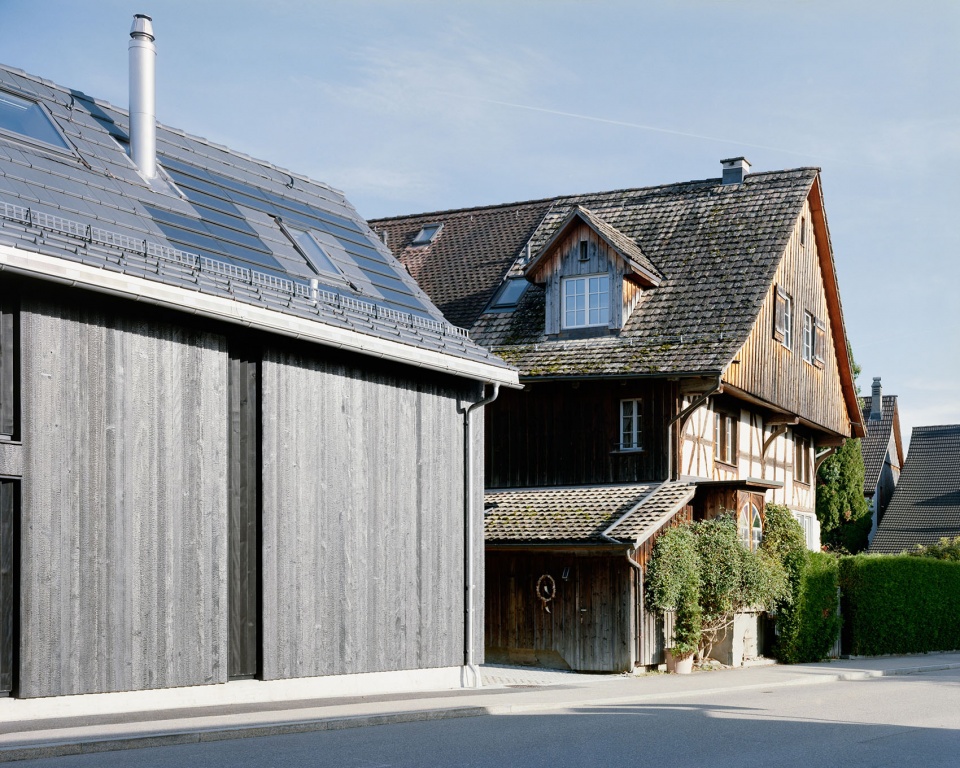
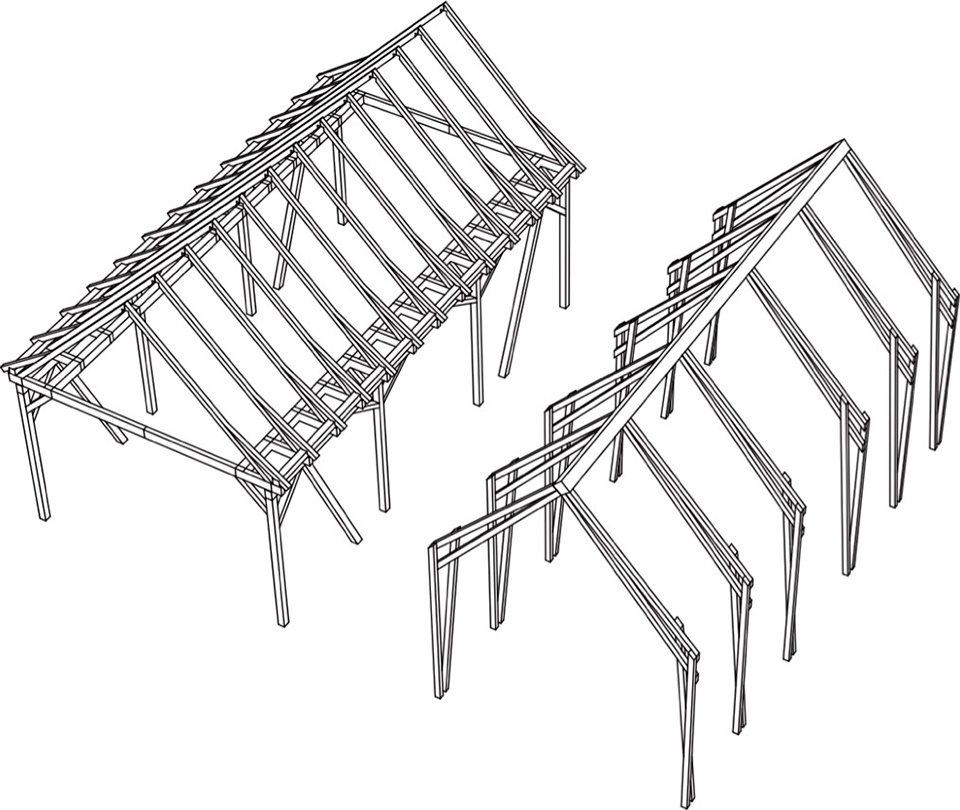
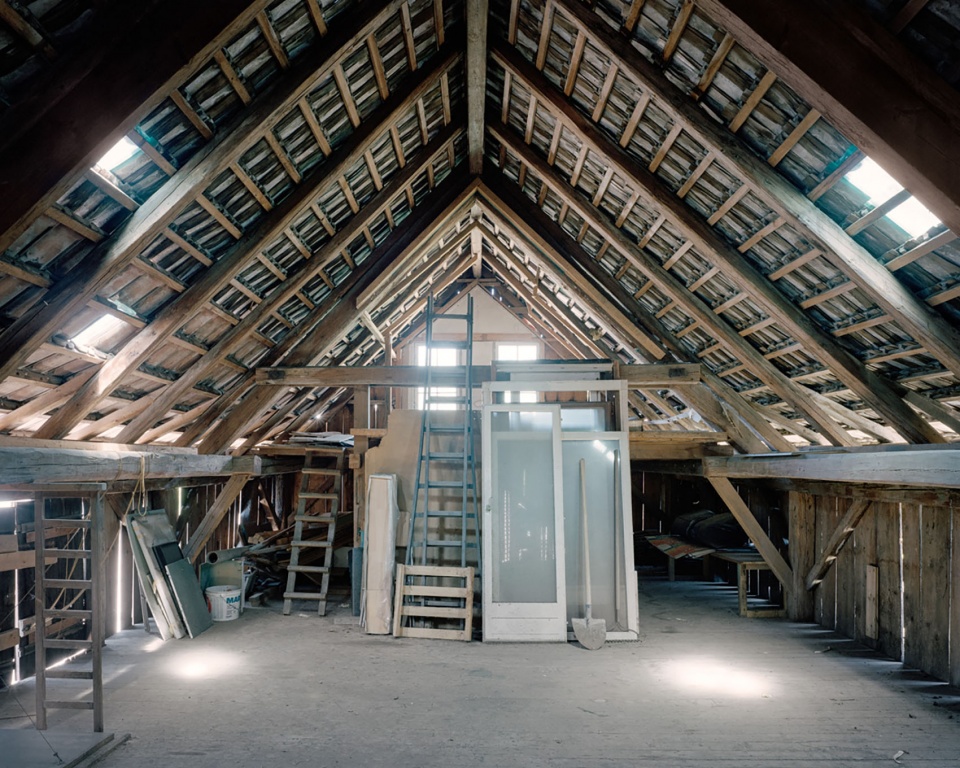
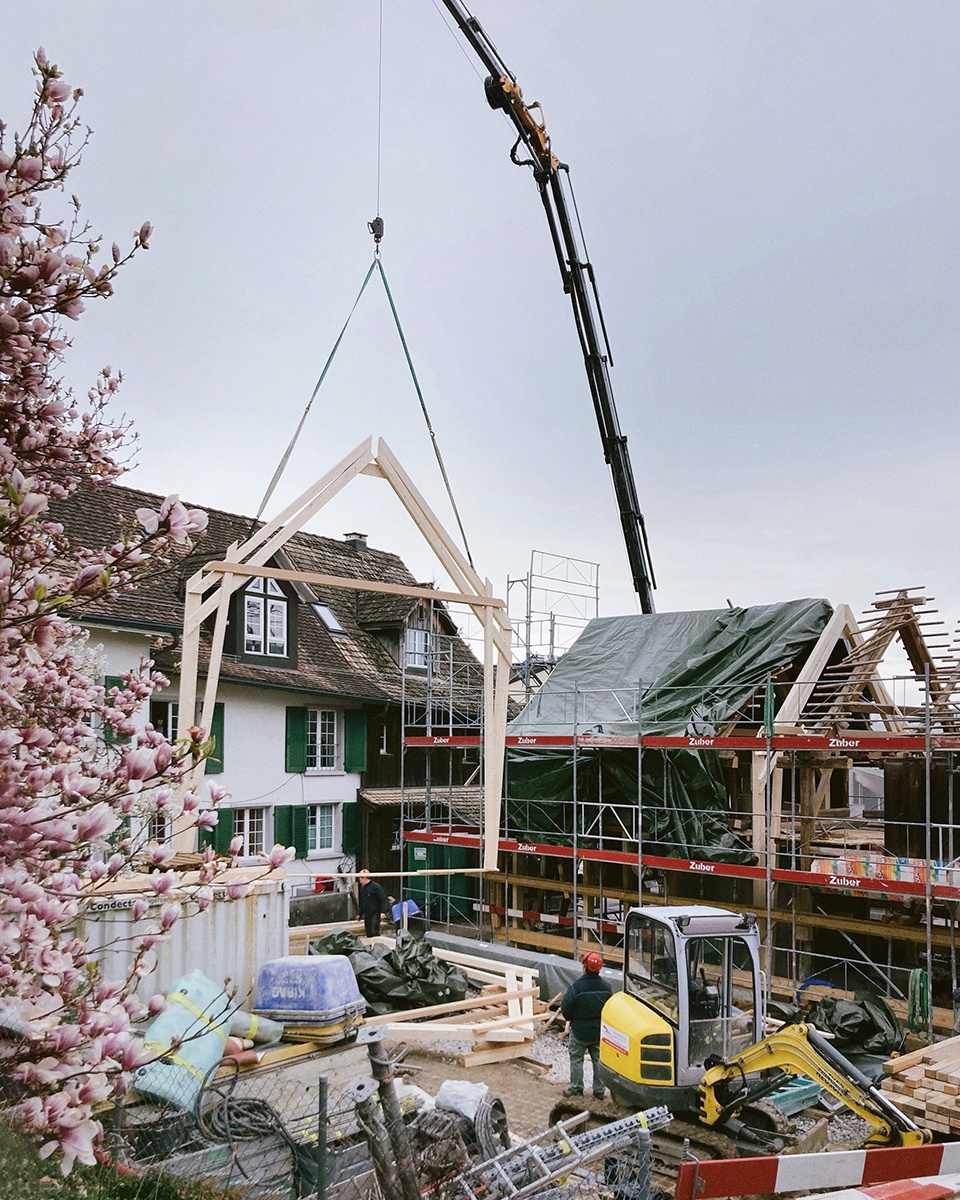
在一座约建于1850年的既有谷仓中,建筑师植入了一套全新的、极其纤细的木结构体系。六榀云杉木框架在施工阶段承担对原有木结构的支撑作用,并在建筑完成后继续保留可见,以界定不同空间。竖向与横向板材共同稳定木结构体系,同时生成房间及其连续的空间序列,并通过各种开口建立联系。贯穿三层空间的这些壁龛式空间如今彼此开放连通,从首层一直延伸至屋顶,形成一个完整而统一的大尺度居住空间。
▼改造前外观,Exterior before renovation
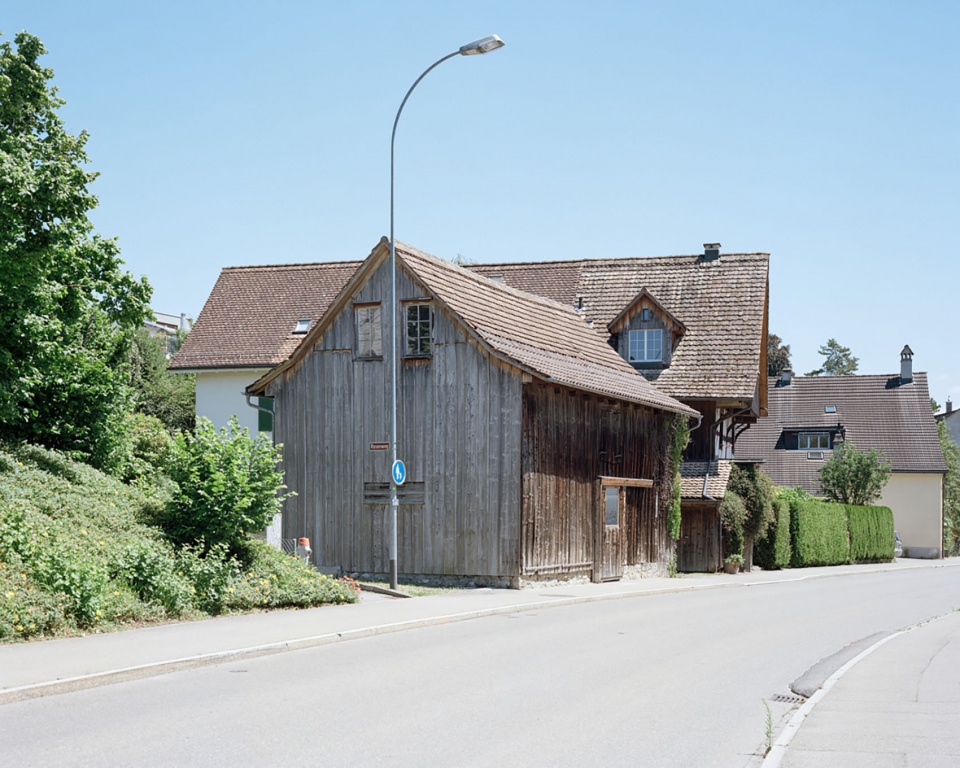
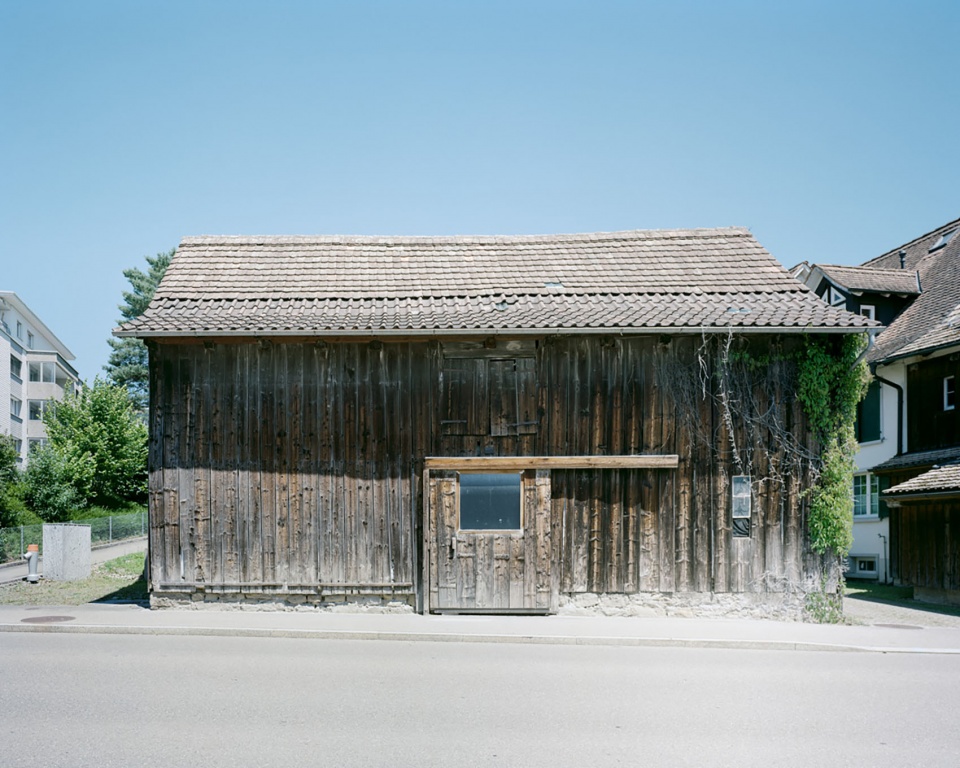
In an existing barn from around 1850, a new, extremely thin wooden structure is installed. The six spruce frames support the existing wooden structure during the construction phase and remain visible later to define the spaces. Vertical and horizontal panels stabilize the wooden structure and generate the rooms and their sequences with their various openings. Through the three floors, these niches are now openly connected and generate a single large living space from the ground floor to the roof.
▼街角视角,Corner view
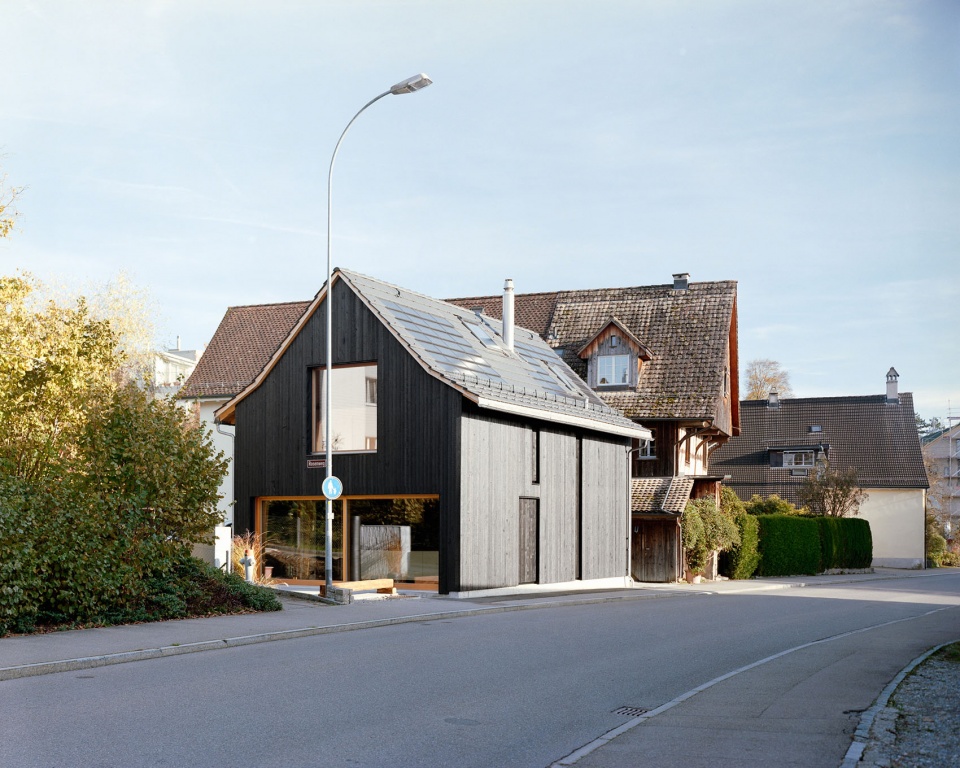
▼建筑与邻里环境,Building within neighborhood
由此形成的空间如今可以像美国“枪式住宅”那样被体验。较为封闭的房间通过视觉联系、内部窗洞或可开启挡板与公共生活空间进行交流。不同位置设置的双体船网进一步创造出丰富的空间体验。在这种极为开放的居住方式中,人们依然能够随时找到可供独处和停留的角落。
▼概念模型,Concept model

▼建筑模型,Architectural model
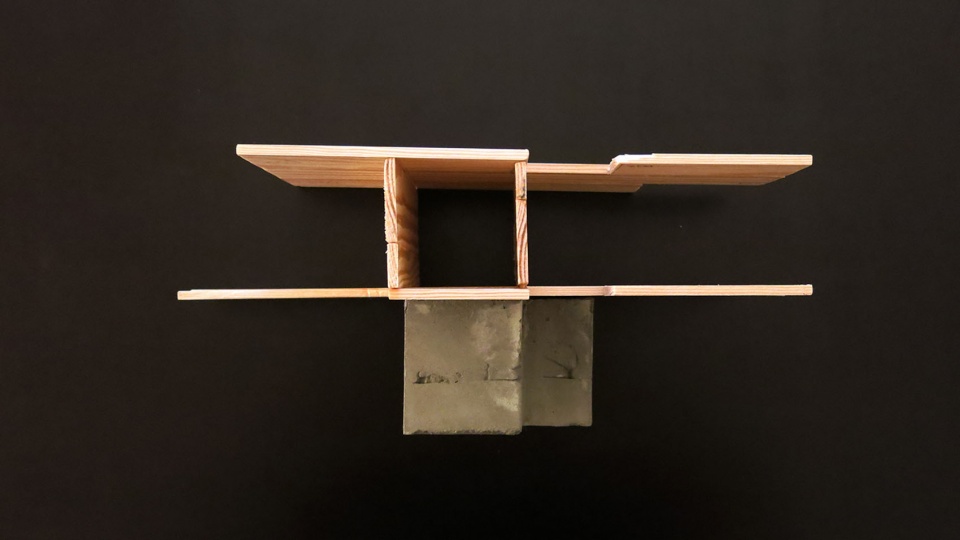
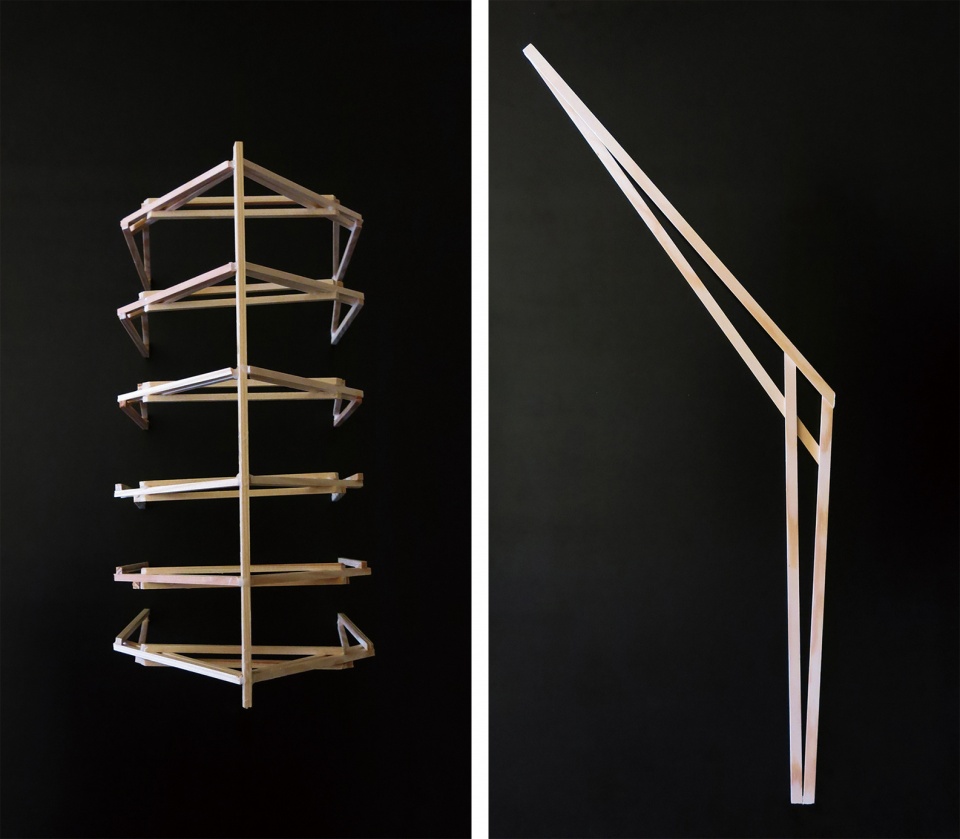
The resulting rooms can now be experienced like in an American “Shotgun House”. The more closed spaces have visual connections, internal windows or flaps that communicate with the living space. Additional experiences are generated through various catamaran nets. Retreats can always be undertaken in this very open way of living.
▼改造后外观,Renovated exterior
▼建筑立面,Building facade
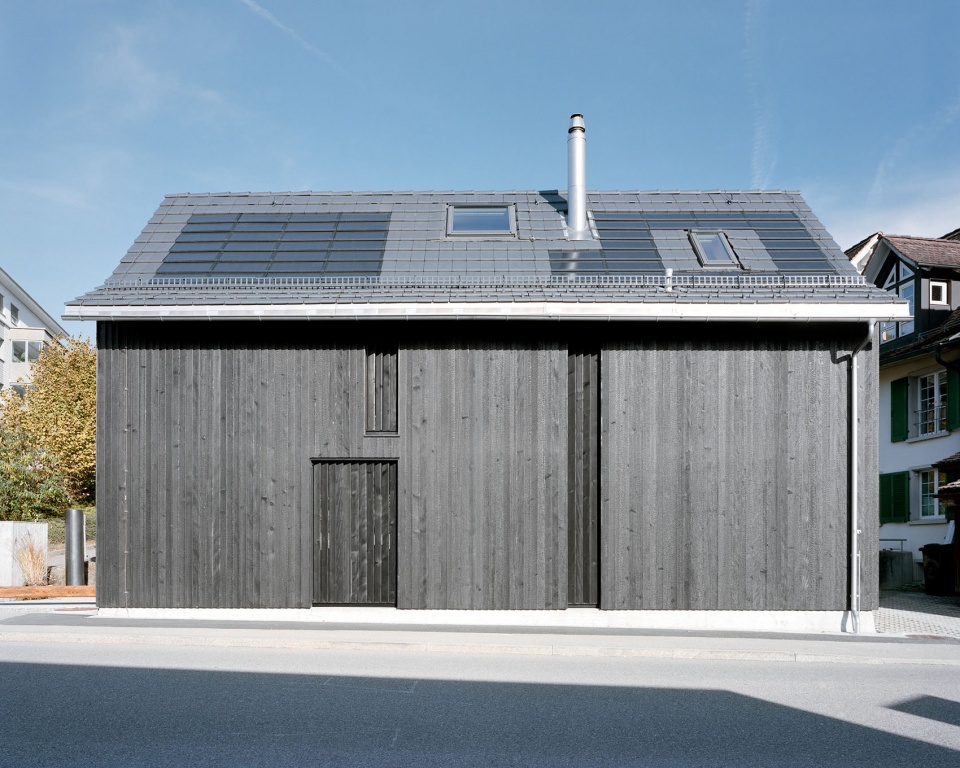
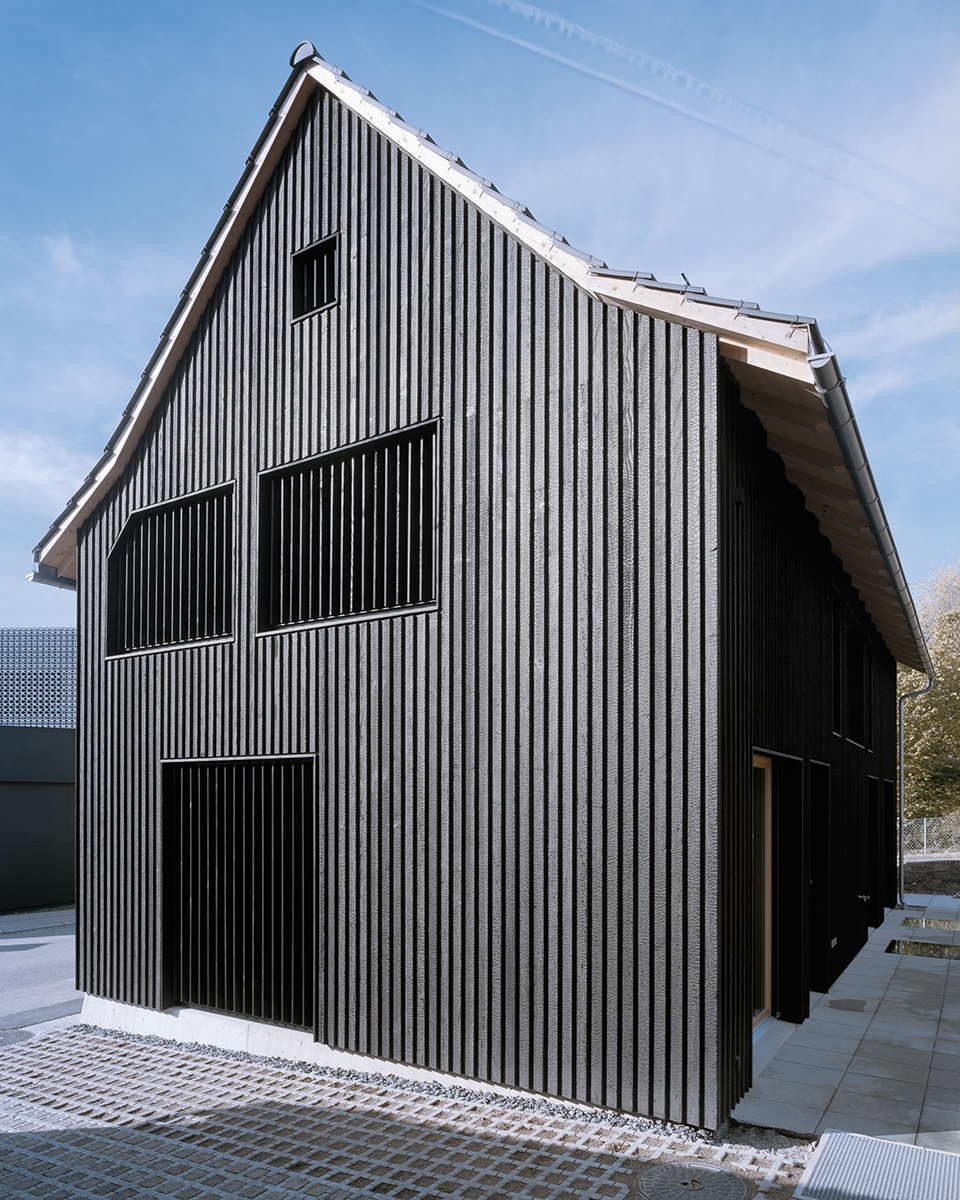
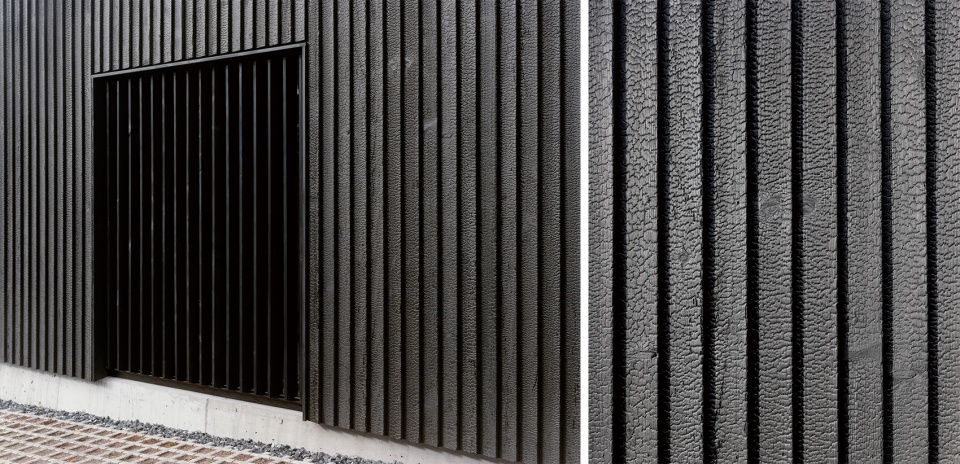
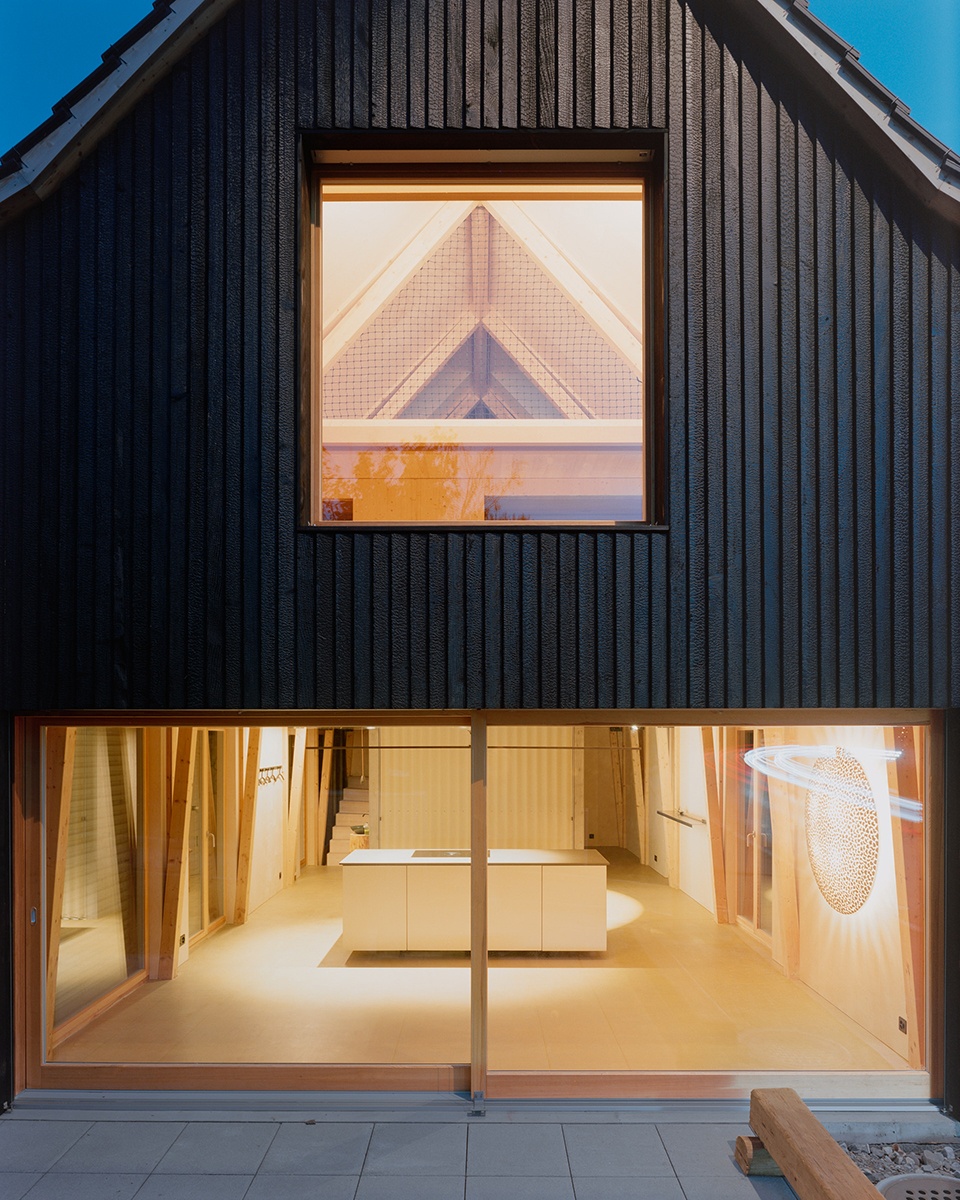
就其基本体量和屋顶形态而言,这座谷仓仍然保持着昔日的外观。新的木挂板外立面采用银冷杉木制作,并通过日本传统的烧杉工艺(Yakisugi)进行炭化处理。这些木材将能够持续使用数代之久。对于后院建筑群这一受保护的整体环境而言,其原有的识别特征得以保留。人们只有在看到新增的窗洞开口时,才会意识到这座谷仓如今已经转变为住宅建筑。在立面的两个方向上,窗户被设置在可手动调节的黑色木百叶之后,通过百叶控制进入室内的自然光线。
In terms of its basic volume and the shape of the roof, the barn looks like it used to. A new clapboard facade made of silver fir wood was charred using the Japanese Yakisugi method. The woods will last for several generations. The recognition value remains for the protected ensemble with the houses in the back yard. The realization that the barn is now a residential building is only apparent when window openings are visible. On two sides of the façade, the windows are covered behind manually adjustable black wooden slats that regulates the light coming into the house.
▼立面近景与细部,Facade close view and detail
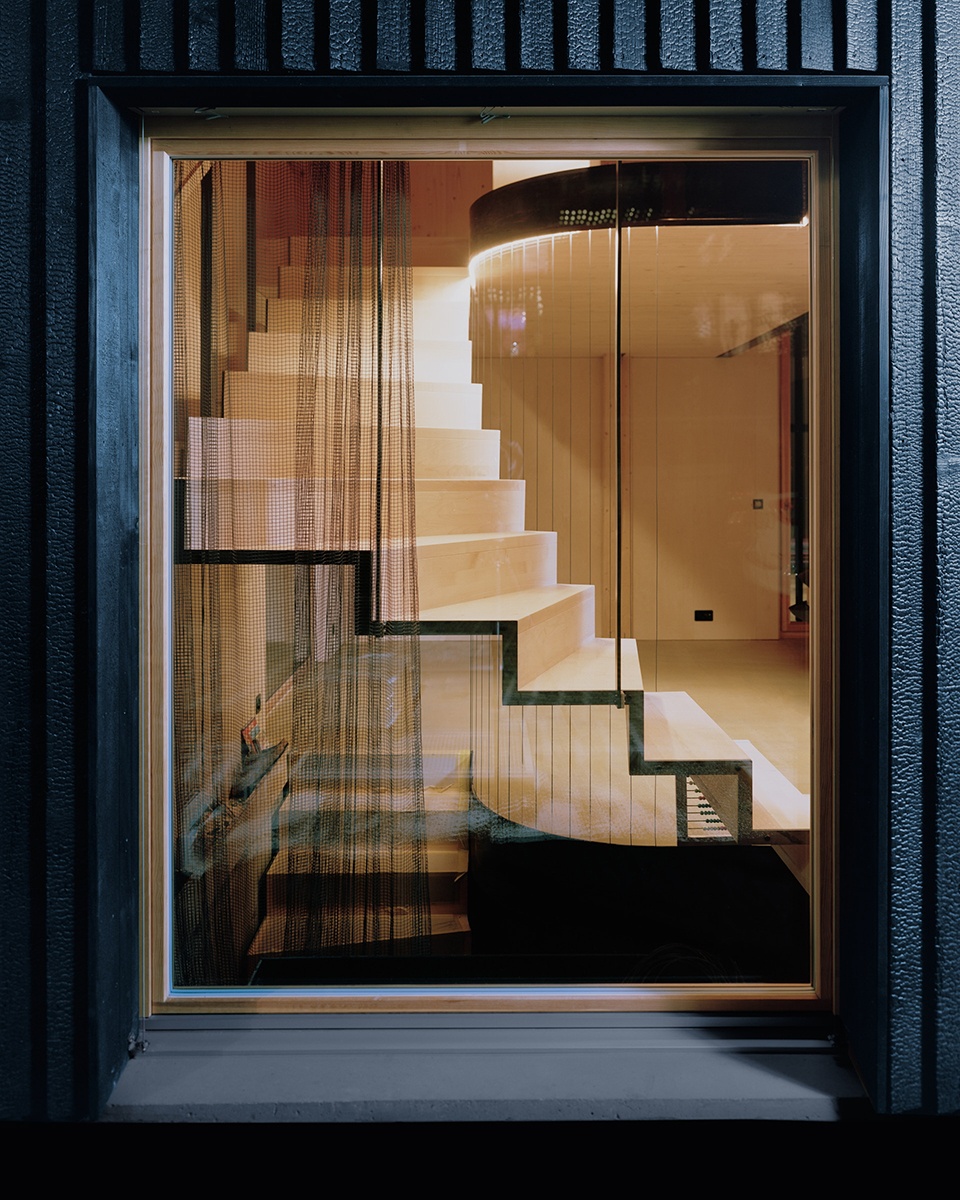
地下层设置了一间工作室,通过天窗可以看到上方的木结构住宅。地下层与首层之间通过同一部内部开放式楼梯相互连接。
▼改造前室内,Interior before renovation
In the basement there is a workshop room where the wooden house above can be seen through skylights. The connection from the basement up to the ground floor runs via the same inner open staircase.
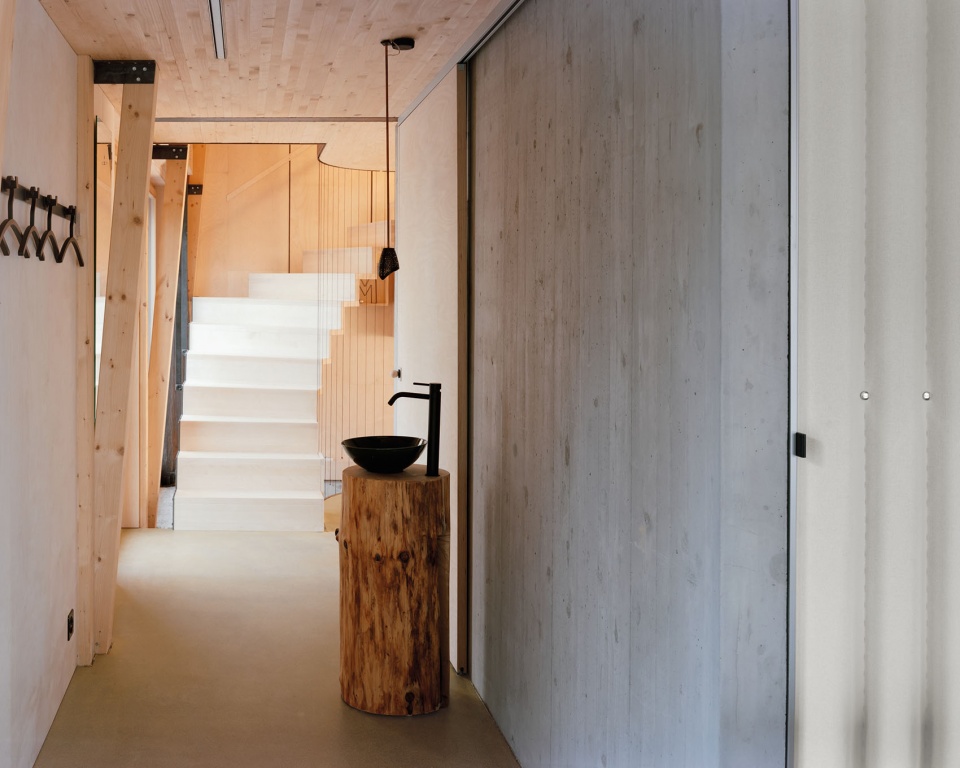
▼入口空间,Entrance area
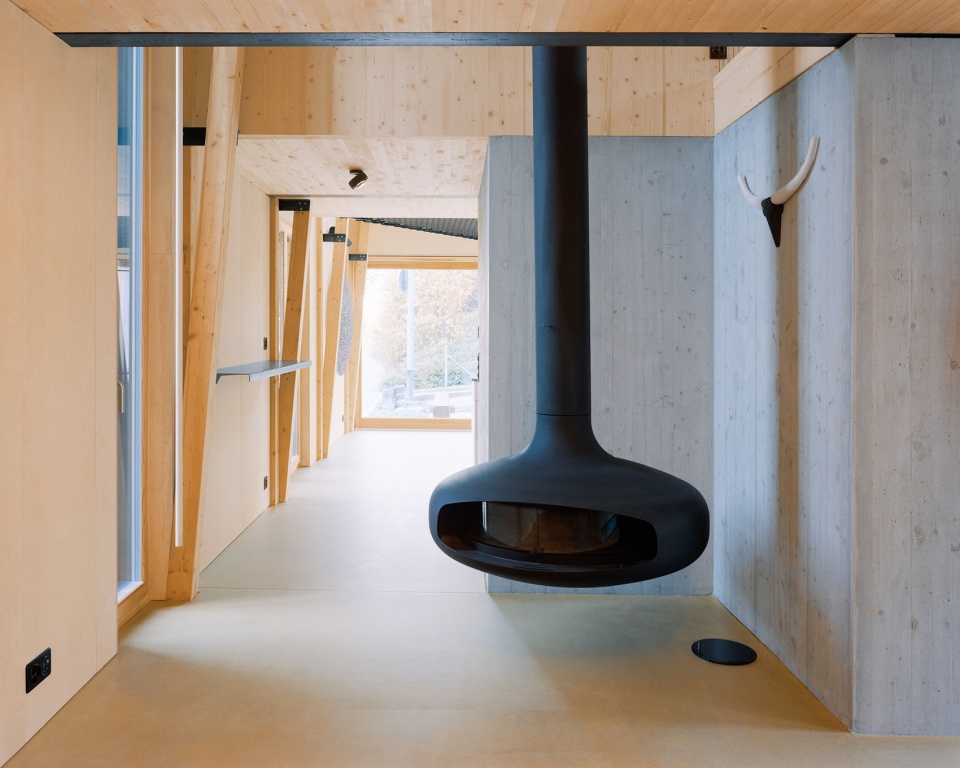
▼壁炉起居空间,Fireplace living area
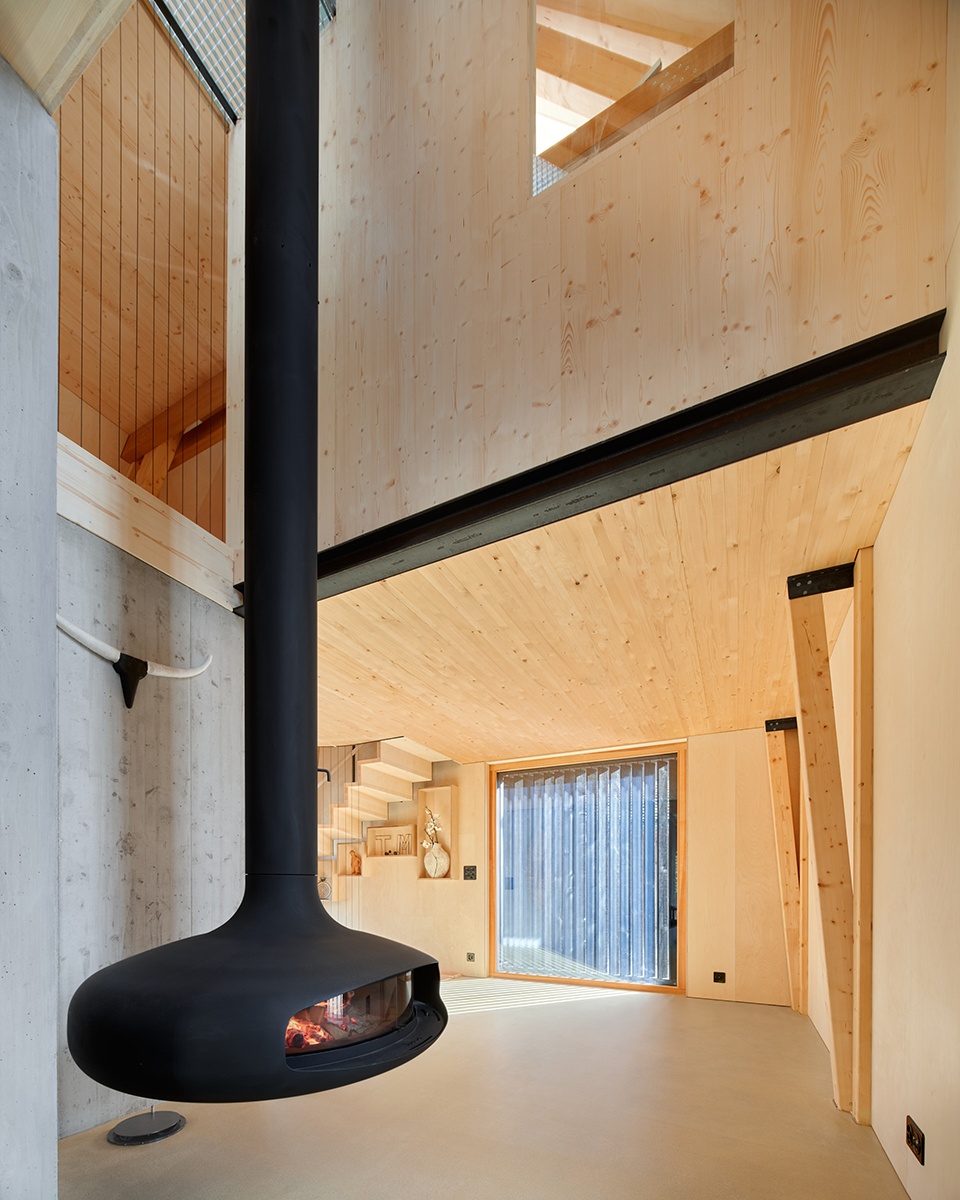
▼壁炉通高空间,Fireplace double-height area
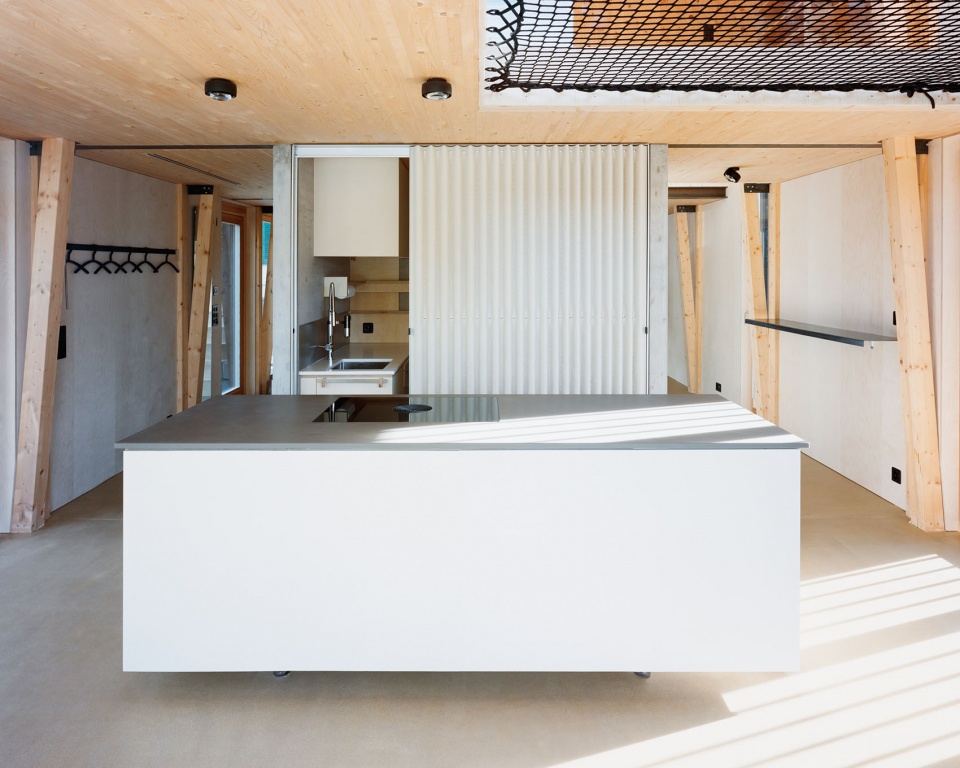
▼厨房空间,Kitchen area
▼厨房与走廊,Kitchen and corridor
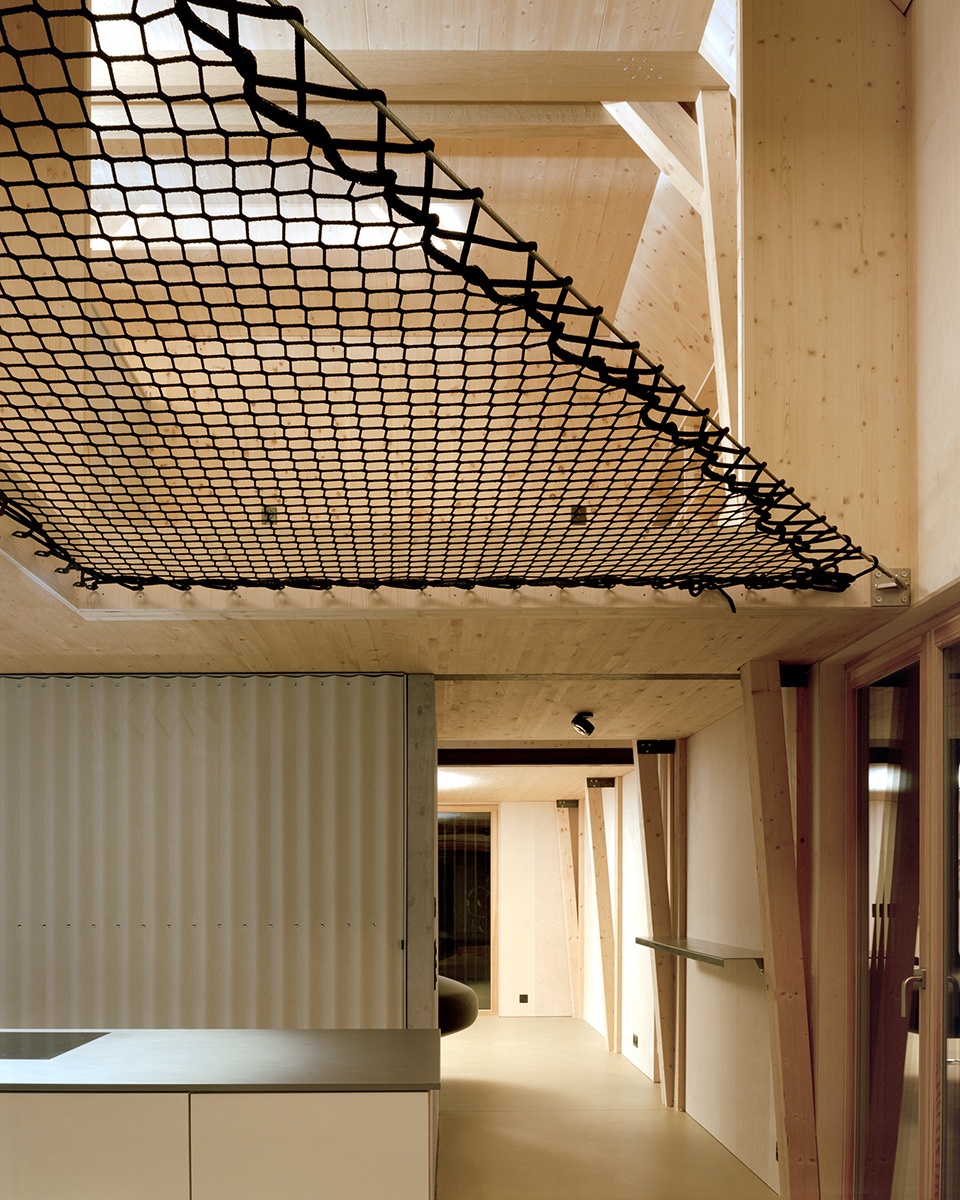
▼二层室内空间,Second-floor interior
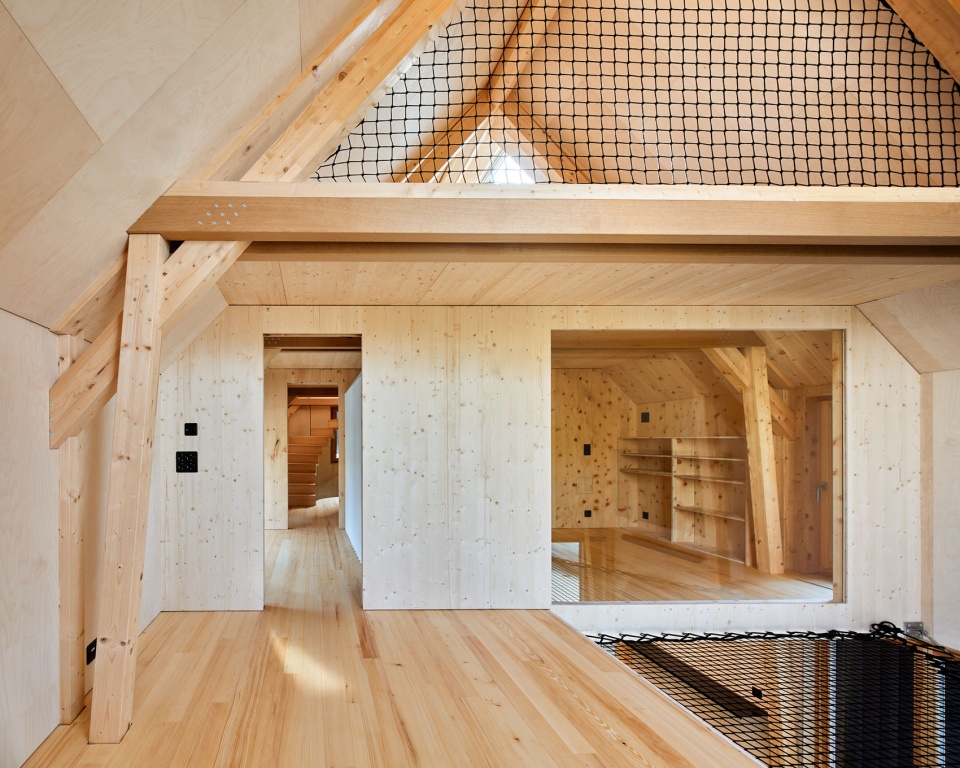
▼二层室内一角,A corner of second-floor interior
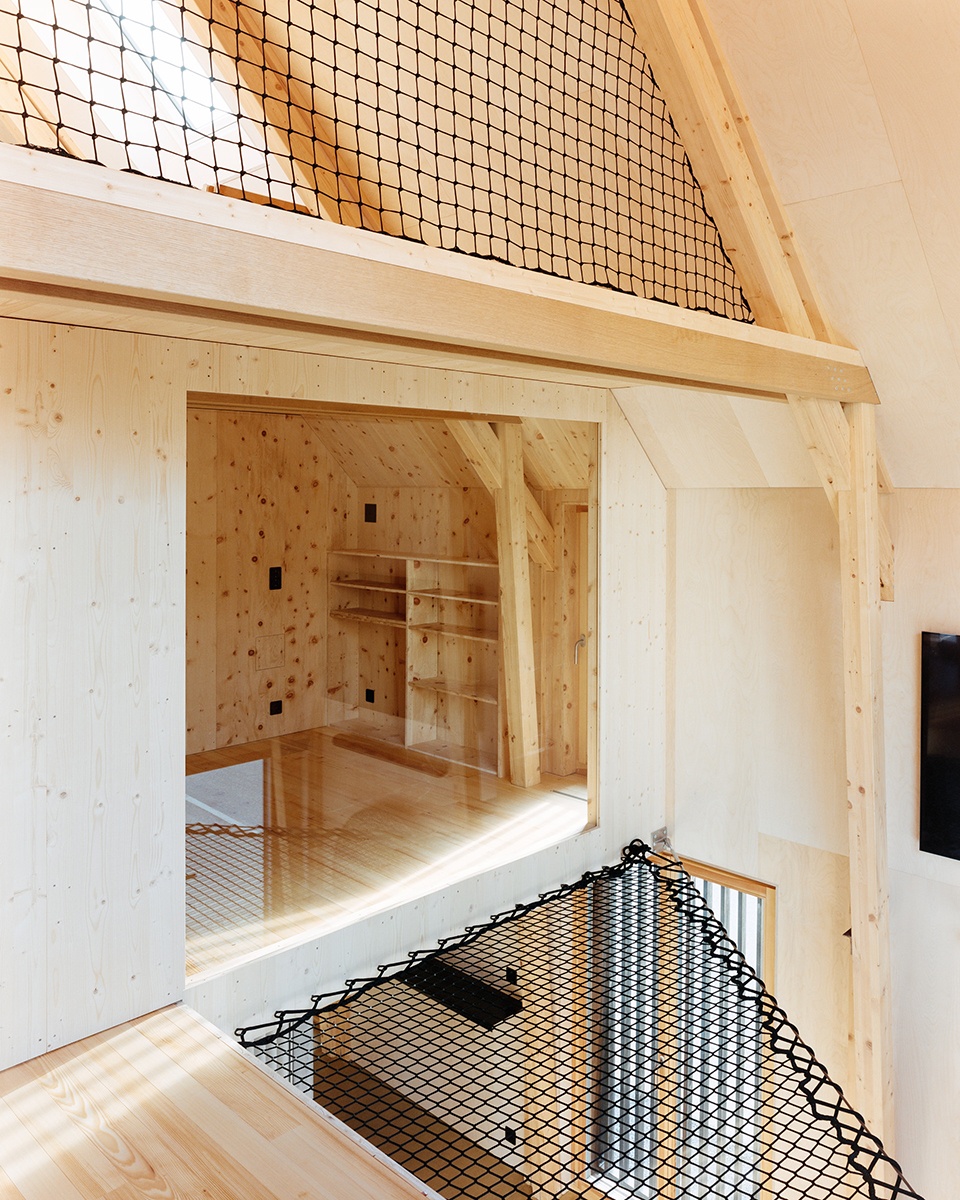
▼房间入口,Room entrance
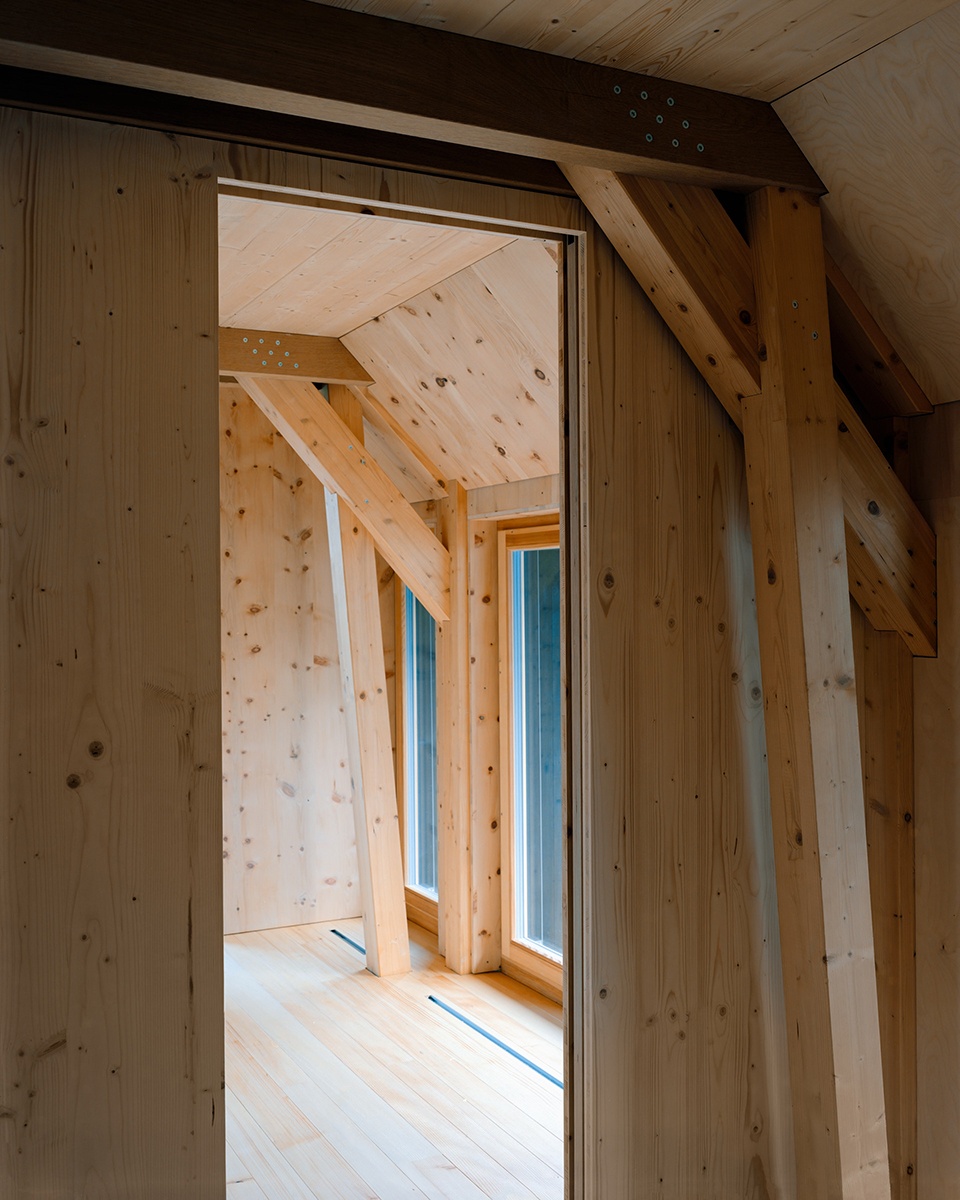
▼夹层空间,Mezzanine space
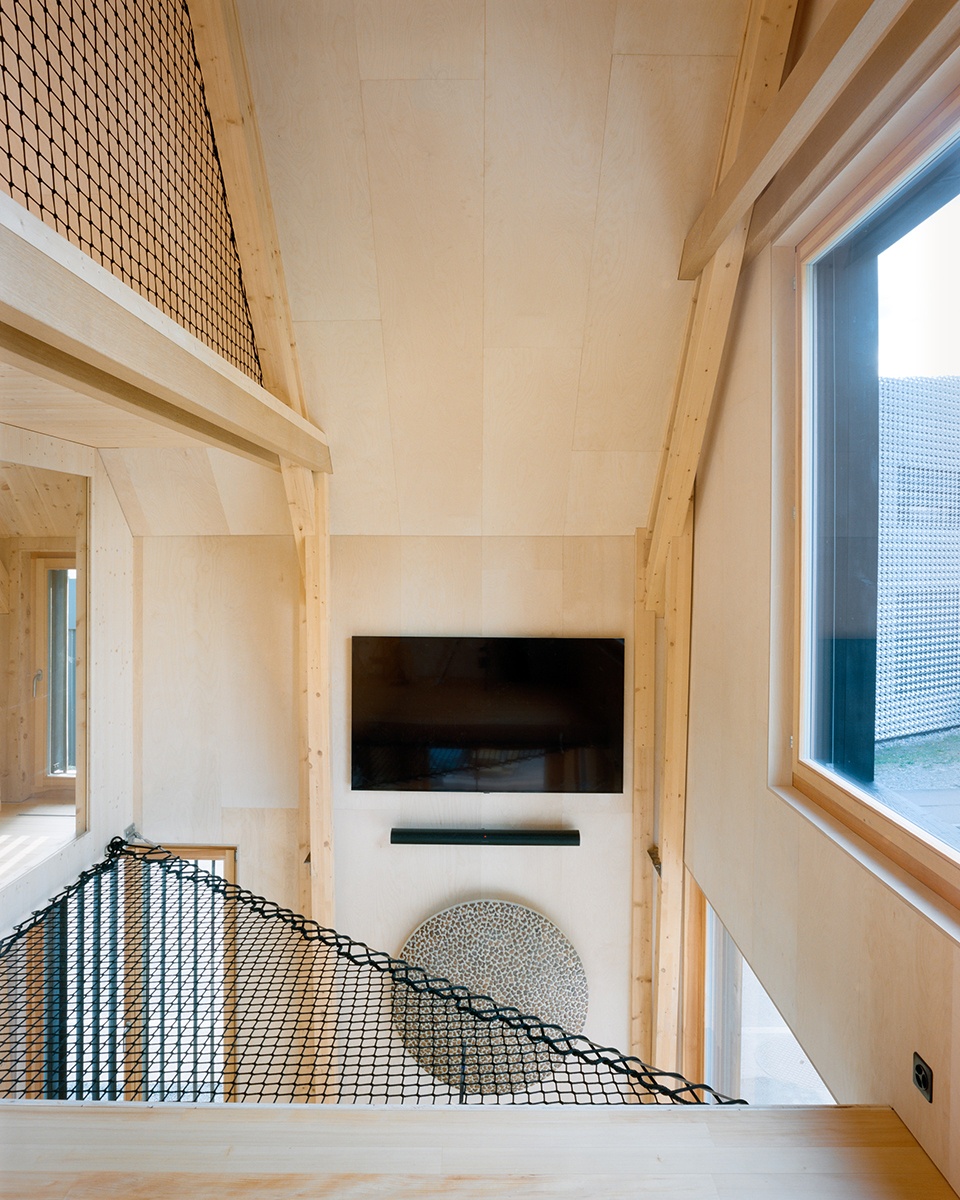
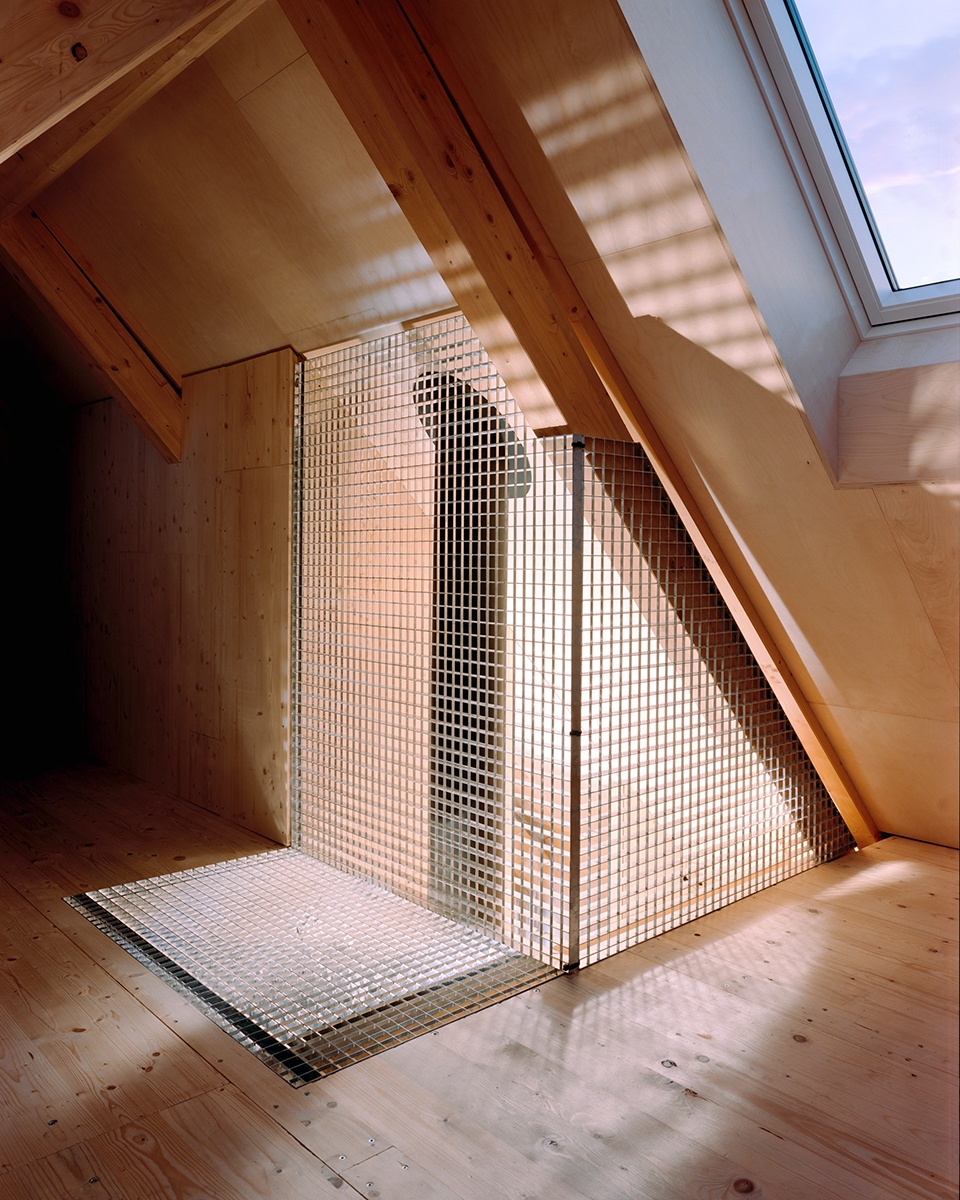
▼夹层与开窗,Mezzanine and windows
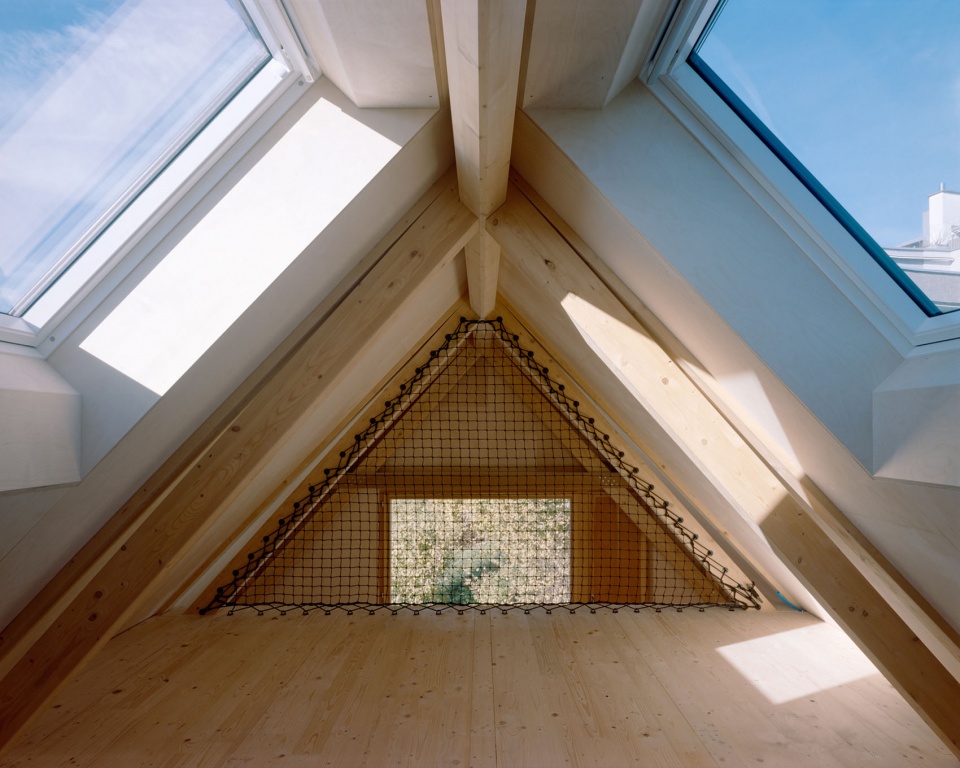
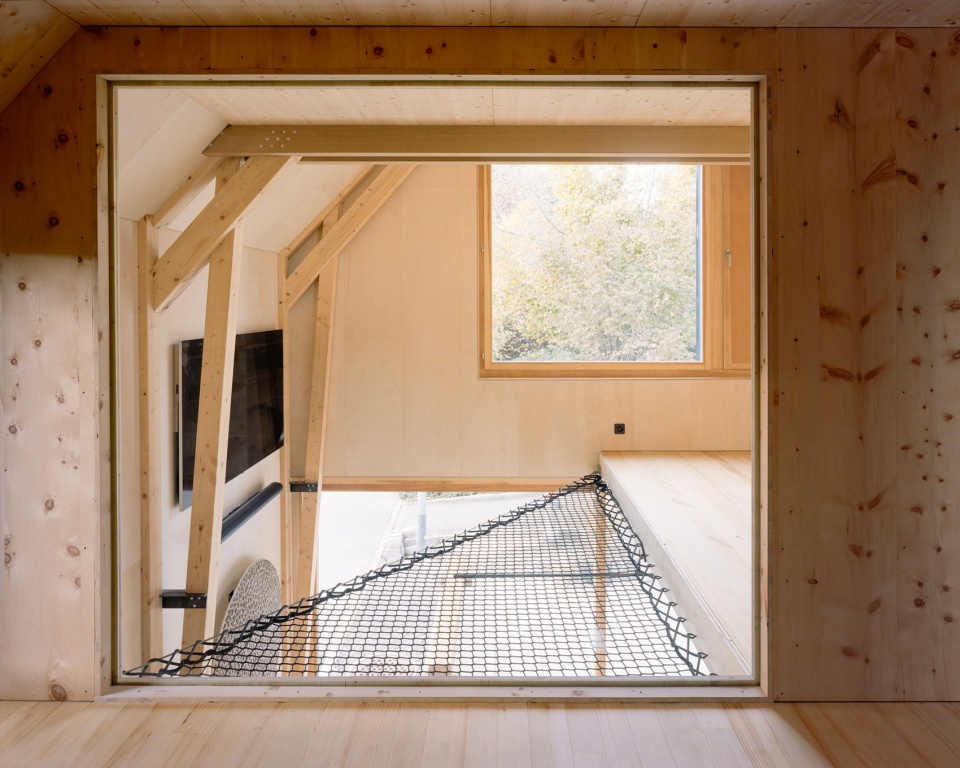
▼开放式楼梯,Open staircase
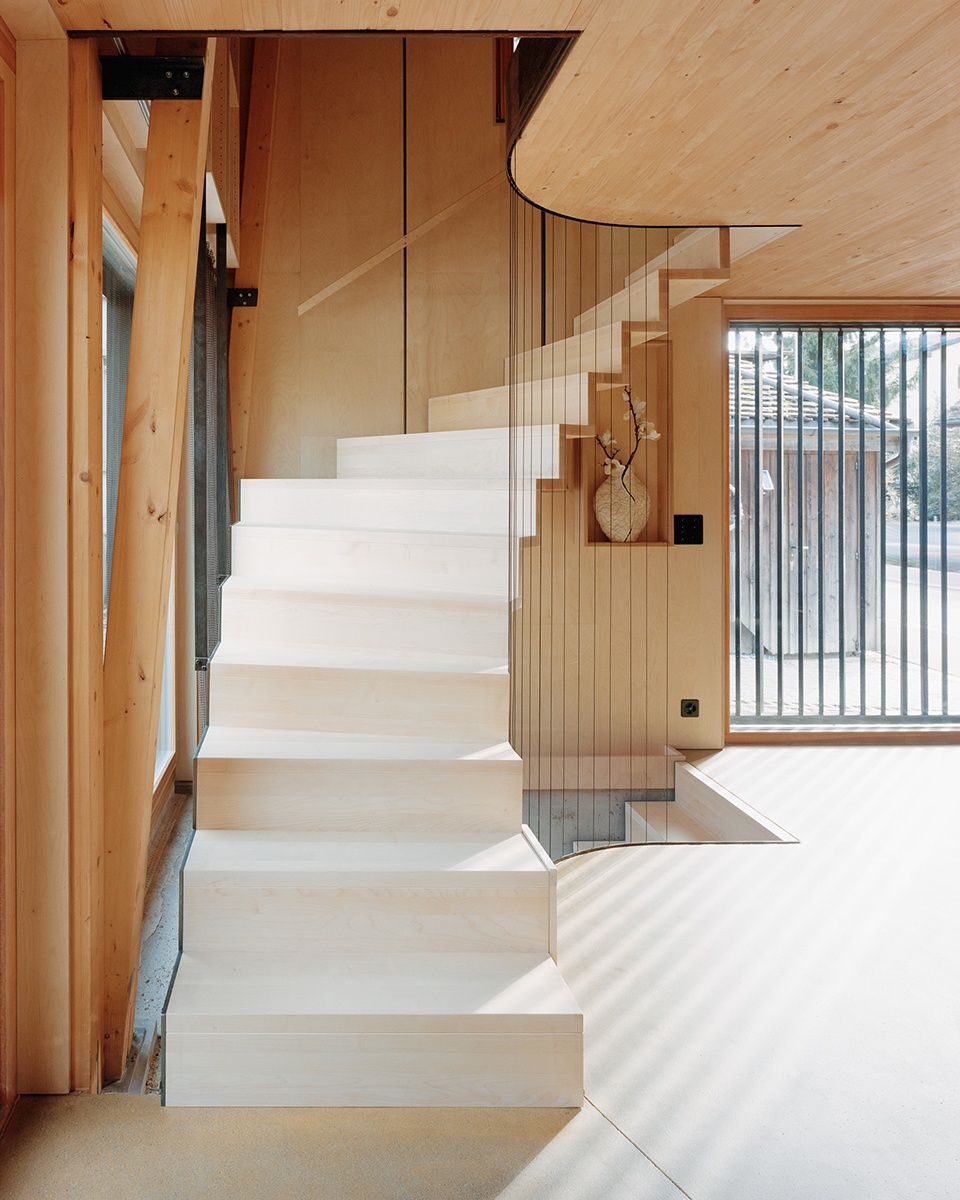
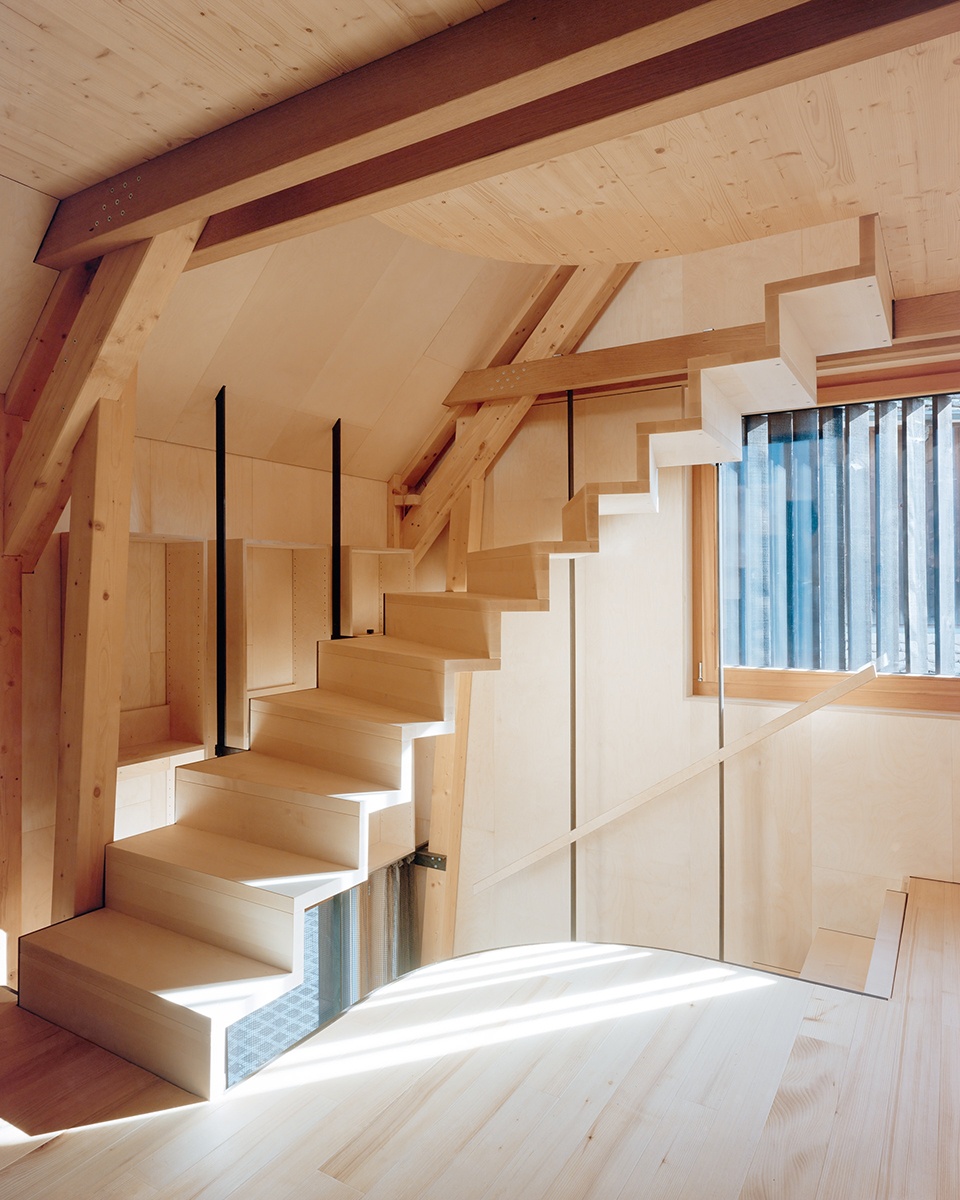
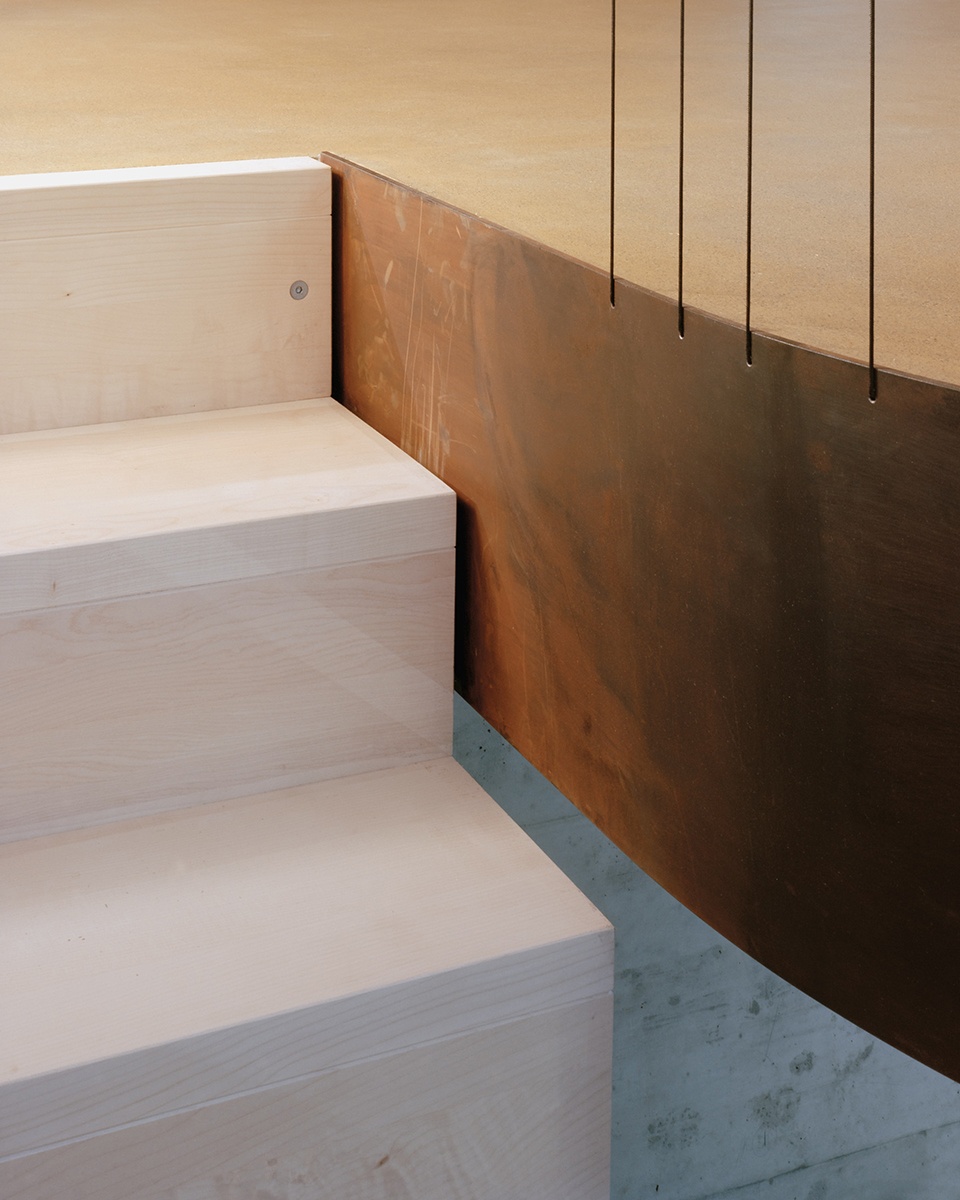
▼楼梯细部,Staircase detail
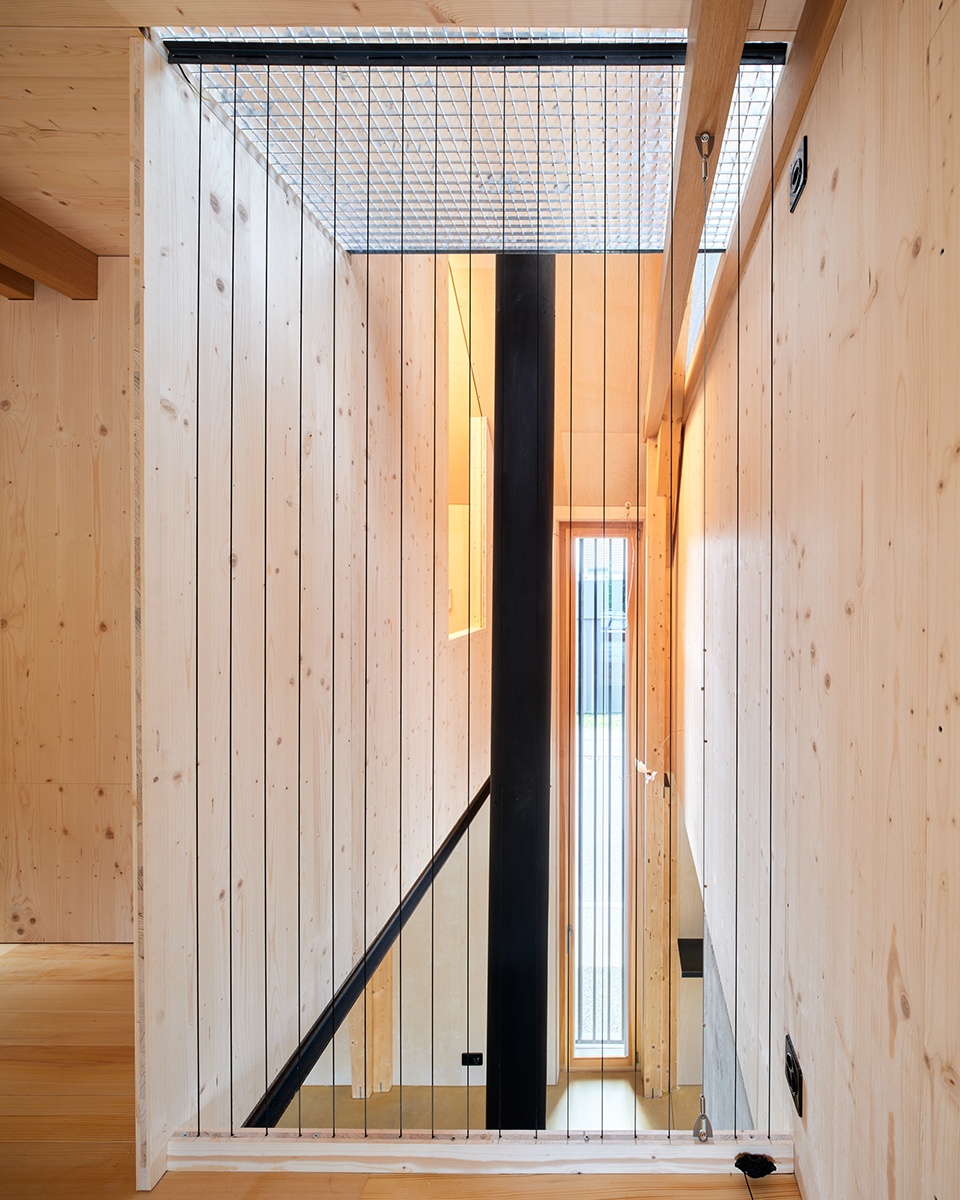
▼内部采光井,Internal lightwell
通过这一建设项目,历史背景得以被记录和延续,同时全面落实了各项生态环境层面的考量。
With the construction project, historical circumstances are recorded and implemented with all ecological aspects.
▼建筑立面夜景,Building facade night view
▼夜间窗景,Window view at night
▼施工阶段,During construction
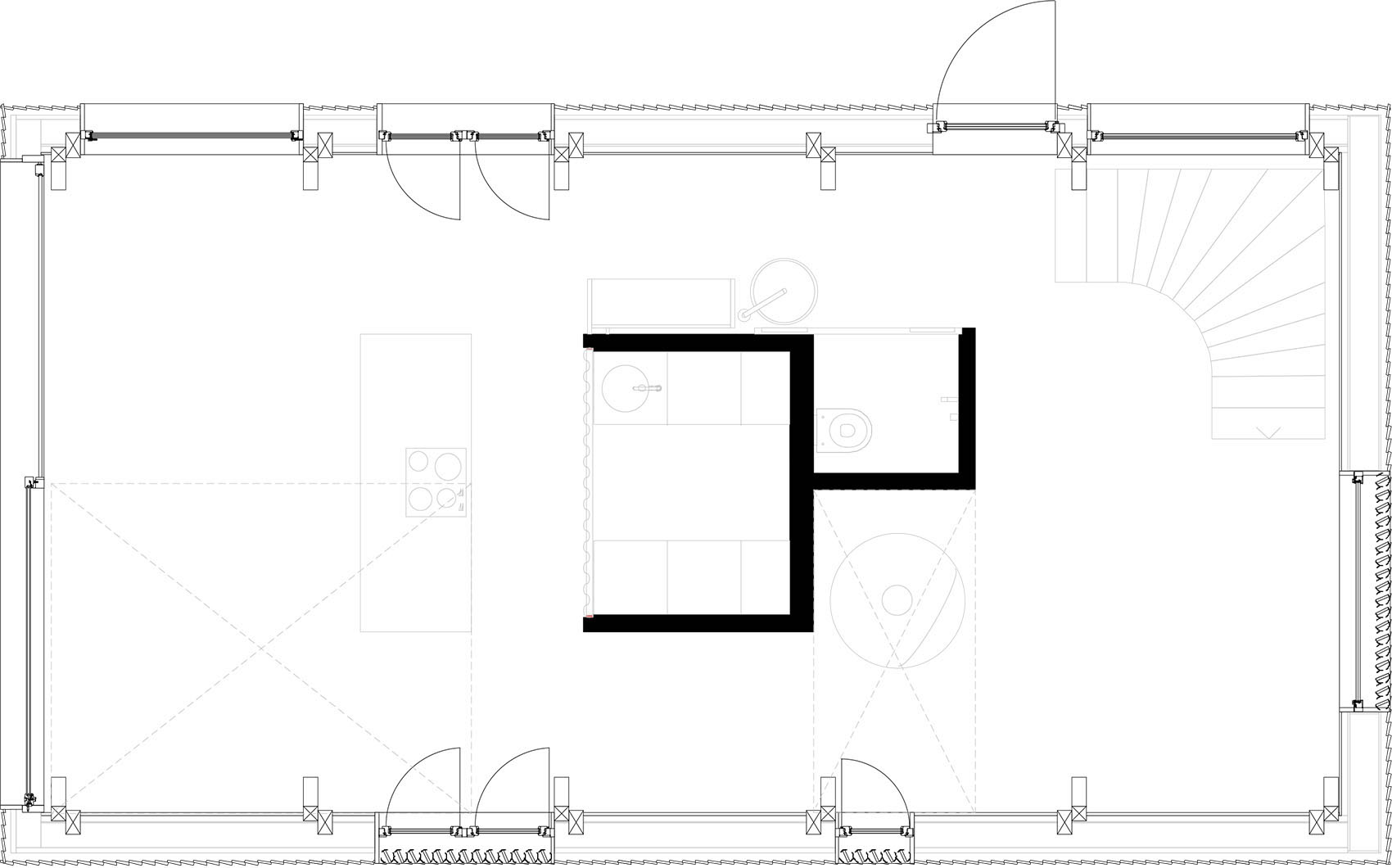
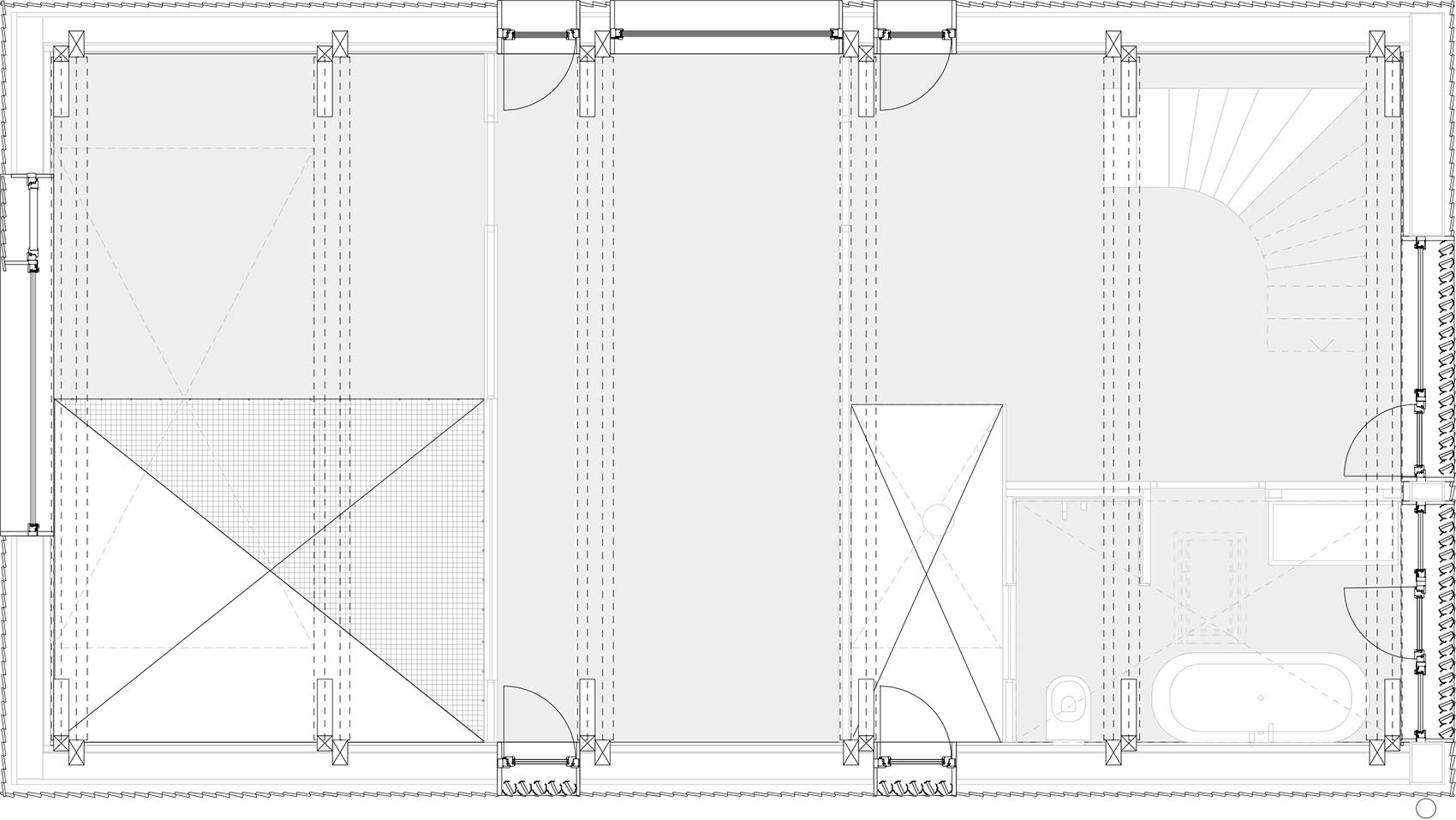
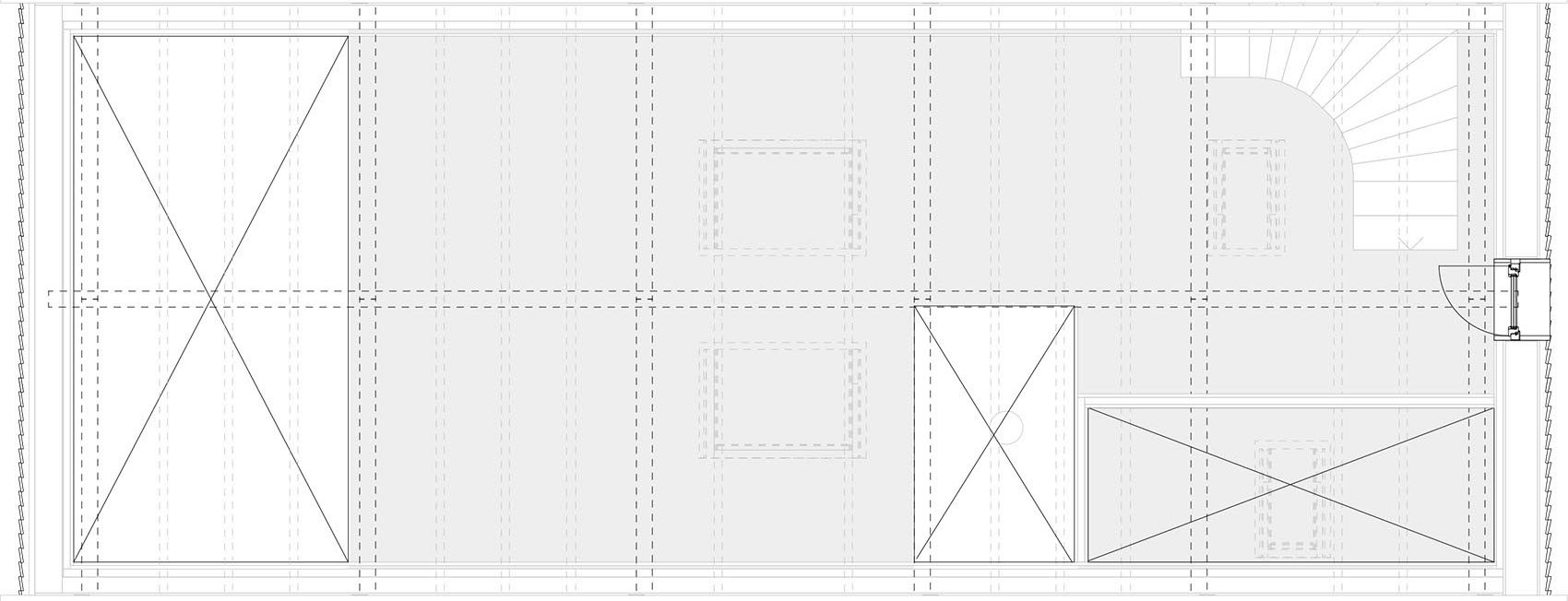
▼平面图,Floor plans
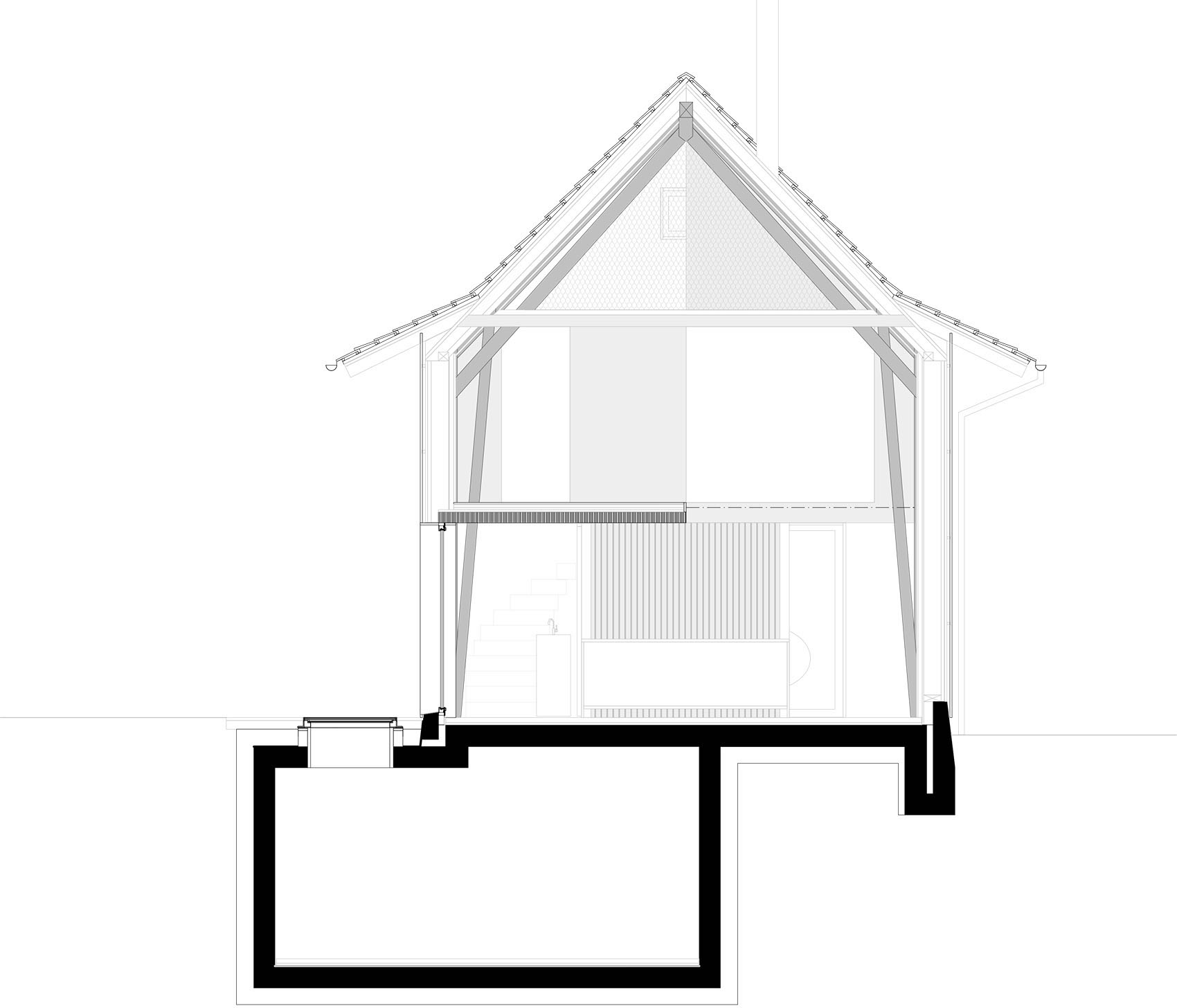
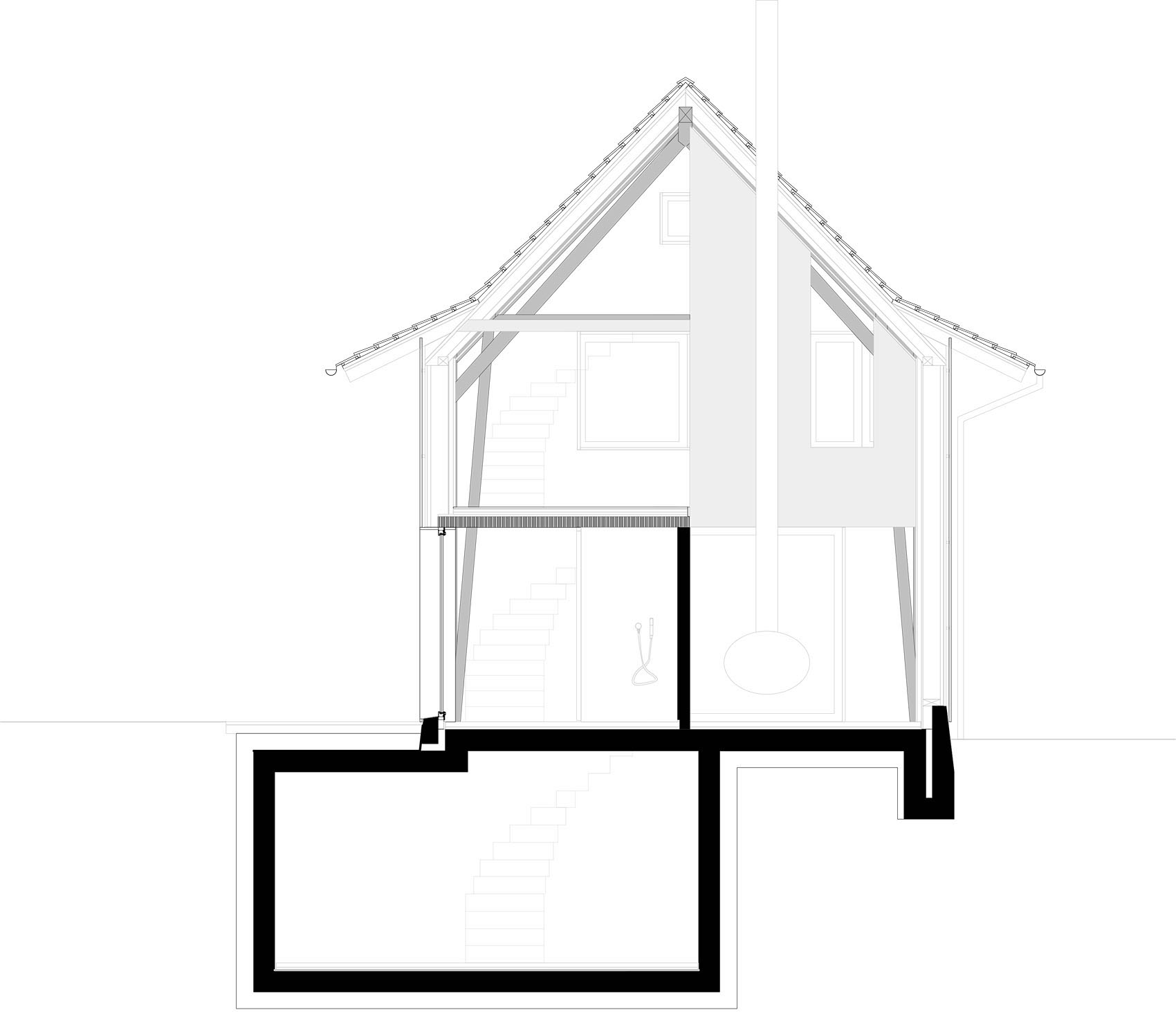
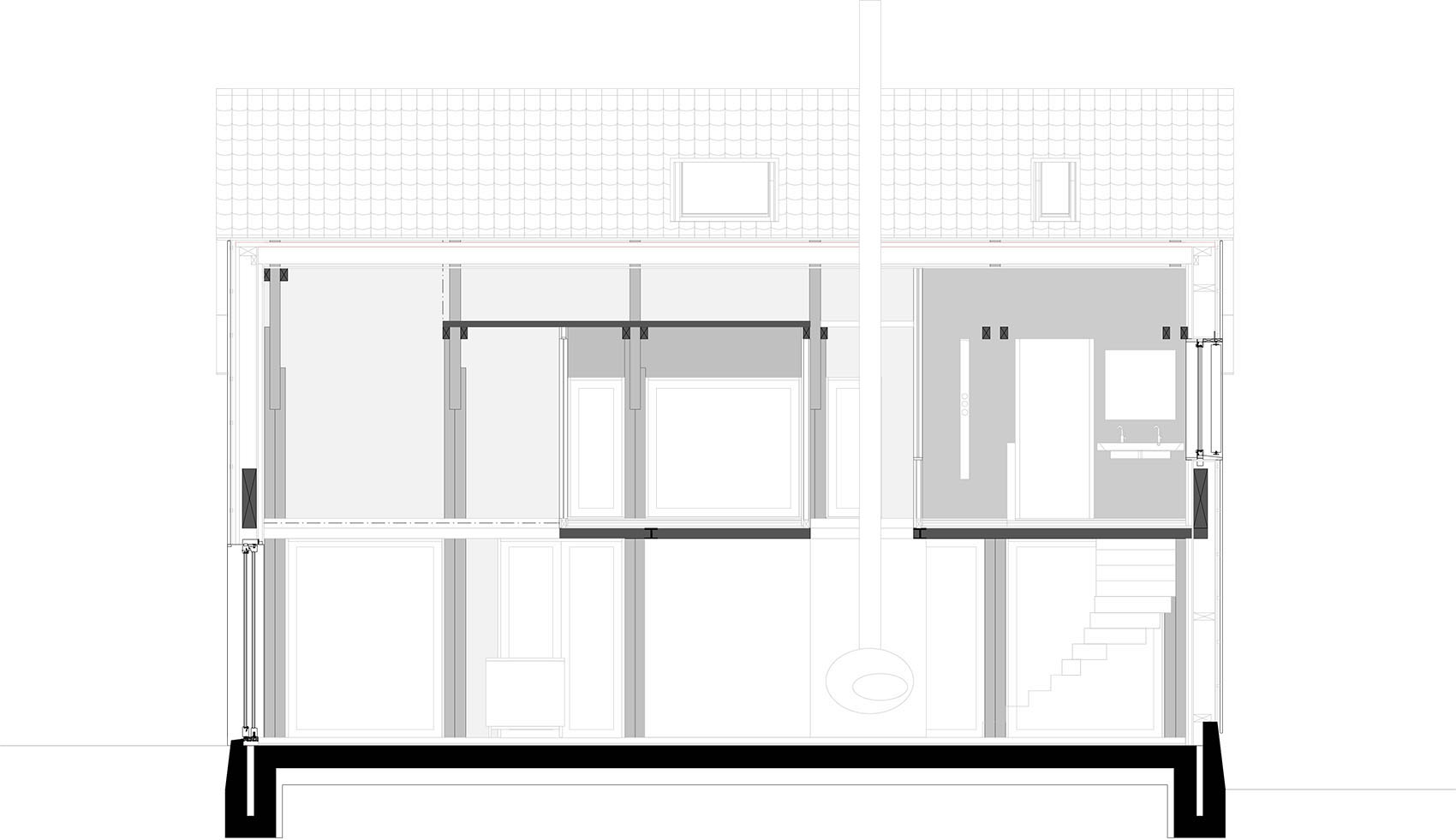
▼剖面图,Sections