菲斯城堡酒店建筑方案,奥地利 / NOA
一个充满冒险的世界在受山体裂隙启发的空间中展开,菲斯城堡酒店(Schlosshotel Fiss)最年轻的客人们将在这里开启探索之旅。充满自然光的地下空间令人联想到高山峡谷、冰川裂缝与冰晶,它们与周边景观融为一体,共同构成了由 NOA 为这家家庭酒店打造的全新建筑地标。菲斯城堡酒店是菲斯(Fiss)地区最具代表性的酒店之一。菲斯位于东蒂罗尔山区,不仅是著名的冬季滑雪目的地,也是热门的夏季徒步旅游胜地。这家家族经营的酒店与建筑及室内设计事务所 NOA 共同启动了一项长期更新与品牌重塑计划,并为酒店未来发展制定了战略愿景。双方最初的合作聚焦于酒店现有儿童活动区域。去年12月,全新的儿童俱乐部(Kids Club)正式开放,这是 NOA 在酒店内完成的首个室内设计项目,也是更大规模转型计划的第一阶段。2026年4月,一个更为复杂的新项目启动建设——专为少年及青少年客群打造的全新体验空间。在该项目中,NOA 同时负责建筑与室内设计。
A world of adventure unfolds within a space inspired by mountain crevices, where Schlosshotel Fiss’s youngest guests can embark on a journey of discovery. Light-filled subterranean spaces, evocative of alpine gorges, crevasses, and ice crystals, blend into the surrounding landscape, creating a new architectural landmark for the family hotel designed by NOA. Schlosshotel Fiss is a leading property in Fiss, a mountain village in East Tyrol known both as a winter ski destination and for summer hiking tourism. The family-owned hotel, together with the architecture and interior design studio NOA, has begun a long-term renovation and repositioning process, developing a strategic vision for the future. The collaboration initially focused on the hotel’s existing children’s areas. Last December, the new Kids Club opened as NOA’s first interior design intervention at the hotel and the first phase of a more extensive transformation. In April 2026, construction began on a more complex project: a new experiential area for junior and teen guests, for which NOA curated both architecture and interior design.
▼项目概览,overview of the project
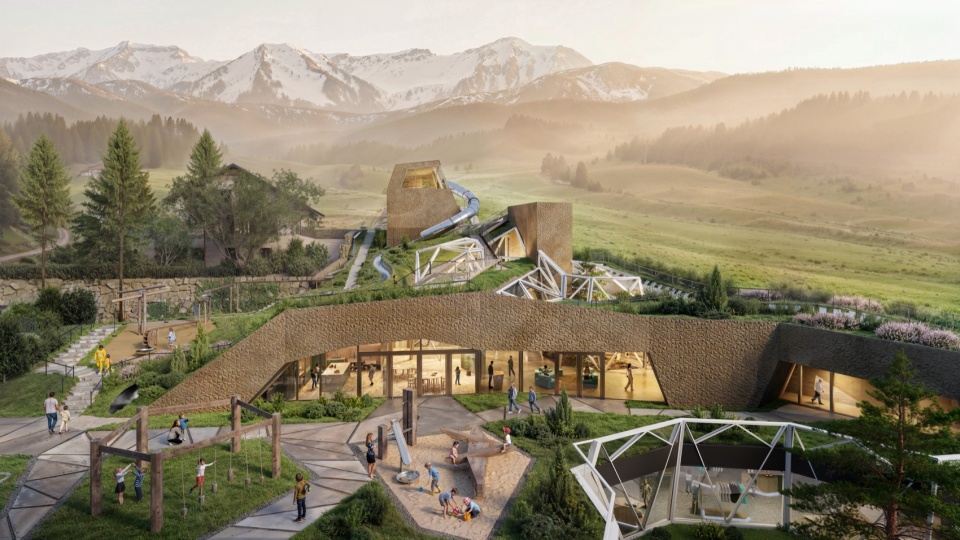
新增建筑体量位于酒店花园内,朝向东南,并采用拟态式建筑语言。远处壮阔的萨姆瑙恩山脉(Samnaun Group)构成主要景观背景。正如事务所一贯的设计方法,项目旨在避免打造一个对阿尔卑斯景观造成干扰的庞大体量。项目团队如此描述设计理念:“设计的第一步是仔细研究建筑体量及其与景观之间的关系。我们的目标是在与周边自然地形以及冬季滑雪坡道建立对话的同时,降低新增建筑对于原本已经规模庞大的酒店综合体的影响。因此,我们选择将大部分功能布置在半地下空间中,并围绕两个主要出入口组织空间,使其深度融入场地环境。”建筑师 Giulia Prevedello 解释道。
The new volume is set within the hotel garden, facing southeast, and follows a mimetic architectural language. In the background, the dramatic panorama of the Samnaun Group dominates the view, and—as is often the case in the studio’s approach—the goal was to avoid an imposing volume that could interfere with the Alpine landscape. The project is introduced as follows: “The first design step was a careful study of the volumes and their relationship with the landscape. The aim was to engage in dialogue with the surrounding natural terrain and the ski slopes in winter, while reducing the impact of a new addition to an already substantial hotel complex. For this reason, we chose to develop much of the program in a semi-subterranean space, organized around two main access fronts, strongly integrated into the context,” explains architect Giulia Prevedello.
▼冬季滑雪目的地,winter ski destination
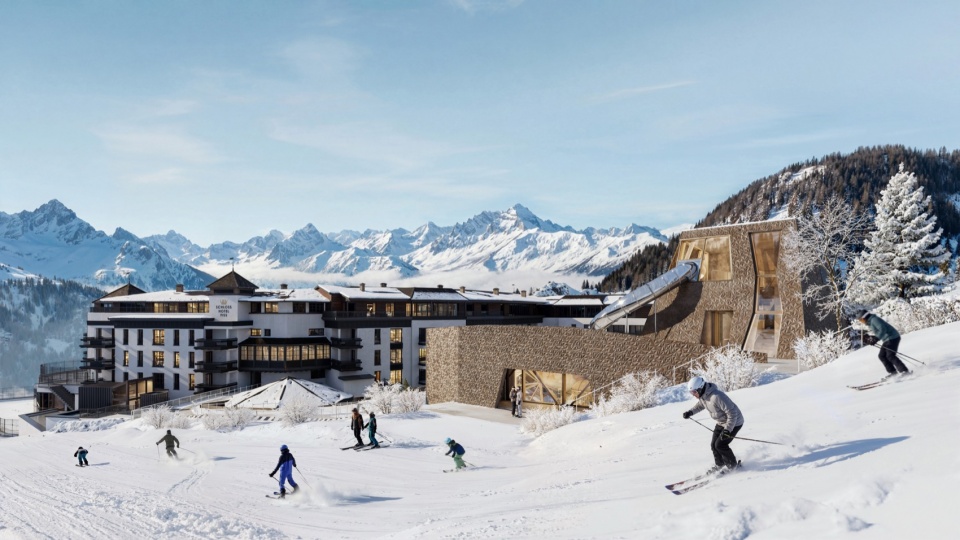
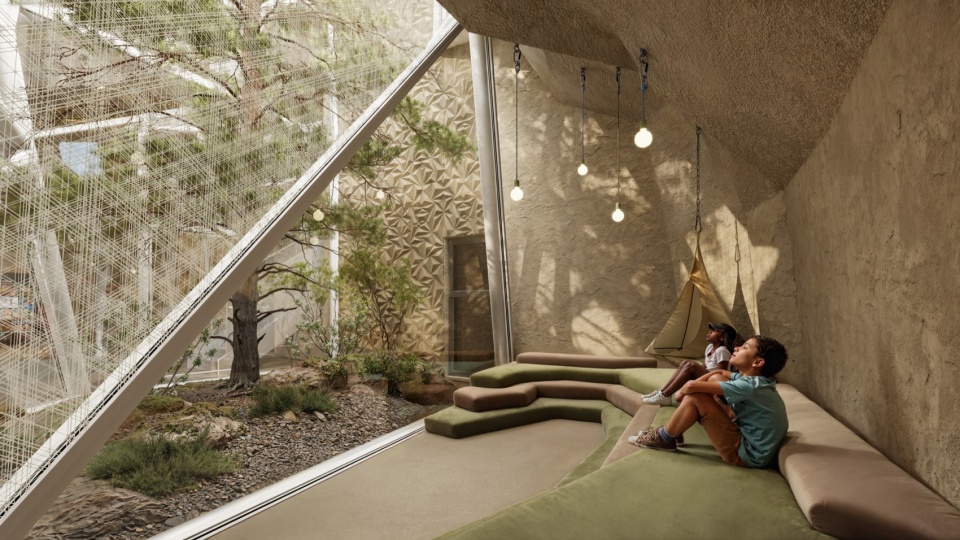
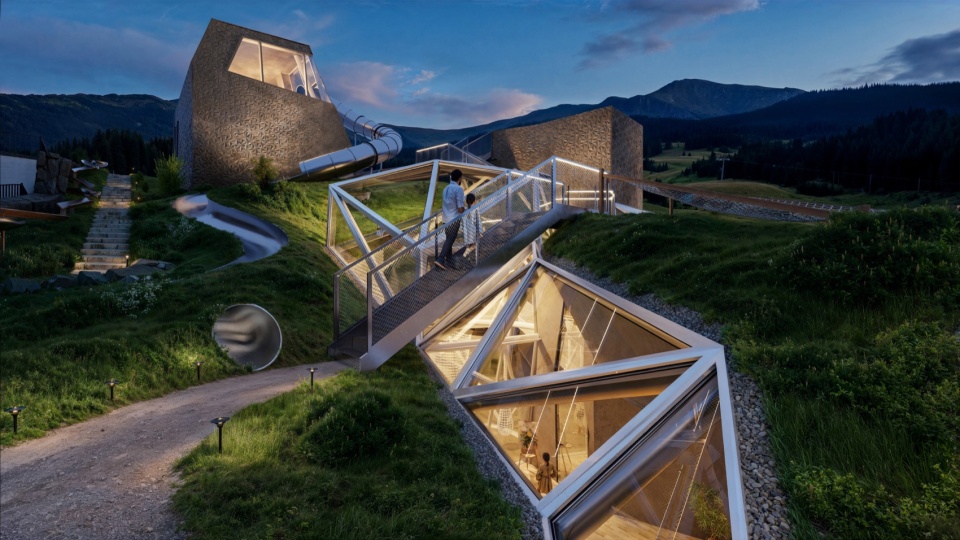
设计概念进一步通过对阿尔卑斯山地景观的直接引用展开,尤其聚焦于隐藏于山体内部的环境:洞穴、裂缝和岩石空腔成为建筑与室内设计共同的核心概念来源。建筑体量由四个主要楼层以及构成滑梯塔楼的两个附加楼层组成,其空间结构建立在两种建筑原型的鲜明对比之上:洞穴与冰晶。一方面,被开凿出来的地下空间构成厚重且具有物质感的环境;另一方面,两个受冰晶启发、充满自然光的庭院被嵌入地面之中,将自然光引入建筑深处。从概念上看,这些晶体般的体量仿佛穿透土层,形成裂缝与断层,并通过玻璃屋顶转化为建筑语言。因此,光线成为项目最核心的元素之一:白天,光线通过深邃切口和掠射光进入室内;到了夜晚,庭院和地面开口则呈现出更加戏剧性的存在感。
The design concept further develops through a direct reference to Alpine landscapes and, in particular, to the hidden environments of the mountain subsoil: caves, fissures, and rocky cavities become the main conceptual reference for both architecture and interior design. The volume, distributed across four main levels plus two additional levels forming the slide tower, is structured around a clear opposition between two architectural archetypes: the cave and the ice crystal. On one side, excavated subterranean spaces define a dense, material condition; on the other, two light-filled patios inspired by ice crystals are embedded into the ground, drawing natural light deep into the building. Conceptually, these crystalline volumes appear to pierce the soil layers, generating fissures and cracks, reinterpreted architecturally through glass roofs. Light is therefore one of the project’s central elements: by day, it enters the space through deep cuts and grazing rays, while the patios and the openings in the ground take on an even more dramatic presence at night.
▼娱乐空间,entertainment spaces
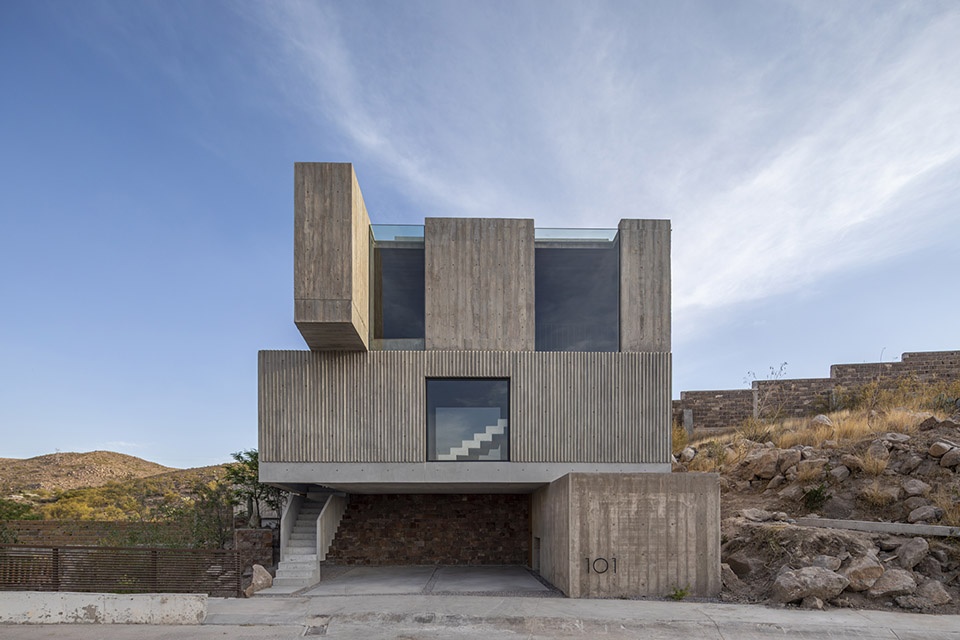
两处主要立面中,一面朝向酒店,另一面朝向滑雪坡道,并作为滑进滑出(ski-in/ski-out)系统的出入口。两处立面均采用土色清水混凝土。在这里,材料不仅承担结构功能,同时也成为一种富有表现力的表面。通过特殊模板衬板技术,混凝土表面被赋予精准且可控的纹理效果。混凝土浇筑完成并拆模后,其表面呈现出清晰锐利的图案,模数化重复与细微的深度变化共同营造出强烈的触感。最终效果令人联想到一个向访客敞开的洞穴入口,邀请人们进入并探索其中的冒险世界。
Of the two main facades, one faces the hotel and the other the ski slopes, functioning as ski-in/ski-out access. Both facades are made of earth-colored exposed concrete, where the material is not merely structural but becomes an expressive surface. The use of formwork liners allows a controlled and precise texture to be imprinted directly into the concrete. Once the material is cast and the formwork removed, the surface reveals a sharp pattern in which modular repetition combines with subtle variations in depth, creating a tactile effect. The result evokes the image of a cave opening up to visitors, inviting guests to enter and discover a universe of adventure.
▼休憩空间,resting space
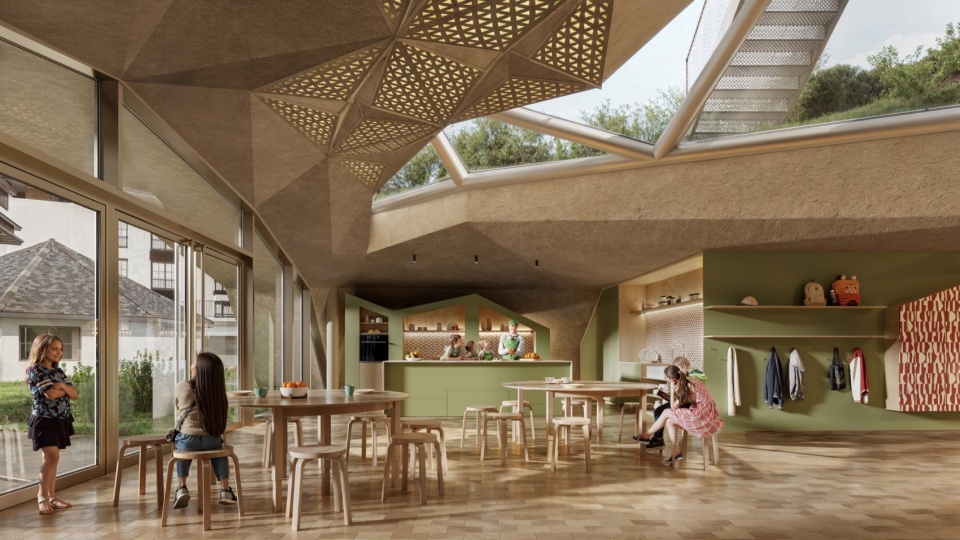
▼儿童娱乐空间,children entertainment spaces
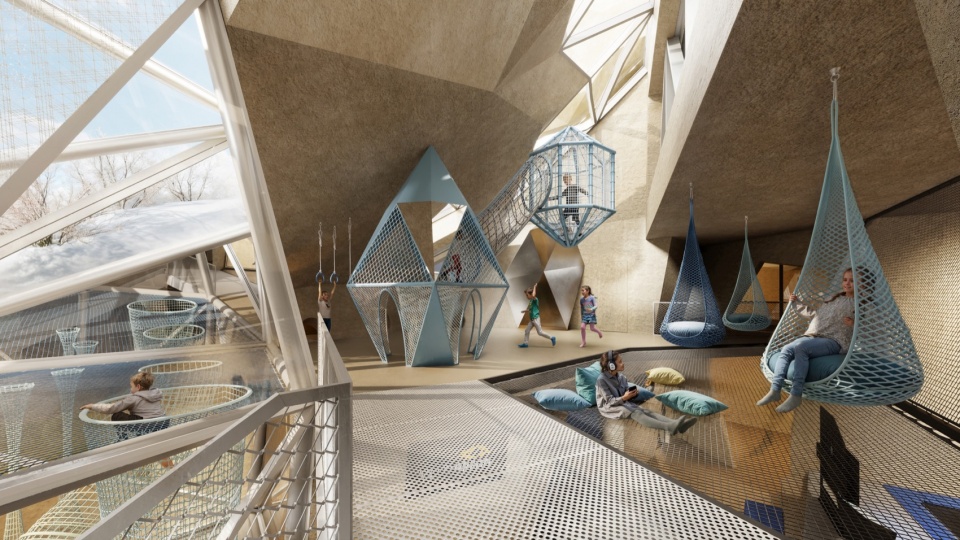
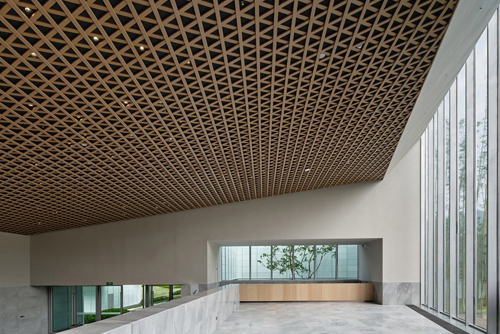
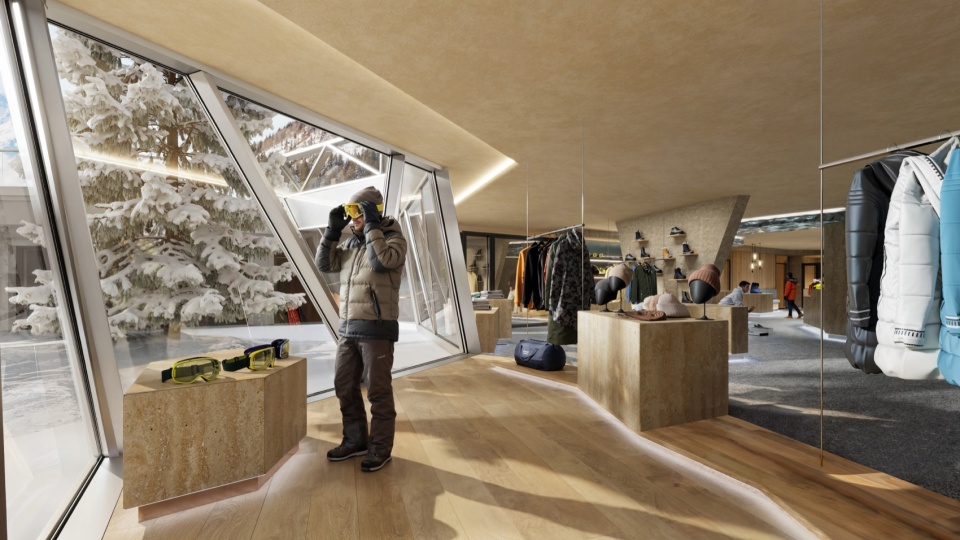
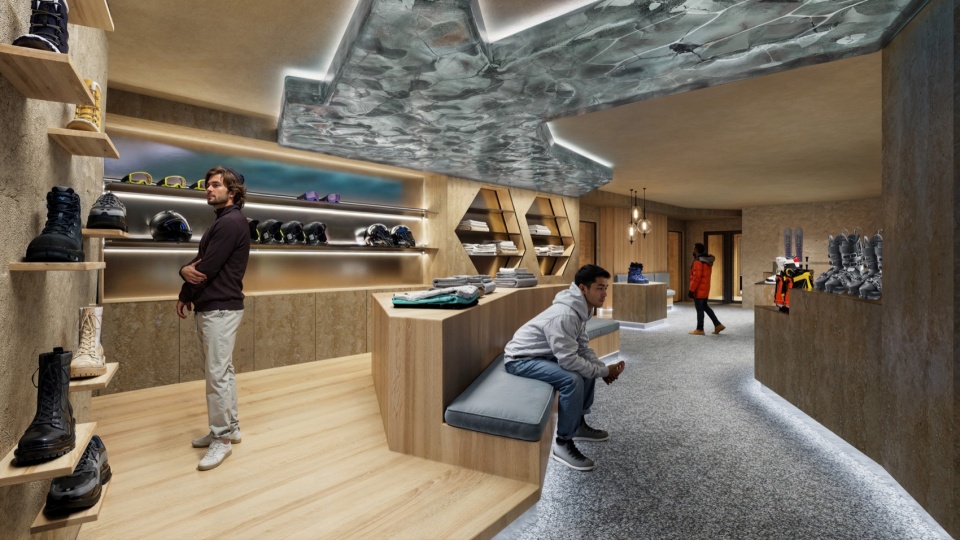
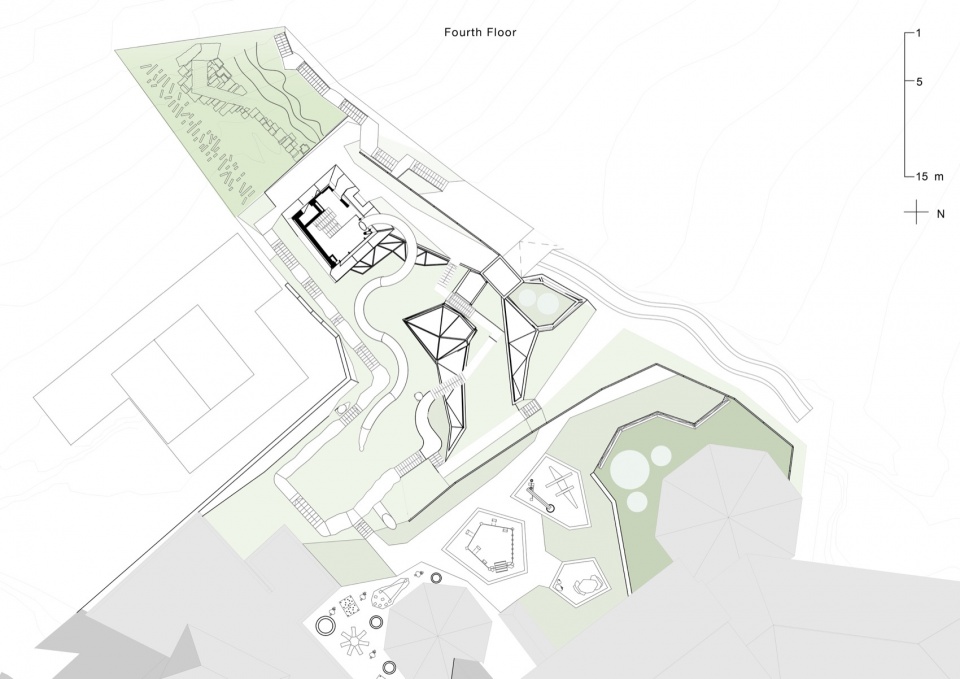
这种建筑构成使建筑外部能够与周边自然景观保持视觉连续性。建筑屋顶被设计为可进入的游乐空间,作为阿尔卑斯山坡地形的延续,并组织出多样化的游乐区域。50米长滑梯、双人滑梯、Bobby Car 赛道以及多种绳索项目,进一步丰富了户外游乐体验。室内空间被构想为一片地下景观,从外部只能通过两座突出的塔楼以及切入地面的玻璃开口窥见其存在。室内墙面与天花采用相同的色彩与材质肌理,强化了置身于天然塑造的地下环境中的体验。三角形模块被整合进天花系统,其中部分采用具有声学性能的抹灰材料,部分则采用3D打印混凝土板。这些元素为空间引入几何裂缝般的表达,除了视觉效果之外,还承担声学优化和光线调节功能。两个庭院中,一个完全开放,另一个则由玻璃结构覆盖。功能布局包括数字与实体娱乐空间、忍者跑酷区(Ninja Parkour)、攀岩区以及以创造力培养为核心的儿童学院(Kids Academy)。负一层设置有商店与滑雪装备存放区,并与滑进滑出系统直接连接,实现与雪道的无缝衔接。位于地面层核心位置的体验空间采用双层通高设计,并结合悬空桥梁与攀岩墙,成为整个项目的游乐核心与视觉焦点。
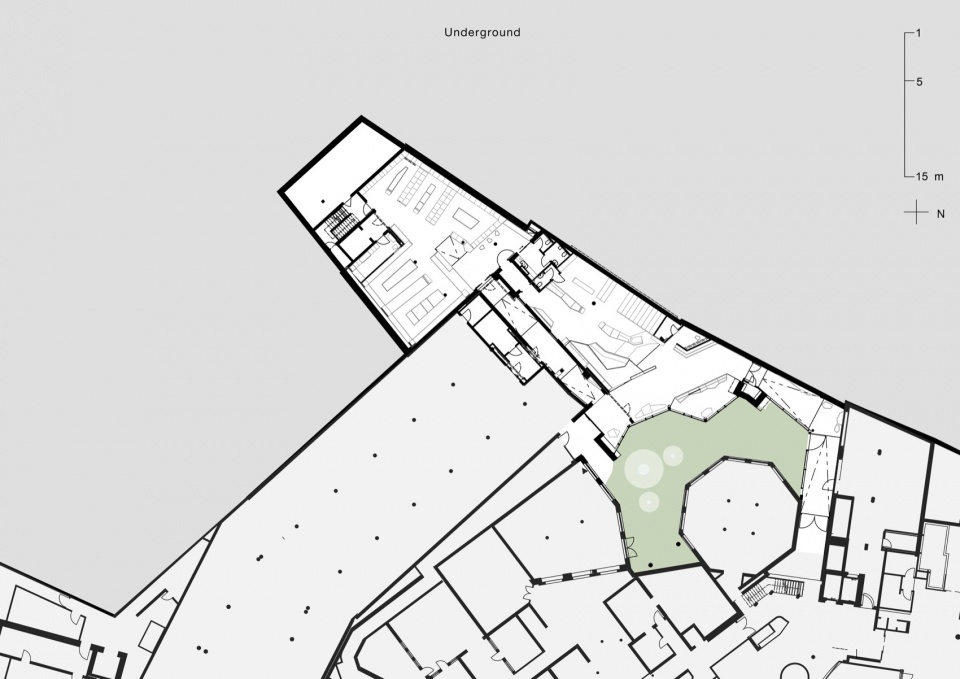
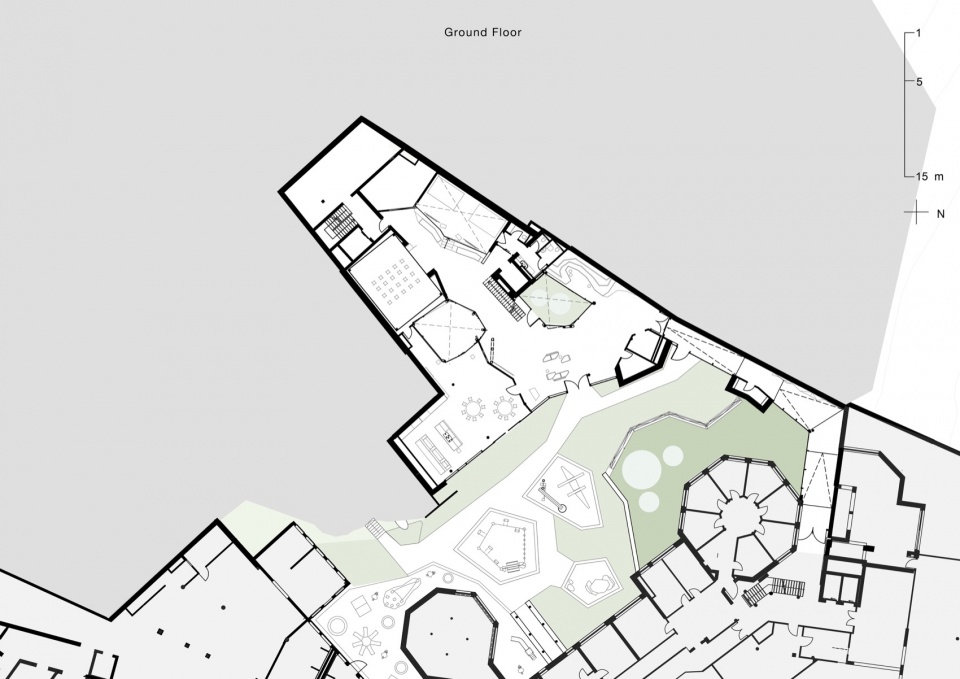
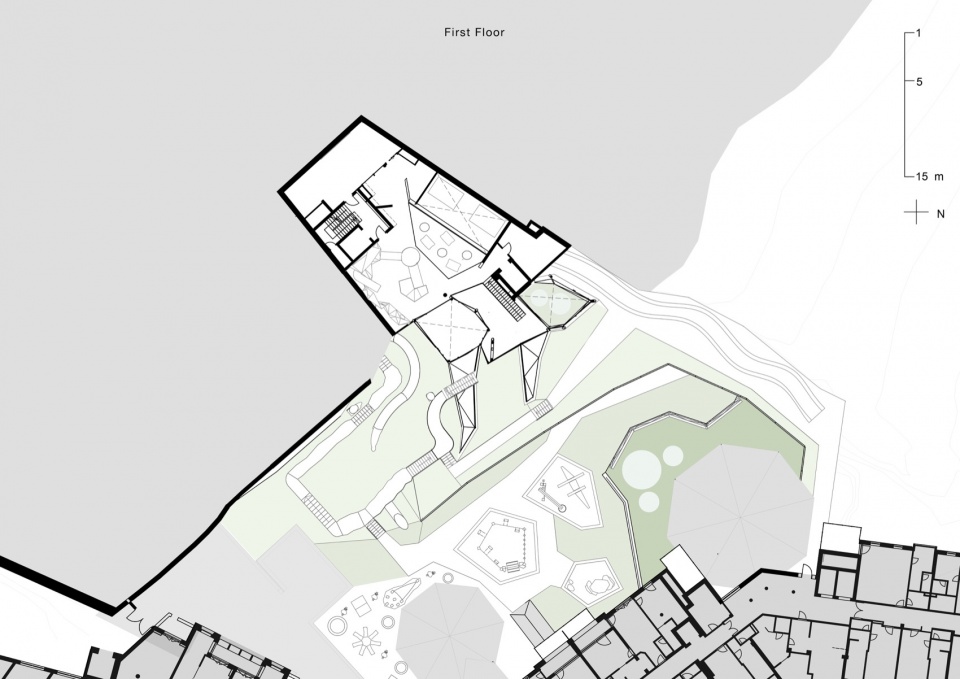
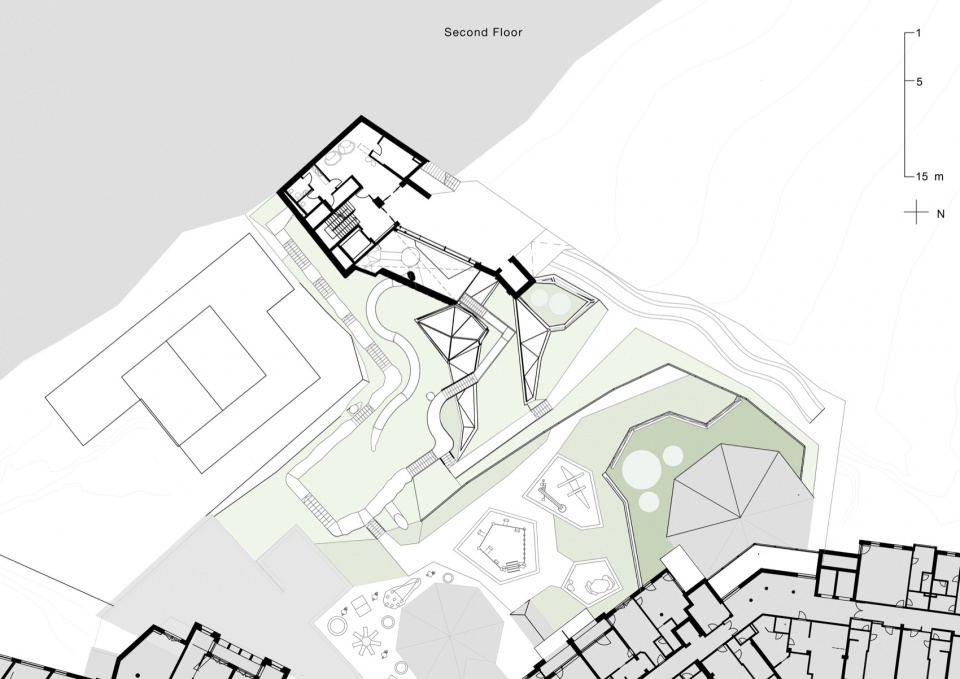
This architectural configuration allows the exterior to maintain visual continuity with the surrounding natural landscape. The roof of the building becomes an accessible play area, shaped as a continuation of the Alpine slopes and organized into various play zones. A 50-meter slide, a tandem slide, a Bobby Car track, and several rope courses further expand the outdoor play offer. The interiors are conceived as a subterranean landscape, visible from the outside only through two emerging towers and glazed openings cutting into the ground. Inside, walls and ceilings share the same color tones and material textures, reinforcing the idea of being in an underground environment shaped by nature. Triangular modules are integrated into the ceiling, partly made of acoustically active plaster and partly of 3D-printed concrete panels. These elements introduce a geometric fracture into the space and, beyond their aesthetic role, integrate acoustic functions and modulate light. Of the two patios, one is open while the other is covered by a glass structure. The functional program includes various entertainment spaces, both digital and analog, a Ninja Parkour and a Climbing Area, as well as a Kids Academy focused on creativity. On level -1 there is a shop and a ski depot, directly connected to the ski-in/ski-out system, ensuring immediate access to the slopes. The central experiential space on the ground level, developed as a double-height volume with suspended bridges and climbing walls, forms the playful heart and focal point of the project.
▼商店,shop
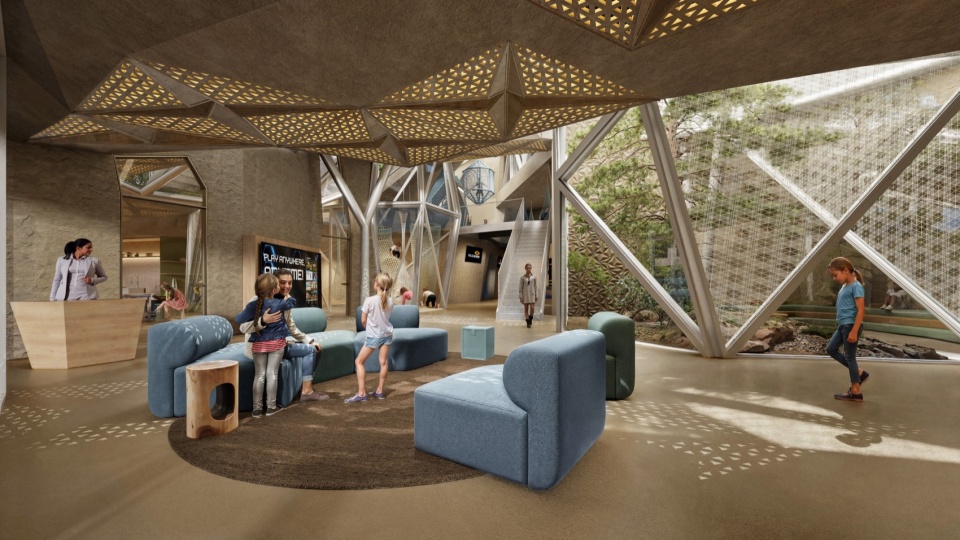
▼滑雪装备存放区,ski depot
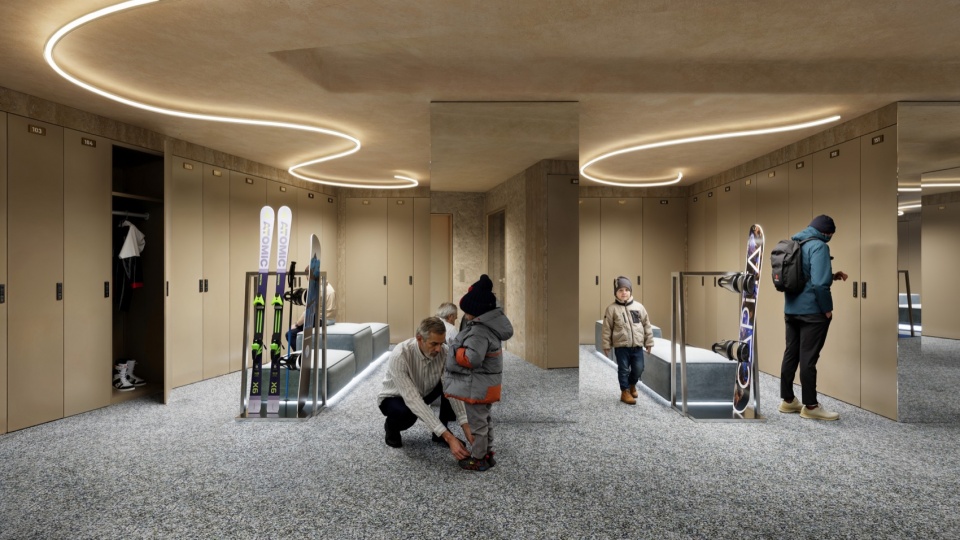
材料语言也随着建筑的垂直旅程不断变化。在最深处的楼层中,石材、金属、玻璃以及蓝色织物占据主导;随着向上接近外部空间,木材、绿色调以及更加温暖的织物材料逐渐出现。在儿童学院中,空间色彩转向森林绿色,并加入赤陶陶瓷元素;而木地板则以带有凸起圆环的木质棋盘格形式铺设,形成鲜明而独特的图形语言。
The materiality also evolves progressively along the building’s vertical journey. In the deepest levels, stone, metal, glass, and blue textiles dominate, while moving upward toward exterior-facing spaces, wood, green tones, and warmer textile materials appear. In the Kids Academy, the palette shifts to forest greens and terracotta ceramic inserts, while the parquet floor—arranged like a wooden chessboard with raised rings—defines a distinctive graphic motif.
▼夜景,night view
“向上攀升”这一主题始终贯穿室内体验。双层与三层通高空间、沿墙上升的阶梯式坐席以及轻盈的结构系统,自然引导访客在不同楼层之间自由穿行。建筑仿佛源自一处深邃而原始的洞穴,而室内设计团队则通过轻巧且克制的介入对其进行塑造,在不削弱空间开敞感与空间深度的前提下完成设计。该项目目前正在建设中,预计将于2027年冬季竣工。
The theme of ascent constantly accompanies the interior experience. Double and triple-height spaces, stepped seating rising along the walls, and lightweight structures naturally guide guests to move fluidly between levels. The architecture appears to originate from a deep, primordial cavity, later shaped by the interior design team through subtle and light interventions, never compromising the sense of openness and spatial depth. The project is currently under construction, with completion scheduled for winter 2027.
▼地下一层平面图,underground floor plan
▼首层平面图,ground floor plan
▼二层平面图,first floor plan
▼三层平面图,second floor plan
▼四层平面图,third floor plan
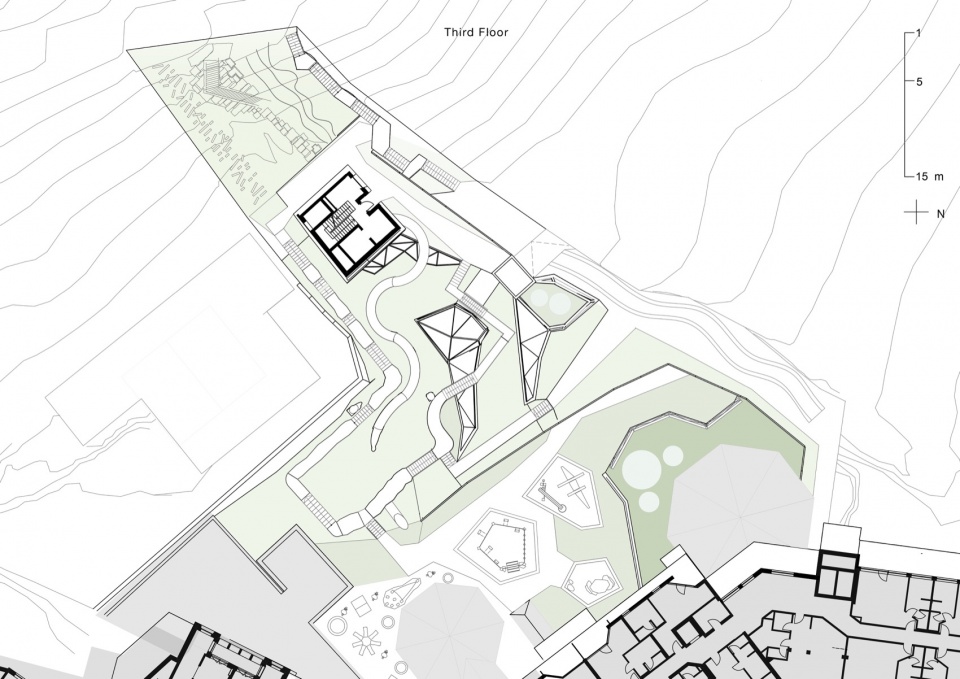
▼五层平面图,fourth floor plan
Project name Schlosshotel Fiss
Architecture NOA
Interior Design NOA
Typology Hospitality
Location Fiss, Tyrol, Austria
Client Simone Domenig
Phase Construction site
Volume 9.730 m3
Surface (NFA) 2.340 m2
Rendering Aleksey Mokhov, NOA