ROCHE诊断创新中心,德国 / Studio Alexander Fehre
ROCHE诊断创新中心将高度专业化的实验室流程与以用户为中心的工作环境相连接,为持续创新创造了相应的空间条件。Studio Alexander Fehre 的设计实践位于新兴办公模式与复杂组织现实需求的交汇点。团队将工作环境视为一种“空间操作系统”,使角色、活动与各种界面能够在建筑环境中自然且直观地运作。这一方法尤其适用于生命科学、生物技术、诊断医疗及制药行业,在这些领域中,科研与技术之间始终保持着紧密联系。由此形成的空间结构既具备稳定高效的运营能力,又能够保持灵活性,并始终以使用者需求为核心,为日常创新奠定基础。
The diagnostic innovation center connects highly specialized laboratory processes with user-centered work environments, creating the spatial conditions for continuous innovation. Studio Alexander Fehre works at the intersection of emerging workplace models and the realities of complex organizations. Work environments are conceived as spatial operating systems, enabling roles, activities, and interfaces to function intuitively within the built environment. This approach is particularly relevant in life sciences, biotechnology, diagnostics, and pharmaceuticals, where research and technology are closely interconnected. The result is spatial structures that are operationally robust, remain flexible, and consistently prioritize user needs – creating the foundation for innovation in everyday practice.
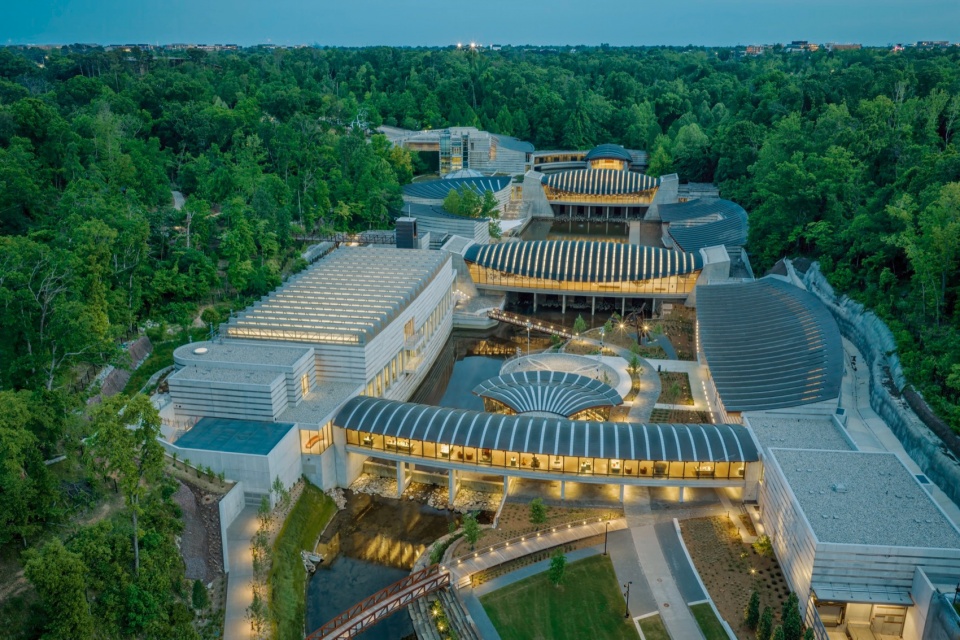
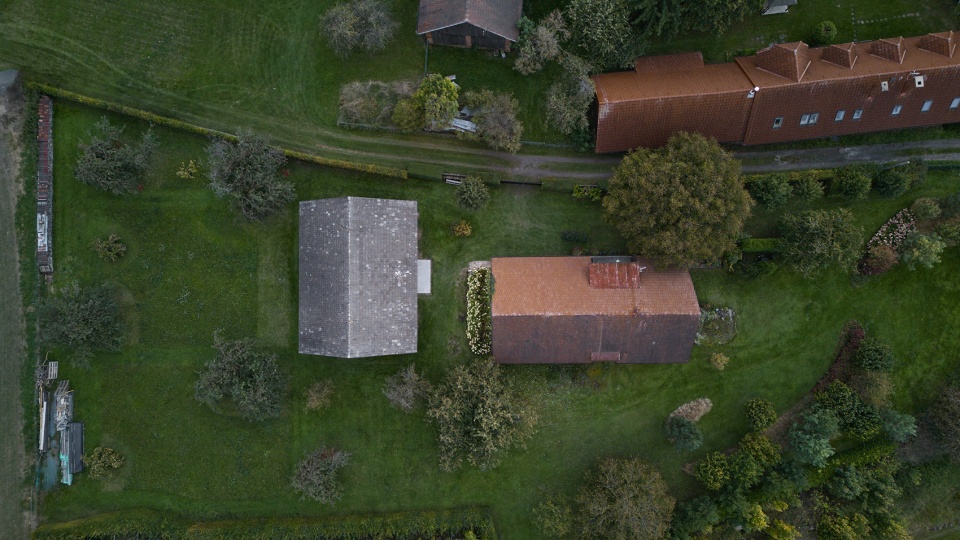
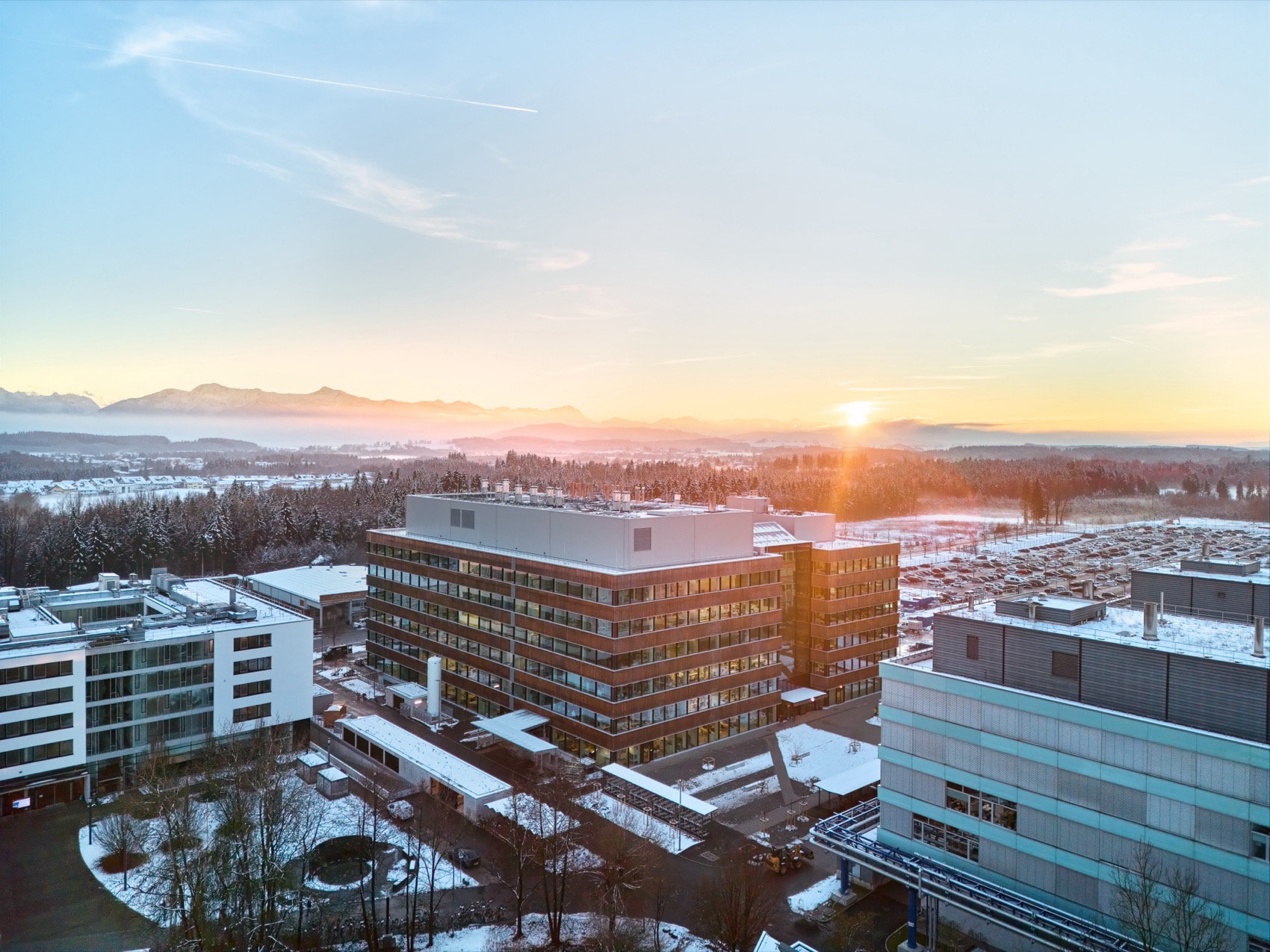
▼诊断创新中心鸟瞰,Aerial view of the diagnostic innovation center
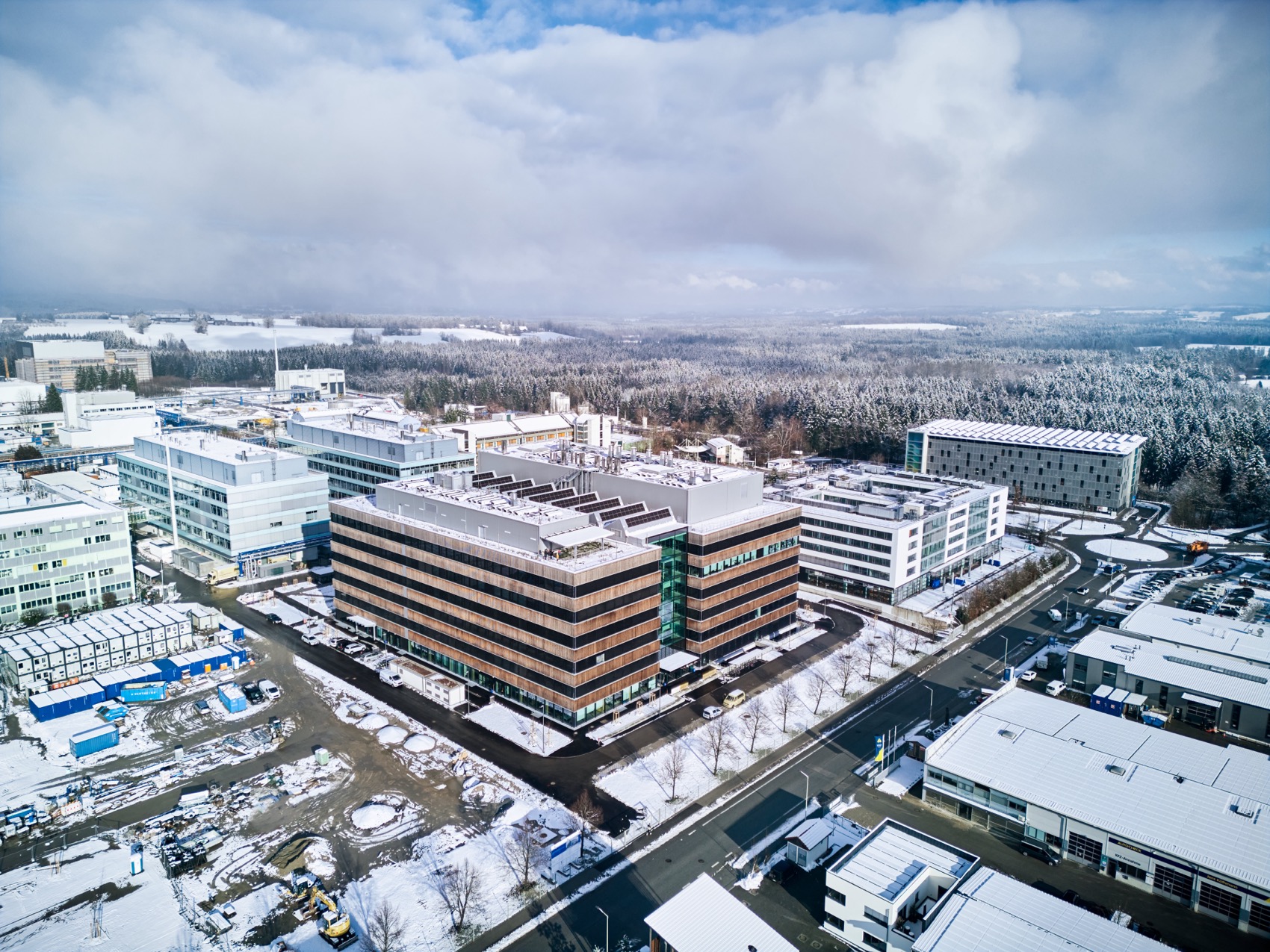
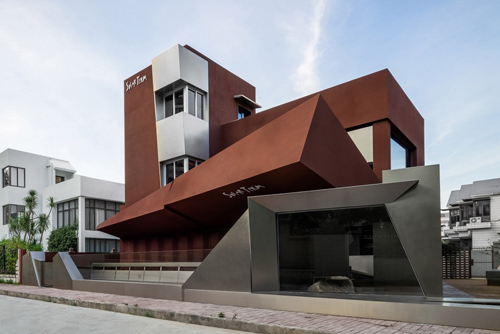
▼建筑外立面,Building façade
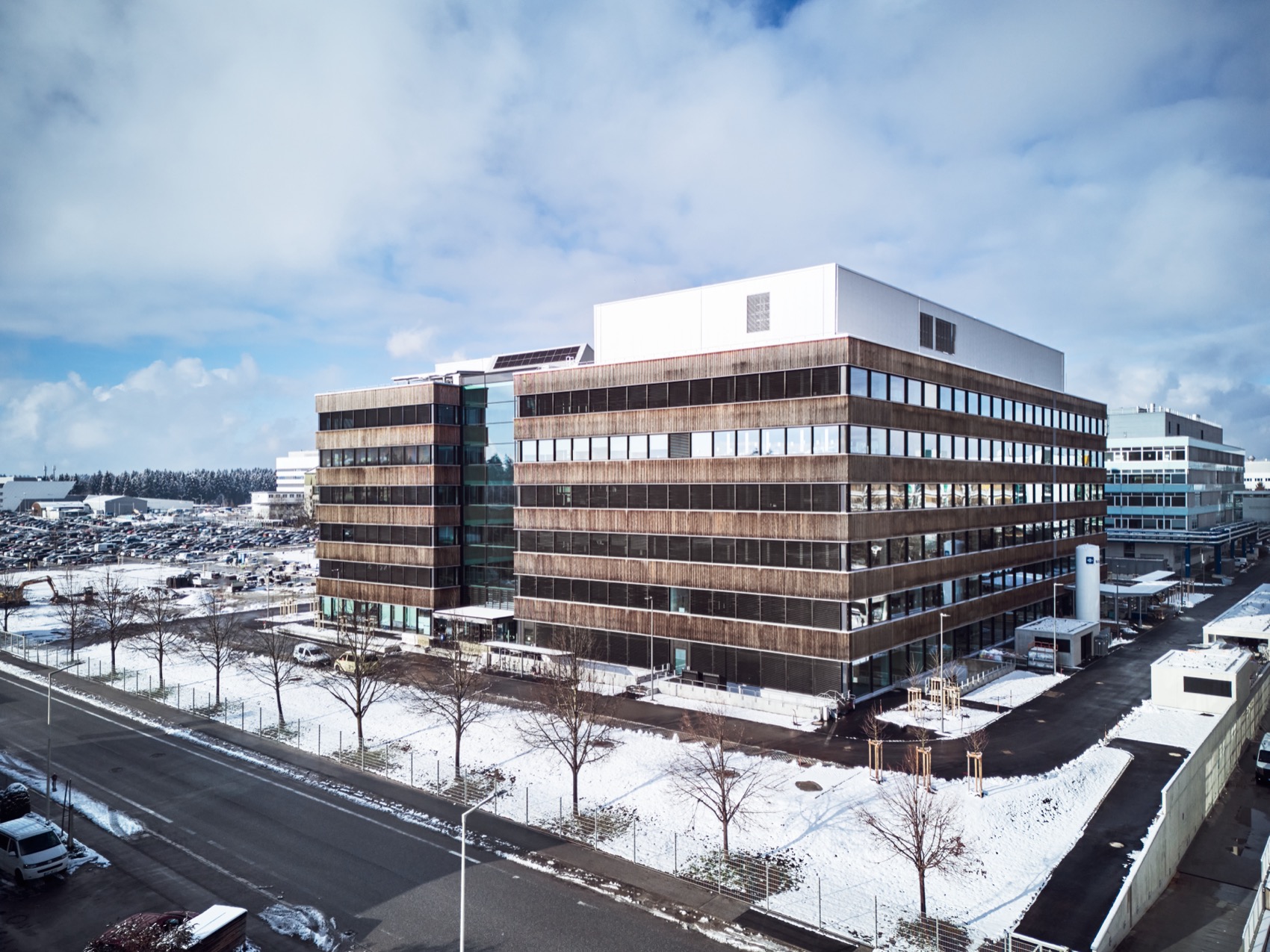
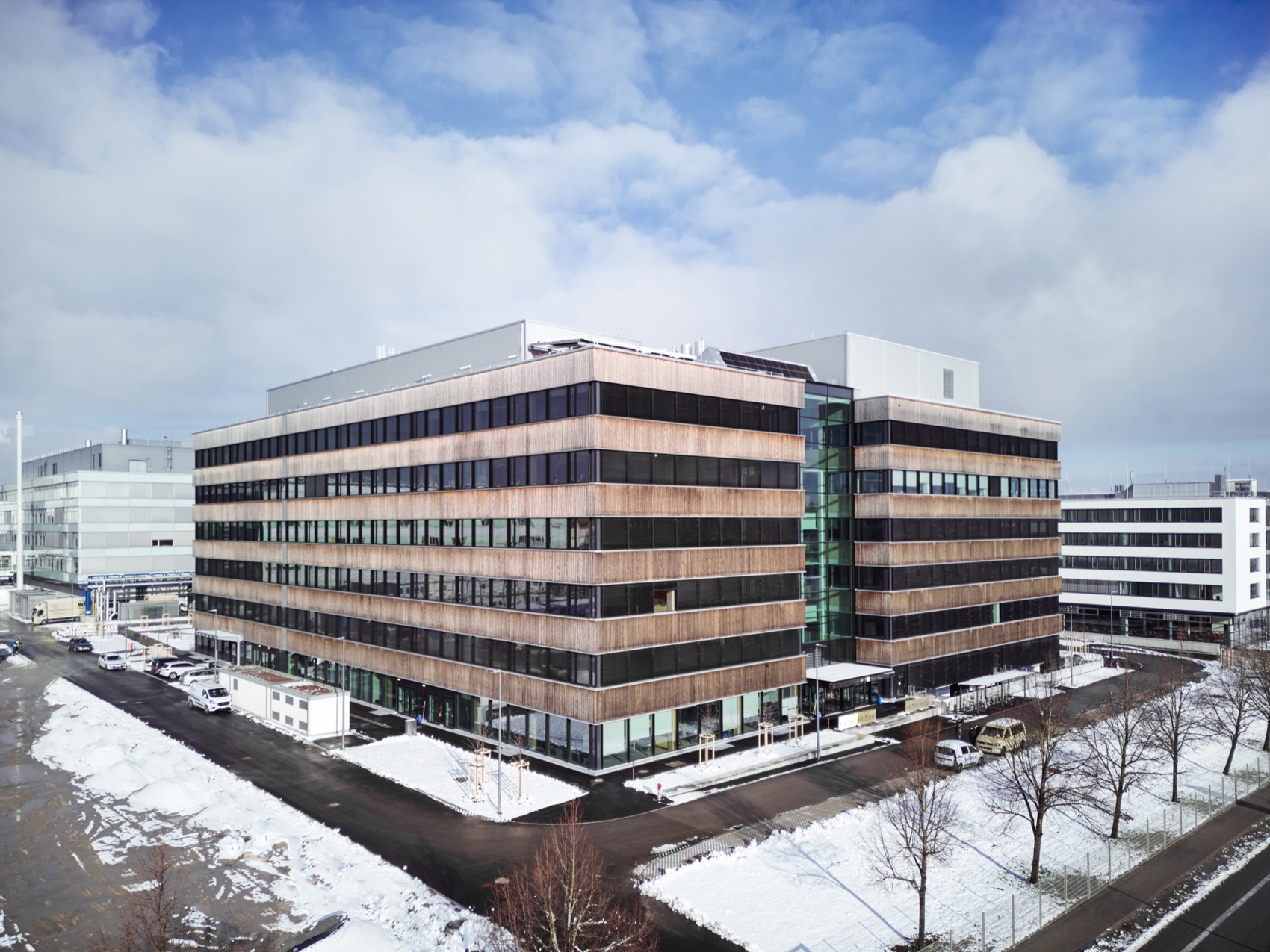
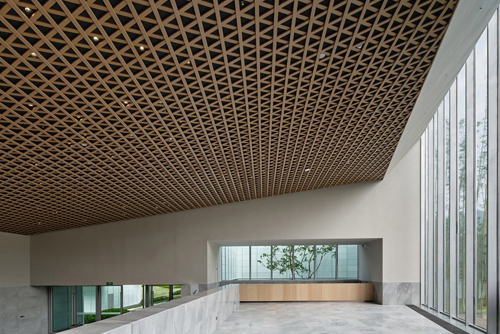
位于彭茨贝格(Penzberg)的ROCHE诊断创新中心围绕交流、敏捷性与专注力展开设计。建筑西侧为办公工作环境,东侧为实验室区域。两者之间设置了一座大面积玻璃围合的中庭,并通过桥梁网络将两个区域相互连接,形成便捷高效的流线,使理论与实践之间能够实现快速交流。
The ROCHE DIAGNOSTIC INNOVATION CENTER in Penzberg is consistently designed around exchange, agility, and focus. The western section of the building houses the work environments, while the eastern section accommodates the laboratories. Between them, a generously glazed atrium connects both areas through a network of bridges, creating short pathways that facilitate rapid exchange between theory and practice.
▼连接办公与实验室的中庭,Atrium connecting offices and laboratories
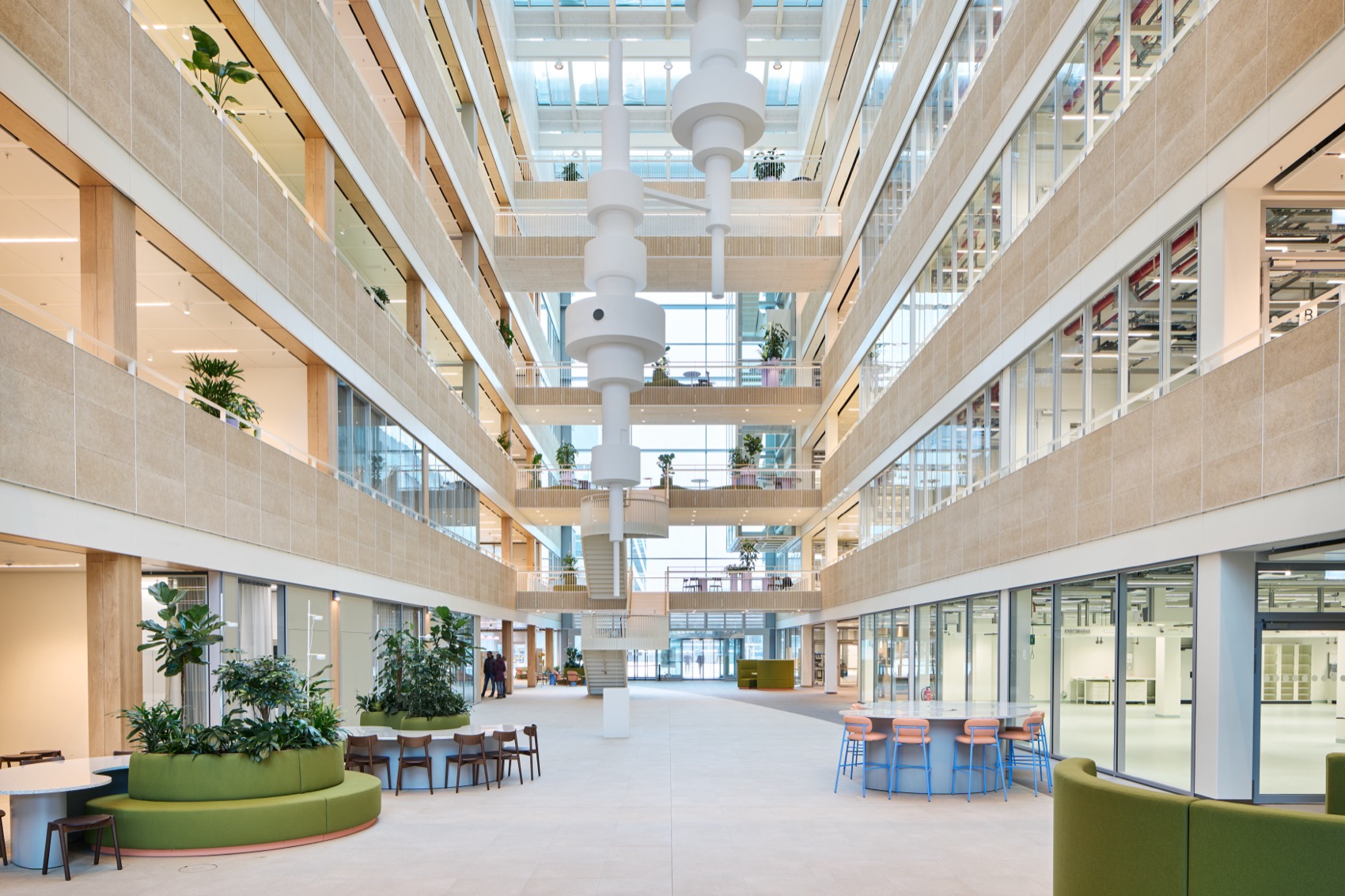
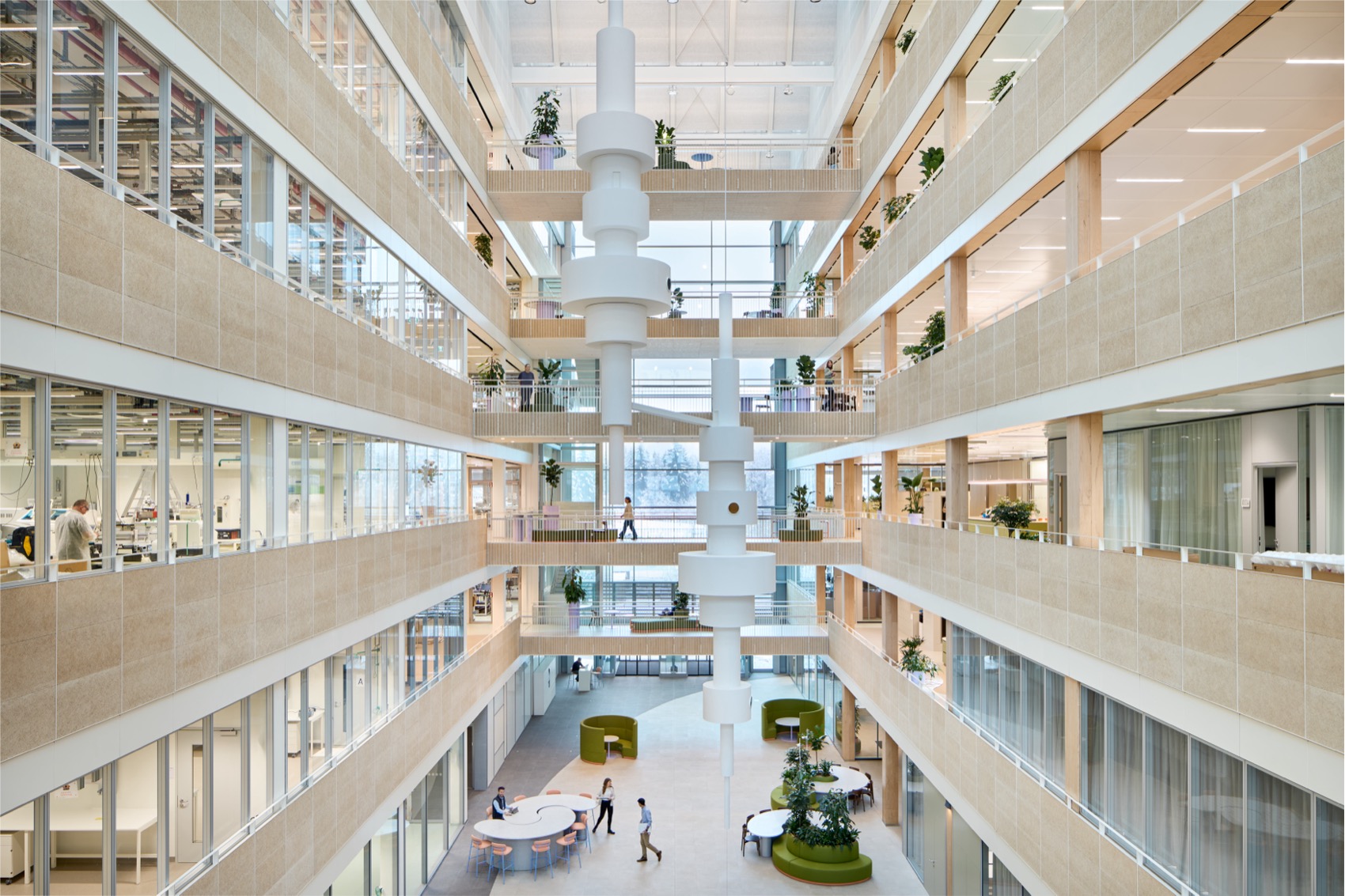
▼自然采光下的公共空间,
Public space under natural daylight
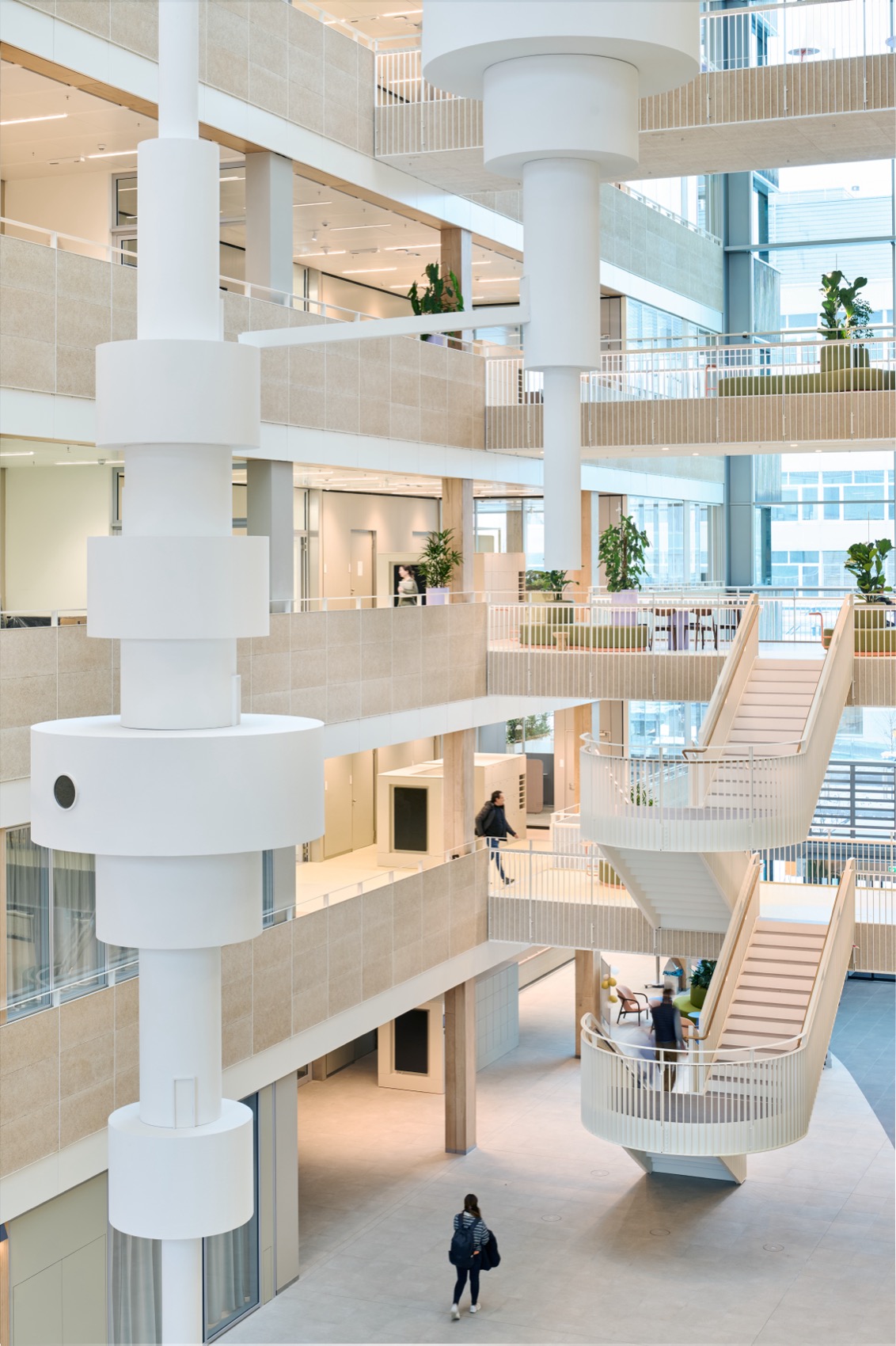
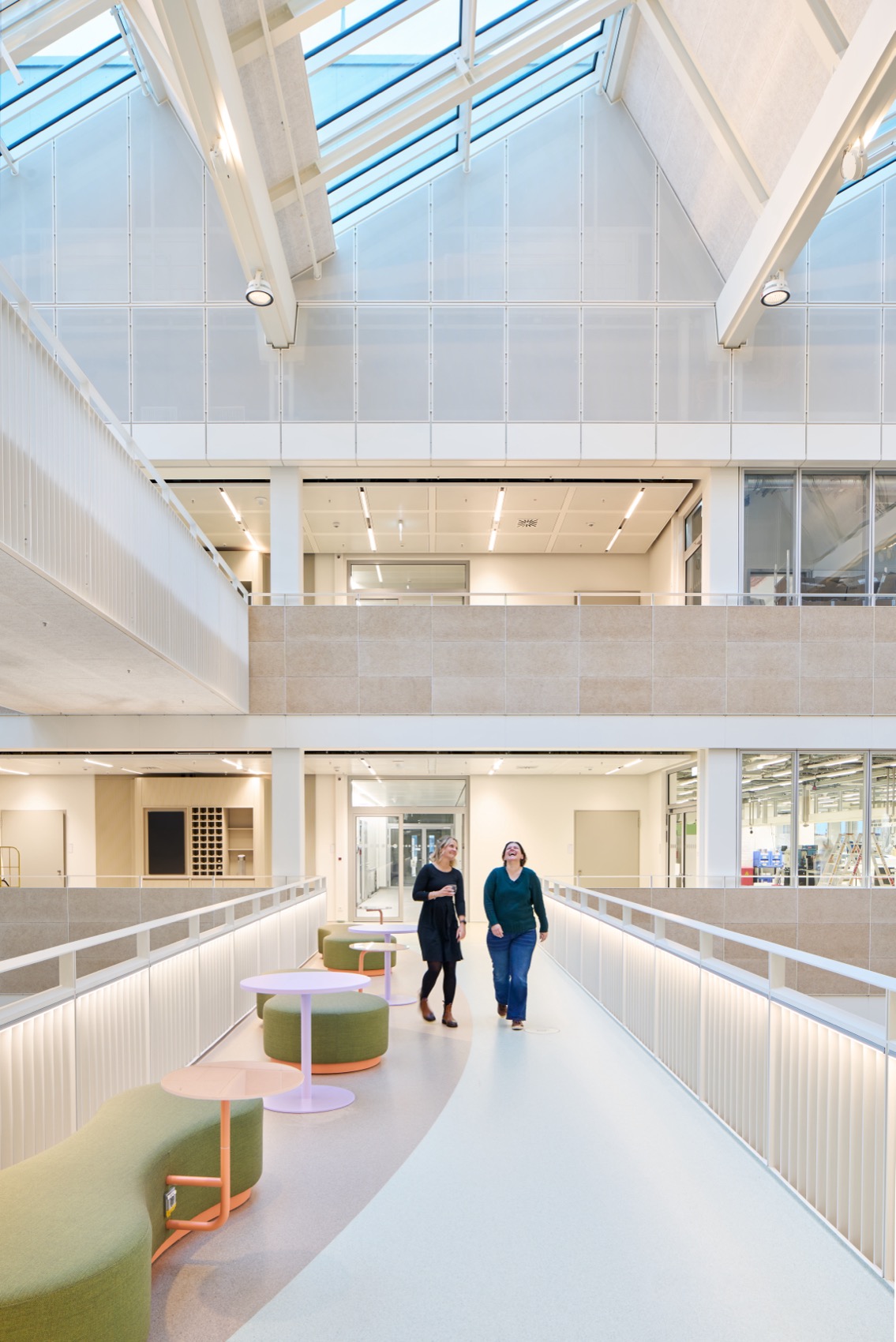
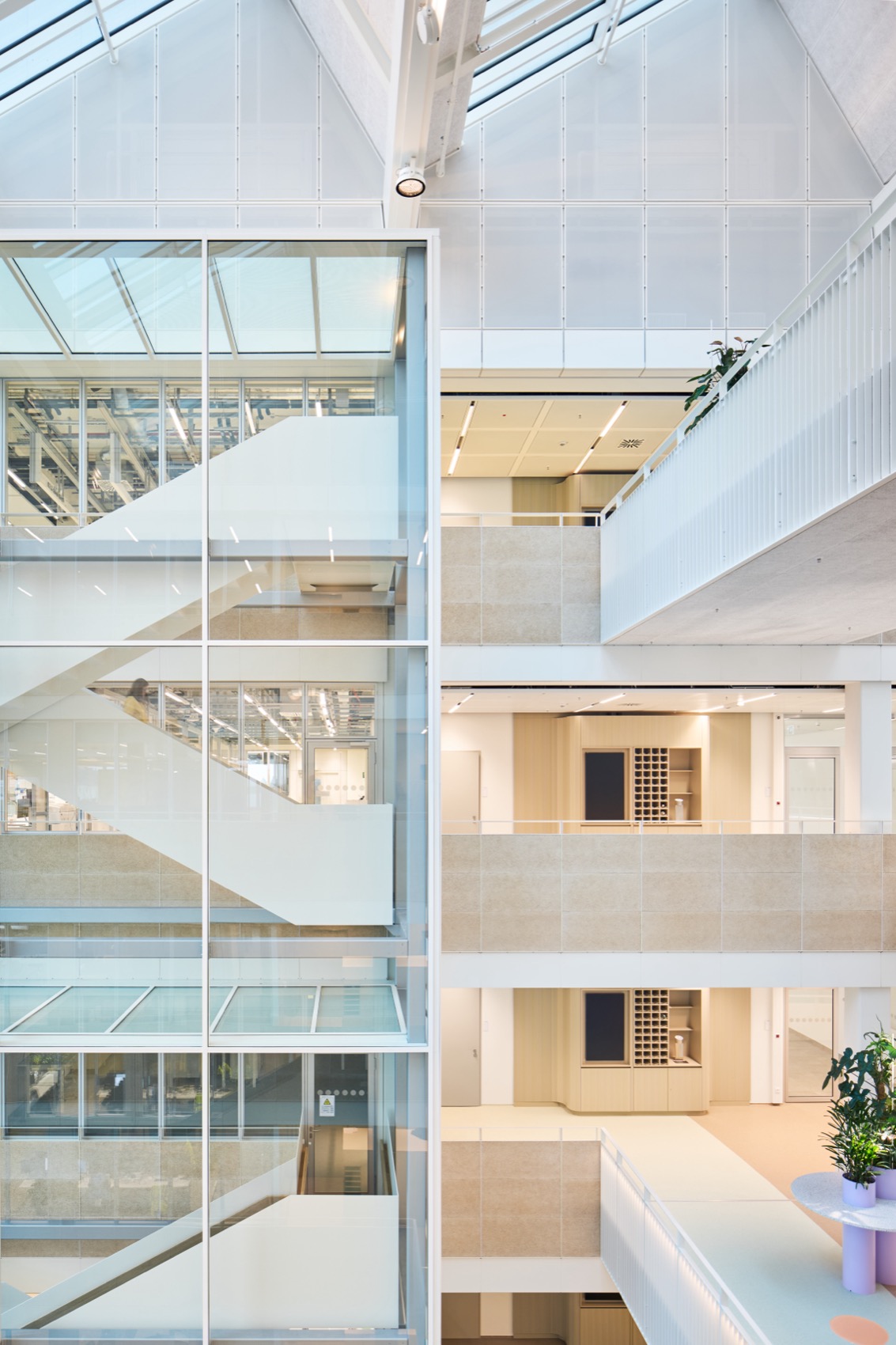
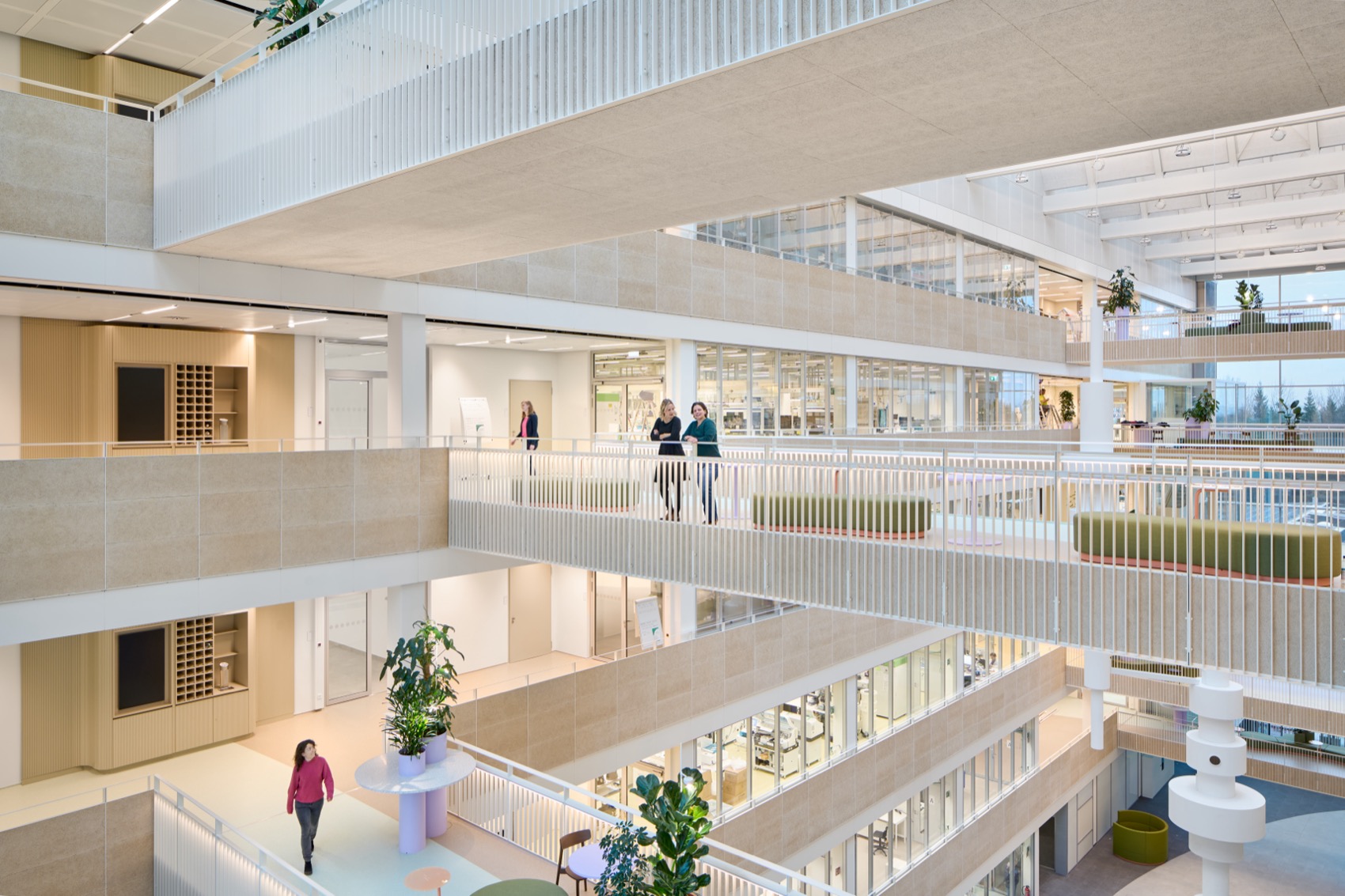
在该项目中,Studio Alexander Fehre 并未仅仅提供传统意义上的办公空间设计,而是针对一个高度复杂的使用环境提出了整体性的室内建筑解决方案。两种截然不同的工作体系——各自拥有独特的规则、安全要求与流程逻辑——需要以一种既能实现功能互补,又能强化文化联系的方式被整合在一起。设计从员工的日常工作现实出发。根据不同角色与工作内容,人们会自然地在建筑内部穿梭于两种环境之间:从办公区域经过中庭与桥梁前往实验室,再返回办公区域。这种流动过程本身也成为设计的重要原则。因此,中庭与桥梁不仅被视为交通空间,更被打造成为一种空间基础设施,使整栋建筑变得清晰可感、易于理解。短捷的距离、直观的导向系统以及促进偶发交流的空间节点,共同构成了这一体系。桥梁在其中发挥着关键作用。它们不仅承担连接功能,更通过不同宽度与开放式设计语言,被塑造为充满活力的交流空间——为互动、非正式会面以及短暂停留创造场所。
For this project, Studio Alexander Fehre did not deliver a conventional workplace design in the narrow sense, but rather a holistic interior architectural response to a highly complex environment of use. Two distinct working worlds each with its own rules, safety requirements, and process logic – needed to be brought together in a way that enabled them to complement one another functionally while strengthening each other culturally. The starting point was the everyday reality of employees. Depending on role and activity, movement through the building naturally leads users across both environments: from workplace settings through the atrium and bridges to laboratory areas and back again. This movement itself became an integral design principle. The atrium and bridges were therefore conceived not merely as circulation routes, but as spatial infrastructure that makes the building as a whole tangible and accessible – with short distances, intuitive orientation, and zones for spontaneous interaction. The bridges play a key role in this concept. More than connectors, they were intentionally developed as vibrant communication zones with varying widths and an open design language: places for interaction, informal meetings, and meaningful moments of pause.
▼连接两侧功能区的桥梁,Bridge connecting different work environments
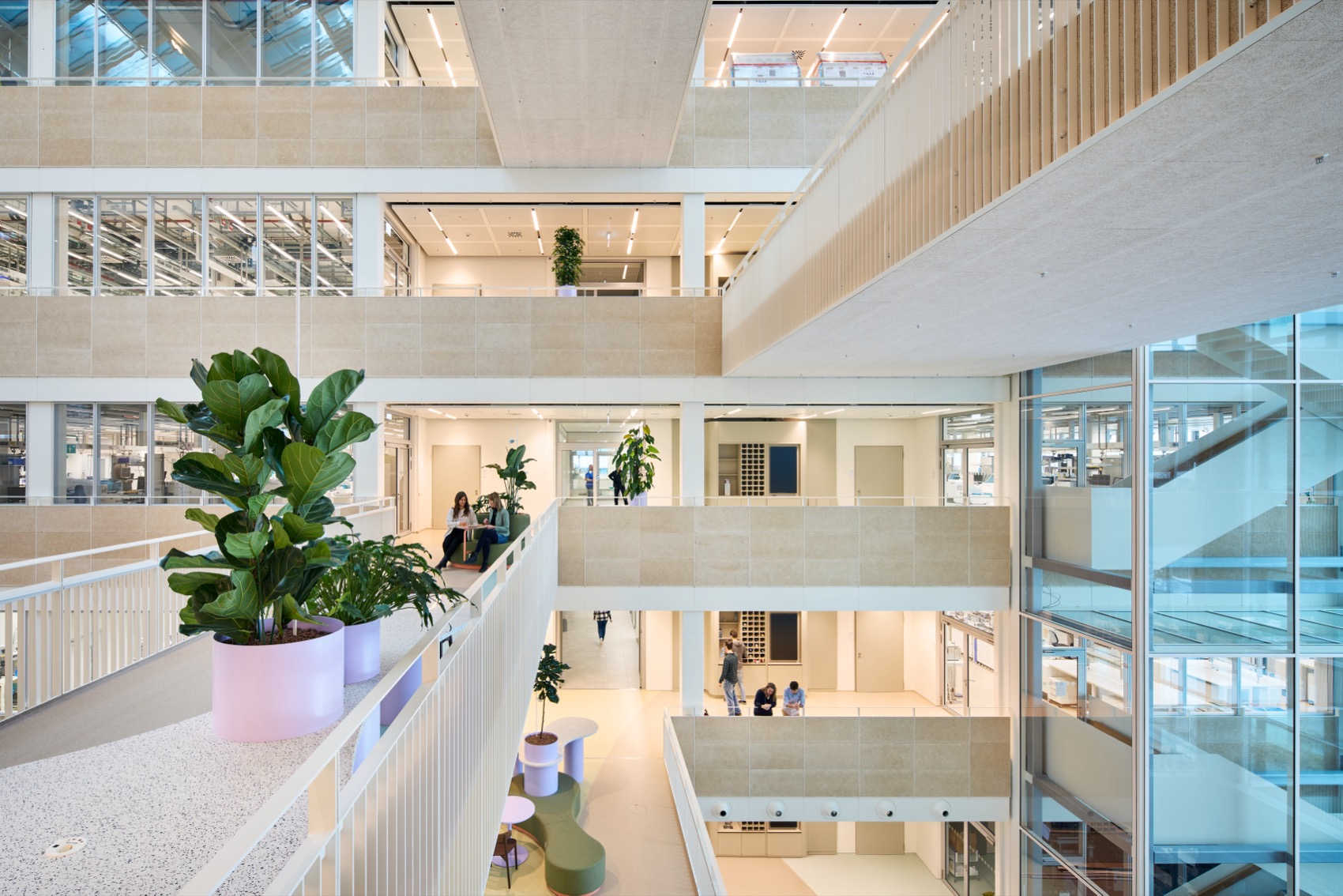
▼桥梁节点休憩区,Breakout area along the bridge
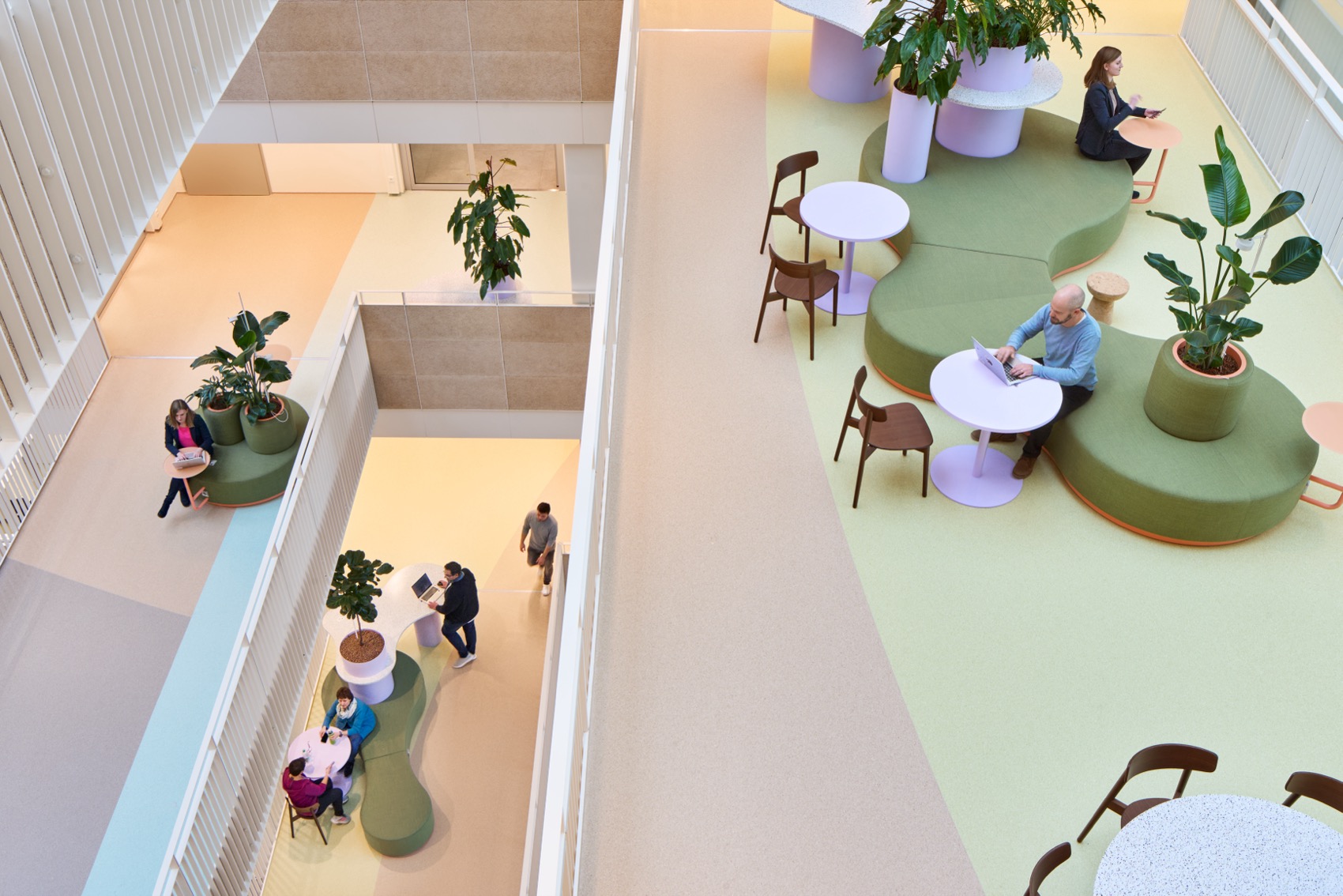
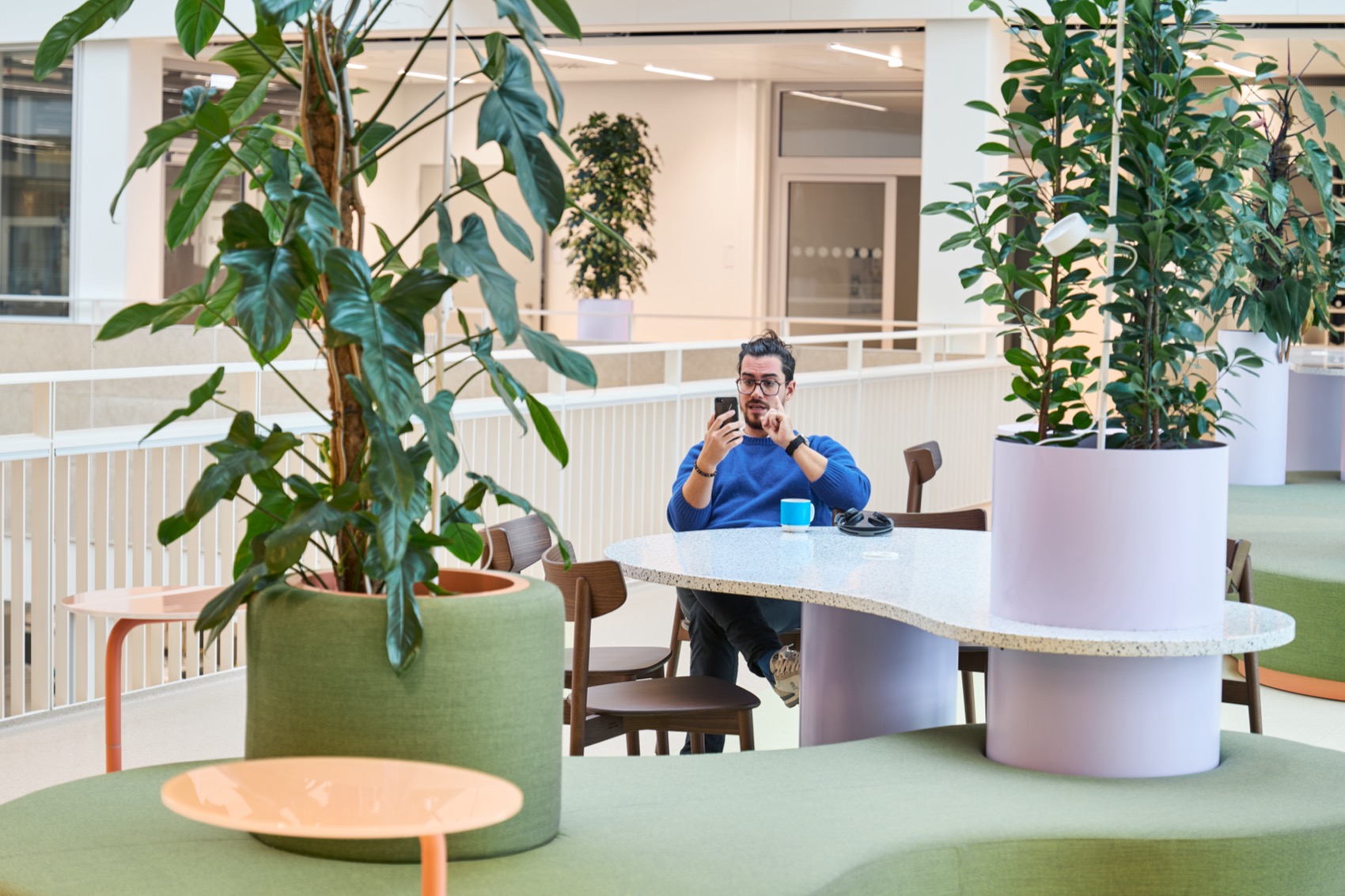
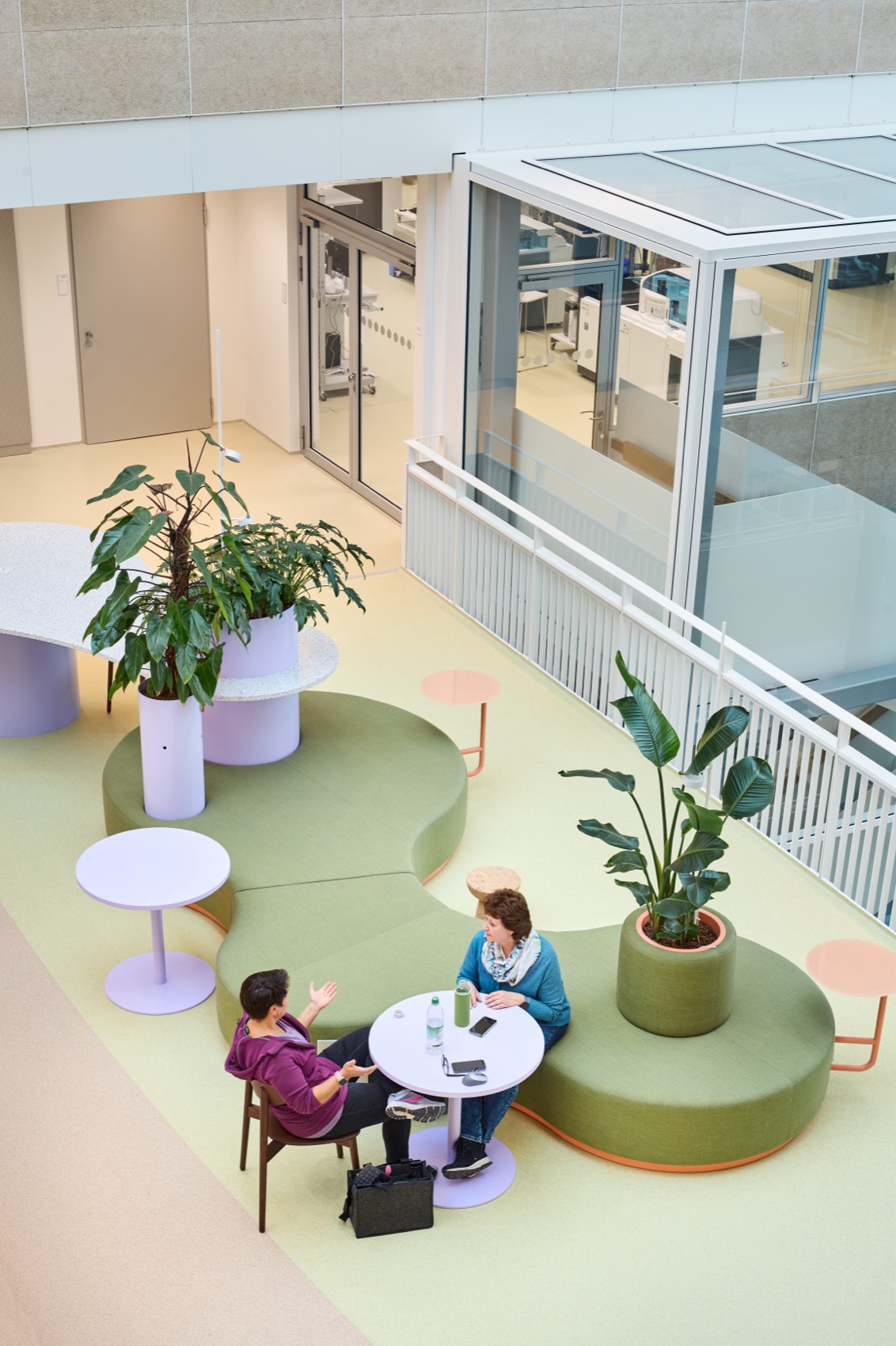
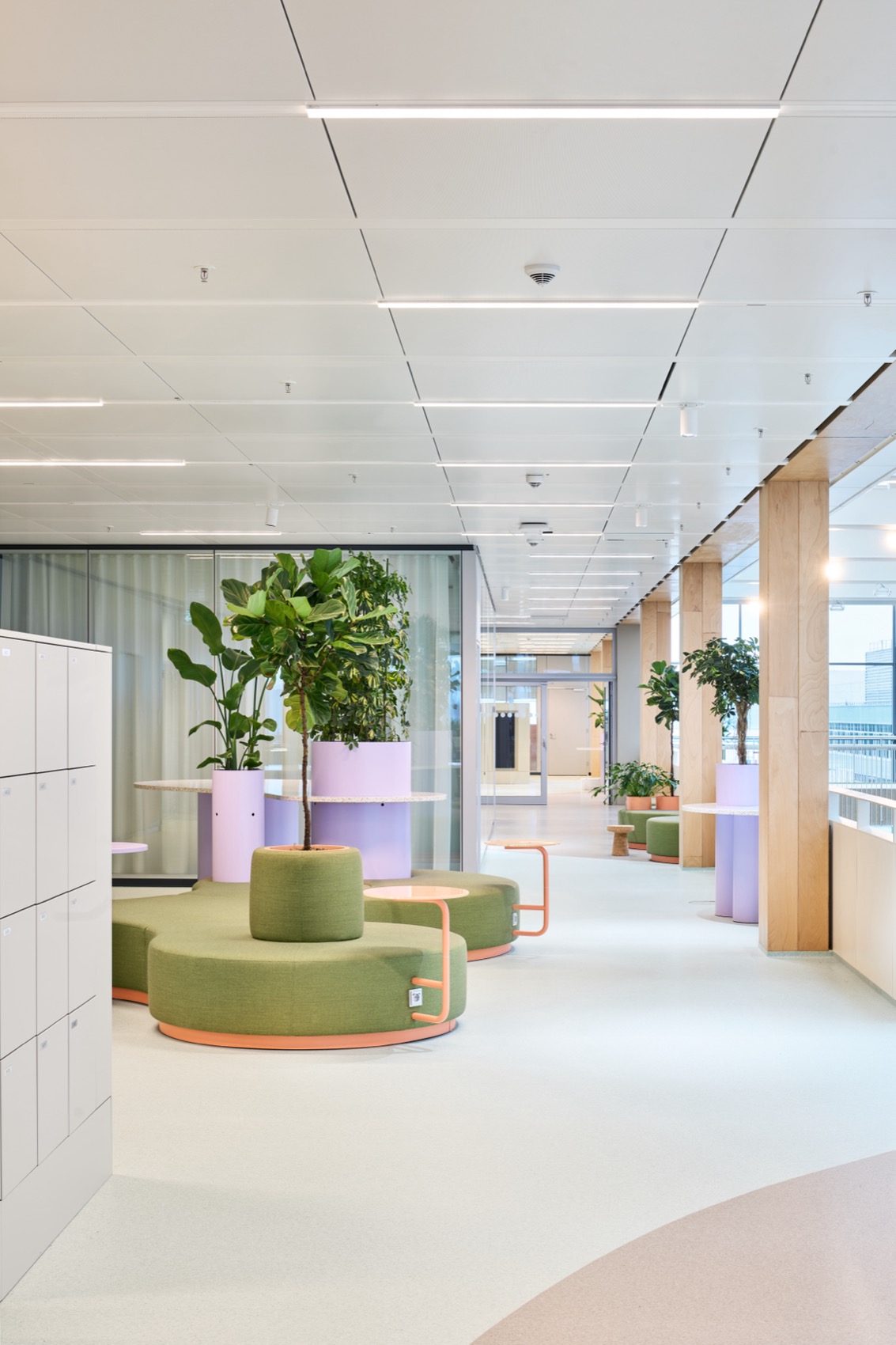
经过精心策划的家具布置激活了桥梁空间以及面向中庭的开放区域,使中庭成为整栋建筑的社交与组织核心。在中庭内部,自由布置的可移动家具模块以及具备声学性能的围护构件进一步强化了这一功能。这里既欢迎员工,也接待访客;既可举办活动,也成为连接两种工作环境的核心枢纽。桥梁两侧则设置了通过定制模块系统打造的有机形态座椅岛屿,并辅以点缀色彩、照明和绿植设计,以促进自发交流并营造高品质的沟通环境。
Carefully curated furnishings activate both the bridges and the atrium-facing open areas, establishing the atrium as the social and organizational heart of the building. Within the atrium itself, freely arranged mobile furniture modules and acoustically effective cladding reinforce this function. The space welcomes employees and visitors alike, accommodates events, and creates a central hub connecting both work environments. Along the bridges, organically shaped seating islands developed through a custom modular system – complemented by accent colors, lighting, and planting – foster spontaneous encounters and create a high-quality environment for communication.
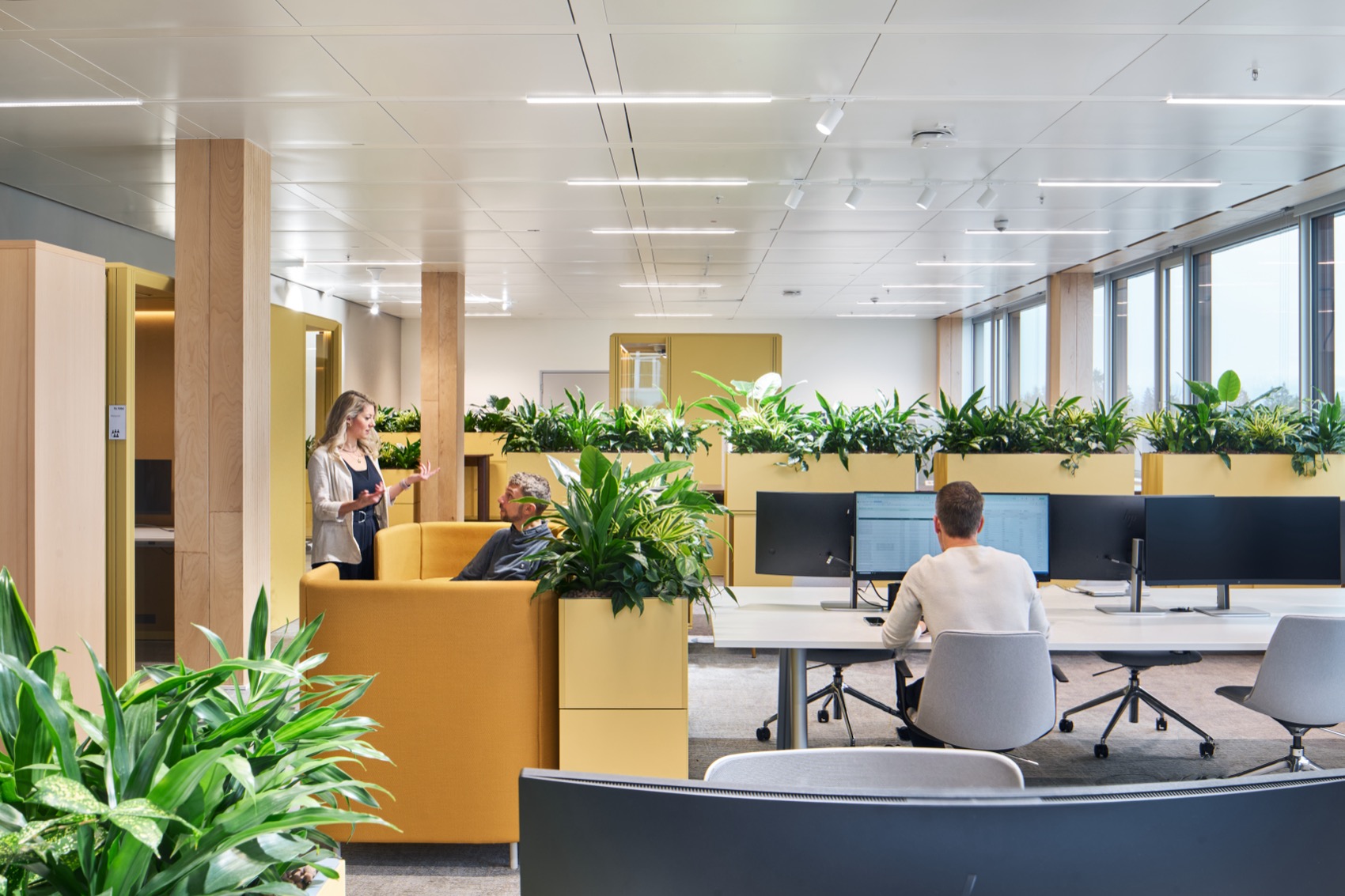
▼邻里式办公空间,Neighborhood-based workspace
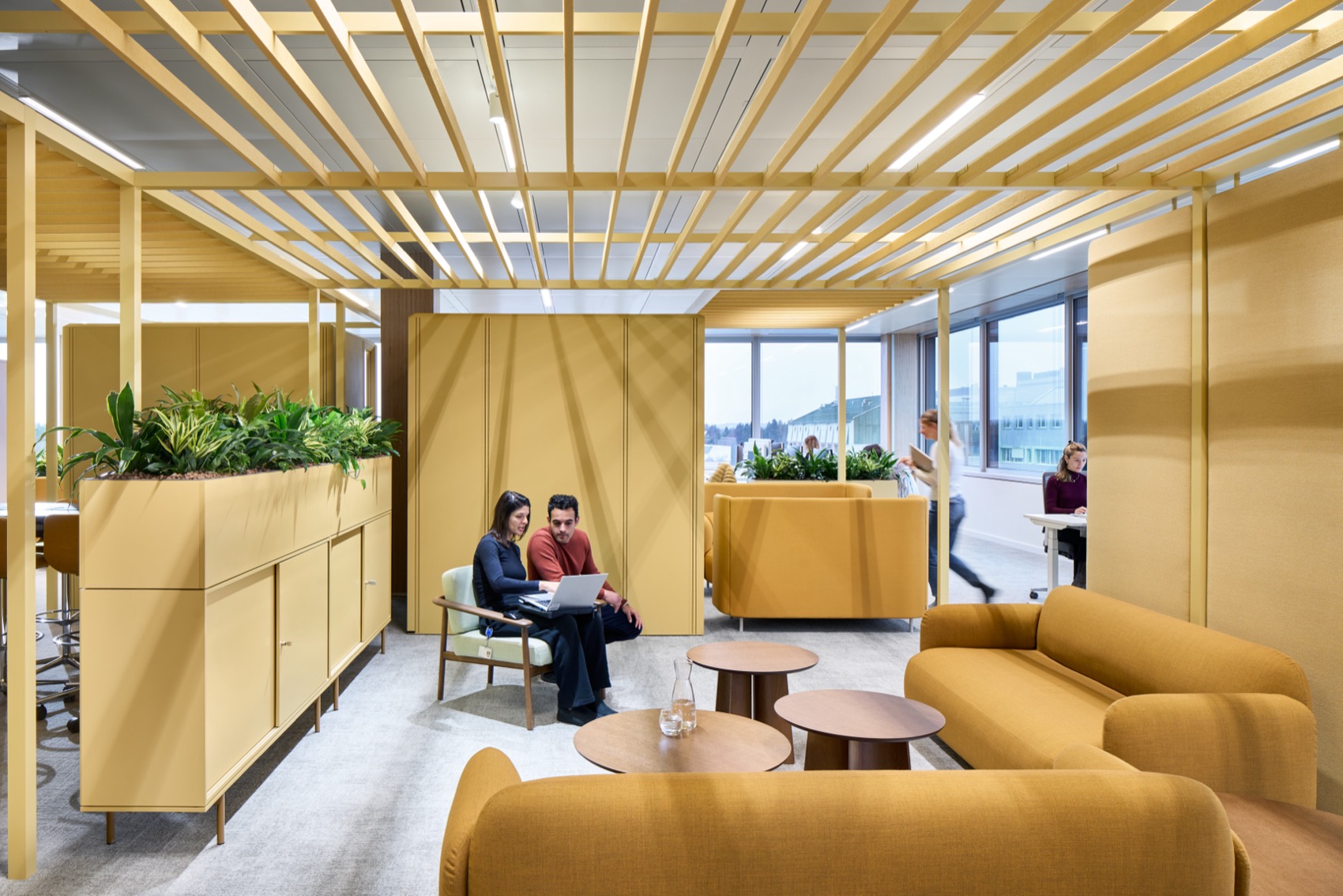
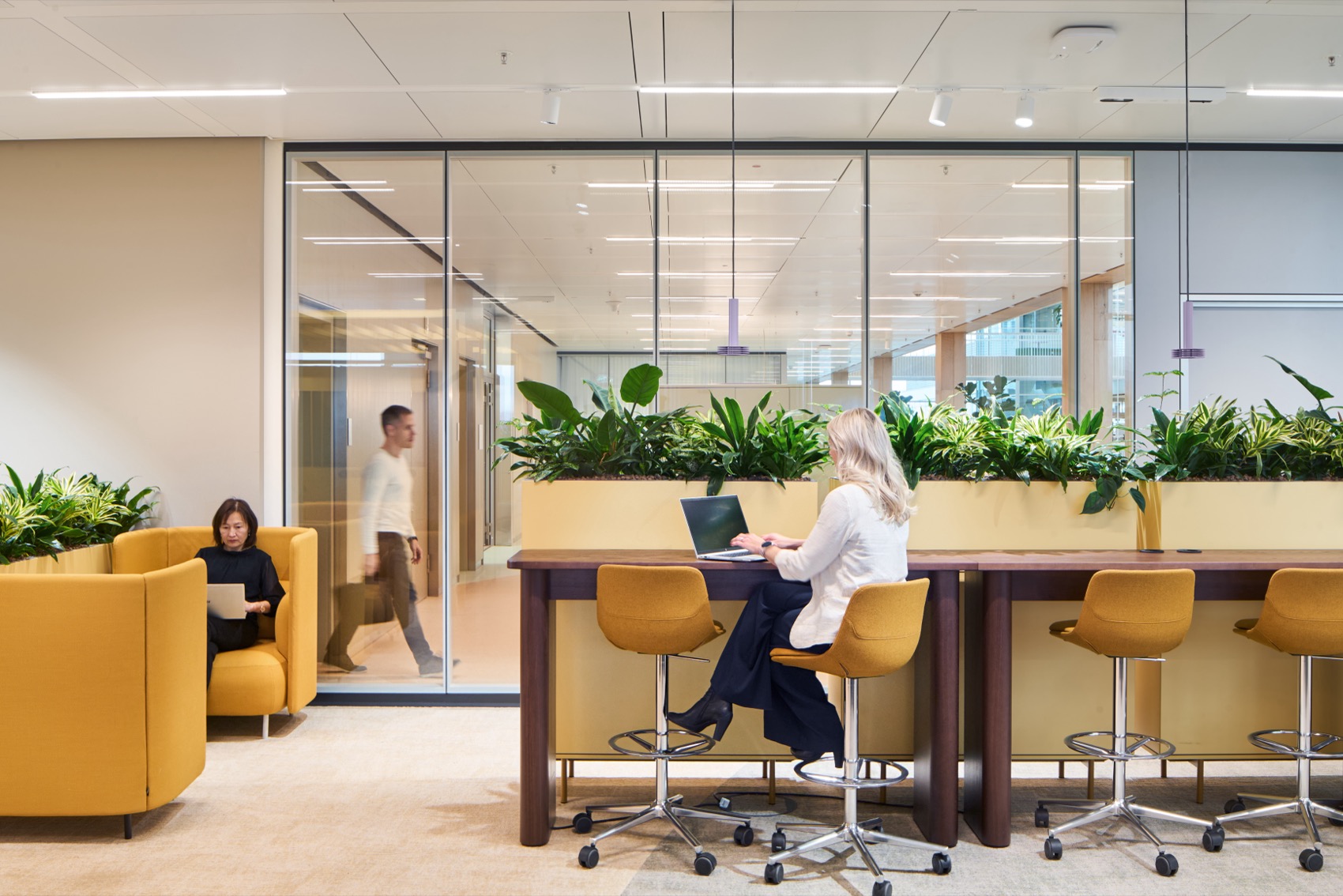
▼共享休憩与交流空间,Shared lounge and interaction area
▼灵活办公单元,Flexible workplace setting
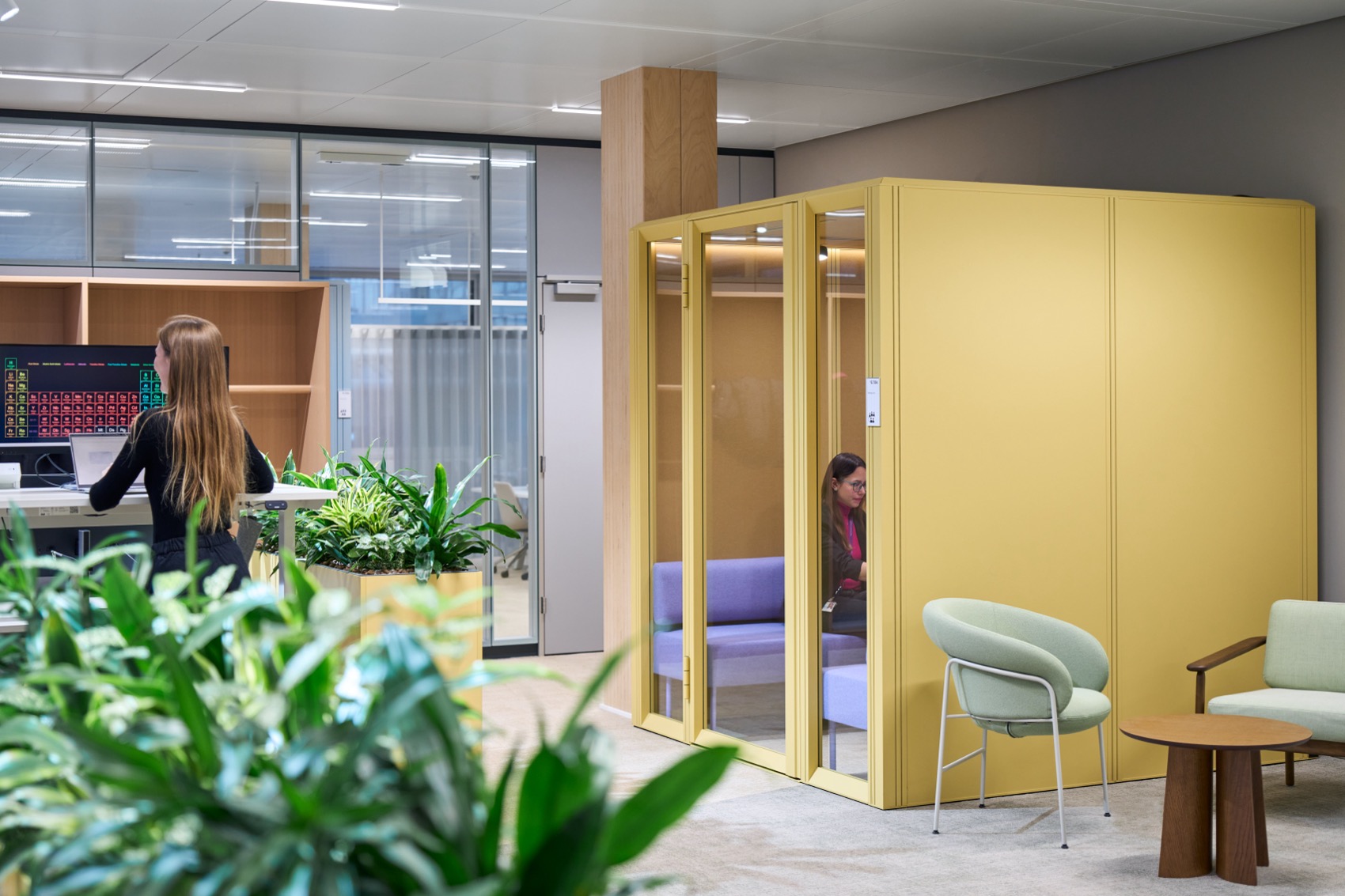
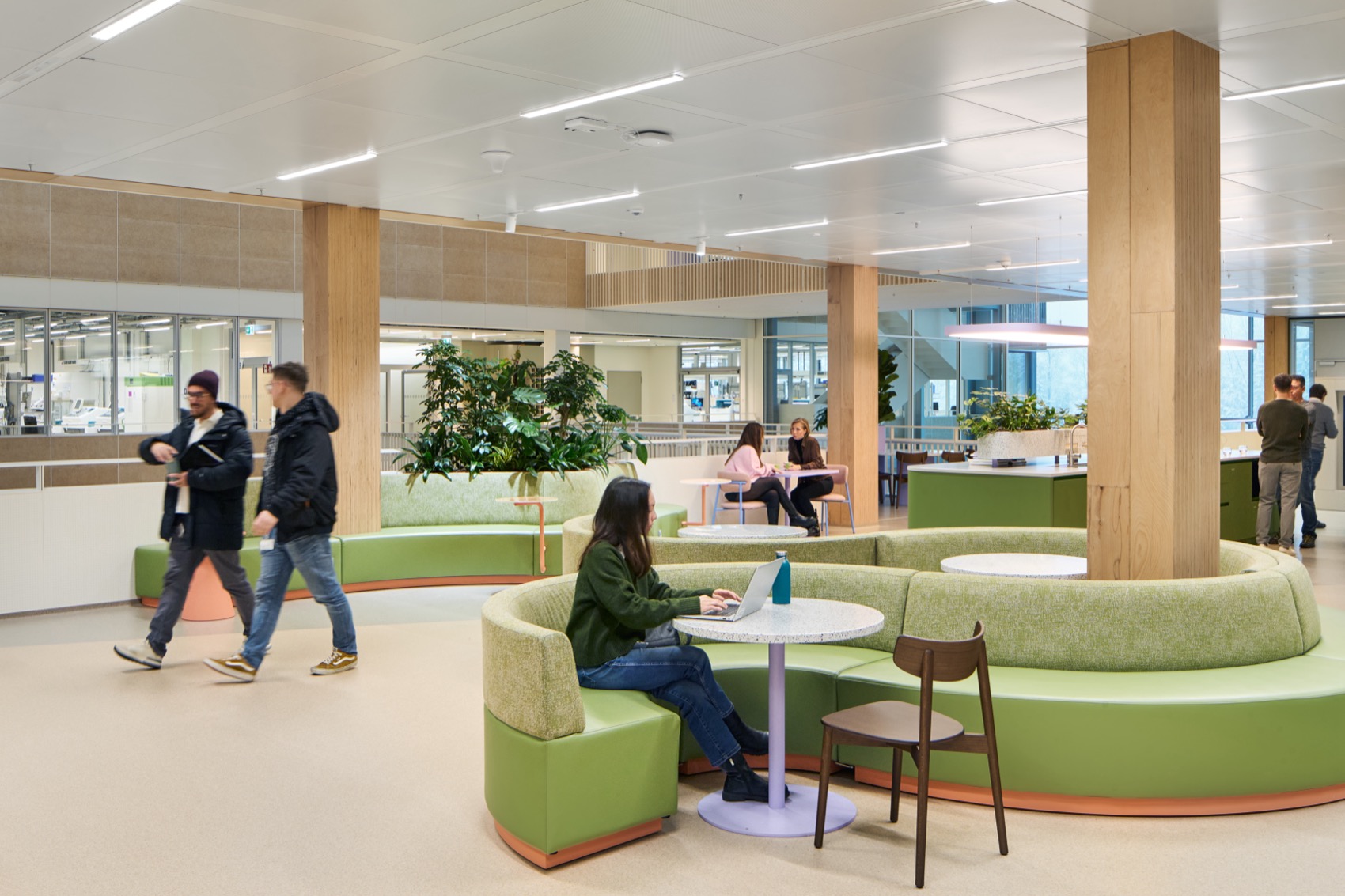
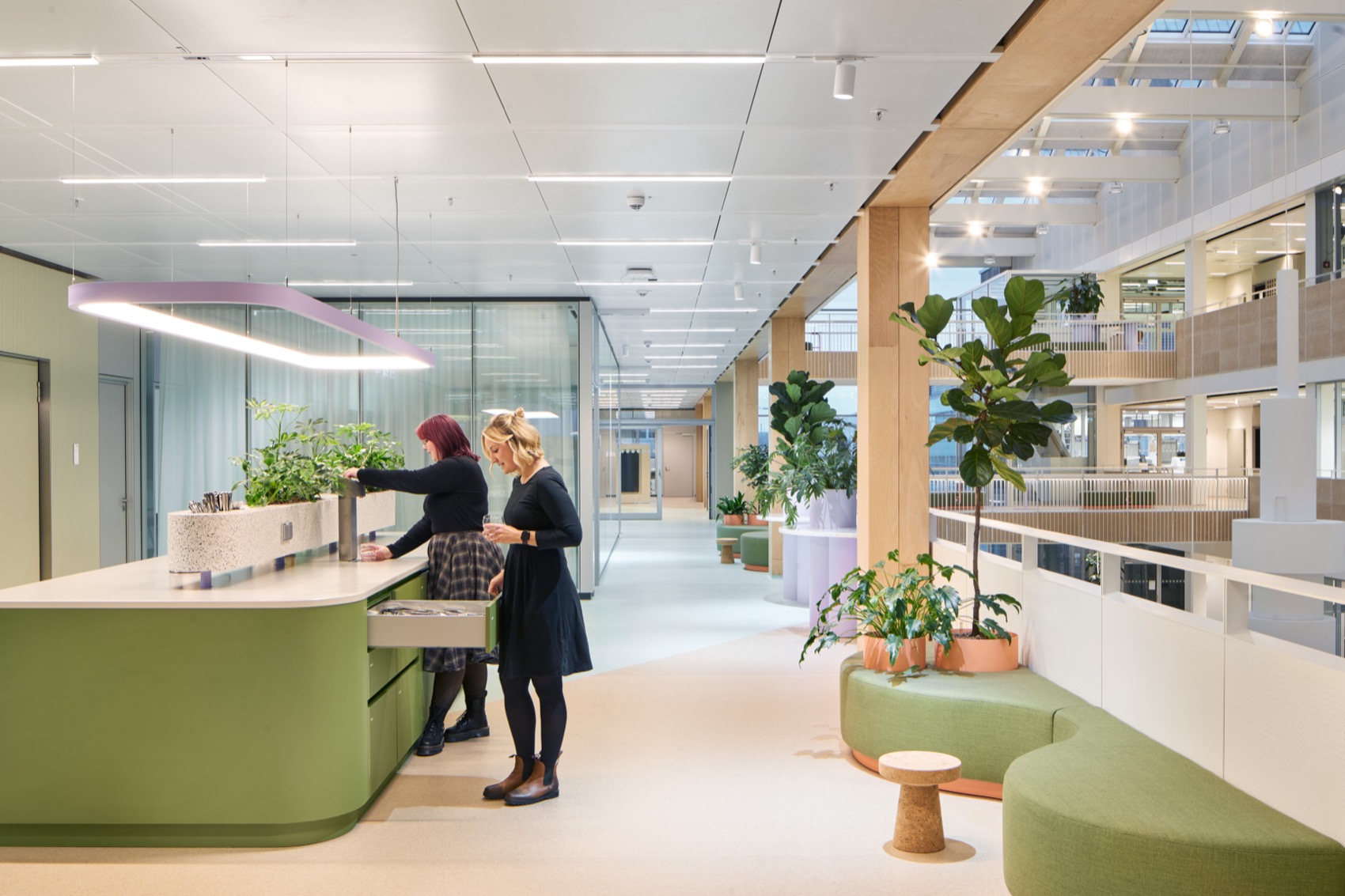
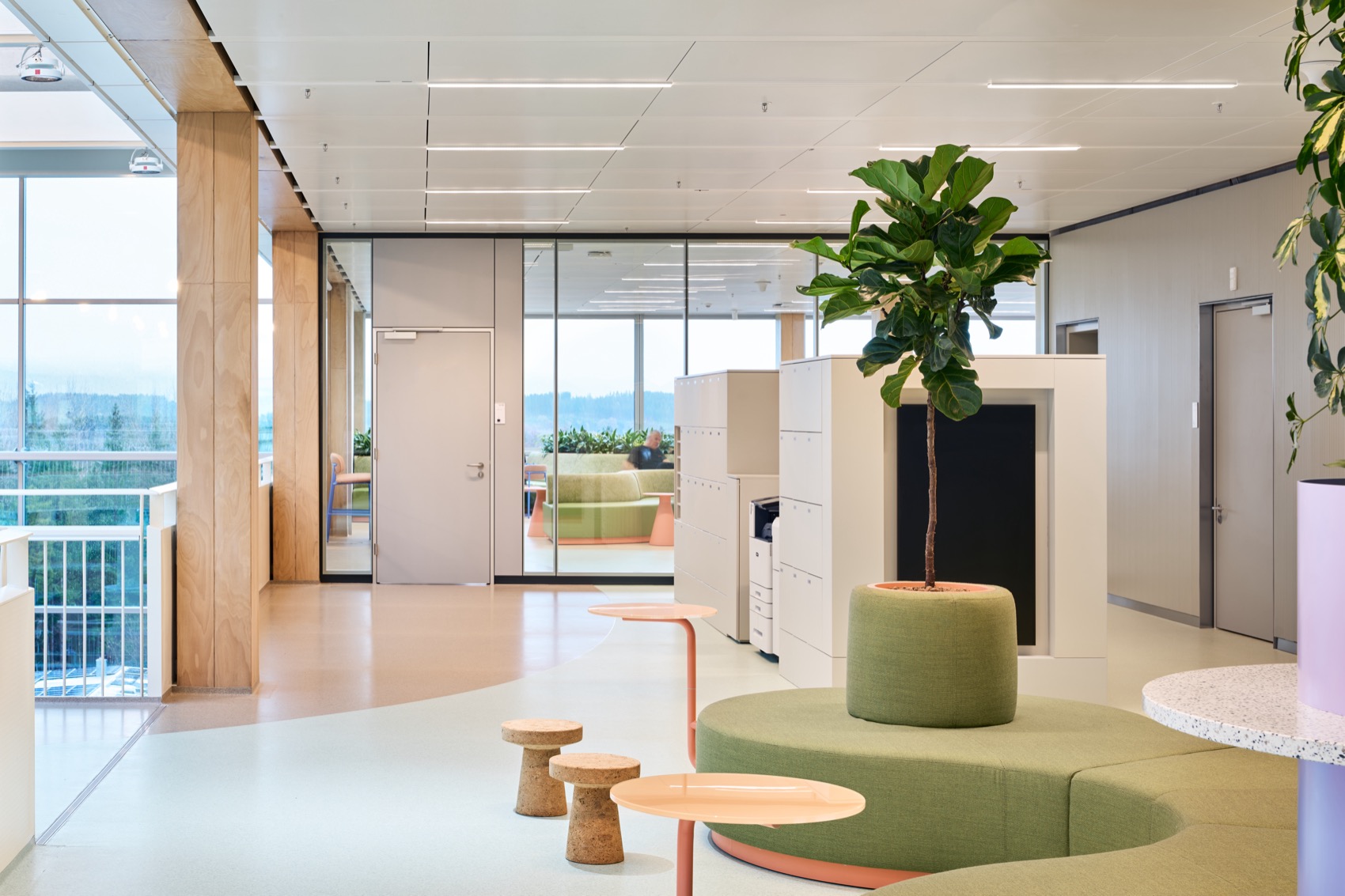
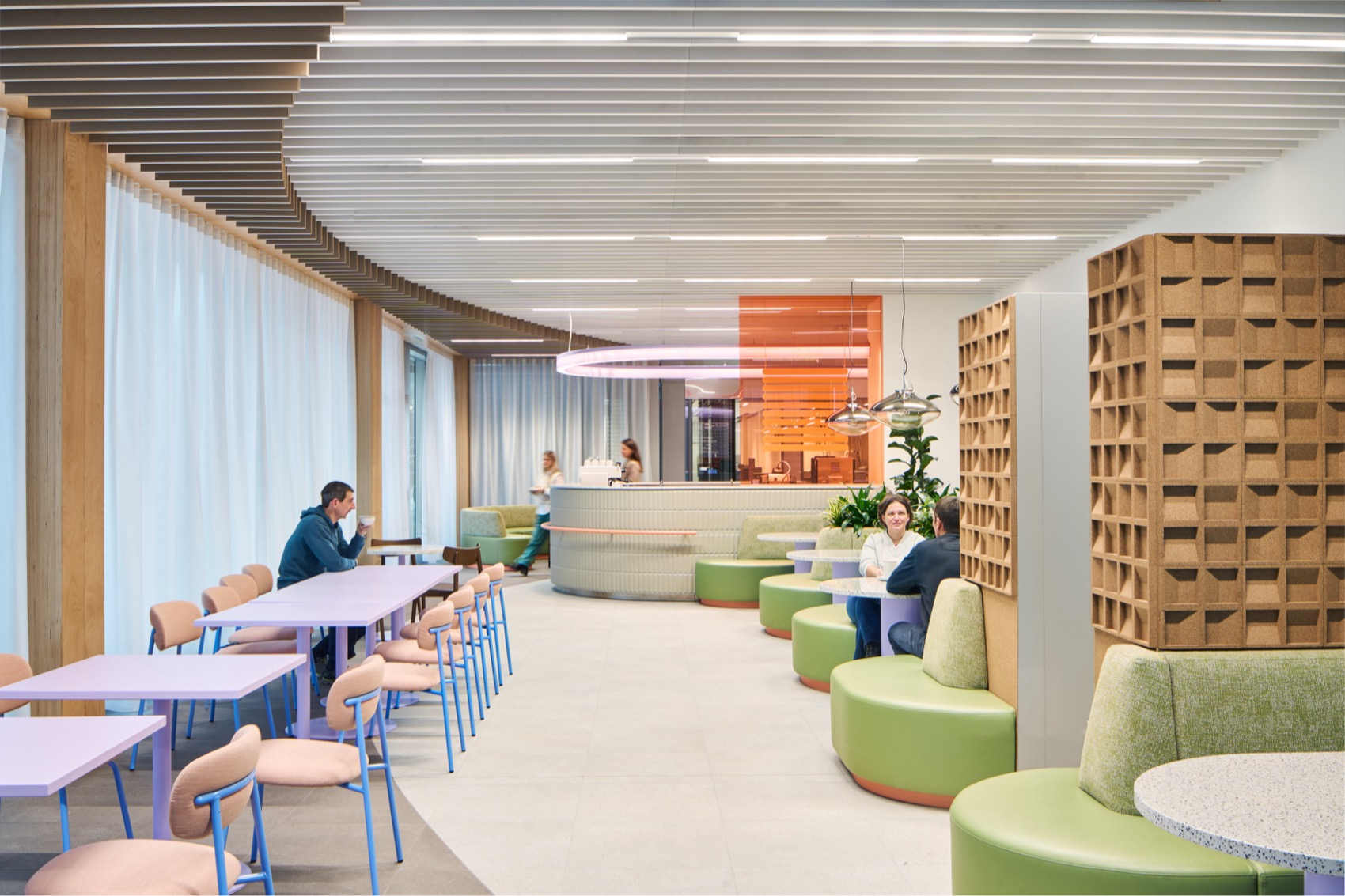
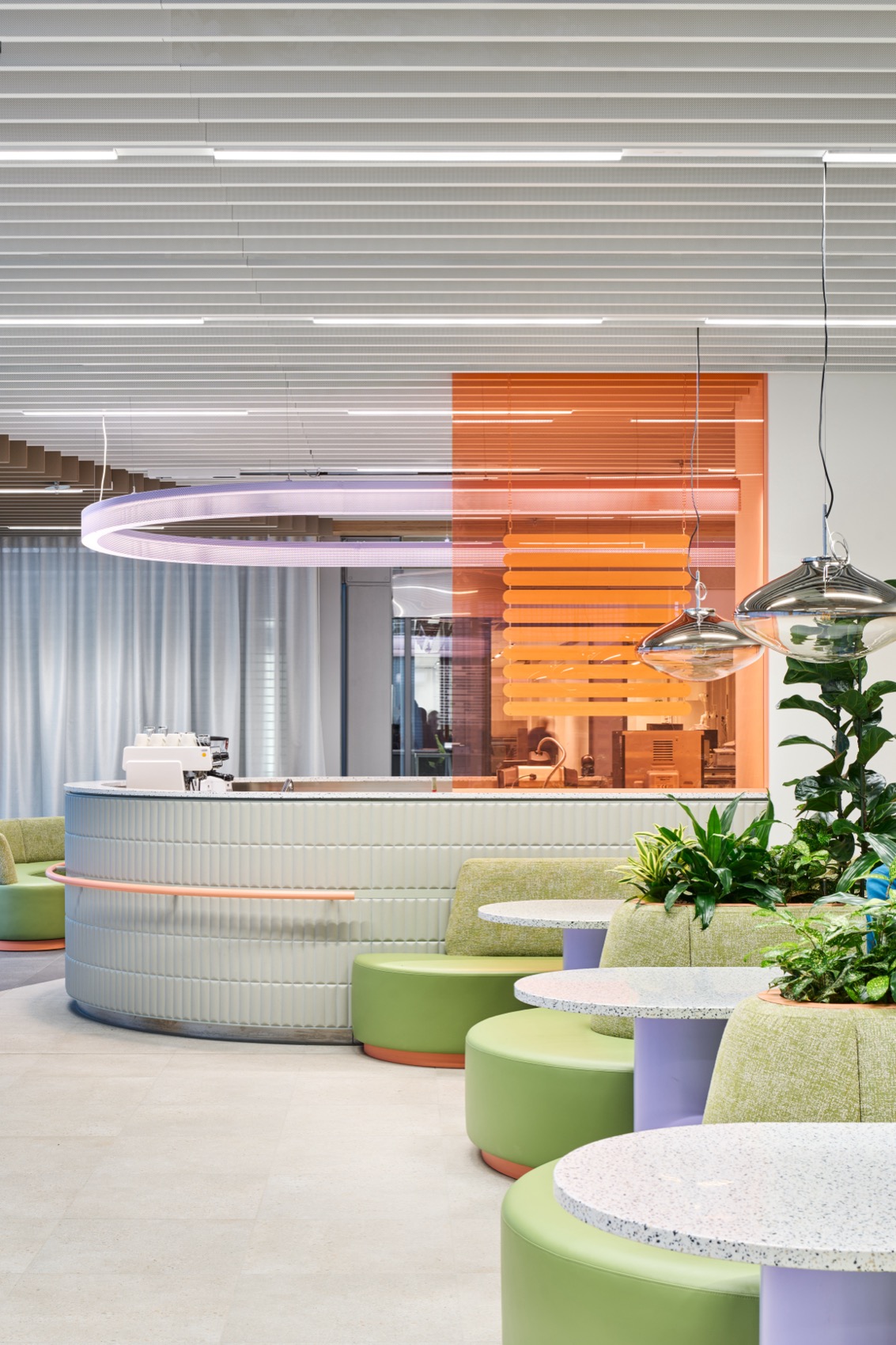
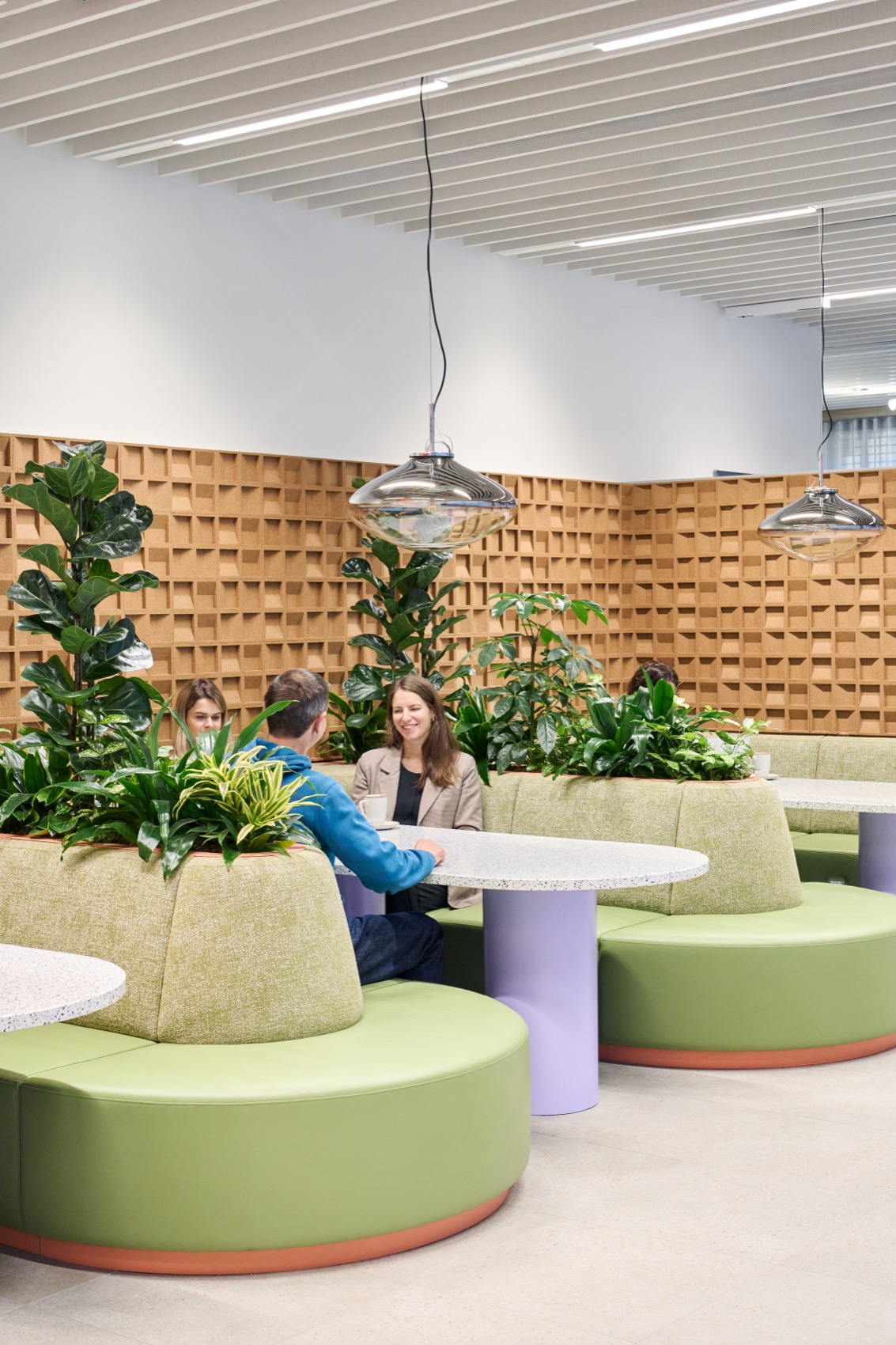
与此同时,办公区域被打造为一个具有多样化工作模式的系统。应业主要求,设计团队设置了多个“邻里单元(Neighborhoods)”,以加强员工之间的交流并提升归属感。每一层都经过精细分区,明确划分专注工作、协作、会议及休息区域,并通过材料、色彩、织物、空间隔断、活动家具与绿植等元素,在视觉与功能层面予以强化。这种差异化设计不仅提升了空间辨识度,也能够直观传达各区域的使用方式。每层均配备茶水间与休闲交流空间,从首层咖啡厅到拥有开阔视野的高层区域,共同构成办公环境中的非正式社交节点。
At the same time, the office workplace environment was developed as a differentiated system of working modes. At the client’s request, “neighborhoods” were created to strengthen exchange and foster community within the workplace. Each floor is carefully zoned to distinguish areas for focused work, collaboration, meetings, and breaks – visually and functionally supported through materials, colors, textiles, spatial dividers, loose furniture, and vegetation. This differentiation creates orientation and intuitively communicates how each space is intended to be used. Tea kitchens and breakout areas on every level – from the café on the ground floor to elevated spaces with expansive views – complement the workplace with informal anchor points.
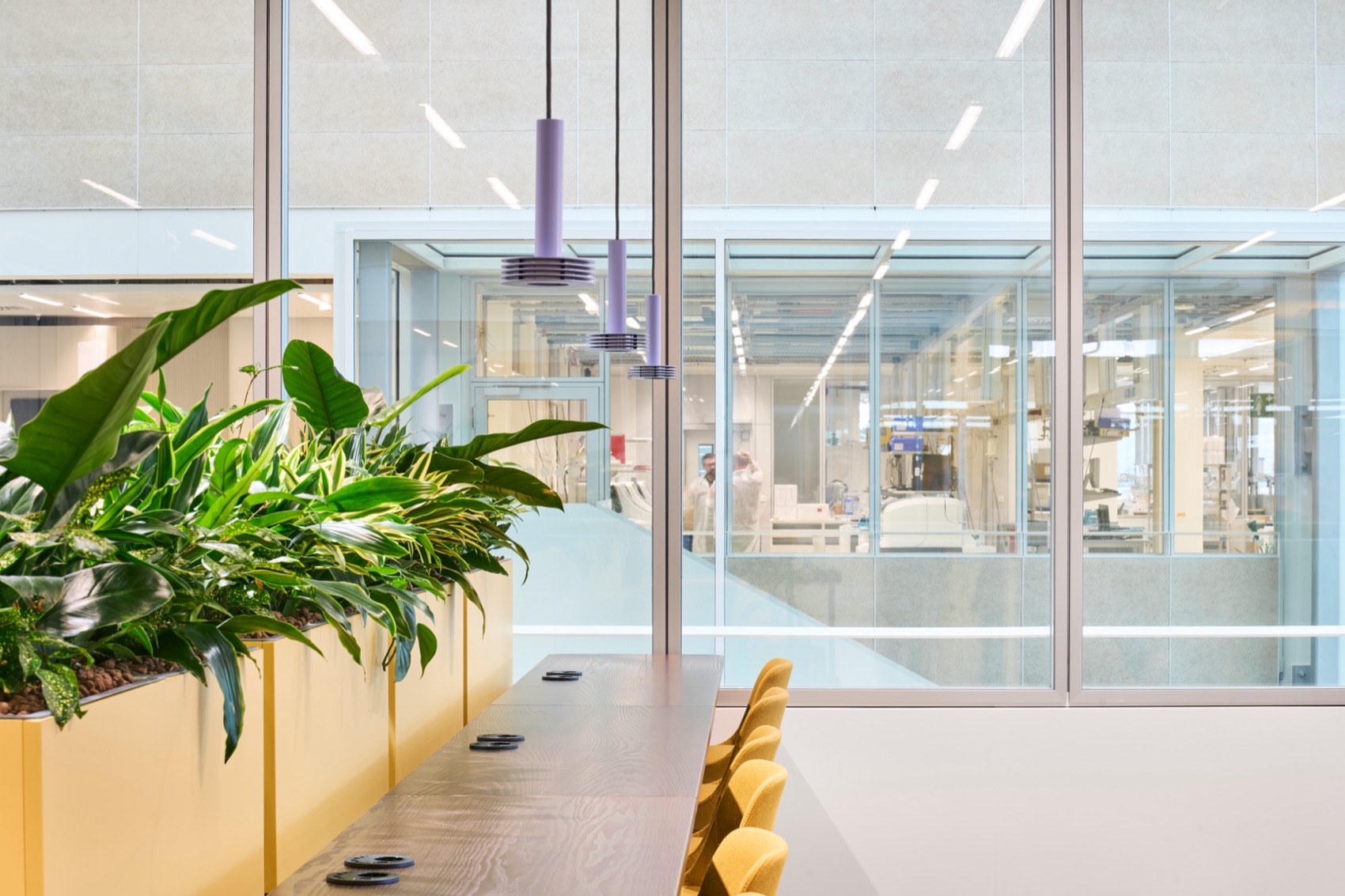
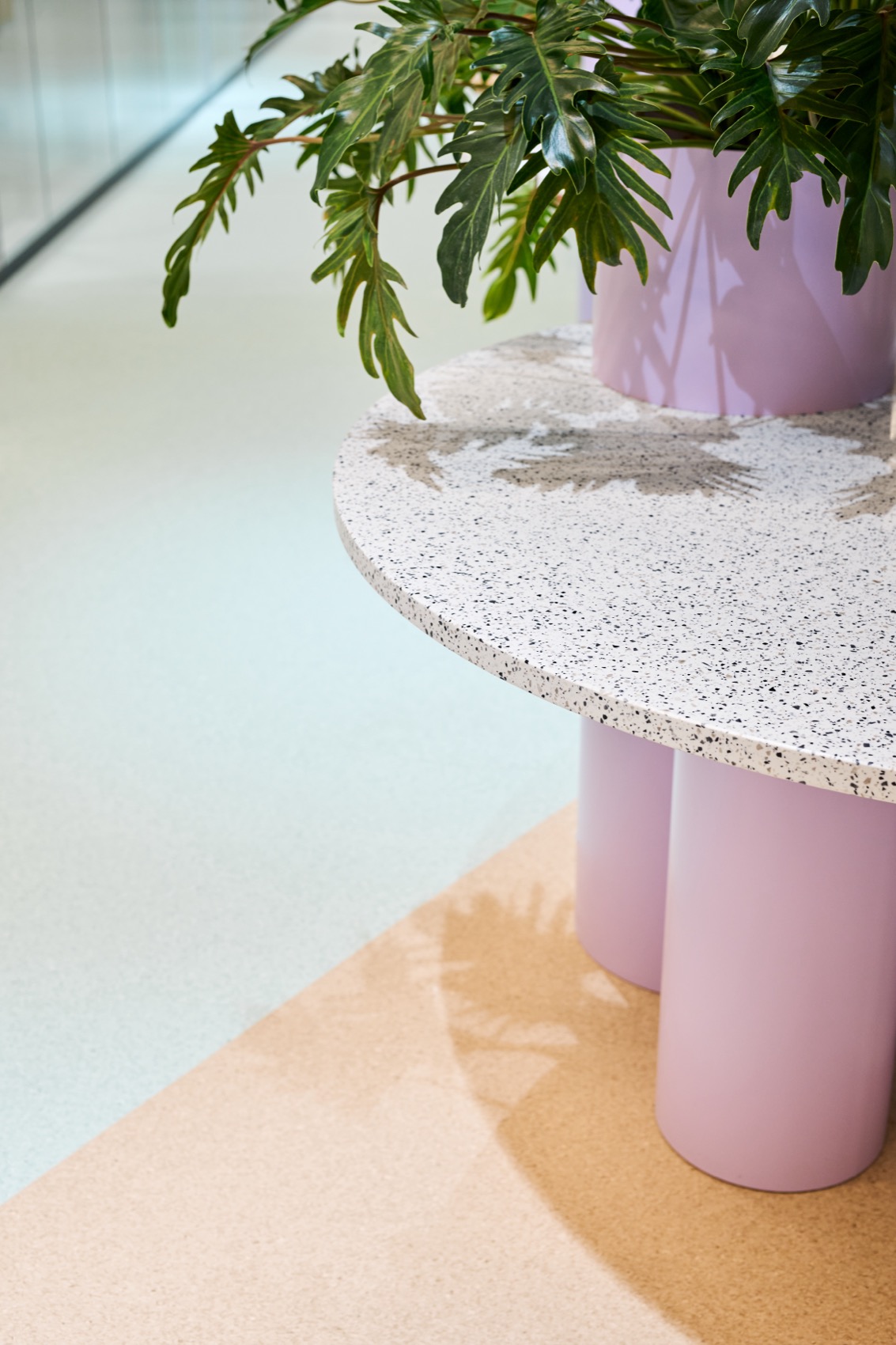
▼绿植环绕的共享座位,Shared seating surrounded by planting
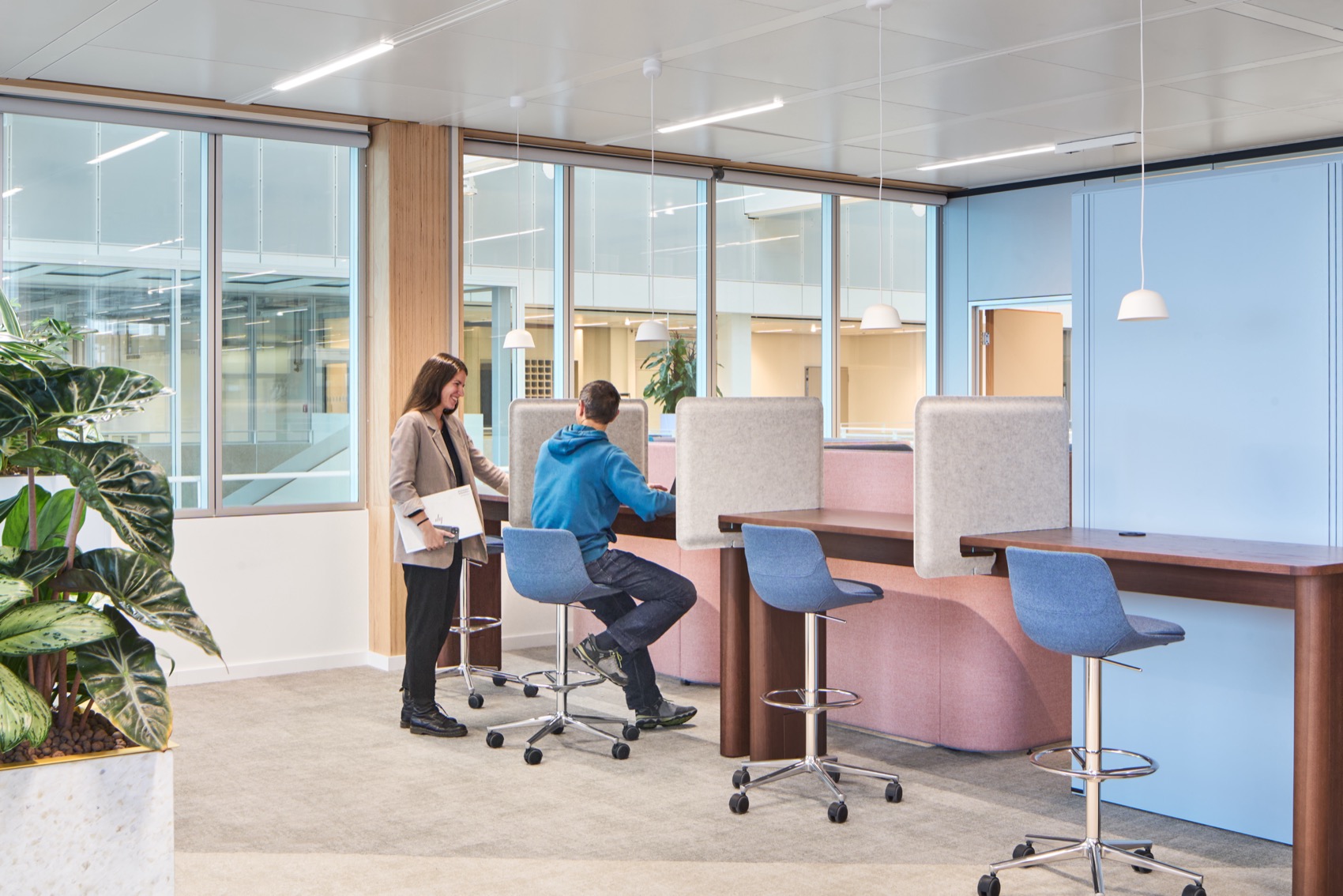
▼可调节的半私密工作单元,Adaptable semi-private work setting
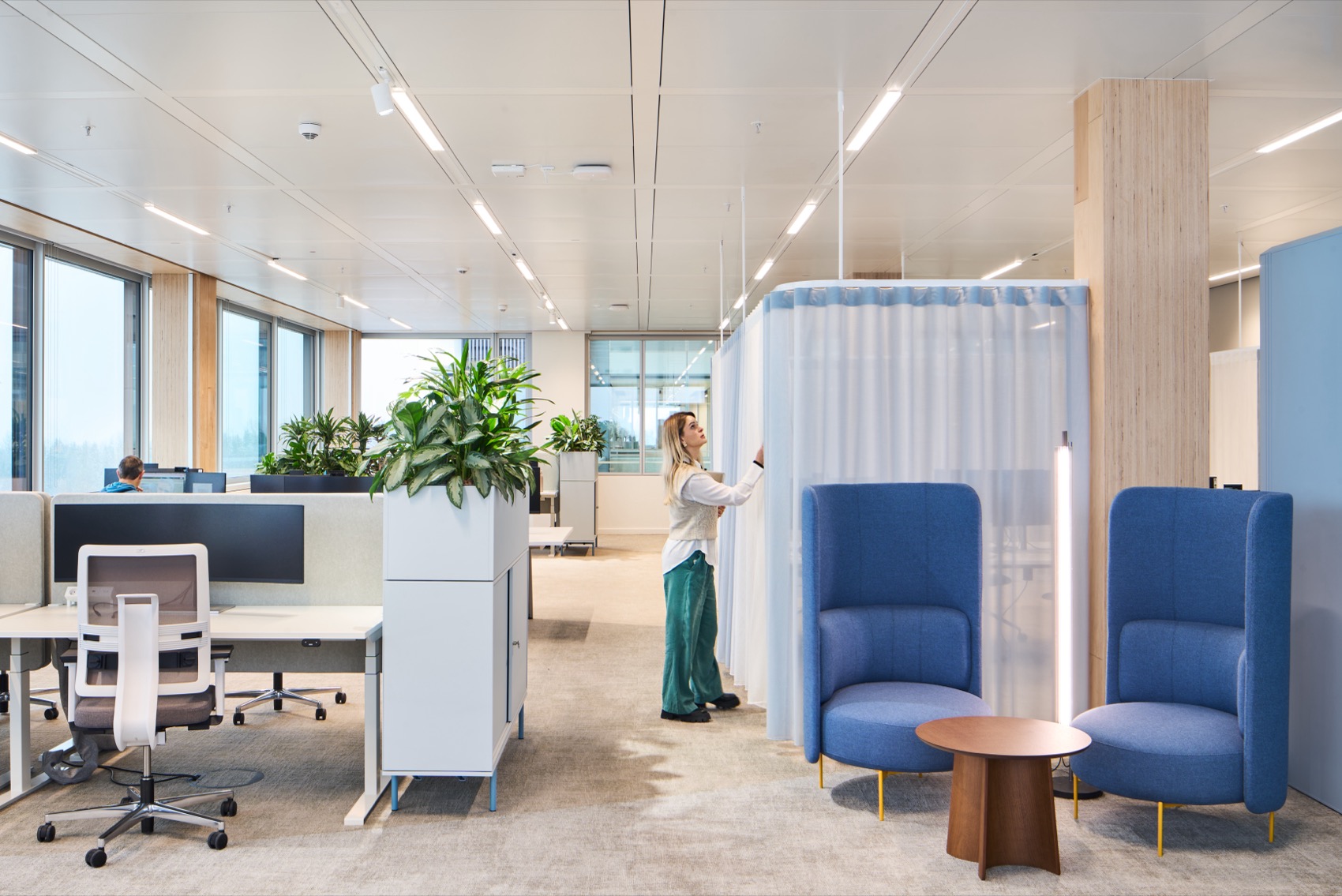
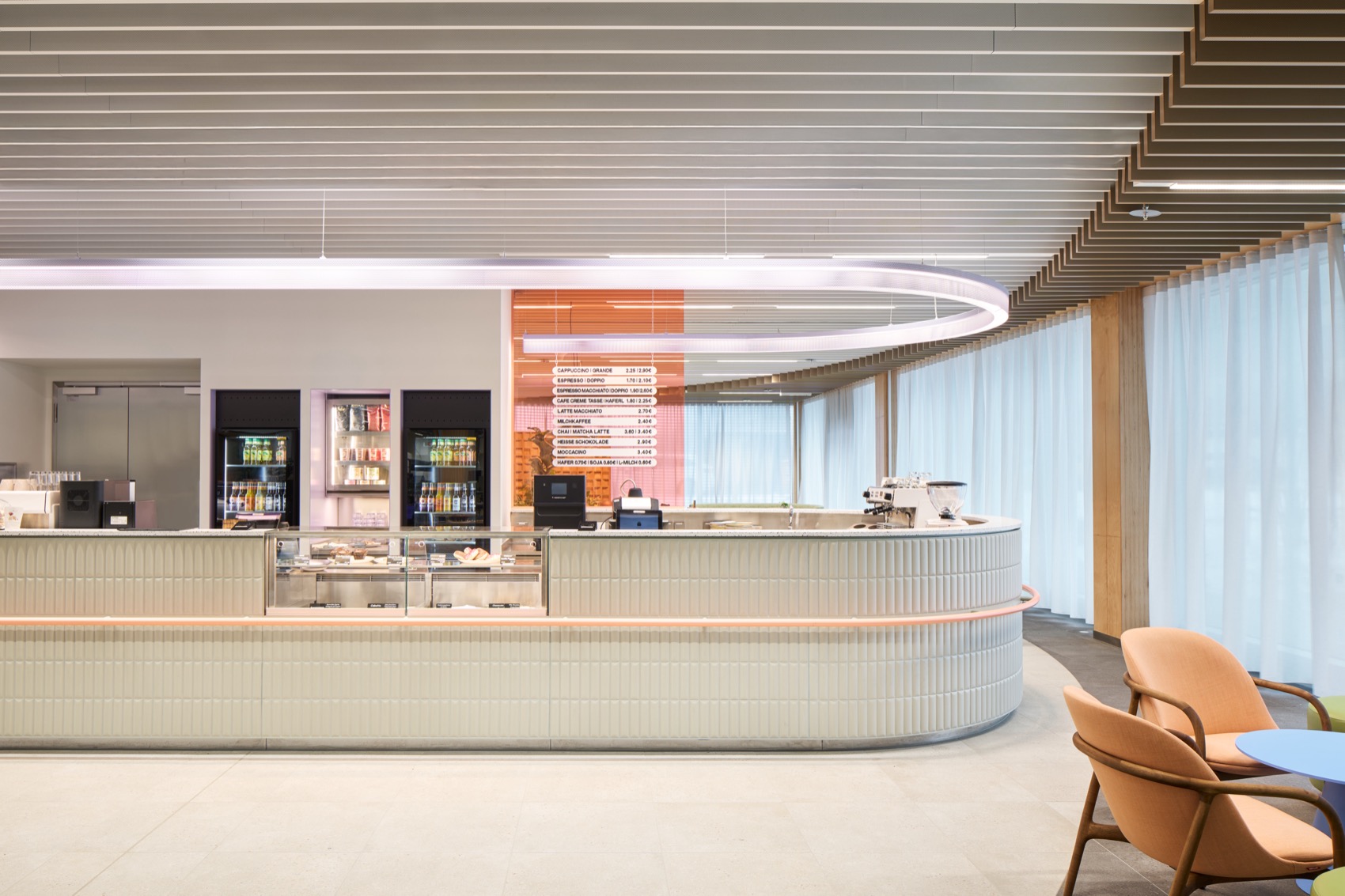
▼休闲座位与吧台区域,Lounge seating and café counter
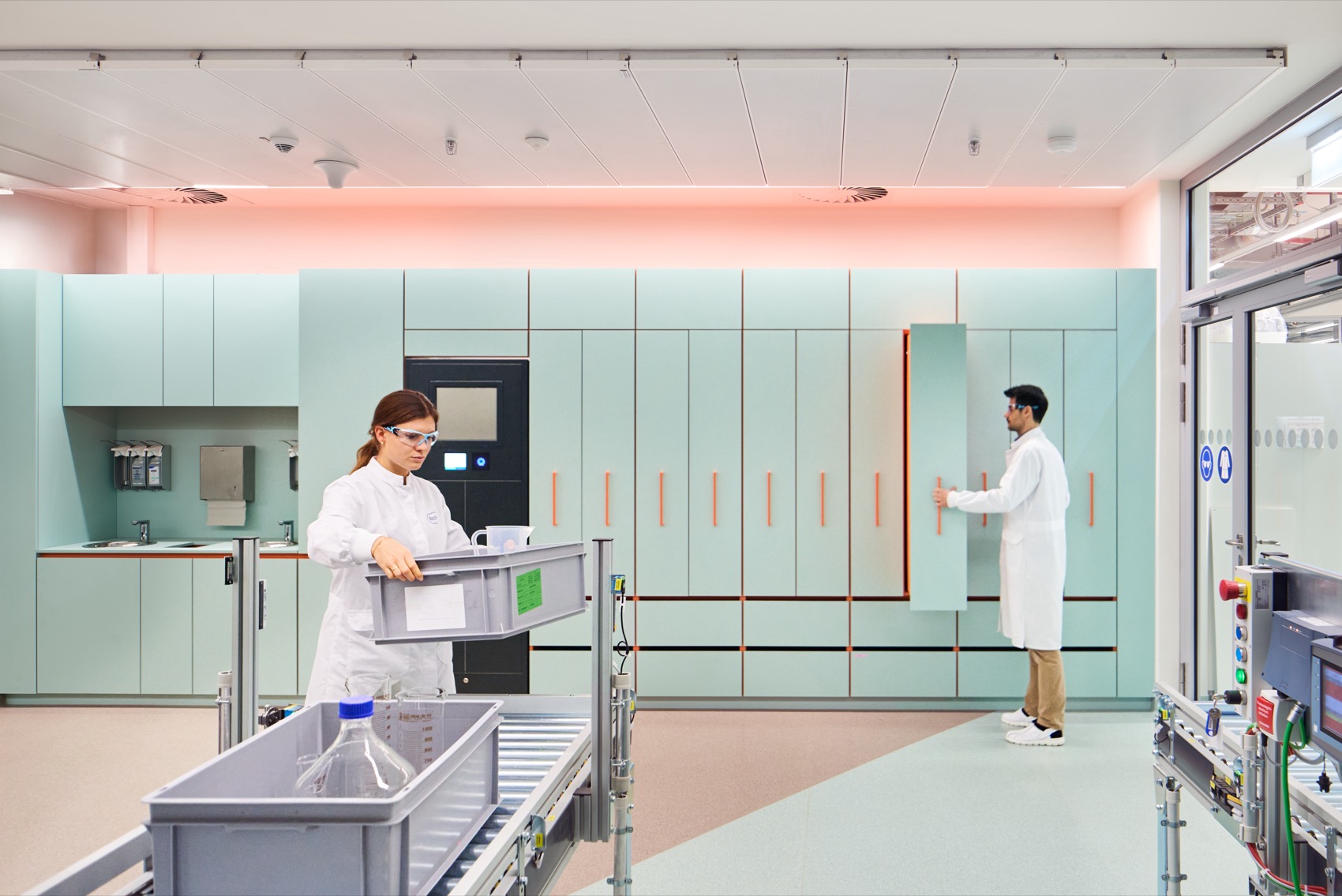
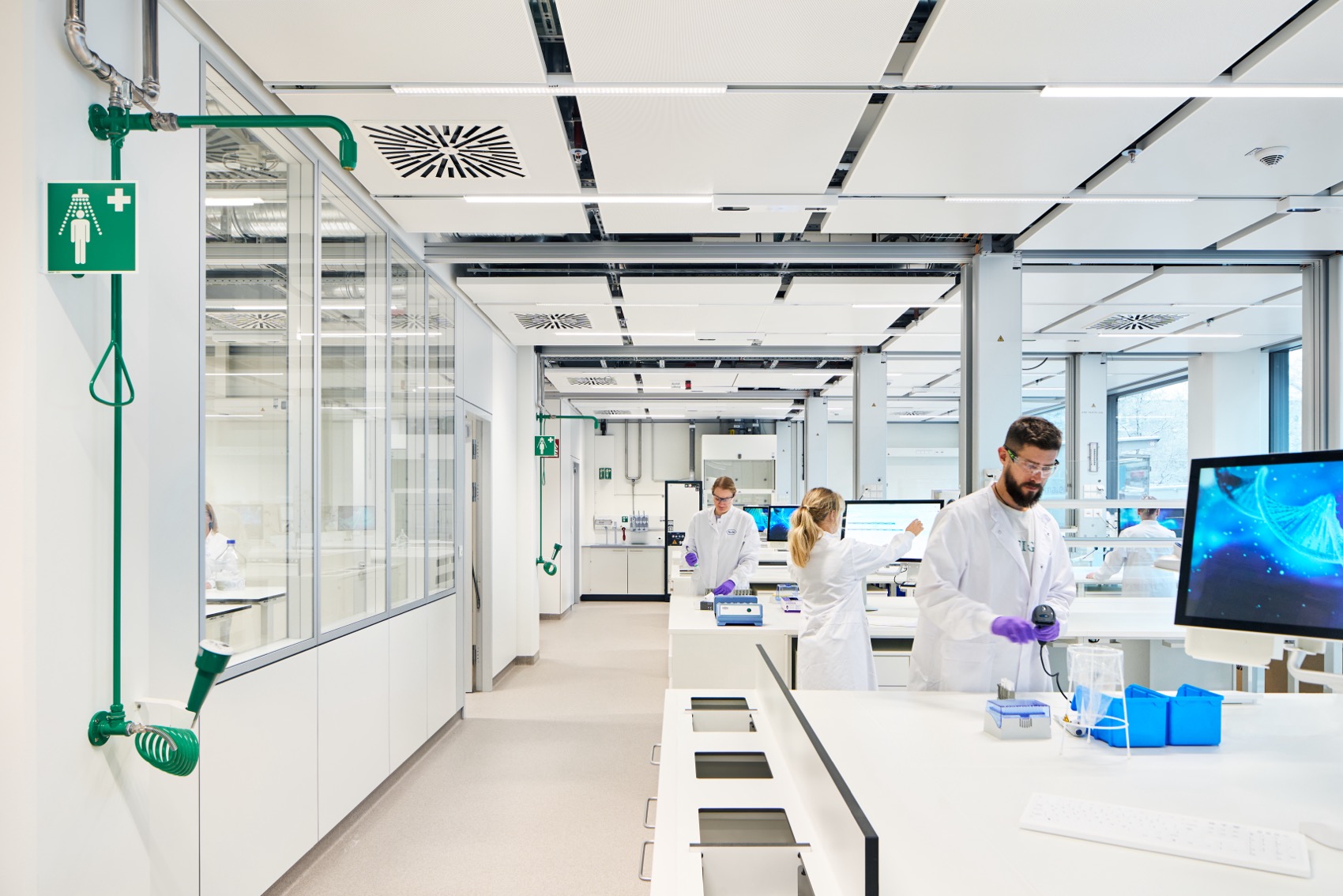
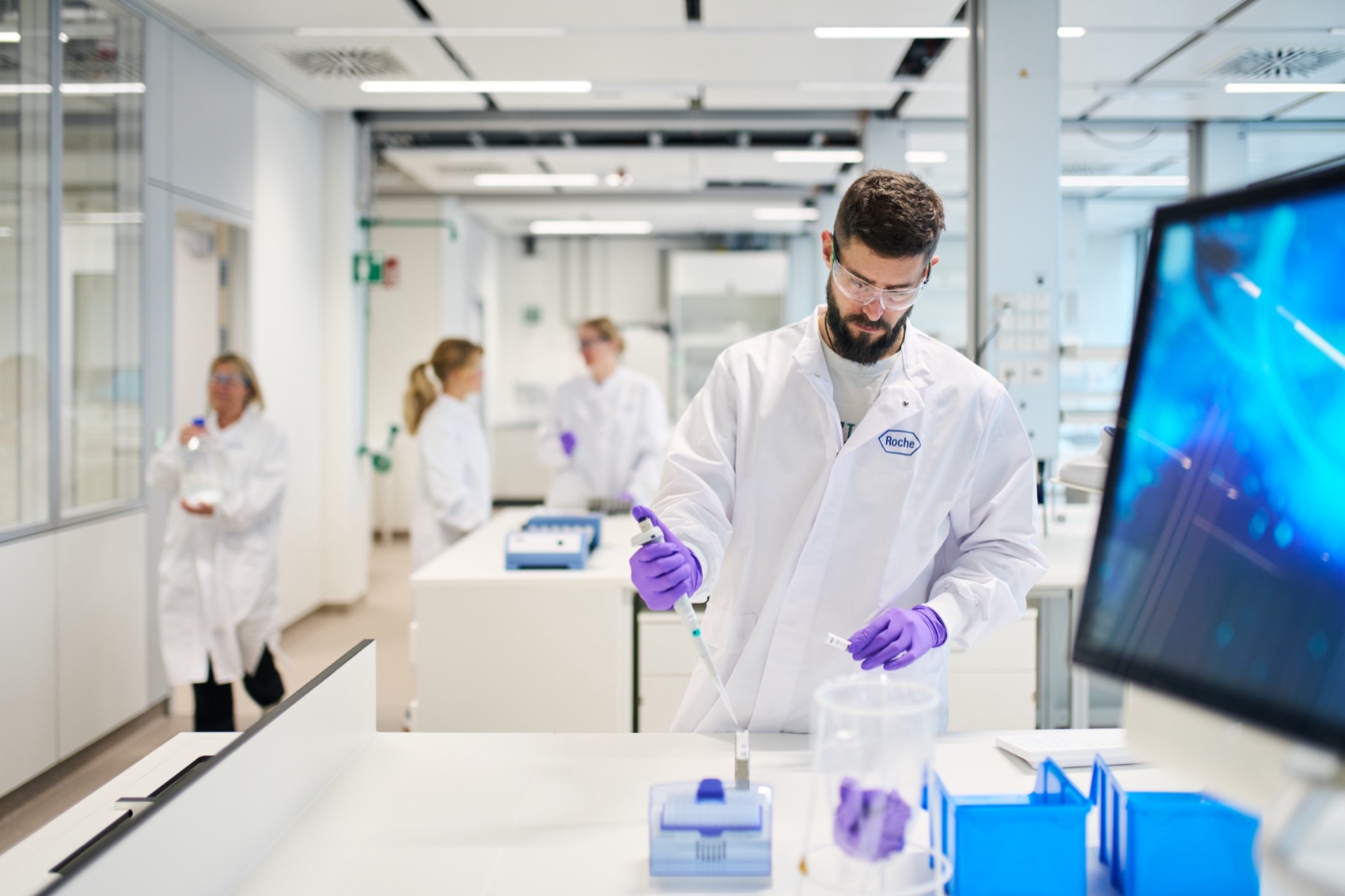
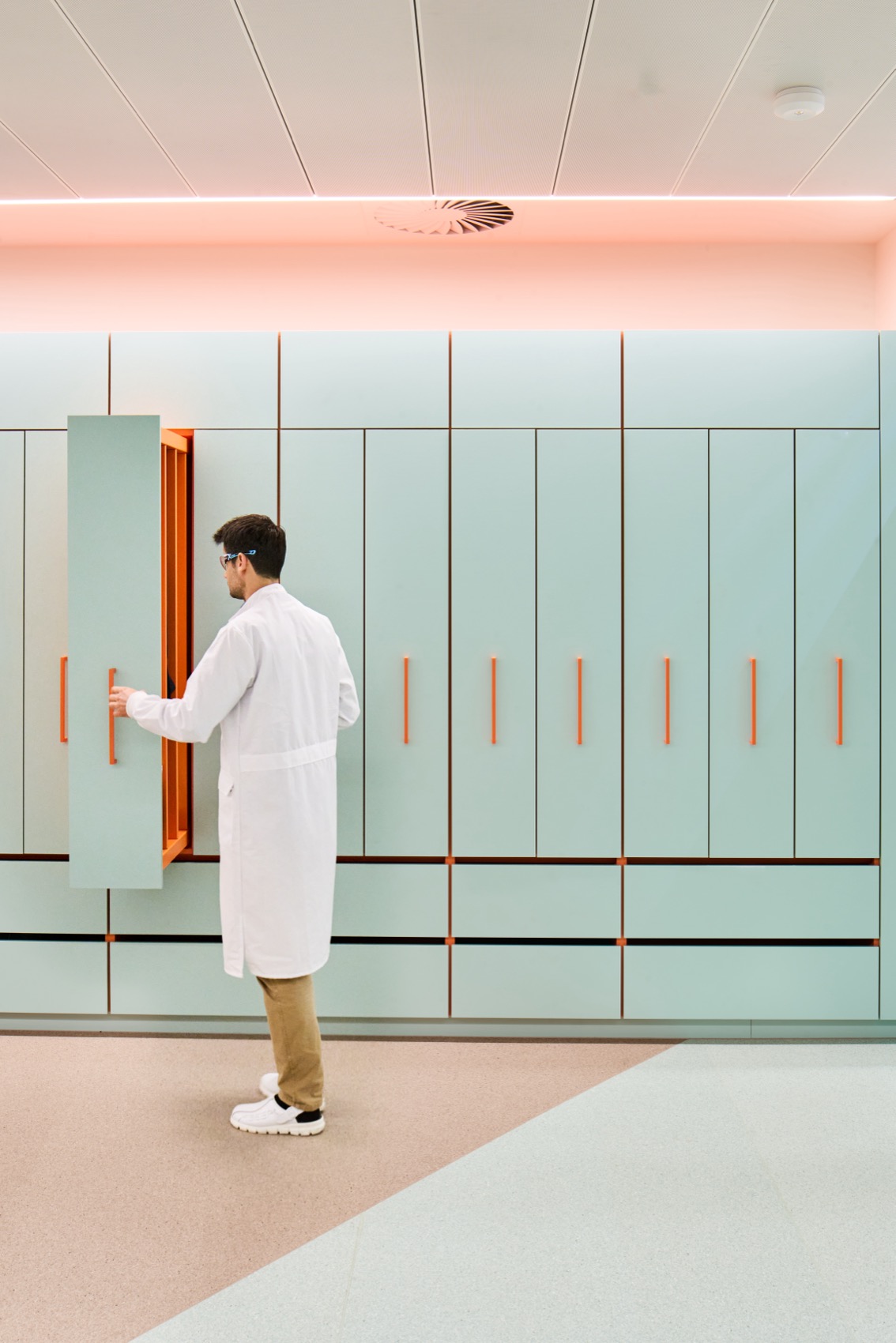
Studio Alexander Fehre 设计方法的重要特征之一,是其对不同界面关系的深入研究。室内建筑设计在与实验室规划团队紧密合作的基础上,进一步延伸至实验室环境之中,并通过色彩与形态语言塑造空间体验。在这里,办公空间设计原则成功转译至高度专业化的实验室环境中。它并非表层装饰,而是一种完整且一致的空间框架,在不影响实验室功能要求的前提下,为使用者提供导向性、身份认同感以及协作支持。
A defining characteristic of Studio Alexander Fehre’s work is its expertise at interfaces. Developed in close collaboration with the laboratory planner, the interior architecture extends into the laboratory environments, shaping them through color and formal design. Here, the transferability of workplace principles into highly specialized environments becomes evident – not as a decorative add-on, but as a coherent spatial framework that supports orientation, identity, and collaboration without compromising the functional requirements of laboratory operations.
▼连接研发与实验流程的空间,
Space supporting research and laboratory processes
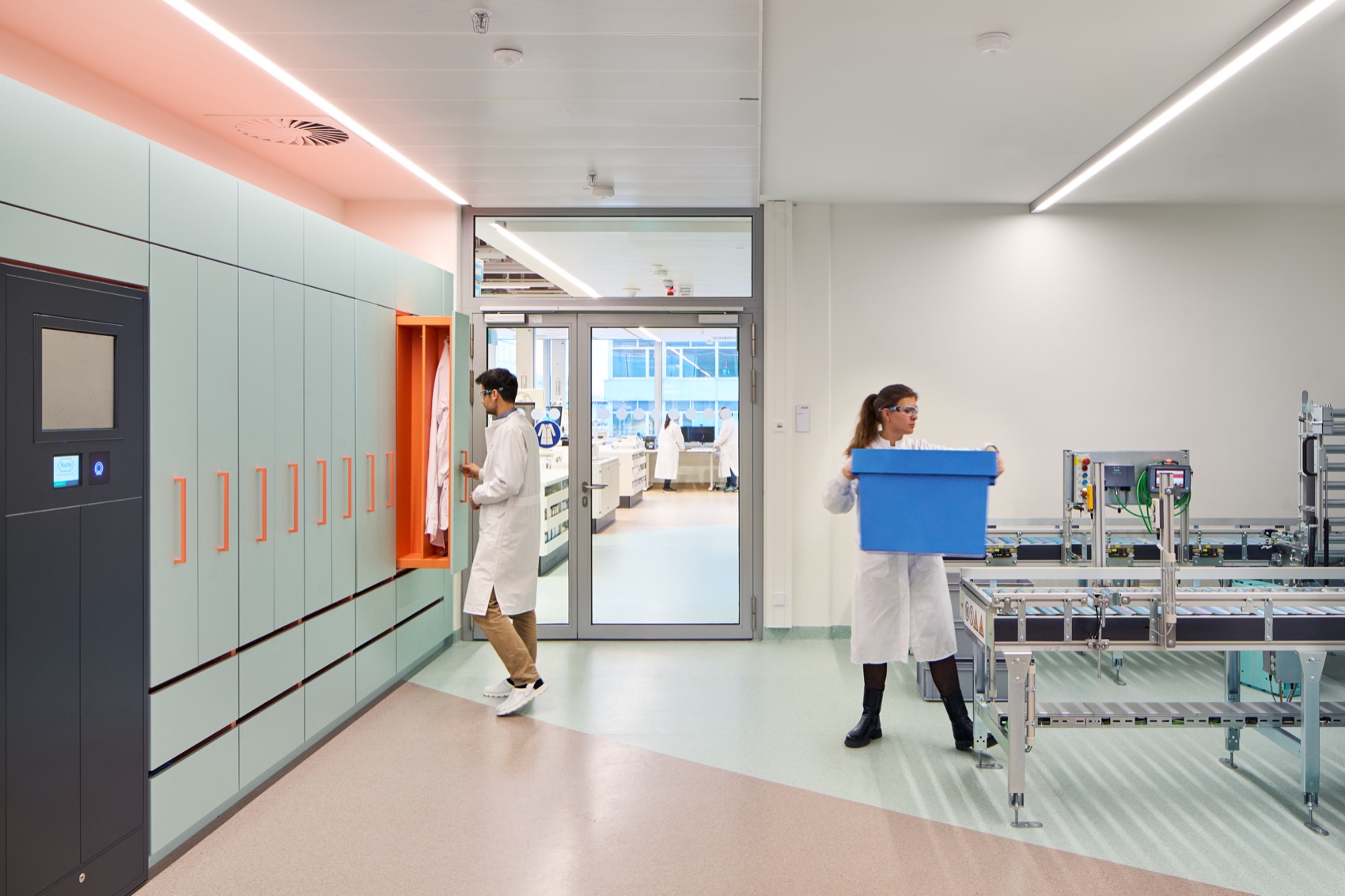
▼实验人员日常工作场景,Laboratory workflow environment
▼色彩化柜体设计细节,
Color-accented cabinetry detail
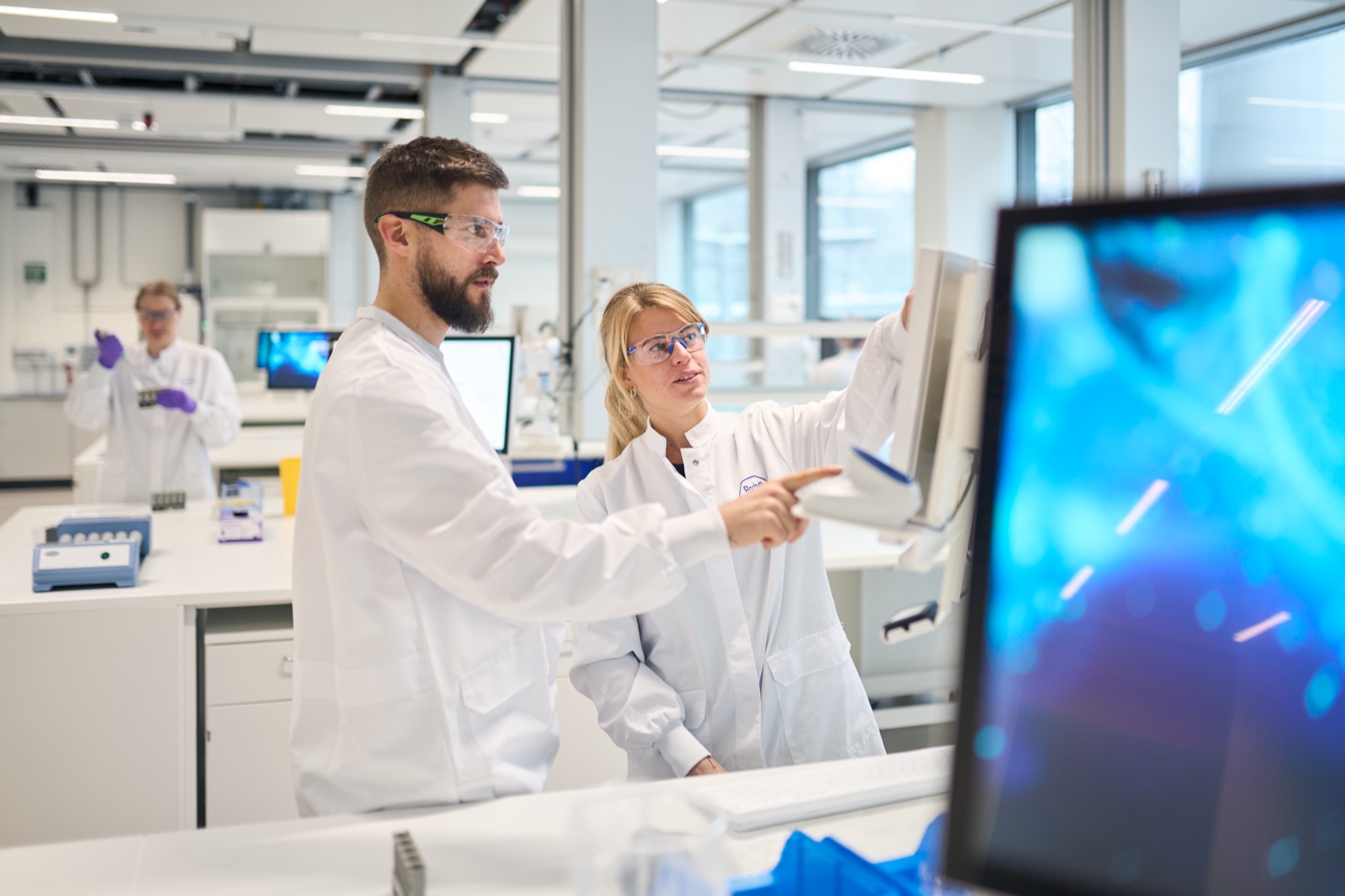
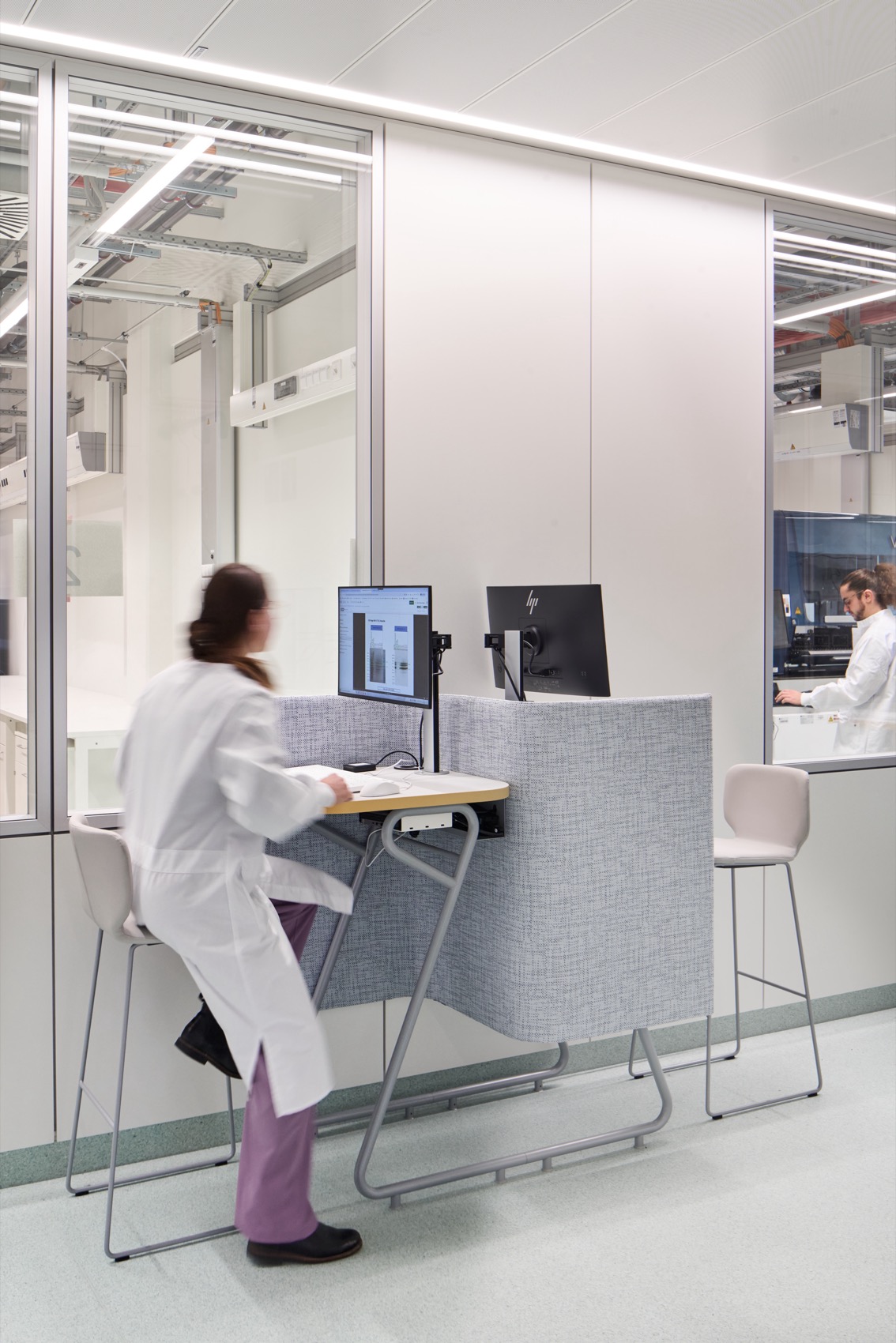
▼连接数据分析与实验操作,
Linking data analysis and laboratory work
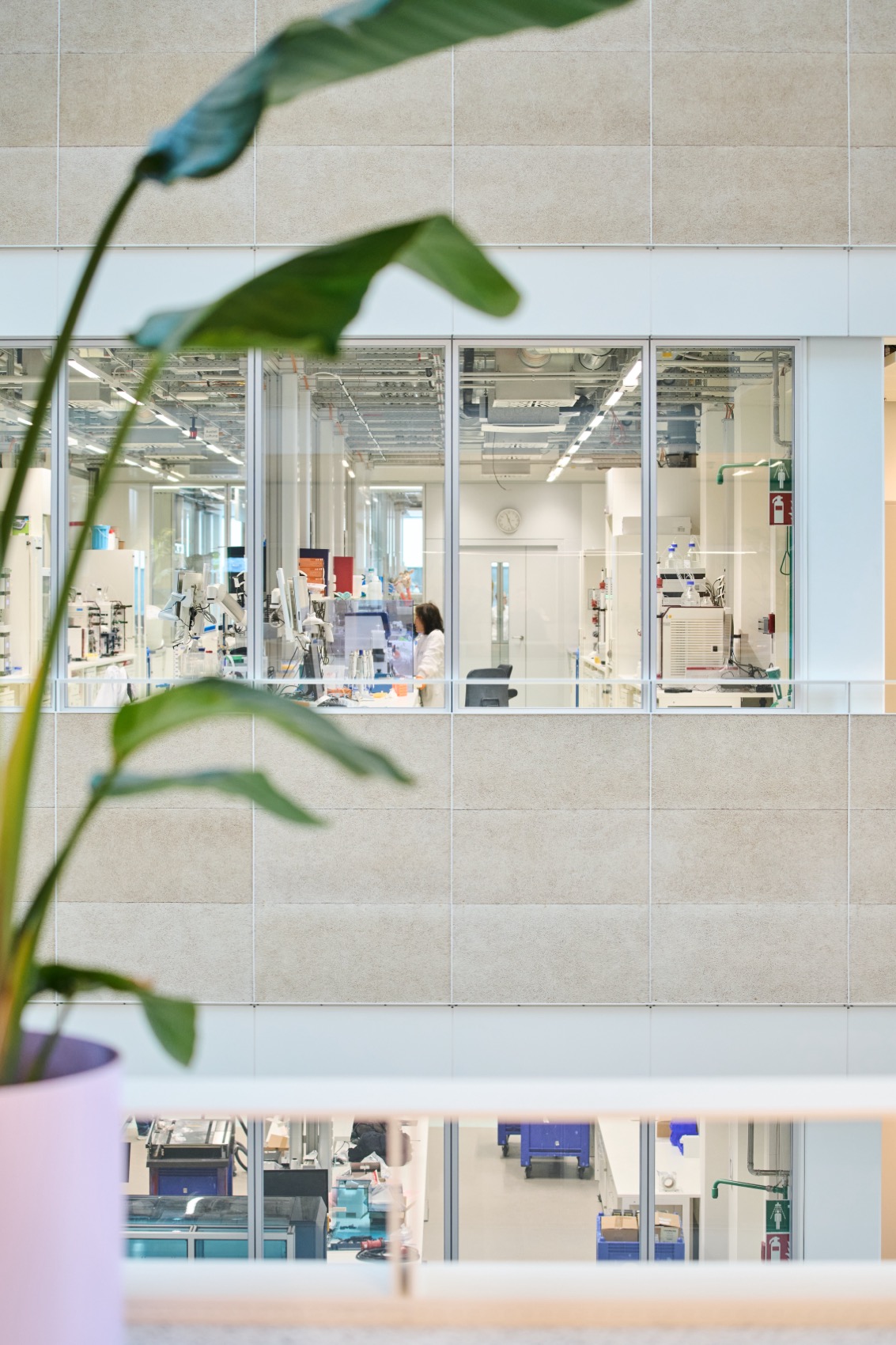
▼透过中庭可见的实验空间,
Laboratory spaces visible across the atrium
贯穿整个项目的统一设计元素是一组受到显微镜观察启发的地面图形,由放大的有机形态构成。这些图案跨越两栋建筑及所有楼层,即使地面材料不断变化,仍能在视觉上将整个项目连接为一个整体,同时兼顾功能需求与审美体验。此外,项目还融入了专属定制设计元素,包括灯具系统以及分布于建筑与桥梁空间中的定制座椅景观,共同创造出丰富多样的互动场景。因此,Studio Alexander Fehre 为 ROCHE诊断创新中心打造的设计,展示了一种将复杂工作环境与流程环境视为整体系统的室内建筑方法。在这个创新高度依赖空间、技术与人与人协作无缝融合的行业中,该项目充分诠释了空间如何成为创新发生的载体。
A unifying design element that makes this holistic concept visible is the microscopy-inspired floor graphic composed of oversized organic forms. Extending across both buildings and all floors, it visually unifies the project despite changing flooring materials, supporting both functional requirements and the overall aesthetic experience. This effect is further enhanced by project-specific design elements, including bespoke lighting and custom-designed seating landscapes distributed throughout the building and bridges, creating diverse zones for interaction. The design of the ROCHE DIAGNOSTIC INNOVATION CENTER by Studio Alexander Fehre thus exemplifies an interior architectural approach that understands complex work and process environments as integrated systems – within an industry where innovation can only emerge when space, technology, and human collaboration seamlessly intersect.
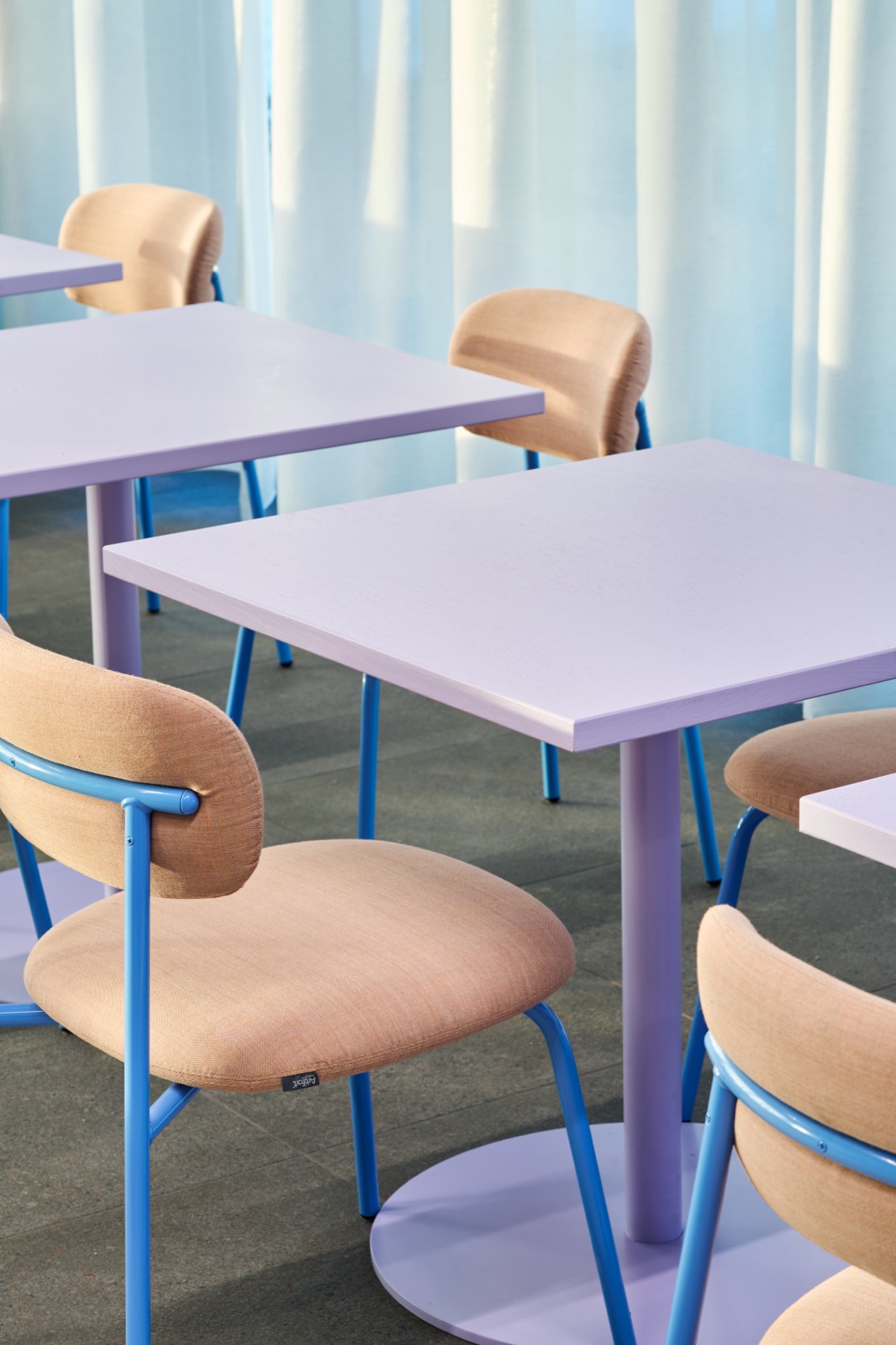
▼自然光充盈的社交空间,Social space filled with natural light
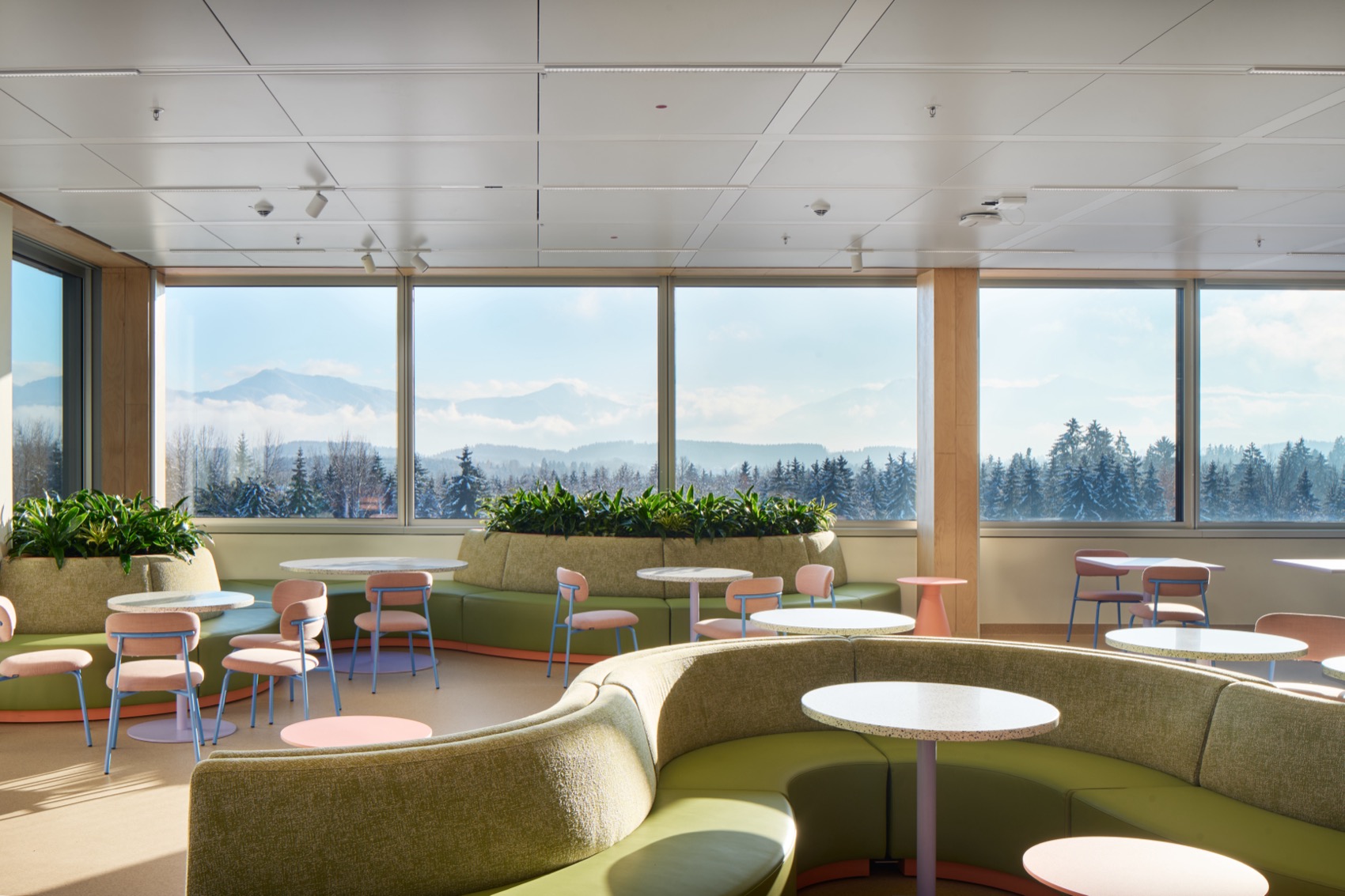
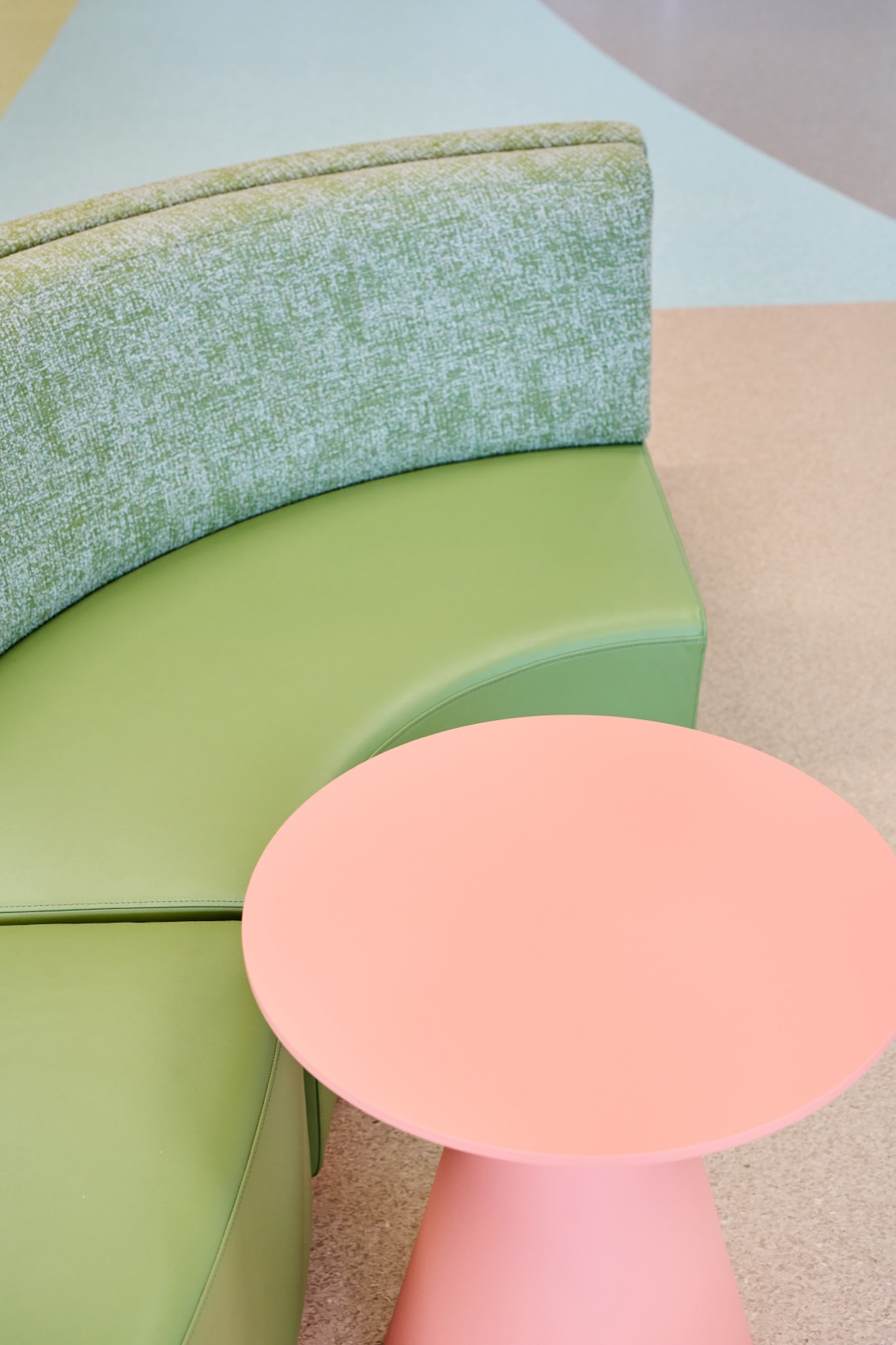
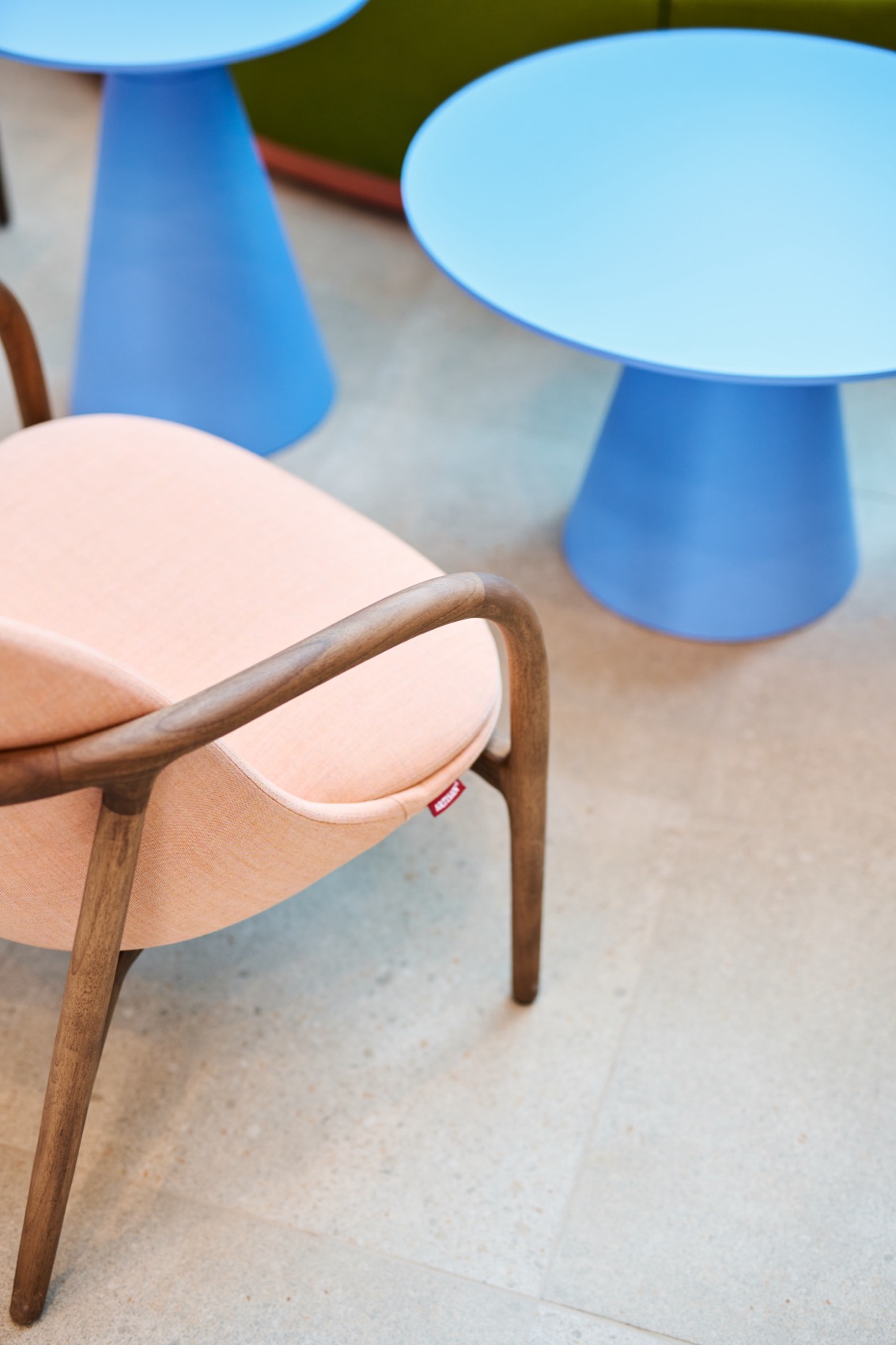
▼柔和色彩的家具组合,Soft-toned furniture composition
PROJECT:
ROCHE DIAGNOSTICSINNOVATION CENTER
CLIENT:
ROCHE DIAGNOSTICS GMBH
TYPE:
WORKPLACE & LABORATORY
AREA:
35.500 m BGF
23.000 m NGF (davon 11.400 mª INNENARCH. NGF)
YEAR/LOCATION:
2026/PENZBERG
ARCHITECTURE:
NICKL & PARTNER
ARCHITEKTEN
TEAM:
ALEXANDER FEHRE
ANNIKA KAISER SUSANNA HONLE
DARIA PAPKOVA
LINDSAY MARSH
CAN D KISSLING
ANNA AICHELE
LESLIE RUPP
FEDERICO FAIT
LJILJANA NINKOVIC
ULRICH SCHNAITHMANN
PHOTOGRAPHY:
PHILIP KOTTLORZ
FOTOGRAFIE
SALZSTADELGASSE 5
72070 TÜBINGEN
Т +49 1637364416
MAIL@PHILIPKOTTLORZ. COM
PRESS:
KATJA SILBERMANN
FAVOURIZED
T +49 163 4996633
KATJA.SILBERMANN@
FAVOURIZED.COM