Spore Initiative基金会,德国 / AFF Architekten
“Spore Initiative” 是一家非营利基金会,致力于推动与生物文化多样性相关的文化和教育项目。其工作的重点聚焦于那些生活方式根植于人与自然之间尊重性关系的社区。“Spore”支持这些群体开发文化工具,以保存、整理、传播并共享其特有的知识体系。
The “Spore Initiative” is a non-profit foundation that promotes cultural and educational programmes for biocultural diversity. The focus of its work is on communities whose way of life is rooted in a respectful relationship with nature. “Spore” supports these groups in developing cultural tools to preserve, make accessible, and share their specific knowledge.
▼项目概览,overview of the project
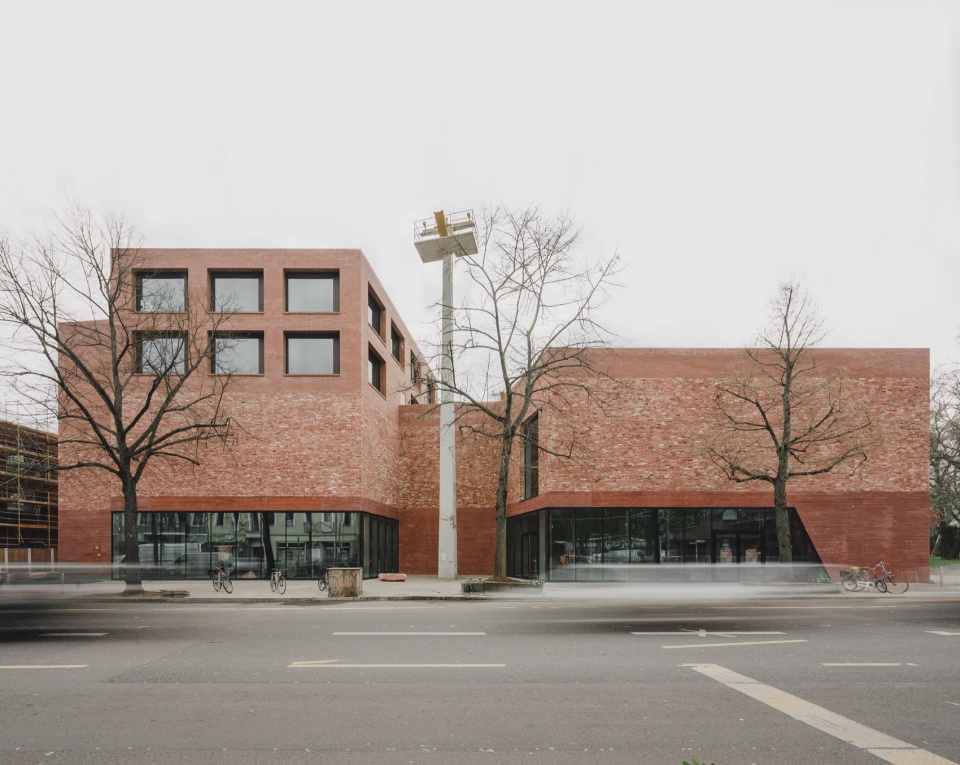
项目的挑战在于打造一座既能作为稳定而灵活的空间载体,又能成为激发其使用方式的启发性催化剂的建筑。建筑旨在提供一个受到庇护且富有吸引力的交流场所,促进实验与合作,并通过建筑本身表达基金会工作核心议题的重要性与可见性。
The challenge was to create a building that could simultaneously serve as a stable yet adaptable space and an inspiring catalyst for its use, aiming for a sheltered, welcoming space for engagement that fosters experimentation and collaboration, and uses architecture to express the significance and visibility of the fundamental themes of the foundation’s work.
▼建筑外观,building appearance
▼外部混凝土墙体,external concrete wall
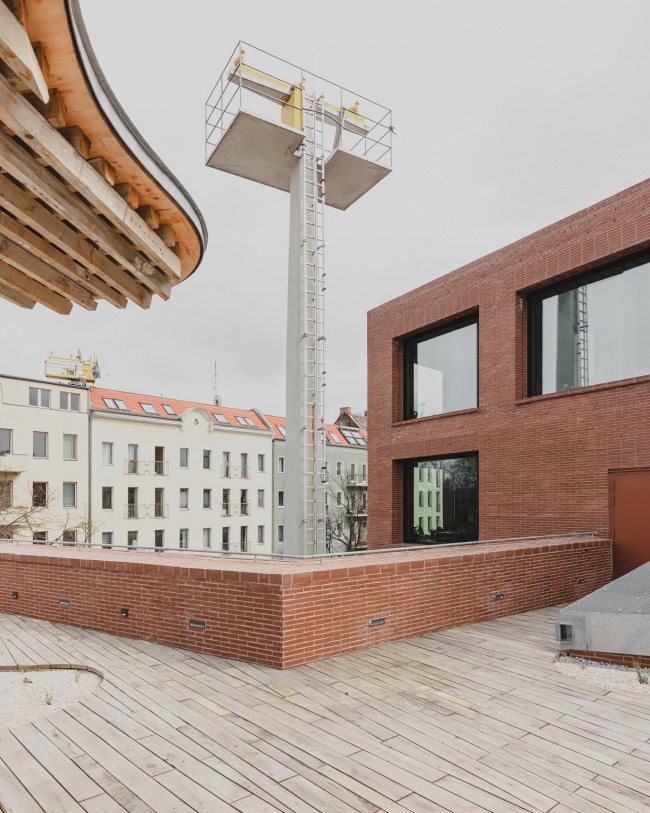
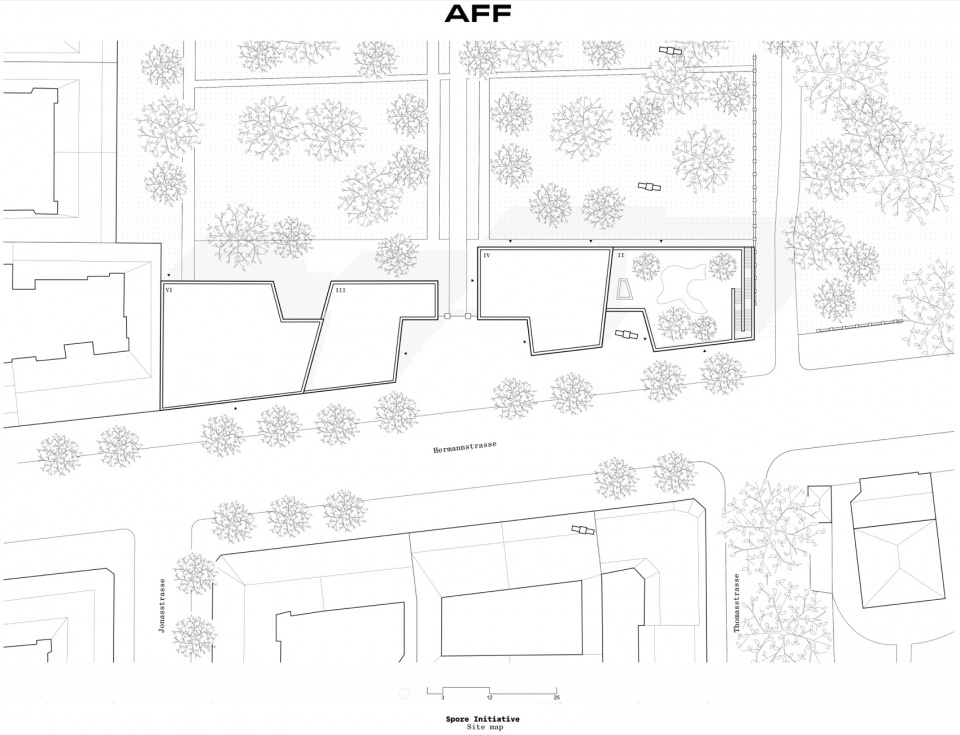
“Spore”位于柏林新克尔恩区(Neukölln)的赫尔曼大街(Hermannstraße),与毗邻的“Publix:非营利新闻之家(House for Non-Profit Journalism)”共同扎根于一个处于社会多元化与转型背景中的城市社区。从城市设计层面来看,该综合体坐落于大片墓园与威廉时代围合街区(Wilhelminian-style perimeter blocks)之间,距离原滕珀尔霍夫机场(Tempelhof Airport)不远。两栋建筑的高度错落布置,呼应公园中独立建筑体量的节奏,其最高点与相邻六层围合街区的屋顶线齐平。两栋建筑之间设置了一处前广场,作为两家机构共享的城市入口。
With its location on Hermannstraße in Neukölln, the “Spore” – together with the adjacent “Publix: House for Non-Profit Journalism” – is anchored in an urban neighbourhood embedded in a context of social diversity and transformation. Urbanistically, the complex is situated within the context of large cemetery areas and Wilhelminian-style perimeter blocks, not far from the former Tempelhof Airport. The heights of the two buildings are staggered, following the rhythm of the park’s solitaires, with the highest point aligning with the roofline of the adjacent six-storey perimeter block. Between the two buildings, a forecourt creates the shared address of both institutions.
▼礼堂,auditorium
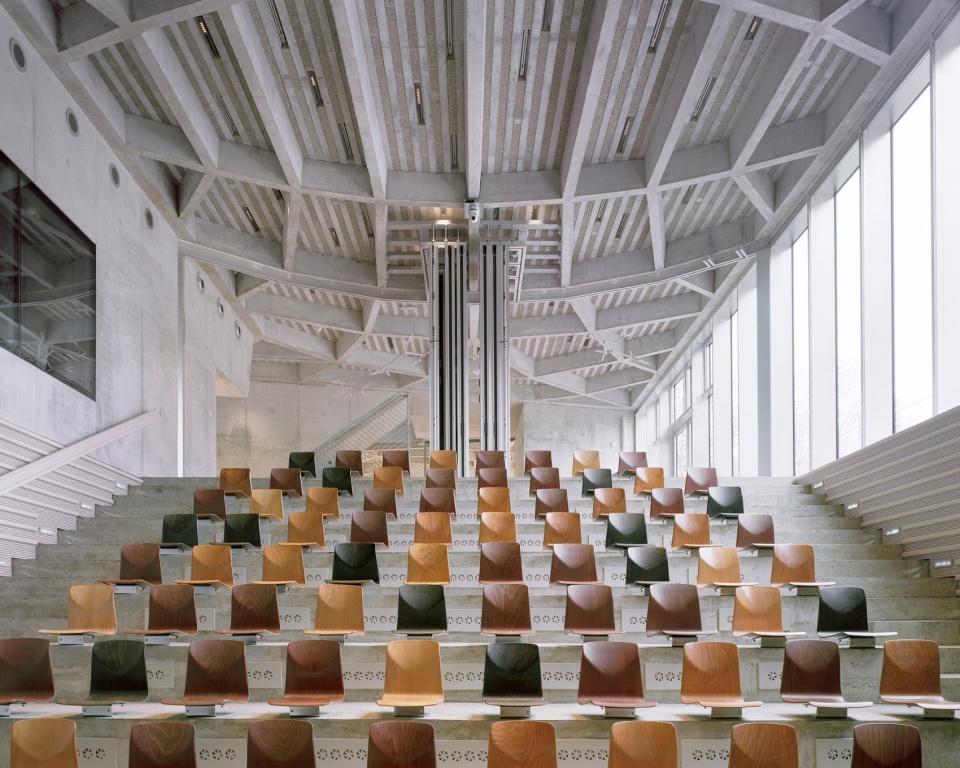
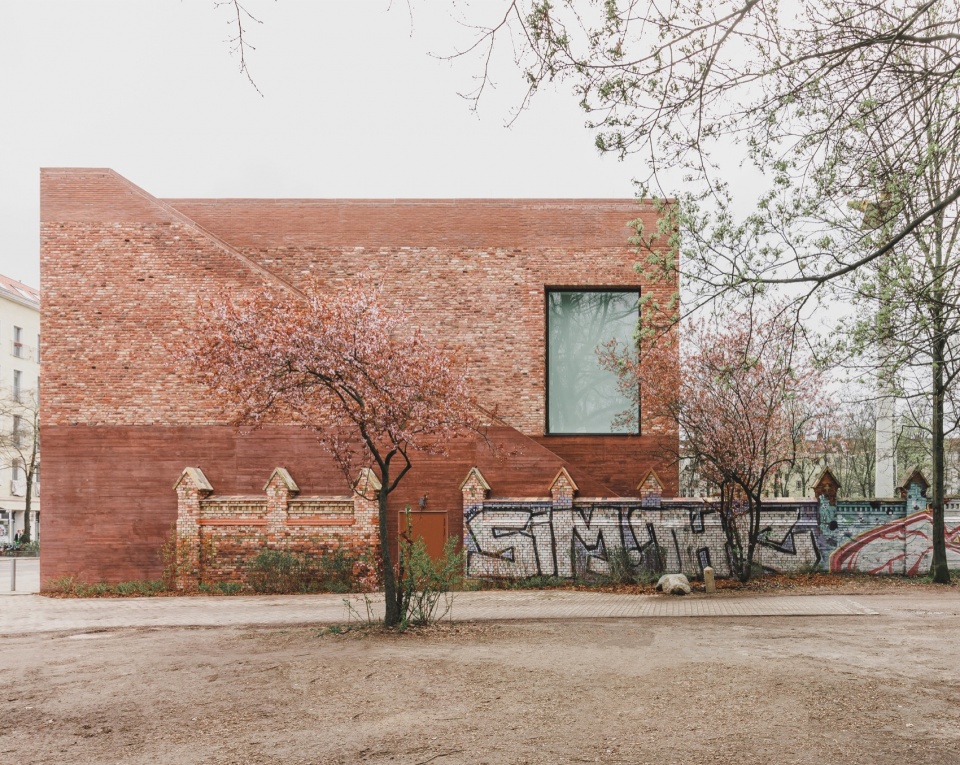
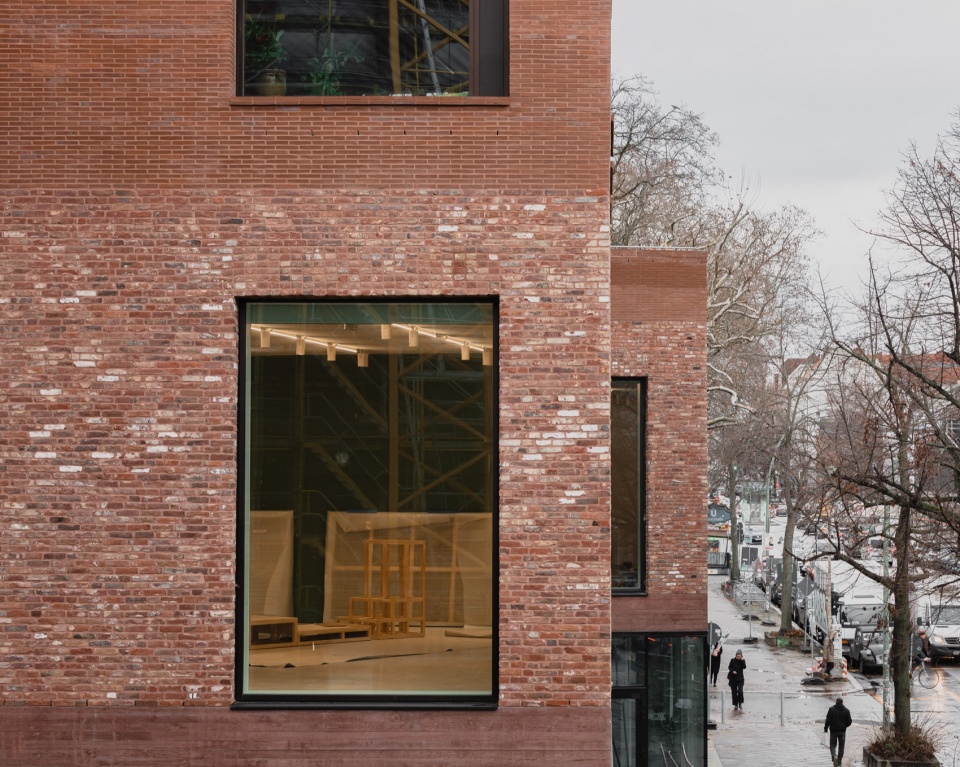
除了对城市环境的敏感融入之外,沿场地北侧延伸的历史墓园围墙也被纳入设计之中,以镶嵌(intarsia)的方式融入外部混凝土墙体。整个建筑立面及所有矿物质构件均采用整体化、层叠式的构造系统,由经过精细协调的材料共同构成,包括带有红色色调的板模清水混凝土、再利用的熟料砖(clinker bricks)以及精致的新烧制砖等。建筑通过大面积玻璃立面在首层向公众开放;除礼堂和展览空间外,还设有办公室、图书馆、工作室、共享空间以及位于上层的两套艺术家公寓等内部功能空间。“相遇之所”(meeting place)这一核心理念构成了建筑的类型学基础,并通过一系列开放可达的空间得以实现。
In addition to the sensitive urban integration, the historic cemetery wall running along the northern edge of the site has been incorporated as an intarsia into the external concrete wall. The entire façade and all mineral components are composed using a monolithic and layered system of finely coordinated materials – such as reddish-tinted concrete in board formwork, reused clinker bricks, and delicate new fired bricks. Through generous glass façades, the building opens up to the public on the ground floor and, in addition to the auditorium and exhibition spaces, also offers internal areas such as offices, a library, studios, communal spaces, and two artists’ apartments on the upper floors. The guiding principle of a ‘meeting place’ forms the architectural typology, which is realised through a variety of accessible spaces.
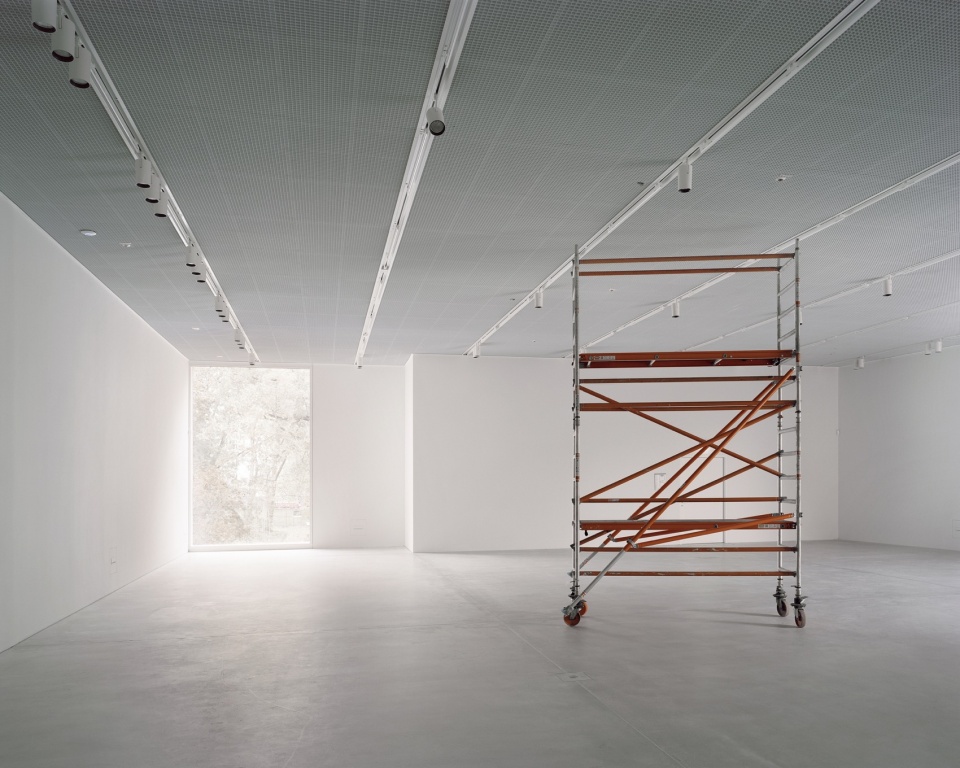
▼展览空间,exhibition spaces
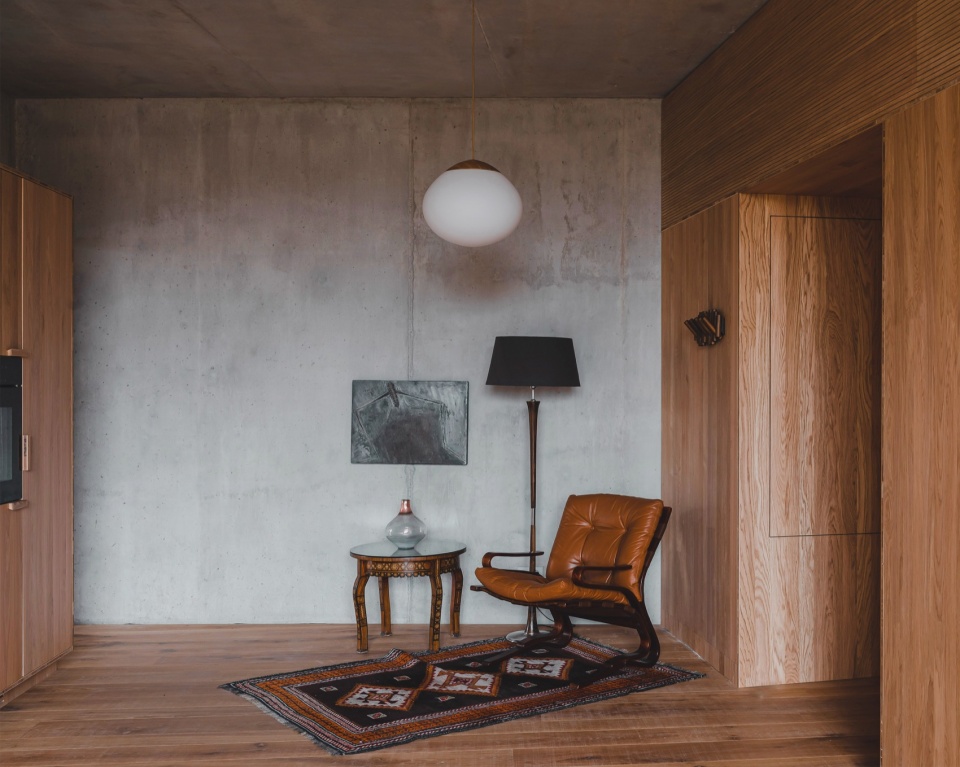
▼艺术家公寓内部空间,artists’ apartments internal areas
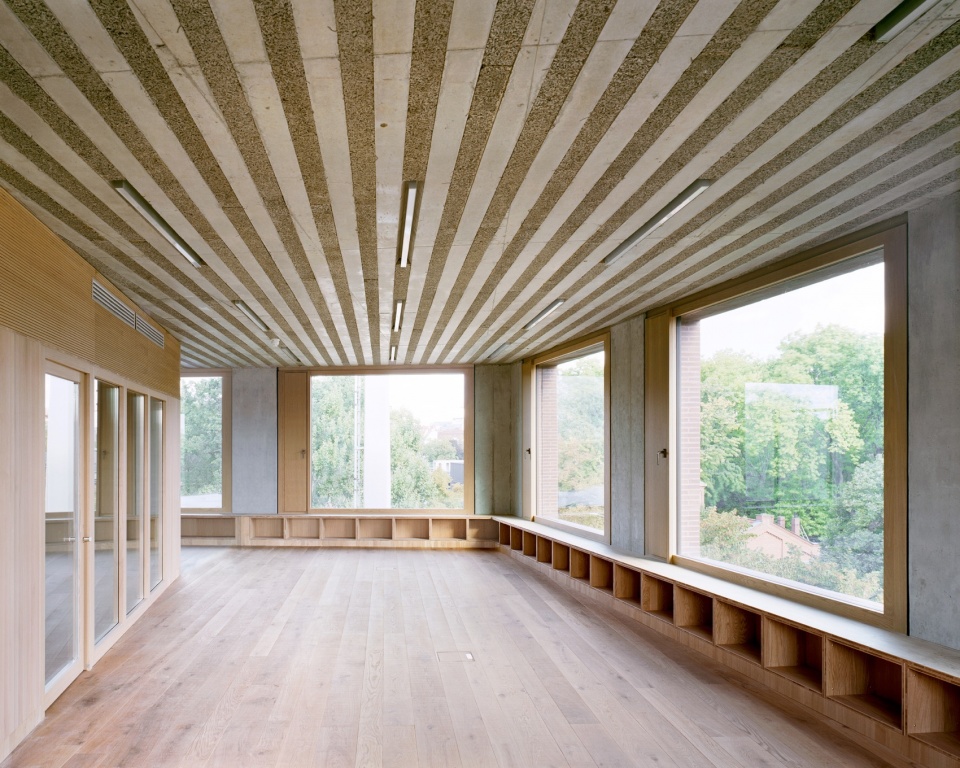
▼走廊,corridor
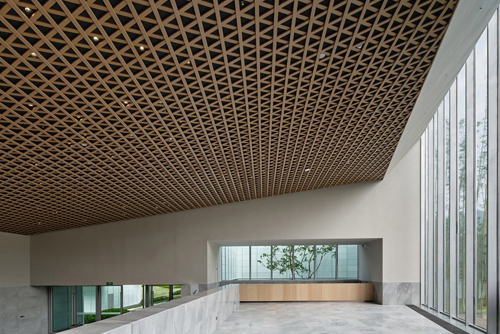
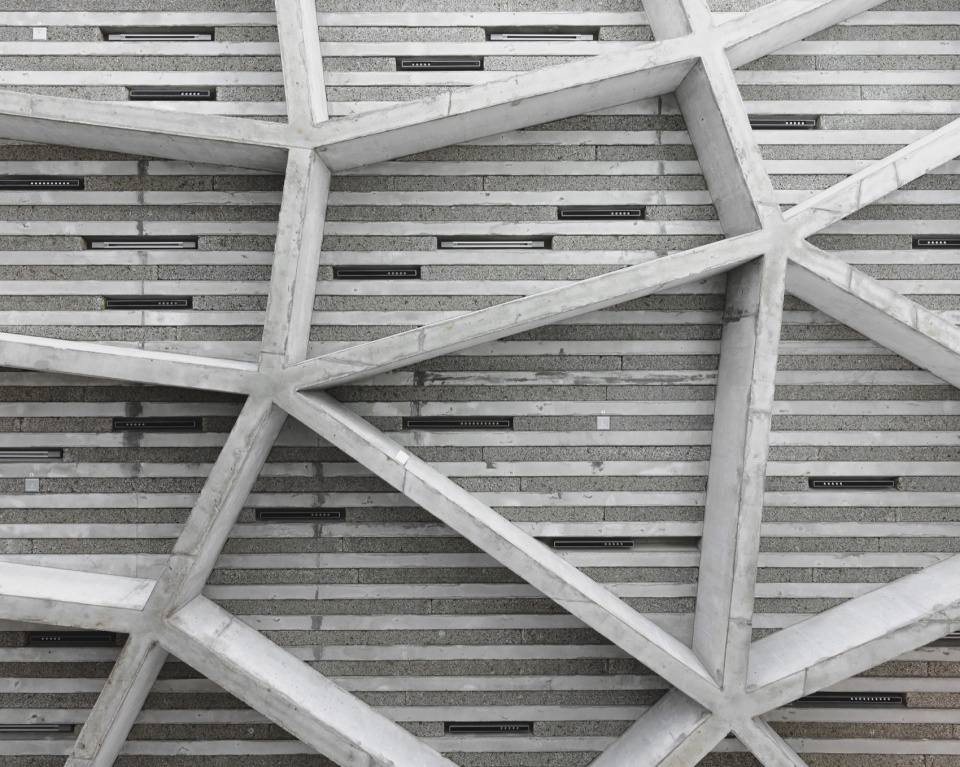
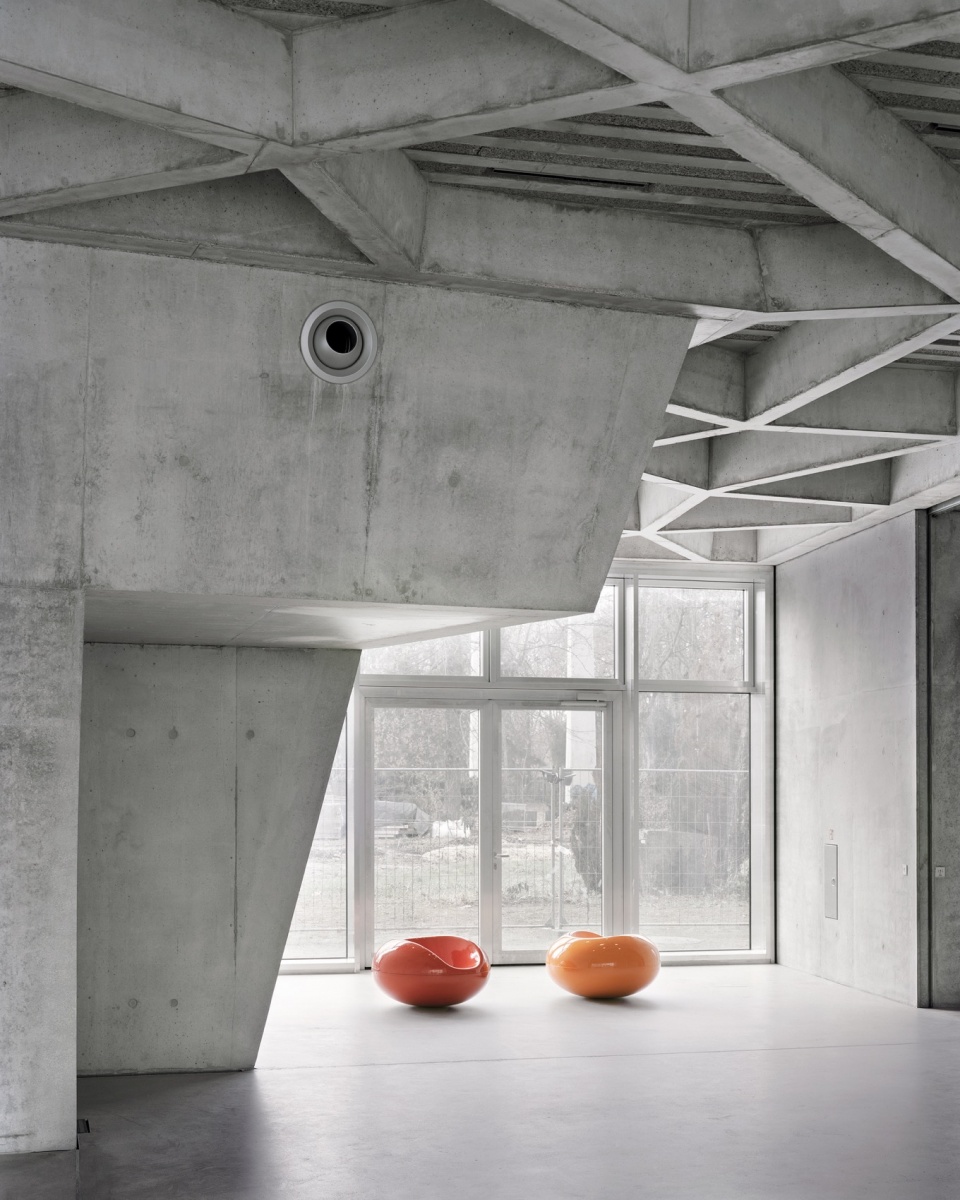
一座蜂巢状的清水混凝土天花结构横跨无柱的首层空间。该结构以最少的材料实现结构性能的优化,同时塑造出鲜明的空间特征。首层被打造为开放的“互动景观”,用于举办工作坊、文化交流活动和学习项目。
A honeycomb-like ceiling structure made of exposed concrete spans the column-free ground floor space; it is structurally optimised using a minimal amount of material, thereby creating a distinctive character. The ground floor serves as an open ‘interaction landscape’ for workshops, cultural exchange and learning programmes.
▼一座蜂巢状的清水混凝土天花结构横跨无柱的首层空间,
A honeycomb-like ceiling structure made of exposed concrete spans the column-free ground floor space
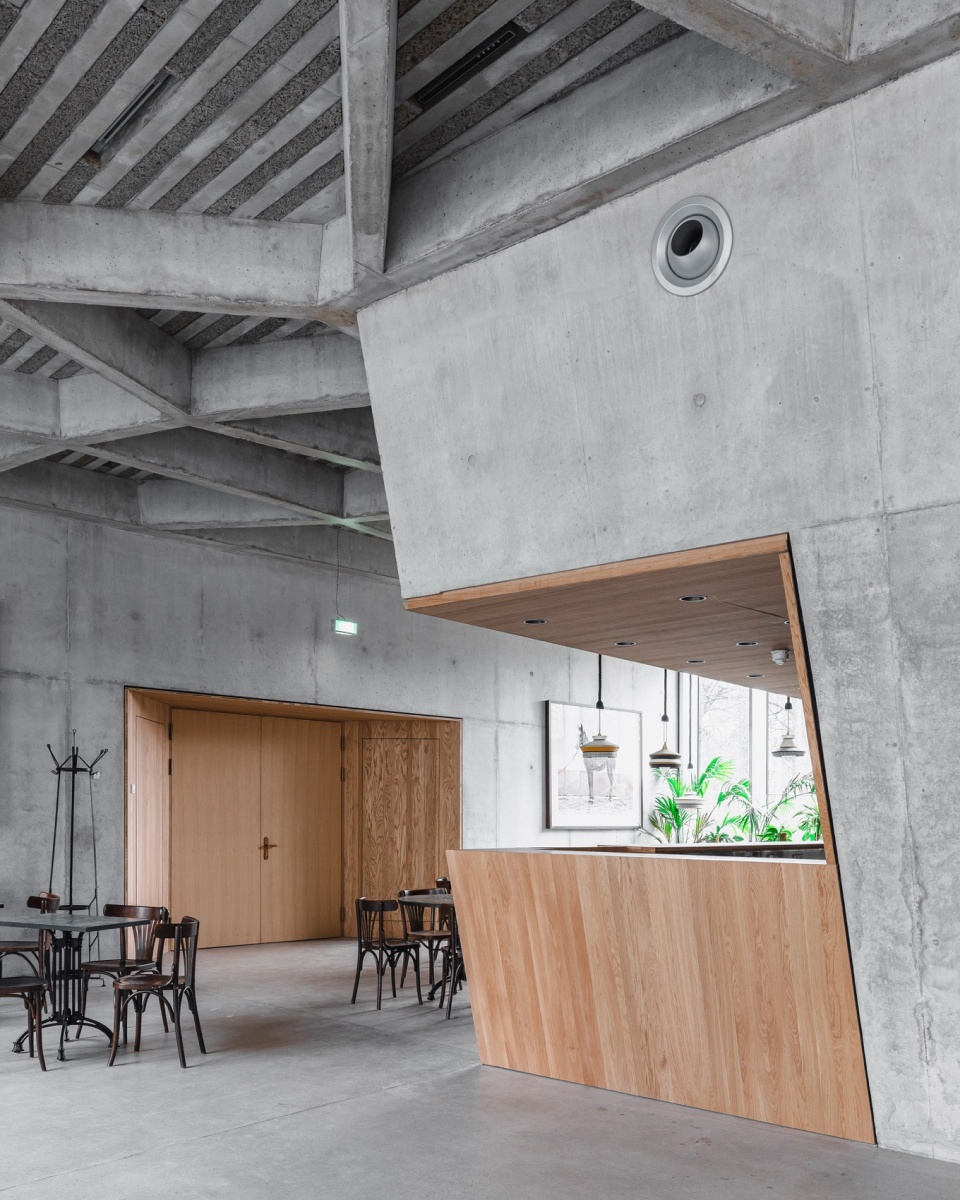
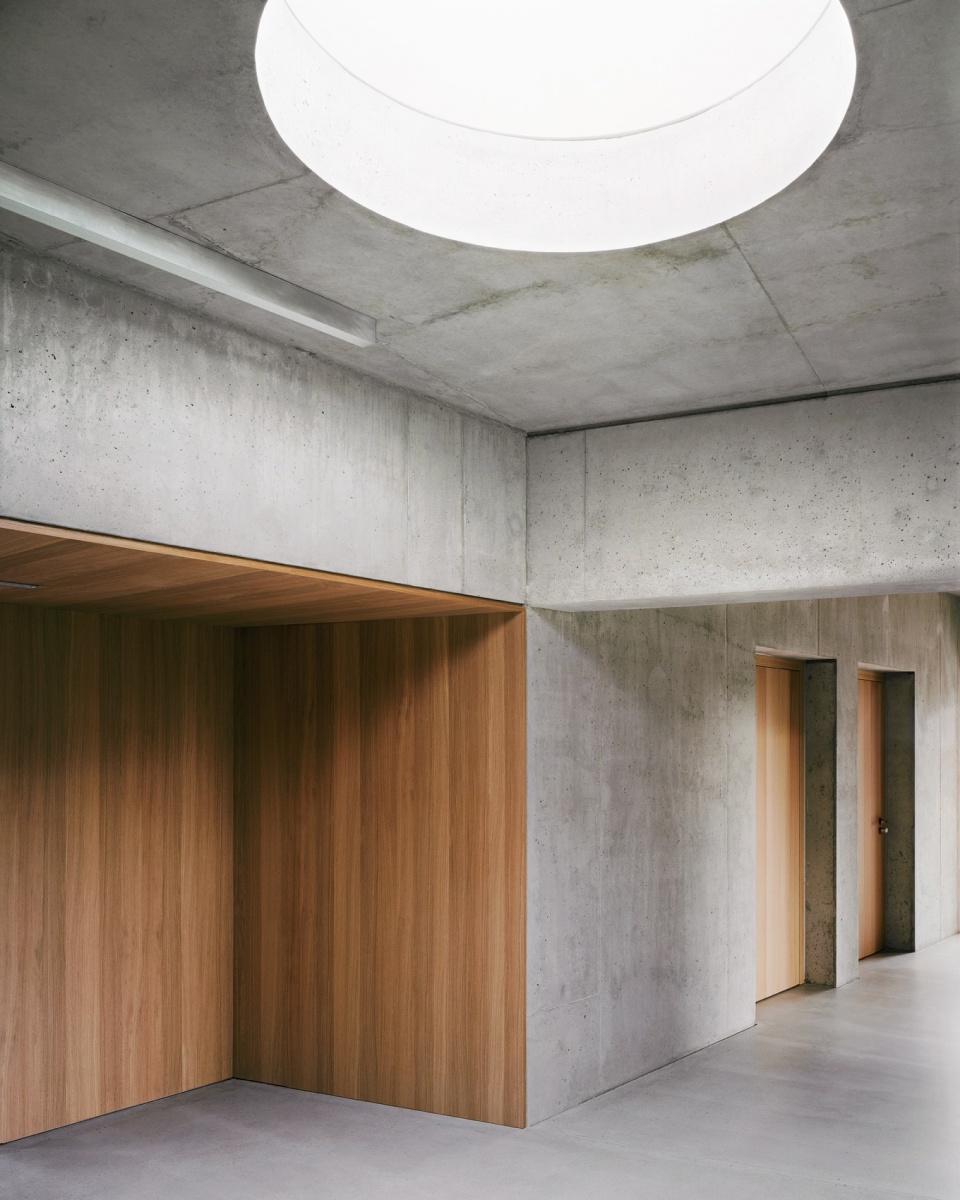
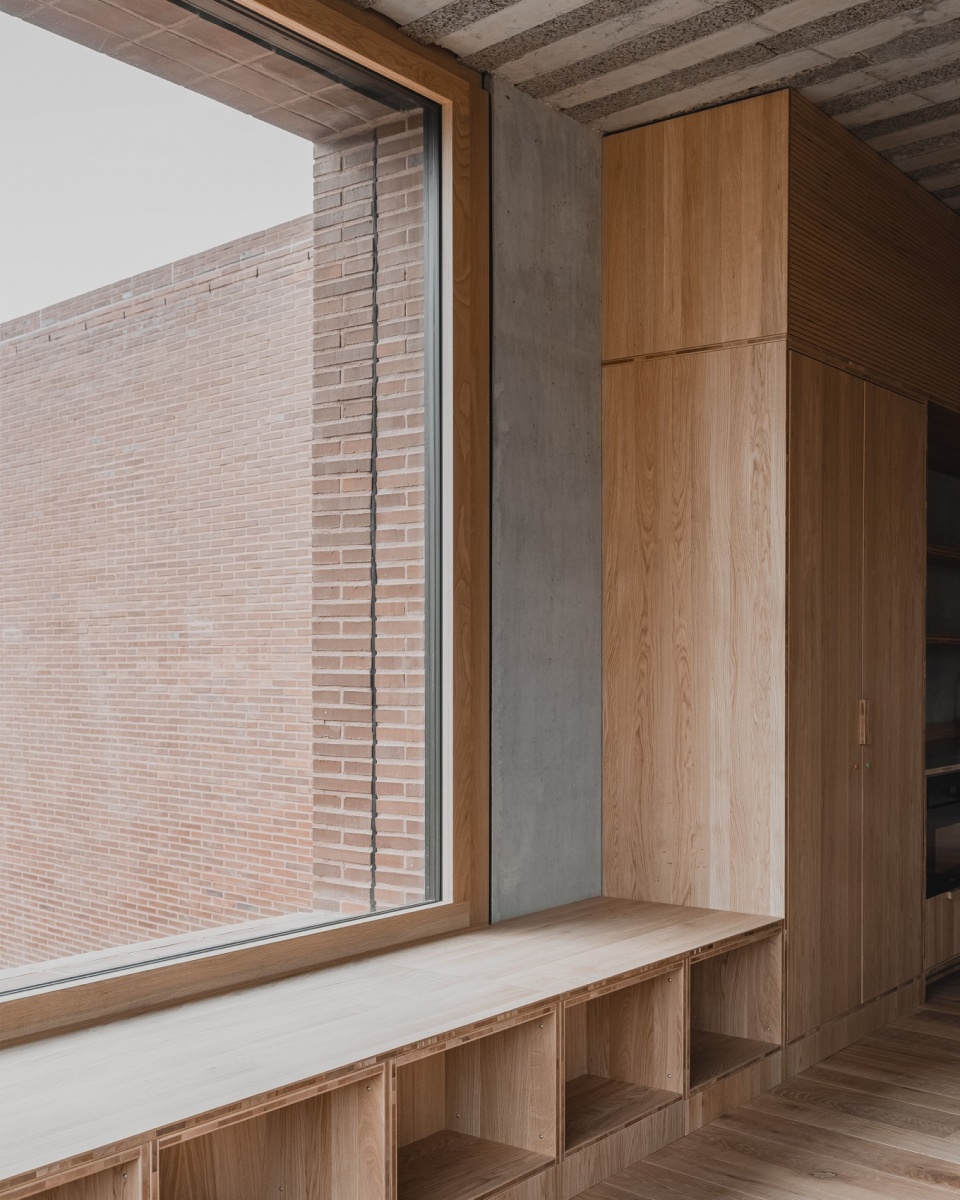
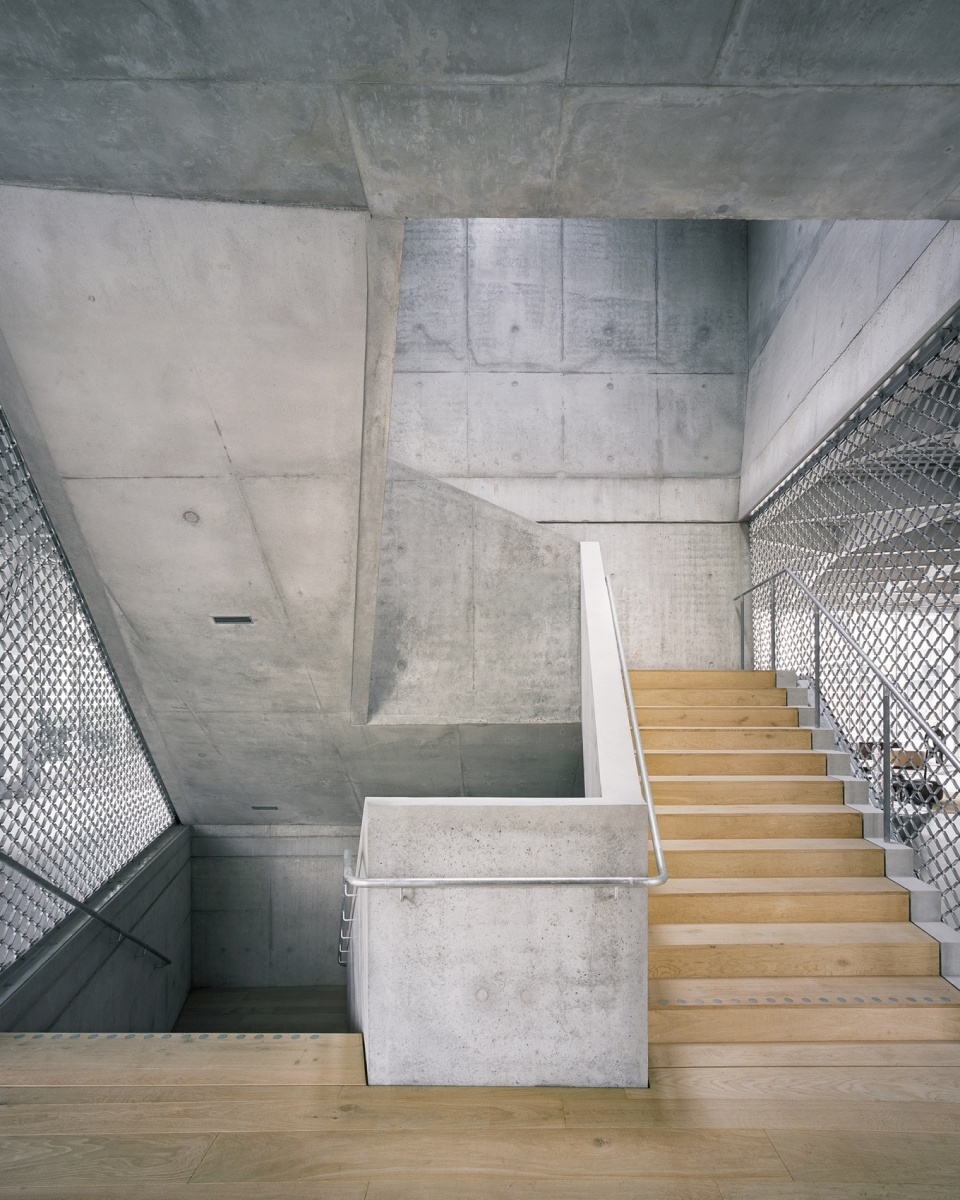
无论建筑内部还是外部,所有材料均有意识地以“原始状态”呈现,并采用手工制作的接缝细部,同时遵循材料自身结构属性的逻辑进行建造。木材、金属和混凝土表面均尽可能避免使用涂层处理。由此形成的材料粗粝质感保证了建筑在时间中的自然老化过程,从而提升其耐久性。
Both inside and outside the building, all materials are deliberately used in their “raw” state, with handcrafted joints and in accordance with the logic of their structural properties. Coatings on wood, metal, or concrete surfaces are avoided as far as possible. The resulting roughness of the materials ensures an aesthetic ageing process and thus durability.
▼木材、金属和混凝土表面均尽可能避免使用涂层处理,
Coatings on wood, metal, or concrete surfaces are avoided as far as possible
▼楼梯,staircase
▼洗手池,hand washing sink
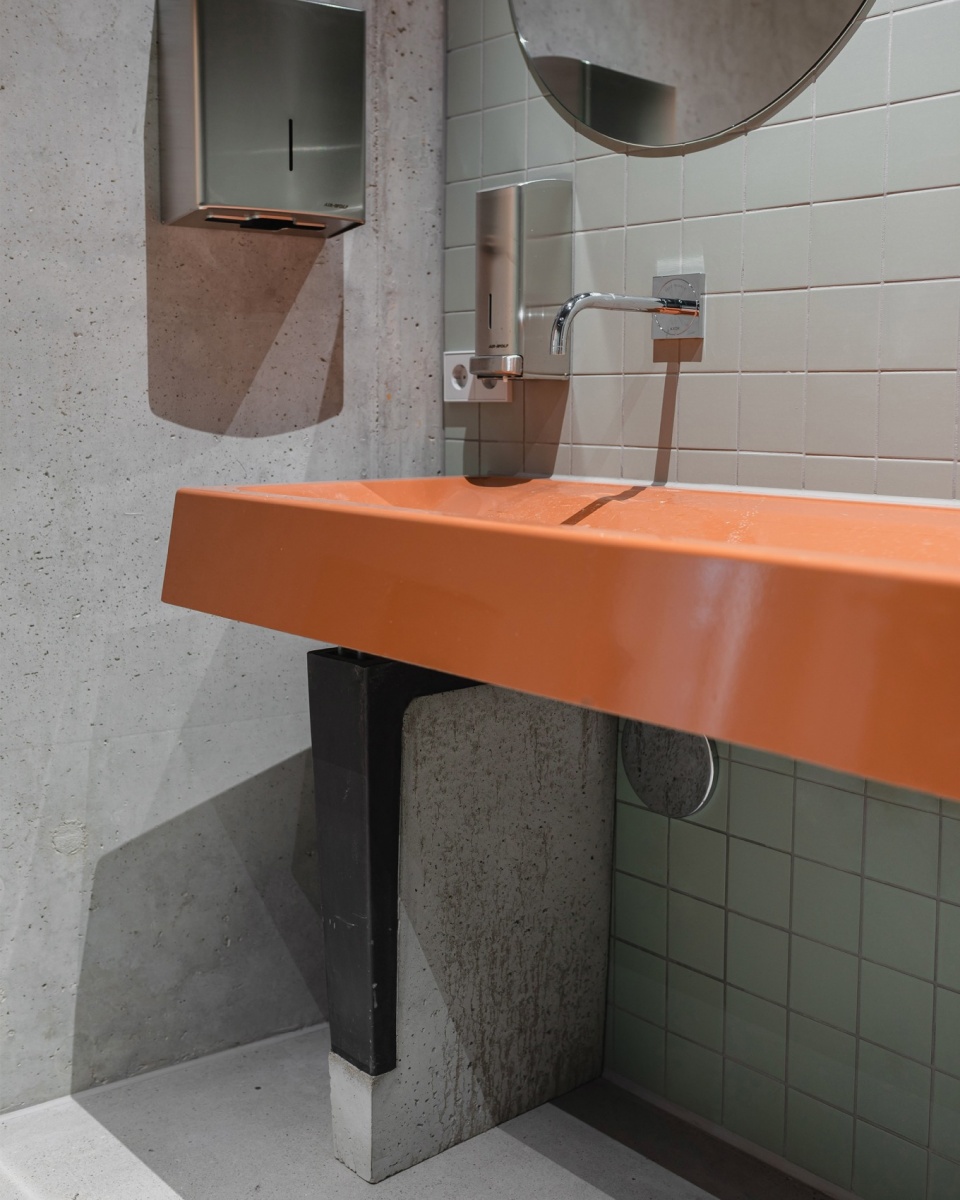
作为一个整体,这座建筑通过开放且面向公众的使用理念参与社会议题的讨论,并能够成为未来更多使用方式与社会实践的发起者。
As a whole, the building contributes to social discourse through an engaging, public-oriented usage concept and can act as an initiator for future uses.
▼场地平面,site plan
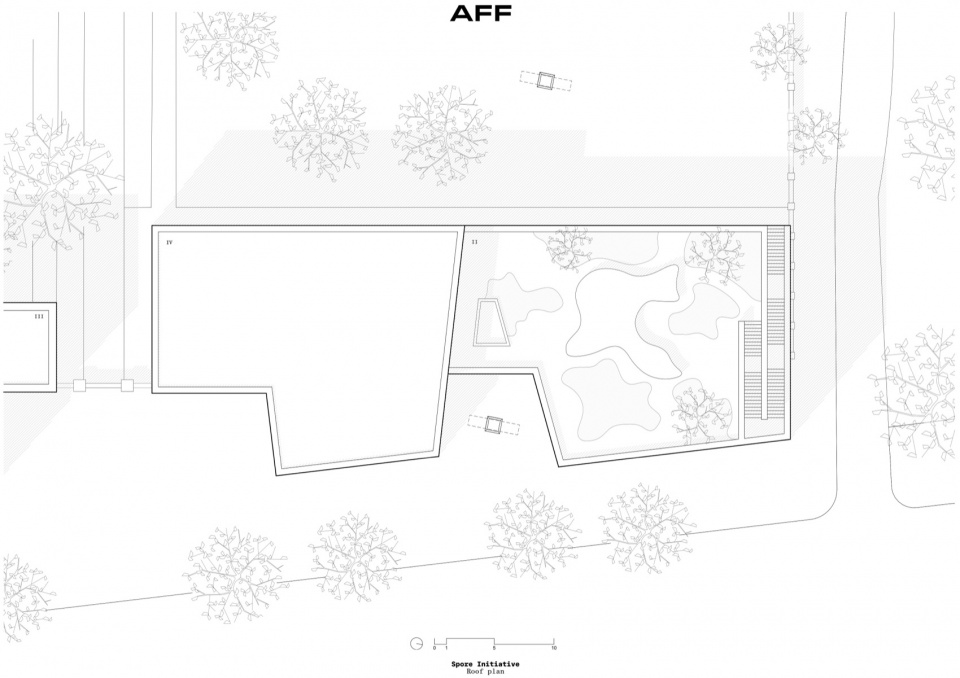
▼屋顶平面,roof plan
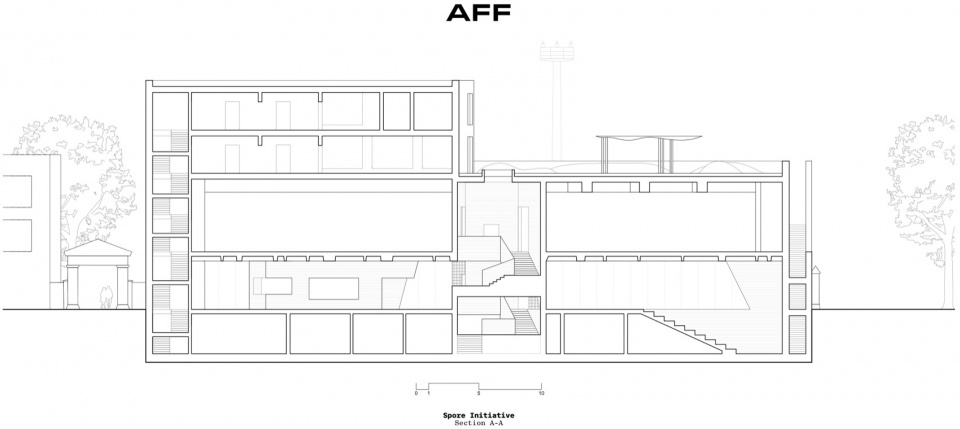
▼剖面,section
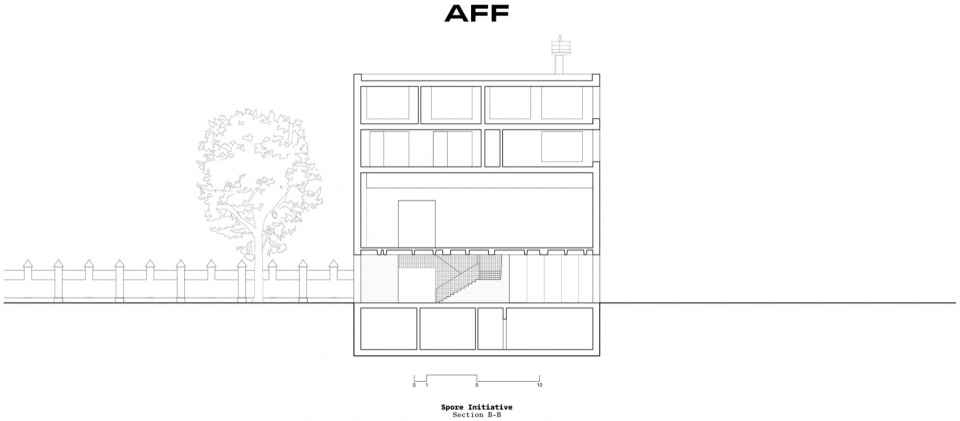
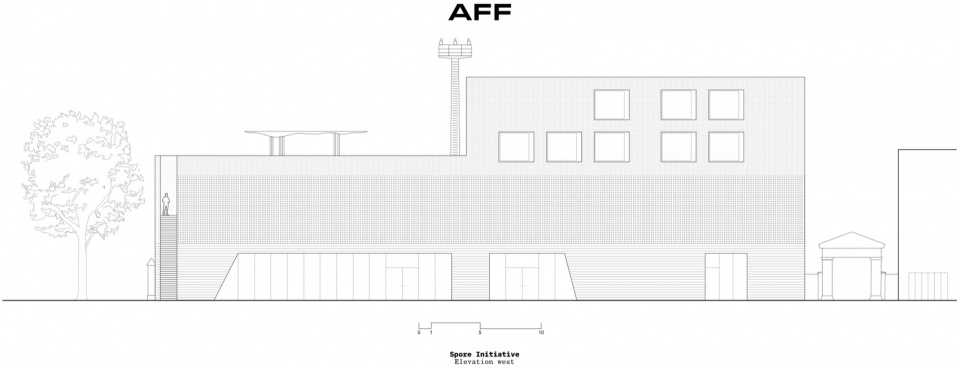
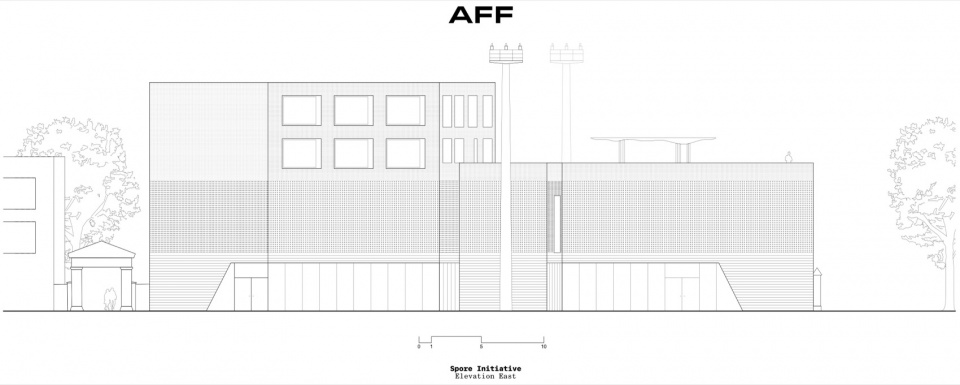
▼立面图,elevation
Project Name: Spore Initiative
Office Name: AFF Architekten
Office Website: www.aff-architekten.com
Social Media Accounts: IG: aff_architects; LinkedIn: AFF Architects
Contact email: pr@aff-architekten.com
Firm Location: AFF Architekten, Haupstr. 13, 10317 Berlin, Germany
Completion Year: 2023
Gross Built Area (m2/ ft2): 4.116,57 m2
Project Location: Hermannstraße 86, 12051 Berlin
Program / Use / Building Function: Culture
Lead Architects: AFF Architekten
Lead Architects e-mail: pr@aff-architekten.com
Photographer
Photo Credits: Tjark Spille
Photographer’s Website: https://tjarkspille.de
Photographer’s e-mail: moin@tjarkspille.de
Photo Credits: Hans-Christian Schink
Photographer’s Website: https://www.hc-schink.de
Photographer’s e-mail: info@hc-schink.de