北京北小河 & 从“灰色河道”到“市民幸福河” / AECOM
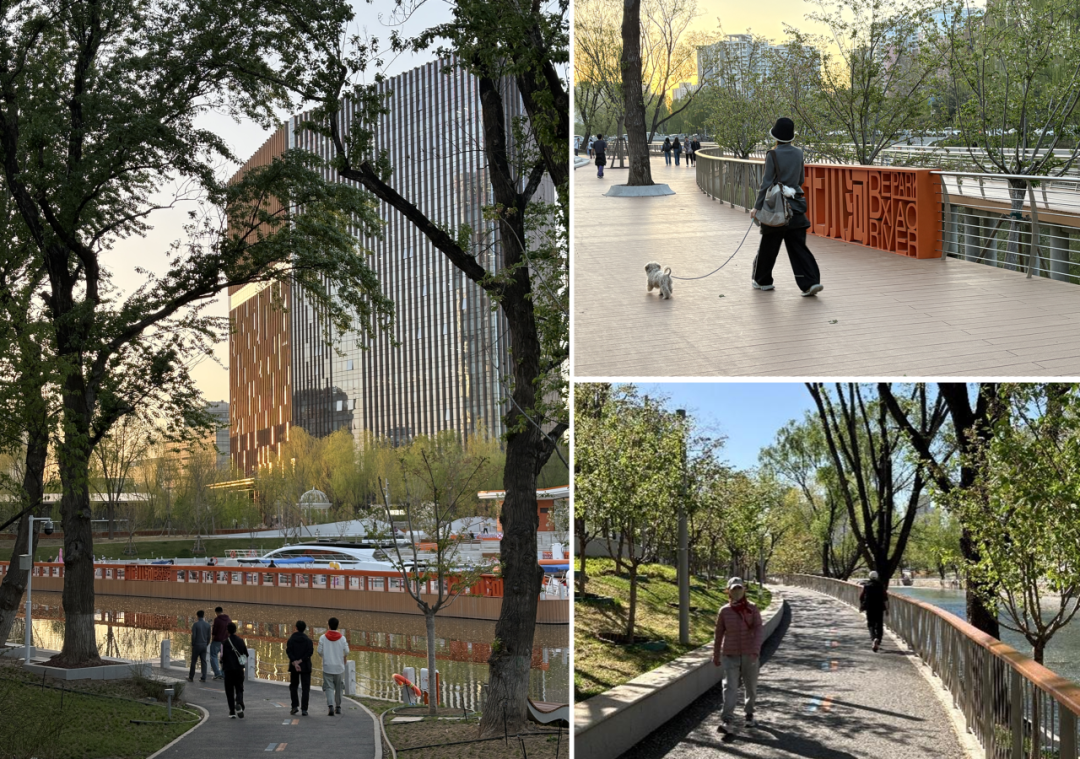
清晨的望京,第一缕阳光落在北小河的水面上。跑步的人沿着滨水绿道前行,脚步惊散薄雾;樱花树下,老人带着孩子拾起昨夜飘落的花瓣;林间栈道上,年轻人举起相机,捕捉光影流转的瞬间。这样的日常,如今已成为北小河两岸的生活底色。但在几年前,这里仍是一条被围挡隔离、难以抵达的城市河道。
As dawn reaches Wangjing, the first light of day touches the surface of the Beixiaohe River. Joggers move along the waterfront greenway, their footsteps dispersing the morning mist. Beneath blooming cherry trees, grandparents and children gather fallen petals from the night before. Along the woodland boardwalk, young people pause to capture shifting light and shadow. Today, this is the scene of everyday life along the river. Yet just a few years ago, Beixiaohe was an inaccessible, fenced-off urban channel — cut off from the city around it.
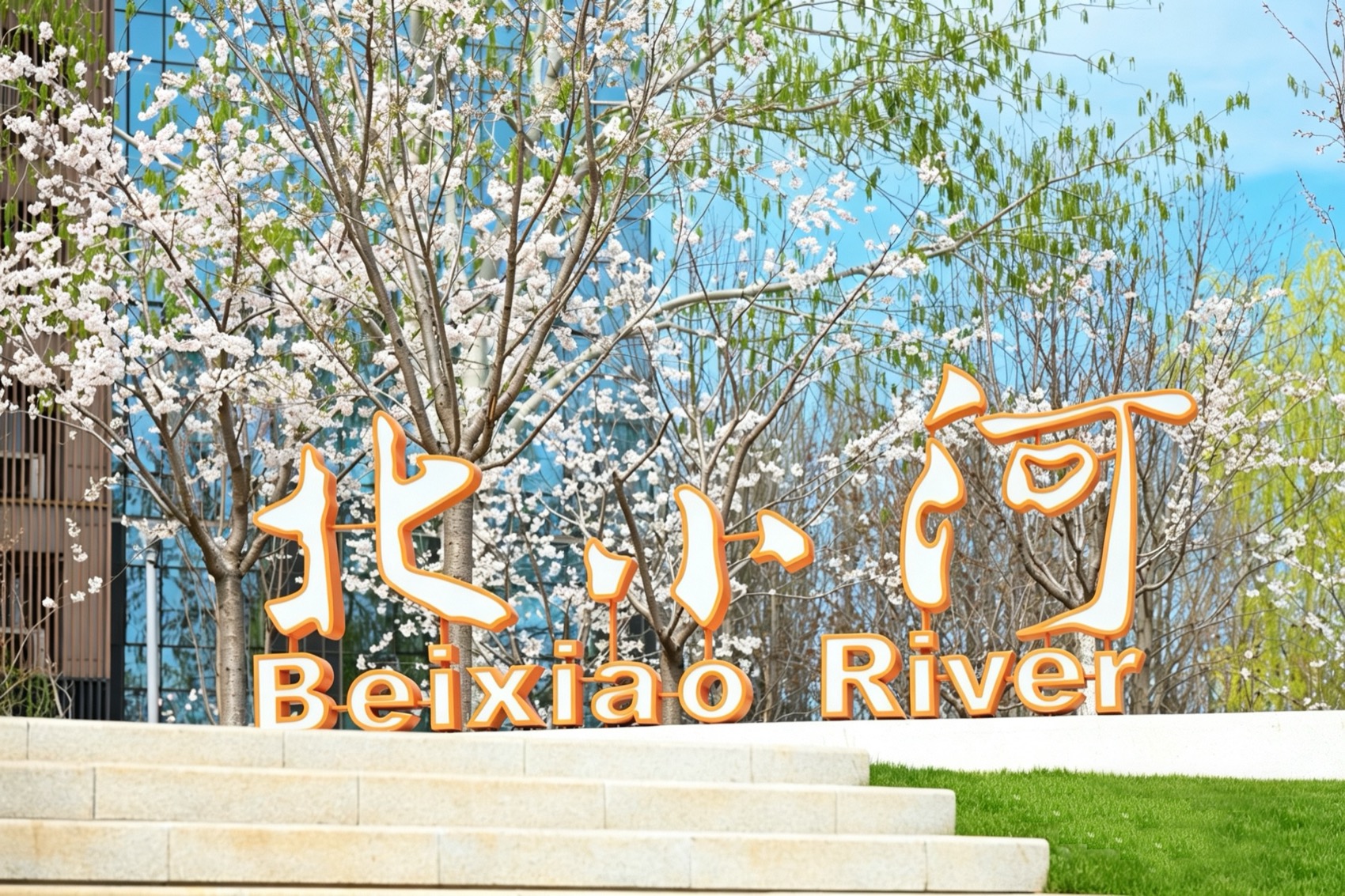
▼樱花河入口标识,Cherry river entrance signage
▼沿河延展的赏樱路径,Cherry blossom promenade along the river
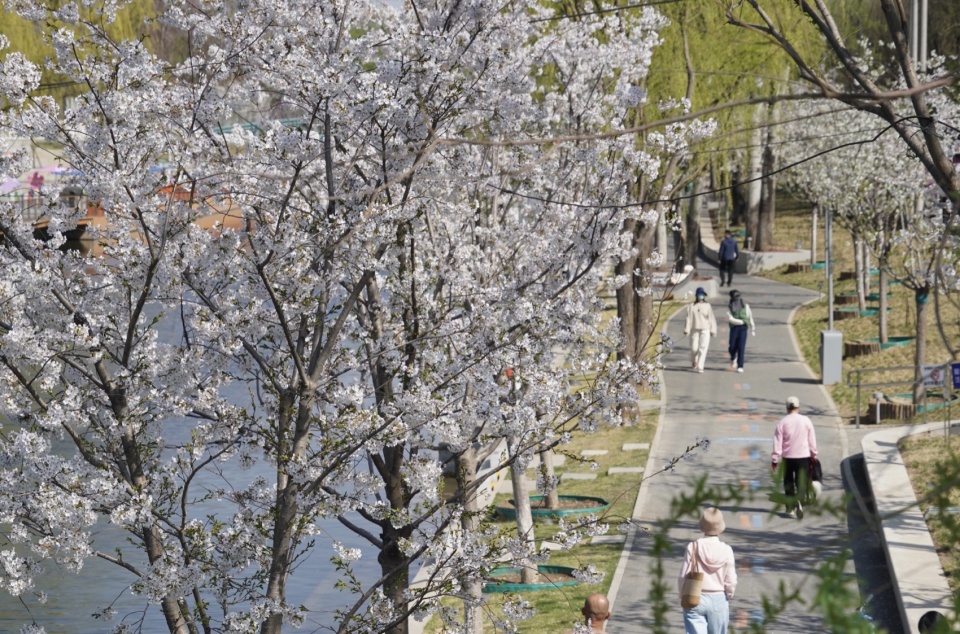
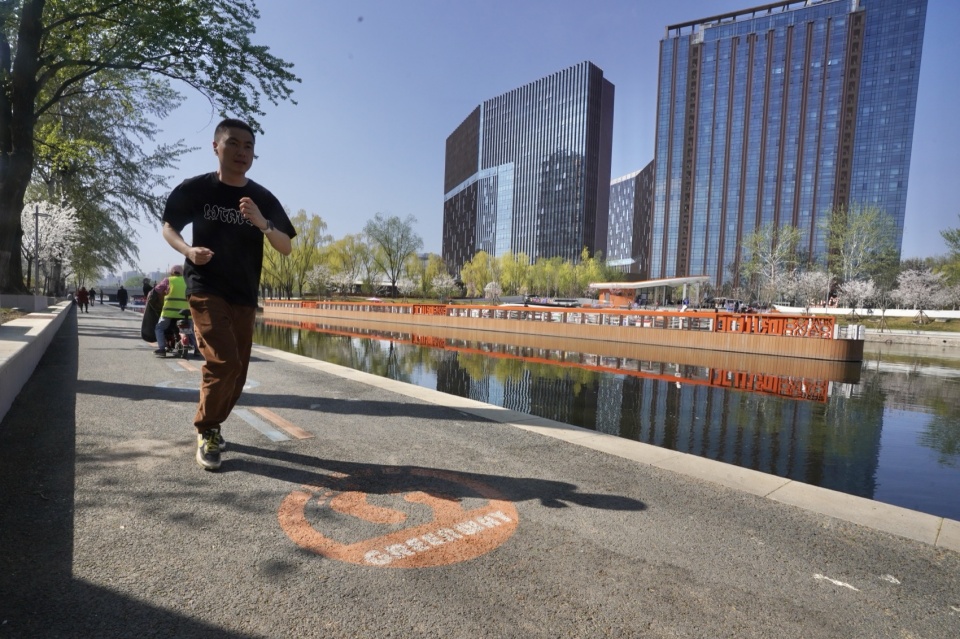
▼沿河设置的慢跑路线,Jogging route along the river
从河道更新到区域价值重构 From river regeneration to district value re-proposition
北小河全长约15.6公里,是北运河水系的重要支流。此次治理段落西起京承高速,总长 4.2公里,横穿望京北部核心区,承担着区域防洪排涝的重要功能,同时串联起望京、东湖多个社区与公共空间,是名副其实的城市水脉。然而,在长期以工程为导向的治理模式下,河道水质波动、生态退化、空间割裂、通达性不足,使其从本应连接城市的纽带,变成了被忽视的“灰色边界”。 为响应国家 “幸福河湖” 建设号召,助力北京建设国际一流和谐宜居之都,在北京市朝阳区政府及朝阳区水务局统筹下,AECOM整合景观、水利、生态、规划、市政等多专业力量,将原本单一的工程治理转向系统性的空间与生活重构。
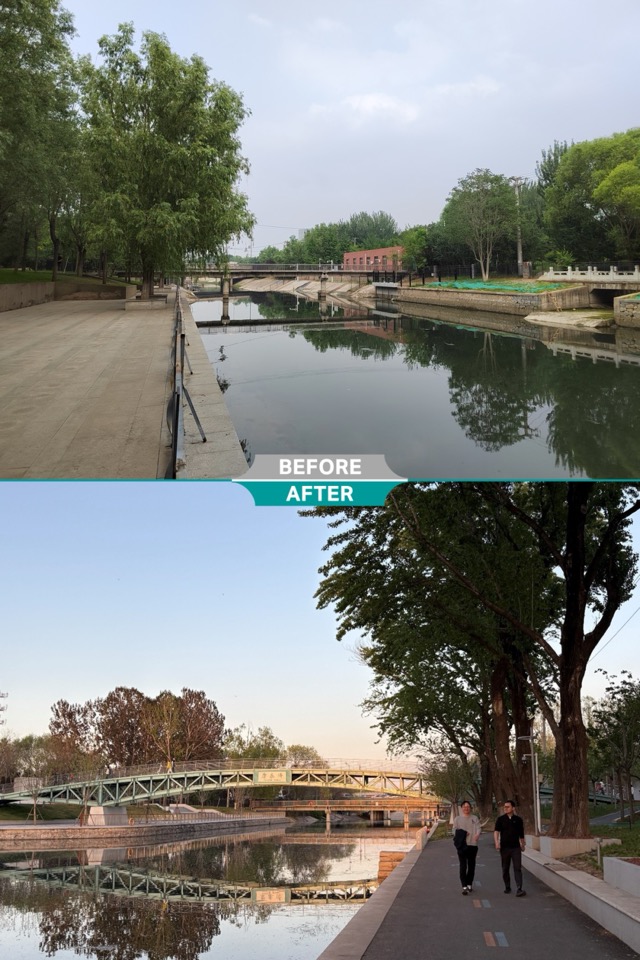
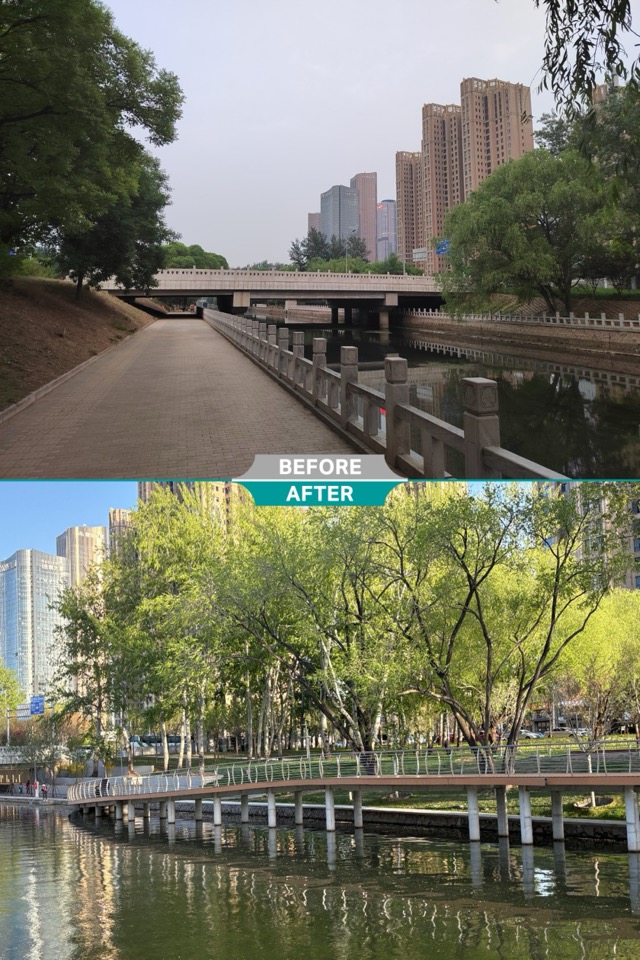
▼项目前后对比,Comparison before and after the project
Stretching approximately 15.6 kilometers, Beixiaohe is a key tributary of the North Canal system. A focus of this project is a section of the river that runs 4.2 kilometers from the Jingcheng Expressway through the northern core of Wangjing. It plays a critical role in flood control while connecting multiple communities and public spaces — functioning as a vital urban water spine. However, decades of engineering-led management resulted in fluctuating water quality, ecological degradation, fragmented spaces, and poor accessibility. What should have been a connector became a neglected “grey edge” within the city. Responding to China’s “Happy Rivers and Lakes” initiative, AECOM — commissioned by the Chaoyang District Government and Water Authority —brought together multidisciplinary expertise across landscape, hydrology, ecology, planning and municipal engineering. The project shifted from single-purpose infrastructure works to a holistic transformation of space and urban life.
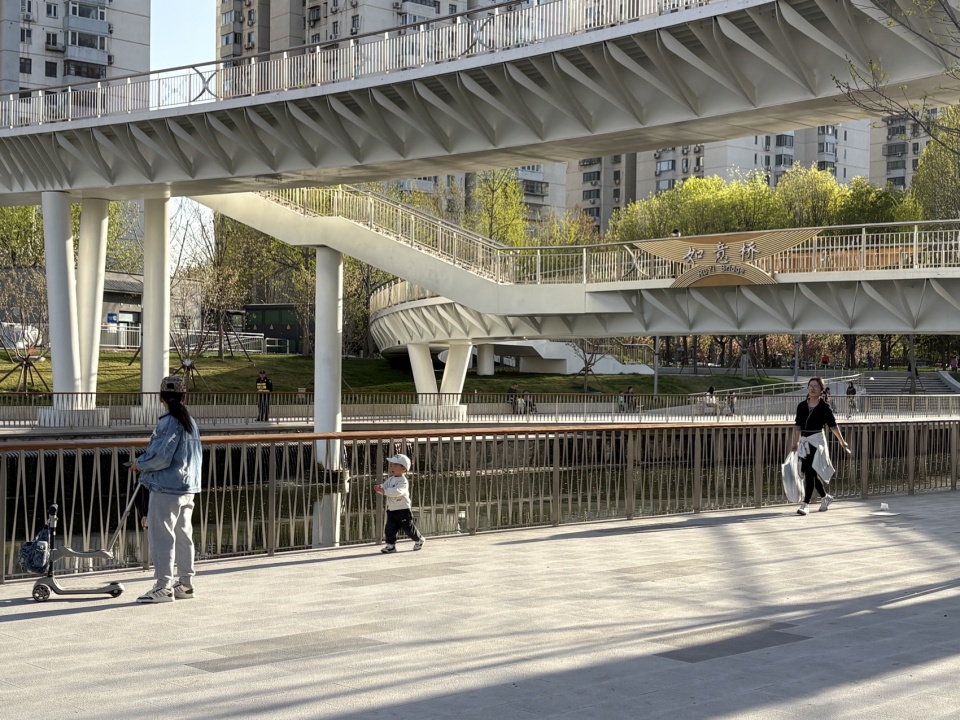
▼多层次立体慢行系统,Multi-level pedestrian circulation system
在接受《北京日报》采访时,AECOM中国区景观设计总监李彦军提到,“仅此次治理的河段就流经14个小区,直接惠及大约8万人,最近的小区距离岸边仅有50米。我们做的头一件事,就是拆掉河边护栏,打通滨水步道,为14个滨河小区开设了17个通往河道的入口。这是一场系统性的重构,我们要让北小河与大自然、与城市和人恢复深刻的连结。”
In an interview with Beijing Daily, Li Yanjun, landscape director at AECOM noted: “This section alone passes through 14 residential communities, directly benefiting around 80,000 people, with the closest homes just 50 meters from the riverbank. The first thing we did was remove the riverside barriers and open up the waterfront paths, creating 17 new access points and connecting these 14 communities to the river. This is a systematic reconfiguration — we aim to restore a deep connection between the river, nature, the city, and its people.”
▼面向河景的观景坐席,Riverfront seating overlooking the water
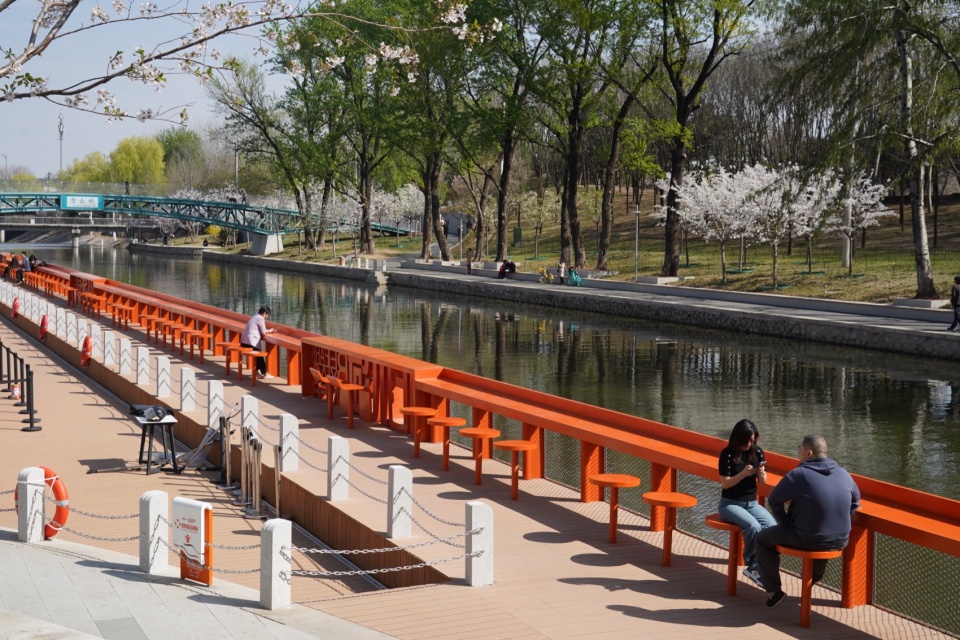
随着4.2公里河道与8.4公里滨水绿道的贯通,原本割裂的空间被重新组织,社区、公园、商业与公共设施被串联起来,形成连续的城市生活界面,构建起约40万平方米的水岸空间。
With 4.2 kilometers of river and 8.4 kilometers of waterfront greenway fully connected, previously fragmented spaces have been reorganized. Communities, parks, commercial areas, and public facilities are now linked together, forming a continuous urban interface and creating approximately 400,000 square meters of waterfront space.
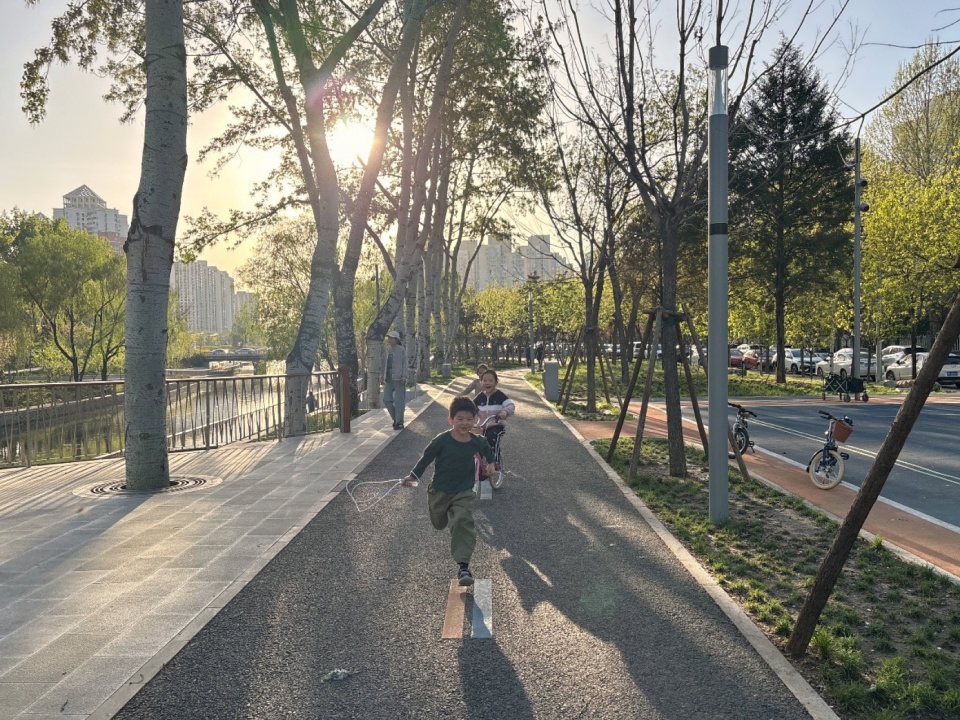
▼林荫步道中的日常,Daily activities along the shaded promenade
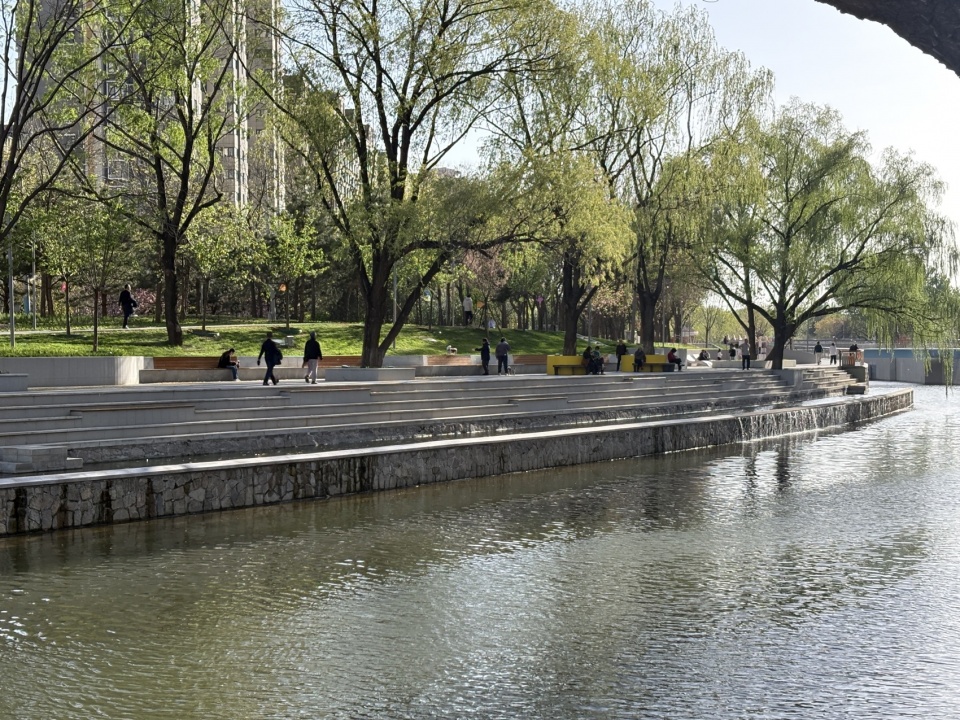
▼面向河道的休憩看台,Riverside seating terraces facing the water
更重要的是,这一转变重新定义了河流在城市中的角色。它从过去的“治理成本”,逐步转化为“城市资产”——不仅提升了环境品质,也带动了人气与公共生活的生成,使滨水空间真正融入日常生活。改造后的北小河分为“生态自然、商业活力、都市休闲”三个主题段落,河流与城市无界融合,成为了京城东北部融合多元功能于一体的“市民幸福烟火水岸”新地标。
More importantly, this transformation redefines the role of the river within the city. It has shifted from a “management cost” to a “city asset”— not only improving environmental quality, but also generating vibrancy and enhancing public life, allowing the waterfront to truly integrate into everyday living. The renewed Beixiaohe is organized into three themed sections — Ecological Nature, Commercial Vitality, and Urban Leisure — where river and city blend seamlessly. This now forms a new landmark waterfront in northeast Beijing that brings together diverse urban functions in everyday life.
▼公共活动,Public event
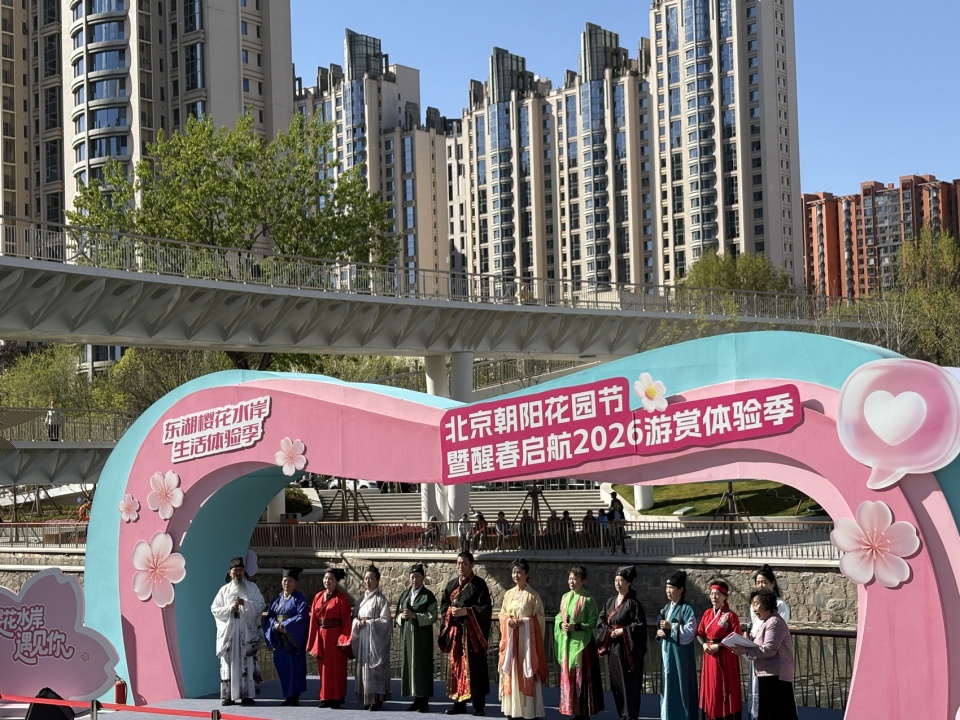
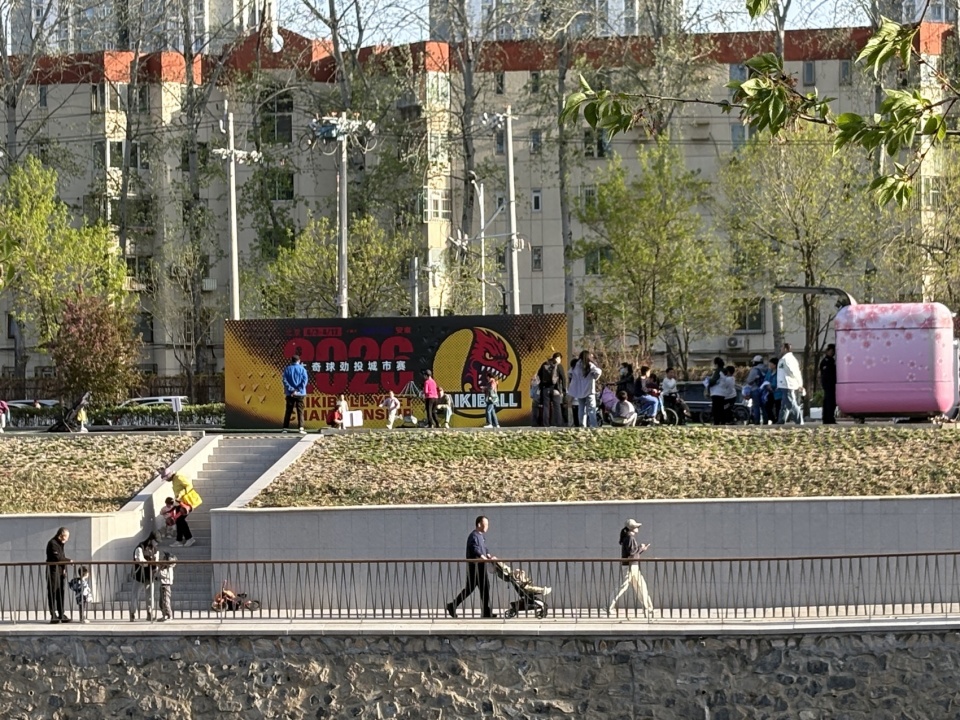
这种由点到面的价值重构,使北小河成为高密度城区中兼具生态、空间与生活功能的复合型公共系统,也为同类型城区提供了具有参考意义的更新范本。北小河项目亦凭借此荣获2023年IFLA亚太区风景园林大奖(IFLA Asia-Pacific Landscape Architecture Awards 2023)未建成项目类环境荣誉奖。
This value reconfiguration from individual points to a broader system has transformed Beixiaohe into a composite public system integrating ecological, spatial, and social functions within a high-density urban area, providing a valuable reference for similar contexts. The project was also awarded the Honourable Mention in the Unbuilt Category at the 2023 IFLA Asia-Pacific region Landscape Architecture Awards.
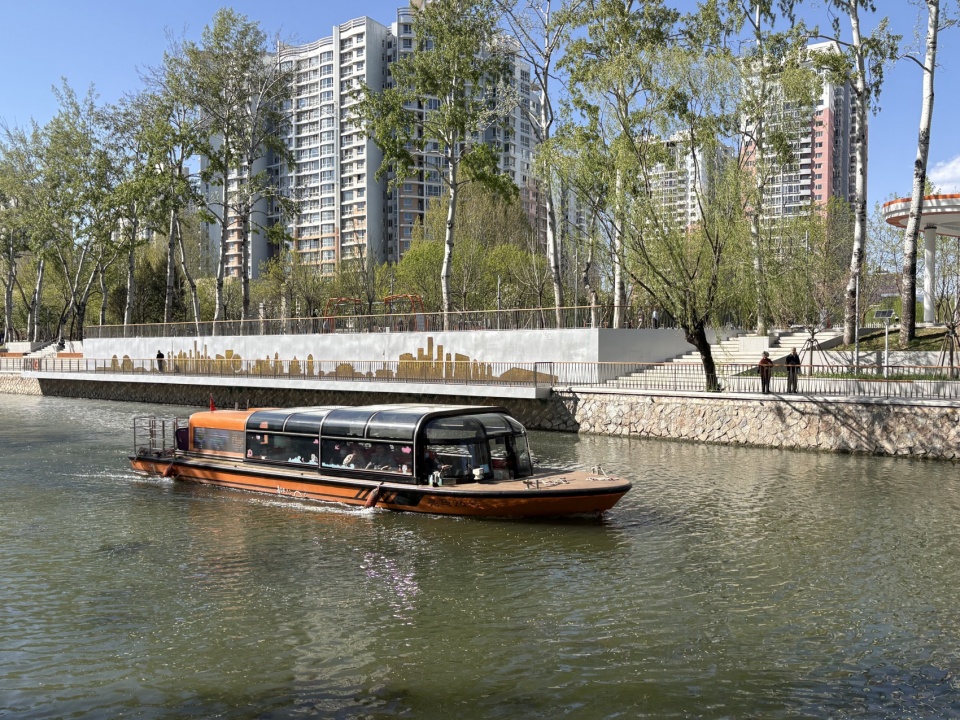
▼游船巴士航行于北小河,Cruise boat navigating the Beixiaohe River
核心方法:四维策略,织就幸福水岸 Core approach: A four-pillar strategy for a livable waterfront
AECOM深度融合国际先进滨水更新理念与本土实际需求,摒弃传统河道 “重治理、轻体验;重工程、轻生态;重形式、轻运营” 的单一模式,以 “幸福、烟火” 为核心定位,围绕生态、安全与民生需求形成了“生态筑基、空间缝合、场景赋能、文化铸魂” 四维策略。
AECOM integrates advanced international waterfront regeneration approaches with local needs, going beyond the conventional, one-dimensional model of river management that tends to “prioritize control over experience, engineering over ecology, and form over operation.” Centered on the ideas of “well-being” and “everyday vitality,” the project establishes a four-dimensional strategy — ecology as a foundation, spatial integration, scenario activation and cultural identity — addressing ecological, safety and community needs.
▼河流融入城市生活场景,River integrated into everyday urban life
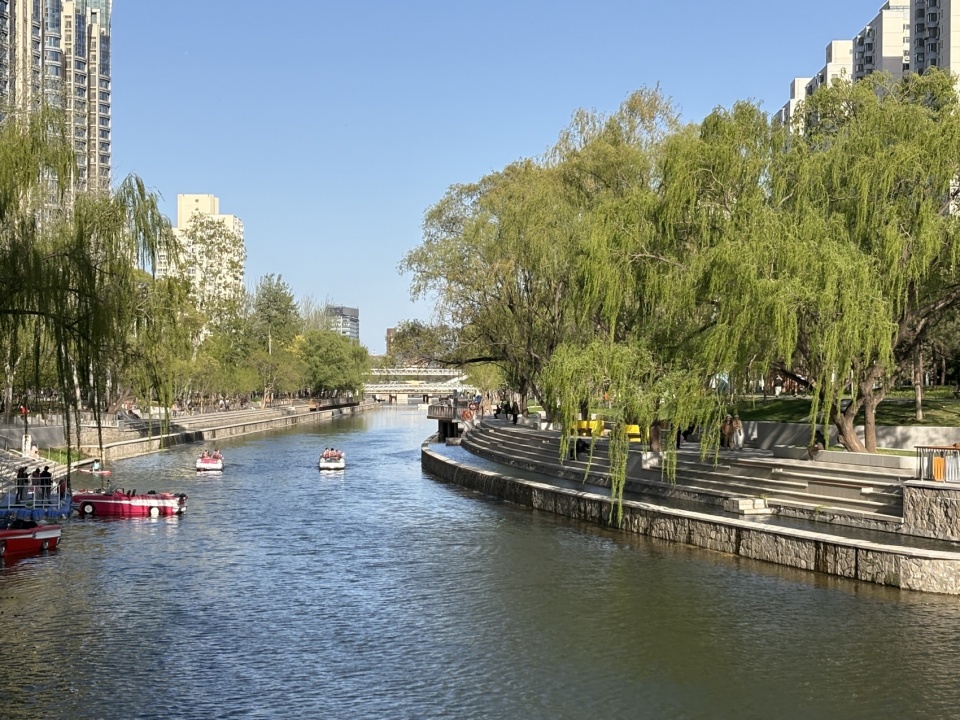
生态筑基作为基础,通过水质净化、生态驳岸与本土植被系统,恢复河道自然属性,重建稳定的蓝绿生态网络,实现 “水清、岸绿、生态美”;空间缝合则回应城市割裂问题,通过绿道、桥梁与慢行系统的完善,实现滨水空间全域贯通、全域可达;场景赋能进一步引入多样化活动与使用方式,让滨水空间从 “可看、可路过” 升级为 “可用、可停留、可沉浸”,真正服务于民;文化铸魂则通过锚定在地记忆与公共表达的植入,让河流成为承载情感与认同的载体。
Ecology as a foundation serves as the basis, restoring the river’s natural character through water purification, ecological embankments, and native planting systems, and rebuilding a stable blue-green ecological network to achieve clear waters, green banks and a healthy ecosystem. Spatial integration responds to urban fragmentation by improving greenways, bridges and slow-mobility systems, enabling full connectivity and accessibility along the waterfront. Scenario activation introduces diverse activities and modes of use, upgrading the waterfront from something to “look at or pass by” into a place that can be used, occupied and experienced — truly serving the public. Cultural identity anchors local memory and public expression within the design, allowing the river to become a carrier of shared emotion and collective identity.
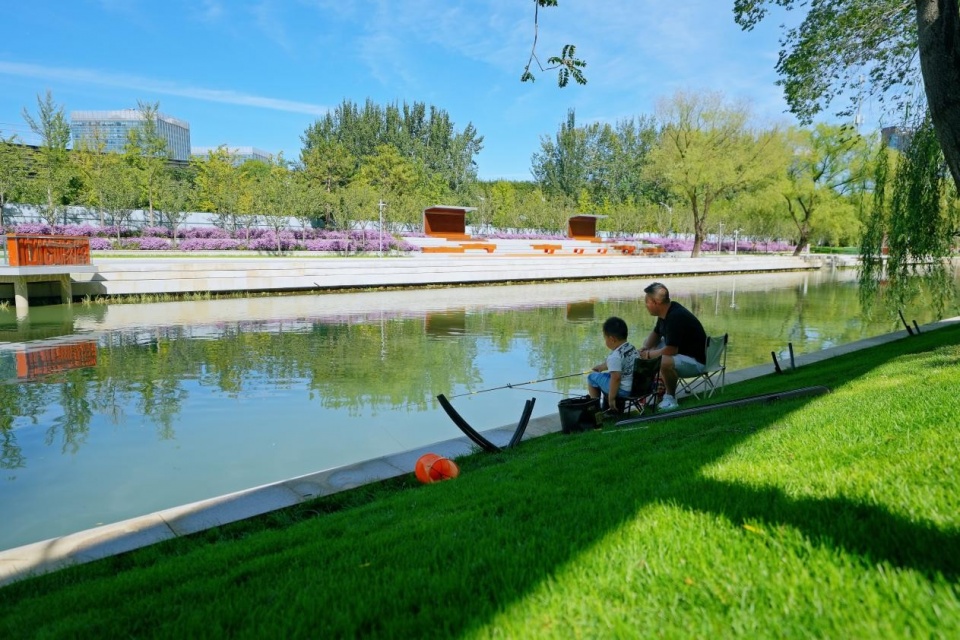
▼清澈河道中的垂钓活动,Fishing activity along the clear river
▼连接两岸与商圈的如意桥,Ruyi Bridge connecting both riverbanks and commercial districts
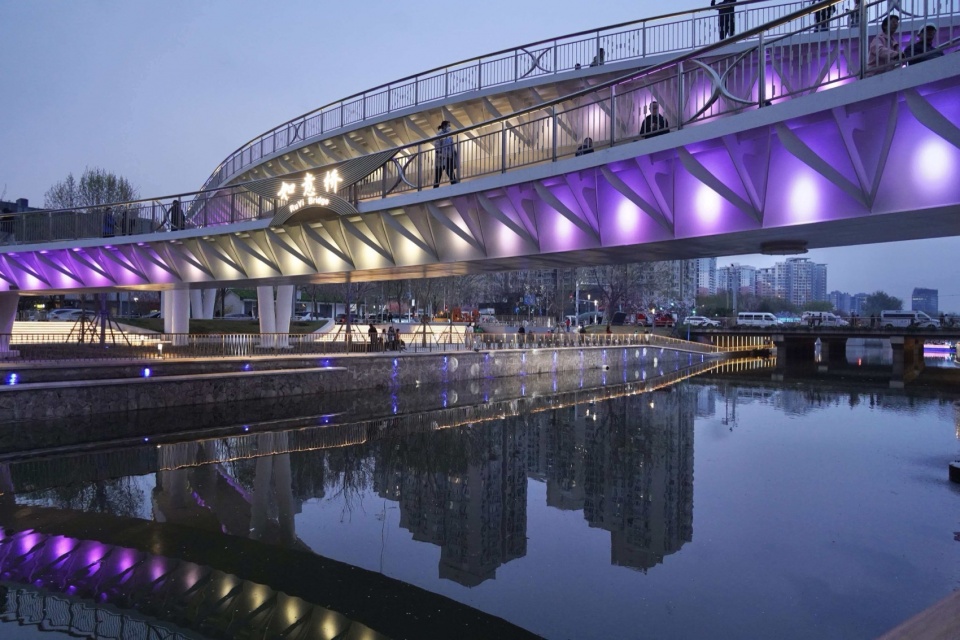
落地途径:以节点为载体,让策略转化为日常体验 Implementation: Transforming the strategy to daily experience through key nodes
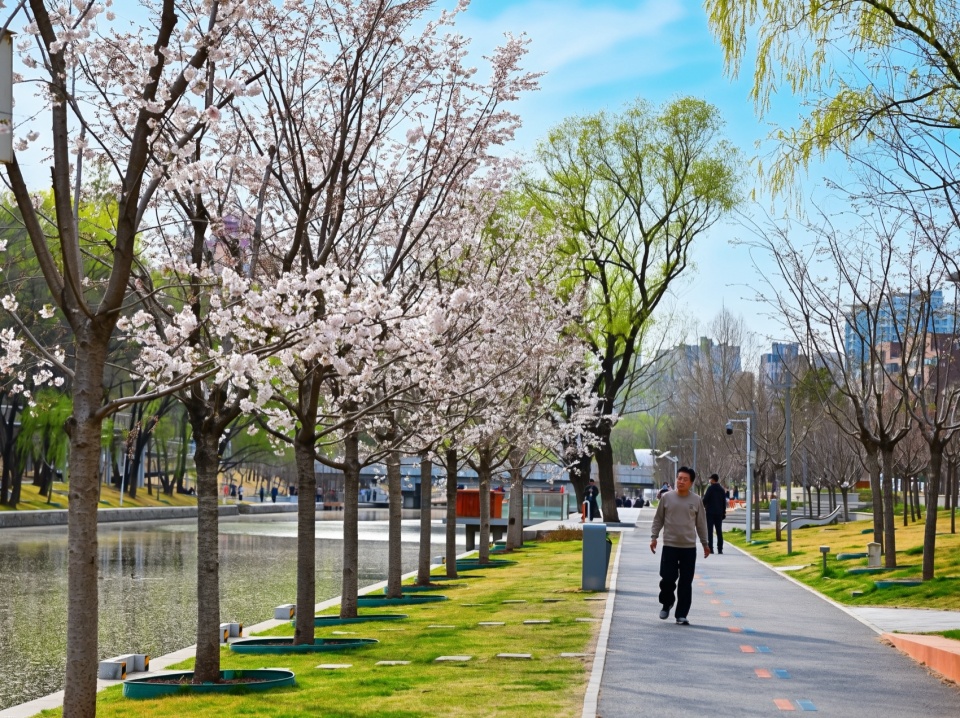
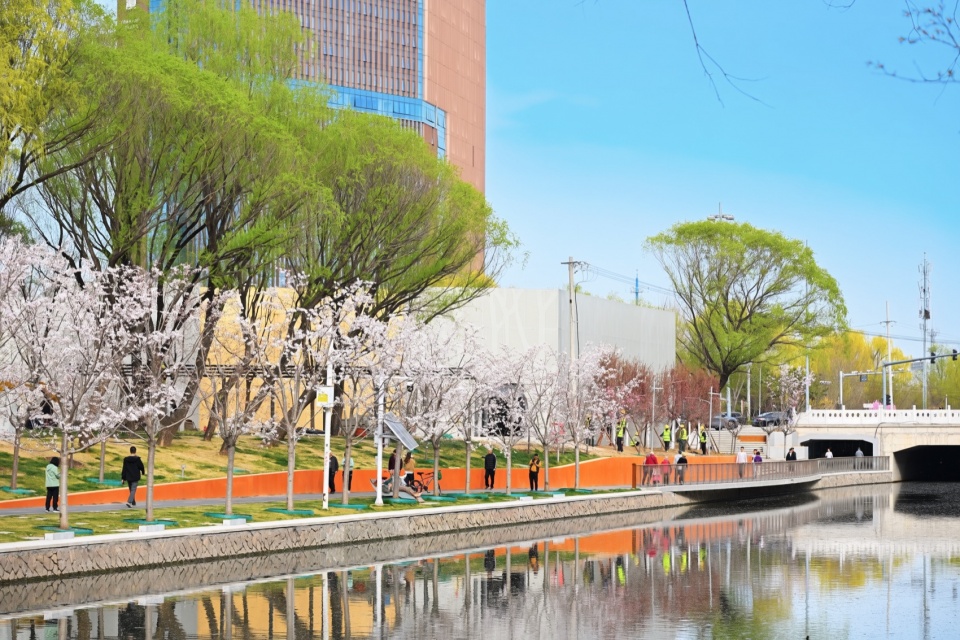
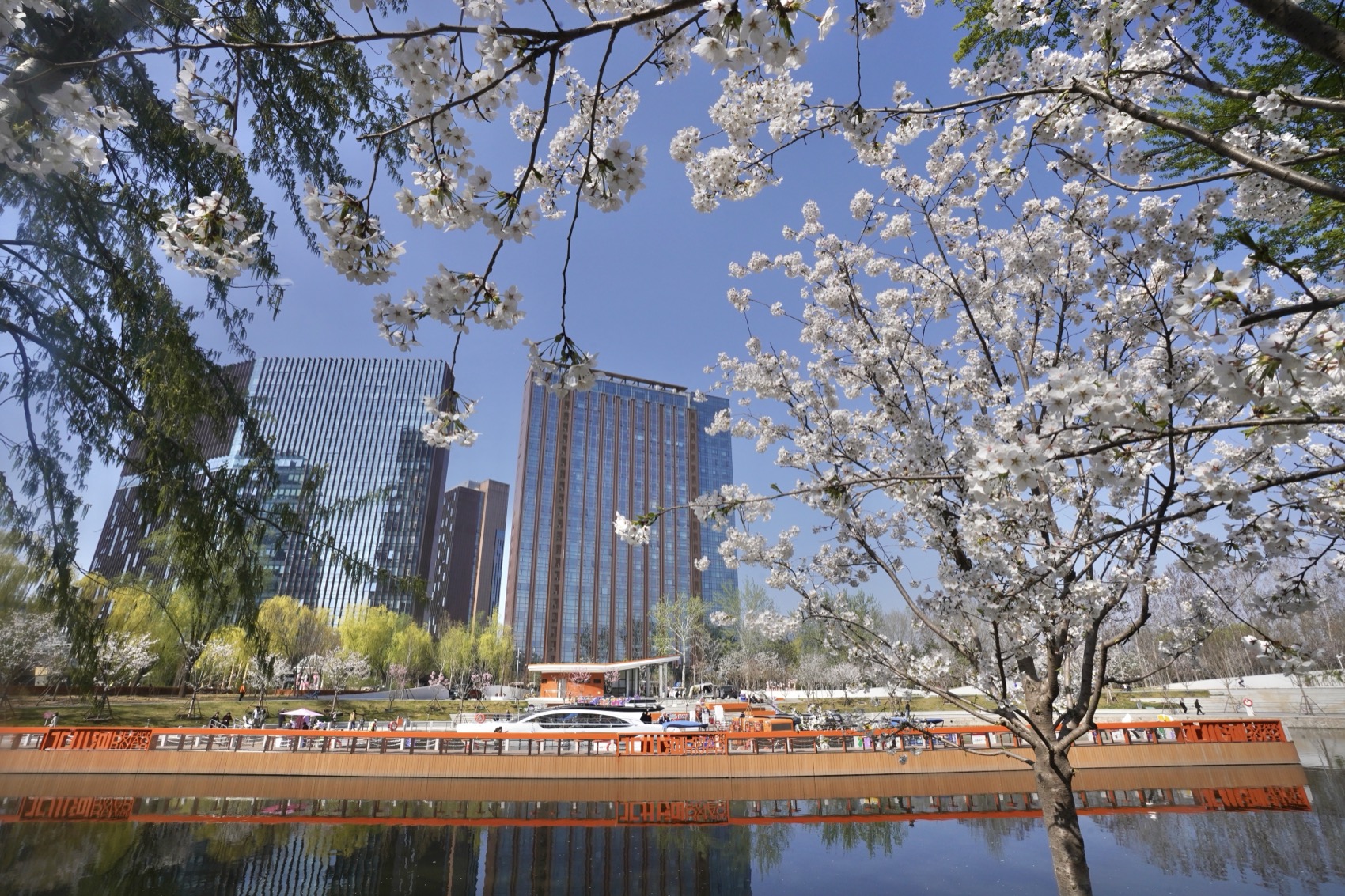
四维策略的落地,并非泛化推进,而是以“空间资产化、价值化激活”为核心路径,精准融入每个节点的设计中,以点带线、以线带面,串联出连续、完整而富于变化的“幸福水岸”,让策略价值真正落地为市民可感的体验。 樱花漫岸是生态筑基与场景赋能的集中体现。沿河种植的6000余株樱花,不仅构建了北小河专属的特色樱花水岸,更使其成为了北京首条樱花河。随着赏樱步道串联周边社区,将 “春赏樱花、夏听蝉鸣、秋观落叶、冬享暖阳” 的四季场景融入居民日常,让生态价值与民生体验完美融合,成为北京春日赏樱新 IP。
The implementation of the four-dimensional strategy is not carried out in a generalized way; instead, it follows a core approach of “spatial assetization and value activation,” precisely embedded into the design of each node. Through a point-line-area progression, these nodes are connected into a continuous, cohesive and dynamic waterfront, translating strategic value into tangible experiences for citizens. The Cherry Blossom Promenade is a concentrated expression of ecology as a foundation and scenario activation. More than 6,000 cherry trees planted along the river create a distinctive cherry blossom waterfront unique to Beixiaohe, and establishes it as Beijing’s first “cherry blossom river.” As the viewing paths connect surrounding communities, seasonal experiences such as spring blossoms, summer cicadas, autumn foliage, and winter sunshine are woven into daily life, seamlessly integrating ecological value with everyday living and making it a new springtime destination in Beijing.
▼樱花水岸与滨河步道,Cherry blossom waterfront and riverside promenade
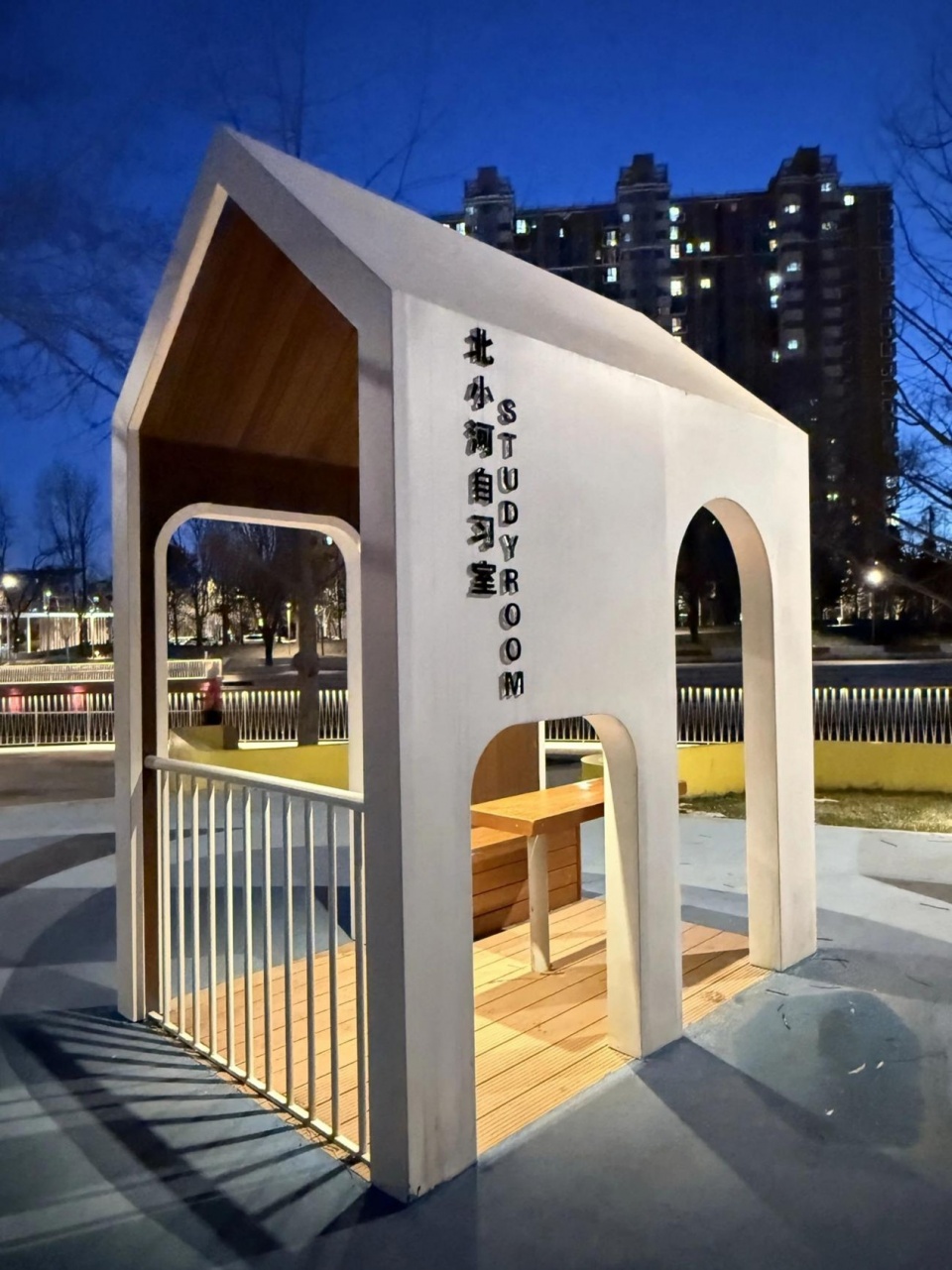
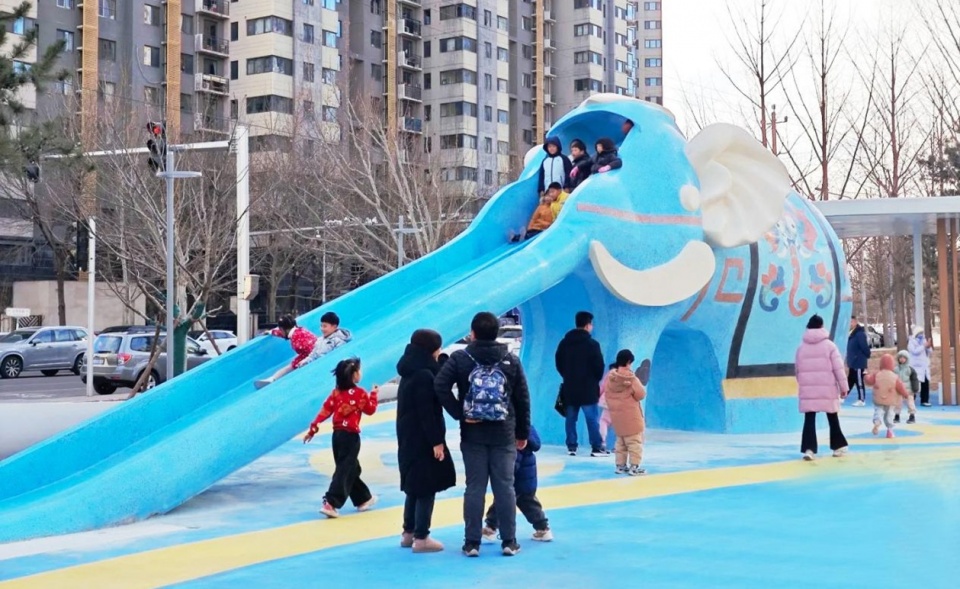
林下阅读花园与九曲花廊,则更多承载场景赋能与文化表达的功能。在保留原有林地的基础上,将空间转化为可阅读、可休憩、可社交的多功能场所。阅读花园营造出闹中取静的“自然书房”,花廊则通过藤本植物与轻结构空间形成开放的社交场景,而“大象滑梯”等设施唤起代际记忆,使空间不仅被使用,更被情感连接。同时,通过科普标识与生态导览的植入,让居民在日常中感知自然关系,进一步强化人与河流的联系。
The Woodland Reading Garden and the Meandering Floral Gallery primarily embody scenario activation and cultural identity. Retaining the original woodland, these spaces are transformed into multifunctional environments for reading, relaxation and social interaction. The Reading Garden creates a tranquil“outdoor study”within a lively urban setting, while the floral gallery, with climbing plants and lightweight structures, forms an open social environment. Installations such as the“Elephant Slide”evoke intergenerational memories, allowing the space to not only be used, but also foster emotional connections.
▼闹中取静的阅读花园,Reading garden offering a quiet retreat
▼大象滑梯活动设施,Elephant Slide play structure
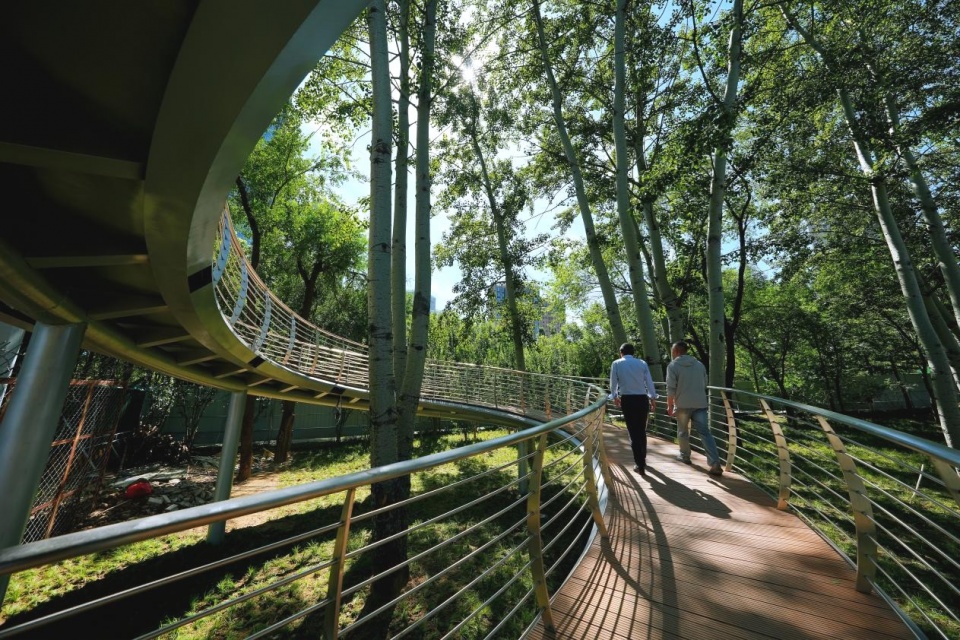
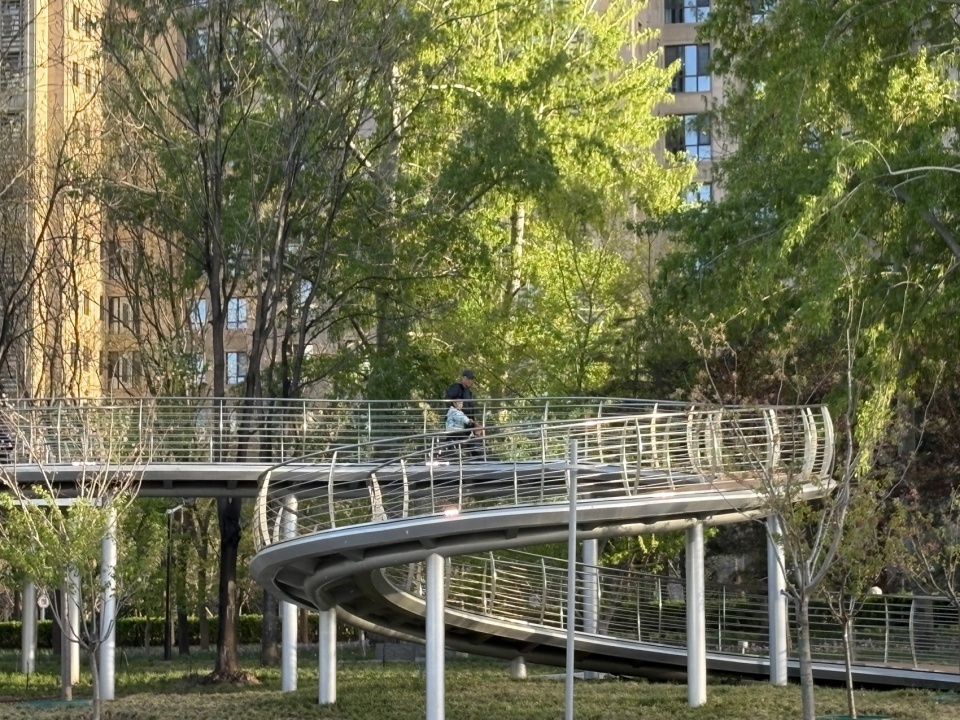
冠林栈道体现了对生态筑基与空间缝合的另一种回应。面对原生大树密集的场地条件,设计没有采用常规开挖方式,而是通过架空栈道实现通行与游览,既最大限度保留原生大树的生态价值与景观风貌,又通过竖向设计巧妙消除了场地高差,增加游赏动线的同时打通长期存在的慢行断点,使原本封闭的林地如今变成市民可游、可赏、可休憩的公共空间。
The Canopy Boardwalk represents another response to ecology as a foundation and spatial integration. Faced with a site densely populated with mature trees, the design avoids conventional excavation and instead introduces an elevated boardwalk to enable circulation and exploration. This approach preserves the ecological value and landscape character of the existing trees to the greatest extent, while the vertical design skillfully resolves level differences. At the same time, it enriches movement routes and reconnects previously interrupted pedestrian paths, transforming what was once a closed woodland into a space for walking, viewing and relaxation.
▼林间蜿蜒的架空步道,Elevated boardwalk winding through the trees
昆泰码头则聚焦空间缝合与城市界面的重塑。通过扩挖水面与新建桥梁,原本分割的两岸被重新连接,交通与空间的连续性得到提升。同时,开放的滨水界面将望京片区的商务气质、现代活力与生态气息有机融合,既打造功能完善的游船停靠母港与滨水活动中心,又成为展示区域形象、彰显城市品质的 “城水客厅”,实现 “门户展示” 与 “民生实用” 的双重价值。
Kuntai Pier focuses on spatial integration and the redefinition of the urban interface. By expanding the water surface and constructing new bridges, the previously divided riverbanks are reconnected, enhancing both mobility and spatial continuity. At the same time, the open waterfront interface organically combines Wangjing’s commercial character, contemporary energy and ecological qualities. It functions not only as a fully equipped hub for boat docking and waterfront activities, but also as a “city-water living room” that showcases the district’s image and urban quality — delivering both gateway representation and everyday usability.
▼昆泰游船码头与滨水活动区,Kuntai Boat pier and waterfront activity zone
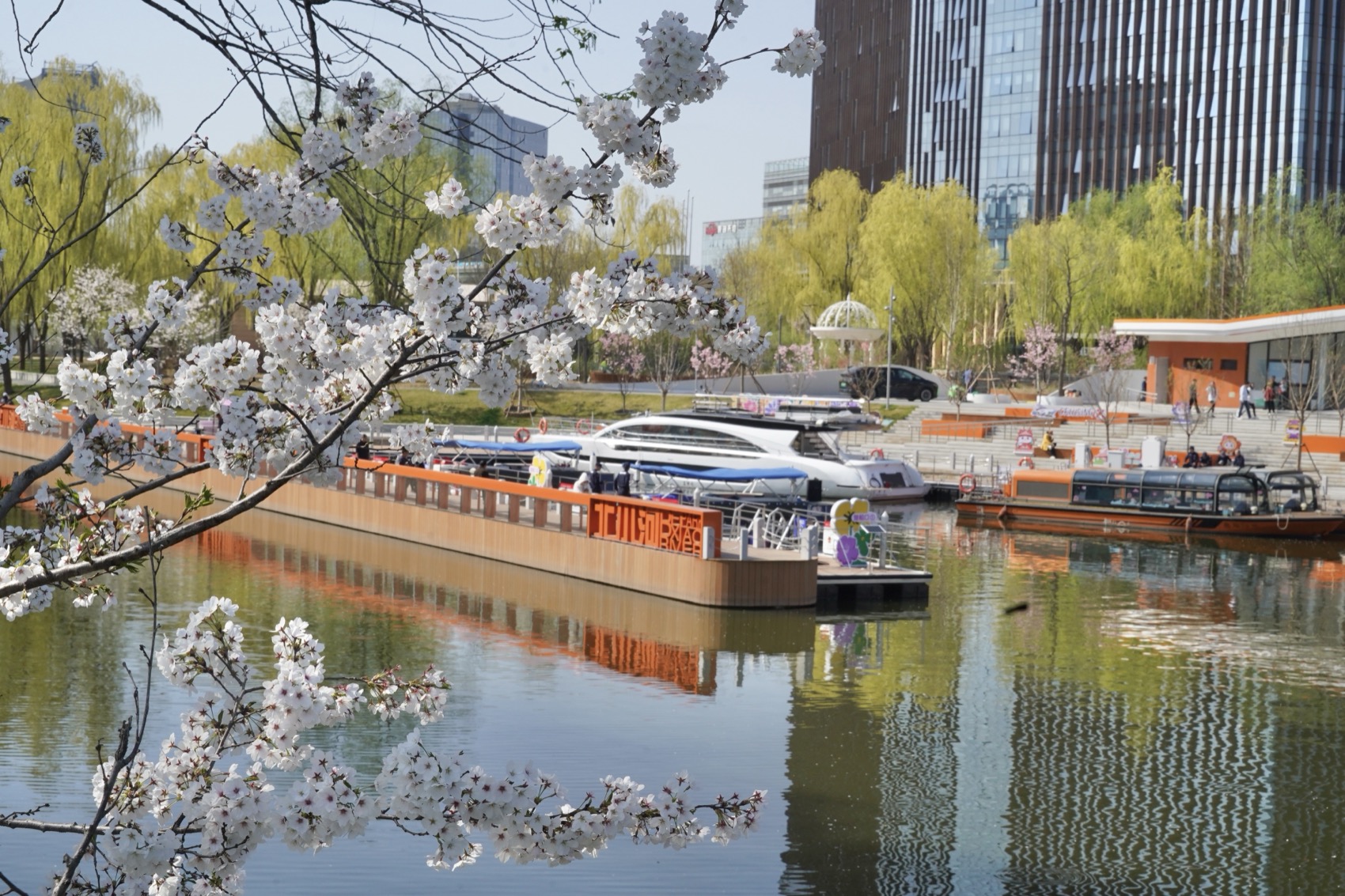
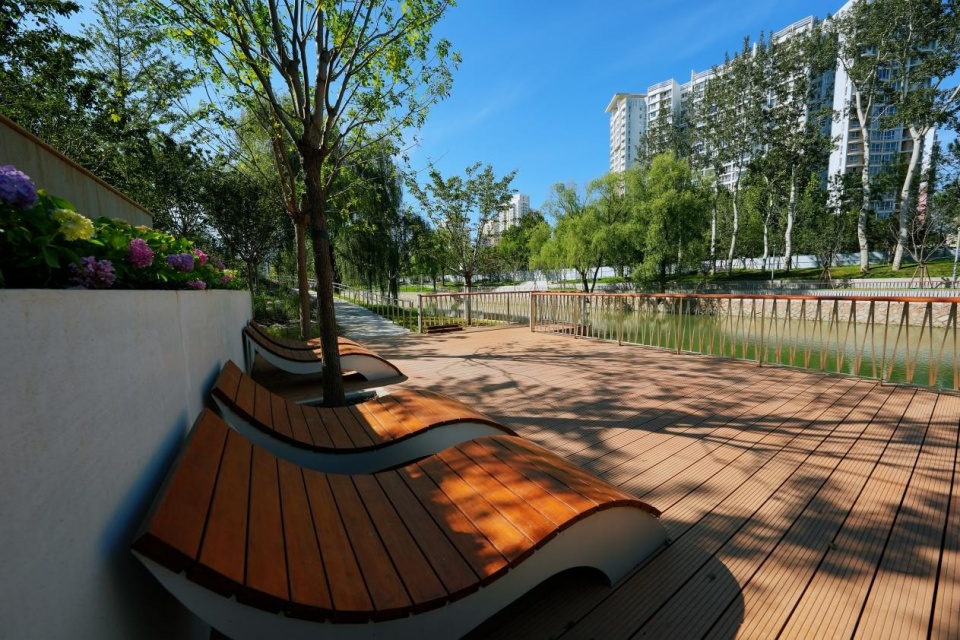
而城市阳台、滨水躺椅与万家灯火主题区等空间,则将场景赋能延伸至日常生活的细节之中。从晨练、散步到夜间休闲,不同年龄与使用需求在此交汇,一系列小而美、细而精的场景设计,让北小河真正成为 “全龄友好、全时活力、全民共享” 的公共生活场所。
Urban terraces, waterfront loungers and themed areas such as “Lights of Home” extend scenario activation into the finer details of everyday life. From morning exercise and casual walks to evening leisure, people of different ages and backgrounds gather here. A series of small yet carefully crafted interventions make Beixiaohe a truly public space that is age-inclusive, active throughout the day, and shared by all.
▼树荫下的观景座椅,Shaded seating overlooking the water
一条河流,如何重回城市生活 How a river returns to urban life
AECOM中国区景观设计总监、项目负责人李彦军表示,北小河的更新,不仅是一条河道的焕新,更是两岸居民生活方式的延续与进化。当城市、居民重新拥抱河道,河道也会重新承载生活,当岸线再次链接人、水、城,我们看到的,不仅是一条河流的新生,更是高密度城区中 “幸福河湖” 的生动实践。
Li Yanjun, director from AECOM’s landscape team in China and project lead, noted that the renewal of Beixiaohe is not only the revitalization of a river, but also the continuation and evolution of the lifestyles of residents on both banks. When the city and its people reconnect with the river, the river in turn begins to carry life again. As the shoreline once more connect people, water and city, what emerges is not only the rebirth of a river, but also a vivid realization of the “Happy Rivers and Lakes” vision within a high-density urban context.
▼河道更新后的公共界面,Renewed public interface along the river
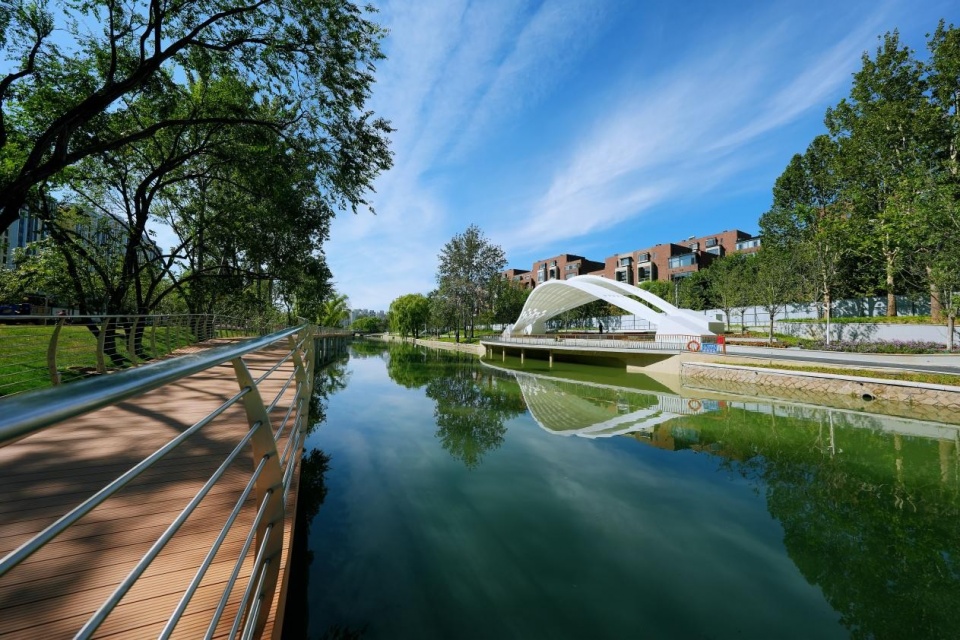
通过系统策略与空间节点化实施,北小河实现了从单一河道治理到全域滨水复兴、从生态修复到城市公共空间价值提升的跨越。这一更新不再局限于河道本身,而是以河道复兴带动城市片区与公共生活的整体重塑,在提升土地价值与空间品质的同时,进一步释放区域活力,实现“以水兴城、以水兴商、以水兴业”的价值转化,使其从过去的“城市治理成本”,转变为兼具生态效益与民生价值的“城市优质资产” 与 “公共福利载体”。未来,AECOM将持续深耕滨水空间更新与生态修复领域,发挥全球化视野与本土化落地能力,以跨专业综合解决方案,助力更多城市河流重焕生机,让 “幸福河湖” 的美好愿景从蓝图走向现实,让每一条城市河流都能成为承载生活诗意、链接邻里情感、激活片区活力、彰显城市魅力的幸福纽带。
Through systematic strategies and node-based spatial implementation, Beixiaohe has achieved a transformation from single-purpose river management to comprehensive waterfront regeneration, and from ecological restoration to the enhancement of urban public space value. This renewal is no longer limited to the river itself; rather, it leverages river revitalization to drive the overall transformation of surrounding districts and public life. While enhancing land value and spatial quality, it further unlocks regional vitality, realizing the value shift of “revitalizing the city, commerce and industry through water.” In doing so, it has evolved from a former “urban management cost” into a high-quality urban asset and a carrier of public benefit that integrates ecological and social value. Looking ahead, AECOM will continue to deepen its work in waterfront regeneration and ecological restoration, leveraging both global expertise and local implementation capabilities. Through integrated, multidisciplinary solutions, it aims to help more urban rivers regain vitality — bringing the vision of “Happy Rivers and Lakes” from blueprint to reality, and enabling every urban river to become a meaningful connector that carries the poetry of everyday life, strengthens community bonds, activates district vitality, and expresses the unique character of the city.
▼人与自然共融的慢行空间,Slow-mobility space integrated with nature