越过山丘:安龙国家山地户外运动示范公园游客服务中心 ,贵州/建筑
安龙国家山地户外运动示范公园位于贵州黔西南州安龙县笃山镇。公园位于一个天然的山谷中,占地约700亩,风景雄奇。山谷四周是典型的喀斯特地形岩壁,其中一段更是垂直的百米悬崖,谷底成口袋形,有一条蜿蜒的河流将谷底分为两半,河流的尽头是两个天坑,河流在天坑处从地面消失流入地下,形成地下河。这里是户外运动绝佳的场地,攀岩、热气球、滑翔伞、水上运动、越野车等户外极限运动都可以在这里找到理想的场地。
Anlong national mountain outdoor sports demonstration park is located in Dushan Town, Anlong county, Qianxinan Prefecture, Guizhou Province. The park is located in a natural Valley, covering an area of about 700 mu, with magnificent scenery. The valley is surrounded by typical karst landform rock walls, one of which is a vertical 100 meter cliff. The valley bottom is in the shape of a pocket. There is a winding river that divides the valley bottom into two halves. At the end of the river are two tiankengs, where the river disappears from the ground and flows into the ground, forming an underground river. This is a perfect place for outdoor sports. Rock climbing, hot air ballooning, paragliding, water sports, off-road vehicles and other outdoor extreme sports can all be found here.
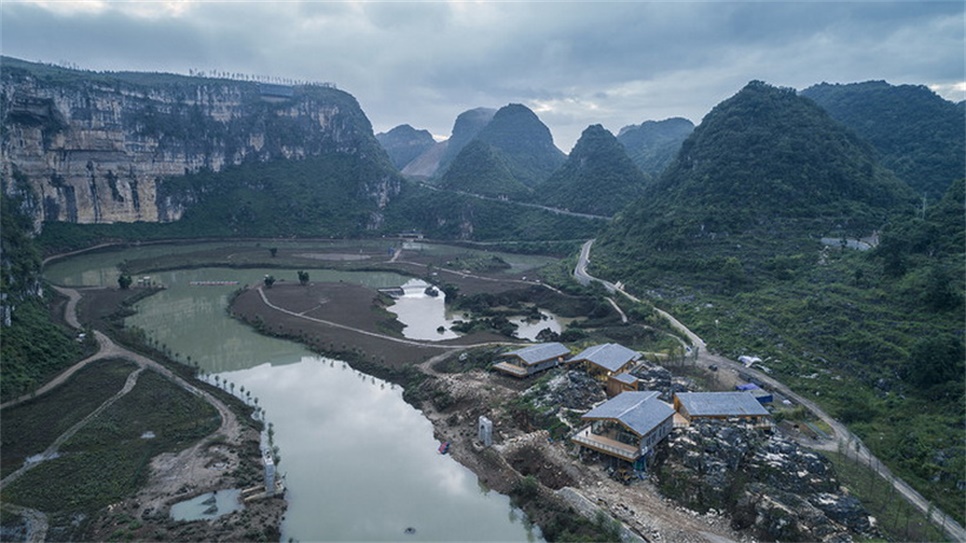
2016年,三文建筑/何崴工作室受邀参与了公园的规划和设计,并主持设计整个谷底唯一的一组建筑——安龙国家山地户外运动示范公园游客服务中心。
In 2016, Sanwen architecture / Hewei studio was invited to participate in the planning and design of the park, and presided over the design of the only group of buildings at the bottom of the valley - the tourist service center of Anlong national mountain outdoor sports demonstration park.
显和隐
Explicit and implicit
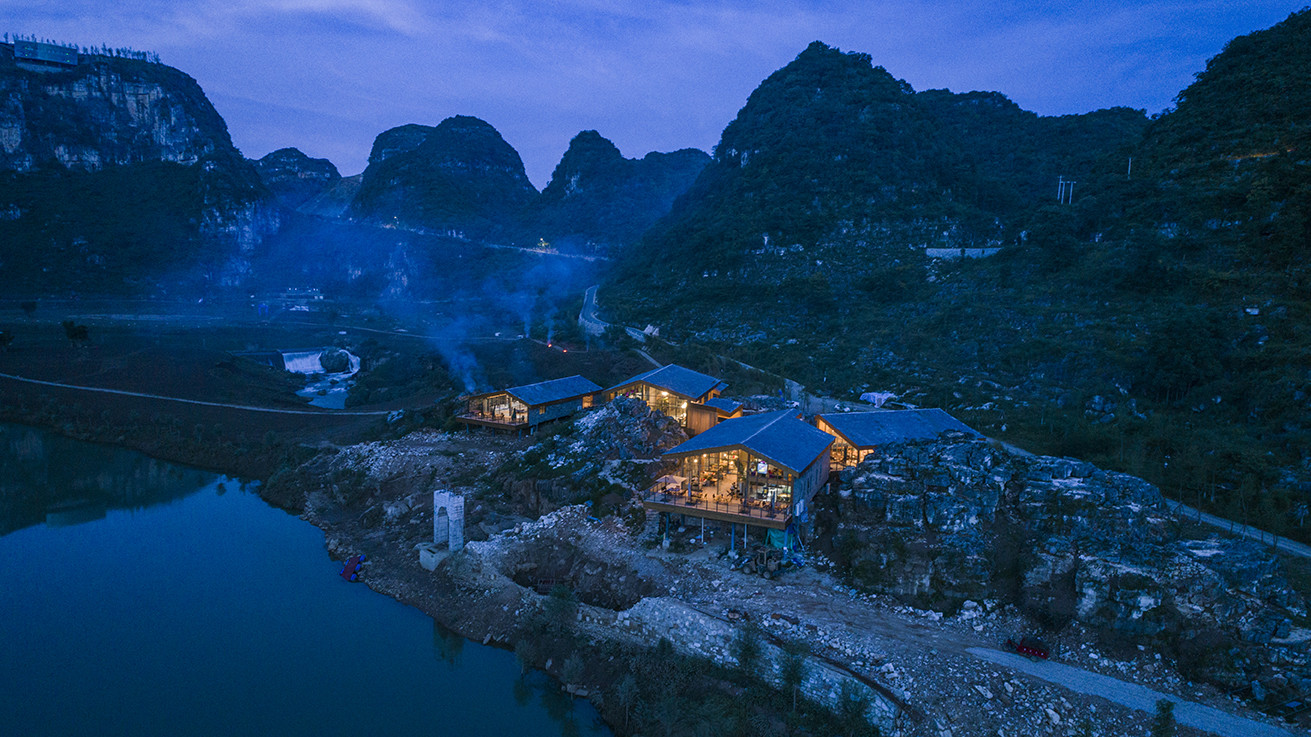
游客服务中心位于谷底的一座小山丘顶上。小山丘是谷底唯一的高点,具有良好的视线,本身也极为醒目。选择在这里建造游客中心,除了希望建筑成为谷底的视觉焦点之外,还因为这里的地势最高,可以抵御每年雨季河流涨水淹没建筑的危险。实际上,当地没有确切的水文资料,建筑师只能根据当地人的口述,确定建筑的地板高度,这也是建筑被设计建造在一个架高的平台上的原因。
The tourist service center is located on the top of a hill at the bottom of the valley. The hill is the only high point at the bottom of the valley. It has a good view and is very eye-catching. In addition to the hope that the building will become the visual focus at the bottom of the valley, the tourist center here is chosen to be built because the terrain here is the highest, which can resist the danger of flooding the building by river flood in the rainy season every year. In fact, there is no exact hydrological data in the local area. The architects can only determine the floor height of the building according to the dictates of the local people. This is also the reason why the building is designed to be built on a high platform.
▼从谷底天坑地下河入口看建筑,建筑被抬起,既解决了季节性涨水对建筑的威胁,又尽量减少对环境的破坏
Looking at the building from the entrance of the underground river in the Tiankeng at the bottom of the valley, the building is lifted, which not only solves the threat of seasonal flood to the building, but also minimizes the damage to the environment
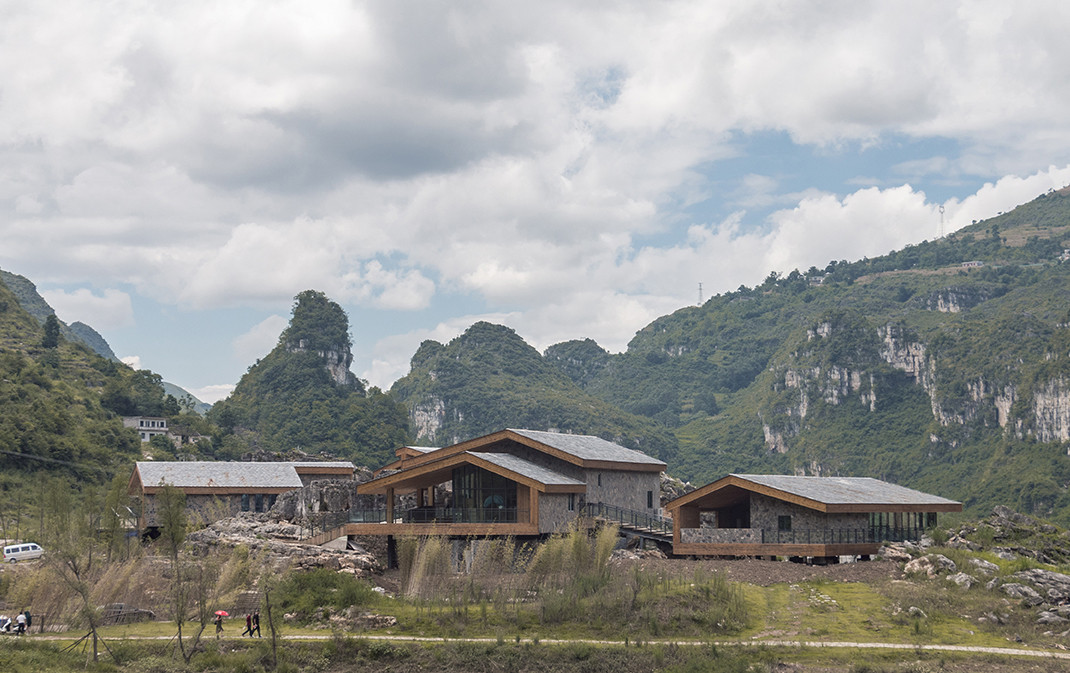
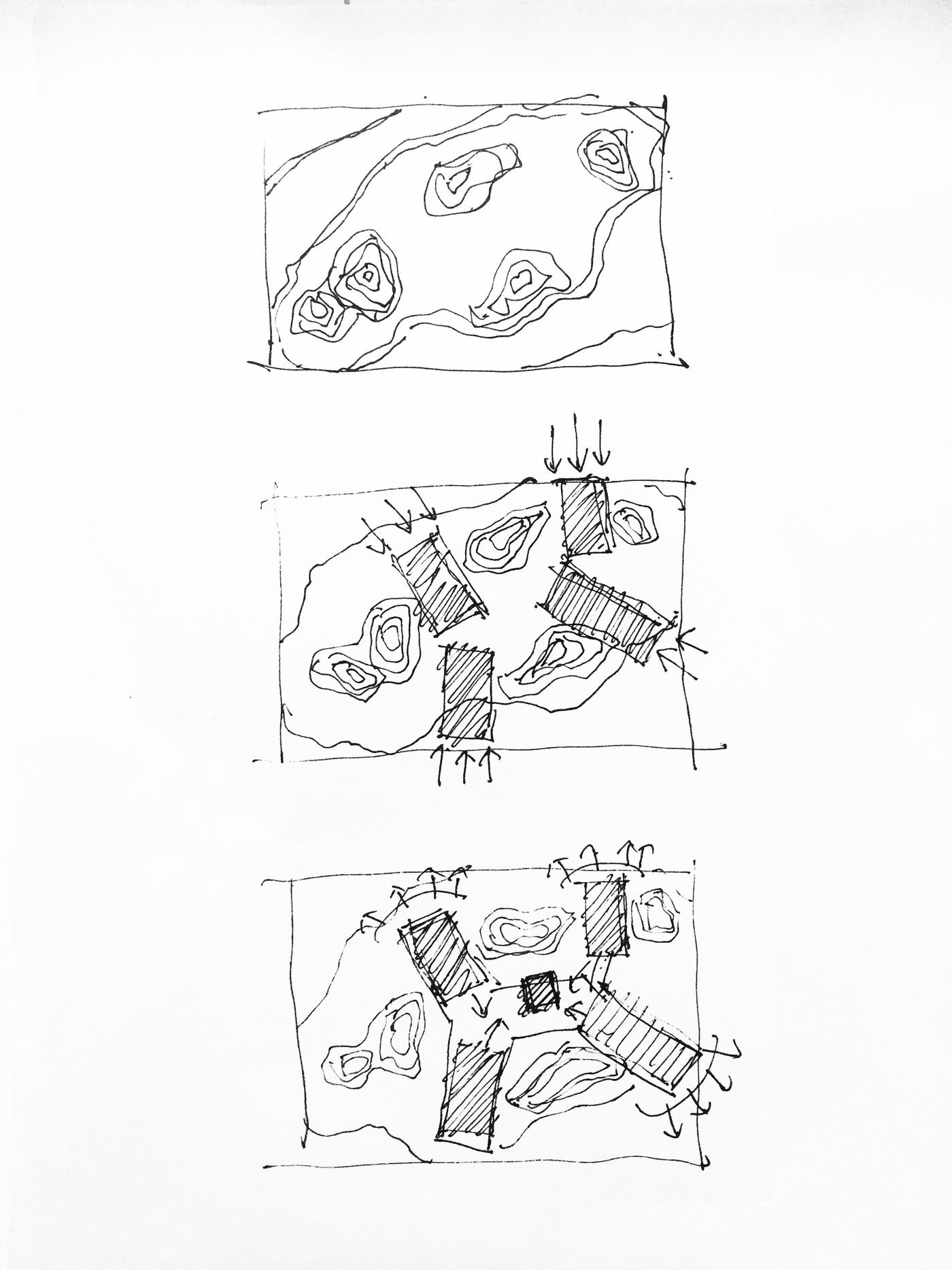
在建筑师看来,峡谷的风景是极具力量感的,也应该是整个公园的绝对主角,而建筑应该首先融入环境,然后才是利用自身的特征为整个谷底点睛。因此,如何处理好建筑的显隐问题就成为了设计的起点。在实地勘察中,设计师发现小山顶部并不是平的。山顶有四组山石高起,而高起的山石之间自然形成了若干个小高地。设计师把建筑打散,形成若干个小的单体,并将它们体藏在这些小高地中。建筑自然的避让原有场地中的山石,并和山石形成一种共生关系:藏身于山石,又从山石的缝隙中伸出来,若隐若现。
In the view of architects, the scenery of the canyon is very powerful and should be the absolute protagonist of the whole park. The architecture should first integrate into the environment, and then use its own characteristics to highlight the whole valley bottom. Therefore, how to deal with the explicit and implicit problems of architecture has become the starting point of design. During the field survey, the designer found that the top of the hill was not flat. There are four groups of rocks rising from the top of the mountain, and a number of small highlands naturally form between the high rocks. The designer broke up the building to form several small monomers, and hid them in these small highlands. The building naturally avoids the rocks in the original site and forms a symbiotic relationship with the rocks: hiding in the rocks and protruding from the cracks of the rocks.
▼从半山腰俯视山谷和游客服务中心建筑,建筑位于谷底一丛山石之间,建筑插入山石之间,如同从山石中生长出来;山墙面朝向山谷的各处风景
Overlooking the valley and the tourist service center building from the hillside, the building is located between a cluster of rocks at the bottom of the valley. The building is inserted between the rocks, as if it grew out of the rocks; The mountain wall faces the scenery of the valley
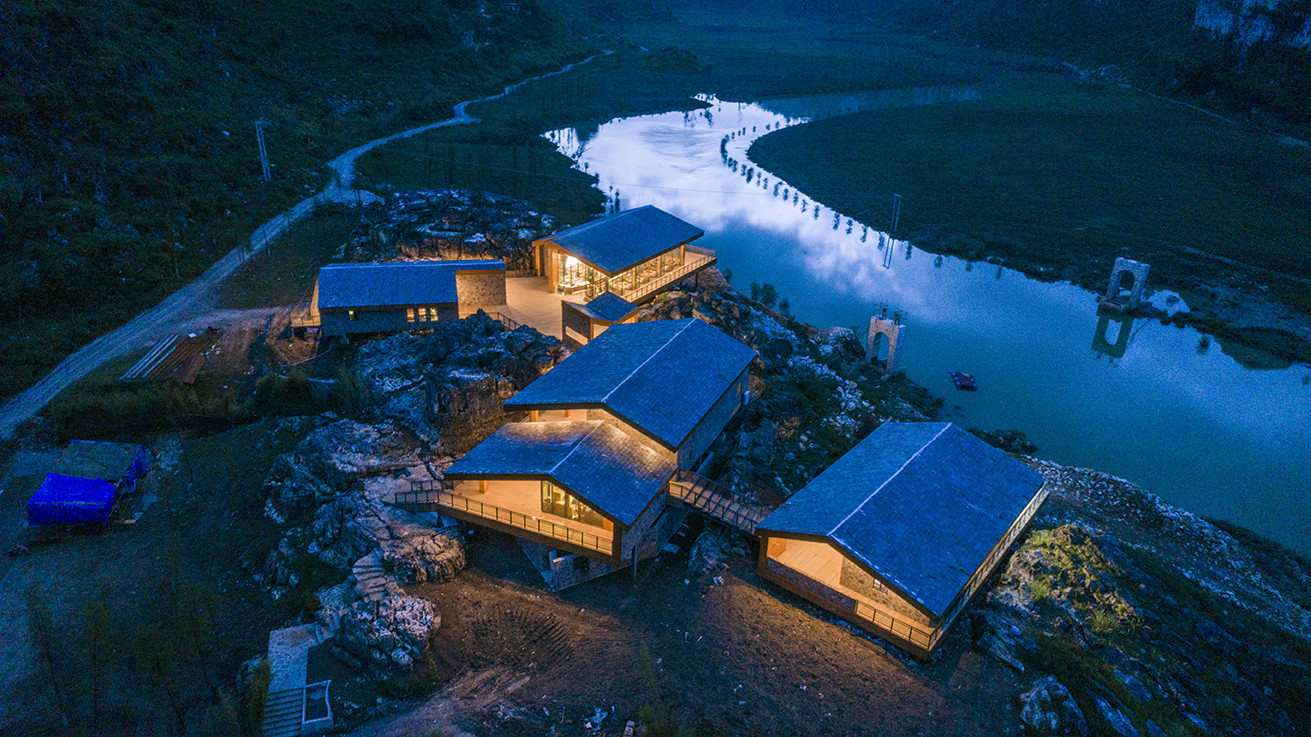
▼山谷壮美的景色为游客服务中心提供了丰富的景观面
The magnificent scenery of the valley provides a rich landscape for the tourist service center
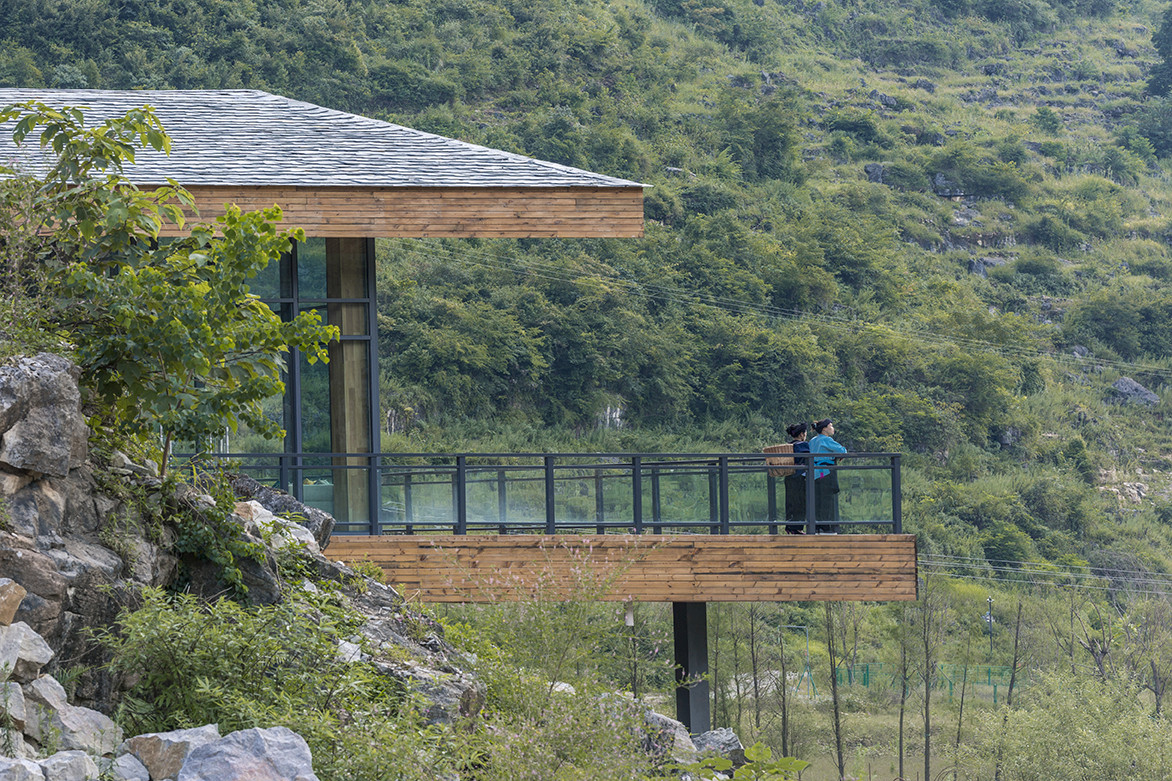
建筑的形式并不刻意的追求新奇,仍然沿用了贵州黔西南地区的双坡顶民居形式,立面材料也尽量选择本地的石材为主。设计师不希望建筑过于彰显,除了对周边环境的尊敬外,也深知即使卖力的表现也无法和周边的大山大水争锋。
The form of the building does not deliberately pursue novelty. It still uses the form of double slope roof dwellings in Southwest Guizhou, and the facade materials are mainly local stones. The designer does not want the building to be too prominent. In addition to respecting the surrounding environment, he also knows that even if he works hard, he cannot compete with the surrounding mountains and rivers.
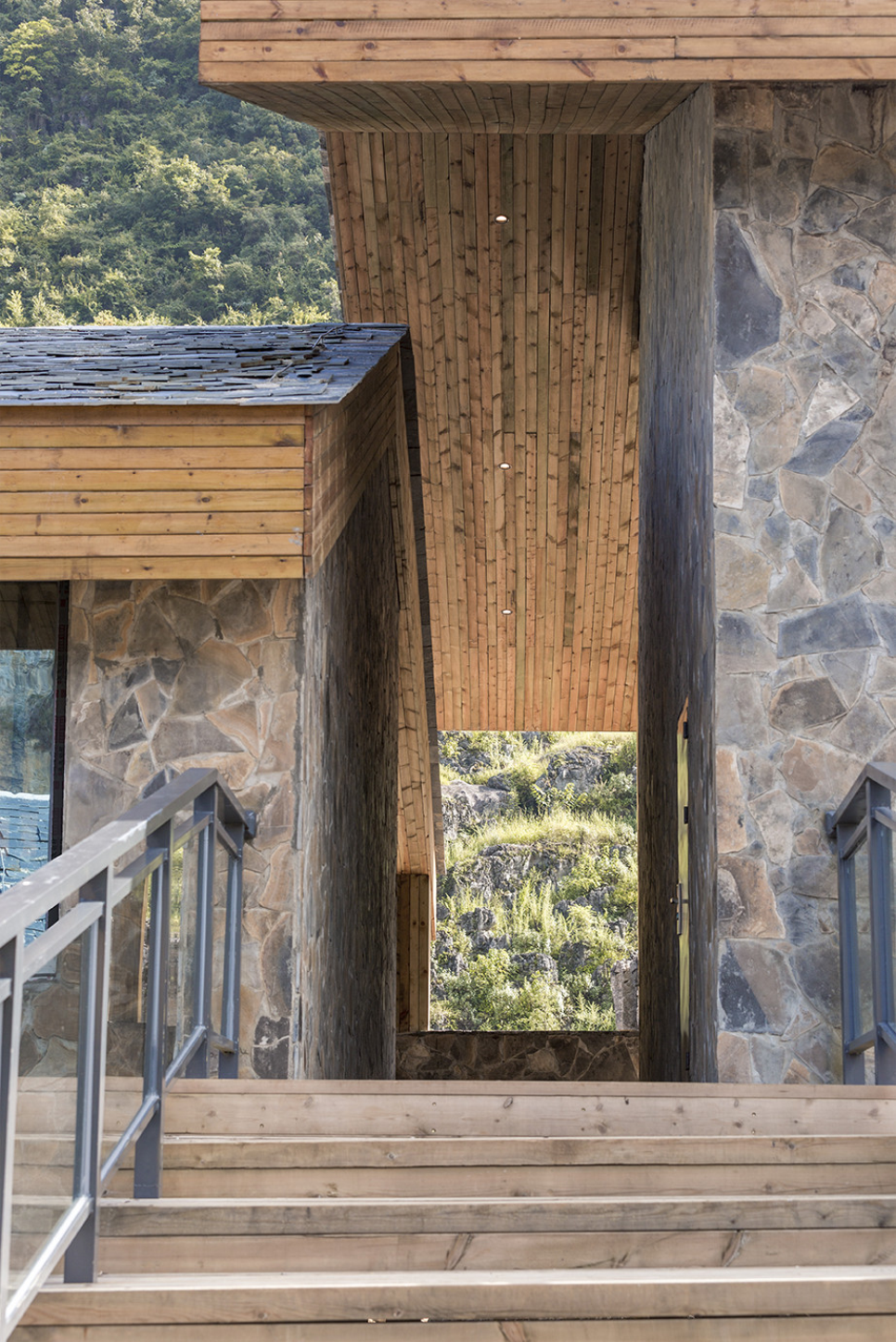
内和外
Inside and outside
游客服务中心由接待站、西餐厅(“红点餐厅”)、酒吧(“仙掌酒吧”)和会议室(“磐石会议中心”)四座建筑组成,其总体布局围绕着基地上的山石展开,呈现出一种外观和内聚共存的状态。
The tourist service center is composed of four buildings: reception station, western restaurant ("red dot restaurant"), bar ("Xianzhang bar") and conference room ("Panshi Conference Center"). Its overall layout is around the mountains and rocks on the base, showing a state of appearance and cohesion.
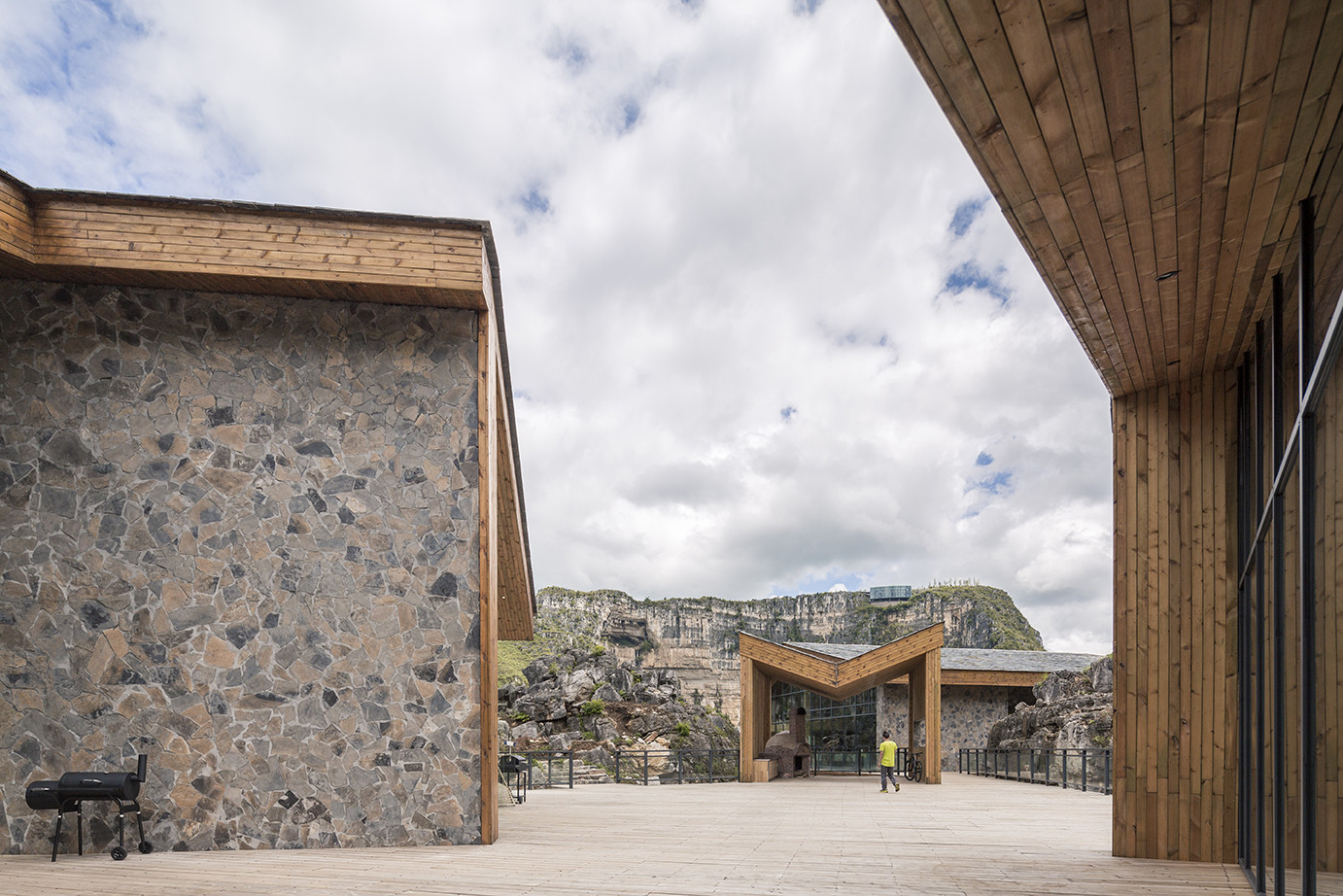
▼M亭,红点餐厅和仙掌酒吧围合成的室外空间构成游客公共活动的场所
The outdoor space enclosed by M Pavilion, red dot restaurant and Xianzhang bar constitutes a place for tourists' public activities
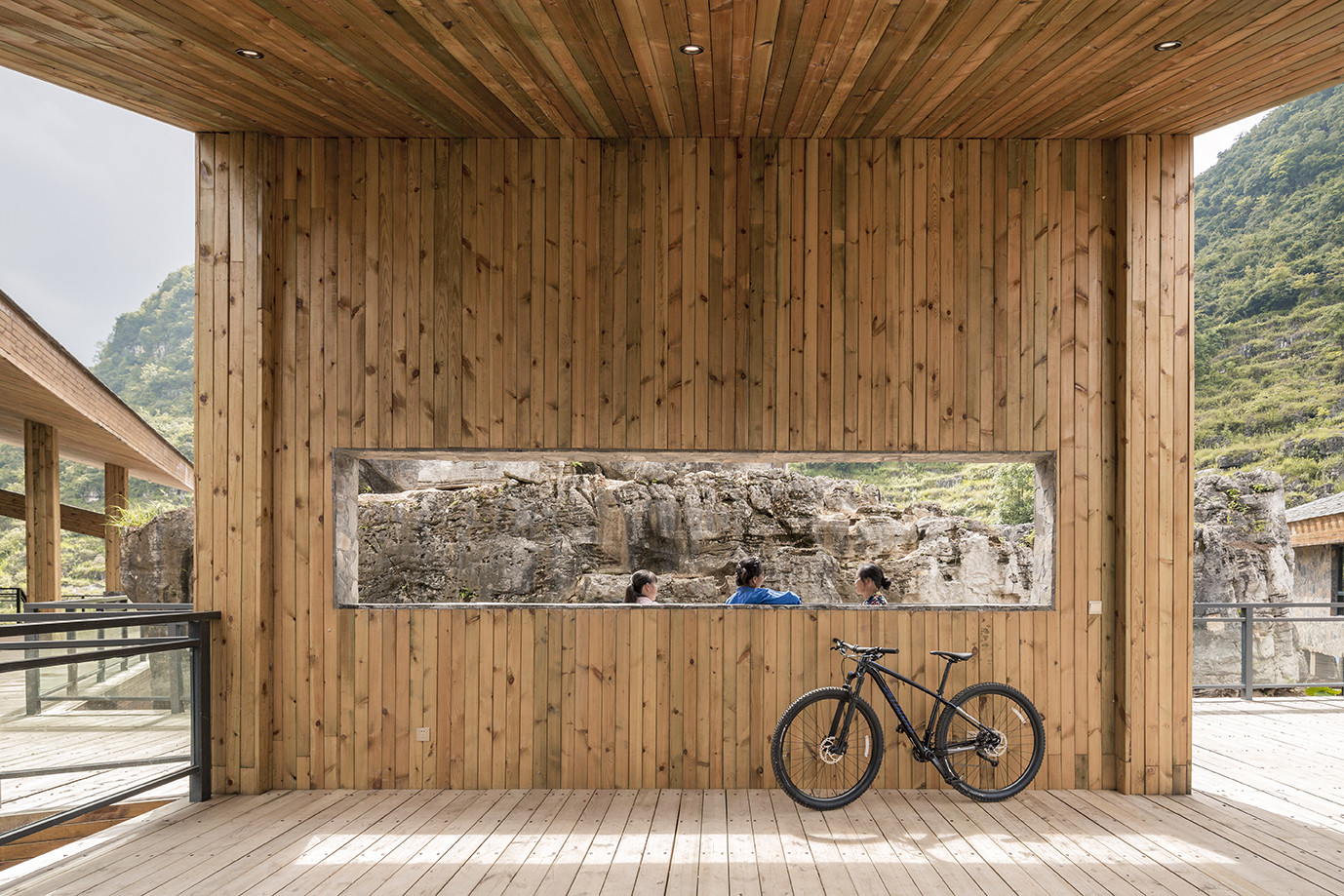
▼布依族少女在服务中心
Bouyei girls in the service center
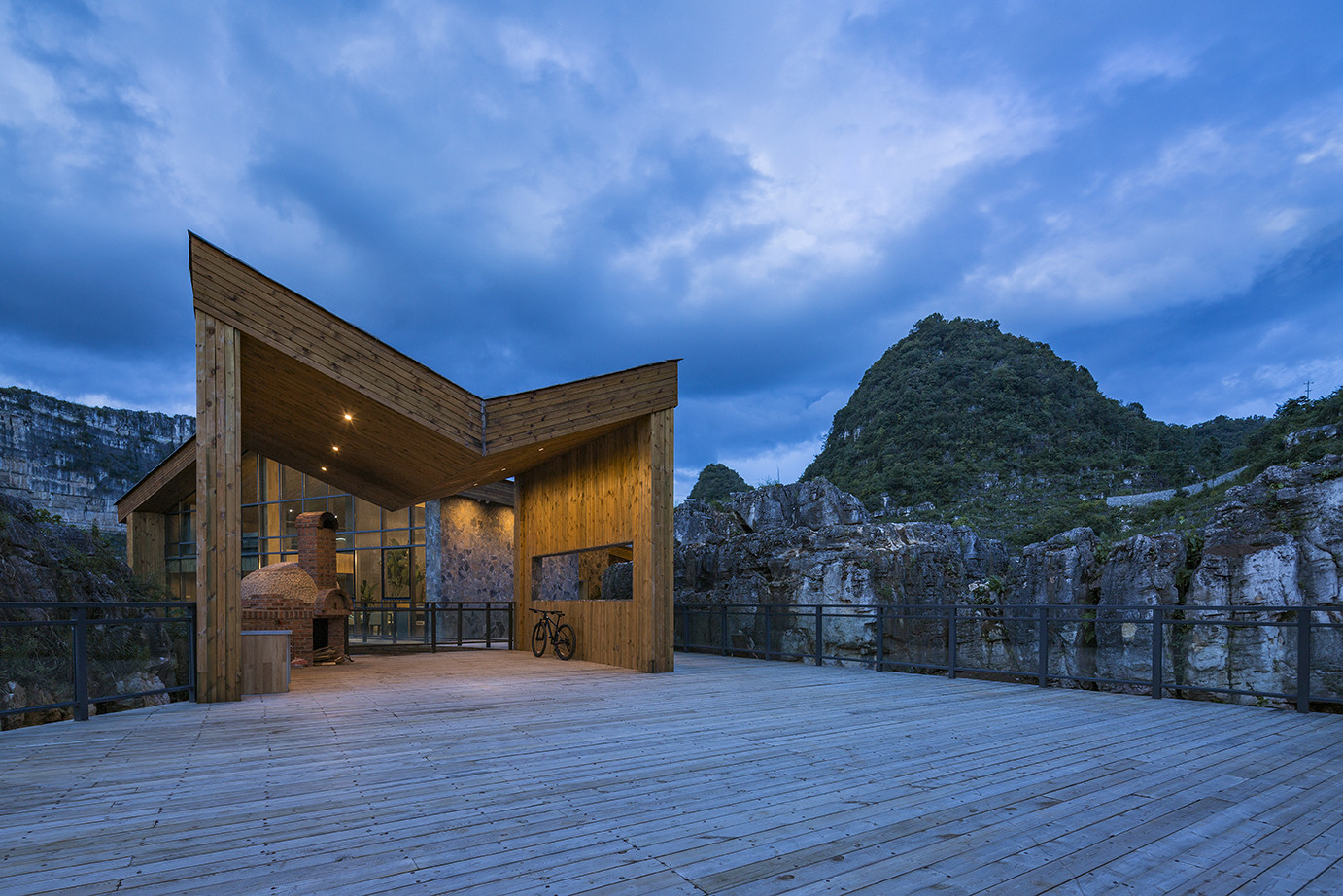
▼从仙掌酒吧看M亭
Viewing m pavilion from Xianzhang bar
▼从M亭看红点餐厅和酒吧
Red dot restaurant and bar viewed from Pavilion M
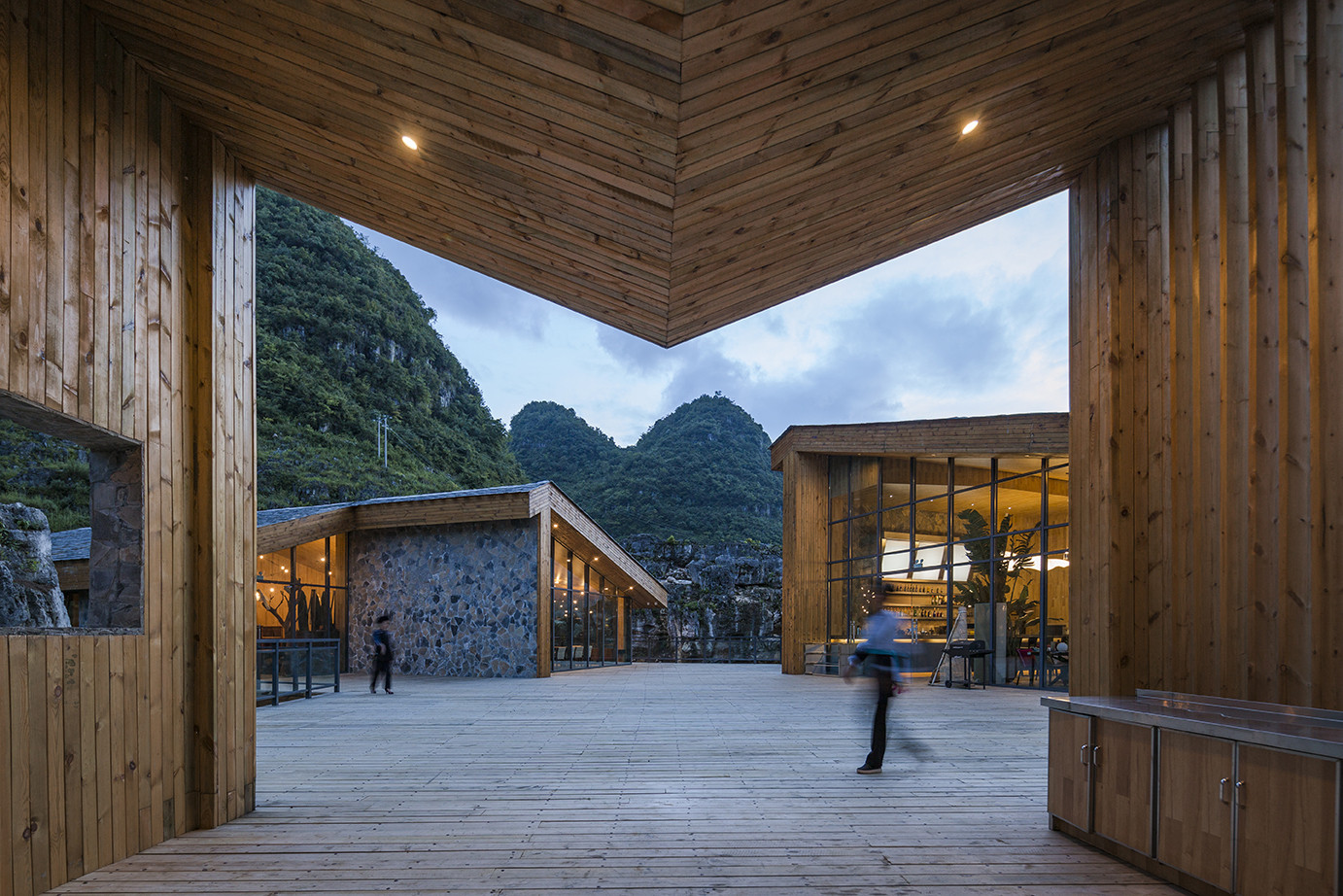
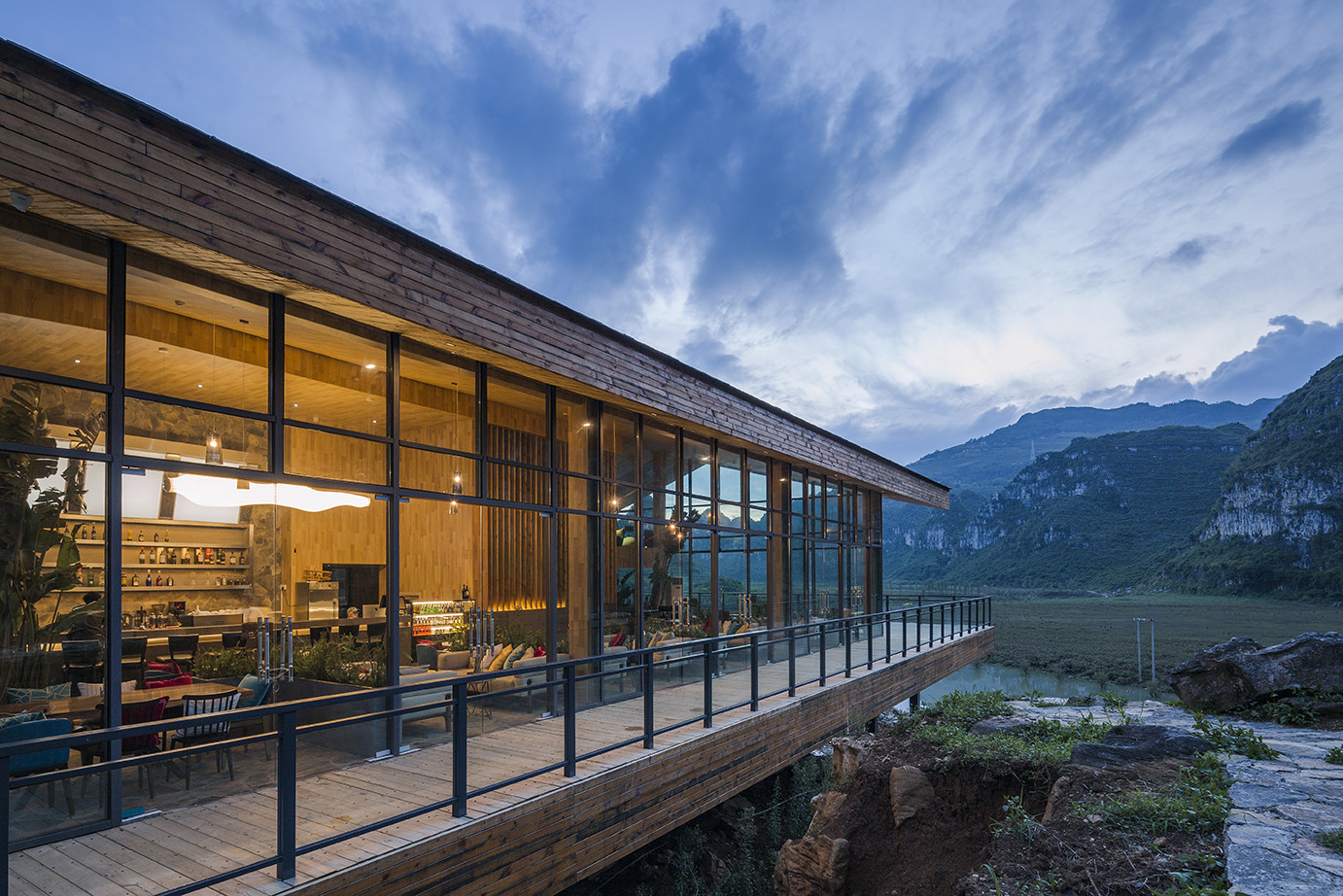
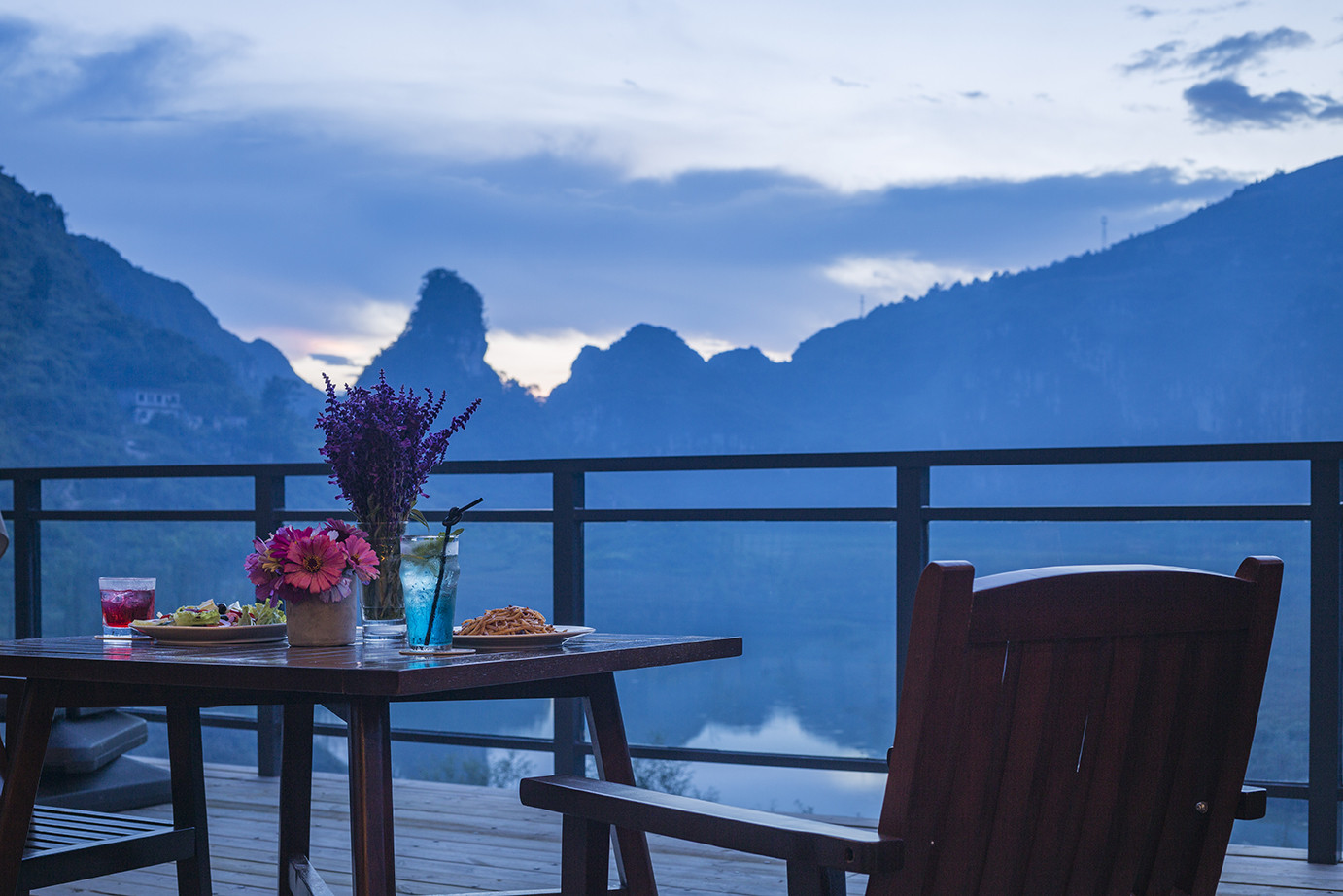
外观,指每栋建筑都具有很好的观景面,通过落地玻璃,山谷的壮美景色可以被收入建筑室内,使游客中心和山谷形成共鸣。人坐在建筑室内或者屋檐下,通过视线与谷底远处的岩壁、河流、大地交流,并融入其中。
Appearance means that each building has a good viewing surface. Through the floor glass, the magnificent scenery of the valley can be included in the building interior, making the tourist center resonate with the valley. People sit in the building or under the eaves, communicate with the rock walls, rivers and the earth far away from the valley bottom through the line of sight, and blend into it.
▼开放的玻璃立面将酒吧与谷底自然环境连接在一起
The open glass facade connects the bar with the natural environment at the bottom of the valley
▼仙掌酒吧室内空间
Xianzhang bar interior space
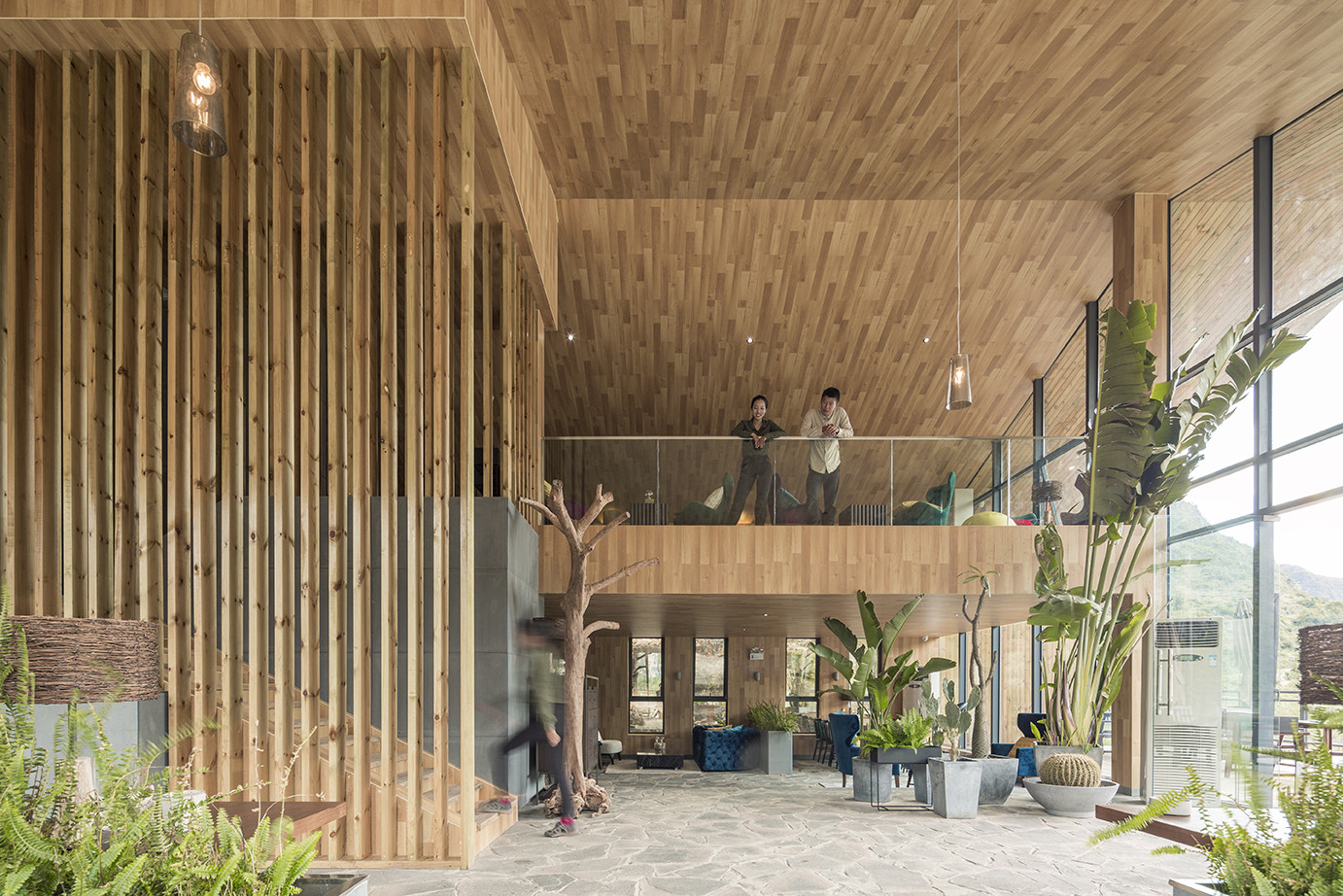
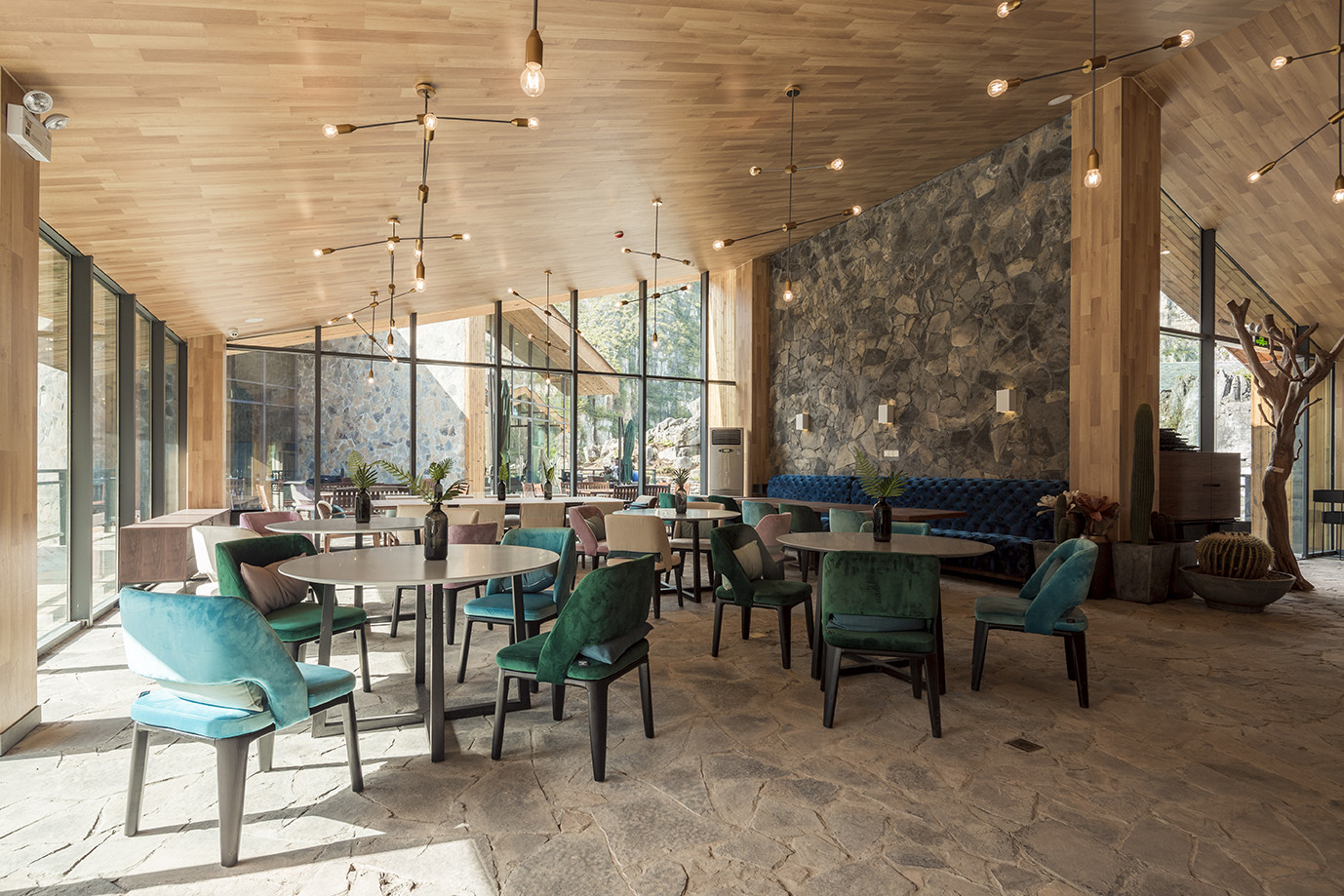
▼红点酒吧室内空间
Interior space of Red Dot Bar
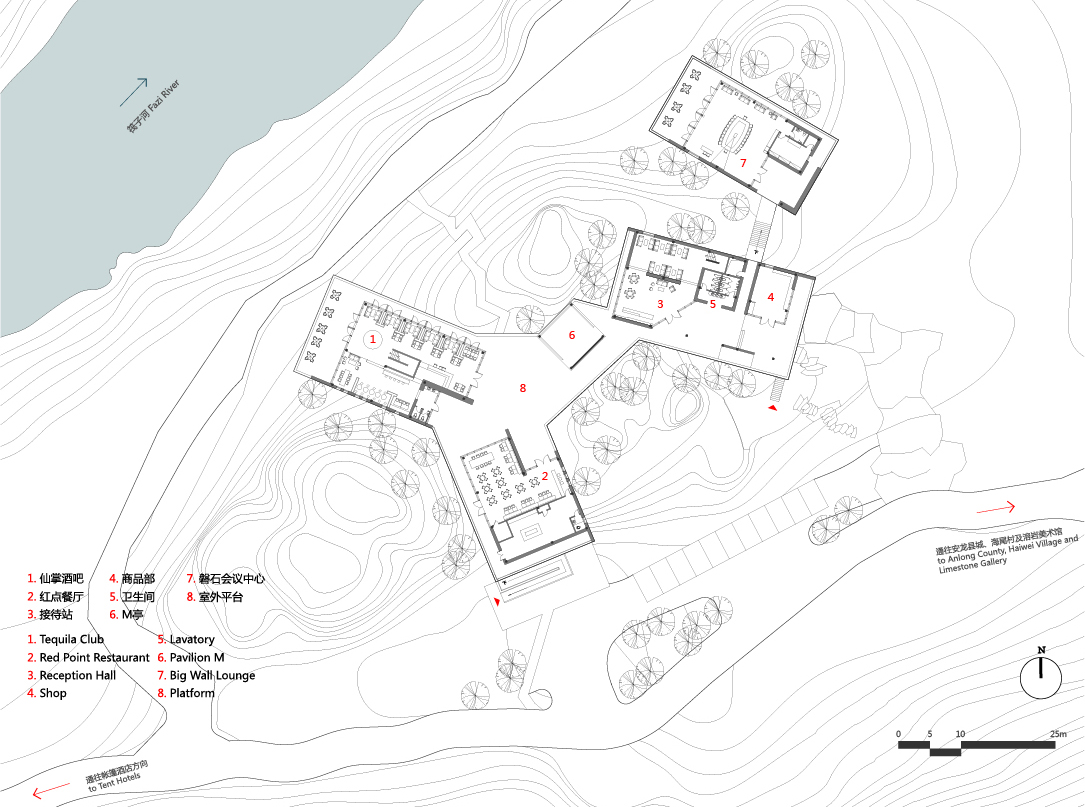
内聚,指建筑与建筑之间,建筑与被其围绕的山石之间形成的内向的聚合。这种聚合被一个高架的平台功能化,明确化。平台不仅在汛期很好的解决了建筑主体的防洪问题,也是串联建筑与建筑的室外空间。除了会议室,接待站、西餐厅和咖啡厅的入口都指向室外平台,这里是未来游客交流,与山石亲密互动的主要空间。平台中部,半室外的凉亭进一步加强了平台的聚集性,设计师希望这里可以成为游客中心最具活力的地点。
Cohesion refers to the inward aggregation between buildings and between buildings and the surrounding rocks. This aggregation is functionalized and clarified by an elevated platform. The platform not only solves the flood control problem of the main building in the flood season, but also connects the building with the outdoor space of the building. In addition to the conference room, the entrance of the reception station, western restaurant and coffee shop all point to the outdoor platform, which is the main space for future tourists to exchange and interact closely with mountains and rocks. In the middle of the platform, the semi outdoor pavilion further strengthens the aggregation of the platform. The designer hopes that this place can become the most dynamic place in the tourist center.
▼开放的玻璃立面将谷底与自然环境联系在一起
The open glass facade connects the valley bottom with the natural environment
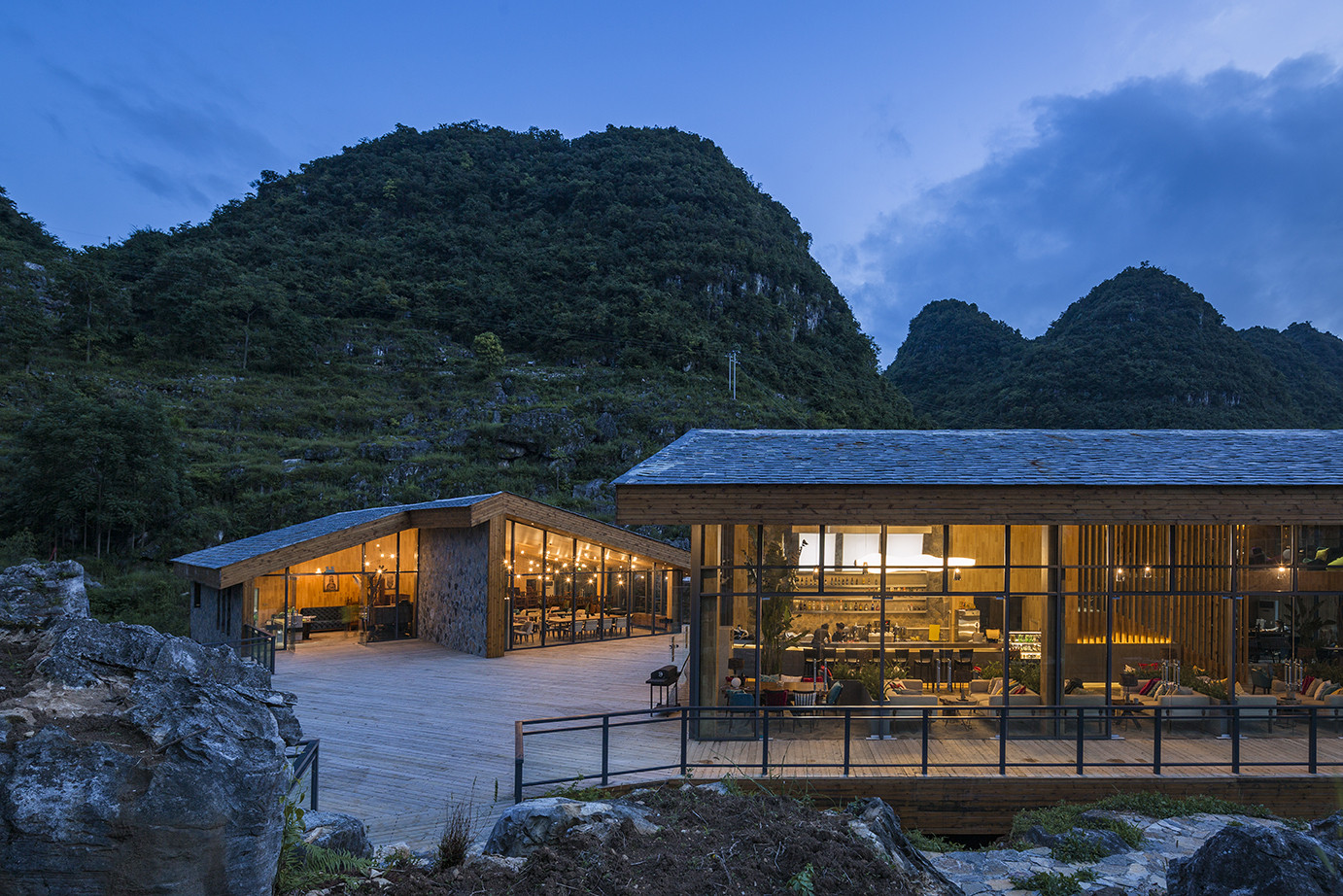
▼室外平台是人们欣赏山谷景色的绝佳地点
The outdoor terrace is a great place for people to enjoy the valley scenery
虚和实
Deficiency and excess
正如前文所述,建筑与周边环境的关系是游客中心设计的起点。建筑被插入山石之间,且通过地方建筑的形式和在地材料与环境融为一体。同时,建筑也是整个谷地中最重要的观景点和被观赏点,因此建筑外观的虚实变换就变得尤为重要。虚实变换的方式也是这组建筑区别于地方传统农舍的重要设计语汇。
As mentioned above, the relationship between the building and the surrounding environment is the starting point for the design of the tourist center. The building is inserted between mountains and rocks, and integrated with the environment through the form of local buildings and local materials. At the same time, the building is also the most important scenic spot and viewed point in the whole valley, so the transformation of the virtual and real appearance of the building becomes particularly important. The way of transformation between virtual and real is also an important design vocabulary that distinguishes this group of buildings from local traditional farmhouses.
▼布依族少女在服务中心
Bouyei girls in the service center
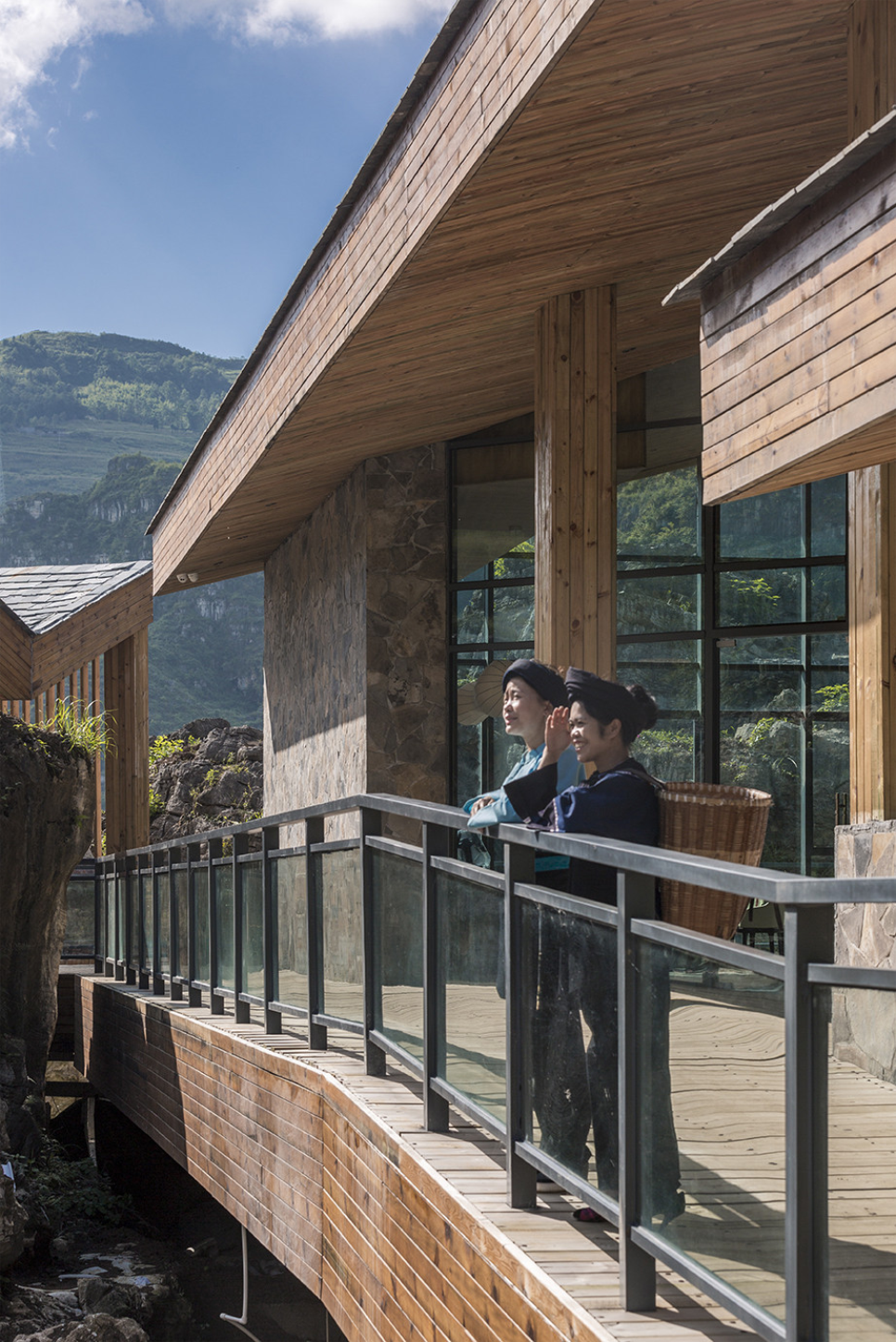
▼深远的出檐为游客提供了灰空间
The far-reaching overhanging eaves provide gray space for tourists
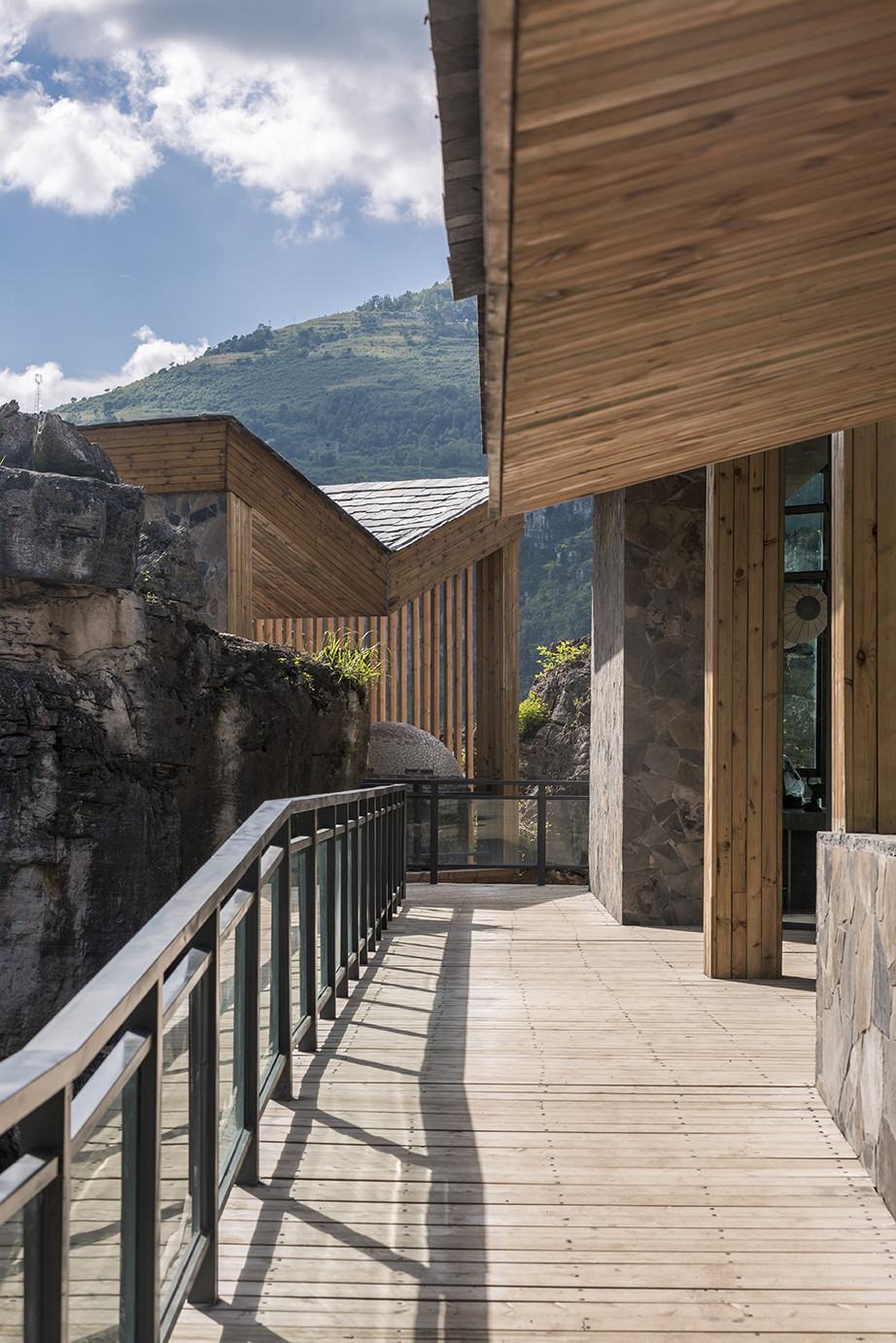
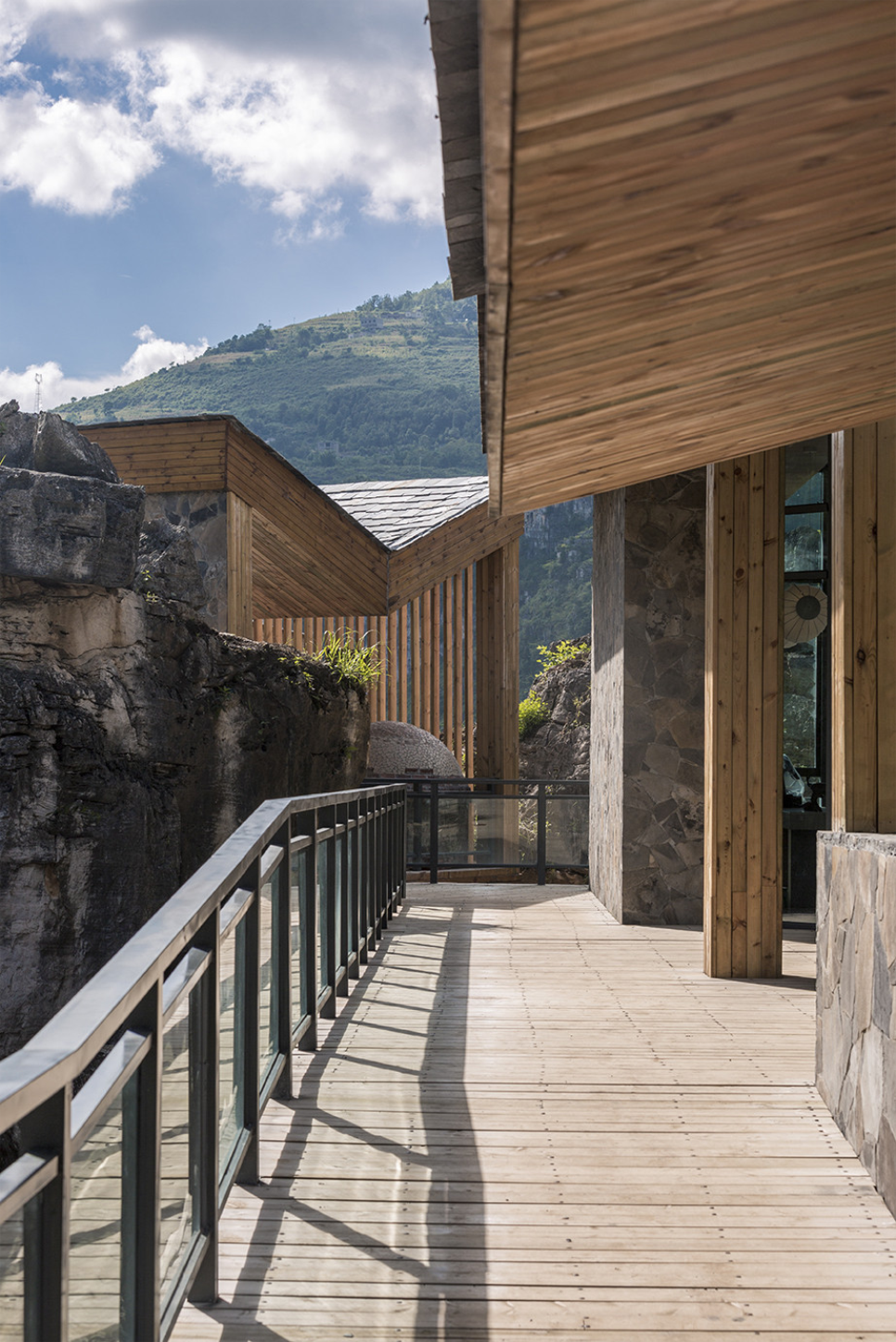
根据各建筑的功能,朝向,以及与周边环境的对景关系,设计师将建筑的实体立面(包括屋顶、部分墙面和地面)连贯起来,形成一个剖面类C形的筒,而虚体立面(玻璃)被“包裹”在这个C形的表皮中。通过大面积的虚实变换,建筑外观和室内空间获得了完全不同的气质,使用者体验外部空间的方式也从传统民居的相对平和、单一的模式,转换为具有现代感的、戏剧性模式。
According to the function, orientation and the relationship with the surrounding environment, the designer connects the physical facade (including the roof, part of the wall surface and the ground) of the building to form a C-shaped cylinder, and the virtual facade (glass) is "wrapped" in the C-shaped skin. Through the large-scale transformation between the virtual and the real, the architectural appearance and the indoor space have obtained a completely different temperament. The way users experience the external space has also changed from the relatively peaceful and single mode of traditional folk houses to the modern and dramatic mode.
▼建筑与环境和谐共处
Harmonious coexistence between architecture and environment
▼图纸,Drawing
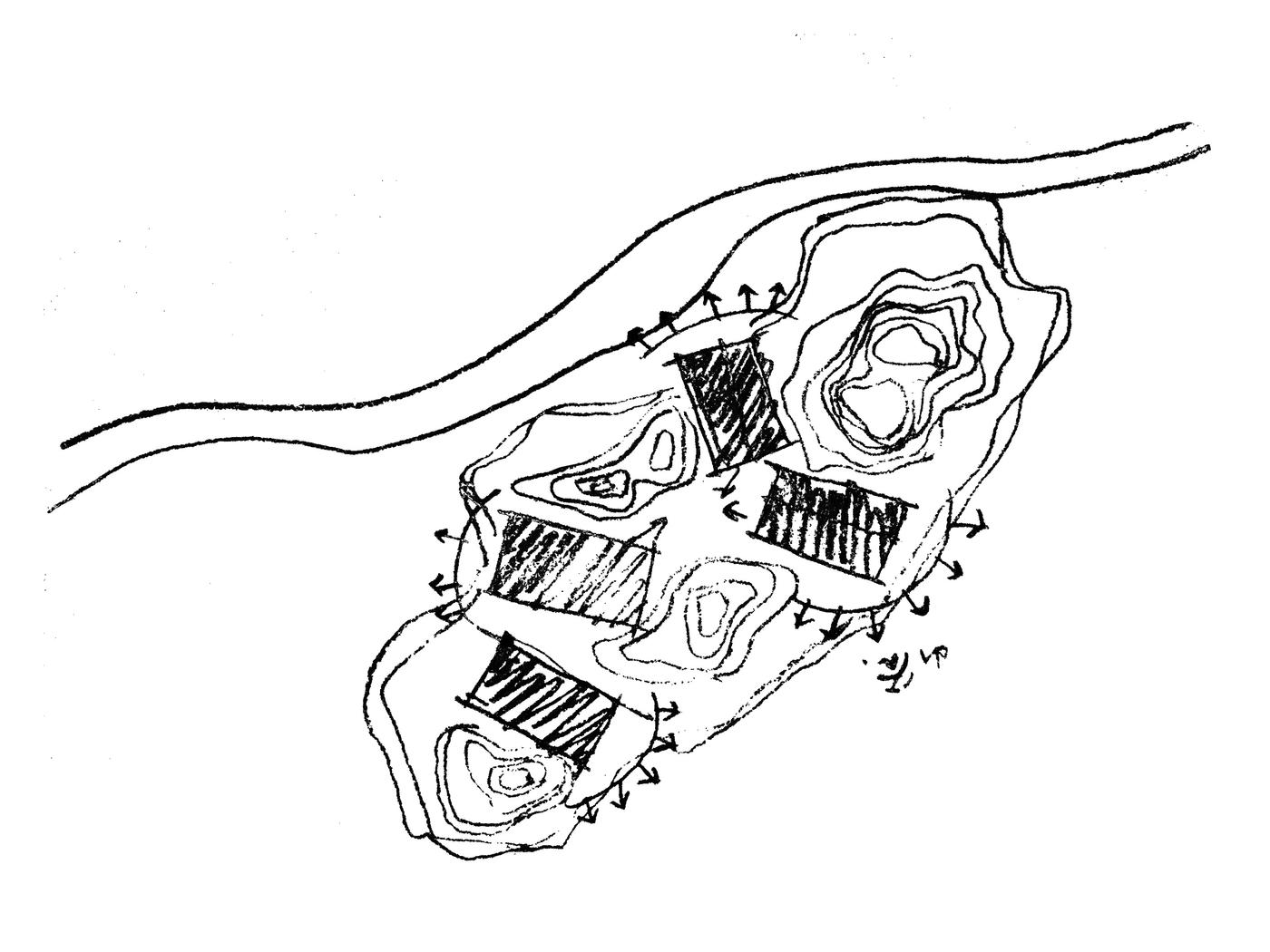
▼设计草图,Design sketch
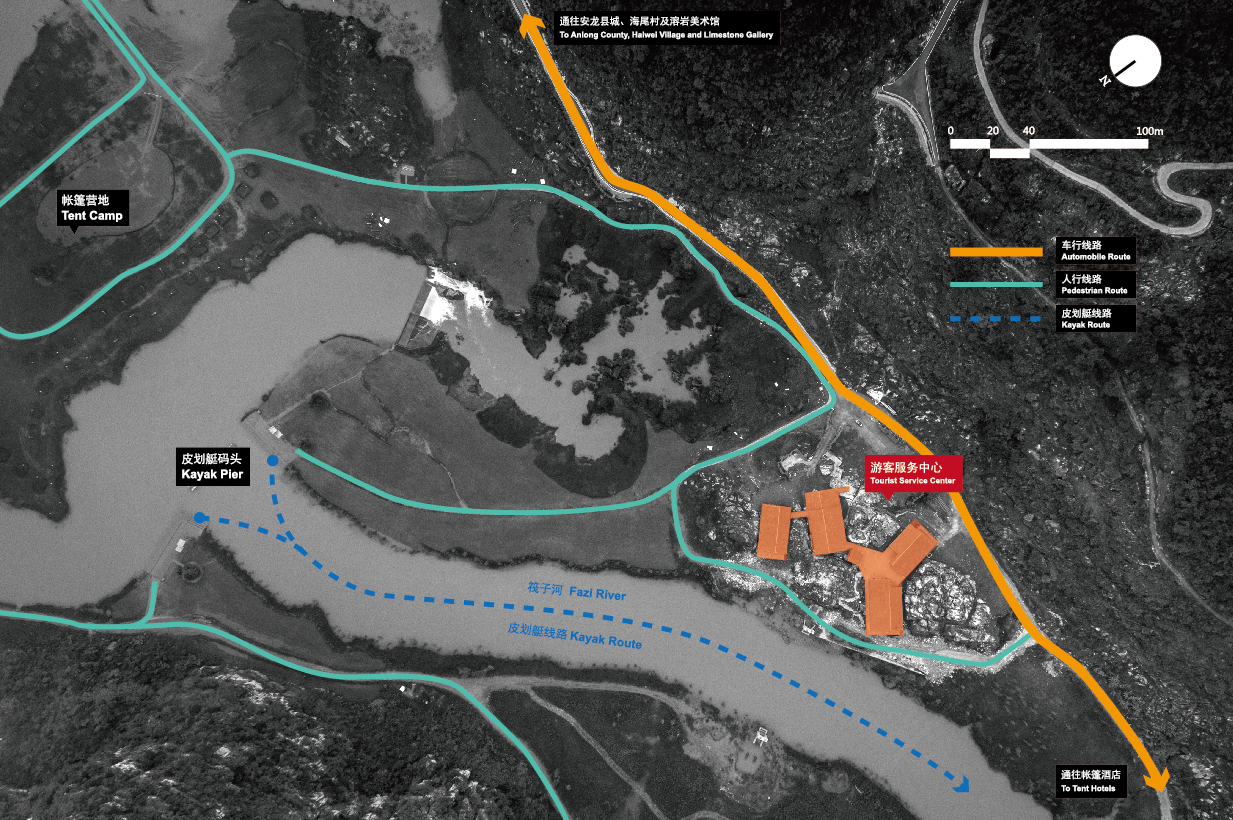
▼交通流线,Traffic flow line
▼一层平面图,First floor plan
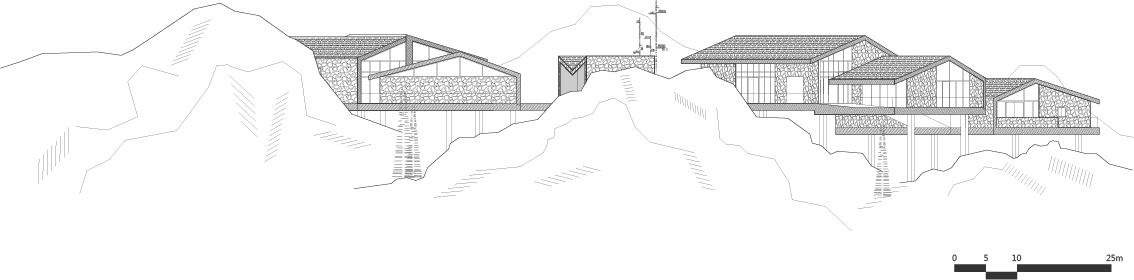
▼南立面图,South elevation
项目信息
Project information
项目名称:安龙国家山地户外运动示范公园游客服务中心
项目地点:贵州省黔西南布依族苗族自治州安龙县笃山镇
业主:安龙县荷韵旅游文化发展有限责任公司
建筑设计:三文建筑/何崴工作室
主持建筑师:何崴
设计团队:陈龙、米健、孙琪、赵卓然、宋珂、吴前铖
项目顾问:聂建,王滨
建筑面积:1400平方米
设计时间:2016年4月-2016年7月
建造时间:2016年7月-2017年7月
驻场工程师:靳雷柱,何秀根
合作单位:北京山岳美途体育文化有限公司
室内施工图设计:北京鸿尚国际设计有限公司
室内家具品牌:天一美家
摄影:金伟琦
Project Name: Tourist Service Center of Anlong national mountain outdoor sports Demonstration Park
Project location: Dushan Town, Anlong county, Qianxinan Buyei and Miao Autonomous Prefecture, Guizhou Province
Owner: Anlong Heyun Tourism Culture Development Co., Ltd
Architectural design: Sanwen architecture / Hewei studio
Lead Architect: He Wei
Design team: Chen long, MI Jian, sunqi, zhaozhuoran, songke, wuqiancheng
Project consultants: Nie Jian, Wang Bin
Building area: 1400㎡
Design time: April 2016 to July 2016
Construction time: July 2016 to July 2017
Resident Engineers: jinleizhu, hexiugen
Partner: Beijing shanyuemeitu Sports Culture Co., Ltd
Interior construction drawing design: Beijing Hongshang International Design Co., Ltd
Interior furniture brand: tianyimeijia
Photographer: jinweiqi