北京城市副中心行政办公区-市政协楼组团,北京/建筑
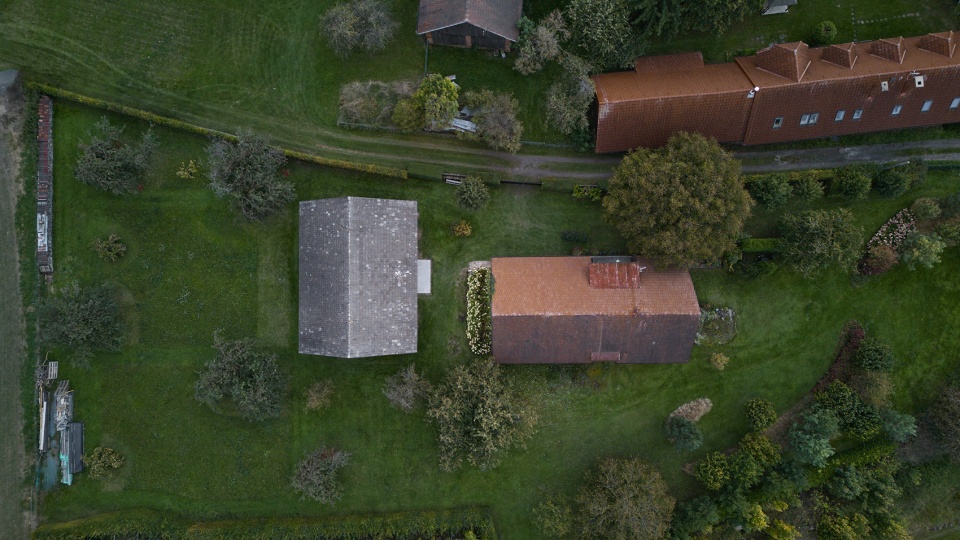
本工程整体规划用地位于通州区潞城镇,东六环东侧,其中本项目与市委组团项目、人大组团项目同位于运河东大街南侧。此外项目西侧和南侧紧邻园区水系,地理位置优越,环境优美,交通便捷。
The overall planned land for this project is located in Lucheng Town, Tongzhou District, on the east side of the East Sixth Ring Road. The project, along with the Municipal Party Committee Group Project and the People's Congress Group Project, is located on the south side of Yunhe East Street. In addition, the west and south sides of the project are adjacent to the water system of the park, with a superior geographical location, beautiful environment, and convenient transportation.
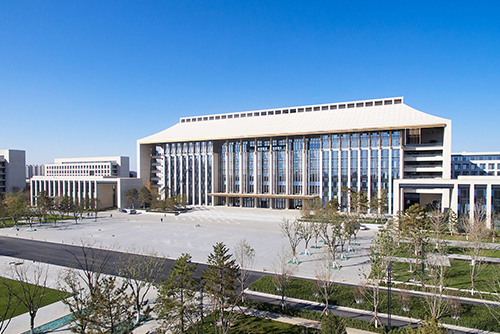
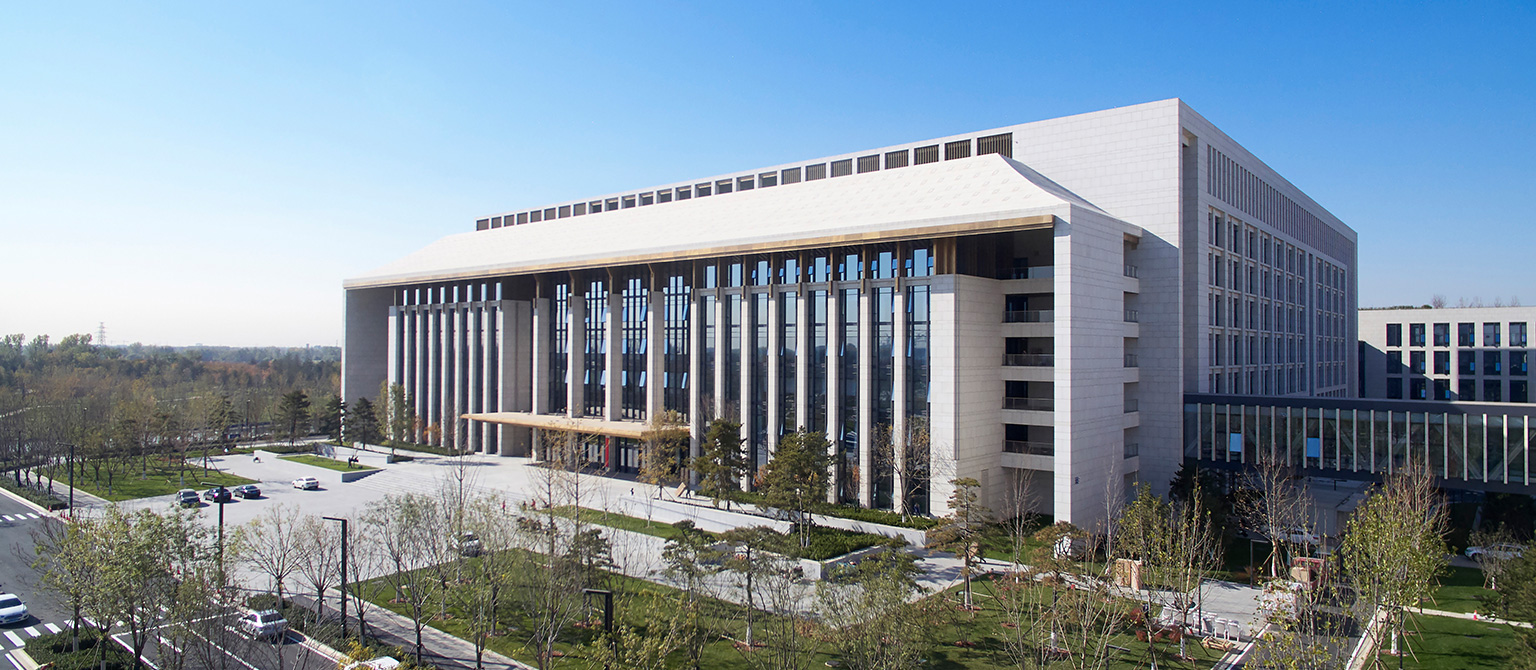
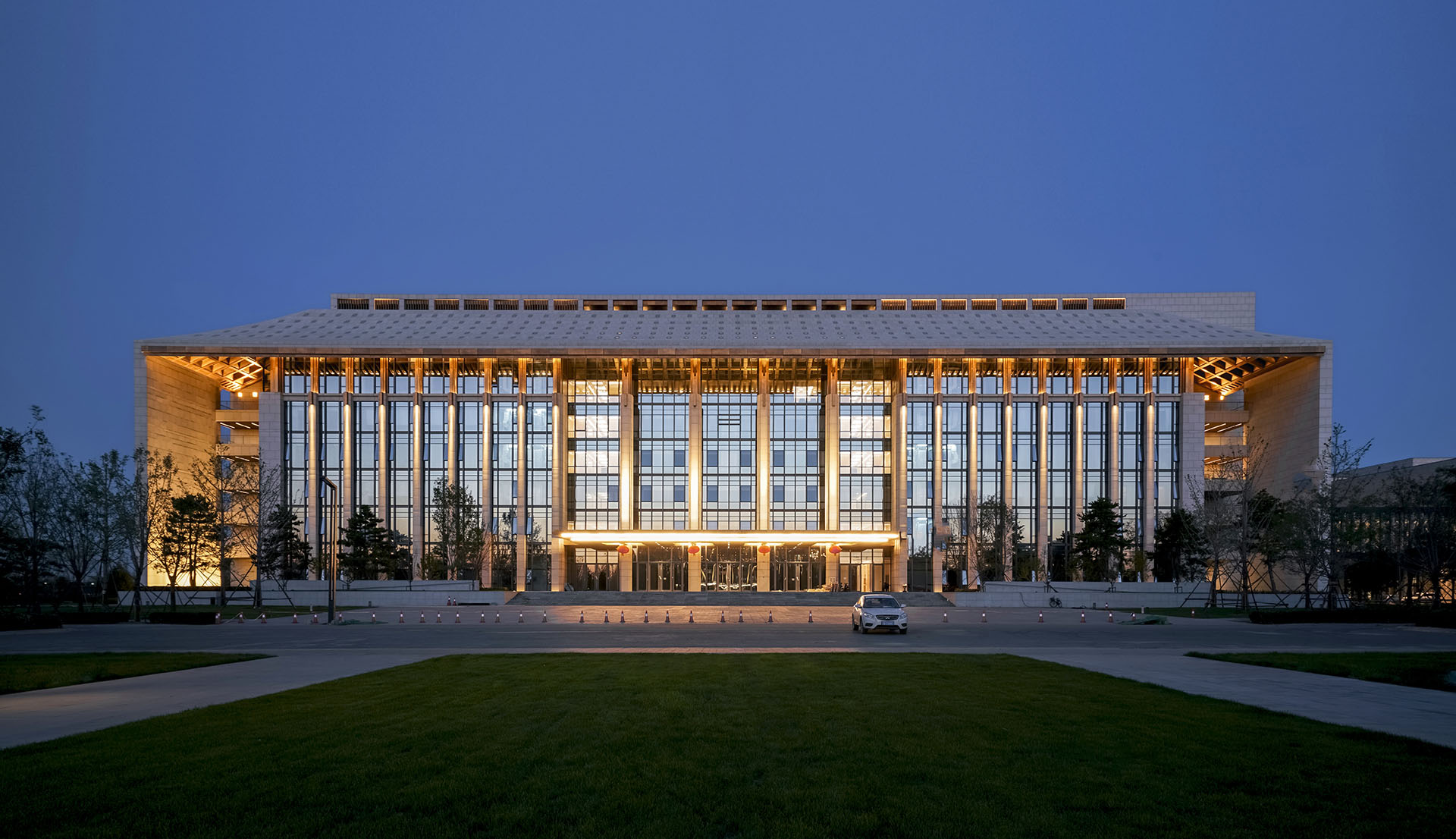
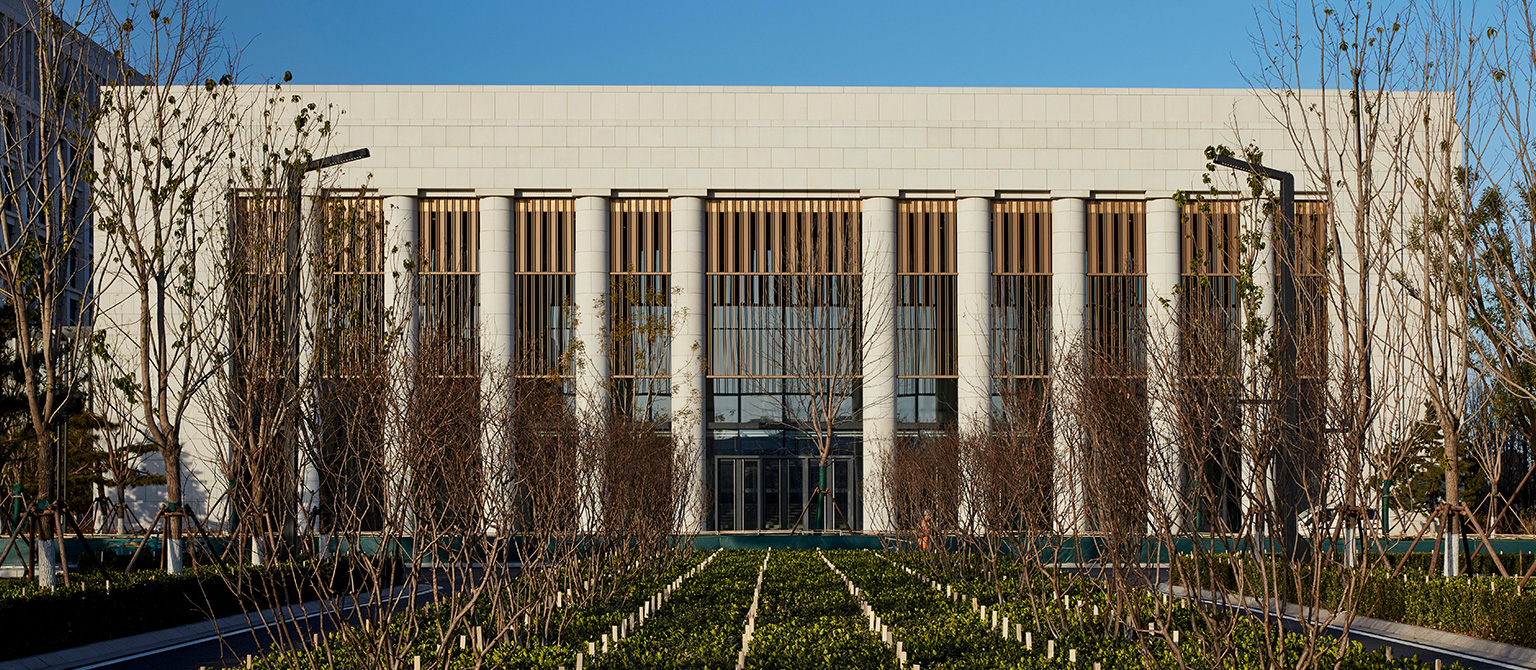
基于中国传统建筑格局形态,与其他两组建筑形成品字形中轴对称格局,办公楼自身形成一个内聚性院落,同时与常委会议楼连廊连接;新中式坡屋面与周围自然环境融合,简朴庄重,与新中式坡顶造型共同体现浓浓的中国风。
Based on the pattern of traditional Chinese architecture, it forms a zigzag axisymmetric pattern with the other two groups of buildings. The office building itself forms a cohesion courtyard and is connected with the corridor of the Standing Committee Conference Building; The new Chinese style sloping roof blends with the surrounding natural environment, which is simple and solemn, and together with the new Chinese style sloping roof design, reflects a strong Chinese style.
总建筑面积:15.06万平方米;建筑主要功能为办公、会议、车库、等.建设性质:重要高层办公楼及会议楼;建筑类别:办公楼、文史会议楼属一类高层民用公共建筑,常委会议厅为多层民用公共建筑;高层建筑分类:一类。
Total construction area: 150600 square meters; The main functions of the building are office, conference, garage, etc. Construction nature: important high-rise office and conference buildings; Building category: Office buildings and cultural and historical conference buildings belong to Class I high-rise civil public buildings, while the Standing Committee Meeting Hall is a multi-story civil public building; Classification of high-rise buildings: Class I.
建筑专业-设计理念与技术策略
Architecture - Design Philosophy and Technical Strategy
园区整体规划理念:中轴线序列突出城市空间的秩序感,蜿蜒水系营造亲切宜人的灵动空间,品字形布局体现政府办公建筑形象,错落有致的建筑设计满足灵活使用。平面布局着重区分内与外、公共与私密,高效集约又互不干扰;绿化平台,屋顶绿化面积占屋顶面积大于30%以上,为办公人员日常休息提供交流的便捷,实现建筑的舒适性。
The overall planning concept of the park: The central axis sequence highlights the sense of order in the urban space, the winding water system creates a friendly and pleasant flexible space, the zigzag layout reflects the image of government office buildings, and the well-arranged architectural design meets the flexible use. The layout emphasizes distinguishing between internal and external, public and private, efficient and intensive without interfering with each other; Green platform, with a green roof area accounting for more than 30% of the roof area, provides convenient communication for office workers' daily rest and achieves the comfort of the building.
为了创造更加舒适的环境,达到国家绿色三星标准,项目采用太阳能光伏发电,太阳能热水利用率30%以上,采用温湿度独立控制系统,市政中水利用率50%以上,雨水利用采用下凹绿地及50%以上的透水铺装,围护结构热工性能比现行国家标准提高20%以上,100%采用节水型器具,采用PM2.5监测空气质量以创造健康舒适办公空间和城市可持续发展为目标。
In order to create a more comfortable environment and meet the national green Samsung standard, the project adopts solar photovoltaic power generation, with a solar hot water utilization rate of over 30%. It adopts an independent temperature and humidity control system, with a municipal reclaimed water utilization rate of over 50%. Rainwater utilization uses sunken green spaces and more than 50% permeable paving. The thermal performance of the enclosure structure is improved by more than 20% compared to the current national standard, and 100% uses water-saving appliances, Using PM2.5 to monitor air quality with the goal of creating healthy and comfortable office spaces and sustainable urban development.
利用BIM专业技术创建出建筑、结构、暖通、电气、给排水等专业的三维模型,根据碰撞检测报告,精细调整管线综合设计,以保证不同功能房间控高,形成公共空间净高3米,办公空间3.2米的统一办公格局,避免了后续返工的风险。应用BIM和三维模型系统进行模数化体系研究将建筑设定在一套模数化网格体系下,通过标准化的设计,提高施工准确率,保证房间净高。
Utilizing BIM professional technology to create three-dimensional models of architecture, structure, HVAC, electrical, plumbing, and other specialties, and finely adjusting the comprehensive design of pipelines based on collision detection reports to ensure height control of different functional rooms, forming a unified office layout with a net height of 3 meters for public space and 3.2 meters for office space, avoiding the risk of subsequent rework. Apply BIM and 3D modeling system for modular system research. Set the building under a modular grid system, improve construction accuracy through standardized design, and ensure room net height.
本项目特点及难点为“时间短、进度快、变化快、要求高、多专业、多功能、多协调;
The characteristics and difficulties of this project are "short time, fast progress, fast change, high requirements, multiple specialties, multiple functions, and multiple coordination;
亮点为
1、下沉庭院的设计保证了餐厅、健身等空间的采光及品质。
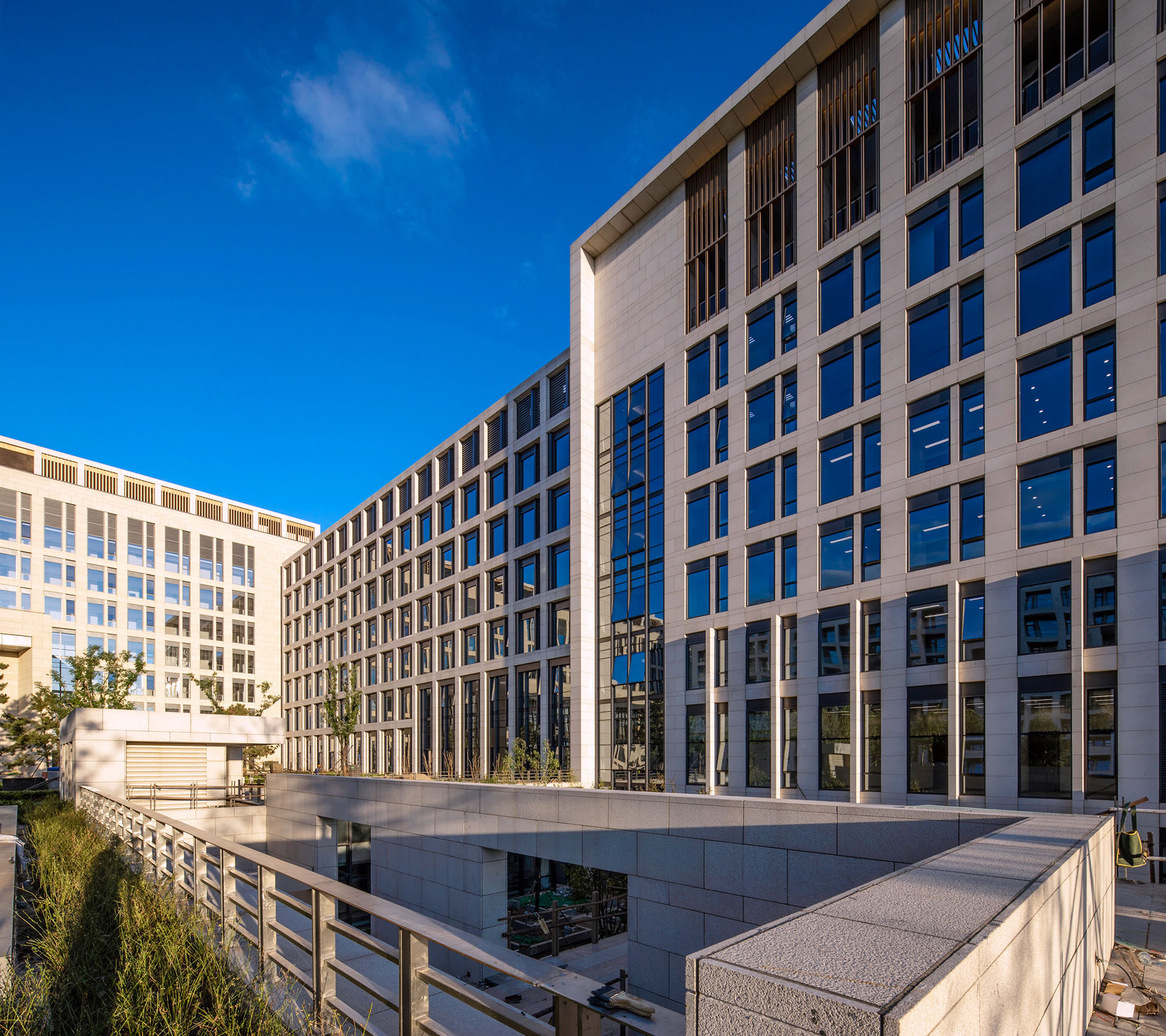
2、屋顶花园的设置,营造出多级立体景观环境,保证办公人员的日常休息需求及人员交流的便捷。
3、合理的立面设计保证了整体界面的完整性,及规避了屋顶设备对建筑立面及屋顶空间的杂乱影响。
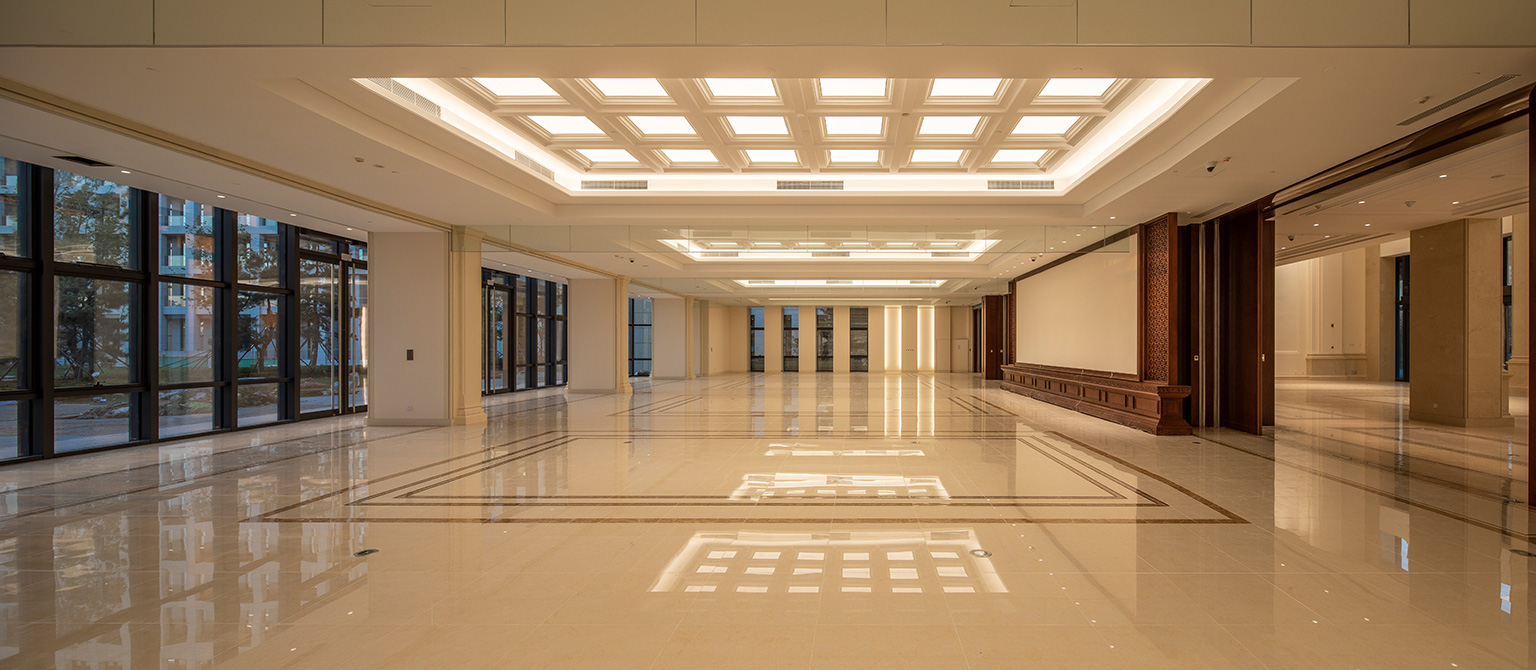
4、会议空间的集中设置,实现了一定的动静分区及会议资源的高效共享。
Highlights are
1. The design of the sunken courtyard ensures the lighting and quality of spaces such as restaurants and fitness facilities.
2. The setting of roof garden creates a multi-level three-dimensional landscape environment to ensure the daily rest needs of office staff and the convenience of personnel communication.
3. Reasonable facade design ensures the integrity of the overall interface and avoids the chaotic impact of roof equipment on the building facade and roof space.
4. The centralized setting of conference space has achieved certain dynamic and static partitions and efficient sharing of conference resources.
结构专业-设计特点
Structural Specialty - Design Features
本项目地上由A~E六个结构单体组成,分别2~8层不等,地下2层且连为一体,建筑高度41.30m。各楼均采用框架-剪力墙结构,B、E楼间和D、E楼间在二层设置钢桁架连廊。
This project consists of six structural units from A to E on the ground, ranging from 2 to 8 floors, and two underground floors connected as a whole, with a building height of 41.30m. Each building adopts a frame shear wall structure, and steel truss corridors are set up on the second floor between floors B and E, as well as between floors D and E.
1、地基与基础
持力层为细砂③层、粉砂③1层,地基承载力标准值130kPa,主楼上部荷载较大,特别是持力层中度液化。综合对比天然地基、桩基础、地基处理等地基形式后,结合经济适用等目标,进行了地基承载力修正分析及沉降分析,经专家会论证,最终选择天然地基+平板式筏基的方案,相对其他方案节约了建筑材料,节省了工期,带来了巨大经济效益。
E楼大空间区域存在抗浮问题,综合比较了抗拔桩、压重、抗浮锚杆三种抗浮方案,因压重方案需要增加较大的基坑深度,抗浮锚杆带来防水难以处理的问题,最终采用抗拔桩解决抗浮问题。
1. Foundation and foundation
The bearing layer consists of layer ③ of fine sand and layer ③ of silt. The standard value of the foundation bearing capacity is 130kPa. The upper part of the main building has a large load, especially the bearing layer is moderately liquefied. After comprehensive comparison of natural foundation, pile foundation, foundation treatment and other foundation forms, combined with economic and applicable objectives, the foundation bearing capacity correction analysis and settlement analysis were carried out. After the expert meeting demonstrated, the natural foundation+flat raft foundation scheme was finally selected, which saved building materials, saved construction period and brought huge economic benefits compared with other schemes.
There is an anti floating problem in the large space area of Building E, and three anti floating schemes, namely anti pulling pile, pressure weight, and anti floating anchor rod, were comprehensively compared. Due to the need to increase the depth of the foundation pit for the pressure weight scheme, the anti floating anchor rod caused a problem of difficulty in dealing with waterproofing. Finally, anti pulling pile was used to solve the anti floating problem.
2、 结构抗震设计
本项目抗震设防烈度为8度,设计地震分组为第二组,为标准设防类。为满足建筑功能需要,部分剪力墙在B1顶板框支转换,为加强结构性能,满足抗震计算要求,部分柱及核心筒内设置了钢骨。
2. Structural seismic design
The seismic fortification intensity of this project is 8 degrees, and the design earthquake group is the second group, which is a standard fortification category. To meet the functional needs of the building, some shear walls are converted to B1 top plate frame support. To enhance structural performance and meet seismic calculation requirements, steel ribs are installed in some columns and core tubes.
3、 预应力结构设计
B楼、D楼部分大跨度结构,采用了预应力梁和预应力空心楼盖的结构形式,降低结构高度,满足建筑净空要求。预应力空心楼盖还能降低结构自重,增强楼层间隔音效果。
3. Design of prestressed structures
The large-span structures of Building B and Building D adopt the structural form of prestressed beams and prestressed hollow floors, reducing the structural height and meeting the building clearance requirements. The prestressed hollow floor can also reduce the structural weight and enhance the sound insulation effect between floors.
4、 E楼及连廊大跨度结构设计
E楼大跨度屋盖采用钢桁架结构,各楼间钢连廊采用一端滑动、一端铰接的钢梁或钢桁架,采用成品钢支座,钢支座满足滑动或转动的要求。
4. Design of Large Span Structure for E-Building and Corridor
The large-span roof of Building E adopts a steel truss structure, and the steel corridors between each building use steel beams or trusses with one end sliding and one end hinged, using finished steel bearings that meet the requirements of sliding or rotation.
设备专业-暖通、空调
地上普通办公、高级办公、为其服务的中小会议室采用冷冻除湿温湿度独立控制系统。新风负担室内全部湿负荷,室内采用风机盘管干工况运行负担显热负荷
空调末端设备、冷热源设备和空调(供暖)水系统设有能量调节的自控装置。
空调冷水二级泵、空调(供暖)热水循环泵、高区换热器后冷热水循环泵等采用变频调速运行。
空调冷水采用7℃大温差运行,以减少系统流量,节省水泵电能。
散热器供暖系统,其热源可根据室外气温自动调节供暖供水温度。
散热器采用恒温阀自动调节室温。
各栋建筑设置热计量装置。
全空气空调系统过渡季可采取加大新风量运行模式,以利用新风作冷源。
部分新风系统设有排风热回收装置,以满足节能规范要求。
一次回风空调系统送风风机采用变频风机,以满足节能规范要求。
变风量空调系统中,空气处理机组的风机根据系统所需风量变化,进行变频调速运行
地下停车库的通风系统风机可根据车库内的CO浓度进行自动运行控制)。
冬夏季(人员密度相对较大且变化较大的房间)根据室内CO2浓度检测值,实现可变新风量的控制模式。
Equipment Discipline - HVAC, Air Conditioning
The small and medium-sized conference rooms that serve ordinary and high-end offices on the ground adopt independent control systems for temperature and humidity through refrigeration and dehumidification. Fresh air bears all indoor wet loads, and indoor fan coil units are used to operate under dry conditions to bear sensible heat loads
The air conditioning terminal equipment, cold and heat source equipment, and the air conditioning (heating) water system are equipped with automatic control devices for energy regulation.
The secondary cold water pump for air conditioning, the hot water circulating pump for air conditioning (heating), and the cold and hot water circulating pump after the high area heat exchanger are operated with variable frequency speed regulation.
The cold water of the air conditioner operates at a large temperature difference of 7 ℃ to reduce system flow and save water pump electricity.
The radiator heating system has a heat source that can automatically adjust the heating and water supply temperature according to the outdoor temperature.
The radiator adopts a thermostatic valve to automatically adjust the room temperature.
Each building is equipped with heat metering devices.
During the transition season of the all air conditioning system, the operation mode of increasing fresh air volume can be adopted to utilize fresh air as a cooling source.
Some fresh air systems are equipped with exhaust heat recovery devices to meet energy-saving standards.
The supply fan of the primary return air conditioning system adopts a variable frequency fan to meet the energy-saving requirements.
In a variable air volume air conditioning system, the fan of the air handling unit operates with variable frequency speed regulation based on the required air volume changes of the system
The ventilation system fan of the underground parking garage can automatically operate and control according to the CO concentration in the garage.
In winter and summer (rooms with relatively high personnel density and significant changes), the control mode of variable fresh air volume is achieved based on the indoor CO2 concentration detection value.
设备专业-给排水
Equipment Discipline - Water Supply and Drainage
生活给水及中水系统:
1.低区充分利用市政水压,采用直接供水方式;
2.控制各用水点处水压小于或等于0.2MPa,
3. 各主要用户(厨房等)的给水干管及用水量较大处如绿化用水等均安装水表计量,采用三级计量:总表、分表、户表,以便有效管理及监察用水,避免浪费;
4.供水加压泵选型符合下列规定○1应根据管网水力计算选择和配置,保证水泵工作时高效率运行○2所选水泵在设计工况时的效率宜大于国家标准《清水离心泵能效限定值及节能评价值》中规定的泵节能评价值○3应选择具有随流量增大,扬程逐渐下降特性的供水加压泵。
Domestic water supply and reclaimed water system:
1. Fully utilize municipal water pressure in low areas and adopt direct water supply methods;
2. Control the water pressure at each water consumption point to be less than or equal to 0.2MPa,
3. Water meters are installed for the main water supply pipes of major users (kitchens, etc.) and areas with high water consumption, such as green water, using three levels of measurement: total meter, sub meter, and household meter, in order to effectively manage and monitor water use and avoid waste;
4. The selection of water supply booster pumps should comply with the following regulations. 1. The selection and configuration should be based on the hydraulic calculation of the pipeline network to ensure efficient operation of the water pump. 2. The efficiency of the selected water pump should be greater than the pump energy-saving evaluation value specified in the national standard "Energy Efficiency Limits and Energy Conservation Evaluation Values for Clear Water Centrifugal Pumps". 3. The water supply booster pump should be selected with a characteristic of gradually decreasing head as the flow rate increases.
生活热水系统:
1. 采用太阳能集中供热水系统;
2. 生活热水循环泵采用回水温度控制启停;
3. 水加热器的供水温度不高于60℃,水加热器被加热侧的阻力损失不大于0.01MPa;
4. 生活热水供回水管道、水加热器、贮水罐等均保温;
5. 给水、热水采用相同供水分区,以保证配水点压力平衡;
6. 集中热水供应系统设干、立管循环系统,不循环配水支管长度均小于或等于7m;
7. 卫生器具及配件均采用节水型卫生器具、器材,满足《节水型生活用水器具》CJ/T 164的规定采用2级节水器具,生活热水采用带恒温控制和温度显示功能的冷热水混合淋浴器,道路浇洒、车库冲洗使用节水型高压冲洗水枪。
Domestic hot water system:
1. Adopting a solar centralized heating water system;
2. The domestic hot water circulation pump adopts return water temperature control to start and stop;
3. The water supply temperature of the water heater shall not exceed 60 ℃, and the resistance loss on the heated side of the water heater shall not exceed 0.01MPa;
4. The domestic hot water supply and return pipelines, water heaters, water storage tanks, etc. are insulated;
5. Water supply and hot water use the same water supply partition to ensure pressure balance at the distribution point;
6. The centralized hot water supply system is equipped with a dry and vertical pipe circulation system, and the length of non circulating water distribution branch pipes is less than or equal to 7m;
7. Sanitary appliances and accessories are all made of water-saving sanitary appliances and equipment, meeting the requirements of "Water-saving Domestic Water Appliances" CJ/T 164. Grade 2 water-saving appliances are used, and domestic hot water is equipped with a cold and hot water mixed shower with constant temperature control and temperature display function. Water-saving high-pressure flushing water guns are used for road sprinkling and garage flushing.
污废水系统:
地面以上污、废水采用重力排放。
Sewage and wastewater system:
The sewage and wastewater above the ground are discharged by gravity.
消防系统:
1. 由消防水泵出水干管上设置的压力开关、高位消防水箱出水管上的流量开关信号、消火栓处启泵按钮、消防控制室和泵房直接启动等四种启泵方式;
2. 自动喷水灭火系统供水加压泵由报警阀压力开关自动控制和消防控制室(盘)远动启动;
3. 消防泵一台发生故障时,备用水泵自动投入运行;
4. 增压稳压泵通过系统压力控制水泵启停;
5. 末端试水装置部分采用了智能型末端试水装置。
Fire protection system:
1. There are four pump start methods: pressure switch set on the main outlet pipe of the fire pump, flow switch signal on the outlet pipe of the high-level fire water tank, pump start button at the fire hydrant, and direct start of the fire control room and pump room;
2. The water supply booster pump of the automatic sprinkler system is automatically controlled by the alarm valve pressure switch and remotely started by the fire control room (panel);
3. When one fire pump fails, the standby pump will be put into operation automatically;
4. The booster and stabilizing pump controls the start and stop of the water pump through system pressure control;
5. The end water testing device adopts an intelligent end water testing device.
电气专业-综合效益
副中心项目作为北京市政行政机关的新办公地点和通州建设的重点,具有很重要的社会影响力。
在项目的电气设计中,我们坚持电气设计的系统可靠性、经济合理性、技术前瞻性、运行安全性原则。
设计过程中,我们还坚持将节能环保理念贯穿到设计全过程。本项目选用环保节能型产品,并采用能源监控系统、远传系统、楼宇自控系统等技术手段。
本项目结合新版规范,设置机电系统的抗震措施,使得在发生地震时,不致发生次生灾害。
Electrical major - comprehensive benefits
The sub center project, as a new office location for Beijing municipal administrative agencies and a key focus of Tongzhou construction, has significant social influence.
In the electrical design of the project, we adhere to the principles of system reliability, economic rationality, technological foresight, and operational safety in electrical design.
During the design process, we also adhere to the concept of energy conservation and environmental protection throughout the entire design process. This project selects environmentally friendly and energy-saving products, and adopts technical means such as energy monitoring systems, remote transmission systems, and building automation systems.
This project combines the new version of the specifications and sets up seismic measures for the electromechanical system to prevent secondary disasters in the event of an earthquake.
智能化专业-综合效益
A4工程智能化设计严格执行党政机关办公用房标准以及副中心网络建设规划,围绕办公、会议等核心功能,进行针对性智能化设计。
政务外网、内网、安防网络、智能化专网网络建设,节约本地建设核心网络规模及成本,增强网络安全、可靠、认证等防护,为办公、会议、设备运维提供可靠坚实物理基础。
建筑设备监控系统执行绿色建筑三星标准,打造建筑控制节能亮点。
Intelligent specialization - comprehensive benefits
The intelligent design of A4 project strictly follows the standards for office buildings of party and government agencies and the construction plan for the sub center network. Targeted intelligent design is carried out around core functions such as office and conference.
The construction of government external network, internal network, security network, and intelligent private network can save the scale and cost of local core network construction, enhance network security, reliability, authentication, and other protections, and provide a reliable and solid physical foundation for office, conference, and equipment operation and maintenance.
The building equipment monitoring system implements the three-star standard for green buildings, creating energy-saving highlights for building control.
项目名称:北京城市副中心行政办公区-市政协楼组团
设计结束时间:2016 年 11 月 22 日
竣工时间:2018 年 05 月 31 日
建筑功能(地上,地下):办公 会议,车库 餐厅
用地性质:行政办公用地
设计使用年限:50年
建设用地面积:4.064㎡
总建筑面积:150848.87㎡
地上面积:81085.96㎡
地下面积:69762.91㎡
Project Name: Beijing Sub Center Administrative Office Area - Municipal Association Building Cluster
Design end date: November 22, 2016
Completion date: May 31, 2018
Building functions (above ground, underground): office meetings, garage restaurants
Nature of land use: Administrative office land
Design service life: 50 years
Construction land area: 4.064 square meters
Total construction area: 150848.87 square meters
Ground area: 81085.96 square meters
Underground area: 69762.91 square meters