树屋·林中面具,随州 / 末广建筑
缘起
The origin
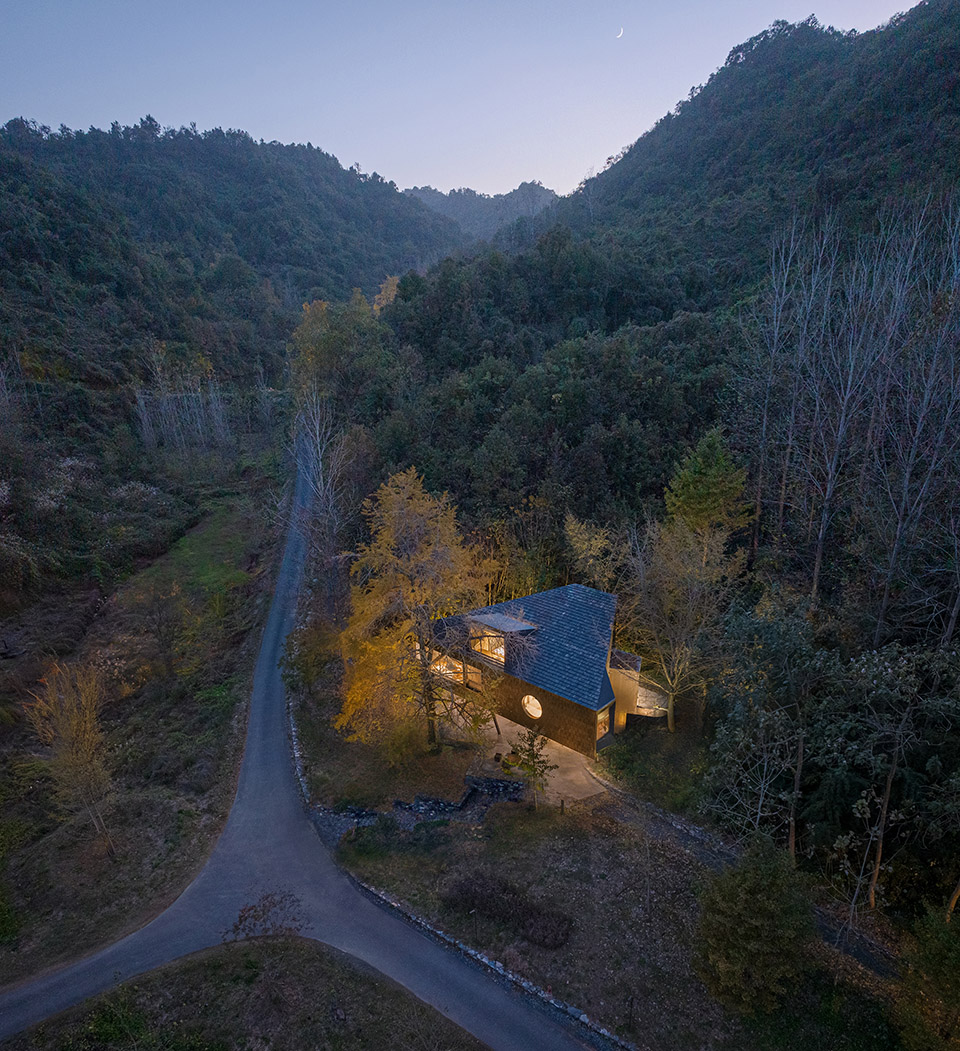
湖北随州市的广家冲山谷,距离著名银杏谷风景区仅十五分钟车程。树屋是设计师在广家冲山谷中为民宿大乐之野·银杏谷项目设计的一系列分散式单体建筑中的一栋。
Guangjiachong Valley in Suizhou City, Hubei Province, is just a 15-minute drive from the famous Ginkgo Valley Scenic Area. The
Treehouse is one of a series of scattered individual buildings designed by the architect for the
Lost Villa·Ginkgo Valley Hotel project in Guangjiachong Valley.
▼树屋鸟瞰:在夜间待飞返航,Ariel view of the tree house awaiting its time to take off at night
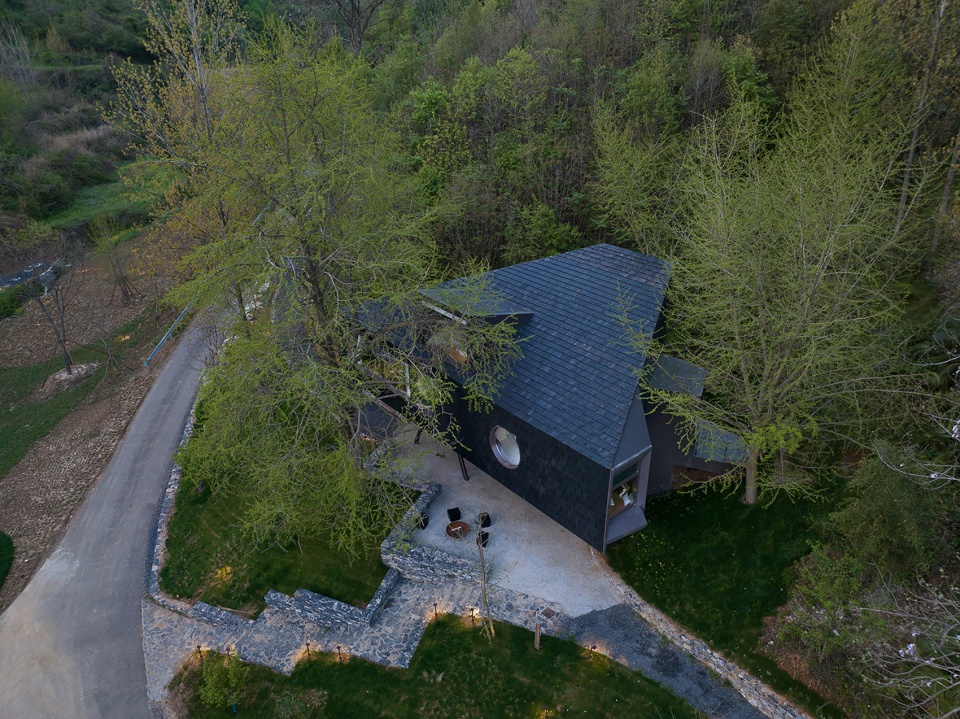
树屋的场地在两条路径进入山谷的交汇处,环境略显喧闹,同时90㎡的局促用地范围内需要避让三棵古树的根系,且需容纳两间套内面积不小于50㎡的标准客房与设备储藏间。设计师与业主在第一次去现场勘察时就定下了明确的设计策略——
将整座建筑抬高架空。
一来通过建筑抬升生成上静下动的两类空间品质;其次,银杏的繁茂树冠给予客房私密屏障并成为窗中的景致;释放出地面层为半户外活动区,自然营造出聚餐、烤银杏果、荡秋千、躲阴凉等多种度假行为的场景。
▼被古树环绕的场地,site surrounded by old trees
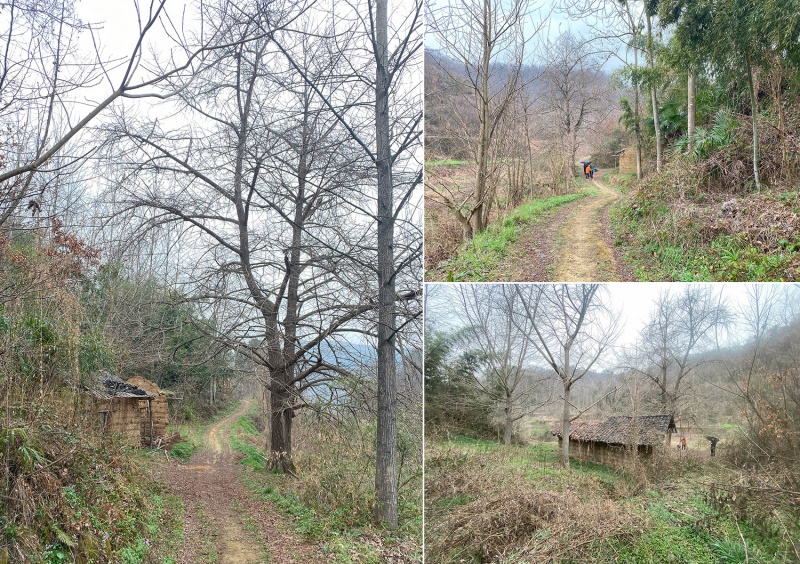
The Treehouse is located at the junction of two paths leading into the valley. The environment is somewhat bustling, and within a limited 90㎡ plot, the design needed to avoid the roots of three ancient trees while accommodating two standard guest rooms of no less than 50㎡ each and a utility storage room. During their first site visit, the designer and the owner established a clear strategy: to elevate the entire building. This approach not only created two distinct spatial qualities—quiet above and dynamic below—but also utilized the lush ginkgo canopies to provide privacy and scenic views for the guest rooms. Meanwhile, the ground level was freed up as a semi-outdoor activity area, naturally supporting a variety of vacation activities such as dining, roasting ginkgo nuts, swinging, and relaxing in the shade.
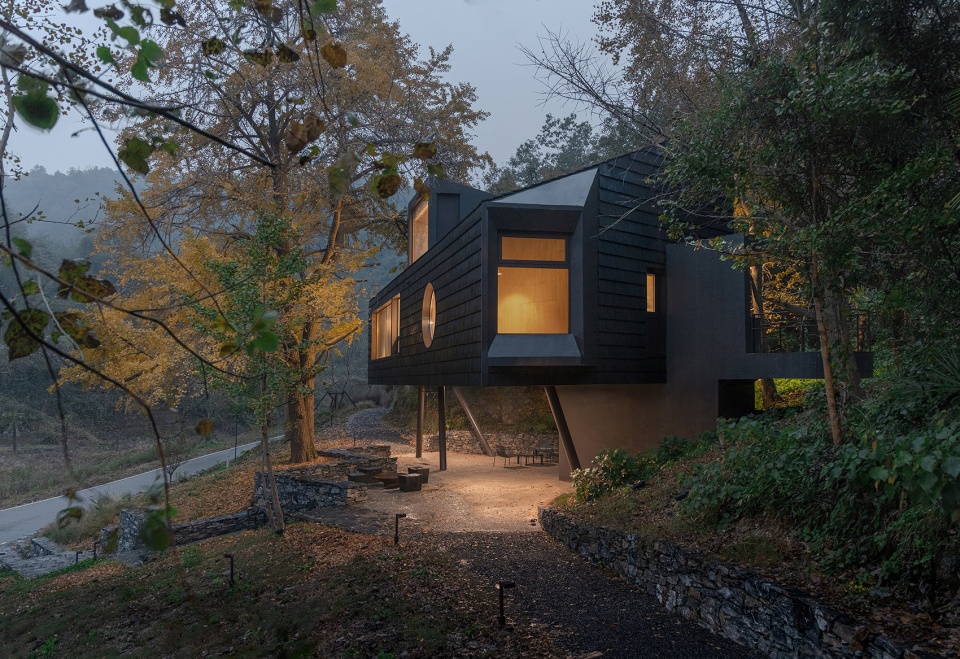
▼侧立面与小路,Side elevation and the path
▼建筑体量与道路关系,Relationship between the building volume and the road
场地与几何秩序
Site and Geometric Order
林中树屋以精确的几何秩序性呼应场地内路径和树木轮廓的关系,几何形式的目的不在于直接呈现几何美感,而是受以现场视觉感知为主的各设计条件综合制约后形成。
▼草图与形体推敲,sketch and massing progress
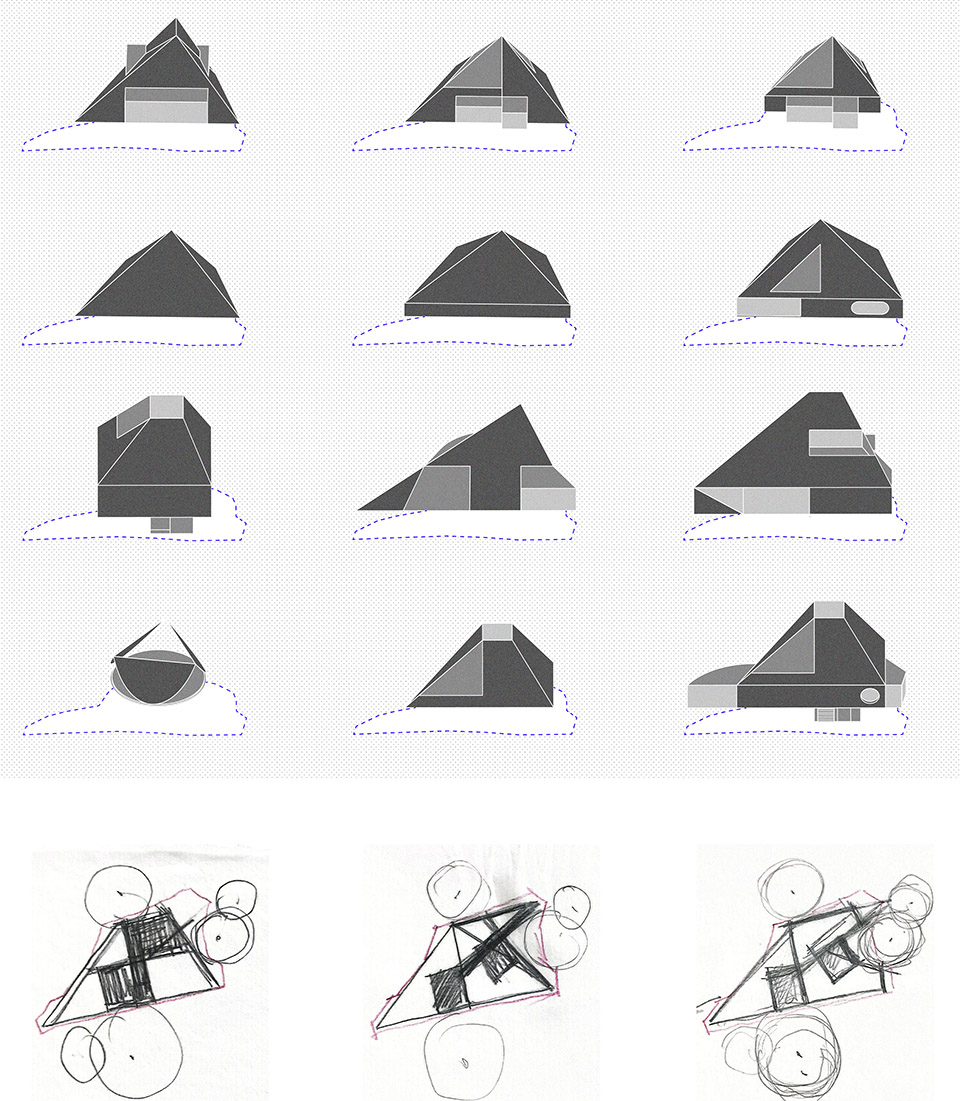
The Treehouse in the forest responds to the site’s paths and tree contours with precise geometric order. The purpose of the geometric form is not to directly present aesthetic appeal but to emerge from a synthesis of design conditions based on on-site visual perceptions.
▼抬升的林中面具,压低的坡屋面,The elevated mask in the forest, and the lowered pitched roof
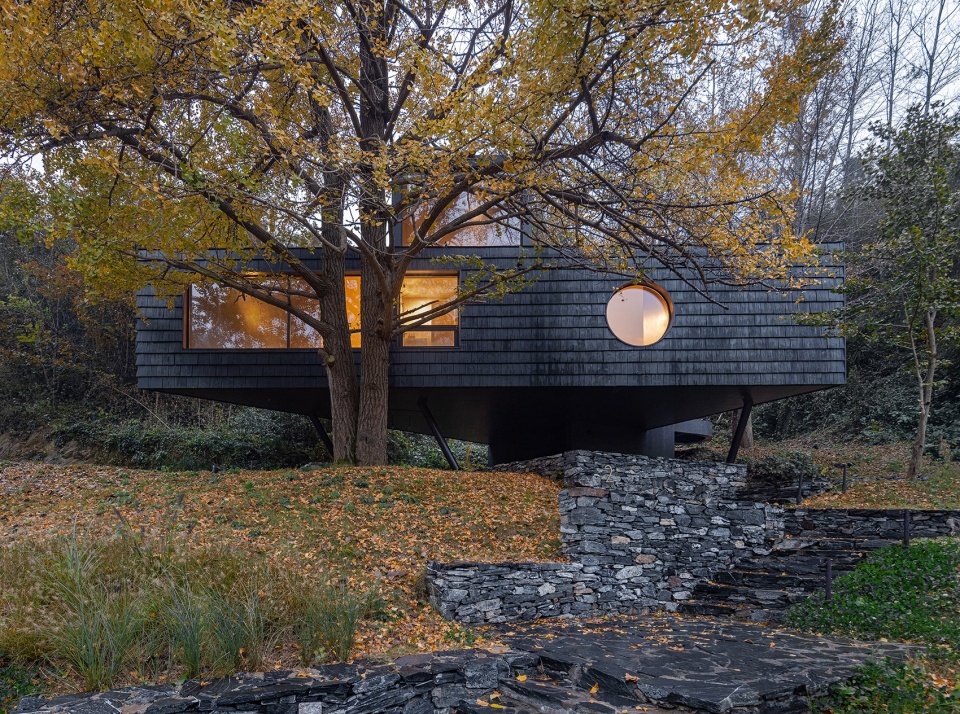
设计师从不规则的宅基地红线里提取出几何控制边线,通过平面和剖面推敲体量、场地与身体的关系。地面层的一个大动作是将原沿垂直轴线中心布置的楼梯核心筒旋转60度,让核心筒退后、让出空场,同时带来新的结构表现力。
▼轴测图,axonometric
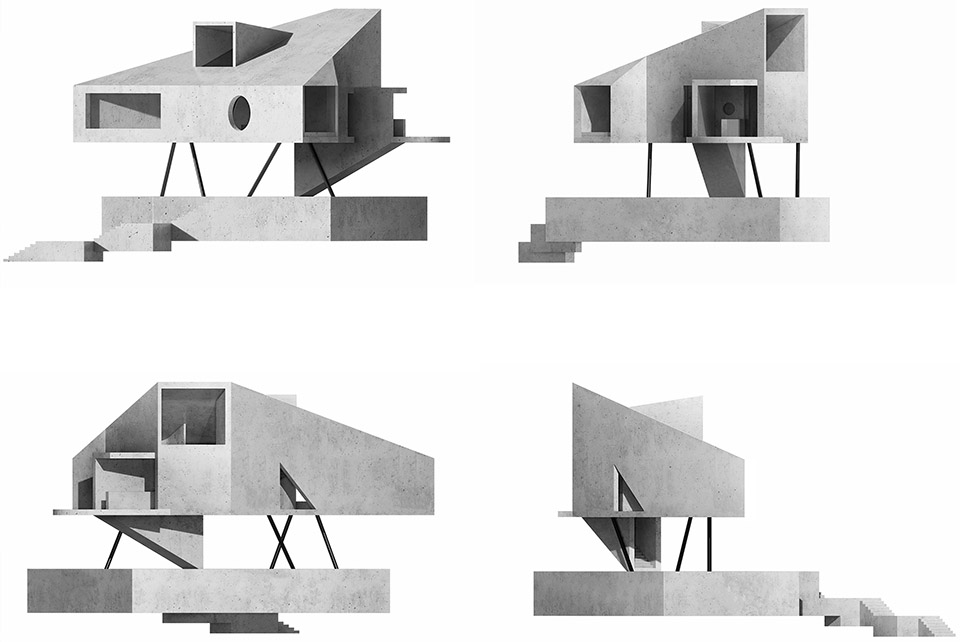
The designer extracted geometric control lines from the irregular plot boundary and refined the relationship between volume, site, and the human body through plan and sectional iterations. A significant move at the ground level was rotating the central staircase core by 60 degrees from its original vertical axis alignment. This adjustment opened up space and introduced new structural expressions.
▼树屋背面,抬升的坡屋面,The rear of the tree house with the elevated pitched roof
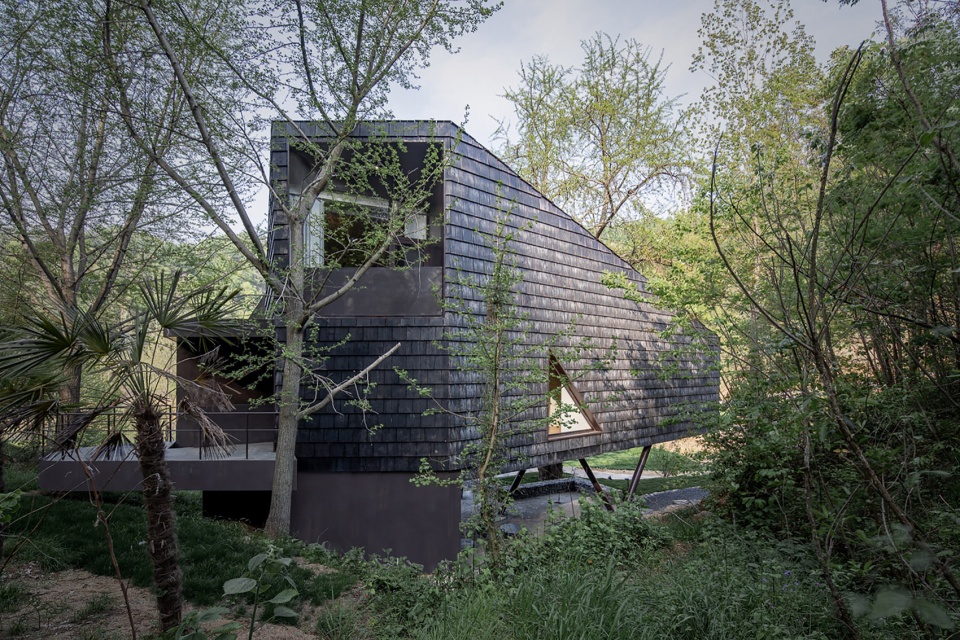
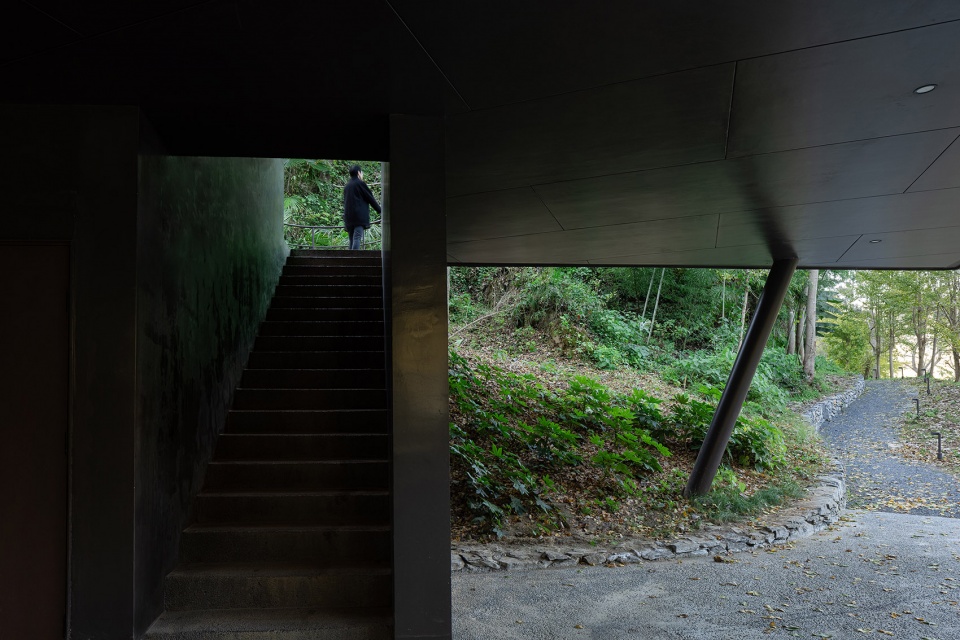
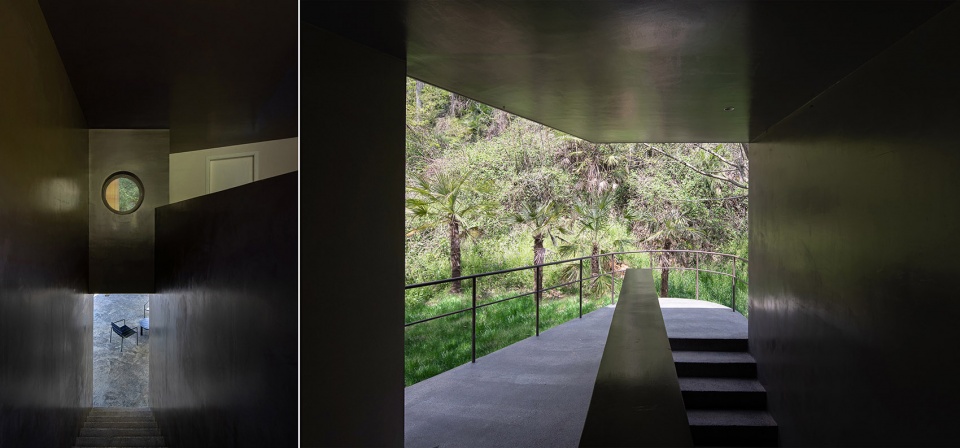
人被大树和秋千吸引进入架空底层后,转身进而发现楼梯入口,拾级而上遇到棕榈林的台地与客房区入口。身体穿梭于树林之间,延长转折的路径让人忘却场地的狭小,进而直面多样丰富的自然。
Visitors, drawn by the trees and swings, enter the elevated ground floor, turn to discover the staircase entrance, and ascend to the terrace overlooking palm groves and the guestroom entrances. This journey through the forest prolongs the sense of exploration, making the site feel expansive despite its small size, while providing direct engagement with the rich natural surroundings.
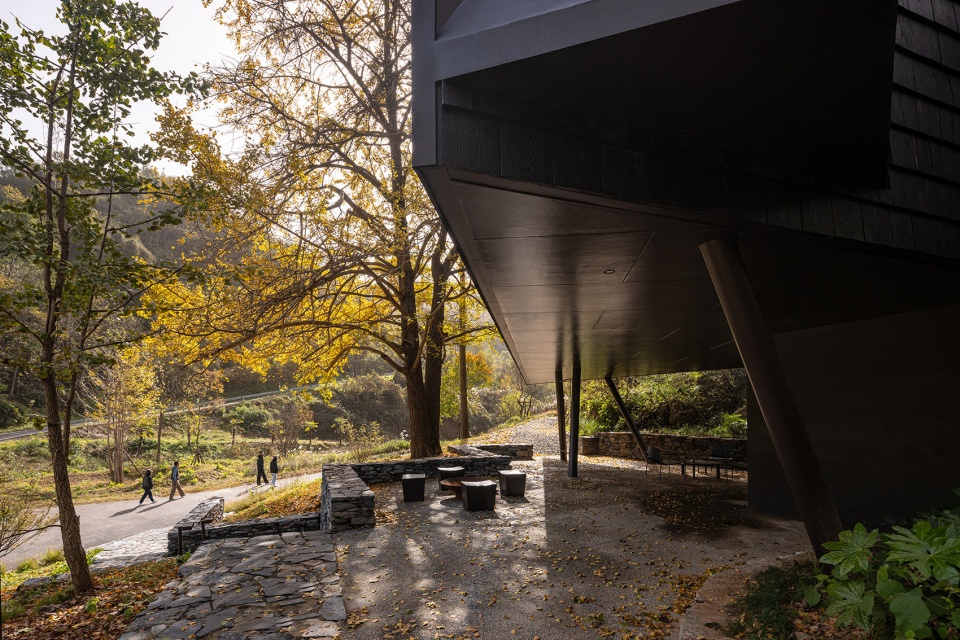
现浇钢筋混凝土的楼梯筒体与钢柱在架空底层之间形成的张力,慢慢化解在秋千摇摆,树影婆娑之间。筒体和钢柱表面喷涂的金属质感氟碳漆,隐约反射出四周的环境。夜幕降临、室内灯光亮起,树屋如同栖息于林间的飞船,待飞返航。
▼草图与形体推敲,sketch and massing progress
The tension between the in-situ reinforced concrete staircase core and steel columns at the elevated ground level gradually dissolves amid swinging motion and dappled shadows. The metallic fluorocarbon paint on the core and columns subtly reflects the surrounding environment. As night falls and the indoor lights glow, the treehouse resembles a spaceship perched in the woods, ready to embark on its voyage.
▼沿着小路,远望大树下休息区,可以坐下来聊会儿天,
Along the path the resting area under the large tree in the distance invites a moment to sit and chat
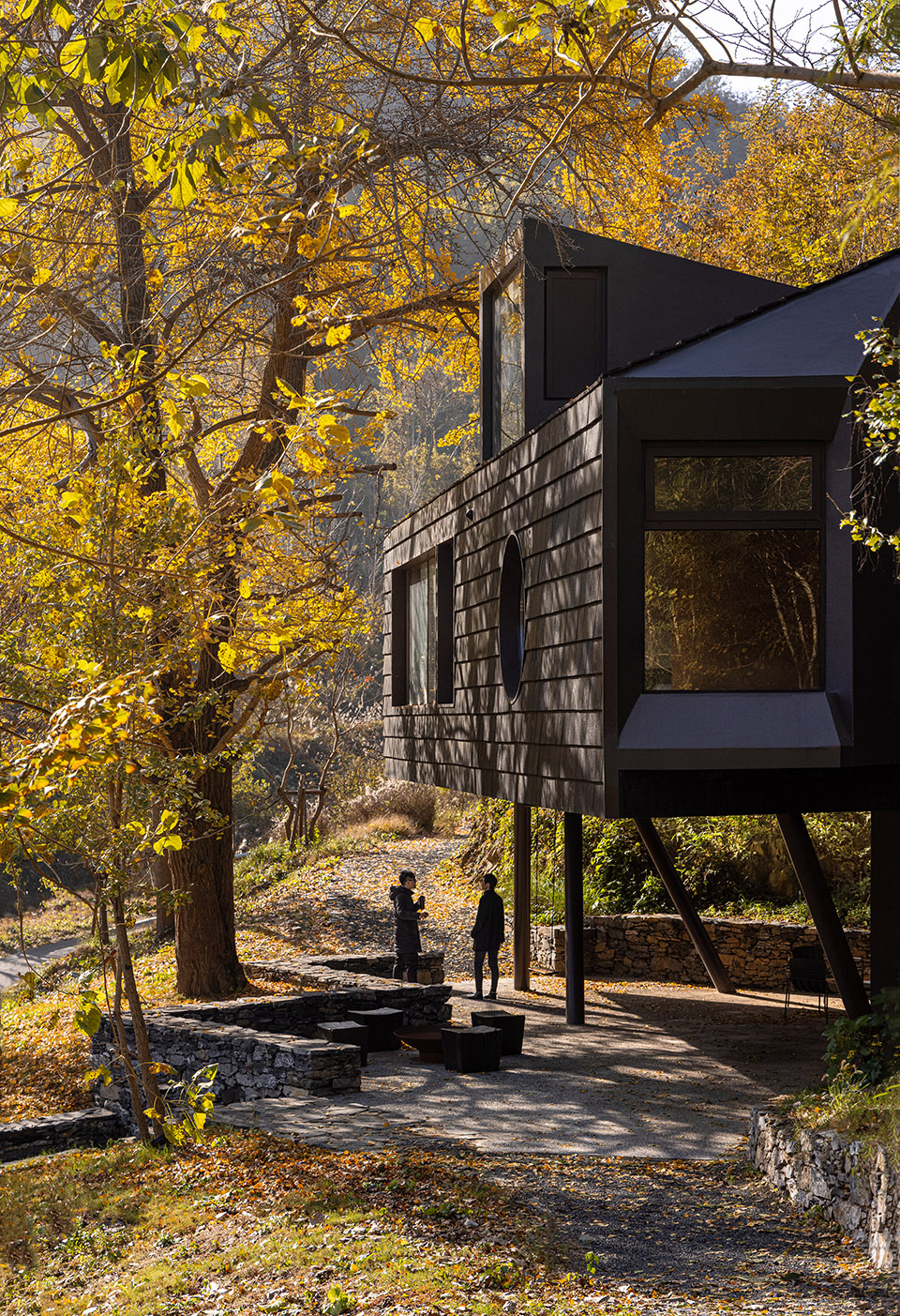
▼楼梯的偏移释放了地面活动空间,错动的柱子与树杆呼应,
The offset of the staircase frees up the ground-level activity space, with the shifted columns echoing the tree trunks
▼抬升的楼梯导向私密景观平台, The elevated staircase leads to a private scenic platform
▼客房入口与景观平台, The guest room entrance and the scenic platform
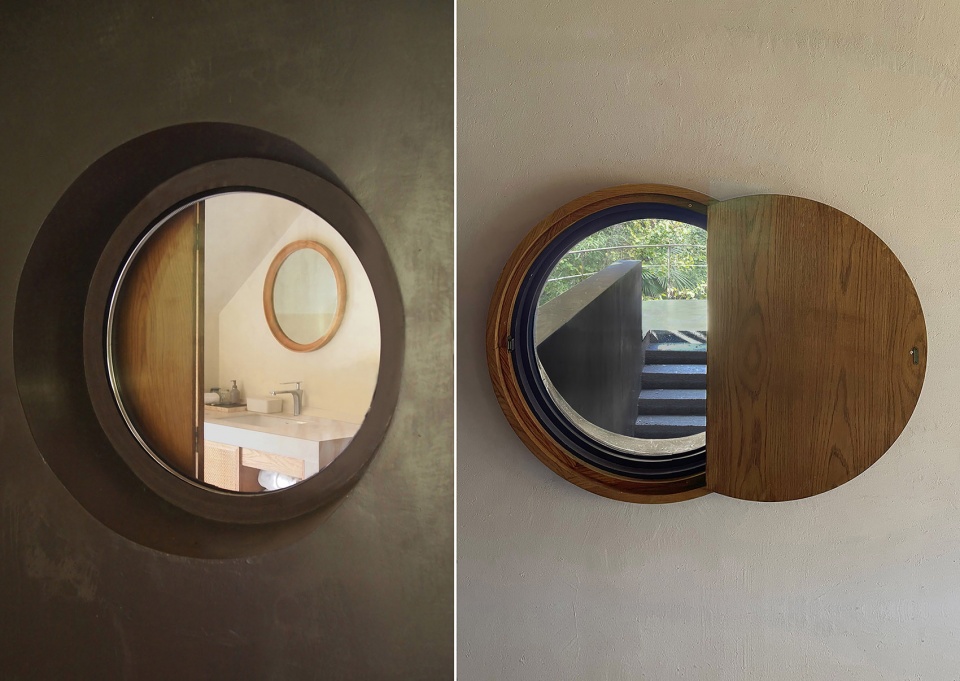
▼入口处的小舷窗,A small porthole at the entrance
边界与身体体验
Boundaries and Bodily Experience
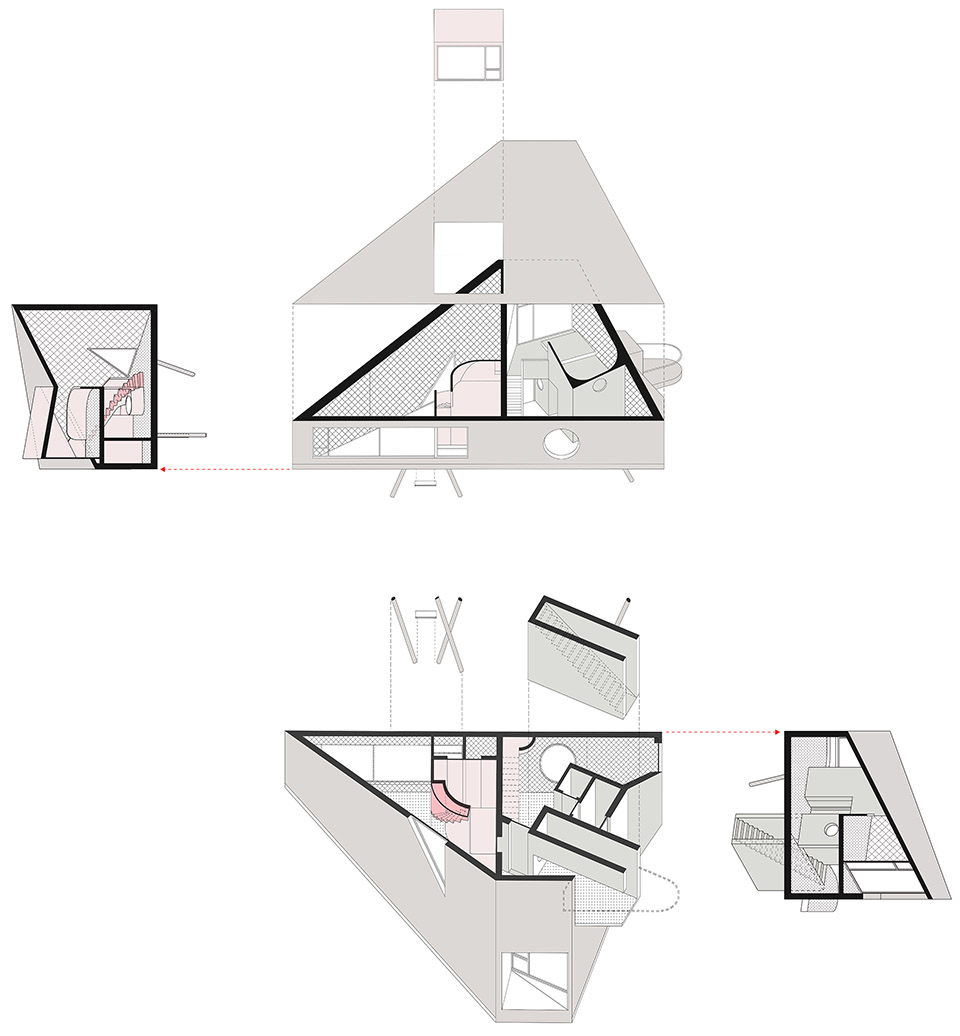
体验型的项目设计,自建筑设计起就同时考量室内和景观对位设计。在抽象的形体关系中,以“几何洞口”替代“具象窗”,开启扇隐藏在墙体中,使洞口呈现更加纯粹。树屋的体量与景观之间的联系内化为窗洞与景观元素的对位关系,勾勒人使用室内的方式与游走的路径,呈现日常自然景观中不平凡的一面:人既能在房子里待得住,也在场地间逛得起来。
▼功能轴侧,function axonometric
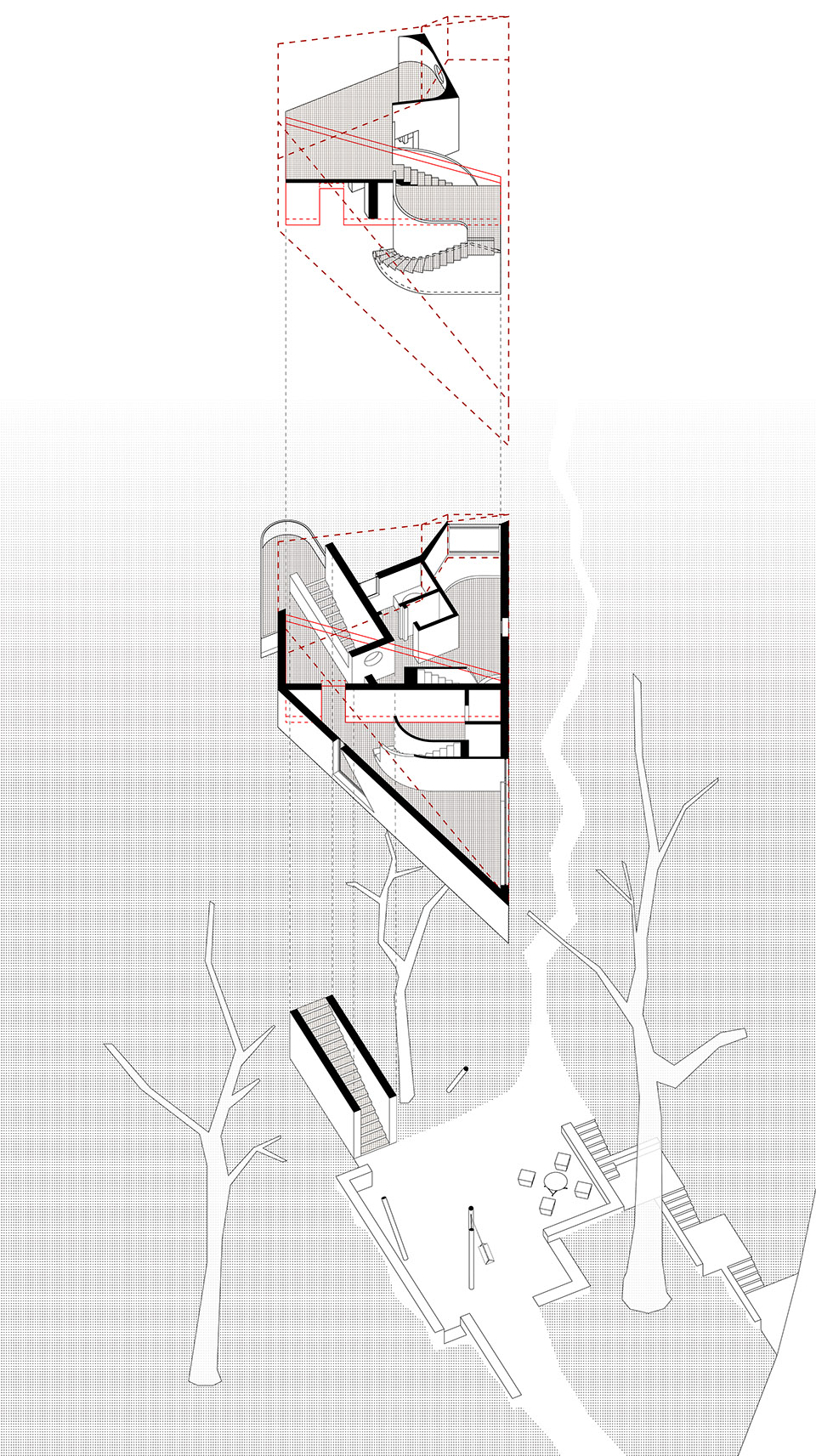
This experiential project design simultaneously considers architectural and landscape alignment from the outset. In its abstract form, “geometric openings” replace “figurative windows,” with operable panels concealed within walls to maintain the purity of these openings. The interplay between the treehouse volume and the landscape is internalized in the alignment of window openings with scenic elements, shaping how people use the interiors and move along their paths. This reveals the extraordinary within the everyday natural landscape: guests can both stay comfortably indoors and wander freely outdoors.
▼抬升的楼梯导向私密景观平台, The elevated staircase leads to a private scenic platform
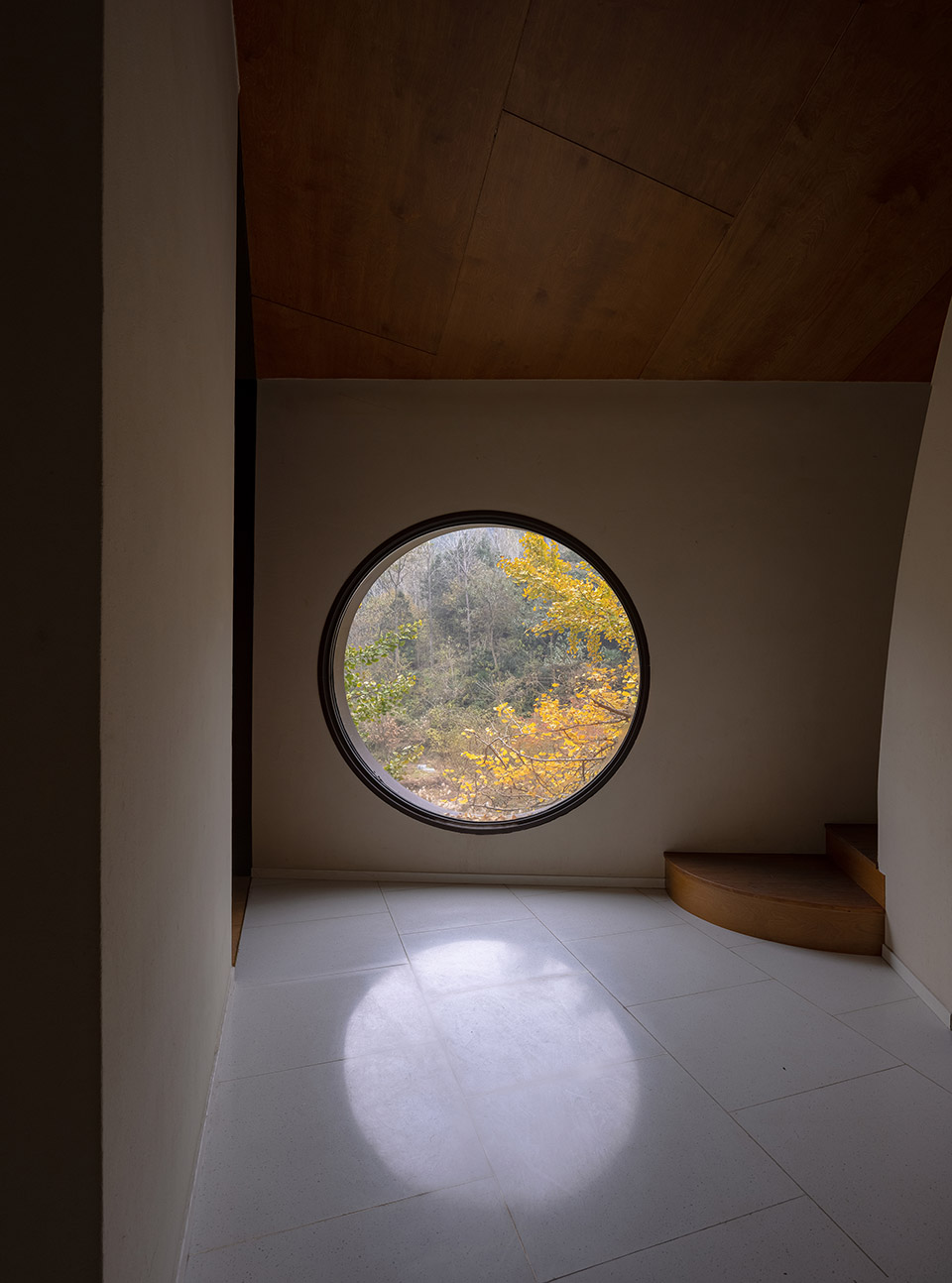
▼东北侧客房:从楼梯口望向洞穴般的茶室,身体蜷曲在自然中,
Northeast guest room looking from the staircase towards the cave-like tea room the body curls into a corner of nature
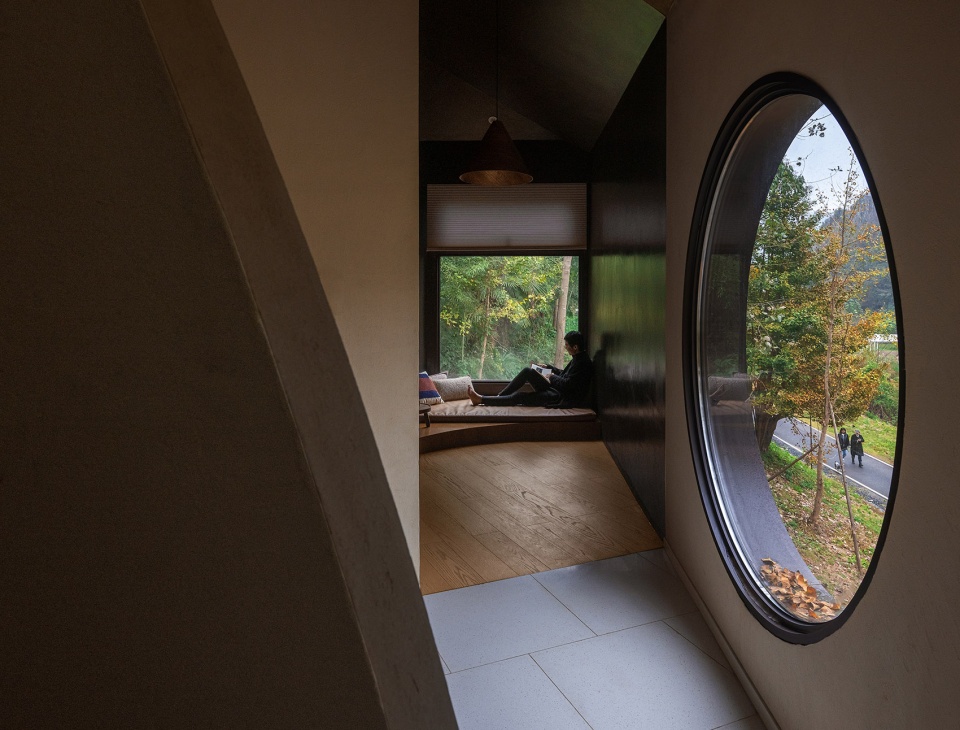
▼东北侧客房:四季景致映射在墙面上,Northeast guest room seasons are projected on the wall
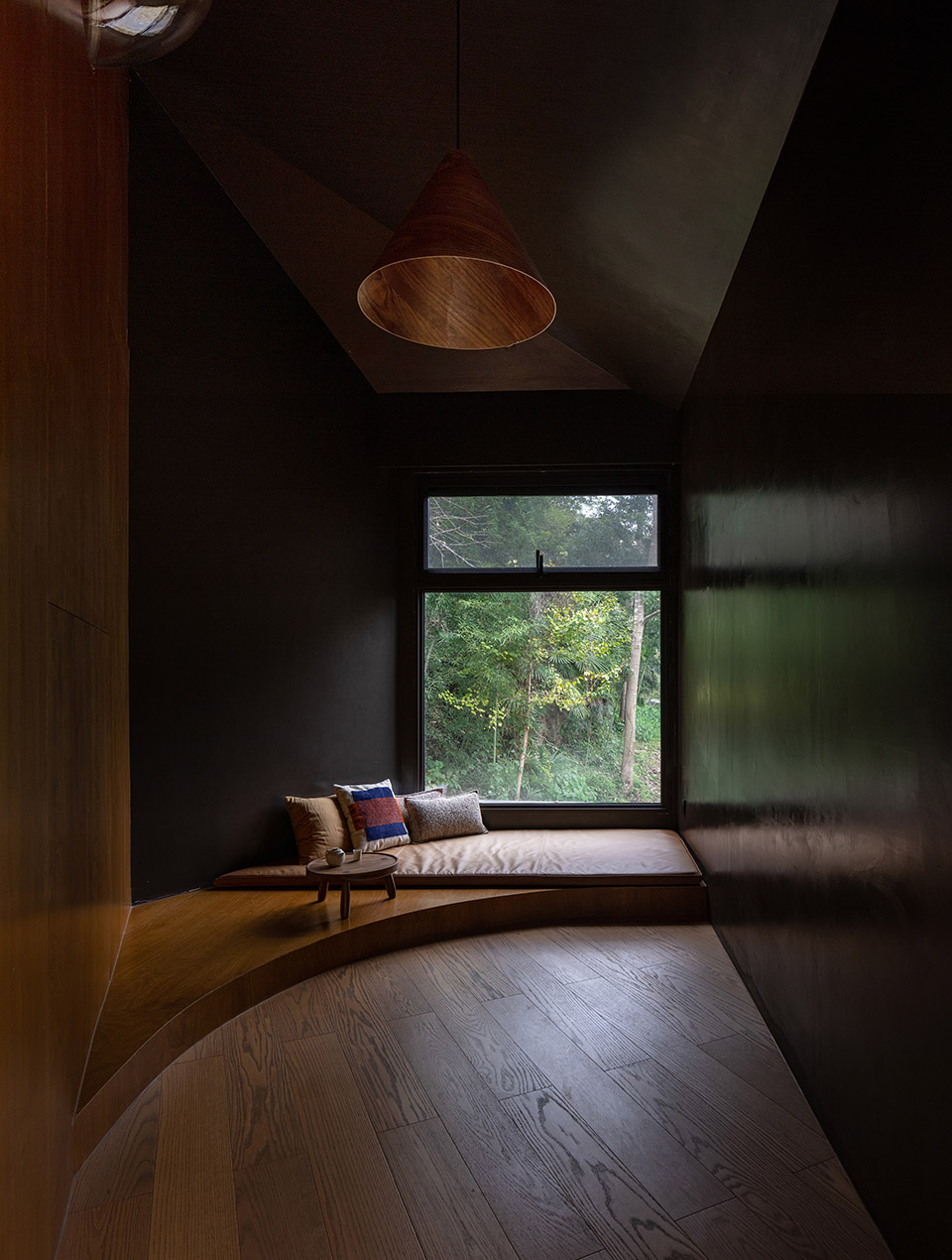
▼东北侧客房:客房一角的茶室与夹层楼梯形成空间的动感,
Northeast guest room the tea room in the corner of the guest room creates a dynamic spatial interaction with the mezzanine staircase
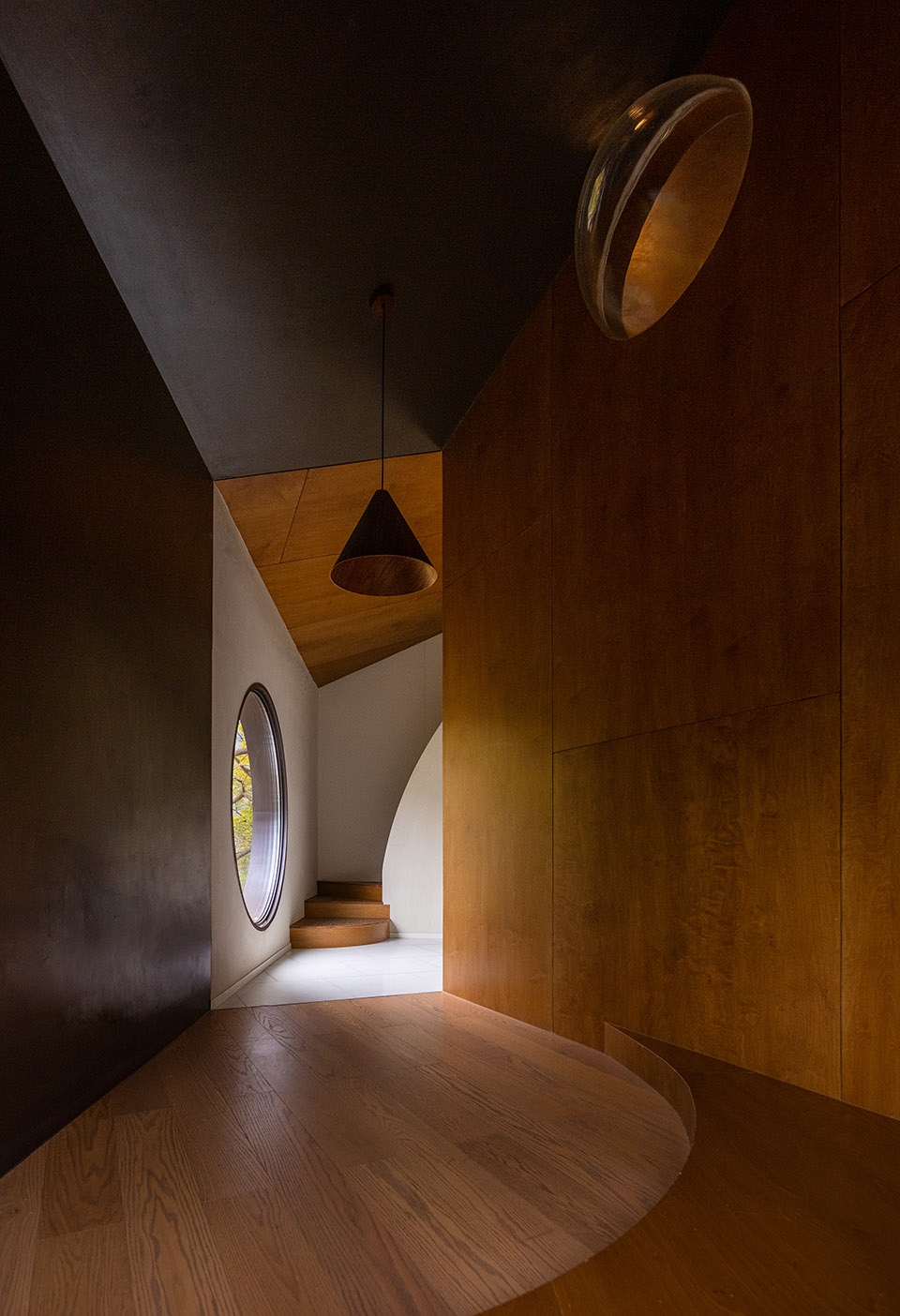
▼东北侧客房:通向卧室的楼梯,Northeast guest room the staircase leading to the bedroom
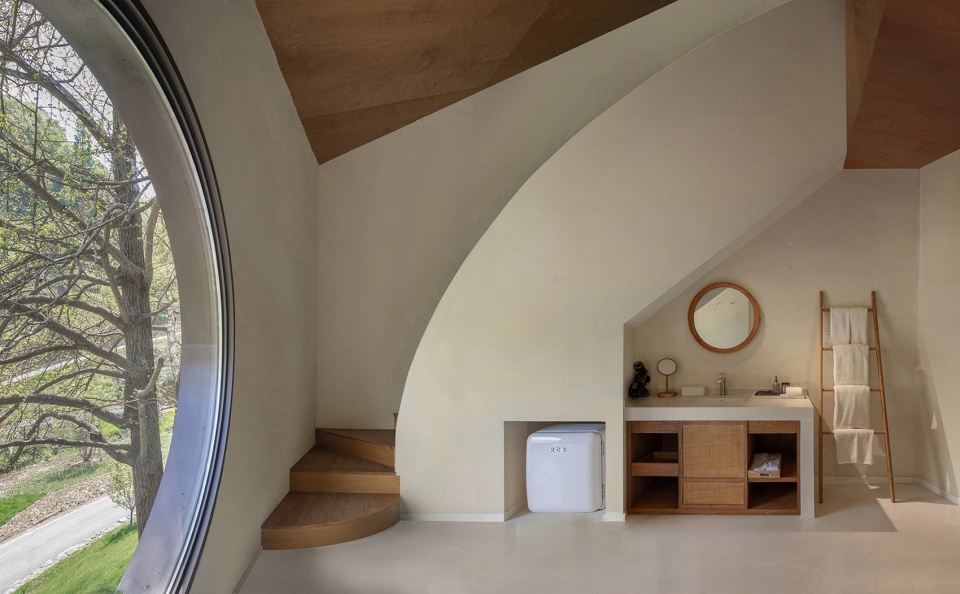
▼东北侧客房:卧室一角的茶台,Northeast guest room the tea table in a corner of the bedroom
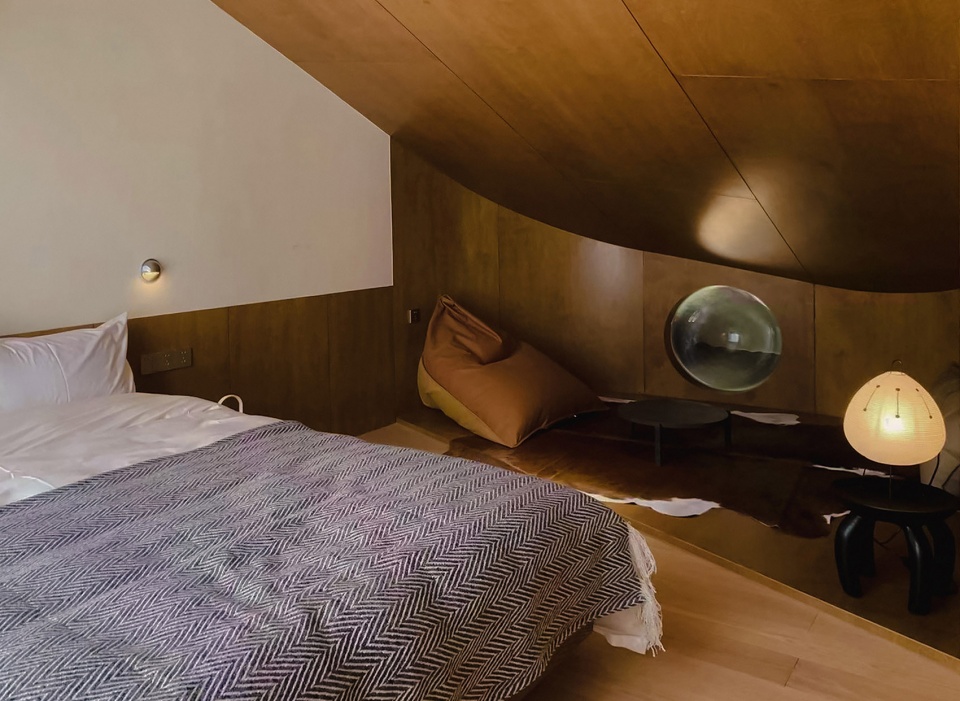
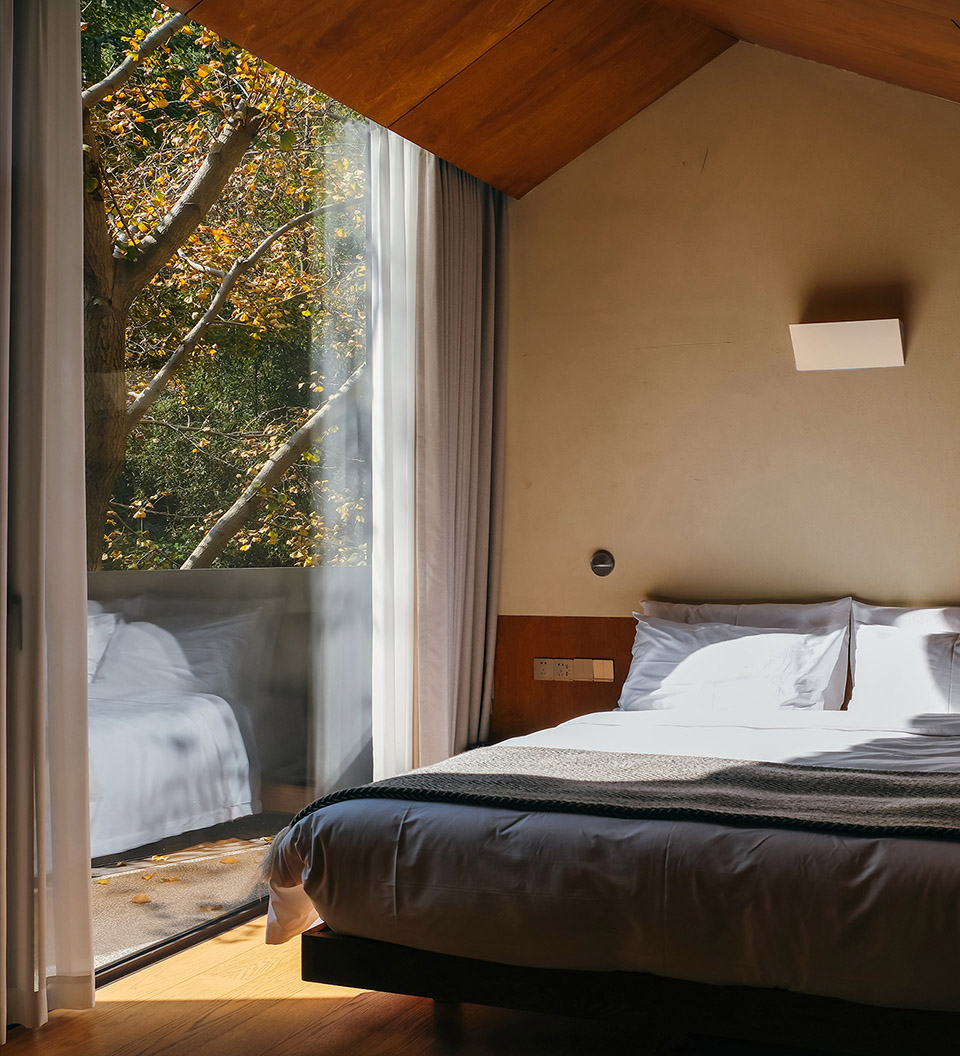
▼西南侧客房:卧室夹层俯瞰谷地四季,在被包裹与开阔的气质灵活切换,
Southwest guest room the bedroom mezzanine overlooks the changing seasons of the valley shifting seamlessly between a sense of enclosure and openness
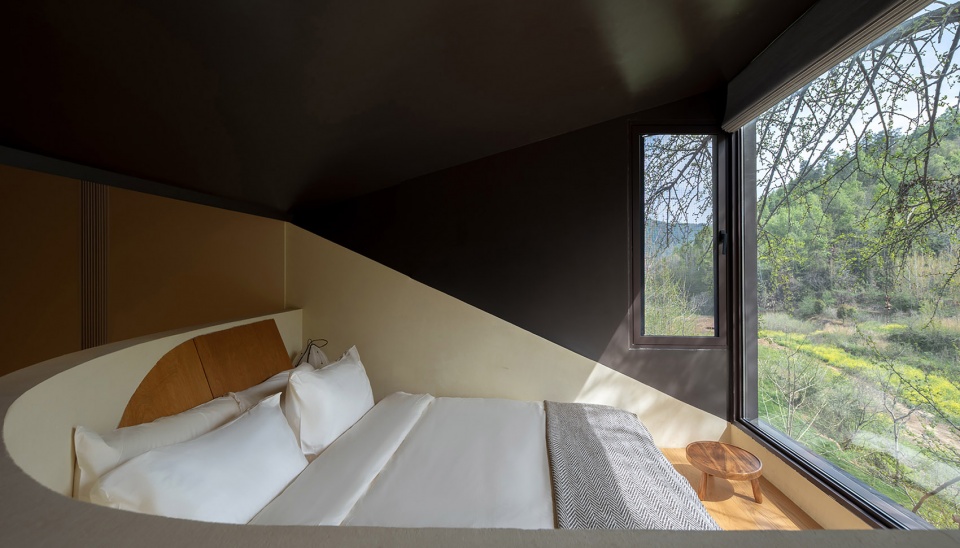
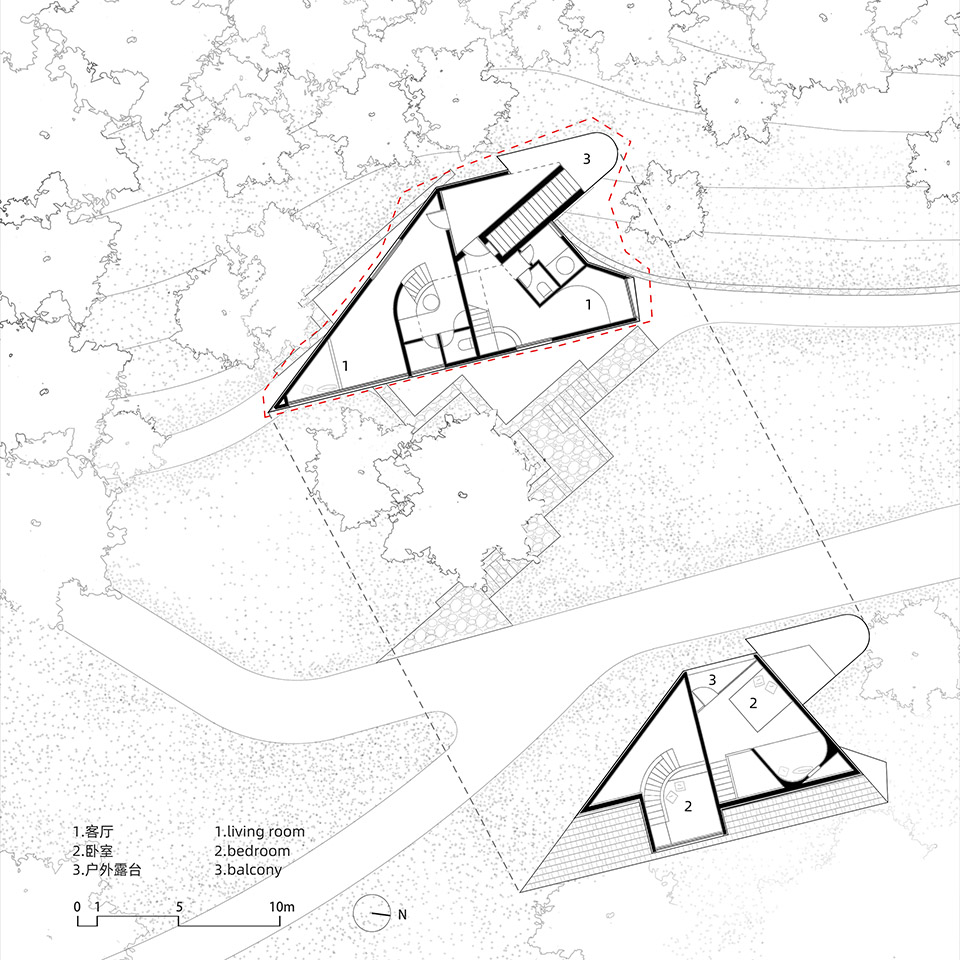
通过正交体系与非正交体系的几何扭转,营造了房间与房间之间的模糊联系,而非传统的从“开始”到“结束”的空间体验。平面上非规整的过渡空间表现出的活泼,调节度假建筑的空间氛围。去中心化、无明确边界的动态空间,赋予了每个区域在离散关系中“摇曳颤动”的气质:身体在行进,光线在挪移。东北侧客房通过公共楼梯和洗浴区的60度扭转形成入口玄关和茶室;西南侧客房通过弧形楼梯分隔出玄关、洗浴区和茶室。
Through the interplay of orthogonal and non-orthogonal geometric systems, the design creates subtle connections between rooms, moving away from traditional “start-to-end” spatial experiences. The irregular transitional spaces enliven the architectural atmosphere, adding a playful and decentralized quality to the vacation environment. Dynamic spaces with undefined boundaries imbue each area with a sense of movement, as bodies traverse and light shifts. The northeast guestroom incorporates an entry foyer and tea room through a 60-degree rotation of the public staircase and bathing area. Meanwhile, the southwest guestroom uses a curved staircase to delineate the foyer, bathing area, and tea room.
▼夹层卧室层高较高,深色木吊顶增加温馨庇护的氛围。同时利用吊顶和木饰面板的分割隐藏空调风口,保持室内简洁,The mezzanine bedroom has a higher ceiling with a dark wooden finish enhancing a cozy and sheltered atmosphere
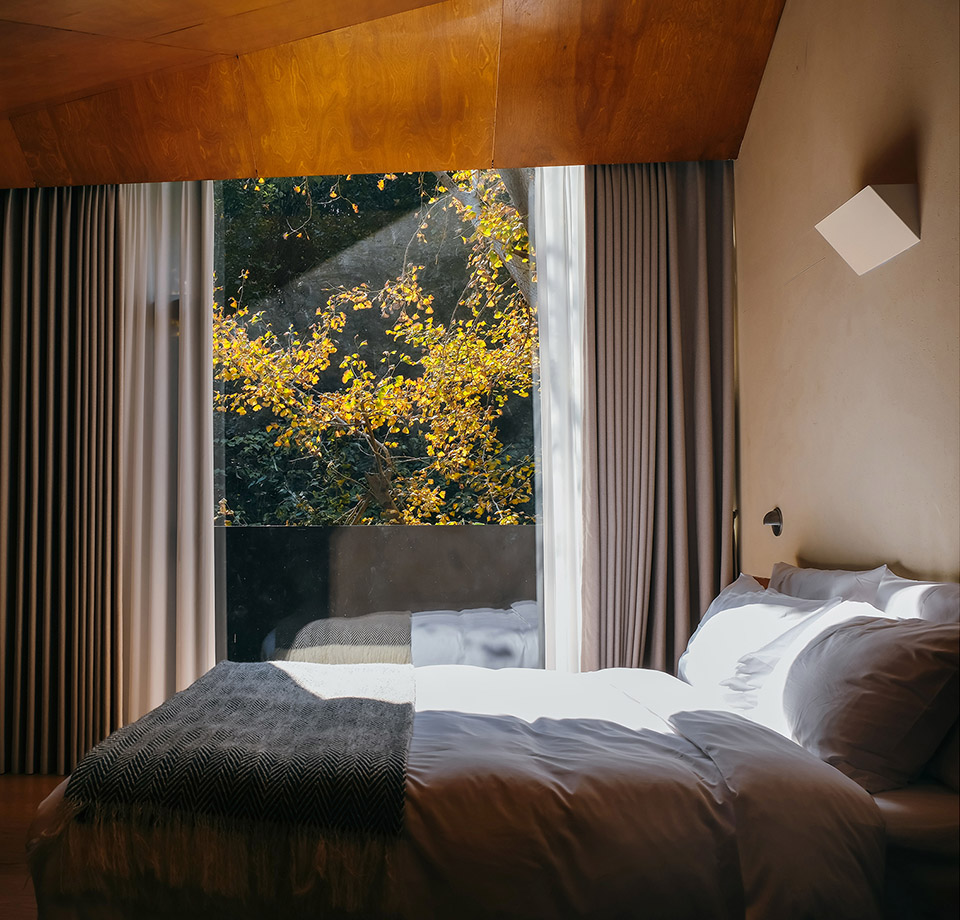
▼西南侧客房:离散中摇曳的四季,
Southwest guest room the seasons swaying in the midst of discreteness
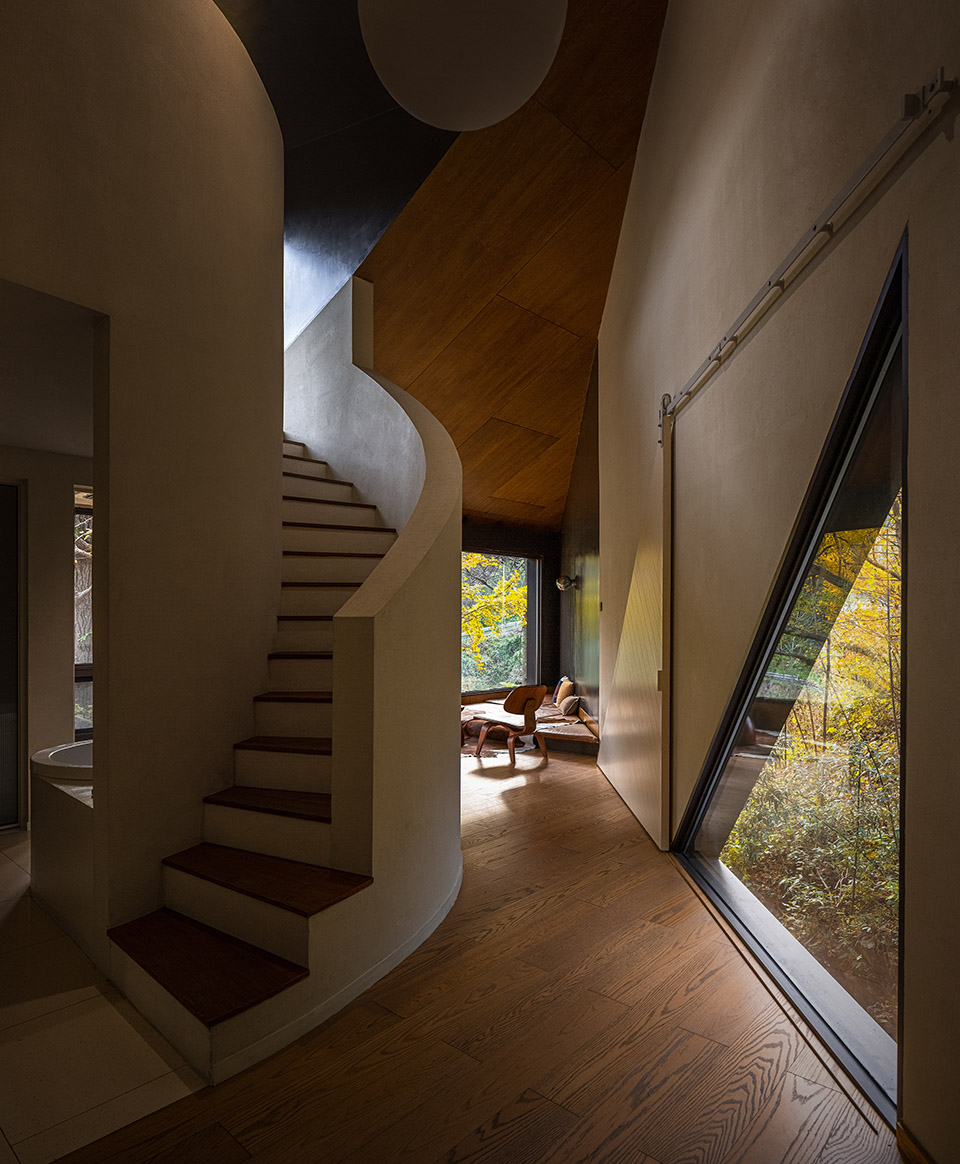
▼西南侧客房:空间形体包裹身体,被树荫滤过的光线更加柔和,
Southwest guest room the spatial form envelops the body with light filtered through the tree canopy becoming even softer
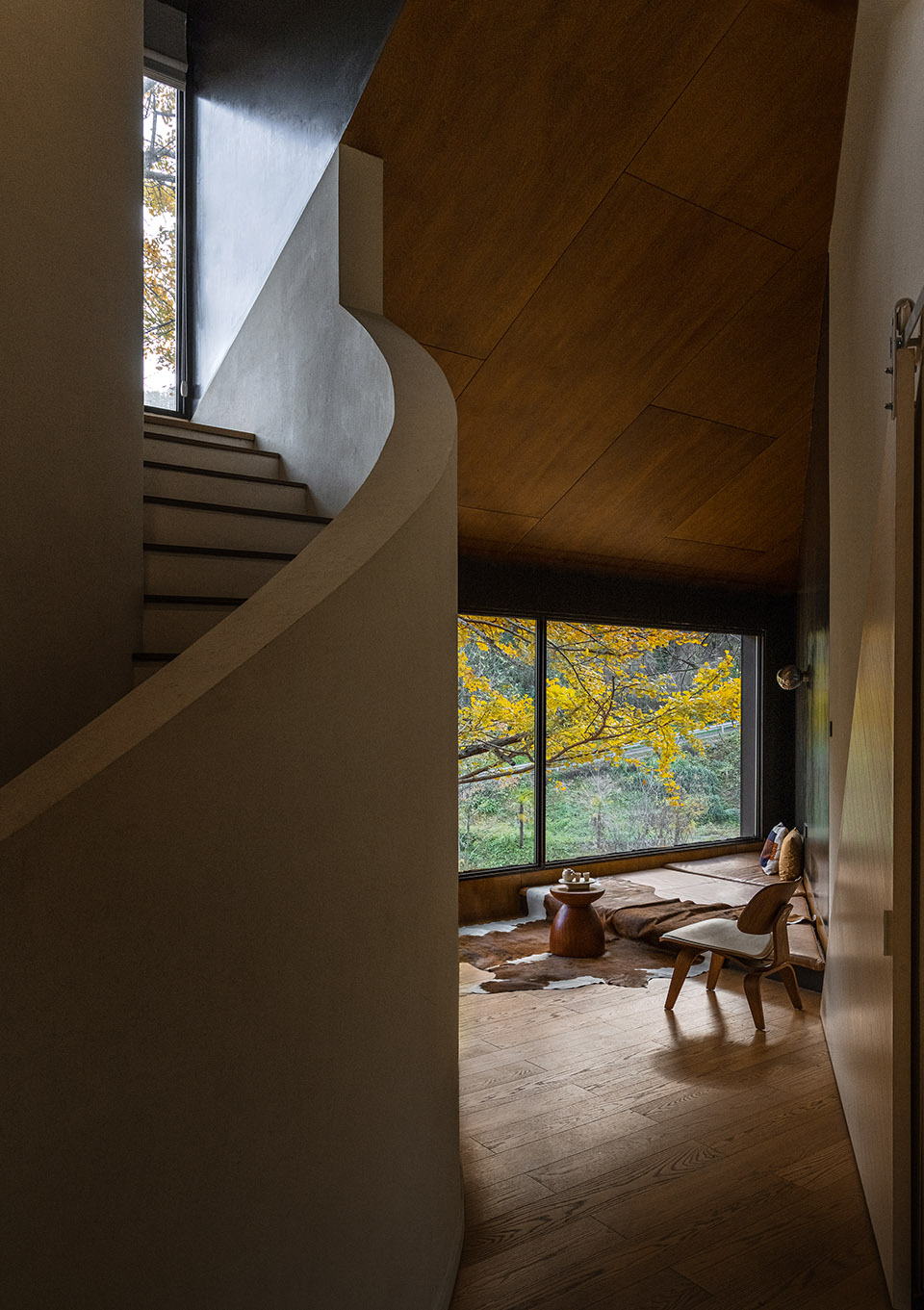
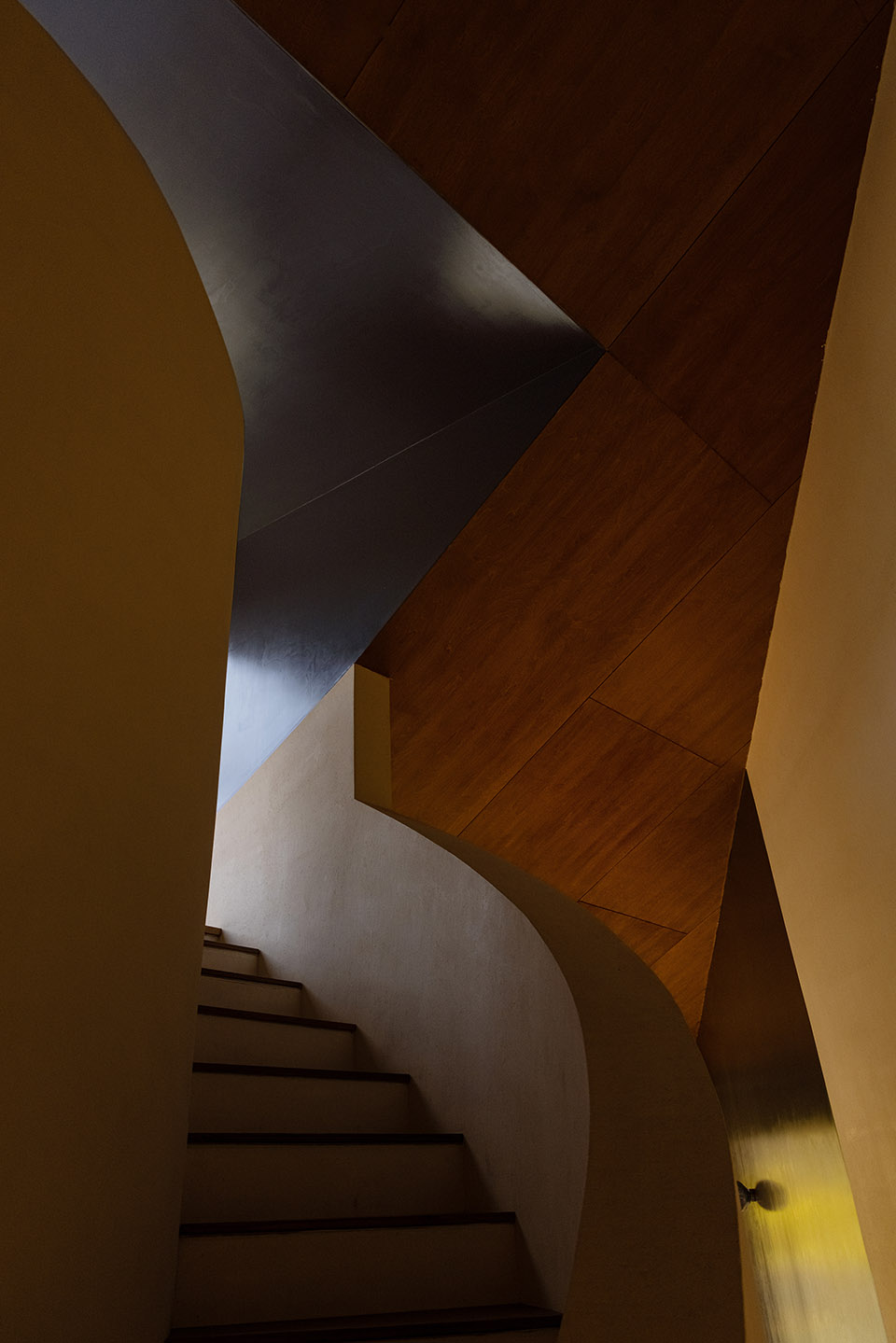
反光的棕色金属漆、粗糙的白色灰泥和木饰面在吸光度、反光度以及色相上都有不同的材料表情。饰面系统的设计强化视线的引导和身体的包裹感,同时模糊室内元素的交接。色彩强化了异形平面的动态感, 光线通过金属漆漫射到室内,色相因窗外植物的颜色变化,形成抽象而美丽的小空间。
Reflective brown metallic paint, rough white stucco, and wood finishes create diverse material expressions in light absorption, reflection, and hue. The surface treatments guide sightlines, enhance the sense of enclosure, and blur the transitions between interior elements. The colors enhance the dynamic quality of the irregular planes. Light diffuses through the metallic surfaces, with hues shifting in response to the surrounding vegetation, creating abstract yet beautiful small spaces.
▼西南侧客房:被木屋面和树冠包裹的客厅,
Southwest guest room the seasons swaying in the midst of discreteness
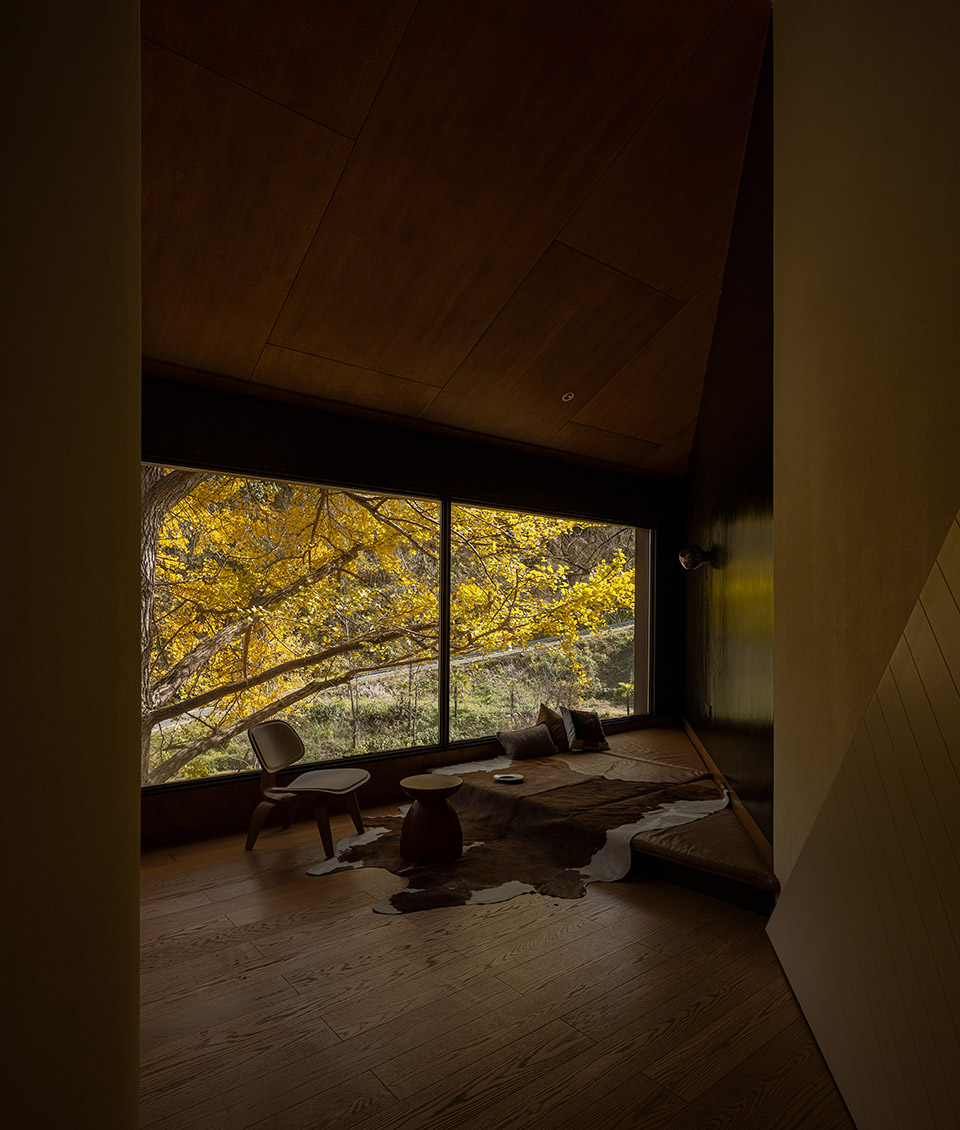
▼屋顶材质的光泽度区分强化了外向的开阔景观,阁楼卧室也充盈光线和婆娑树影,
The differentiation in the glossiness of the roof material enhances the view allowing the bedroom mezzanine to be filled with light and the shadows of the trees
结构构造
Structure and Construction
因为场地范围内的三棵古树,建筑采用混合结构形式:独立基础、一层为钢结构与混凝土剪力墙、二层为轻钢结构。轻钢构件的长度视所需决定,结构墙体厚度控制在150mm以内,节省墙体空间,增大使用面积。
▼轻钢构件,steel structure
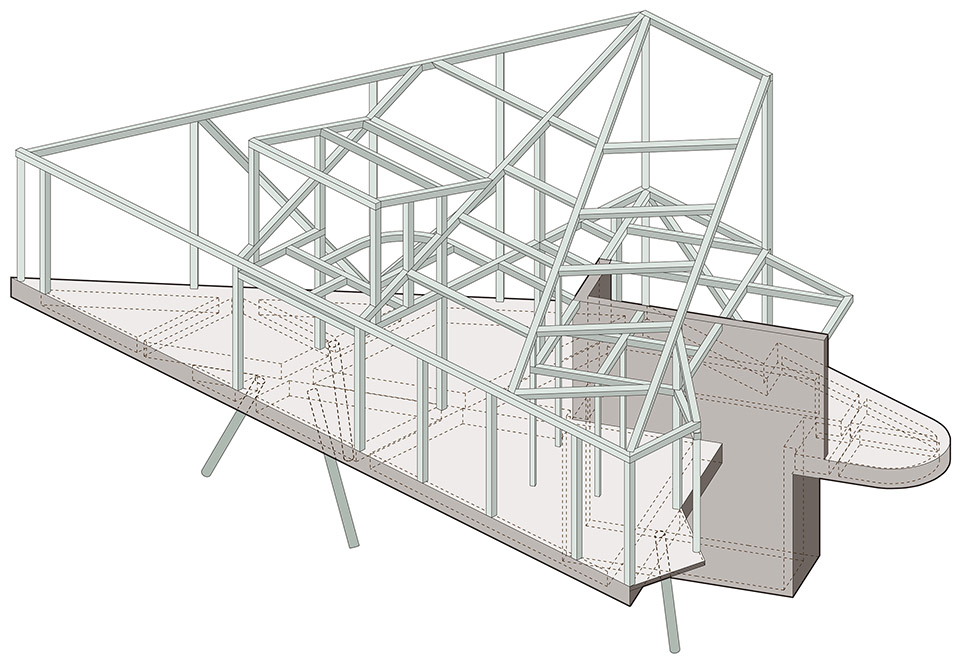
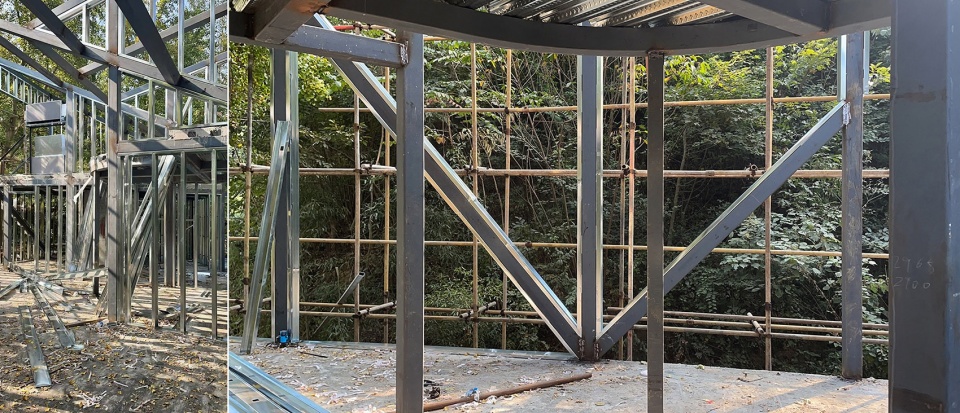
Given the three ancient trees on the site, the building employs a mixed structural system: isolated foundations, steel structure and concrete shear walls for the first floor, and a lightweight steel structure for the second floor. The length of the lightweight steel components is determined as needed, while structural wall thickness is kept within 150mm to save space and maximize usable area.
▼轻钢构件施工过程,steel structure construction progress
▼烧杉板微妙的光感,The subtle light effect of charred cedar boards
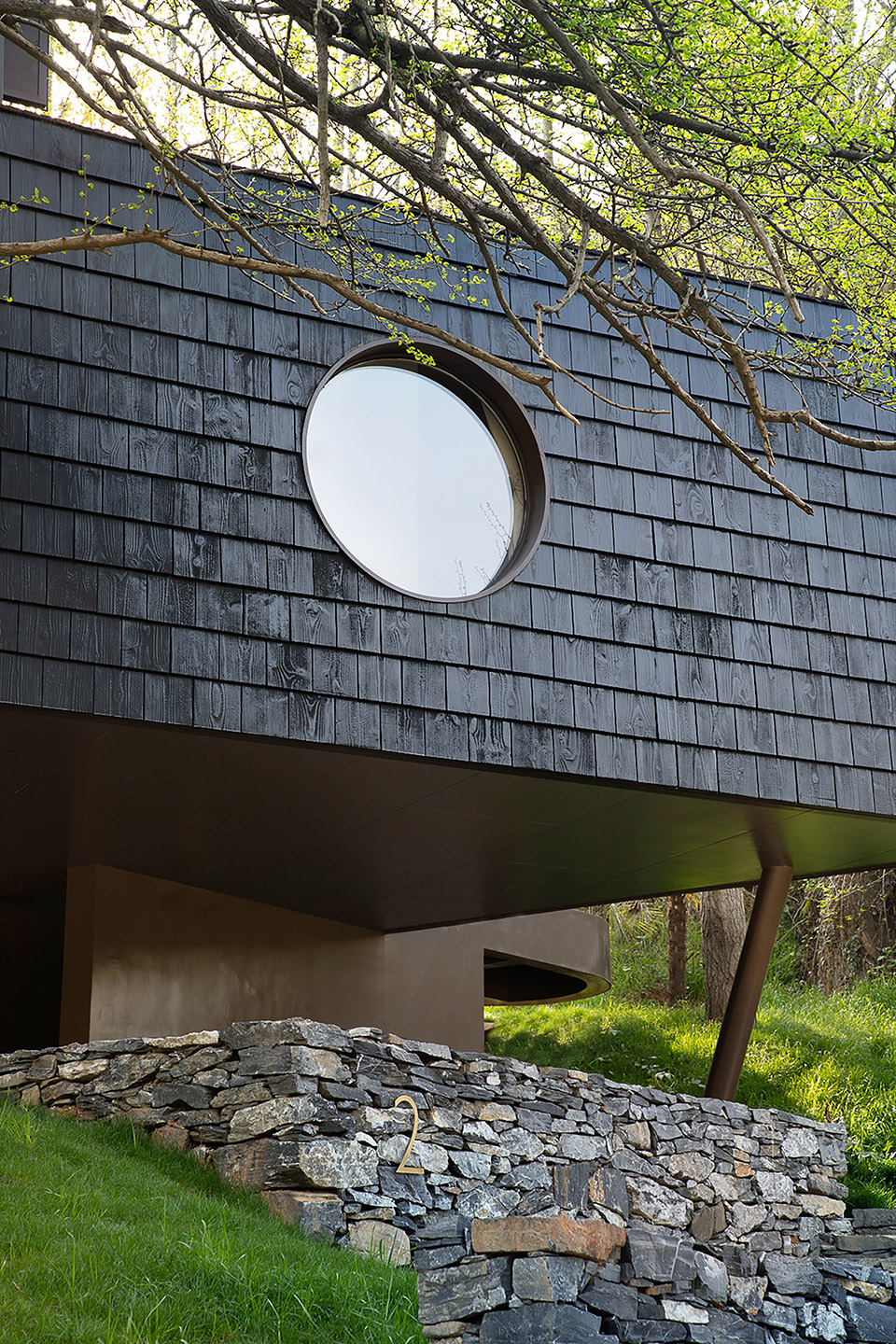
建筑外立面采用30x45cm的烧杉板挂板以及局部打磨上哑光清漆,烧杉板微妙光感和皴裂质感契合了自然的野性。表面炭化的木头宛如为建筑披上了铠甲,具有防虫蚁叮蛀、防潮等功效。
The building façade features 30x45cm charred cedar planks, with portions polished and coated with matte clear varnish. The subtle gloss and cracked texture of the charred cedar harmonize with the natural wilderness. The carbonized wood surface acts as a protective armor for the building, offering resistance to termites, pests, and moisture.
▼树屋平面,tree house plan
Project Location: Guangjia Chong, Jiukouyan Village, Luoyang Town, Suizhou City, Hubei Province
Building Area: 190㎡
Overall Design (Planning/Architecture/Interior/Landscape): Moguang Studio
Lead Architects: Li Jiaying, Feng Xin
Design Team: Li Jiaying, Feng Xin, Shen Zhiyu, Pan Yongjia, Zhang Kuangzhi (Intern)
Structural Design: Ma Zhigang
MEP Team: He Chunhui, Liu Hongfei, Wei Tianliang
Photography: Su Shengliang, Moguang Studio, Tang Xuguo, Eone
Video Team: SCHRAN Image
Construction Team: Shanghai Ye You Zhu Decoration Engineering Co., Ltd.
Design Time: March – July 2022
Completion Time: April 2023