棋院实验小学,上海 / 阿科米星建筑设计事务所
上海棋院实验小学是上海市唯一一所棋类特色学校,随着办学规模扩大,原本的校区已不适应发展的需求,静安区政府利用苏河湾地区城市更新的契机,提出为该校兴建一个新校区。基地位于静安苏河湾地区,北侧为成熟居住小区,东侧紧邻向东中学,西侧与南侧均为待建用地。
Shanghai Qiyuan Experimental Primary School is the only chess-specialized school in Shanghai. With its growth, the original campus could no longer meet functional needs. The Jing’an District government decided to build a new campus during the urban renewal of Suhewan area. The site is bordered by a mature residential community to the north and Xiangdong Middle School to the east, while the west and south are both plots for future development.
▼棋院实验小学整体鸟瞰,Master axonometric
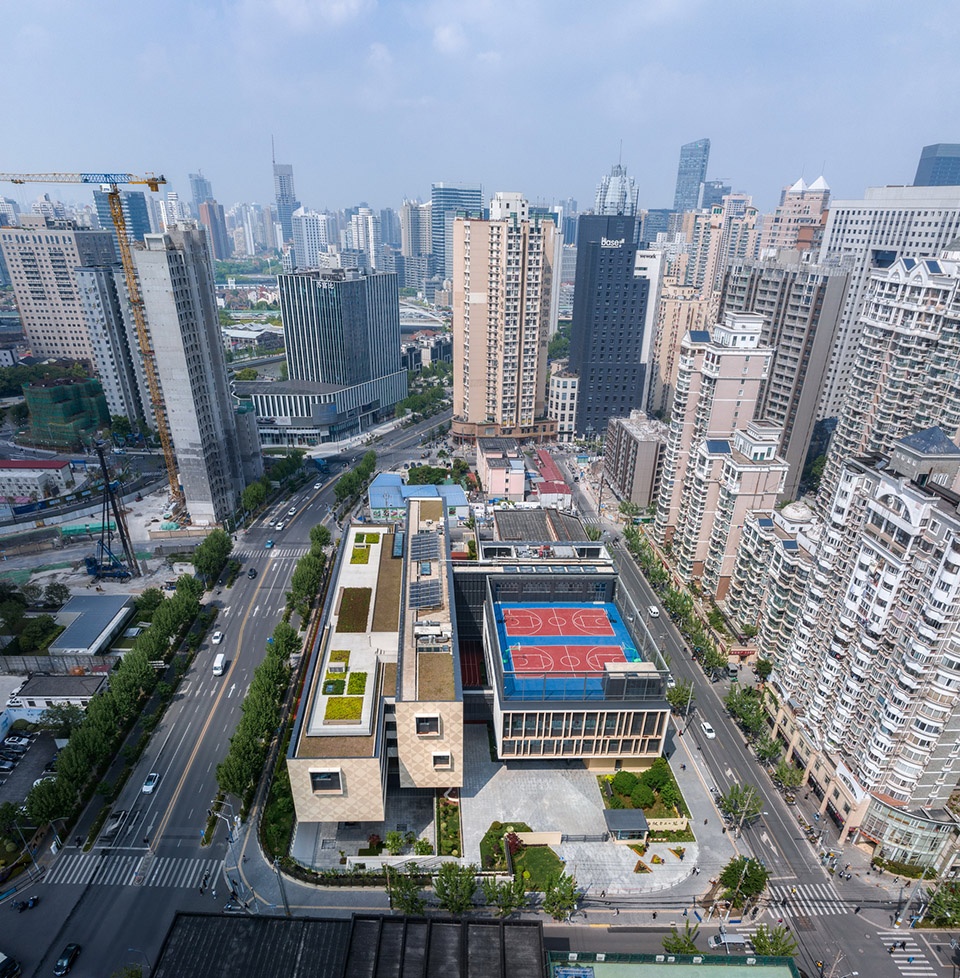
▼整体鸟瞰与周边环境,Aerial urban context view
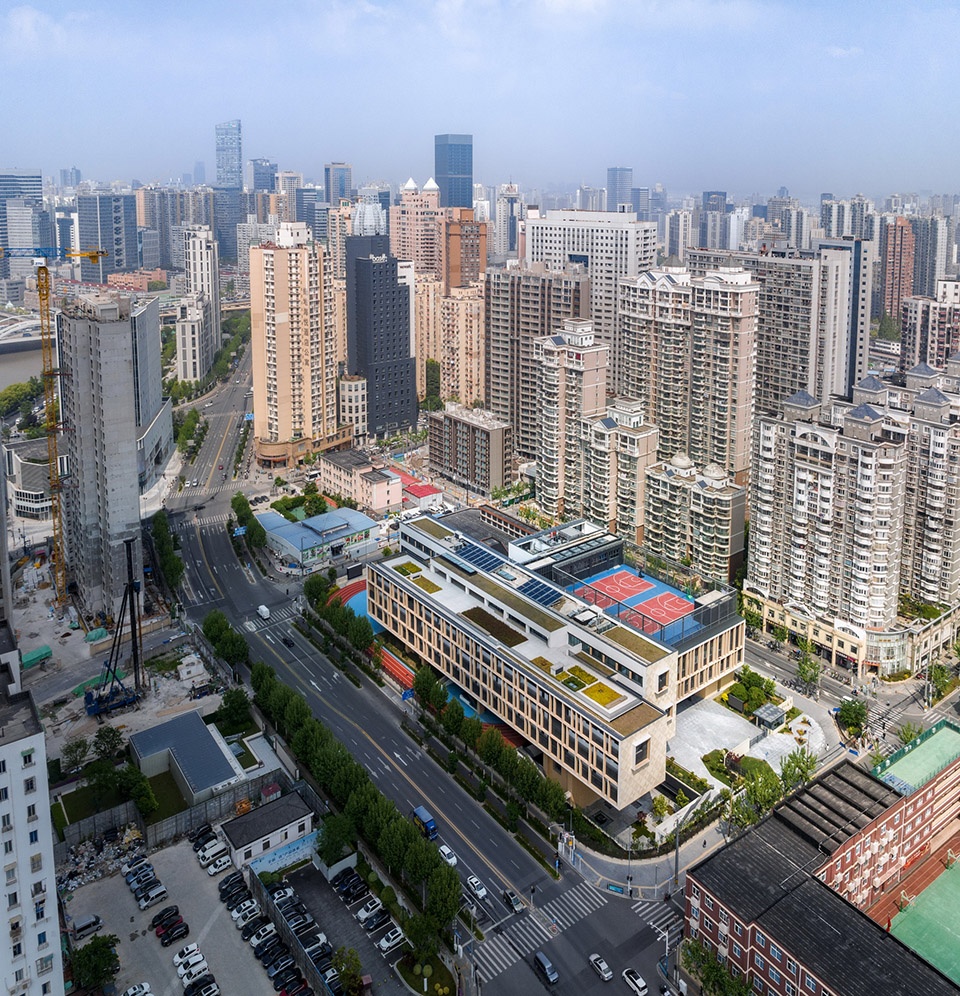
1.0穿越教学楼的环形操场 1.0 A Loop Track Passing Through the Teaching Building
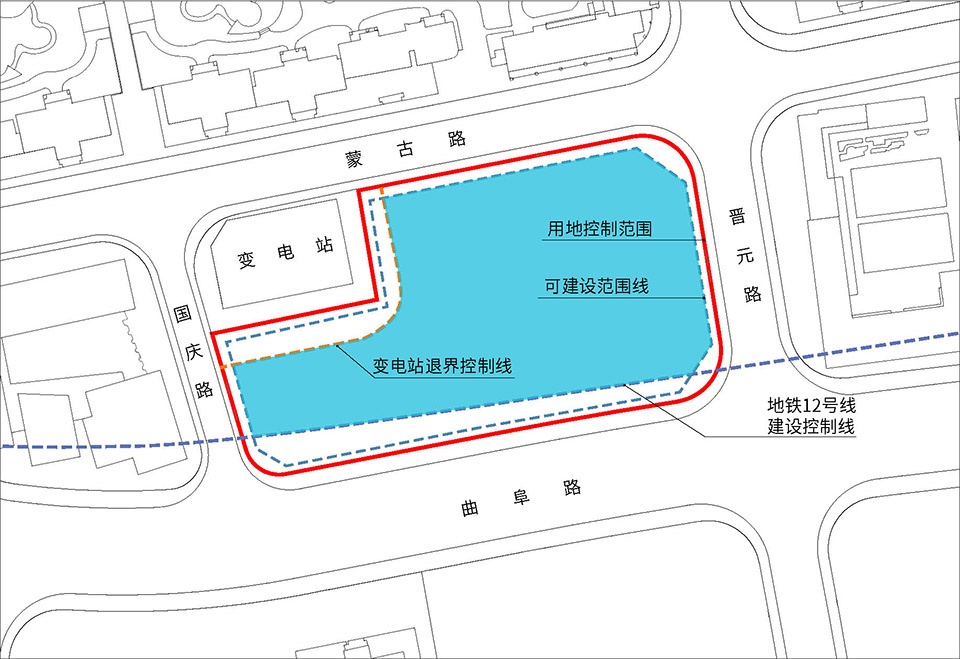
原本按计划要在地块内设置25班制的小学,然而对比上海市《普通中小学建设标准》发现,相对此教学规模来说用地面积严重不足。轨道12号线从基地南侧曲阜路经过,轨道建设控制线已经进入到该基地,建设要求在控制线范围内建筑结构不允许落地,因此,基地南侧部分面积使用也受到限制。基地西北方向有变电站,根据要求建筑布置与变电站距离至少需要间隔15米。受到变电站间距和地铁建设控制的限制,基地内的可建设范围被进一步缩小。
▼常规建设规模和现状对比,Comparative diagram of conventional construction scale and current status
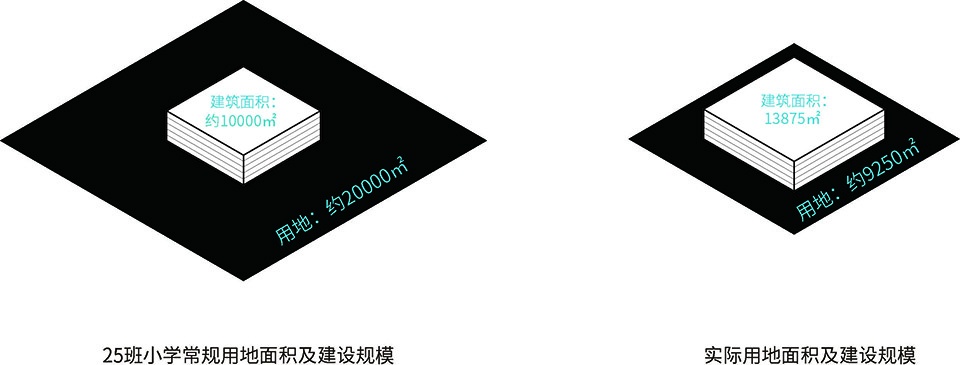
The original plan called for a 25-class primary school, but the “Construction Standards for General Primary and Secondary Schools” in Shanghai revealed a severe shortage of land. Moreover, Metro Line 12 runs along Qufu Road on the southern side, according to the subway construction regulations, no structures could be placed within the control zone. Additionally, a power substation to the northwest requires a minimum 15-meter setback. All these constraints significantly reduced the buildable area.
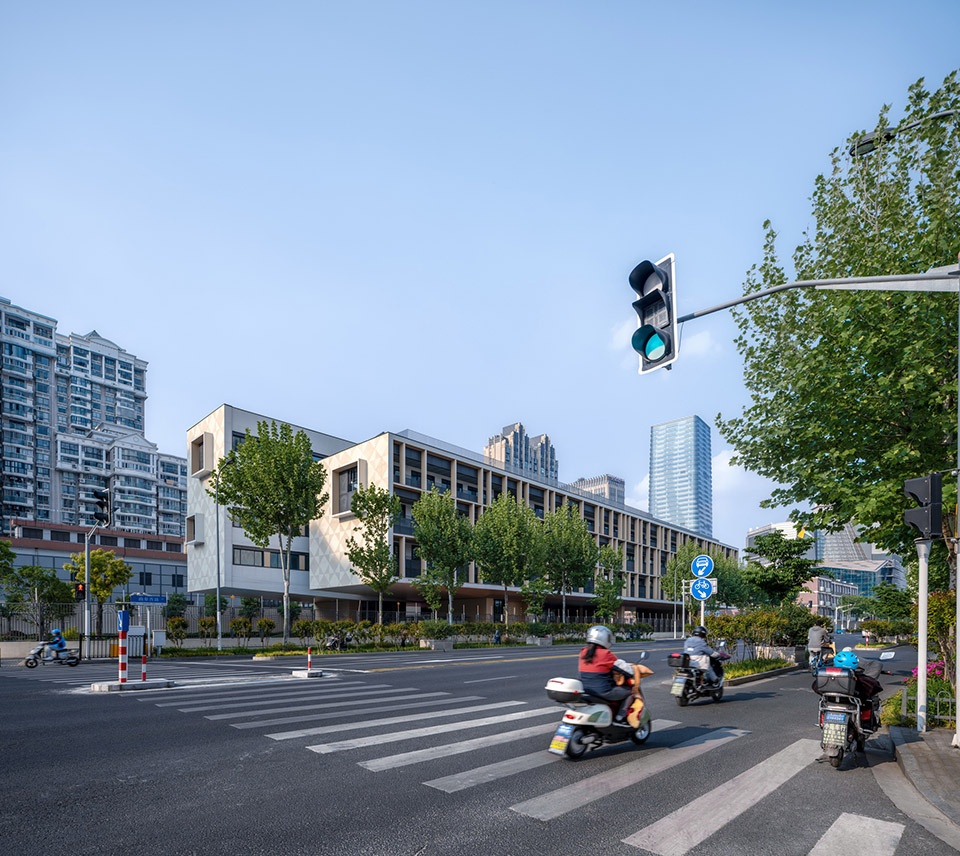
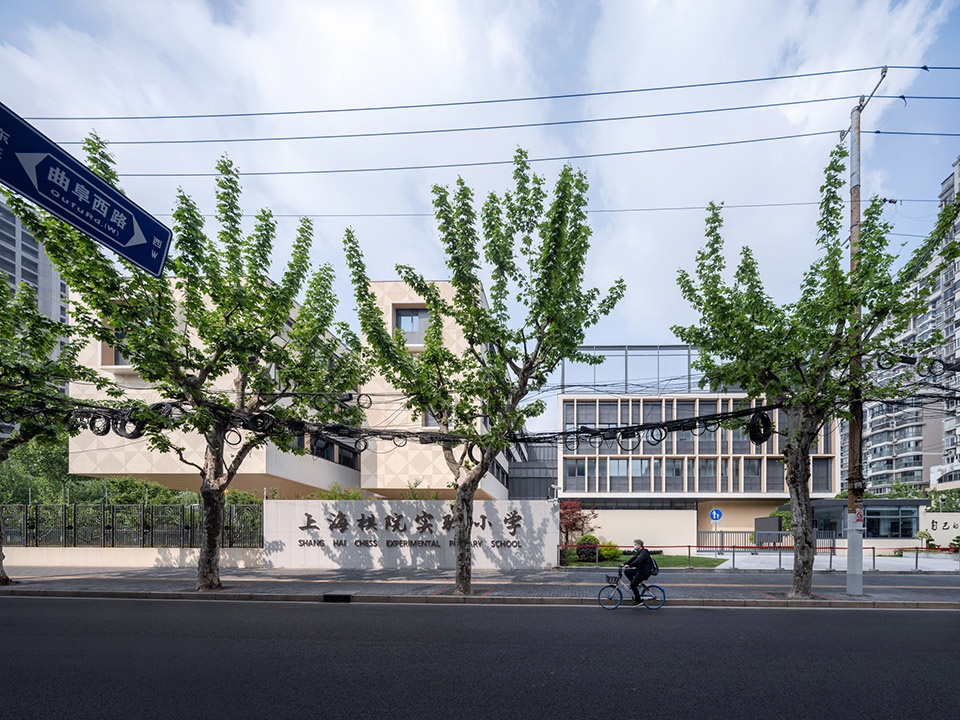
▼从曲阜路看向学校,View from Qufu road
另一个难点在于用地不大的新校区建设中,操场布局也将受到极大限制。第一,由于基地南北方向长度不大,无法布置南北向200米跑道;若是单纯考虑将200米跑到布置在地面,虽然可行,但是建筑面积将极大受限,场地空间局促,并不适合学校举办各项赛事活动;第二,若是将操场设置在屋顶,原则上也应控制在建设控制线范围内,但是各种尺度的 200米操场都无法满足要求。同时运动场地放置在屋顶,也难以布置升旗、课间操的场地。因此,集约型校园中常见的“屋顶操场”模式无法适用于该项目。
▼基地建设条件分析,Site constructionl analysis
▼跑道布置分析图,Playground arrangement analysis
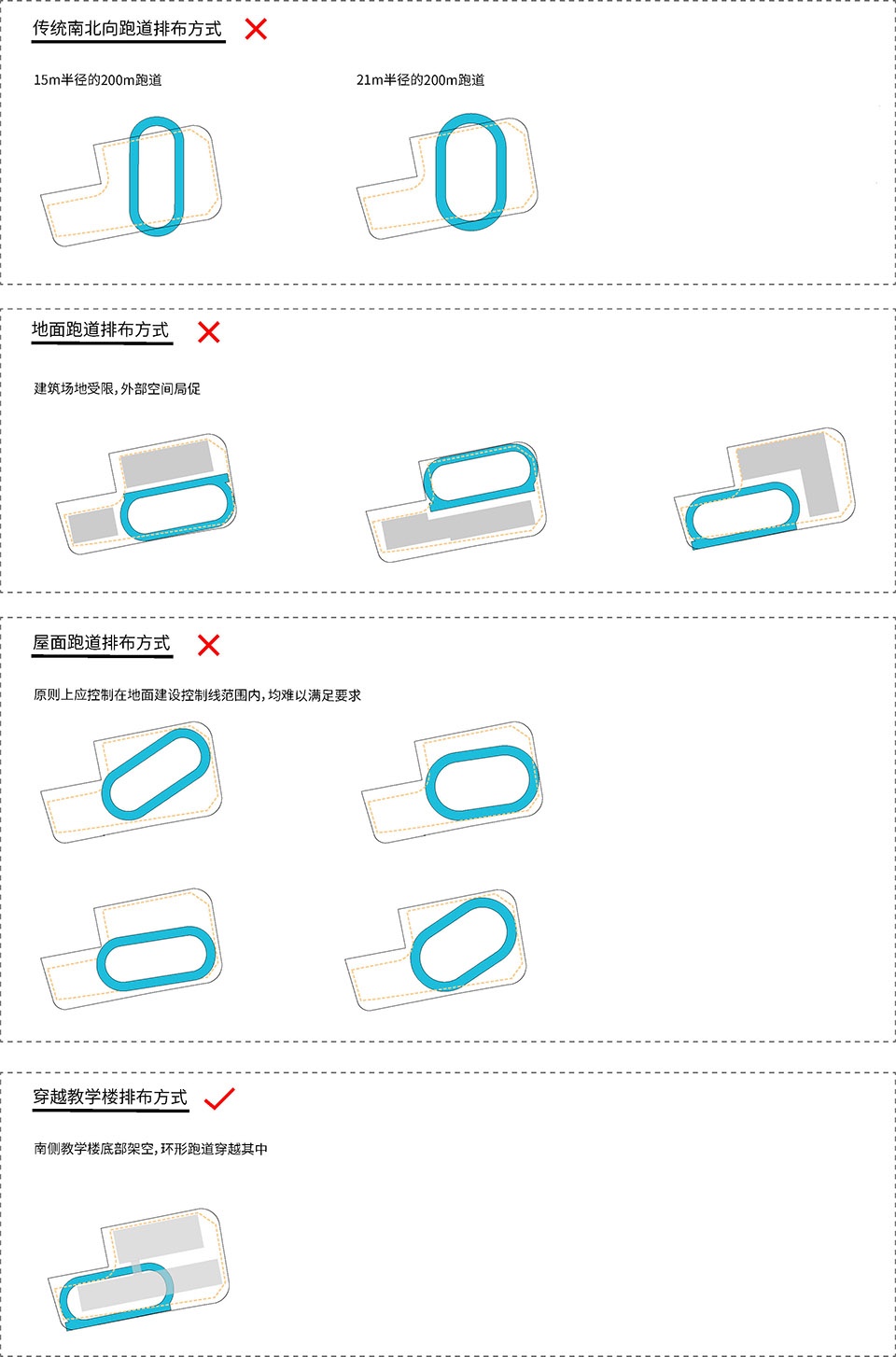
Another challenge was the layout of the playground on such a small site. Firstly, the north-south length was insufficient for a standard 200-meter track. If put it at the ground level, the building’s floor area would be severely restricted and leave the campus too cramped for various events. Conversely, a roof track would also have to stay within the construction control lines, with various proposals, no 200-meter track configuration meets the requirements. Furthermore, a roof track makes it difficult to organize flag-raising ceremonies and morning exercises. Thus, the common “roof track” model for intensive campuses was not applicable.
▼南侧沿街形象,South elevation street view
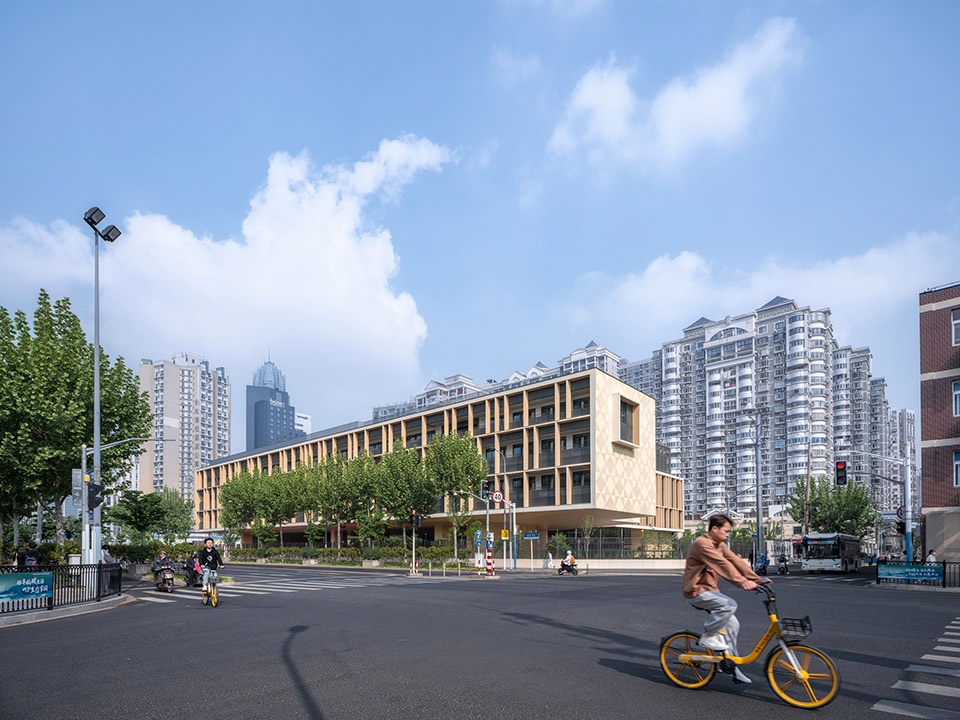
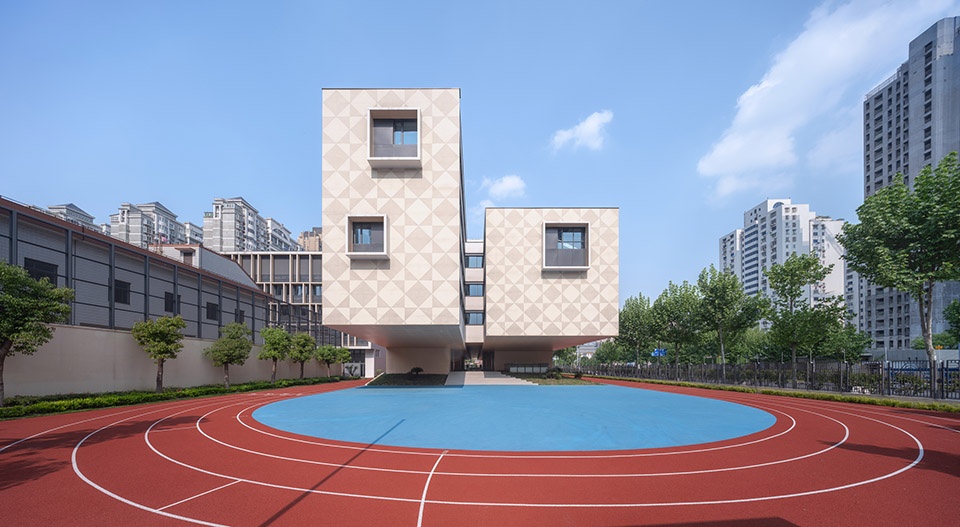
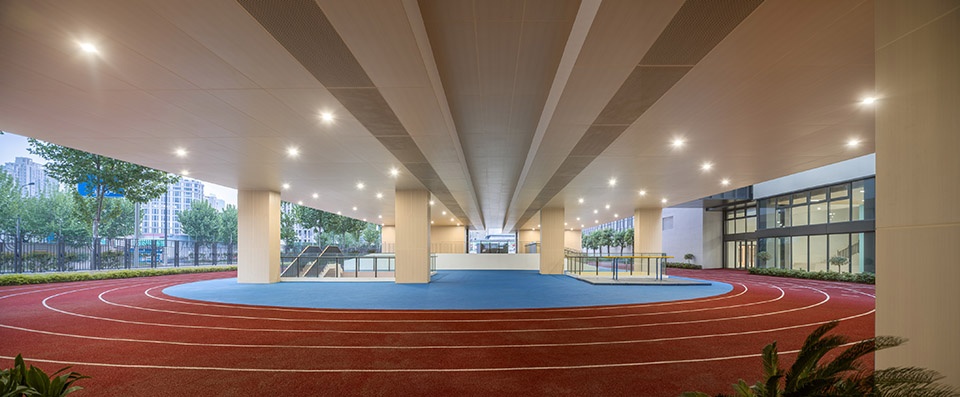
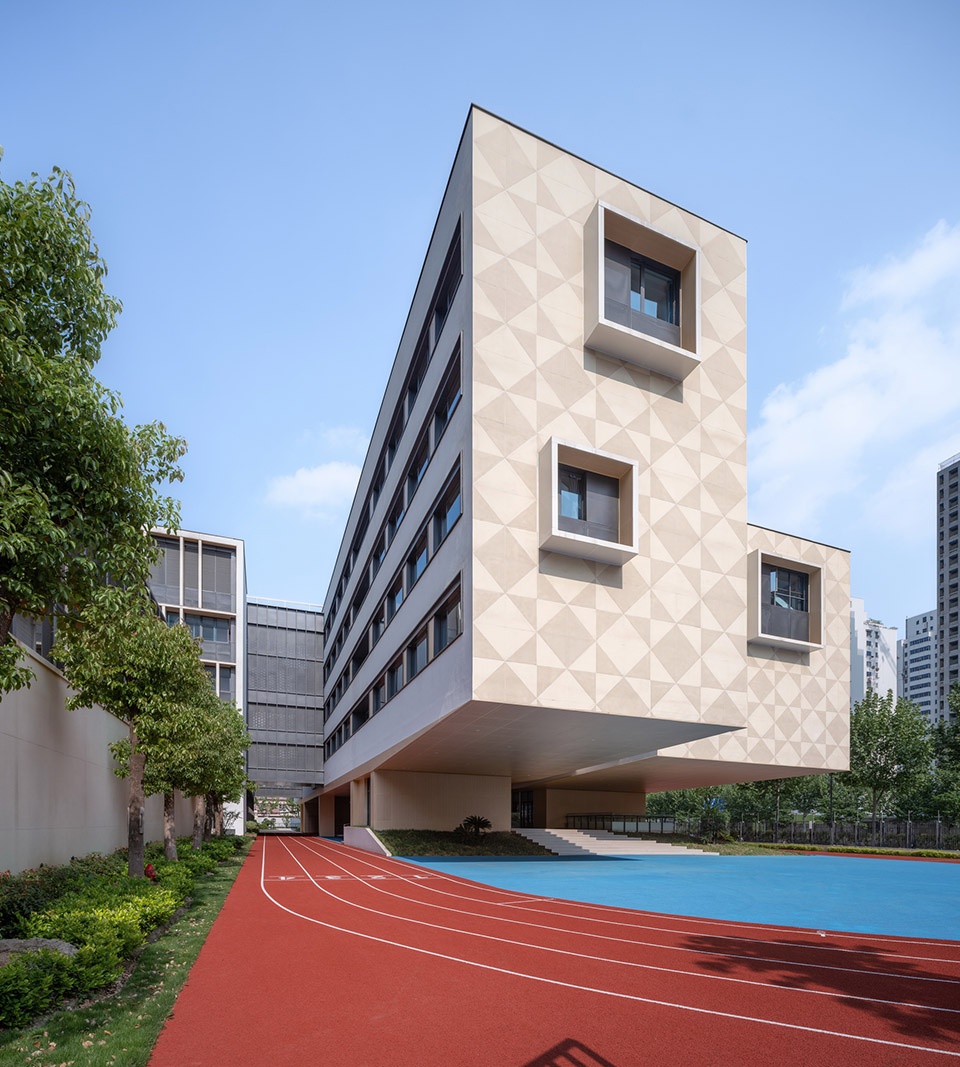
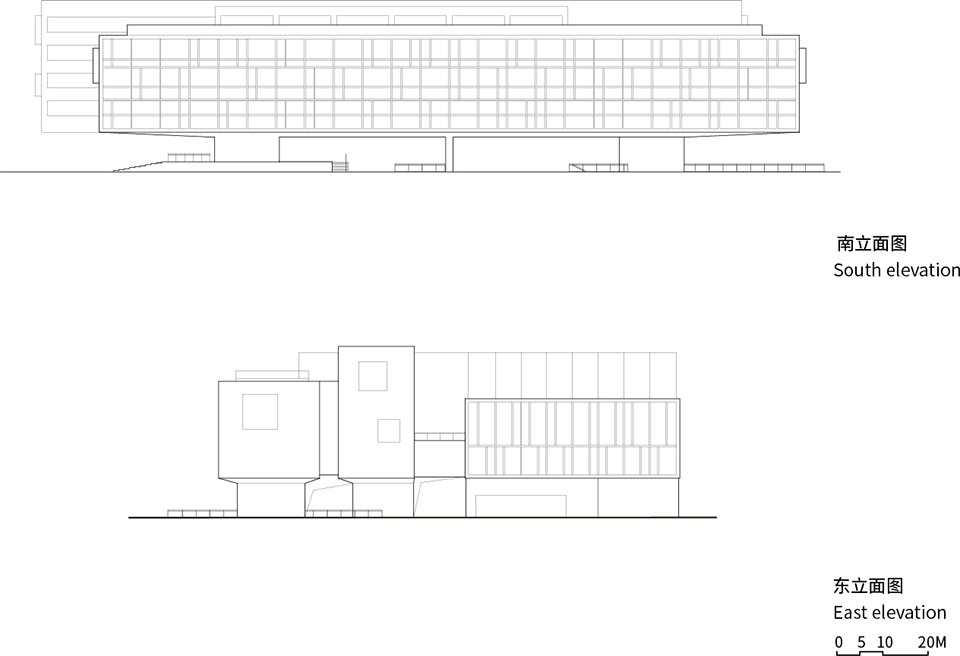
最后,设计还是结合“地铁建设控制线范围内建筑结构不落地”的结构布置找到了适合的布局方式。将南侧建筑整体架空,由四个紧邻控制线的大尺度结构筒支撑,教学楼两端大幅度出挑约16米,尽量释放南侧地面空间。架空之后,场地可布置200米跑道,架空层也吸纳了大半部分的活动噪音。结合西侧场地空间,可以举行升旗仪式、课间操等活动,并为运动会、开放日、社区活动等提供适宜的室外空间。架空层中部逐步抬升,围绕着四个结构筒设计了地景景观,作为休息空间和半室外活动场地,并为地下一层的棋类活动中心提供采光通风。架空层东部布置下沉广场,为地下餐厅提供良好的外部环境。至此,设计结合场地和操场布局,完成了建筑整体布局。
▼设计策略,Design strategy
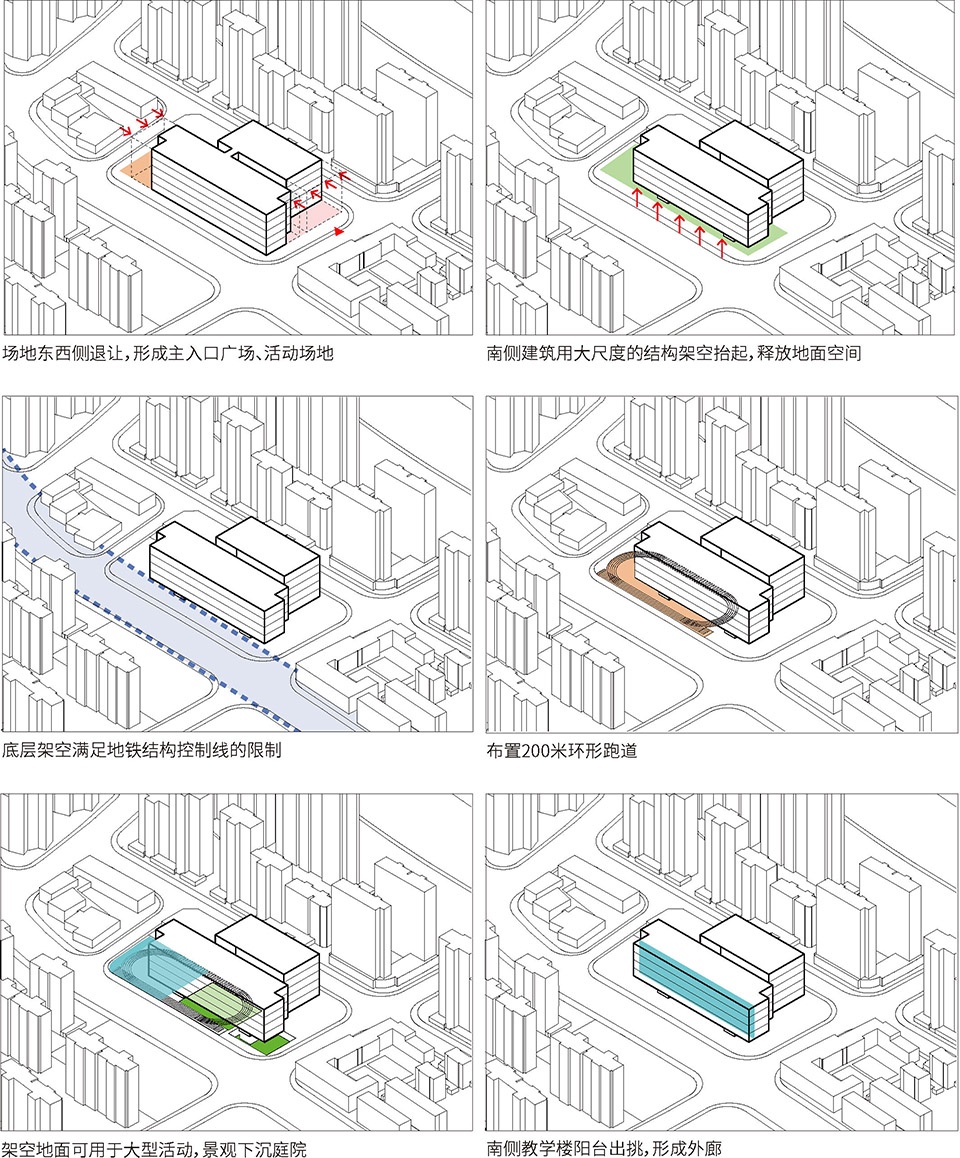
▼建筑整体布局,Overall building layout
Ultimately, the design found a suitable solution based on the rule “structures must be ground-detached within the metro control line.” The southern portion of the building is entirely elevated, supported by four large-scale structural cores adjacent to the control line. The teaching blocks cantilever approximately 16 meters at both ends, maximizing the ground space on the south side. This elevated design allows for fitting in a 200-meter track, while the overhead space could absorb much of the activity noise. Combined with the western site area, this space accommodates flag-raising ceremonies and morning exercises, providing suitable outdoor areas for sports meets, open days, and community activities. The central part of the elevated layer rises gradually, featuring a landscape designed around the four structural cores that serves as a lounge and semi-outdoor activity area. This area also provides light and ventilation for the underground chess center. To the east, a sunken plaza provides a high-quality external environment for the basement canteen. Thus, the overall architectural layout was finalized by integrating the site constraints with the track requirements.
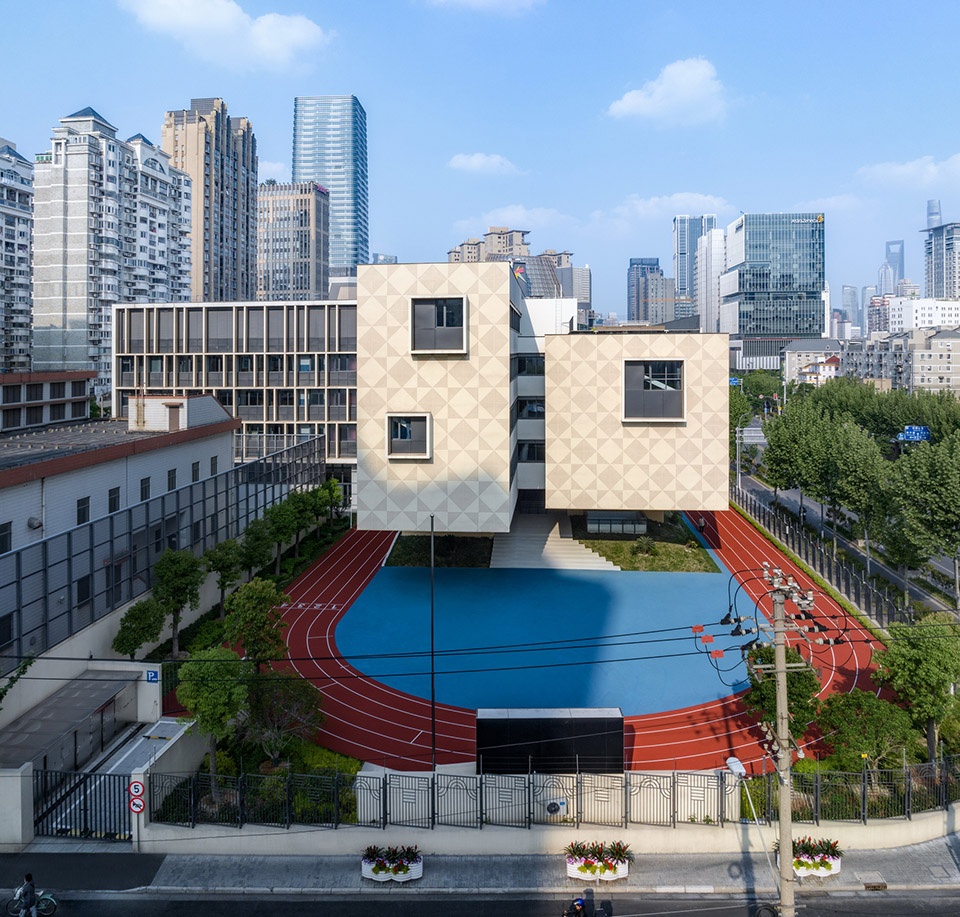
▼校园西侧立面,West elevation
▼北侧立面,North elevation
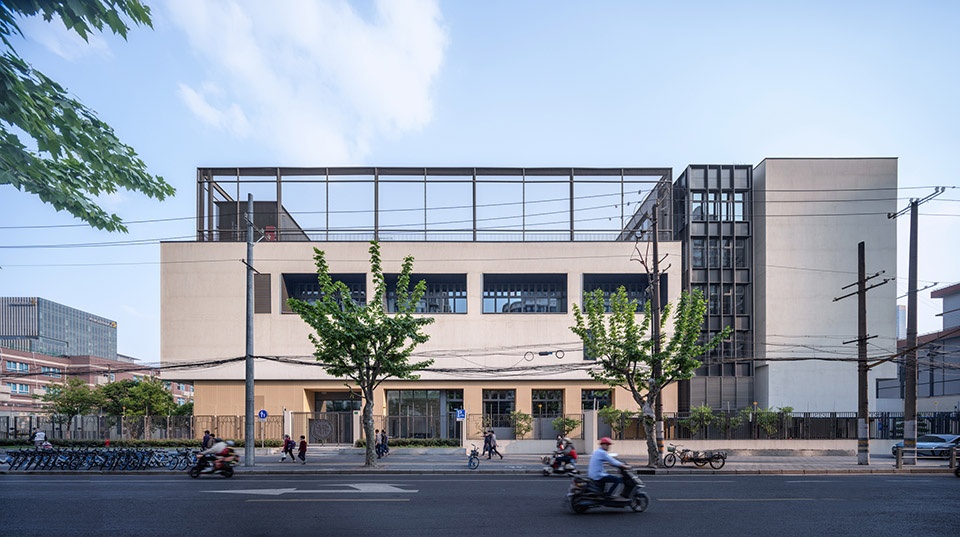
2.0集约高效的空间布局与开放流线 2.0 Intensive Layout and Open Circulation
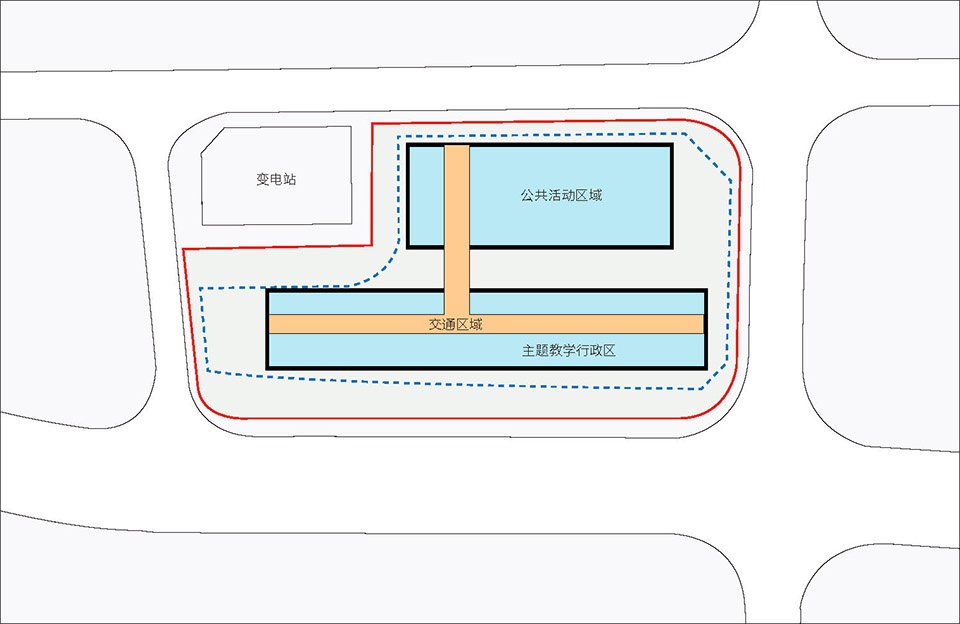
根据基地形状与基本建筑功能关系,我们将学校总体布局分为南北两部分:南侧为教学行政功能,北侧以体育馆为主的公共活动空间。南北区通过简洁的倒T型水平交通骨架串联。基地东侧退出场地作为学校主入口;西侧留出场地,作为地面活动空间。这样的布置可为南向教室争取最好的日照条件,也使得体育馆拥有鲜明的形象,对外提供社会服务。日常车行和货运则从北侧车行出入口进入地下停车区。
▼分区域管理使用,Zoned management and use
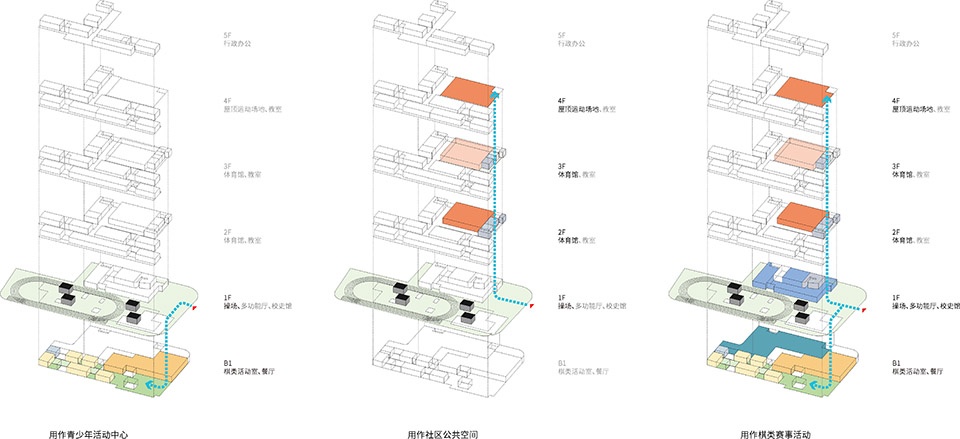
Based on the site shape and functional relationships, the overall layout is divided into two parts, the south for teaching and administration, and the north for public activity spaces centered around the gymnasium. These two zones are connected by a simple inverted T-shaped horizontal circulation spine. The building is set back from the eastern edge to create the main entrance, while the western side is reserved as ground-level activity space. This arrangement ensures optimal sunlight for south-facing classrooms and gives the gymnasium a distinct identity for community use. Daily vehicle and logistics traffic enters the underground parking via the northern entrance.
▼学校主入口,Main entrance
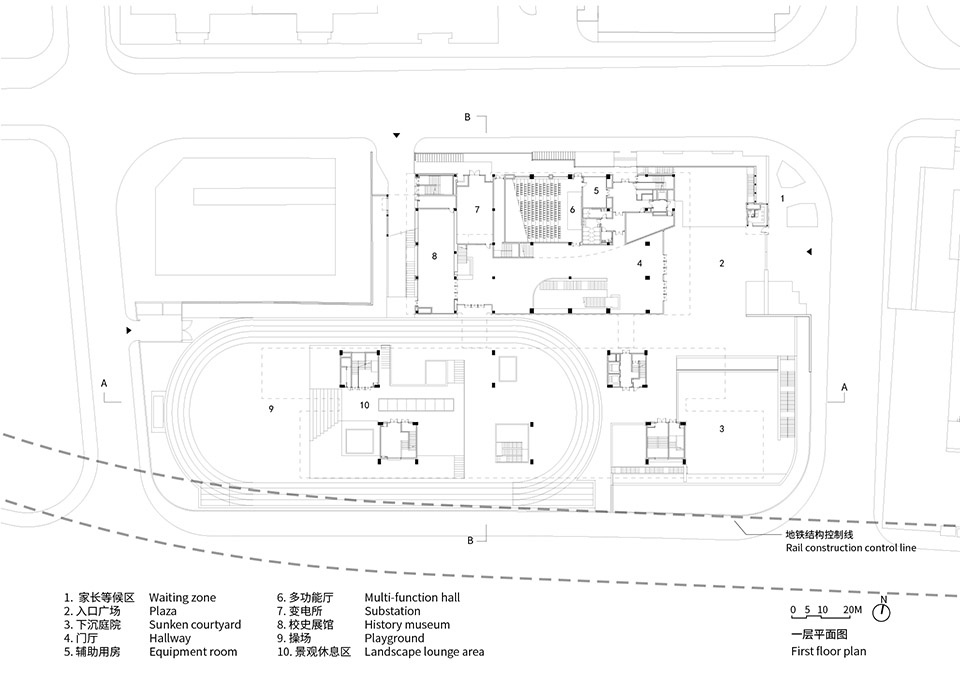
作为特色学校,棋院实验小学承担举办市级棋类比赛与社区活动,使用人群多样,包括校外青少年与附近居民。在如此高密度的空间里,如何高效、清晰地安排不同使用人群与活动流线显得至关重要。基地首层空间为此做了明晰的规划:从校园东入口广场进入,向西直行可进入北楼体育馆门厅,这里作为校园内日常教学活动使用最多、最为重要的公共空间之一,是前往本楼栋报告厅、体育设施空间,以及教学楼的必经之路。门厅内开放的大台阶,辅以空间视觉环境引导可以快速地与南侧教学楼层进行连通;校园入口广场以南,拾级而下可到达地下一层庭院,继而前往餐厅、棋类活动中心以及文印后勤等。
▼功能分区,Function zoning
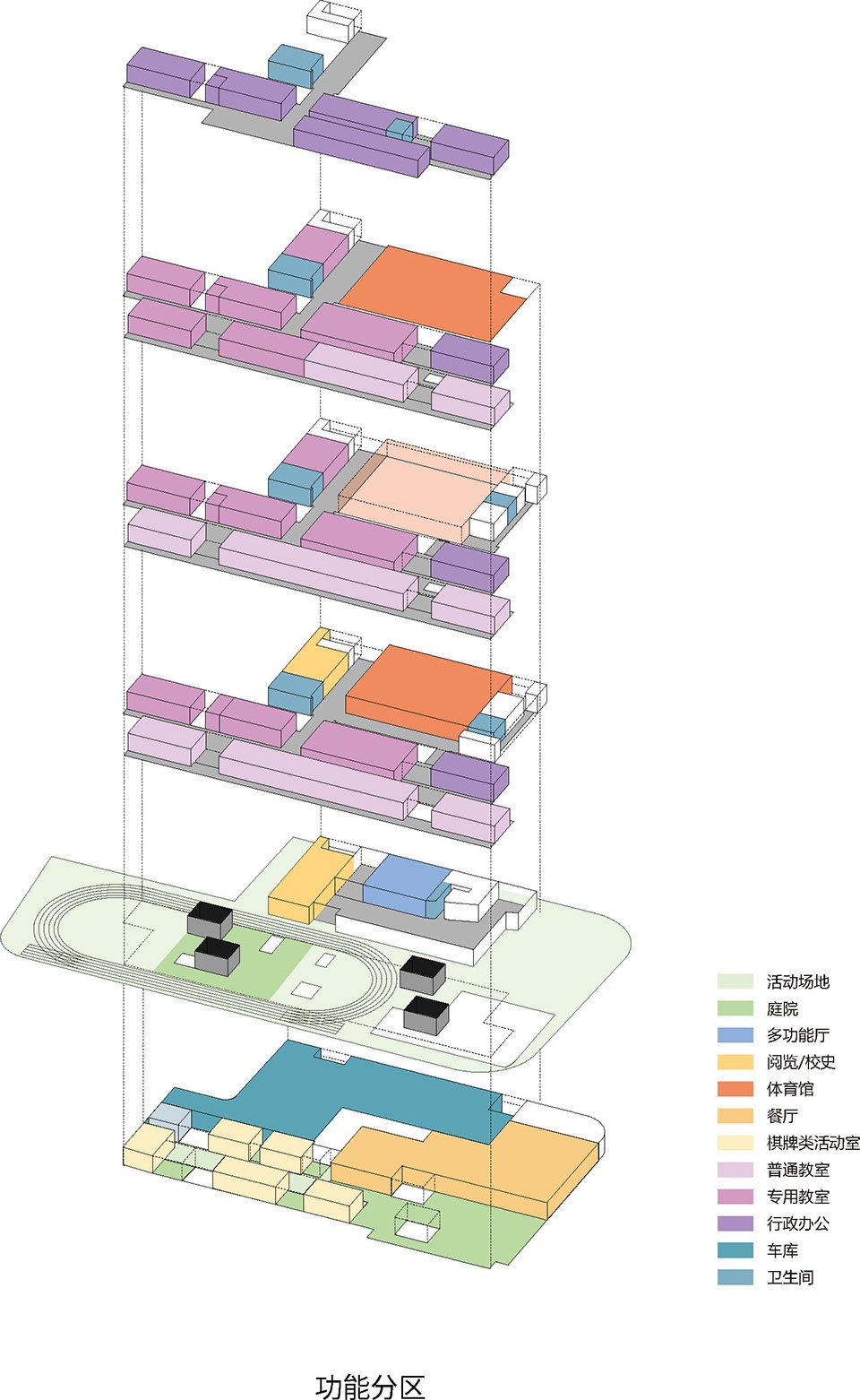
As a specialty school, Shanghai Qiyuan Experimental Primary School often hosts city-level chess competitions and community events, serving a diverse group of users including external youth and nearby residents. In such a high-density space, organizing efficient and clear circulation for different activities is vital. The ground floor is clearly planned. People enter from the eastern entrance plaza, then lead directly to the west to the gymnasium lobby in the north building. It serves as one of the most important public spaces for daily teaching, the primary route to the auditorium, sports facilities, and teaching areas. A large open staircase in the lobby, guided by visual cues, provides quick access to the southern teaching floors. South of the entrance plaza, steps lead down to a basement courtyard, providing access to the canteen, chess center, and back-of-house facilities.
▼环行操场,Loop track
▼体育馆门厅,Gymnasium Lobby
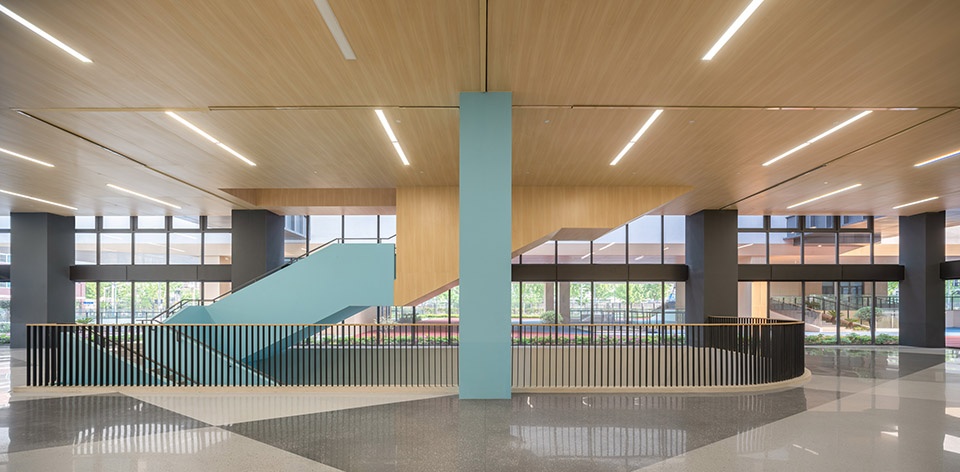
当学校作为青少年活动中心时,棋类活动中心可以通过东侧下沉庭院单独对外开放;当学校作为社区活动中心时,可通过北楼独立对外的出入口,单独使用北楼室内体育馆或屋顶活动场地;而当学校承办各种赛事时,可以仅封闭通向教学空间的通道,而开放剩余区域,不影响正常教学活动。
When serving as a youth activity center, the chess center can be opened independently via the eastern sunken courtyard. When used as a community center, the gymnasium or roof activity space can be accessed through a separate entrance in the North Wing. During major competitions, the passages to the teaching areas can be closed while the rest of the campus remains open, those competitions will not disrupt regular classes.
▼底层架空活动区,Elevated activity area at ground level
3.0 棋类特色学校的专项空间设计 3.0 Specialized Design for a Chess-Themed School
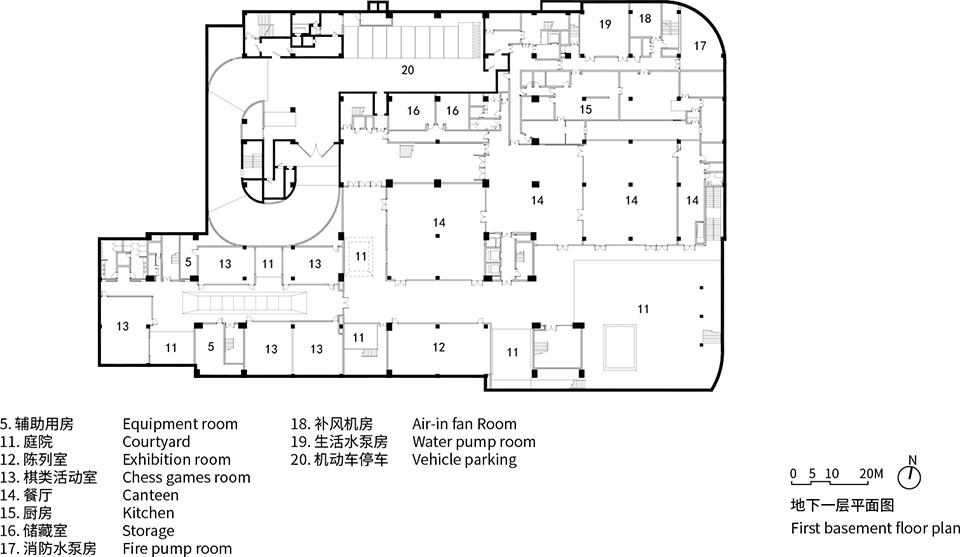
位于南侧教学楼地下一层的棋类活动中心作为承接各类活动的核心空间,是整个学校设计的一大重点。我们将棋类活动中心设于地下,一方面考虑到使用人群多样,希望该空间相对独立;另一方面也是基于现有基地狭小,无法在首层地面划分出单独区域。棋类活动中心位于地下走廊的西南尽端,共有5个教室,并伴有大小不一的采光庭院,公共走廊中部上方开条状采光天井,正对地面架空层西侧,光线通过采光窗的木制贴面柔和地渗入室内。活动中心地面选用小尺度棋盘格灰白瓷砖,营造出竞技比赛的特有氛围。
The Chess Activity Center in the basement of the South Wing, is the core space for various events, also a highlight for the design. Why put it? It is necessary to keep it independent for diverse users, while the ground-level area is not enough. Situated at the southwest end of the corridor, the center features five classrooms, accompanied by light courtyards of varying sizes. A linear skylight above the central corridor aligns with the western elevated area, light filters softly through wood-paneled windows. The flooring uses small-scale checkered grey and white tiles to evoke the atmosphere of chess competition.
▼室外活动场地,Outdoor activity area
▼下沉庭院,Sunken garden
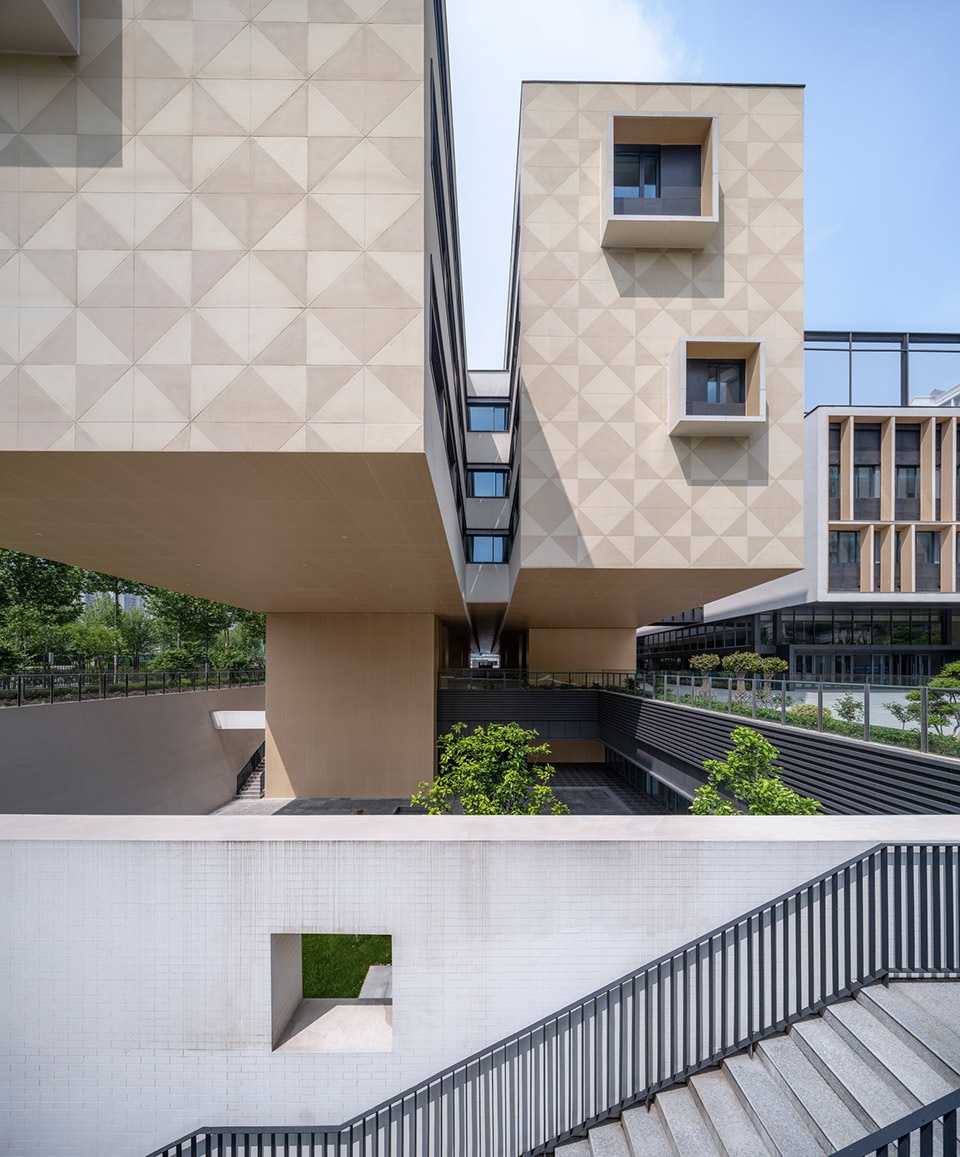
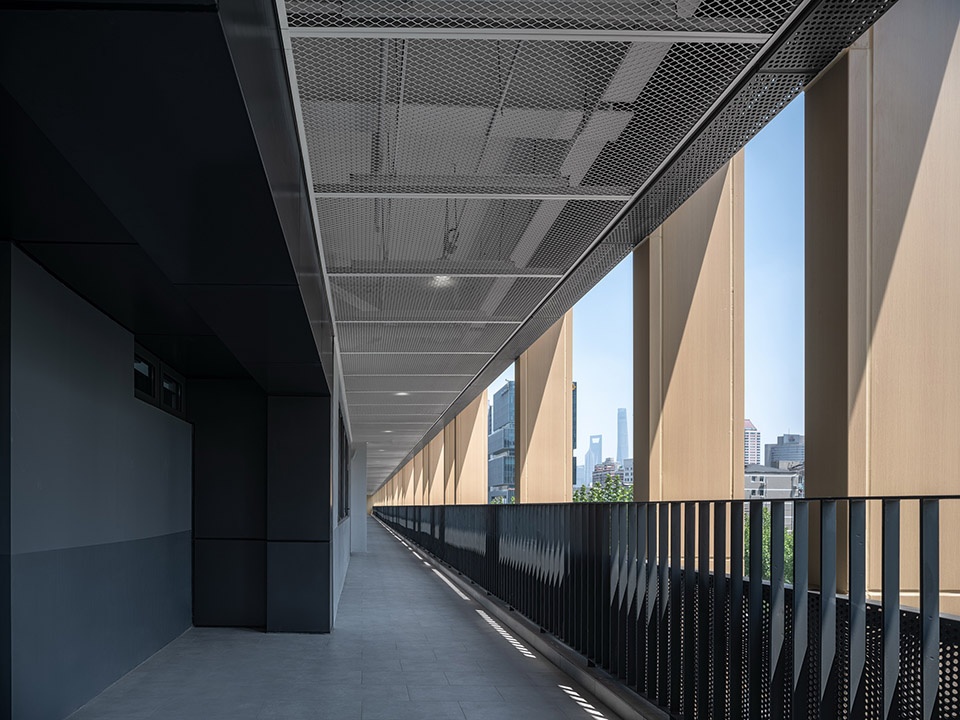
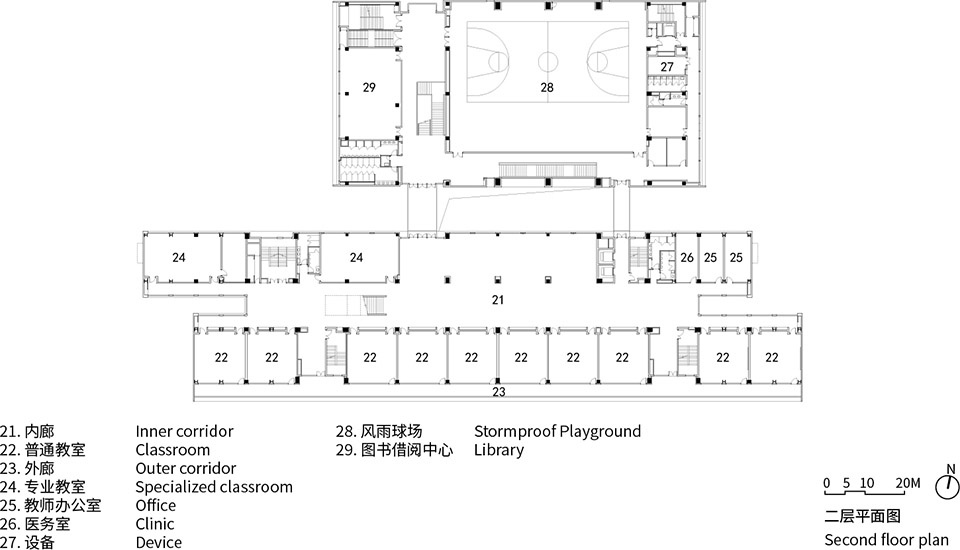
南侧教学楼由东西向的两长条形体并置,端部稍有错位,优化了两侧教室的采光。楼内设有东西向长廊,既是交通空间也是公共交流空间。内廊南面连接普通教室,北面连接专业教室以及行政办公。南面普通教室向南挑出3米,形成活动性的外廊空间,大大丰富了学生们的课间活动。教学楼西侧立面,暖黄色陶土砖提炼了棋盘元素,深浅相间的砖面如同跳动的棋盘。
The southern teaching building consists of two parallel long volumes, slightly offset at the ends to optimize daylighting. An east-west corridor serves as both a circulation path and a public space. The southern classrooms connect to a 3-meter-wide cantilevered balcony, providing vibrant outdoor space for students during breaks. On the western facade, warm yellow terracotta bricks evoke the elements of a chessboard, with alternating shades creating a rhythm.
▼下沉活动场地,Sunken activity area
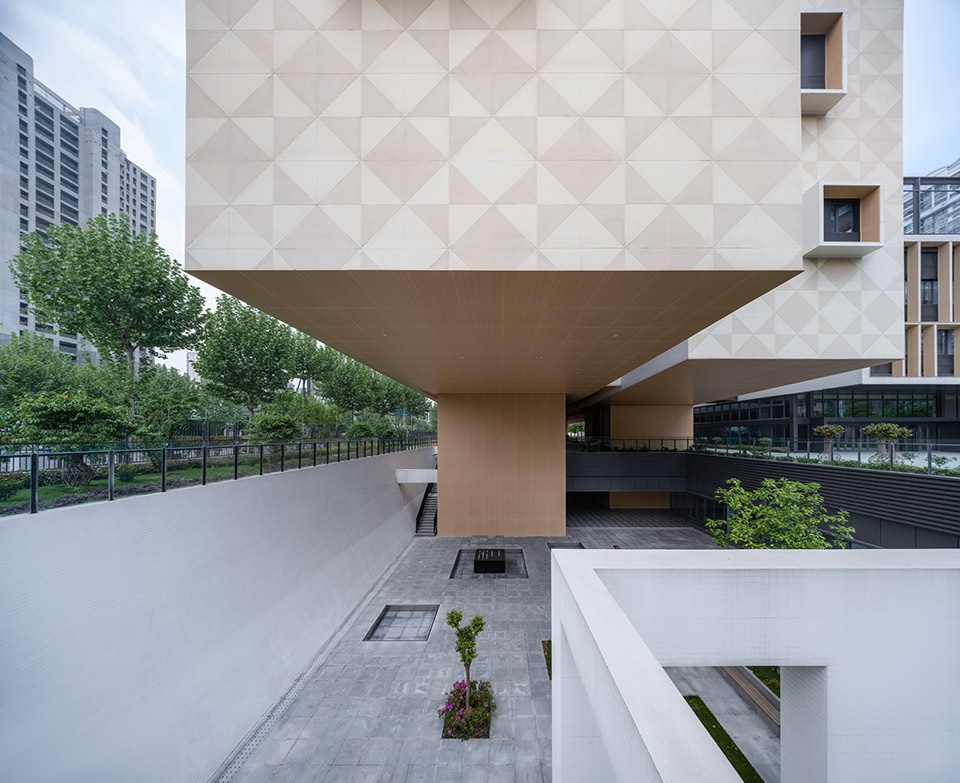
▼半室外活动空间,Semi-outdoor activity area
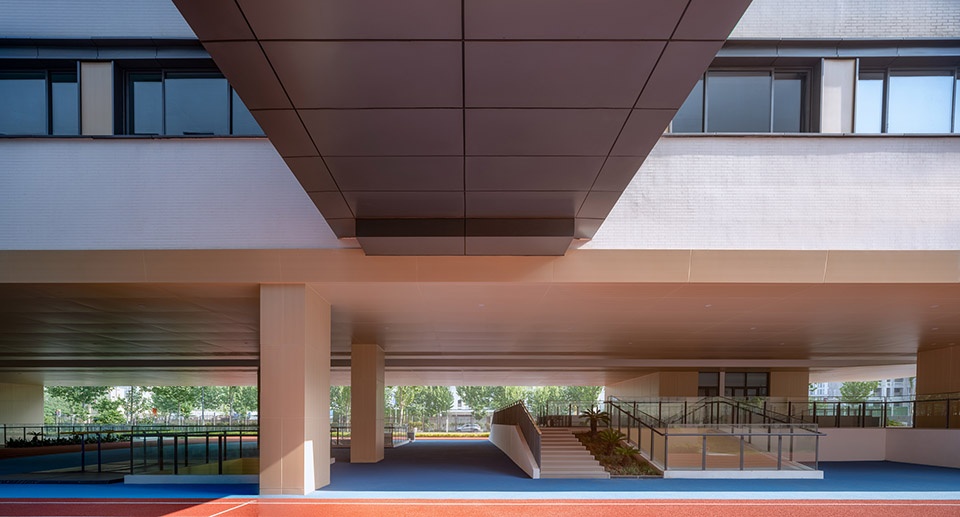
在高密度城市环境中,项目外部条件多变、复杂,棋院实验小学是外界极端条件与内部独特需求协同作用的产物。项目也进一步凸显多系统平衡协调的设计思维重要性,这也是阿科米星“改变中的城市建筑学”实践经验的结果。
In a high-density urban context, projects often face variable and complex external conditions. Shanghai Qiyuan Experimental Primary School project is a product of the synergy between extreme constraints and unique internal needs. This project further highlights the importance of design thinking that balances and coordinates multiple systems, an approach cultivated through Atelier Archmixing’s practices and explorations of ” urban architecture in change.”
▼教学楼外廊,building outdoor corridor
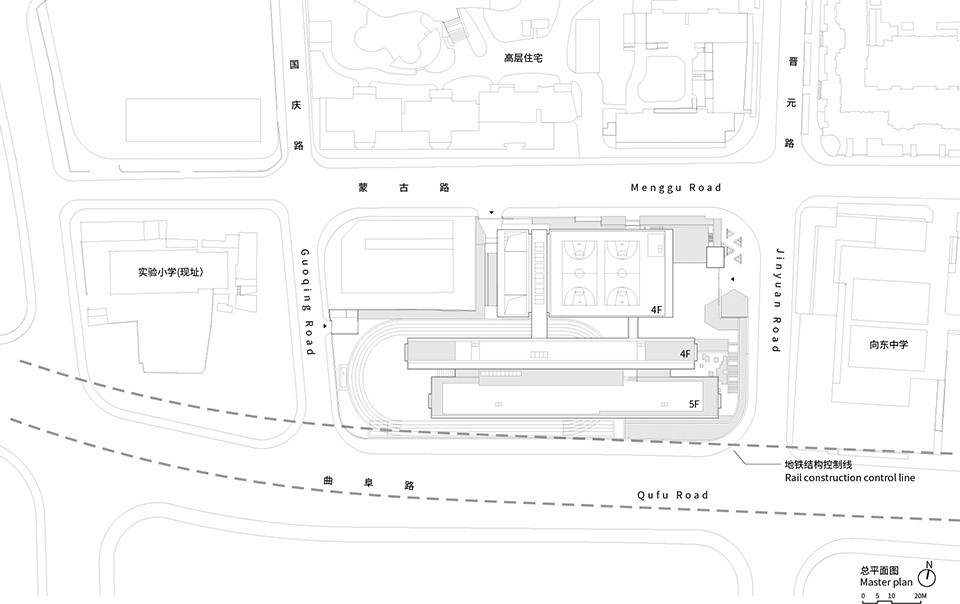
▼总平面图,Masterplan
▼一层平面图,First floor plan
▼二层平面图,Second floor plan
▼地下一层平面图,First basement plan
▼立面图,Elevations
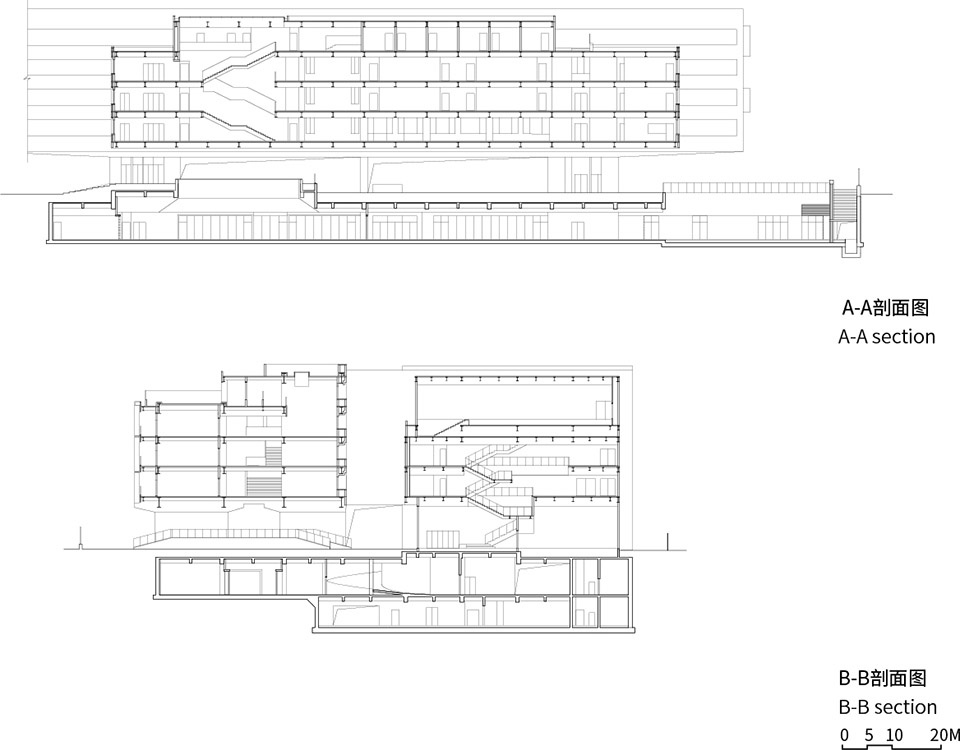
▼剖面图,Sections
Project name: Shanghai Qiyuan Experimental Primary School
Project type:Education
Design:Atelier Archmixing / Zhuang Shen, Ren Hao, Tang Yu, Zhu Jie
Website:http://www.archmixing.com/home
Contact e-mail:archmixing@126.com
Design year:2017
Completion Year:2022
Leader designer:ZHUANG Shen, ZHU Jie
Team:ZHENG Yong, LI Lide, QIU Mei, LI Jiahong, DENG Jian, SUN Quan, ZHANG Jie, CHEN Pengyu, LIU Qian, DU Qingxian, XU Xiaomai, HAN Kailun, KONG Ruiqing, WANG Yiyu, HUANG Ting, TANG Meng, WANG Jian, WU Jiaqin, JIANG Jinyi
Project location: Intersection of Qufu West Road and Jinyuan Road, Jing’an District, Shanghai
Gross built area: 25080 ㎡
Photo credit: WU Qingshan
Partner: /
Clients:Jing’an District Education Bureau, Shanghai
Structural design:Tongji Architectural Design (Group) Co., Ltd
Landscape:Atelier Archmixing,Tongji Architectural Design (Group) Co., Ltd.
Interior:Atelier Archmixing
Facade engineering:Tongji Architectural Design (Group) Co., Ltd.
Constructor: China Construction Eighth Engineering Division Corp., Ltd.
Materials:Terrazzo,Paint and Real Stone Paint,External Wall Aluminum Panels,Aluminum Alloy Doors and Windows
Brands:Suzhou Guyu New Material Technology Co., Ltd.,Shanghai Huili Paint Co., Ltd.,Jiangsu Sono Decoration Group Co., Ltd.