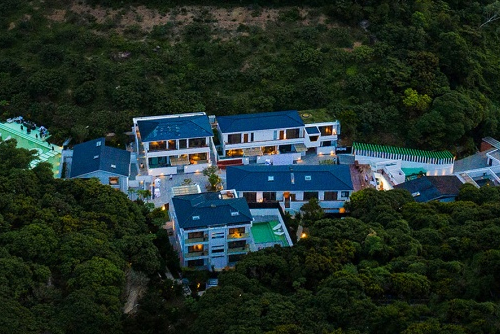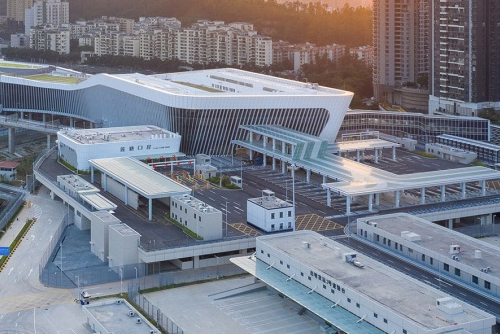
离荒岛COFFEE · 雨林宿集店,西双版纳 / 杭州观堂室内设计有限公司
藏身雨林的精神离岛 The Spiritual Islet Hidden in the Rainforest
在西双版纳这片恒春雨林之中,我们意在建造一座开放的建筑,呈现一种自然的状态 –让空间回归,让内心回归。这里不是一间普通的咖啡馆,而是一座藏身雨林的精神离岛。
In this evergreen rainforest of Xishuangbanna, we aim to build an open structure, presenting a natural state – allowing the space to return, and allowing the heart to return. This is not an ordinary coffee shop; it is a spiritual islet hidden in the rainforest.
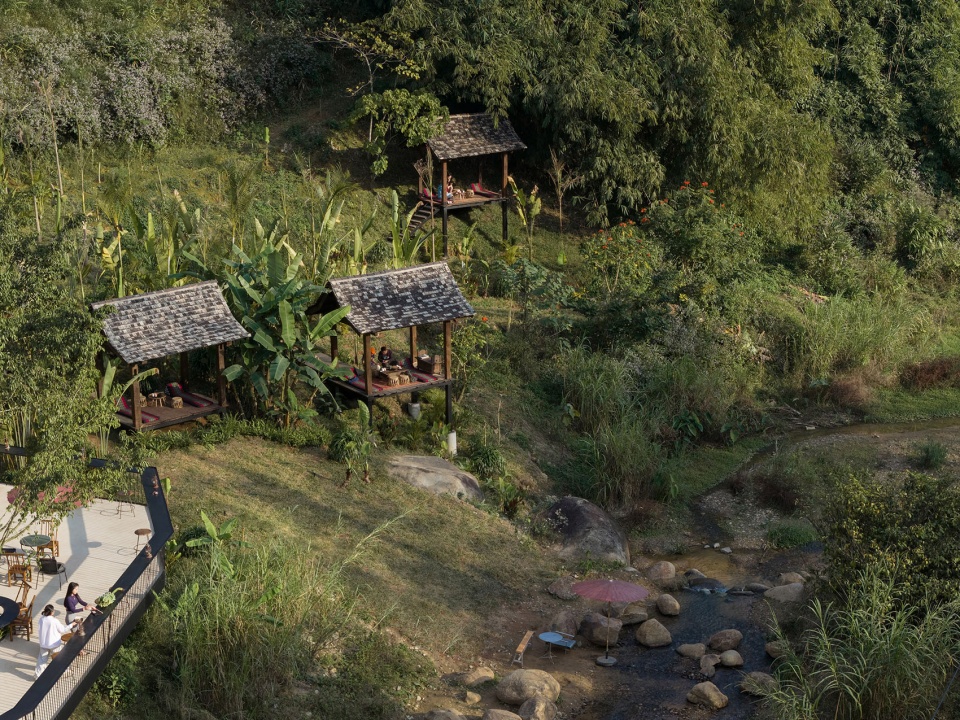
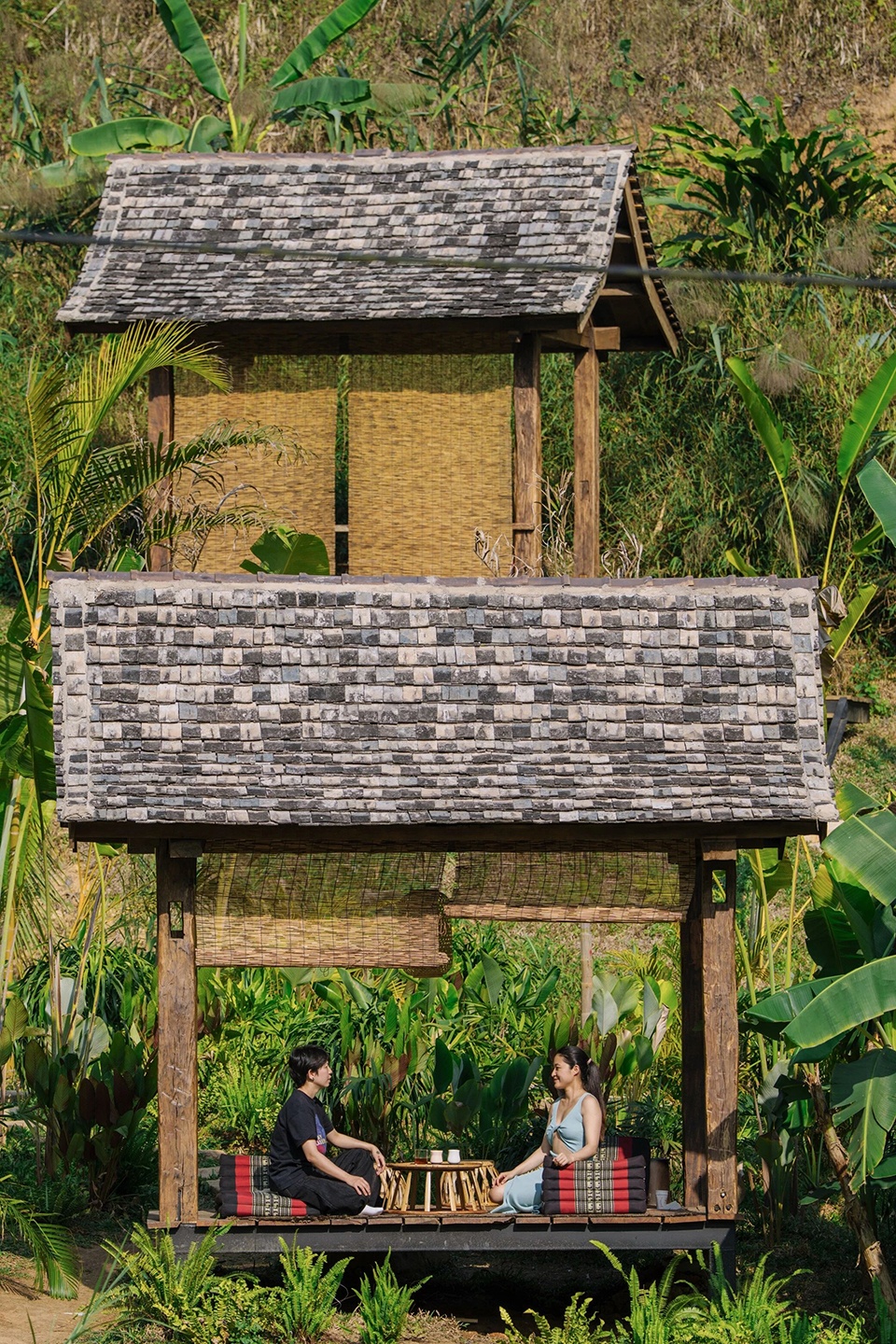
▼充满热带雨林风情的傣亭,The Dai Pavilion with tropical rainforest charm
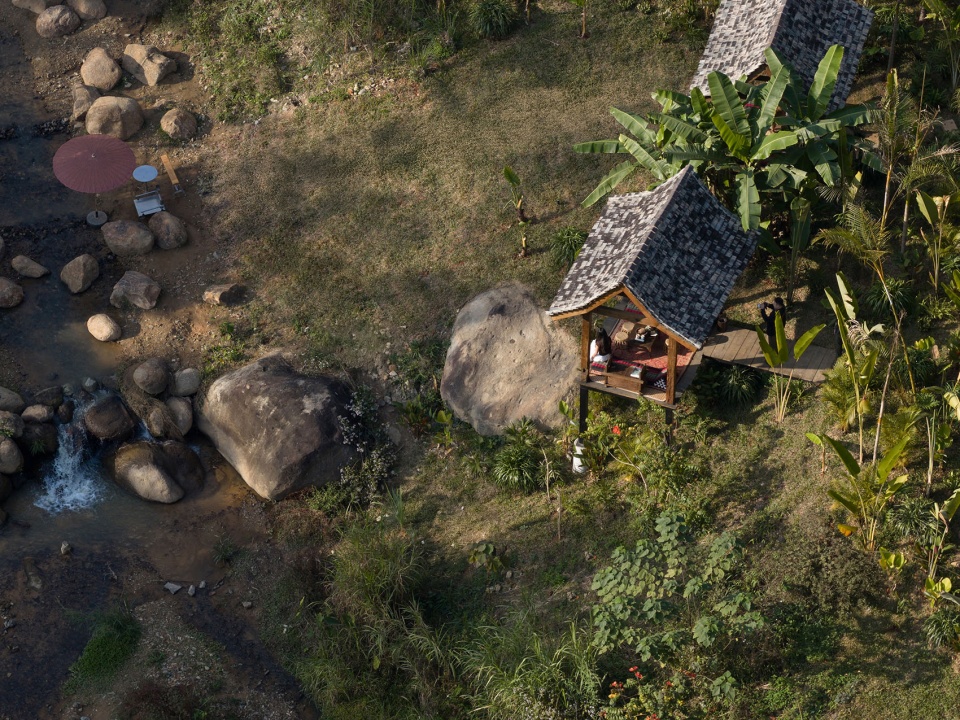
▼傣亭近景,The Dai Pavilion close view
离荒岛COFFEE,从沙漠到雨林 Remote Island COFFEE — from Desert to Rainforest
离荒岛COFFEE,2023年由华正文旅董事长陈祖品先生与品牌负责人阿猫共同创立。首店位于宁夏中卫腾格里的TENGOL沙漠度假酒店,以冰镇咖啡在一望无际的炎热沙漠中呈现而迅速出圈。2025年,离荒岛跟随华正文旅的步伐来到西双版纳,共同打造热带雨林宿集。西双版纳傣族自治州,位于中国西南边陲,与缅甸老挝接壤,高温多雨,干湿分明,是中国唯一的热带雨林保护区。西双版纳拥有十三个民族,五种宗教,人文气息浓厚,以酸辣鲜为特点的傣味饮食更是自成体系。离荒岛来到雨林,珍视在地文化,追求对自然和社群的理想,通过咖啡介质,将热带雨林的人文、宗教、气候一并融进豆子里,这不仅是商业上的布局,更是对地域文化和生态环境的深刻尊重。
▼起源于沙漠的离荒岛COFFEE,
Remote Island Coffee originated from the desert
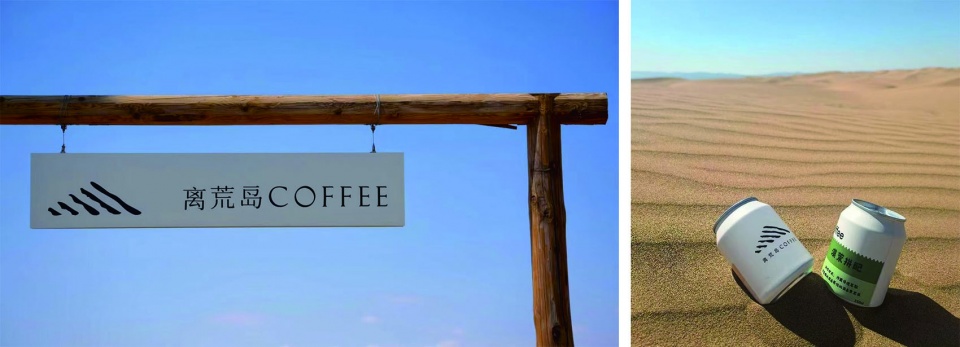
Remote Island COFFEE was founded in 2023 by Chen Zuping, the chairman of Huazheng Tourism and Culture, and the brand manager A Miao. The first store is located at the TENGOL Desert Resort Hotel in Zhongwei, Ningxia, where the chilled coffee quickly gained popularity in the vast and scorching desert. In 2025, Remote Island Coffee followed the footsteps of Huazheng Tourism and Culture to Xishuangbanna, jointly creating a tropical rainforest accommodation complex. Xishuangbanna Dai Autonomous Prefecture is located in the southwestern border of China, bordering Myanmar and Laos. It has high temperatures and abundant rainfall, with distinct dry and wet seasons. It is China’s only tropical rainforest reserve. Xishuangbanna has thirteen ethnic groups and five religions, with a rich cultural atmosphere. The Dai-style cuisine, characterized by its spiciness and freshness, has its own unique system. When Remote Island Coffee comes to the rainforest, it cherishes the local culture and pursued ideals for nature and communities. Through coffee as a medium, it integrated the humanistic, religious and climatic elements of the tropical rainforest into the beans. This is not only a business strategy but also a profound respect for regional culture and the ecological environment.
▼离荒岛入口的旅人蕉小径,
The traveler’s path leading to the entrance of the Remote Island
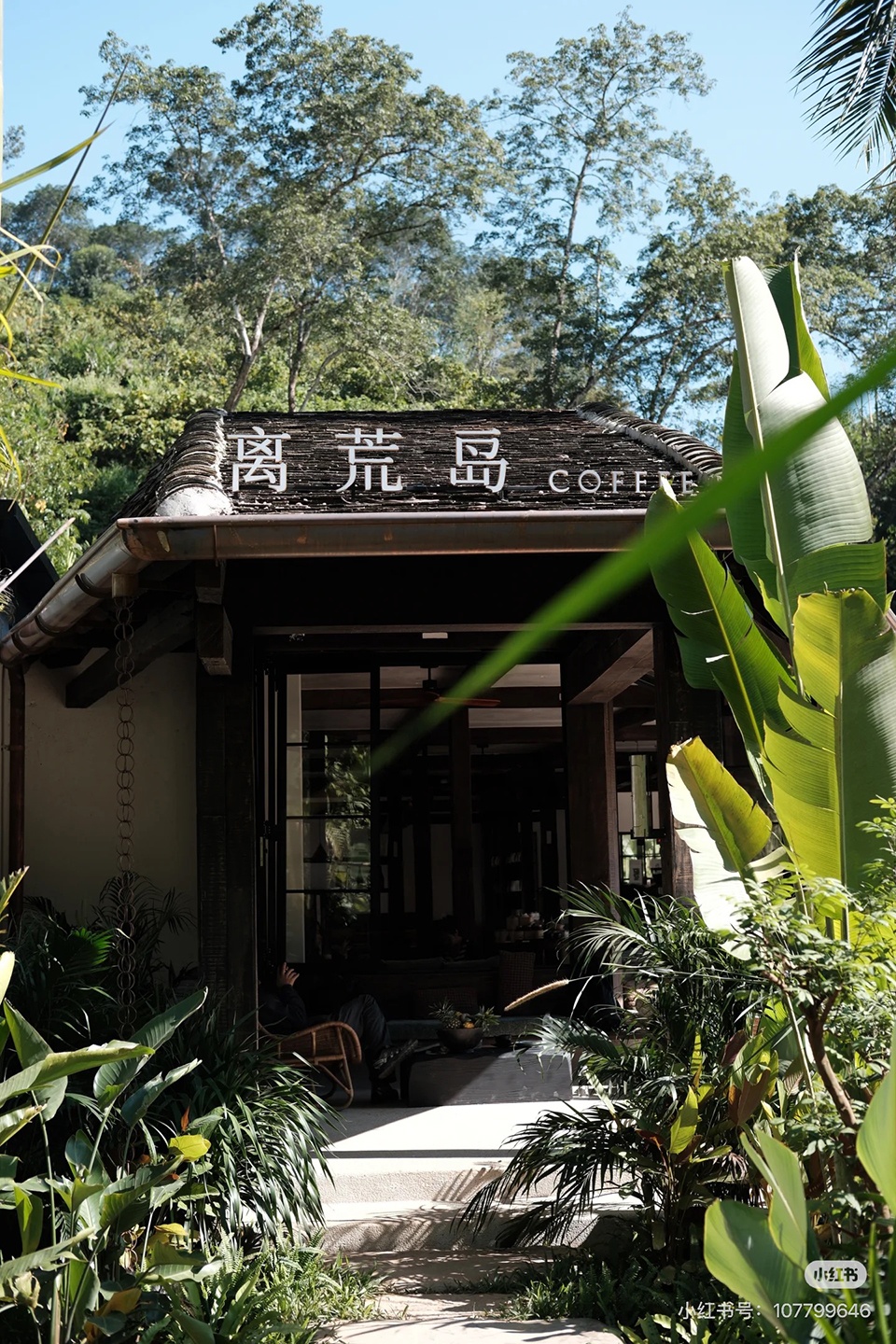
▼离荒岛COFFEE在西双版纳,Remote Island Coffee in Xishuangbanna
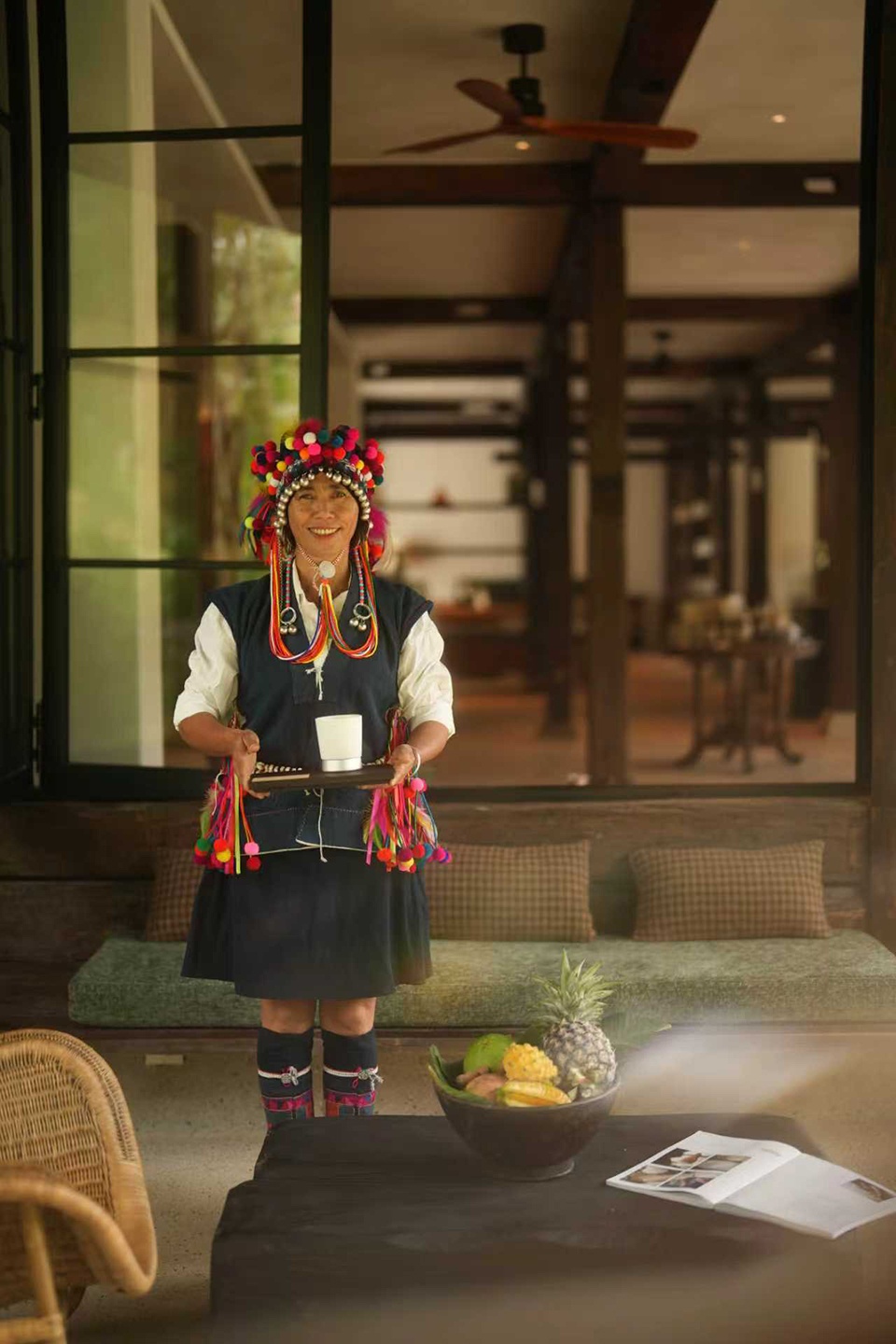
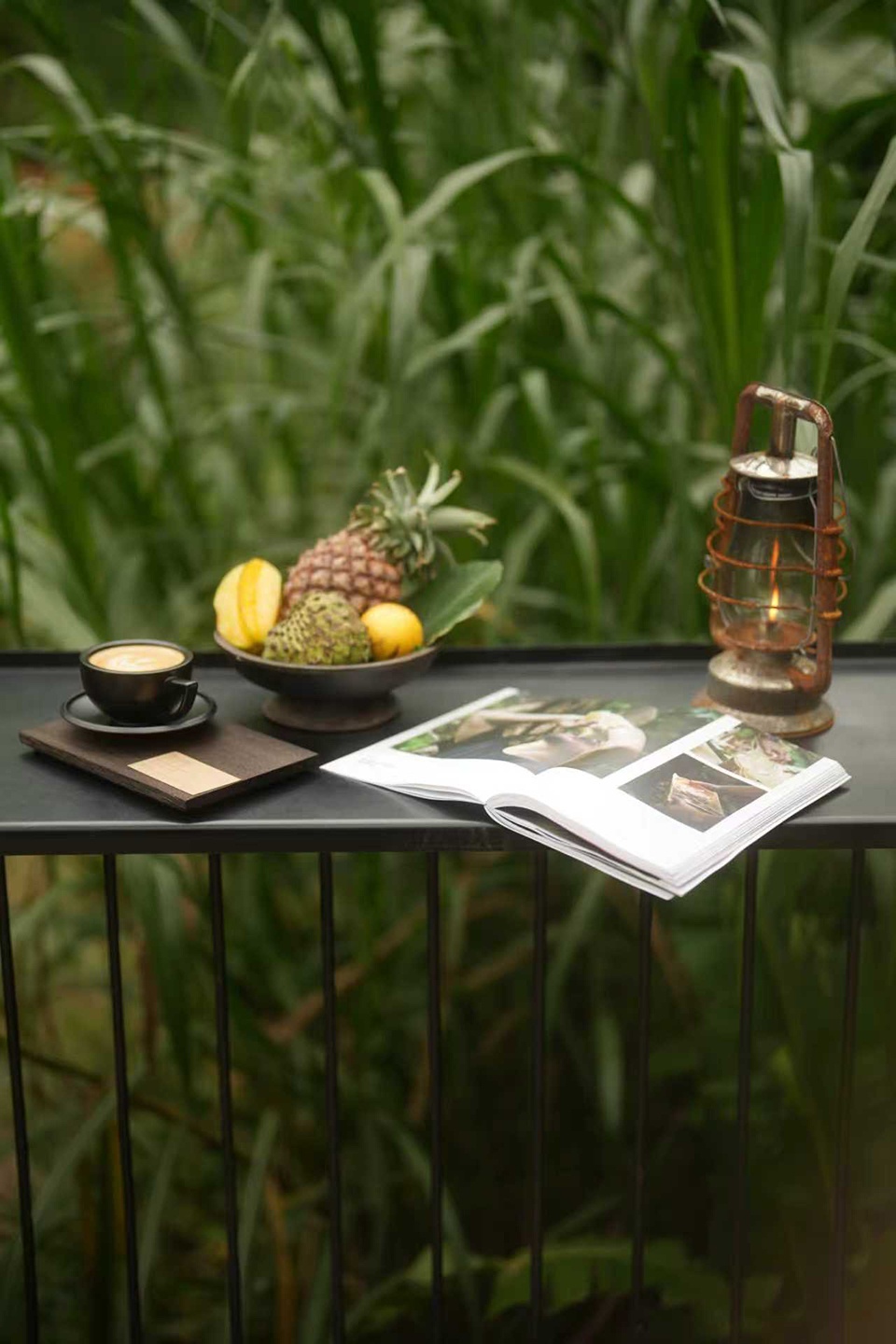
建筑演变,一片芭蕉叶的庇护 Architectural Evolution, Sheltered by a Banana Leaf
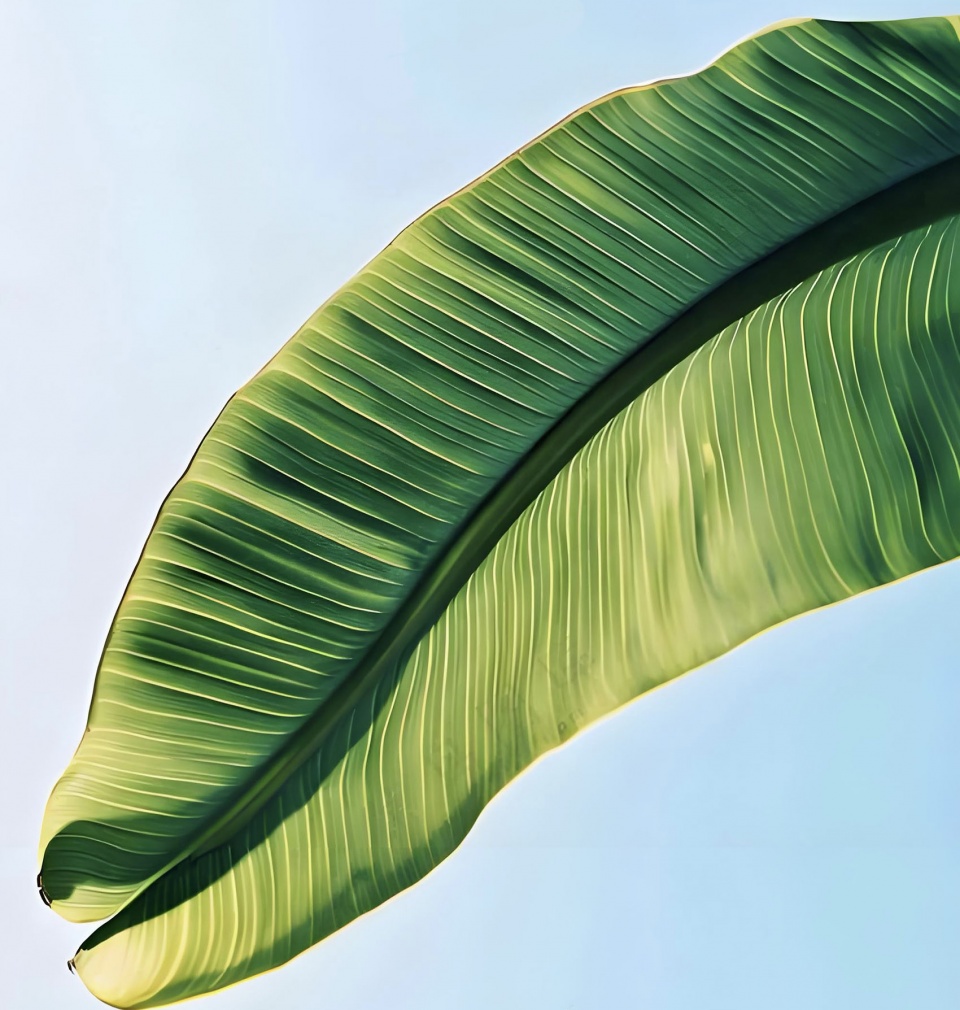
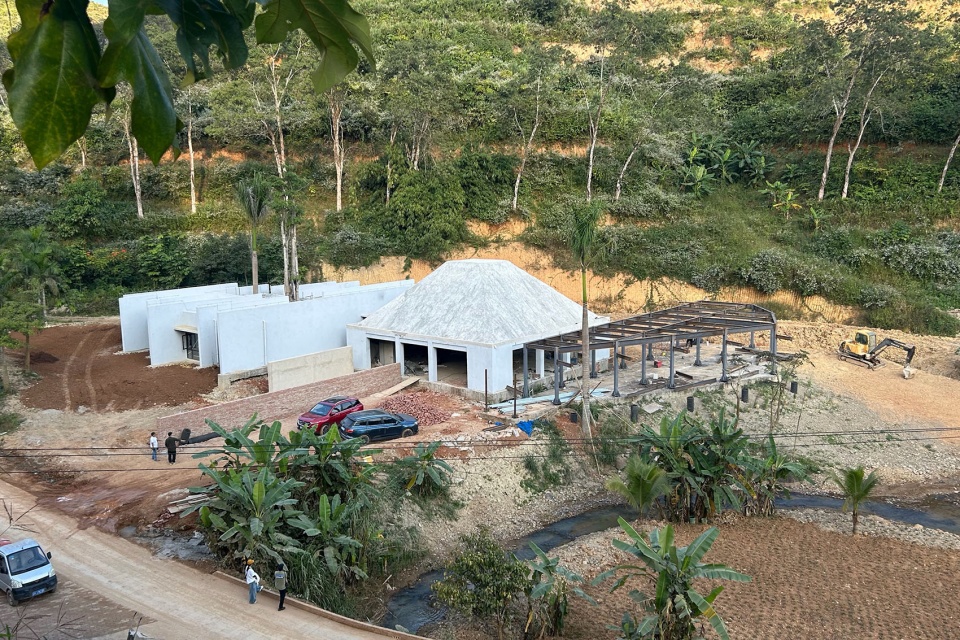
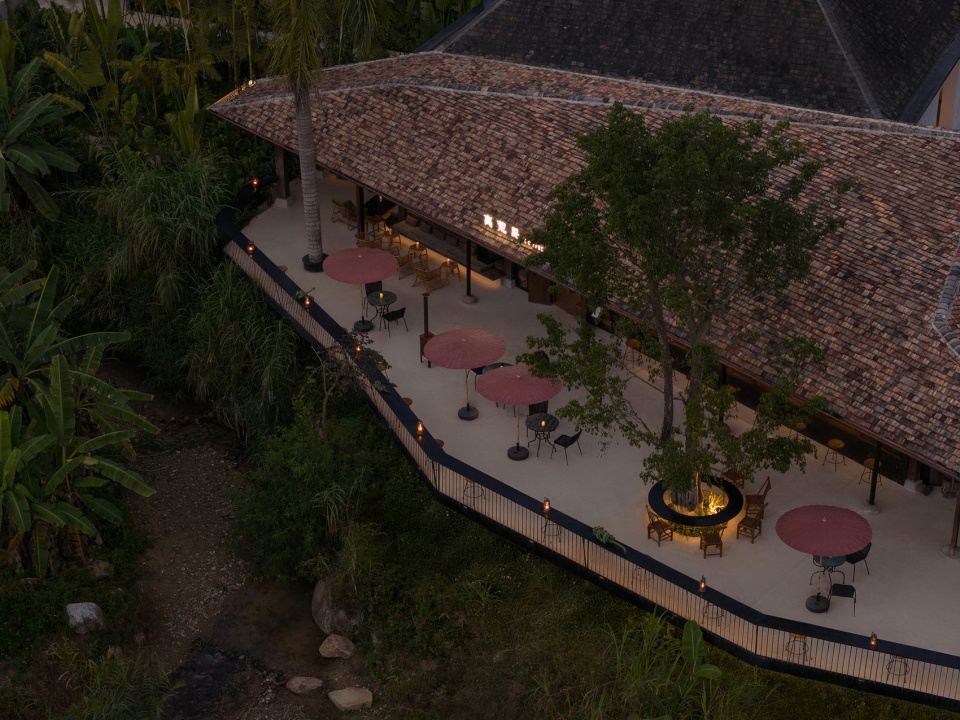
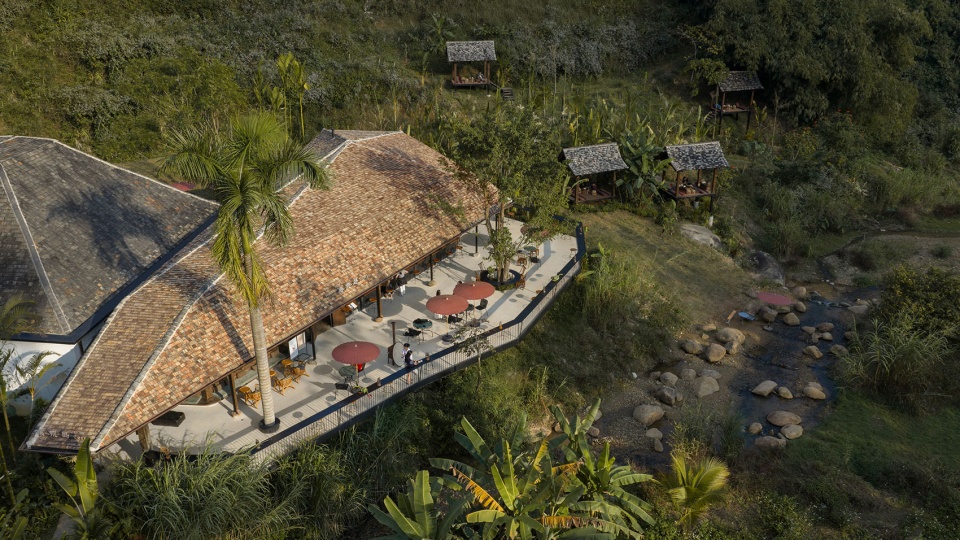
初见项目地,平台上钢结构框架刚建起,展厅建筑毛坯初落成,一条改造中的溪流从场地前蜿蜒而过。在走访了当地传统的傣楼建筑群后,秉承“接纳与共生”的理念,我们对项目进行梳理。结合平台现有的非规则形状,我们选用当地特色“芭蕉叶”作为具象表现、覆盖于建筑之上,将原始的平屋顶改为坡屋顶,回应傣族传统建筑的天际线,也符合当地多雨的导水需求。从空中俯瞰,离荒岛COFFEE就像一片芭蕉叶静静落在雨林中。屋顶铺设的傣楼旧瓦,经过轮回又回到了生于斯长于斯的土壤。
▼雨林特色的芭蕉叶,The distinctive banana leaves of the rainforest
▼项目地初见,The initial sight of the project site
▼建造过程中,During the construction process
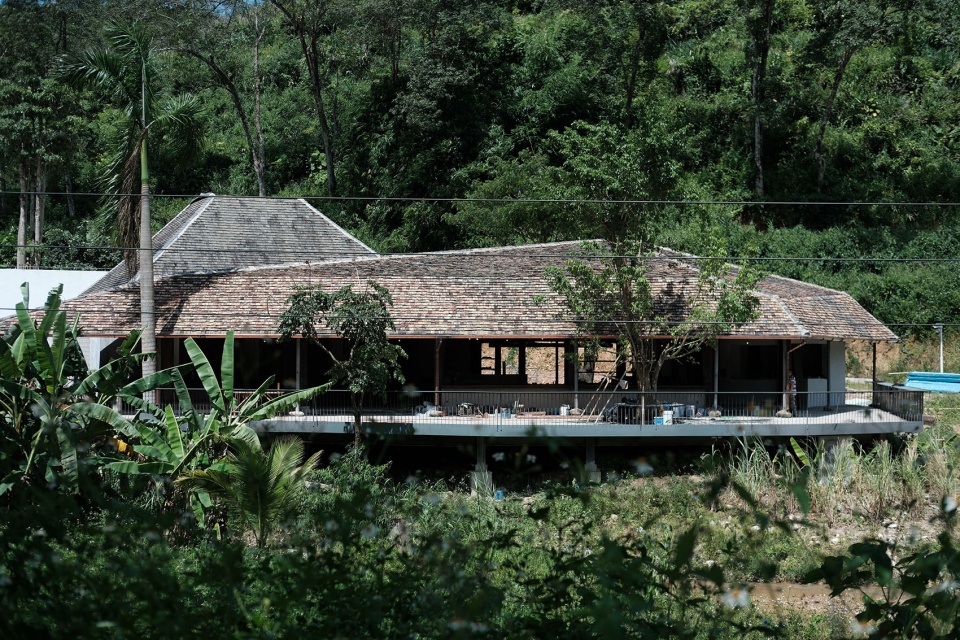
Upon first sight of the project site, the steel structure framework on the platform was just completed, and the raw construction of the exhibition hall was in place. A renovated stream was meandering through the site from the front. After visiting the local traditional Dai-style building complexes, adhering to the concept of “acceptance and symbiosis”, we organized the project. Considering the irregular shape of the platform, we chose the local characteristic “banana leaf” as an illustrative representation and covered it over the building. We transformed the original flat roof into a sloping roof, responding to the skyline of traditional Dai architecture and also meeting the local need for water drainage in rainy seasons. From an aerial view, the Remote Island COFFEE looks like a banana leaf gently resting in the rainforest. The old Dai-style roof tiles laid on the roof have returned to the soil where they were born and grew.
▼像一片芭蕉叶落于雨林中,Resembles a banana leaf lying in the rainforest
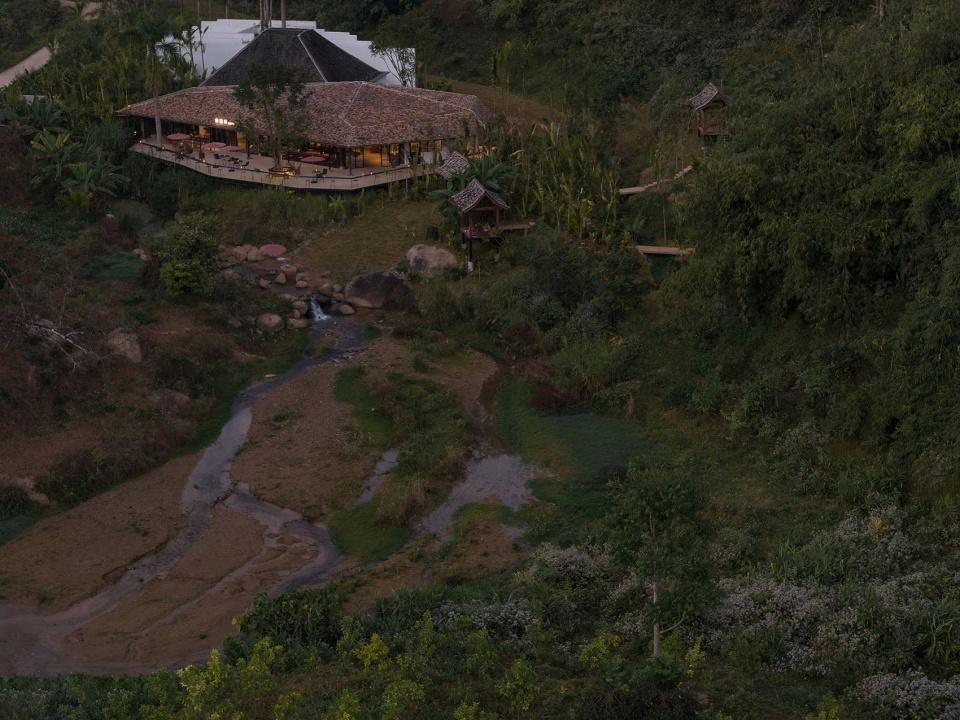
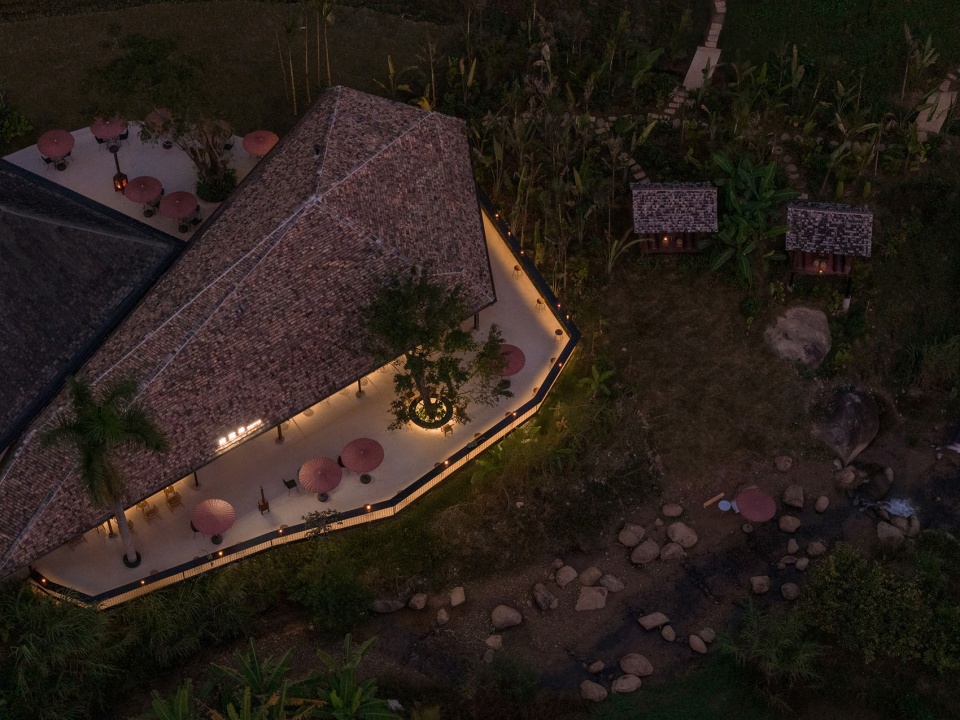
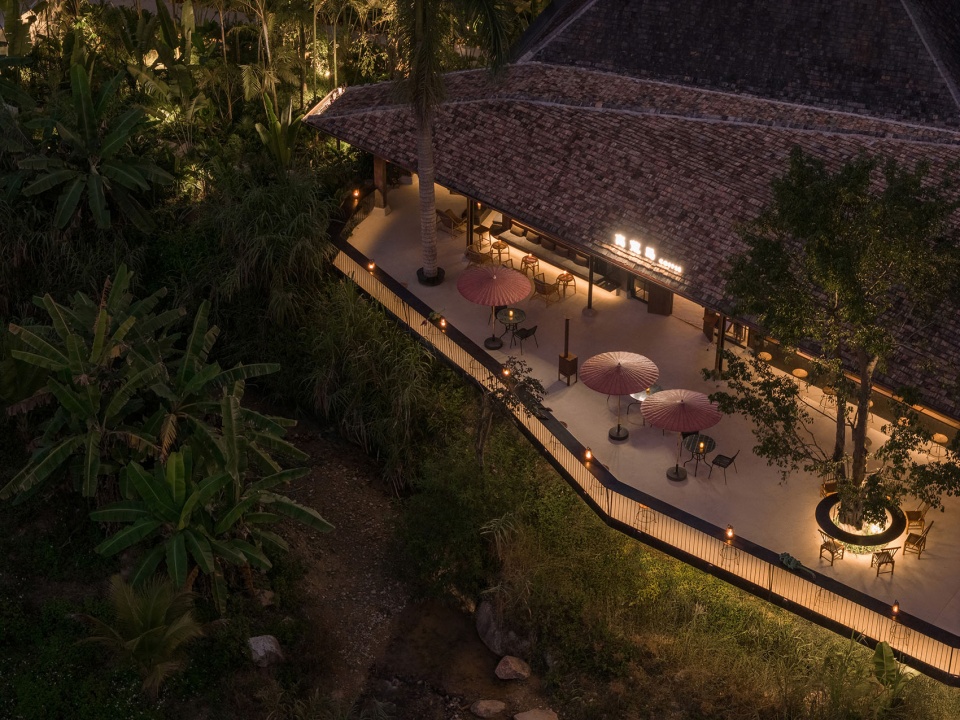
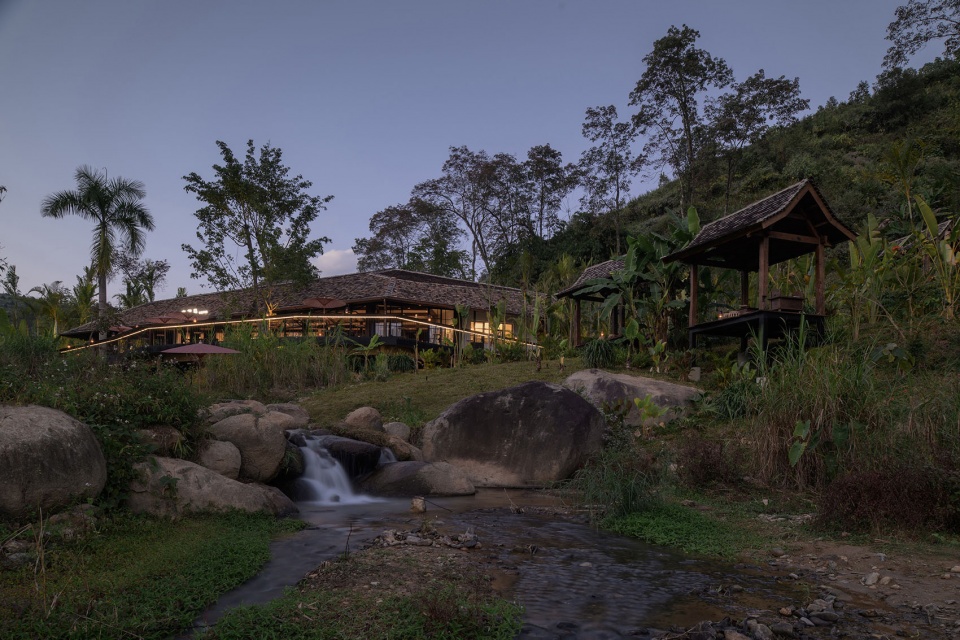
▼溪流恢复了原始生命力,The stream has regained its original vitality
完全打开的空间 Completely Open Space
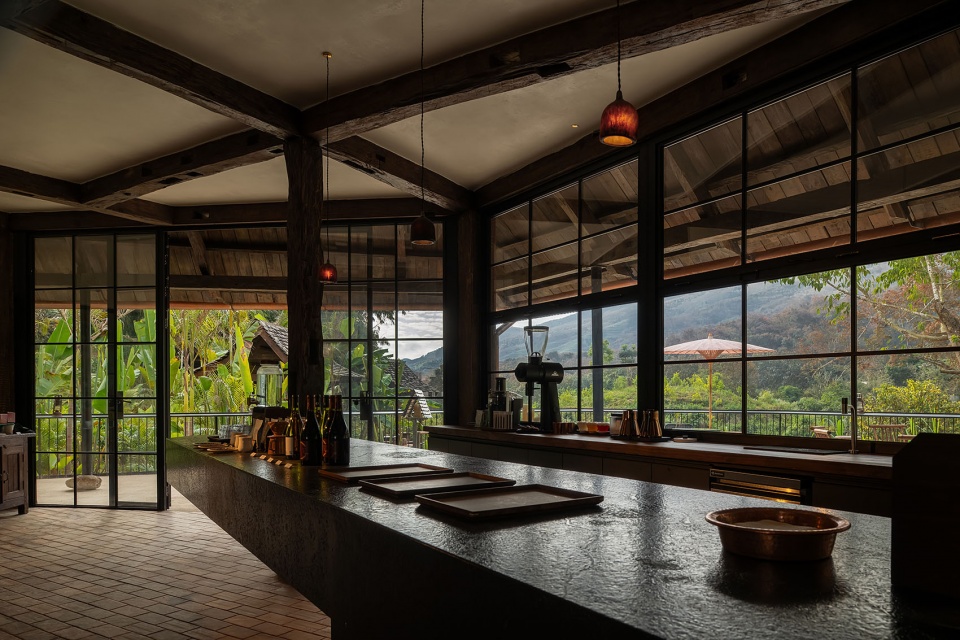
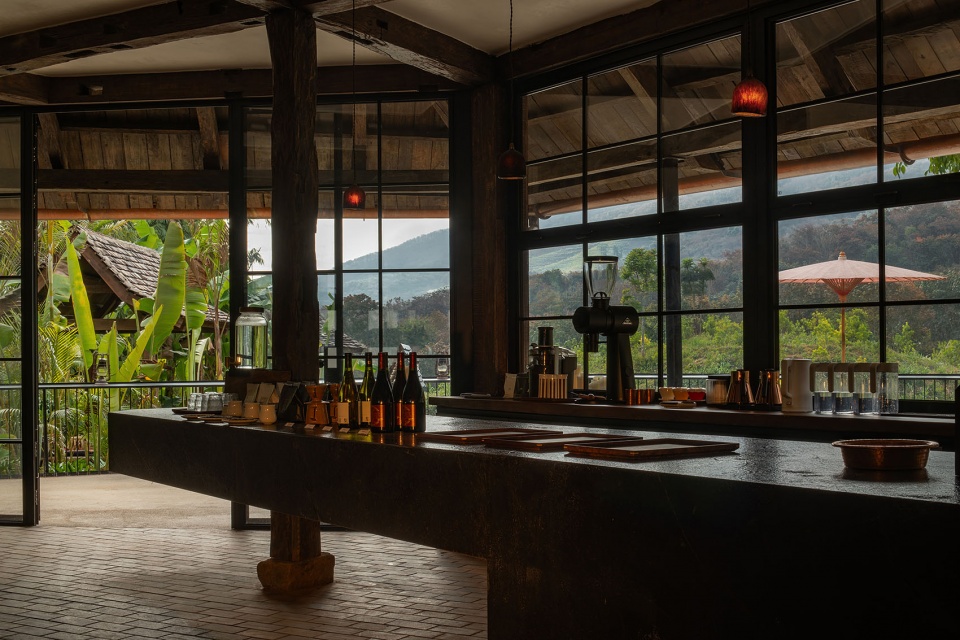
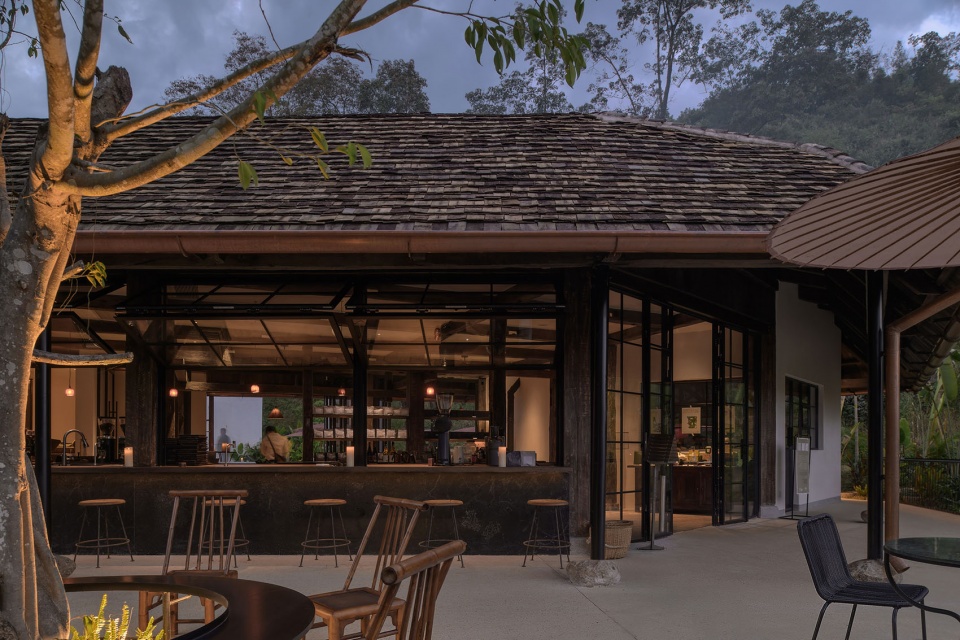
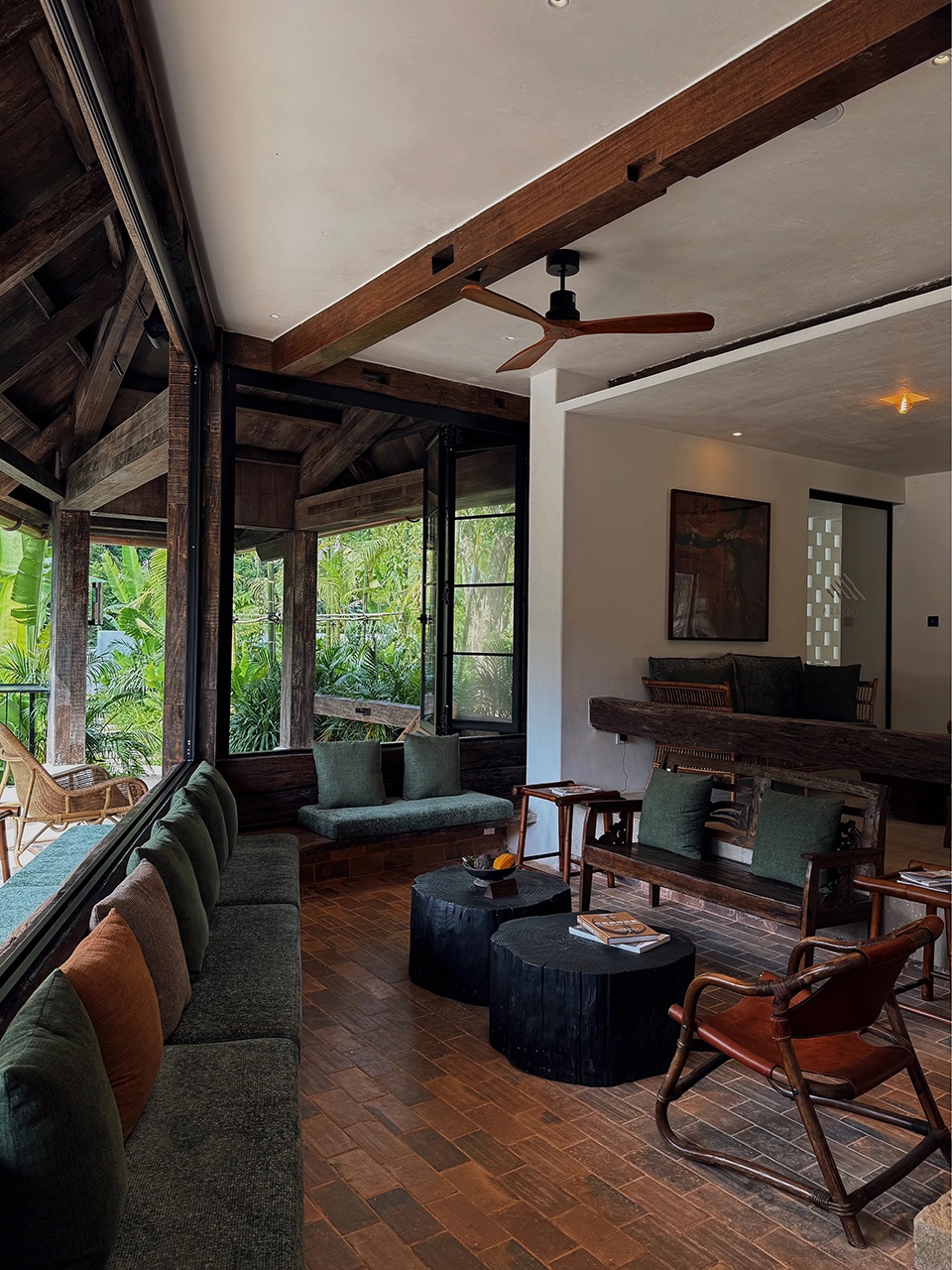
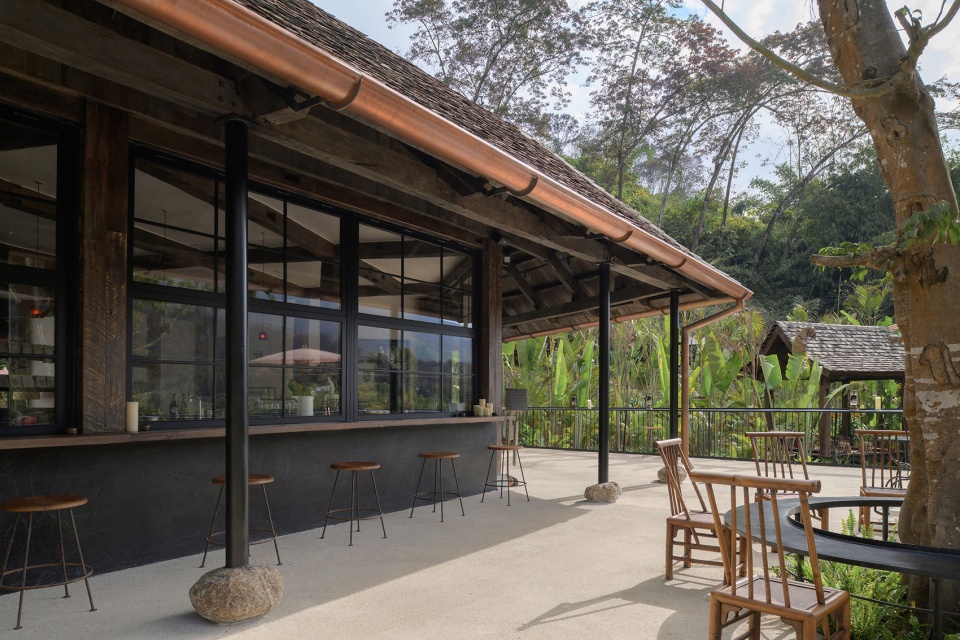
西双版纳四季如春的气候,让我们有底气将“完全打开”作为空间的核心诉求。咖啡馆立面采用大面积折叠窗,实现了最大限度的空间开放 — 当门扇全部推开,室内外界限消失,和风穿堂而过,阳光洒落,雨林的气息扑面而来。离荒岛的操作吧台,顺建筑走向布局于区域中心,U型设计兼顾室内外。吧台背面临窗,布置为高吧凳台面,咖啡师可以面向溪流操作、与客人互动交流。
The warm and spring-like climate of Xishuangbanna gives us the confidence to make “completely open” the core appeal of the space. The facade of the café features large-scale folding windows, achieving the maximum openness of the space – when all the door panels are fully opened, the boundary between indoors and outdoors disappears, gentle breezes flow through, sunlight pours in, and the scent of the rainforest fills the air. The bar counter of the Remote Island is arranged at the center of the area following the layout of the building. It adopts a U-shaped design that combines indoor and outdoor spaces. The bar counter faces the window, with a high bar stool surface. The barista can operate and interact with guests facing the stream.
▼U型吧台可以兼顾室内外空间,
The U-shaped bar counter can accommodate both indoor and outdoor spaces
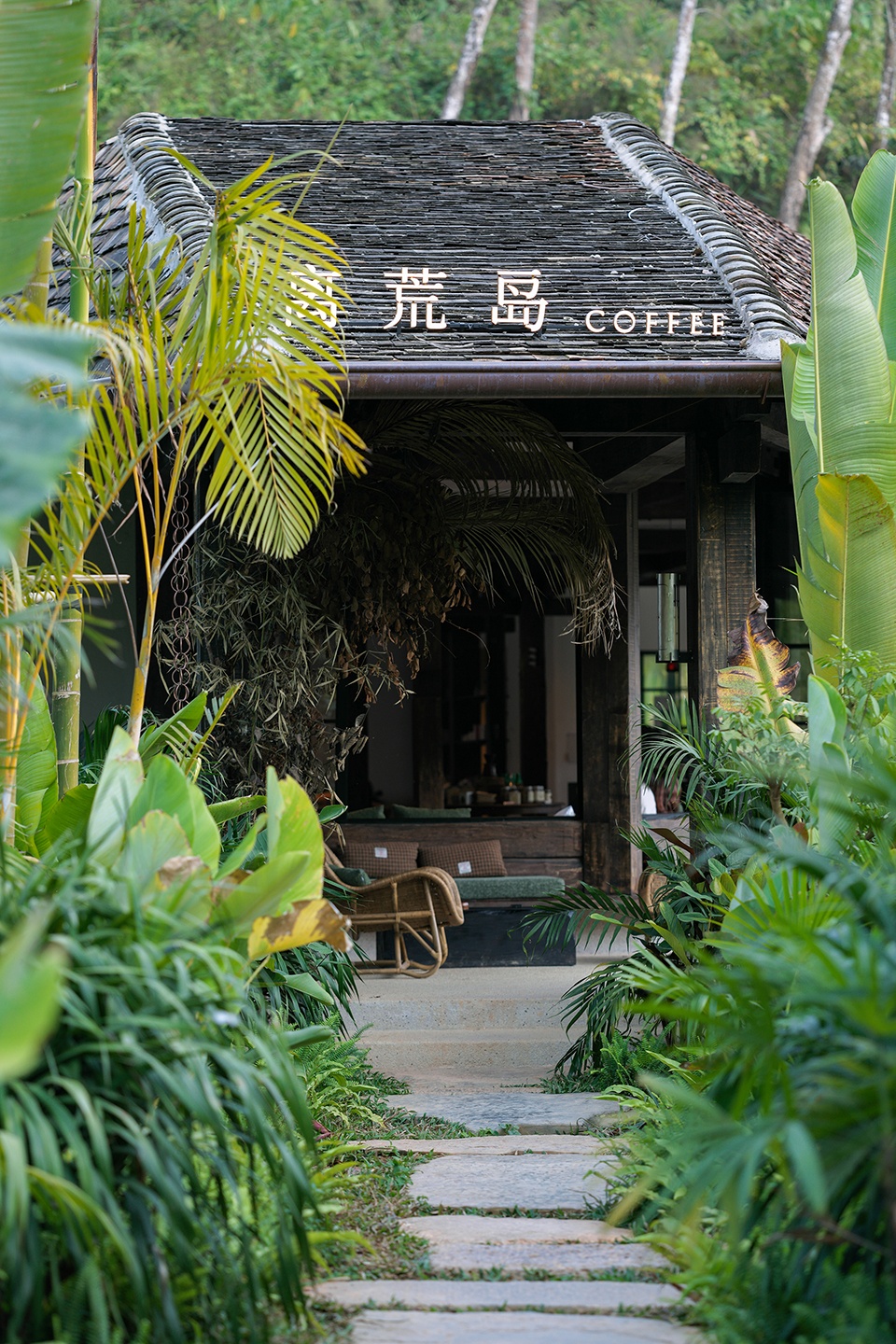
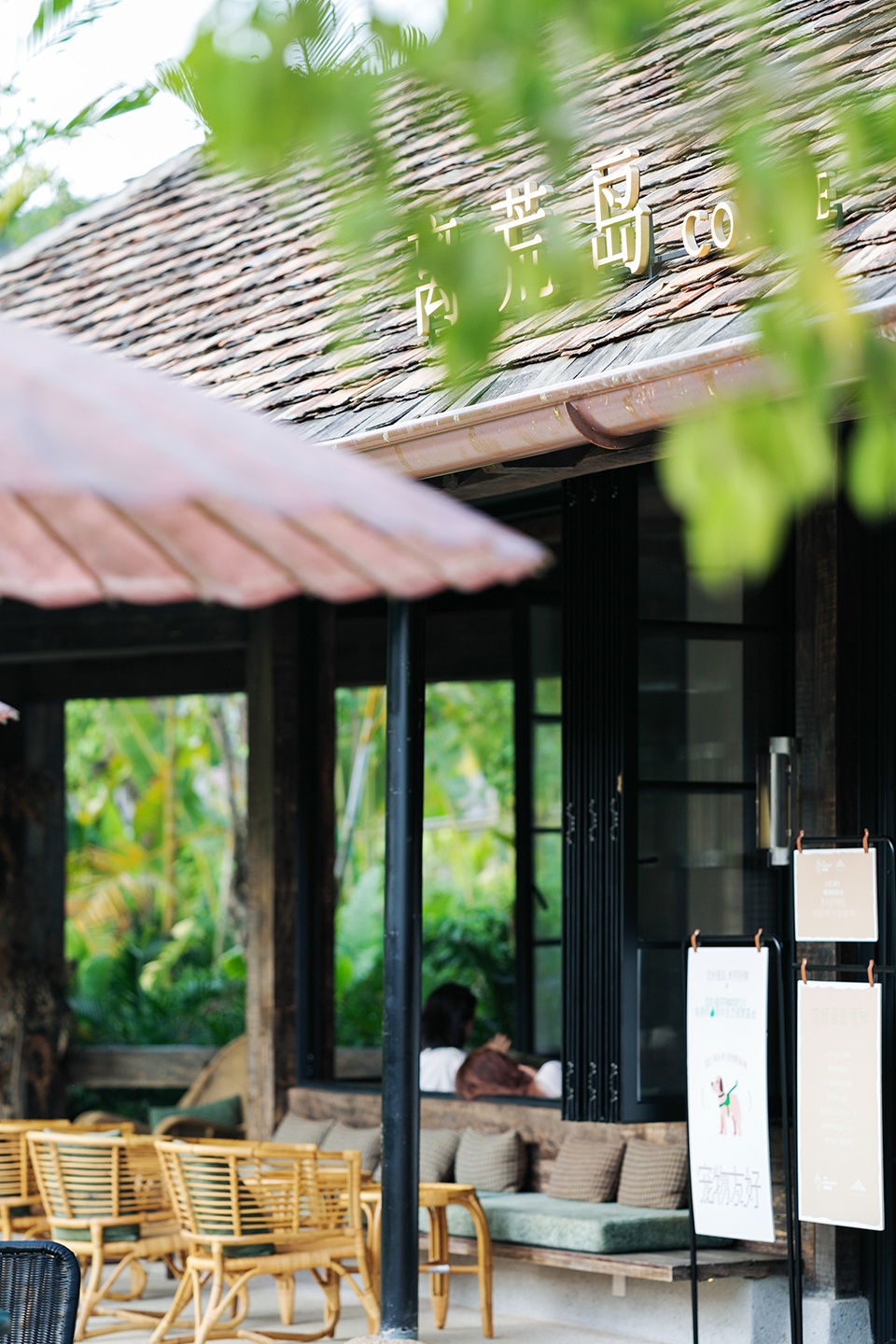
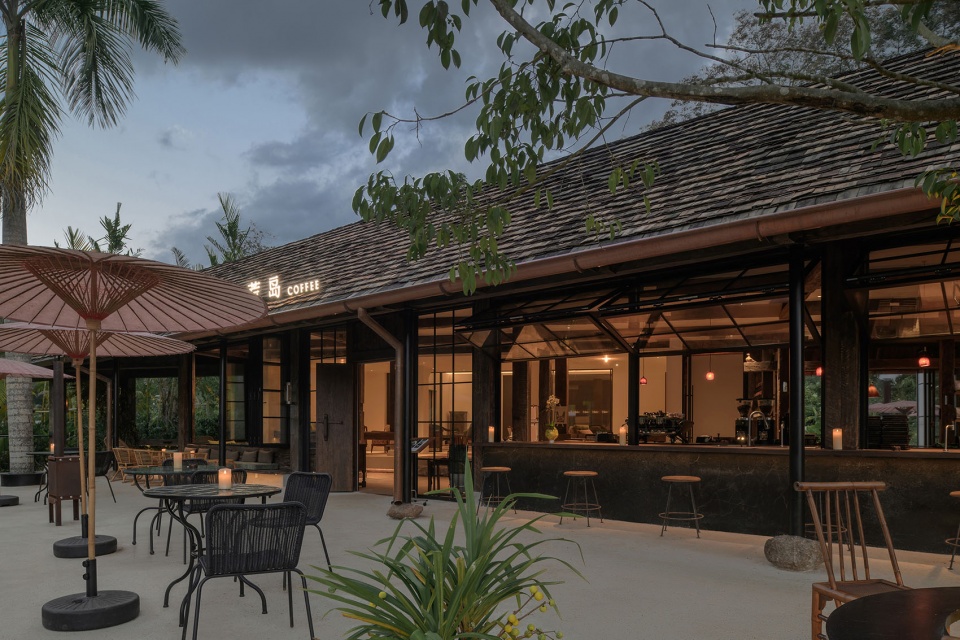
另一侧开辟出一条石板小径,沿途种满热带雨林植物,穿过层层叠嶂,离荒岛像一片精神乌托邦突然出现在眼前。松弛慵懒的藤椅和软座在不远处向你招手。打开折窗,内外皆可落座,空气流畅,交流零障碍。得益于当地四季如春的气候,我们将露台设置得足够大,点上饮品坐于户外,沐浴着阳光,呼吸着山间的空气,望着远处的满眼绿色,融于自然。
On the other side, a stone-paved path was created, lined with tropical rainforest plants along the way. Passing through layers upon layers of mountains, the Remote Island suddenly emerged before us like a spiritual utopia. Relaxing and lounging chairs and soft seats beckoned you from a short distance away. Open the folding windows, you can sit both inside and outside. The air flows freely, and communication is effortless. Thanks to the local spring-like climate all year round, we made the terrace large enough. We served drinks and sat outdoors, basking in the sunlight, breathing the mountain air, and gazing at the lush greenery in the distance, blending into nature.
▼入口,Entrance
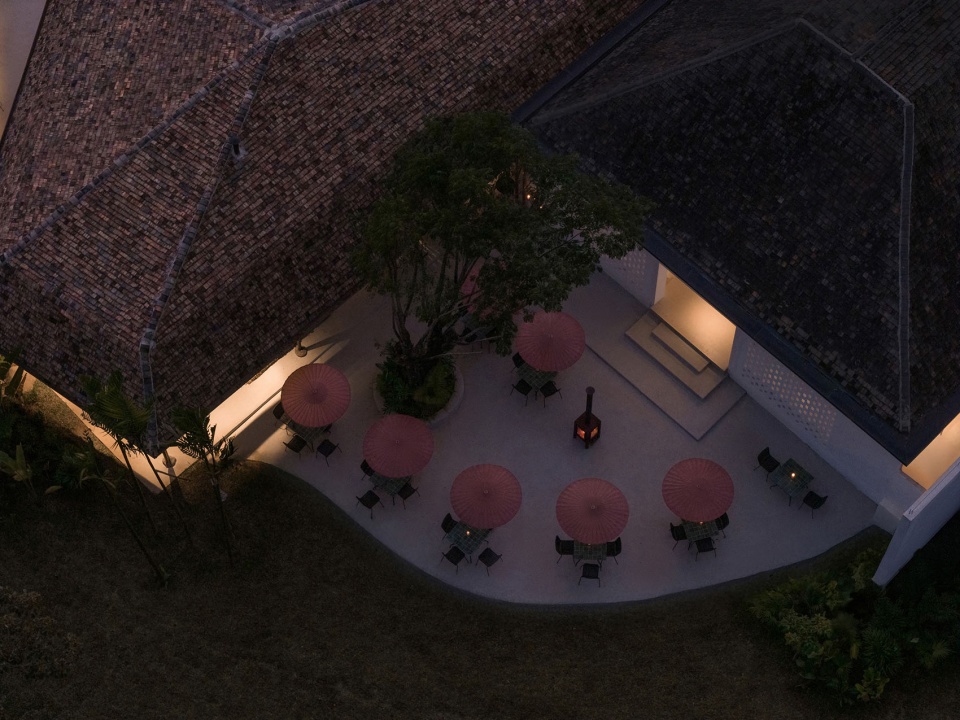
▼鸟瞰露台,Terrace aerial view
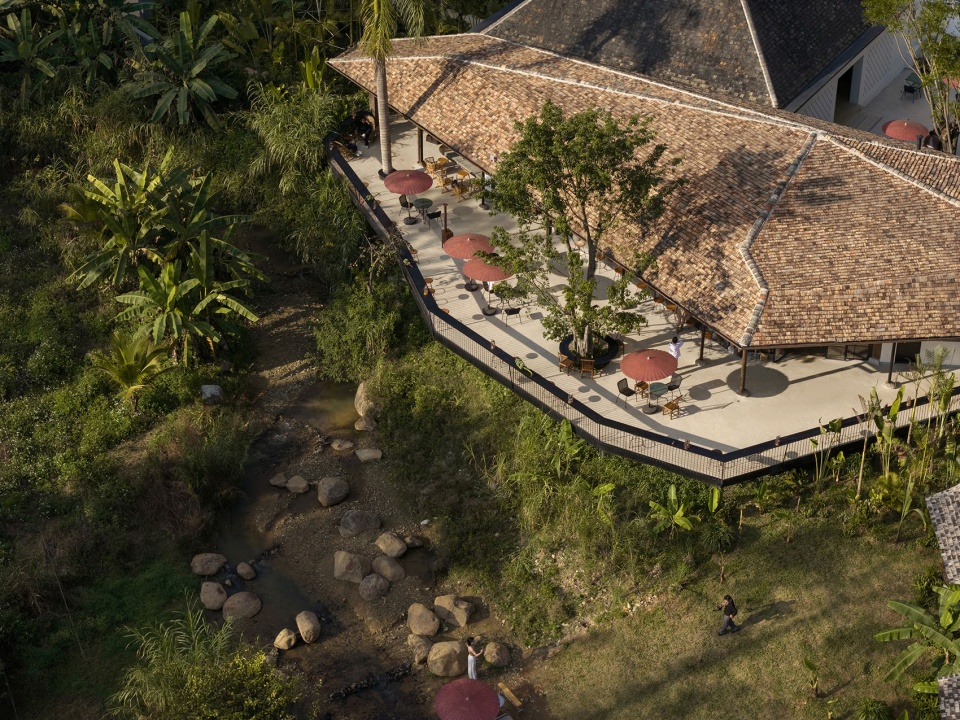
▼露台概览,Terrace overview
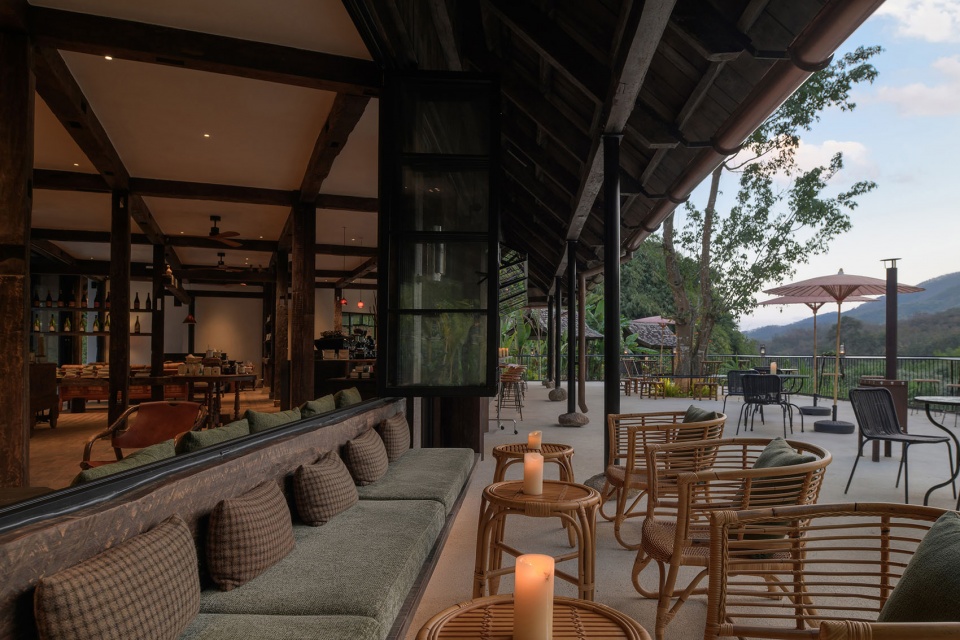
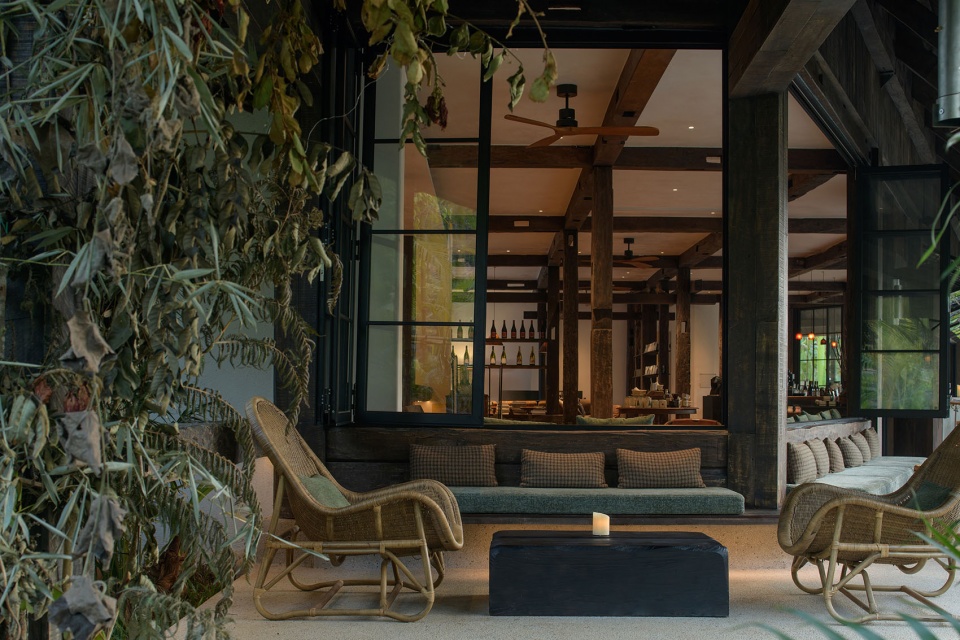
▼露台一角,A corner of terrace
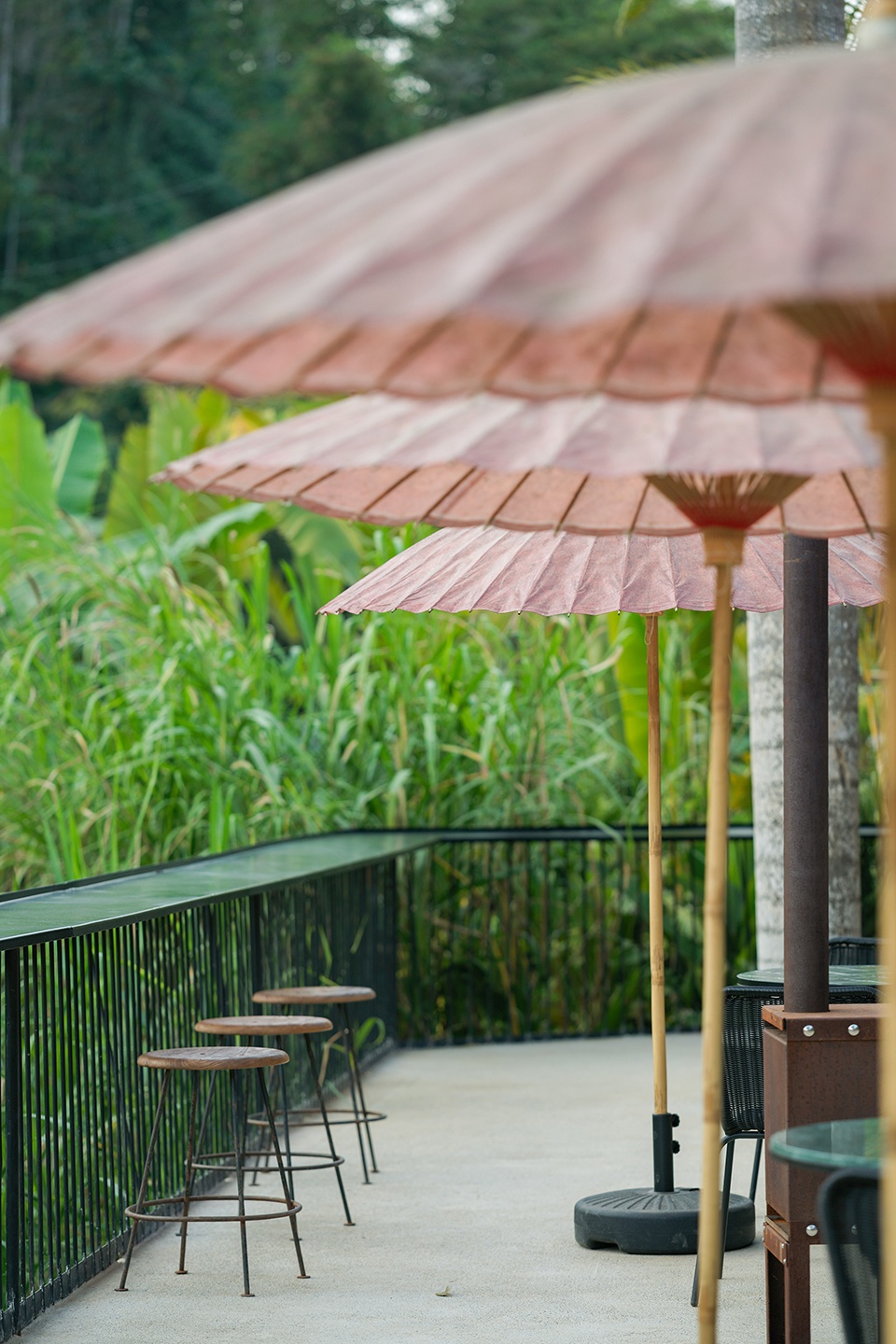
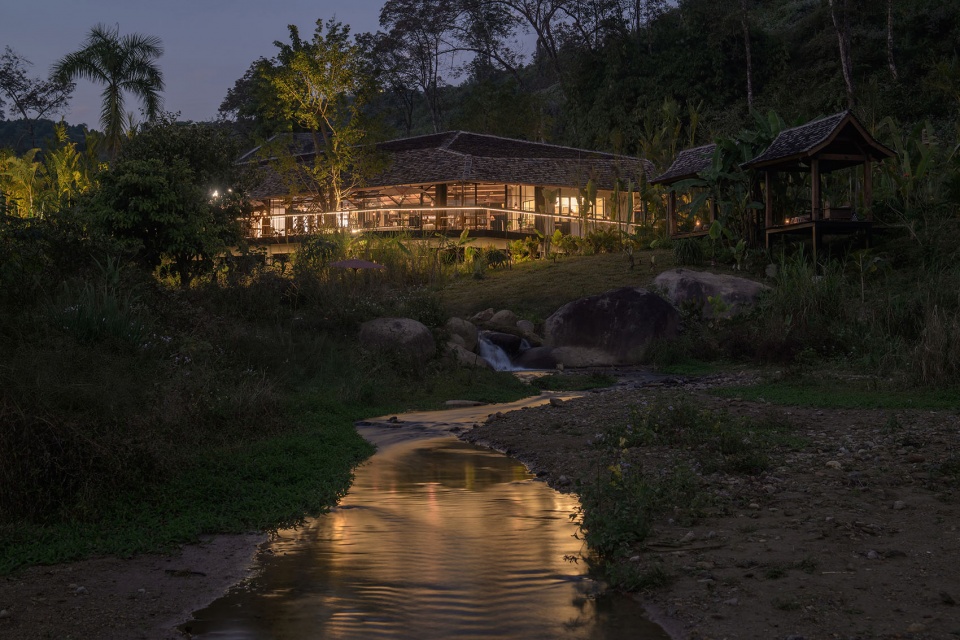
▼露台夜览,Terrace night view
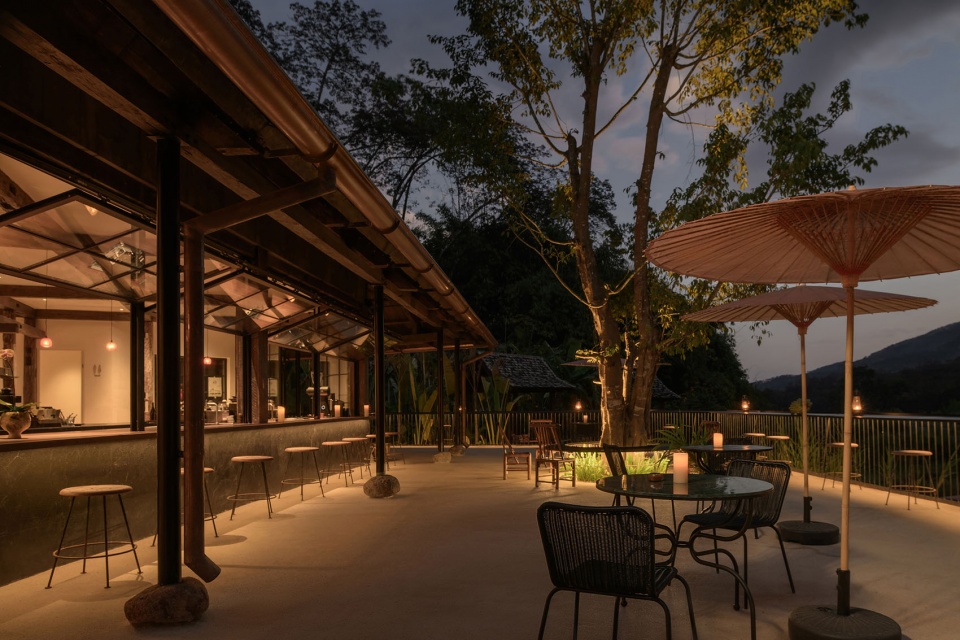
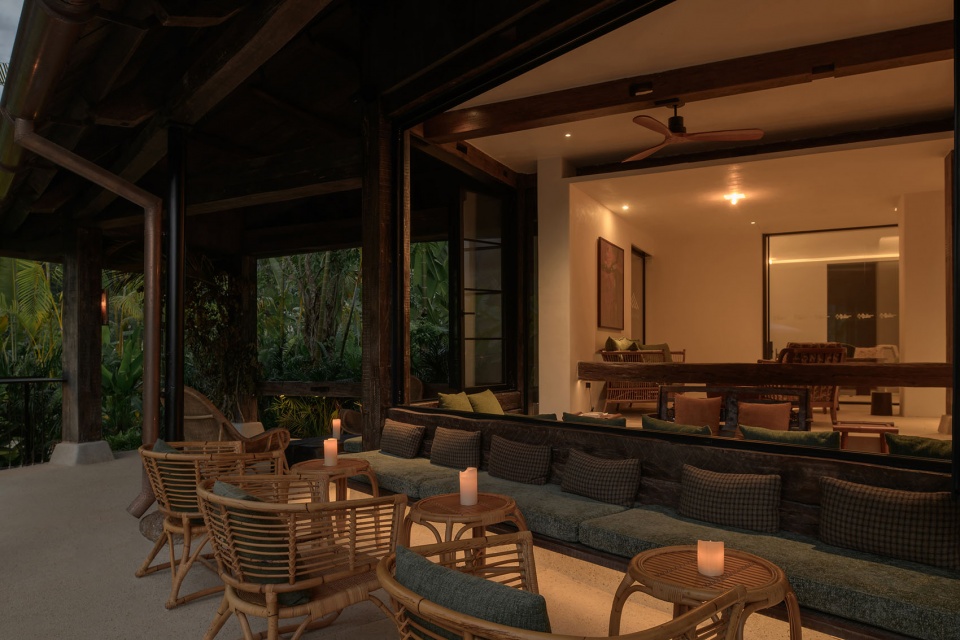
▼吧台内外空间通透,Connected and transparent interior and exterior spaces
老木梁与新秩序的共生 The Coexistence of Old Timber Beams and New Order
空间的在地性是我们始终关注的焦点。考察当地傣族民居时,传统“穿斗式木构架”的承重体系给我们留下深刻印象 — 无钉的榫卯柔性结构、架空层木柱的陈列式排布,既划分了空间,又赋予了功能极大的灵活性。
▼传统傣楼的无钉榫卯结构,The nailless mortise-and-tenon structure of the traditional Dai house
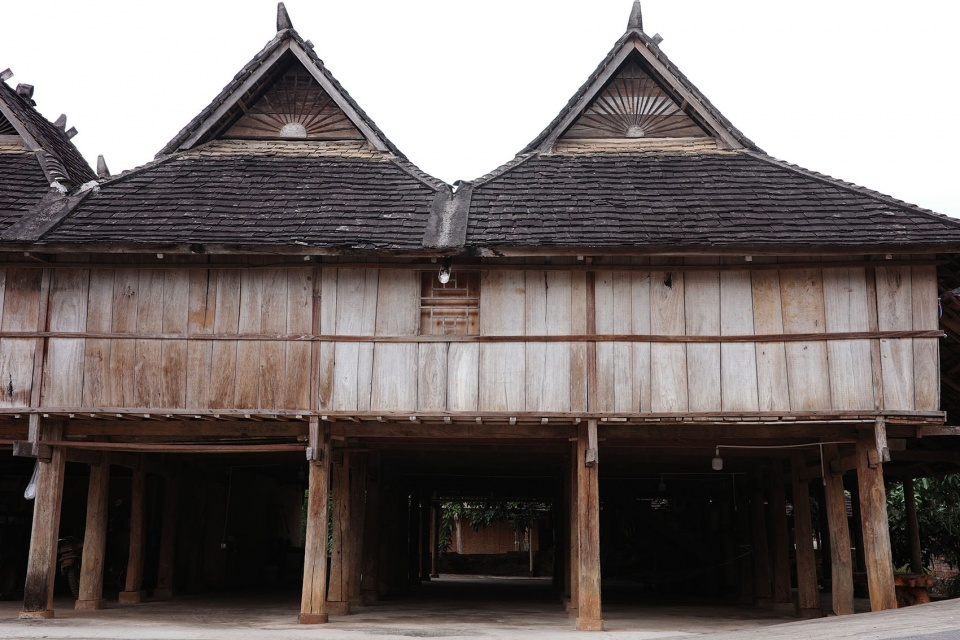
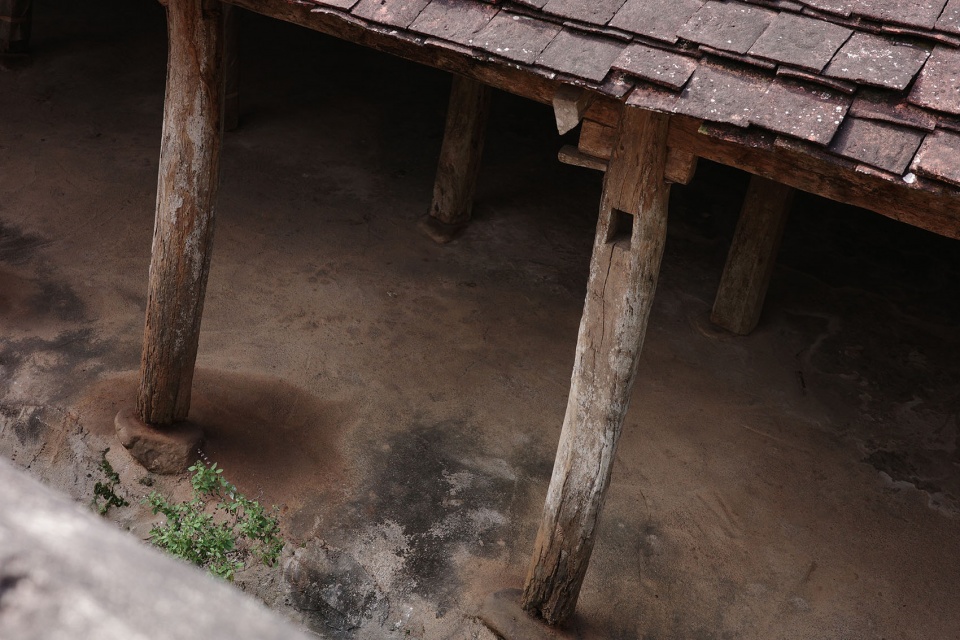
The local context of the space is our constant focus of attention. When examining the local Dai ethnic group’s dwellings, the traditional “pierced-beam wooden structure” for load-bearing impressed us deeply – the nailless mortise-and-tenon flexible structure and the display-like arrangement of the elevated wooden columns not only divided the space but also endowed it with great flexibility in function.
▼风化木梁与老傣瓦承载时光,讲述着过往的故事,
Weathered wooden beams and old Dai tiles bear the passage of time,telling the stories of the past
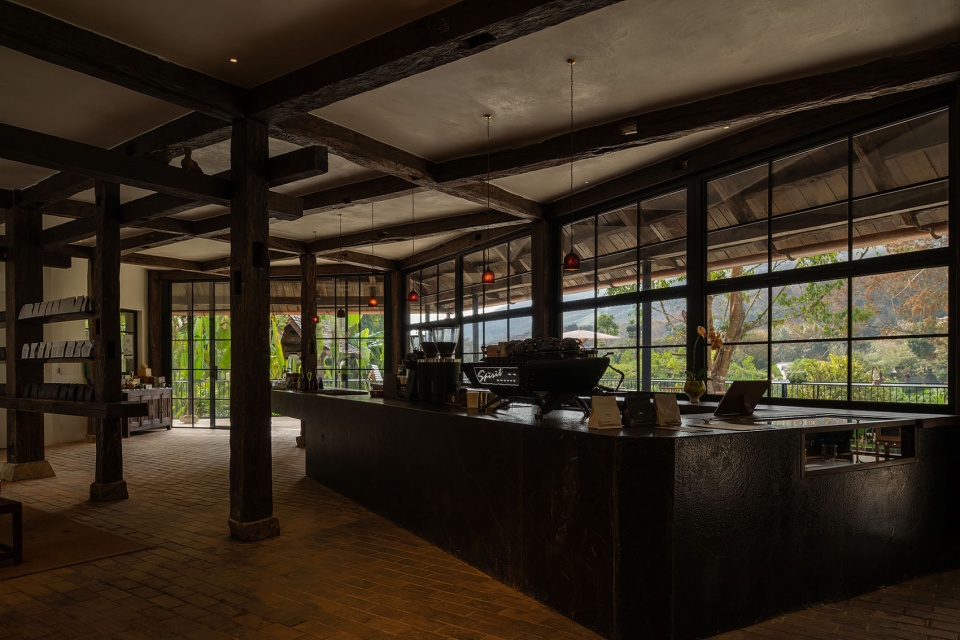
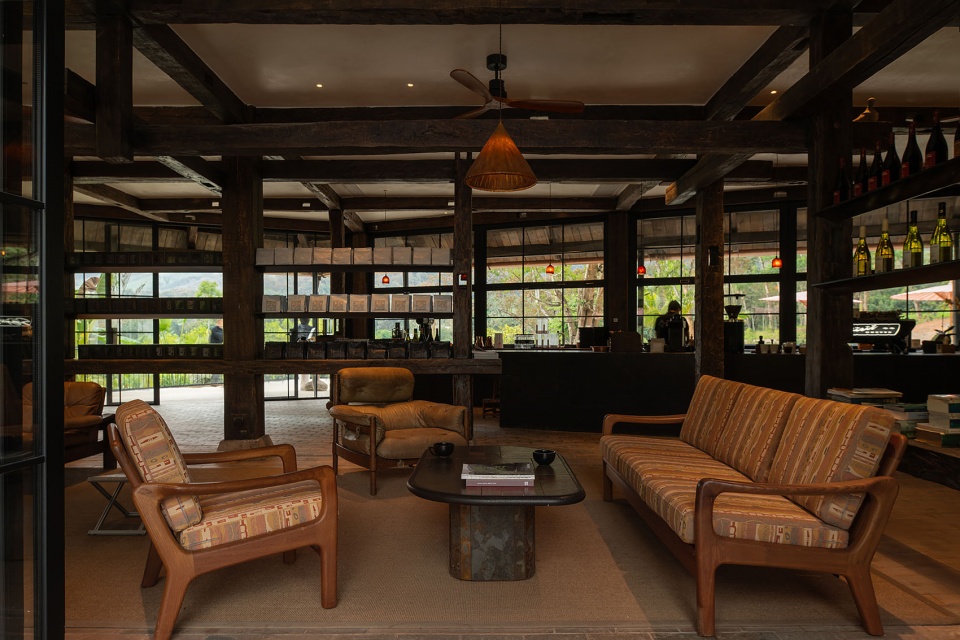
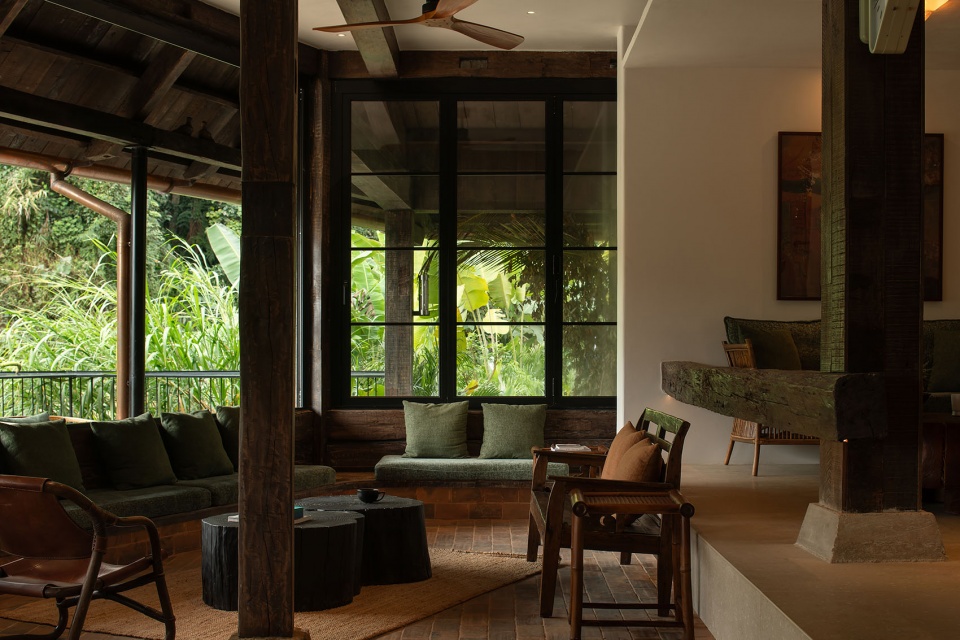
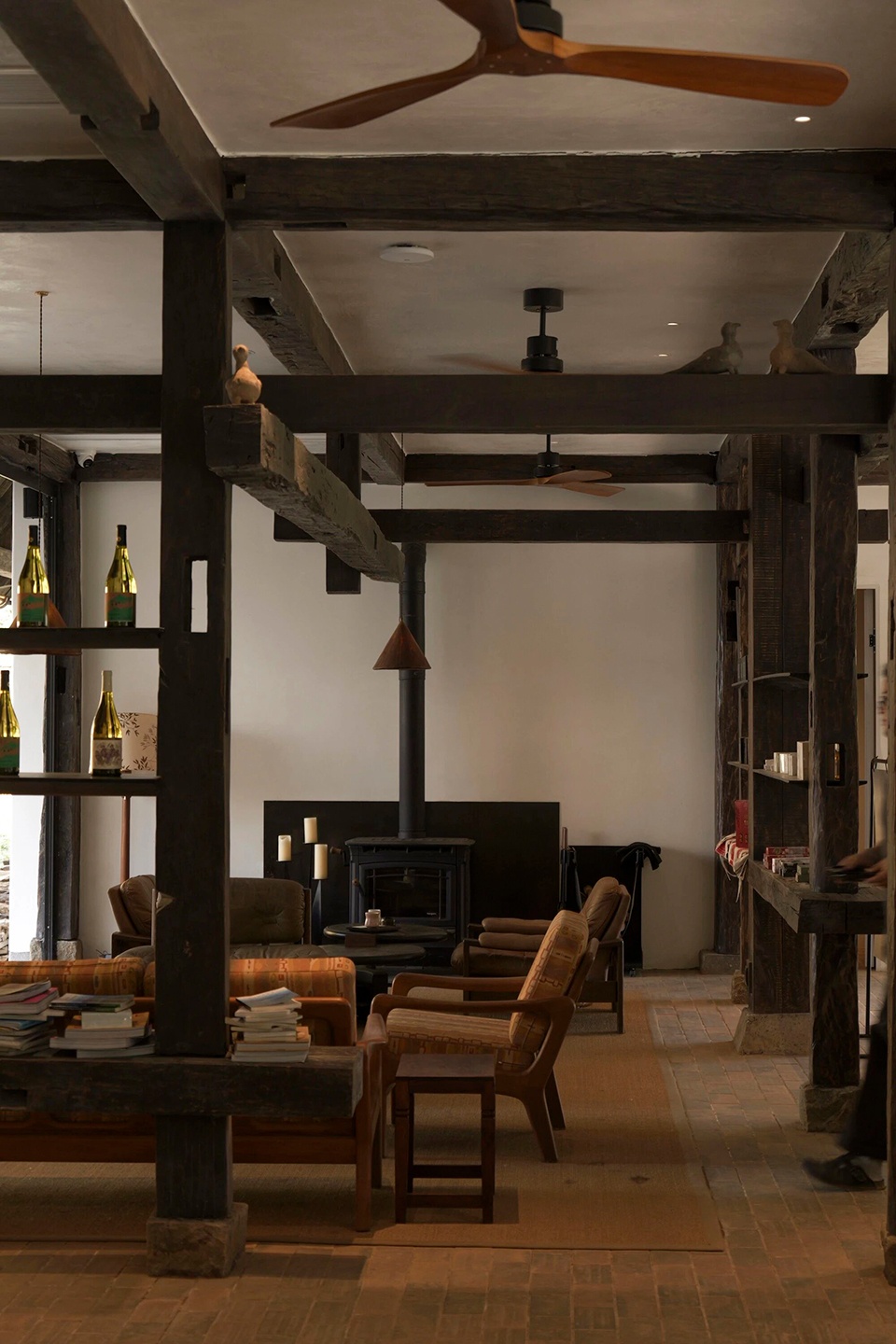
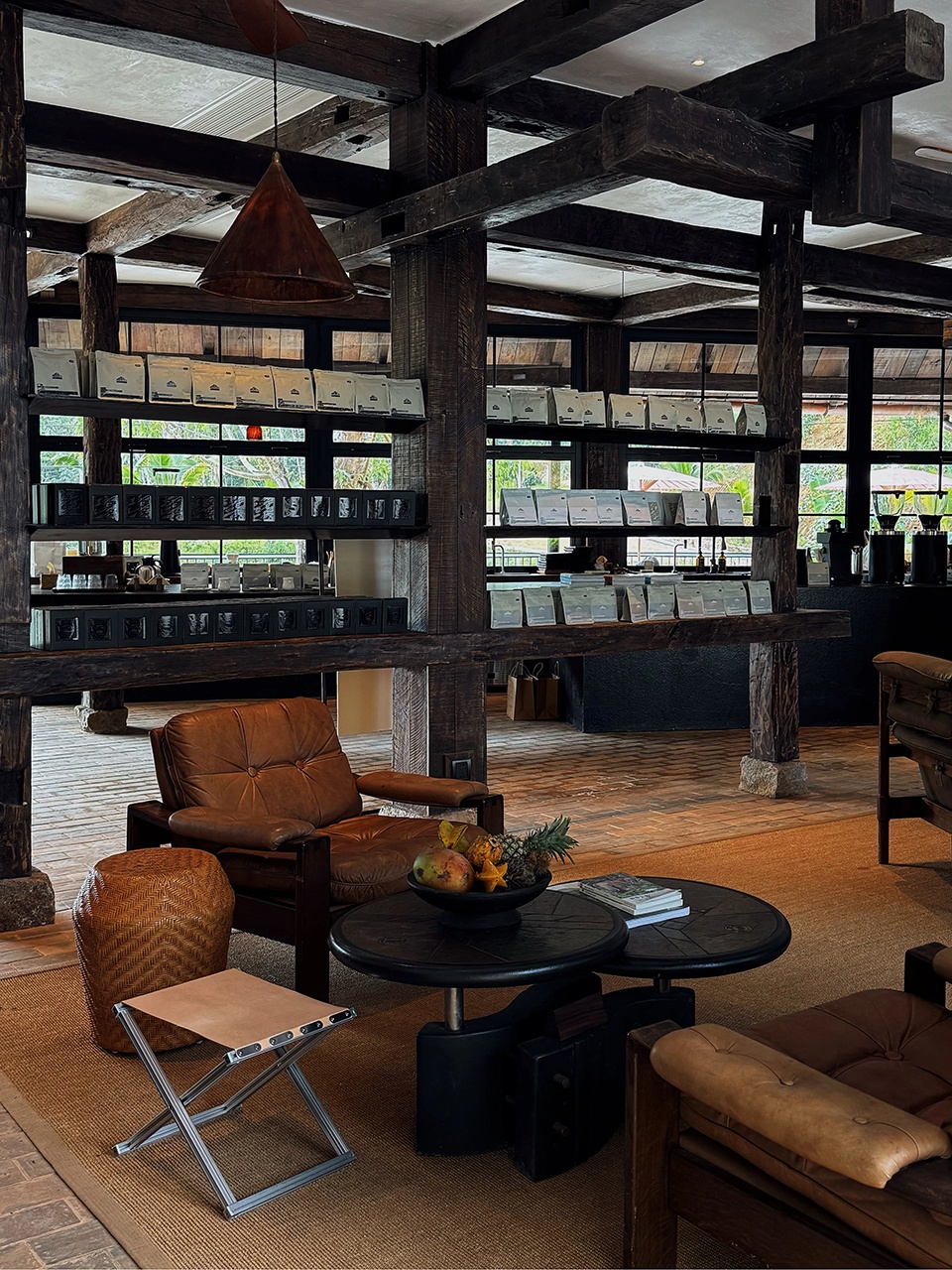
在咖啡区,参考傣楼木结构,以原始钢柱为骨,回收的老傣楼木梁为魂,模拟出传统木柱的陈列秩序,并结合需求对空间进行分区、发挥梁柱功能,譬如支撑屋顶、穿插桌面、形成椅凳。这些历经岁月的老木梁,带着往昔生活的温度,在新的空间中重新站立。
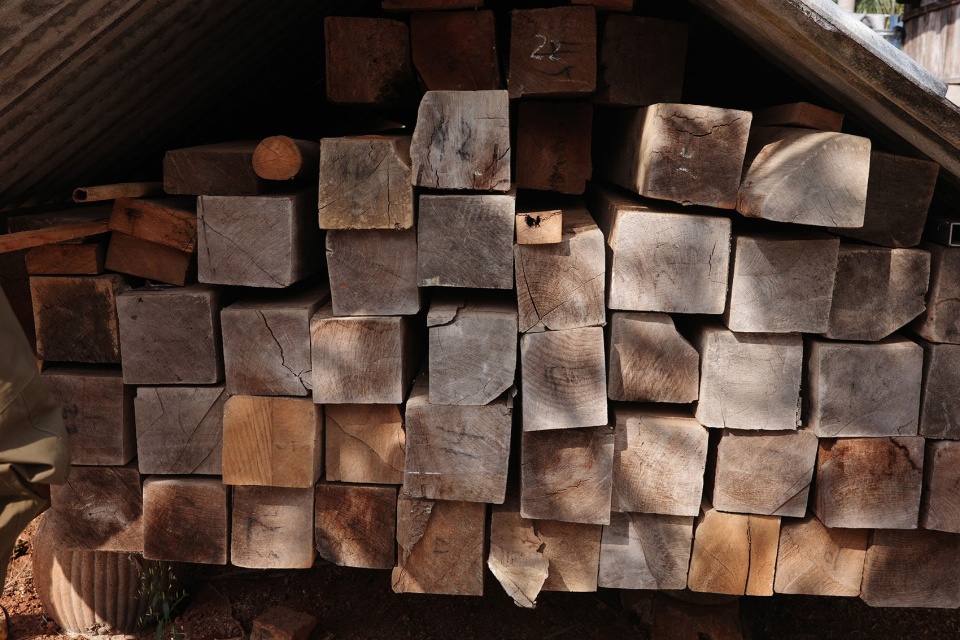
▼堆放的老木梁,Old wooden beams piled up
▼施工中的木梁,Wooden beams during the construction process
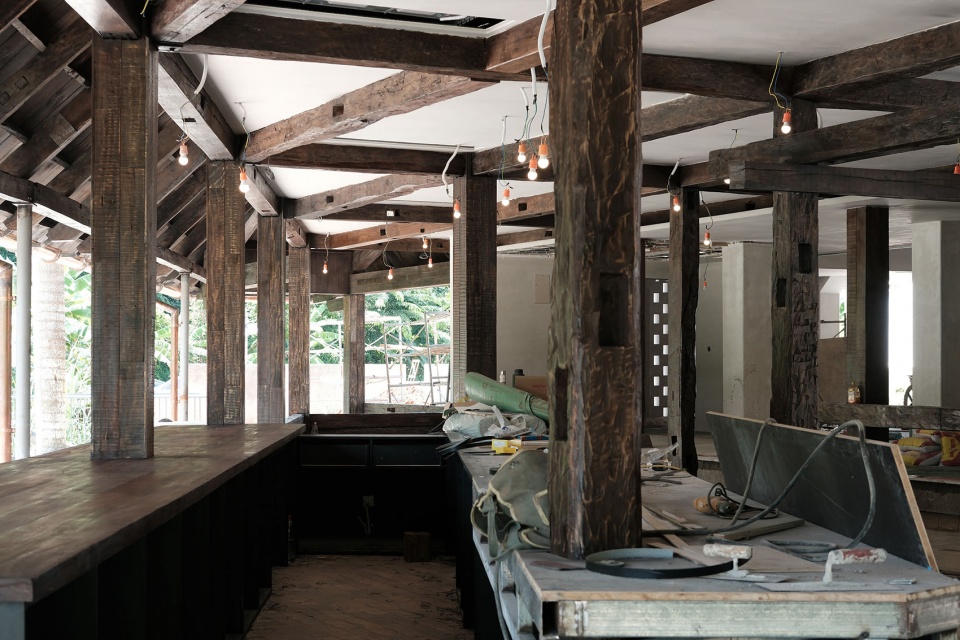
In the coffee area, following the wooden structure of the Dai buildings, using the original steel columns as the framework and the recycled old wooden beams from the Dai buildings as the soul, a display order of traditional wooden columns is simulated. The space is divided according to the needs and the functions of the beams and columns are exerted, such as supporting the roof, interconnecting the tabletops, and forming chairs and stools. These old wooden beams, carrying the warmth of the past life, stand up again in the new space.
▼老木梁与中古家具,Old wooden beams and antique furniture
修复溪流,拉近人与自然 Restore the stream, bring people closer to nature
人类与自然休憩相关,环境优先是我们一直秉承的信念。根据建筑原有形态,我们将咖啡区的户外平台向溪流方向拓宽,让人与水的关系更亲近。溪流曾因石块的离去而失语,如今,那些被挖走的石头一块块归来,像时间被重新安放回原处。水流被重新梳理、牵引,淤泥和乱草被耐心清理,溪流恢复了最初的走向。原始的生命力,又一次在石缝与水纹之间,静静涌动。
Humans and nature are closely related. Environmental priority is our long-held belief. Based on the original form of the building, we widened the outdoor platform of the coffee area towards the stream, making the relationship between people and water more intimate. The stream, which had lost its voice due to the removal of stones, now sees those stones return one by one, as if time has been placed back in its original place. The water flow has been reorganized and guided, the silt and weeds have been patiently cleared, and the stream has resumed its original course. The original vitality once again surges quietly between the cracks of the rocks and the ripples of the water.
▼将溪流恢复至自然状态,Restore the stream to its natural state
让每一种材质做自己 Let each material do its own thing
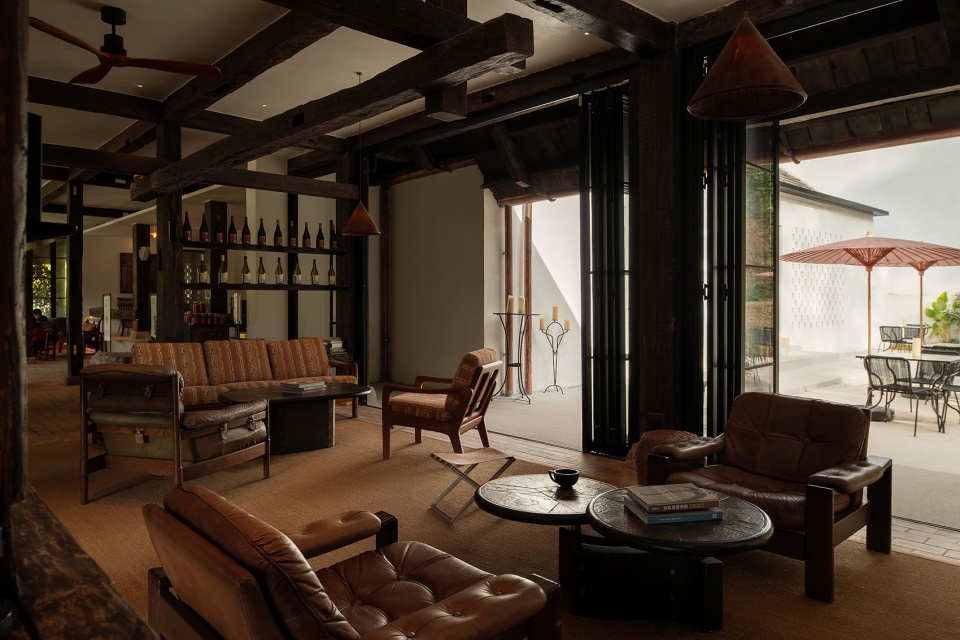
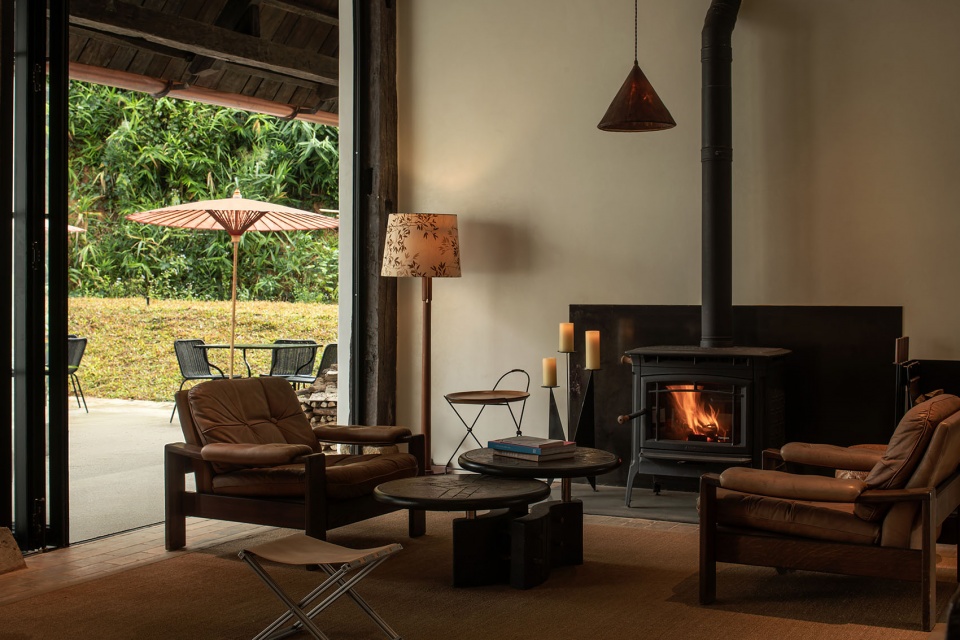
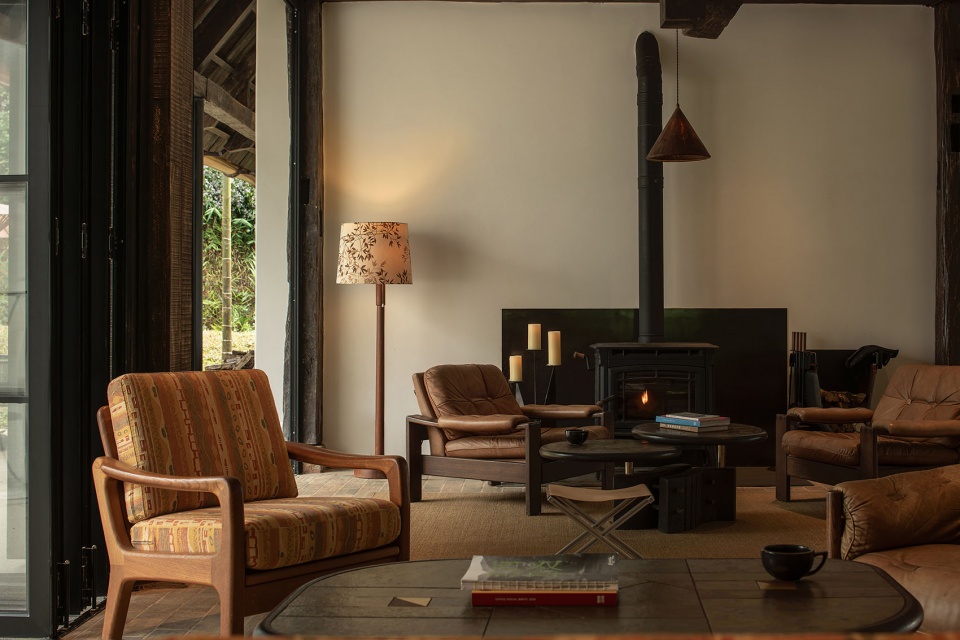
我们贯穿始终的追求自然度假的松弛感、天然材料的真实感和在地文化的空间表达。每一种材质,都以自己应有的状态在空间中和谐相处。而大量的天然绿植,则让室内外浑然一体,模糊了人工与自然的边界。
Our consistent pursuit throughout has been the natural relaxation of the vacation setting, the authenticity of natural materials, and the spatial expression of local culture. Each material exists in the space in a harmonious manner, in its own proper state. And the numerous natural green plants blur the boundaries between artificial and nature, making the indoor and outdoor spaces seamlessly integrated.
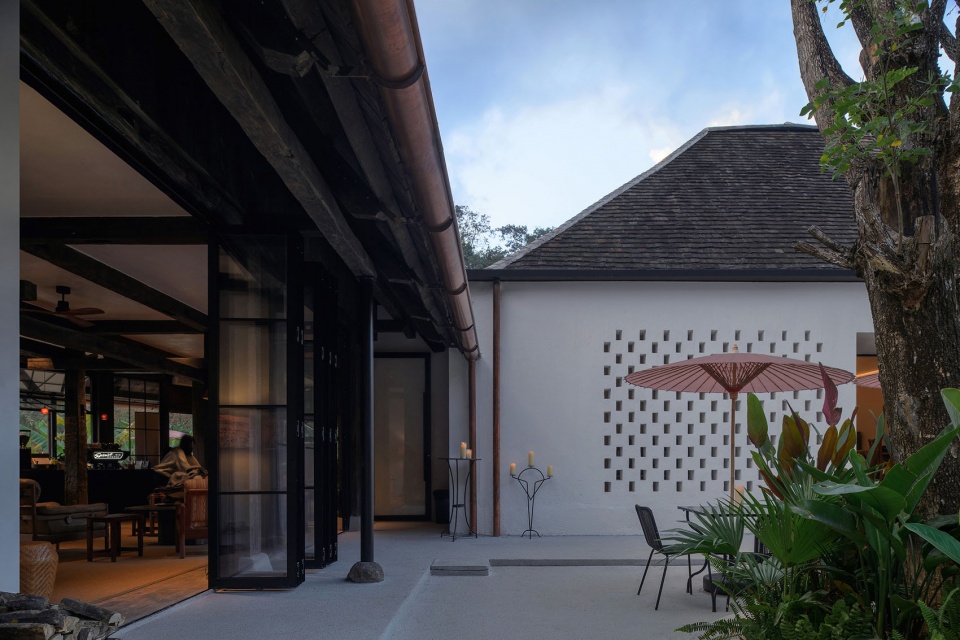
▼紫铜排水沟与天然老石板在细节处沉淀质感,
The purple copper drainage ditch and the natural old stone slabs create a subtle texture in the details
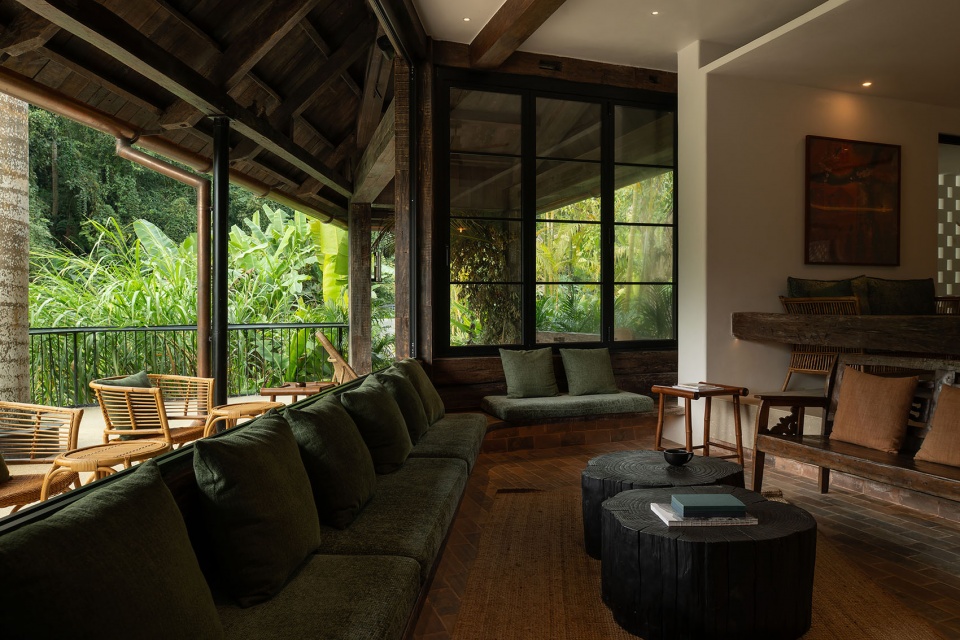
▼中古家具与老面料点缀其间,让空间有了温度,
Antique furniture and old fabrics are interspersed throughout, giving the space a sense of warmth
雨林宿集生态修复展厅 Rainforest Lodge Ecological Restoration Exhibition Hall
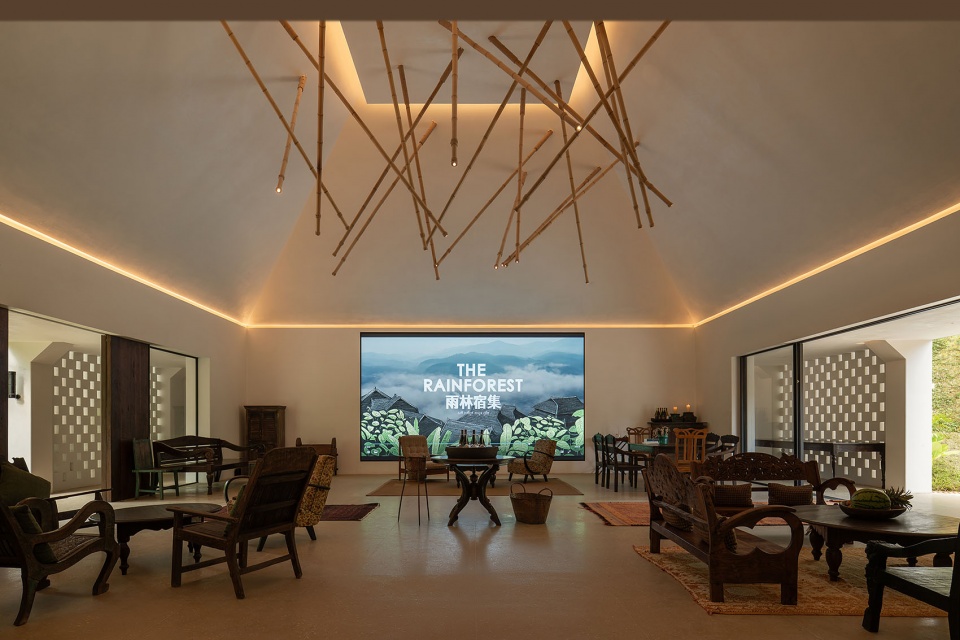
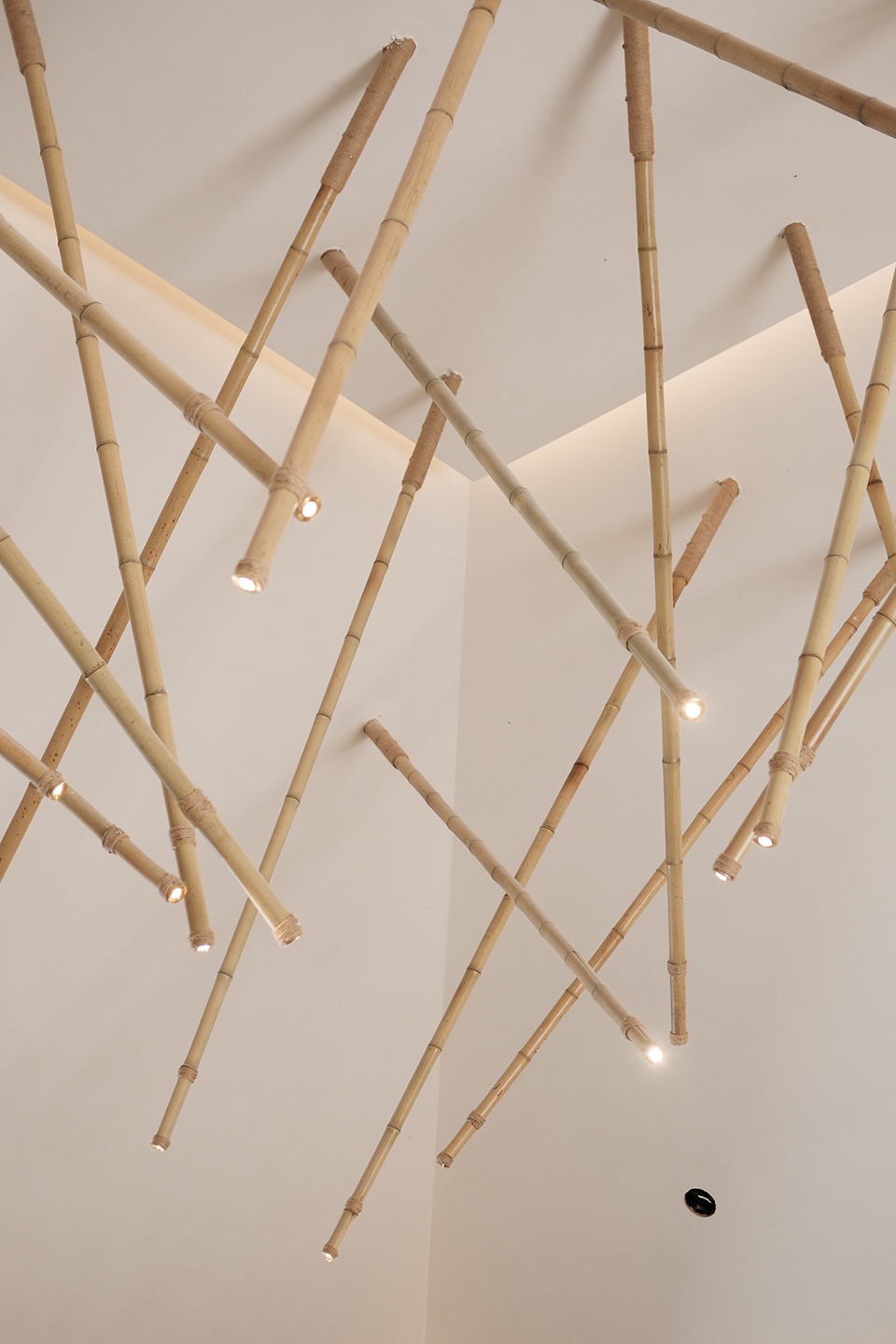
紧邻咖啡厅的白色建筑是雨林宿集生态修复展厅。我们旨在水泥建筑中营造热带风情的现代傣楼,在墙体外围增加一道白色孔砖砌成的圈廊,形成穿廊式灰空间,室内的光影若隐若现。建筑原始屋顶高挑,上铺大量回收的老瓦片,让建筑随着时间流逝,与自然生长愈发融合。室内展览空间,将云南特有的竹子组合成照明装置呈现于顶面,既满足多样化的灯光需求,也是在地性的设计表达。
The white building adjacent to the coffee shop is the Rainforest Lodge Ecological Restoration Exhibition Hall. Our aim is to create a modern Dai-style building with tropical charm within the concrete structure. We add a white brick circle corridor around the exterior walls to form a corridor-like gray space, creating an intermittent play of light and shadow inside. The original roof of the building is high, and it is covered with a large number of recycled old tiles, allowing the building to increasingly integrate with nature as time passes. The indoor exhibition space combines the unique bamboo of Yunnan into a lighting device and presents it on the ceiling, which not only meets diverse lighting needs but also expresses the local design concept.
▼鸟瞰雨林宿集生态修复展厅,Rainforest Lodge Ecological Restoration Exhibition Hall aerial view
▼雨林宿集生态修复展厅外观概览,
Rainforest Lodge Ecological Restoration Exhibition Hall exterior overview
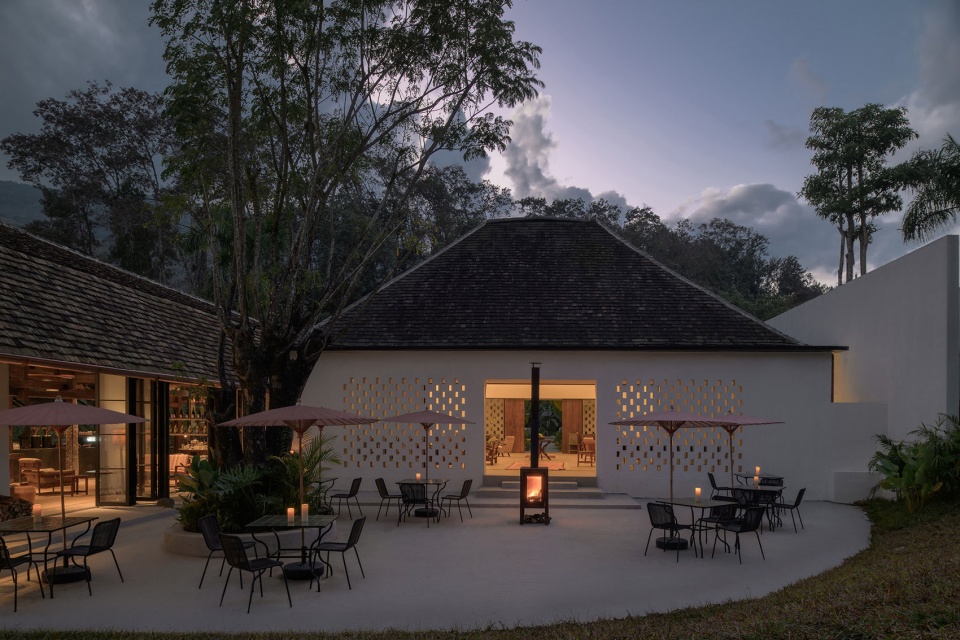
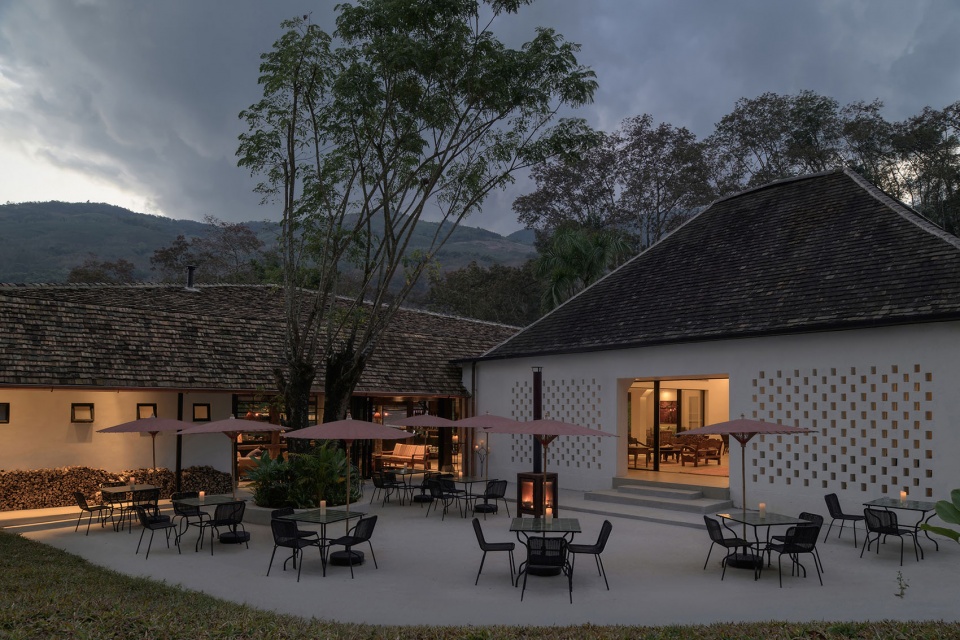
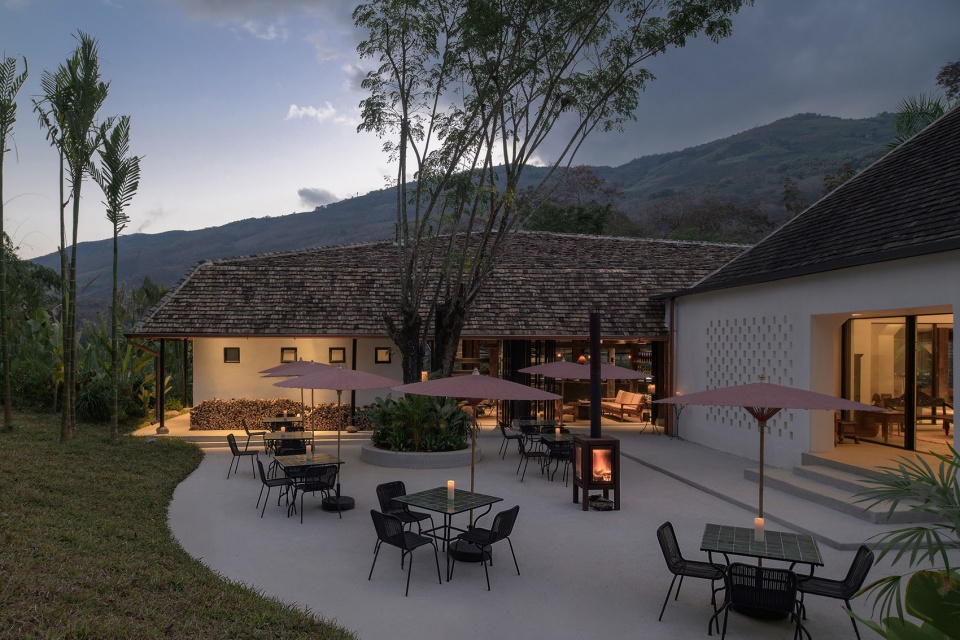
▼雨林宿集生态修复展厅正立面,
Rainforest Lodge Ecological Restoration Exhibition Hall front facade
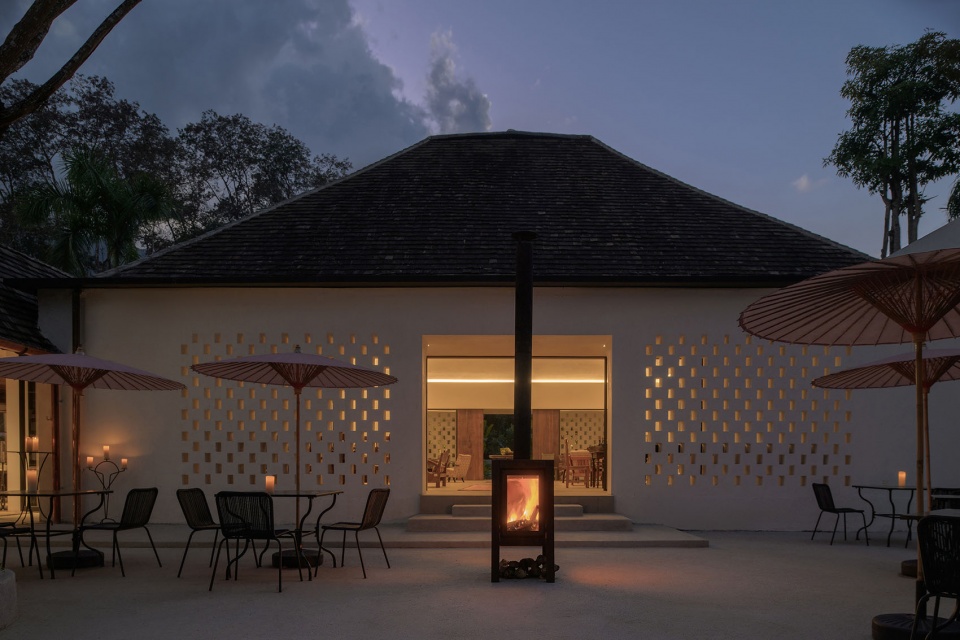
▼雨林宿集生态修复展厅室内,Rainforest Lodge Ecological Restoration Exhibition Hall interior
▼室内细部,Interior detail
离荒,抵达荒芜,逃离喧嚣 Depart from the wilderness, reach the desolation, escape the hustle and bustle
离荒,是抵达荒芜,亦是逃离喧嚣。从沙漠到雨林,带着风沙与自由的呼吸,在版纳扎根生长。这里不是逃离现实的终点,而是重新连接自我的起点。在丰饶的雨林之中,在粗粝与温润之间,离荒岛COFFEE等待着每一个需要片刻离荒的人。
Departing from the wilderness means reaching the desolation and also escaping the hustle and bustle. From the desert to the rainforest, carrying the breath of sand and freedom, taking root and growing in the Banna region. This is not the end of escaping reality, but the starting point of reconnecting with oneself. In the fertile rainforest, between roughness and warmth, the Remote Island COFFEE of Departing from the Wilderness awaits everyone who needs a moment of departure from the hustle and bustle.
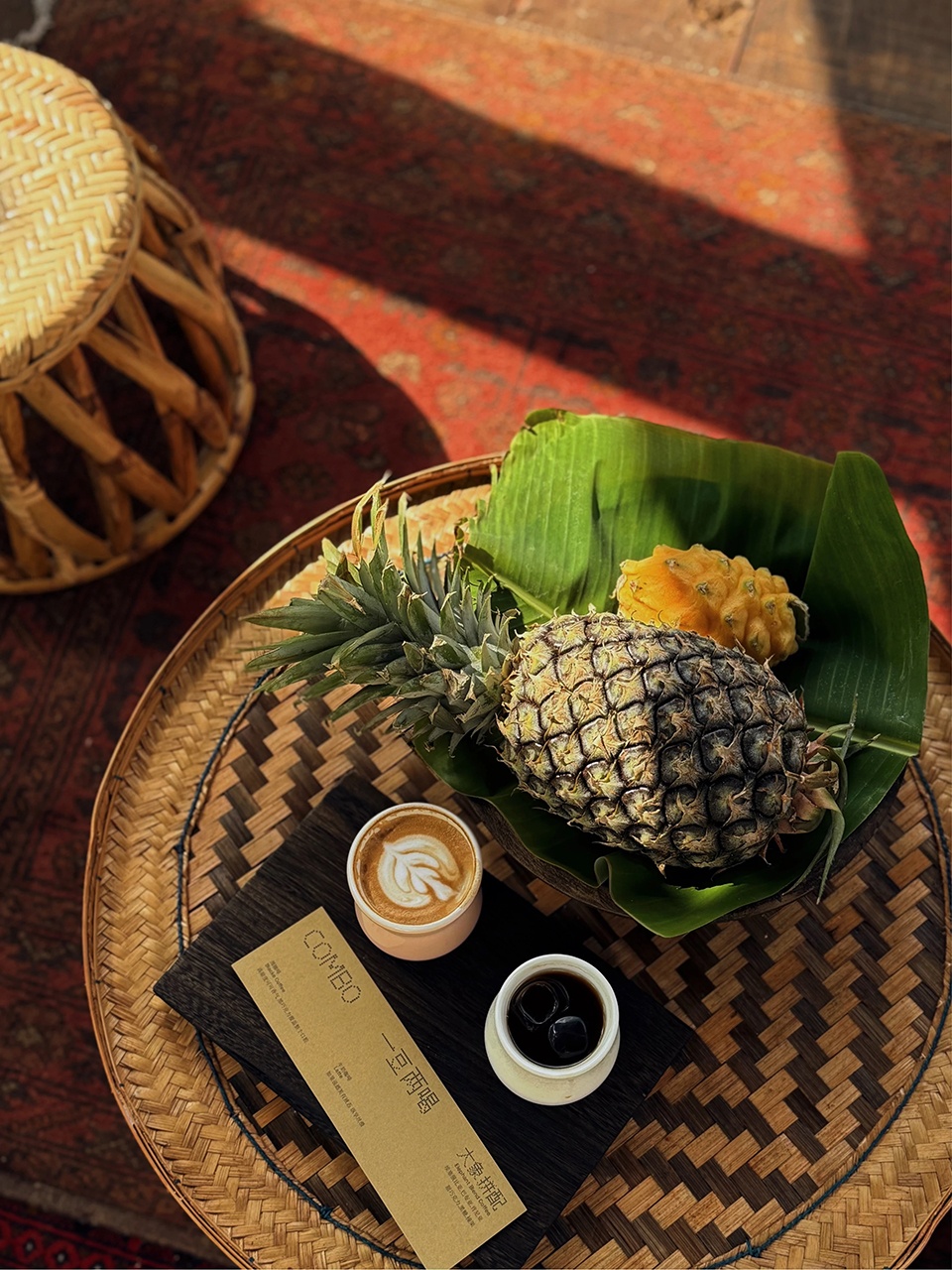
▼一豆两喝大象拼配,One Bean, Two Drinks – Elephant Mixology
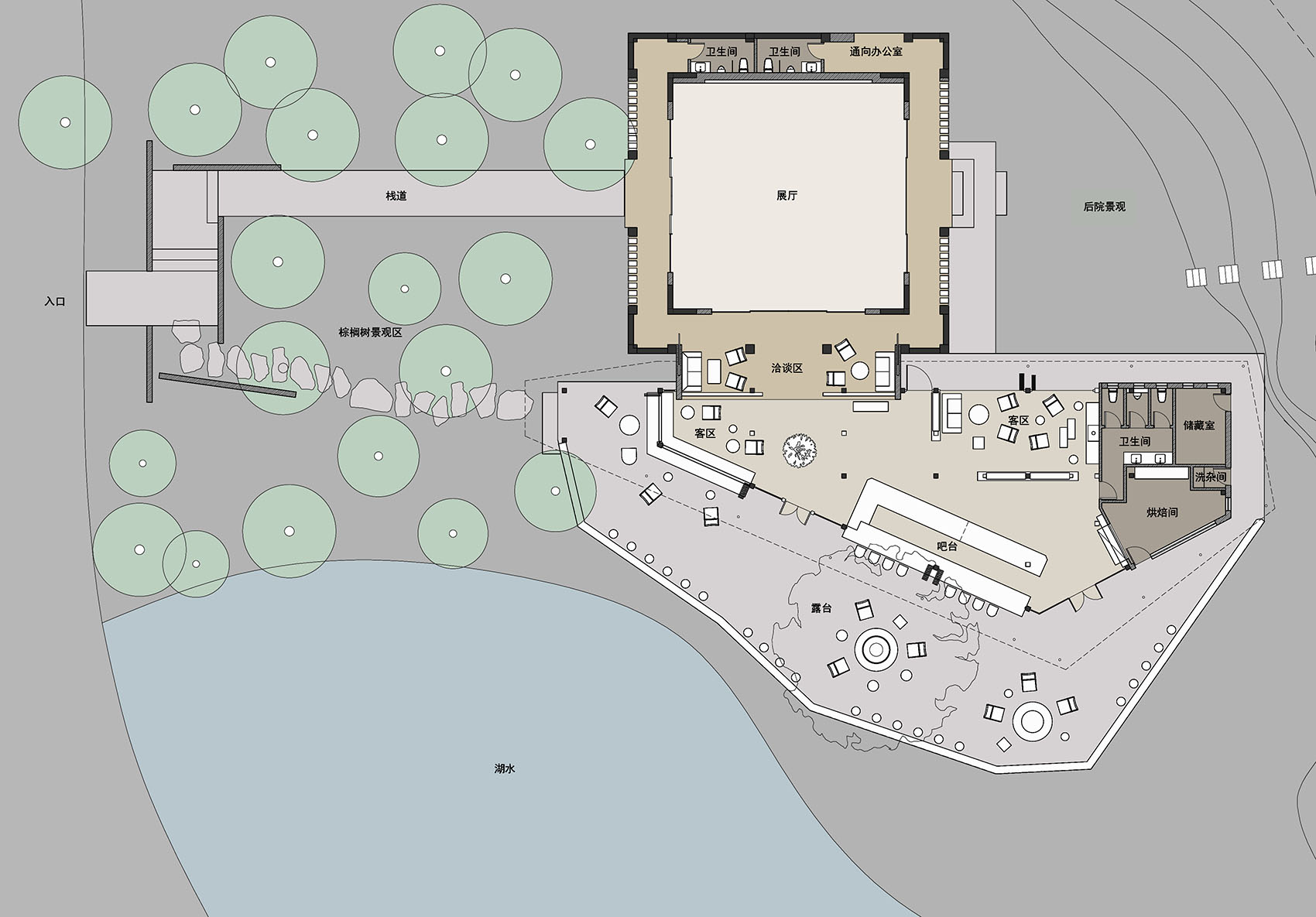
▼平面布局,Floor plan
Project Name: Remote Island COFFEE · Rainforest Hostel
Project Area: 420 square meters indoors, 260 square meters outdoors
Project Address: Mansha Farm, Jinghong City
Completion Date: November 2025
Interior Design: Hangzhou Guantang Interior Design Co., Ltd.
Construction: Huazheng Culture and Tourism
Logo Production: Ningbo Zero-Three Signage
Lighting: Ningxia Guangzhujia Lighting
Furniture: Huazheng Culture and Tourism
Main Materials: Washed stone, lime stone, weathered wooden beams, old Dai tiles
Space Photo: Nanxi Photography