沃伦森林生态野外研究站——芝加哥大学,美国 / OPAL
沃伦森林生态野外研究站由芝加哥大学生态与演化系委托设计,是北美首座、也是目前唯一一座获得被动房认证(Certified Passive House)的实验室设施。建筑面积约2,400平方英尺,展示了研究型环境如何在支持科学研究、教育与社区参与的同时,实现最严苛的能源性能标准。项目位于密歇根州西南部一处占地42英亩的场地之中,为应对人类世(Anthropocene)背景下生态与人类适应等紧迫议题提供了研究场所。
The Warren Woods Ecological Field Station, designed for the University of Chicago’s Department of Ecology and Evolution, is the first and only Certified Passive House laboratory facility in North America. At 2,400 square feet, the building demonstrates how research environments can meet the most rigorous energy standards while supporting scientific inquiry, education, and community engagement. Located on a 42-acre site in southwest Michigan, it provides a setting for addressing the pressing challenges of ecology and human adaptation in the Anthropocene.
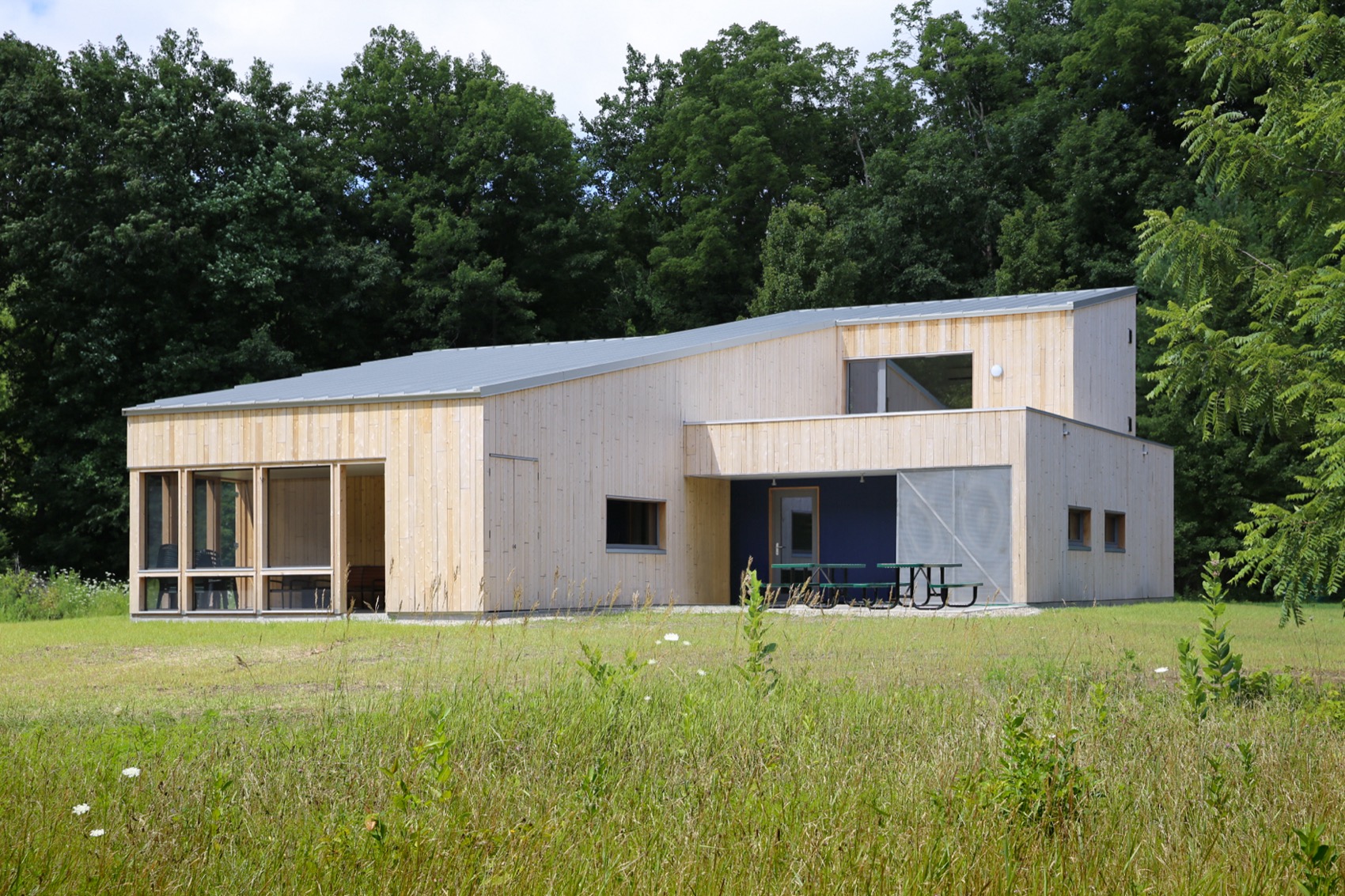
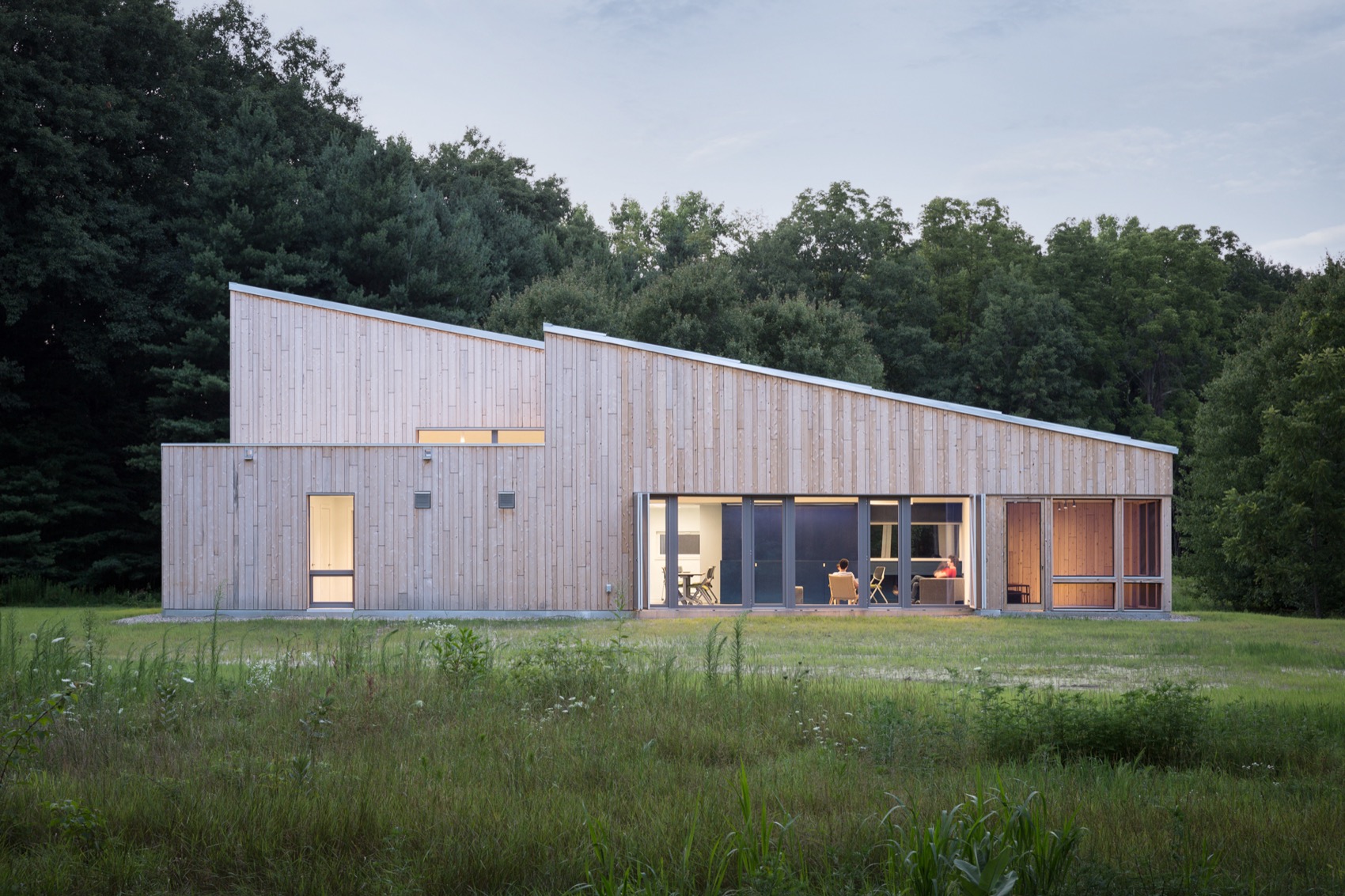
▼长坡屋顶嵌入自然景观之中,Long shed roof embedded within the natural landscape
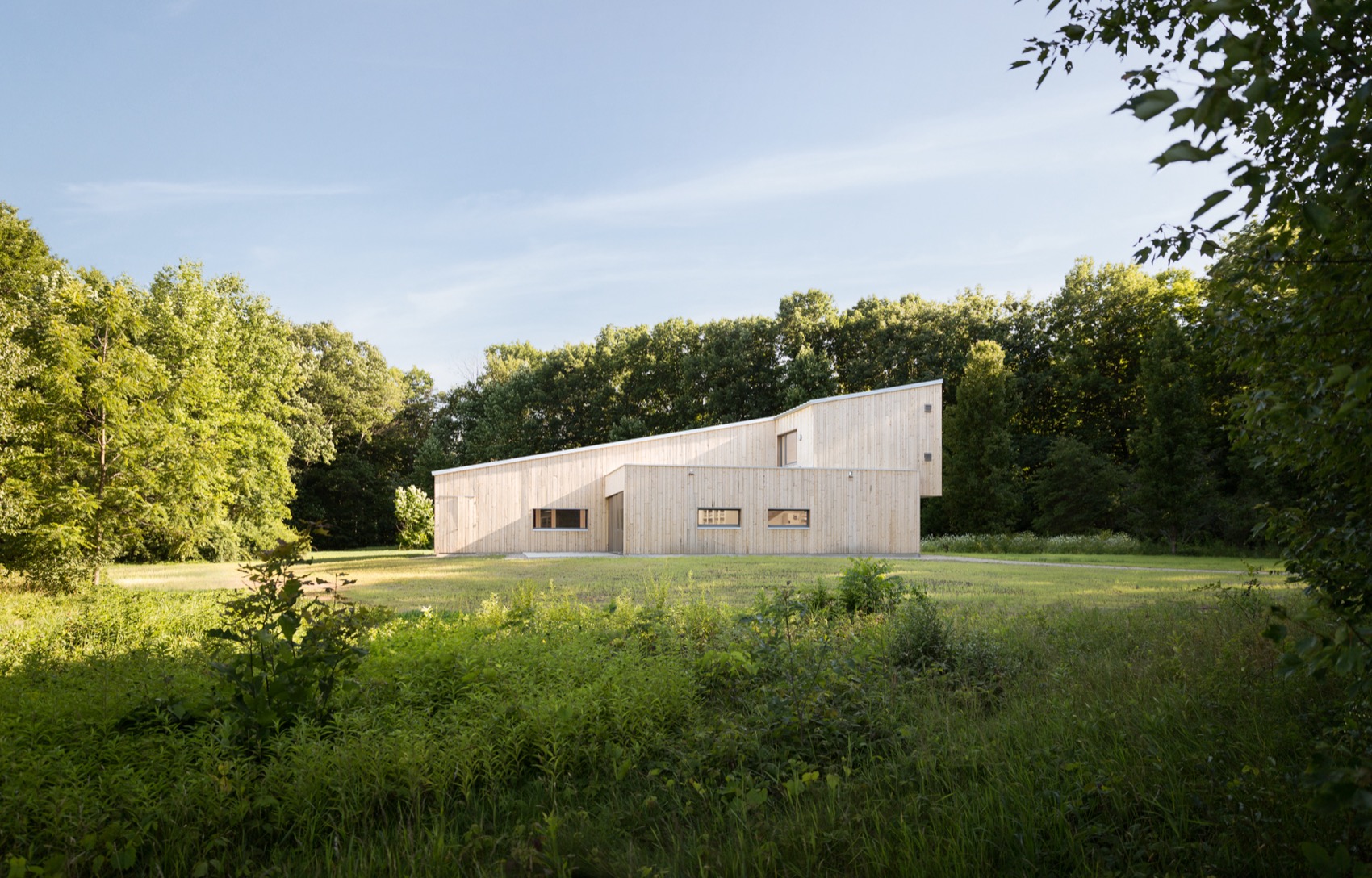
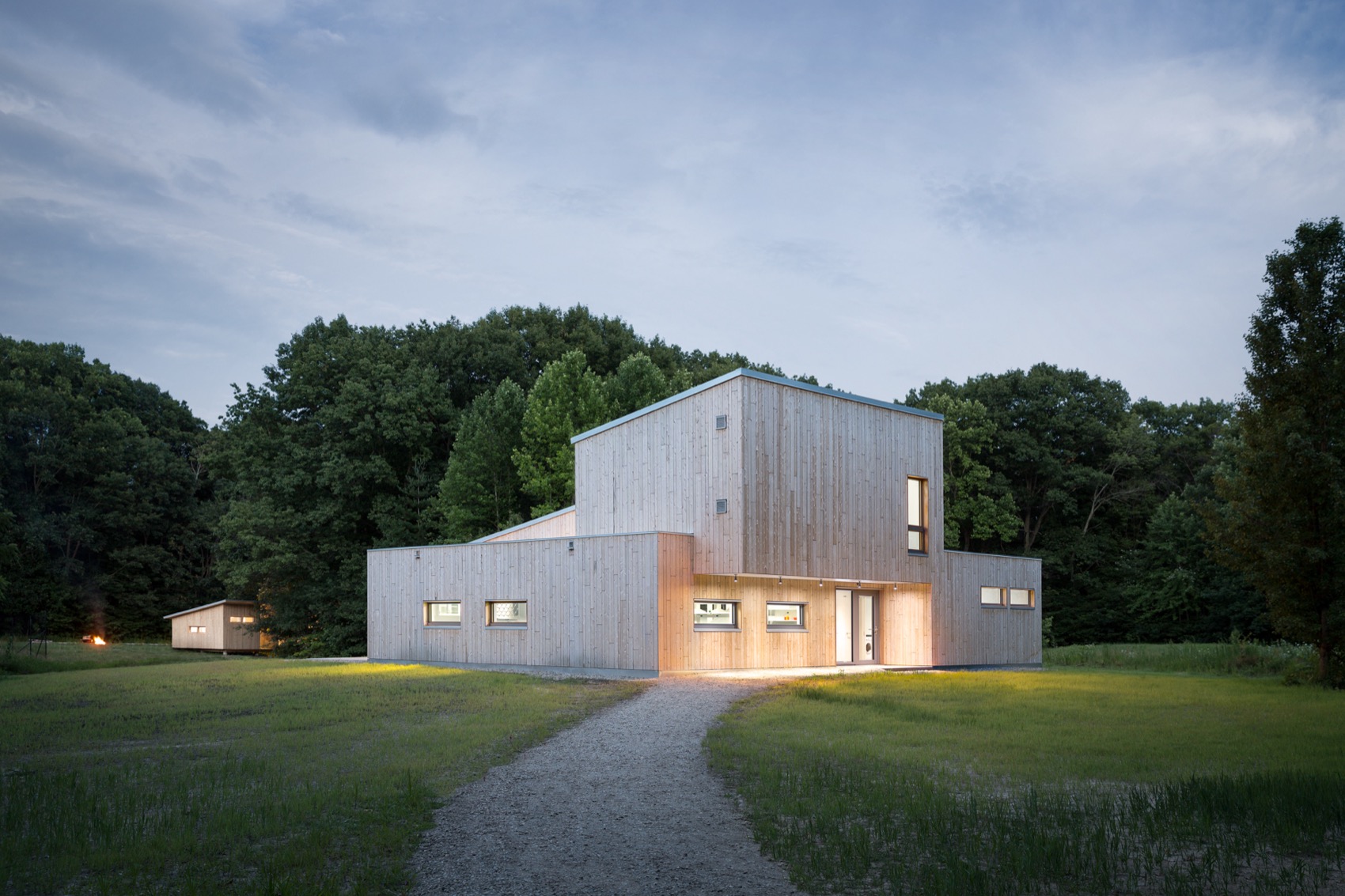
▼建筑外景,Exterior of the building
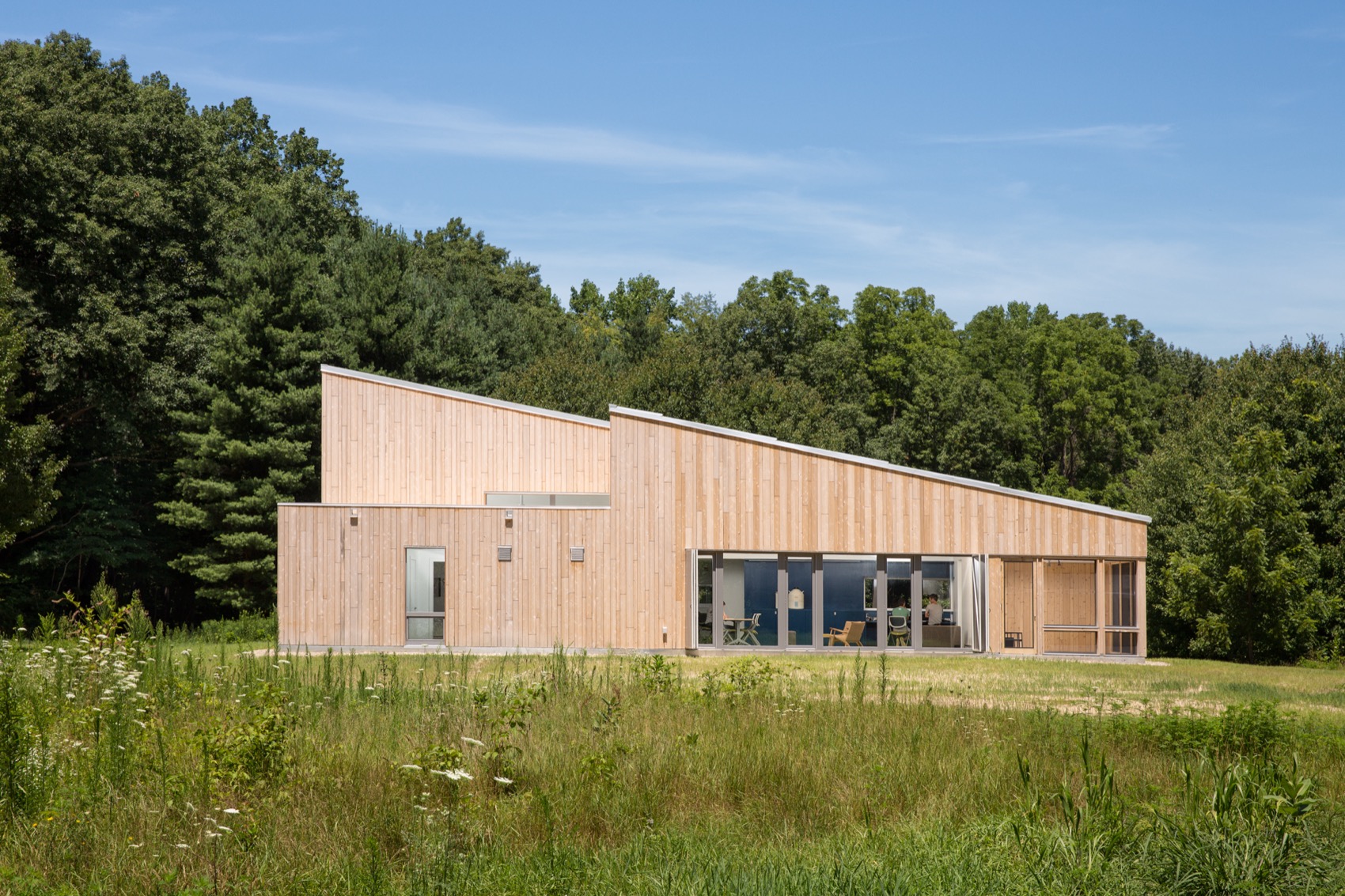
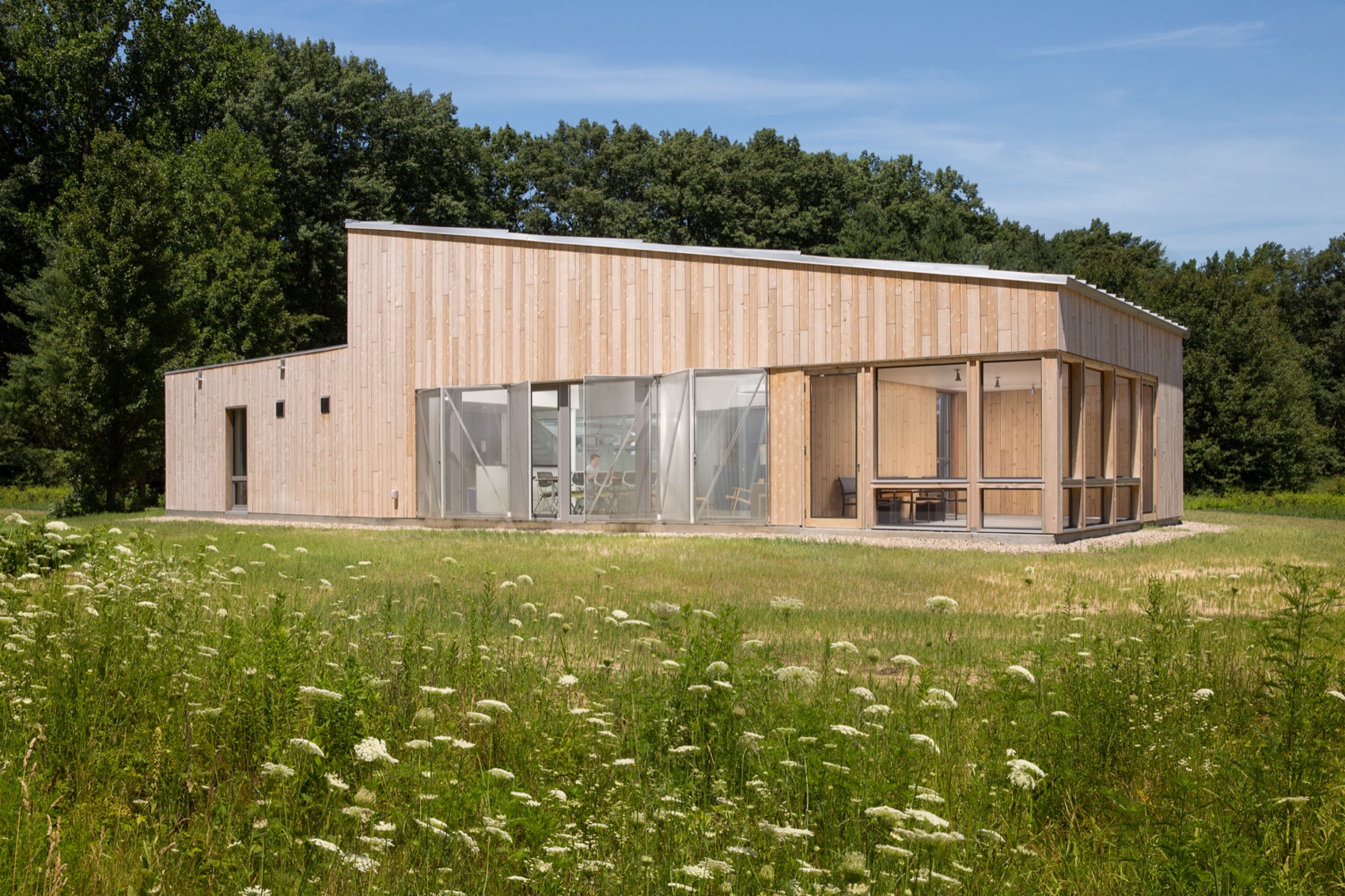
▼建筑立面回应林地中的开阔场地,Facade responding to the open clearing within the forest
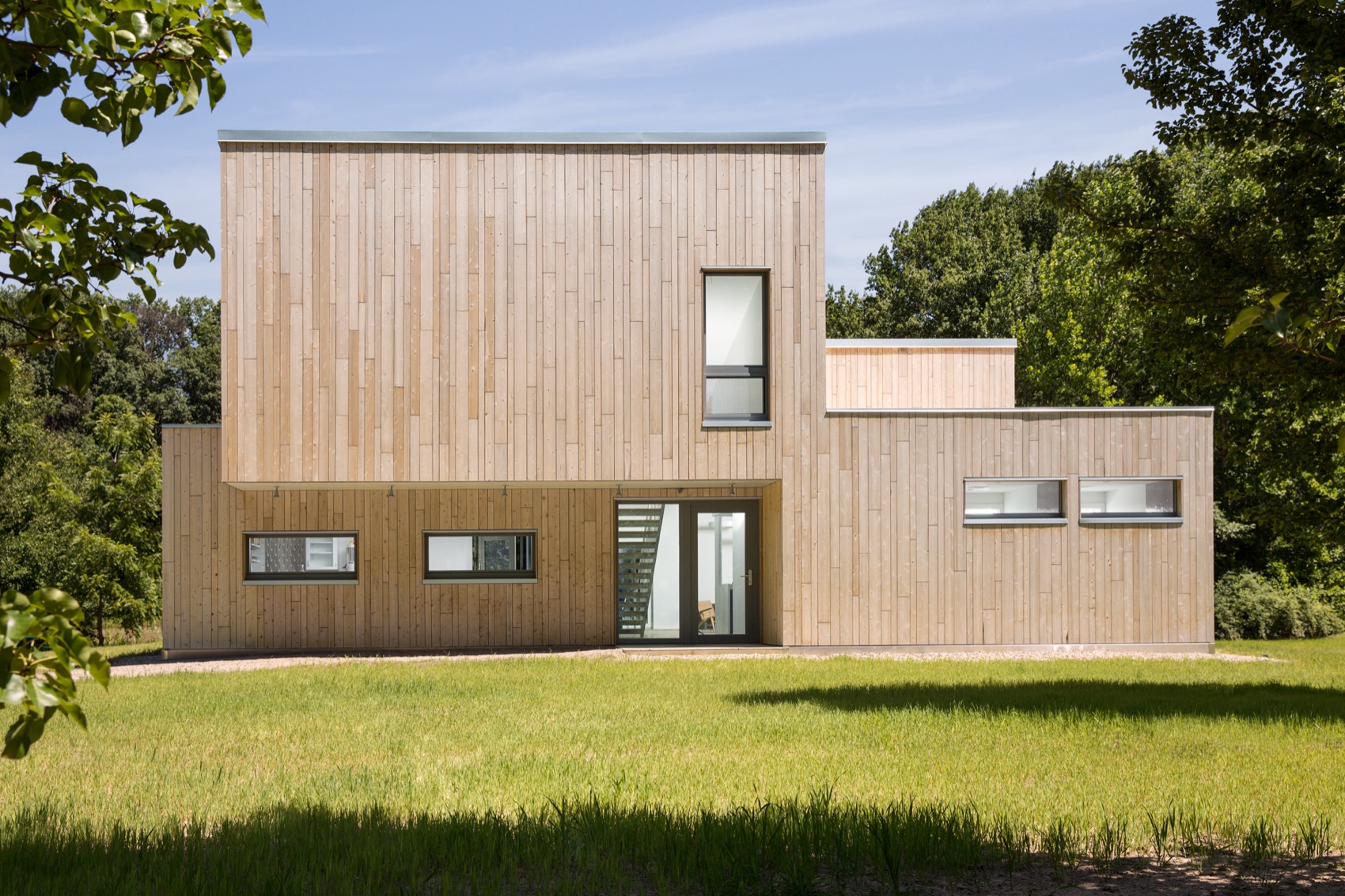
该设施包含一间设备齐全的实验室、研讨空间、卫生间以及小型厨房。二层阁楼与屋顶平台为学术驻留与聚会活动提供了灵活空间,另外还配有三栋相邻宿舍及一间洗衣房,以服务季节性项目需求。充满自然采光的室内环境在技术需求与使用舒适度之间取得平衡,既可容纳先进科研设备,又维持了被动房性能标准。
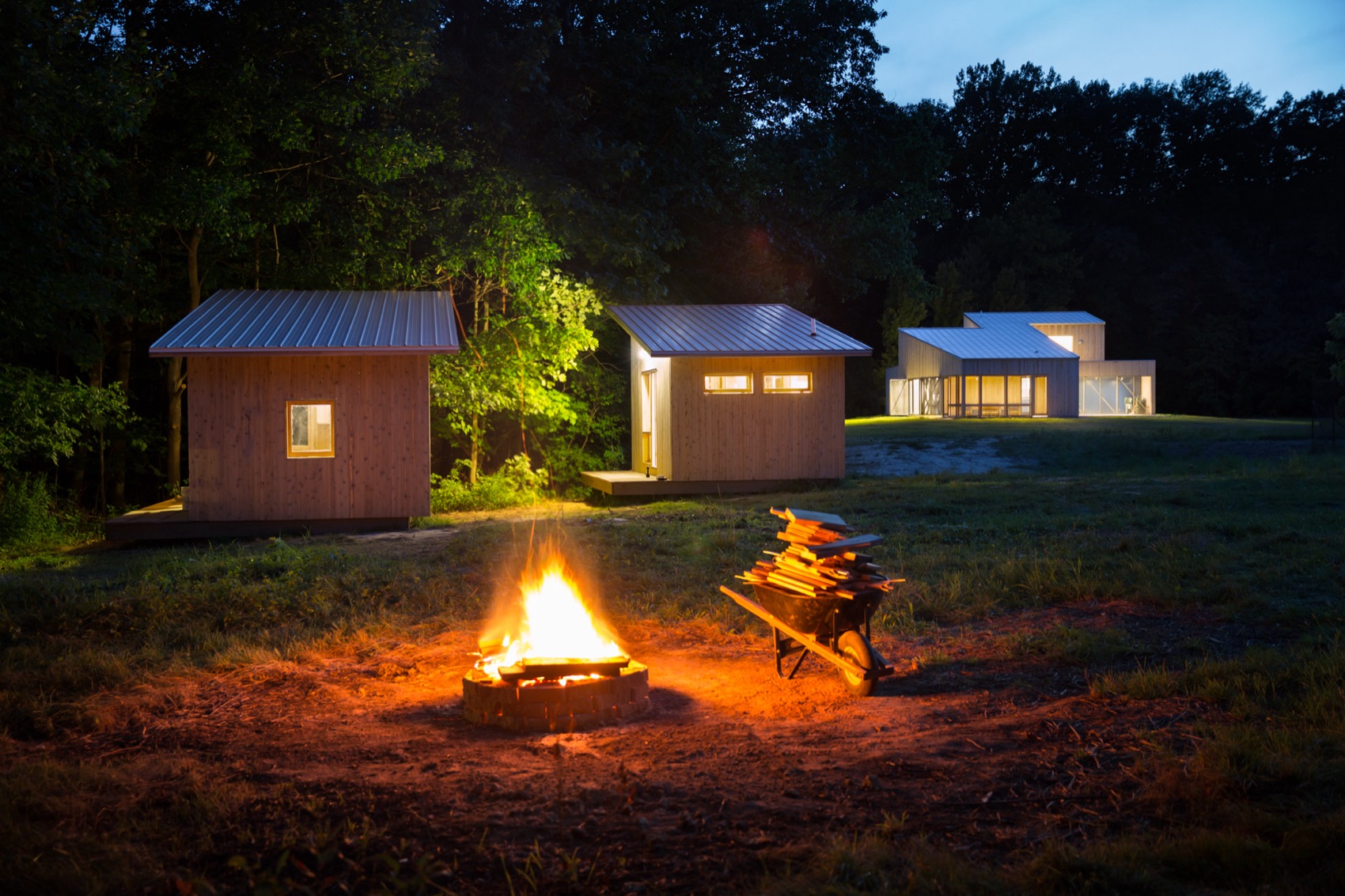
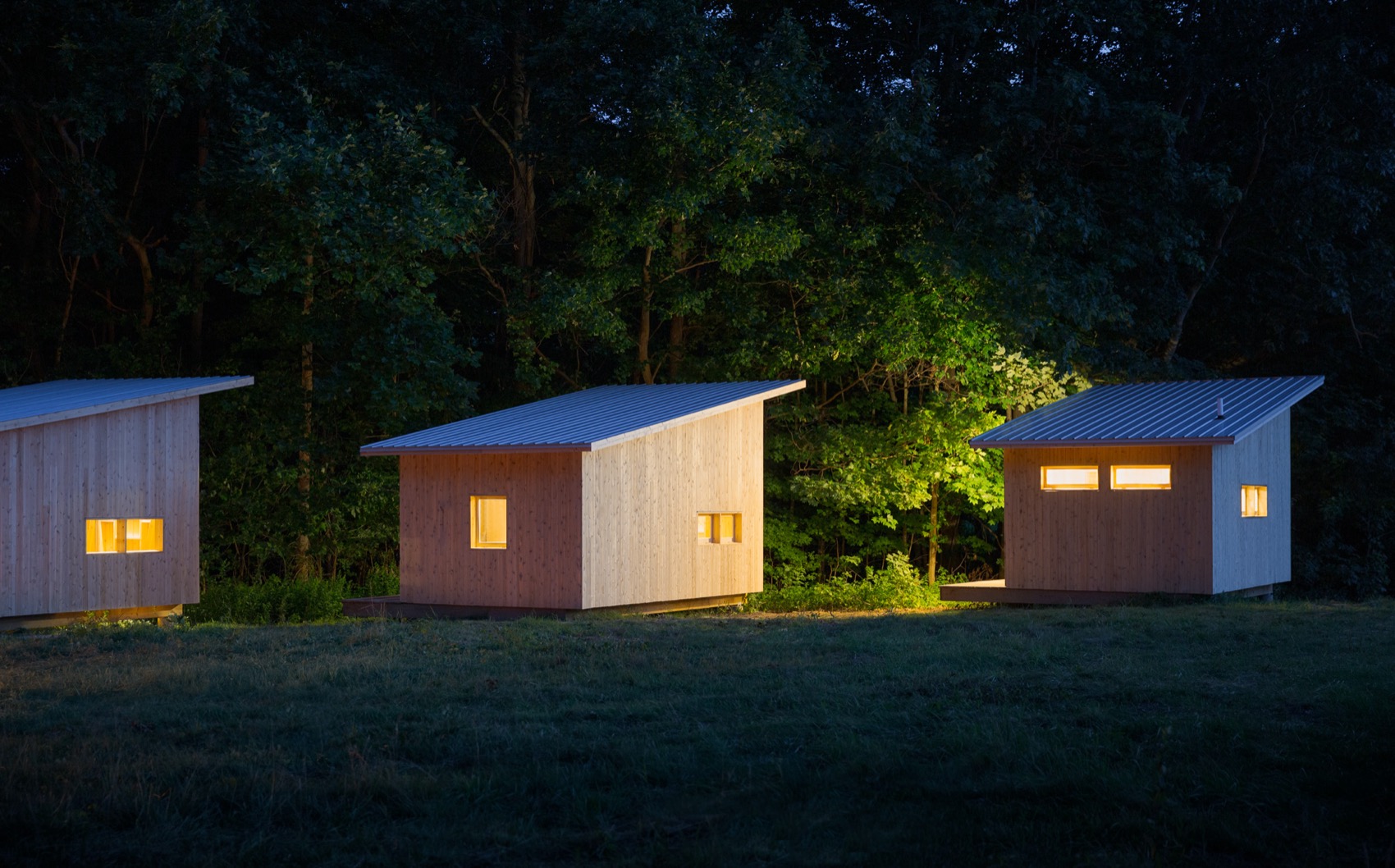
The facility houses a fully equipped laboratory, seminar space, bathrooms, and a small kitchen. A second-floor loft and roof deck create flexible space for retreats and gatherings, complemented by three adjacent bunkhouses and a wash house for seasonal programs. Daylit interiors balance technical demands and occupant comfort, accommodating advanced research tools while maintaining Passive House performance.
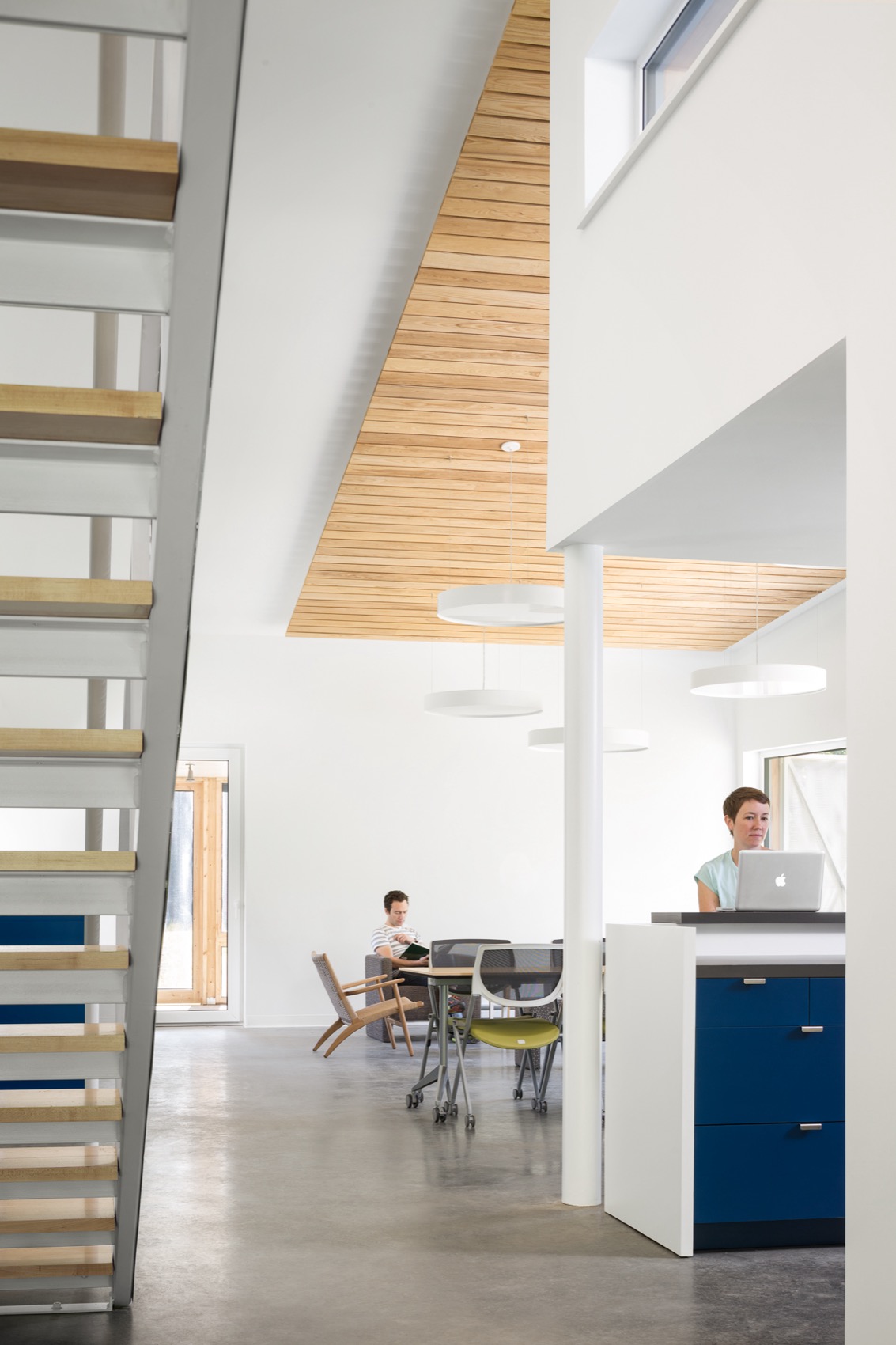
▼室内空间,Interior space
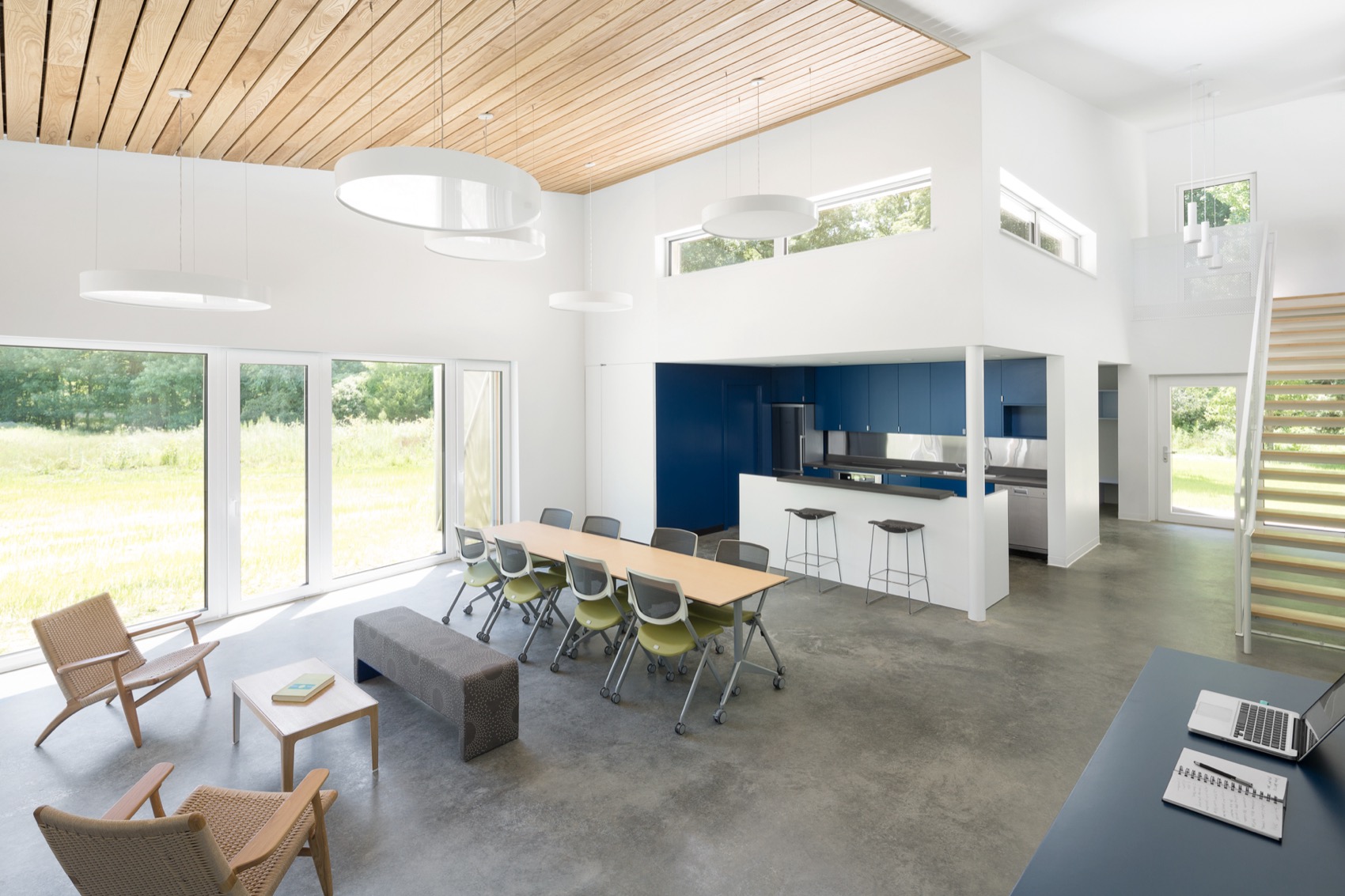
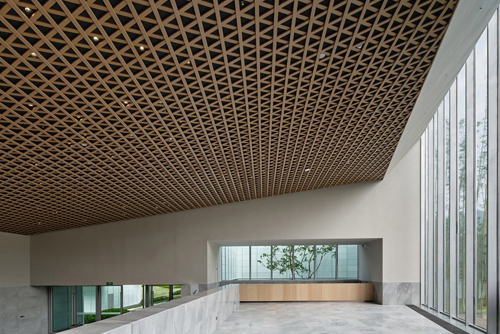
▼白色室内与木质顶面形成对比,
Contrast between white interiors and timber ceiling
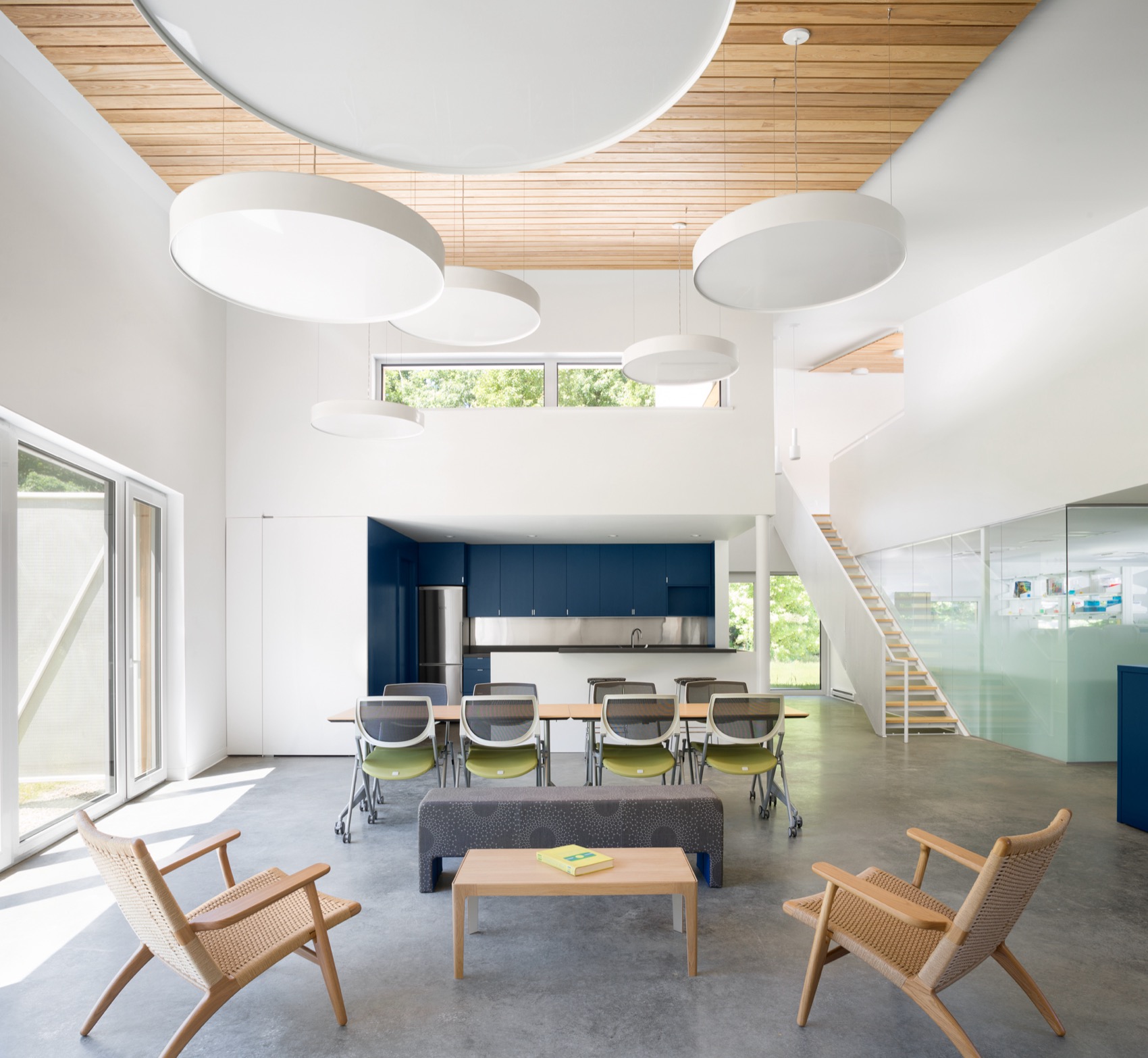
▼开放楼梯连接不同层级空间,
Open stair connecting multiple levels
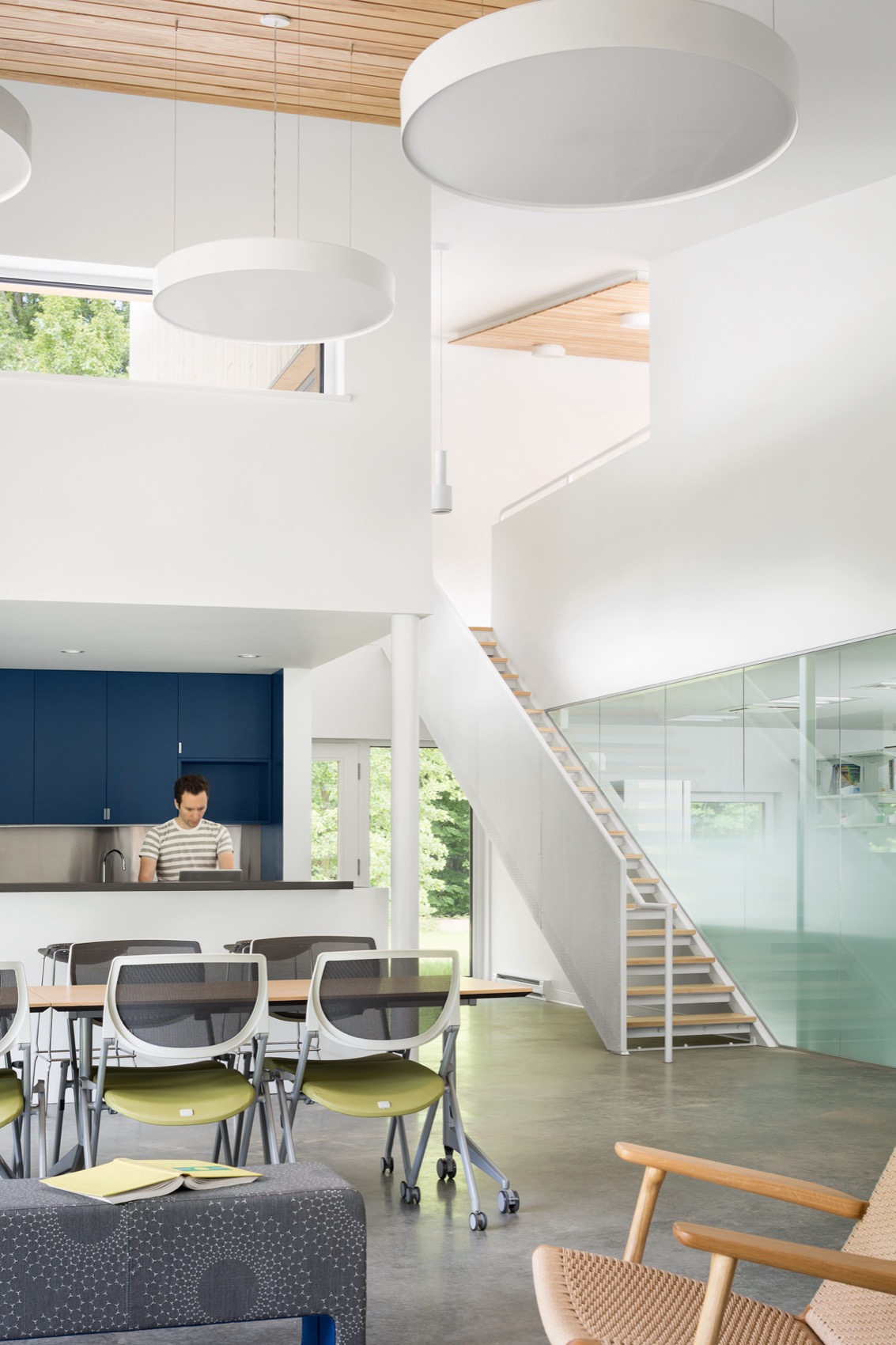
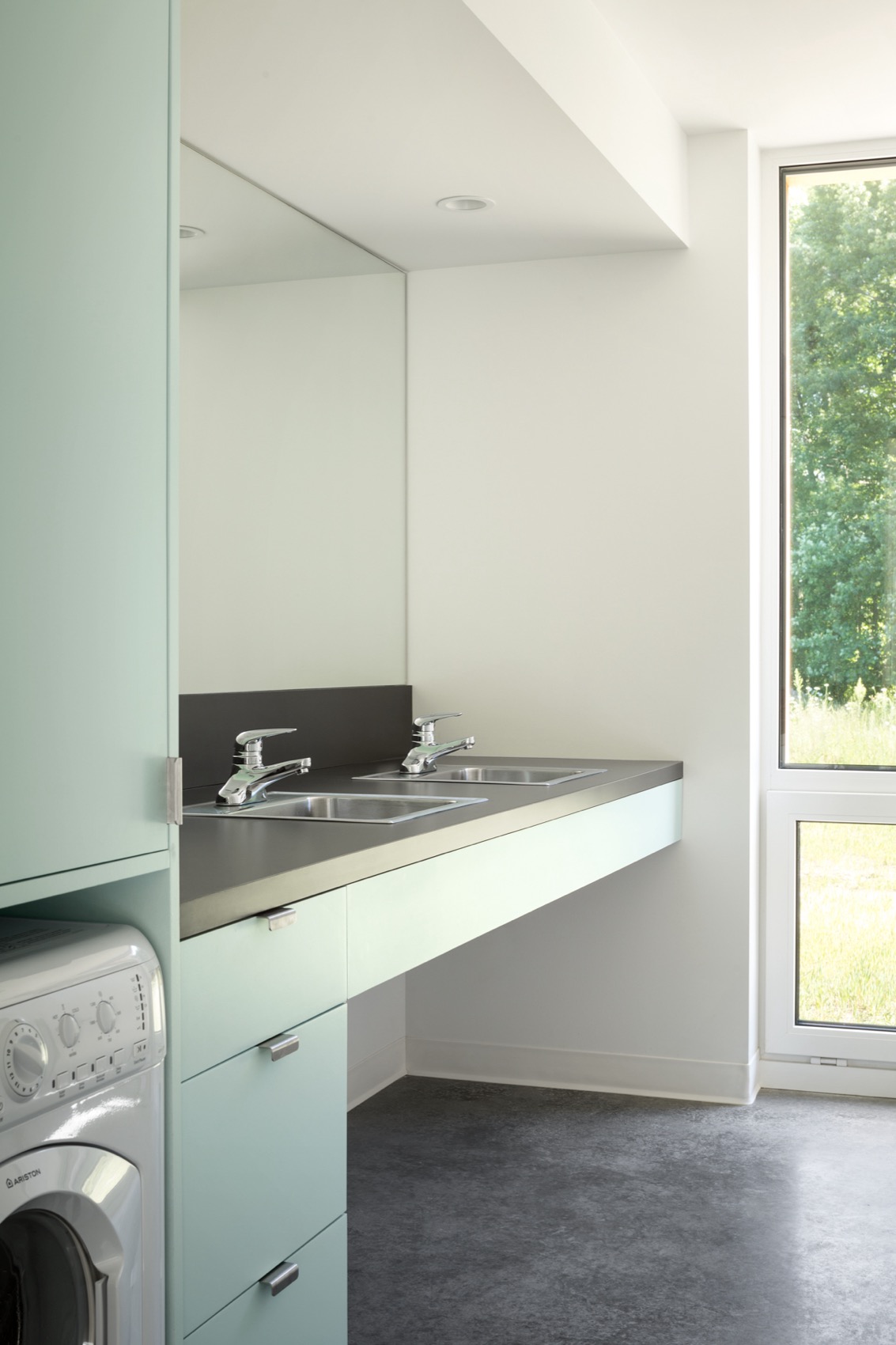
▼浅色柜体营造明亮室内氛围,
Light-toned cabinetry creating a bright interior atmosphere
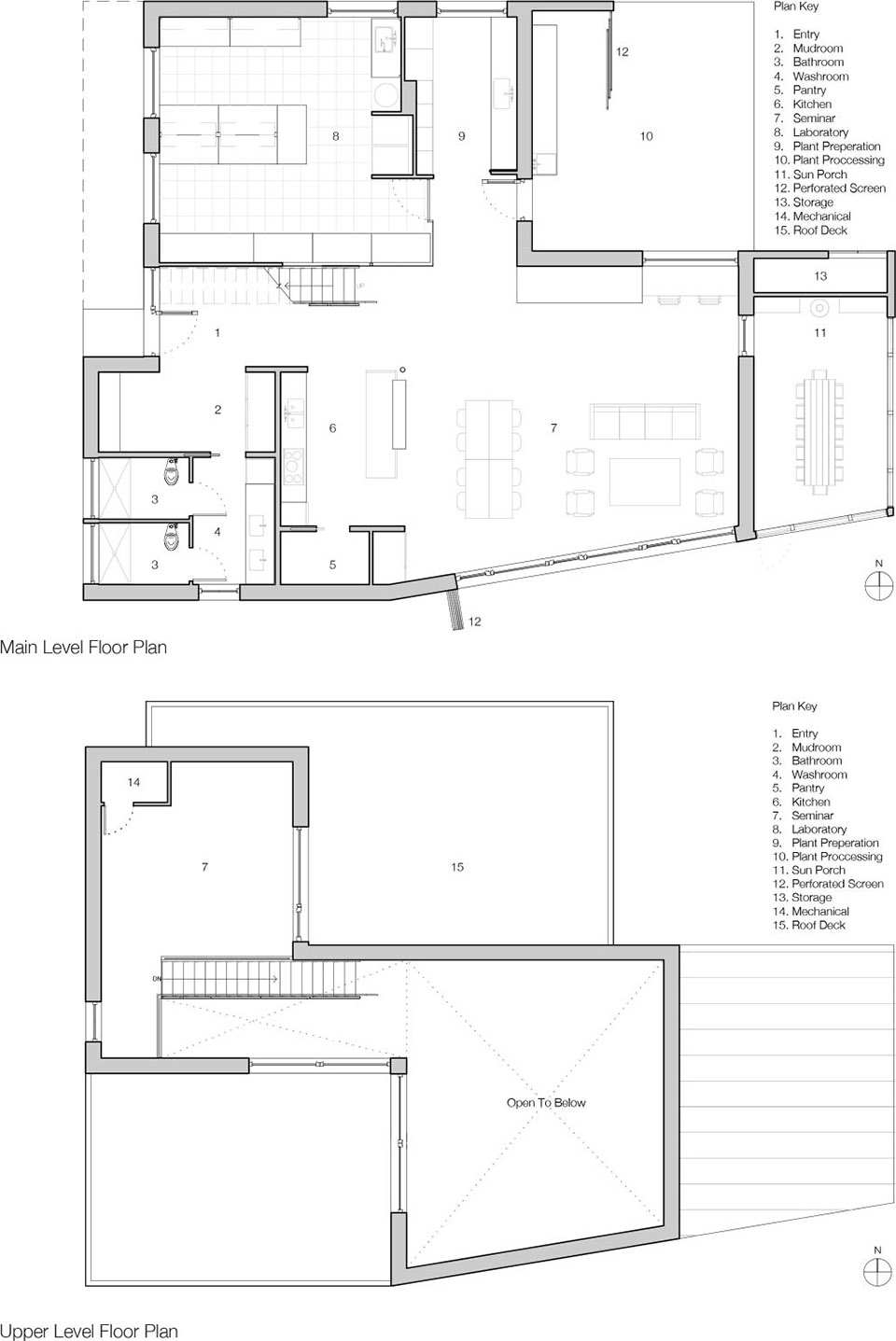
能源效率与复杂功能需求塑造了建筑中的每一项设计决策。实验室被布置于相对凉爽的西北角,以抵消植物生长舱、超低温冰箱以及DNA提取设备所产生的热量。深挑檐用于遮蔽西向玻璃界面,而覆盖整栋建筑的通风系统则能够根据需求回收或排放余热,为建筑整体服务。
Energy efficiency and programmatic complexity shaped every design move. Laboratories are positioned in the cooler northwest corner to offset heat from plant-growth chambers, extreme low-temperature freezers, and DNA extraction equipment. A deep roof overhang shades west-facing glazing, while a full-building ventilation system captures or exhausts waste heat to serve the building as needed.
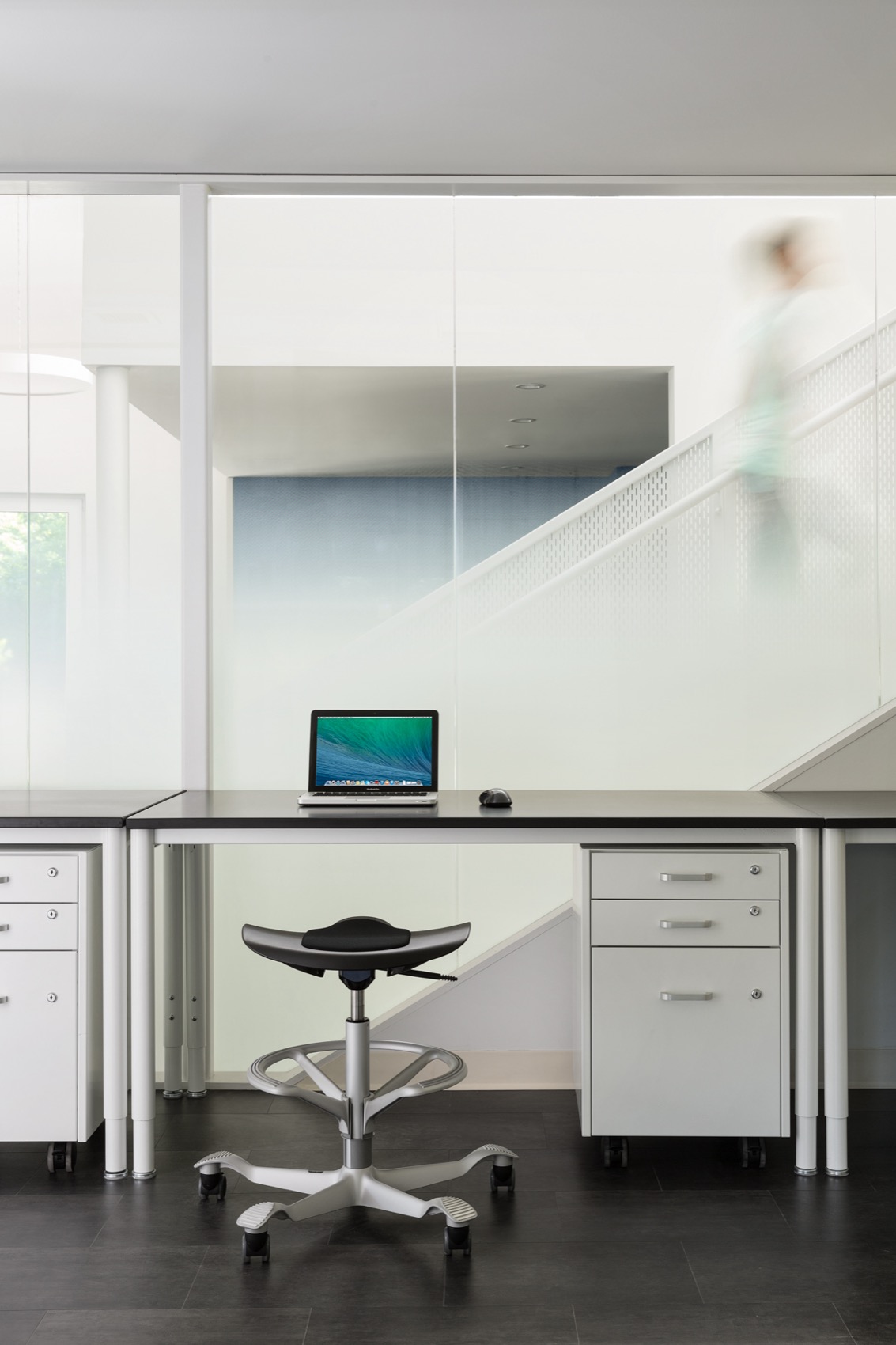
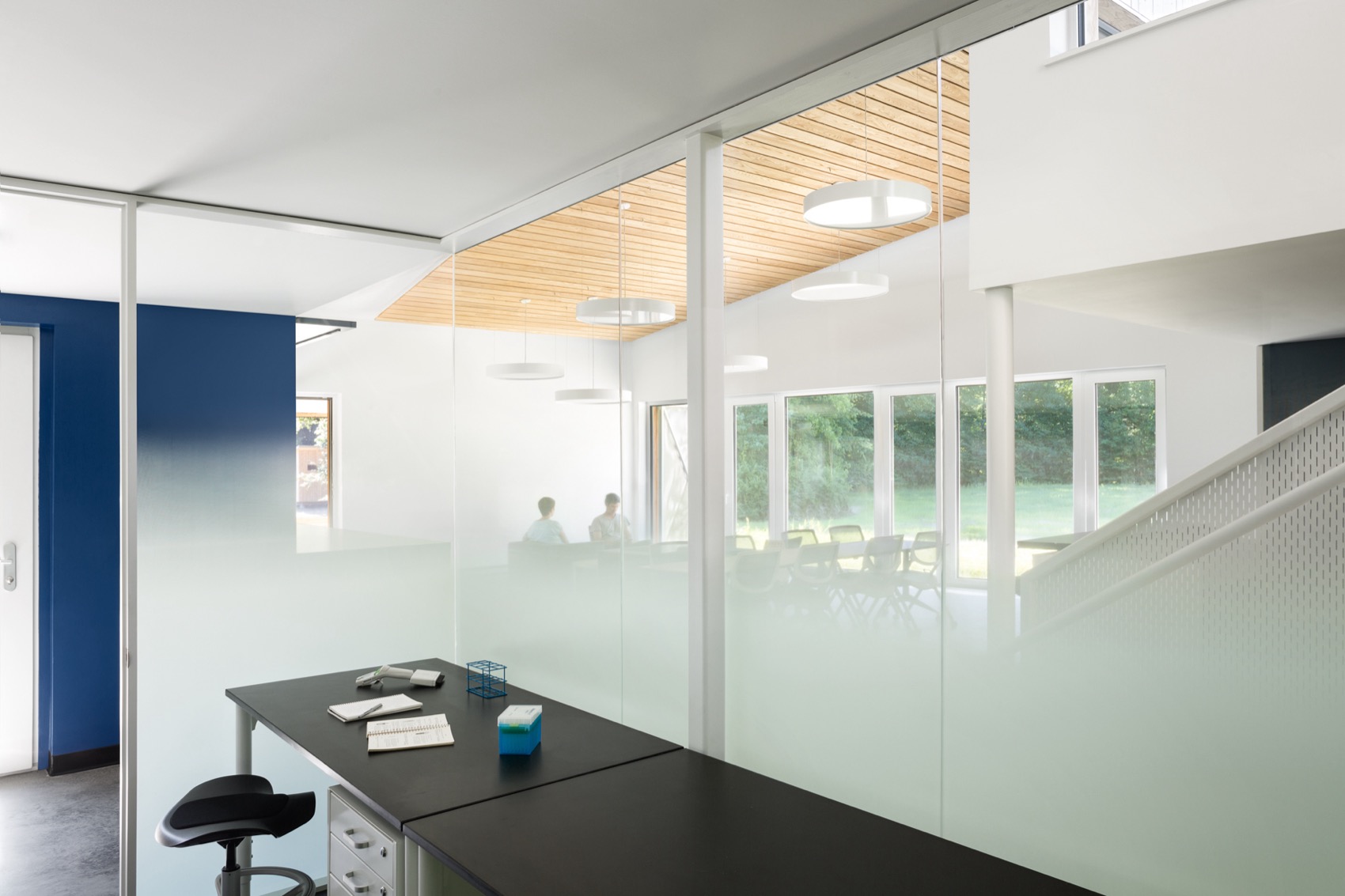
▼玻璃隔断组织内部流线关系,
Glass partitions organizing internal circulation
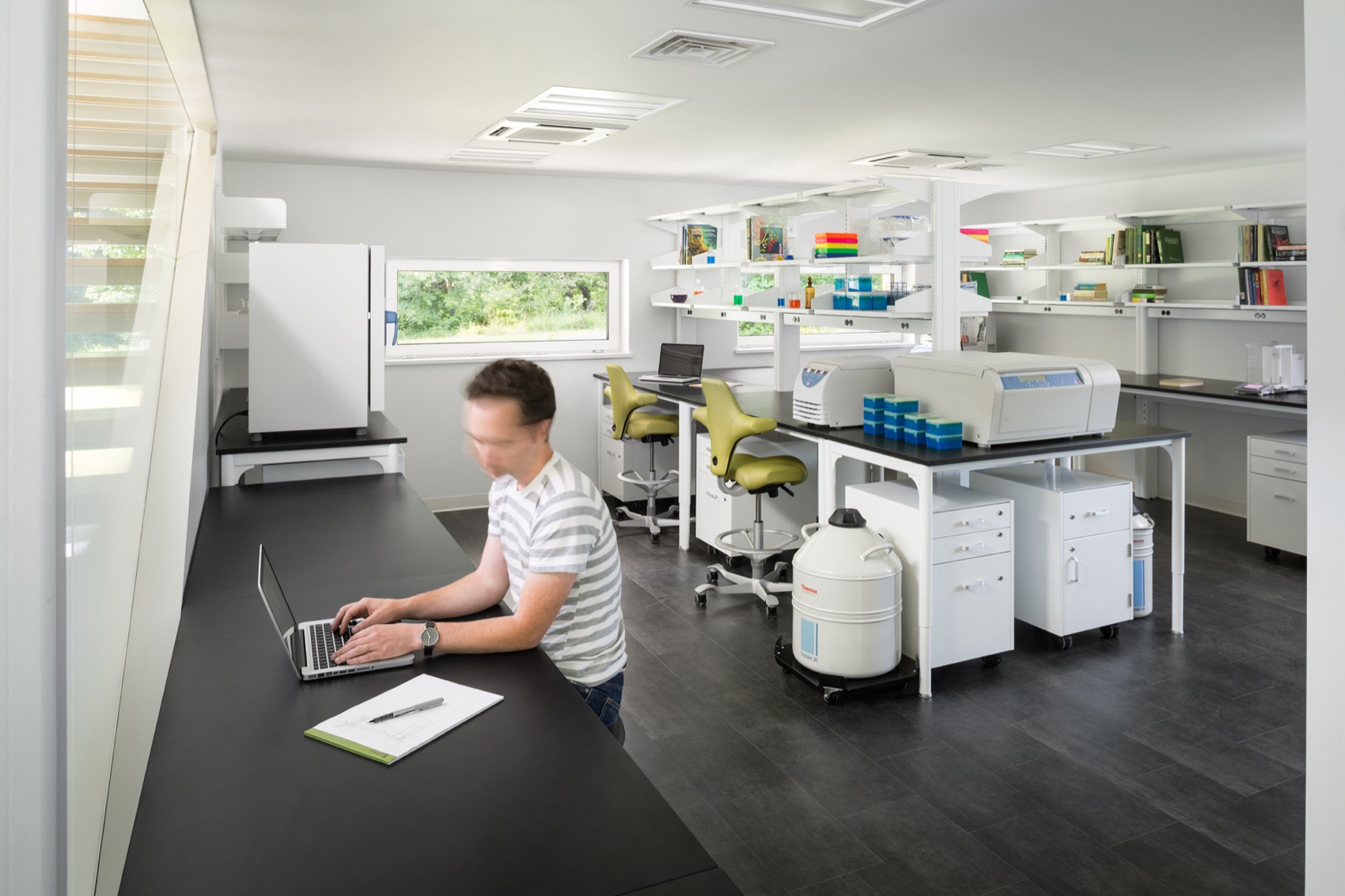
▼科研空间中的日常使用场景,Everyday use within the research environment
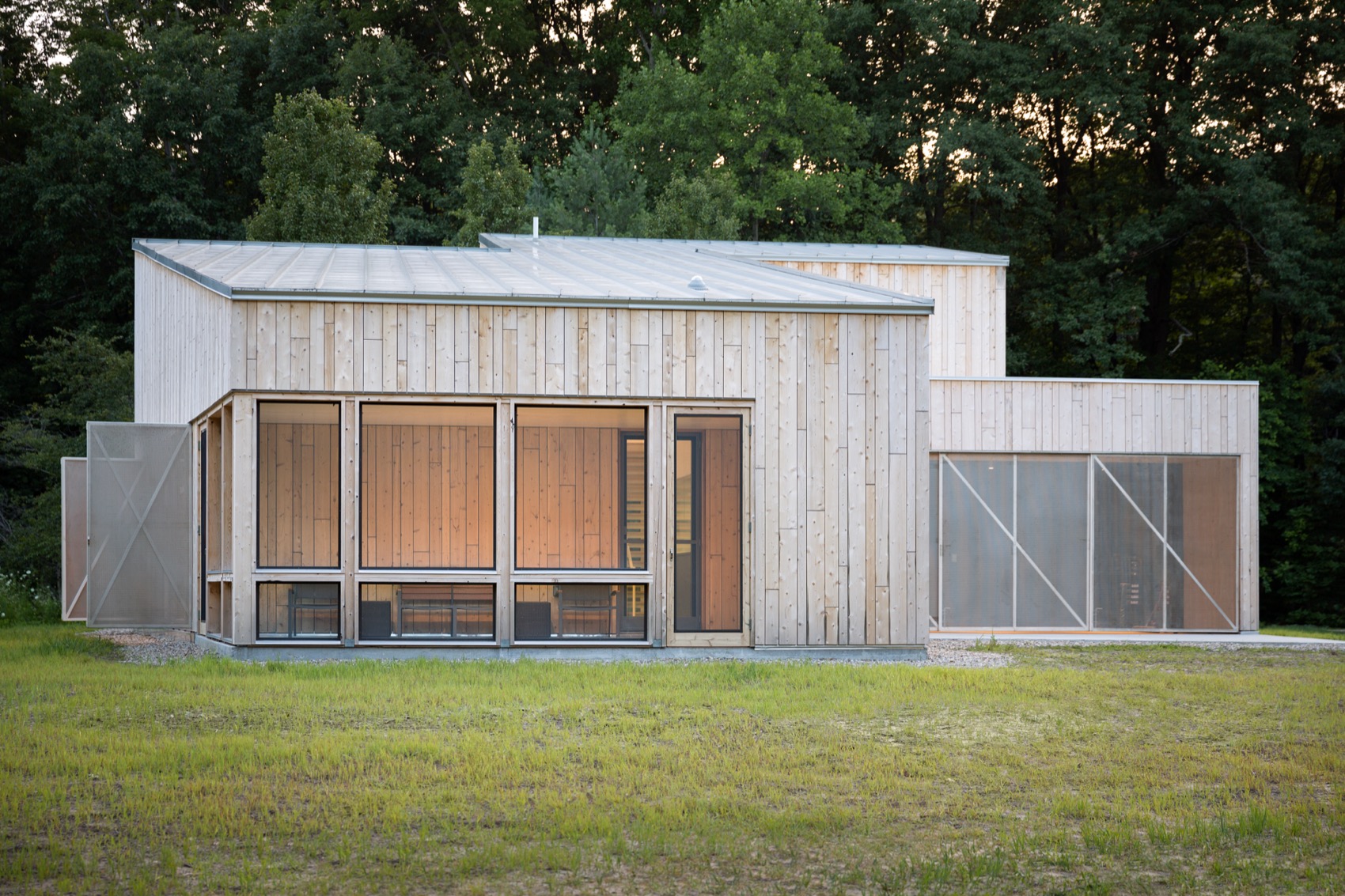
在建筑语言上,研究站结合了长坡屋顶、大面积朝南玻璃界面,以及可开启的定制穿孔金属遮阳屏,以调节不同季节的太阳得热。高保温性能的混凝土底板则帮助室内全年维持稳定温度。经过做旧处理的雪松木板包覆着抽象的几何体量,使建筑融入林地环境之中,同时也传达出其先进的科研属性。
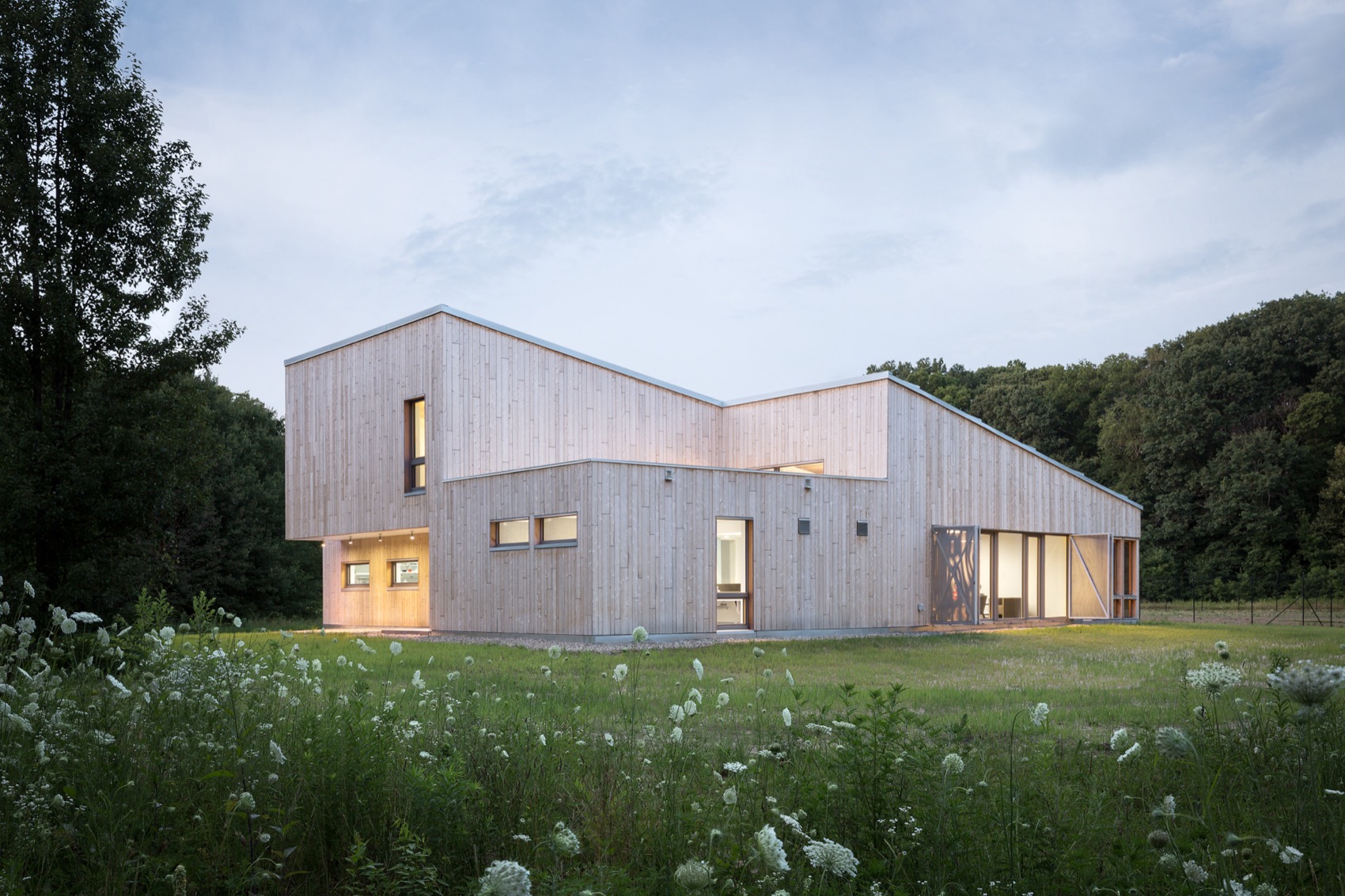
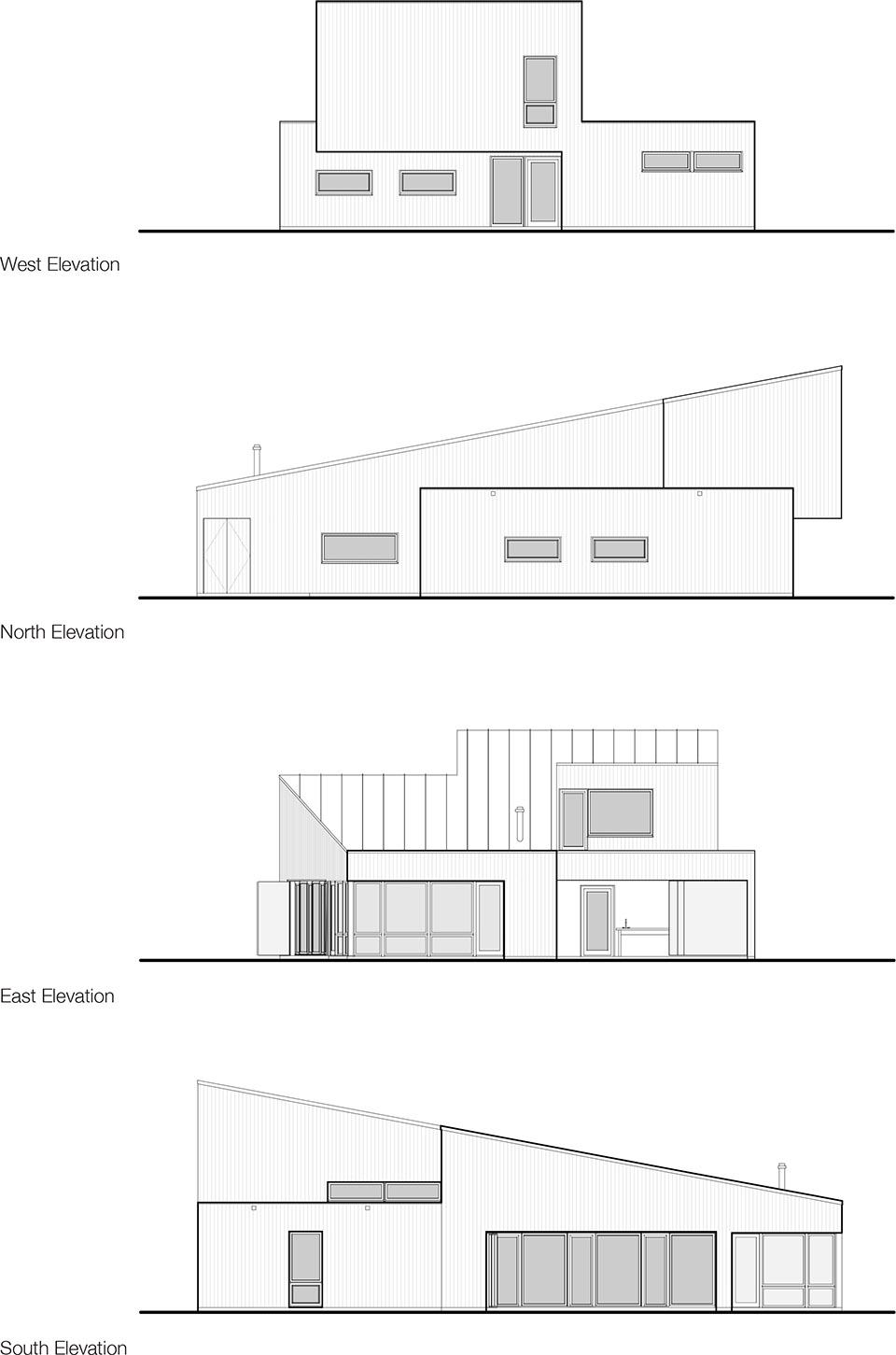
Architecturally, the field station combines a long shed roof, expansive south-facing glass, and operable, customized, perforated-metal screens to regulate seasonal solar gain. A super-insulated concrete slab stabilizes interior temperatures year-round. Distressed cedar siding wraps abstract geometric volumes, grounding the building in its wooded site while signaling its advanced scientific purpose.
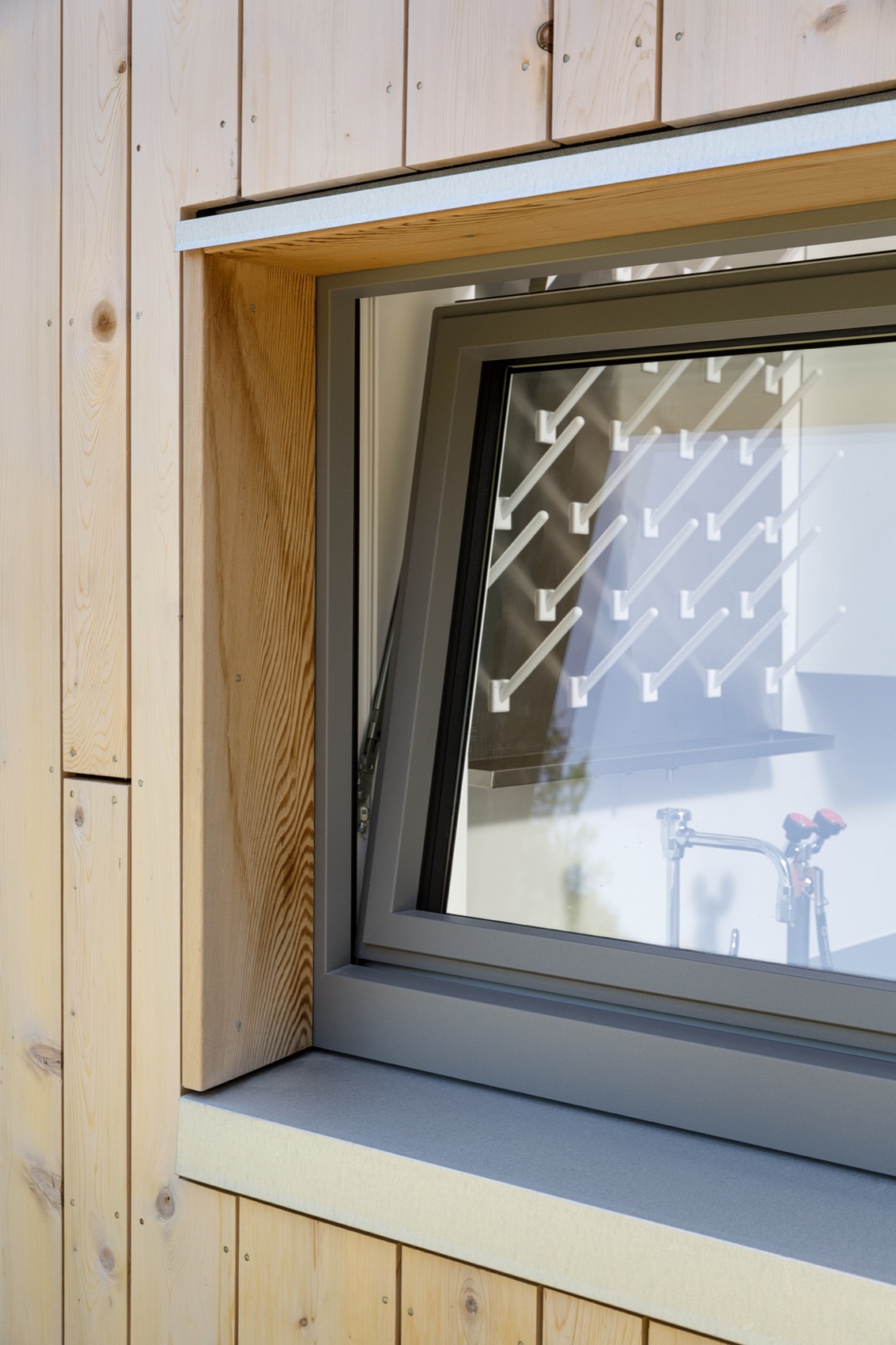
▼外窗结合可开启金属屏幕调节通风与采光,Windows paired with operable metal screens regulating ventilation and daylight
▼几何屋顶勾勒林间建筑轮廓,Geometric rooflines shaping the woodland silhouette
作为一处研究中心与可持续设计范例,沃伦森林研究站为偏远地区高性能实验室设施树立了新的标准,创造出一种将技术严谨性与生态行动相结合的建筑。
As both a research hub and a model of sustainable design, Warren Woods sets a precedent for high-performance laboratory facilities in remote settings, creating architecture aligning technical rigor with ecological action.
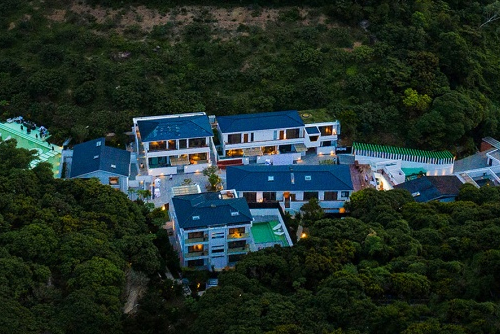
▼林地中的建筑群呈现温暖氛围,Warmly illuminated building cluster within the woodland
▼研讨空间向夜间自然场地展开,Seminar space opening toward the night natural landscape
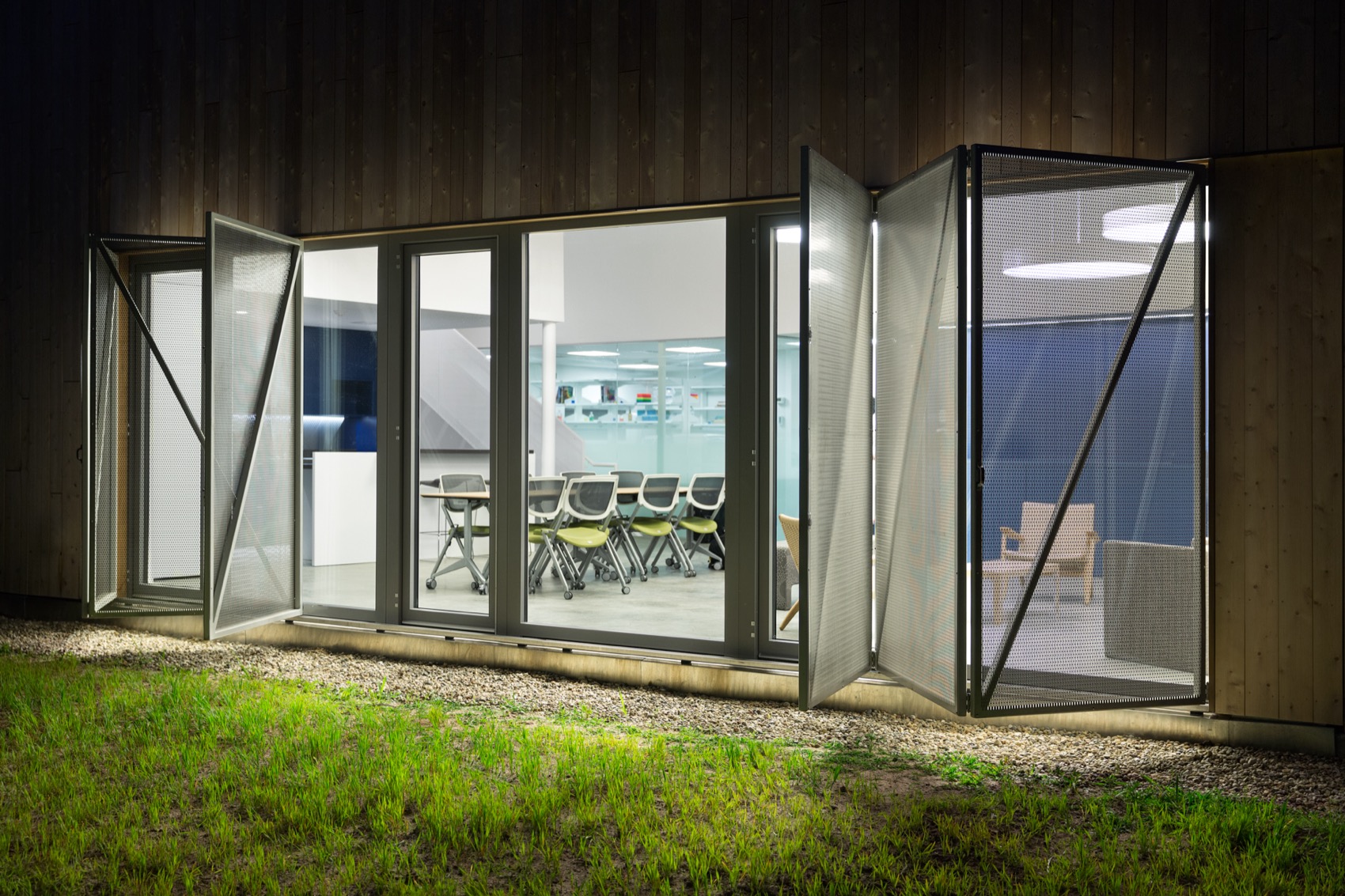
▼开窗细节,Open window detail
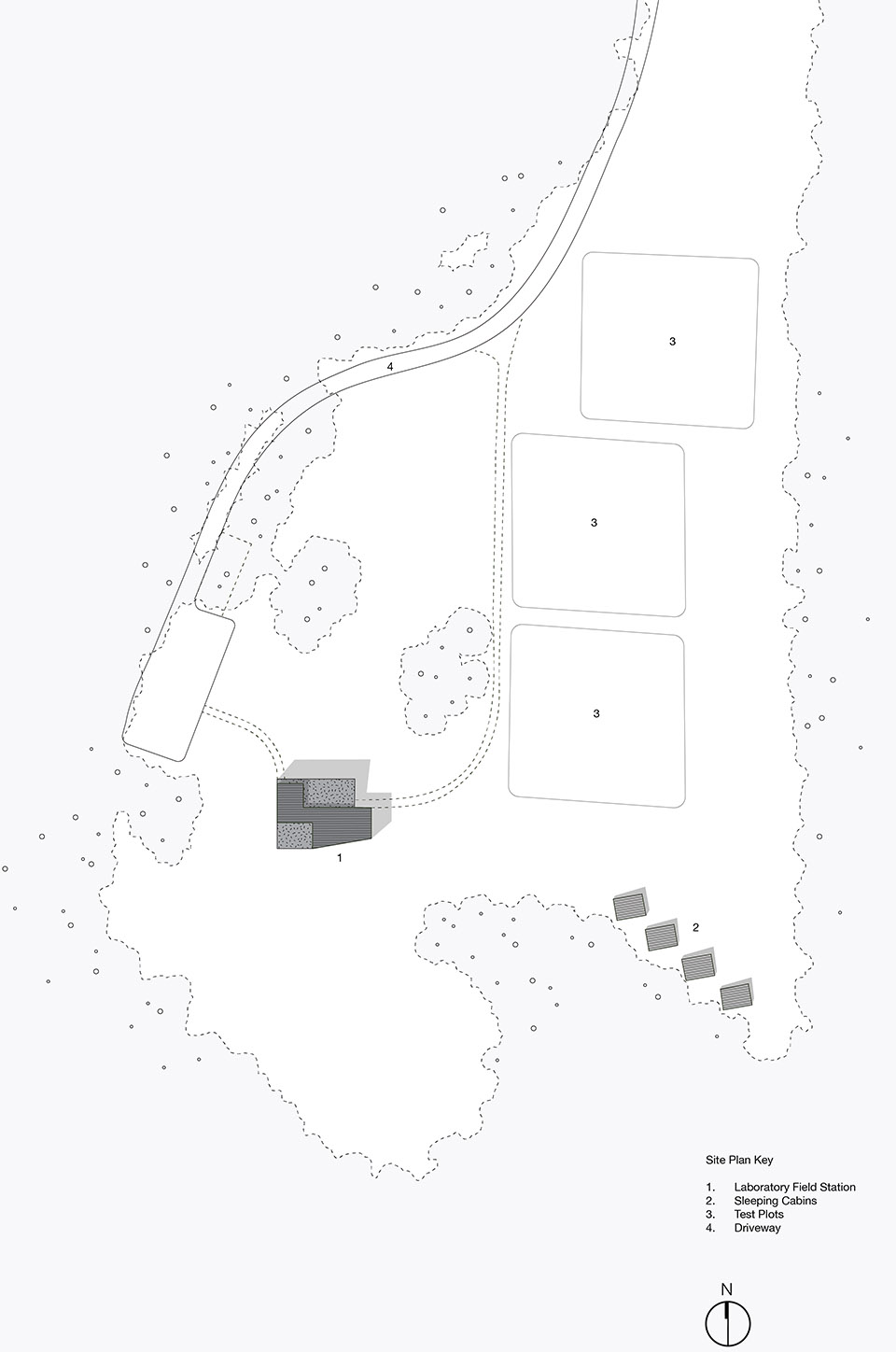
▼项目区位图,Site plan
▼平面图,Floor plan
▼立面图,Elevation
OPAL design team
Timothy Lock
Riley Pratt
Matthew O’Malia
Svea Tullberg
Consultants
Architecture and Interiors: OPAL
Contractor: Go Logic, Ebels Construction
Civil Engineer: O’Malia Consulting
Structural Engineer: Albert Putnam, PE
Mechanical Engineer: Andrew J. McPartland, PE
Lighting: Peter Knuppel Lighting Design
Site Supervisor: Energy Wise Homes
Client: University of Chicago
Photography
Trent Bell Photography