珠海市基督教珠海堂,广东 / 冼剑雄联合建筑设计事务所
位于珠海市香洲区的基督教珠海堂,以当代建筑设计语言为载体,打破传统宗教建筑的固有范式,对宗教建筑的精神场域进行现代化转译,实现了建筑美学、地域城市语境与实用功能的自然融合。
Located in Xiangzhou District, Zhuhai, the Zhuhai Christian Church takes contemporary architectural language as its medium to challenge the entrenched paradigms of traditional religious architecture. The design reinterprets the spiritual field of sacred space through a modern lens, achieving a seamless integration of architectural aesthetics, regional urban context, and functional programme.
▼基督教珠海堂,Zhuhai Christian Church
01 城市语境下的空间定位01 Spatial Positioning within the Urban Context
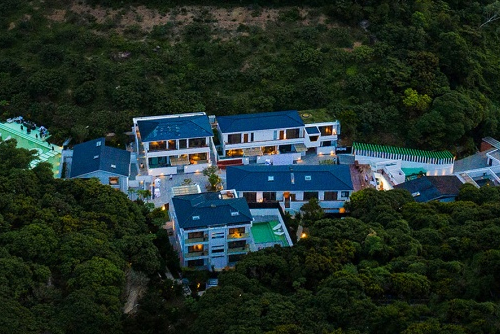
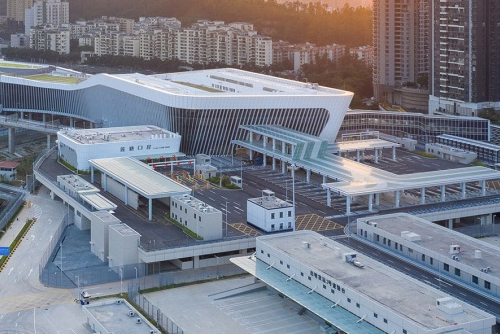
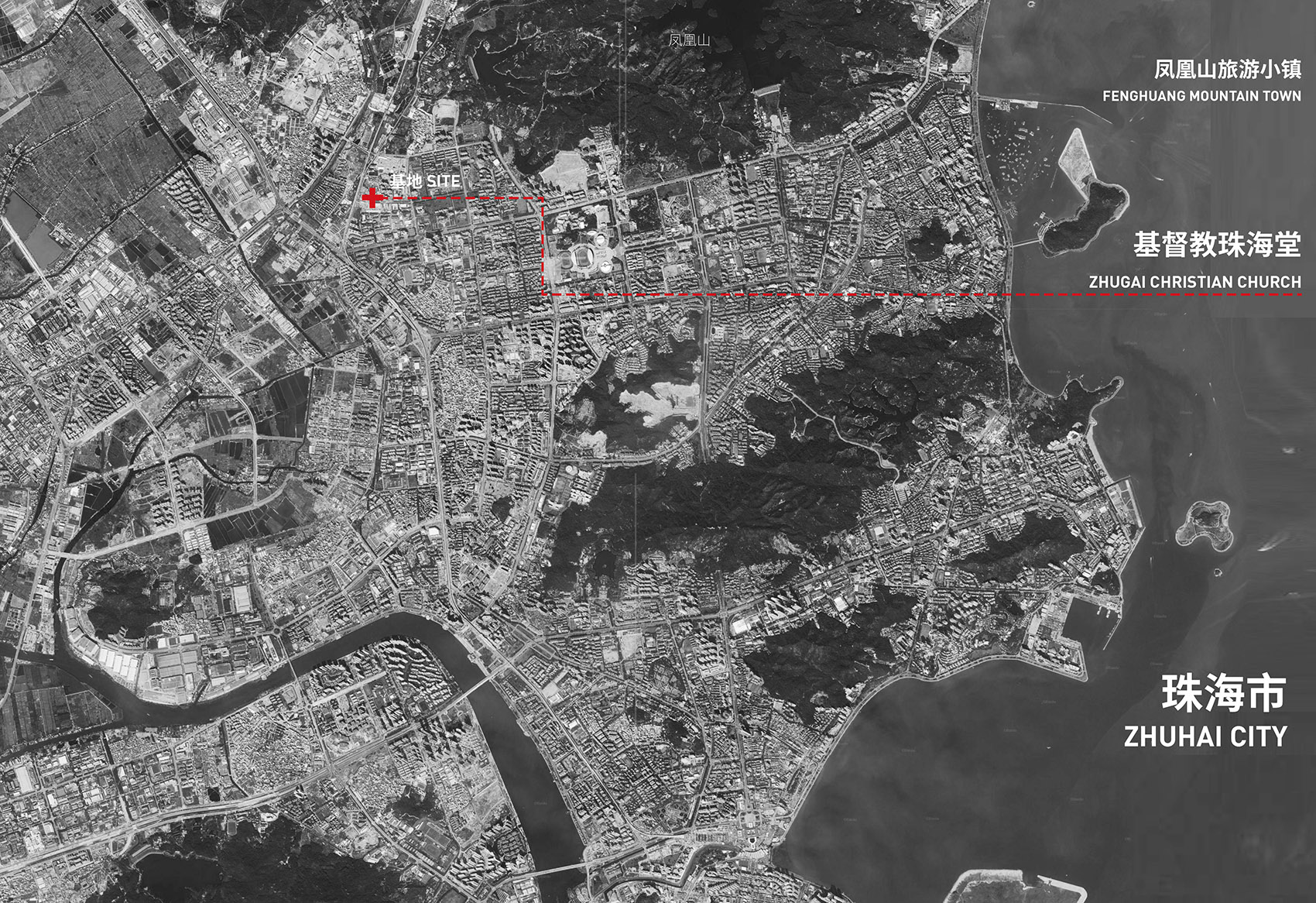
基督教珠海堂选址香洲区梅华西路北侧、金凤路东侧,所属片区规划为凤凰山旅游小镇,是珠海文旅融合与城市生活功能耦合的核心发展板块。项目总建筑面积超10000平方米,采用地上四层、地下一层的空间布局,清晰划分了大礼拜堂、小礼拜堂、配套用房及附属功能用房等多元功能区,可同时容纳1500人开展集体活动。
▼项目区位,Site Location
▼功能布局,Programme Layout
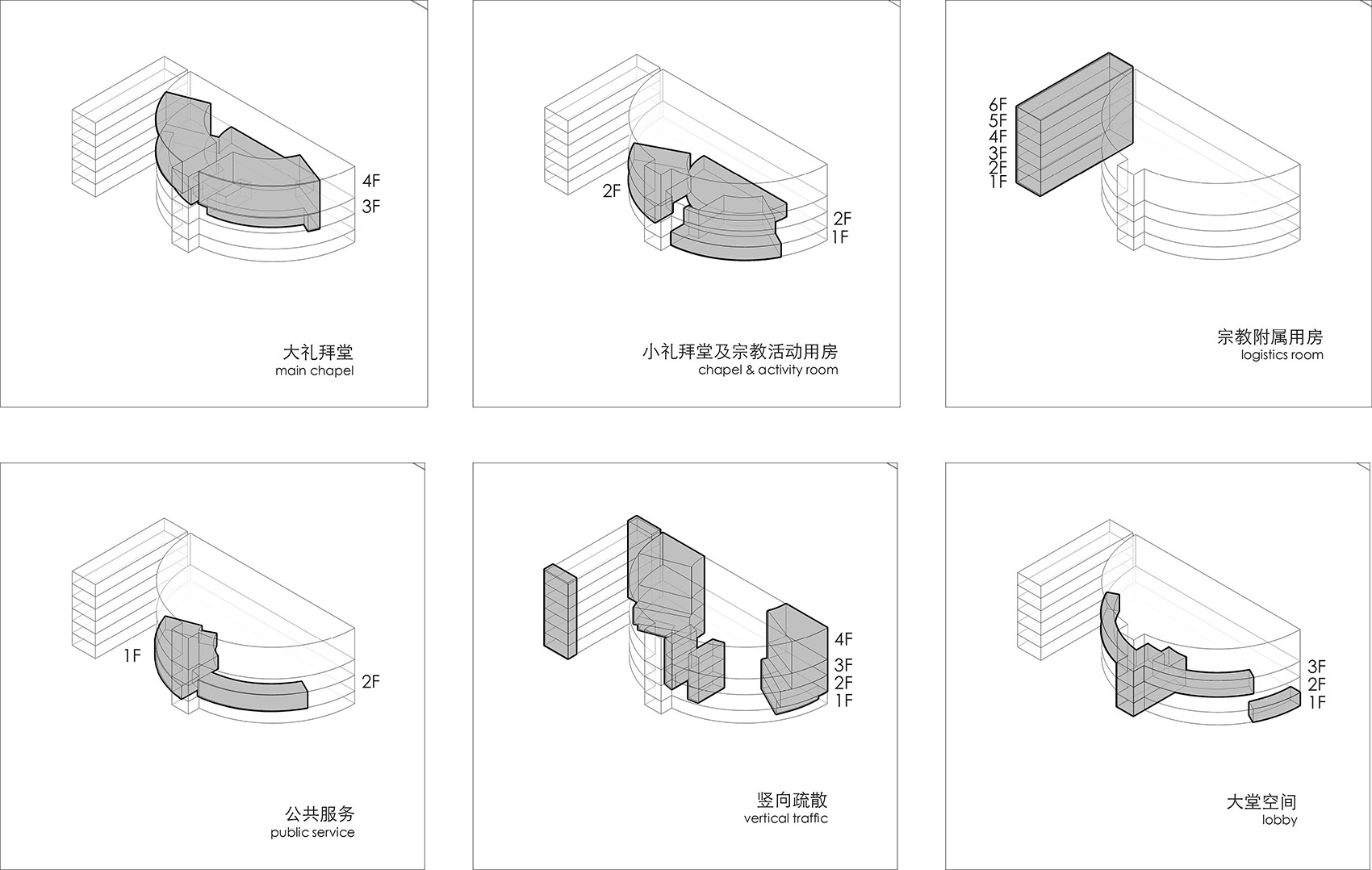
The Zhuhai Christian Church is sited on the north side of Meihua West Road and east of Jinfeng Road in Xiangzhou District. The surrounding area is designated as the Fenghuang Mountain Tourism Town — a cultural-tourism precinct under the municipal masterplan — and serves as a pivotal development node where Zhuhai’s cultural tourism and urban living functions are coupled. With a total floor area exceeding 10,000 m², the building adopts a four-storey above-ground and one-storey underground configuration. The programme is clearly organized into a main worship hall, a chapel, and ancillary and service facilities, accommodating up to 1,500 occupants for communal gatherings.
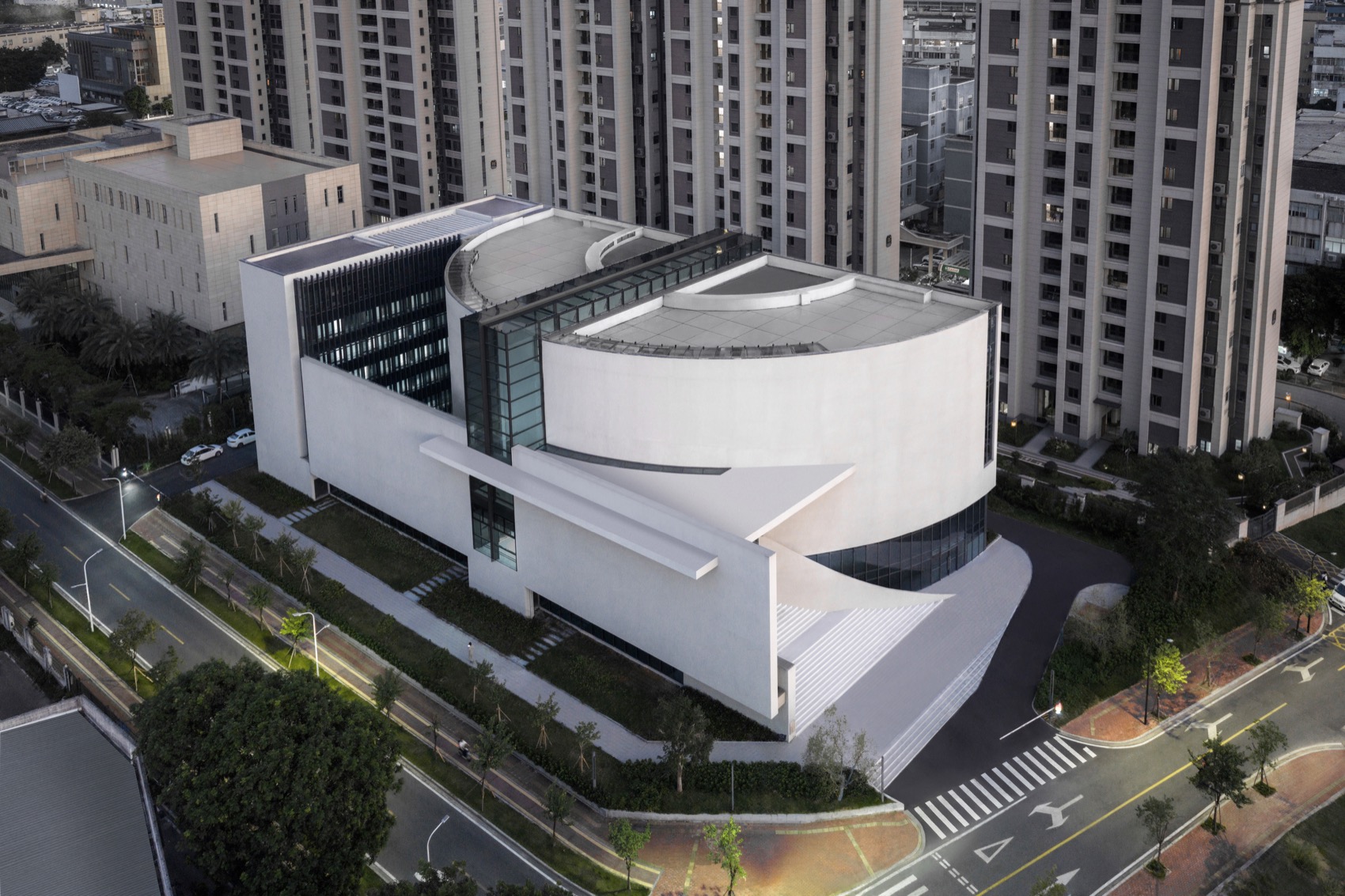
▼实景航拍,Aerial View
02 去繁就简:以极简形制构建纯粹空间02 Reduction to Essence: Constructing Purity through Minimalist Form
传统宗教建筑常依托繁复的装饰符号、强仪式感的古典形制,塑造庄重肃穆的空间意象。而珠海堂的设计,以现代极简的设计手法,用纯粹的建筑语言,表达空间的庄严与秩序感。
▼设计手稿,Design Sketches
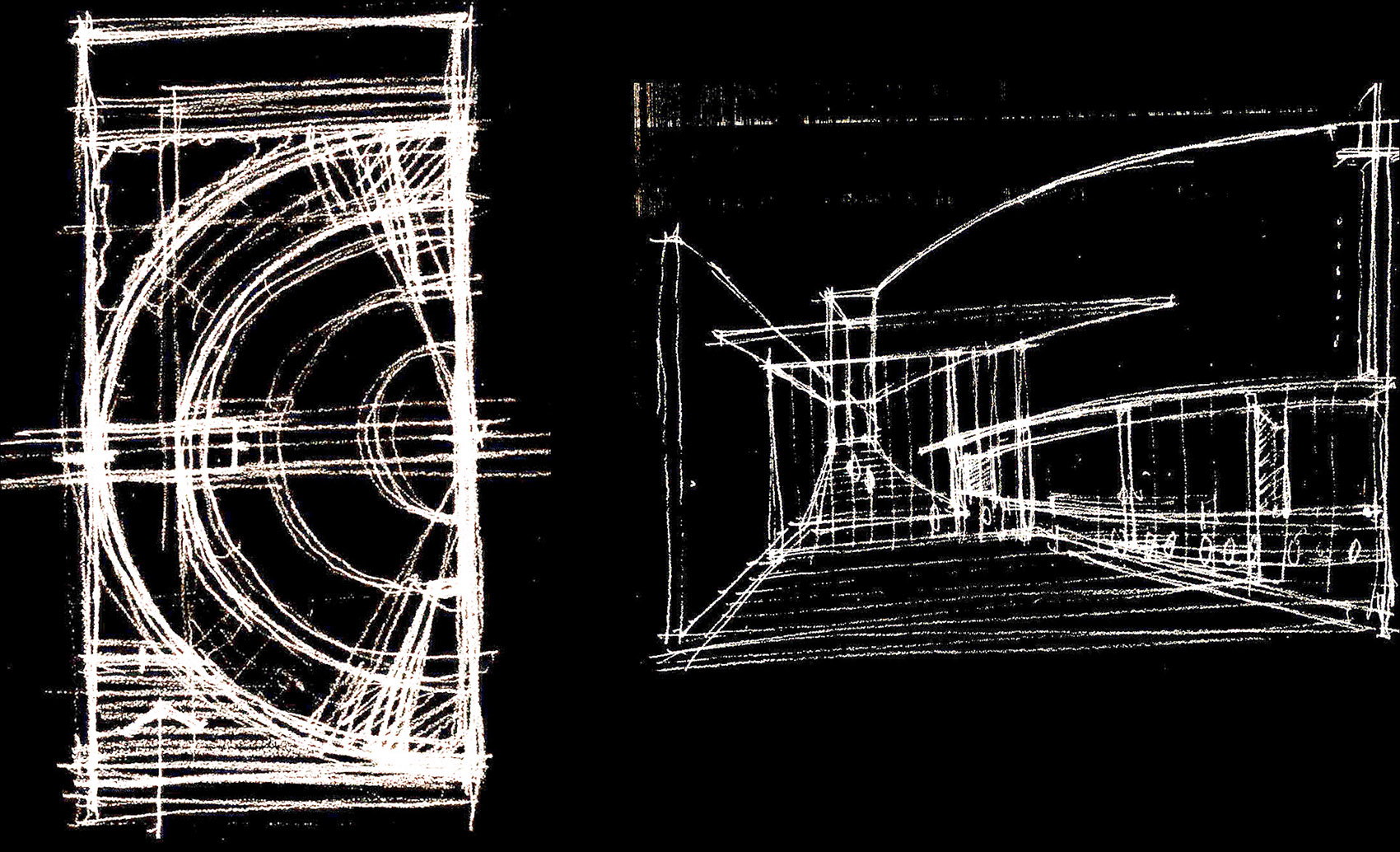
▼形体生成,Massing Development
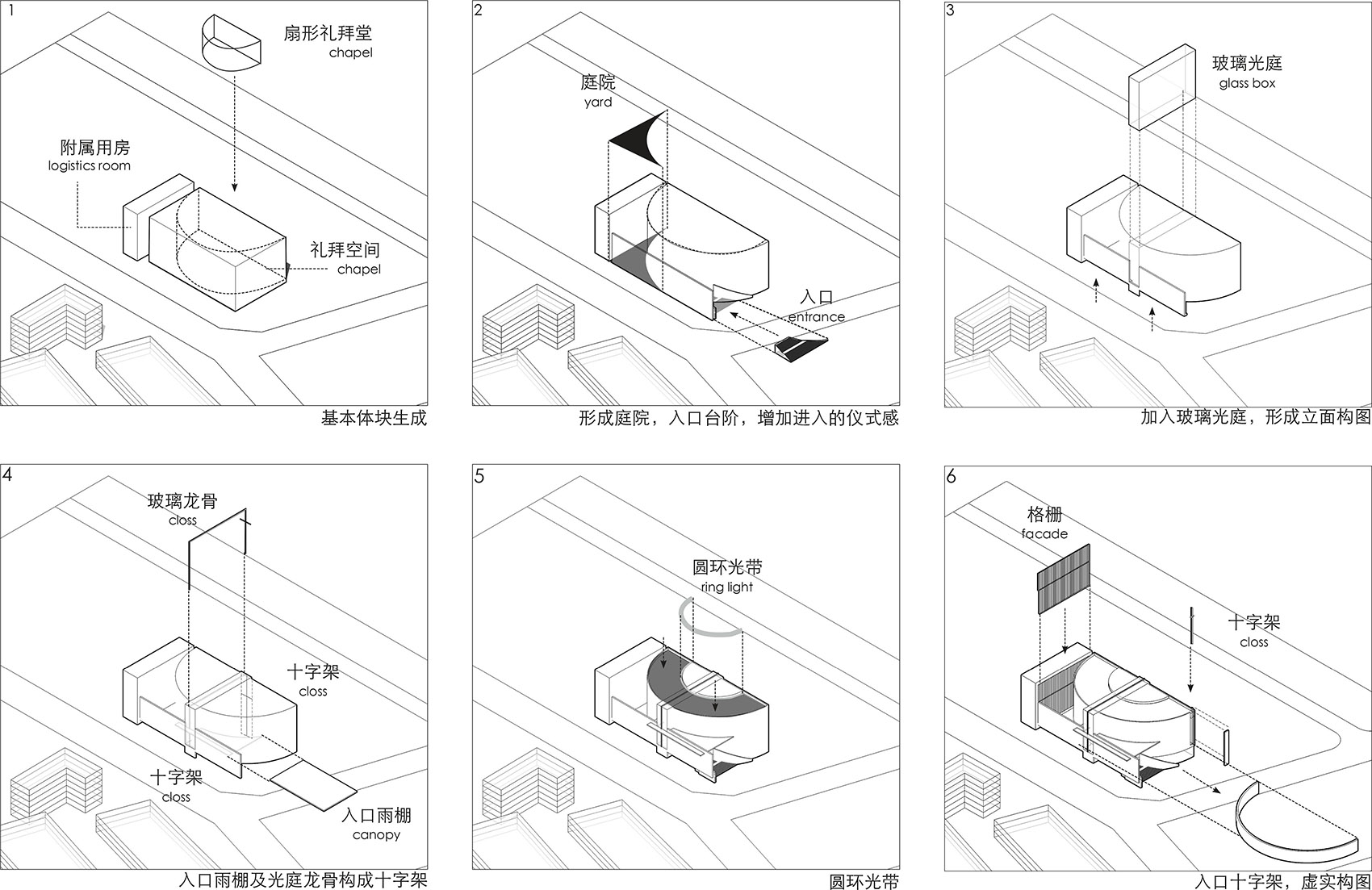
Traditional religious architecture typically relies on elaborate ornamental vocabularies and highly ritualistic classical forms to evoke an atmosphere of solemnity. The Zhuhai Church, by contrast, deploys a rigorously minimalist design approach, articulating spatial gravitas and order through the purity of architectural language alone.
▼基督教珠海堂实景,Zhuhai Christian Church, Exterior View
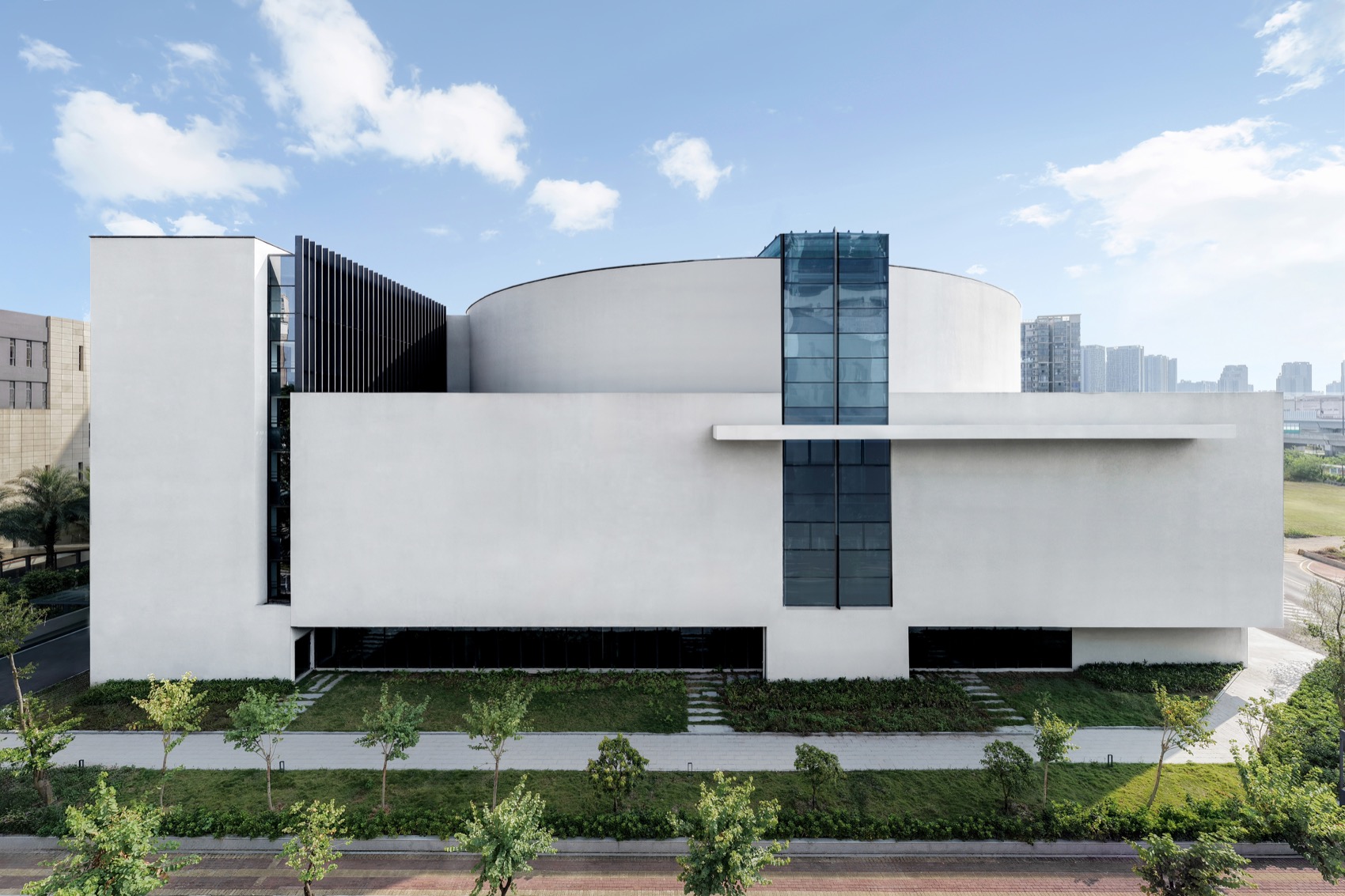
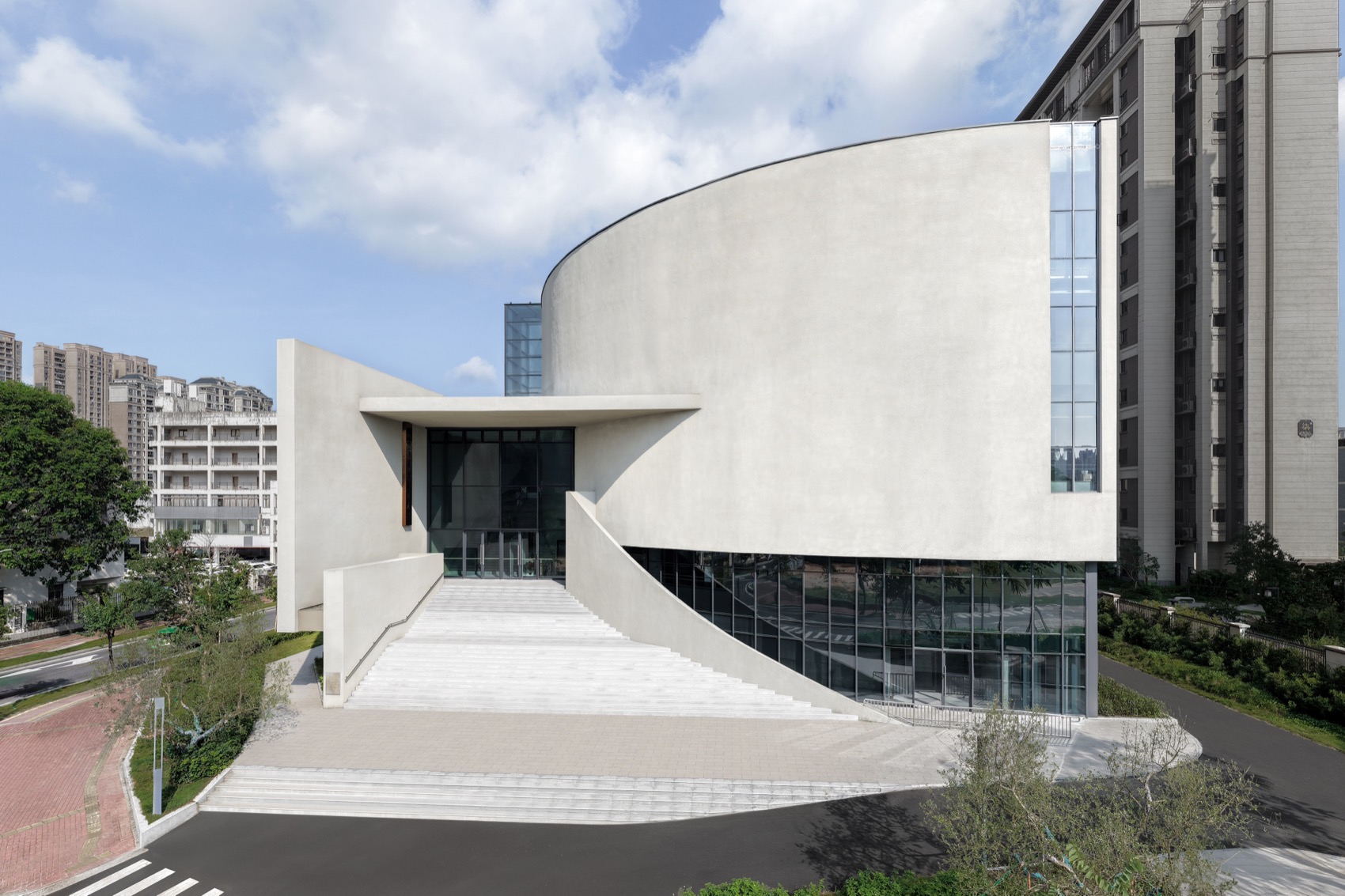
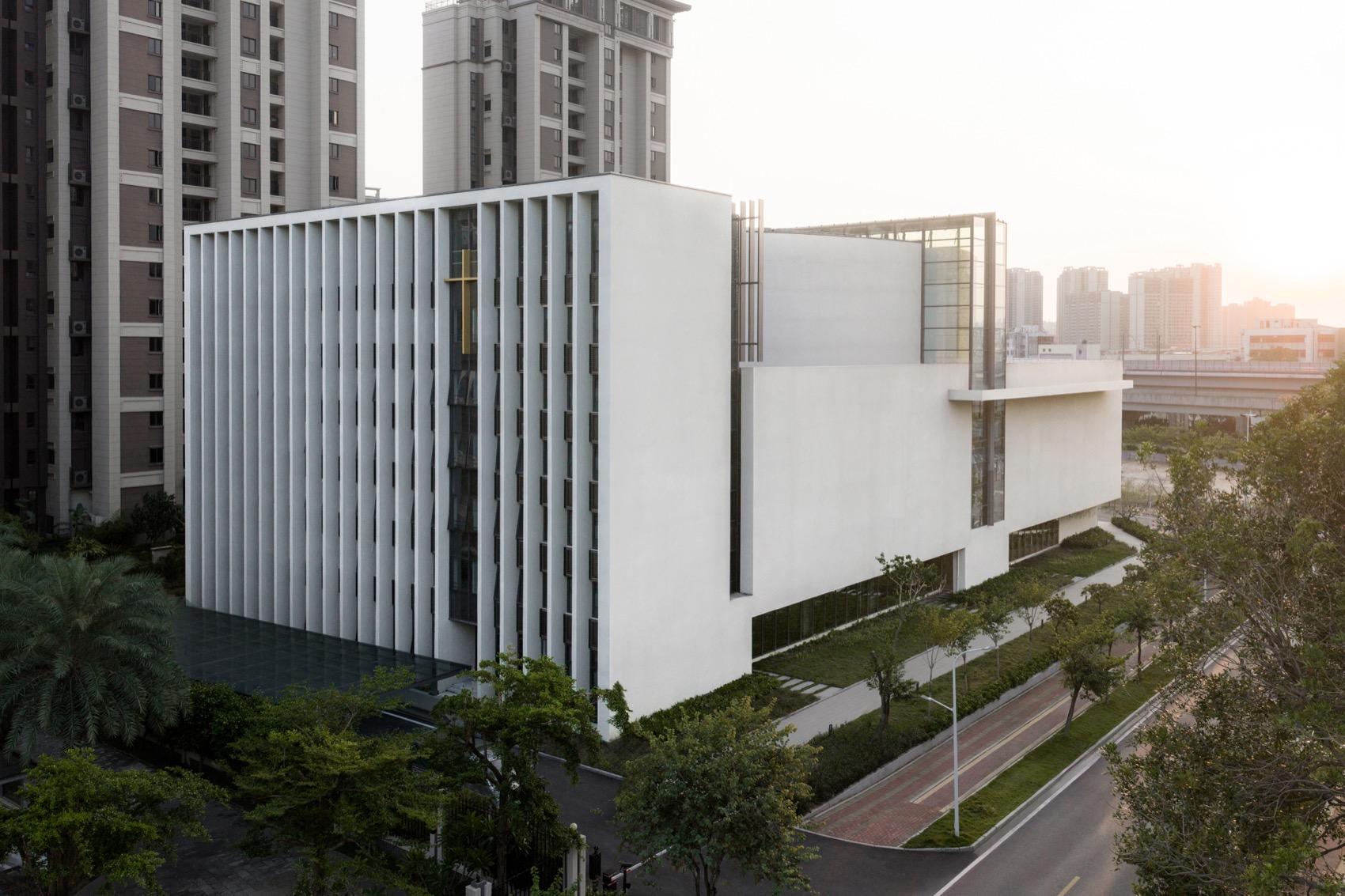
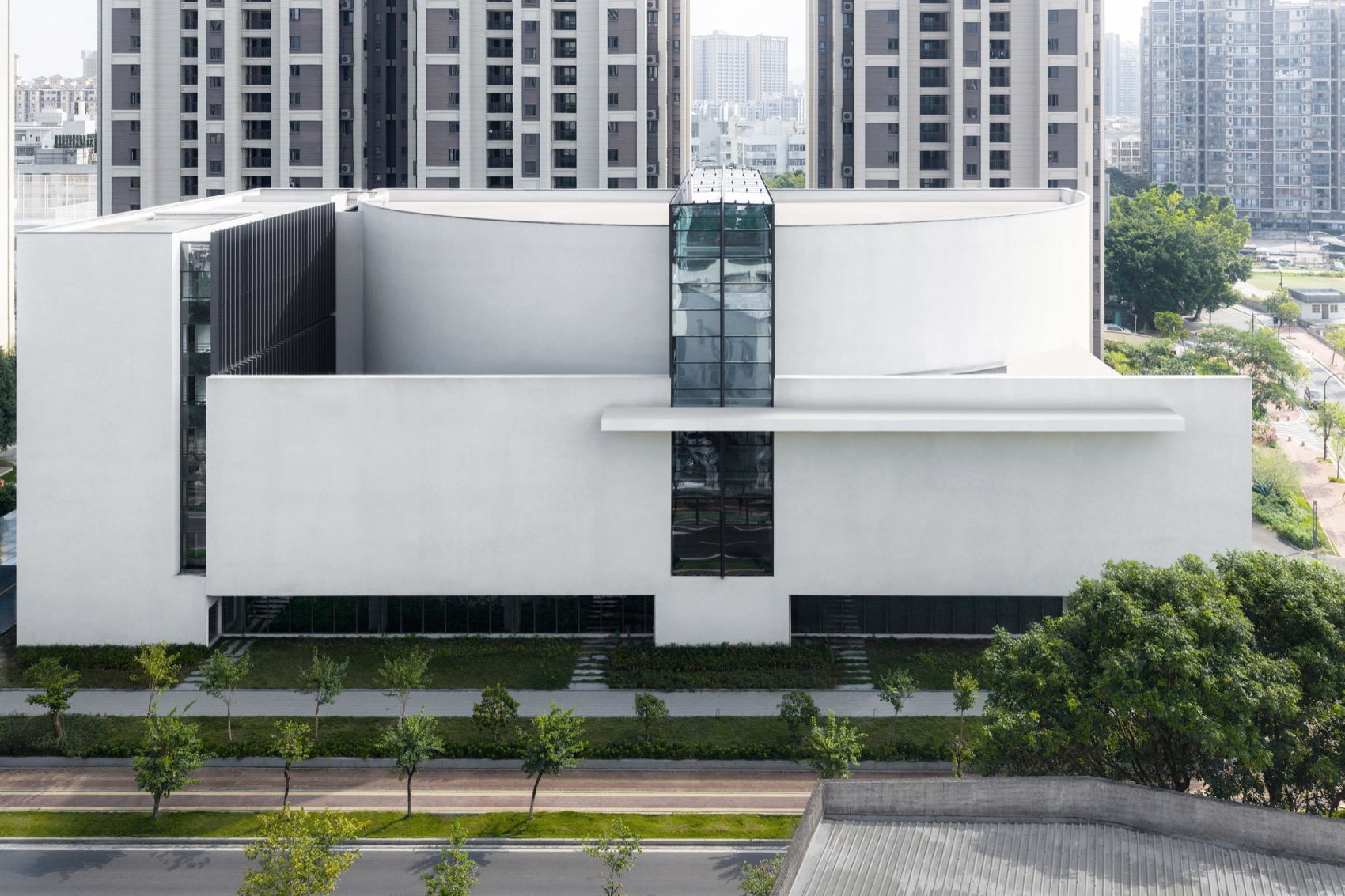
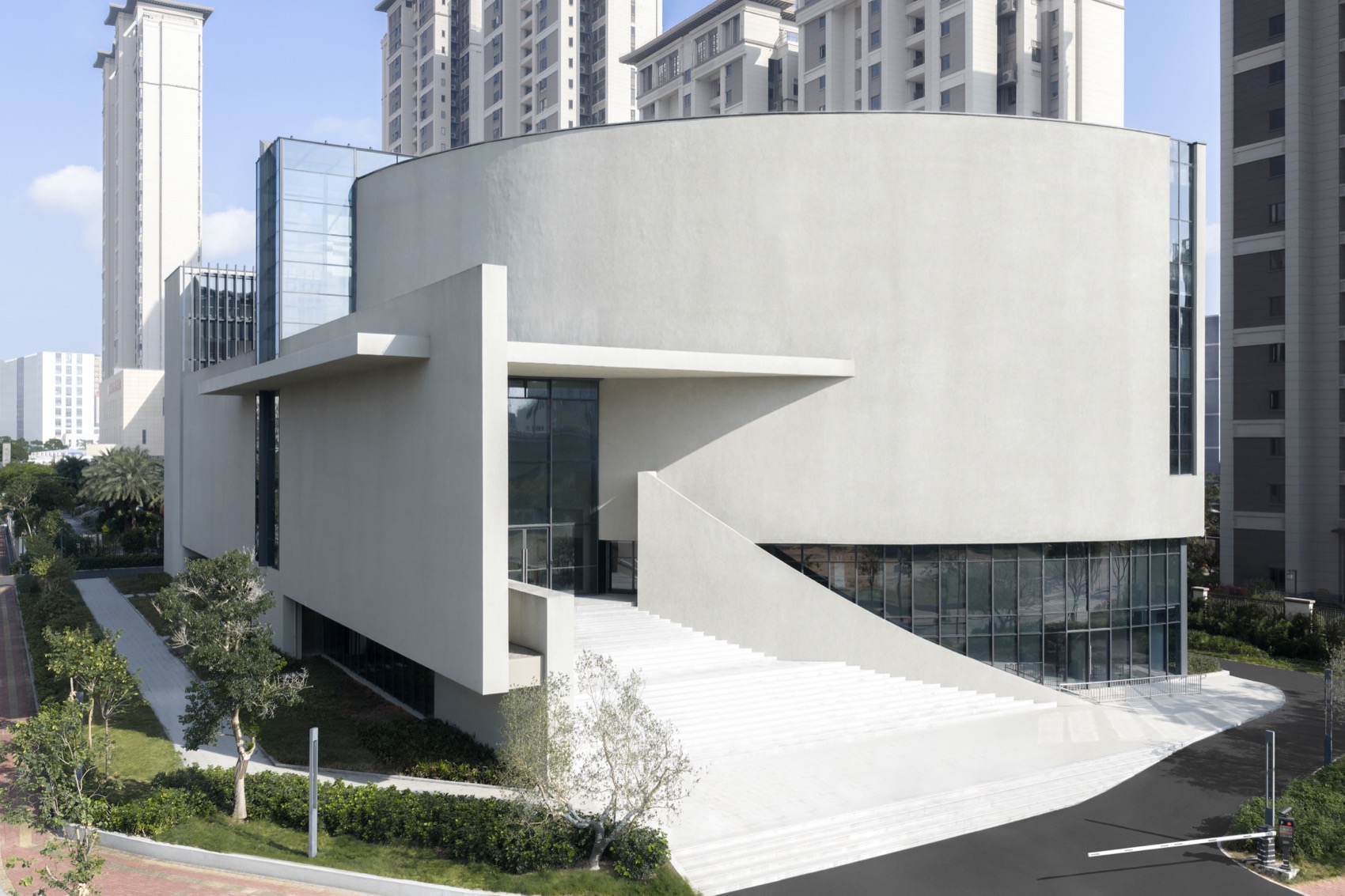
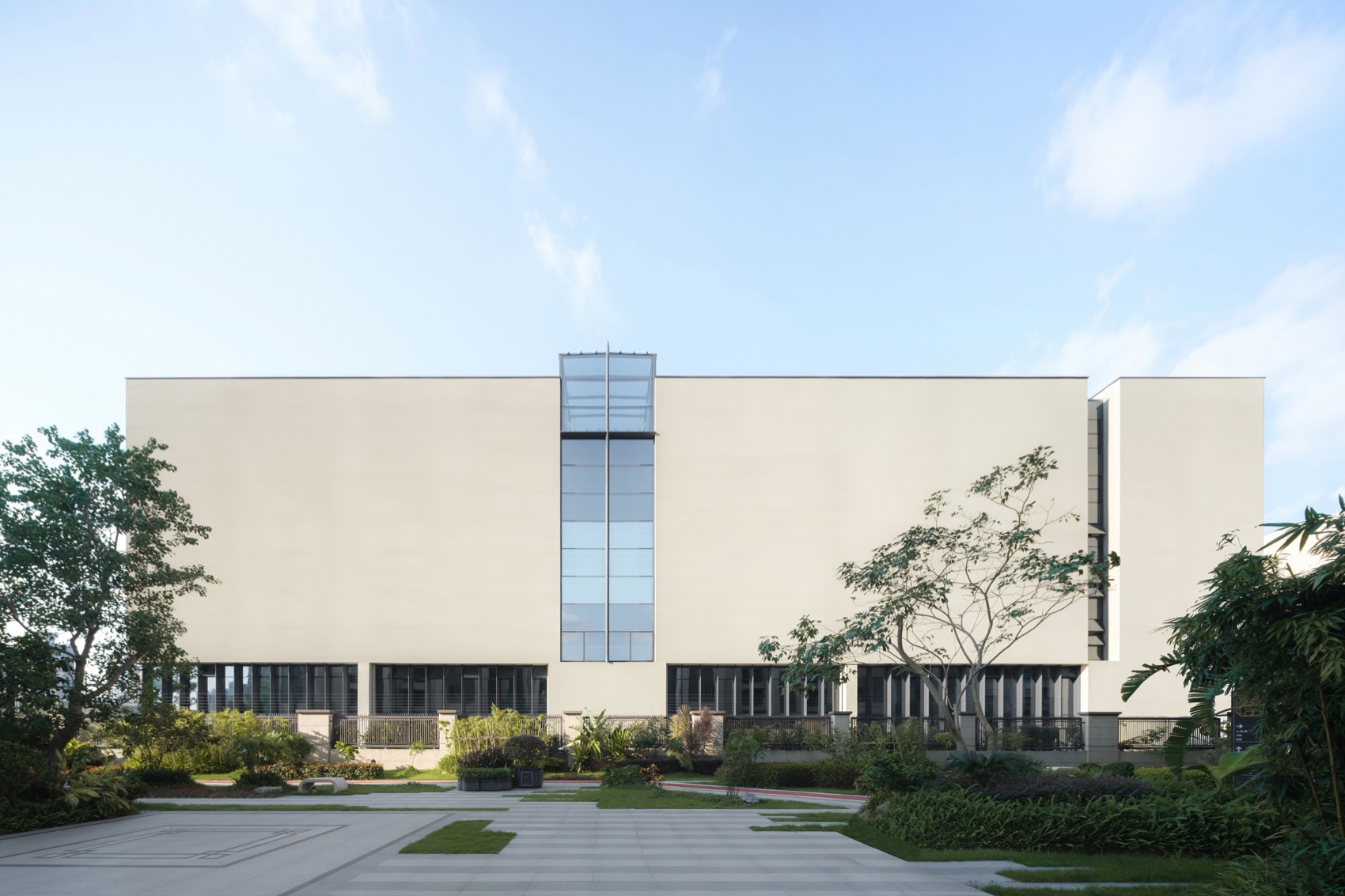
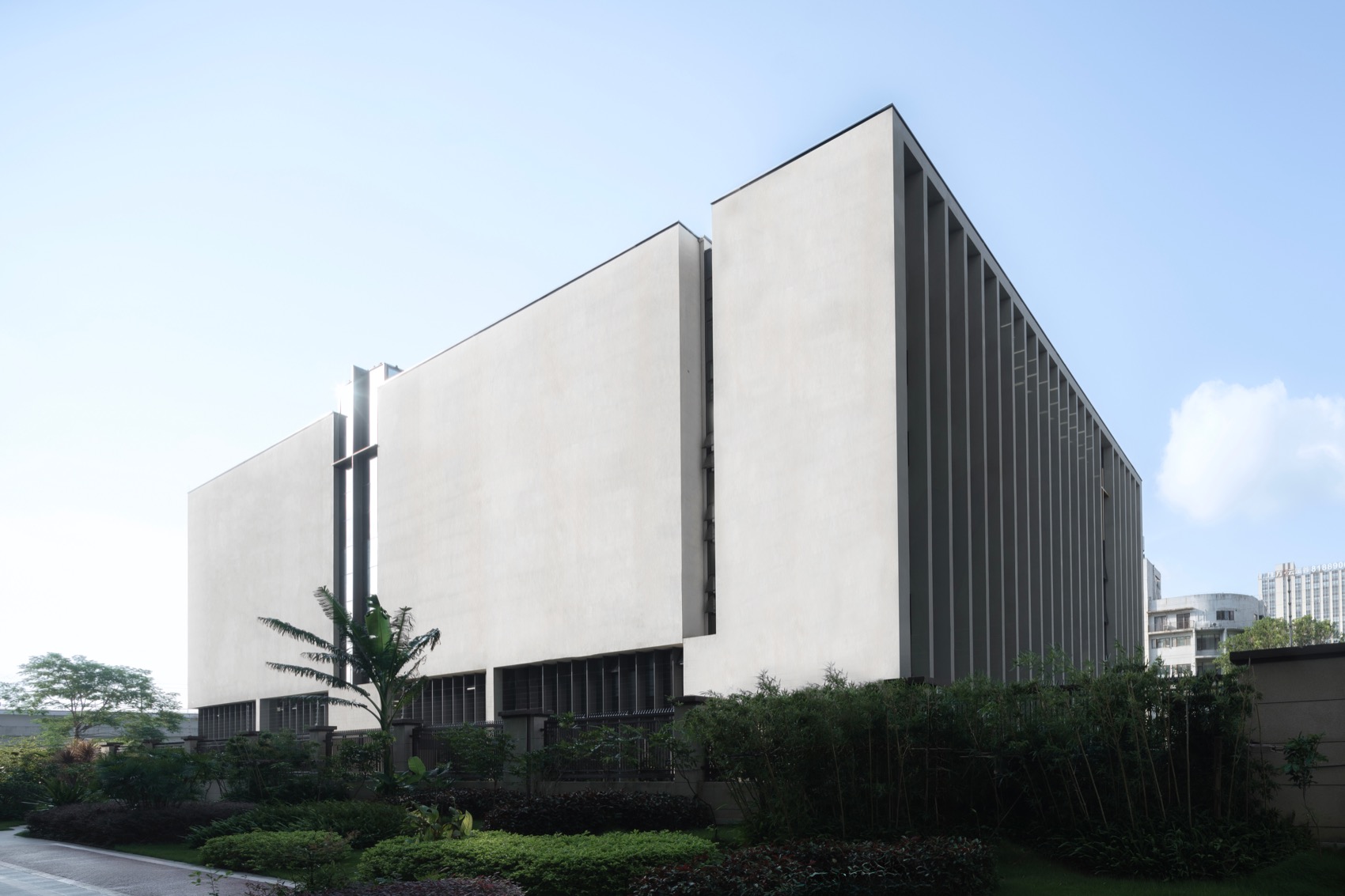
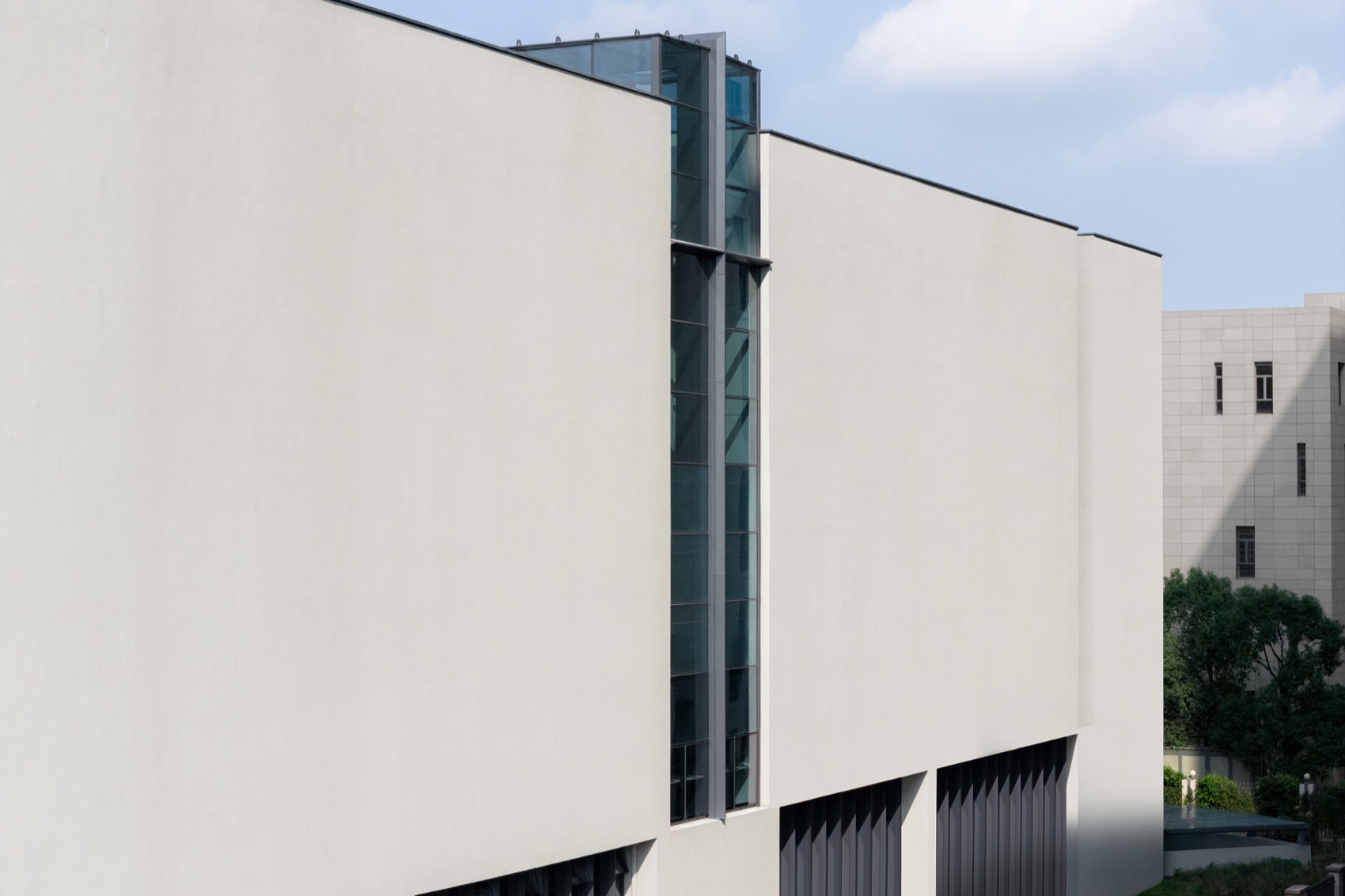
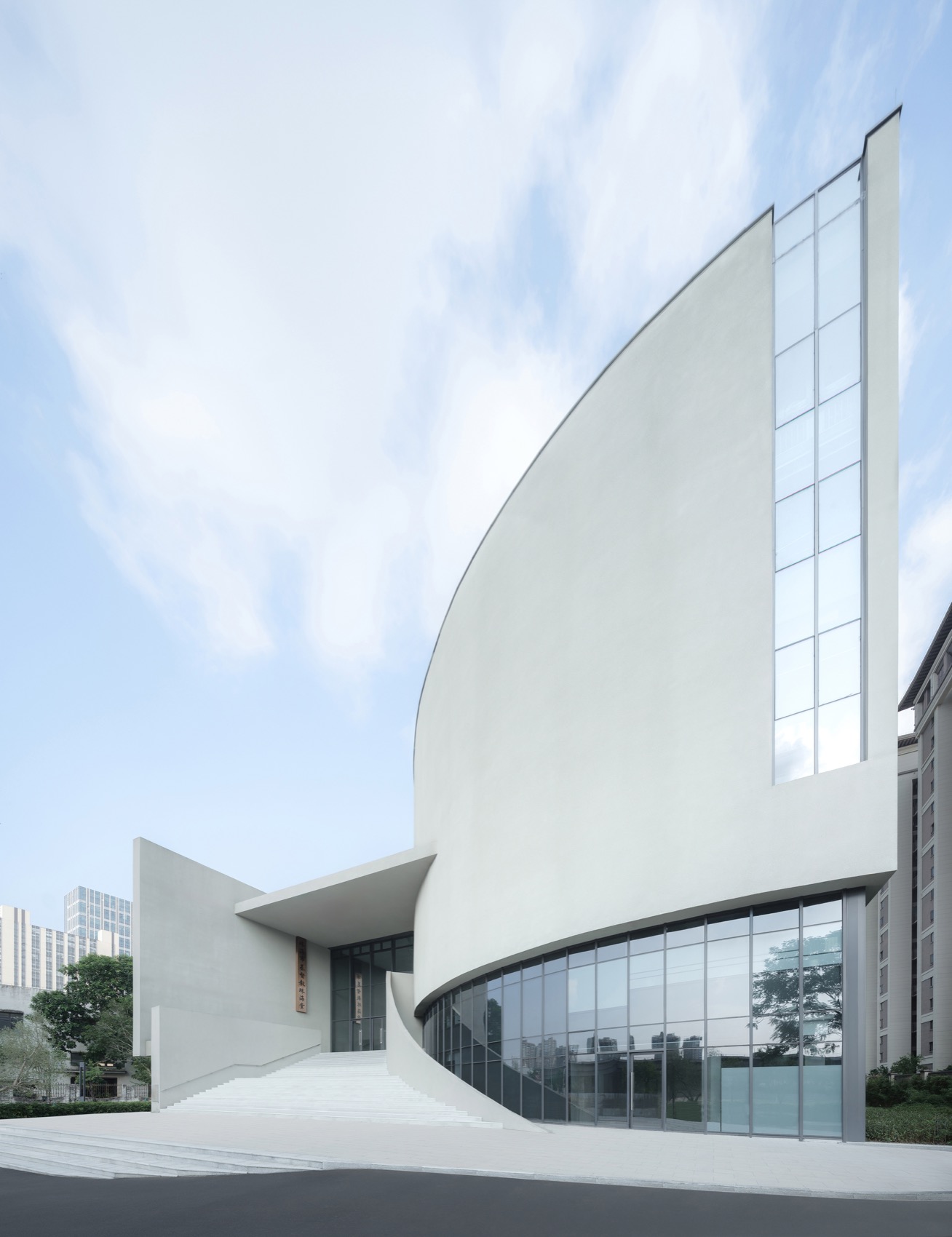
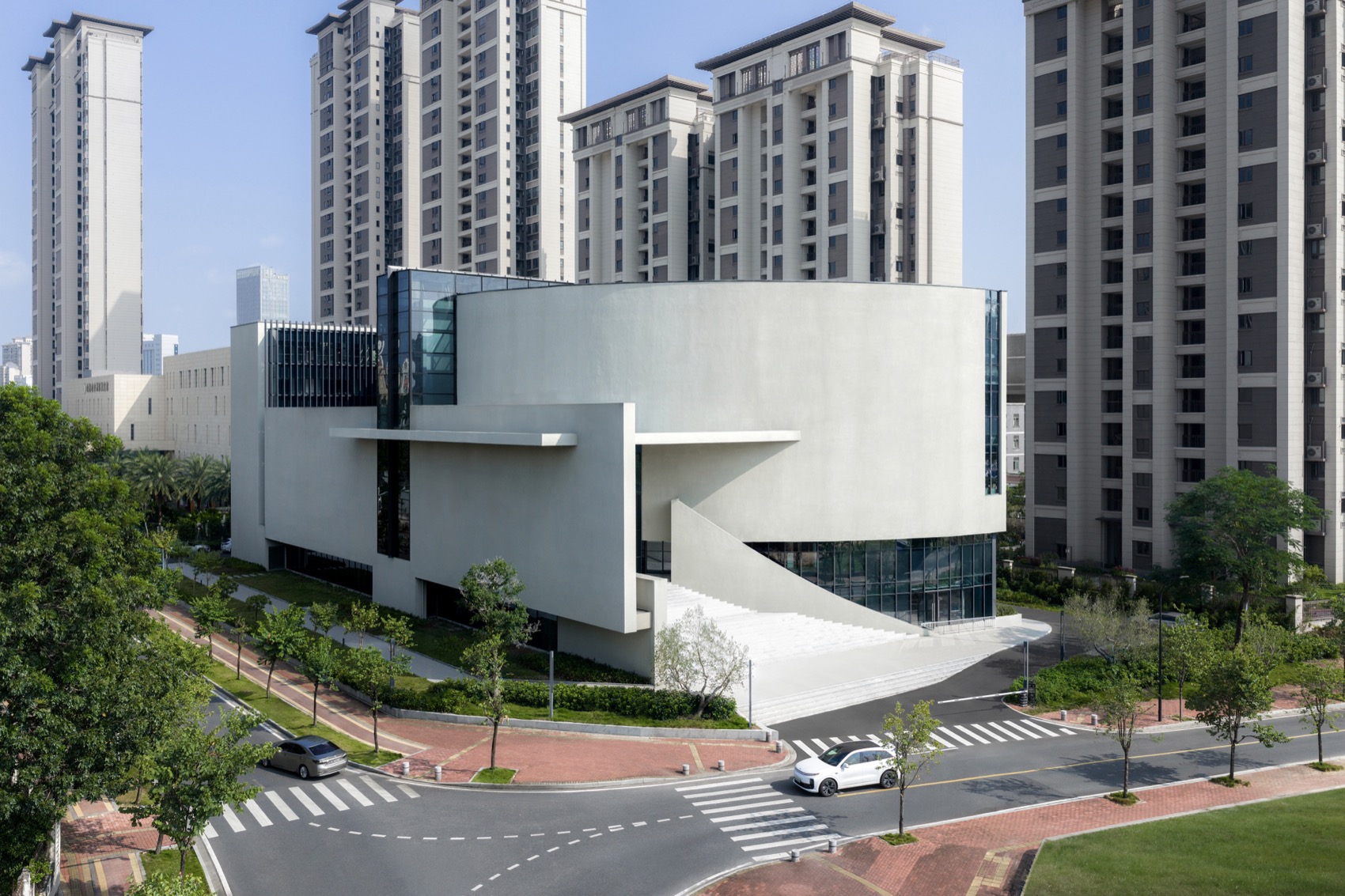
建筑主体以混凝土灰为主色调,利落的几何线条与柔和的弧形曲面交织,构成有特色且具整体感的外部造型。混凝土墙与玻璃幕墙形成强烈的虚实对比,竖向的格栅肌理丰富了细节层次,亦消解了疏离感。
▼基督教珠海堂实体模型,Physical Model, Zhuhai Christian Church
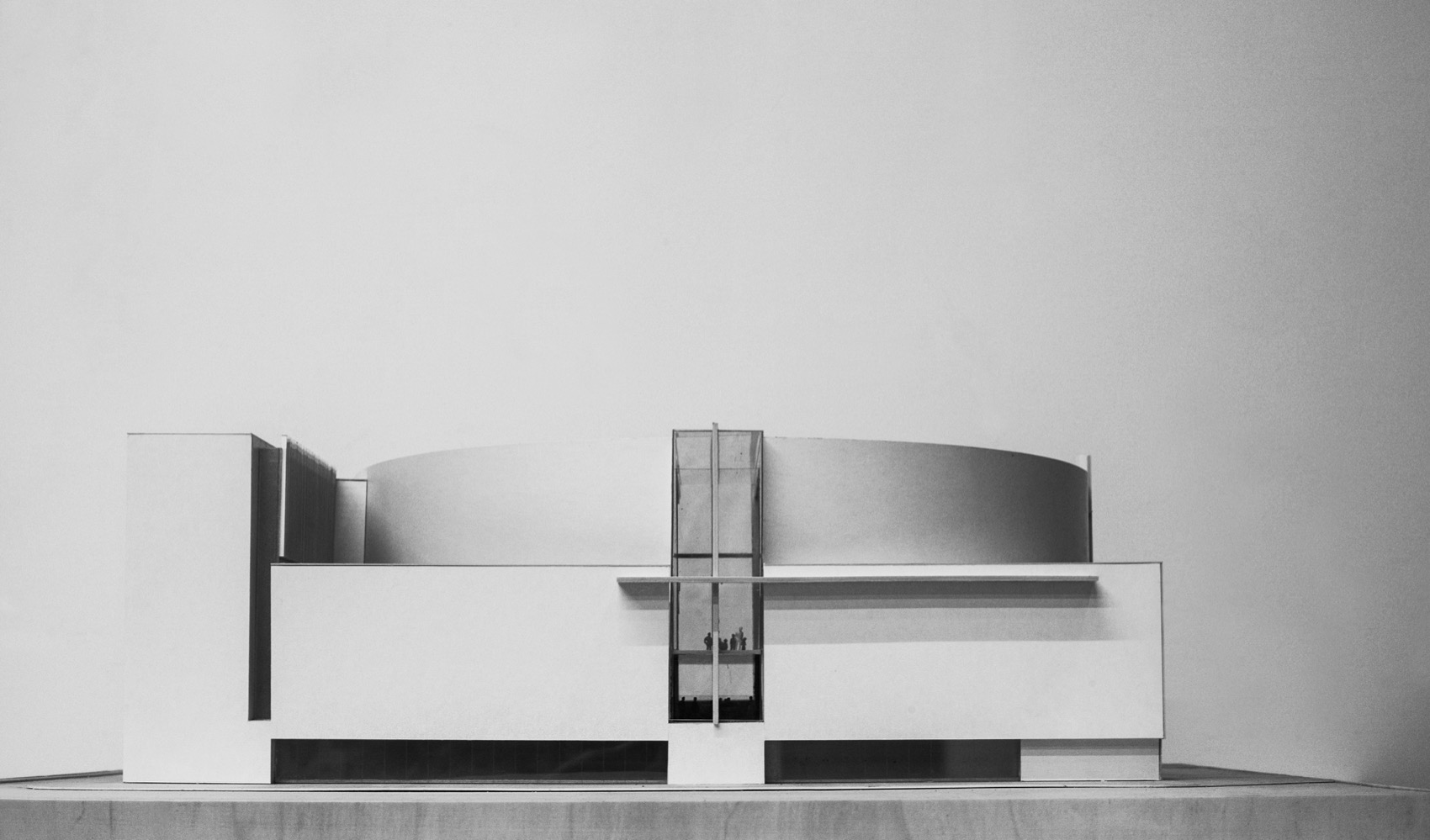
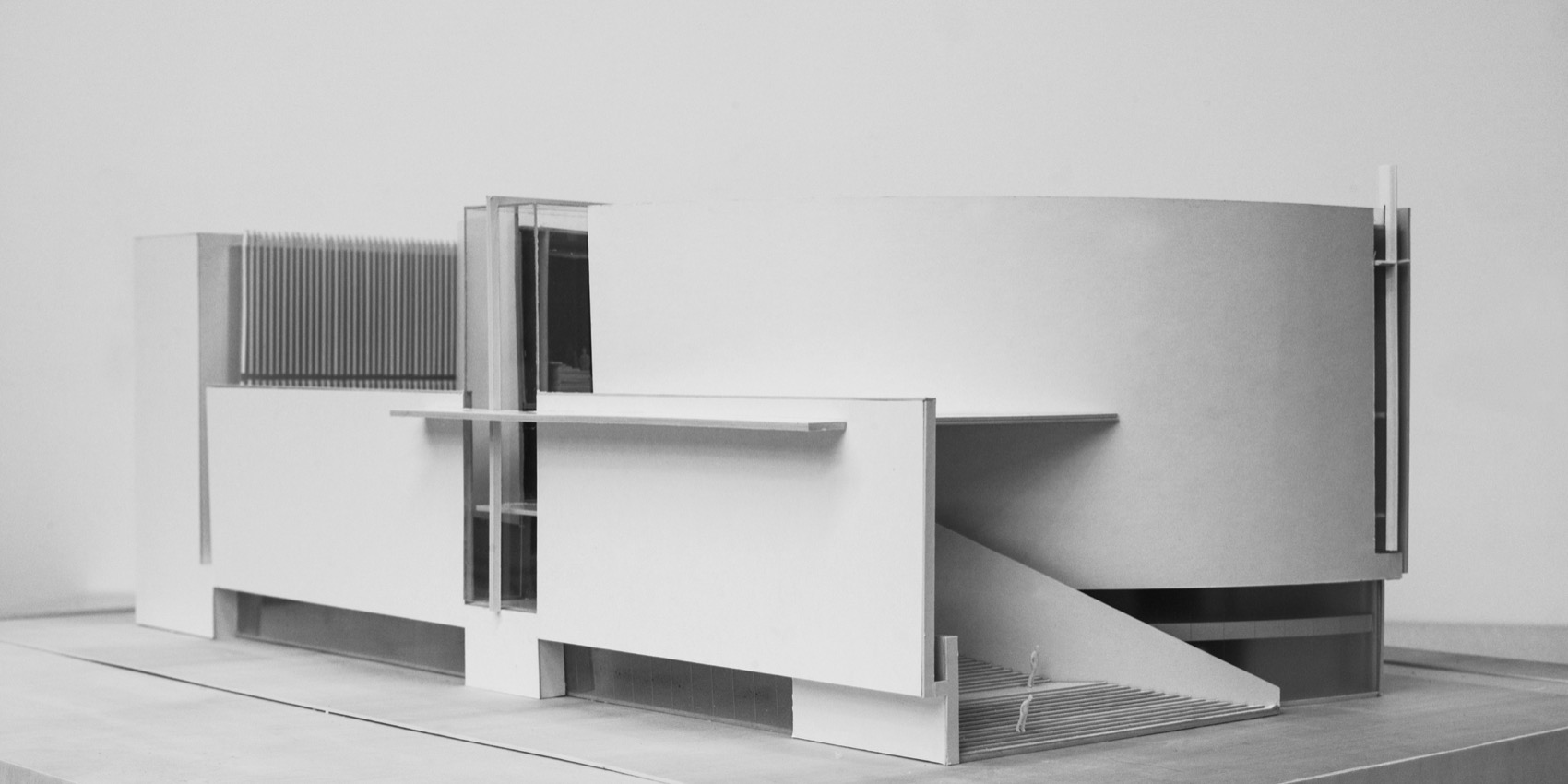
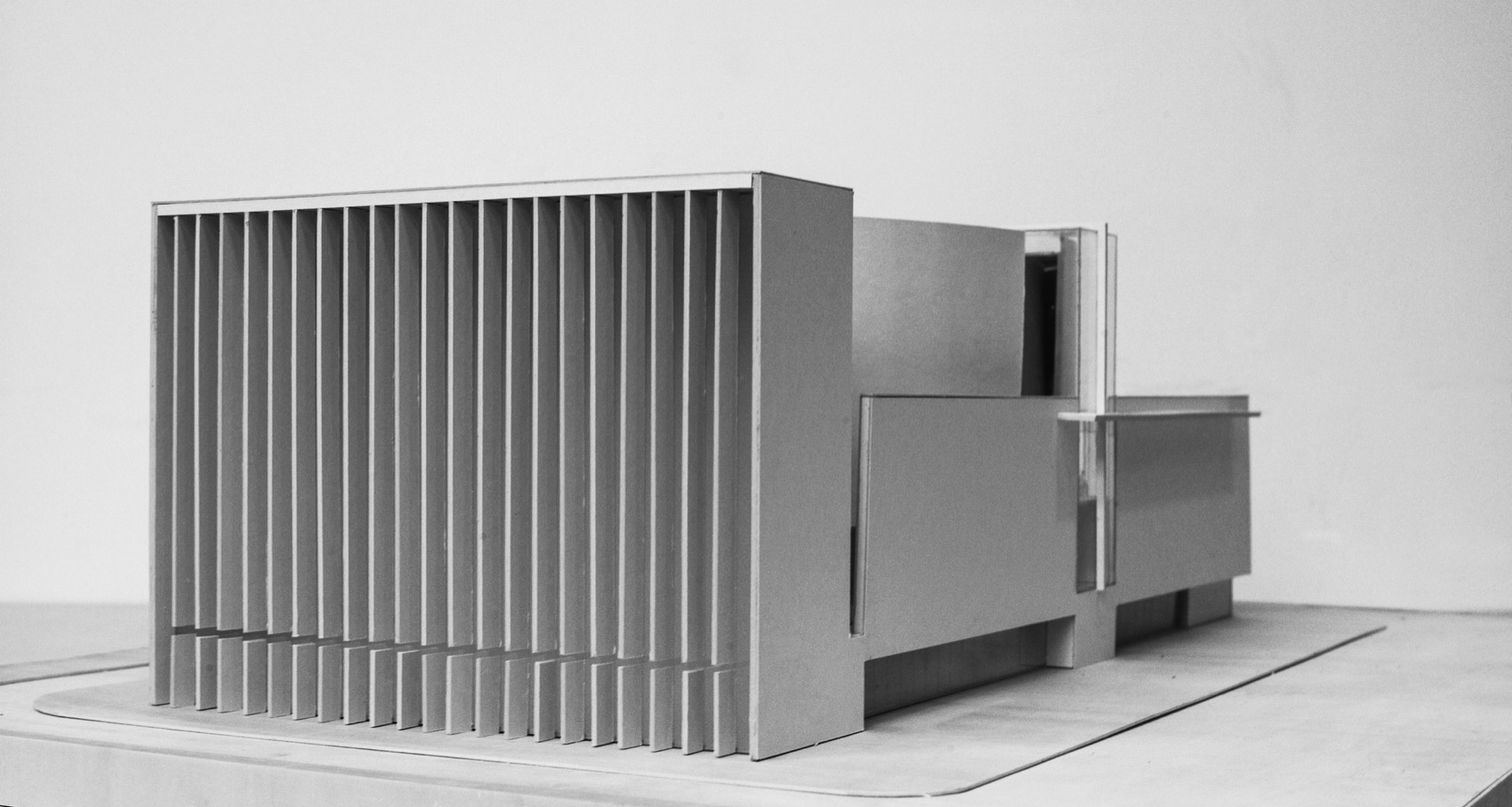
▼模型细部,Physical Model Detail
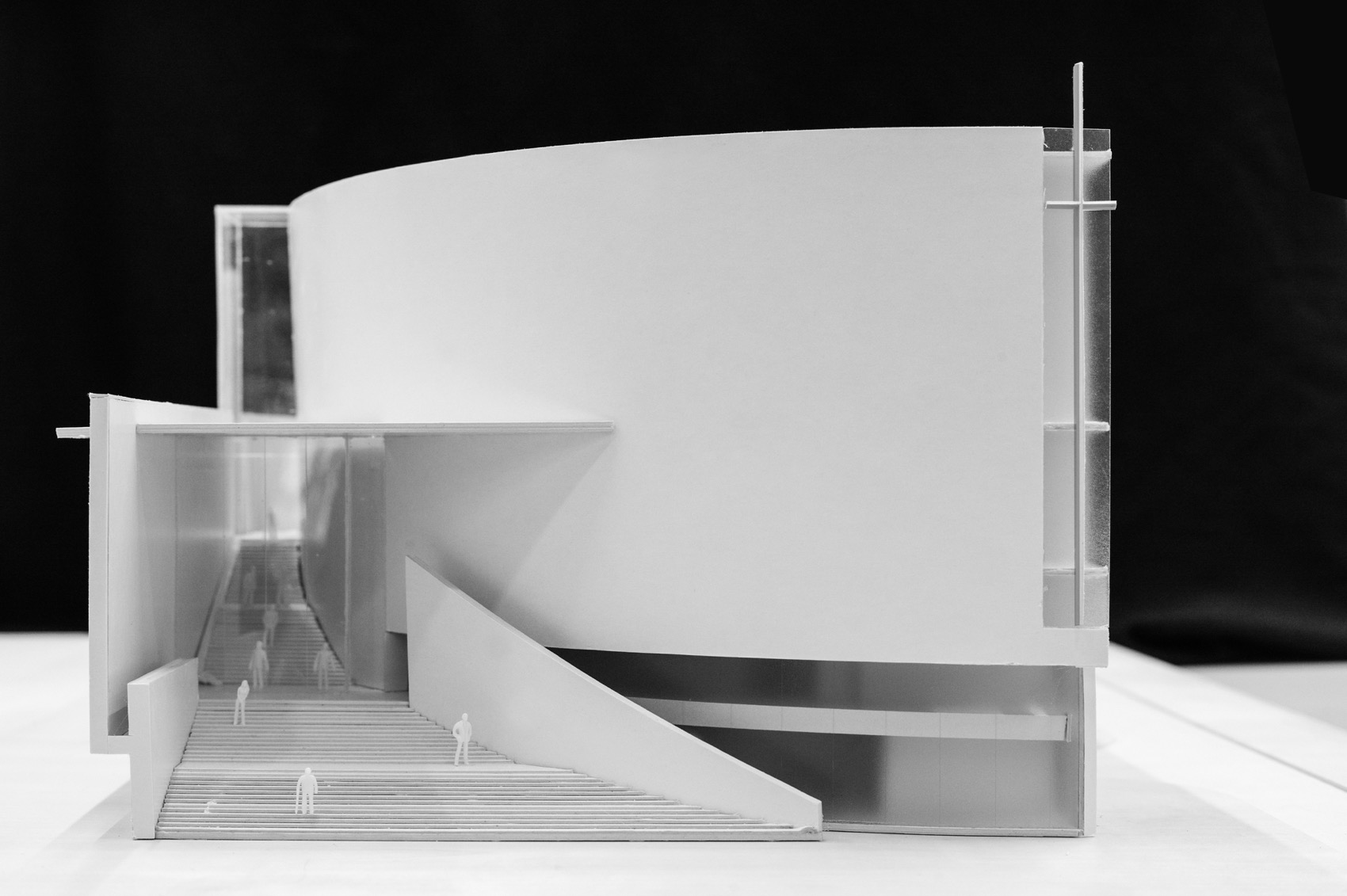
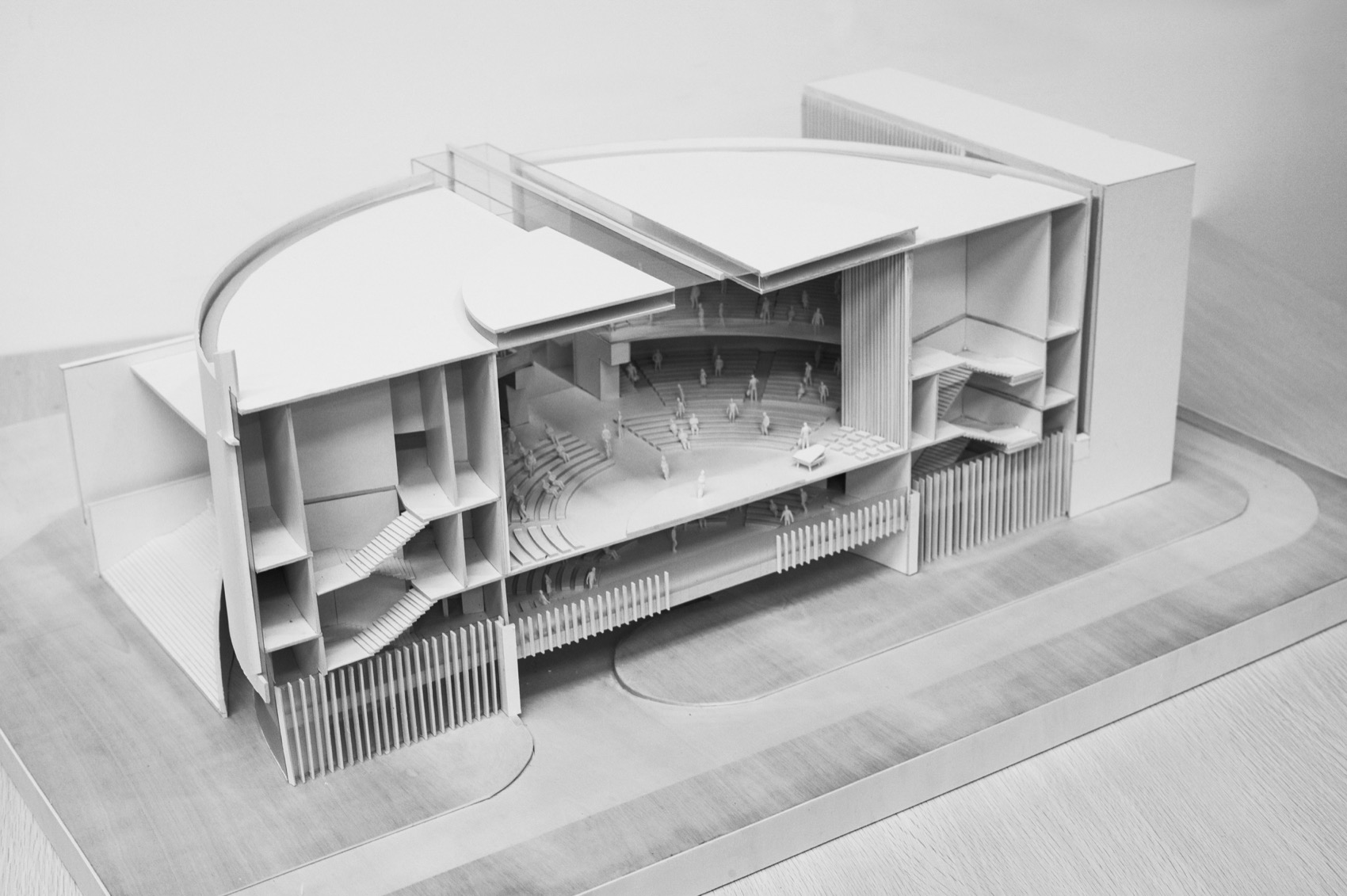
The primary volume is rendered in concrete grey. Crisp geometric lines play against softly curving surfaces, composing a distinctive yet cohesive exterior expression. The interplay between solid concrete walls and glazed curtain walls generates a powerful contrast of mass and void, while vertical fin textures enrich the tactile depth of the façade and dissolve any sense of detachment.
▼教堂立面的几何秩序,Geometric Order of the Church Façade
▼立面细节,Façade Detail
03 空间叙事:以渐进序列完成空间体验03 Spatial Narrative: A Graduated Sequence of Experience
设计始终以人本主义为核心原则,既关注建筑形态的美学价值,亦兼顾使用者在活动中的行为模式与心理需求。以空间的递进式叙事,完成从城市公共场域到静谧内部空间的温和过渡。
▼空间体验:人的空间感受随着进入不同的空间发生变化,产生空间仪式感,Spatial Experience: The visitor’s perception shifts as one moves through successive thresholds, generating a spatial sense of ritual
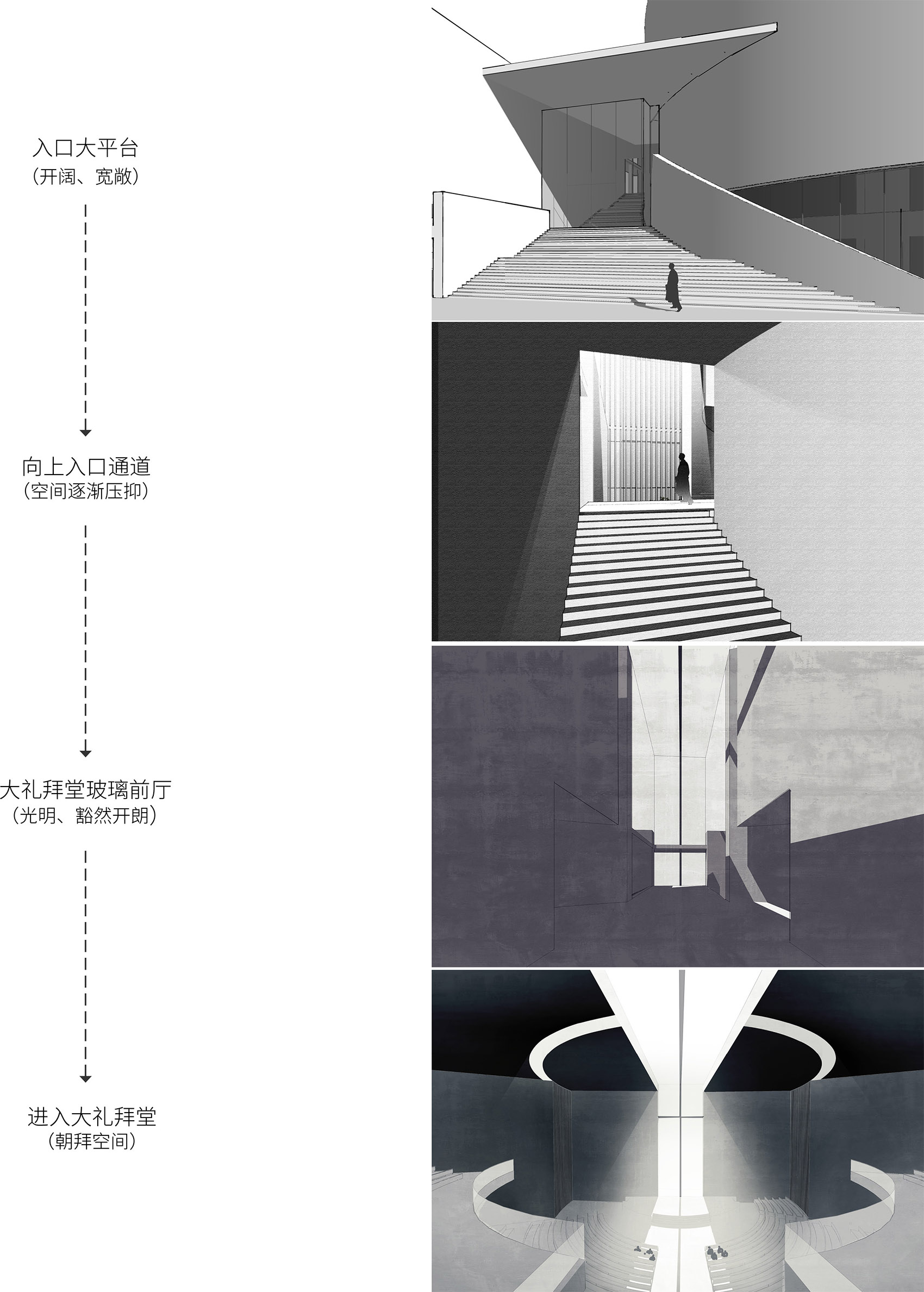
The design is guided throughout by a humanistic ethos, attending not only to the aesthetic value of architectural form but equally to the behavioural patterns and psychological needs of its users. A graduated spatial narrative orchestrates a gentle transition from the public realm of the city to the contemplative interior.
▼曲面墙体与玻璃立面的交汇,
Intersection of Curved Walls and Glass Façades
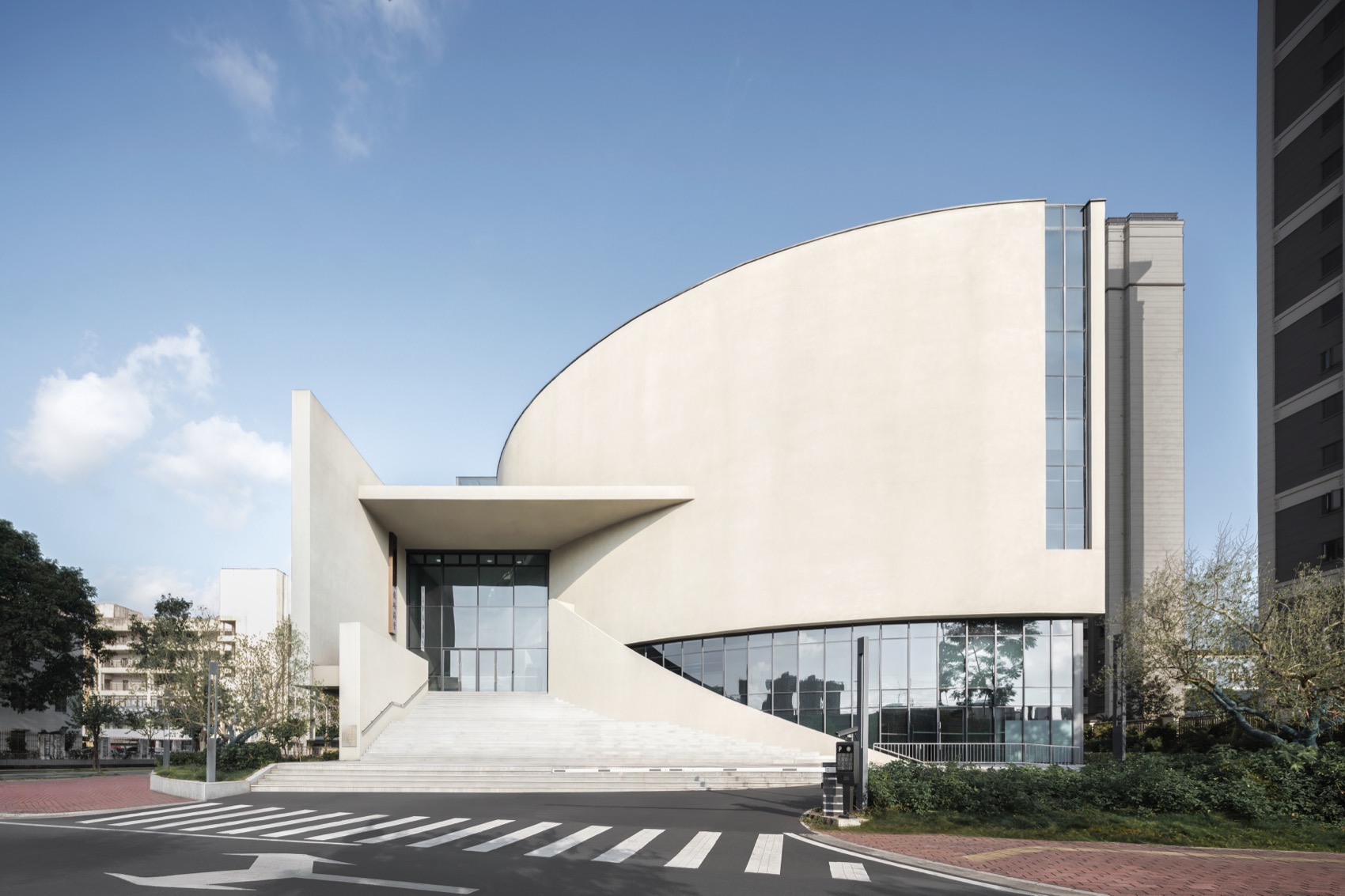
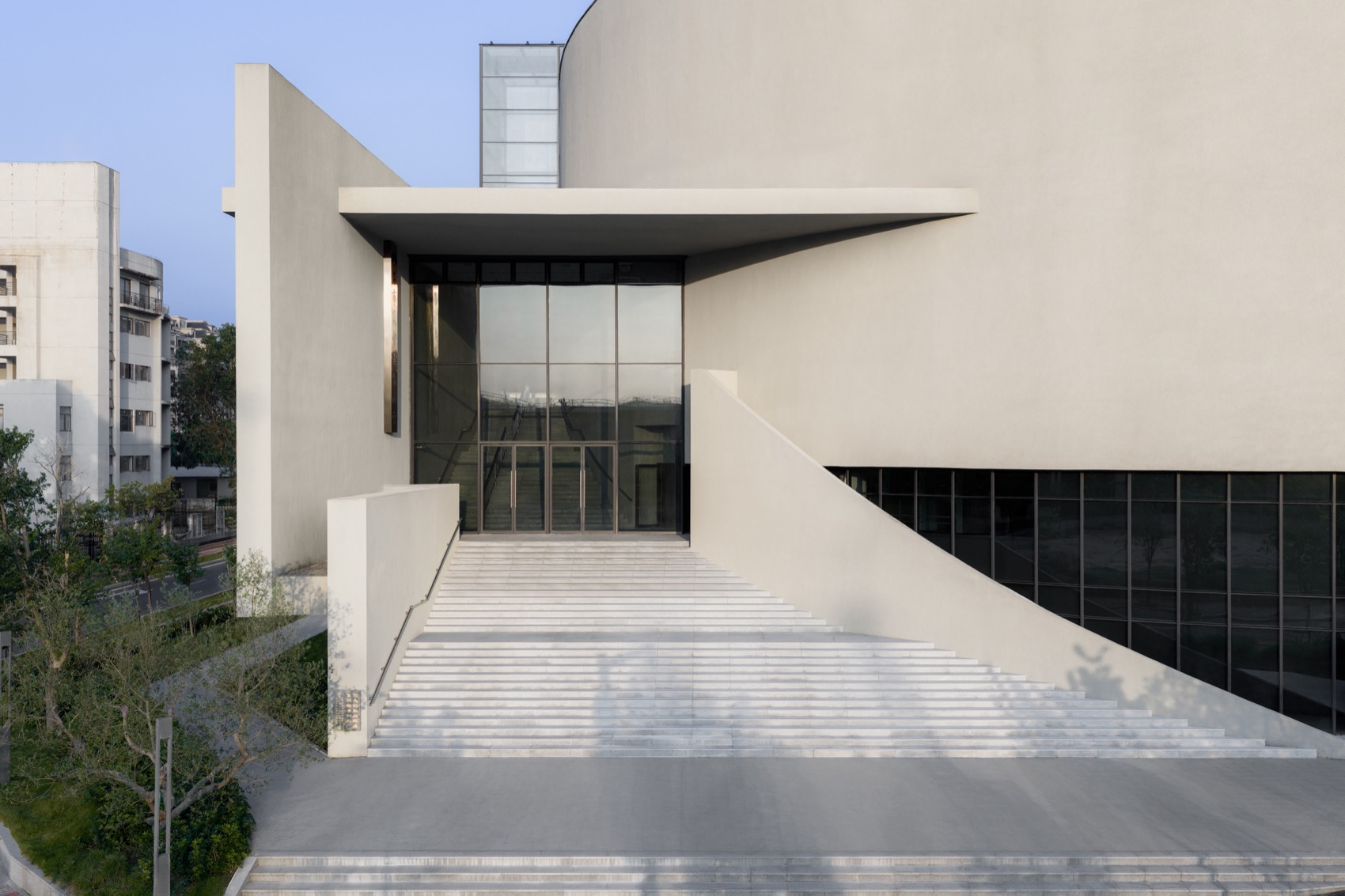
从城市道路步入场地,建筑入口大台阶缓缓抬升,沿入口拾级而上,尺度有序收放,光影动态流转,使用者在过渡中自然完成心理状态的沉淀,获得沉浸式的空间体验。
Approaching from the urban street, a monumental entry staircase ascends gradually. As one ascends, spatial scale rhythmically contracts and expands, and light and shadow shift in dynamic play. Through this transitional sequence, visitors naturally settle into a contemplative state, achieving an immersive spatial experience.
▼教堂入口平台,Church Entrance Platform
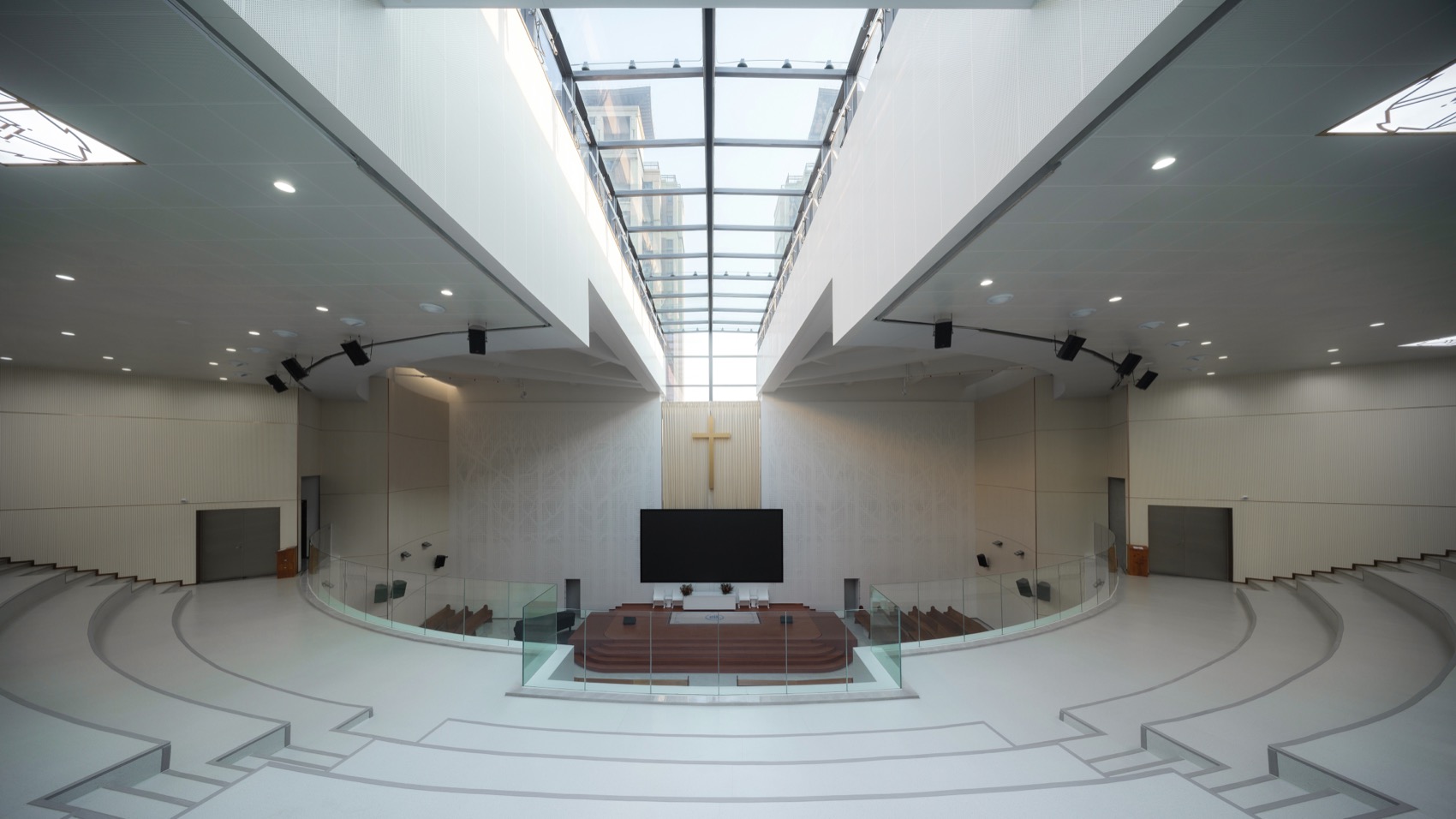
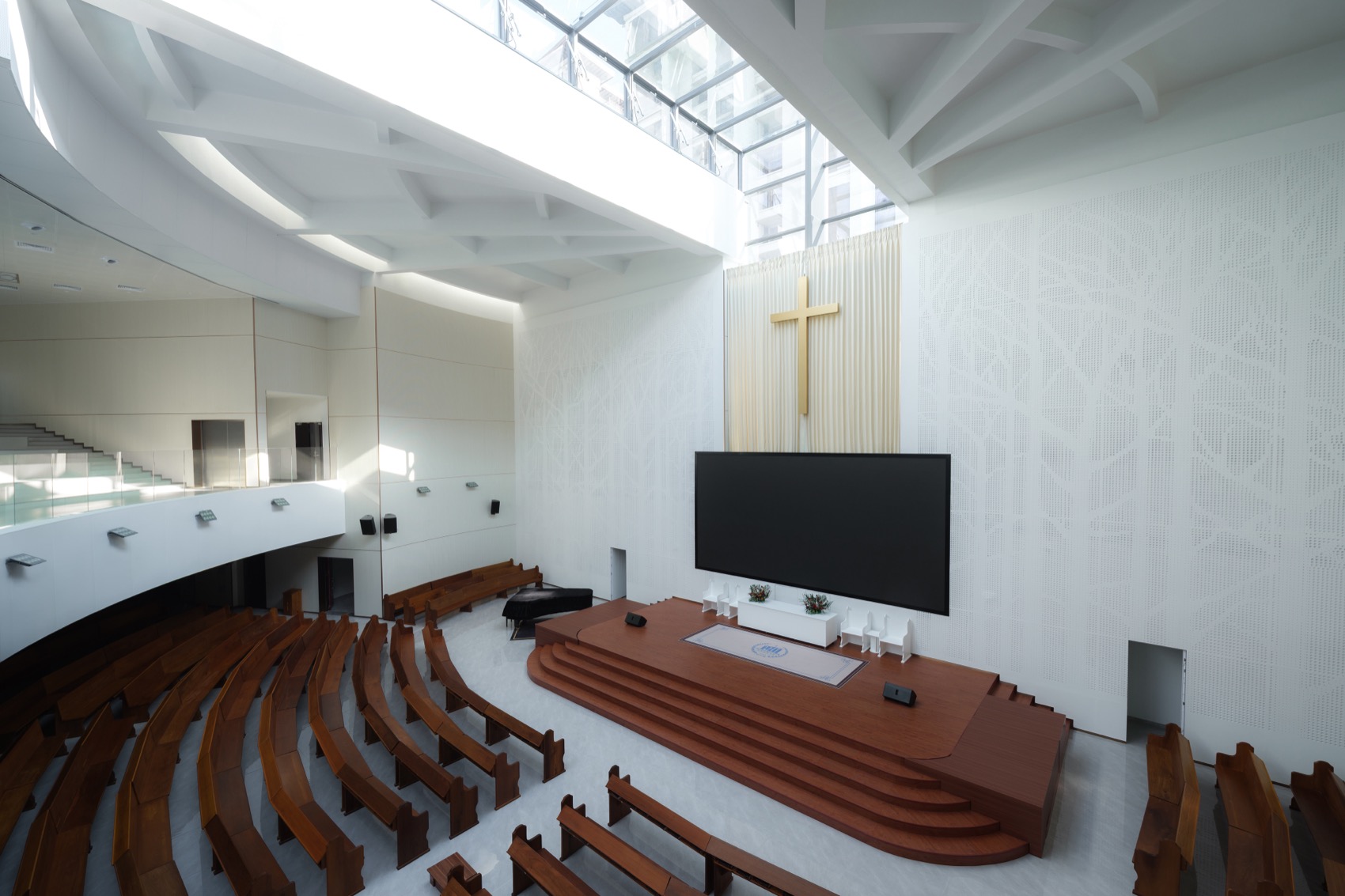
在功能设计上,设计团队兼顾了实用性与舒适性:合理的空间布局最大化提升了场地实用率,通透的开窗设计保障了内部空间的自然通风与采光。无论是可容纳千人的大礼拜堂,还是更具私密性的小礼拜堂,都能让身处其中者在舒适中获得内心的安宁。
▼教会活动,Congregational Activities
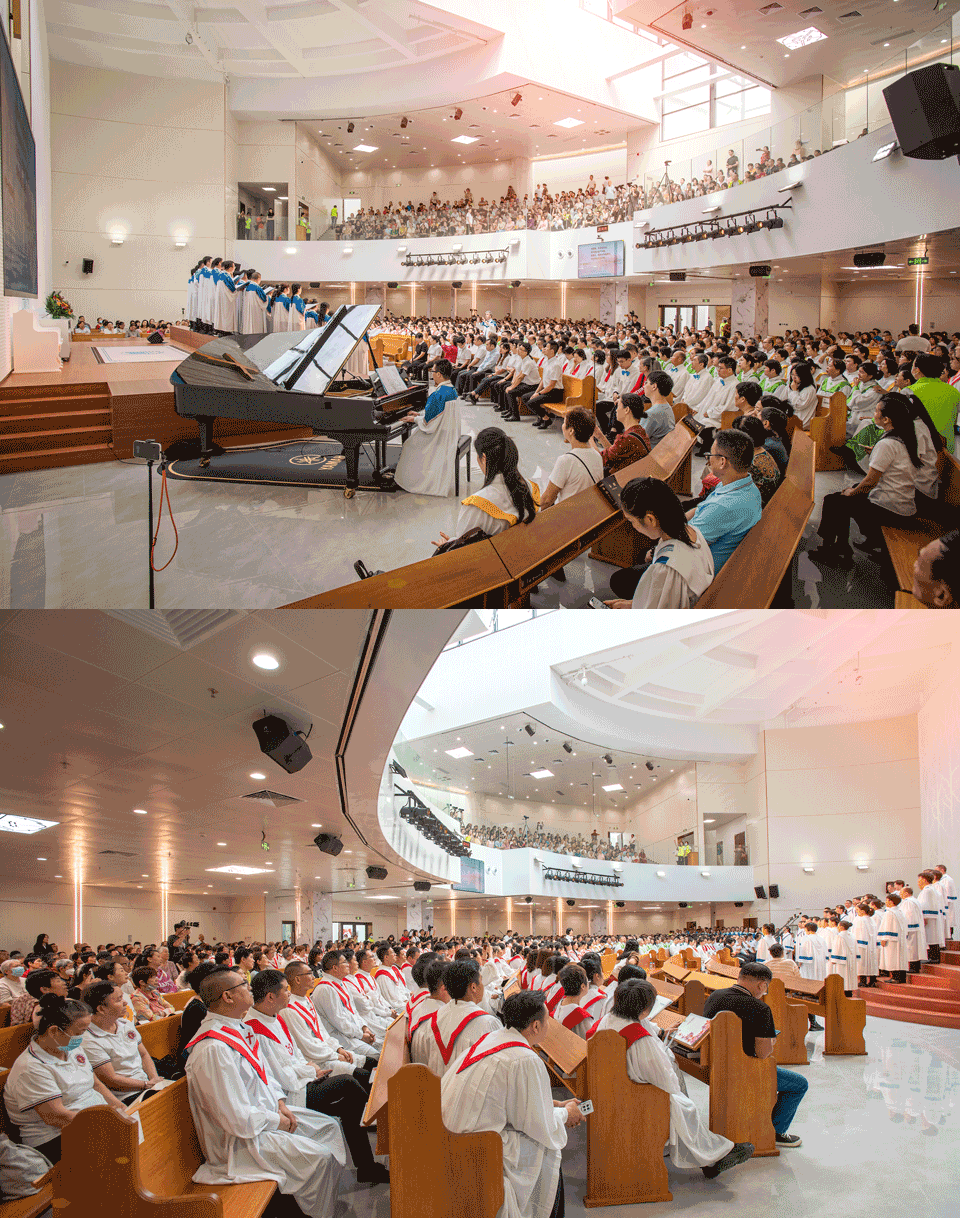
In terms of programmatic design, the team balances utility and comfort: a rational spatial layout maximizes site efficiency, while extensive and permeable fenestration ensures natural ventilation and daylight penetration. Whether in the main worship hall — capable of seating over a thousand — or in the more intimate chapel, occupants find both physical comfort and inner tranquility.
▼礼拜堂,Sanctuary
04 与城共生:融入城市肌理的公共建筑04 Urban Symbiosis: A Public Building Woven into the City Fabric
良好的公共建筑,从来都不是孤立存在的,而是与城市肌理、自然环境共生的有机体。珠海堂的创作以融入为设计原则,在塑造鲜明建筑形象的同时,也以谦逊的设计姿态,实现了与城市空间语境的有机融合。
A meaningful public building never exists in isolation; it is an organic whole that exists in symbiosis with the urban fabric and the natural landscape. The design of the Zhuhai Church adopts integration as its founding principle — forging a compelling architectural identity while maintaining an understated design posture that achieves an organic integration with the surrounding urban context.
▼基督教珠海堂,Zhuhai Christian Church
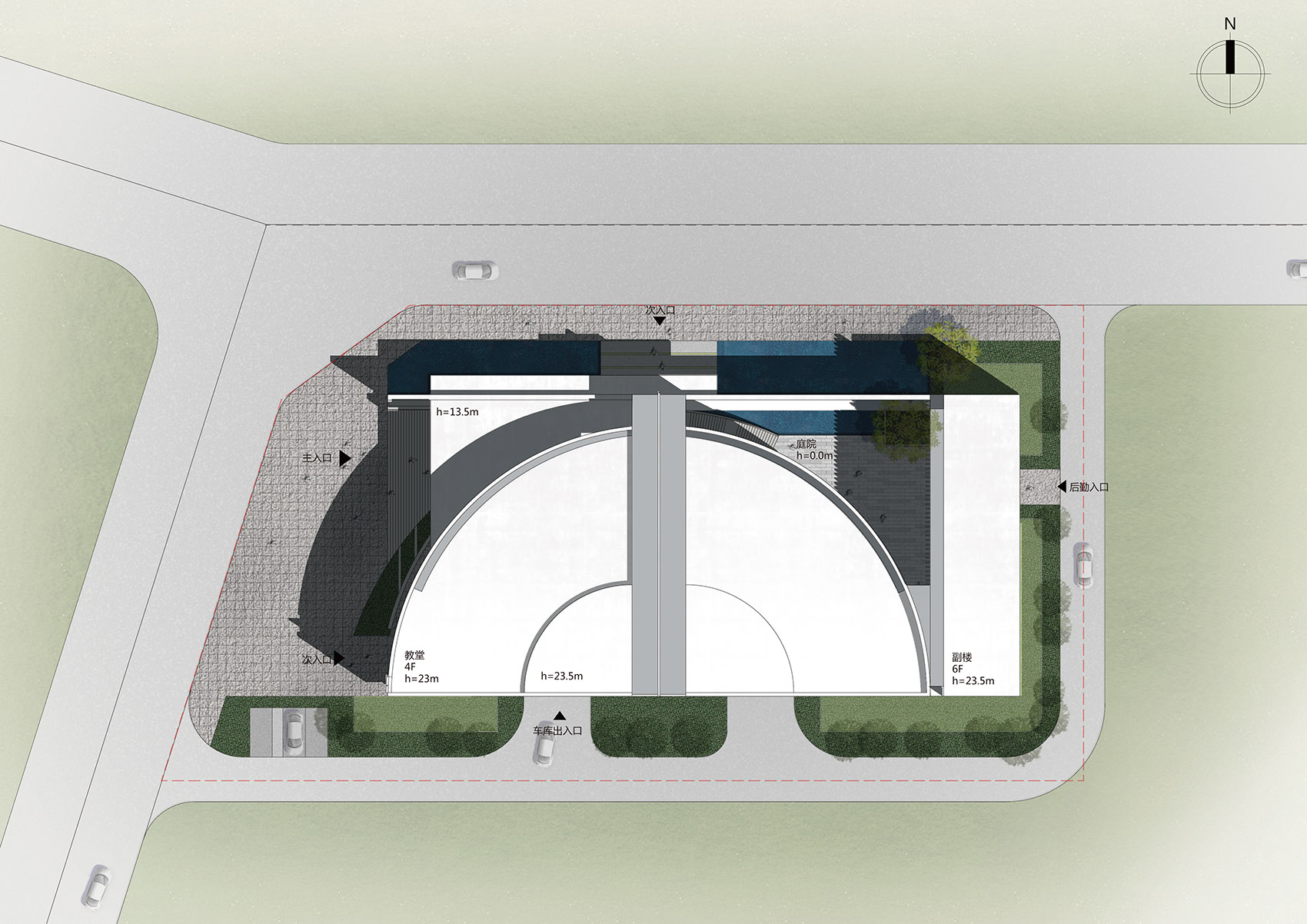
▼总平面图,Site Plan
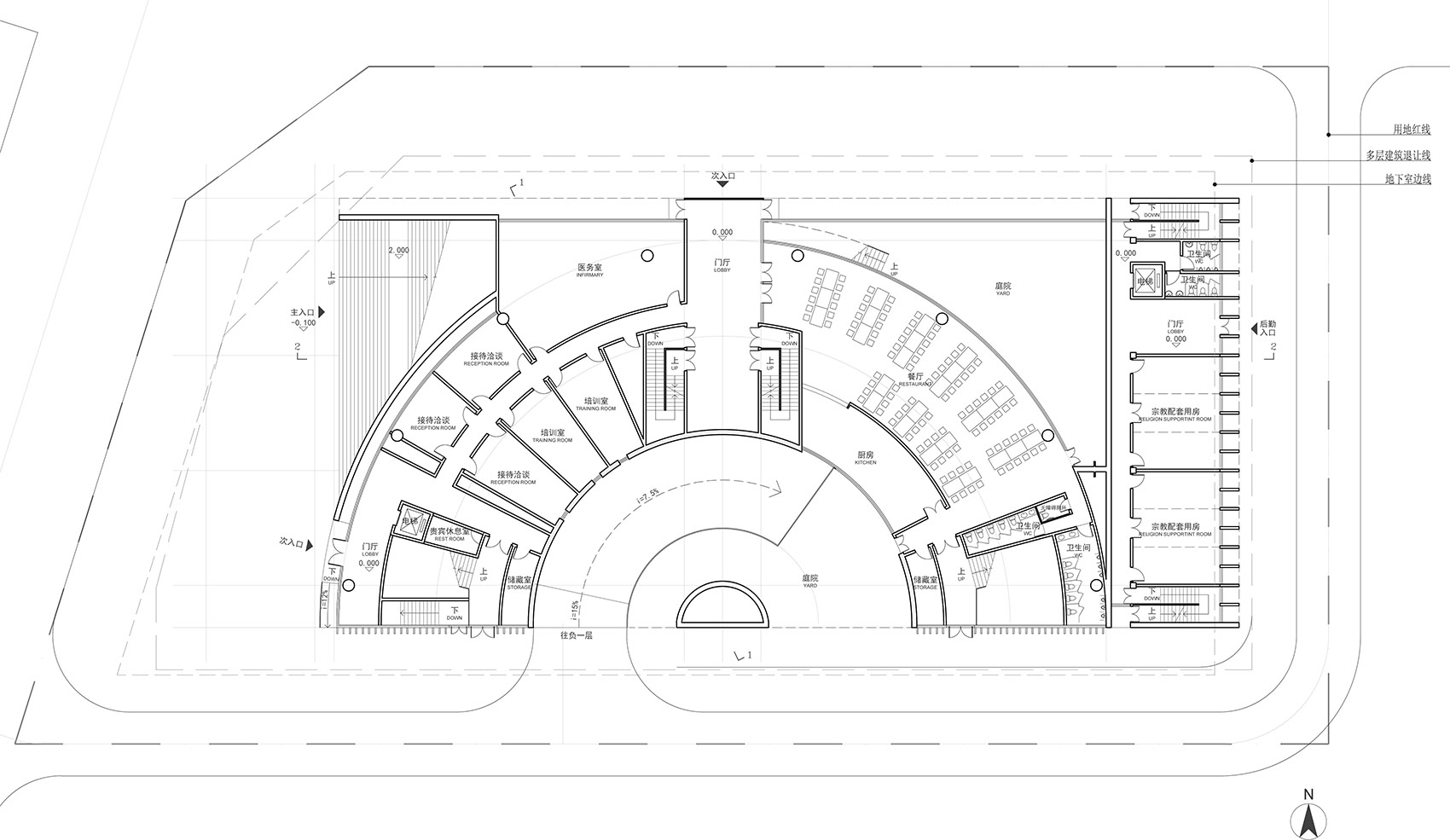
▼首层平面图,Ground Floor Plan
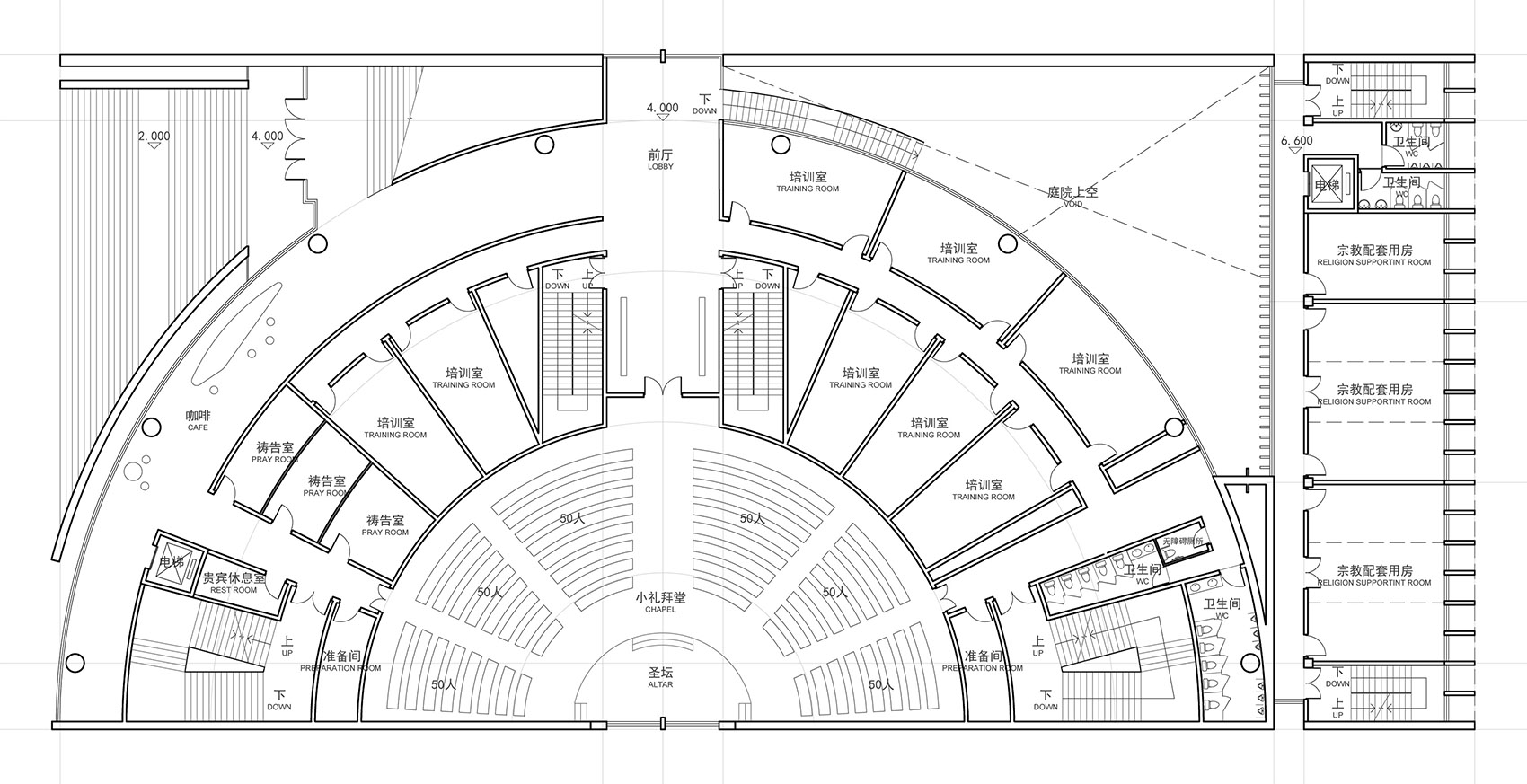
▼二层平面图,Second Floor Plan
▼三层平面图,Third Floor Plan
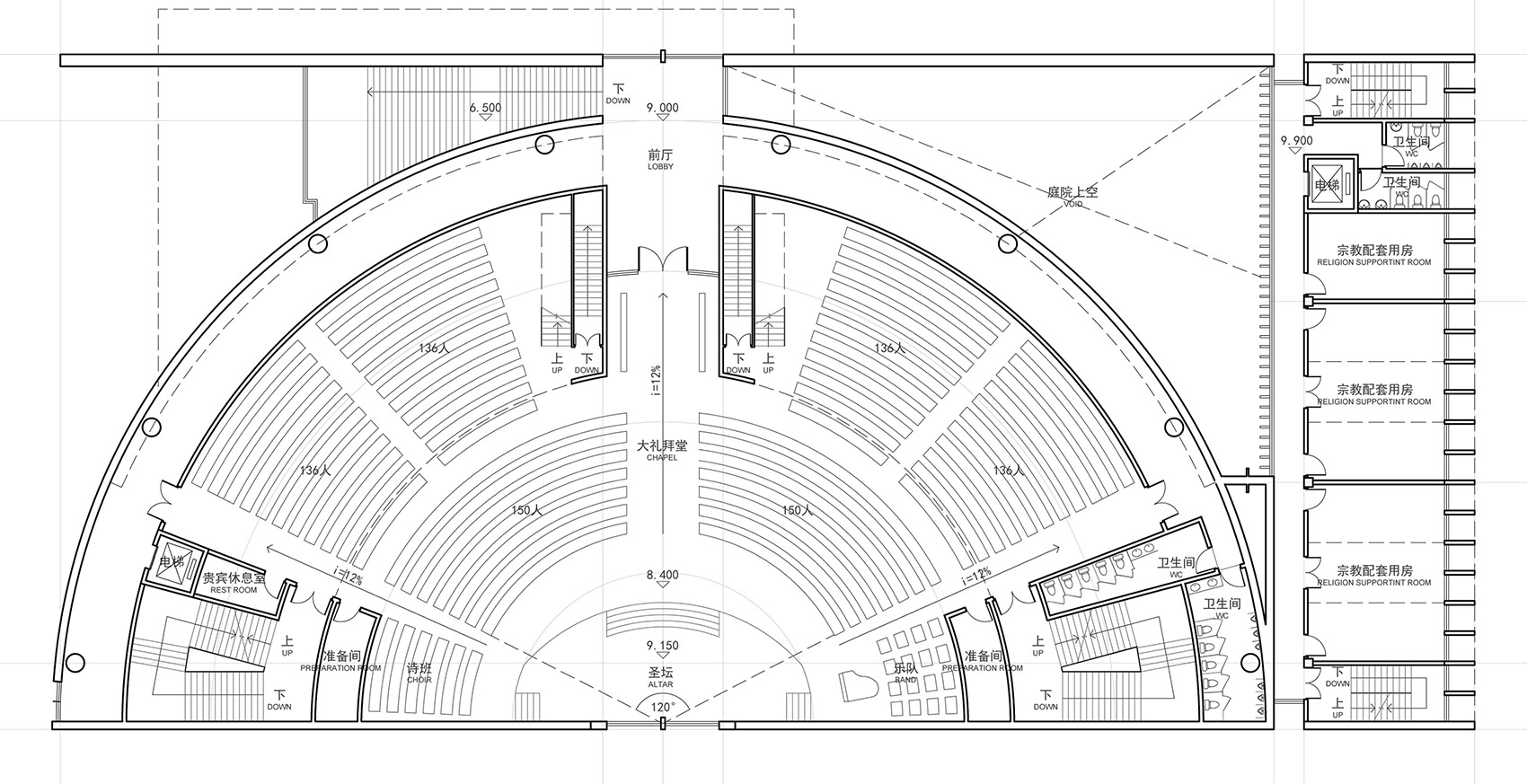
▼四层平面图,Fourth Floor Plan
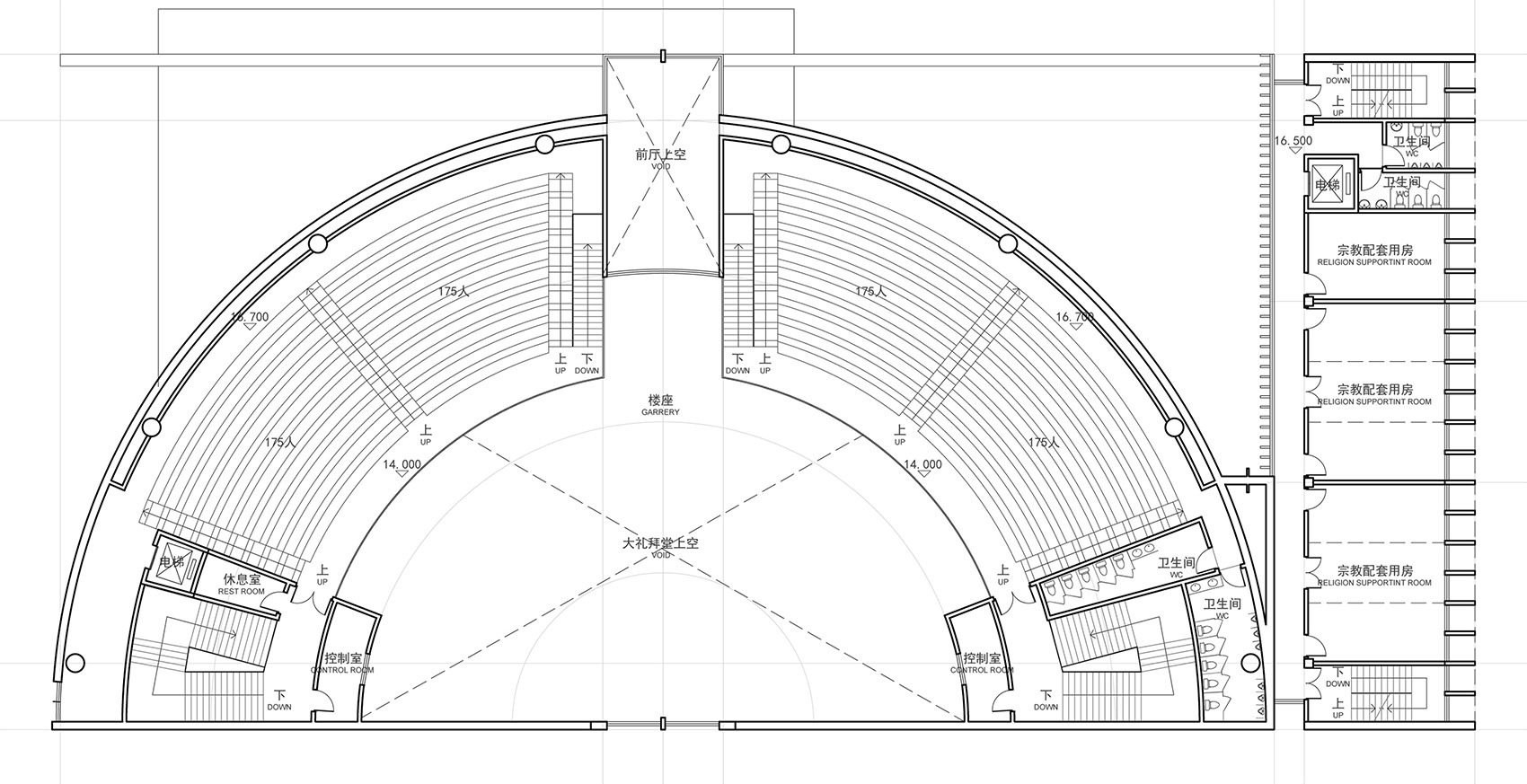
▼北立面图,North Elevation

▼南立面图,South Elevation

▼西立面图,West Elevation

▼东立面图,East Elevation

▼剖面图,Section
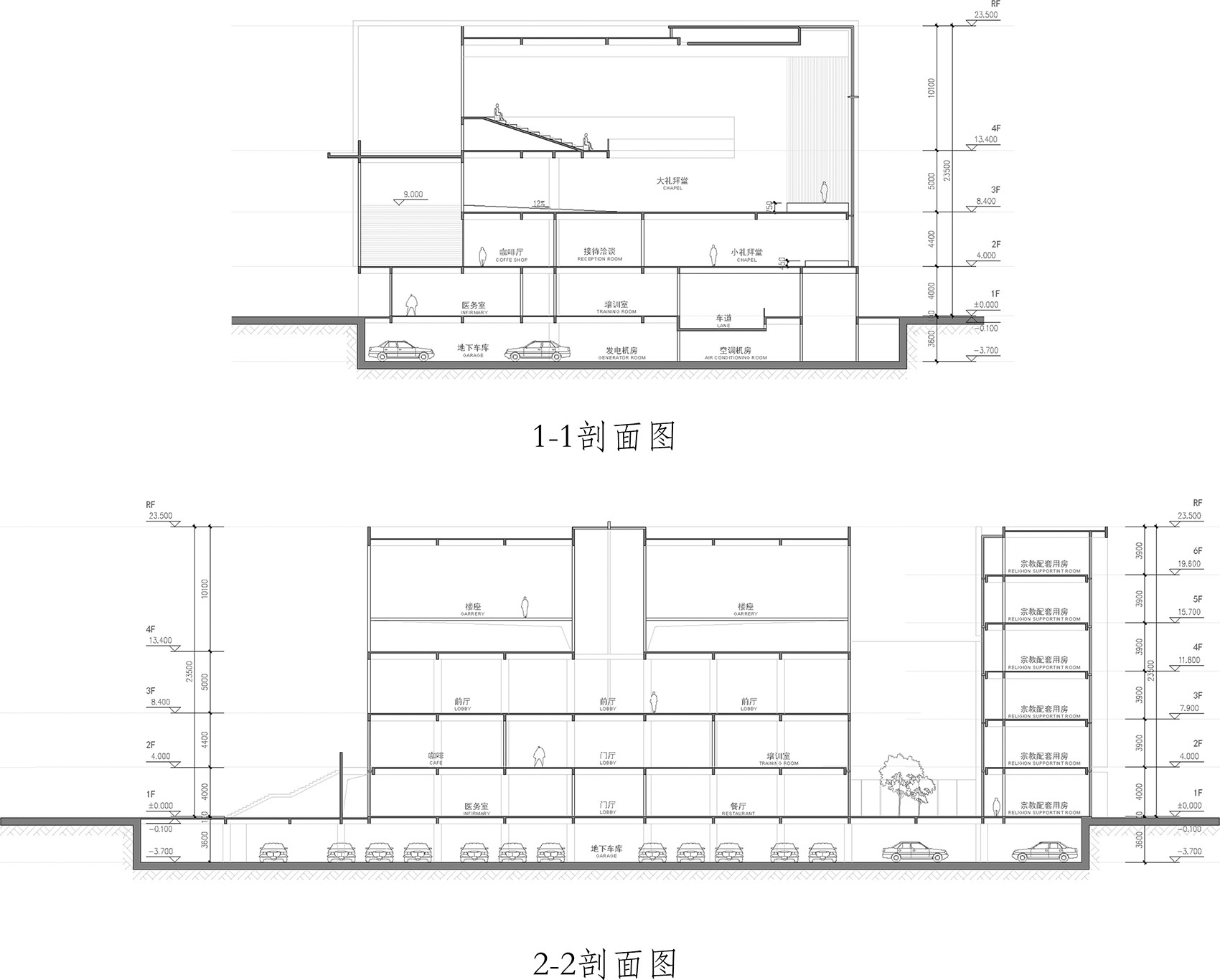
Project: Zhuhai Christian Church
Location: Xiangzhou District, Zhuhai, Guangdong Province, China
Site Area: 4,947 m²
Gross Floor Area: 11,127 m²
Design Period: 2016
Completion: 2025
Architect: Janson Xian Architect + Associates(XAA)
Lead Architect: Xian Jianxiong
Project Director: Liang Minquan
Schematic Design Team: Liao Jiasheng, Yi Yuxing, Li Kaiting, Gao Wenyi, Miao Zhiyang
Landscape Team: Li Xuesi, Huang Juanmei, Guo Zijin, Gong Renhao
Associate Architect: Guangdong University of Technology Architectural Planning & Design Institute Co., Ltd. (Zhuhai Branch)
Photography: Chill Shine