510 Mailand-Strasse办公园区,瑞士 / Herzog & de Meuron
与莱茵河畔圣约翰区长期发展的Rheinschanze园区相比,我们位于Mailand-Strasse的新办公楼在规模与活力上不相上下,可容纳超过300人在同一屋檐下工作,并被有意识地设计为创造更多交流机会的场所。尽管莱茵河畔园区仍以较小规模持续运作,Dreispitz正逐渐成为我们日常生活与工作中愈发重要的一部分。
Comparable in scale and vitality to our long-standing Rheinschanze Campus in the St. Johann quarter of Basel, our new building at Mailand-Strasse brings over 300 people together under one roof and has been purposefully designed to create new opportunities for exchange. While our campus on the Rhine remains active on a smaller scale, Dreispitz is becoming an increasingly important part of our daily life and work.
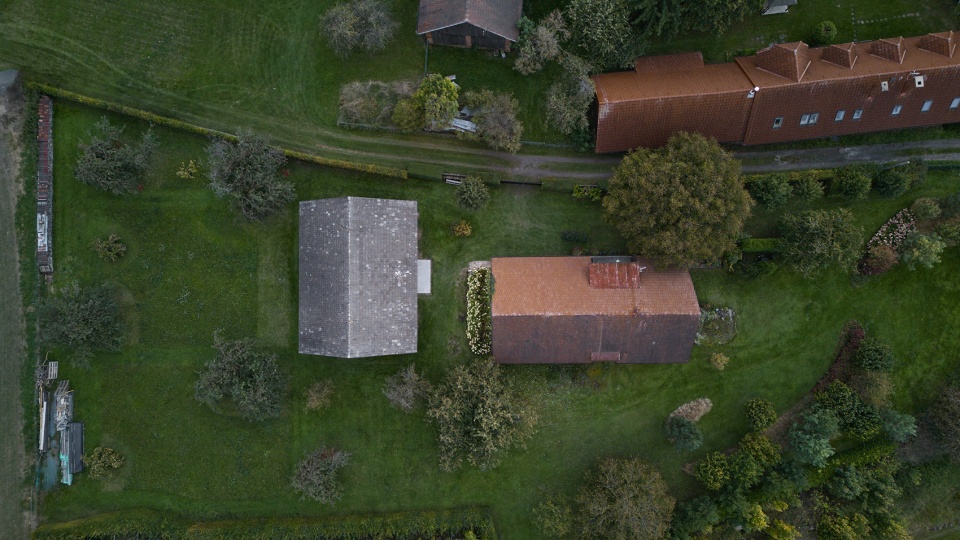
▼建筑与城市界面,Building and urban edge
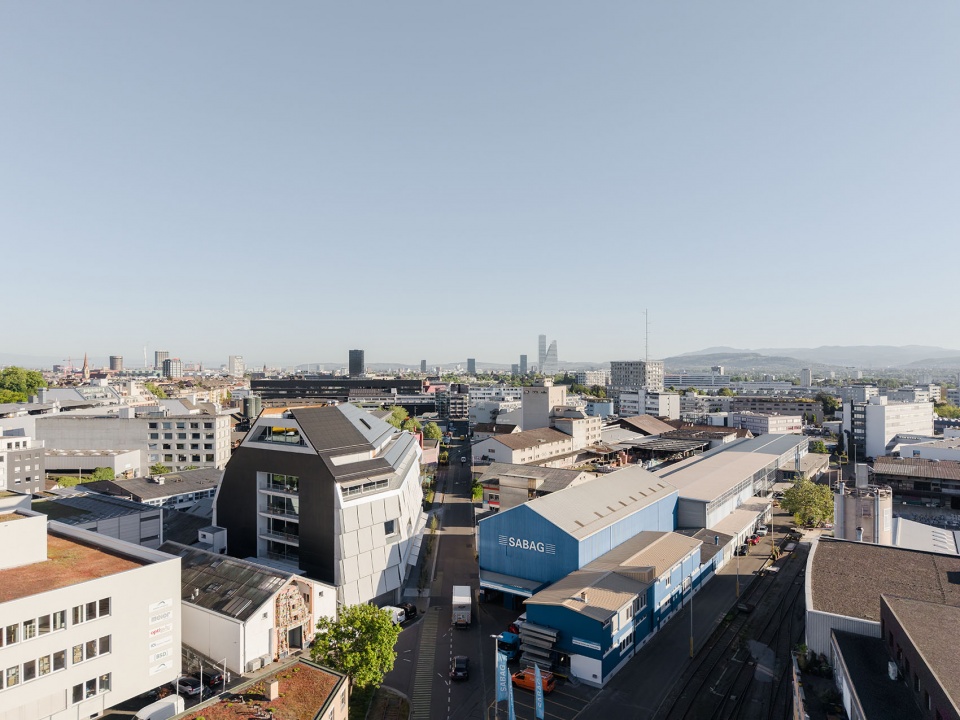
与Rheinschanze园区历经多年逐步形成的有机、水平扩展模式不同,Mailand-Strasse项目回应的是一个关于垂直园区如何构想的问题:如何在一座紧凑的多层建筑中,创造一个富有启发性且具有社区感的工作环境。
In contrast to the organic, horizontal expansion that occurred over many years at Rheinschanze, Mailand-Strasse addresses the question of how a vertical campus can be conceived: an inspiring, communal workplace within a single, contained multi-story building.
▼建筑鸟瞰,Aerial view of the building
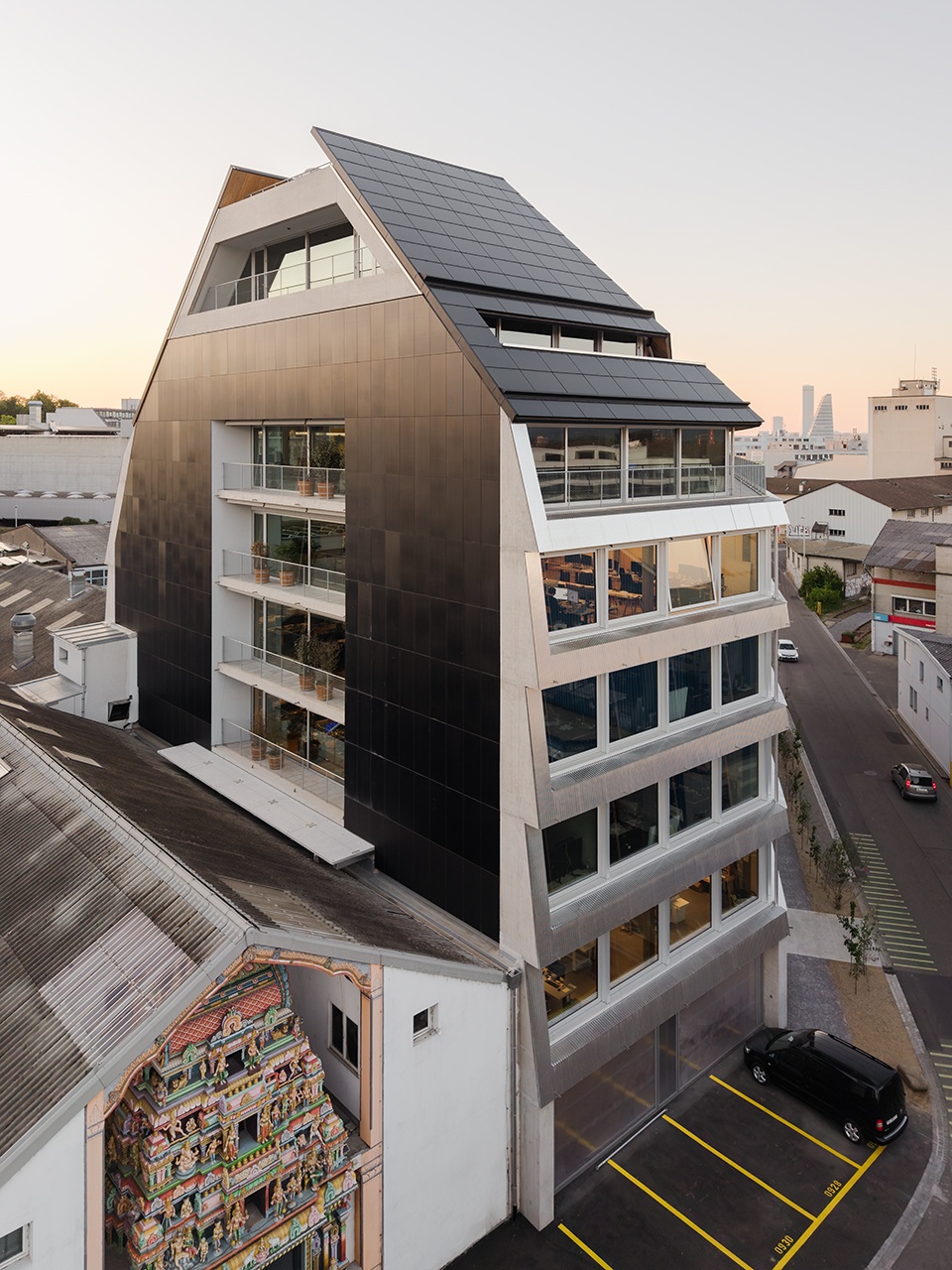
城市背景 Urban context
Mailand-Strasse 项目与“Vision Dreispitz”规划理念紧密相连。25年前,我们提出这一构想,希望将城市向南扩展,以一个充满活力的混合功能城区取代原有工业区——巴塞尔旧保税仓储区(Zollfreilager),其中包含住宅、教育机构和文化设施。此后,Dreispitz已成为巴塞尔持续城市发展进程中的关键组成部分。建筑距离Jacques Herzog und Pierre de Meuron Kabinett仅数分钟步行路程,其设计受到周边街区结构以及工业历史背景的共同塑造。
Mailand-Strasse is closely connected to “Vision Dreispitz,” a concept we developed over 25 years ago to extend the city southward, replacing an industrial area – Basel’s former Zollfreilager – with a vibrant mixed-use urban quarter including housing, educational institutions, and cultural facilities. Since then, Dreispitz has become a key element of Basel’s ongoing urban development. Located a short walk from the Jacques Herzog und Pierre de Meuron Kabinett, our building is shaped by the structure of the neighborhood and its industrial past.
▼街区中的建筑,Building within neighborhood
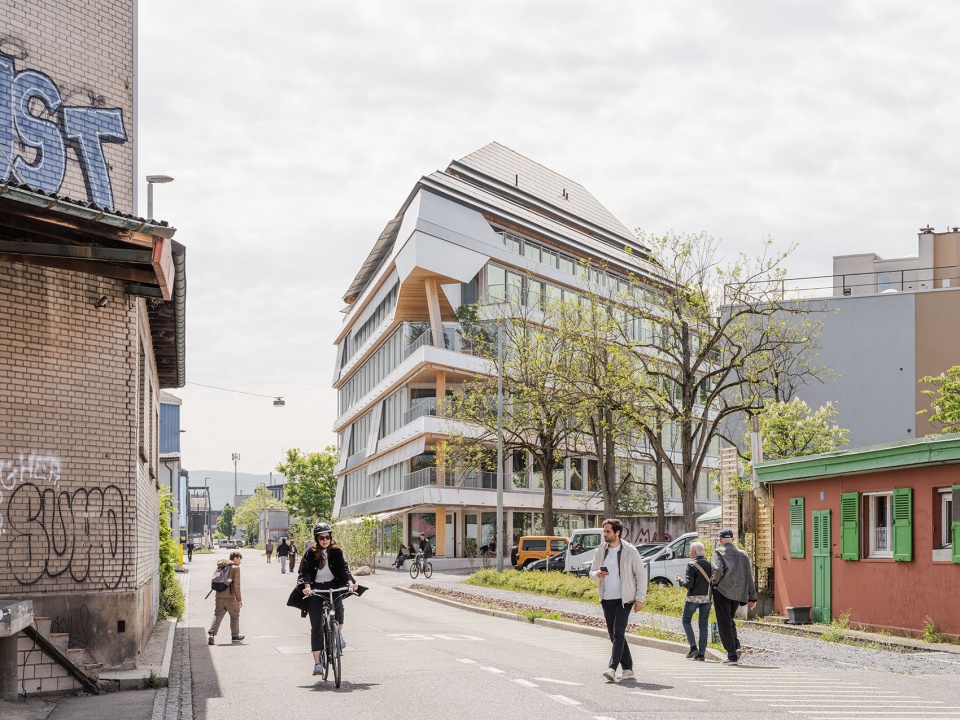
建筑 Architecture
项目由两个总体原则所引导。其一,是塑造清晰的建筑身份,通过理性且系统化的结构秩序,形成同时兼具鲜明个性与表现力的建筑形象。其二,是打造一座符合当代生态理念的建筑,在建造方式与材料选择上优先考虑循环利用以及低碳排放。
The project is guided by two overarching principles. The first is the development of a clear architectural identity, characterized by a rational, systematic structure that nevertheless possesses a distinctive and expressive character. The second is the goal of creating a contemporary, ecological building whose construction and choice of materials prioritize circularity and a low carbon footprint.
▼建筑整体外观,Overall exterior
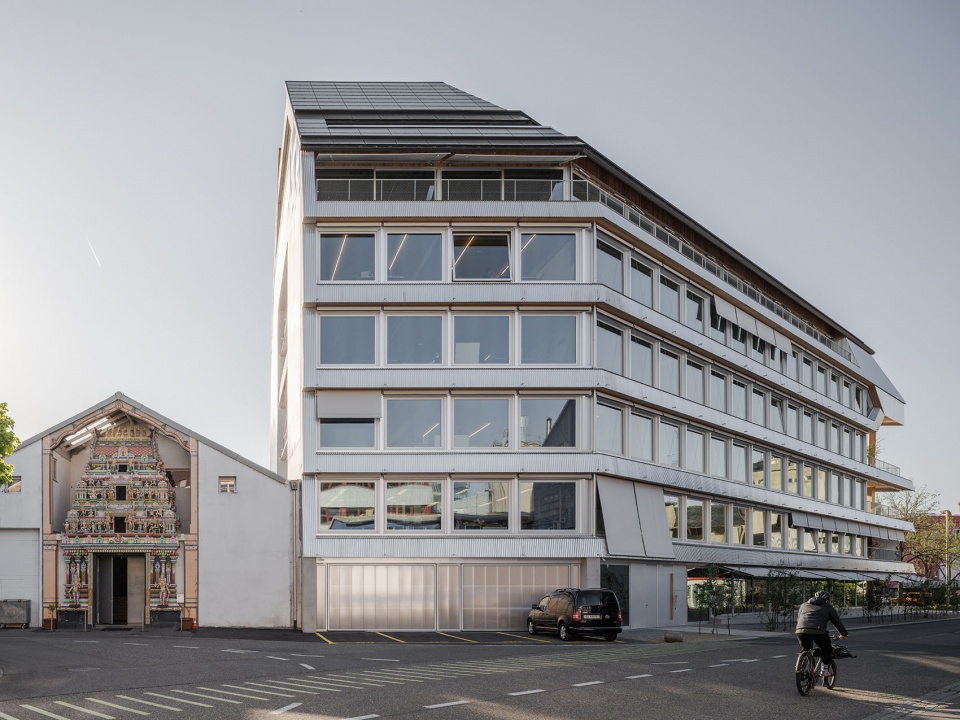
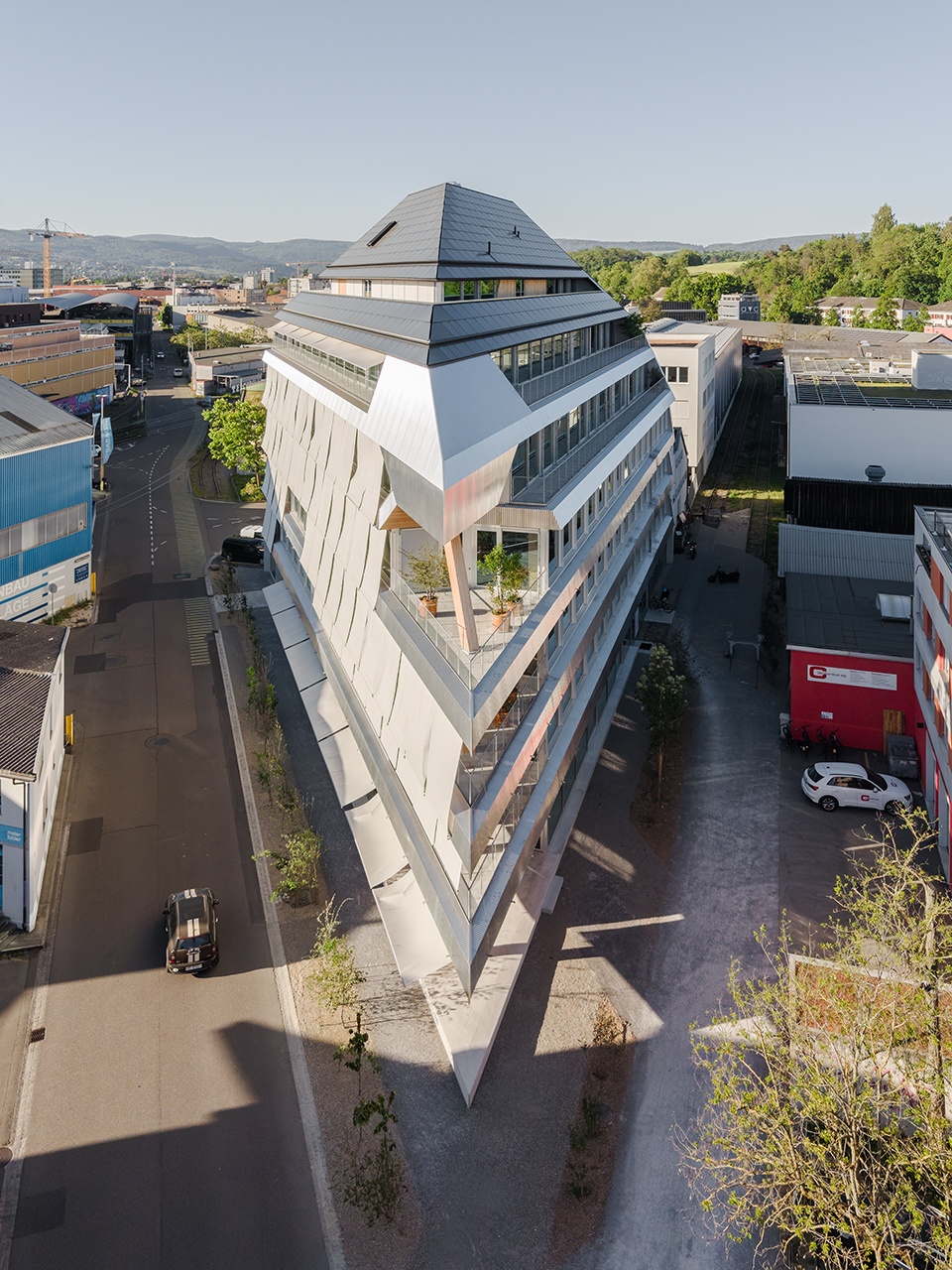
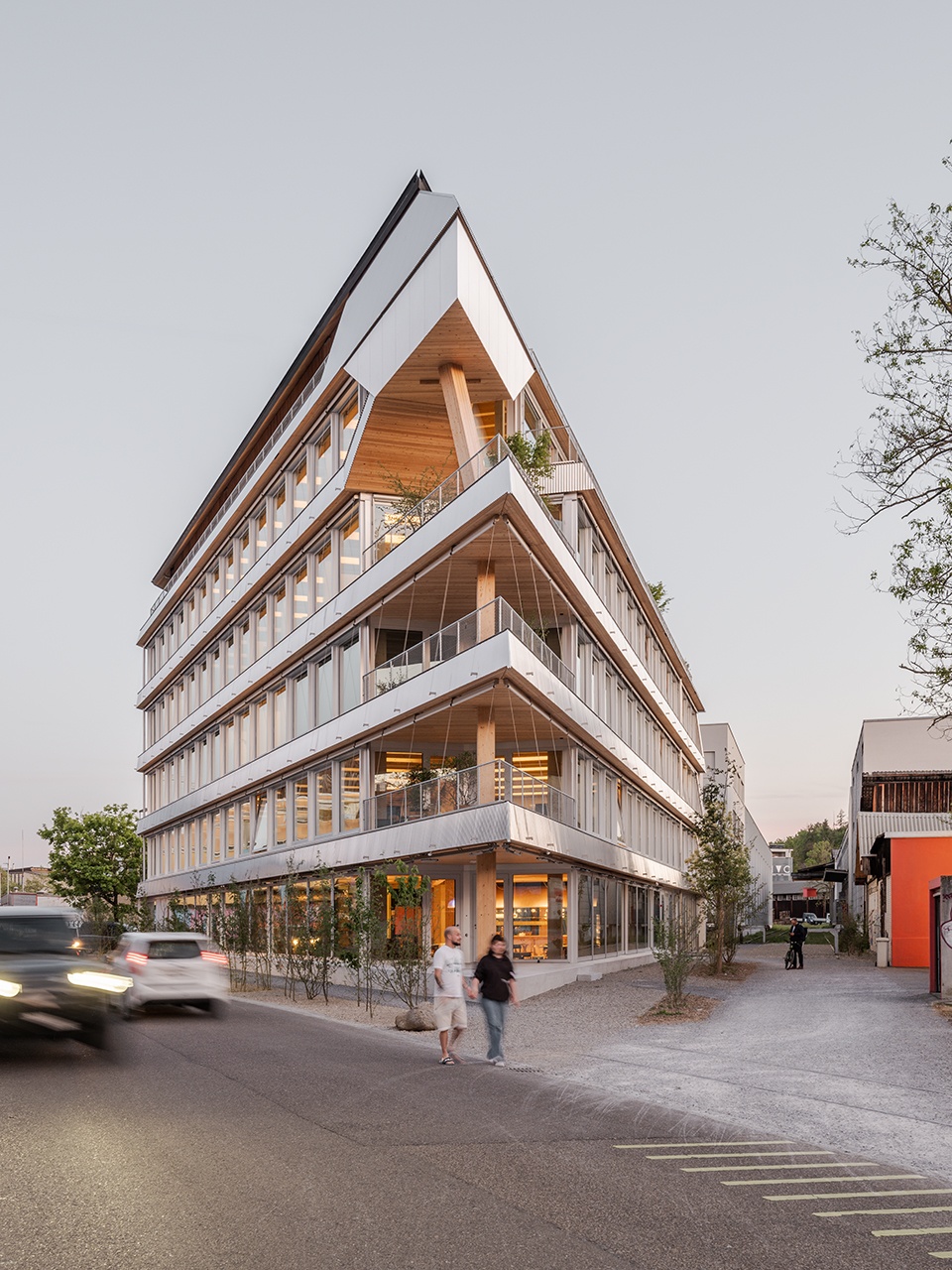
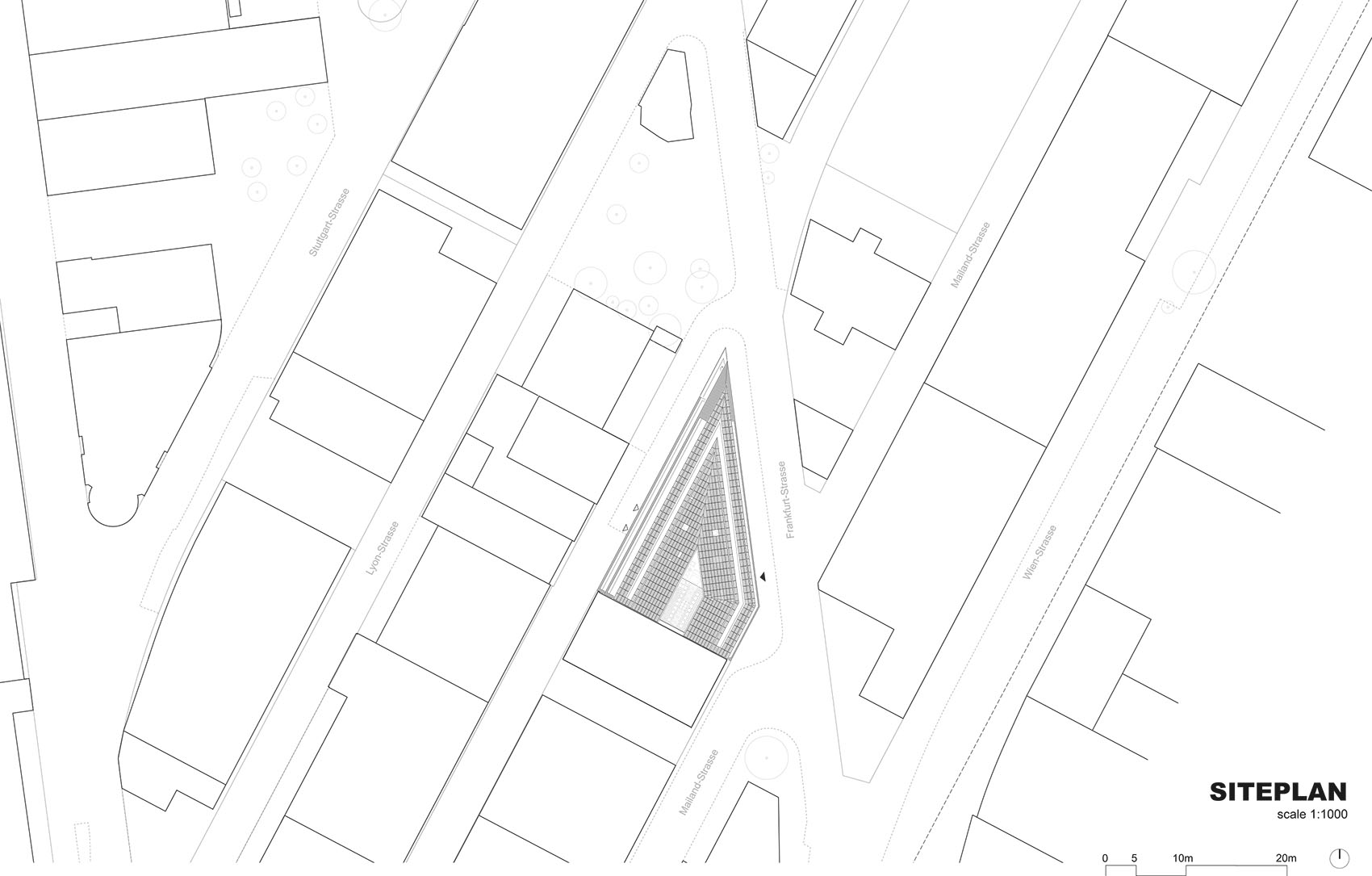
项目沿着曾连接场地与巴塞尔中央车站的旧铁路轨道布置,并承接了工业环境中的线性结构与尺度特征。建筑形体遵循地块几何形态,而地块本身则由分岔铁路支线形成的锐角轮廓所界定。五层高的基座之上覆盖着一座大型坡屋顶,其下布置了另外三层空间。由于受到遮阳与日照法规的限制,这一独特轮廓塑造了建筑鲜明的存在感。
Located along former rail tracks that once connected the site to Basel’s main station, the project takes up the linear structure and scale of its industrial surroundings. The form of the building follows the geometry of the plot, which is defined by the acute angles of the branching rail spurs. A five-story plinth forms the base for a large, pitched roof under which three additional floors are arranged. This silhouette – shaped by regulations governing overshadowing – gives the building its characteristic presence.
▼街角视角,Corner view
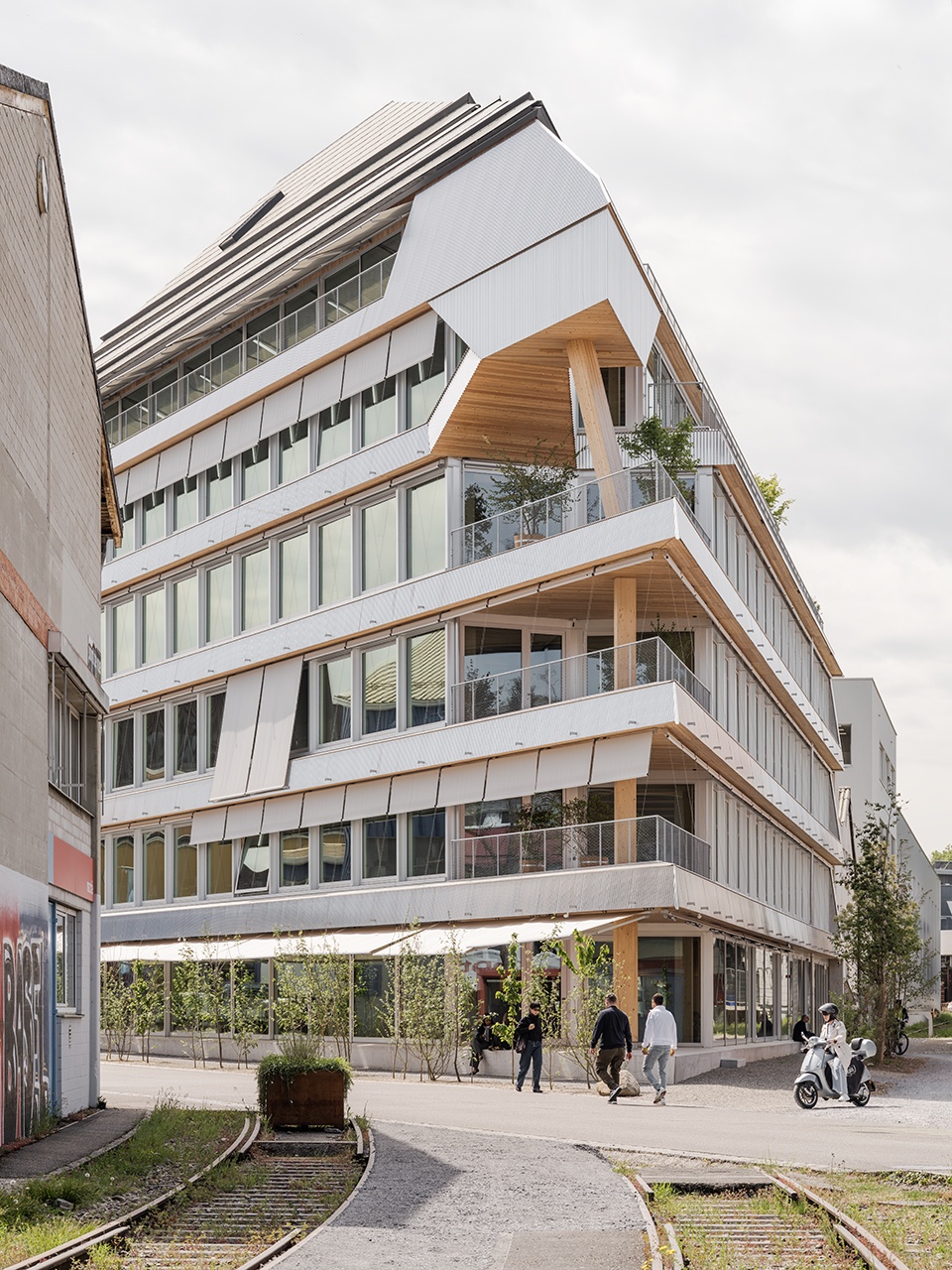
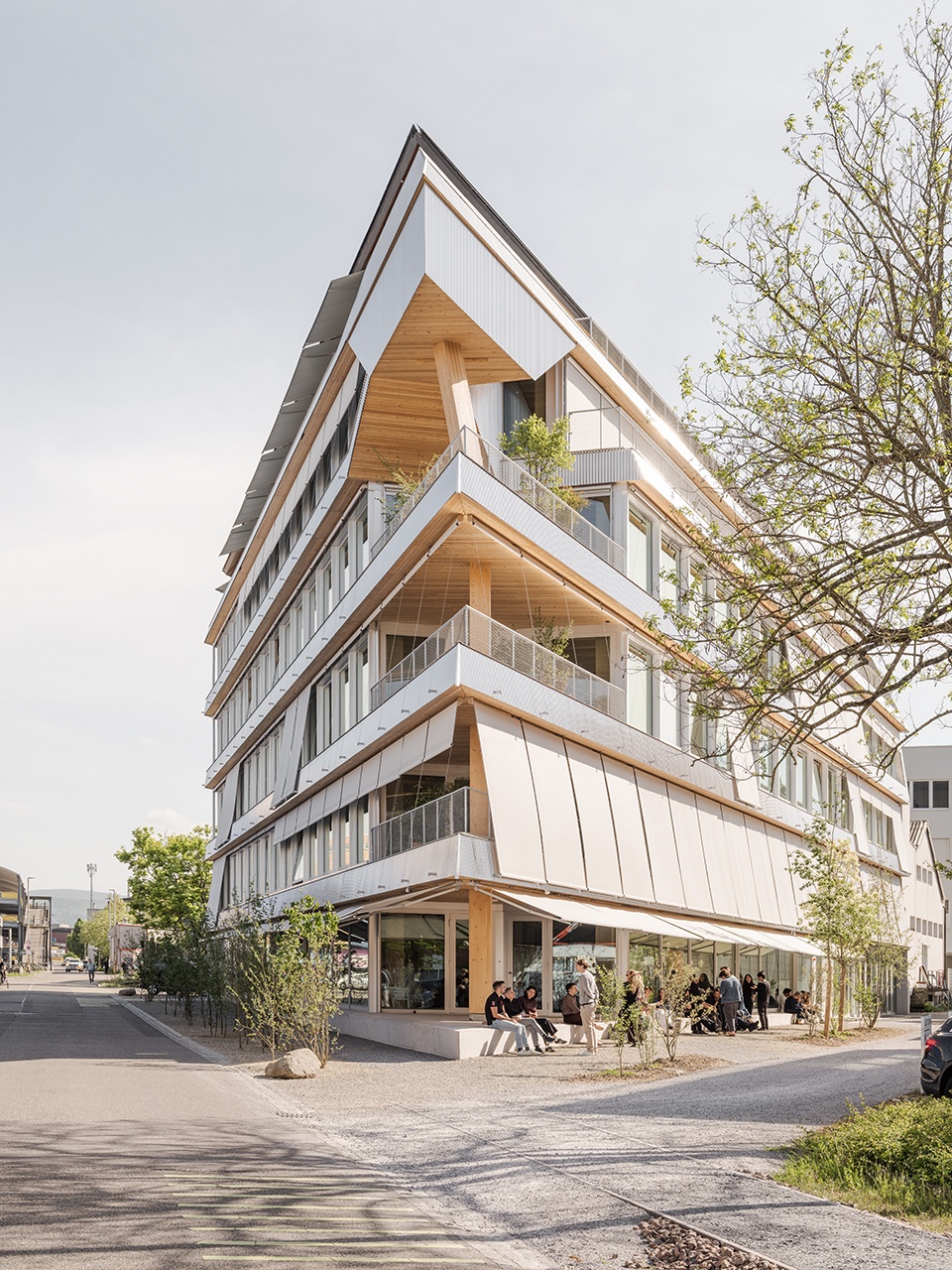
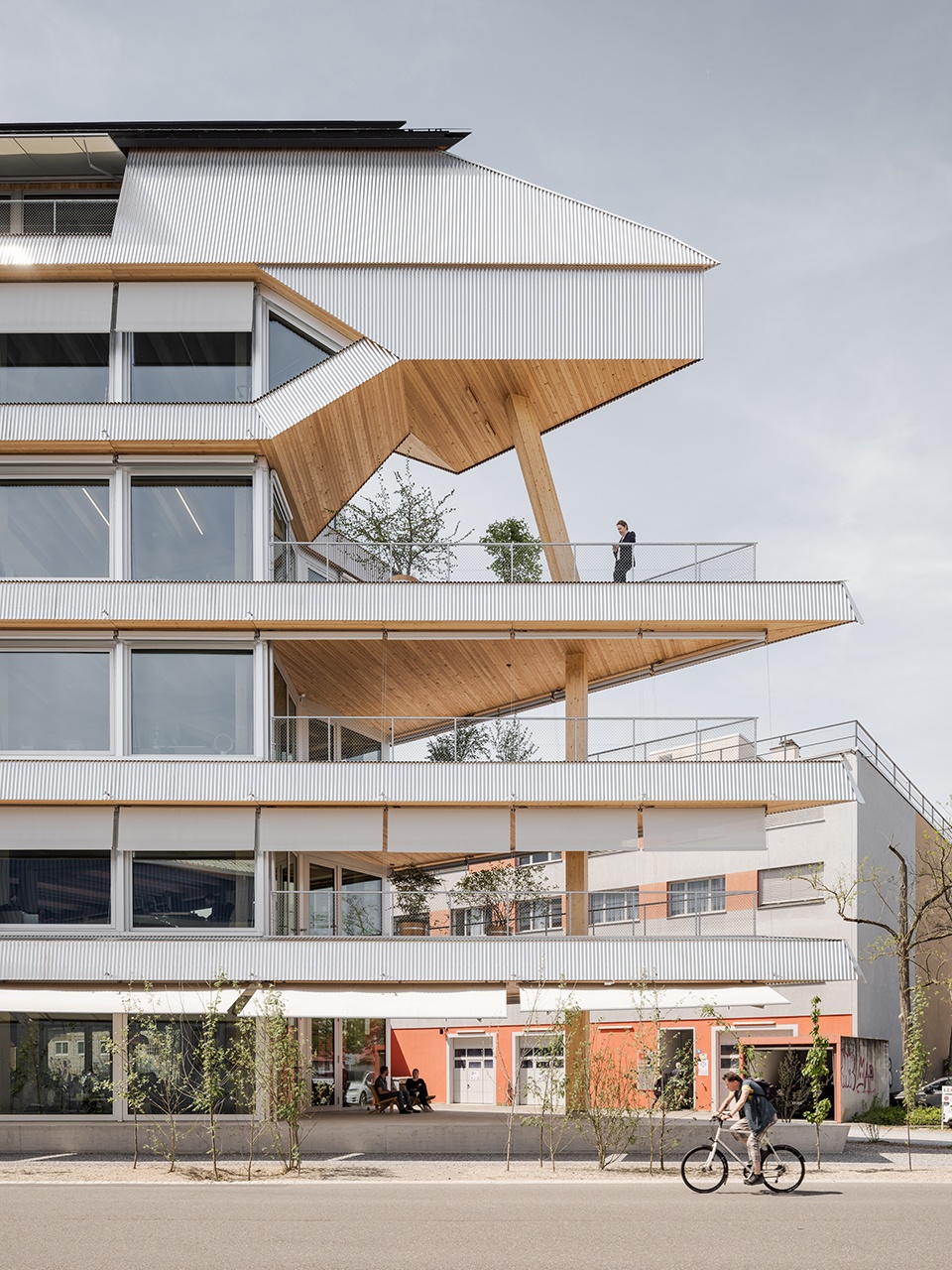
从外部看,建筑呈现出一种重复且理性有序的特征。立面采用水平带状旋转窗以及波纹金属女儿墙板,以呼应周边工业建筑。经过精心布置的局部介入则打破了这种规律性:位于北端的内部楼梯以金属包覆的形式显露于外部,连接两个楼层,并与周边功能性工业建筑建立联系;立面上的额外开口则形成阳台和廊台空间。建筑内部通过通高空间与开放式楼梯井建立视觉联系和直接的楼层连接,构成一个促进交流与沟通的垂直园区。
From the outside, the building initially appears repetitive and rationally ordered. The façade features horizontal bands of pivot windows and corrugated metal parapet panels, referring to the neighboring industrial buildings. Carefully placed interventions interrupt this regularity: an internal stair at the northern tip reveals its metal-clad form on the exterior, connecting two levels and establishing a relationship to the surrounding utilitarian structures, while additional openings in the façade create balconies and loggias. Within the building, double-height spaces and open stairwells create visual connections and direct links between floors, forming a vertical campus that fosters exchange and communication.
▼沿街立面,Street facade
▼外观近景,Exterior close view
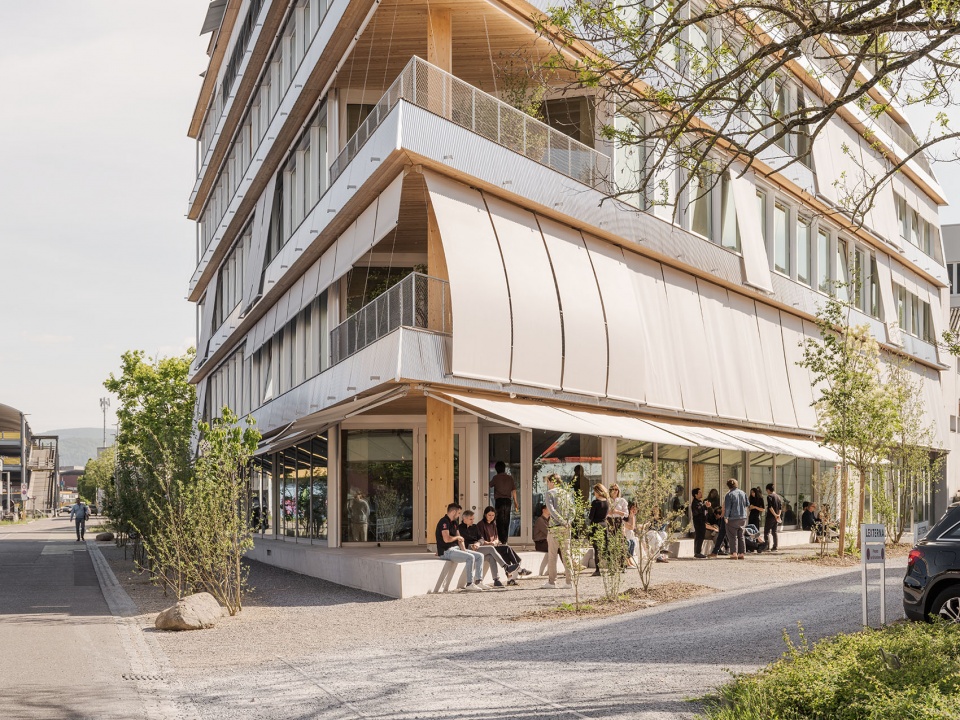
可持续性与建造 Sustainability and construction
建筑主要采用木结构承重体系,大幅降低了隐含碳排放。混凝土仅在结构上确有必要的位置使用,包括三个核心筒、防火墙以及地下层。分级开挖的地下工程策略进一步减少了混凝土的使用量。
The building’s load-bearing structure is primarily timber, which significantly reduces its embodied carbon footprint. Concrete is used only where structurally necessary: in the three cores, the firewall, and the basement levels. A stepped excavation further minimizes the amount of concrete needed.
▼中庭,Central atrium
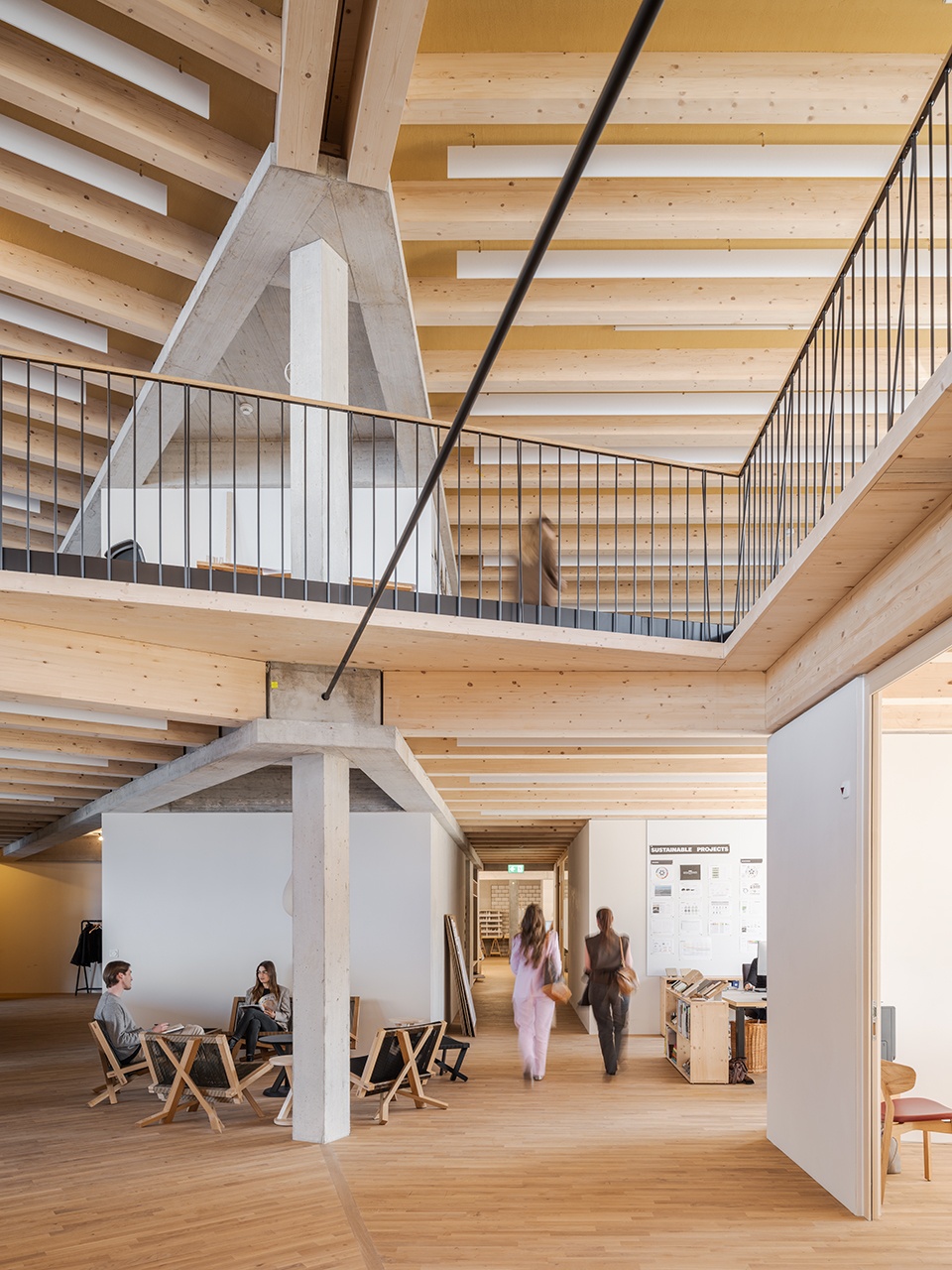
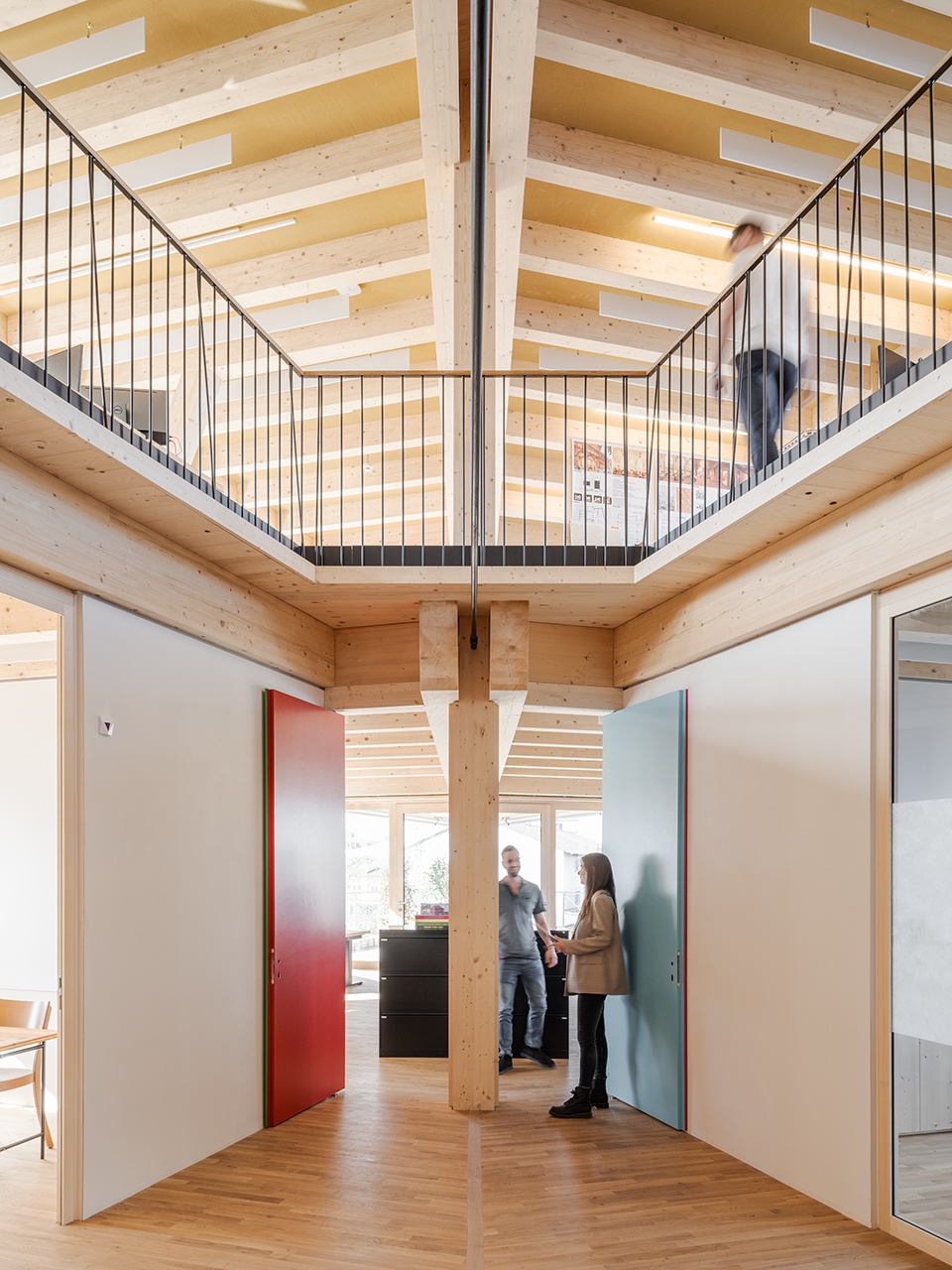
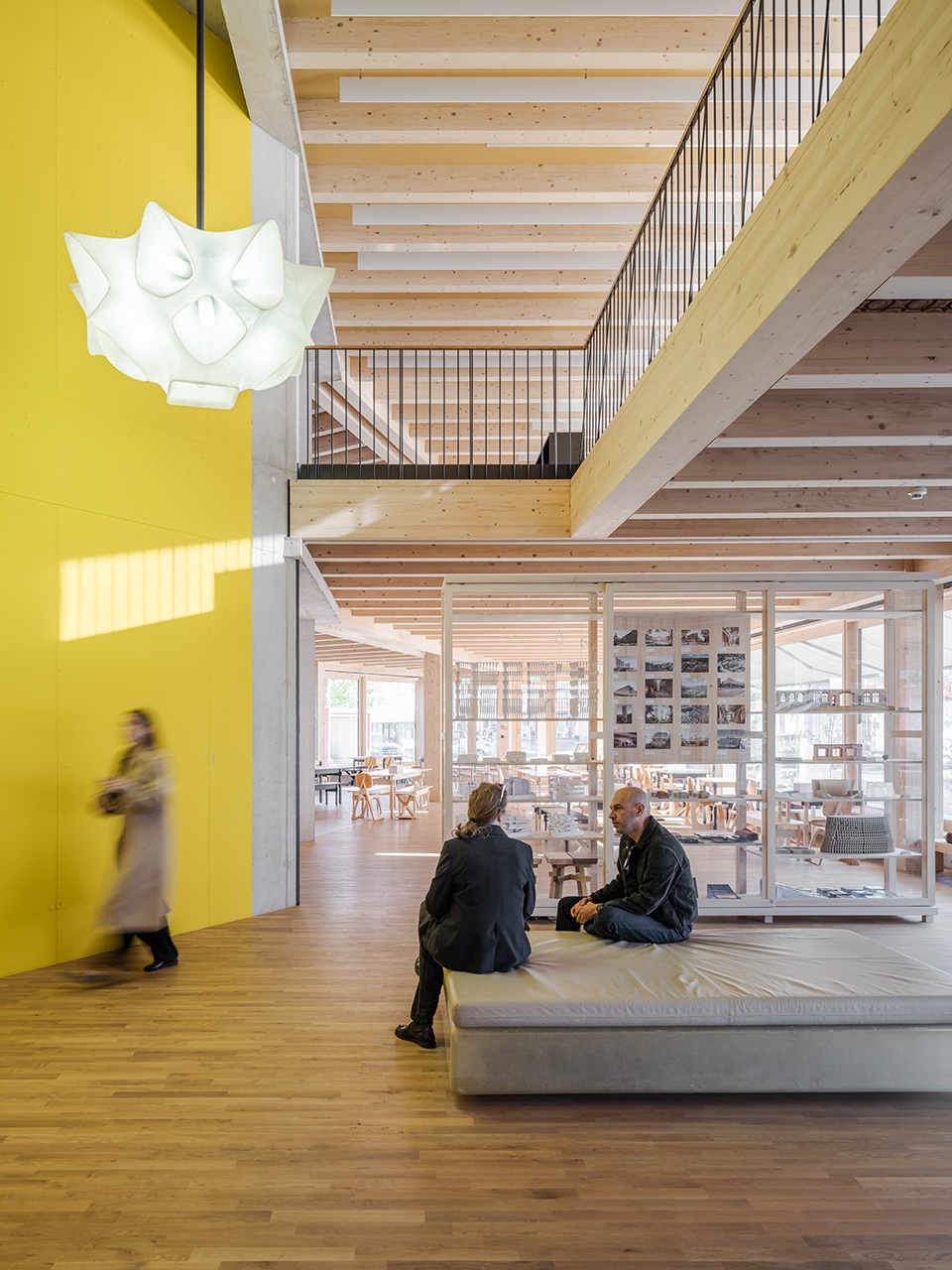
集成于黏土天花板构件中的供暖与制冷系统,与自然通风系统以及屋顶和南立面的光伏板协同运行。这确保了建筑运行期间的低能耗水平,符合办公建筑 SIA 390/1 标准;建筑施工阶段的温室气体排放同样得到控制。建筑各构造层均按照可拆解原则设计,可在未来独立拆卸并重复利用,从而持续纳入整体材料循环体系。这一策略同样体现在立面设计中:内部木结构由金属外层表皮加以保护,同时仍保持清晰可辨的视觉表达。
Integrated within the building’s clay ceiling panels, the heating and cooling system operates alongside natural ventilation and photovoltaic panels on the rooftop and south facade. This ensures low operational energy consumption, in line with SIA standard 390/1 for office buildings. The same applies to greenhouse gas emissions during construction. All building layers are designed for disassembly, allowing them to be dismantled and reused independently to remain part of an overall material cycle. This strategy is reflected in the façade, where the inner timber structure is protected by a metallic outer skin while remaining visually legible.
▼开放办公空间,Open workspace
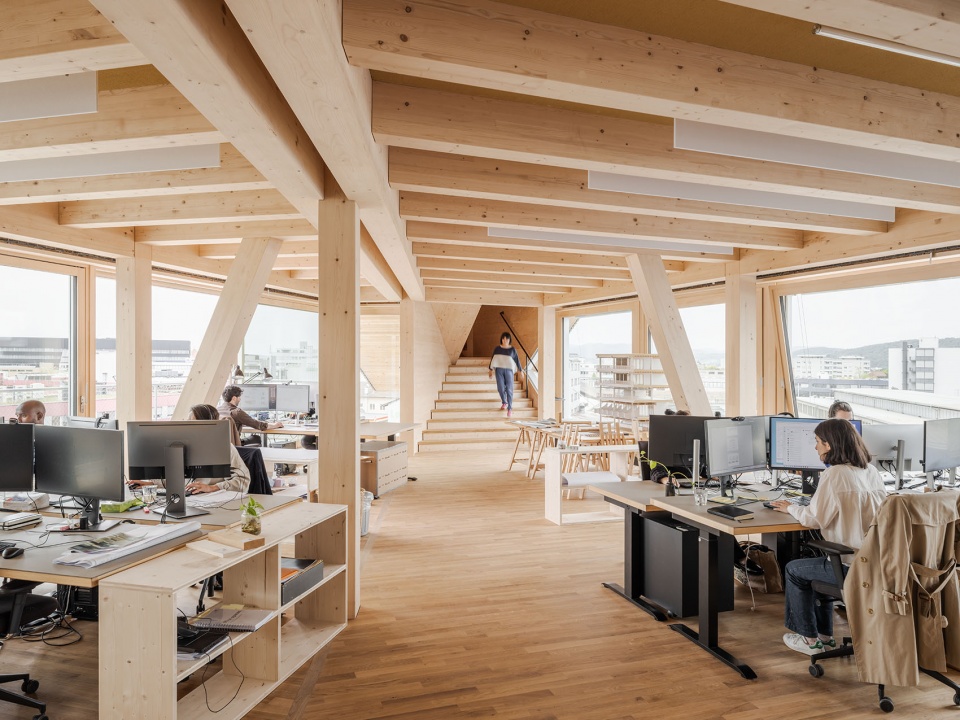
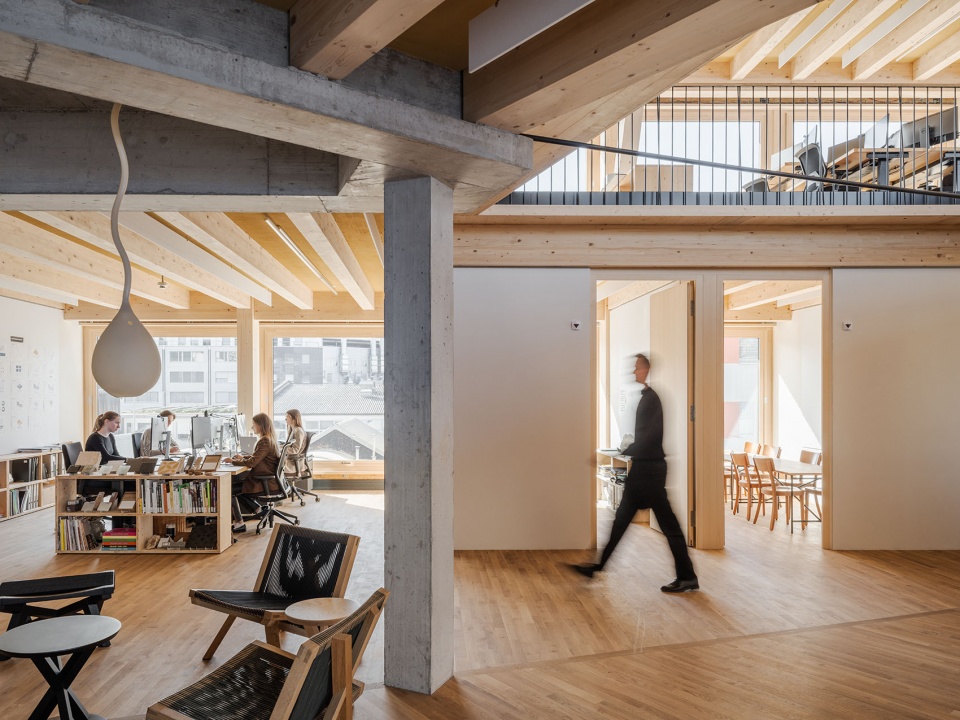
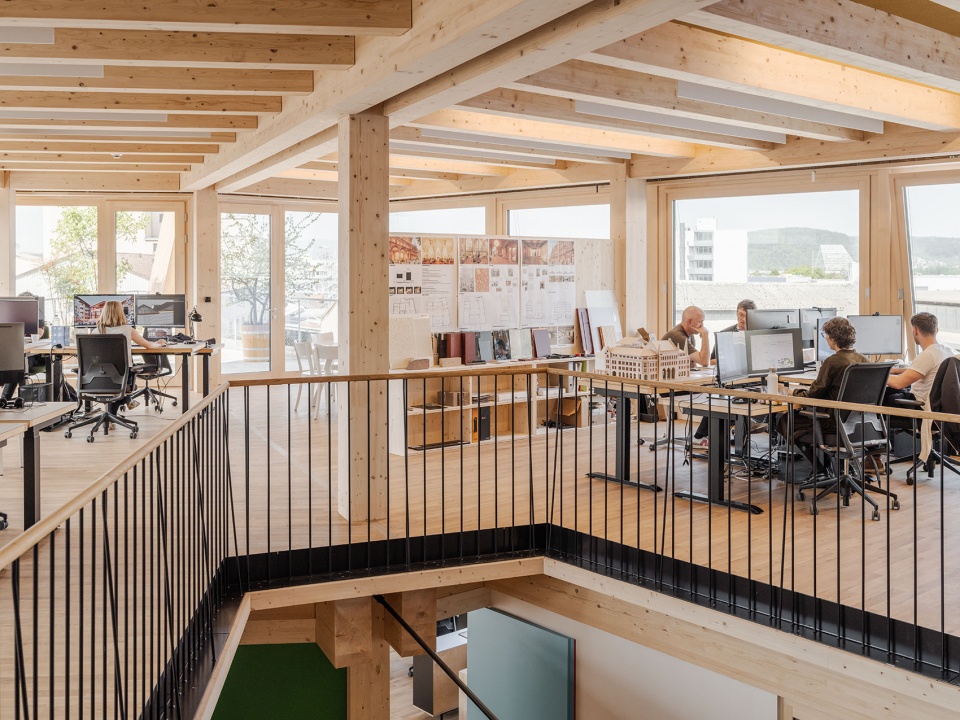
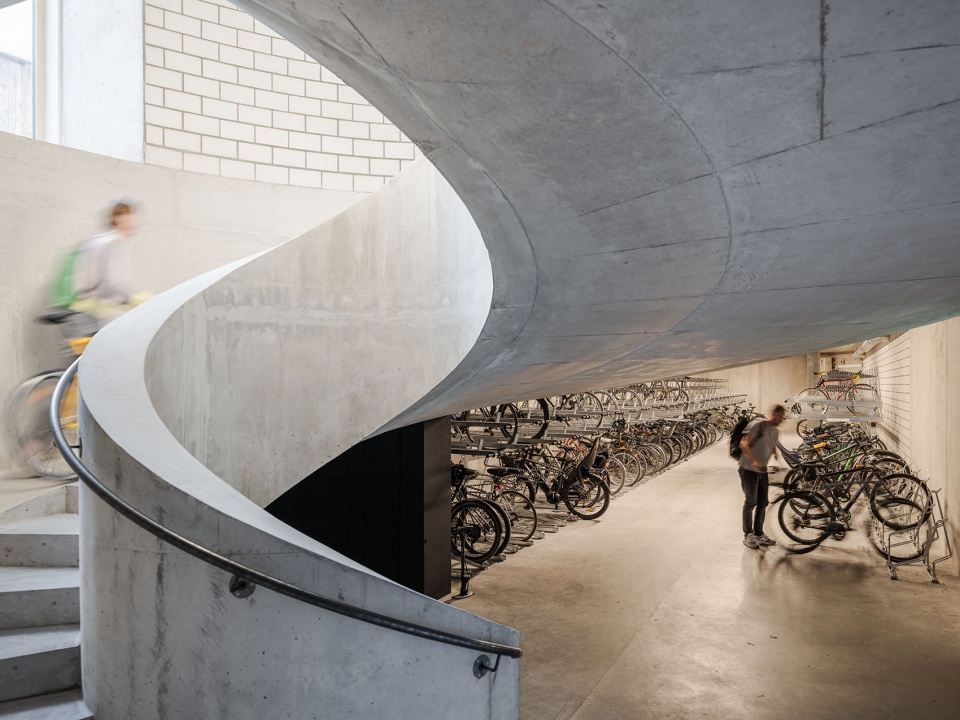
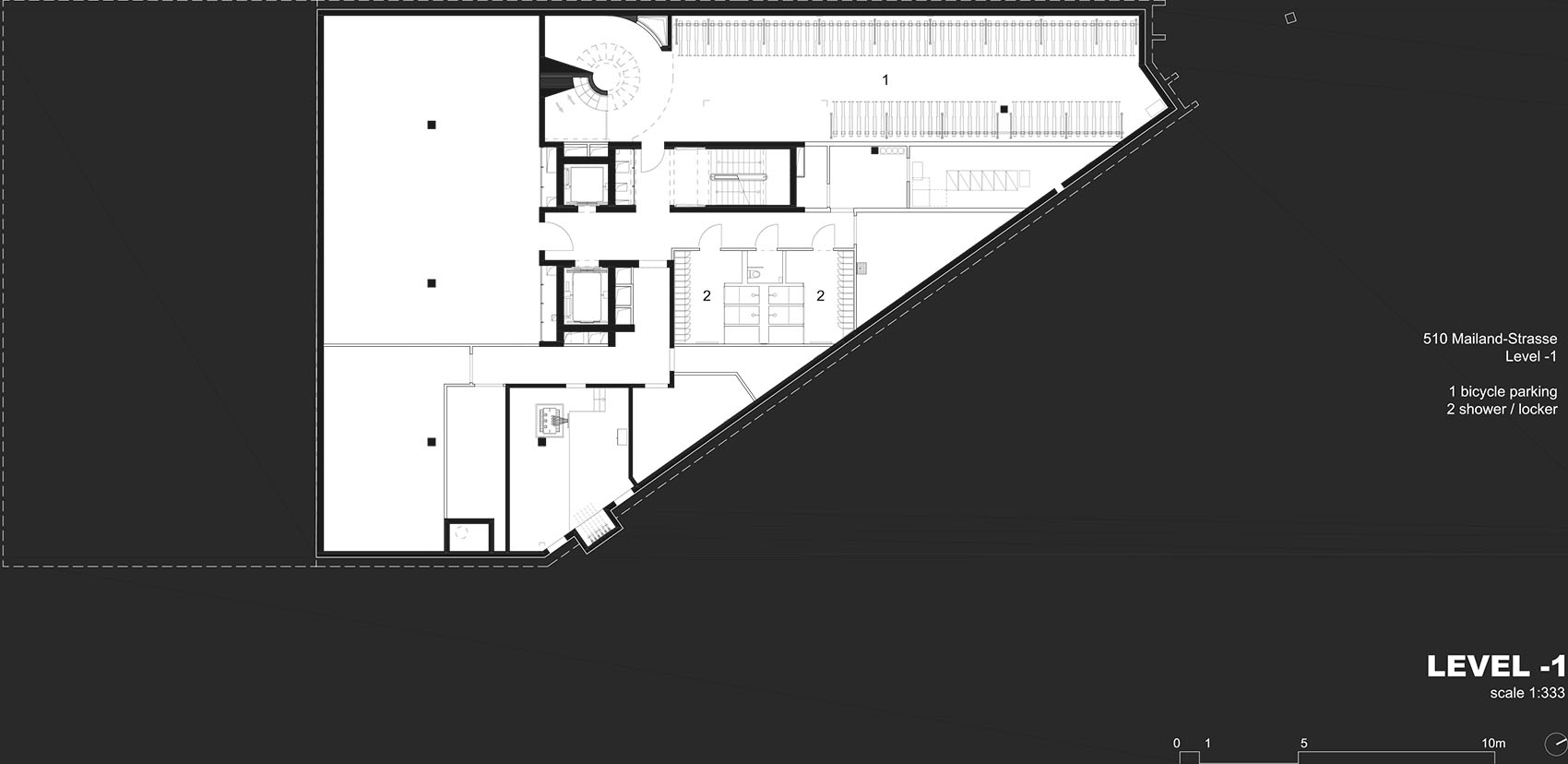
除建筑本身的建造与运营之外,项目还通过地下层大规模自行车停车设施以及便捷的公共交通接驳条件,支持更加可持续的通勤方式。
Beyond the building’s construction and operation, sustainable commuting is supported by a large bicycle parking area in the basement and easy access to public transit connections.
▼地下自行车停放区,Bicycle parking in basement
空间多样性 Spatial diversity
空间概念借鉴了 H&M 位于城市另一侧、拥有悠久历史的圣约翰园区所形成的丰富空间类型。虽然圣约翰园区历经数十年逐渐发展出多样化的建筑类型,Mailand-Strasse 则通过精准的建筑介入实现了类似的空间多样性。三个彼此连接的核心筒组织了平面布局,并在建筑内部建立起贯穿各层的视觉联系。
The spatial concept draws on the rich variety of H&M’s long-standing St. Johann campus, located across the city from the Dreispitz neighborhood. While St. Johann evolved over decades to include a range of building types, Mailand-Strasse achieves similar spatial diversity through precise architectural interventions. Three interconnected cores organize the floor plan and establish visual links throughout the building.
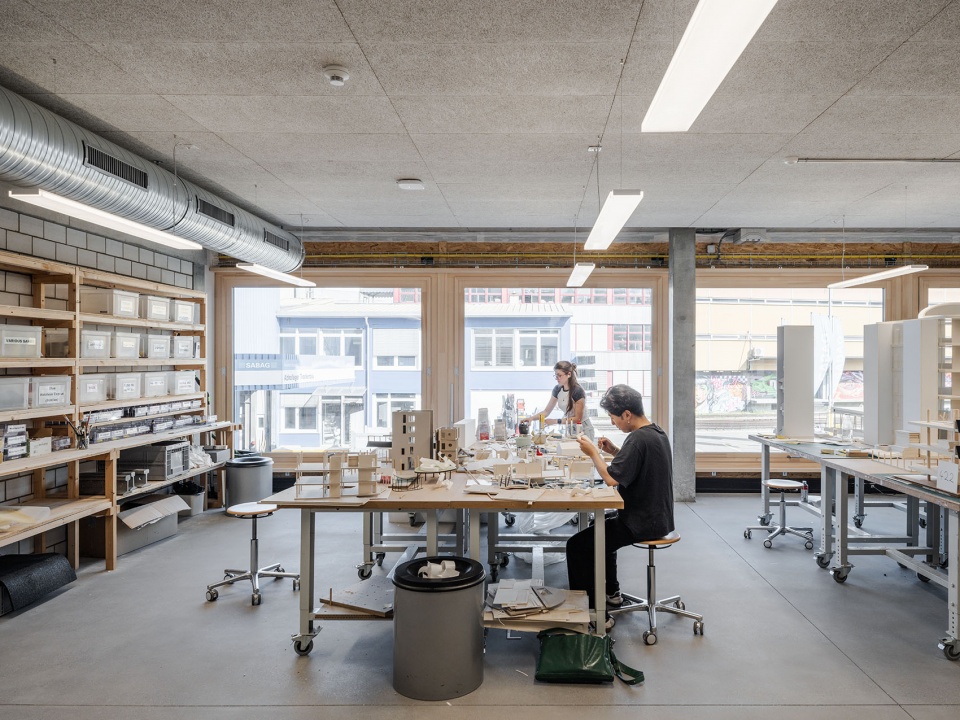
▼工作室,Workshops
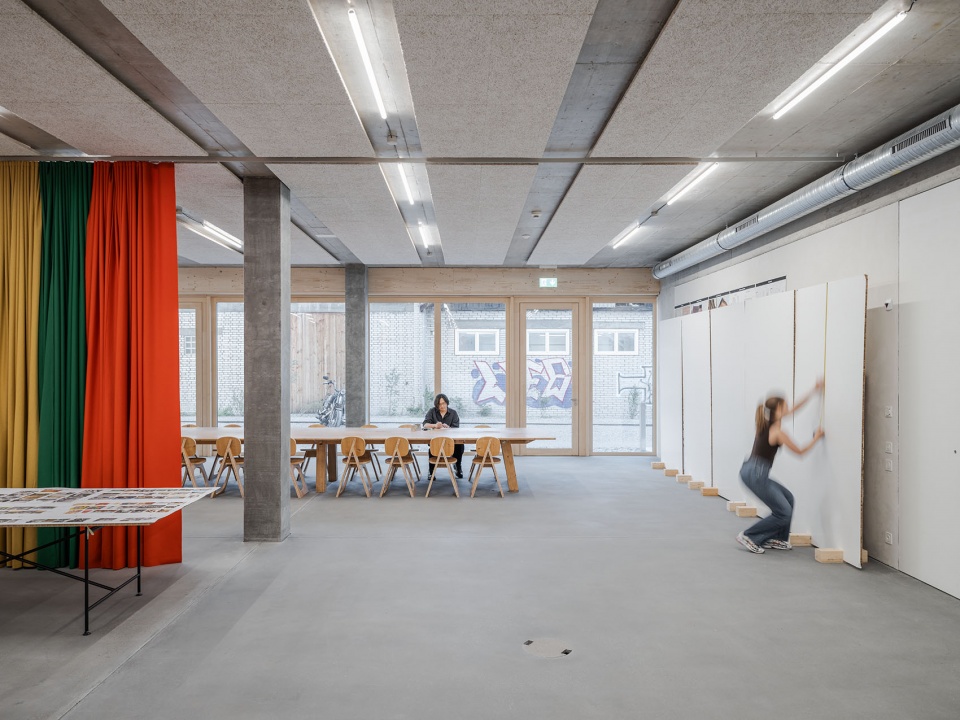
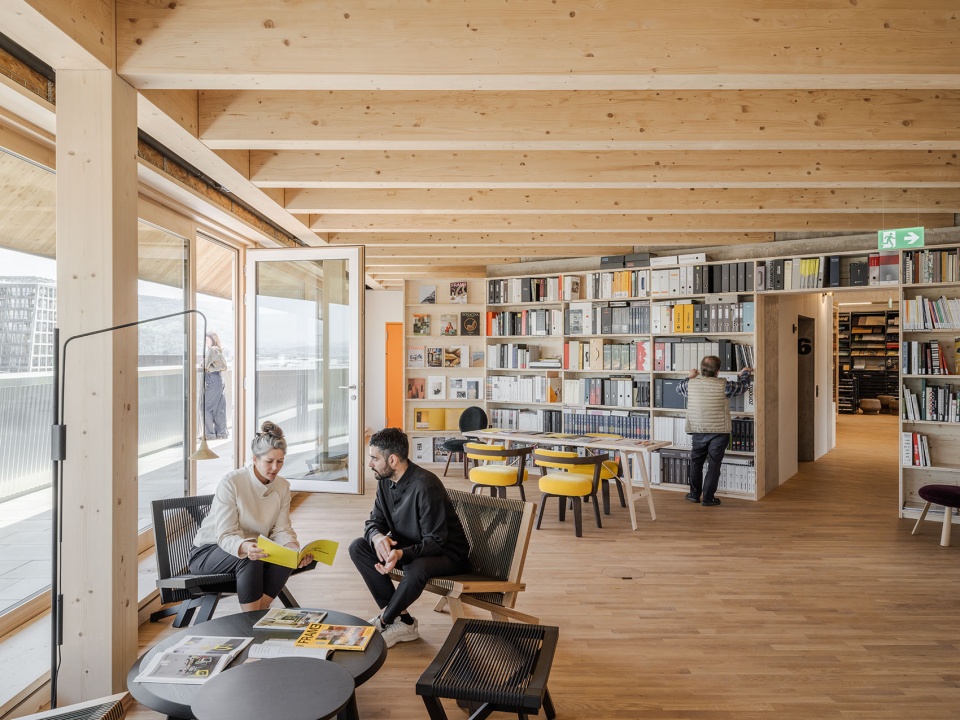
▼图书与交流空间,Library and lounge
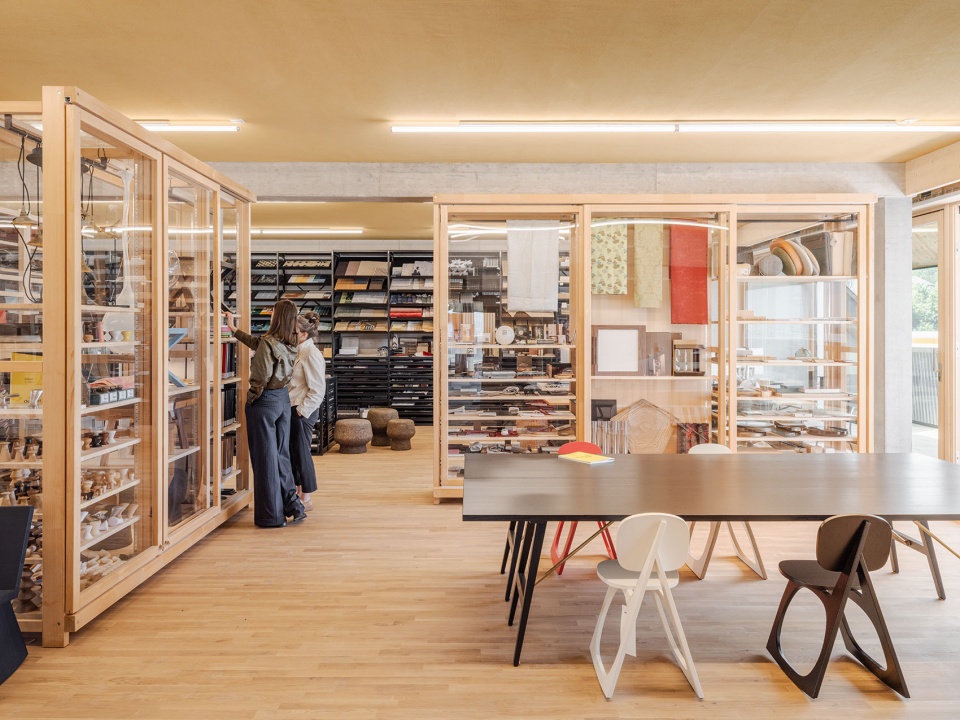
▼材料图书馆,Material library
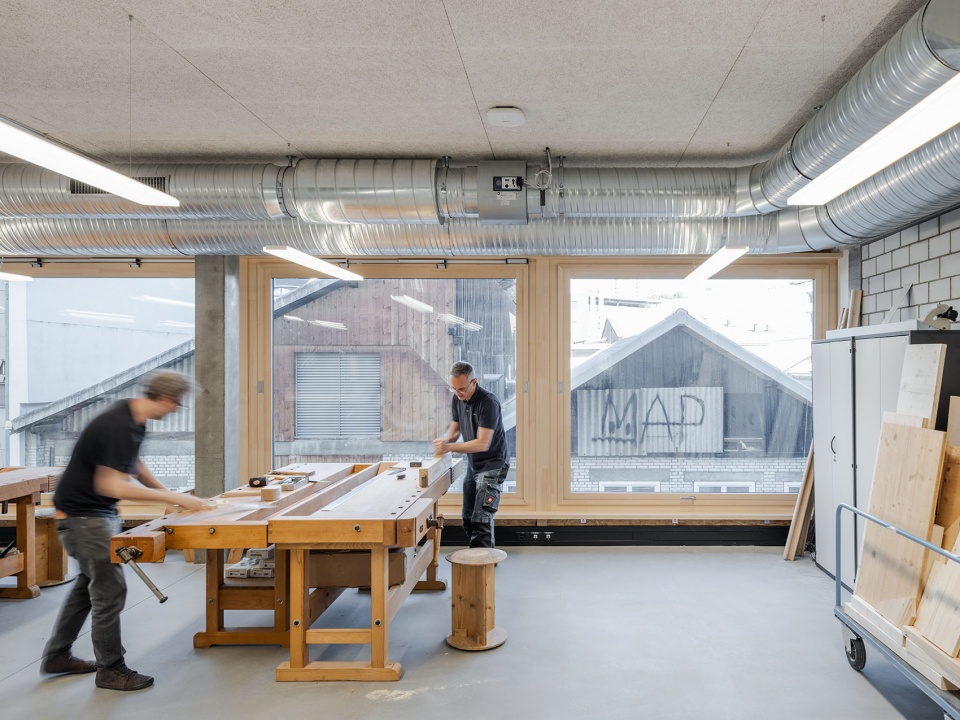
▼木工工作区,Carpentry workshop
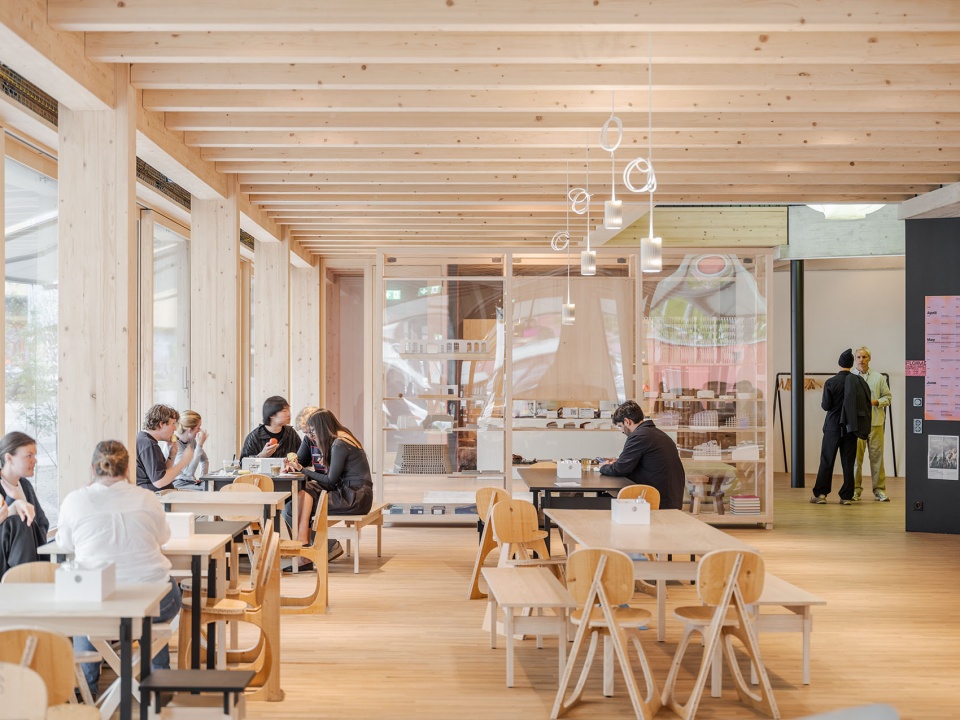
▼公共餐饮空间,Public dining area
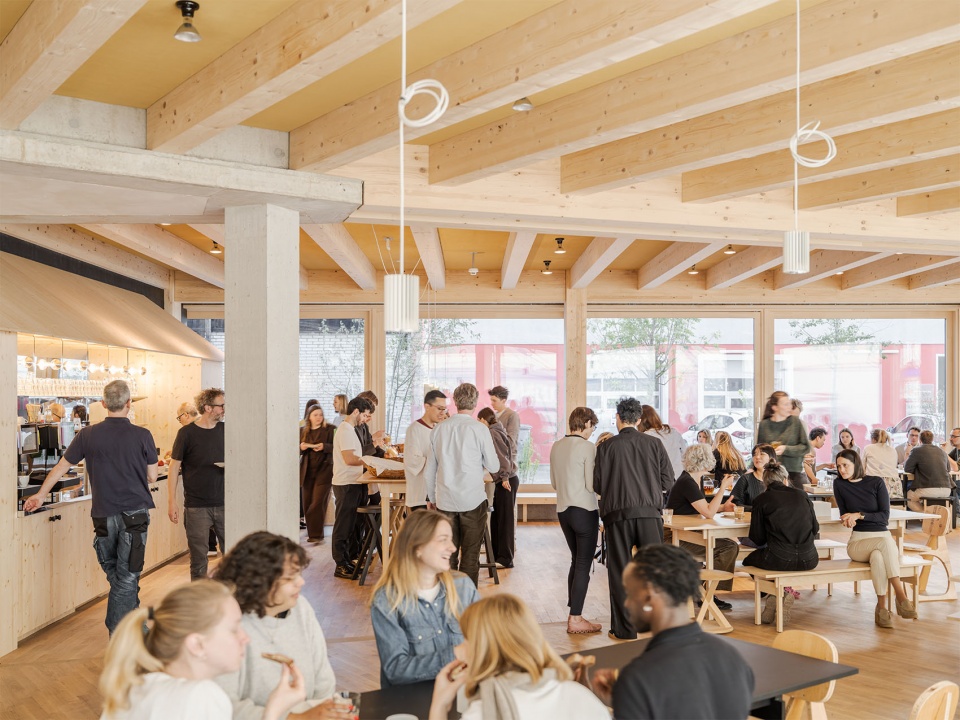
开放办公区、会议室、安静休憩空间以及共享区域等多种环境在不同楼层交替布置。具有标识性的北侧楼梯、通高图书馆以及双层协作空间等垂直性元素,不仅为空间提供方向感,也促进了不同团队之间的交流互动。
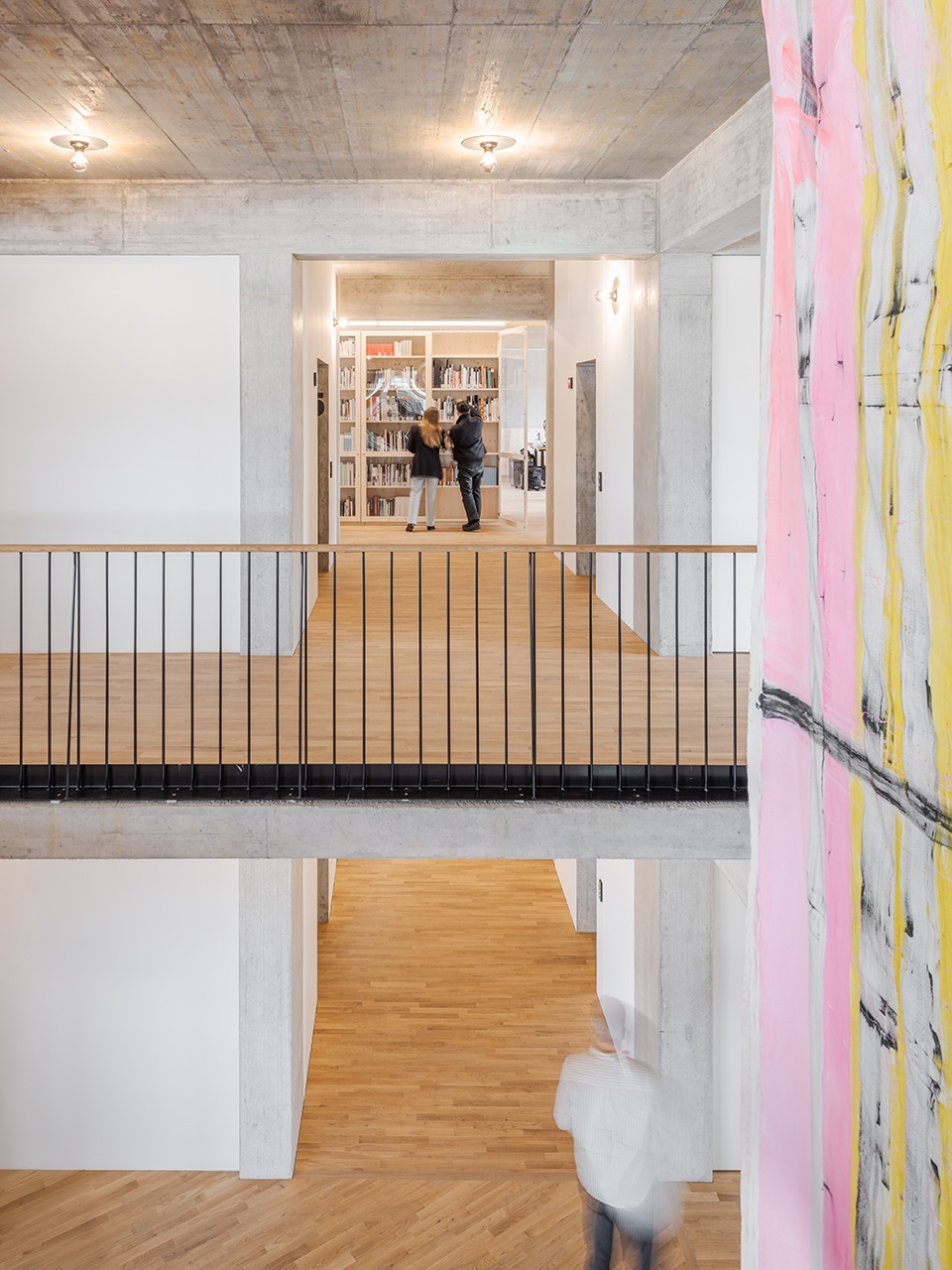
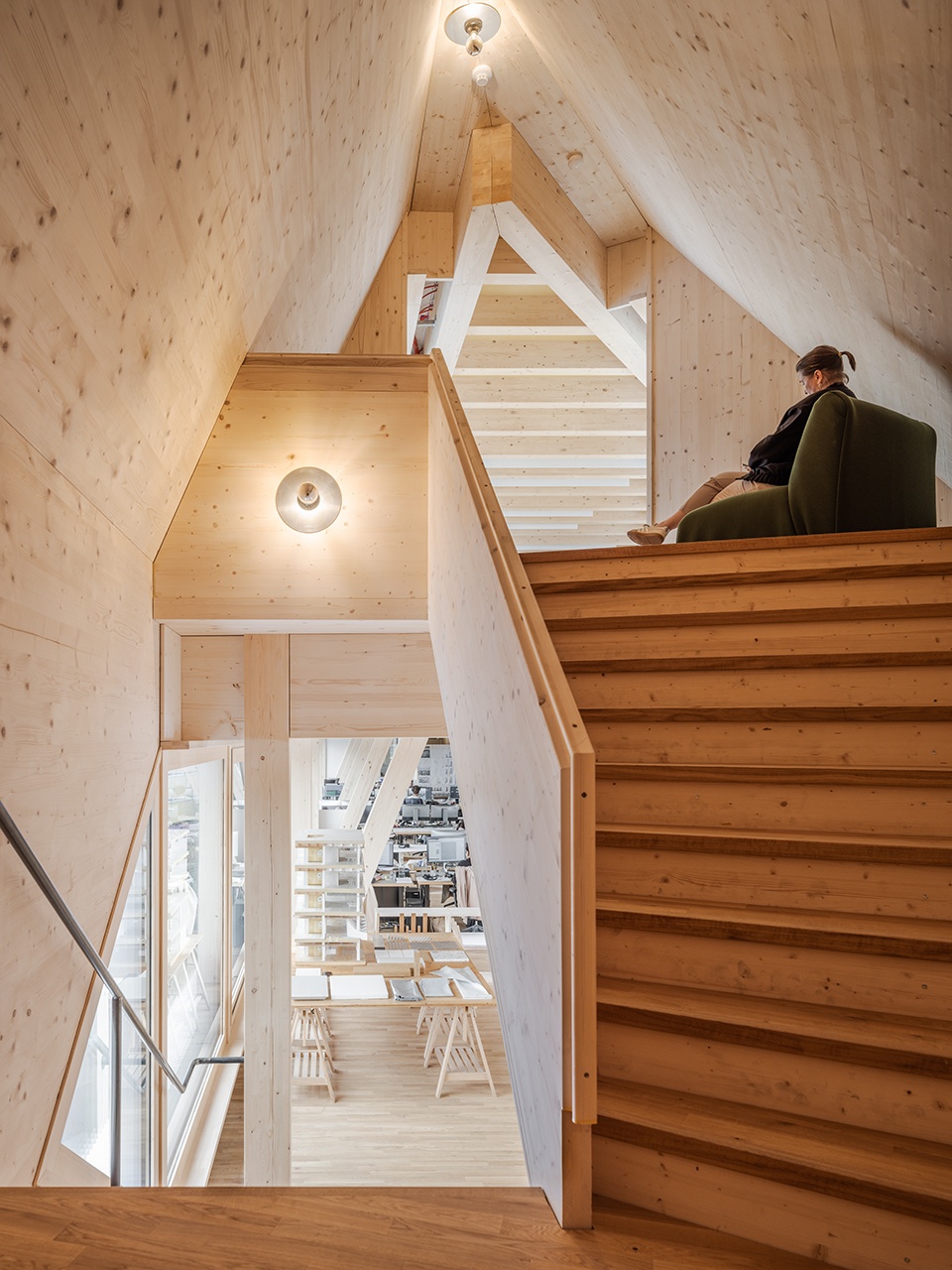
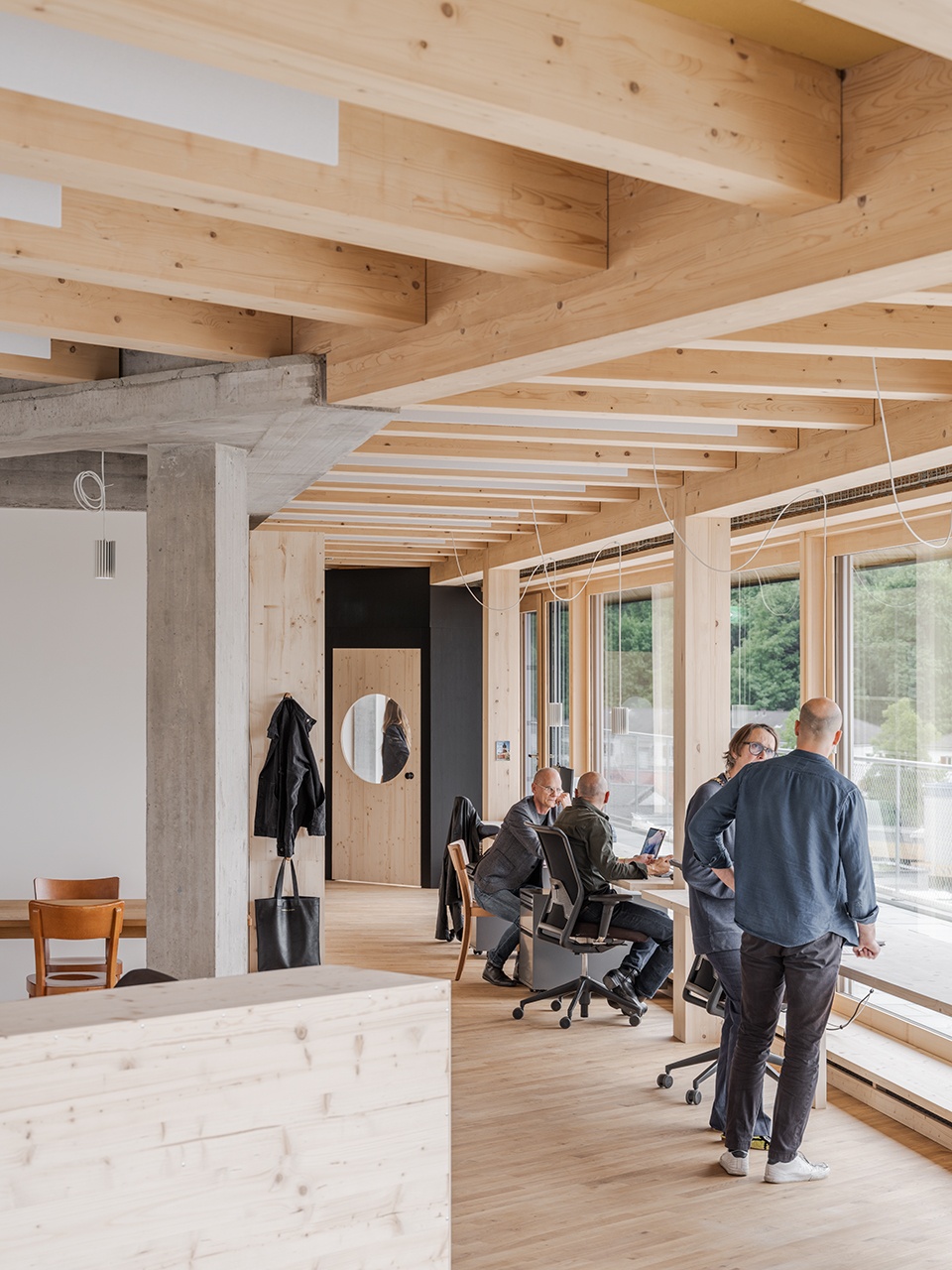
A mix of environments – open work areas, meeting rooms, quiet retreats, and shared zones – alternates from floor to floor. Vertical elements, such as the distinctive northern stair, a double-height library, and a two-story collaboration area, provide orientation and foster exchange among teams.
▼通高中庭与图书室,Atrium and library
▼木结构楼梯,Timber stair
▼共享区域一角,A corner of shared zones
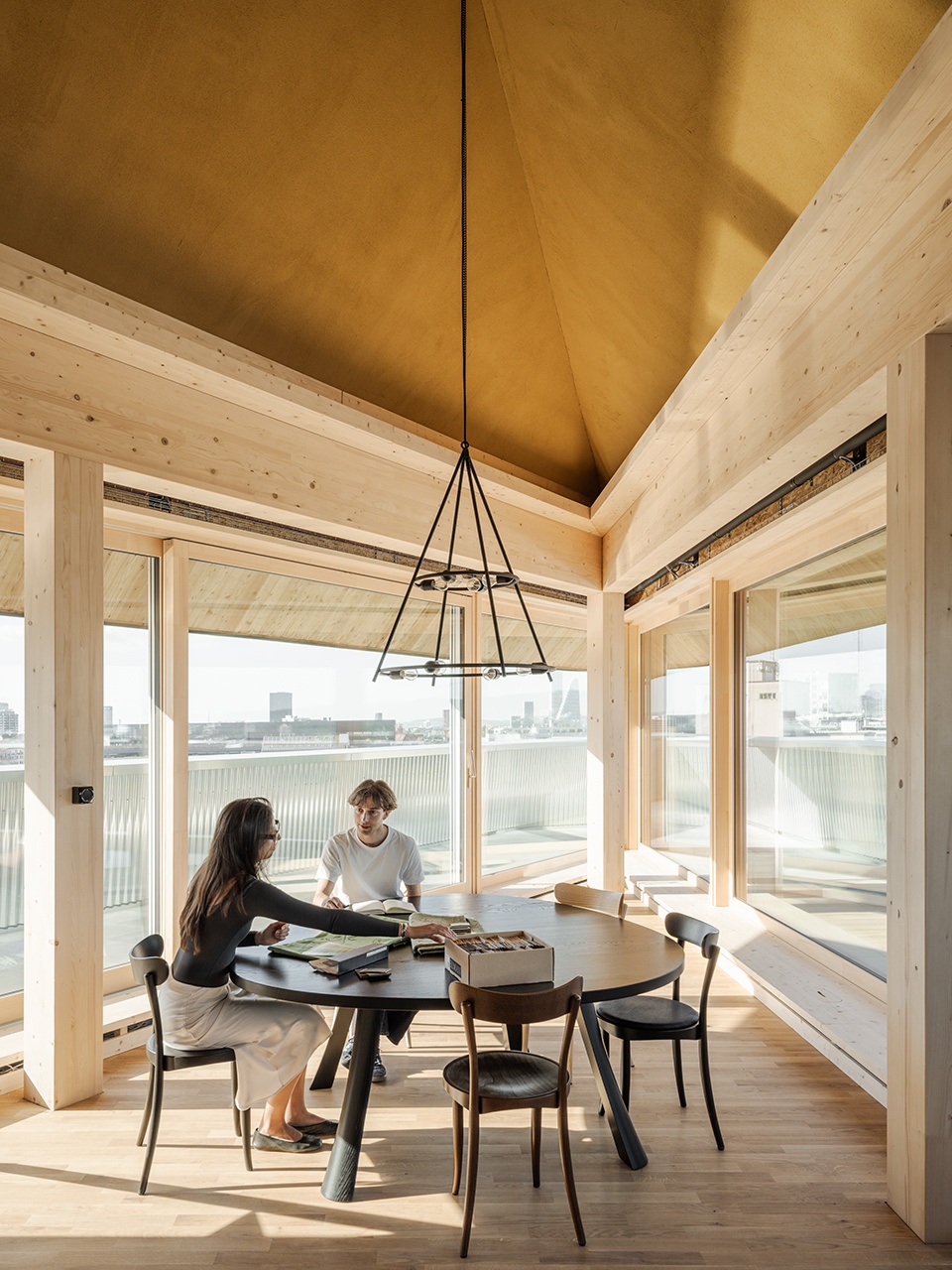
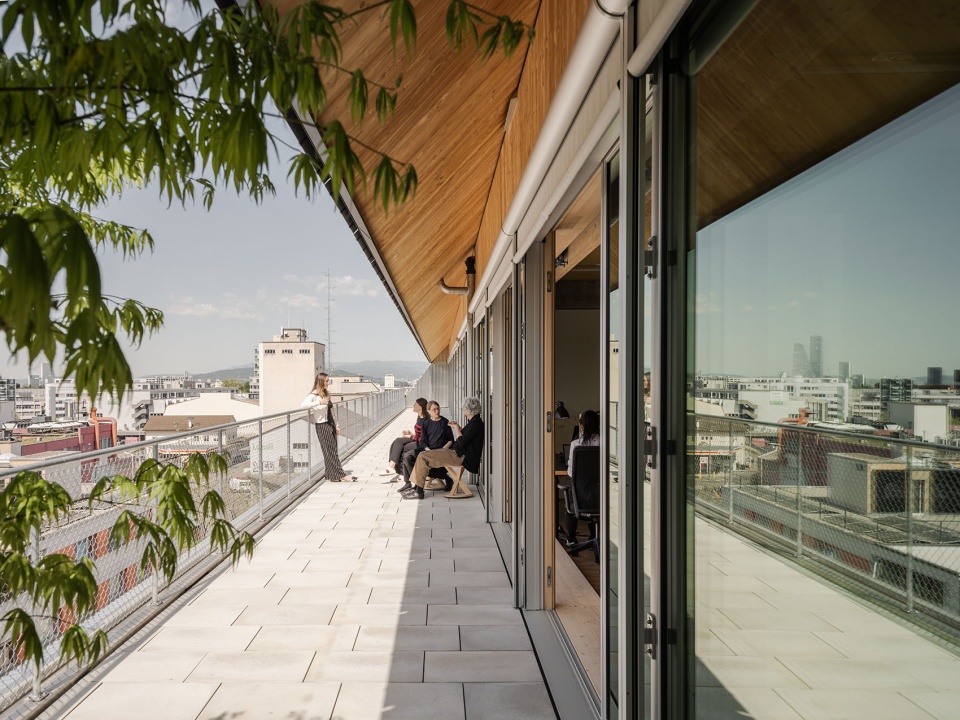
屋顶露台与廊台空间则进一步将这些活动场所延伸至室外。
Roof terraces and loggias further extend these spaces outdoors.
▼露台空间,Terrace space
项目寄语Quotes
▼街角视角夜景,Corner view at night
▼总平面图,Site plan
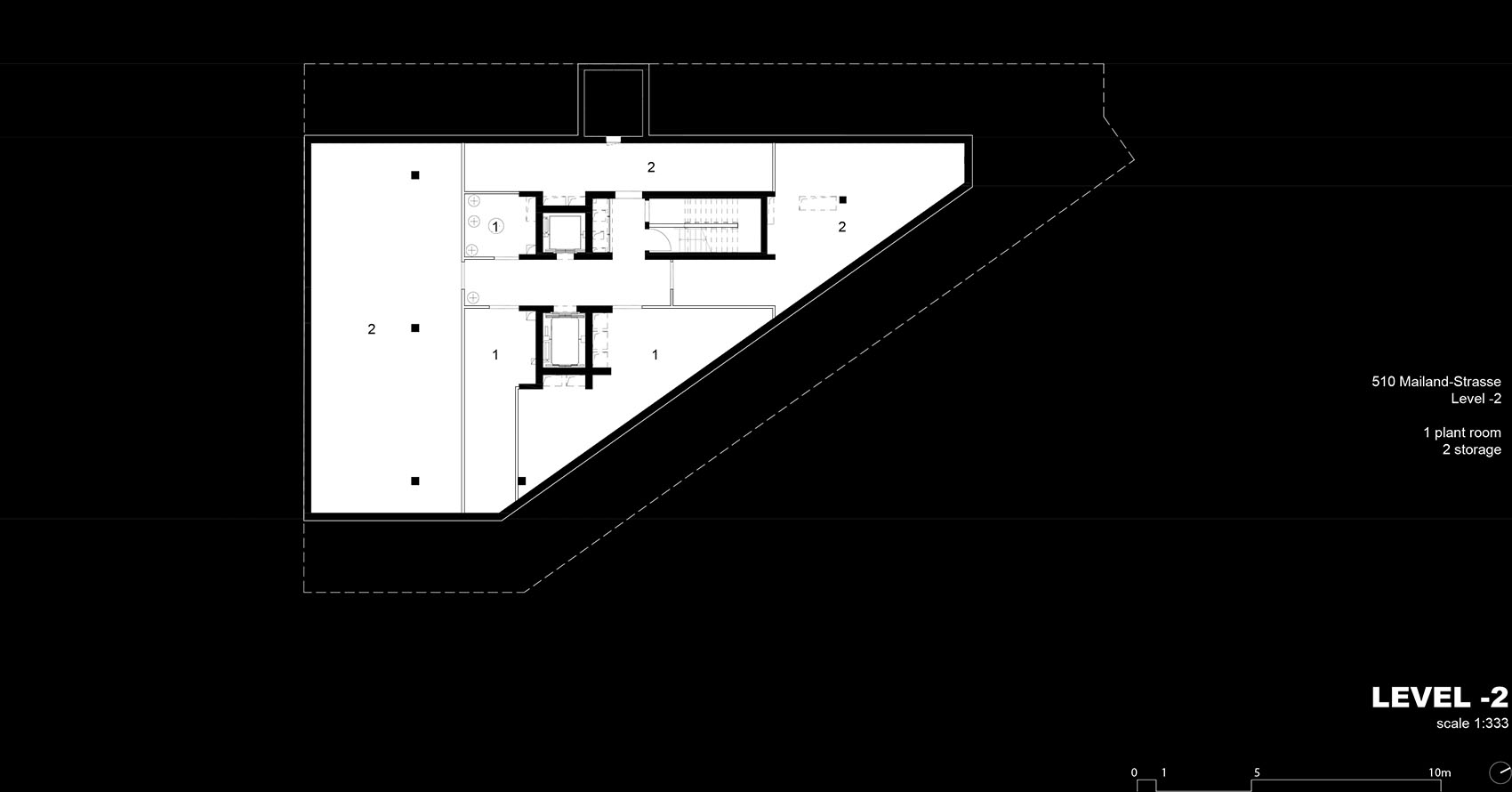
▼地下二层平面图,Level -2 plan
▼地下一层平面图,Level -1 plan
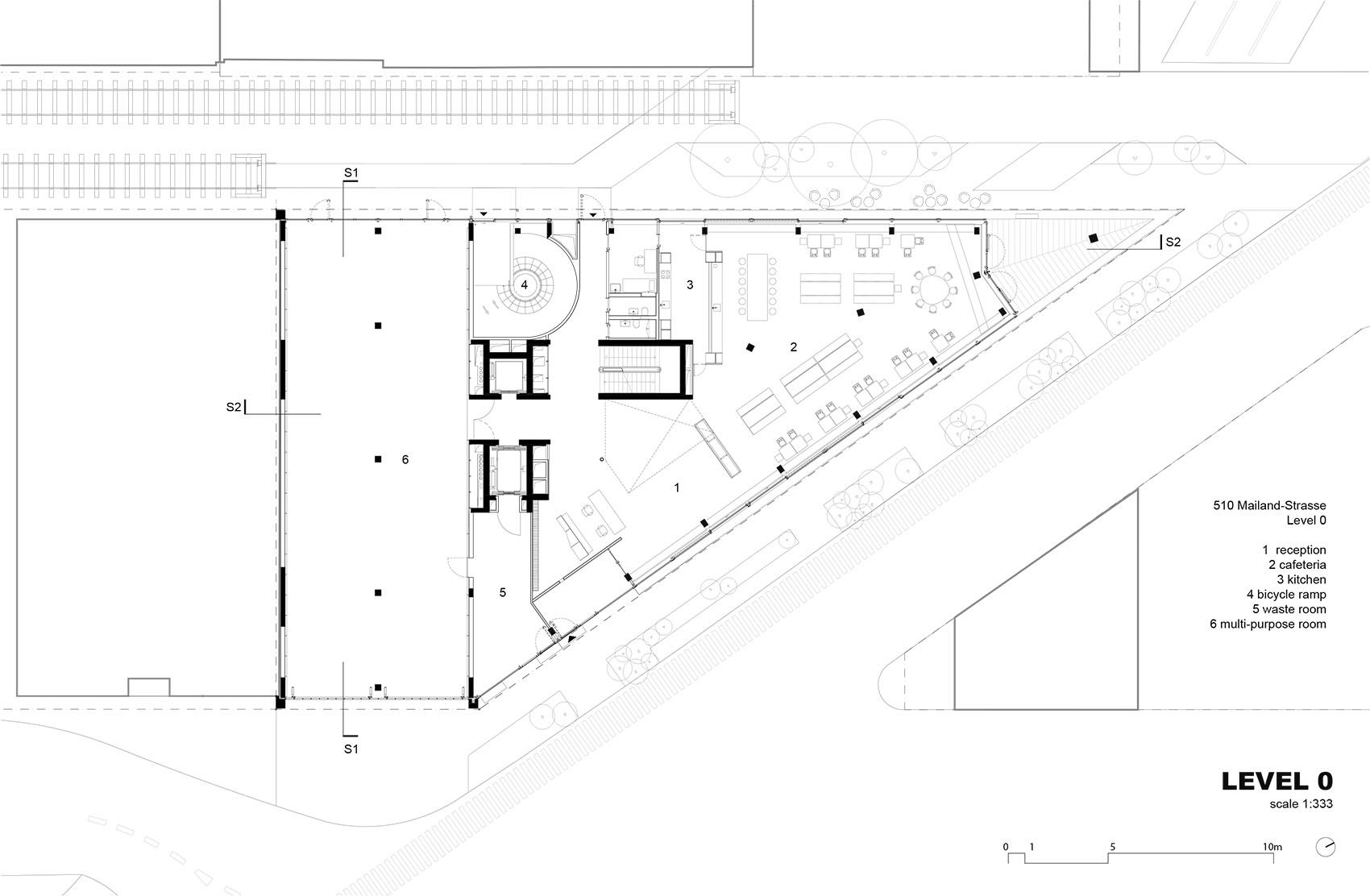
▼首层平面图,Level 0 plan
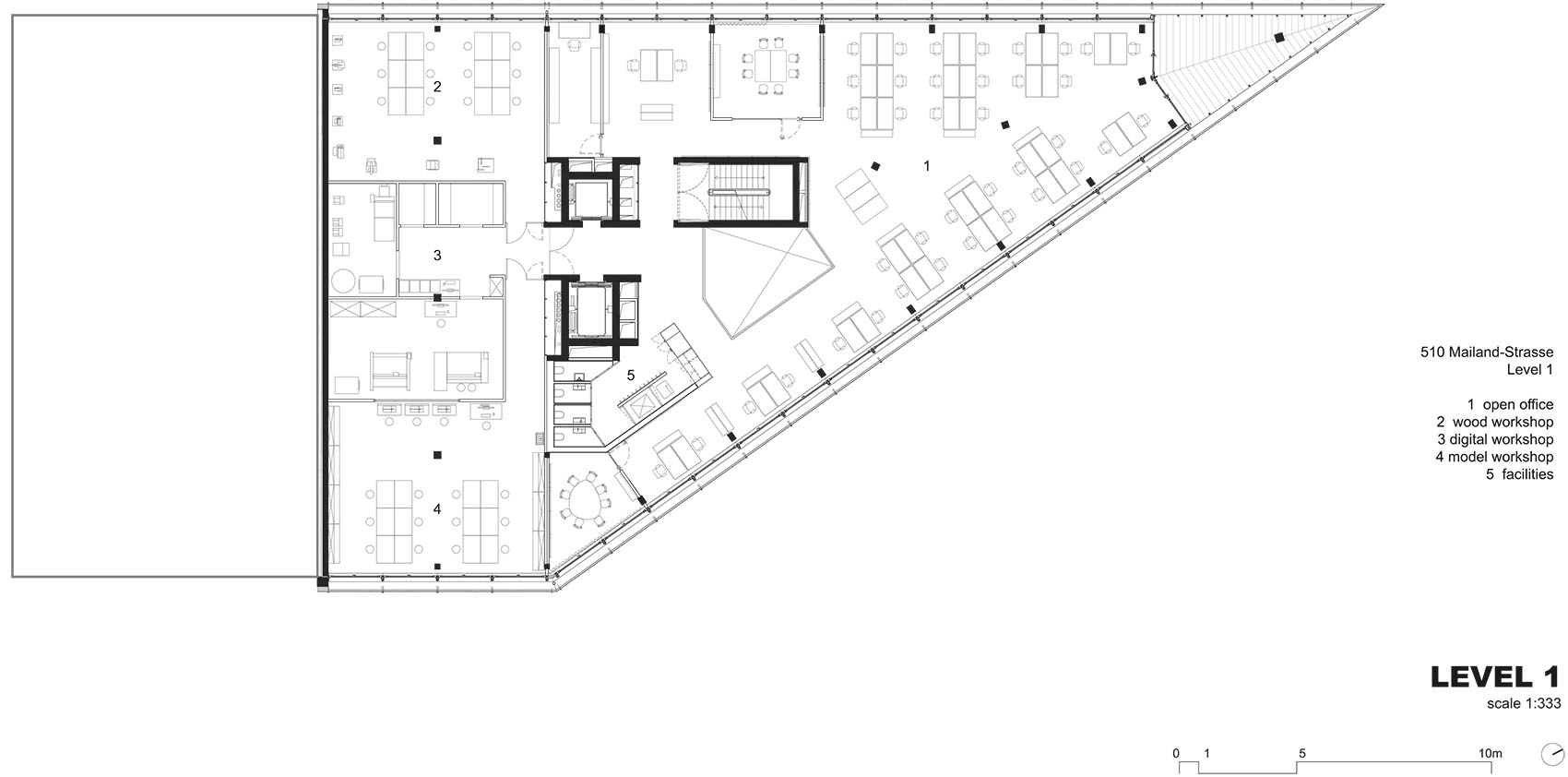
▼二层平面图,Level 1 plan
▼三层平面图,Level 2 plan
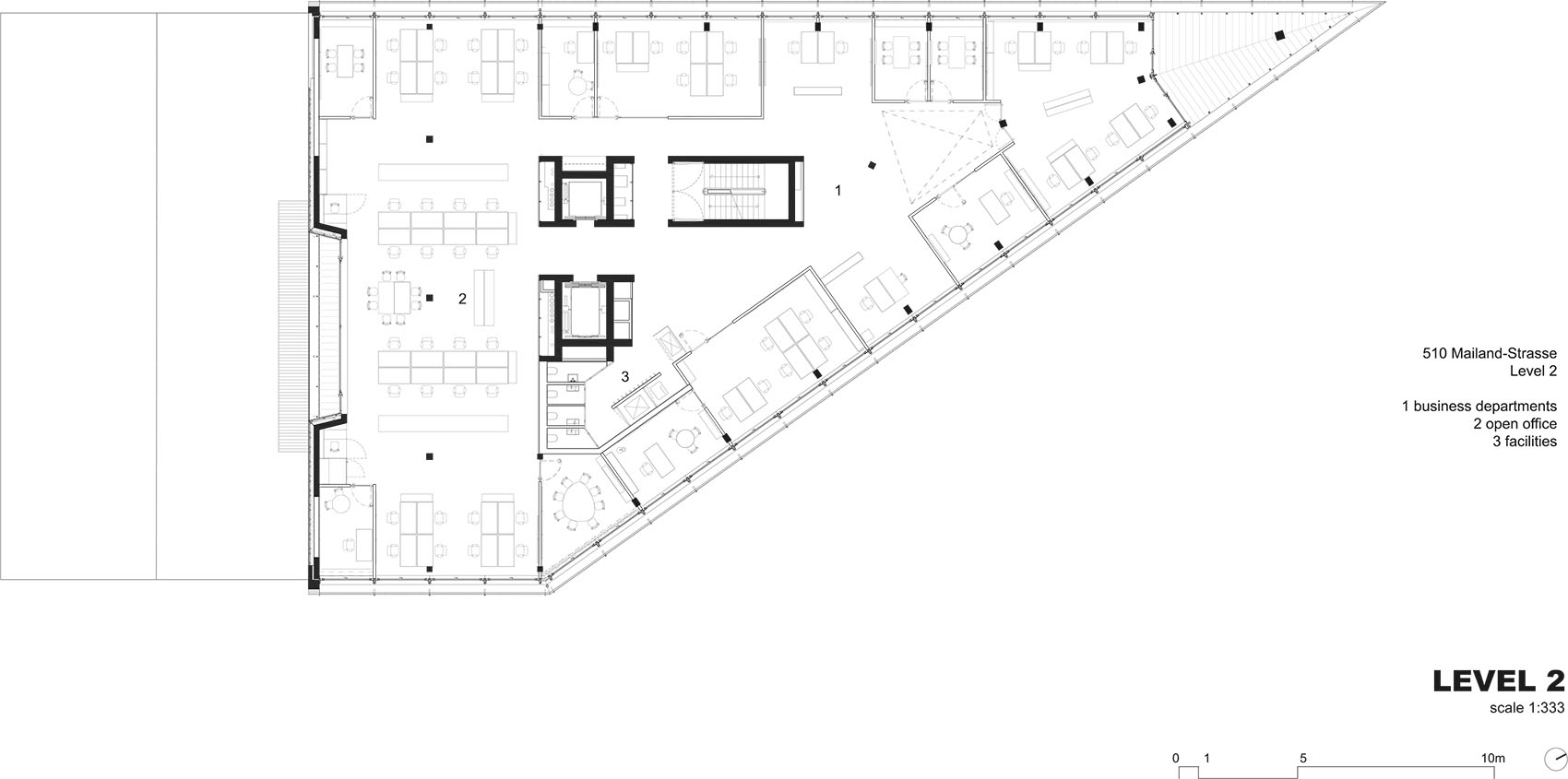
▼四层平面图,Level 3 plan
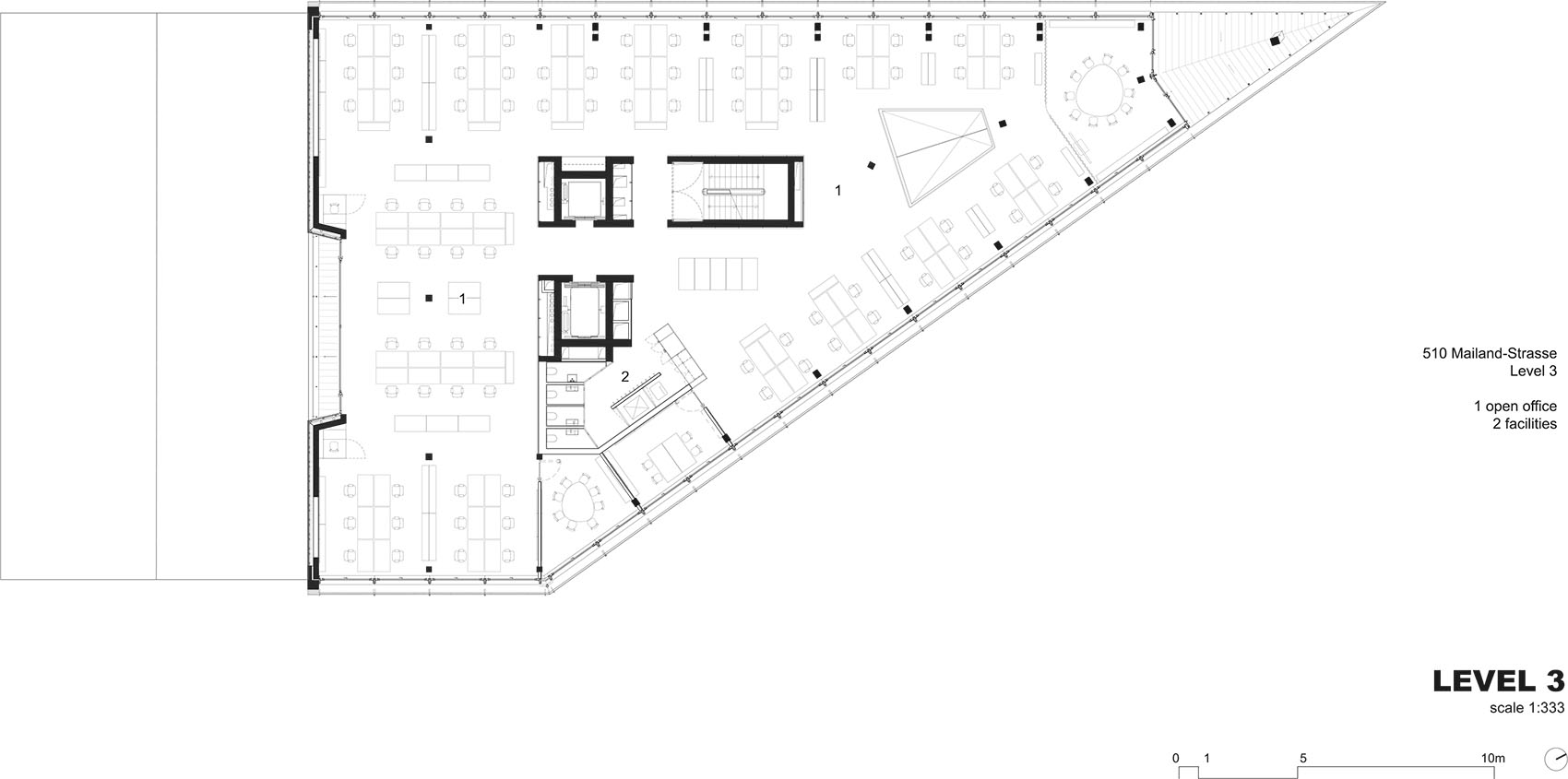
▼五层平面图,Level 4 plan
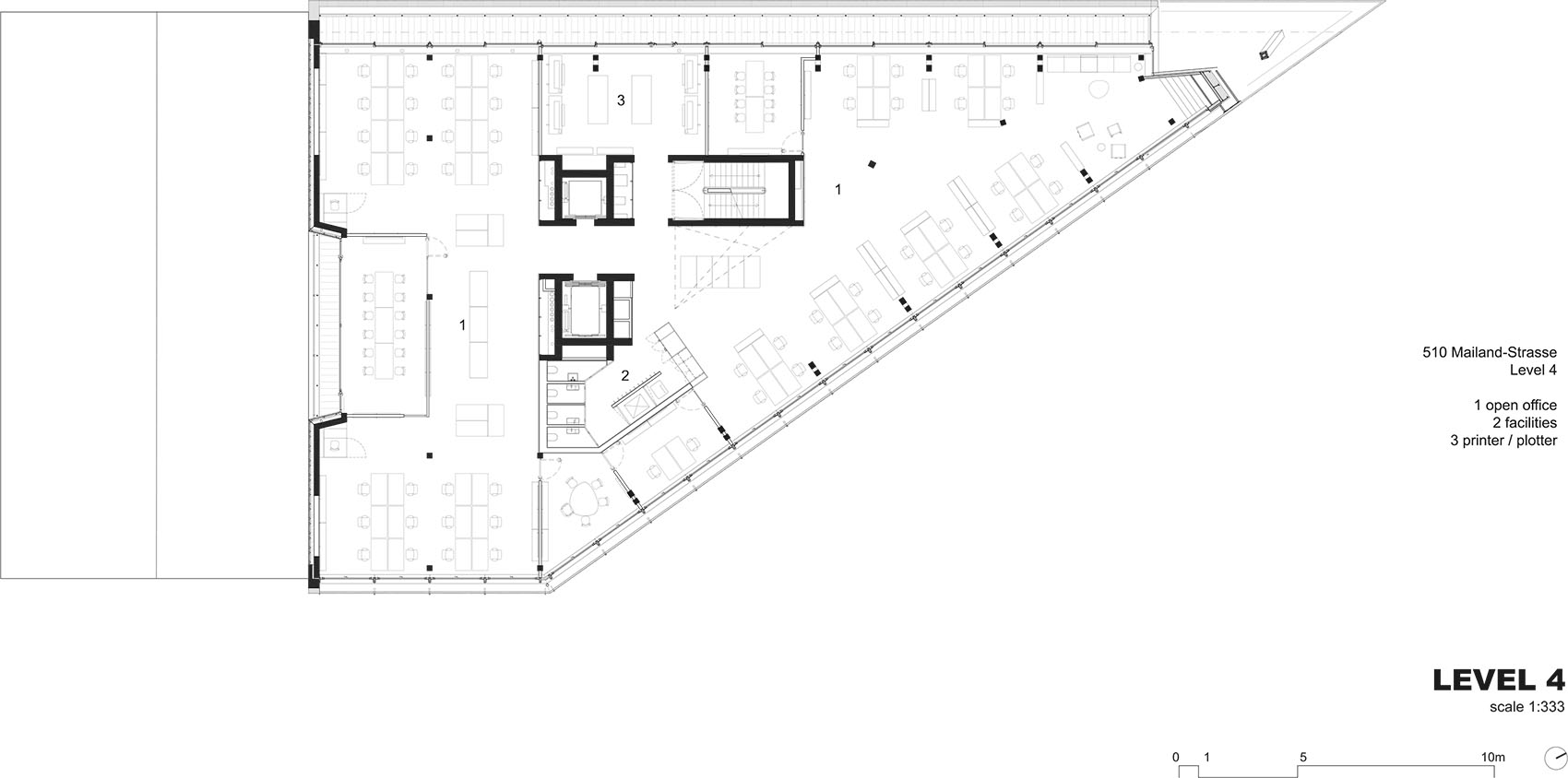
▼六层平面图,Level 5 plan
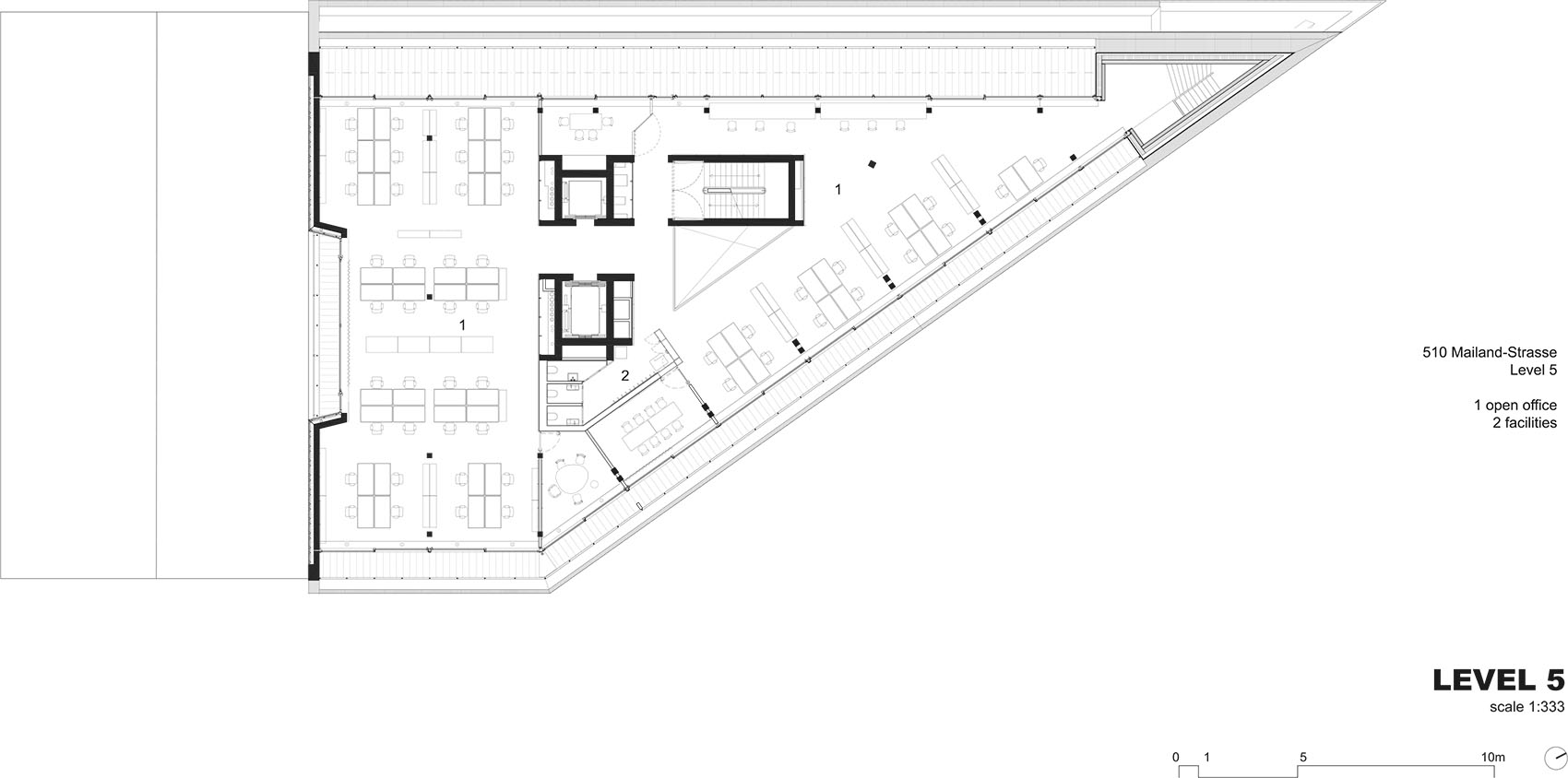
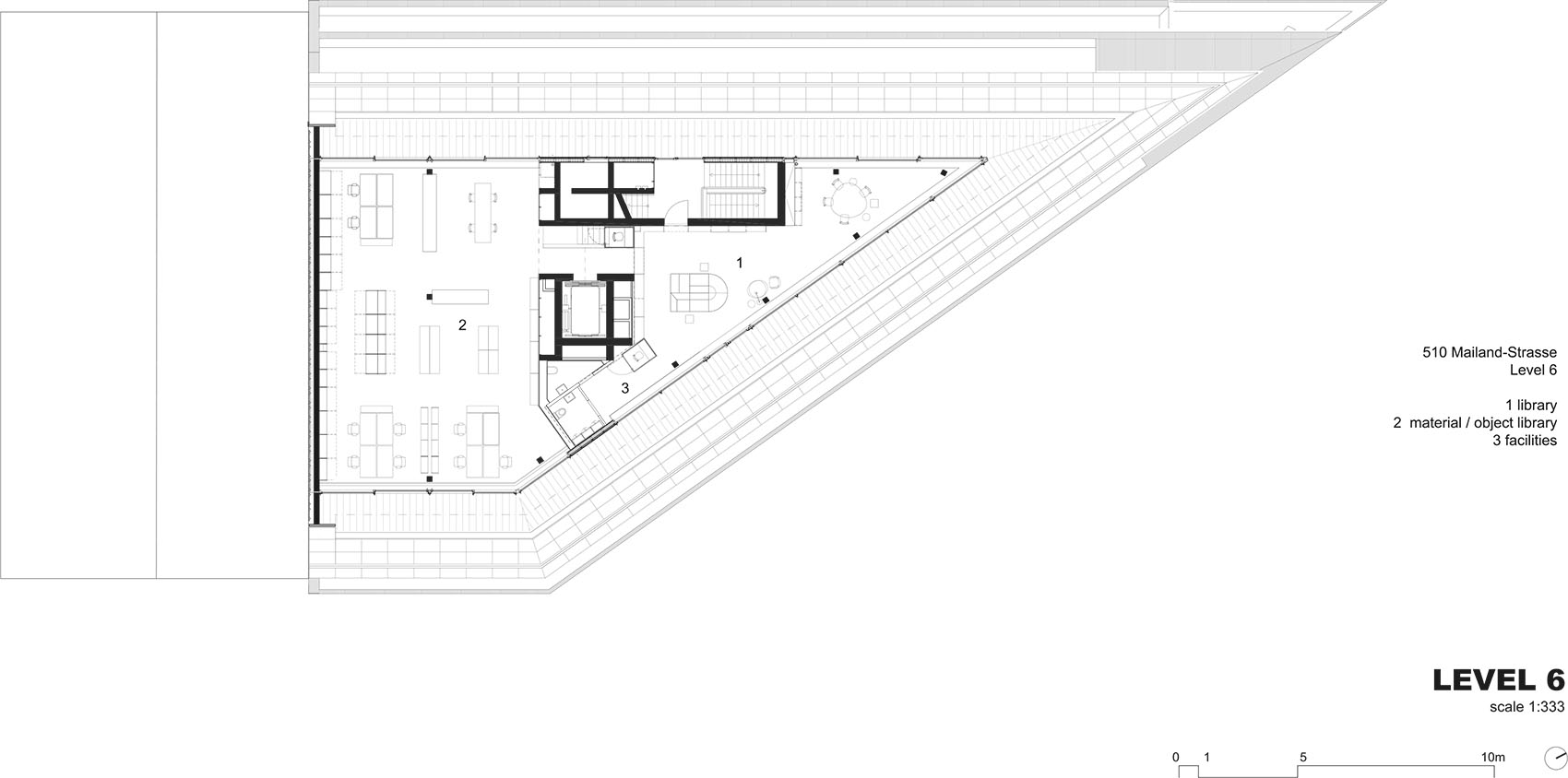
▼七层平面图,Level 6 plan
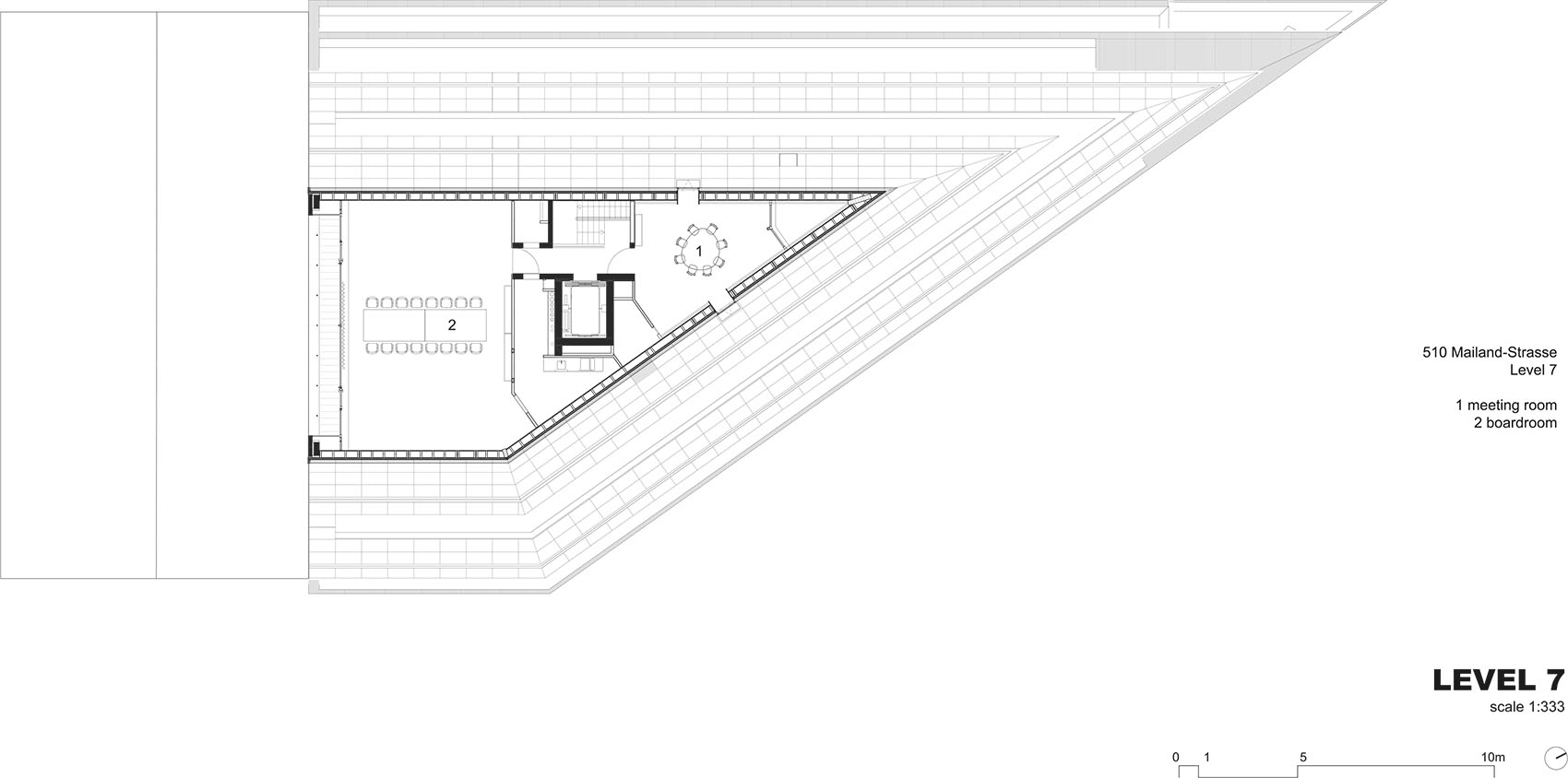
▼八层平面图,Level 7 plan
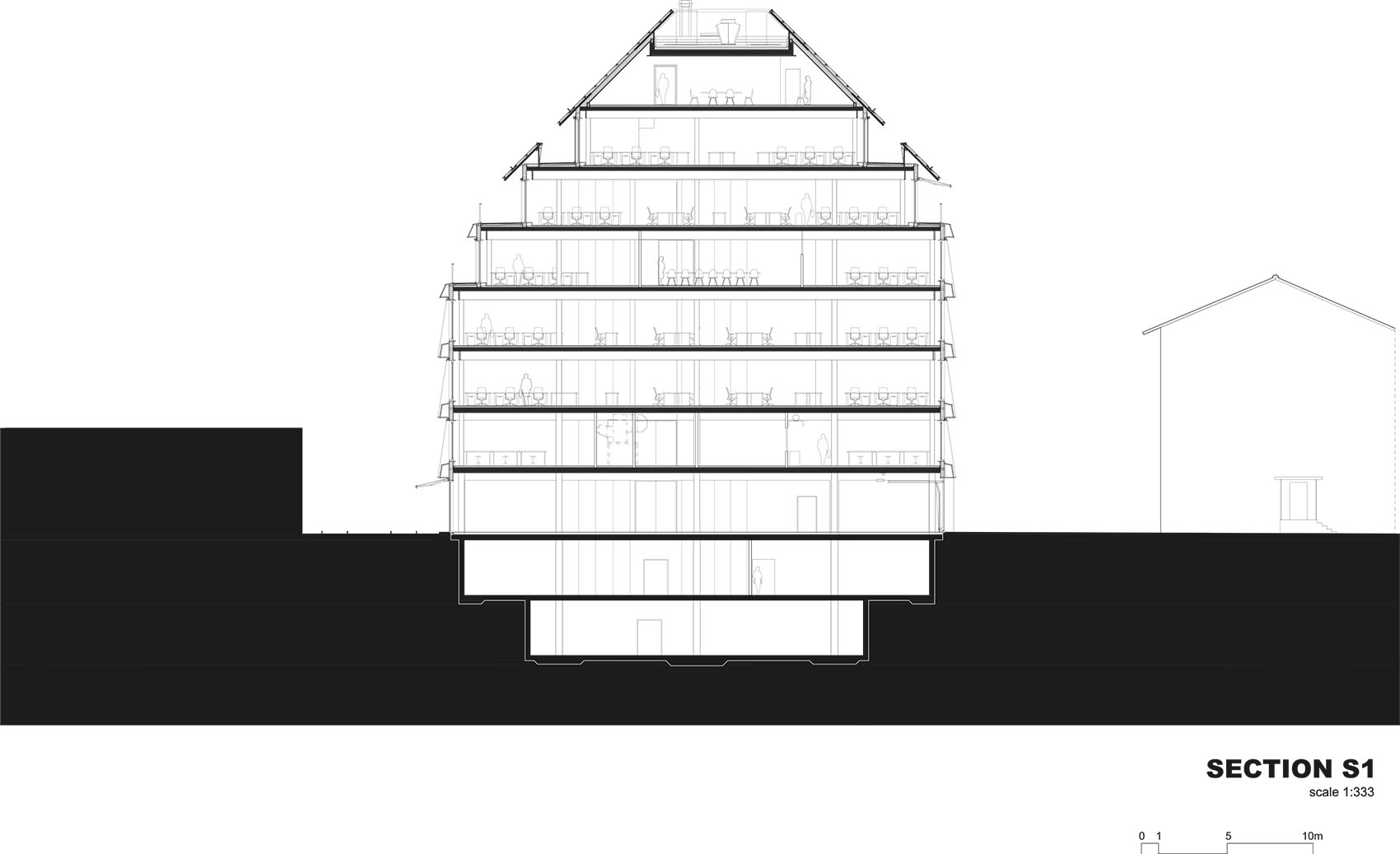
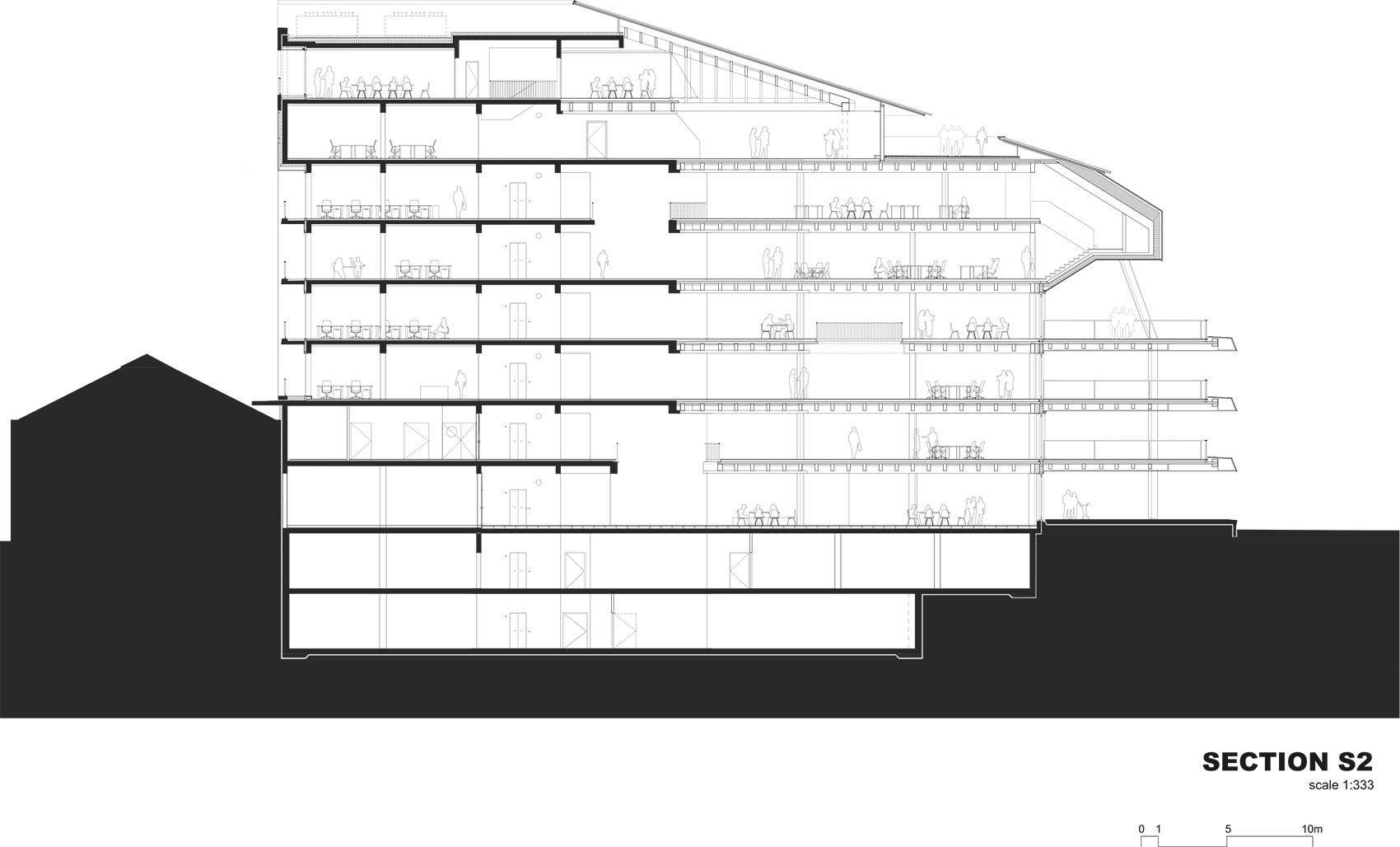
▼建筑剖面图,Sections
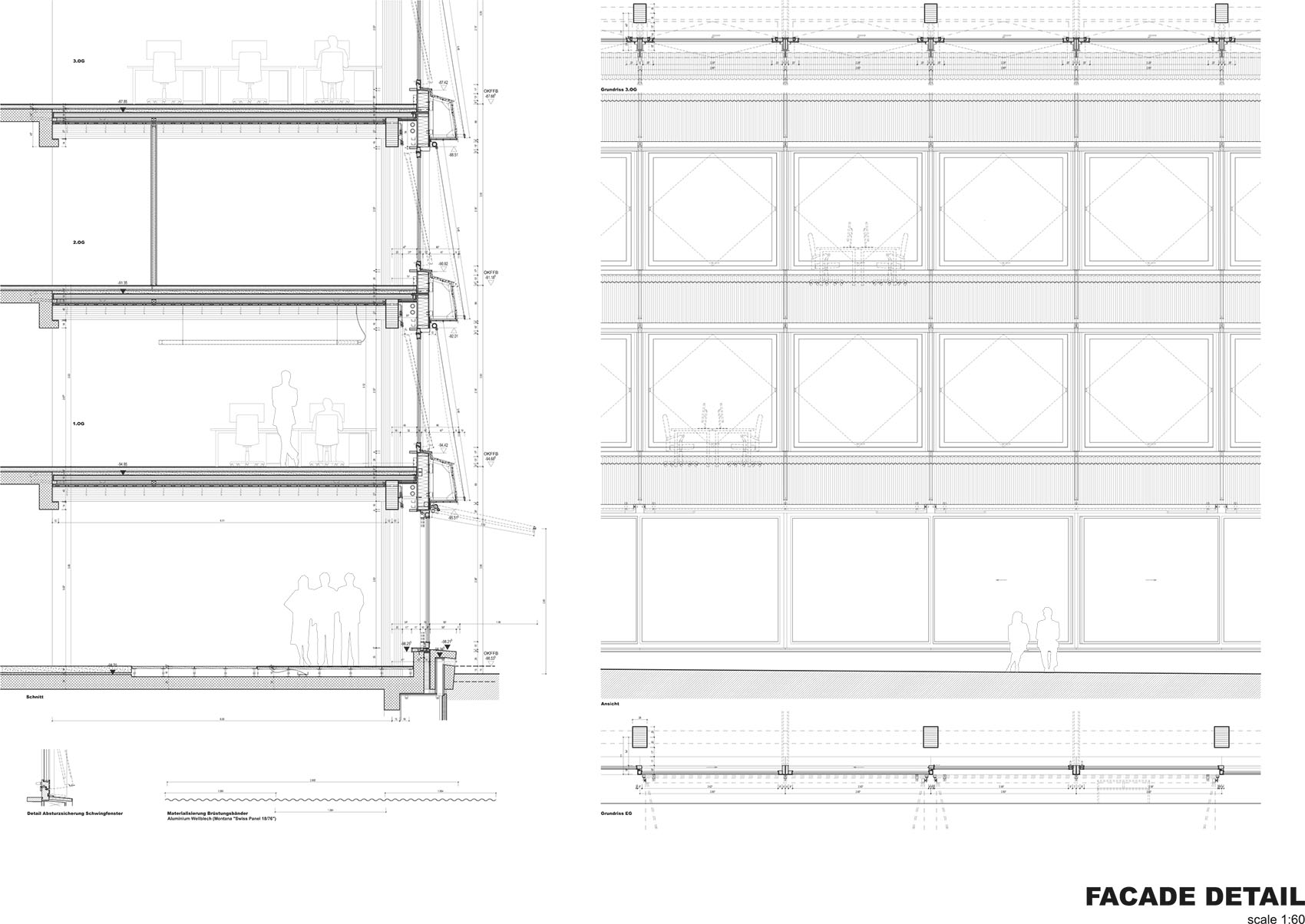
▼标准立面细部,Typical facade detail
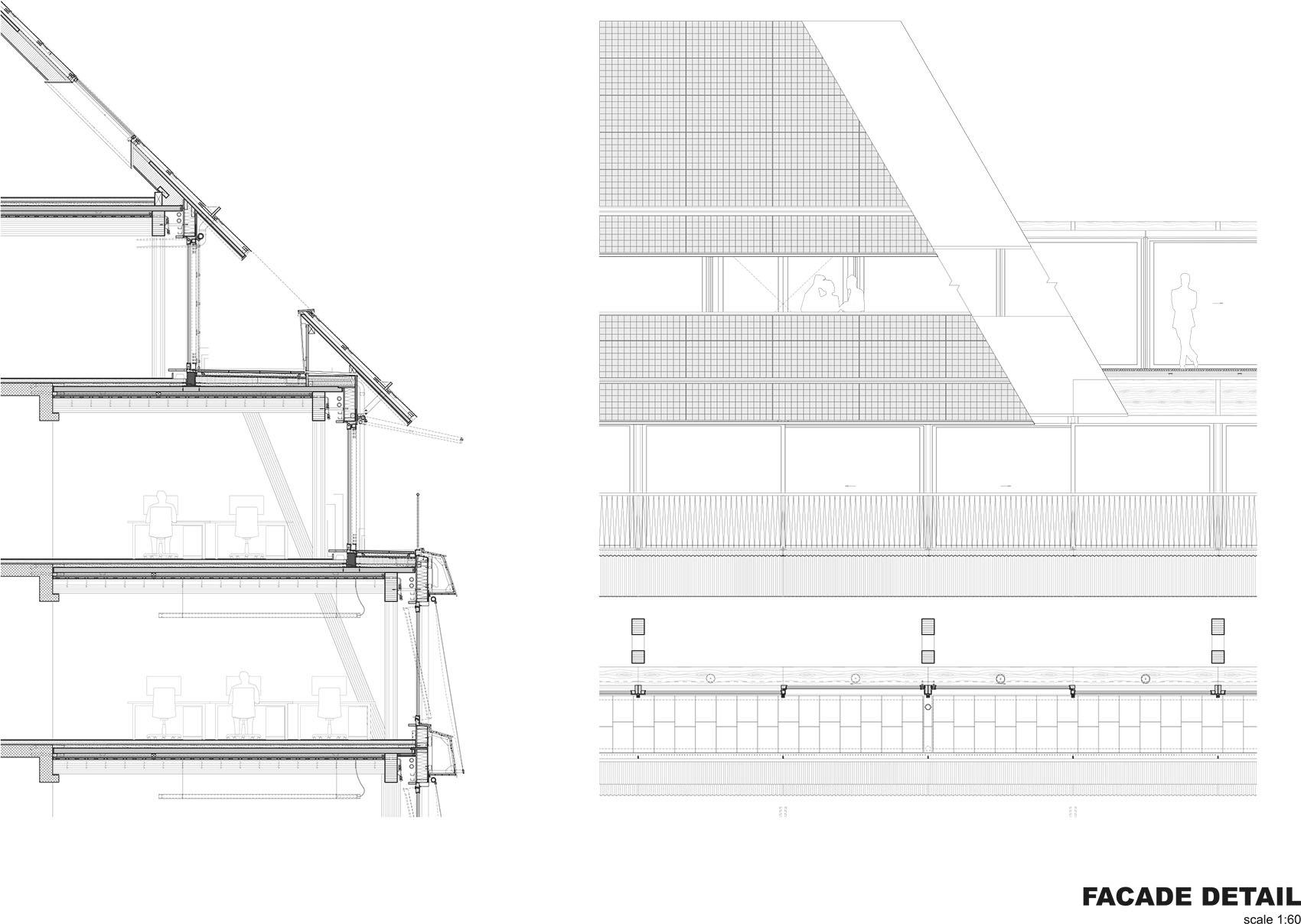
▼屋顶立面细部,Roof facade detail
PROJECT KEY DATA
Project Number Project: 510
Official Name Location: Mailand-Strasse 28, Basel, Switzerland
Milestones:
Construction Start: 01 May 2023
Groundbreaking: 27 Oct 2023
Topping Out: 27 Mar 2025
Completion: 30 Nov 2025
Client: JP Mailand AG, Basel, Switzerland
Client Representative: Marc Siegrist, Gabriella Bertozzi, Franz Küng