时间层积小仓库,格拉纳达 / SERRANO + BAQUERO
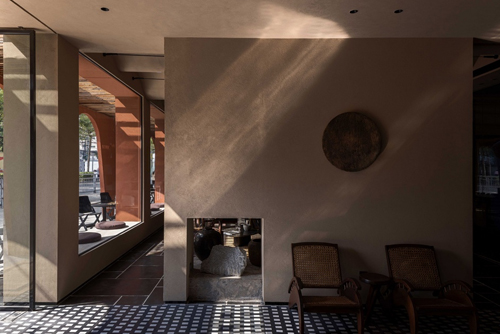
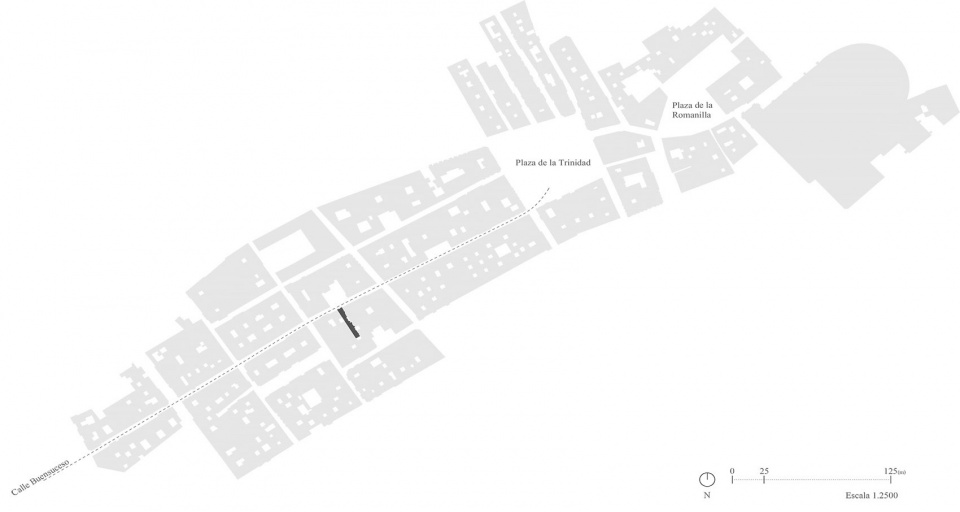
位于格拉纳达布恩苏塞索街21号(Buensuceso Street)的首层,这间小型建筑事务所占据了一栋建筑中的部分空间,而这栋建筑曾由建筑师Juan Montserrat Vergés进行改造。如今,仍能辨认出他当年的一些设计痕迹:在某些角落保留下来的棋盘格地面、庭院的组织方式、如今位于室内的大理石柱,以及那些悄然融入日常生活的立面装饰元素。项目正是从这份遗产出发,在一个本已充满历史、质感与时间层积的场所中展开。
On the ground floor of No. 21 Buensuceso Street in Granada, this small architecture studio occupies part of a building that was originally transformed by architect Juan Montserrat Vergés. Some of his gestures can still be recognized today: the checkerboard flooring that survives in certain corners, the arrangement of the courtyards, the marble columns now found within the premises, and decorative elements on the façade that quietly emerge within everyday life. The project grows from this inheritance, from a context already rich in history, texture, and layers.
▼沿街立面,facade along the street
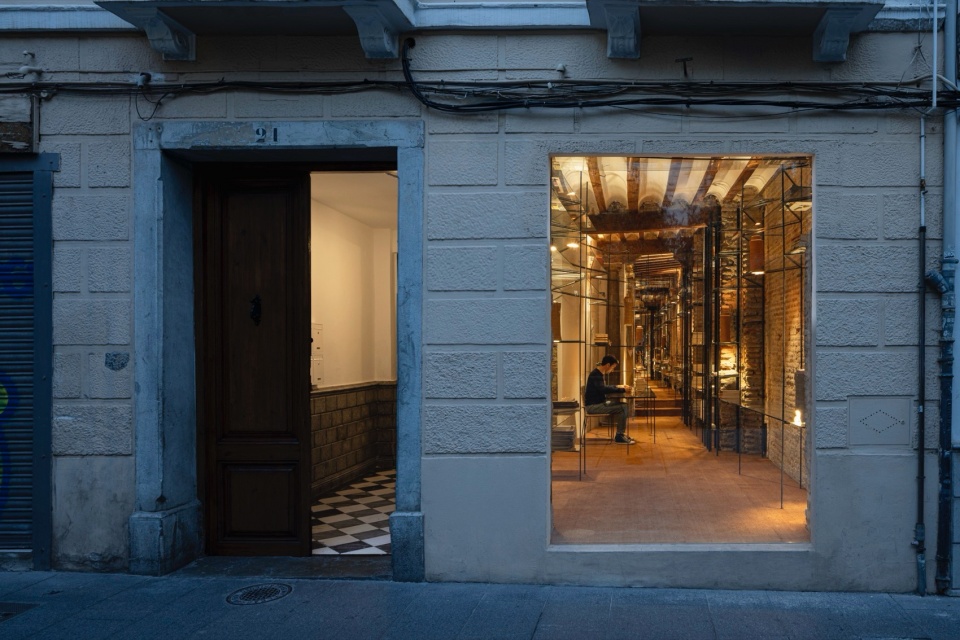
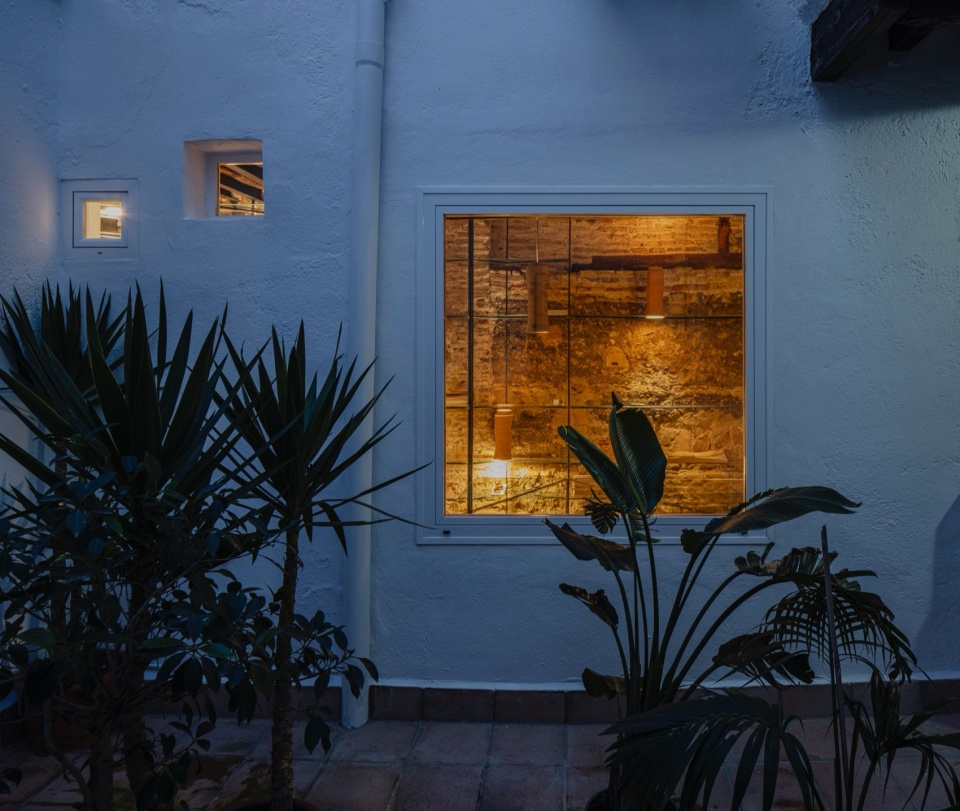
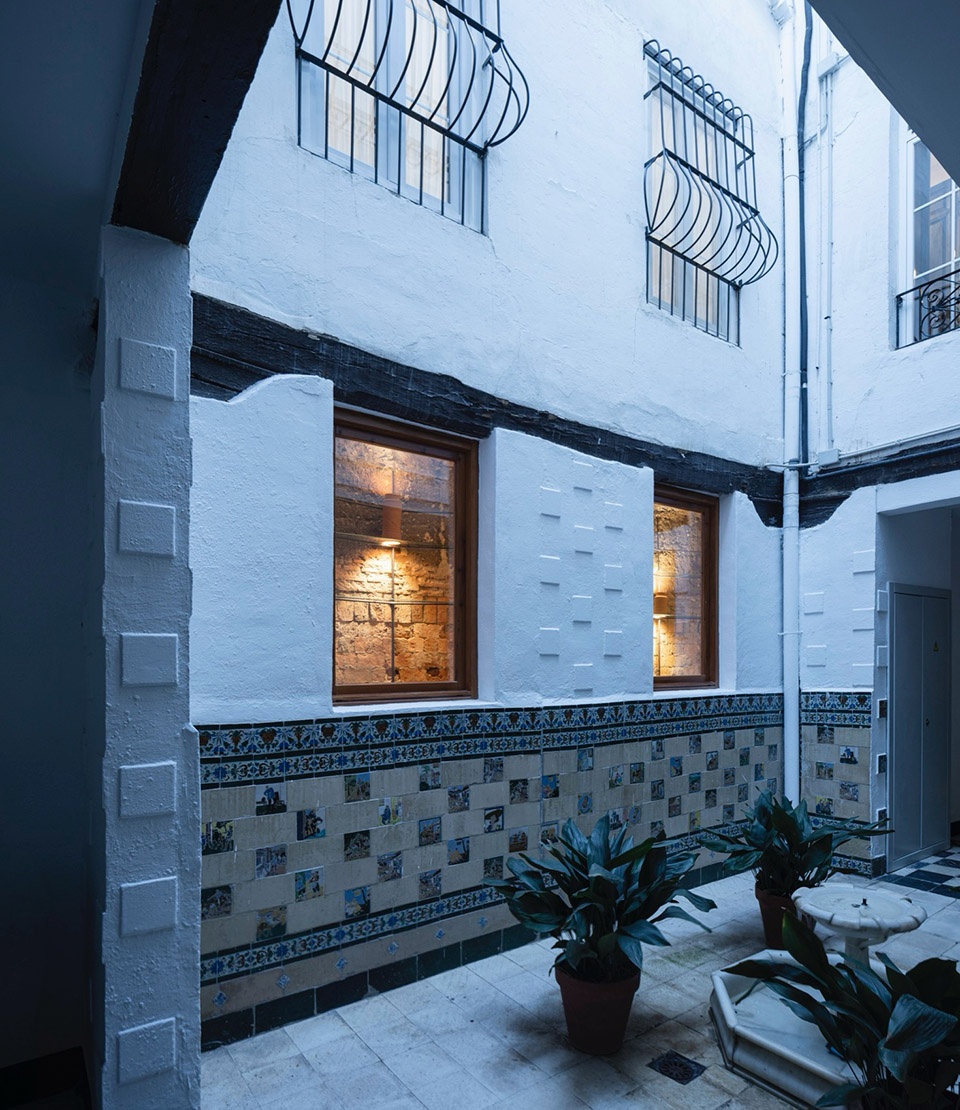
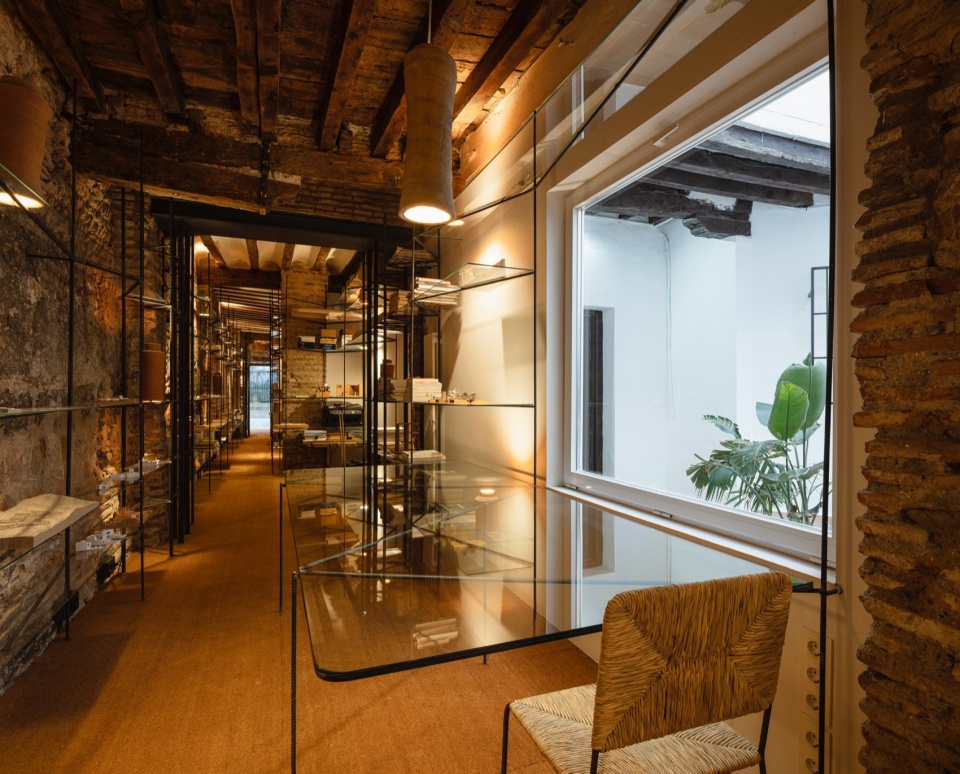
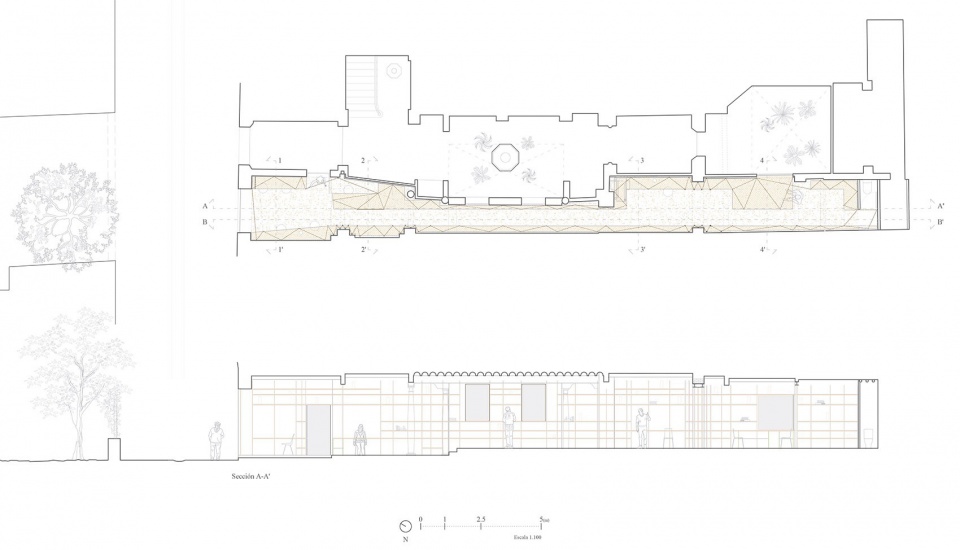
空间狭长而幽深,由一系列形态各异的庭院串联而成。透过临街的开窗,第一个开放庭院将随季节变化的植物引入室内,为空间染上不断变化的色彩。继续向内,走廊仿佛因中央庭院喷泉的流水声而变得更加宽阔。最深处则是一座更为私密的庭院,新开设的窗口让恰到好处的自然光进入工作区,避免眩光的同时营造出适宜专注思考的氛围。
▼分析图,analysis diagram
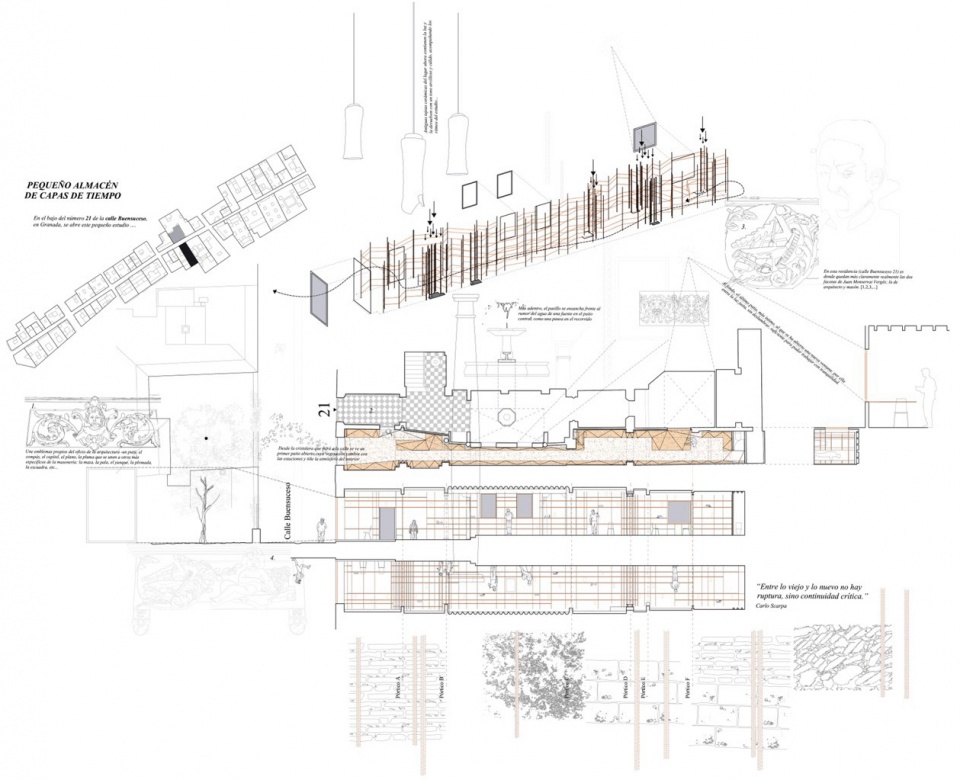
The space is long and deep, extending through a sequence of courtyards that shape it in different ways. Through the street-facing window, a first open courtyard introduces vegetation that changes with the seasons and colours the atmosphere of the interior. Further inside, the corridor seems to widen as it borrows the sound of water from the fountain in the central courtyard. At the far end, a more intimate courtyard receives a new opening, allowing just enough light to enter the workspace without glare, creating an atmosphere suited to concentration.
▼窗口,window
▼庭院,courtyard
▼后门,rear door
然而,这里不仅仅是一处工作场所,更是我们理解建筑方式的一种延伸——一个让时间沉积、思想试验、材料组织的空间。它并非从零开始被构想,而是源于对既有空间的重新占用,希望重新激活城市中这一承载着记忆的安静角落。
More than a workplace, however, this studio is an extension of our way of understanding architecture: a space where time accumulates, ideas are tested, and matter is arranged. It was not conceived from scratch. Rather, it emerged from the desire to inhabit what already existed, to activate a quiet fragment of the city charged with memory.
▼由室内看室外,
viewing the exterior from interior
▼室内概览,overall of interior
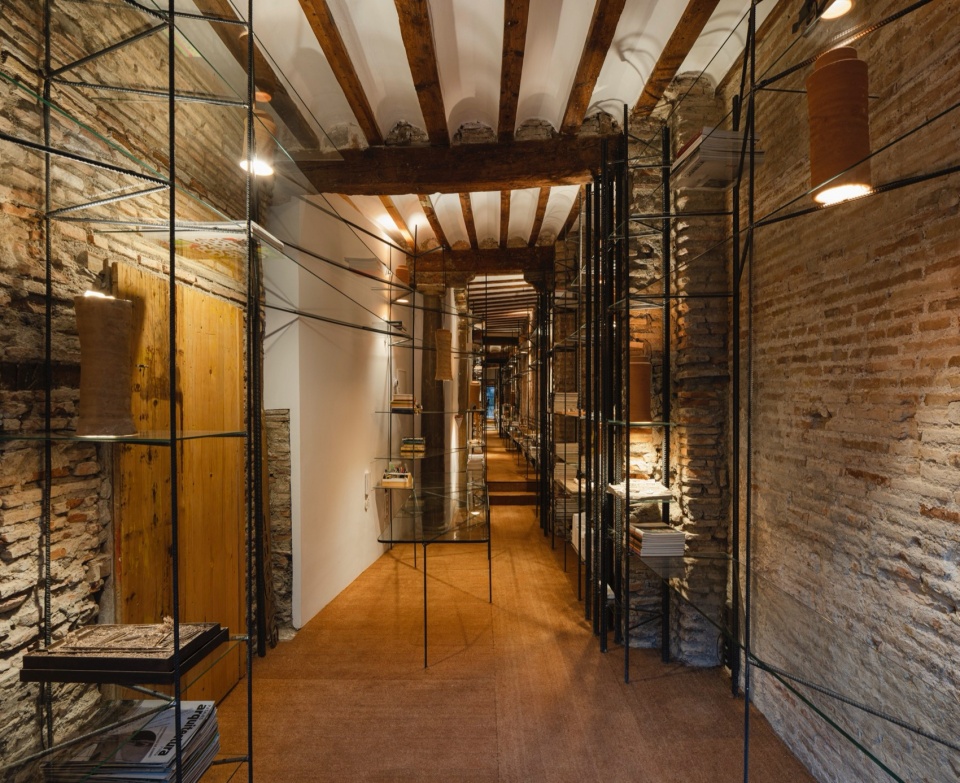
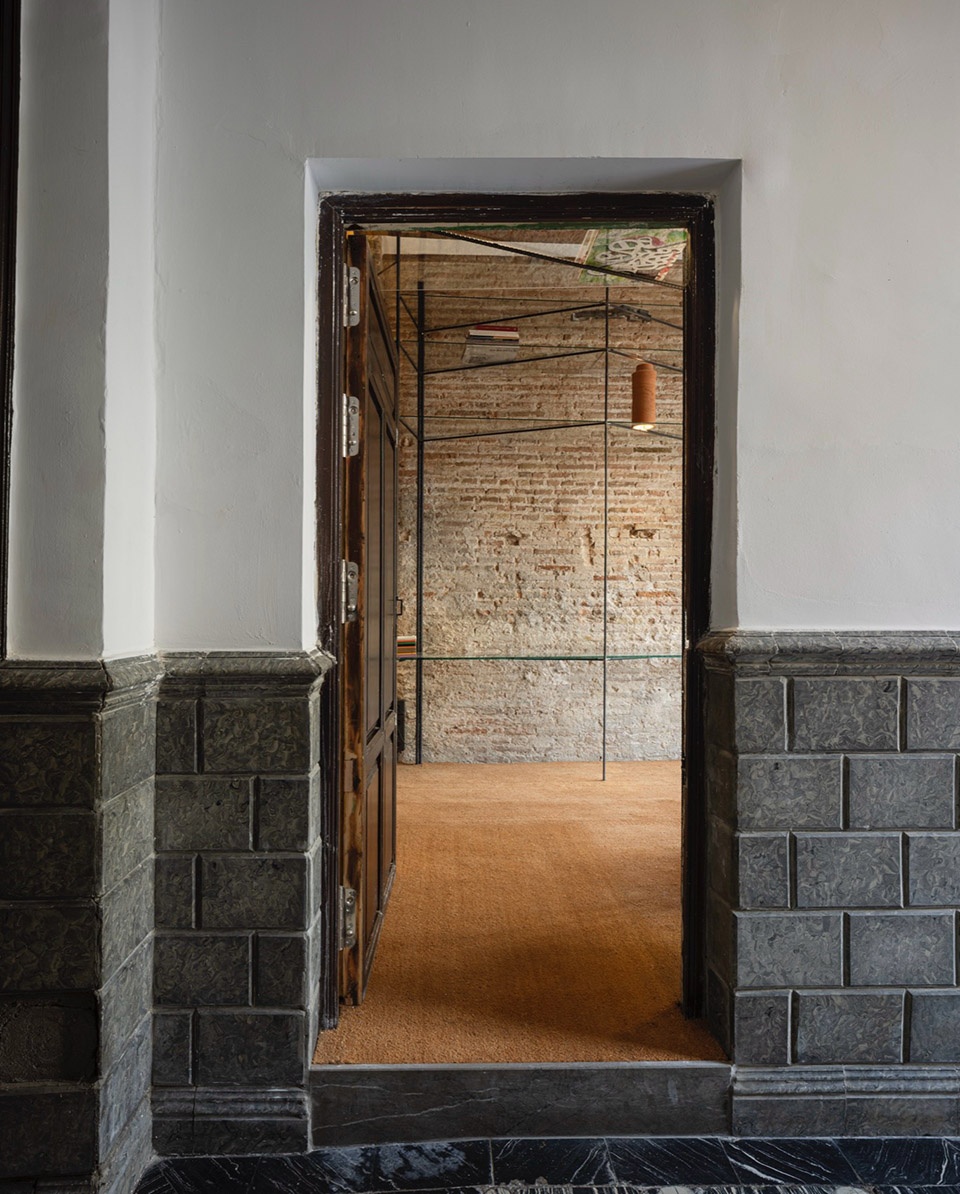
围合空间的墙体被完整保留下来,没有覆盖任何新的饰面。其中有些是夯土墙,有些则是砖墙,砌筑方式时而规整、时而随性,并且都保留着岁月留下的潮湿痕迹。我们选择让这些墙体继续“呼吸”,维持其与环境之间缓慢而持续的交换过程。这些不规则而充满生命力的表面成为空间积极参与的一部分,为这座不愿遗忘既有历史的建筑增添了新的层次。
The walls enclosing the space were left uncovered. Some are rammed earth; others are brick, laid in more orderly or more improvised ways, and all still retain traces of moisture. We chose to let them breathe, allowing them to maintain their slow exchange with the environment. Their irregular and living surfaces become an active backdrop, another layer within an architecture that refuses to forget what was already there.
▼围合空间的墙体被完整保留下来,
the walls enclosing the space were left uncovered
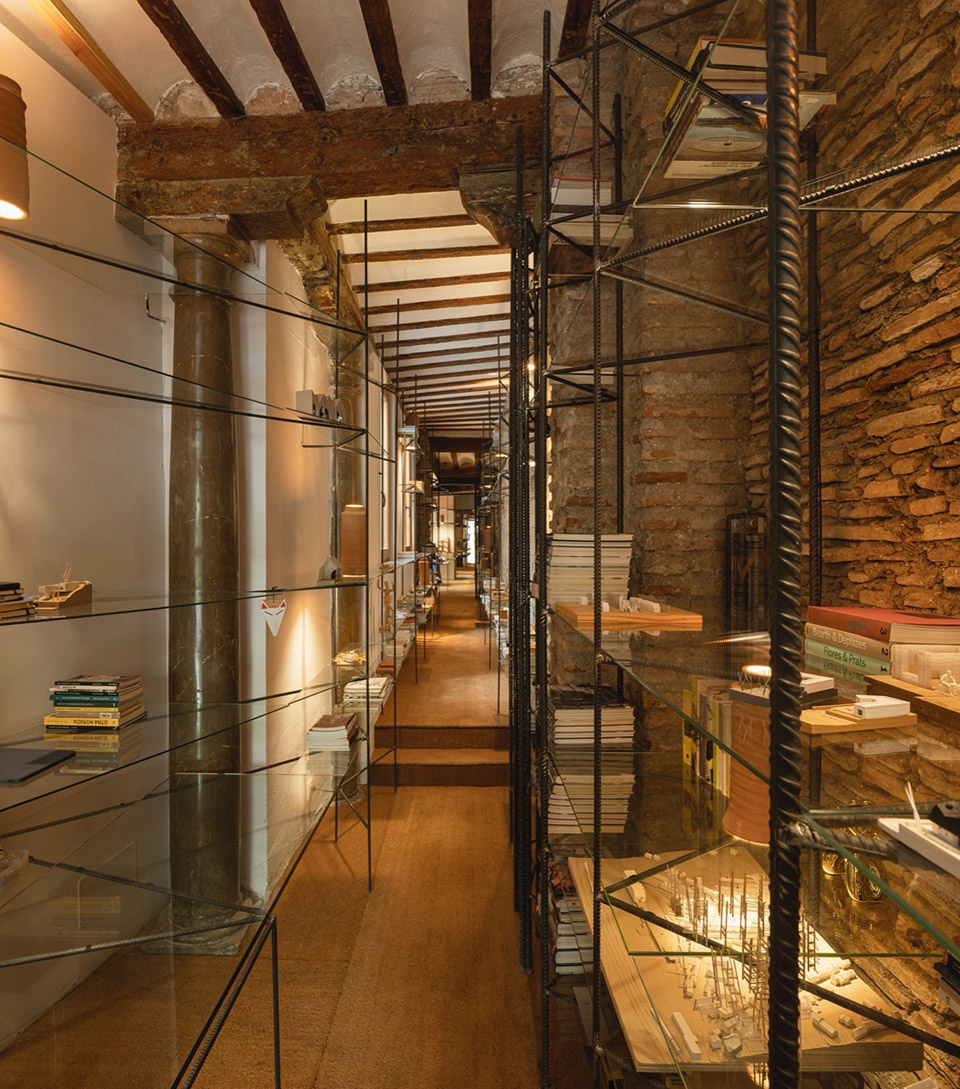
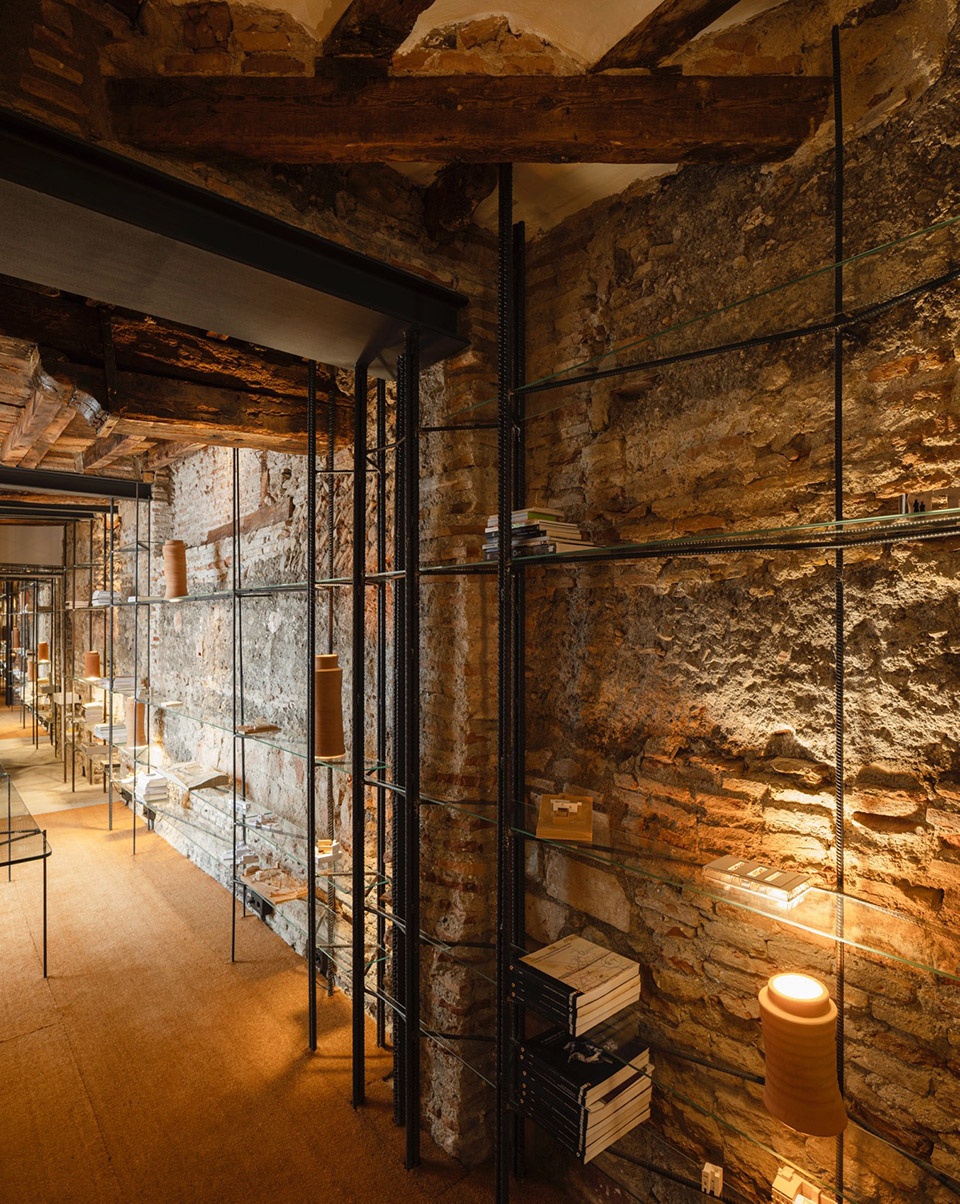
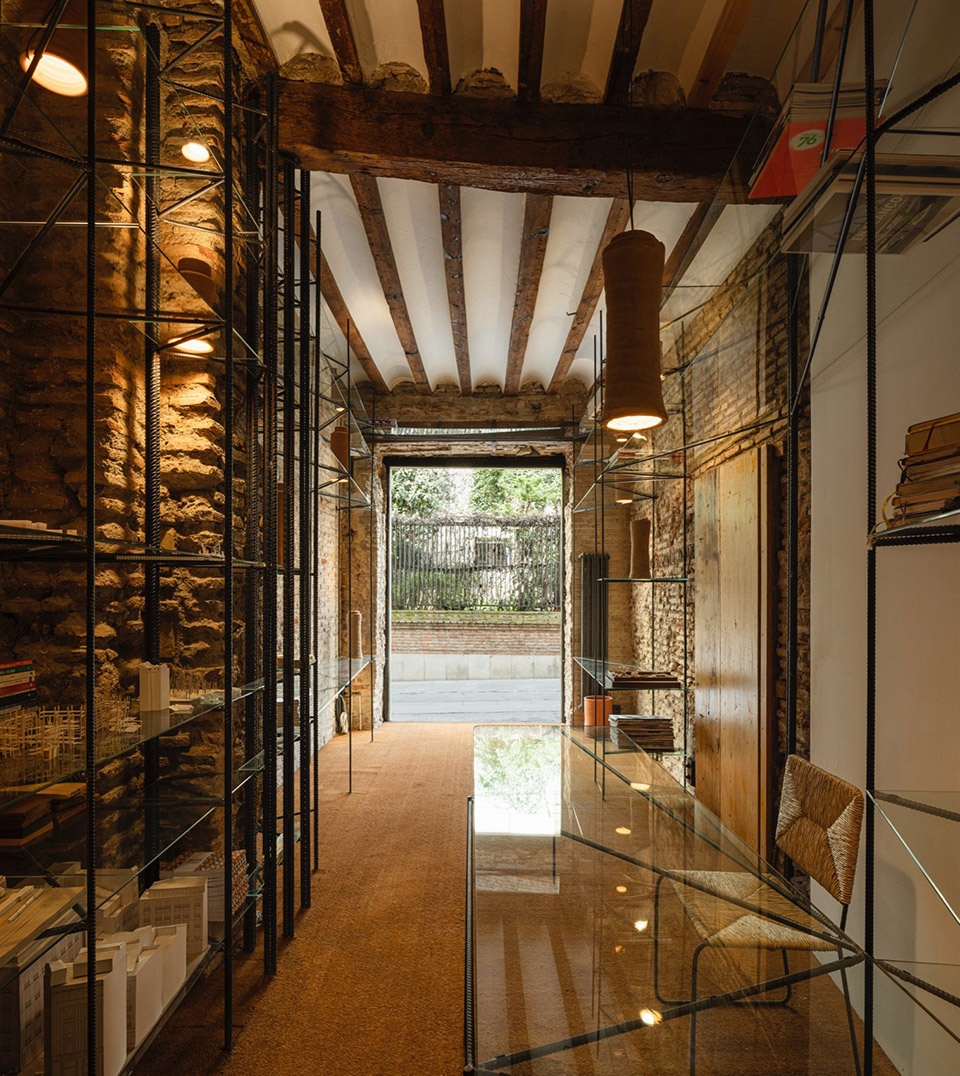
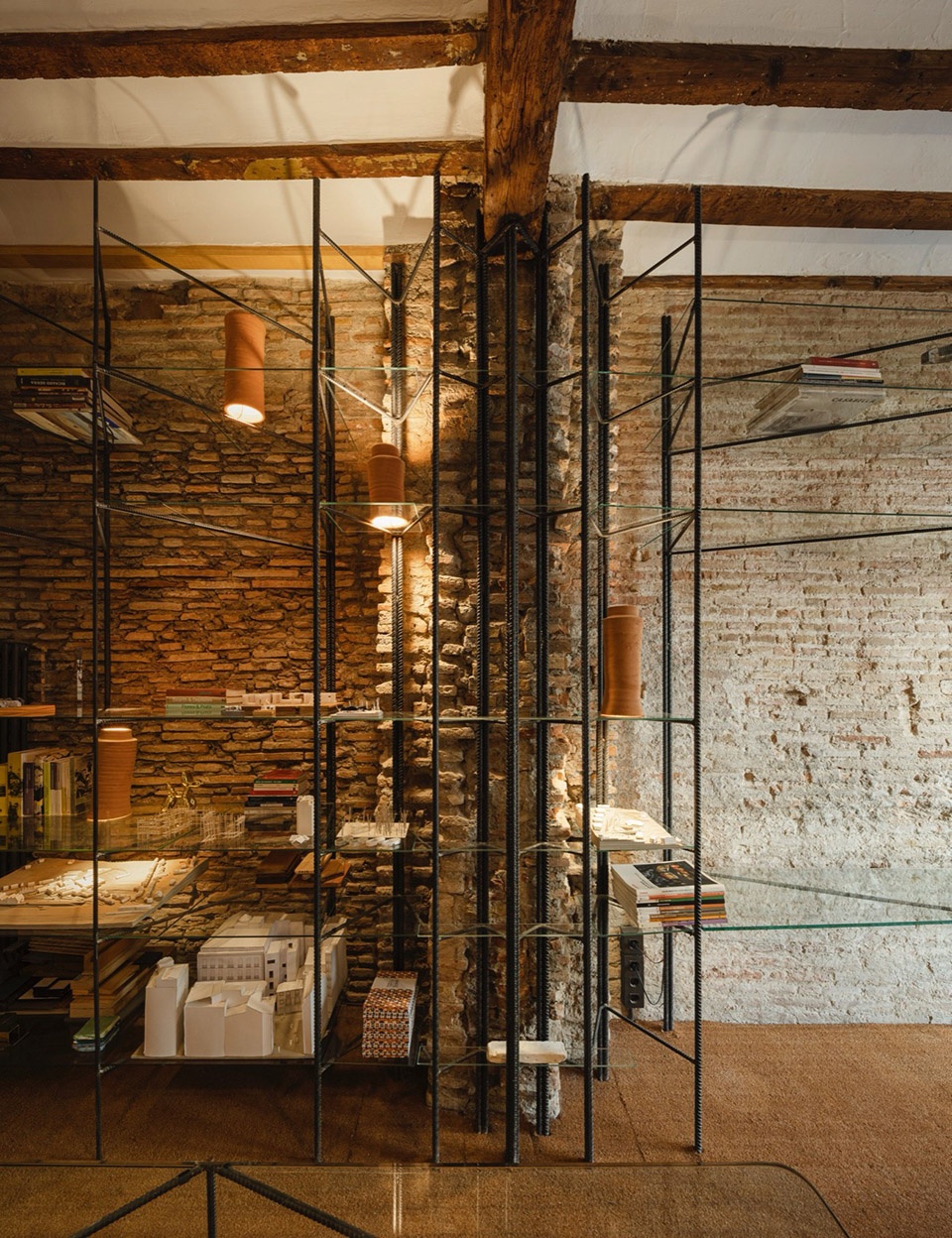
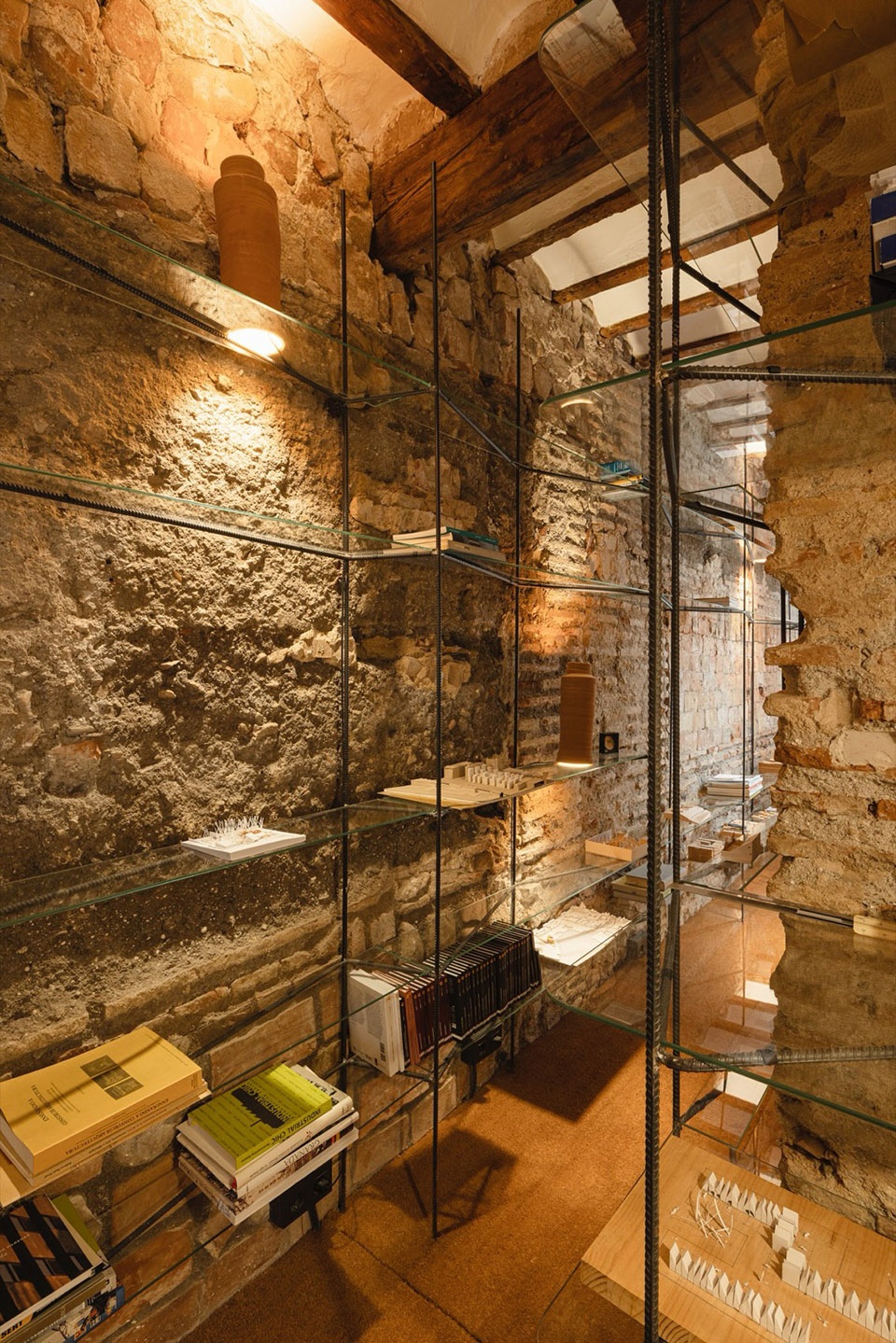
施工初期,在处理潮湿问题的过程中,我们发现相当大一部分结构已经严重老化。为此必须设置临时支撑。而正是在这一过渡状态中,那些纤细、重复且具有金属质感的支撑杆,逐渐启发出一种新的设计策略。与其采用扩大截面、钢制套箍或其他集中且厚重的加固方式,我们提出了一种“纤维化”的结构逻辑:通过大量纤细构件组成的系统——犹如由简单钢杆构成的星群——在需要承受荷载的位置变得更加密集,而在无需承担结构作用的区域则保持轻盈。
During the first weeks of construction, while addressing the humidity problems, it became clear that a large part of the structure was in very poor condition. Temporary shoring was required and, in that intermediate state, the props themselves—slender, repetitive, metallic—began to suggest a possible strategy. Instead of enlarged sections, steel collars, or other concentrated and heavy reinforcement systems, a fibrillar logic was proposed: a system of multiple slender elements—a constellation of simple steel rods—that become denser where loads must be resisted and lighter where they are not required.
▼大量纤细构件组成的系统,
constellation of simple steel rods
▼陶管被改造为灯具,
the clay pipe has been transformed into a lamp.
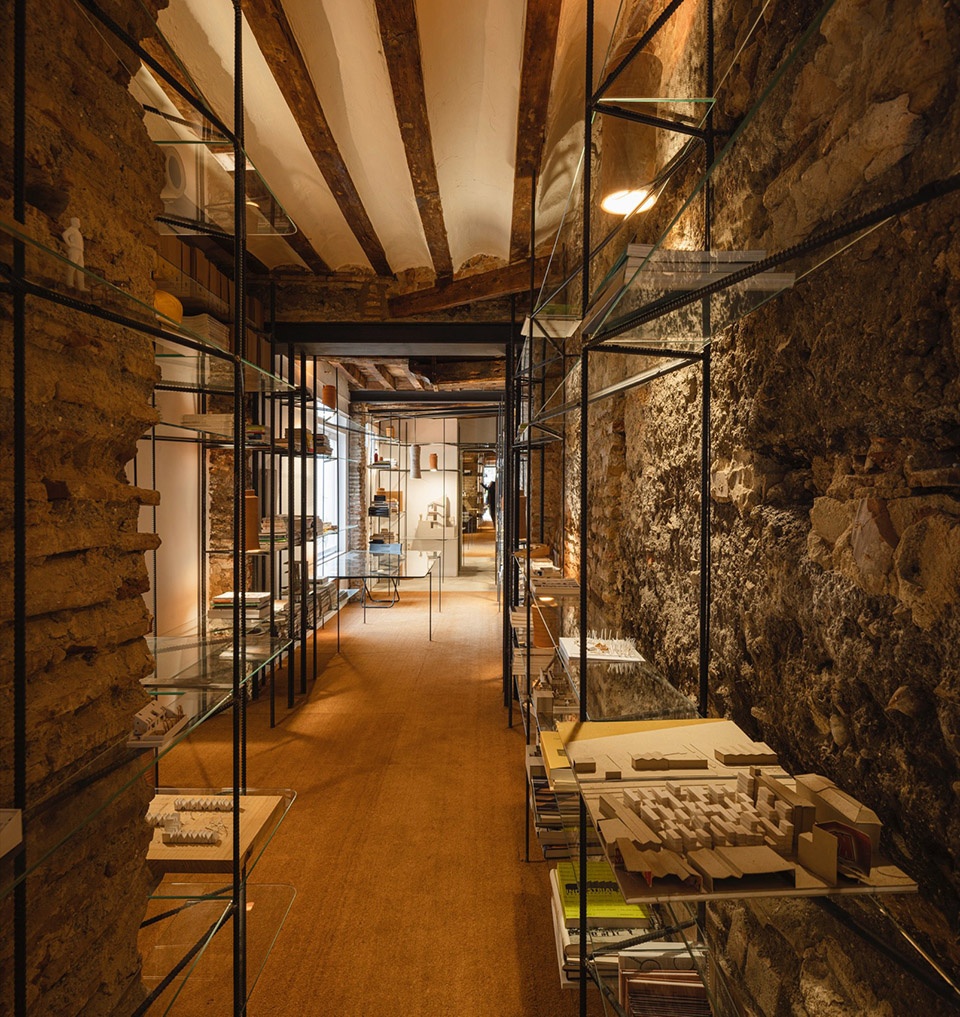
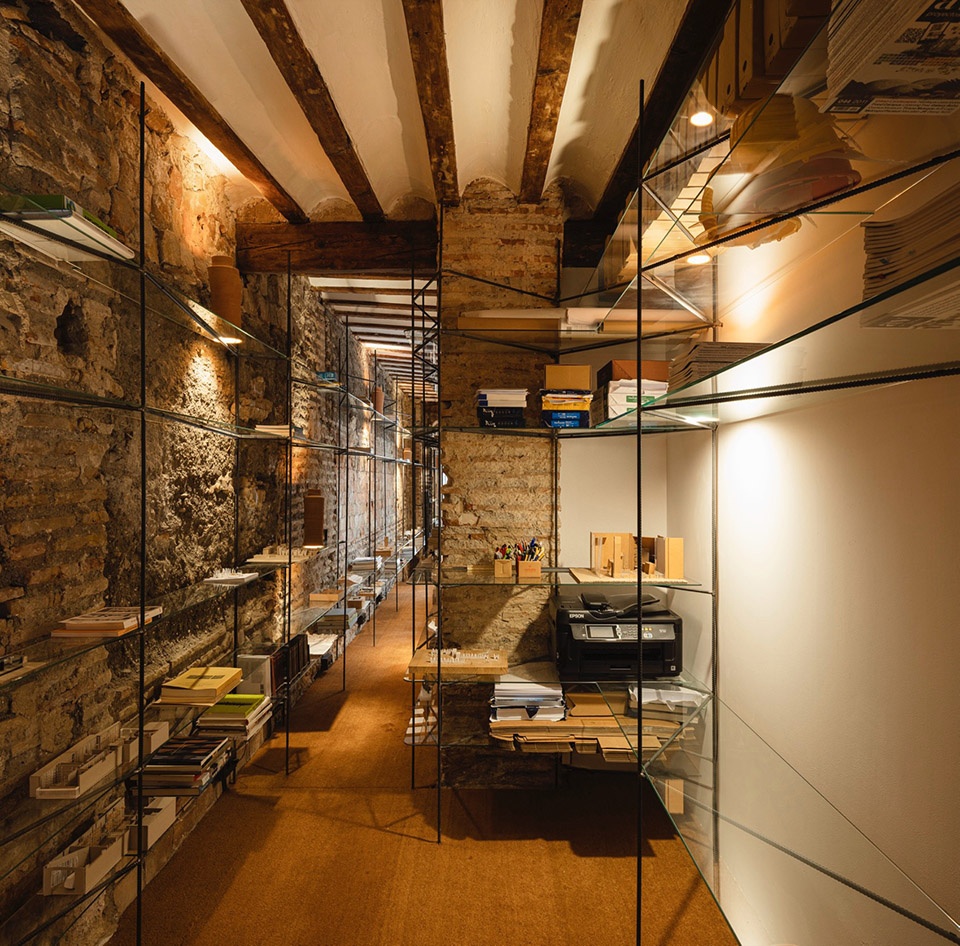
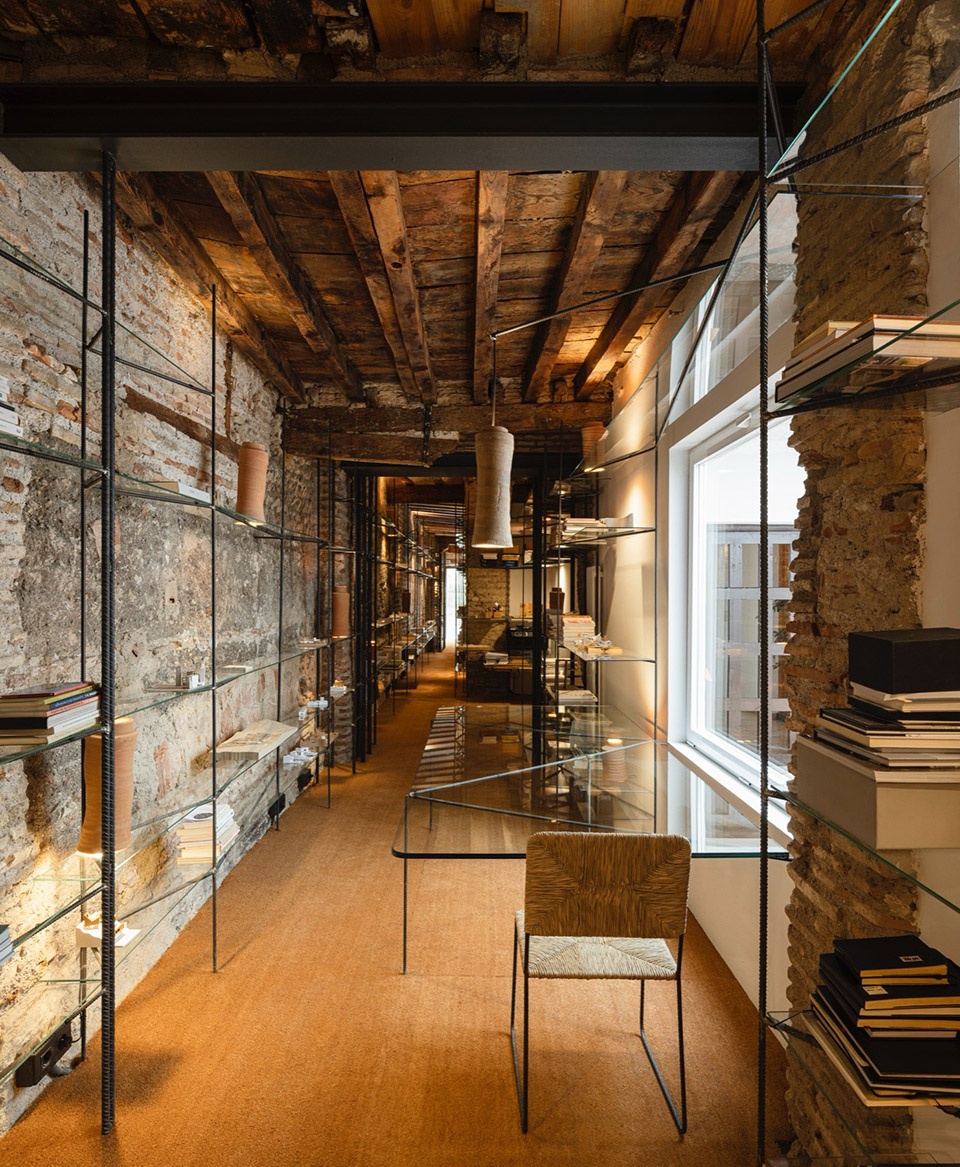
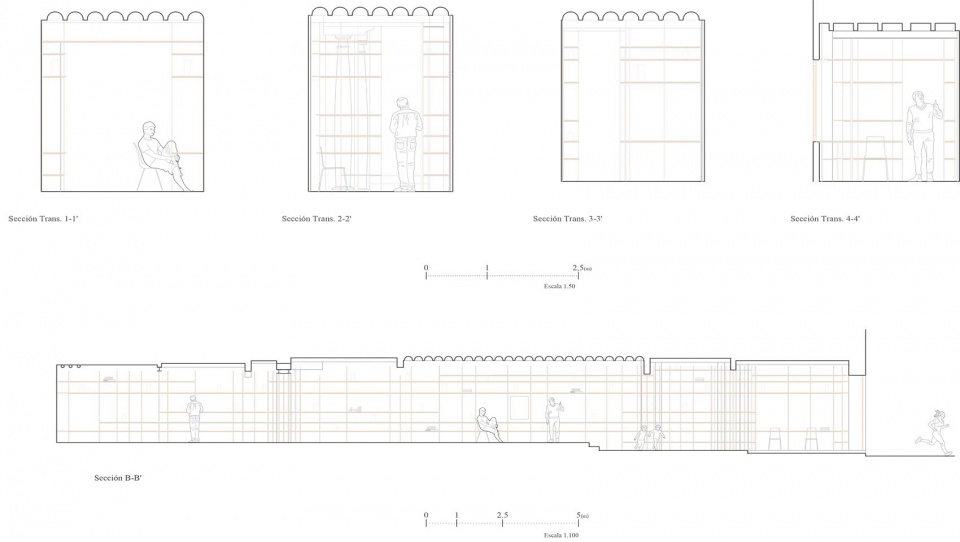
沿事务所周边布置的书架系统正是这一逻辑的具象化表达:当其承担支撑或补充原有结构的功能时,便变得更加密实与坚固;而在不承担荷载的区域,它仅仅是一组轻巧的书架。一个单一的设计动作,同时连接了建造逻辑与日常使用。
The shelving system that runs around the perimeter of the studio materializes this logic: where it supports or complements the original structure, it becomes denser and more robust; where it carries no load, it remains light, simply shelving. A single gesture that connects the constructive and the everyday.
▼书架系统,the shelving system
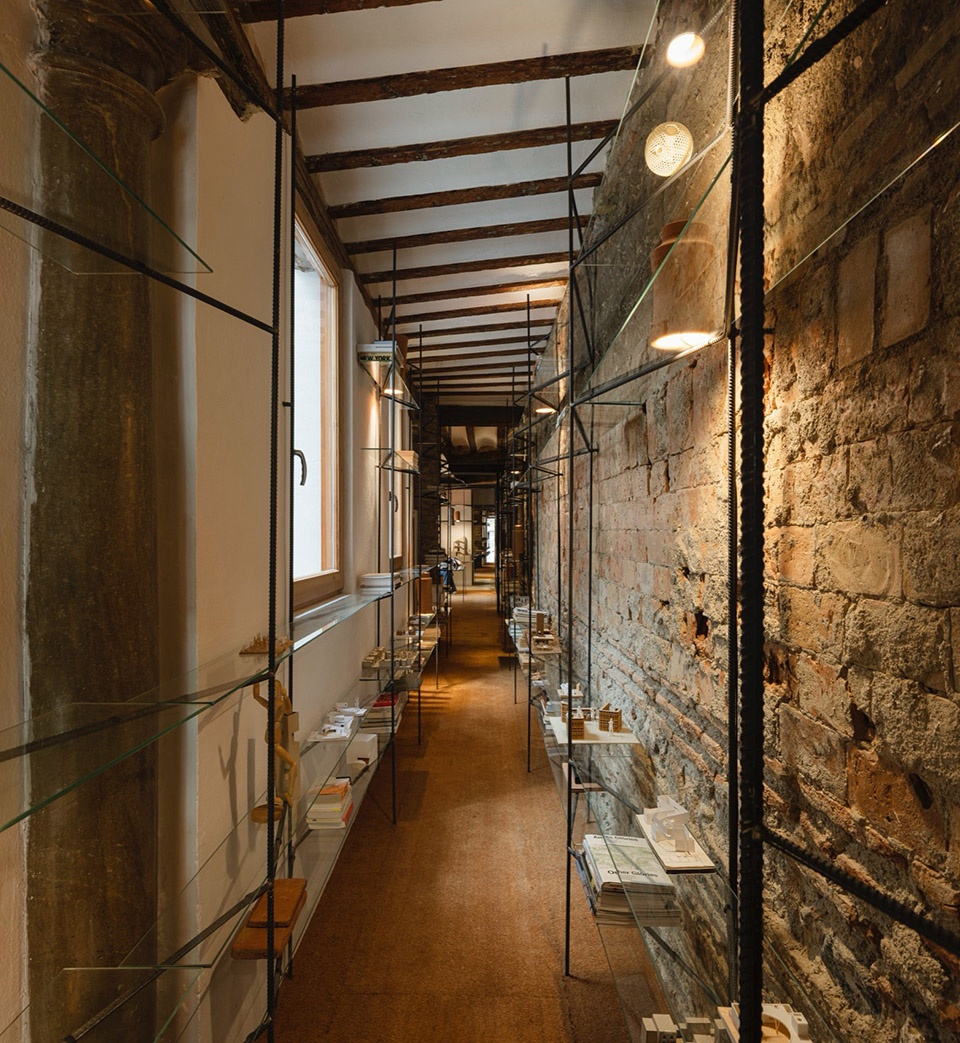
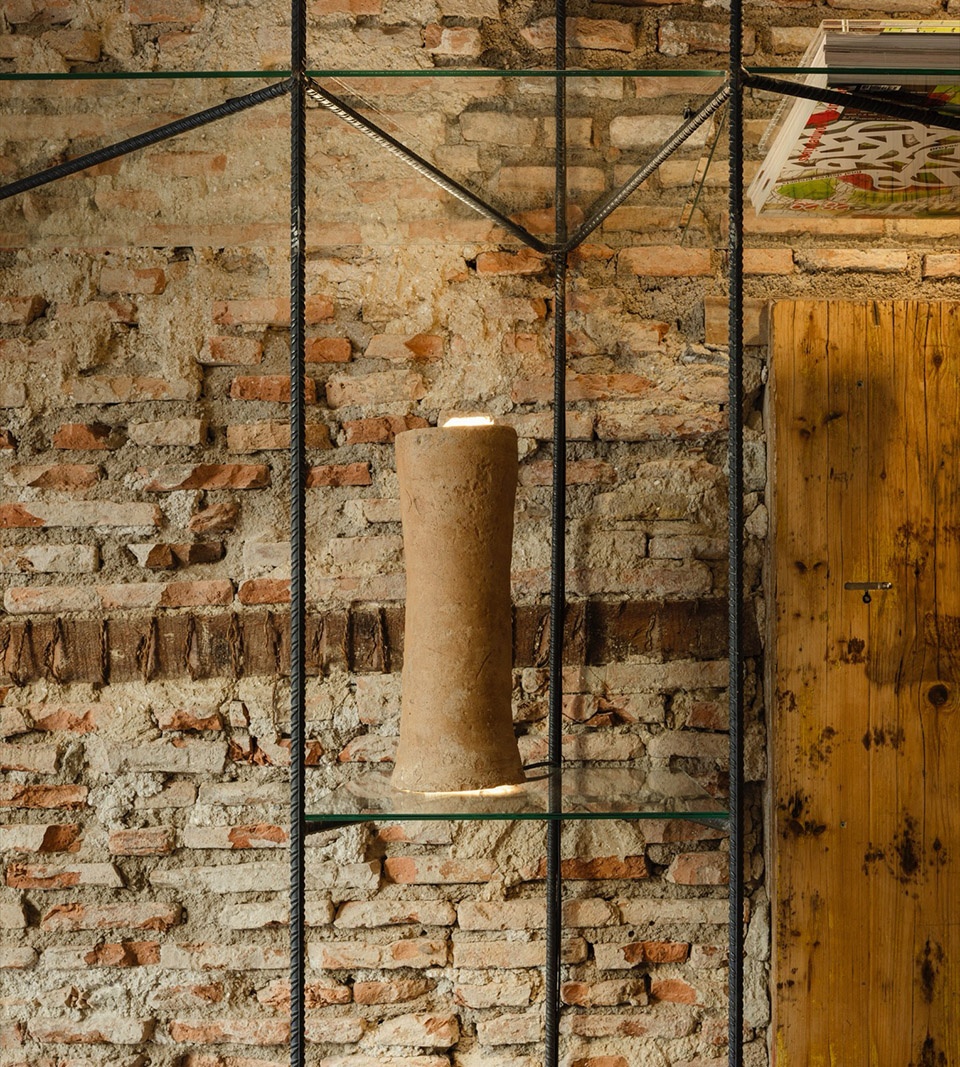
照明设计同样延续了对建筑历史碎片的再利用。在清理工程中,设计团队发现了若干废弃的陶制排水管,它们原本属于一套早已停用的排水系统。如今,这些陶管被改造为灯具,成为承载光线的容器,并散发出温暖而带有泥土气息的光晕,仿佛阳光正透过土壤缓缓渗出。这种柔和而富有层次的光线陪伴着事务所的日常节奏——图纸、模型、工具与书籍散落在玻璃工作台上,而有时,人们只是静静停留片刻。
The lighting also recovers fragments of the building’s past. During the cleaning works, several old ceramic water conduits, once part of an obsolete drainage system, were uncovered. They were reused as light fixtures: now they contain the light and return it with a warm, earthy glow, as if sunlight were filtering through the soil itself. This soft and nuanced light accompanies the rhythms of the studio, where drawings, models, tools and books accumulate on the glass work surfaces, and where, sometimes, there is simply a pause.
▼温暖而带有泥土气息的光晕,
soft and nuanced light accompanies the rhythms of the studi
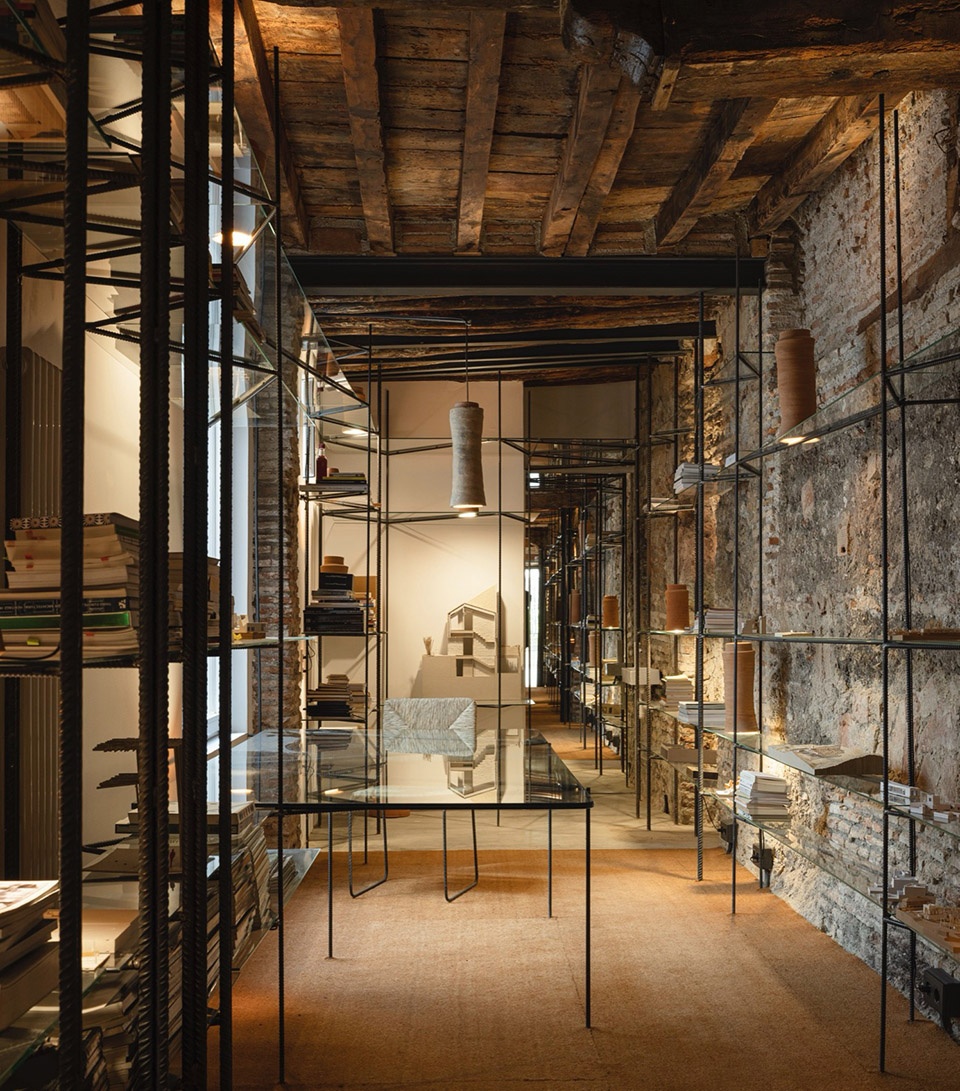
▼灯光细部,details of the lighting feature
这里并非一个依靠宏大姿态建立存在感的空间,而是由无数细微决定在时间中自然累积而成。事务所如同一个手工制作的实验室,是进行测试、整理与记忆的场所;一座在古老夯土墙与当代结构之间整理时间层积的仓库。
This is not a place of grand gestures, but of small decisions that have accumulated naturally over time. The studio functions as a handcrafted laboratory, a place for testing, ordering and remembering. A storehouse that organizes its layers of time between ancient earthen walls and contemporary structures.
▼一座在古老夯土墙与当代结构之间整理时间层积的仓库,
a storehouse that organizes its layers of time between ancient earthen walls and contemporary structures
我们追求的并非一个引人注目的空间,而是一个真实的空间。一个可以观察、设计,也可以偶尔停下来的工作室;一个能够被使用、被居住、随着时间不断改变,并与我们一同成长的场所。正如我们最感兴趣的建筑那样——它不会因一张照片而被完全理解,而是在持续的体验中不断展开。
We were not looking for a spectacular place, but a truthful one. A studio from which to observe, design and occasionally stop. A space that could be used and inhabited, transformed over time, and allowed to grow alongside us. Like the architecture that interests us most: one that is not exhausted by its image, but unfolds through experience.
▼区位图,location plan
▼平面图与剖面图,plan and section
▼剖面图,sections
Small Storehouse of Layers of Time. Architecture Studio. Granada.
SERRANO + BAQUERO Paloma Baquero Masats y Juan Antonio Serrano García
http://www.serranoybaquero.com/
estudio@serranoybaquero.com
Estructura Miguel Ángel Jiménez Dengra
Colaboradores Iuliia Polulikh Juan Carlos Hodar Egea
Constructora Coreal Reformas Año de finalización del proyecto Mayo 2026
Fotografía Fernando Alda