KALI HOUSE,深圳 / MOC DESIGN OFFICE
KALI HOUSE是一处融合咖啡与展览功能的复合空间,MOC以“玻璃”作为核心材料,将咖啡厅与展厅融合为一个连续而开放的透明场域。
KALI HOUSE is a mixed-use space that combines a café and gallery. Using glass as the project’s primary material, MOC merges the two functions into a continuous and open transparent environment.
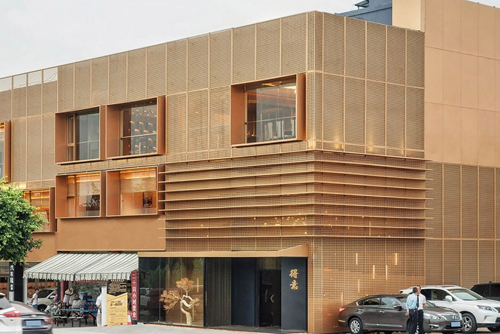
▼外立面概览,Overview of the façade
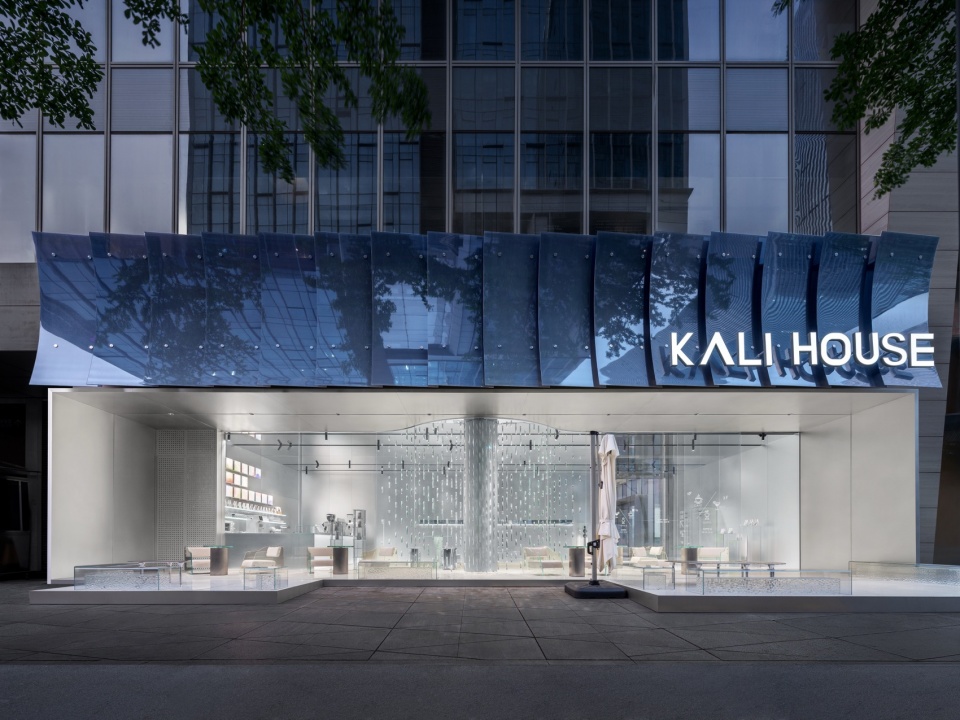
设计并未强调传统商业空间中的视觉符号与装饰语言,也不仅仅将玻璃的通透性视为一种材料特征,而是将其转化为一种由光线、反射与感知变化共同构成的设计语言,构建随光线变化的空间体验。
Rather than emphasizing visual branding or decorative expression, the design transforms glass from a transparent material into a spatial medium that orchestrates light, reflection and perception, creating an experience that changes throughout the day.
▼从街道看向咖啡厅,View from the street towards the café
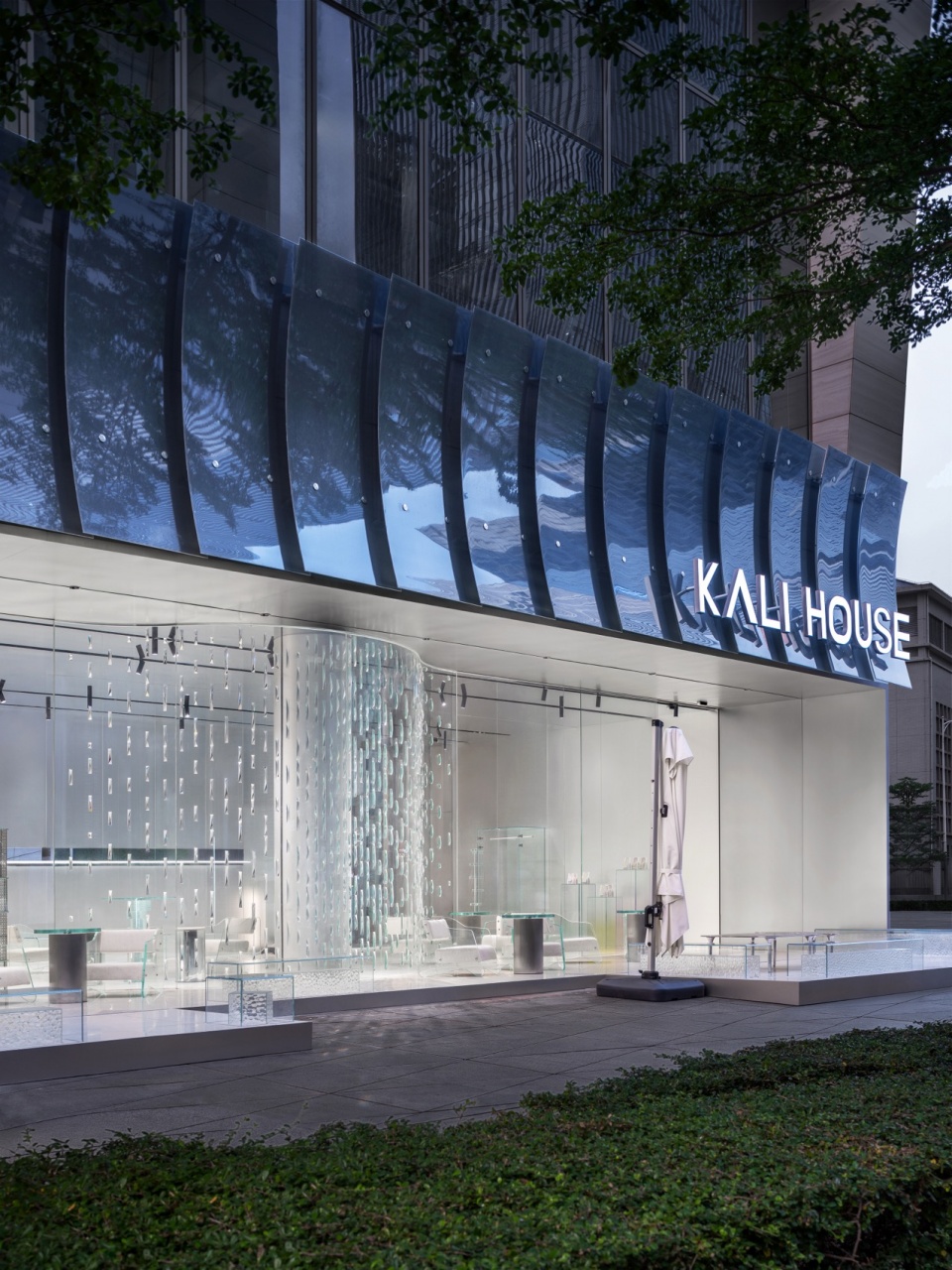
项目位于城市街角,外立面采用定制金属网夹丝弧形玻璃,通过连续弧形交叠的方式形成轻盈而具有漂浮感的界面。交叠的玻璃门楣与全玻璃立面,不断捕捉周围城市与树木的碎片化影像。随着时间、天气与观看角度的变化,建筑在“显现”与“消隐”之间不断转换。
Located on a prominent urban corner, the project features a façade composed of custom curved wired-glass panels embedded with metal mesh. The overlapping curved surfaces create a lightweight and seemingly floating architectural expression. Together, the layered glass canopy and fully glazed façade capture fragmented reflections of the surrounding city and trees. As light conditions, weather, and viewing angles change, the building continually shifts between visibility and disappearance.
▼弧形玻璃细节,Curved glass detail
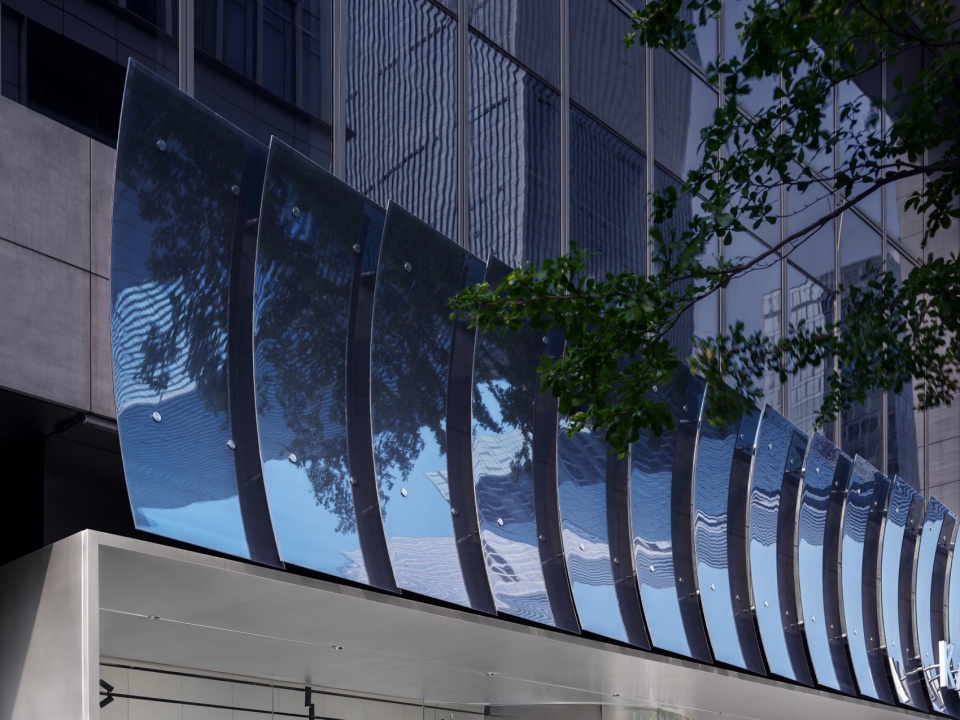
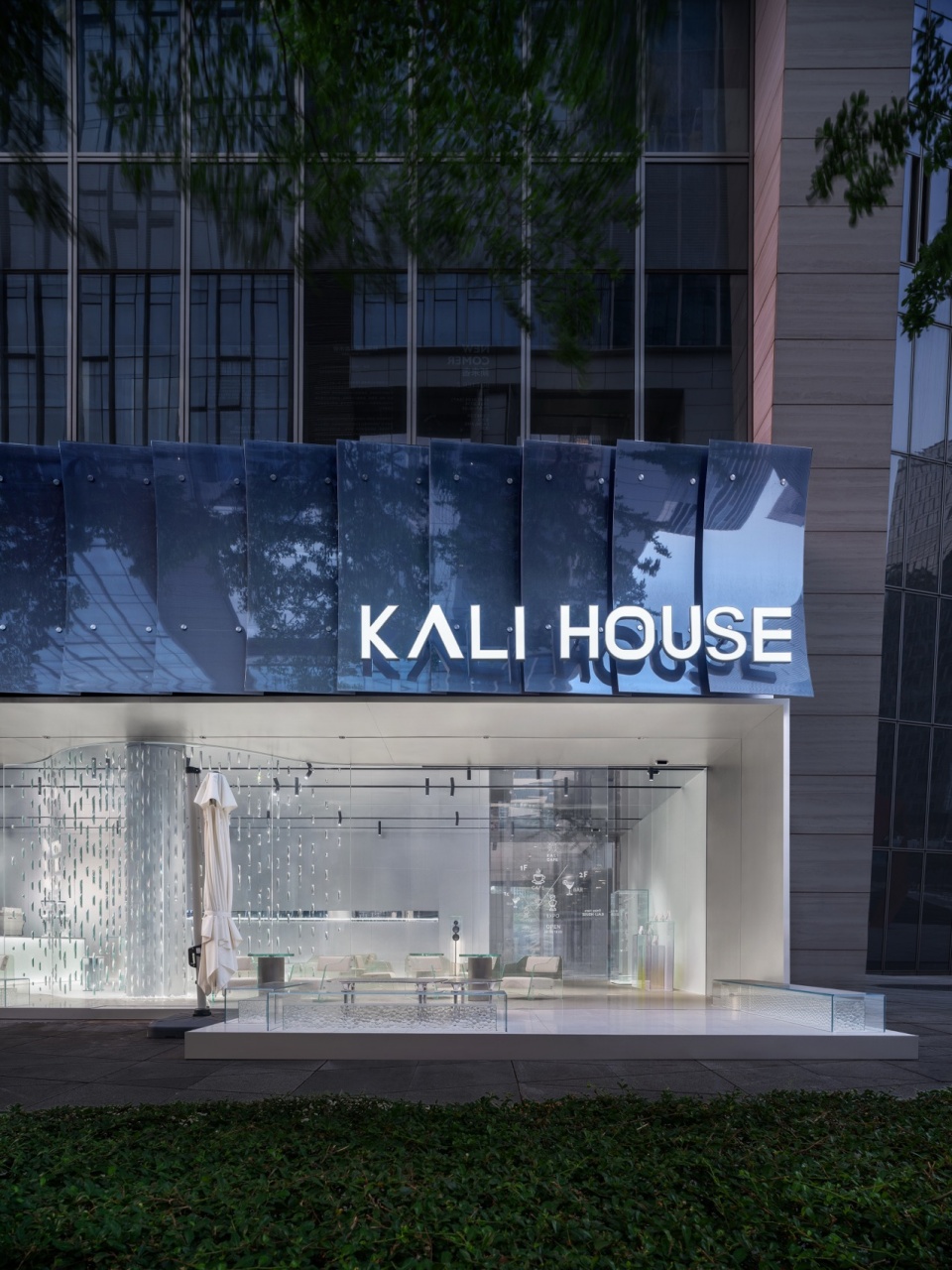
白天,玻璃映射周边树影与城市景象,使建筑消隐于环境之中;夜晚,内部光线则透过立面向街道扩散,空间转化为一座向城市打开的透明橱窗。
During the day, the glass reflects nearby trees and urban scenery, allowing the architecture to visually dissolve into its surroundings. At night, light from within radiates through the façade, transforming the space into a transparent showcase open to the city.
▼夜色下的咖啡厅,像一座面向城市打开的透明橱窗,The café at night
01. Frozen Rain Curtain 凝固的雨幕
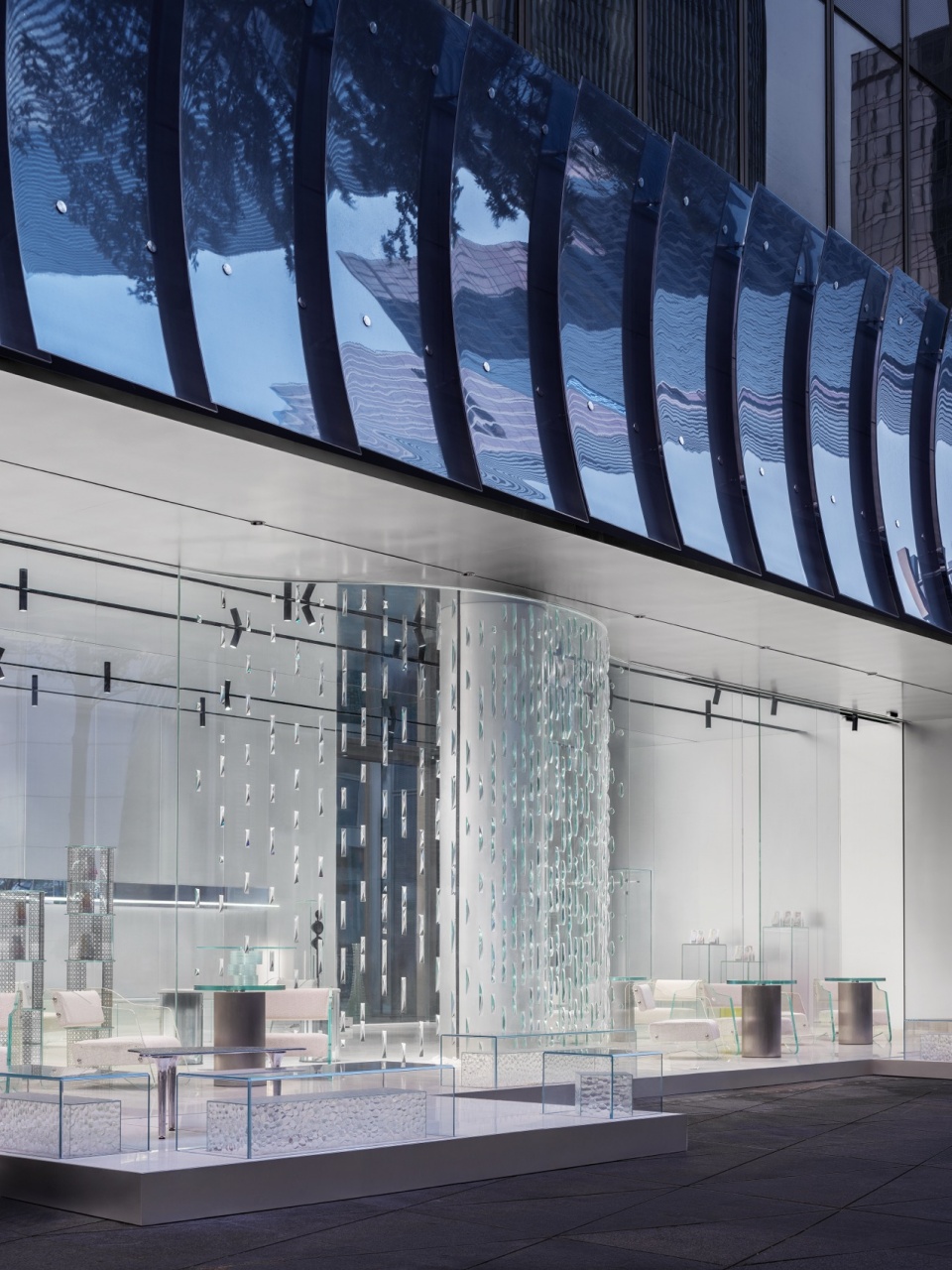
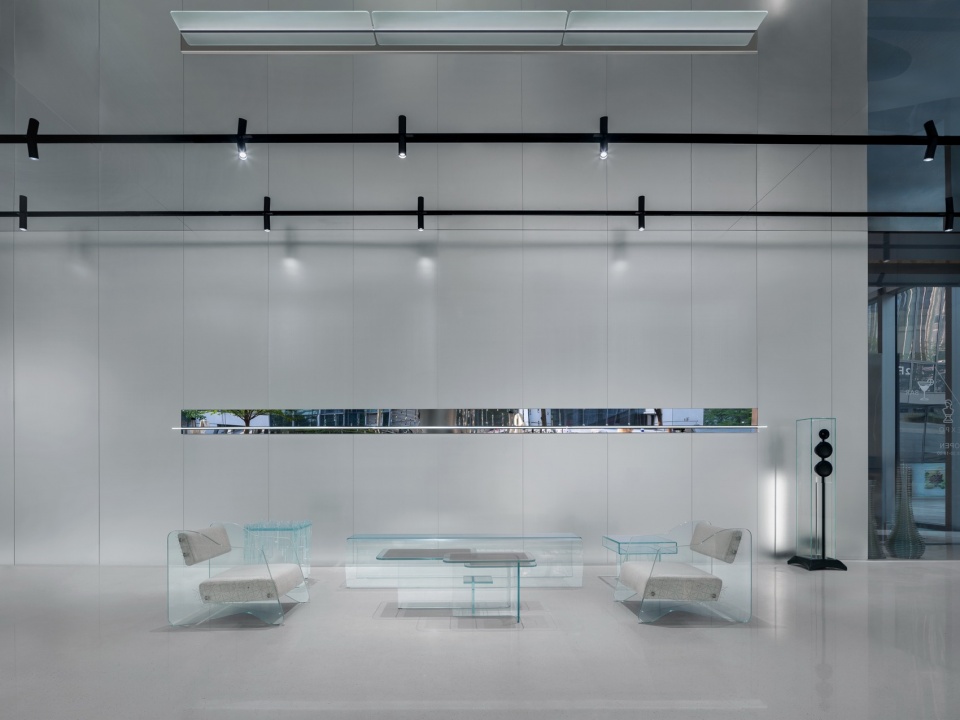
一层咖啡厅被构想为一个开放而沉浸的透明场域,设计师极大的弱化了实体边界。
The ground-floor café was conceived as a transparent environment that challenges conventional notions of enclosure. Physical boundaries are deliberately reduced, allowing light and reflection to define the spatial experience.
▼轻盈,透明的空间状态,A lightweight and transparent spatial atmosphere
镜面天花进一步消解了垂直边界,玻璃家具与极简界面共同营造一种漂浮、轻盈的空间状态。
Mirrored ceilings dissolve the perception of height, while glass furnishings and a restrained material palette contribute to an atmosphere of visual lightness.
▼镜面天花纵向拓展空间视觉, 强化了通透而漂浮的氛围,Mirrored ceiling enhances spatial dept
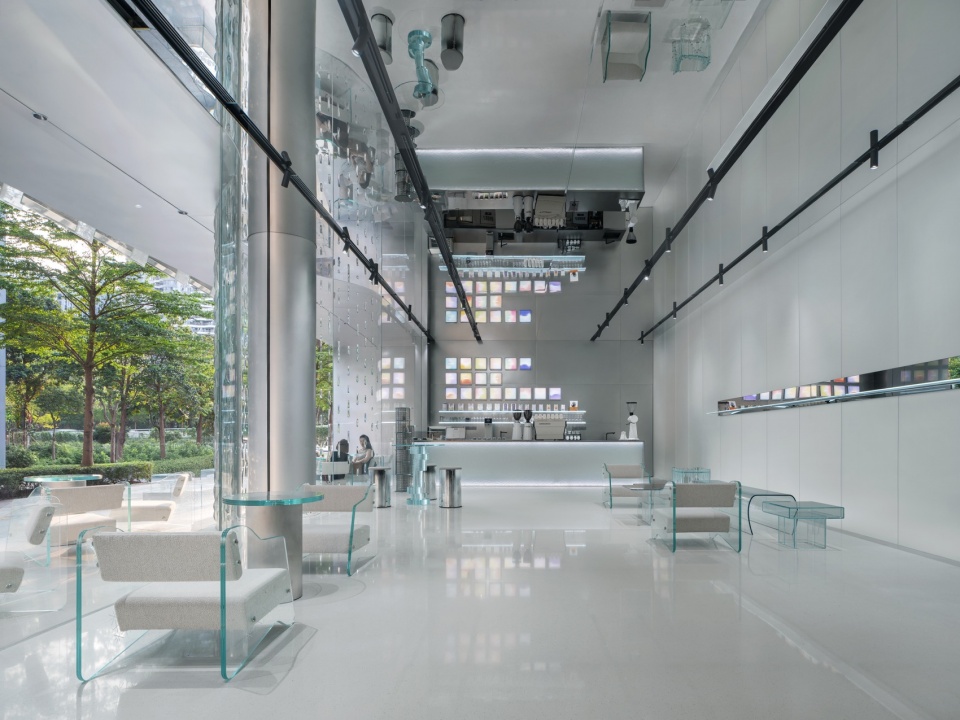
▼克制的材料语言弱化了空间边界,使光线与玻璃成为空间的主角,A restrained material palette reduces the presence of physical boundaries, allowing light and glass to take centre stage
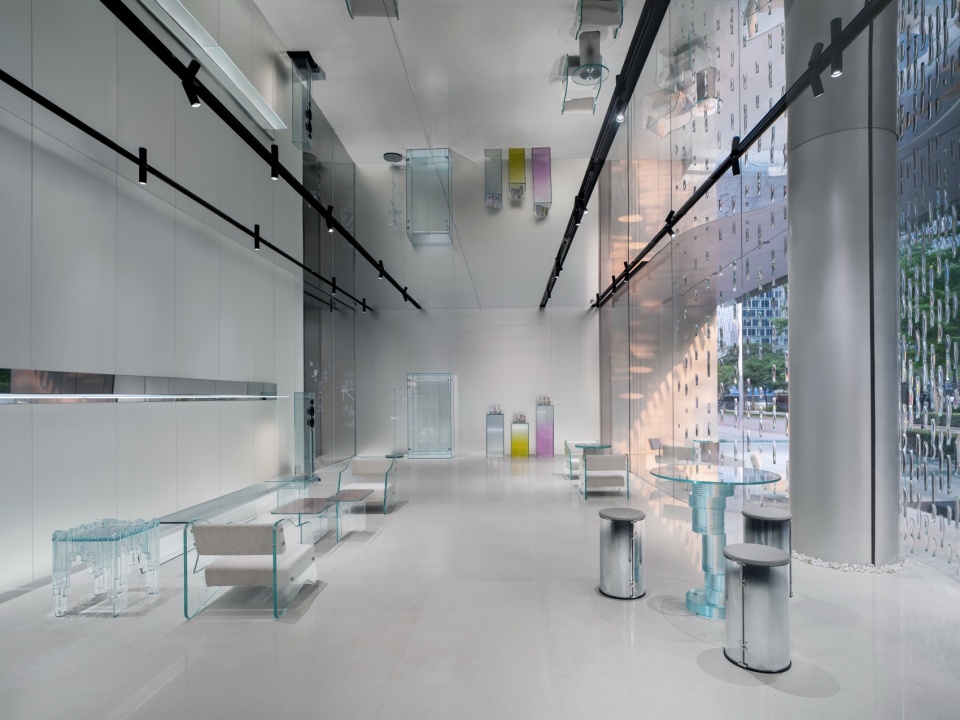
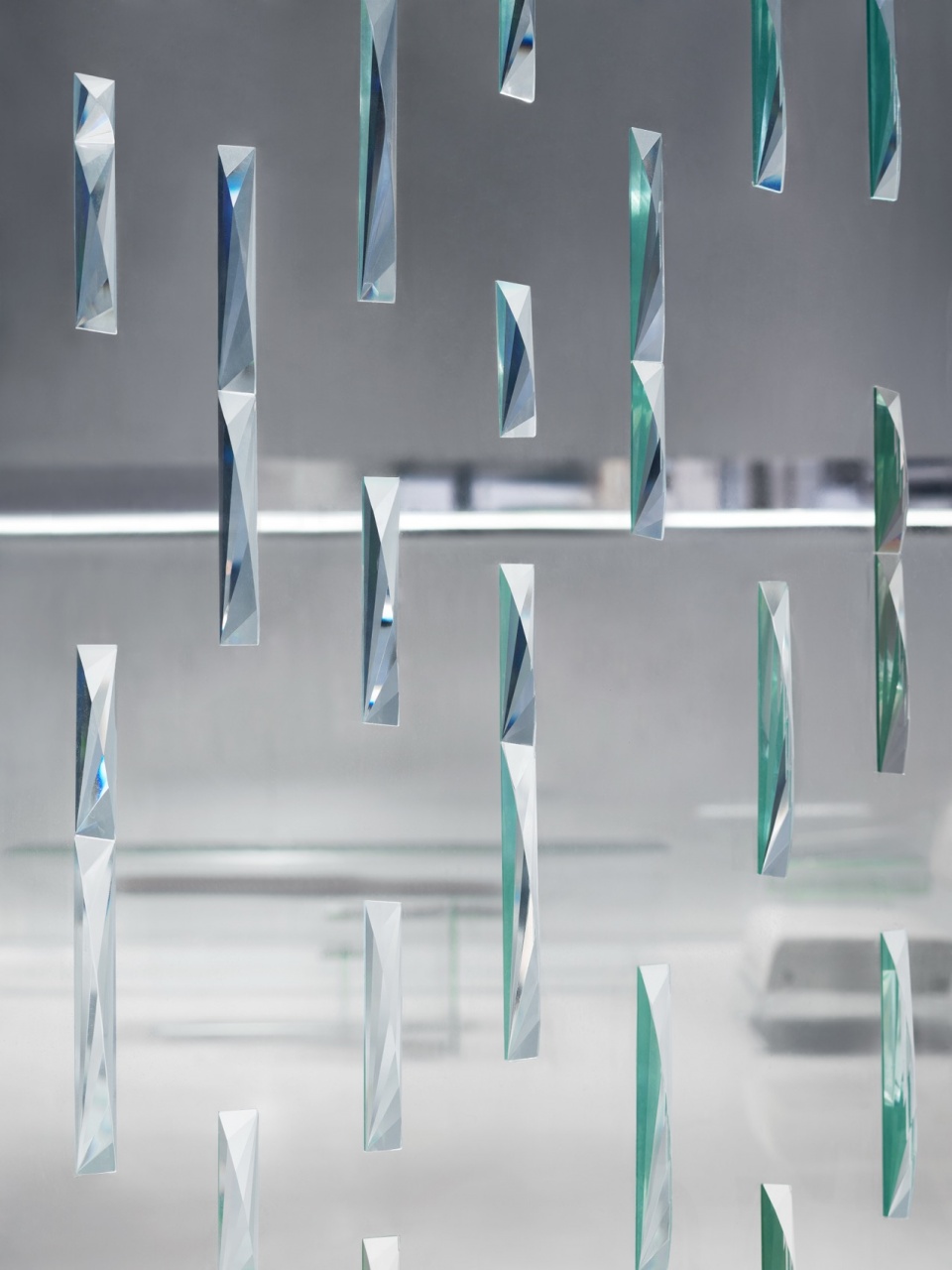
空间中央的弧形玻璃装置成为整个项目最重要的光学媒介。由多面切割的玻璃立方体构成的装置附着于弧形玻璃之上,通过不断变化的折射与反射,将光线转化为空间体验的一部分。
At the centre of the space, a curved glass installation operates as an optical instrument rather than a decorative feature. Composed of faceted glass cubes mounted onto curved glass panels, the installation transforms the interaction between light, material and perception into an active spatial experience.
▼经过切割的玻璃体块,在自然光与人工光下持续产生折射、反射与色散变化,These faceted glass elements continuously generate refractions, reflections, and light dispersion under both natural and artificial lighting
▼户外座位区延续了建筑的透明特质,在树影、光线与玻璃之间建立与城市的开放联系,The outdoor seating area extends the building’s transparent character, establishing an open dialogue between the city, light and landscape
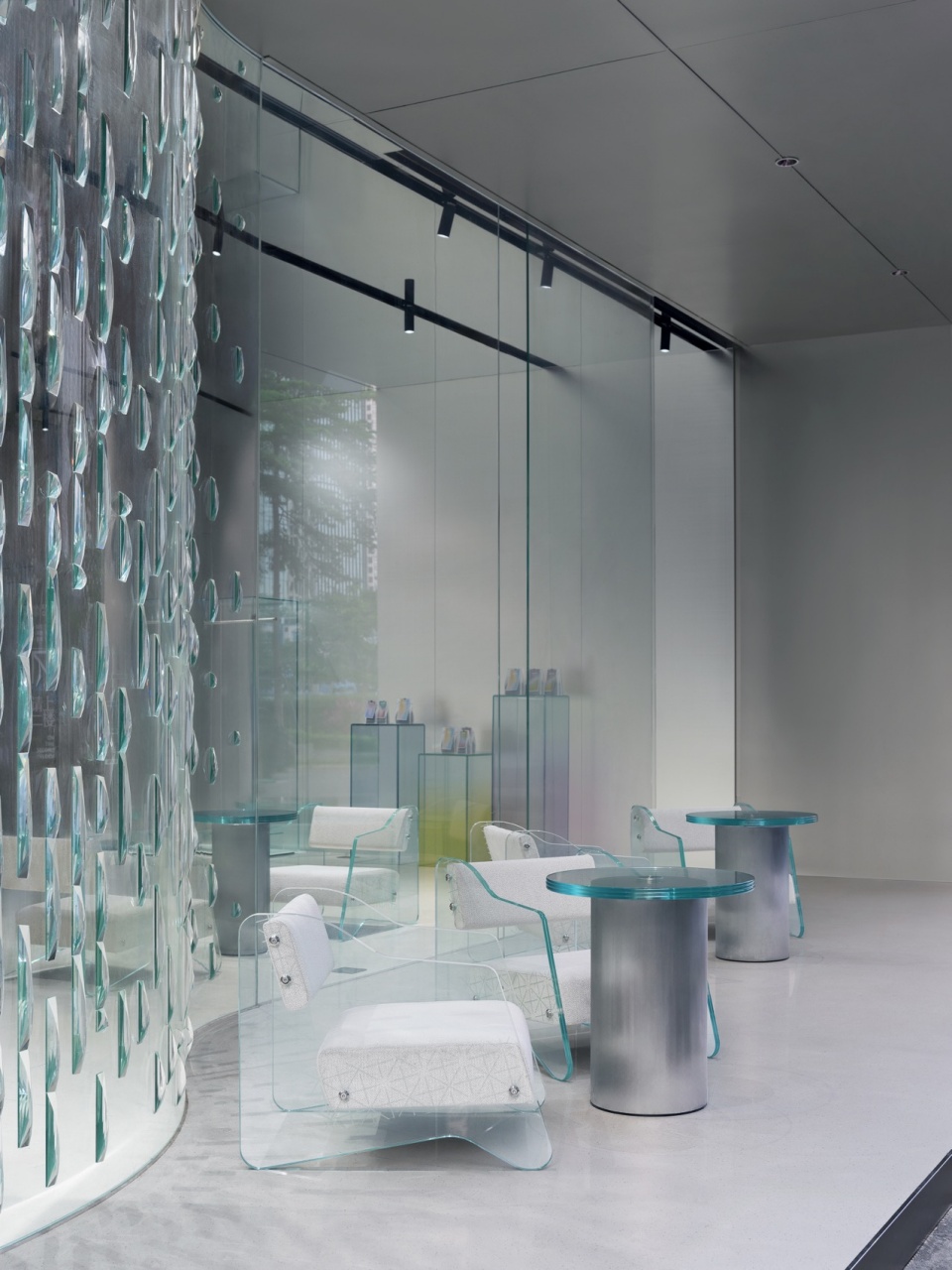
随着时间的变化,光线被不断分解与重组,形成细腻而动态的视觉层次。如同凝固的雨幕,在光线折射下形成动态而细微的感知变化,也成为连接街道与内部的重要视觉媒介。
As time passes and visitors move through the space, light is continuously fragmented and recomposed, creating subtle yet dynamic visual layers. Like a curtain of rain suspended in time, the installation allows the space to hover between reality and illusion.
▼弧形玻璃上多面切割的立方体,形成了一副凝固的雨幕,Faceted glass cubes mounted onto curved glass panels generate shifting refractions and reflections, resembling a curtain of rain suspended in time
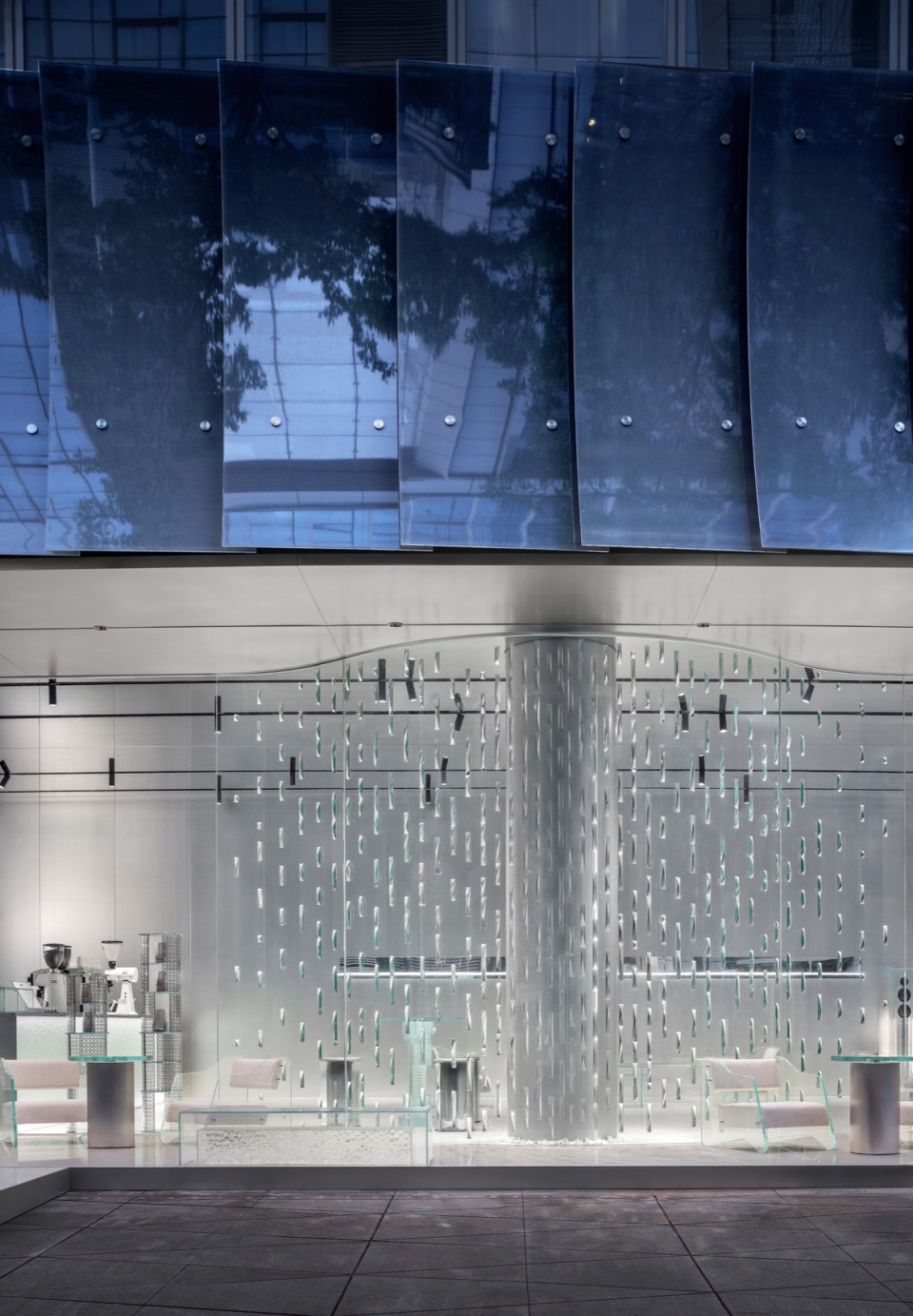
▼不同光线下的咖啡厅,The café under changing light conditions
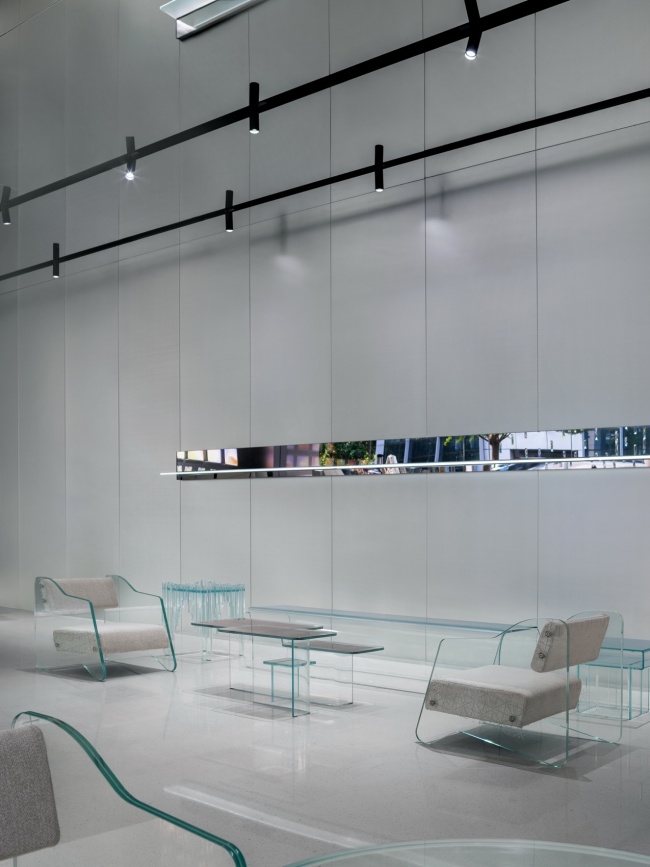
02. A Gallery of Light 光的陈列场
相较于一层咖啡厅的开放与流动,位于二层的展厅则进一步回归纯粹,以更克制的深色地面与简洁界面,聚焦于展品本身。
In contrast to the openness and fluidity of the café below, the upper-level gallery adopts a more restrained palette of dark flooring and minimalist surfaces, allowing the focus to return entirely to the exhibited pieces.
▼二层展厅入口,Entrance to the upper gallery
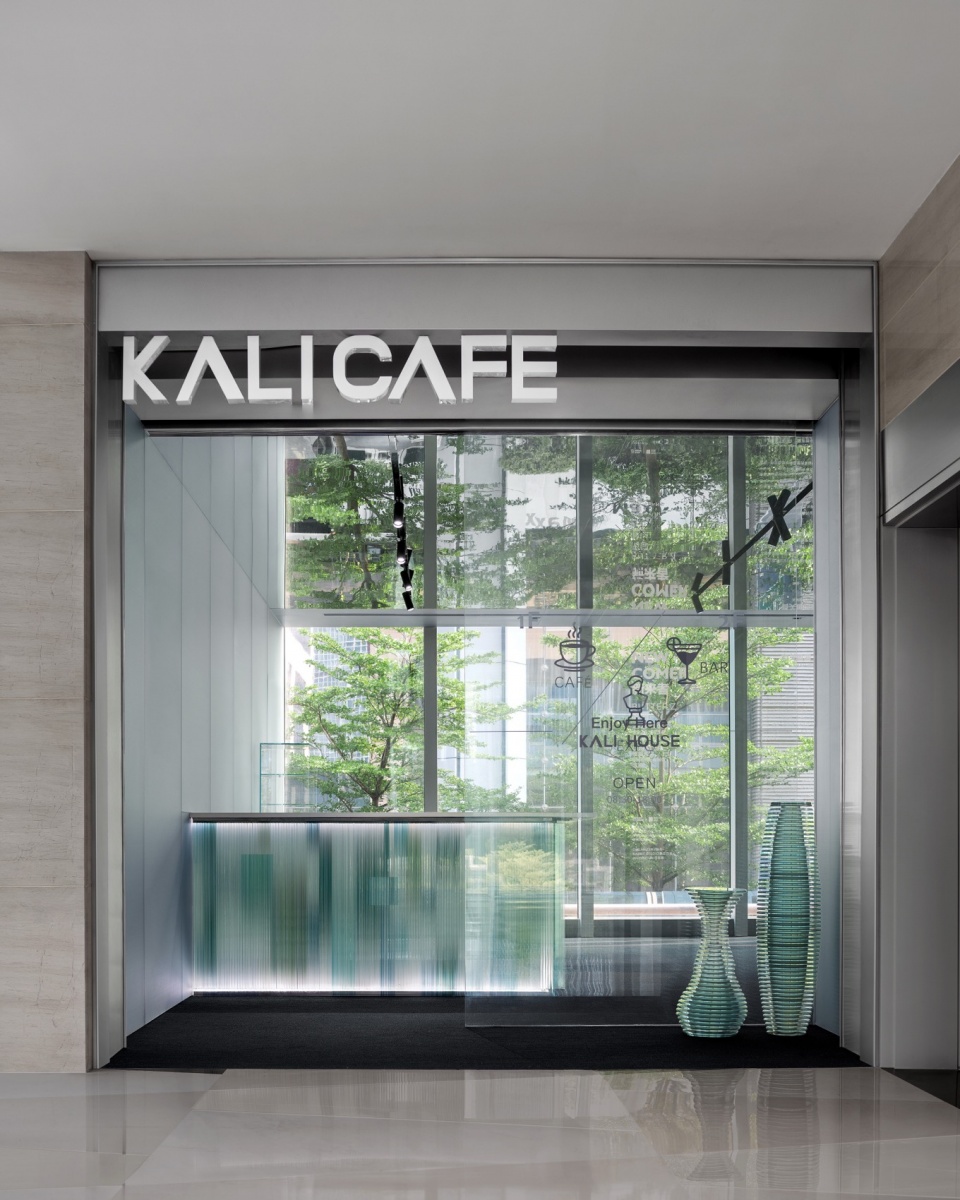
▼深色的地面让人们聚焦于展品本身,Dark flooring foregrounds the exhibits
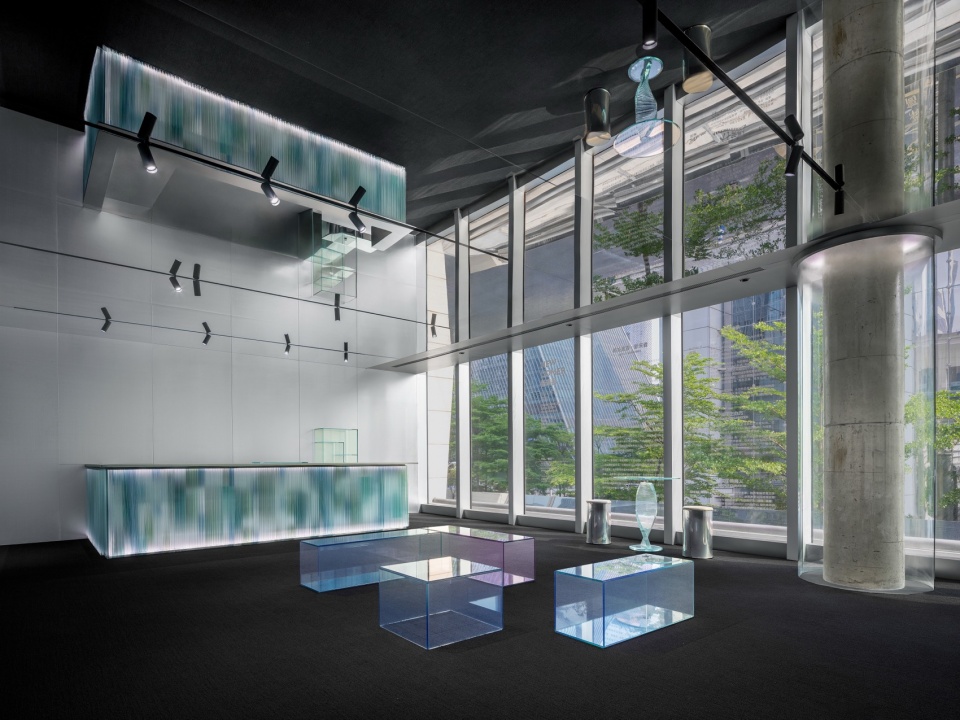
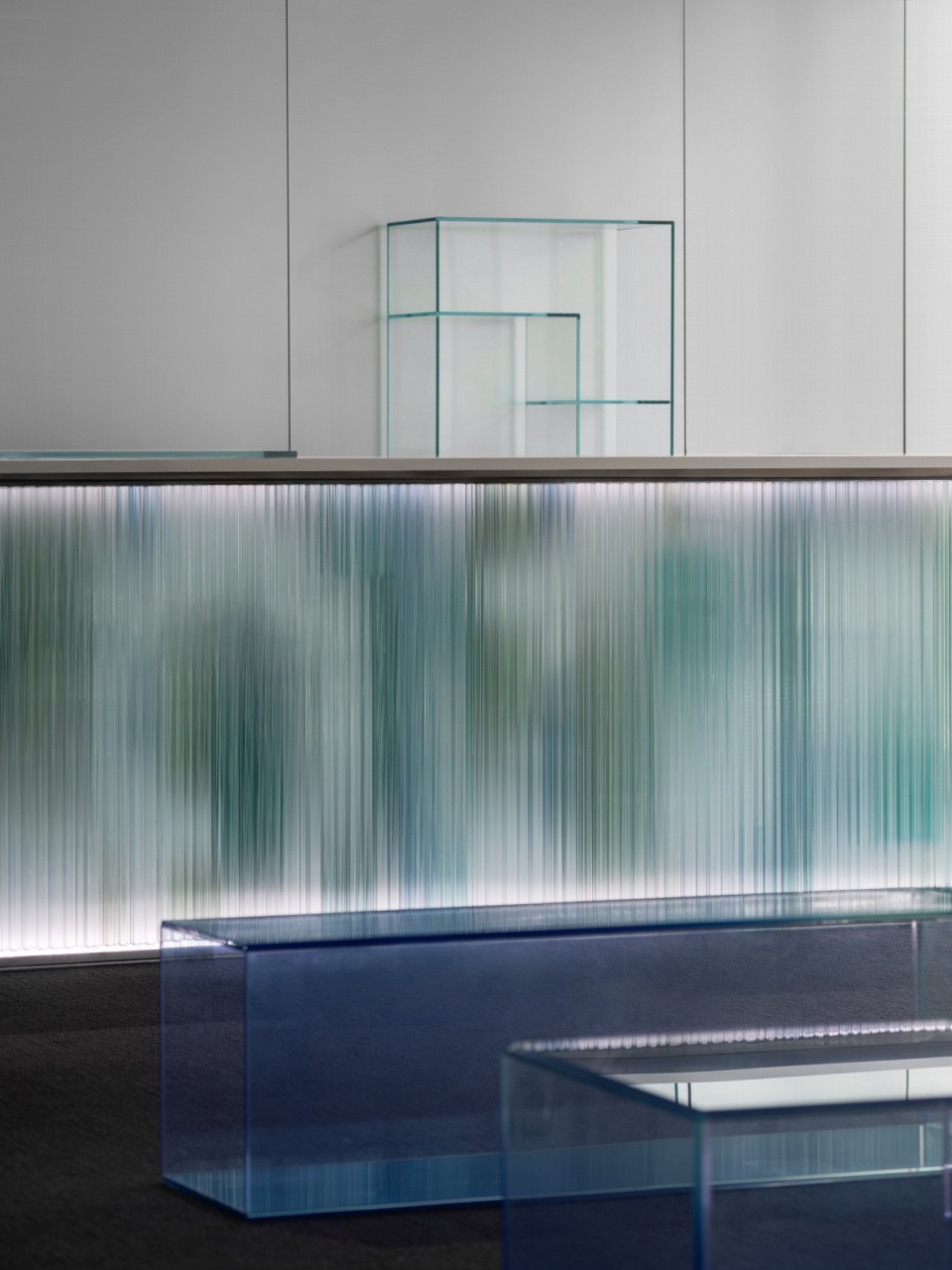
不同颜色、透明度与厚度的玻璃,在光照下呈现出丰富而微妙的层次变化。
Variations in colour, transparency, and thickness reveal rich and nuanced visual effects as they interact with light.
▼服务台细节,Reception detail
▼深色地面,雾银色的玻璃立面和镜面天花,构成了纯粹的展示环境,Dark flooring, mist-silver glass surfaces and mirrored ceilings combine to create a restrained setting where light, reflection and objects become the primary spatial elements
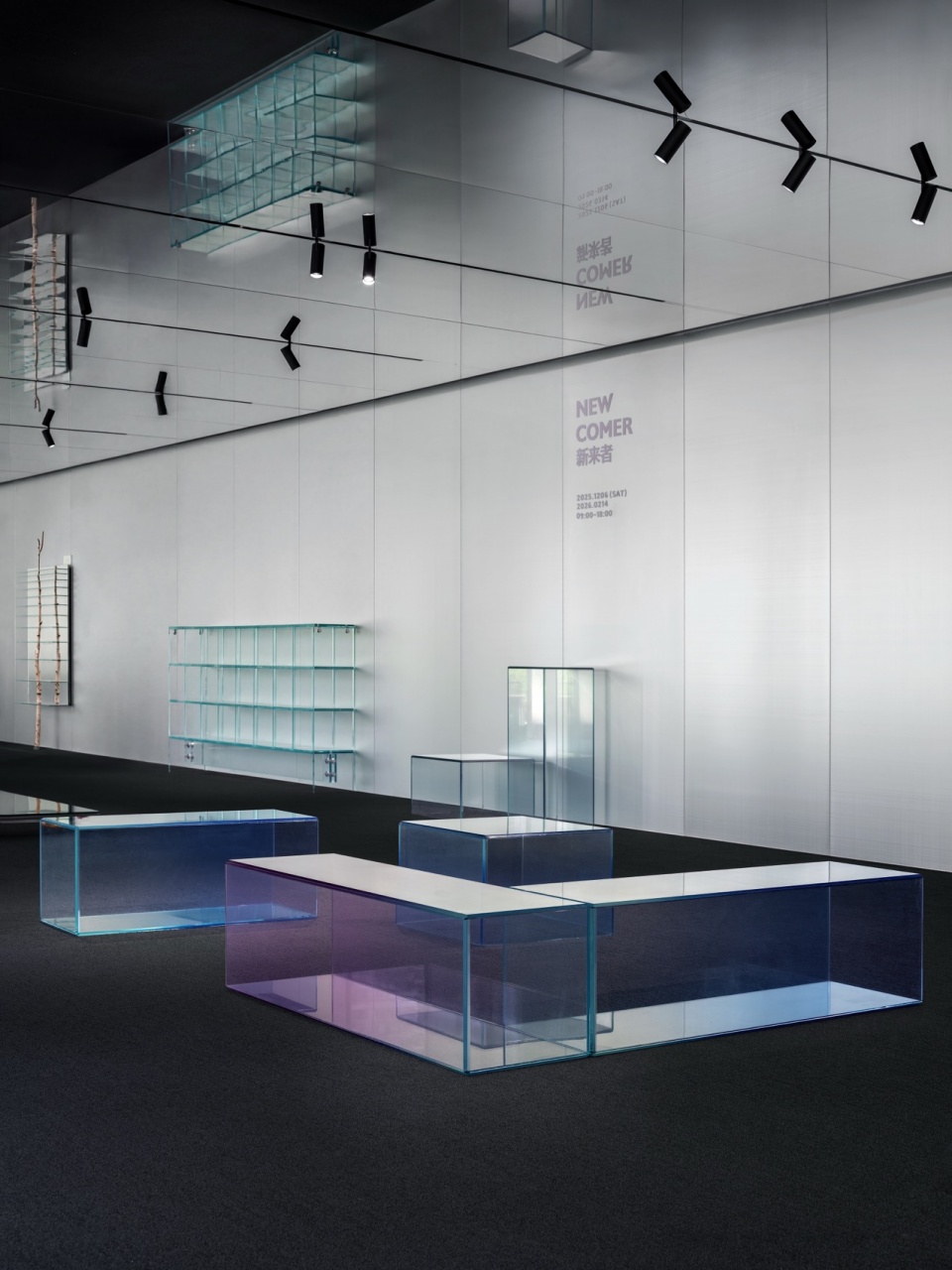
透明、渐变与镜面材质彼此交叠,使家具在不同角度下不断改变自身的边界与存在感,使这些家具既具有功能属性,也像漂浮于空间中的雕塑装置。
Transparent, gradient, and mirrored surfaces overlap and interact, allowing each piece to shift its perceived boundaries and presence depending on the viewing angle. The furniture functions simultaneously as usable objects and sculptural installations suspended within space.
▼细节,Details
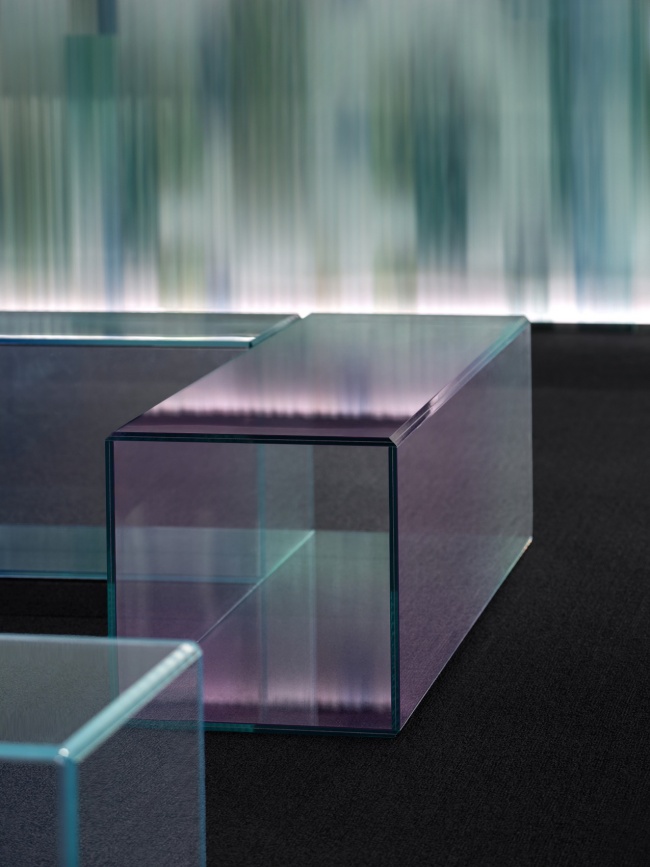
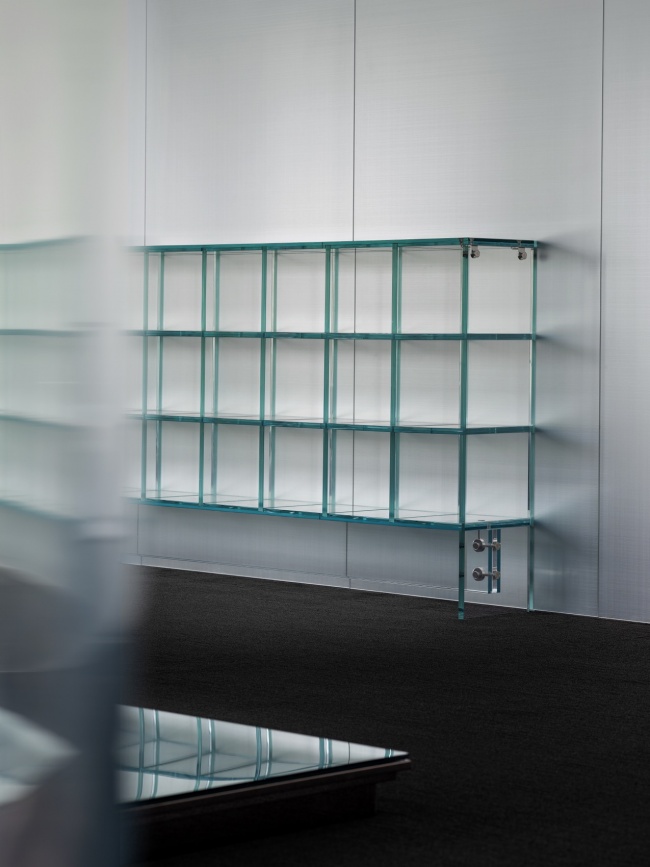
设计师并未将玻璃视为传统意义上的家具材料,而是试图探索其作为“空间介质”的可能性。
Rather than treating glass as a conventional furniture material, the designers explore its potential as a spatial medium.
▼玻璃视为传统意义上的家具材料,glass as a conventional furniture material
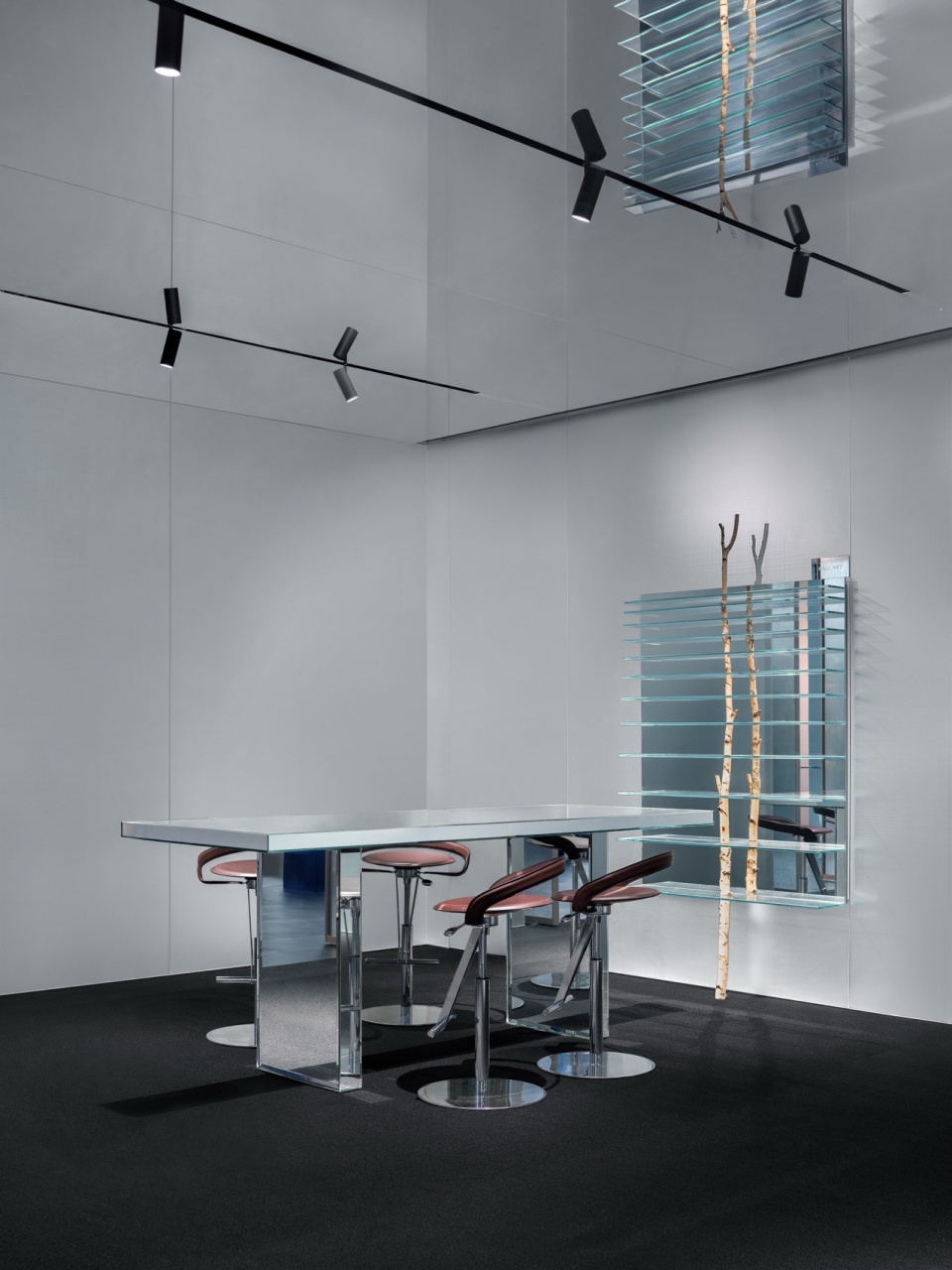
随着观看角度与光照变化,物体的边界被不断弱化,空间因此呈现出一种轻盈而非实体化的氛围。
As lighting conditions and viewpoints shift, the boundaries of objects become increasingly blurred, creating an atmosphere that feels light, ethereal, and almost immaterial.
▼家具在这里不仅承担使用功能,也持续参与光线、反射与空间感知的生成,Here, the furniture serves not only a functional purpose but also actively contributes to the creation of light, reflection, and spatial perception
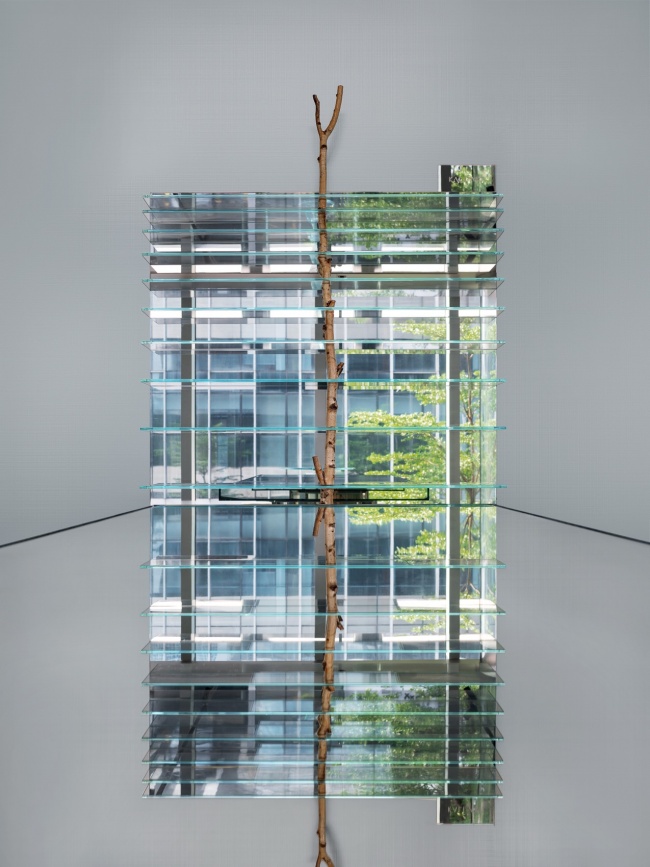
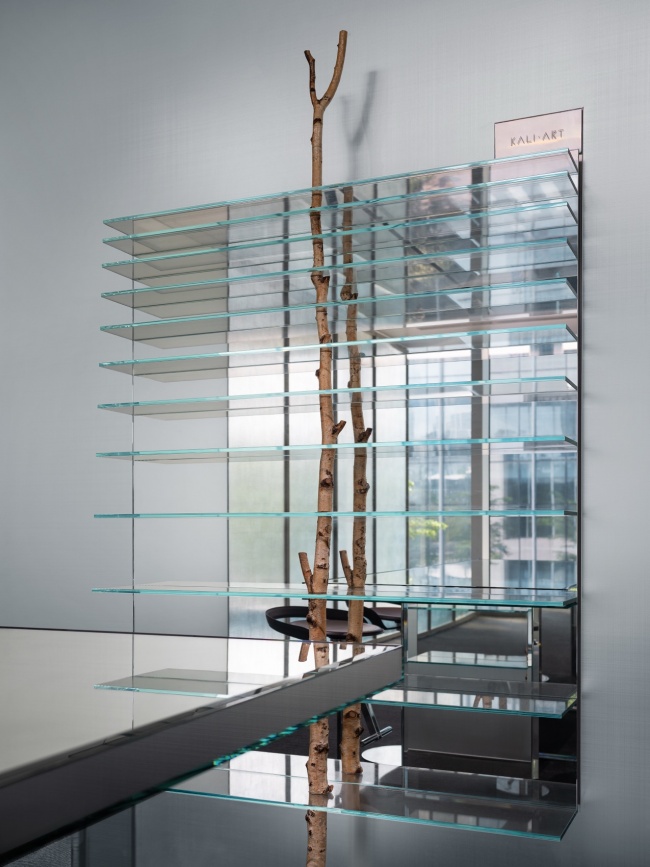
在这个项目中,MOC希望重新定义玻璃在空间中的角色。它不再只是界面或材料,而是一种连接光线、环境与人的感知媒介。
Throughout the project, MOC reconsiders the role of glass within the built environment. Rather than functioning merely as an enclosure or material finish, glass becomes a medium that connects light, environment and human perception.
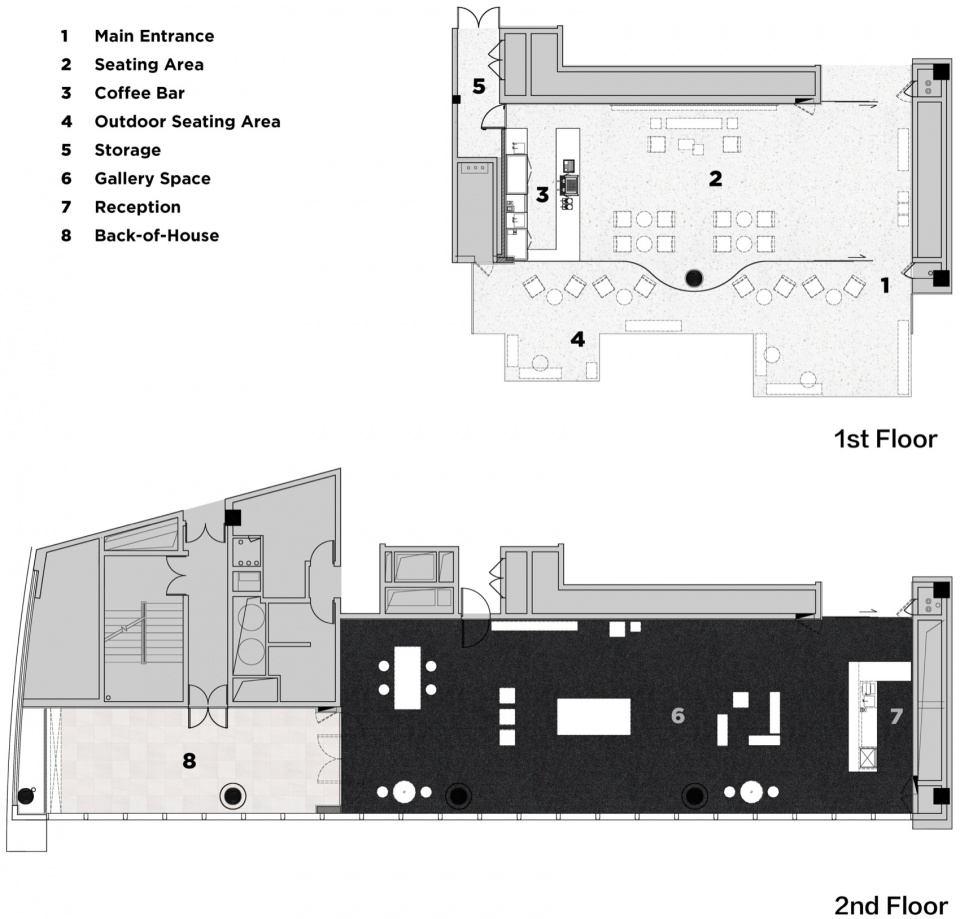
▼平面,floor plan
Project Name: KALI HOUSE
Design Firm: MOC DESIGN OFFICE
Lead Designer: Yang Zhenyu, Liang Ningsen
Project Manager: Wu Xiuwei
Design Team: MOC Design Team
Design Period: June 2025 – September 2025
Completion: January 2026
Location: Minmetals Financial Tower, Nanshan District, Shenzhen
Area: 350 ㎡
Materials: Artistic glass, White terrazzo, Mirrored stainless steel, Carpet
Client: KALI Art Glass
Photography: Nie Xiaocong